Arm tattoos for men run from single armbands and minimal line work that heal in a week to full sleeves and portrait pieces requiring multiple sessions spaced weeks apart, with each design shaped by the muscle structure your arm already has.
1. Armband Tattoo
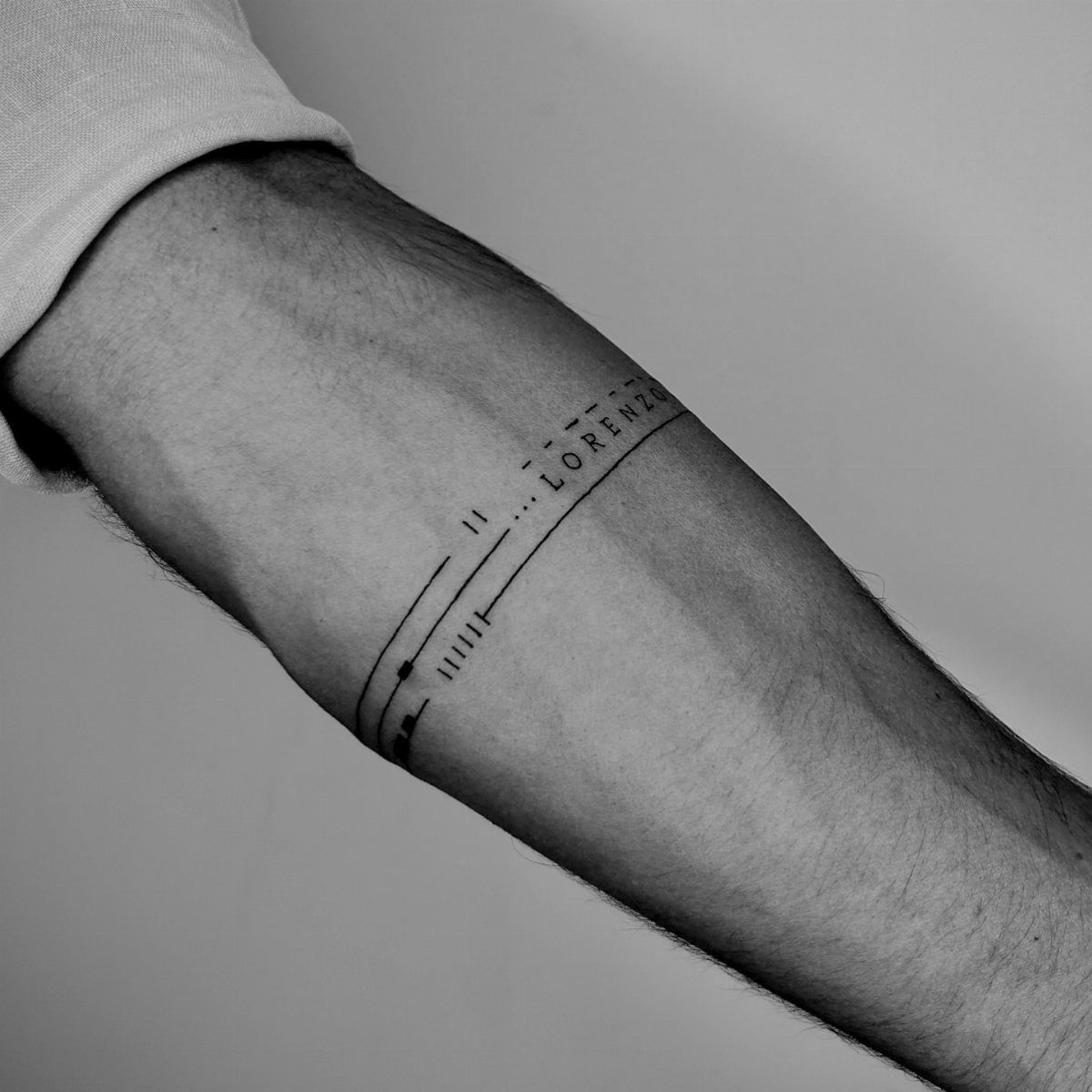
An armband wraps the forearm or bicep in a single unbroken band, holding its line all the way around.
The simplest versions are solid black or stacked parallel lines, though you can work in text, patterns or symbols the way Lorenzo’s name runs through this one.
Placement matters more than you’d think. A bicep band sits high and reads as bold, while a forearm band stays visible in short sleeves.
If your arm tapers much between elbow and wrist, a forearm band can look uneven as it follows the contour, so test the width on paper first.
Armbands hurt less than most arm tattoos because there’s muscle under the needle, not bone.
2. Nature Tattoos
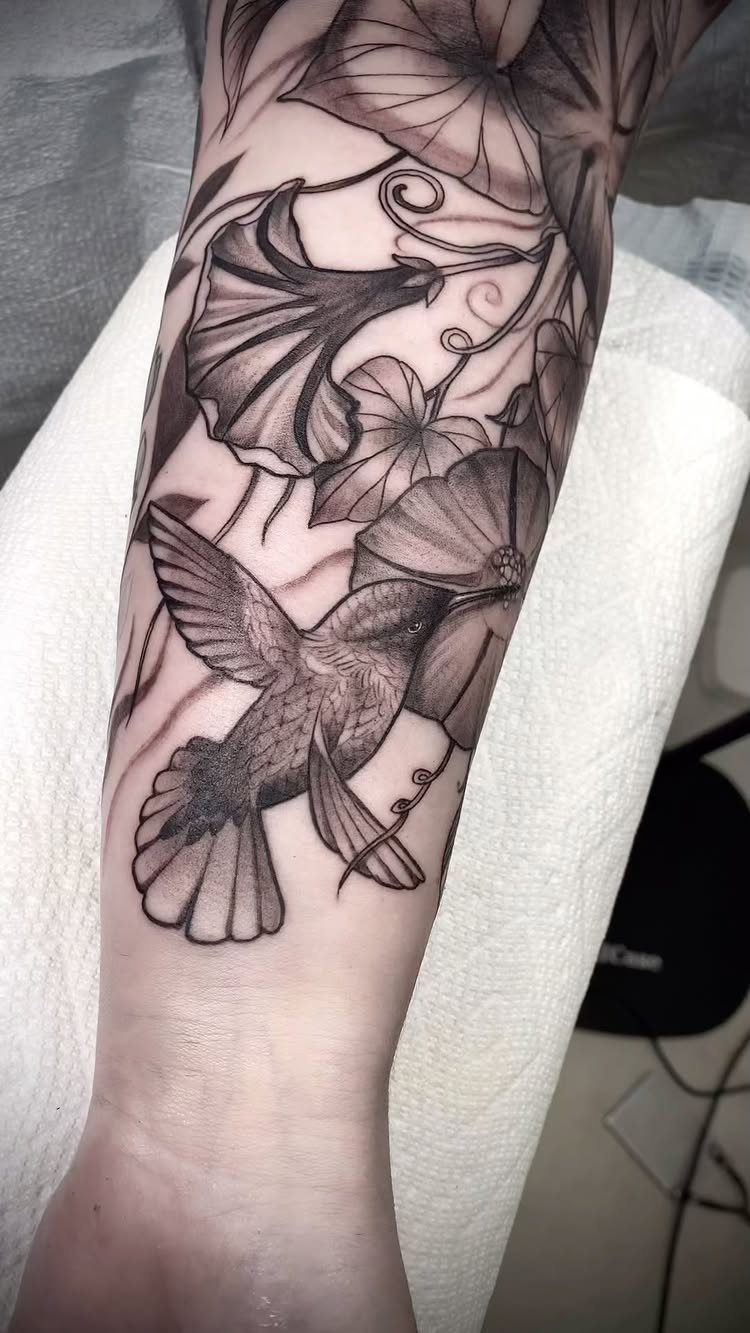
Nature tattoos pull from anything outdoors: birds, trees, mountains, water. A hummingbird and floral piece in black and grey stays readable as it ages, which matters on a forearm that sees sun and movement every day.
Arm placement gives you room to build a scene instead of isolating one element. A hummingbird needs flowers or branches to anchor it, and the forearm’s length lets you stack them without crowding.
Black and grey heals faster than color and costs less per session. If you want realism, ask your artist about shading techniques before you sit down, because flat line work won’t give you the depth a bird or flower needs.
3. 3D Tattoos
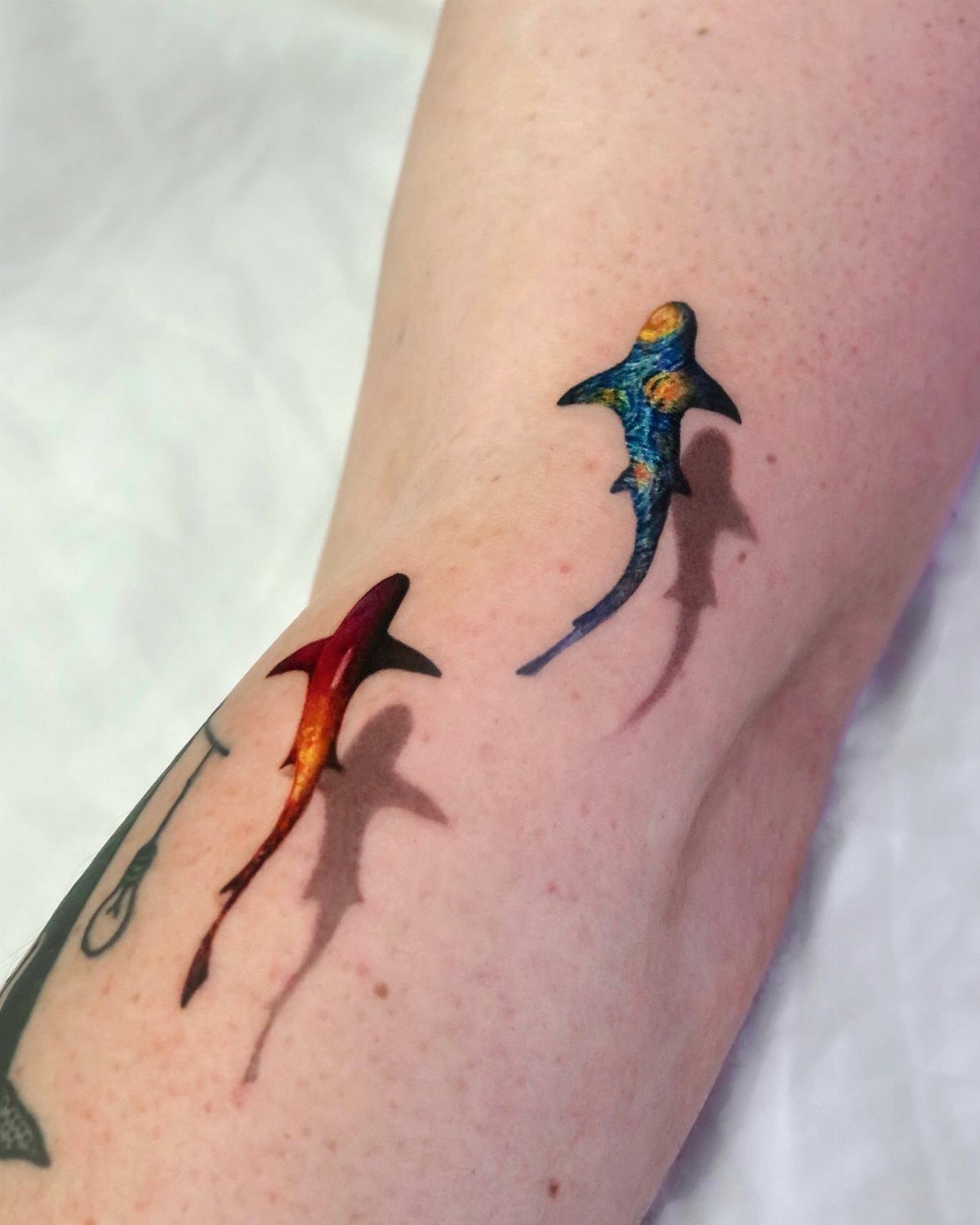
A 3D tattoo uses shading and shadow to make the design look like it’s floating off your skin or carved into it. Drop shadows beneath each shark make your eye read them as separate objects instead of flat ink.
Lighting does that work.
Your artist has to pick one direction for the light source and keep it consistent across every shadow, or the illusion breaks. That takes longer than a standard tattoo, so expect to add an hour or two to your session.
3D designs need high contrast to work. Soft gradients won’t cut it.
4. Floral Tattoos
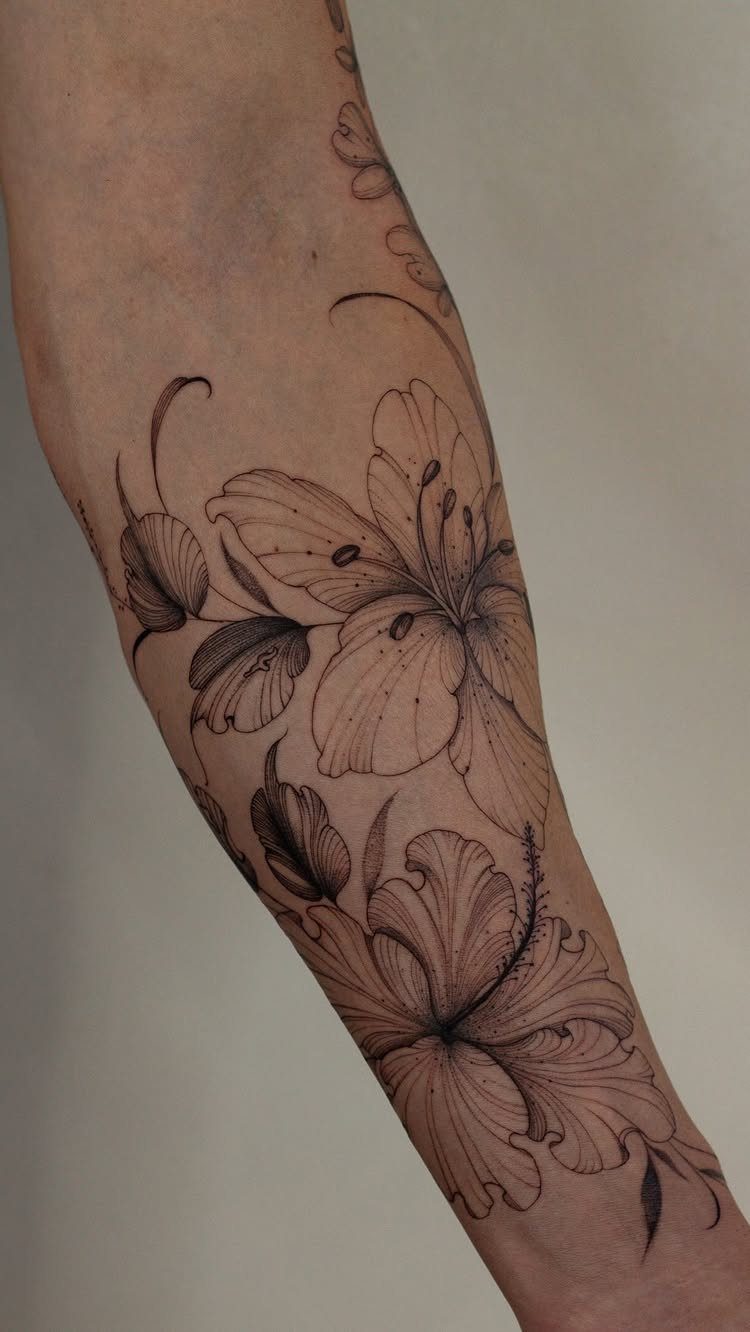
Flowers on a man’s arm soften the overall look without losing scale. Lilies and hibiscus take up enough space to fill a forearm and hold their shape in black ink, while smaller blooms can look fussy once they heal.
If you go that route, pick flowers that actually mean something to you instead of defaulting to roses.
Freehand designs skip the stencil, so your artist draws directly on your skin. That gives you a custom fit but no second draft.
5. Heart Tattoos
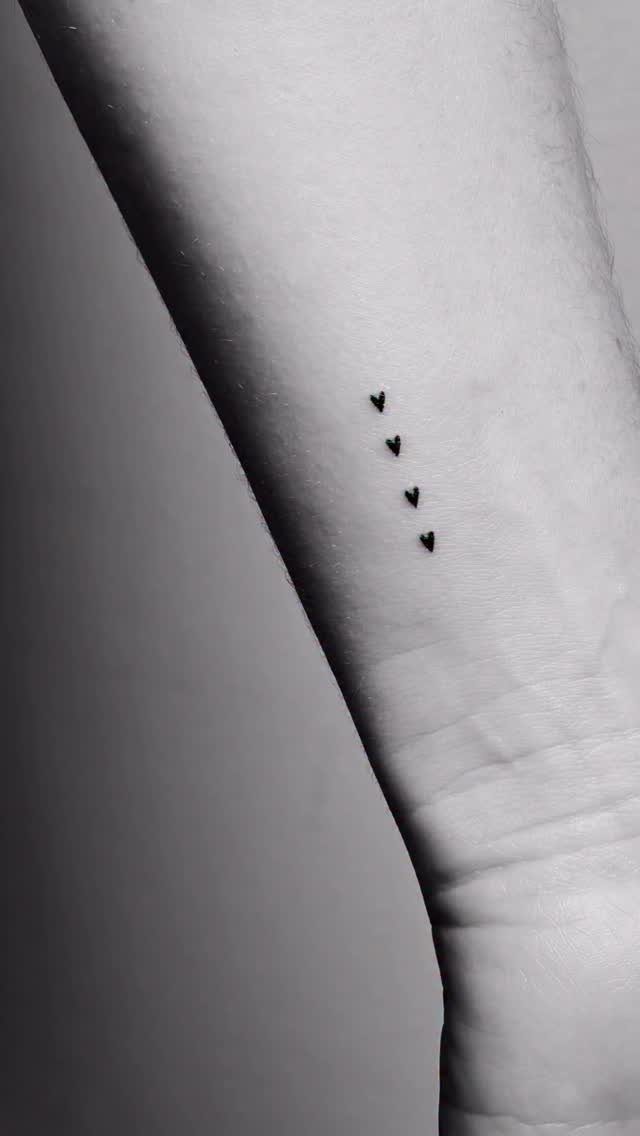
4 hearts stacked vertically down the forearm is as direct as tattoo symbolism gets. Each one can represent a person, a loss, or just a repeat of the same idea, depending on what you want it to mean.
If you’re adding them over time, make sure your artist uses the same black ink each session so they match as they age.
Minimalist designs rely on clean lines. A shaky outline will show, so choose an artist whose line work you’ve seen in person.
6. Biomechanical Tattoos
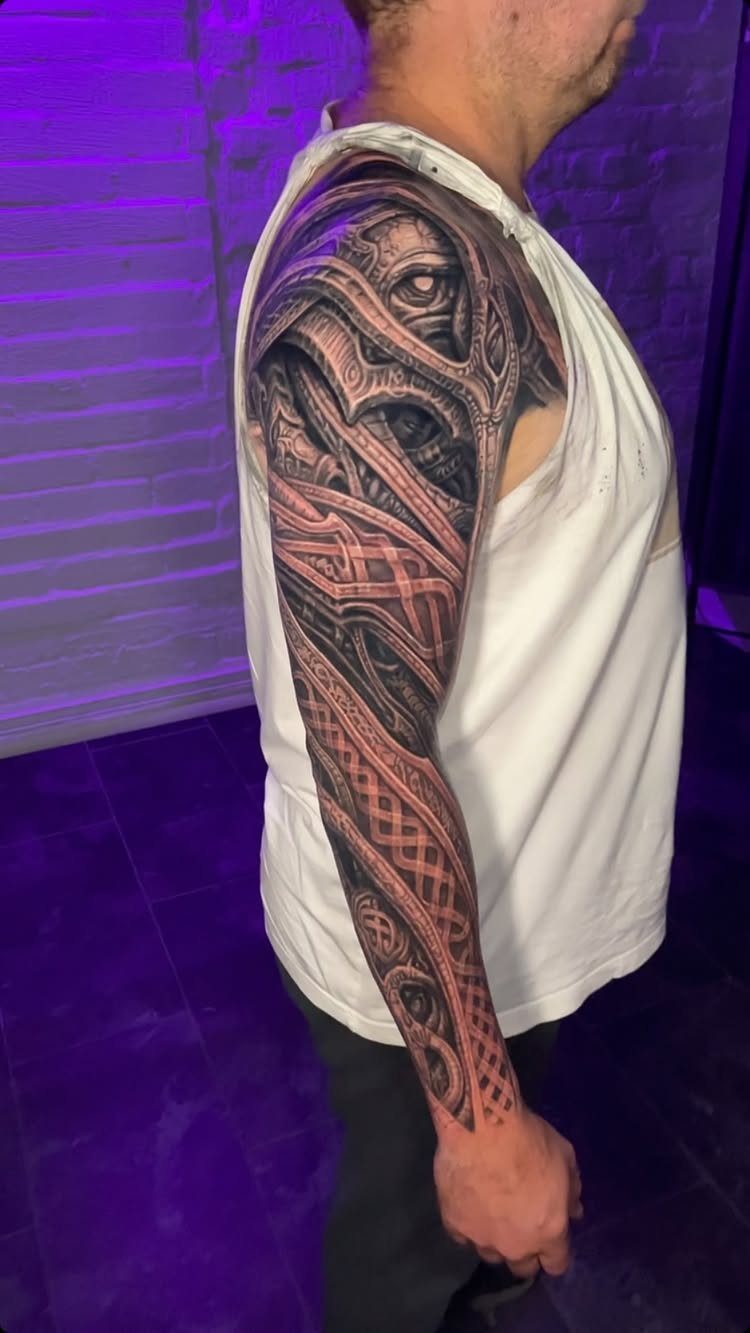
Biomechanical tattoos tear away skin to reveal gears, pistons and cables woven through muscle and bone. The style mixes H.R. Giger’s alien aesthetic with machine parts, and a full sleeve needs multiple sessions.
The design has to follow your arm’s actual anatomy. Gears sit where joints bend, cables run along tendons, and plates cover the flat parts of your forearm or bicep.
A good biomechanical artist will sketch the design on you first to make sure the mechanics line up with how your arm moves.
Expect heavy shading. This isn’t a line-work tattoo, so you’ll sit longer per session than you would for most other styles.
7. Tribal Tattoos
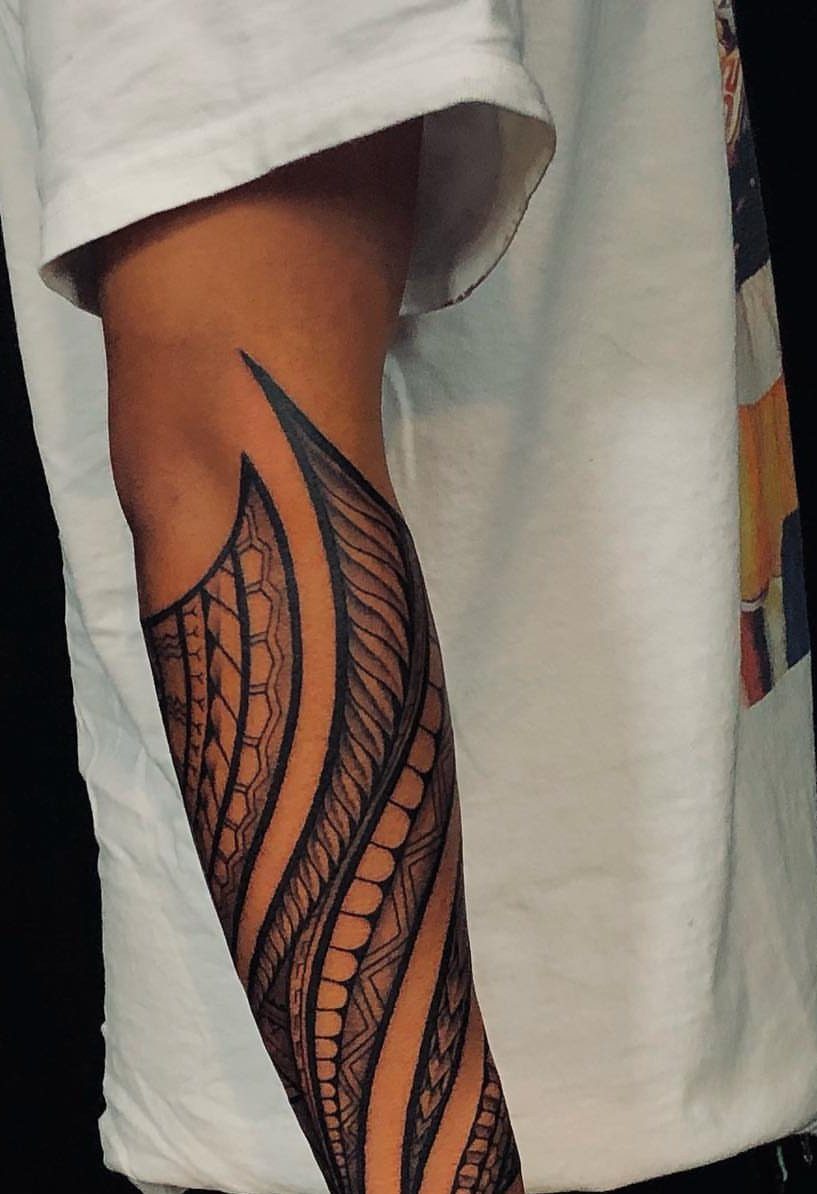
Tribal tattoos wrap the arm in thick black shapes built from repeating angles and curves. The boldness comes from solid fills and sharp contrast, not detail.
If you want a tribal piece that references a specific culture, talk to your artist about which patterns carry actual meaning and which are just decorative.
Polynesian, Maori and Native American designs all have their own rules, and copying sacred symbols without understanding them doesn’t sit well with a lot of people.
The style ages well because there’s no shading to fade unevenly.
8. Arm Tattoo Sleeve
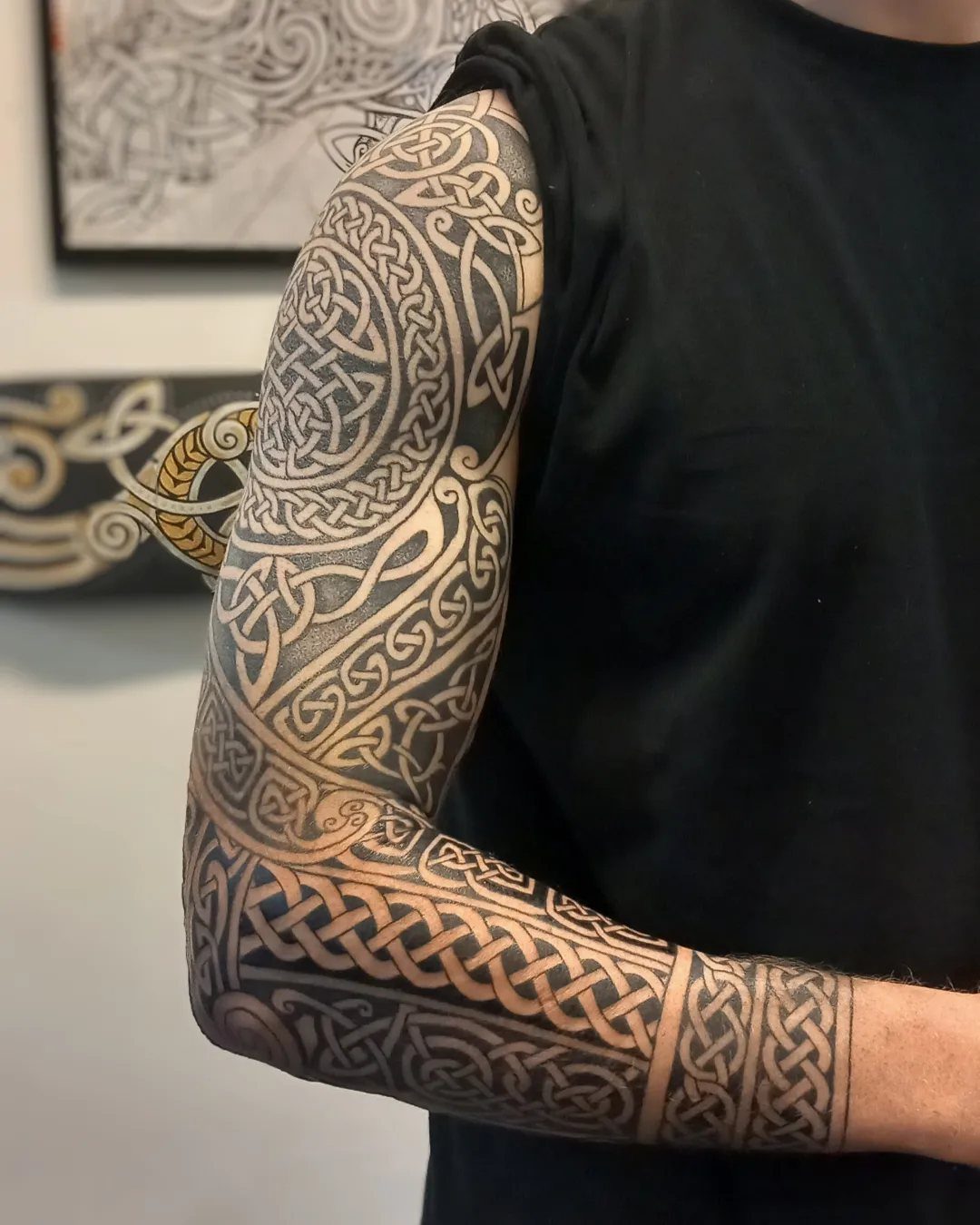
A sleeve covers your arm from shoulder to wrist in one connected design. Celtic knotwork like this uses interlocking loops with no start or end, so the pattern can fill the whole arm without looking forced.
Sleeves take multiple sessions. Most artists break the work into sessions spaced a few weeks apart so your skin can heal between passes.
If you’re not ready to commit to a full sleeve, start with a half sleeve that stops at the elbow. You can always extend it later.
9. Dragon Tattoo
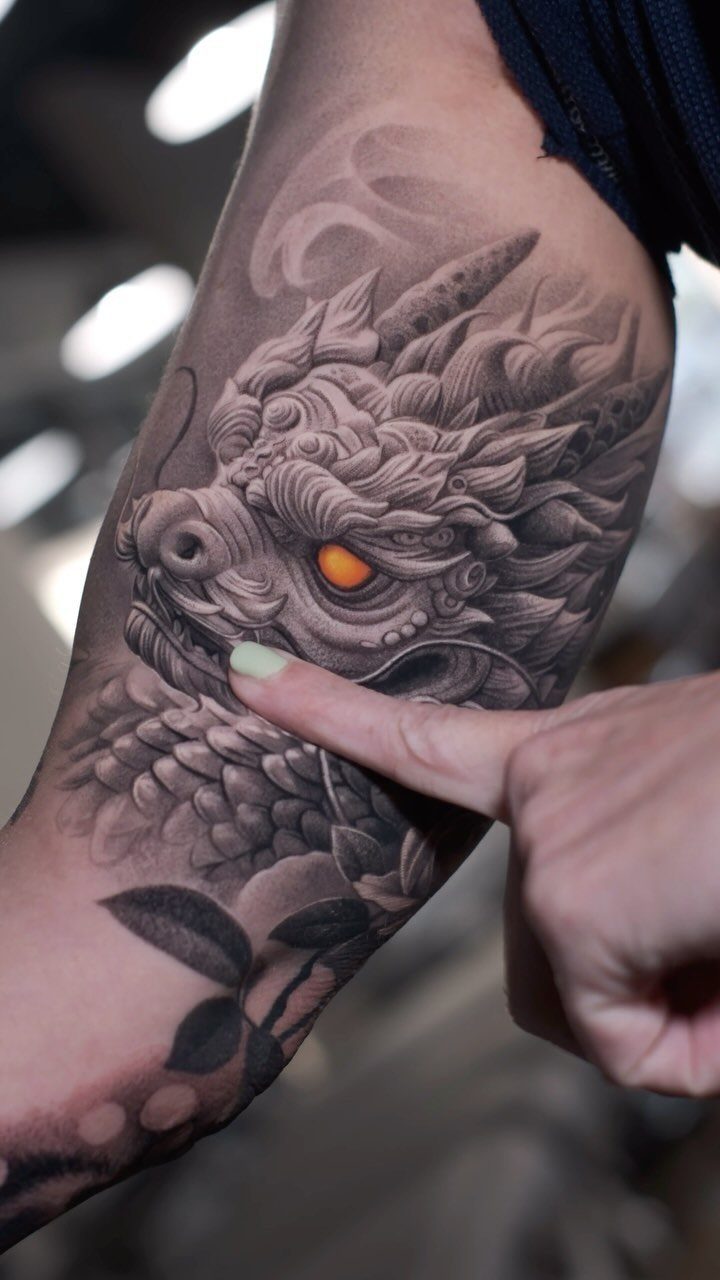
A dragon on your arm can wrap from shoulder to forearm or coil in one spot, and either way it reads as power.
Black and grey shading gives you depth without the color upkeep, and a single bright eye like this one pulls focus without turning the whole piece into a color job.
Dragons take time. A full upper-arm piece takes multiple sessions.
10. Line Tattoo
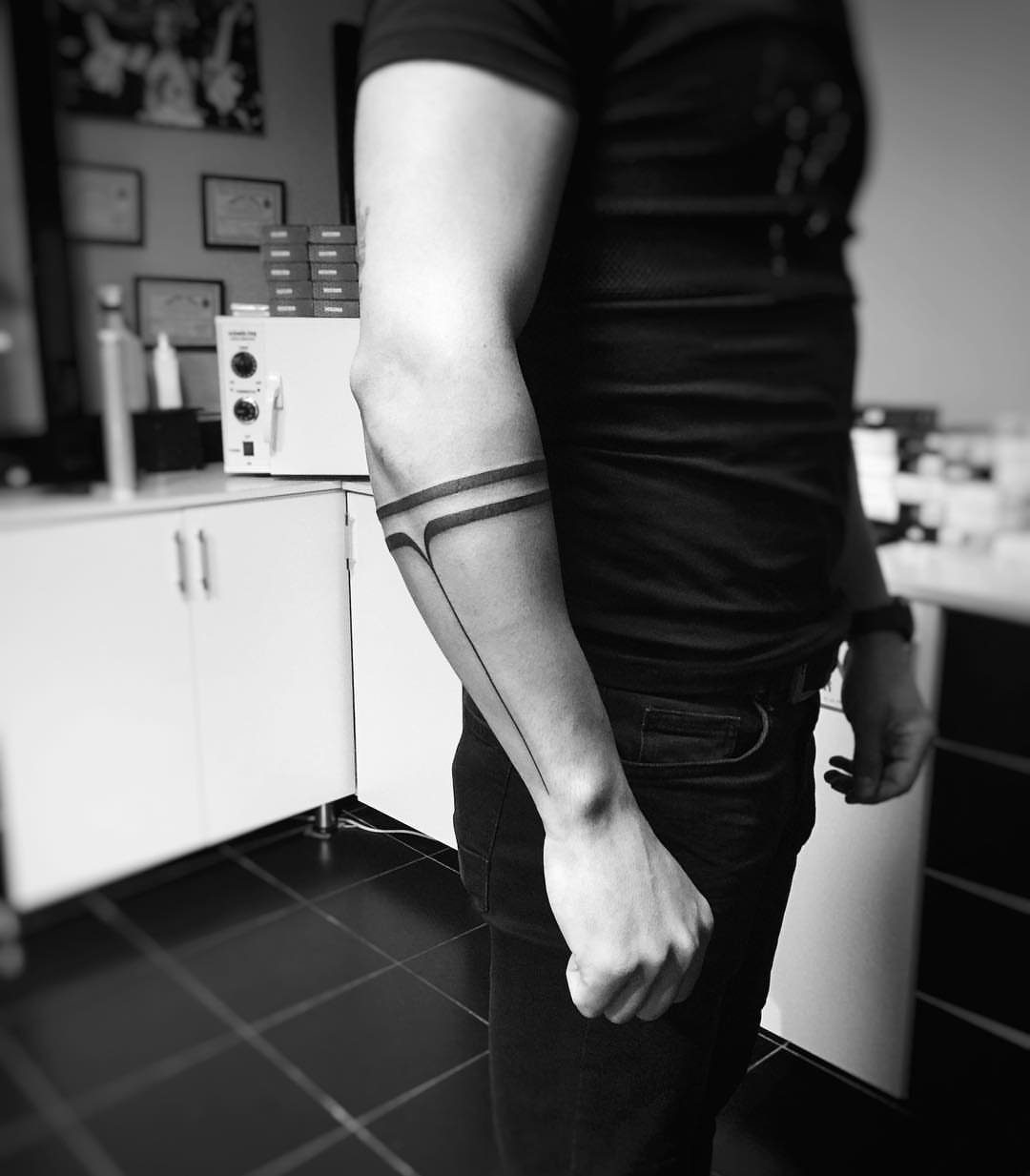
A line tattoo is exactly what it sounds like: bands, verticals or angles with no fill and no shading.
Lines have to be straight and evenly spaced or the tattoo looks sloppy. If your artist freehands it, watch them mark the placement first.
Because there’s no shading to soften a mistake, this style only works if your artist’s line work is clean.
11. Owl Tattoo
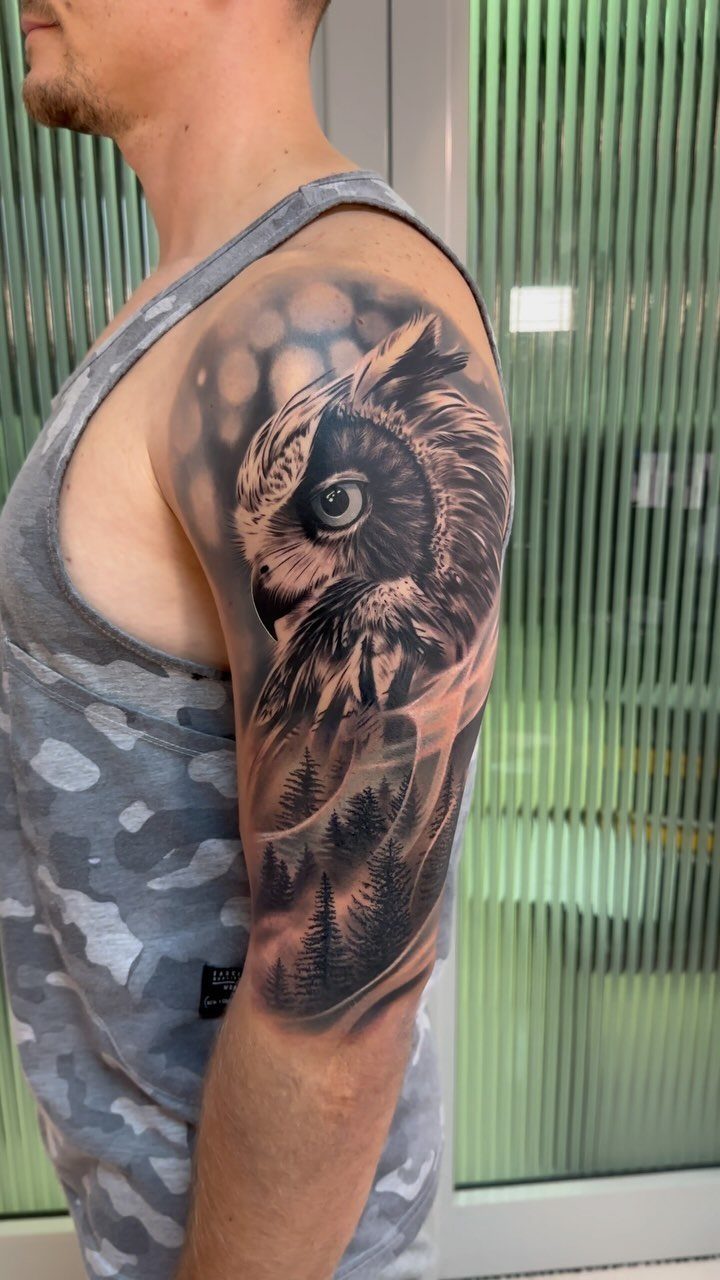
The forest backdrop fills space behind the bird without competing for attention, and black and grey keeps the whole thing readable instead of busy.
Owls work as standalone pieces or as part of a larger nature sleeve. If you’re building toward a full sleeve later, leave the forearm open and let the owl anchor the top.
12. Scorpion Tattoo
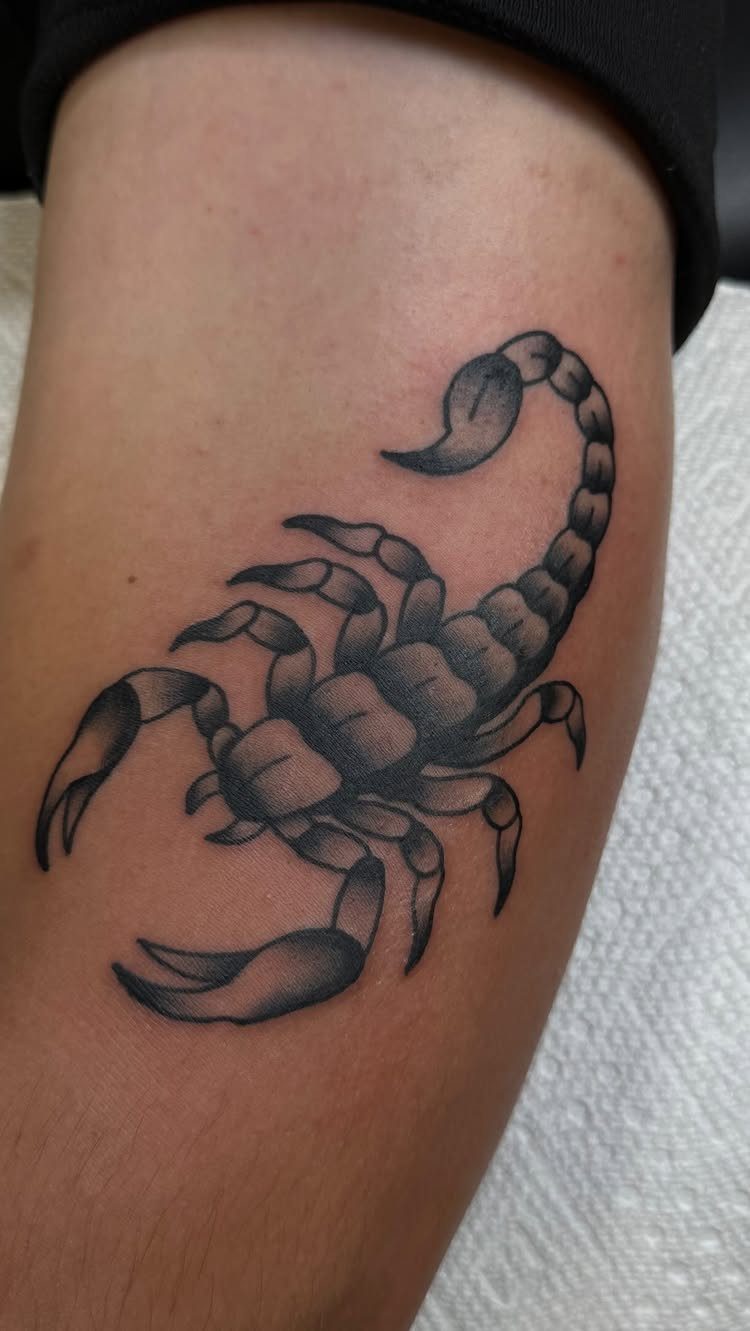
A scorpion on your forearm sends a pretty clear message: you’re not someone to mess with.
The shape works well on the forearm because the tail can curve with your arm’s natural line, and black and grey gives you all the menace without looking like flash art from a boardwalk shop.
If you go realistic, ask your artist to reference an actual scorpion species instead of a generic cartoon version. The difference shows up in the segmentation and claw shape.
Scorpions read best when they’re sized large enough that the tail and claws stay distinct after healing. Smaller and the legs start to blur together as the tattoo settles.
13. Lion Tattoo
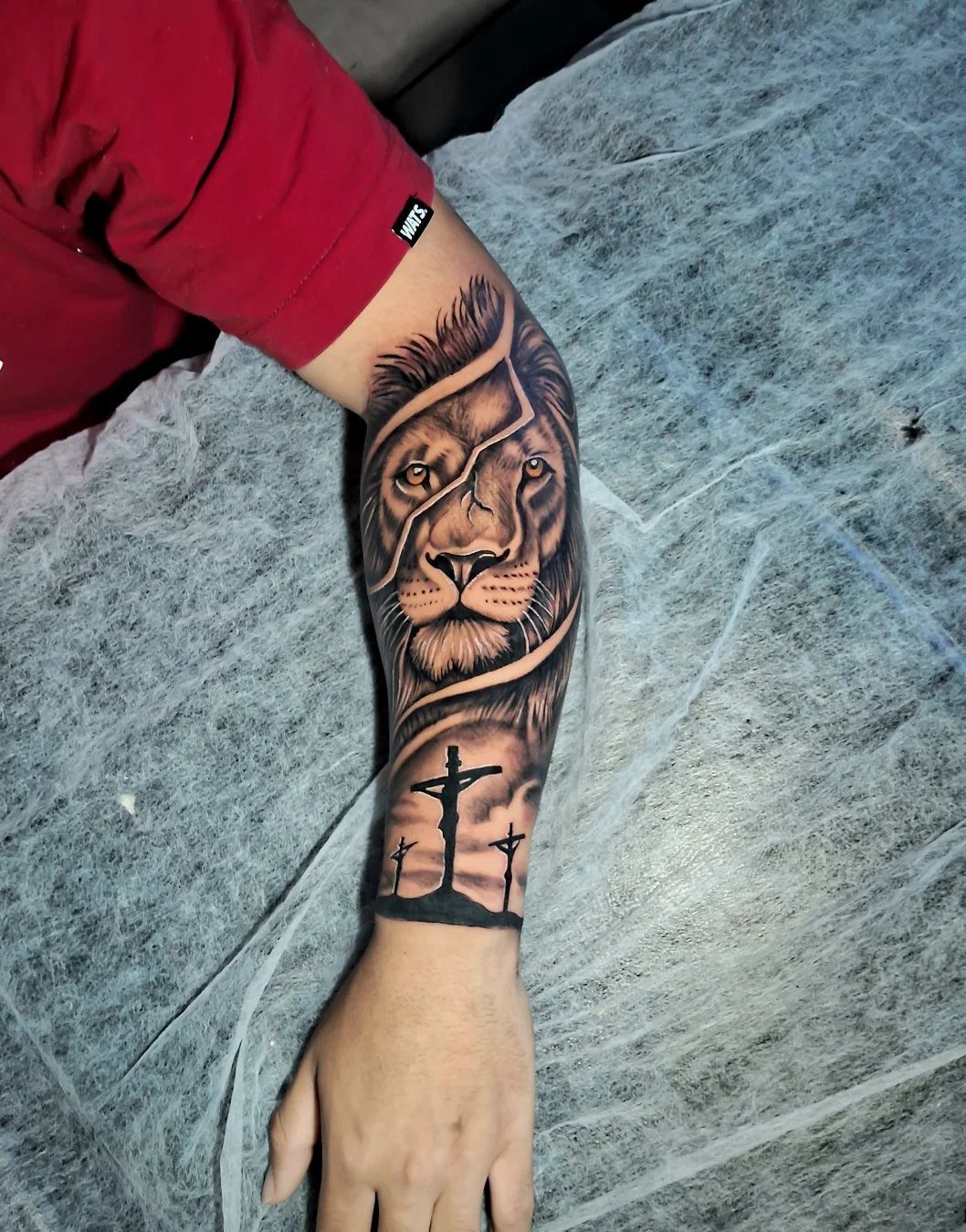
A lion’s face needs room for the features to stay sharp, so forearm or upper arm sizing gives it the presence the subject demands.
Black and grey realism gives you the detail a lion needs, especially in the mane and eyes.
The face should take up most of the available space. If you’re adding elements below like the crosses, keep them simple so the lion stays the focus.
Forearm placement means high visibility, which works if you want the statement a lion makes.
14. Geometric Tattoos
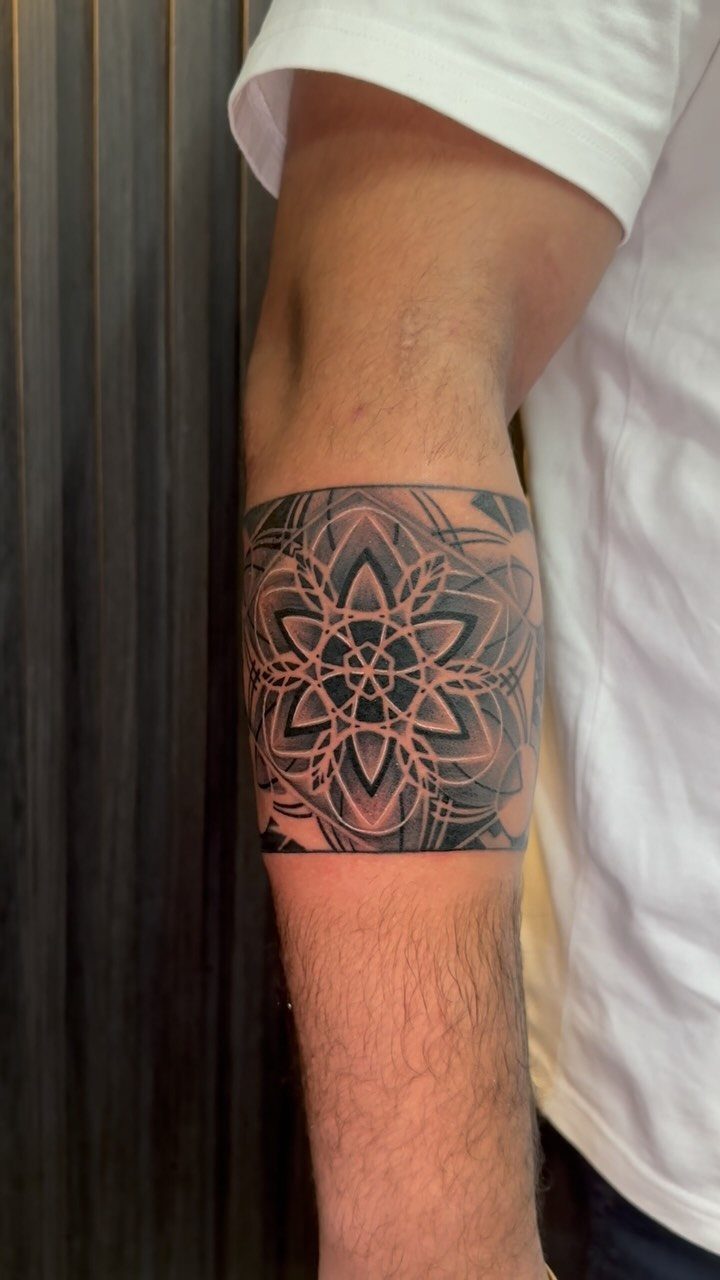
Geometric tattoos use repeating shapes, circles and angles to build patterns that look intentional rather than decorative.
A mandala band around the upper arm gives you full-circle symmetry that reads cleanly from any angle and centers itself naturally on the muscle.
Mandalas take precision. Every line has to match its opposite or the whole thing looks off-balance, so this isn’t the style for an artist who rushes.
Black ink holds the sharpest contrast. Adding grey shading can soften the look, but it also makes mistakes harder to hide.
15. Compass Tattoo
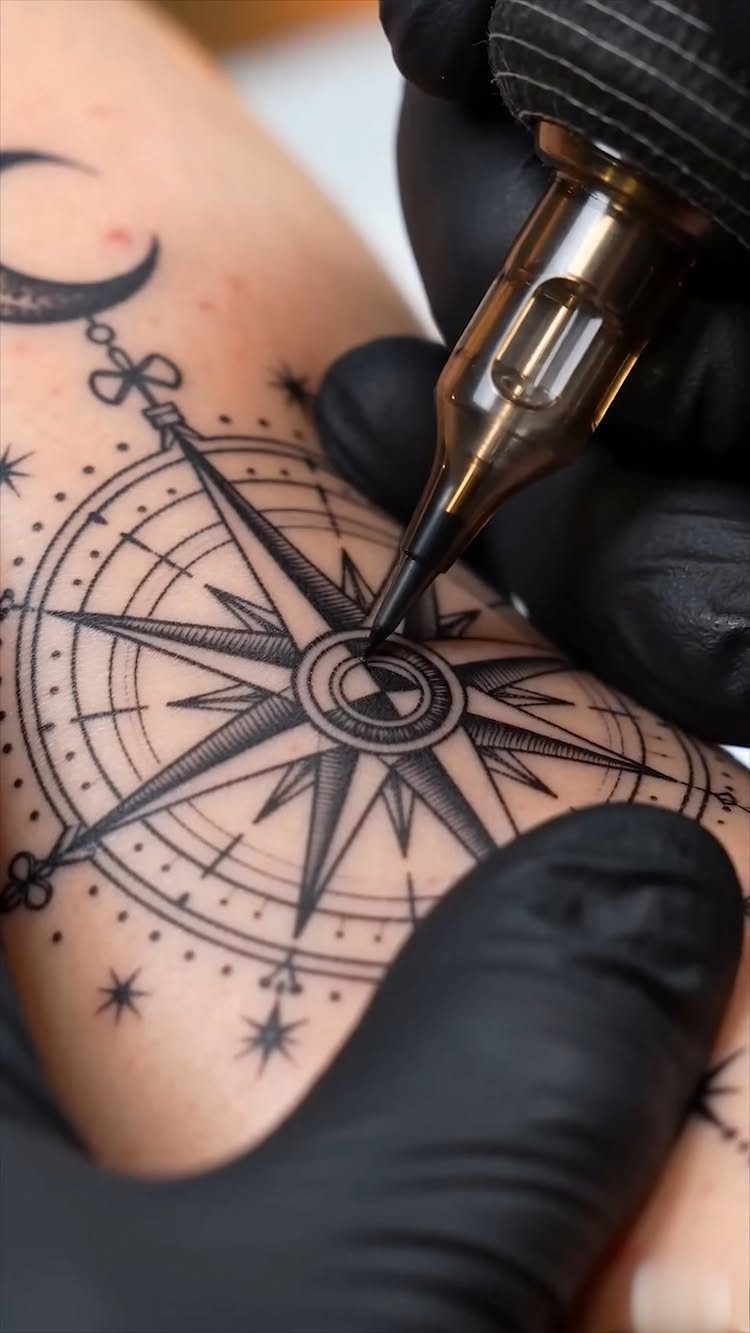
A compass on your arm usually stands for finding your way, whether that’s literal travel or just getting through life without losing direction.
The design works best with enough detail to show the cardinal points and any decorative work around the edges.
Compasses fit well on the forearm because the round face fills the width without wrapping all the way around.
If you want a standalone piece instead of part of a sleeve, keep the background minimal so the compass doesn’t get lost.
Realistic shading takes longer than line work but gives the piece depth.
16. Phoenix Tattoo
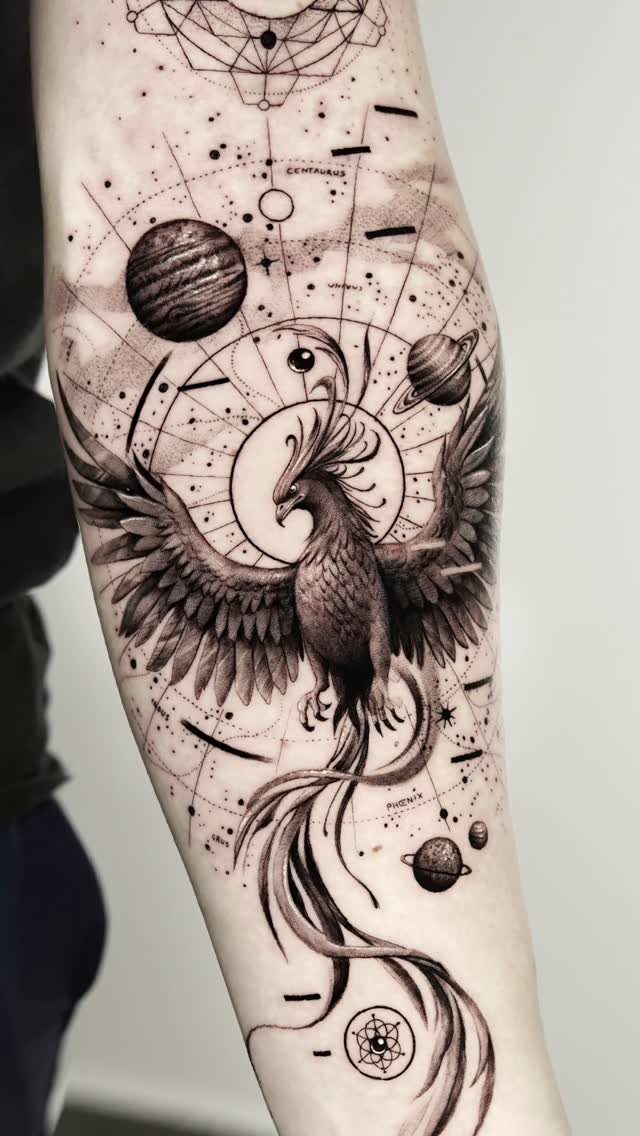
A phoenix on the arm carries weight because the symbol is tied to coming back from something hard.
Adding planets and geometric lines like this one turns it into a larger composition instead of a single bird, which fills more space and gives the piece structure.
The bird itself needs room to spread its wings. Cramming it into a small area flattens the shape and loses the motion a phoenix is supposed to have.
If you’re mixing styles like realism and geometry, make sure your artist can handle both. Not every tattoo artist works clean in multiple styles.
17. Minimalist Tattoos
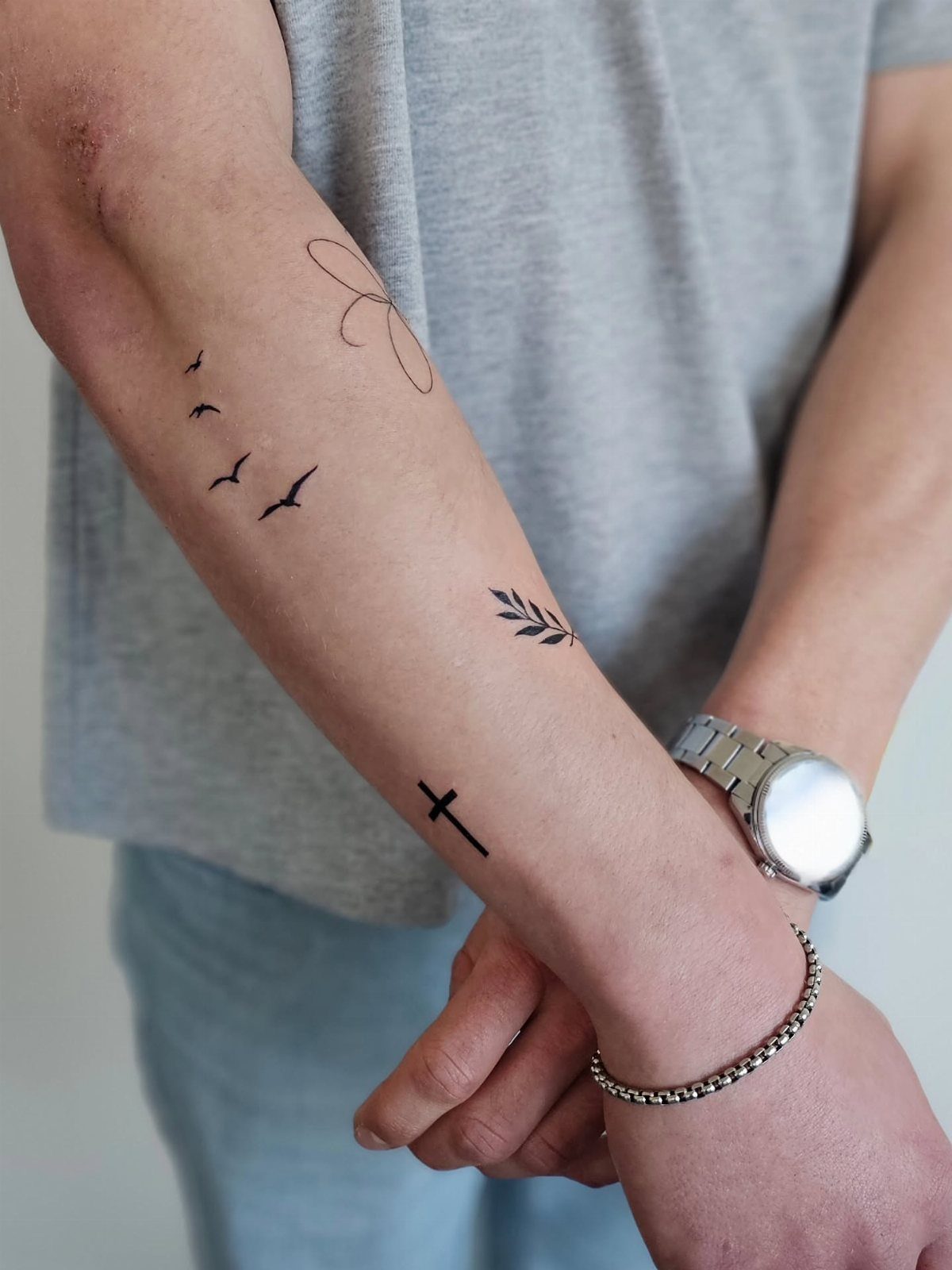
Minimalist tattoos skip heavy shading and large coverage in favor of simple line work and small symbols.
Birds, leaves and crosses like these can sit together on the forearm without turning into a sleeve, and each one stays readable on its own.
Spacing matters more here than in a full design. If you’re adding pieces over time, leave enough room between them so they don’t crowd each other as you go.
Small tattoos hurt less and heal faster than larger pieces, but they also limit how much detail your artist can fit in.
18. Portrait Tattoos
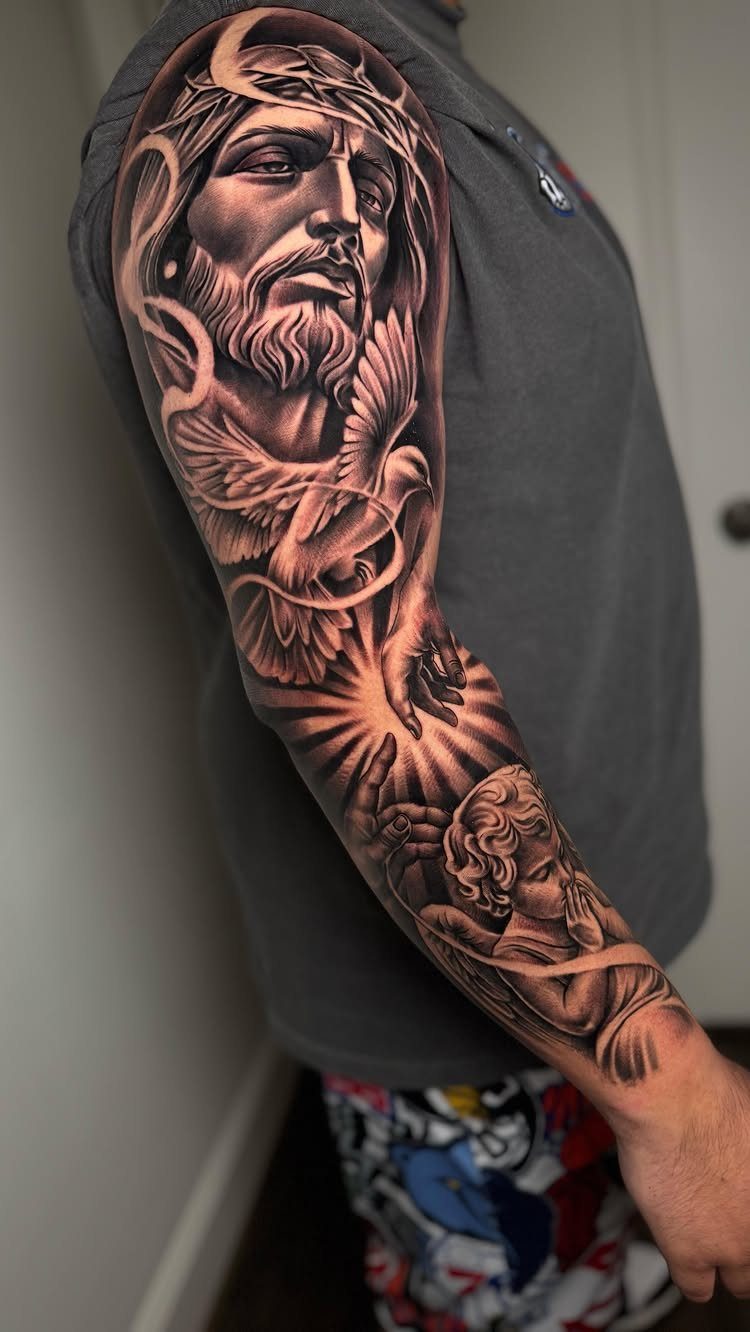
A portrait tattoo puts a face on your arm, and if you’re going that route it’s usually someone who matters or a figure you connect with.
Jesus, saints and family members are common choices, and black and grey realism is the standard approach because it captures detail better than line work.
Portraits require an artist who specializes in faces.
A bad portrait is obvious, and fixing it later is expensive and painful. Look at healed work, not fresh tattoos, before you book.
Expect multiple sessions. A full sleeve with multiple faces and background elements takes time.
19. Geometric Shoulder Design
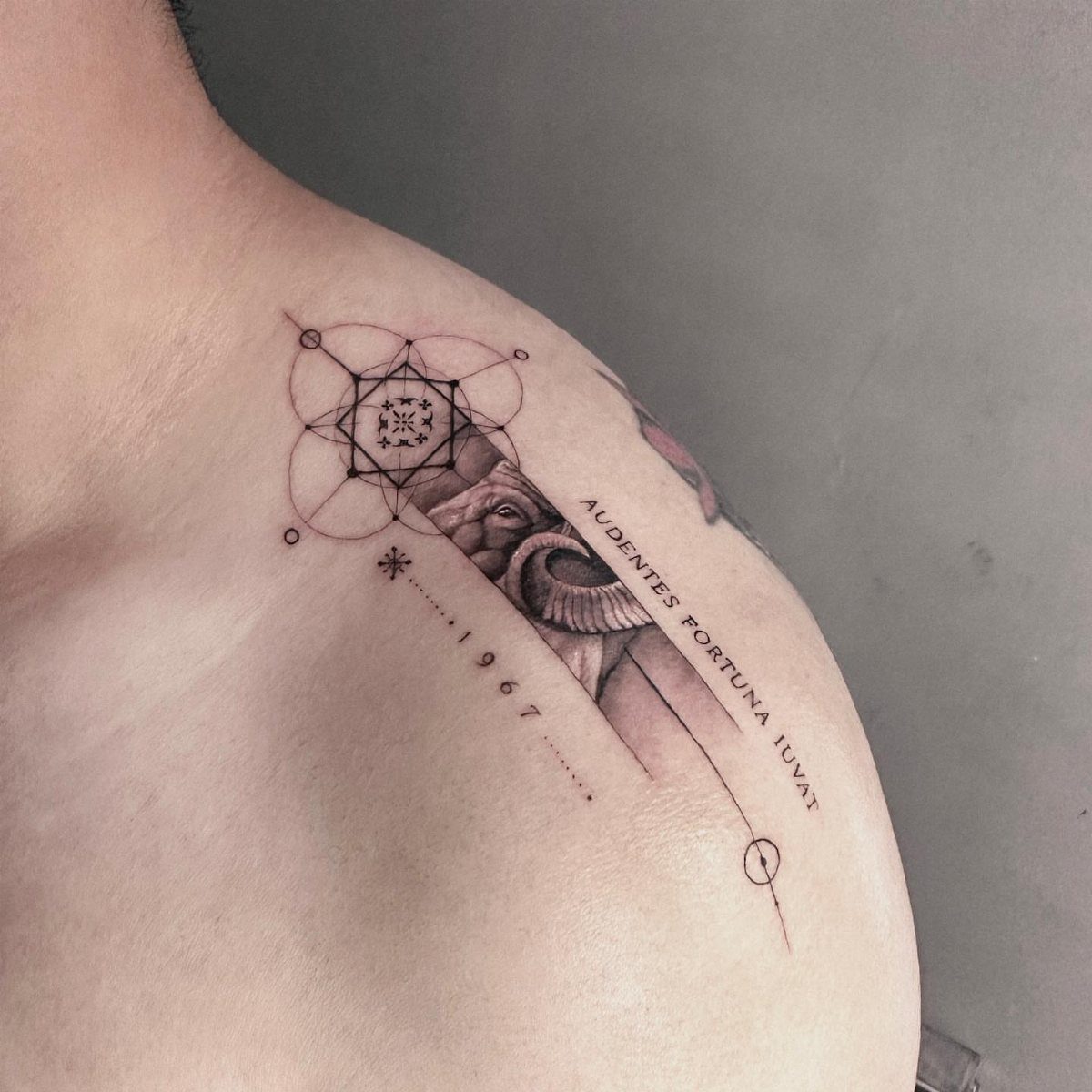
Interlocking circles layered over the shoulder cap follow the joint’s curve instead of fighting it. The ram adds a focal point, and the Latin phrase fills the gap between shoulder and bicep where spacing can look awkward on geometric pieces.
Shoulder tattoos sit higher than most arm placements, so they show in tank tops but stay covered in short sleeves. That gives you control over visibility without committing to full exposure.
If you’re adding text, keep it short. Long phrases wrap too far and lose their line as your shoulder moves.
20. Star Tattoos
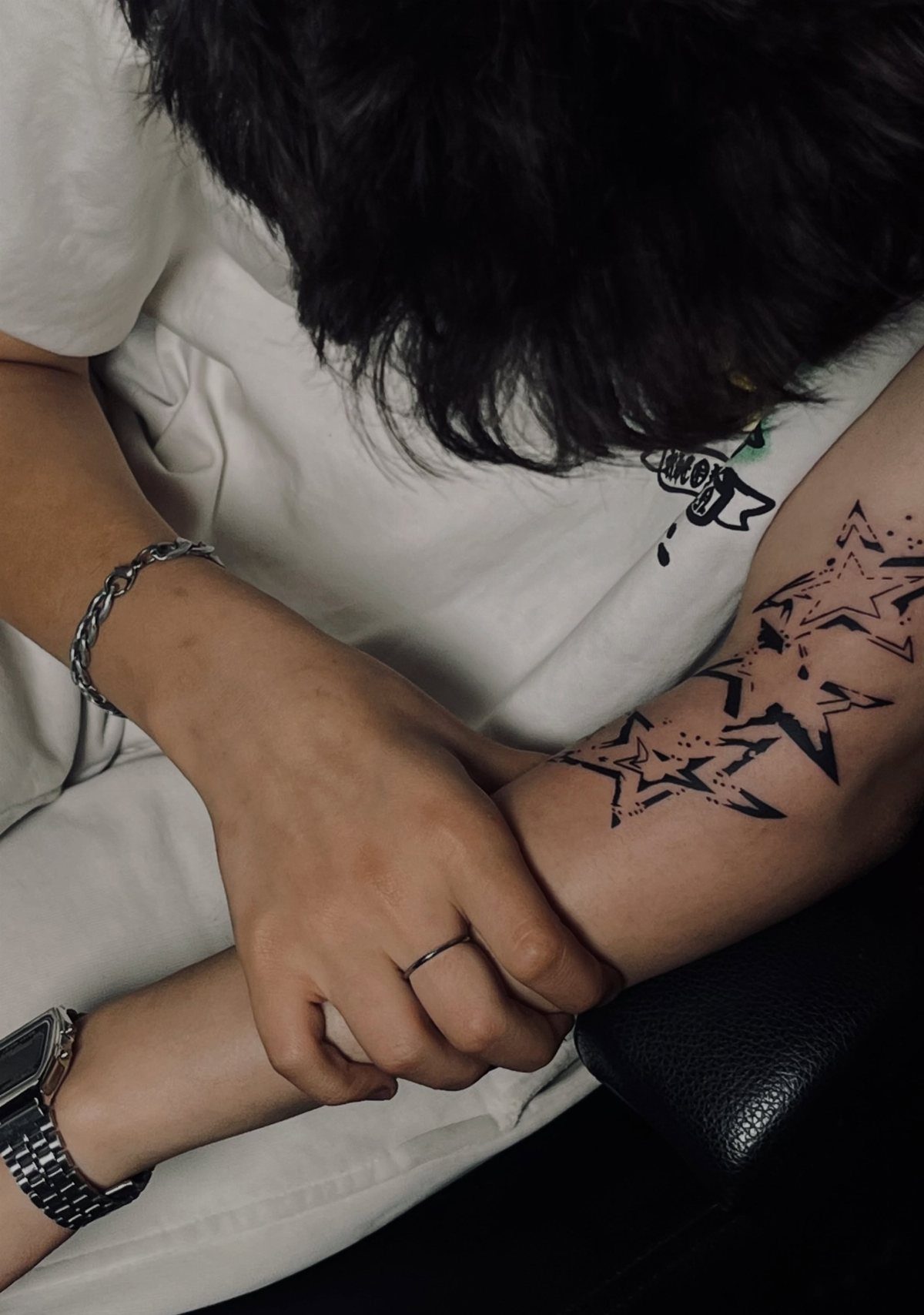
Nautical stars use alternating fills in their points, while simple outlined stars give you the same shape with less commitment to heavy black.
If you’re spacing them out, keep the sizing consistent so they look intentional instead of random.
Black ink on the forearm shows contrast clearly, so any uneven lines will be visible once it heals.
Choosing the Right Style
Realism puts a photo-quality image on your skin, so it works for portraits, animals or anything that needs fine detail.
American Traditional uses bold outlines and limited color, which holds up better over decades than styles that rely on soft shading.
Tribal leans on solid black and follows muscle structure, so it reads cleanly and ages without fading into mud.
Pick a style that matches what you actually want to look at every day, not what’s trending. If you’re drawn to a specific image or symbol, start there and let the style follow.
Design Principles
Your arm’s muscles run diagonally across the forearm and stack in curves around the bicep and tricep.
A design that follows those lines looks like it belongs there, while one that cuts across them fights the shape your arm already has.
Tense your forearm and you’ll see the muscle wrap from the outer edge toward your wrist.
That line is where waves, wind bars or any flowing element should sit. On the upper arm, the bicep and tricep create natural divisions that you can use to separate parts of a design or frame a central image.
Fill the space you have without cramming in detail that won’t hold. A design that’s too small for the area looks like an afterthought, while one that’s too dense turns into a blur as it heals.
Tattoo Placement Considerations
The forearm offers a broad, visible surface that shows fine detail clearly and disappears under a sleeve when the situation calls for it.
The shape suits vertical images like animals or script just as well as it fits geometric patterns or clock faces.
Upper arm placement offers more space for larger designs and wraps around the bicep or tricep without needing a full sleeve. A short-sleeve shirt will cover it, so you control when it shows.
Before you book, note the exact spot, the size in inches, whether you want color or black and grey, and whether you plan to expand the piece later. Bring reference images sized close to what you’re planning, not thumbnail screenshots.
Frequently Asked Questions
Which arm tattoo is best for a male?
The best arm tattoo depends on what the design means to you and where you want it to sit. Upper arm designs tuck under most shirts, forearm ones read clearly every time you roll a sleeve.
What is the 1/3 rule tattoo?
The 1/3 rule suggests a tattoo should take up about one-third of the area where you place it.
What tattoo is most attractive on a man?
Attractiveness comes down to personal taste, but designs like lions, dragons and geometric patterns stay popular because they carry clear meaning and fill arm space well.
Animal portraits and bold geometric shapes hold up over time and read cleanly from a distance.