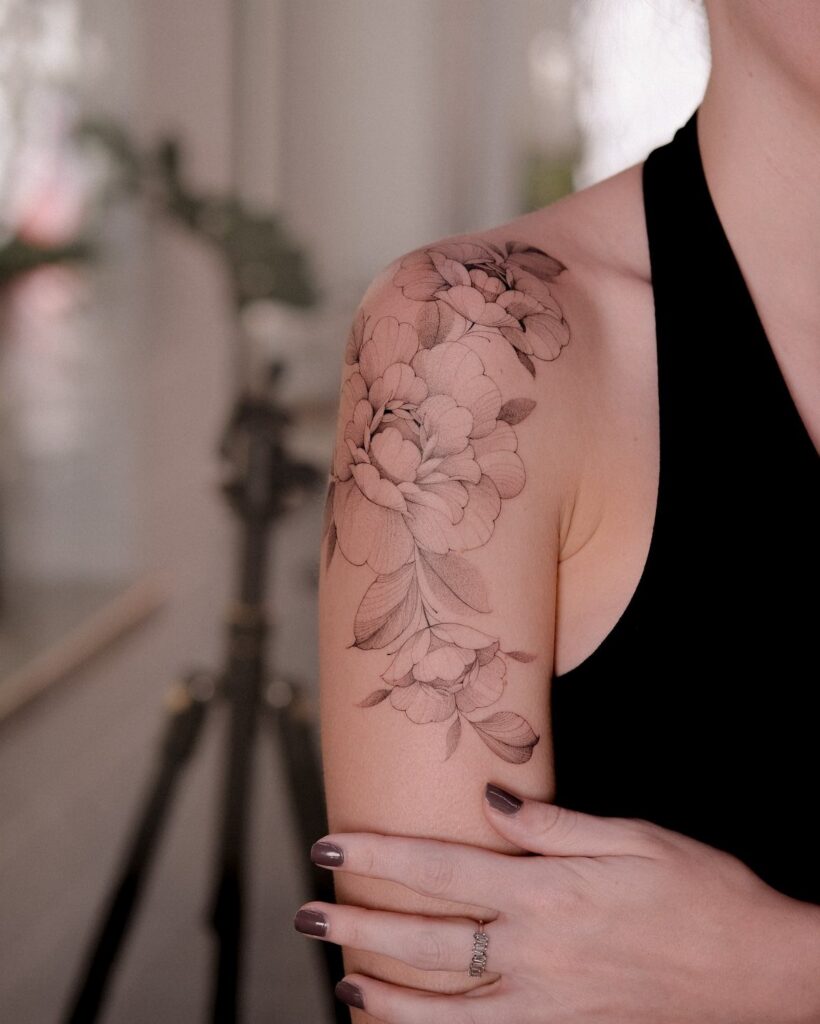
Upper arm placement sits high enough that a short sleeve covers it completely, which keeps most workplace dress codes satisfied while still giving you the option to show the piece in tank tops or sleeveless cuts.
Skin on the outer upper arm shifts less than tissue near the elbow or shoulder, which helps thin lines stay crisp longer.
1. Large and Colorful Tattoos
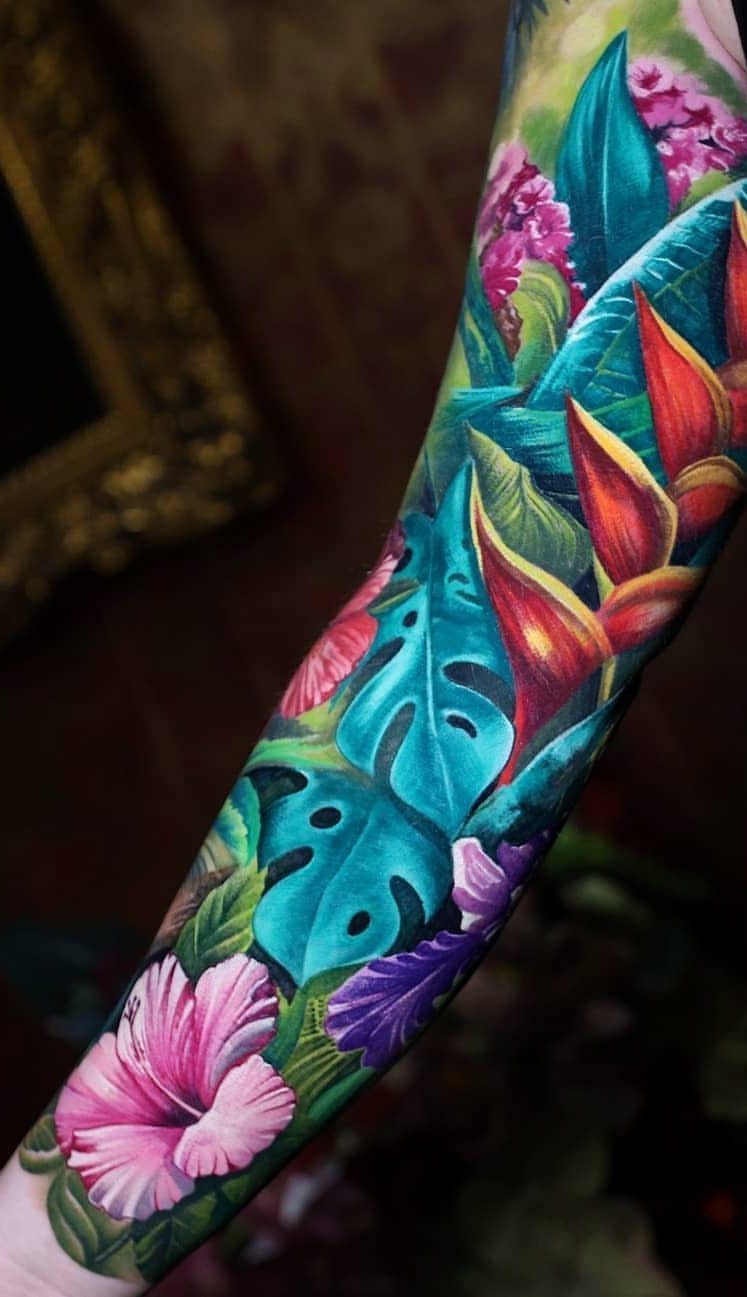
A tropical scene that wraps the upper arm makes the piece feel like a sleeve and stops short of full coverage. The hibiscus pulls focus, and the surrounding leaves add depth and leave breathing room.
Bright ink holds up best when you keep the palette clean.
Fewer main colors read more clearly as the tattoo ages. The bird-of-paradise and foliage here balance the pink without turning muddy.
Color saturation is slower work than linework alone, and rushing it shows in patchy spots that need touch-ups later.
2. Thin Lines and Geometric Shapes
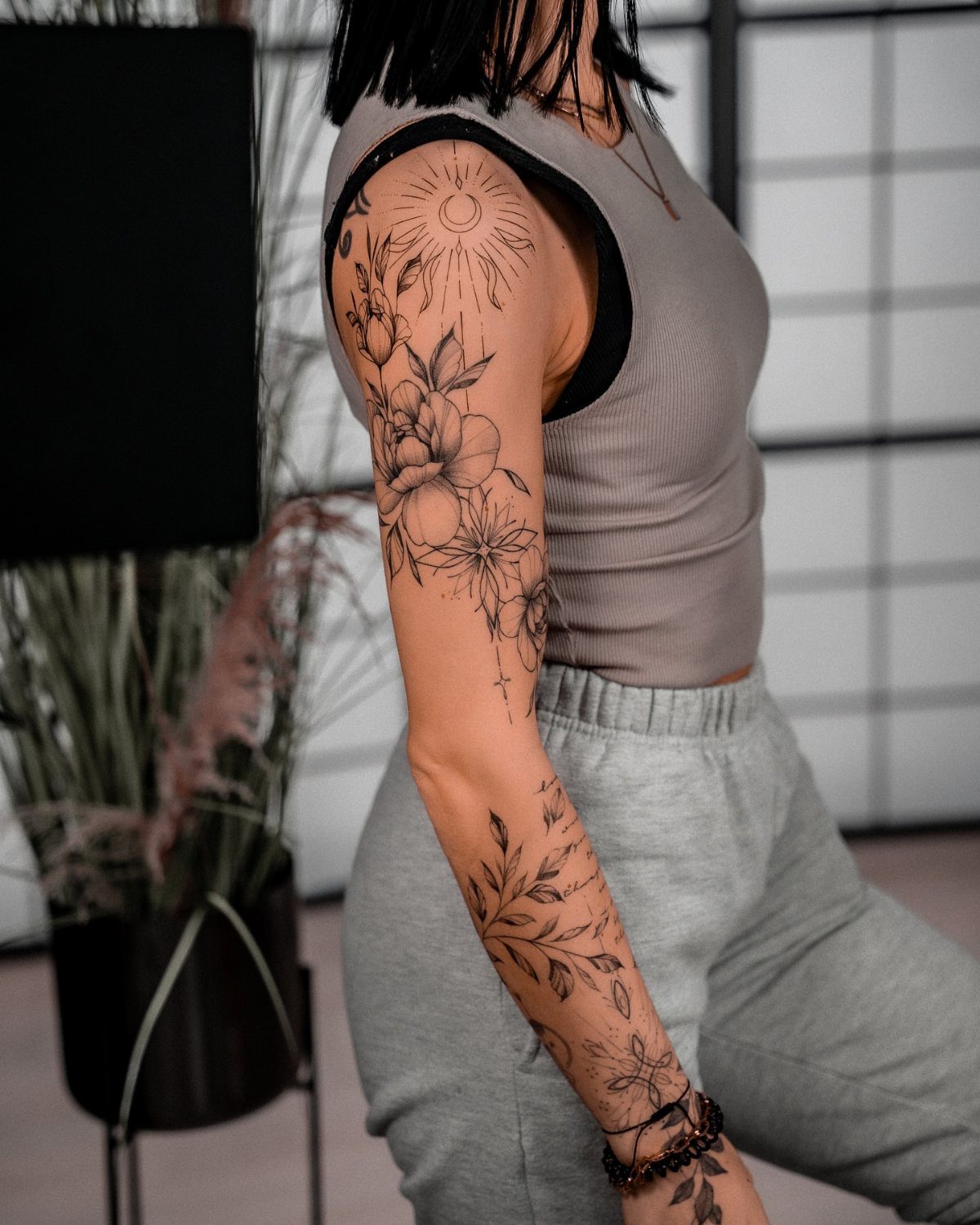
Fine black lines and geometric sun rays give you structure without the weight of a solid design. The floral stems soften the angular shapes, so the piece feels balanced rather than rigid.
Thin linework ages differently than bold outlines.
Thin lines can blur slightly over a decade, especially on areas that move a lot. For crisp edges years out, ask your artist to keep the thinnest lines just a bit wider.
This style suits lighter skin tones where black ink shows high contrast. On darker skin, slightly thicker lines hold visibility better as the tattoo settles.
3. Floral Patterns
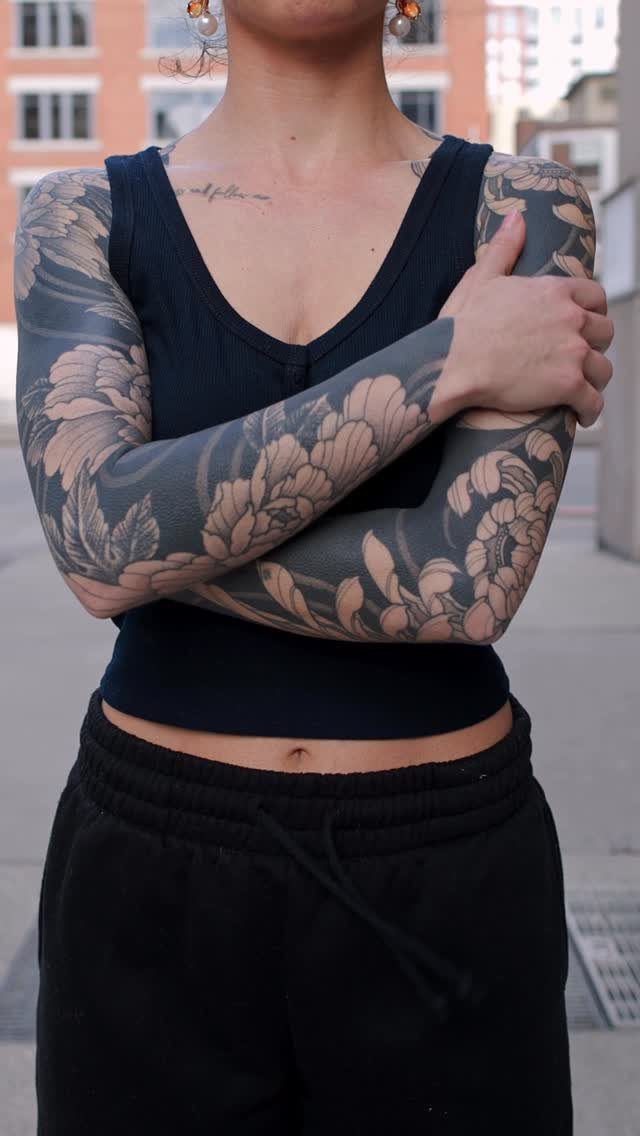
Grey shading adds depth to floral patterns and skips the upkeep that color demands. The petals and leaves here flow across both arms, creating symmetry that ties the design together.
Shading in grey tones fades slower than most bright pigments. You skip the color touch-ups that tropical or watercolor florals need, and the design stays readable as it softens.
Healing both at once limits your movement for weeks, so most people stagger them a month apart.
4. Dainty Flower Tattoos
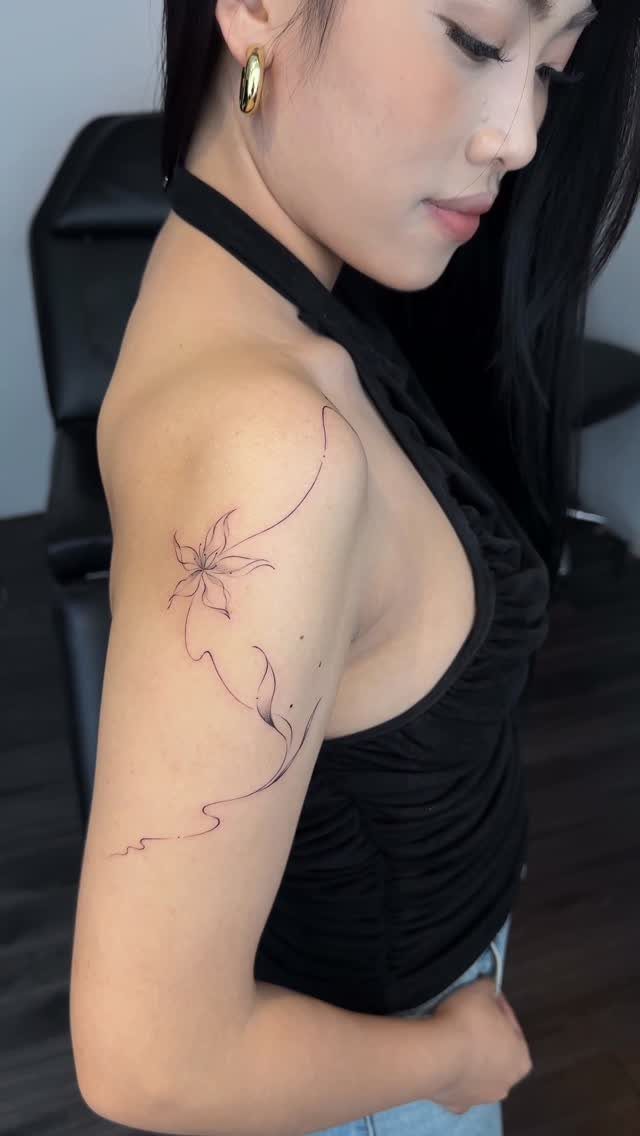
A single stem with a few blooms makes the design light and easy to place. The thin lines and minimal shading mean the tattoo sits on the skin rather than filling it.
Dainty pieces work best when they stay simple.
Adding too much detail into a small area turns delicate linework into a smudge once the ink settles. This one sticks to outlines and a few accent leaves, which keeps it readable.
Placement on the outer upper arm gives you the option to show or cover it easily. The curve of the muscle also moves less than the inner arm, so fine lines hold their shape longer there.
5. Mythological Creature Black and Grey Tattoo
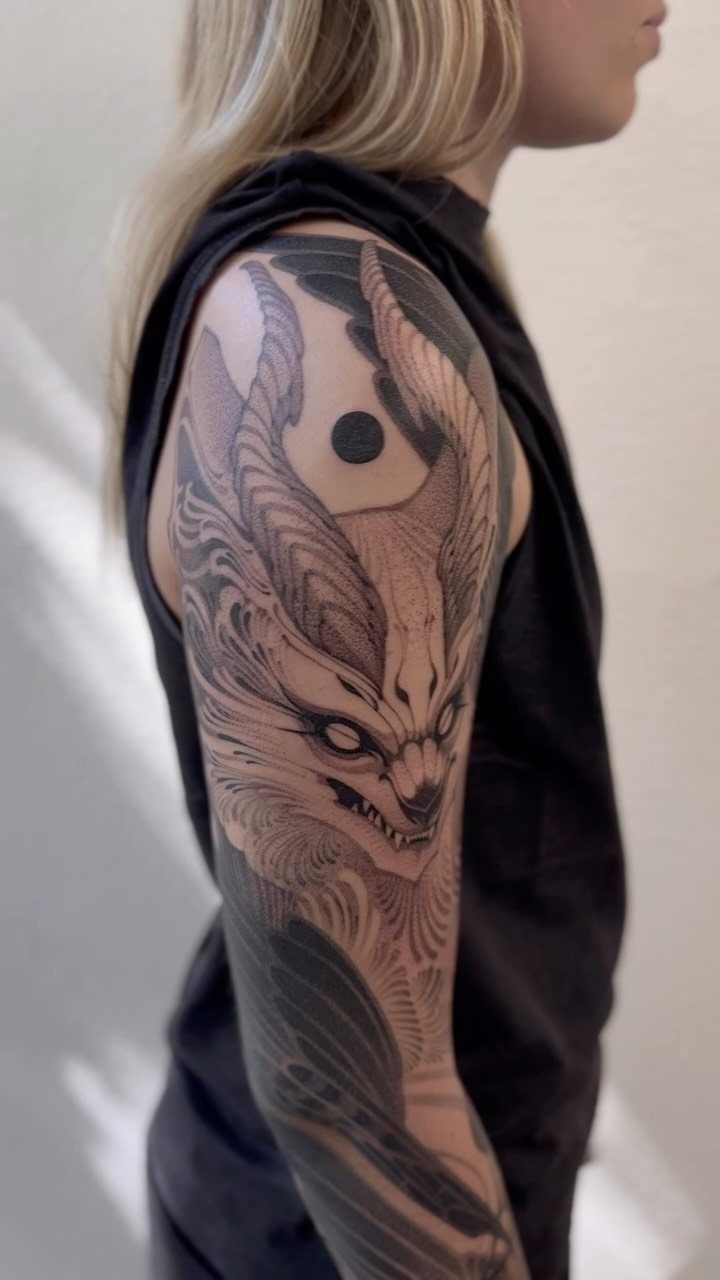
A horned creature with sharp teeth and heavy black shading gives you a bold, dark piece that fills the upper arm. The grey tones add dimension to the face and horns, making the design feel layered rather than flat.
Black and grey realism demands solid technical skill. Look for an artist whose portfolio shows clean gradients and defined highlights, not patchy shadows that look unfinished.
This style reads well from a distance, which matters for upper arm placement.
The high contrast and larger scale mean the details stay visible even when someone sees it across a room, unlike fine-line work that disappears from more than a few feet away.
Tattoo Placement Considerations
The upper arm sits high enough that a short sleeve covers it, and most workplace dress codes that ban visible ink give this spot a pass.
Sleeveless tops and tank straps show it off without committing to the exposure a forearm or hand demands.
Clothing choice changes how often the piece gets sun. Covered placement fades slower than skin that sees UV year-round, so you stretch the time between touch-ups compared to a wrist or ankle that stays exposed.
Muscle movement on the upper arm is gentler than joints like the elbow or shoulder. That steadiness keeps fine linework from warping as quickly, though aging and weight change still shift the design over decades.
The outer curve of the upper arm faces forward and reads easily when your arm hangs at your side. Inner placement hides more but moves closer to the armpit, where sweat and friction slow healing.
Tattoo Trends
Instagram and Pinterest feed upper arm designs directly to anyone planning ink. Floral half-sleeves and single-subject pieces dominate the saves, with fine-line botanicals and bold black-and-grey realism splitting the attention.
Wrap designs that start on the shoulder and curve around the bicep get tagged more often than isolated patches, likely because they photograph well and fill the frame without needing a full sleeve commitment.
Minimalist line art spiked in searches a few years back and still holds, though maximalist color and illustrative styles are climbing again as people look for designs that stand out in a feed saturated with delicate black ink.
The upper arm shows up in before-and-after posts more than most placements, which keeps it visible to anyone researching their first tattoo.
Frequently Asked Questions
What is a tattoo that covers most of the arm?
A sleeve tattoo covers most or all of the arm, running from shoulder to wrist or stopping at the elbow for a half-sleeve.
A wrap design that begins at the shoulder and follows the curve of the bicep covers a lot of ground without running the full length of your arm.
These pieces photograph well and fill the space without extending down to the forearm, so you keep the option to cover them with short sleeves.
What are some good tattoo ideas for girls?
Half-sleeves in florals, fine-line botanical work, and black-and-grey realism are the styles most people ask for on the upper arm.
A single subject like a tropical hibiscus cluster or a slim stem with 2 or 3 blooms stays compact and reads clearly from any angle.
Grey-shaded florals skip the color upkeep and fade slower than bright pigments, while geometric shapes with thin lines give you structure without heavy coverage.





