Placement decides how much room you have for detail, how often the design stays visible, and which part of the mythology fits the shape of the spot.
A compact symbol like the Vegvisir fits a forearm or ankle and reads clearly in solid black, while a full warrior portrait with a longship needs a thigh or back to hold the shading and composition without cramping the linework.
The designs below pull from protection symbols, mythic creatures and battle imagery, and most rely on knotwork or detail that needs thick enough lines to stay crisp through years of fading.
1. Thor’s Hammer Tattoo
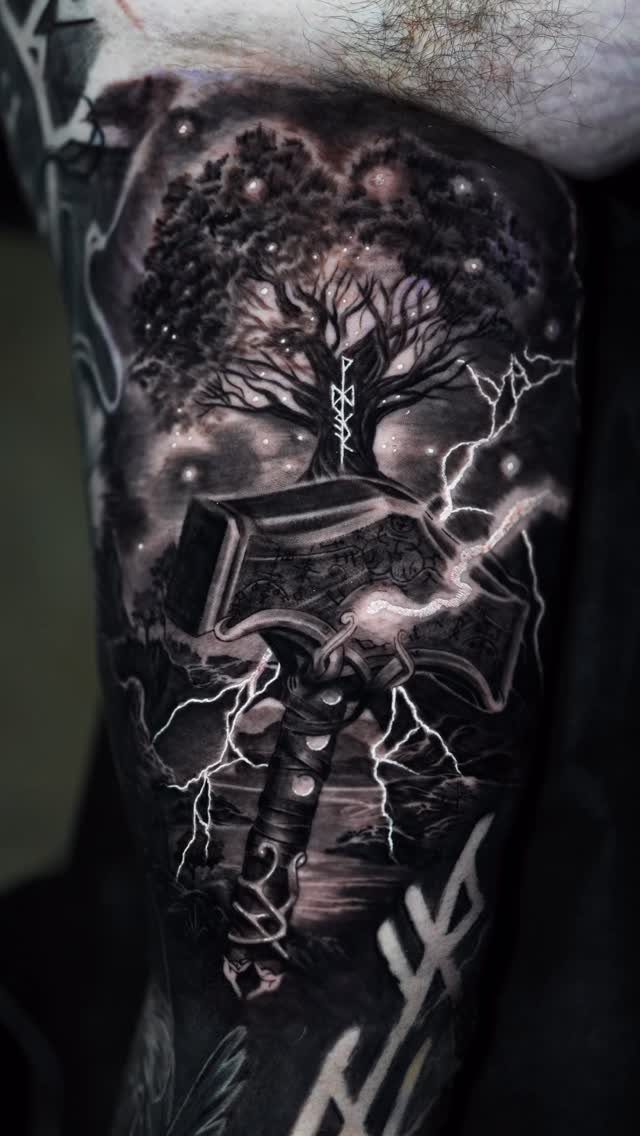
Mjölnir sits at the center of strength and protection, and putting it on your leg or arm gives you room to add the mythology around it. Lightning bolts and Yggdrasil branches turn a simple hammer into a full scene.
Black and grey shading keeps the focus on form and depth. The hammer itself can be solid and geometric or weathered with texture, and the tree roots or lightning can fill the negative space without crowding the design.
This reads well from a distance and ages cleanly because the shapes stay bold.
2. Triple Horn of Odin Tattoo
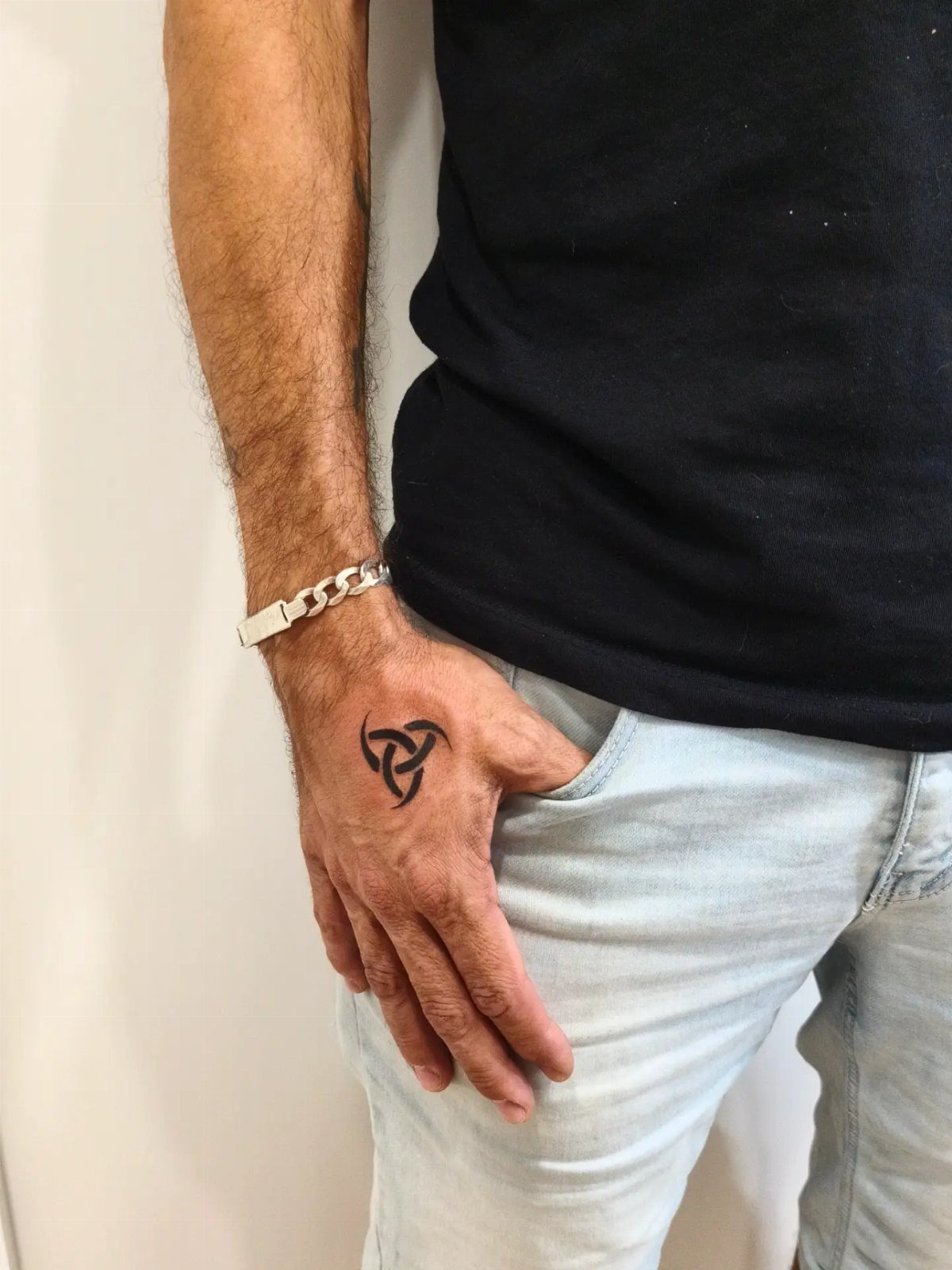
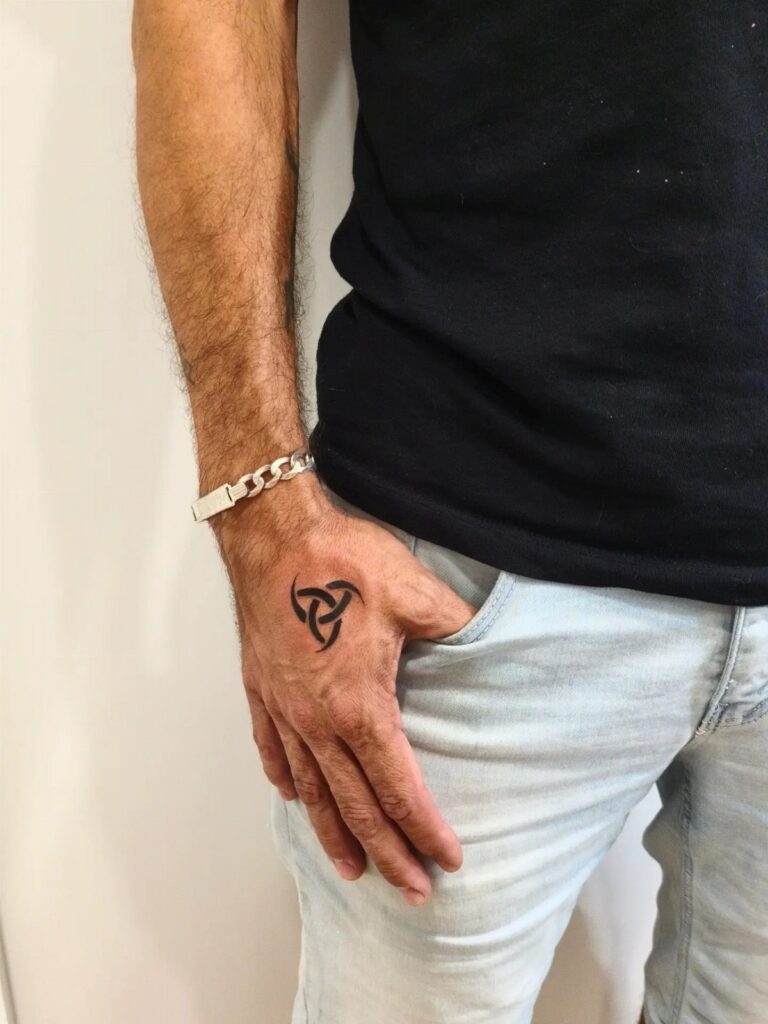
3 interlocking horns form a compact symbol that fits the back of the hand, and the placement makes it visible every time you move.
The triple horn connects to the mead of poetry, so it carries meaning around inspiration and the pursuit of knowledge.
Hand tattoos fade faster than most other placements because the skin there regenerates quickly and sees constant friction. You’ll need touch-ups every few years to keep the lines crisp.
The design works in solid black or with minimal shading, and keeping it simple helps it hold up longer on a high-wear spot.
3. Viking Raven Tattoos
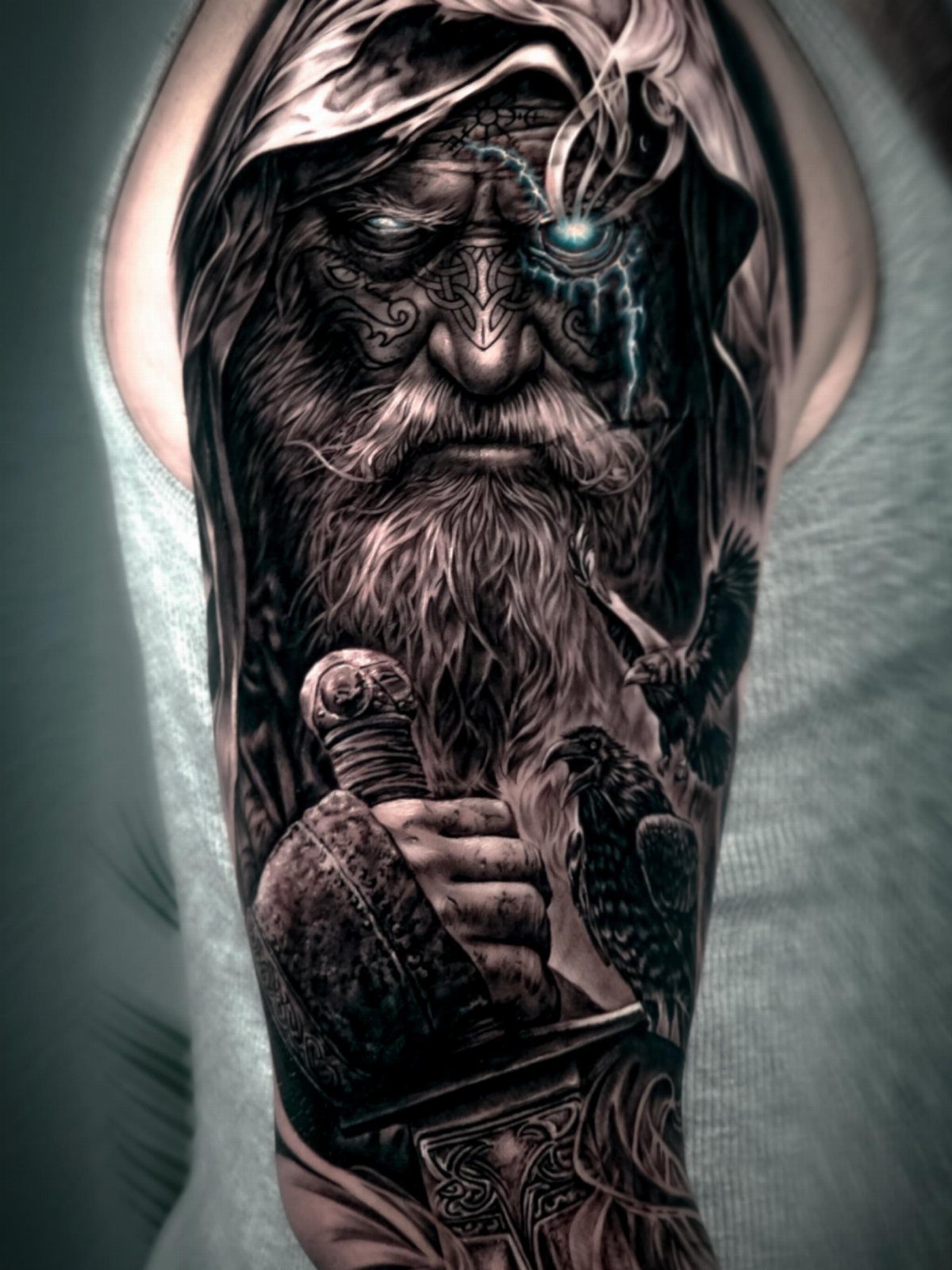
Ravens show up as Odin’s messengers, and pairing them with a warrior figure turns the piece into a narrative. The glowing eye detail adds a supernatural edge, and the sword grounds it in combat imagery.
Upper arm placement gives you enough canvas for fine detail in the bearded face and feather work without cramping the composition. Black and grey shading lets you build contrast between the figure and the birds, so each element reads clearly.
I like this version because the ravens frame the warrior instead of floating separately, which makes the whole piece feel unified.
4. Aegishjalmur Tattoo
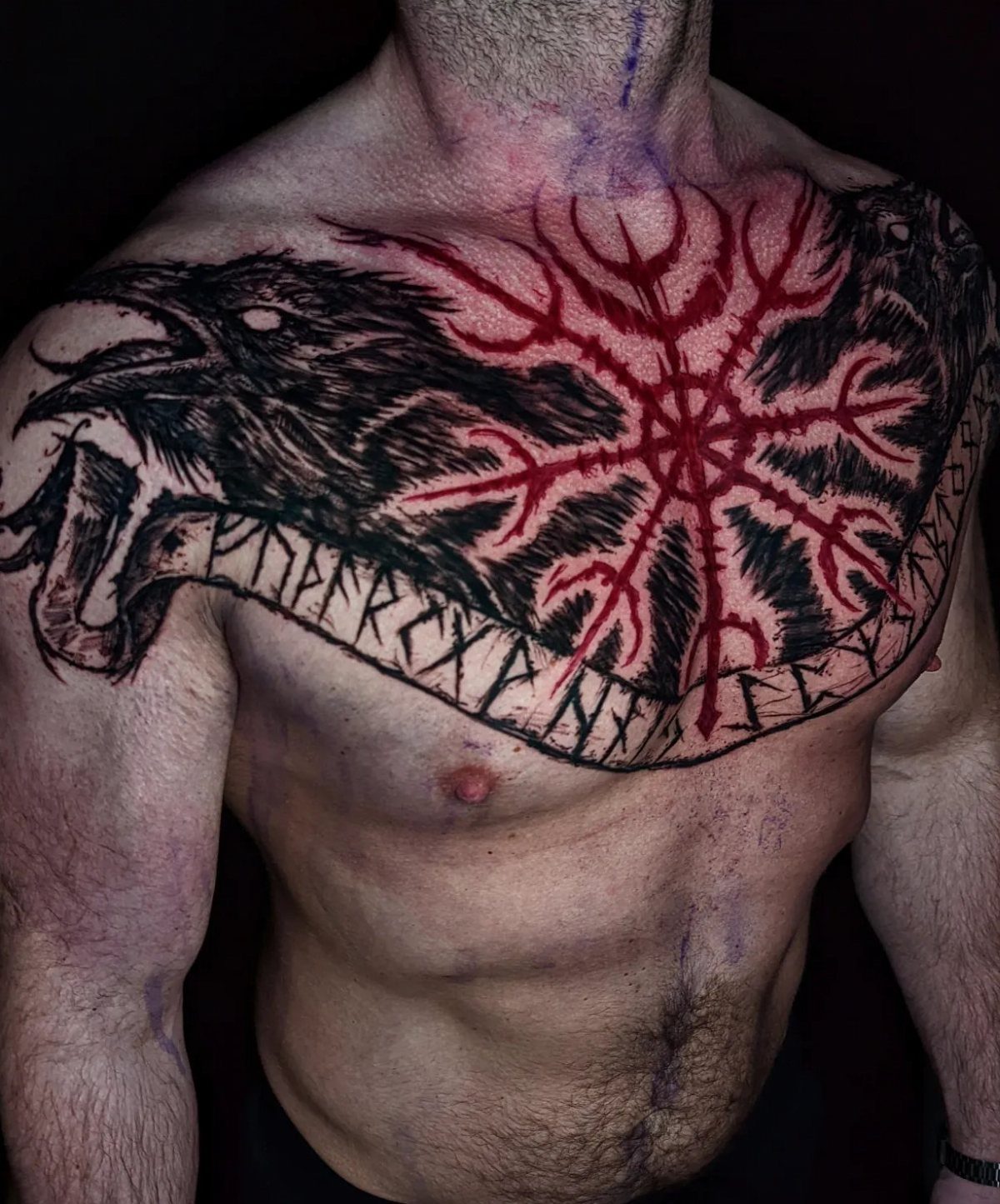
The Aegishjalmur is an eight-armed stave meant to instill fear and grant protection in battle.
Placing it at the center of your chest puts it over the heart, and adding a raven and runes fills out the composition without losing the symbol’s symmetry.
The red ink on the Aegishjalmur pulls attention and breaks up the black, but red fades faster than black and often needs a refresh within a few years. If you want longevity, stick to black and grey.
Chest tattoos hurt more over the sternum and ribs, but the flat surface holds detail well and the piece stays covered when you need it to.
5. Ouroboros Serpent Tattoo
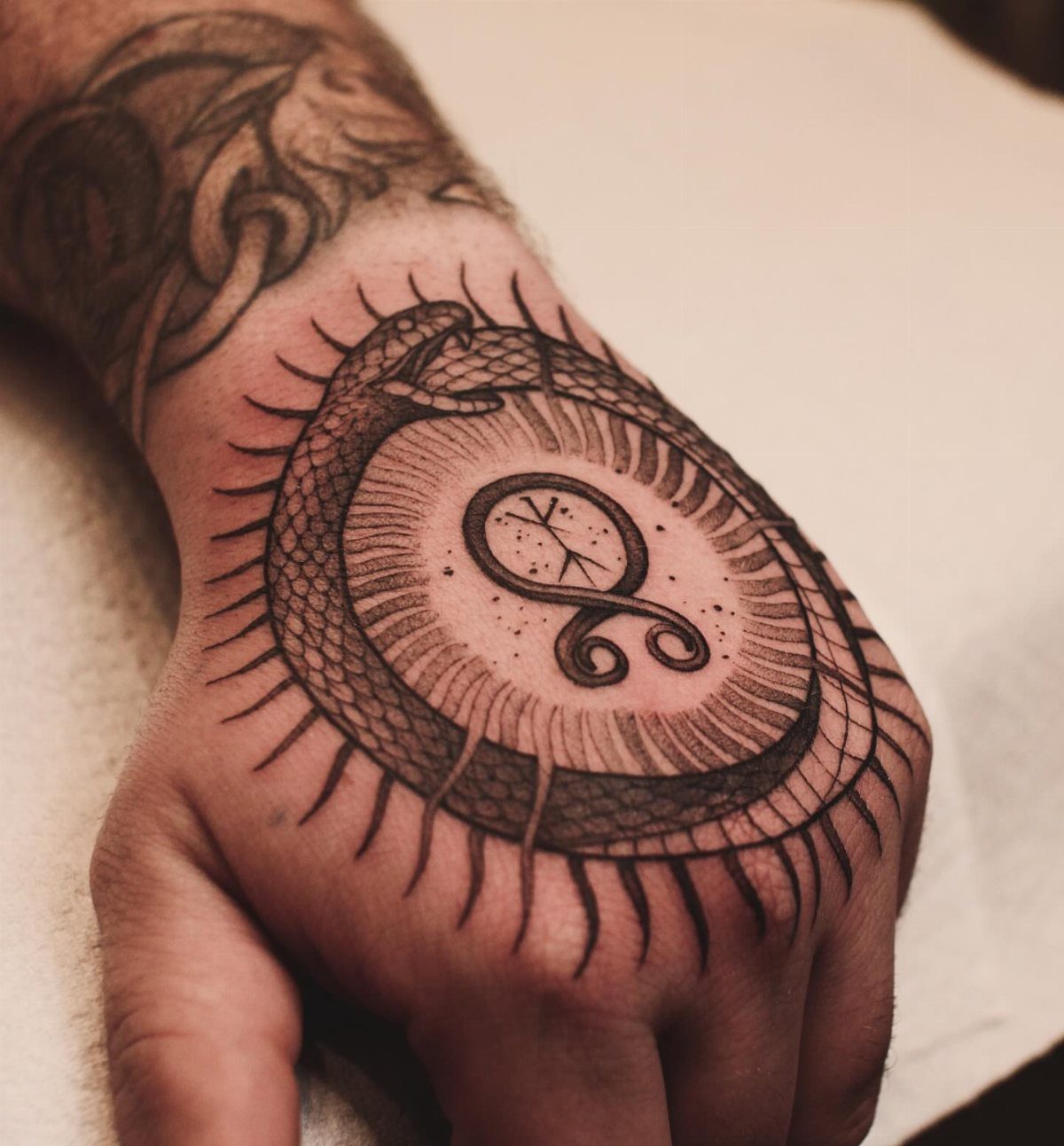
The serpent eating its own tail marks the cycle of creation and destruction, and sizing it to fit your hand keeps the design compact.
A central Norse symbol inside the circle anchors the composition and gives the tattoo a second layer of meaning.
Hand tattoos are visible in most professional settings, so consider whether you’re in a field where that matters.
The lines need to be thick enough to survive years of fading, and the circular shape helps the design stay readable even after touch-ups.
This works best in solid black with minimal shading, which holds up better on skin that regenerates as quickly as your hands do.
6. Wyrd Web Tattoo
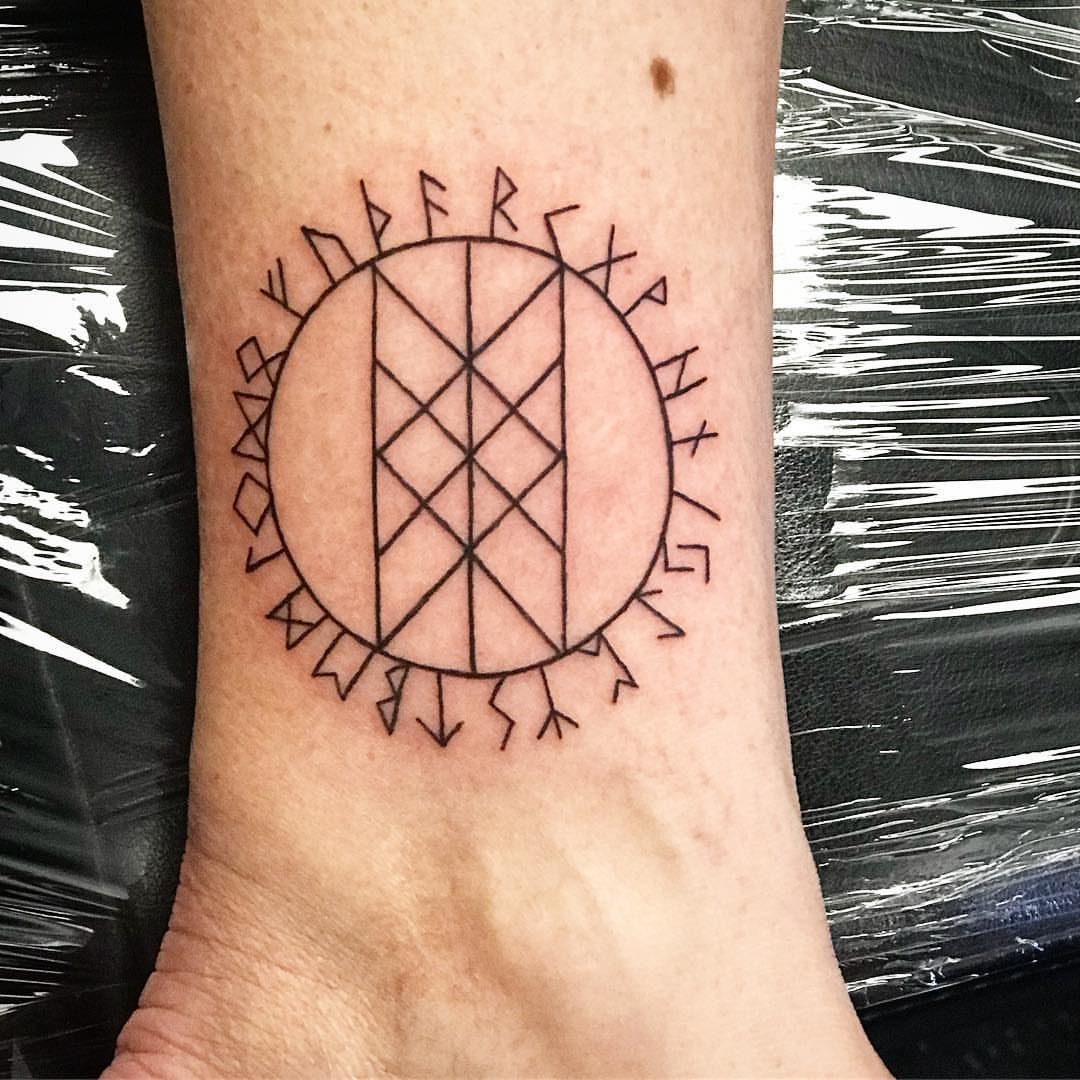
The Wyrd web maps out the threads of fate, and the circular design with radiating lines fits the ankle without wrapping too far around the bone. Adding runes around the perimeter ties the symbol to language and divination.
Ankle tattoos hurt more over the bone, and the skin there is thinner, so expect sharper pain during the session. The placement keeps the tattoo easy to cover with shoes or socks, which gives you control over when it shows.
Black ink and clean linework hold up best on the ankle because the area flexes constantly and fine detail can blur over time.
7. Vegvisir Tattoo
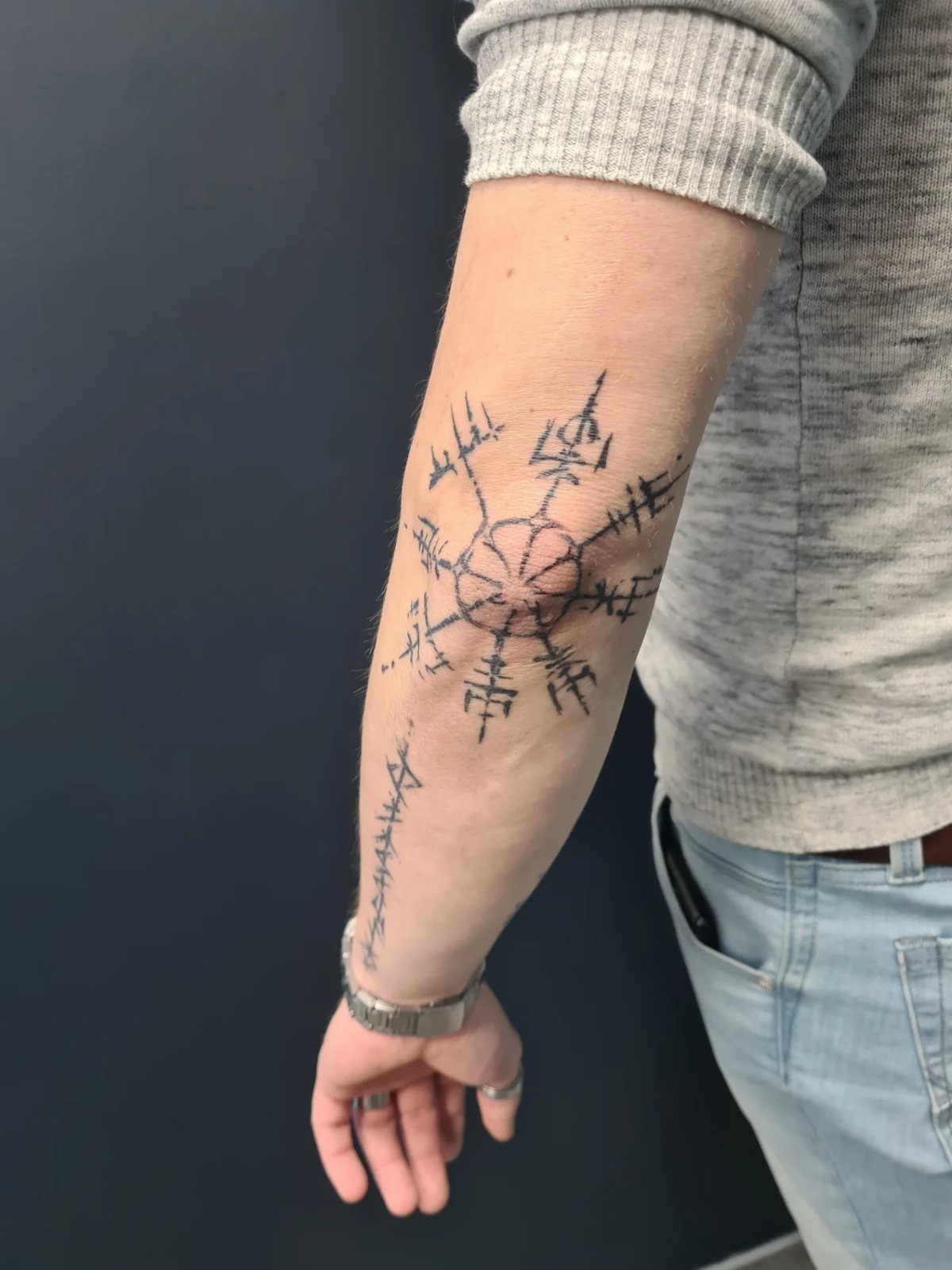
The Vegvisir is a wayfinding symbol, and placing it on your forearm keeps it visible when you need the reminder.
The radiating lines form a geometric pattern that holds detail well in black ink, and adding smaller runes below it layers in personal meaning without overcrowding the design.
Forearm placement hurts less than most spots because there’s more muscle and less bone near the surface.
The tattoo stays easy to cover with long sleeves, and the flat surface means the lines age cleanly if the artist uses thick enough strokes.
I’d keep this in solid black with no shading, which reads clearly and needs fewer touch-ups over time.
8. Viking Runes Tattoo
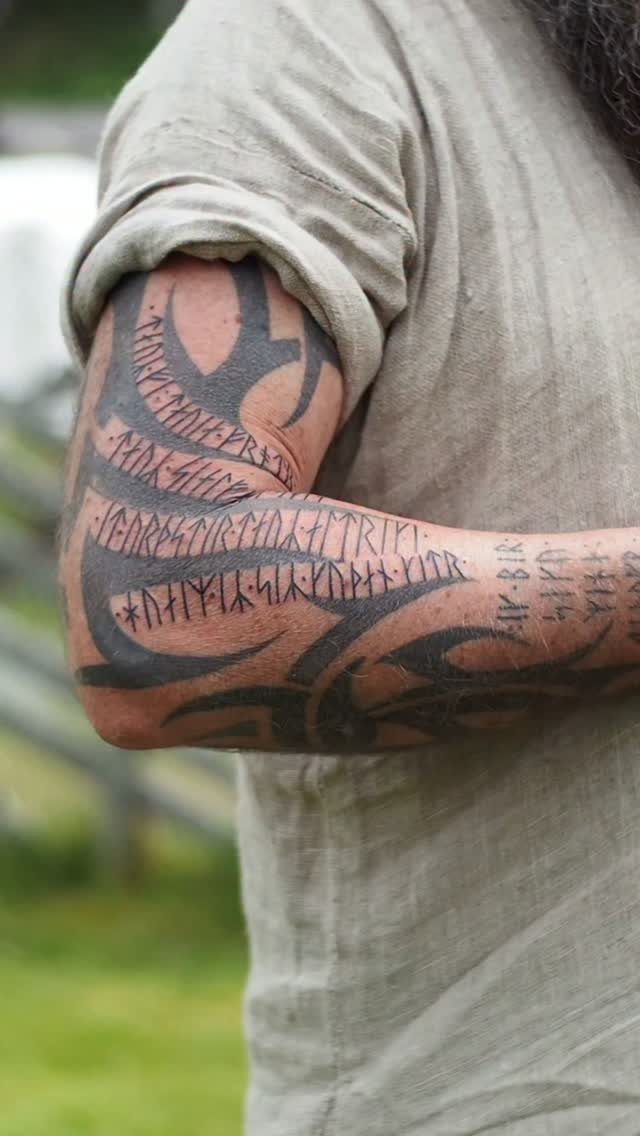
Viking runes give you the alphabet itself, and arranging them in vertical bands down your arm lets you spell out words or stack symbols that carry personal weight.
The tribal patterns between the runes fill the space and tie the whole piece into one continuous flow.
Upper arm placement gives you room to layer the design without cramping the linework, and the muscle there moves less than your forearm, so the tattoo stays sharp longer.
Black ink works best for runes because the letters need contrast to stay readable, and shading can blur the edges over time.
This suits someone who wants text that still looks like a pattern from a distance.
9. Hugin and Munin Tattoo
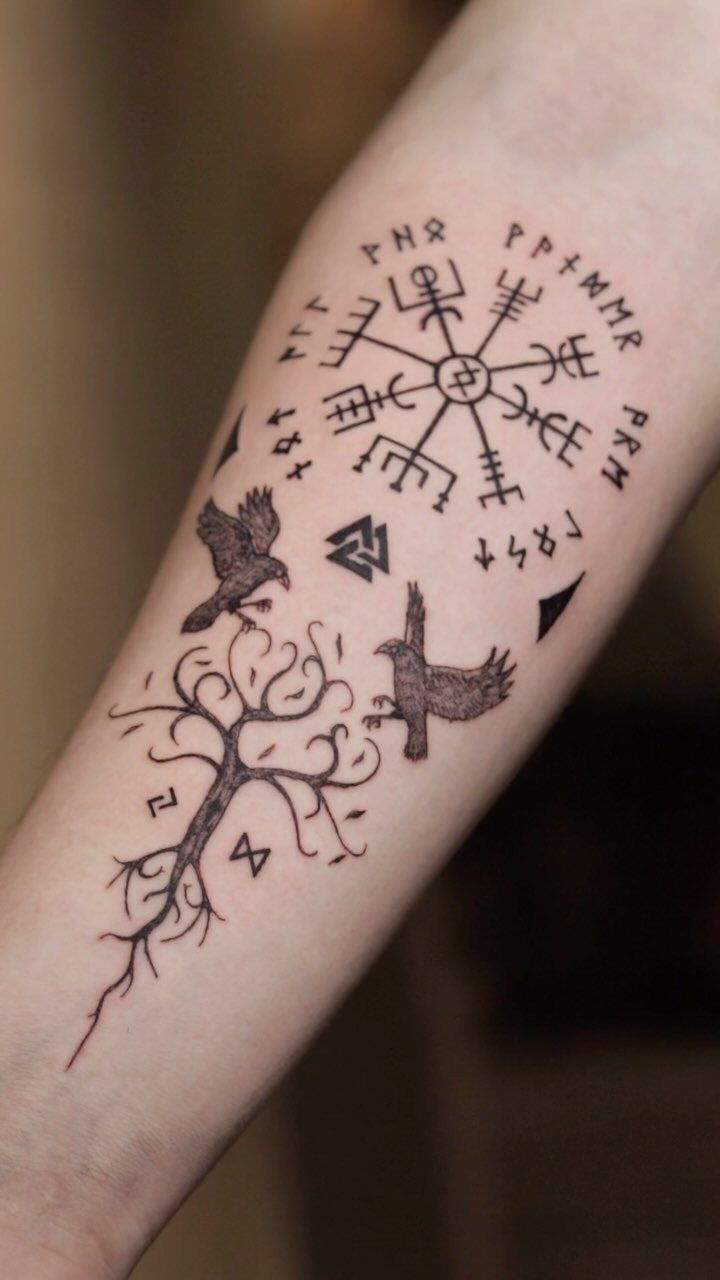
Hugin and Munin represent thought and memory, and pairing them with the tree and Vegvisir turns your forearm into a full mythology scene.
The ravens sit above the compass and tree, which keeps the composition balanced and lets each symbol read on its own.
The black ink and clean linework in this style age well, and the vertical layout follows the natural lines of your arm.
This works if you want multiple symbols that still feel like one cohesive piece instead of separate ideas stacked together.
10. Celtic Viking Tattoos
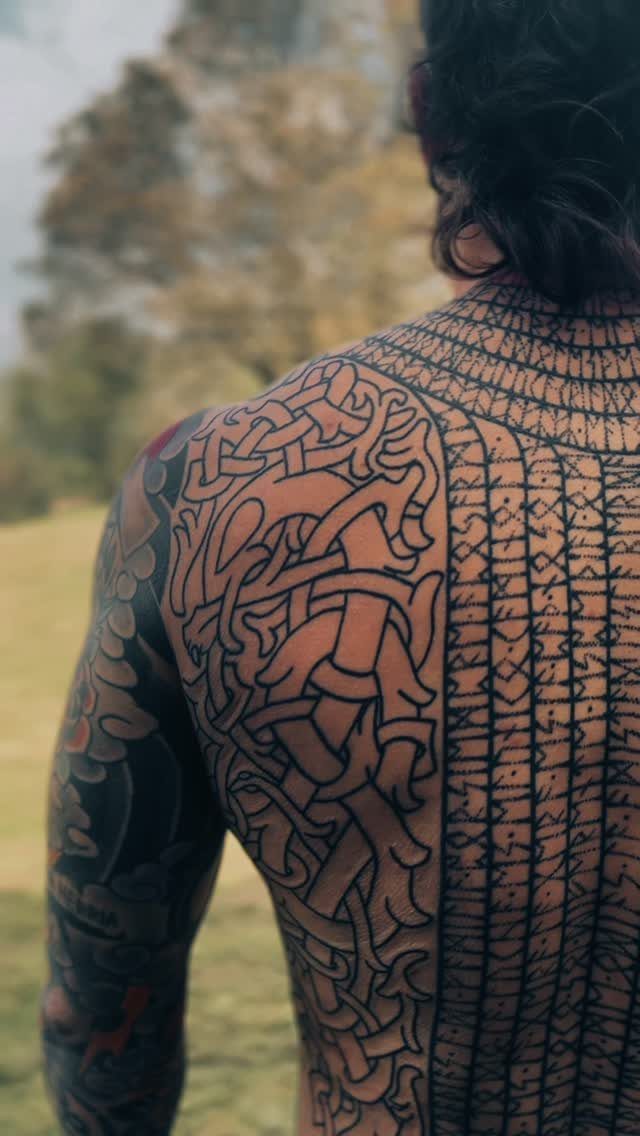
Celtic knotwork and Norse runes don’t come from the same tradition, but they share an emphasis on geometry and interlocking lines.
Covering your back and shoulder with both styles creates a fusion piece that pulls from 2 different sources of European heritage.
Back tattoos take multiple sessions because of the surface area, and the cost adds up quickly. Pain varies across the back: the shoulder blade and spine hurt more than the flat areas near your ribs.
This suits someone who wants a large-scale piece and doesn’t need the tattoo to stay hidden, because a back piece this size will wrap onto your arms and stay visible in most shirts.
11. Viking Skull Tattoos
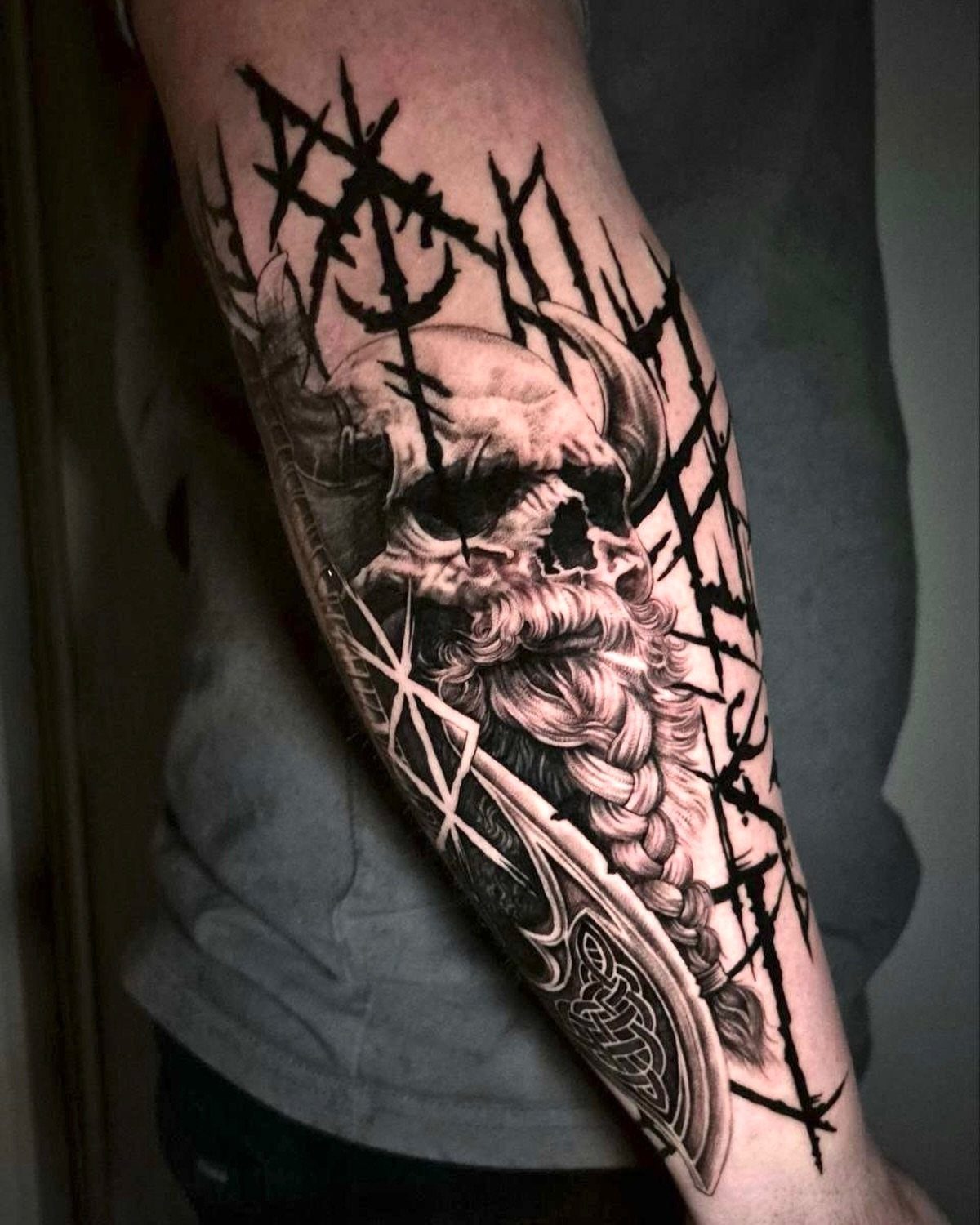
A skull with a braided beard and horned helmet condenses the Viking warrior image into one figure, and the shield behind it anchors the composition.
Mortality and the warrior’s path sit side by side in this design, which makes it less about glory and more about facing death head-on.
Forearm placement keeps the skull upright when your arm hangs naturally, and the size gives enough room for the braid detail without crowding the linework.
Black and grey shading builds depth in the skull and helmet, and the contrast keeps the piece readable as it ages.
This reads clearly from across the room, which matters if you want a tattoo that makes an immediate impression.
12. Fenrir Norse Wolf Tattoo
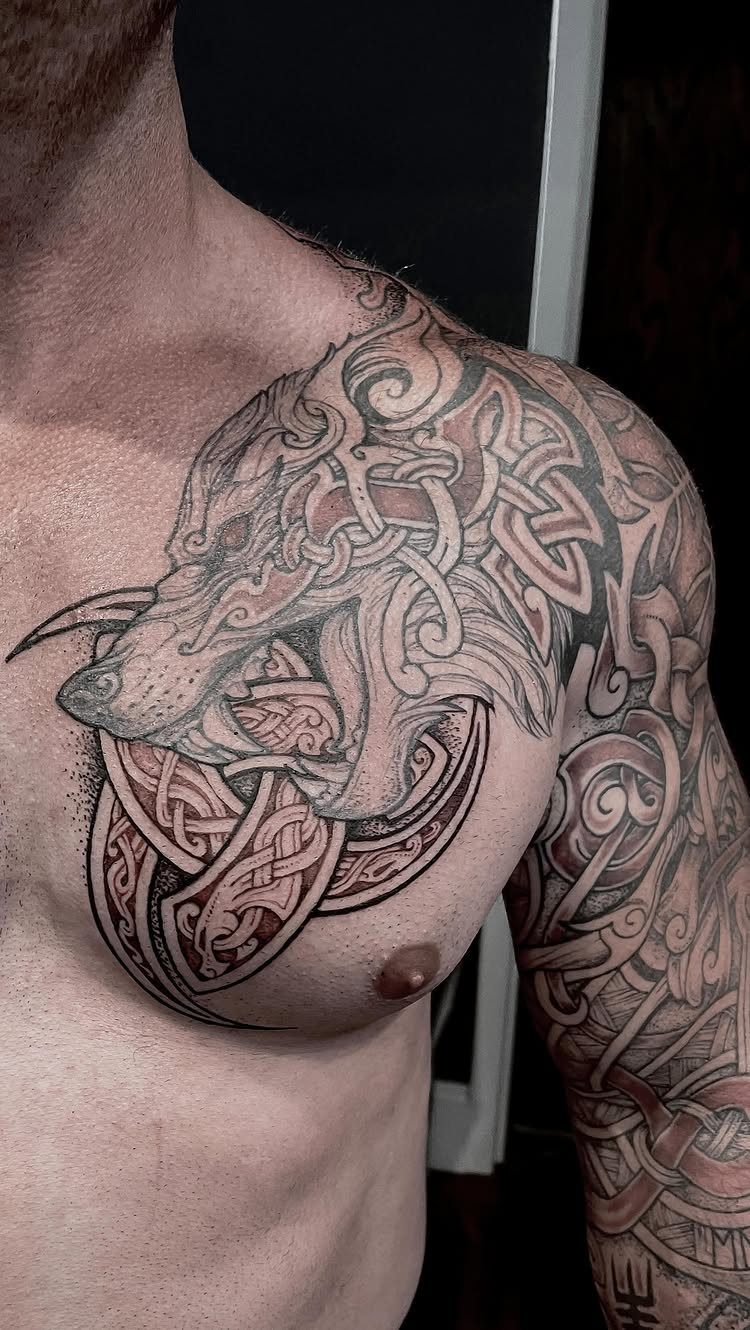
Fenrir shows up as the wolf bound by the gods, and covering your chest and shoulder with its head and Norse knotwork gives you a piece that moves with your body.
The knotwork flows into the wolf’s fur and jaw, so the animal and the pattern feel like one design instead of two separate elements layered together.
Chest tattoos hurt more over the collarbone and sternum, and sessions run longer because the area is large. The muscle beneath the skin helps the ink hold detail, and the piece stays covered under most clothing.
This suits someone who wants a large-scale tattoo that stays private until you choose to show it.
13. Viking Warrior Thigh Tattoo
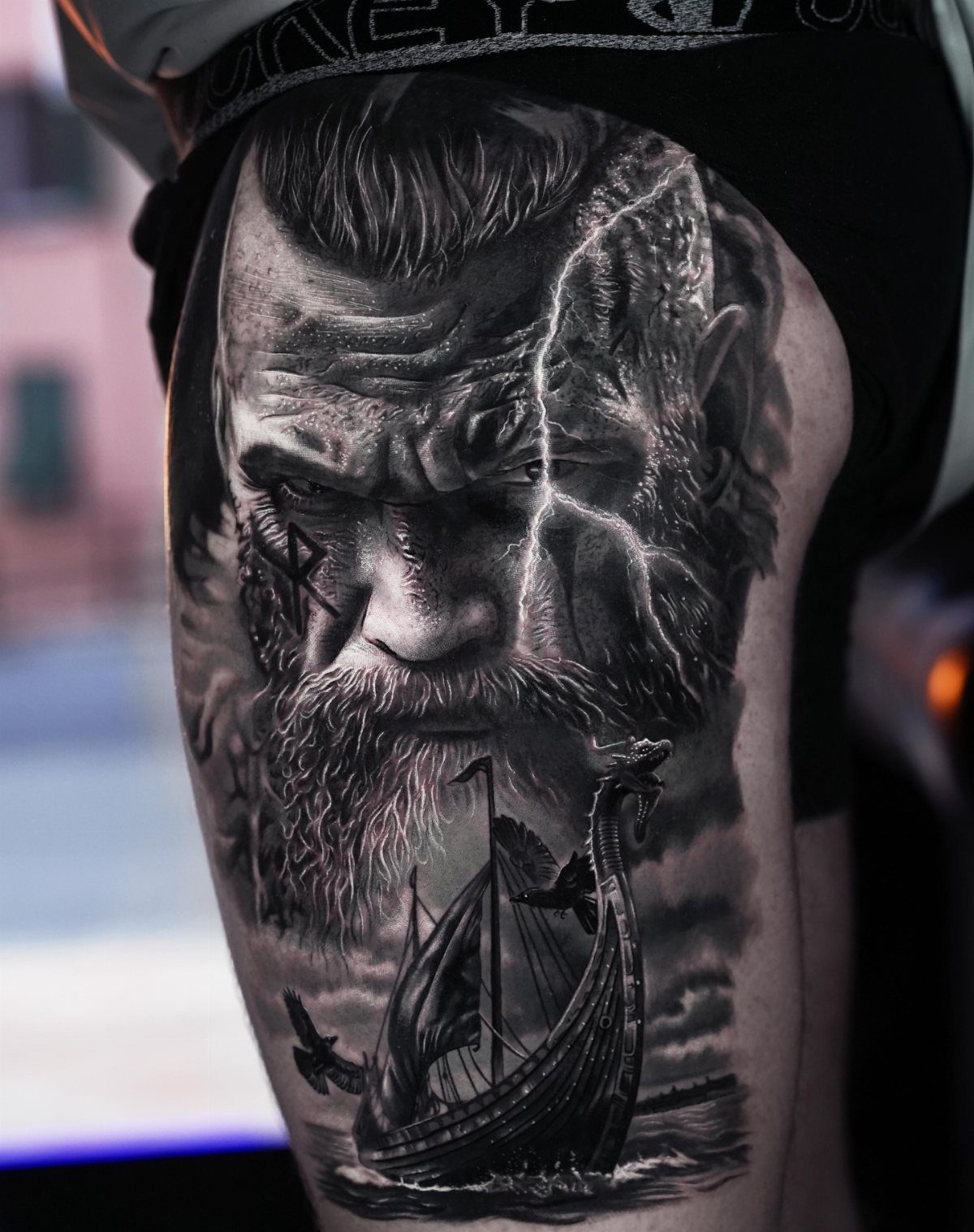
A full-face portrait and a longship in open water split the thigh into 2 connected scenes, and the realism style gives you detail in the beard, the ocean texture, and the ship’s rigging.
Thigh placement offers one of the largest flat surfaces on the body, so you can fit a design this detailed without cramping the composition.
Thigh tattoos hurt less than ribs or feet because there’s more muscle between the skin and bone.
The area stays covered in most clothing, which gives you control over visibility, and the muscle holds ink well so the shading ages cleanly.
The thigh gives you room for detail without committing to constant visibility.
14. Viking Warrior Face Tattoo
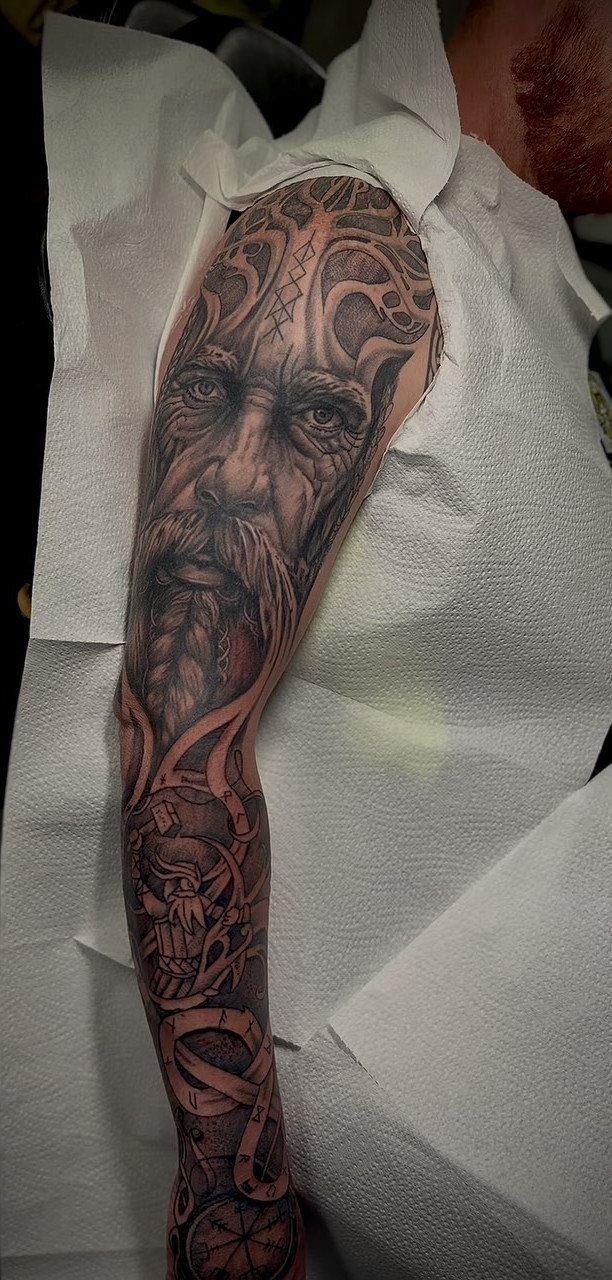
Combining a warrior’s face with tree roots and Norse symbols turns your arm into a piece where the figure and the mythology merge instead of sitting side by side.
The knotwork grows out of the beard and hair, so the organic shapes and geometric patterns flow together.
Arm placement gives you room for detail in the facial features and the surrounding symbols, and the piece wraps slightly around the muscle to follow the natural contours. Greyscale shading gives the portrait dimension while holding the knotwork separate.
This reads as one image instead of separate symbols stacked on top of each other.
Choosing the Right Artist
Start by reviewing portfolios for linework and shading quality.
Norse designs rely on clean geometry in the knotwork and depth in the shading, so an artist who rushes either one will leave you with a tattoo that looks flat or blurs after a few years.
Ask to see healed photos, not just fresh ink. A portfolio full of day-of shots tells you nothing about how the work holds up once the swelling drops and the skin settles.
Schedule a consultation and bring reference images.
An artist experienced with Norse mythology will spot when a symbol has been drawn incorrectly or when the composition won’t scale to the placement you want. If they can’t explain why a change matters, keep looking.
Check that the studio follows sterilization protocols. Ask about autoclave use and single-use needles, and walk out if the answers feel vague.
Why Choose a Viking Tattoo?
Viking tattoos tie back to symbols and imagery from Norse tradition, and the meanings behind them haven’t softened with time. These weren’t decorative: they marked protection, courage, and dominance in battle, and that weight still sits in the designs today.
Choosing one connects you to that history, whether you have Scandinavian heritage or you’re drawn to the values the imagery represents.
Strength and resilience show up in nearly every symbol, from Fenrir to the Aegishjalmur, and wearing one becomes a visible statement of what you hold onto.
They also start conversations. People recognize the imagery, and the tattoo gives you a reason to talk about what it means to you instead of deflecting questions about why you got inked.
Timeless Style and Artistry
Viking tattoos hold detail that most other styles skip. The knotwork alone requires precision, and when it’s layered with runes, animals, or faces, the composition stays interesting up close and readable from across a room.
Color fades faster and needs more touch-ups, and the geometry in Norse patterns relies on contrast to stay legible. Solid black or greyscale shading gives you the best chance of a tattoo that still looks intentional years later.
The style adapts without losing its roots. Traditional blackwork, realism, and even geometric modern takes all work with Norse imagery, so you can match the design to your taste without compromising the symbolism.





