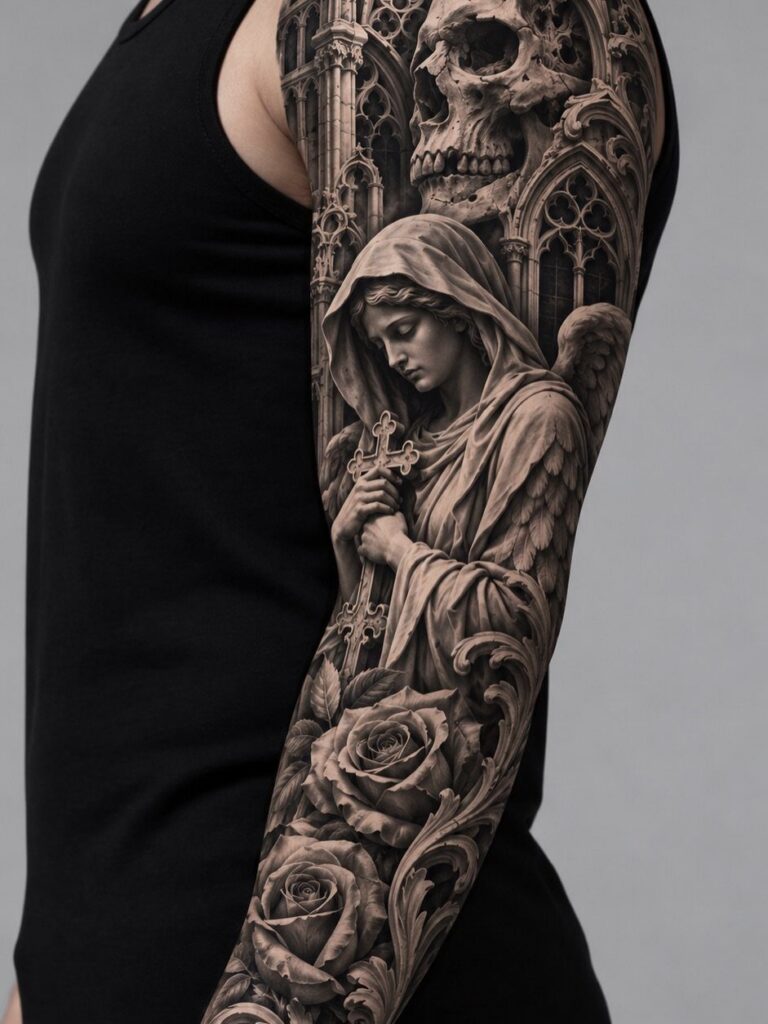
A half sleeve runs 2 to 6 sessions depending on whether you’re filling it with solid blackwork, building depth in realism, or layering color that needs multiple passes.
Your style narrows the field fast: geometric and tribal finish faster because they skip fine shading, while Japanese irezumi and color realism stretch the timeline and ask for an artist who specializes.
Black and grey realism takes 3 to 5 sittings and relies on dozens of grey tones to separate a photograph-quality portrait from flat shading.
1. Japanese Irezumi Koi and Dragon Half Sleeve
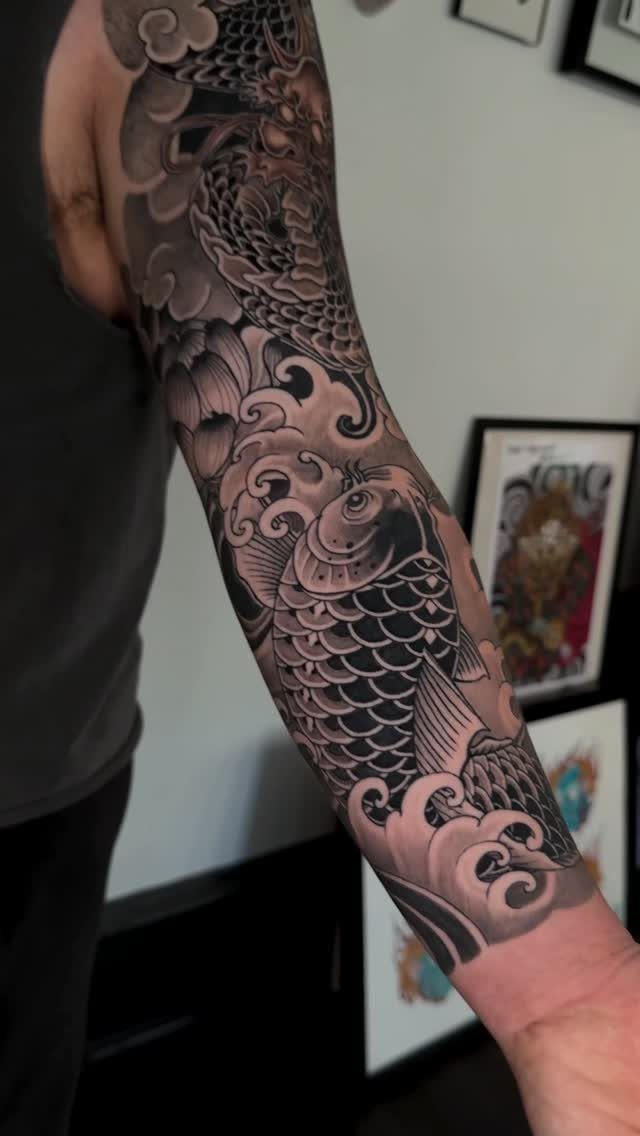
Japanese irezumi wraps koi and dragon into a narrative sleeve that flows around muscle. The koi climbs upward, scales broken into individual segments, and the dragon counters it with claws and whisker tendrils that follow the curve of the bicep.
Black and grey keeps the piece legible without the red and blue that traditional irezumi uses. The fish and dragon read as opposing forces, water versus sky, and the composition packs the sleeve without gaps.
Sessions for a half sleeve like this usually run 3 to 4 visits. Find an artist who works in Japanese tattooing and can draw the movement into the design before the first needle hits.
2. Black and Grey Realism Half Sleeve
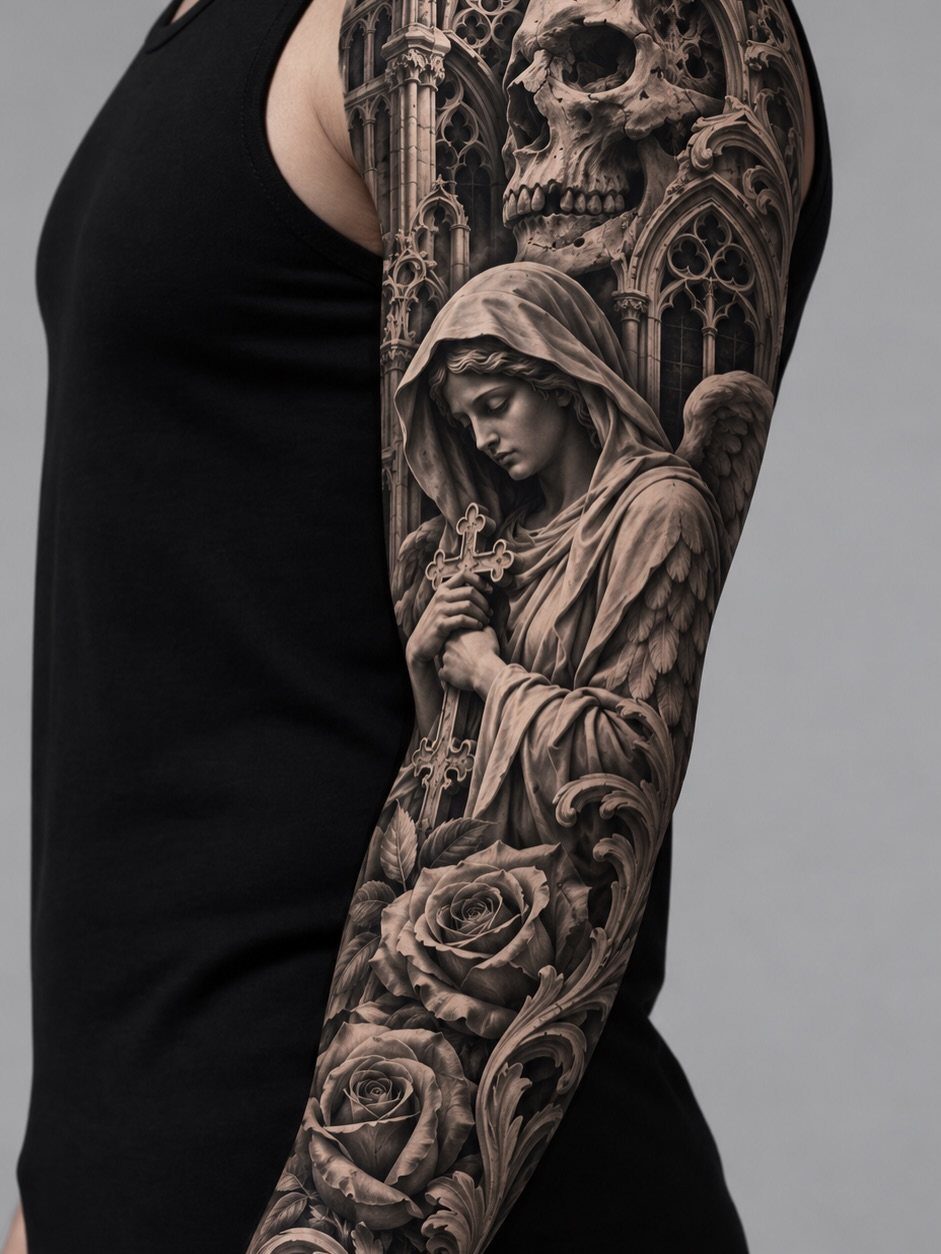
Realism in black and grey turns a half sleeve into a composition you can mistake for a photograph at first glance.
Shading runs through dozens of grey tones, and the artist builds depth by layering ink density rather than switching colors.
This style needs an artist who specializes in realism. A single session won’t finish it; expect each appointment to run several hours.
3. Blackwork Pattern Sleeve
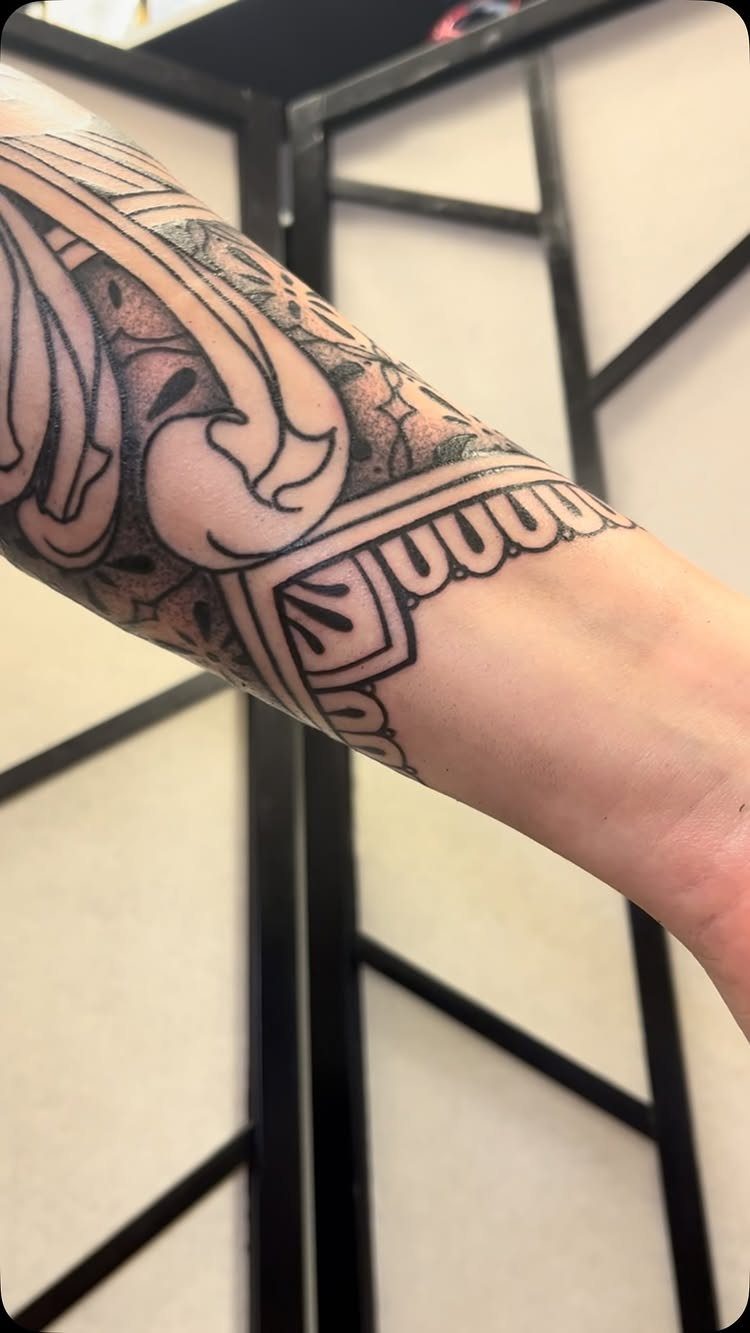
Blackwork fills the arm with solid ink and ornamental geometry, no shading or color to soften the contrast. Patterns lock together in repeating motifs, with negative space carving out the design instead of grey wash.
Bold lines stay sharp years later because there’s no gradient to blur. The coverage is heavy, so if you’re adding to existing ink, blackwork can unify older pieces or cover them outright.
This style hurts more than linework with open space because the needle keeps filling.
Sessions are shorter but you’ll need at least 2 to cover a half sleeve. Aftercare is standard, but expect a longer heal on sections with dense saturation.
4. Geometric + Mandala
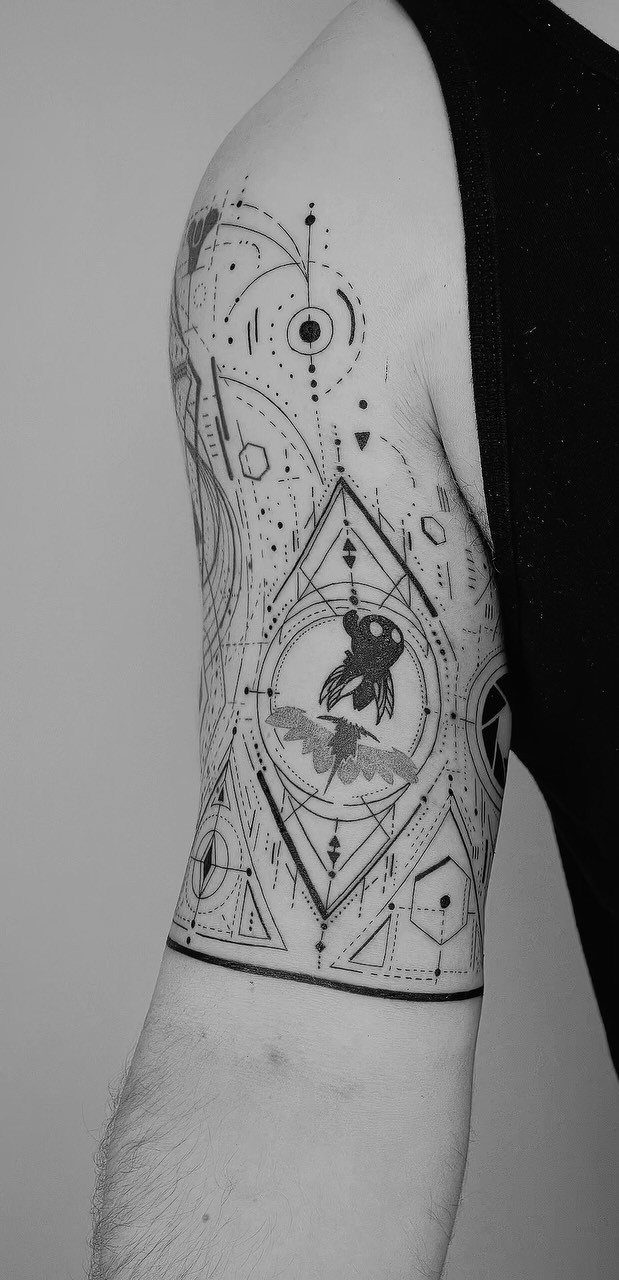
Geometric sleeves layer symmetry over organic shapes, and when you add a moth or mandala at the center, the piece holds a focal point.
Circles, triangles and dot patterns radiate outward, and the structure prevents the design from reading as random.
Mandalas work on shoulders or elbows where the pattern can wrap around bone. The symmetry makes placement straightforward, but the artist needs precision or the lines won’t mirror.
This style scales well for later extension. A half sleeve can grow into a full sleeve by repeating the geometry down the forearm.
5. Forest and Mountain Landscape Half Sleeve
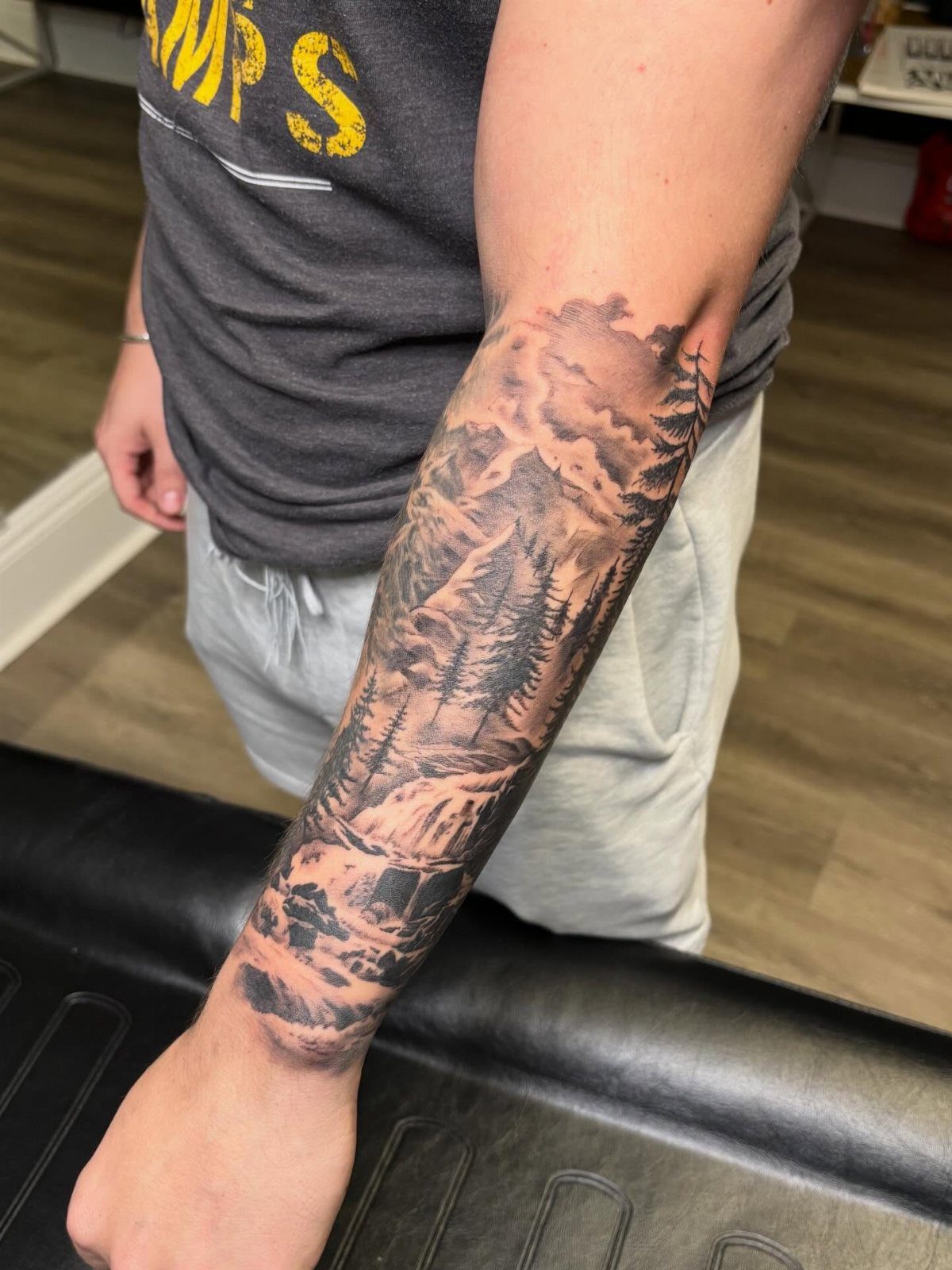
Black and grey keeps the focus on form rather than color, and shading separates the foreground trees from distant peaks.
This design suits guys who spend time outdoors or want a piece that references a specific place. The composition works in sections, so you can start with the mountain range and add the forest in a second session.
Realism in landscape ink calls for an artist who can handle depth. Flat shading makes everything look like clip art.
6. Minimal Patchwork Half Sleeve
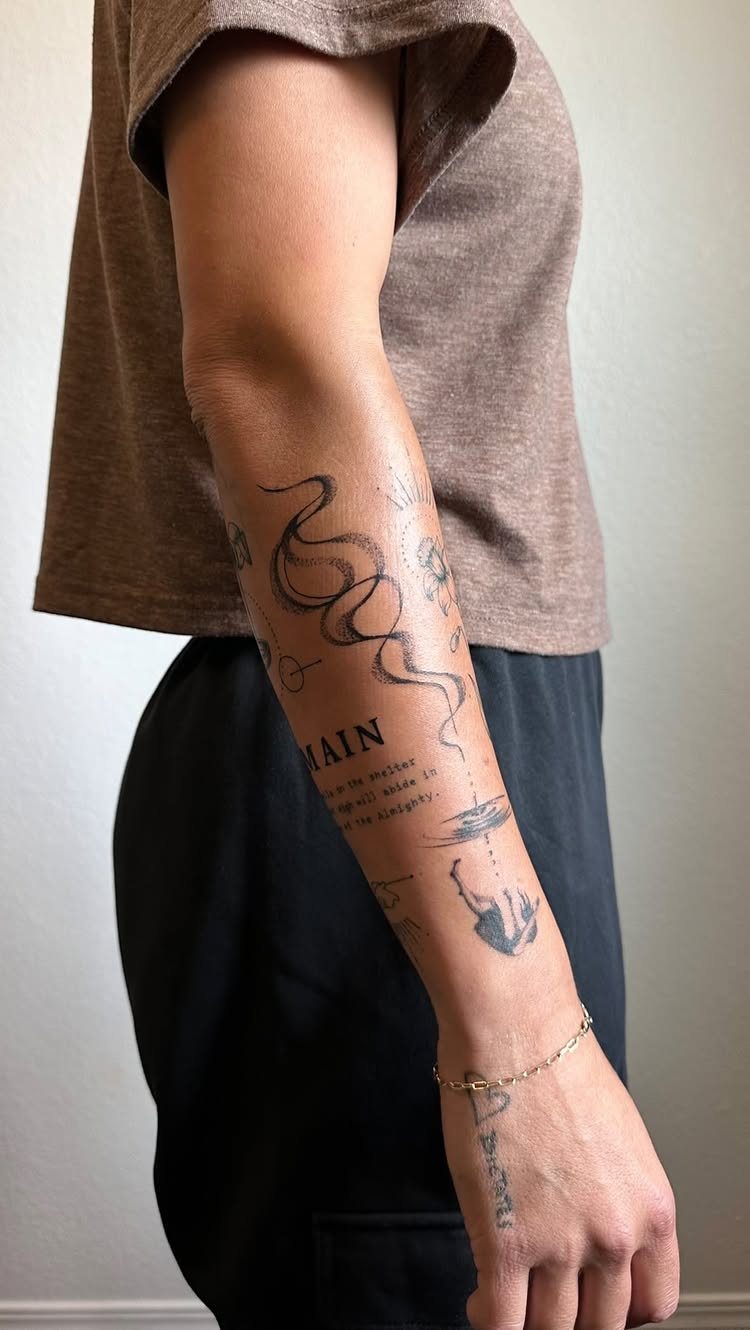
Patchwork sleeves collect small tattoos over time, and the minimal approach keeps each piece distinct. A snake, a word, a figure, each one sits in its own space without connecting linework or background fill.
The style works if you want flexibility.
You can add pieces as ideas come up, and nothing forces the designs to match in theme or size. Black ink holds the collection together visually even when the subjects don’t relate.
Spacing matters more than you’d think.
Too tight and it reads as clutter, too loose and it looks unfinished. Plan roughly where the next piece goes before you commit.
7. Mechanical / Biomech
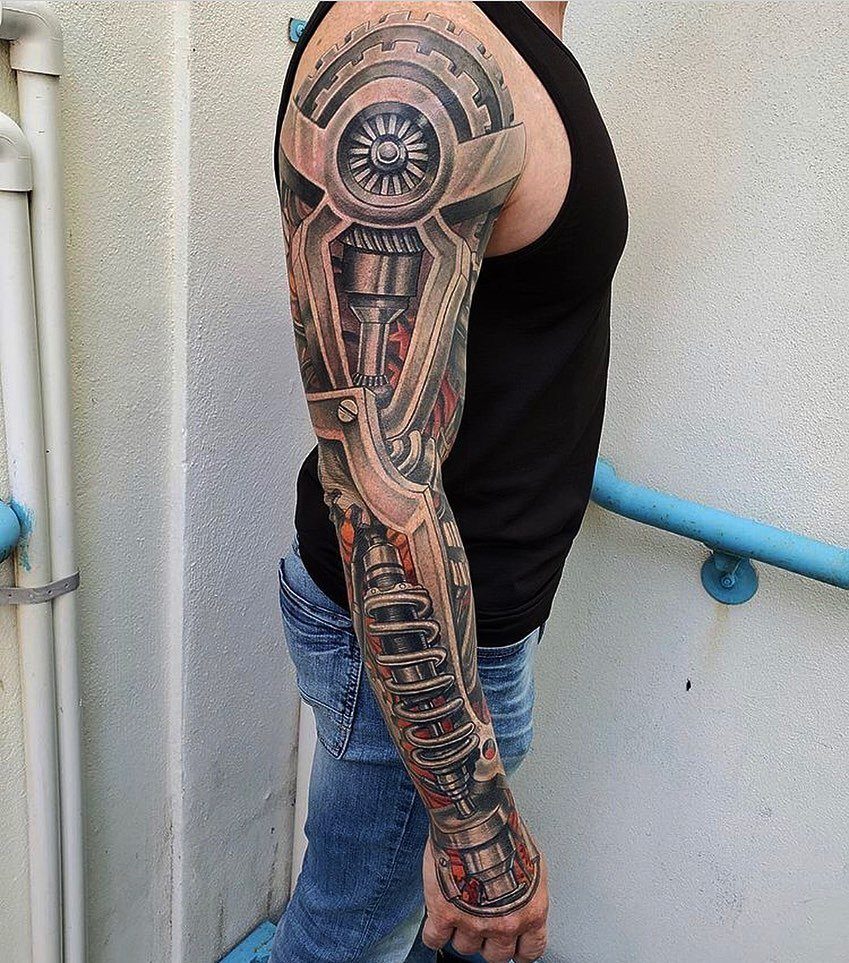
Biomechanical sleeves carve gears, pistons and cables into the arm as if the skin peeled back to reveal metal underneath. Shading builds the depth, with highlights on the gear teeth and shadows where the machinery recedes into muscle.
This style relies on the artist’s ability to make flat ink look three-dimensional. A good biomech piece follows the natural contours of the arm, placing larger gears over the bicep and smaller components along the forearm.
Sessions usually take 2 to 3 appointments. The illusion holds up only if the linework stays crisp, so aftercare matters.
8. Abstract / Brushstroke
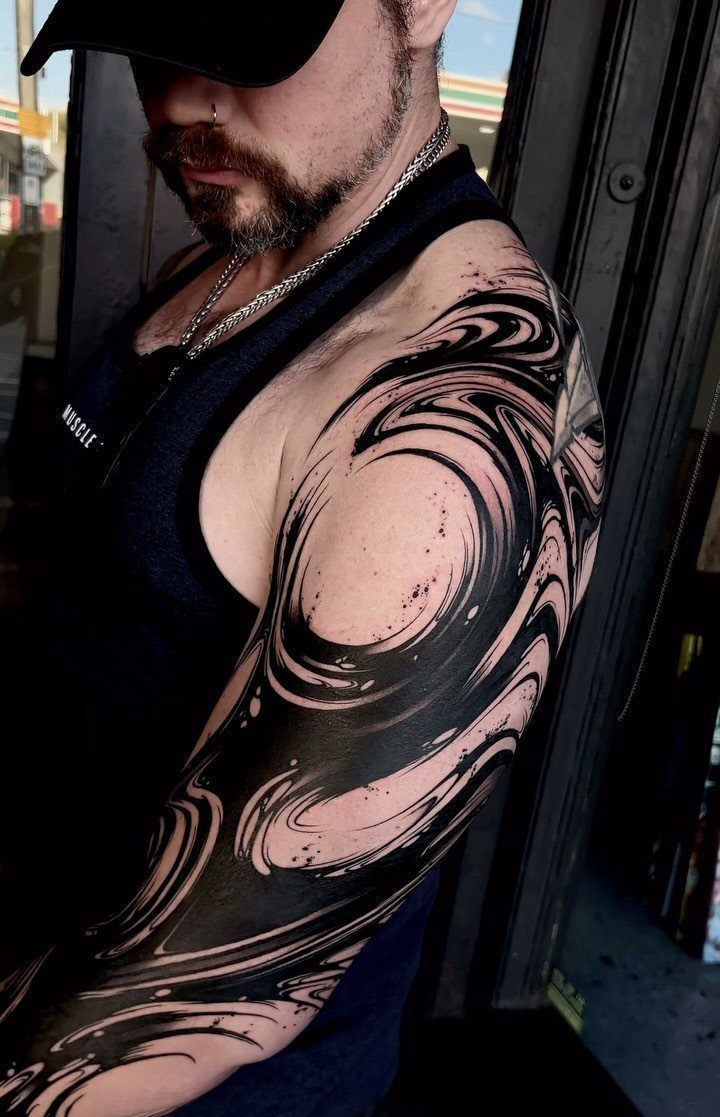
Abstract sleeves borrow from modern art, with brushstrokes and ink splashes that sit on the arm without representing anything specific. Black ink dominates, and the movement comes from the stroke itself rather than from shading or detail.
This style gives you freedom in composition.
A piece can start with a single brushstroke and expand as you add more, or stay minimal with just a few marks. Placement follows the flow of the arm, and the design doesn’t need to wrap symmetrically.
Sessions are shorter than realism because there’s no fine detail to labor over. Find an artist who works in abstract tattoo styles, not traditional flash.
9. Polynesian and Tribal Patternwork
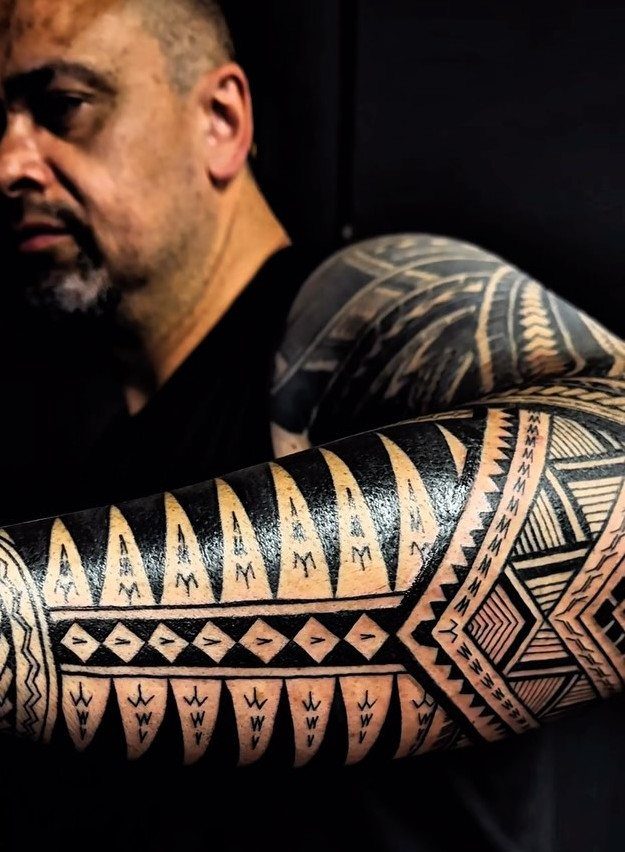
Polynesian and tribal patterns use black ink to follow the muscle, with bands and shapes that sit differently on the bicep than they do on the forearm.
The geometry isn’t random; each element has a traditional meaning, though most guys today choose it for the visual weight.
Patterns like this work best when the artist maps them to your arm before starting. A design that ignores the natural curve of the muscle looks pasted on.
A design this dense usually takes around 2 sittings to finish. The solid black heals darker than linework, and touch-ups are rare if the saturation goes in right the first time.
10. Floral Half Sleeves
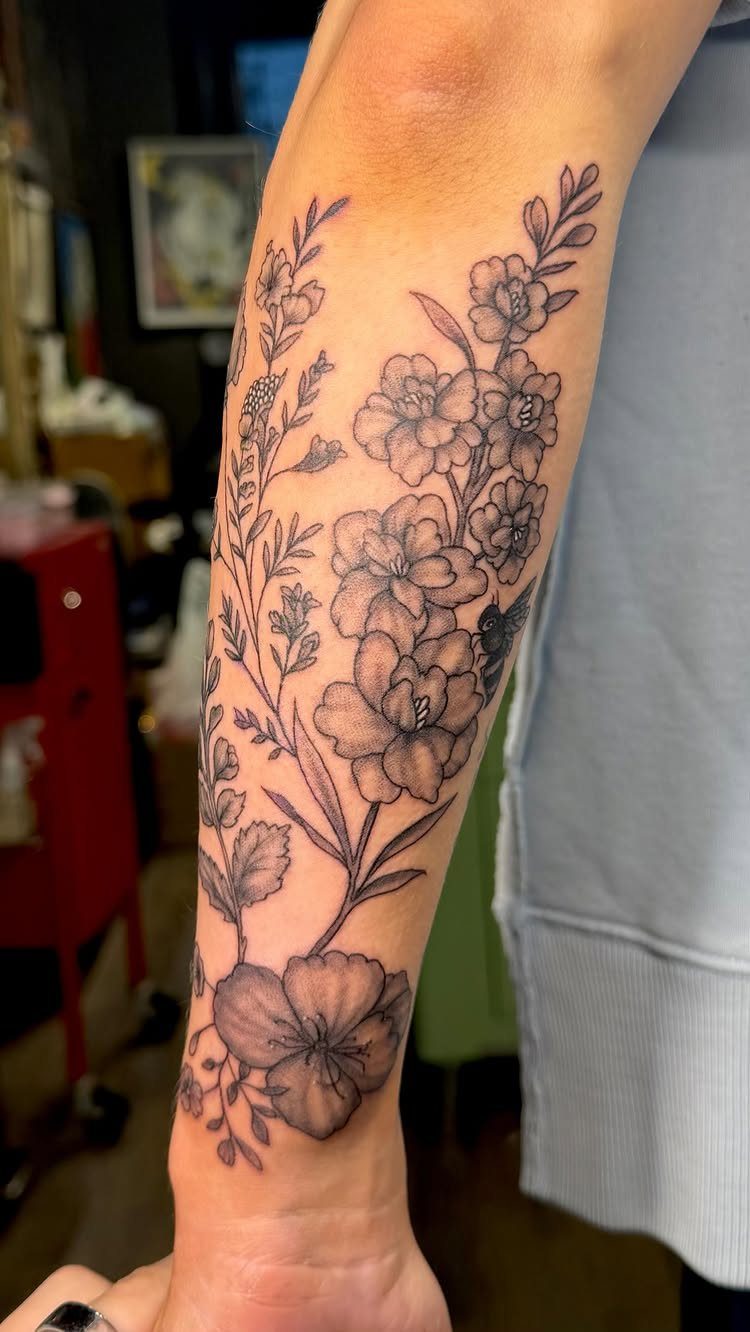
Floral half sleeves use botanical illustration techniques, with black ink rendering flowers, leaves and insects in fine detail. A bee or moth adds a focal point, and the composition reads more like a page from a field guide than decoration.
This style suits guys who want something detailed without the heaviness of solid black or the commitment of color. The linework stays legible as it ages, and the design scales well if you later want to extend it.
Sessions depend on how much detail goes into each flower. An artist experienced in botanical tattoos will keep the piece from looking too delicate or too dense.
11. Celtic Knot Half Sleeve
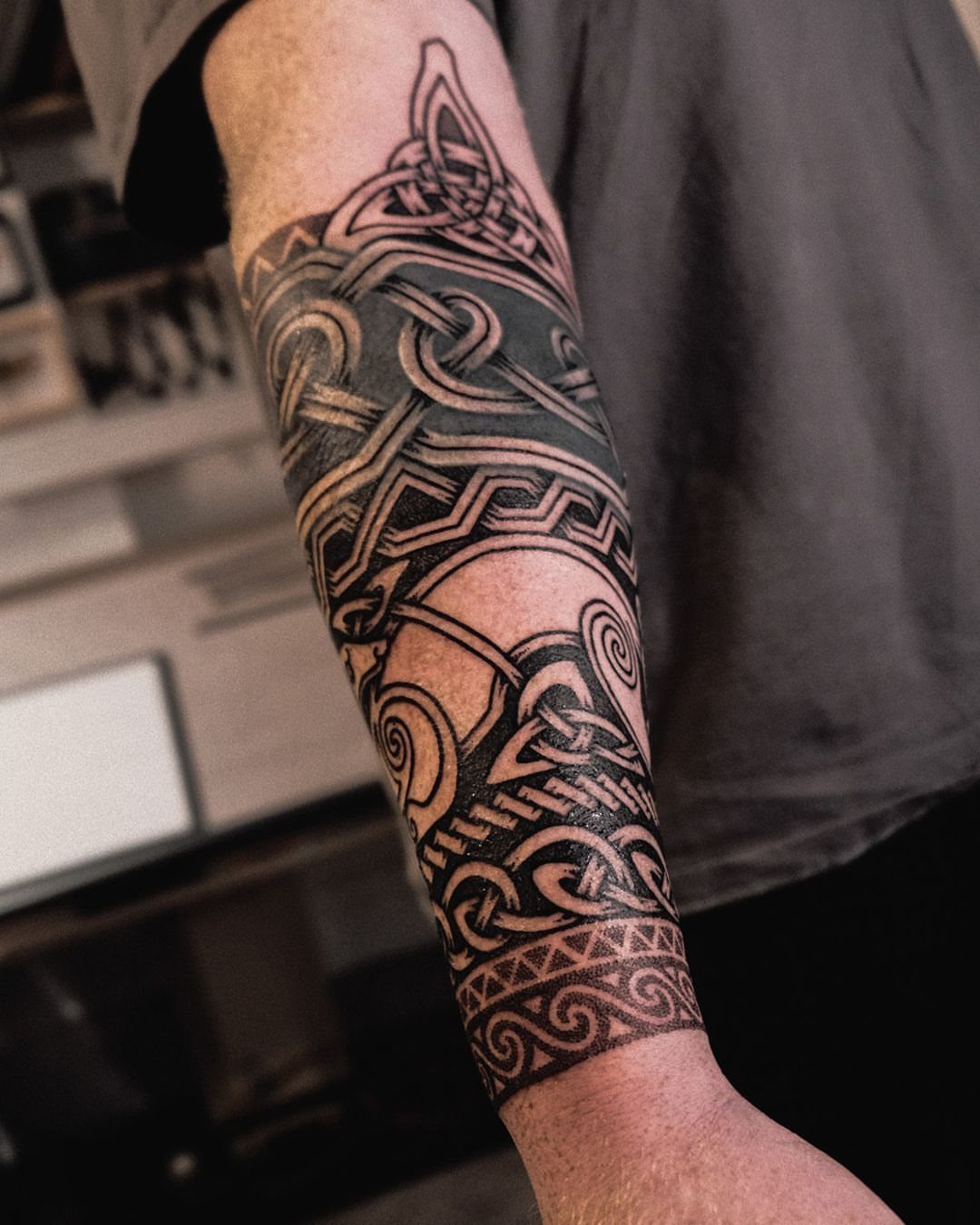
Celtic knotwork wraps the arm in interwoven black bands that loop without beginning or end. The pattern sits tight to the skin, and the design holds together through symmetry rather than shading.
This style covers the arm completely but stays readable because the knots follow a repeating structure.
Placement starts at the shoulder and works down, with the bands wrapping around the bicep and forearm in a way that mirrors the muscle underneath.
The linework needs precision or the crossings won’t line up, so find an artist who works in Celtic or knotwork styles regularly.
12. Oceanic Half Sleeve
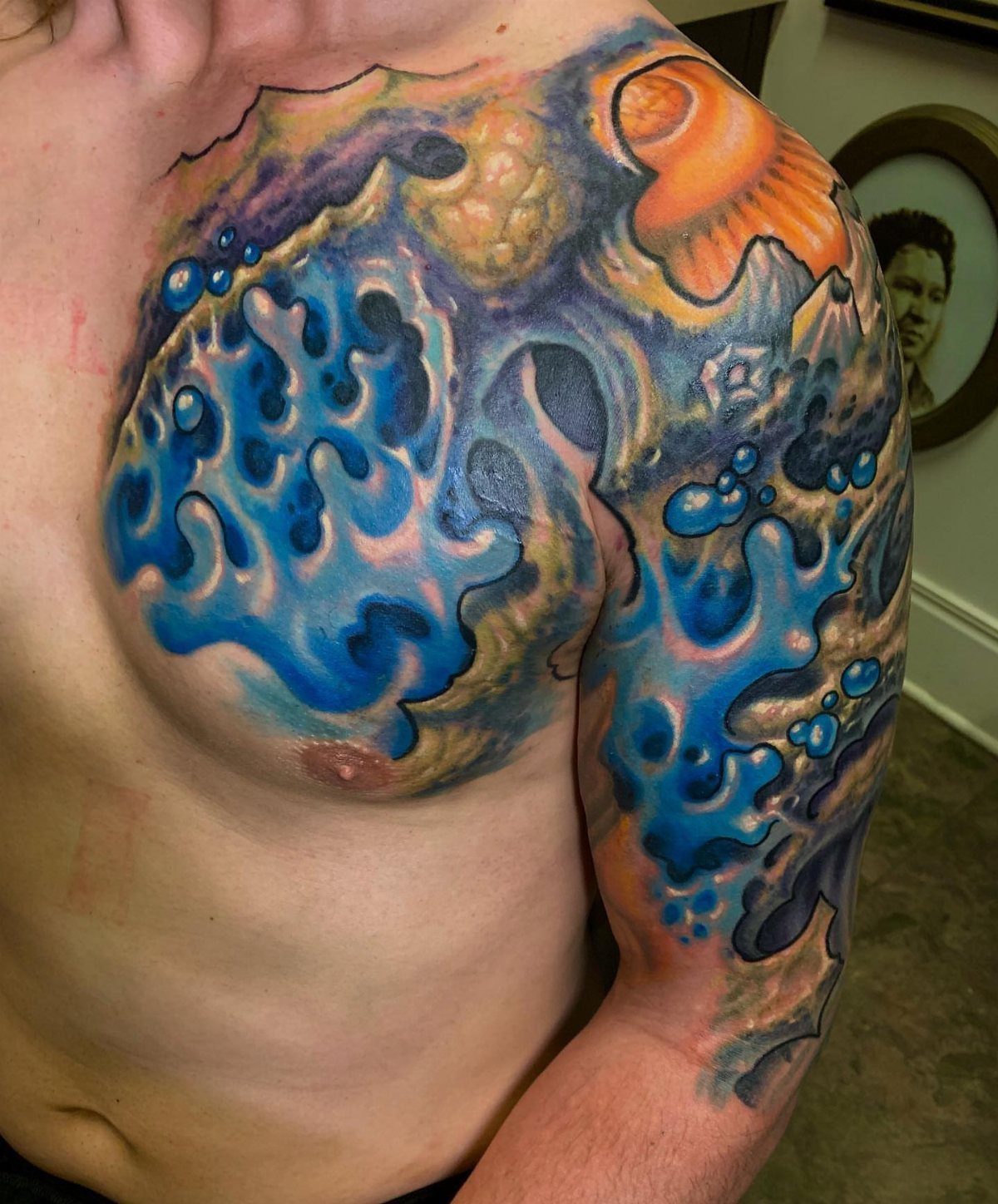
Oceanic sleeves use blue water and coral in shades that shift from deep navy to bright orange.
The color saturation is high, and the design flows across the chest and down the arm in a way that follows the body’s natural movement.
This style breaks from the black and grey dominance of most half sleeves, and the color makes it more visible. Coral and sea life add detail without crowding the composition, and the water wraps around muscle contours.
Color tattoos fade faster than black ink, so expect touch-ups every few years to keep the blues sharp. Sessions take longer because color requires more passes than black linework.
Choosing the Right Style
Start with your main idea and build outward from it. A half sleeve that tries to combine a portrait, a skull, and a landscape with no connection reads as 3 separate tattoos stacked on the same arm.
Your background strategy decides whether empty space stays bare, gets shaded into smoke or cloud, or fills with pattern. Pick one approach and apply it across the whole piece or the transitions will look unplanned.
Your arm curves, and ink follows that curve whether you plan for it or not. What you see head-on, what shows from the side, and how the piece reads when your arm moves all need attention.
Planning and Session Count
How many sessions you need comes down to where the tattoo sits, which style you pick, and how much detail goes in.
Japanese irezumi typically runs 3 to 6 long sittings.
Black and grey realism takes 3 to 5 sessions, though soft grey washes fade first and need touch-ups. Blackwork and ornamental designs usually finish in 2 to 4 sessions, and solid black holds longer than any other ink.
Color illustration typically runs 4 to 6 sessions and asks the most of you later; sunlight fades it faster than anything else. Polynesian and tribal work usually takes 2 to 4 sessions if the black goes in solid and even.
How fast your artist works, how your skin takes ink, and the amount of detail you want will move that count up or down.
Common Mistakes to Avoid
When too many parts compete for attention, your eye can’t land anywhere and the sleeve reads as cluttered instead of strong.
Pick one style, one main subject, and one background strategy. A half sleeve that mixes fine line with heavy blackwork, or stacks realism next to geometric pattern with no transition, looks like 2 different pieces forced onto the same arm.
Too many focal points scatter attention.
Frequently Asked Questions
How many sessions does a half sleeve usually take?
Most half sleeves finish in 3 to 6 sessions, with each appointment running several hours and spaced weeks apart to allow healing.
Japanese irezumi and color illustration run on the longer end, while blackwork and tribal patterns usually take 2 to 4 sessions. The exact count depends on how much detail goes into the design and how densely the ink needs to be packed.
Can a half sleeve turn into a full sleeve later?
Yes, and styles like Japanese irezumi, blackwork, realism, and geometric patterns extend naturally if you plan for it early.
A design that repeats geometry or continues a landscape down the forearm scales better than a composition built as a closed panel. Bring up future extension during the first consultation so the artist can leave transition points open.
Is upper arm or forearm better for a first half sleeve?
The upper arm offers a broader canvas and sits under a sleeve when you need it covered. Forearm is narrower but more visible, which suits designs meant to be seen often.
The better choice depends on whether you want the tattoo on display and whether the design reads better on a broad canvas or a tight vertical strip.
What commonly goes wrong with half sleeve tattoos?
Competing centers of attention turn a sleeve into visual noise rather than a single confident statement.
Mixing styles without a transition, like stacking realism next to geometric pattern or combining fine line with heavy blackwork, looks like separate tattoos forced onto the same arm.





