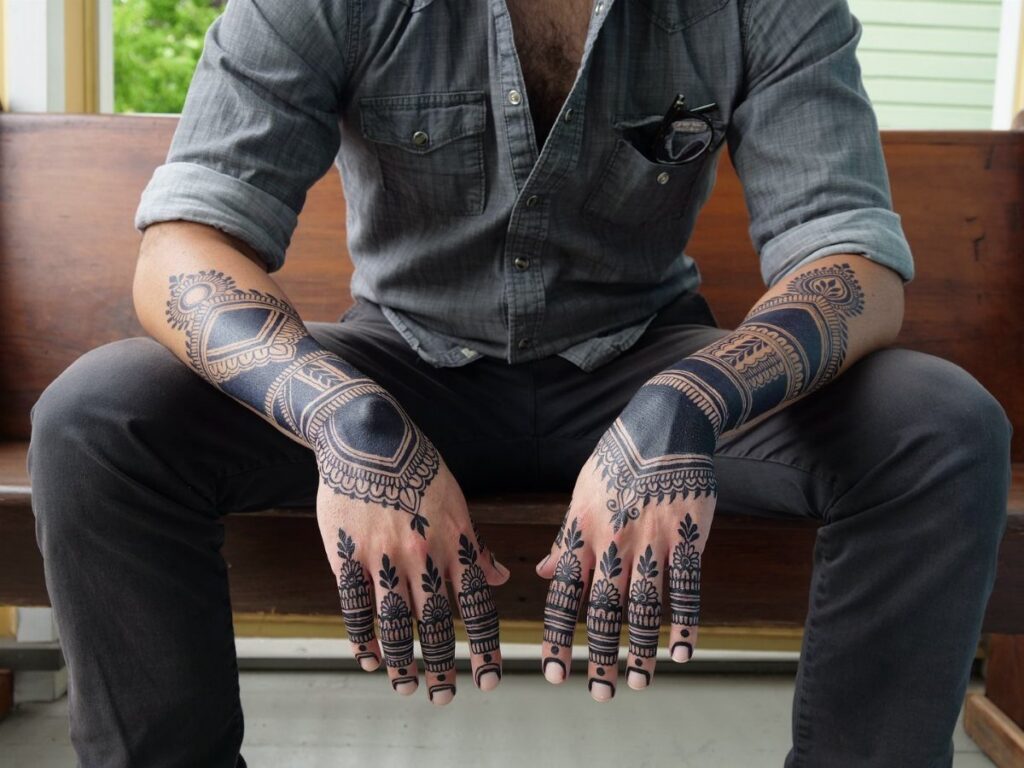
Men’s tattoo designs run from a single forearm feather that finishes in one session to full Irezumi coverage across legs and arms that takes frequent appointments and months of healing.
Forearms heal faster than hands, chest or ribs while staying visible when you wear short sleeves, and black and grey realism holds detail better than narrow linework or color that fades unevenly.
1. Full Sleeves Tattoo Design for Men
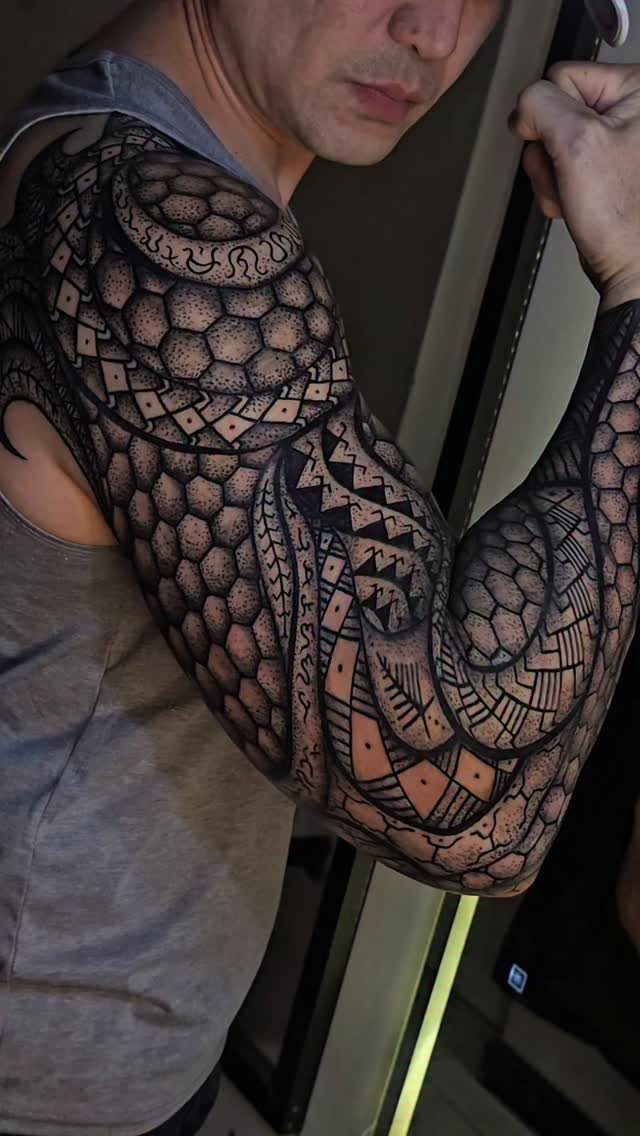
A full sleeve fills the arm from shoulder to wrist in one continuous design. The commitment is real: you’re looking at hours in the chair, split across multiple sessions, and most artists quote based on detail and color.
Black geometric and scale patterns like this one hold up better over time than narrow, delicate linework. The structure hides small blowouts and the repetition gives the eye somewhere to land as the piece ages.
Book a consultation before you commit. A good artist will sketch the layout on your arm to check how the design wraps and where the focal points sit when your arm hangs naturally.
2. Lion Tattoo Design for Men
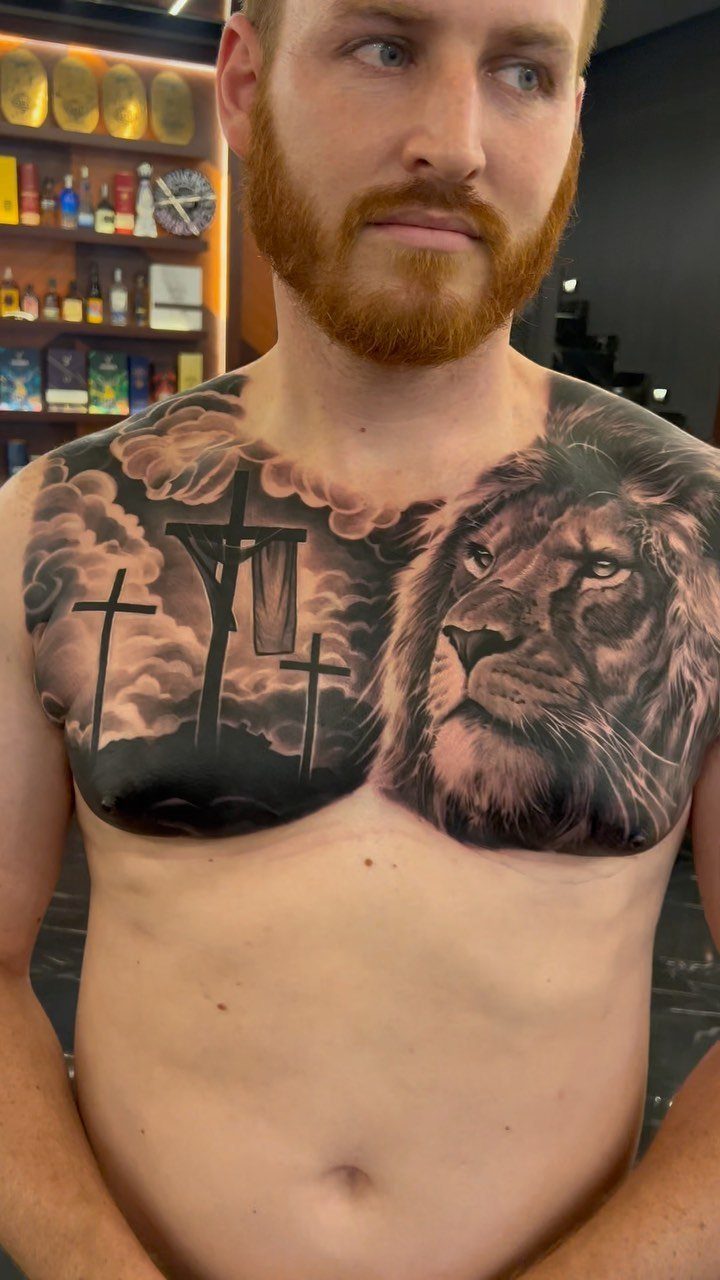
Lions show up in tattoos for strength and leadership, and a large chest piece like this one gives the design room to breathe.
The mane works especially well in black and grey because the shading adds depth without competing with the face.
Chest tattoos hurt.
Ribs and sternum sit close to bone with little cushion, and sessions can run long. I’d break it into 2 appointments if the design is this detailed.
The crosses add a spiritual layer, but the lion reads clearly on its own. Center the focal point between your collarbones and let the rest extend outward to frame your body.
3. Mandala Geometric Tattoo Design for Men
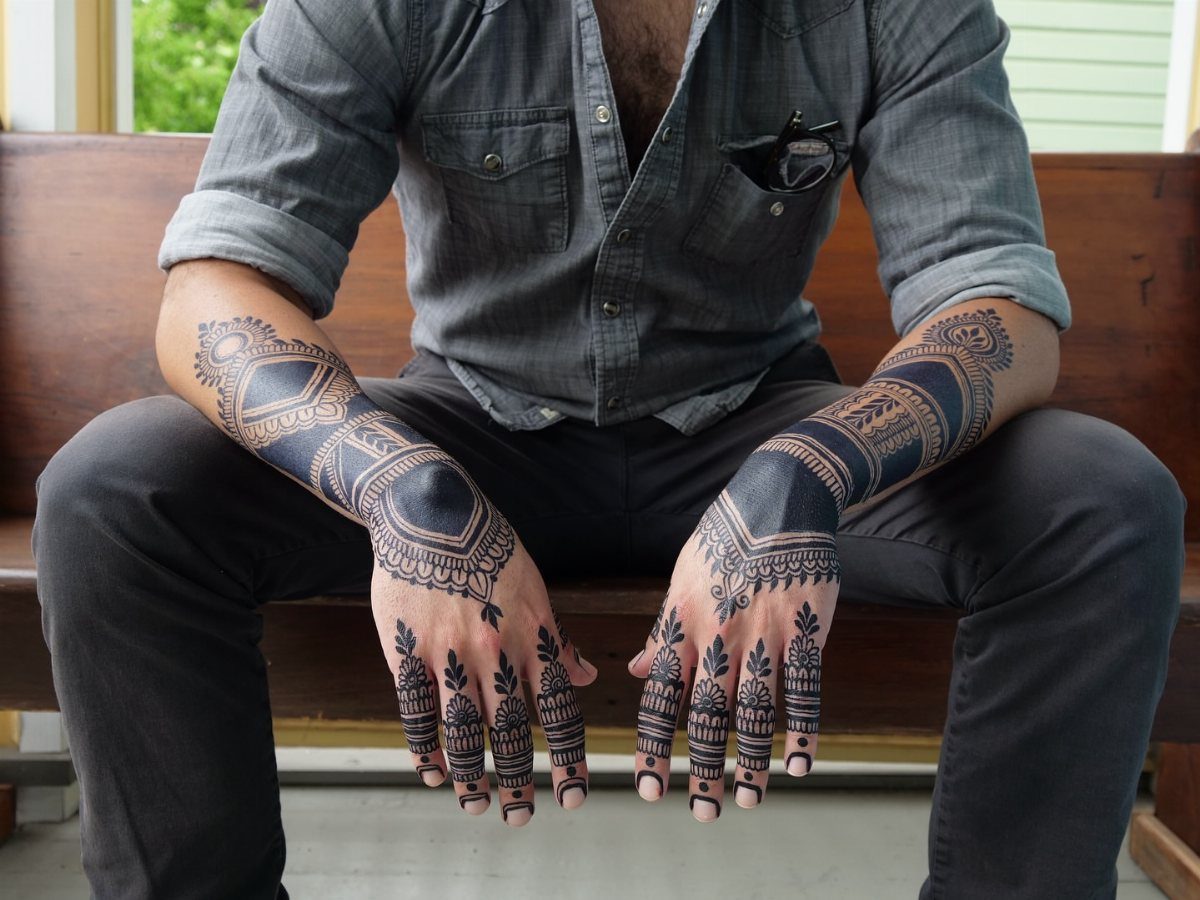
Mandala tattoos lock into a circular grid with repeating shapes radiating from the center. When they cover both forearms and hands, the symmetry ties everything together even though each arm carries its own pattern.
Hands need more frequent touch-ups than forearms.
Sun exposure and friction mean you’ll need a touch-up to keep the lines crisp. Black holds better than color on hands, and solid geometric shapes outlast narrow details.
If you work in a field where visible tattoos matter, hands and forearms are hard to hide. Otherwise, this kind of coverage makes a strong statement and the precision of the geometry reads well at a distance.
4. Phoenix Tattoos
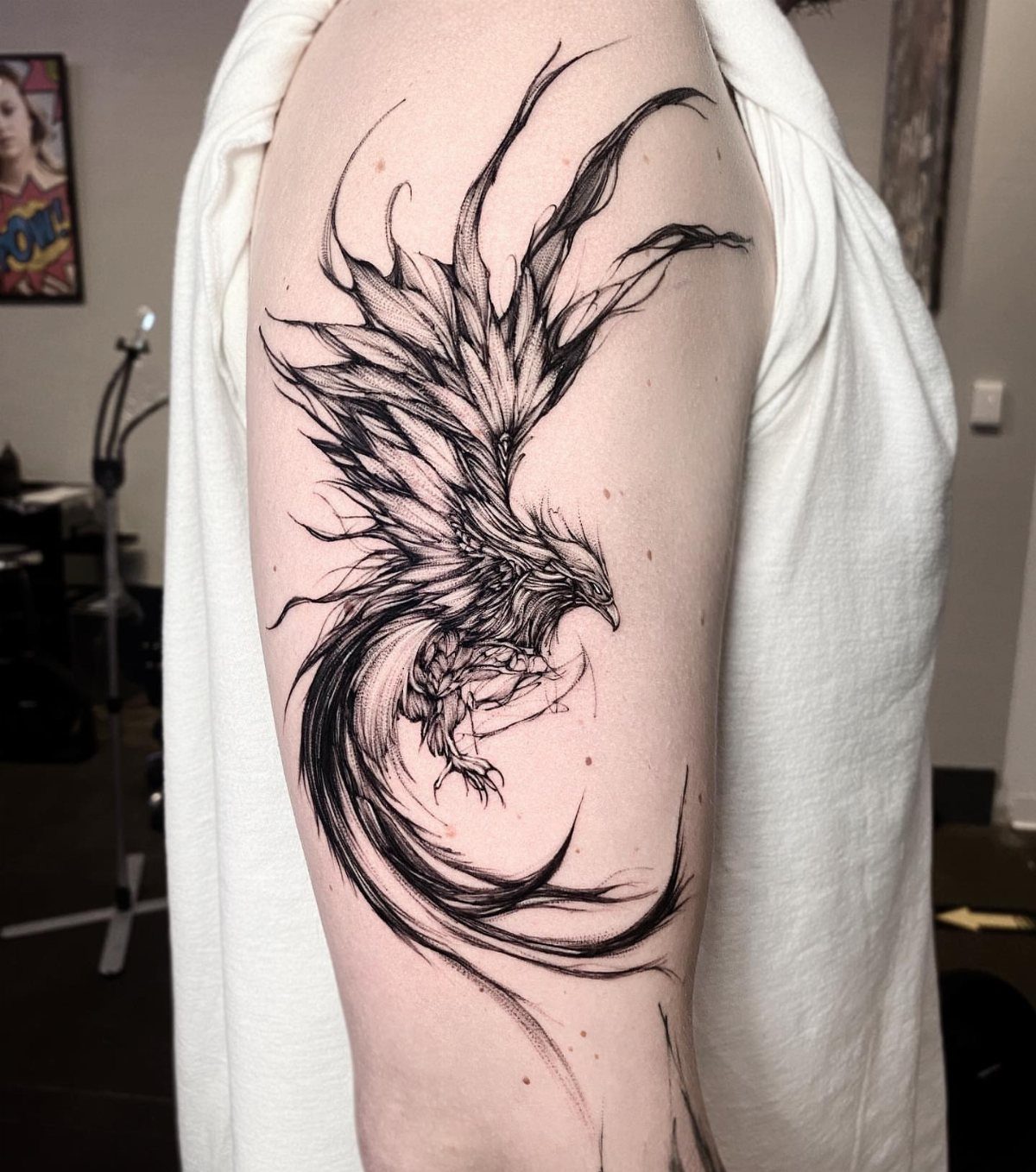
A phoenix rising from its own ashes makes the idea of starting over literal.
The bird’s wings and tail feathers give an artist room to build movement, and black ink keeps the focus on the shape rather than adding color that might fade unevenly.
Upper arm placement works because the curve of the muscle follows the arc of the wings. The piece can wrap slightly or stay on one side depending on how much coverage you want.
Rebirth themes resonate when you’ve been through something that changed you, but the design stands alone even if someone doesn’t know the symbolism. The flowing lines age well and touch-ups are straightforward.
5. Blackwork Tattoo Design for Men
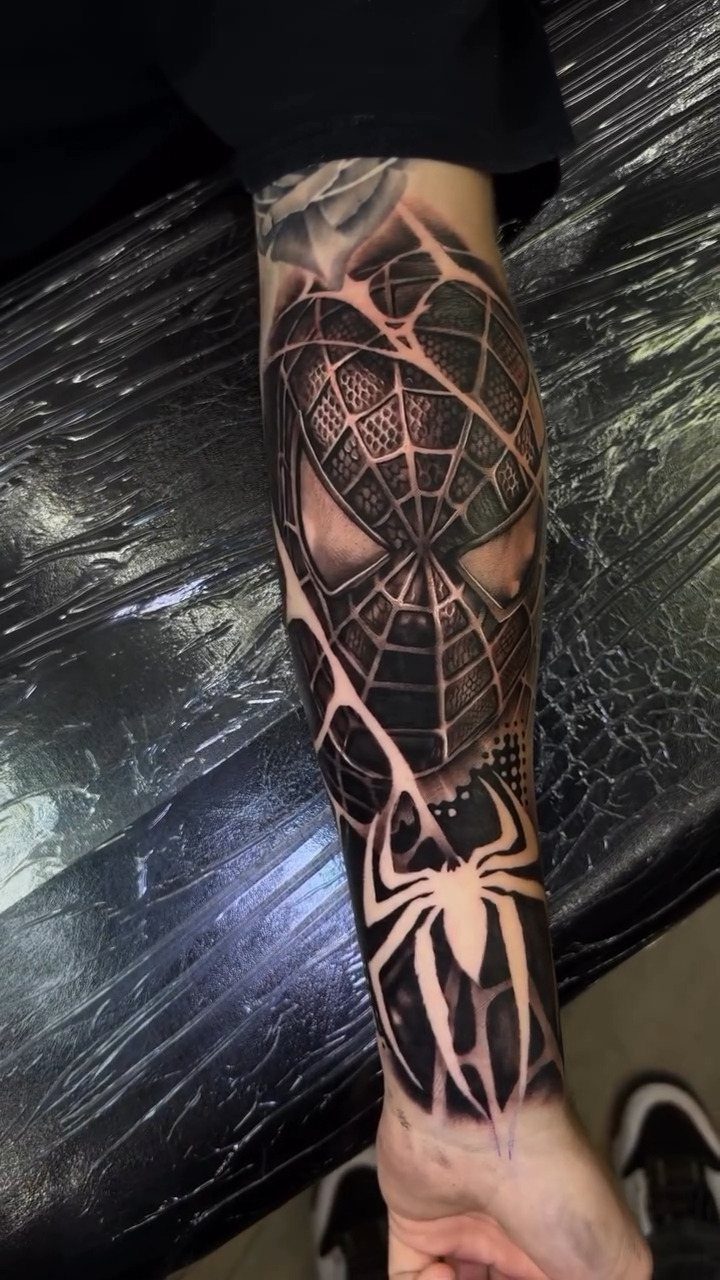
Blackwork relies on solid black fills and high contrast, no shading or color. Spider-Man’s mask and web symbol work because the shapes are iconic and read clearly even in a single color.
Forearms heal faster than most spots and you can see the tattoo without a mirror, which matters if you want to enjoy it yourself.
Solid black ages better than fine lines, and small blowouts blend into the fill rather than standing out.
Pop culture tattoos split opinion.
Some people care whether the reference will feel dated, others want what they like now. I’d choose a character or symbol that already has decades behind it, and Spider-Man qualifies.
6. Mountain Tattoo Design for Men
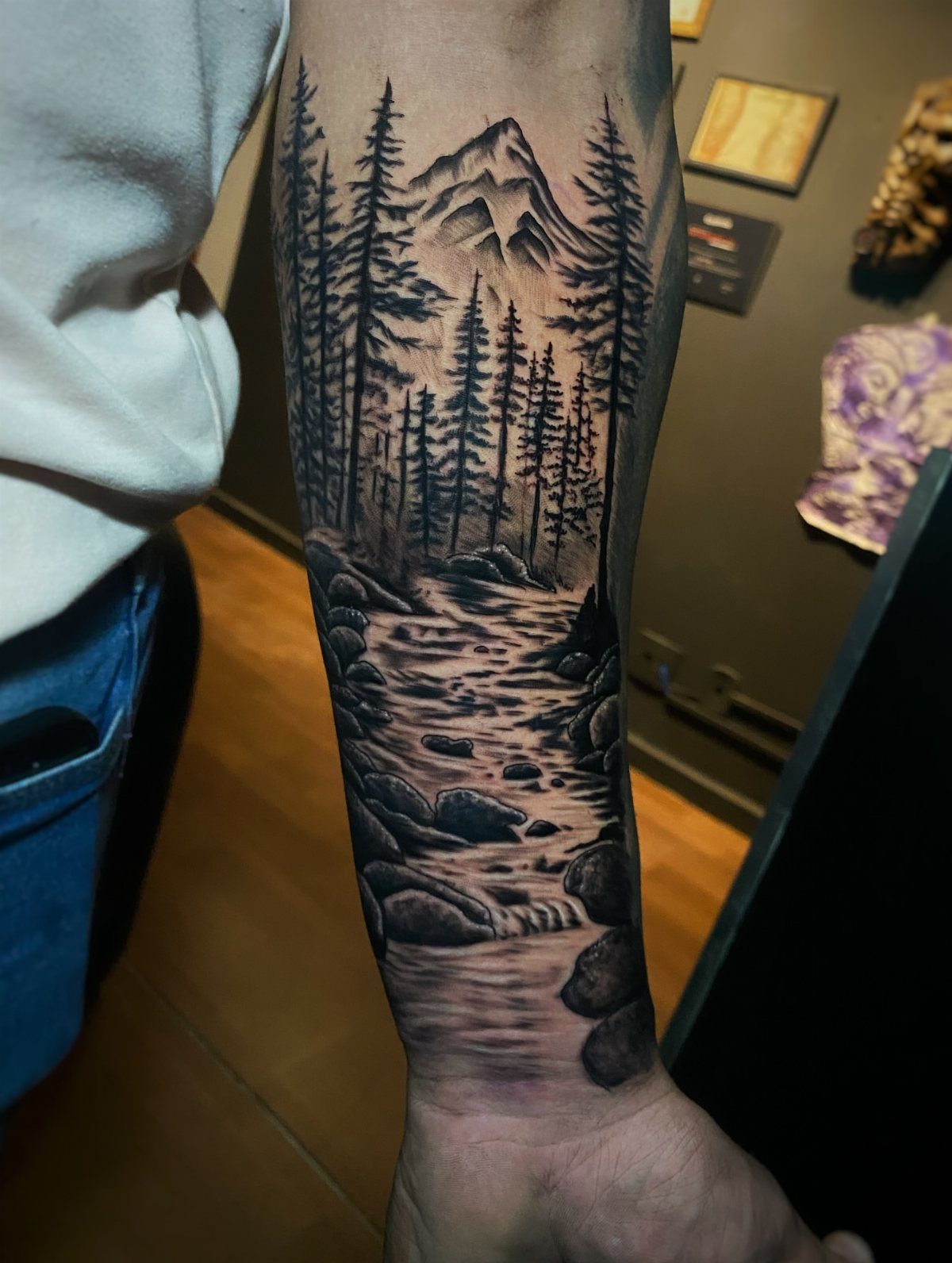
Black and grey ink suits outdoor scenes because the shading mimics distance and the lack of color keeps the design from looking cartoonish.
Forearm tattoos show easily and heal quickly. The outer forearm hurts less than the inner, and the flatter surface gives the artist a steady canvas for detail work.
Mountains represent perseverance and the natural world.
If you spend time hiking or feel connected to a specific range, some artists will sketch a recognizable ridgeline. Otherwise, a stylized version like this one reads just as well.
7. Skull Tattoos
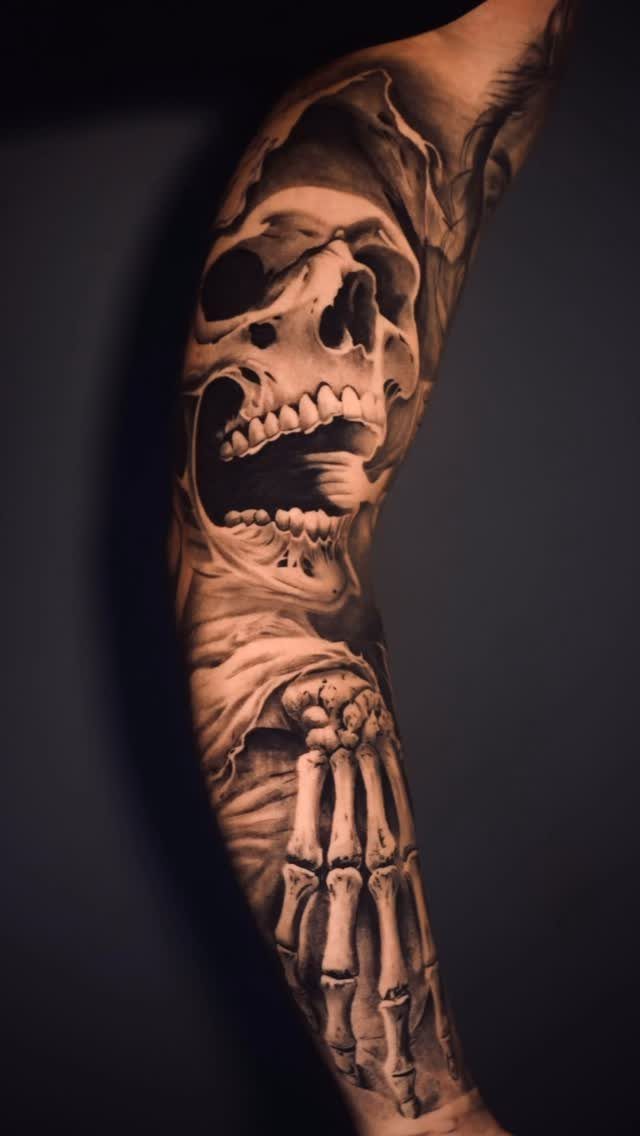
Skulls carry weight. They remind you that time runs out, and that edge appeals to men who want a tattoo that doesn’t soften the message.
Black and grey realism works here because shadows give the skull dimension. The skeletal hand adds movement and fills space without crowding the design.
Arms handle detail well and the curve gives depth to the shading.
If you want something darker, go for it. Skulls don’t need explanation.
8. Dragon Tattoos
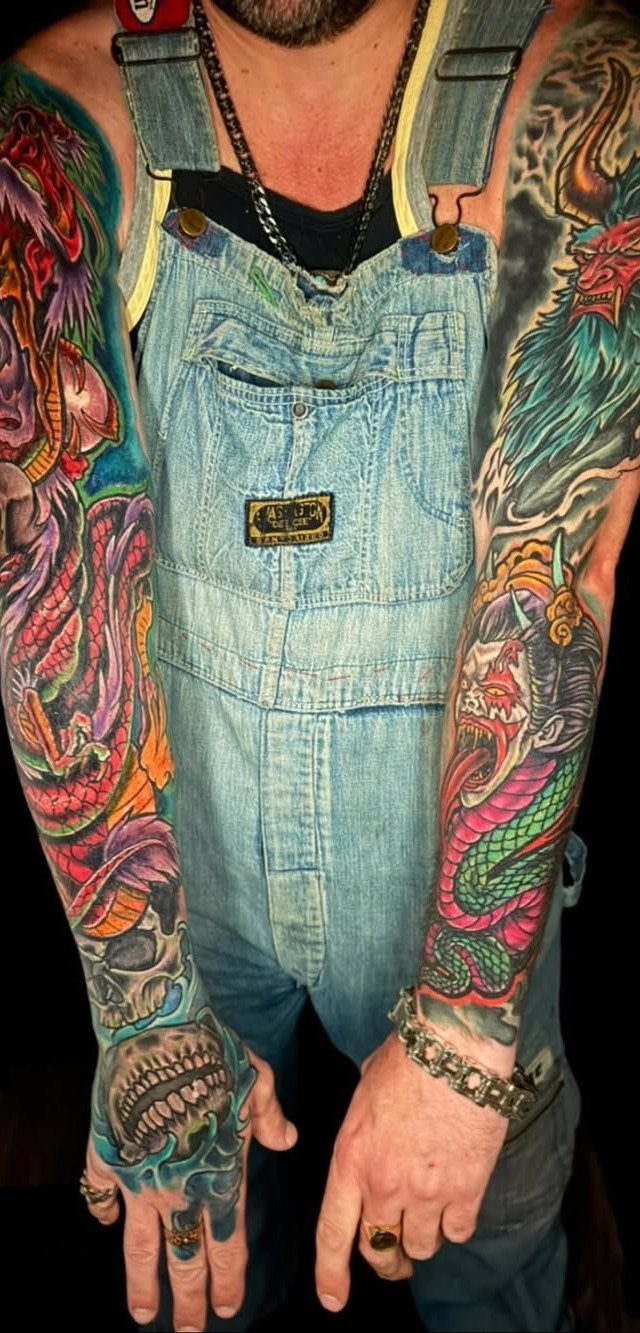
Dragons dominate. The long body wraps around an arm naturally, and Japanese-style dragons use bold color and thick outlines that hold up over time.
Full coverage like this takes multiple sessions. The color saturation and scale detail require hours of work, and hands will need touch-ups more often than arms.
If you want power and mythology in one piece, a dragon delivers. The design reads clearly from a distance and the movement keeps it interesting up close.
9. Anchor Nautical Tattoo Design for Men
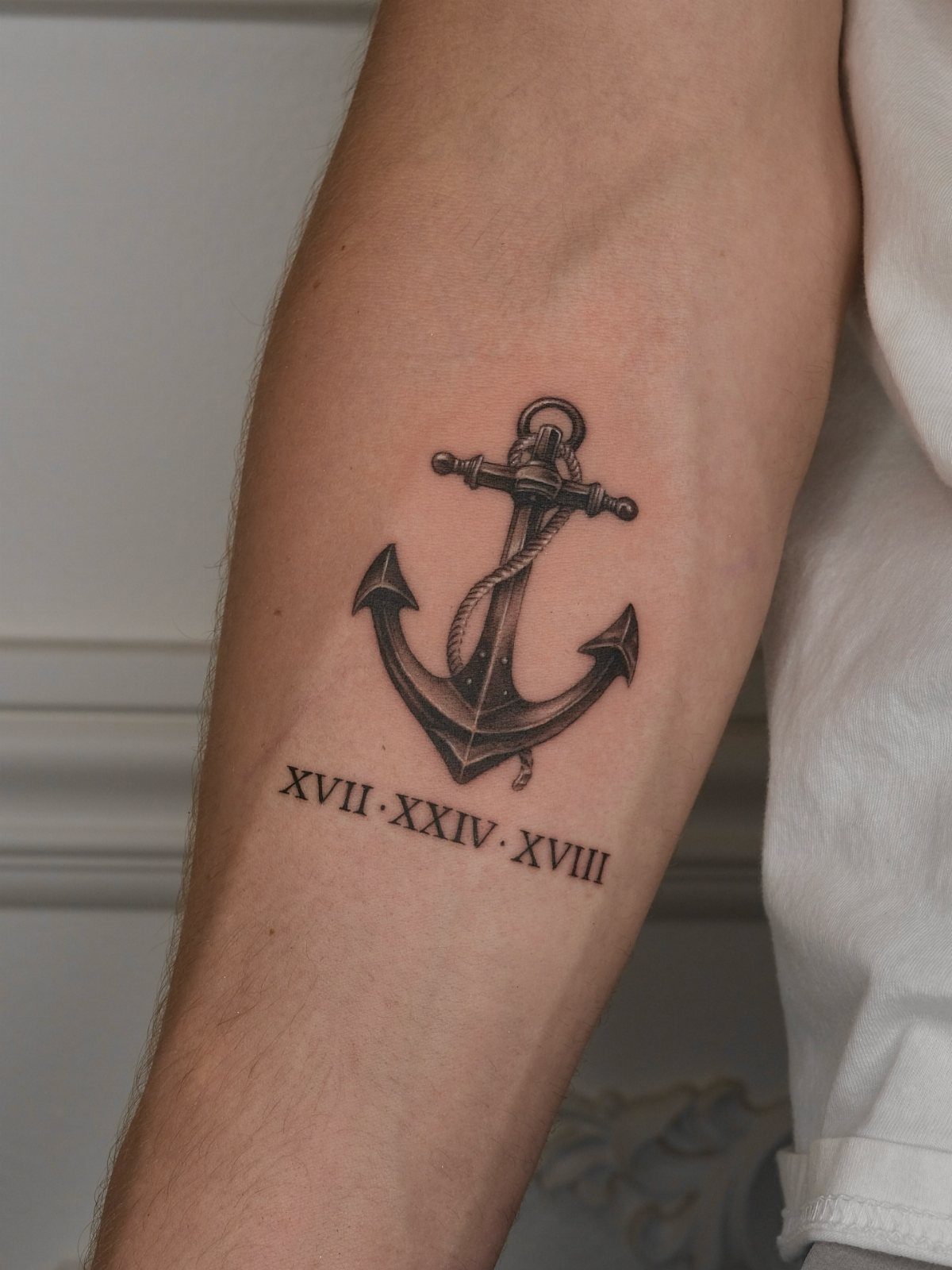
An anchor ties you to something, whether that’s stability, the ocean, or a date that mattered. The Roman numerals make it personal without explaining the story to everyone who asks.
Forearms show the design easily and the outer forearm heals with less pain than the inner. Black and grey keeps the anchor traditional, and the rope adds texture without extra color.
If you have a naval connection or just like the look, an anchor is straightforward and ages well.
10. Realistic Depiction Portrait Tattoo Design
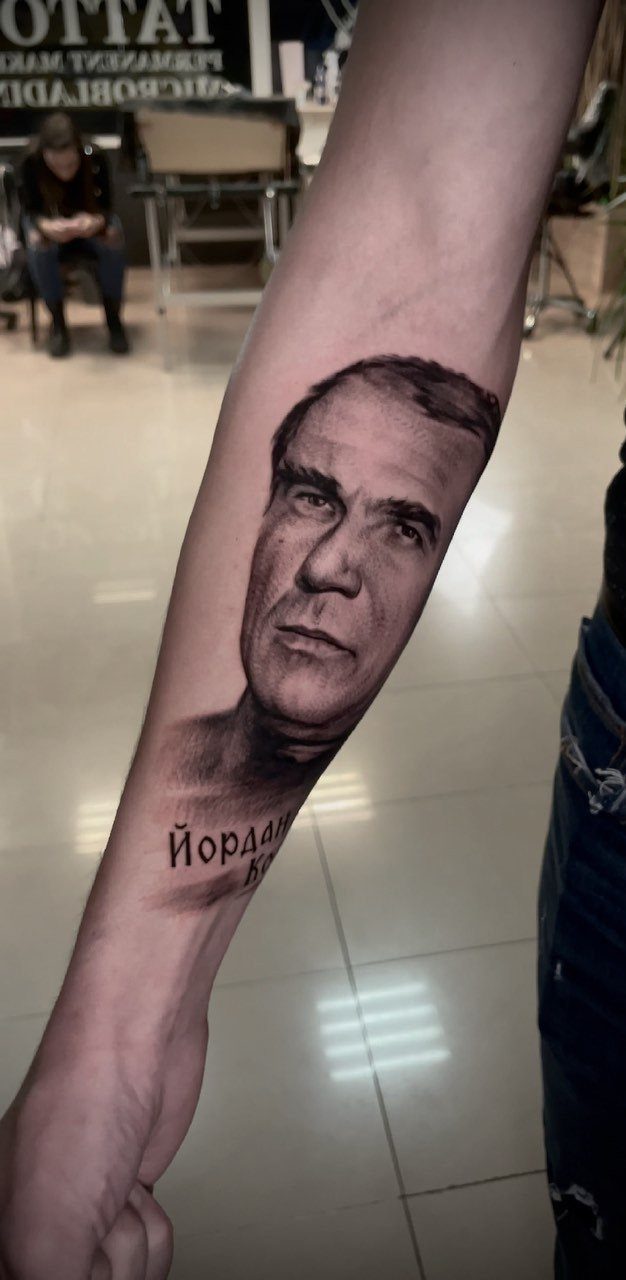
Portrait tattoos require an artist who specializes in realism. A face demands accurate proportions and smooth shading, and not every tattoo artist can pull it off.
Forearms give enough flat space for a portrait to sit without heavy distortion when you move. Black and grey works better than color for faces because skin tones are hard to match and fade unevenly.
Pick a photo with good lighting and clear features. Blurry or low-contrast images don’t give the artist enough detail to work from, and you’ll see the difference in the final piece.
11. Compass Tattoos
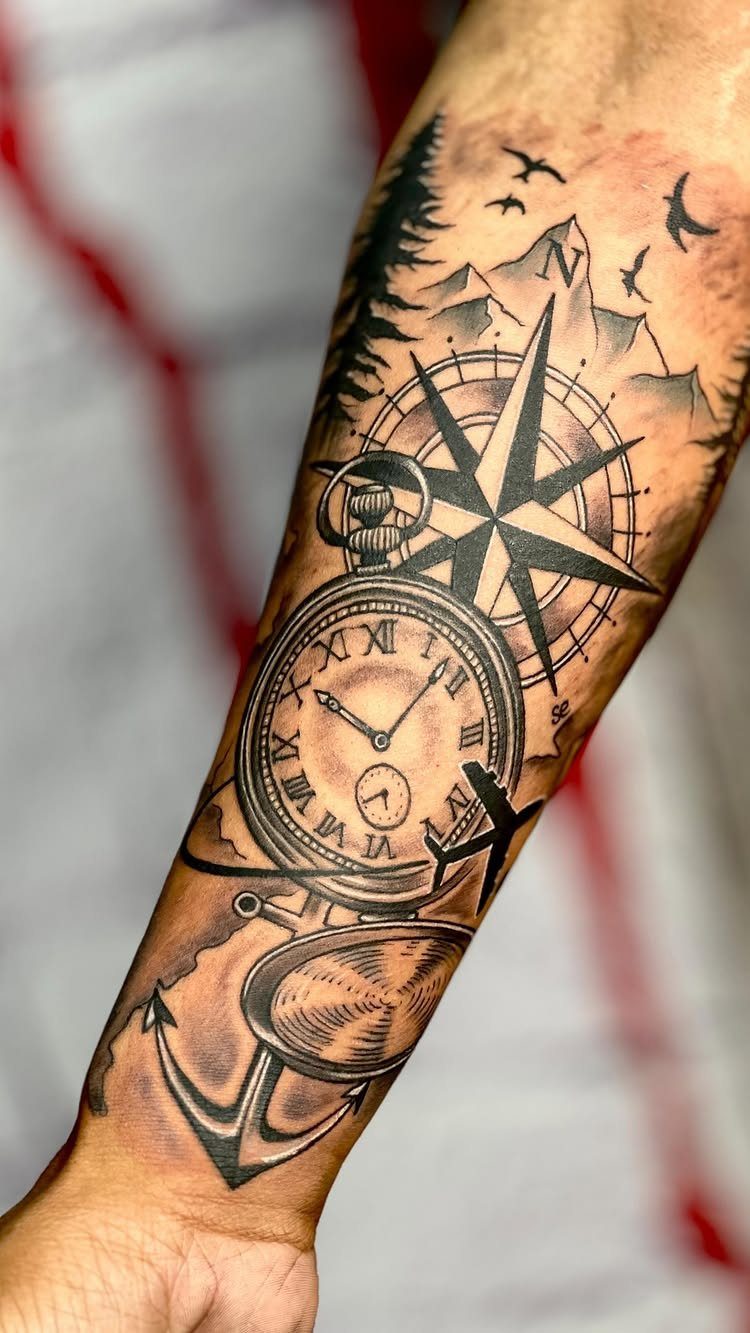
A compass points you forward, and layering in a pocket watch, anchor or mountain range turns the piece into a travel narrative without needing script.
Forearm placement keeps all the details visible. The round shape of the compass centers the design, and the other symbols fill in around it without competing for attention.
Black ink holds detail better than color on busy pieces like this one. If direction or adventure matters to you, a compass gives you a clean symbol that doesn’t require backstory.
12. Family Tree Tattoo Design for Men
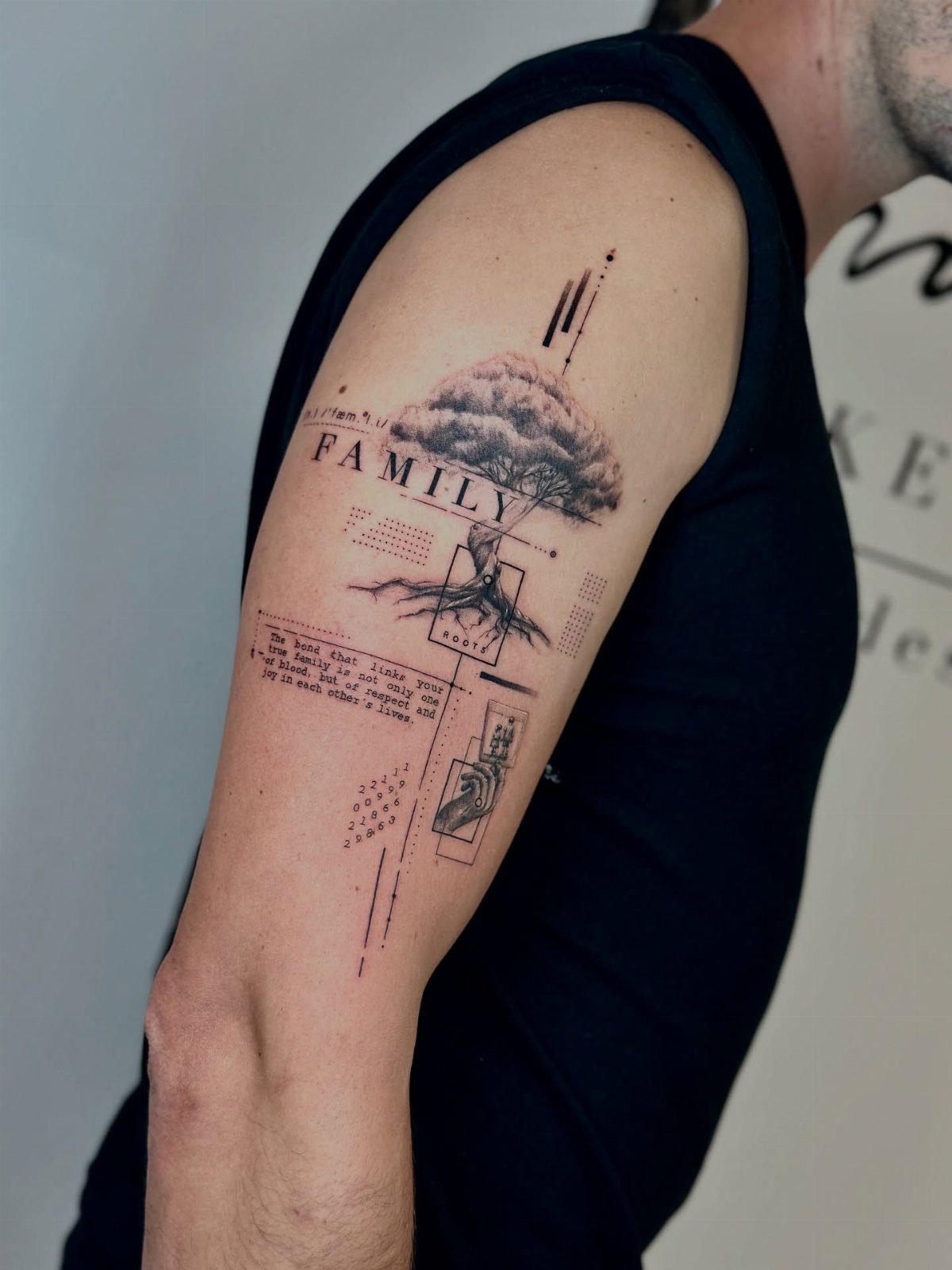
A family tree puts names, dates, or faces in one place. The roots and branches give structure, and you can add to it later if your family grows.
Upper arms work because the design can expand up toward the shoulder or down toward the elbow. Text blocks need careful spacing so the letters stay readable as the tattoo ages and your skin changes.
If you want something personal that includes other people, a family tree lets you carry them with you. Just make sure the layout leaves room for additions.
13. Samurai Tattoos
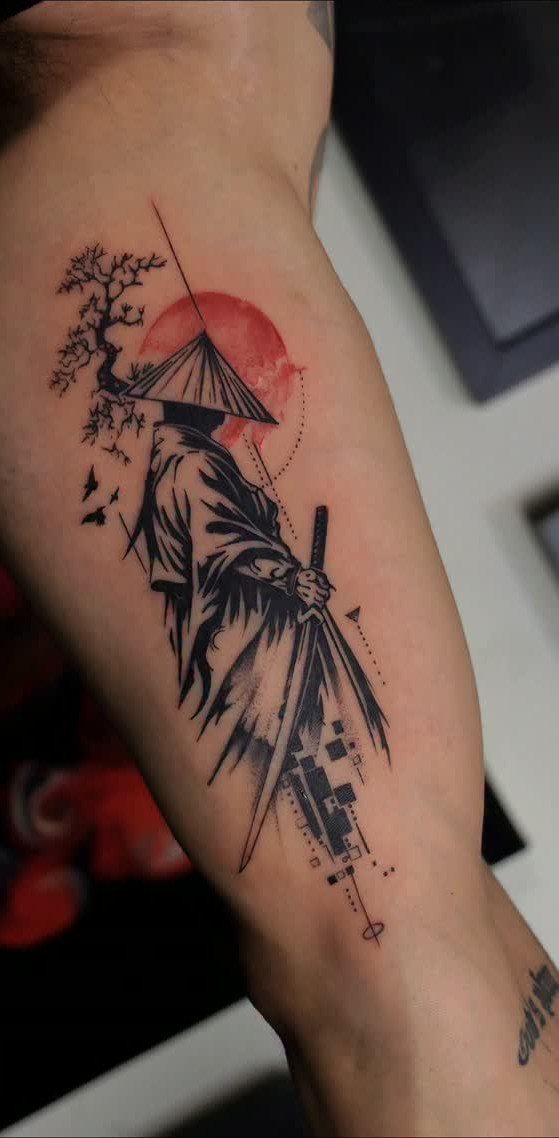
A samurai in traditional armor signals discipline and honor, and the red sun ties it to Japanese culture without needing explanation.
The forearm gives enough space for the figure and supporting elements like the bonsai and sword to sit without crowding.
Red pulls focus exactly where you want it and keeps the rest from feeling muddy. Full color can look muddy if too many hues compete.
If warrior codes or Japanese history matter to you, a samurai carries that weight. The imagery is direct and holds detail well over time.
14. Ocean Wave Tattoos
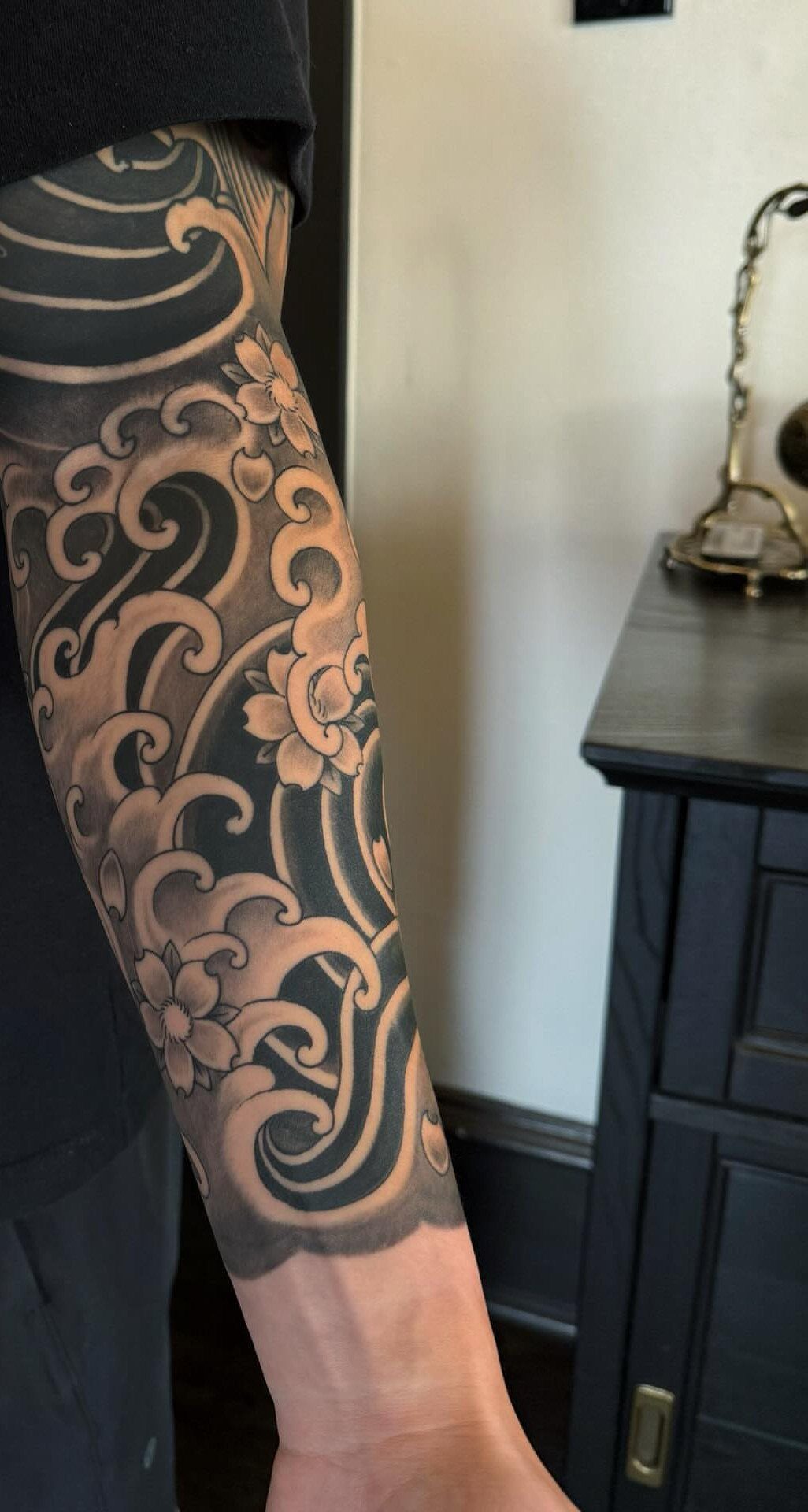
Waves move. The curves give an artist room to build rhythm, and adding flowers softens the design without losing the power of the water.
Forearms handle waves well because the shape follows the muscle and stays visible when you move.
Black and grey shading mimics the texture of water better than flat color, and the contrast between the dark waves and lighter flowers makes both elements read clearly.
If you want something tied to nature or change, waves deliver without requiring backstory.
15. Clock Tattoos
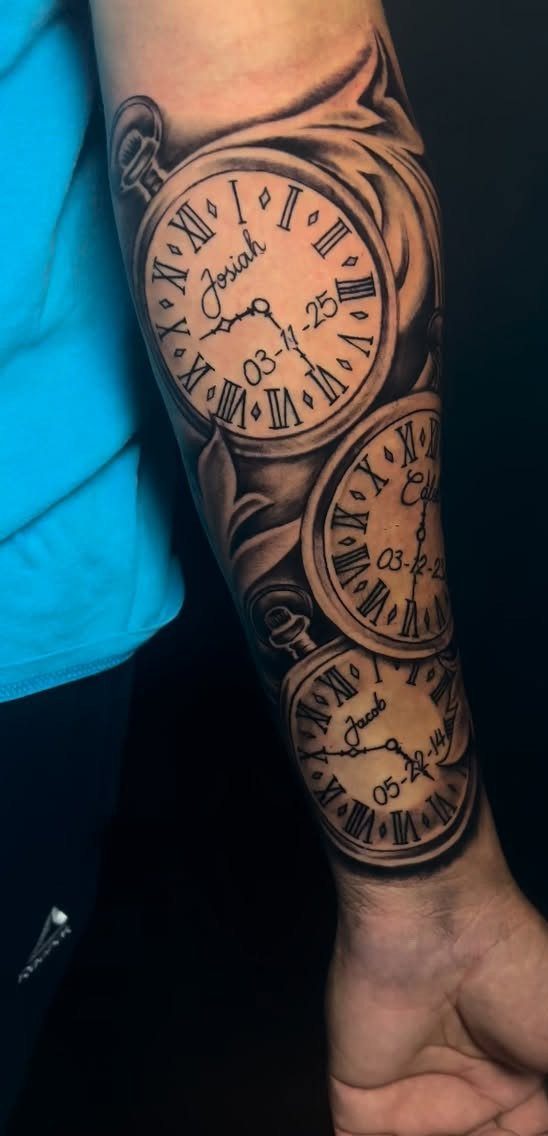
Pocket watches mark specific moments, and adding names or dates turns the design into a timeline. Roman numerals keep the look traditional, and grouping multiple watches together lets you honor more than one person or event.
If time or memory matters to you, this design makes the connection literal.
16. Playing Card Tattoos
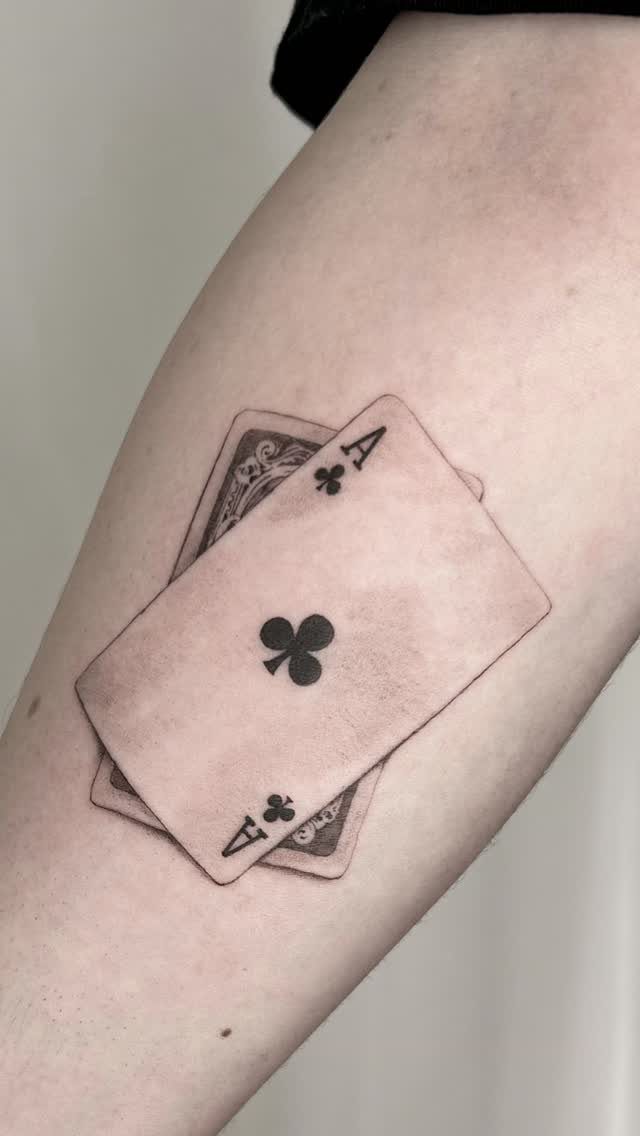
An Ace of Clubs is simple and iconic. The card shape sits flat on a forearm, and black ink keeps the design bold without shading or color that might fade.
Cards reference risk, luck, or games you play.
If poker or gambling means something to you, the symbolism is immediate. Otherwise, the graphic quality of a playing card stands on its own.
This design heals quickly and touch-ups are rare because the shapes are solid and the lines are thick.
17. Cityscape Tattoos
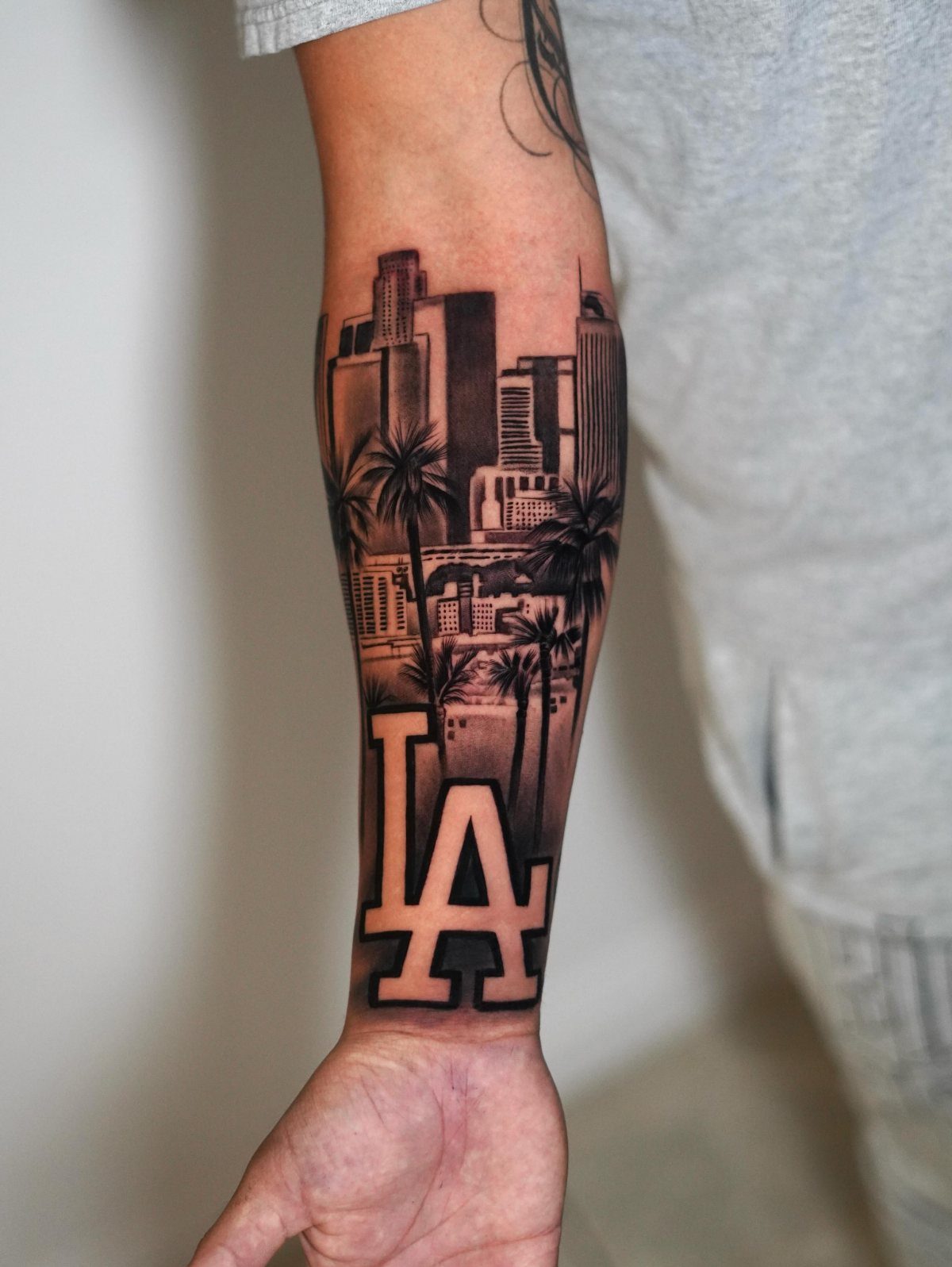
A skyline puts a city you know onto your skin. LA’s palm trees and recognizable buildings make the location clear, and black and grey keeps the focus on the shapes rather than adding color that competes with the architecture.
Forearms work because the horizontal layout follows the natural line of the arm. If you lived somewhere or it changed you, a cityscape anchors that memory in one specific place.
Choose a skyline with distinct landmarks so the city reads even at a glance.
18. Handprint Tattoos
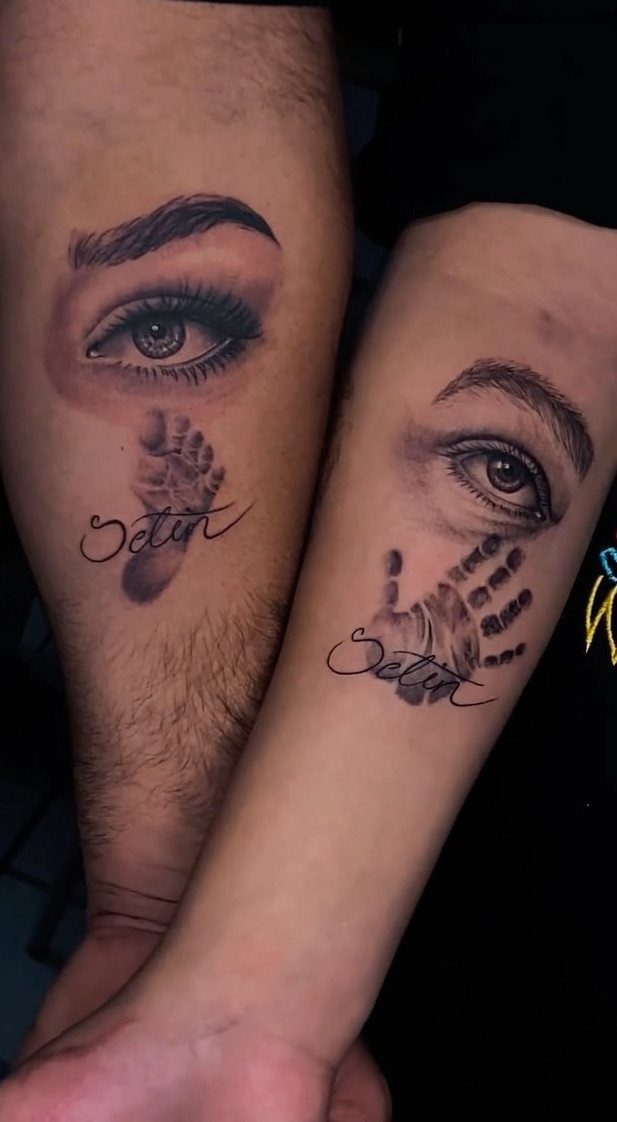
A child’s handprint or footprint captures their size at a moment in time. The ink sits exactly where their hand or foot pressed, and adding their name or an eye symbol makes the piece personal without extra explanation.
Arms show the tattoo easily and heal faster than most spots. The print itself needs careful transfer from paper to stencil so the details stay accurate, and black ink holds those small lines better than color.
If you want to carry your kid with you, this design does it plainly.
19. Crown Tattoos
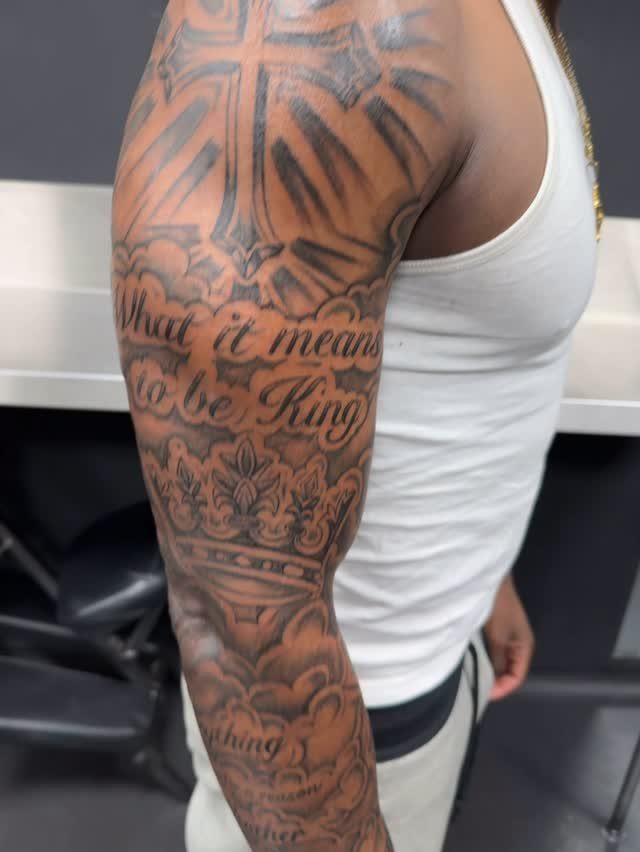
A crown sits above a cross and script, turning authority and faith into one piece.
The placement on the upper arm gives you flat space for text that stays readable, and the crown itself uses thick lines that hold up over years.
Black ink keeps the design bold. Upper arms hurt less than ribs or inner arms, and the muscle gives dimension to the shading.
If control or leadership matters to you, a crown says it directly.
A Celtic tattoo uses black ink to background crosses, trees, or folkloric animals. A tribal tattoo uses black ink to fill in spiraling, zigzagging arrows and lines, often migrating from the pec onto the shoulder and arm.
— GQ
20. Dagger Tattoos
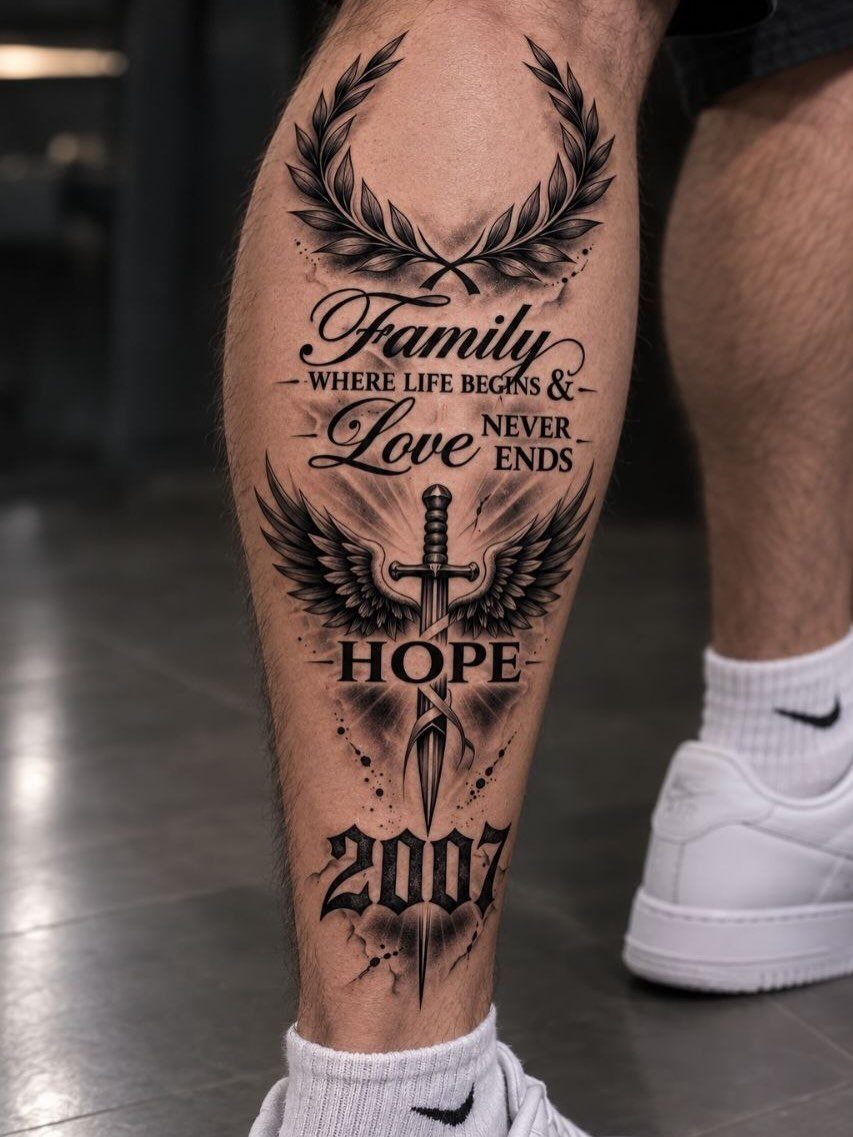
Wings and laurel paired with a dagger layer protection, family, and hope into one piece. The calf handles detail work and the muscle follows the blade’s shape naturally.
Adding words turns the image into something personal. The 2007 date anchors it to a year that mattered, and the wreath keeps the design from feeling heavy.
Calves heal well and you control when the tattoo shows. If strength or family drives the piece, a dagger carries both.
21. Owl and Moon
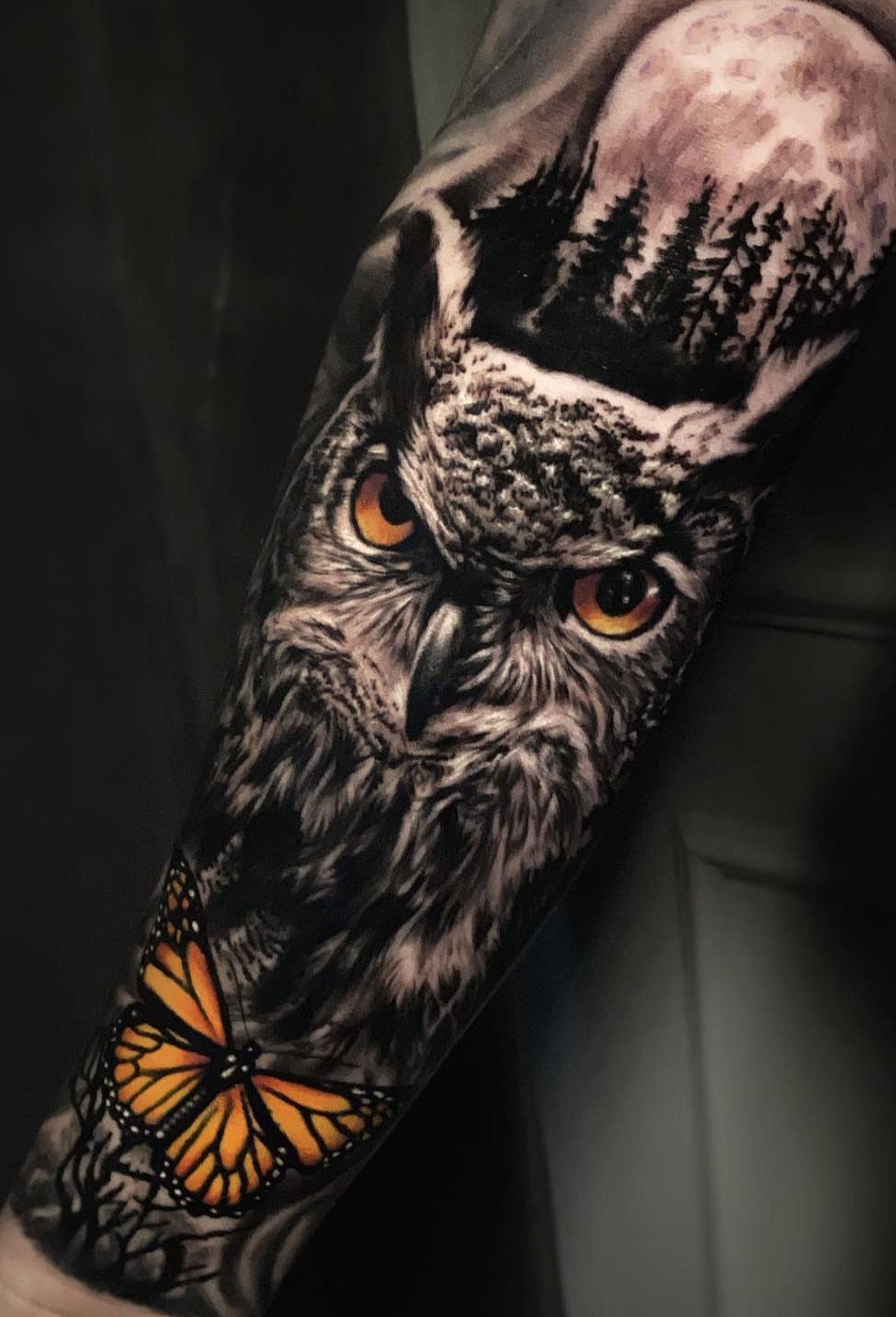
An owl’s face paired with a moon and forest captures night and instinct in one frame. A spot of warm color cuts through solid black and grey without going full spectrum.
Arms give enough space for the owl’s detail and the background elements. Black and grey shading works for the feathers and trees, and a single accent color like orange pulls focus to the eyes.
If wisdom or the wild speaks to you, an owl delivers both plainly.
22. Chest Tattoo Design for Men
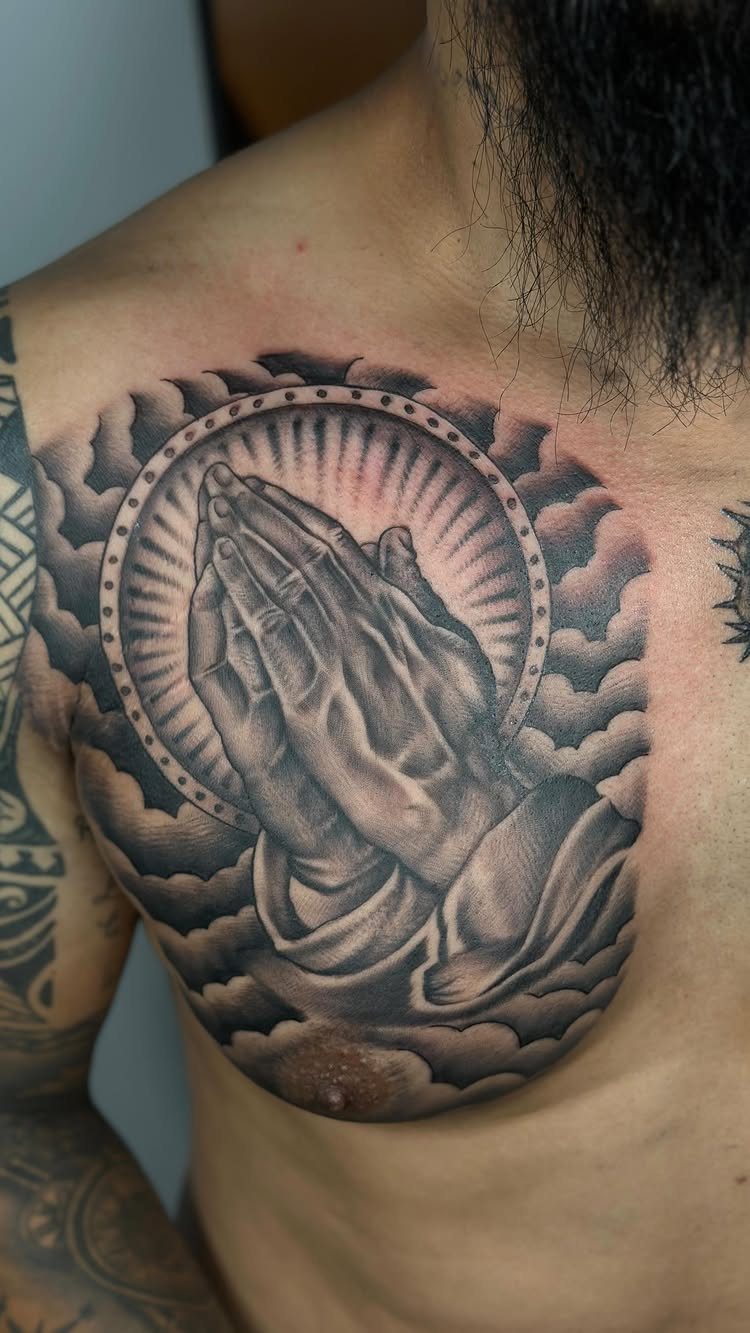
Praying hands on the chest sit close to the heart, and adding clouds and a halo reinforces the religious angle.
The chest offers a large flat canvas, though it hurts more than arms or legs because the skin sits close to bone.
Black and grey shading gives the hands depth without color that might fade unevenly.
Chest pieces take longer to heal and clothing will rub against fresh ink.
23. Brush Stroke Tattoo Design for Men
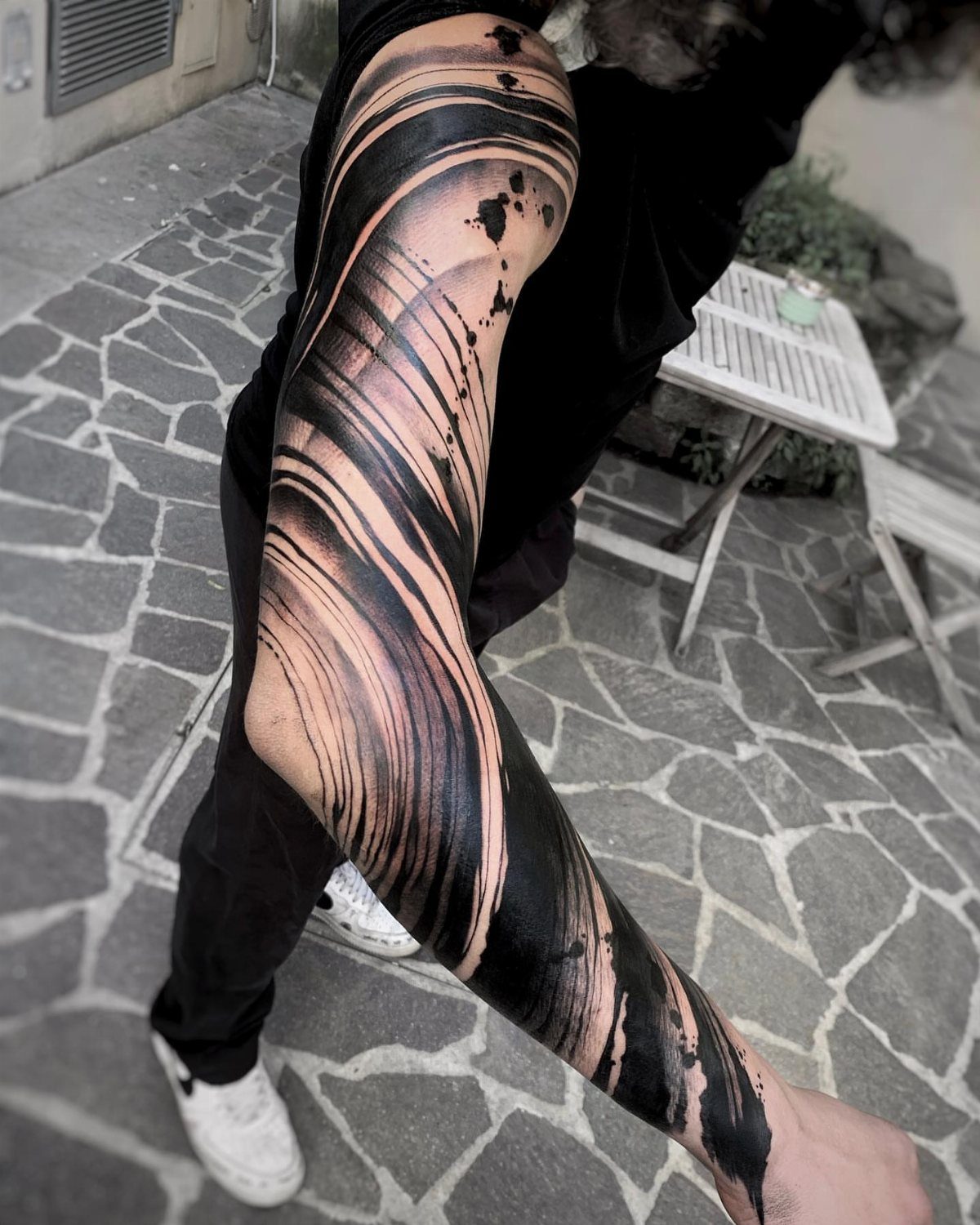
The raw, gestural quality separates this from precise realism or geometric work.
Full leg coverage takes multiple sessions and solid black fills hurt more than line work. Legs heal slower than arms because clothing rubs against the ink, and you’ll need to keep pants loose during recovery.
If you want something that feels more art than symbol, brush strokes give you that.
24. Quote Script Tattoo Design for Men
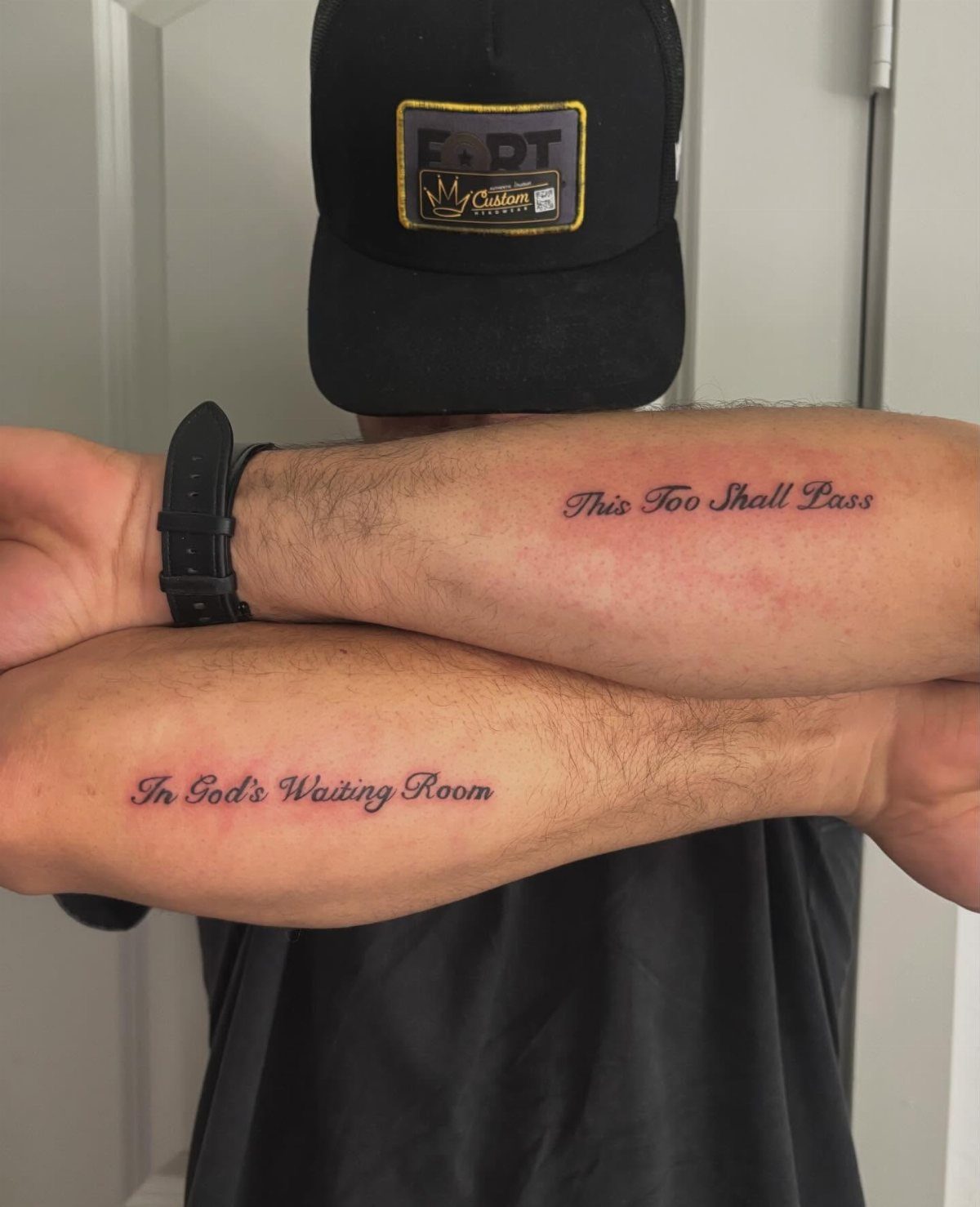
Script tattoos put your own words where you see them. These 2 phrases sit on both forearms, readable when your arms cross, and the message stays between you and whoever asks.
Font choice matters. Clean, simple script ages better than ornate lettering with thin lines that blur over time.
Pick words that still mean something years later.
25. Feather Tattoos
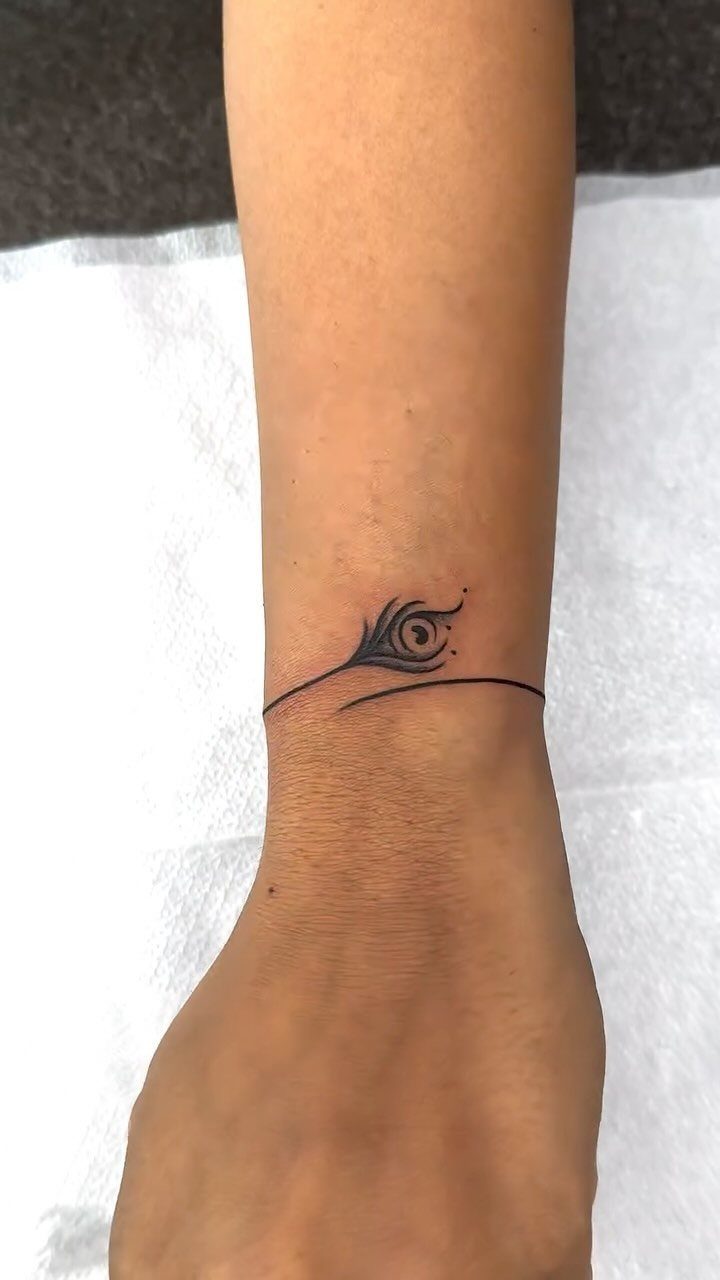
A single feather wraps the ankle and stays visible without taking up much skin. The peacock feather pattern adds detail that holds interest up close, and black ink keeps the design sharp.
Ankles hurt because the skin sits close to bone, but the piece heals quickly. If you want something light that references freedom or truth, a feather works without heavy symbolism.
Small pieces like this cost less and finish in one session.
26. Eagle Tattoos
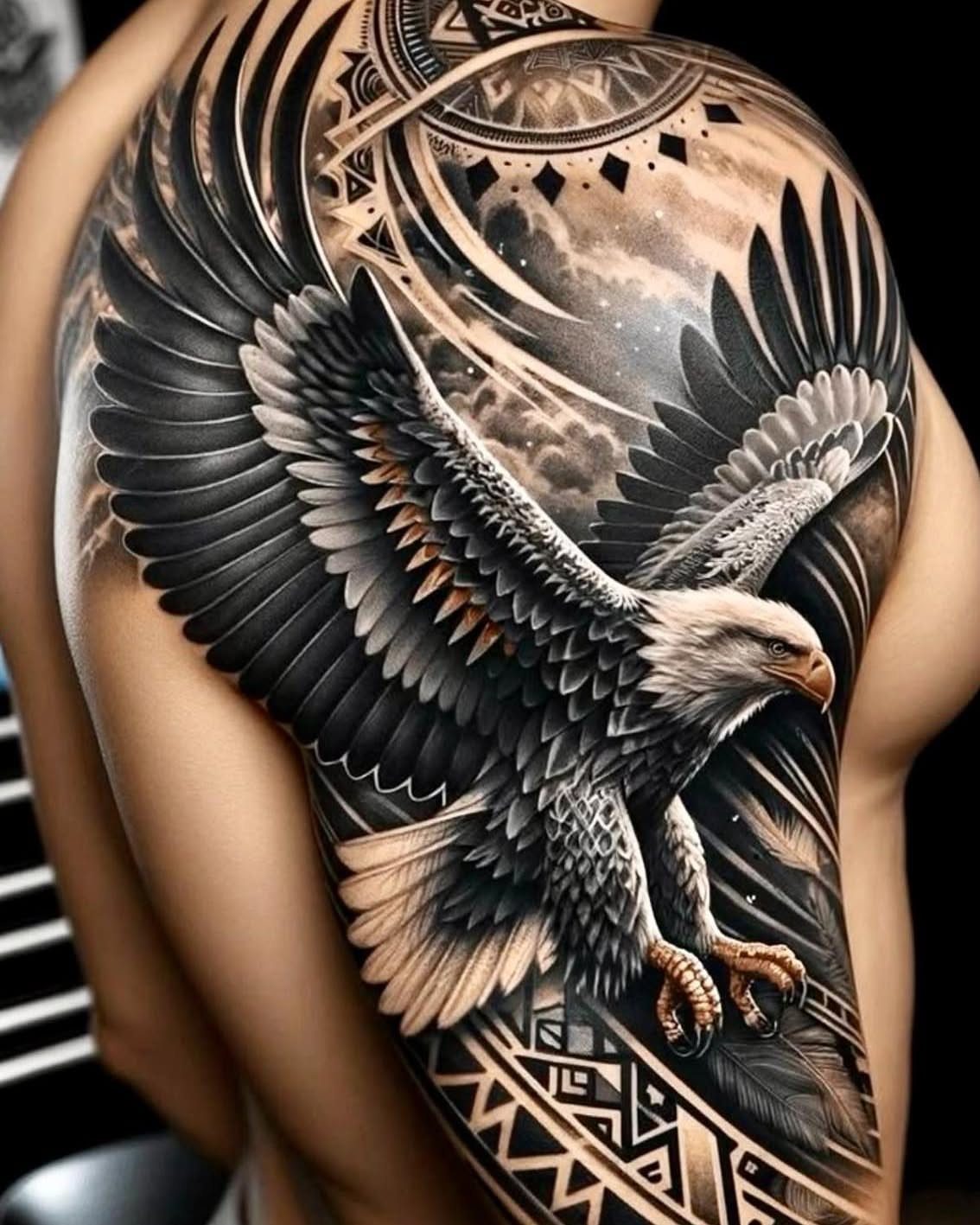
A bald eagle with wings spread across the shoulder and back fills large space with power. The geometric patterns frame the bird without competing for attention, and black and grey shading gives the feathers depth.
Back pieces hurt less than ribs but take multiple sessions because of the size and detail. The shoulder blade moves when you lift your arm, so some distortion is normal.
If freedom or vision matters to you, an eagle delivers both in one bold image.
27. Trash Polka
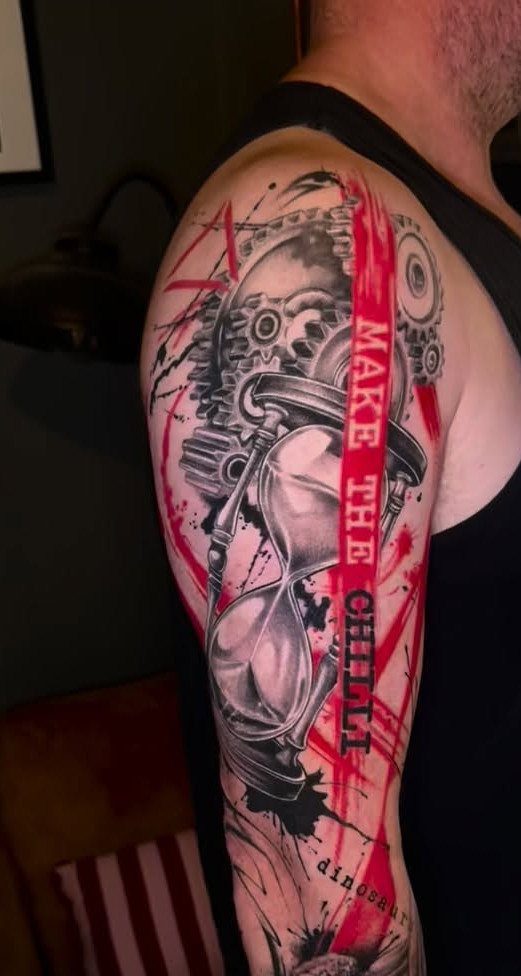
Trash Polka mixes realism with abstract splashes, usually in black and red. The hourglass and gears here sit inside loose brushwork and text, and the red pulls your eye exactly where the design needs weight.
This style uses negative space and intentional chaos, so it needs an artist who works in the genre. Upper arms handle the mix of fine detail and broad strokes without losing either.
If you want something that breaks from traditional tattoo structure, Trash Polka gives you that edge.
28. Lotus Flower Tattoos
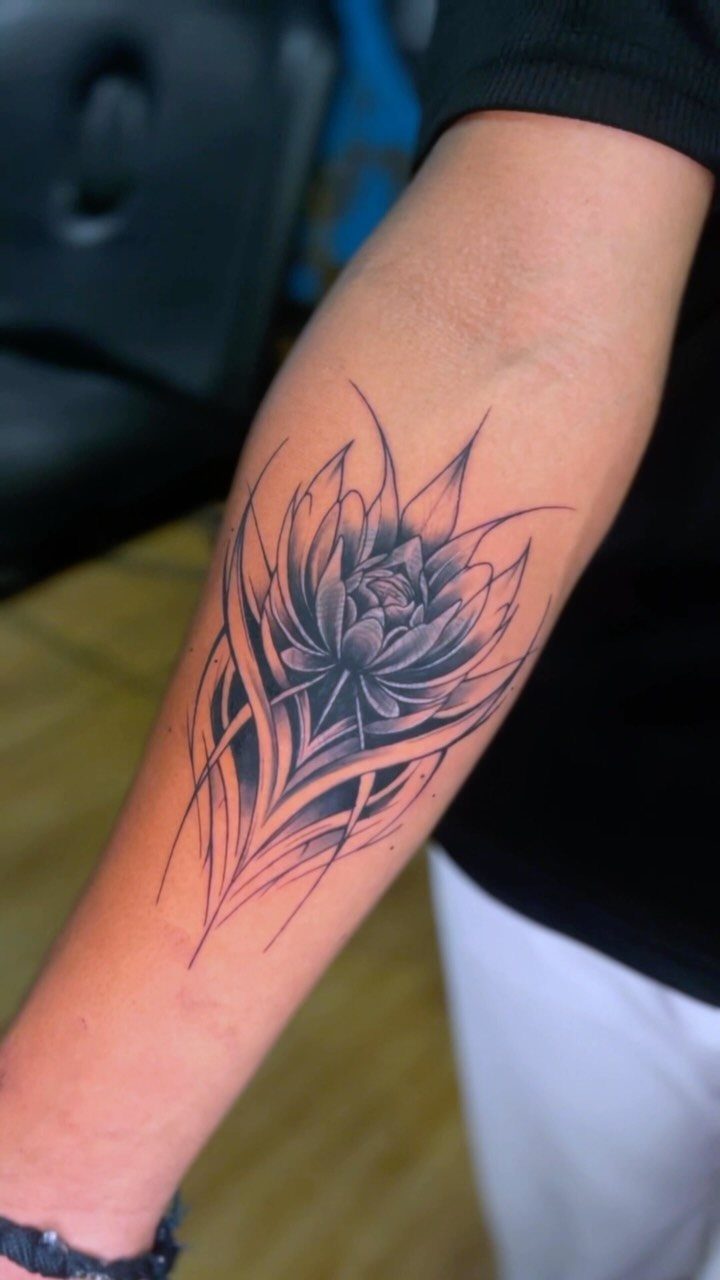
A lotus on the forearm keeps the design visible and the petals use sharp line work that holds detail over time. Black ink reads clearly and the symmetry centers the piece without extra background.
Forearms heal faster than hands or feet and the flat surface keeps the flower from distorting when you move. If growth through hardship speaks to you, a lotus carries that meaning plainly.
The design sits well on its own or layers into a larger sleeve later.
29. Big Pieces with One Theme
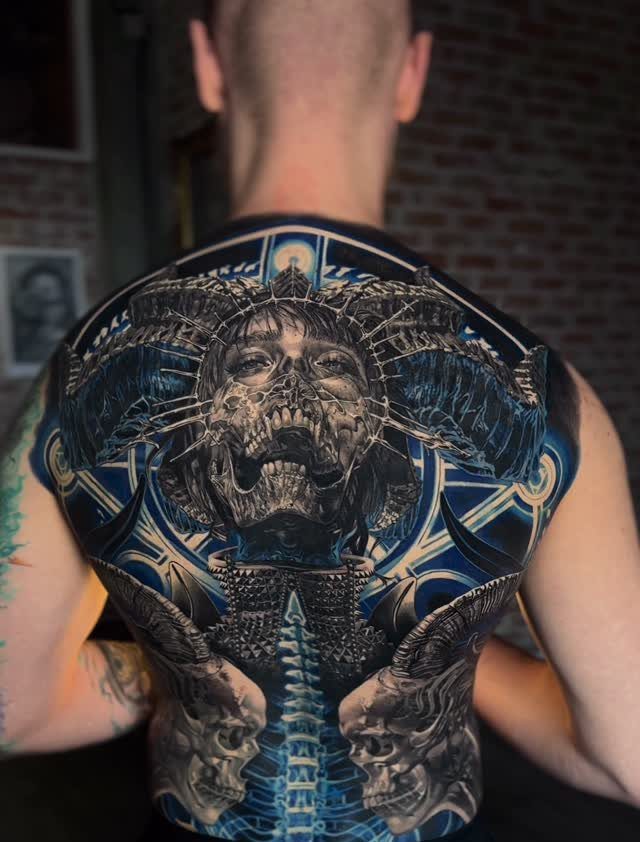
A full back piece with a crowned skull, smaller skulls below, and biomechanical elements tells one story across the entire canvas. The blue accents break up the black and grey without adding too many colors.
Pain varies but the center spine hurts more than the outer back. Healing requires loose clothing and careful sleeping positions.
If you want one cohesive narrative instead of separate pieces, a themed back tattoo commits fully.
30. Tiger Forearm Tattoo
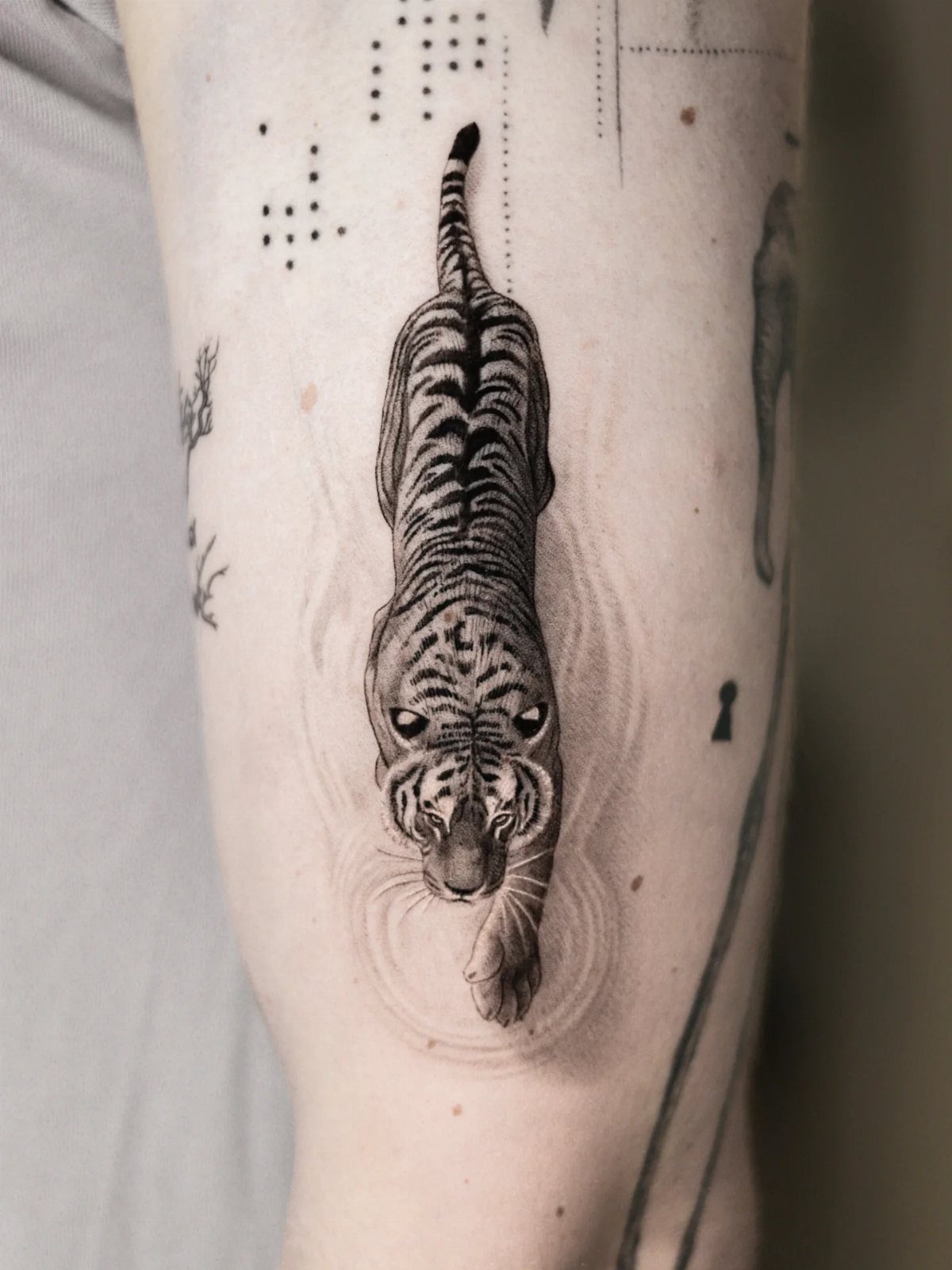
A tiger stepping forward with water ripples underneath adds motion to the design. Black and grey realism requires an artist who can handle muscle structure and fur texture, and forearms give enough space for the full figure without cropping.
The ripples fill negative space and give context without crowding the tiger. Forearms heal well and the design stays visible when you wear short sleeves.
31. Japanese Irezumi Tattoo
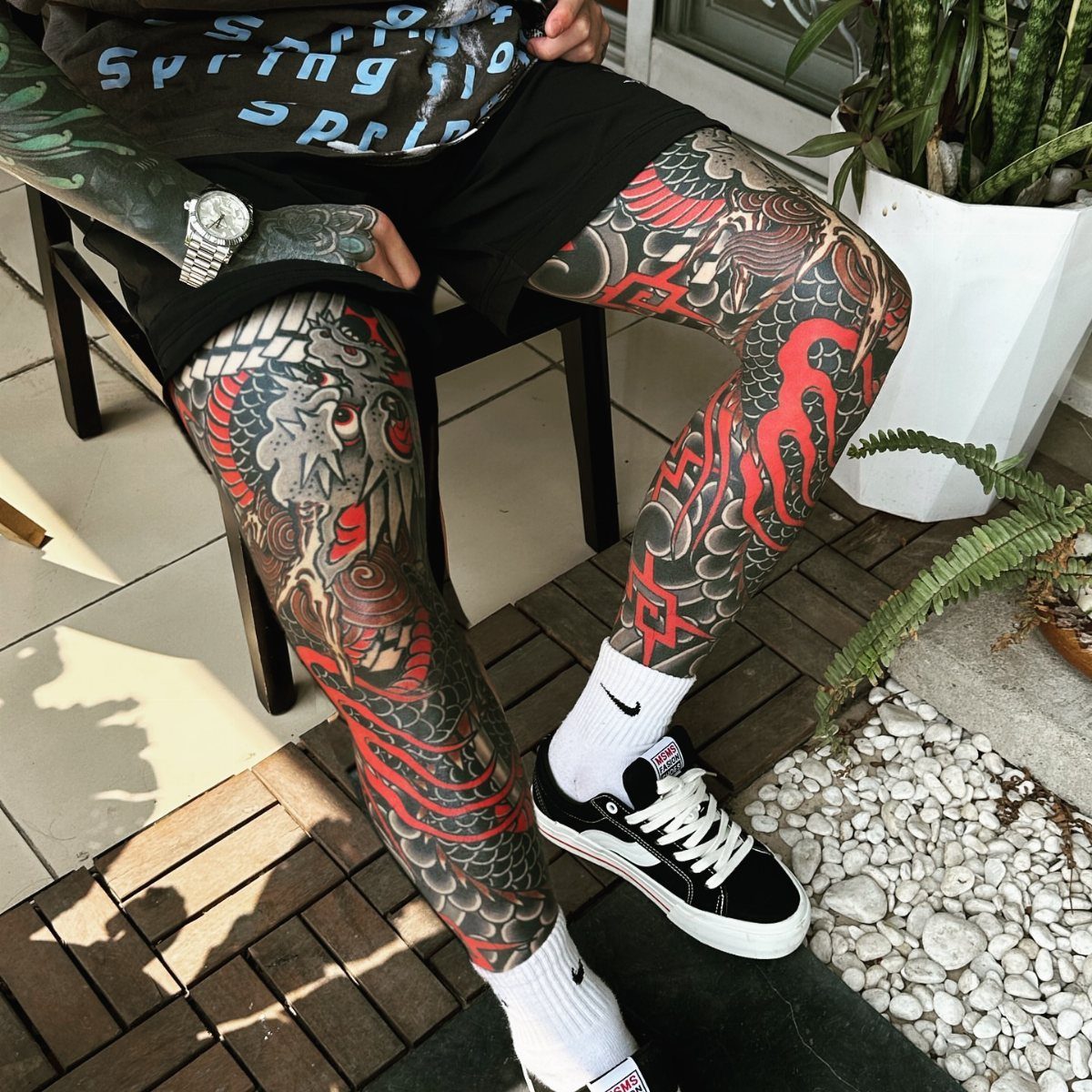
Irezumi covers large areas with a single narrative. Waves, koi, dragons and protective figures connect across the legs and arm, and the colors stay bold because traditional Japanese pigments hold up over decades.
Pain tolerance matters because you’re committing to frequent appointments, and legs swell more than arms during healing.
The style follows rules about composition and subject pairing, so find an artist who works in traditional Japanese tattooing rather than someone who borrows the aesthetic.
32. Pine Forest Forearm Tattoo
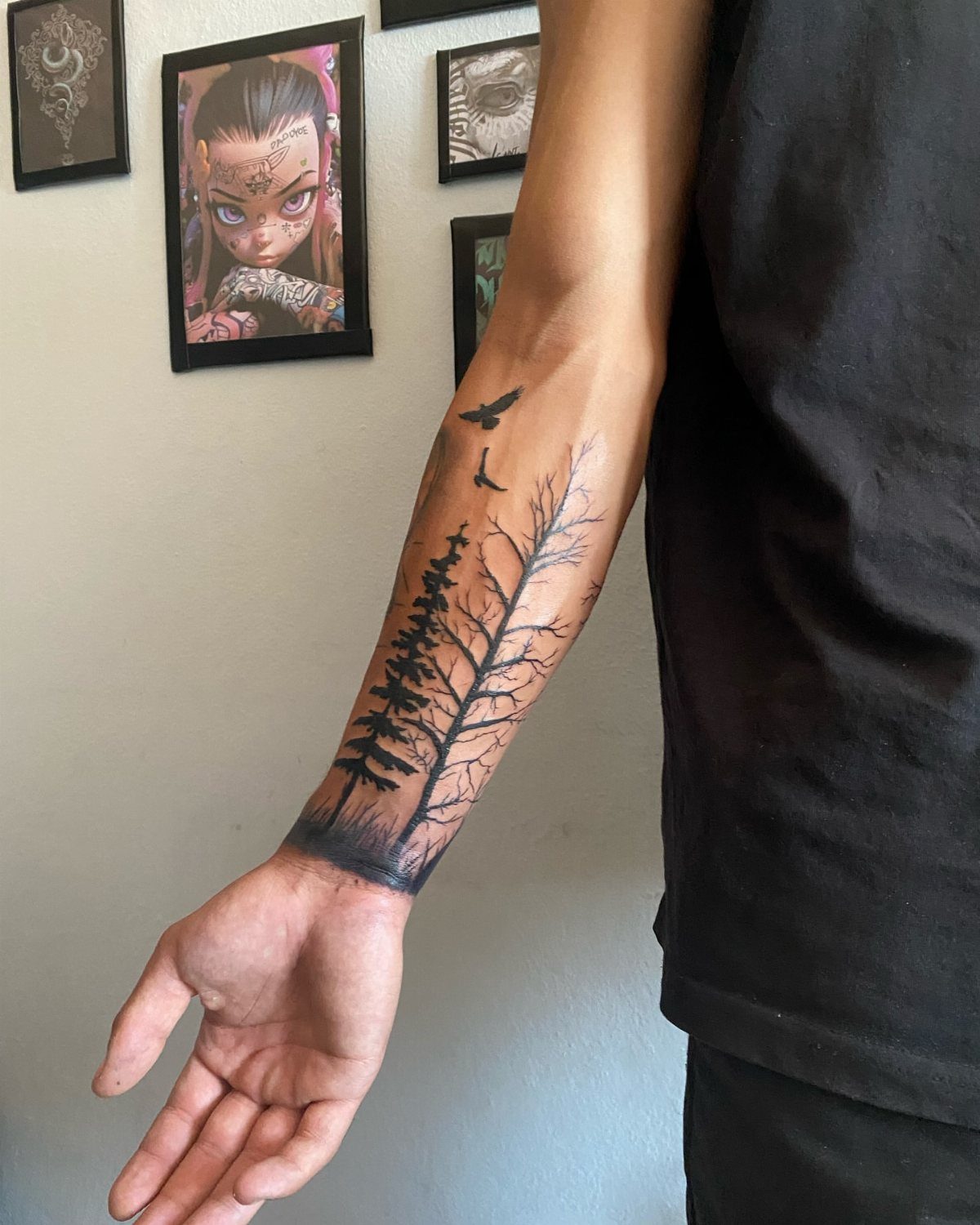
Pine trees in silhouette give you a nature scene without the complexity of full realism. The birds add movement, and black ink alone keeps the design from fading into muddy greens or browns over time.
Forearms show the tattoo when you want and hide it when you don’t. The vertical layout follows the shape of the arm naturally, and the silhouette style heals faster than shaded work because there’s less needle trauma.
If wilderness or solitude matters to you, a forest delivers that without requiring explanation.
33. Circuit Board Tattoo
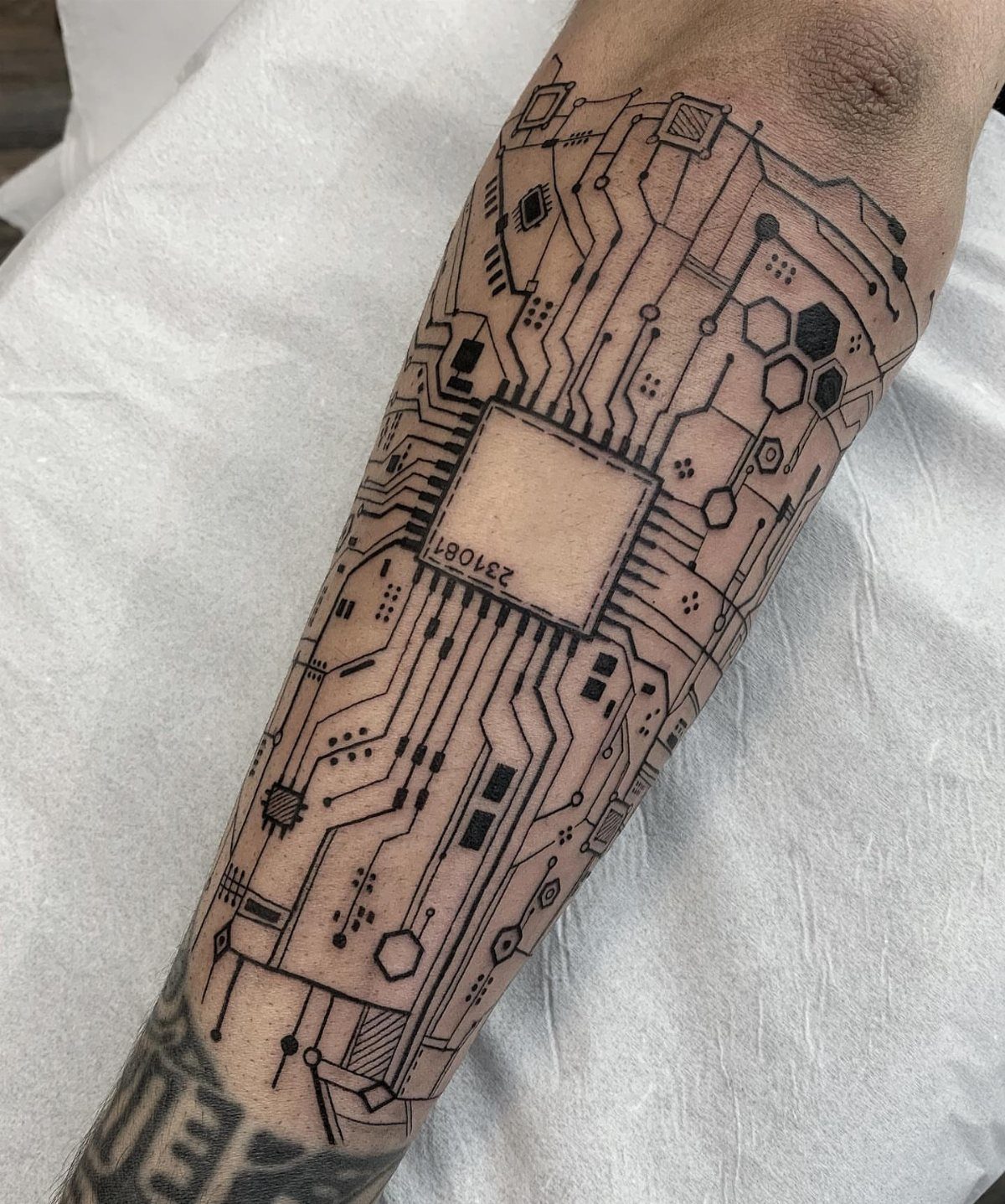
Circuit traces and a central chip reference technology or engineering plainly. The numbers inside the processor can mark a date, and the geometric precision of the lines gives an artist clear shapes to follow.
Black ink holds those fine lines better than color, and arms heal faster than hands or ribs. If you work in tech or electronics shaped your path, a circuit board says it directly without metaphor.
Choosing the Right Tattoo Artist
Check the portfolio before you book. Look for healed work that matches the style you want: clean lines stay crisp, solid black fills hold even coverage, and shading transitions smoothly without patchy spots.
Studios need to follow basic hygiene rules.
Single-use needles, medical-grade autoclaves for sterilizing equipment, and certified ink pigments prevent infections and allergic reactions. If a shop won’t show you their sterilization setup, walk out.
Ask to see healed tattoos, not just fresh ones.
Ink settles differently after a few months, and an artist’s real skill shows in work that’s already been through the healing process. Smooth line consistency and clean saturation matter more than a bold first impression.
Certification varies by state, but any reputable artist will work in a licensed studio and follow guidelines that keep you safe.
Tattoo Aftercare Tips
Wash the tattoo 2–3 times daily with lukewarm water and mild, fragrance-free antibacterial soap. Pat it dry with a clean towel, don’t rub.
For the first 72 hours, keep a thin coat of ointment on the skin, then move to unscented lotion once that window closes. Too much product suffocates the skin and slows healing, so keep the layer light.
Stay out of pools, hot tubs, and any standing water for 14 days. Submerging fresh ink invites bacteria and pulls pigment out before the skin seals.
Once healed, apply SPF 30 or higher daily if the tattoo gets sun exposure. UV breaks down ink faster than anything else, and fading starts long before you notice it.
Pain and Placement Considerations
Areas with more muscle hurt less than spots where skin sits close to bone. Ribs, sternum, spine, and inner arms register higher on the pain scale because there’s less cushion between needle and bone.
Solid shapes and thick lines hold better in these spots than narrow details.
If pain tolerance matters, start with a smaller piece in a less sensitive area before committing to ribs or chest work.
Frequently Asked Questions
What is a good first tattoo for a man?
Pick something small and meaningful that ties to your life, like a symbol, initials, or a simple image.
Starting with a forearm or upper arm piece keeps pain manageable and gives you flat space where the design reads clearly. Choose black ink and solid shapes over delicate linework so the tattoo holds up as your skin changes.
What are the most popular tattoos for men?
Lions, skulls, dragons, and anchors show up often because the imagery is bold and carries weight.
Script tattoos with names, dates, or short phrases stay popular because they make the piece personal without needing explanation. Geometric patterns and compass designs also rank high for men who want structure and symbolism in one piece.
Where do tattoos hurt the least for men?
Outer forearms and upper arms hurt less because muscle and fat cushion the needle, and the skin sits farther from bone.
Chests, ribs, hands, and ankles hurt more since the needle works closer to bone with little padding. If pain matters, start with an arm piece where sessions are easier to sit through.





