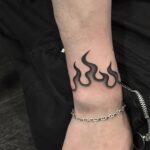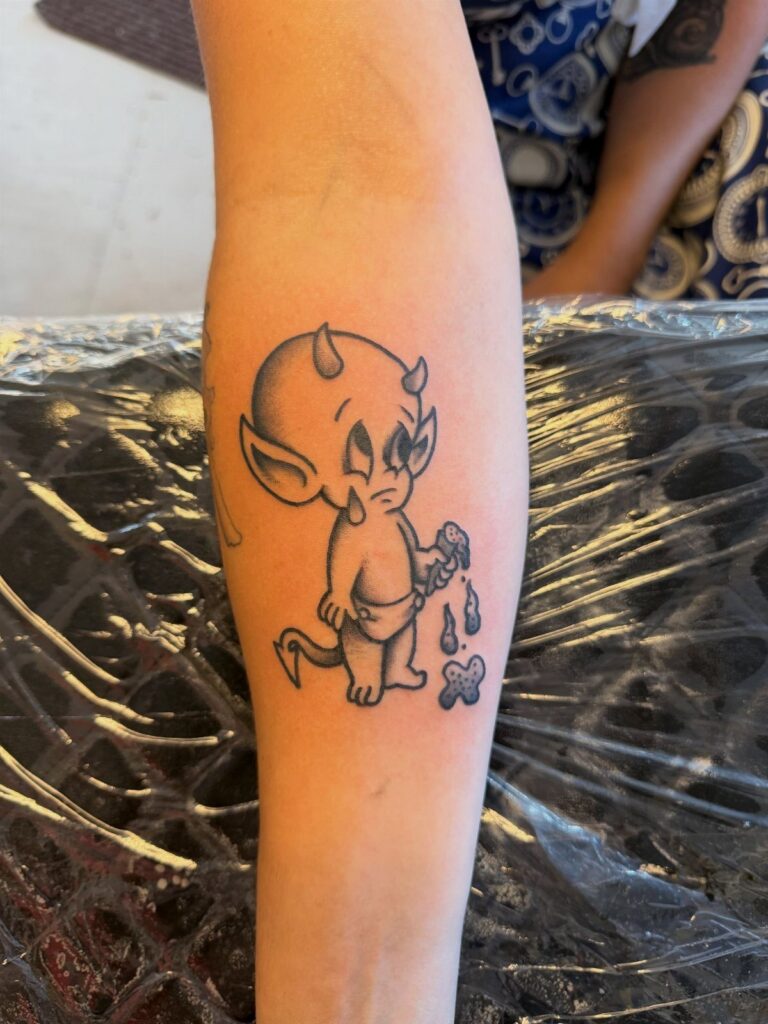
Placement flexibility decides whether a small tattoo works. An anchor takes under an hour in the chair, while a fine-line portrait needs a skilled artist and more session time to keep faces and proportions accurate at small scale.
1. Small Animal Shapes
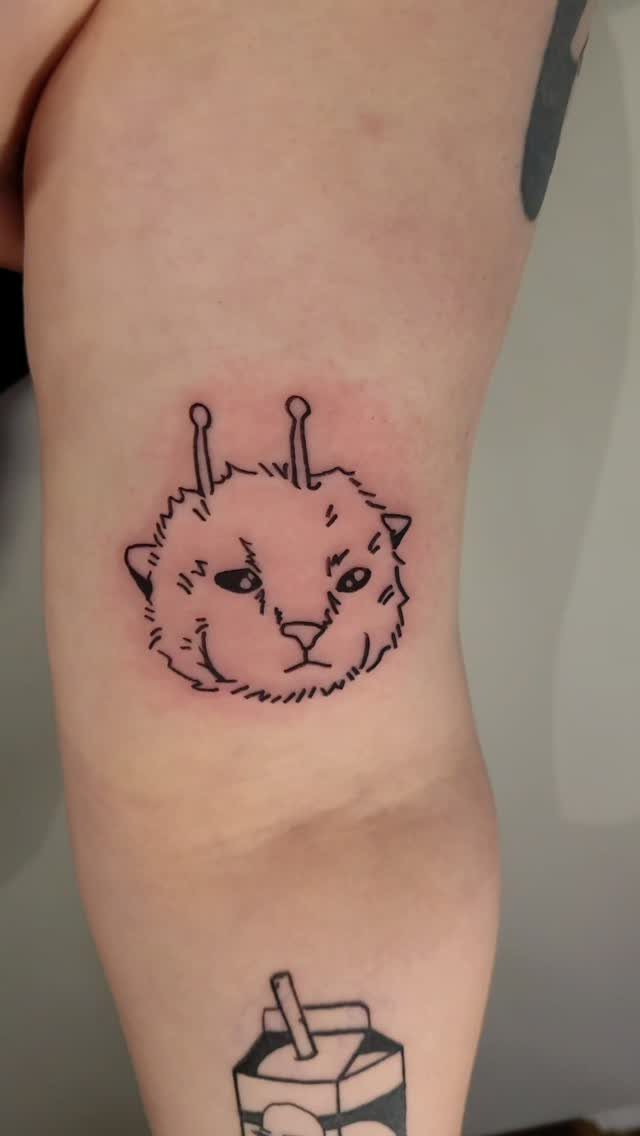
A single animal drawn in simple black line work fits almost anywhere and stays readable at small sizes. Dogs, cats, birds and even less common choices like alpacas work well when the outline is clean and the shape reads clearly.
Placement flexibility is the main advantage here. These fit on wrists, behind the ear, on the ankle or forearm without needing much real estate.
Line weight matters: too thin and the lines won’t hold, too heavy and the tattoo looks clunky. Ask your artist to use a solid middle weight that will hold up.
2. Short Words
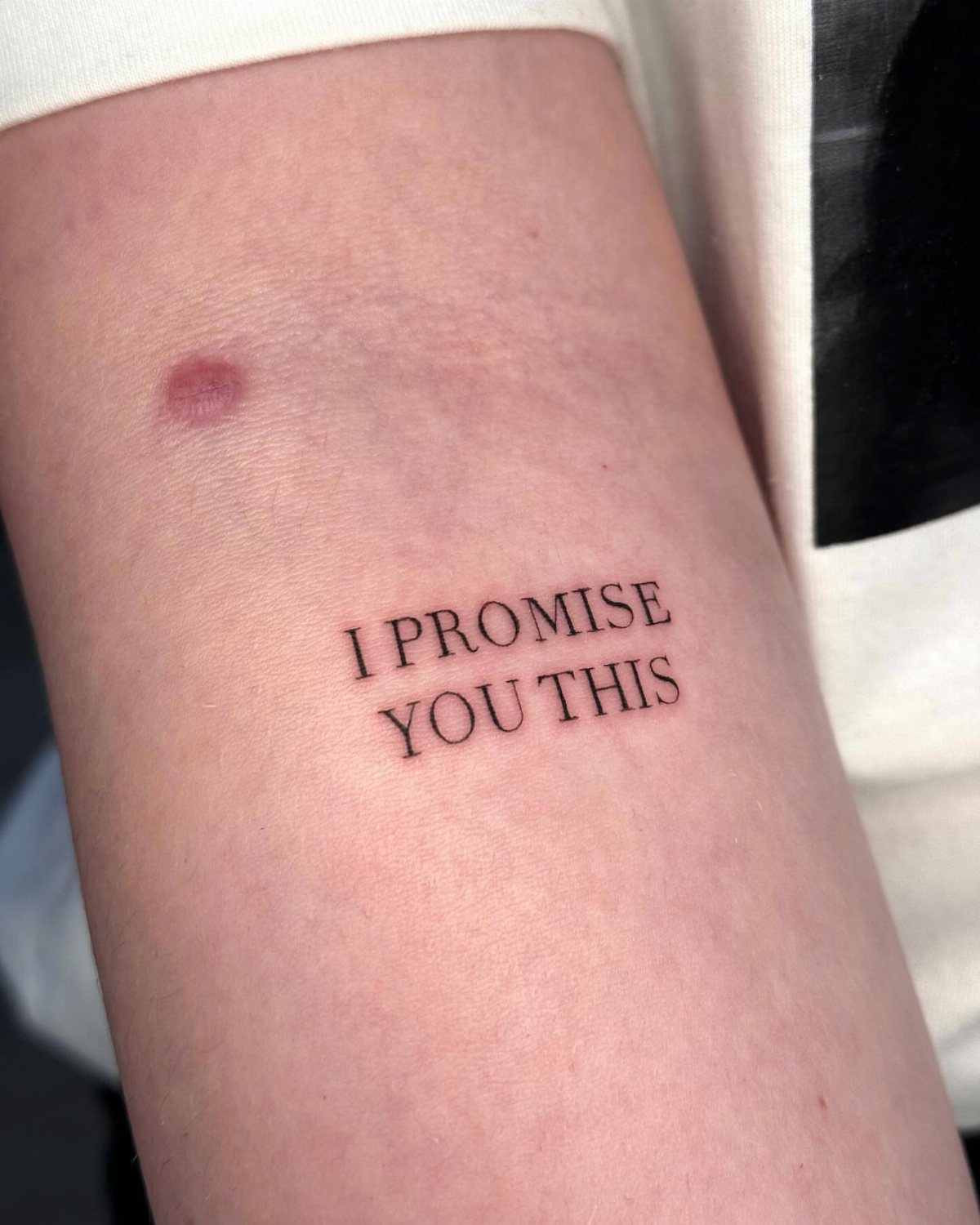
A short phrase or a single word in a readable font works as a permanent reminder without taking up much skin. Proper letter spacing and a font that stays legible at small scale are what make it work.
Sans serif works too, but avoid anything too thin or condensed.
Placement on the forearm or inner bicep puts it where you can see it daily if that matters to you, or tuck it on a rib or shoulder blade to keep it private.
Keep it short. Longer phrases force the text smaller or wider, and both hurt readability.
3. Tiny Flowers
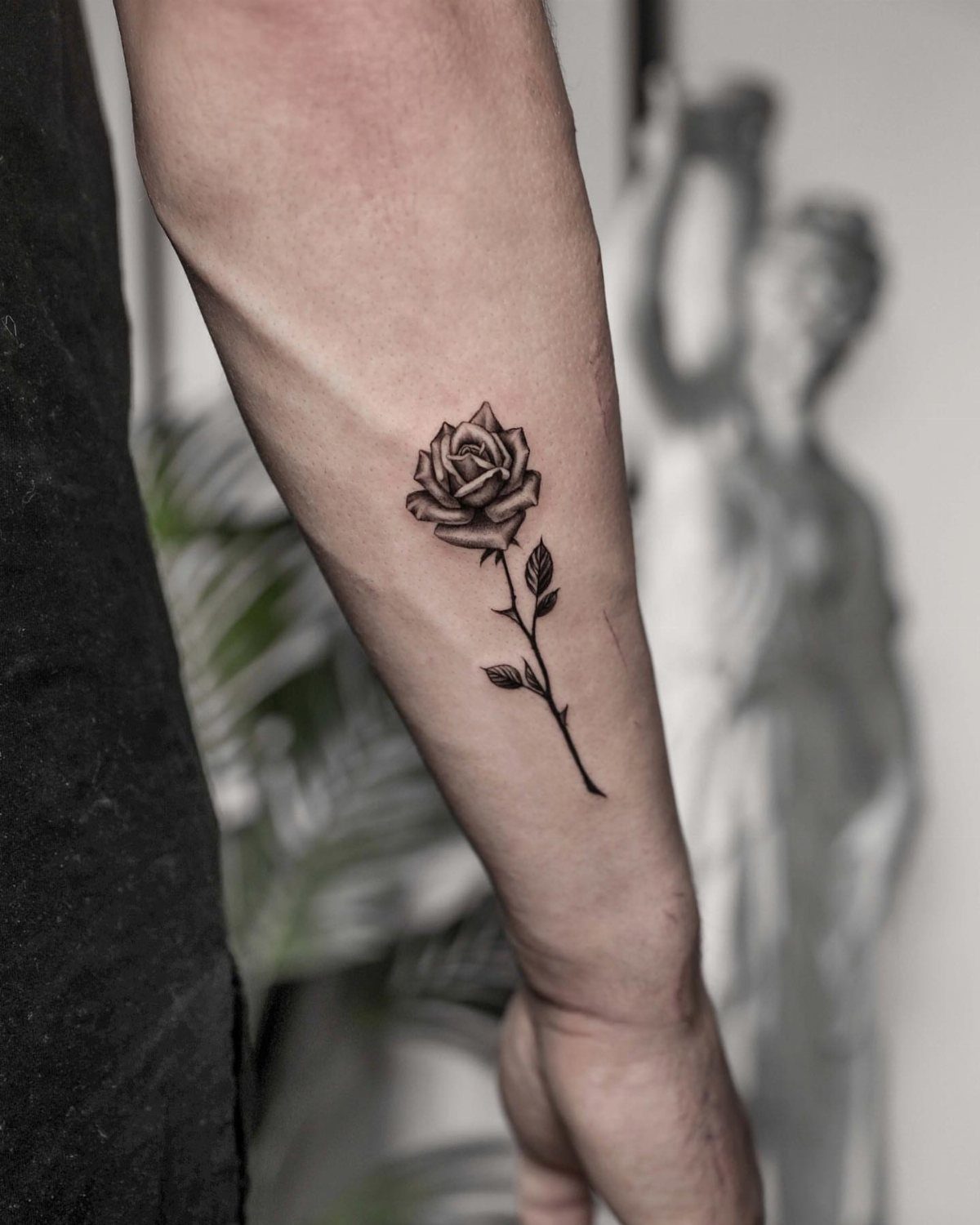
A single flower rendered in solid black with some shading is a classic image that ages well. Roses are the most common choice and for good reason: the shape is instantly recognizable even at thumbnail size.
Detail level is the decision point. A fully shaded rose like this one takes more time and costs more, but it reads as a complete piece instead of just an outline.
A simple line rose costs less and heals faster but offers less visual weight. Both hold up, so the choice comes down to how much contrast you want against your skin.
Forearms, shoulders and calves all work. Avoid fingers or other high-movement areas where fine shading can blur.
4. Anchor Tattoos
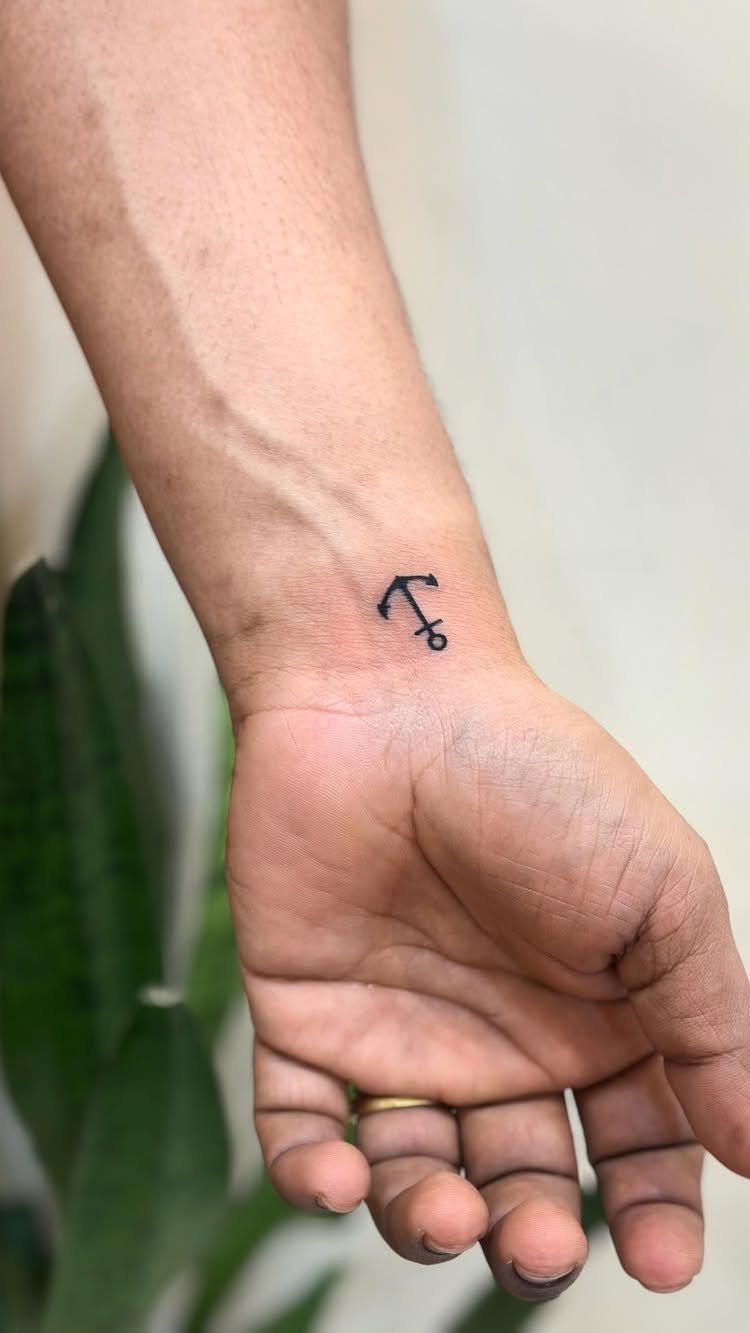
An anchor in solid black is about as straightforward as tattoo symbolism gets: it signals stability, commitment or a connection to the sea. The design itself is simple enough that it works at very small sizes.
Inner wrist placement like this keeps it visible to you without being obvious to everyone else. The anchor shape is symmetrical and compact, so it also fits well behind the ear, on the ankle or on the upper chest.
Line anchors without shading heal faster and age cleanly.
Adding rope detail or shading builds more depth but requires a slightly larger footprint to stay legible. Either version should take under an hour in the chair.
5. Mountain Silhouettes
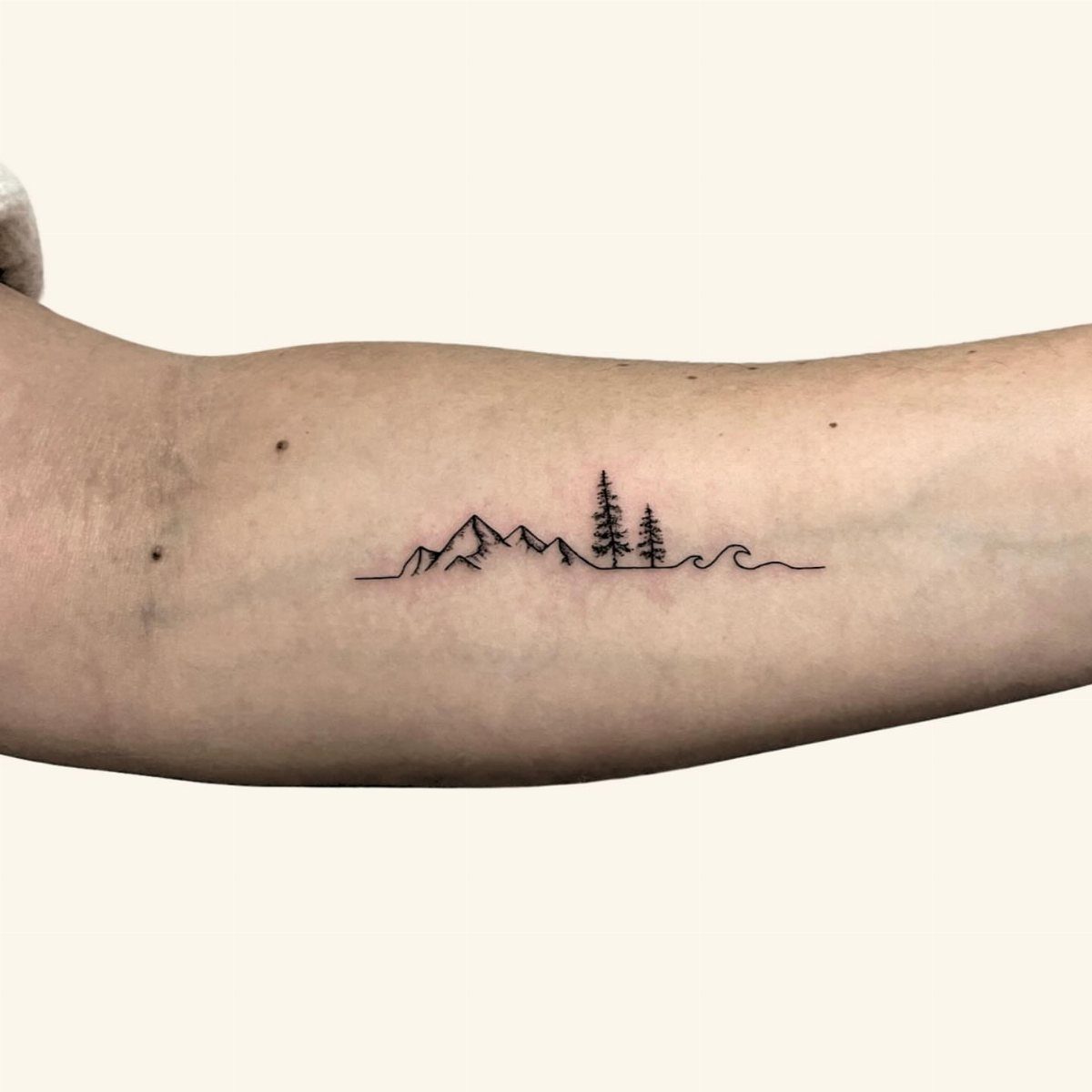
Mountain peaks with a treeline below give you a design that represents outdoor life, challenge or a specific place without needing words. The silhouette format keeps it clean and readable at small scale.
Fine line work like this ages well if the artist uses consistent line weight. Forearm placement is popular because the horizontal layout matches the natural shape of the arm, but this also works on the upper chest or outer calf.
Add a single element like a sun, moon or birds if you want more detail, but keep it minimal. Overloading a small tattoo with too many components turns it into visual noise.
6. Crescent Moon
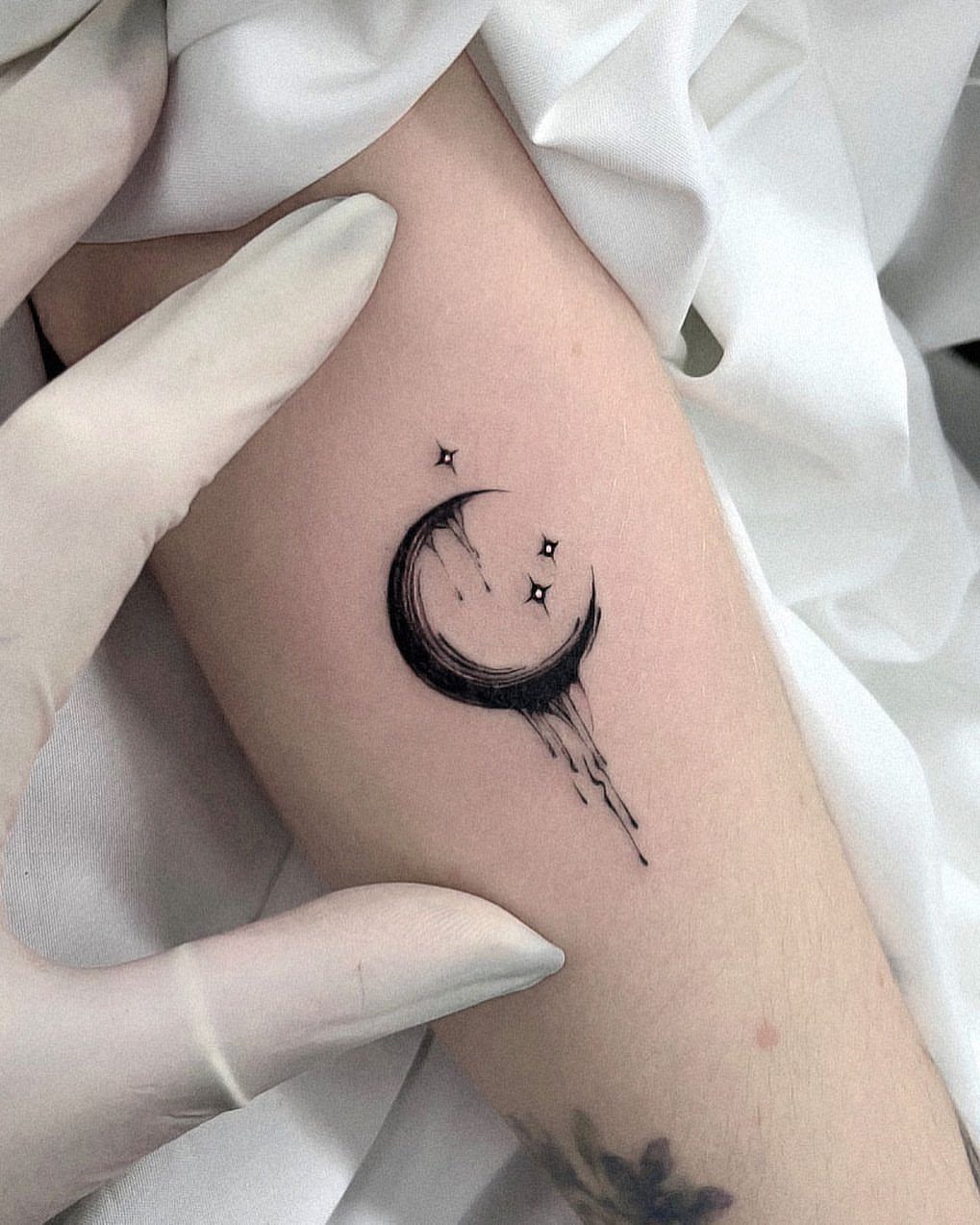
A crescent moon in black ink is a simple shape that carries different meanings depending on who wears it: cycles, change, night or just an appreciation for the image itself. The design is small enough to fit almost anywhere.
A clean crescent without embellishment is more neutral and suits a wider range of placements, including behind the ear or on the inner wrist.
Stars or dots around the moon fill out the space if you want a little more coverage without committing to a larger piece.
This is a low-pain, low-cost option that goes quickly.
7. Coordinates Tattoos
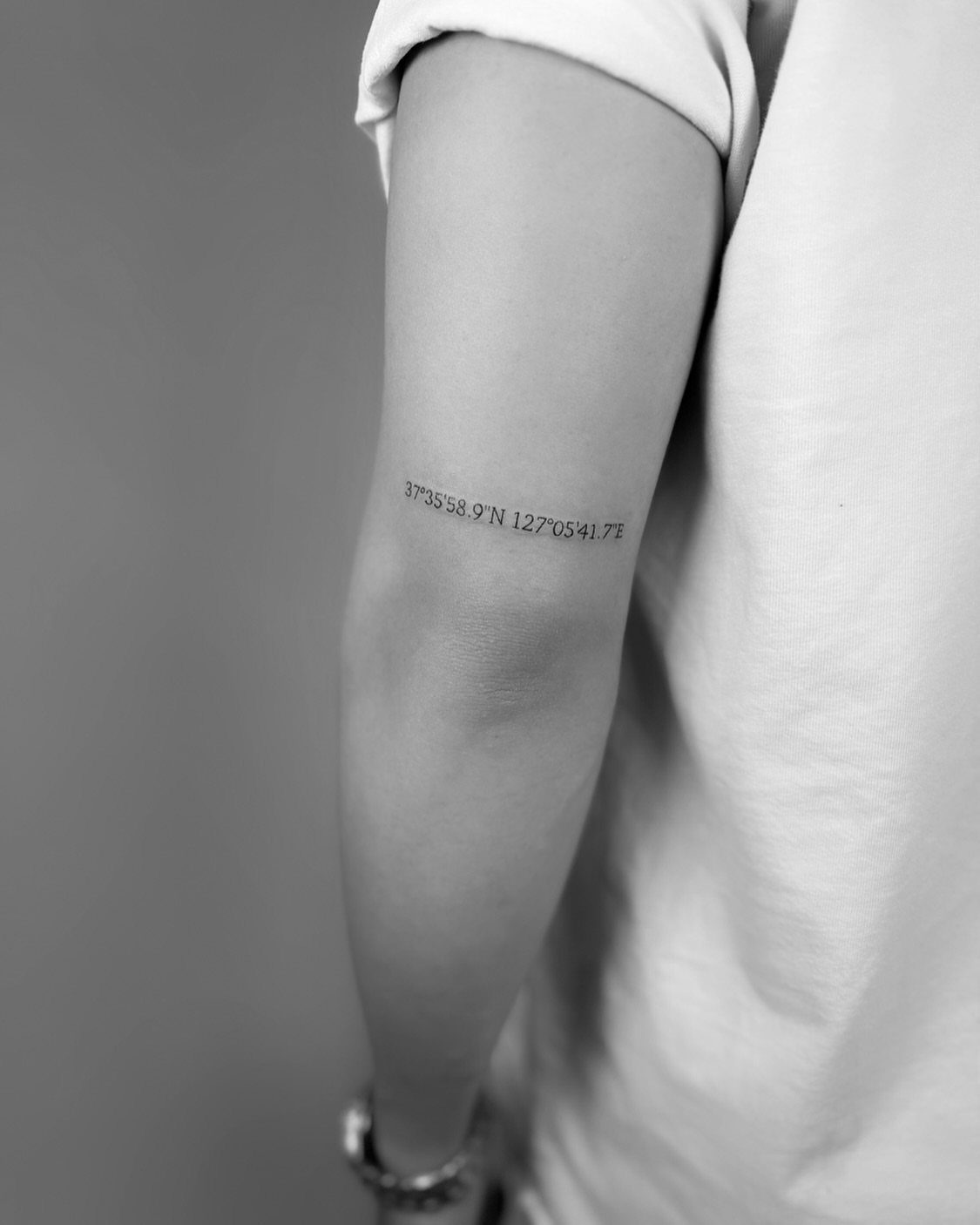
Latitude and longitude numbers mark a place that matters: where you were born, where you met someone, where something changed. The format is instantly recognizable but meaningless to anyone who doesn’t know the spot.
The numbers sit in a single line, so they also work on the forearm, ribcage or outer ankle.
Use the exact coordinates for the location.
Your artist can set them in a clean sans serif or a fixed-width font that keeps the spacing even. Session time is quick.
8. Simple Cross
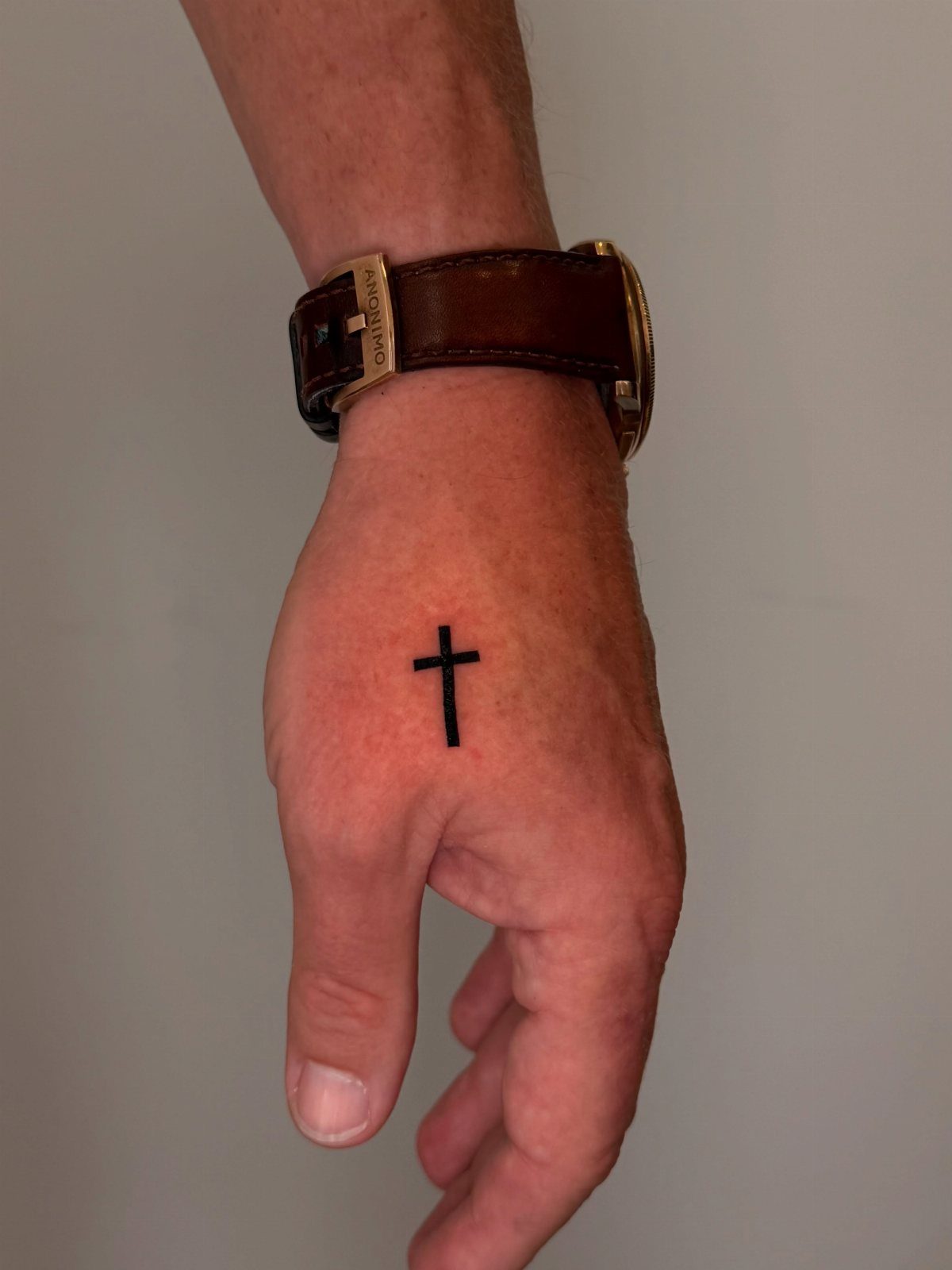
A solid black cross is one of the oldest tattoo designs still in regular use. The shape is simple enough that it works at very small scale and fits almost anywhere on the body.
Back of the hand placement like this makes it highly visible, which is the point for some people and a dealbreaker for others.
If you work in a setting where hand tattoos are a problem, move it to the inner wrist, forearm or chest instead.
This takes minimal time in the chair and heals quickly. The cross reads clearly without shading or embellishment.
9. Geometric Tattoos
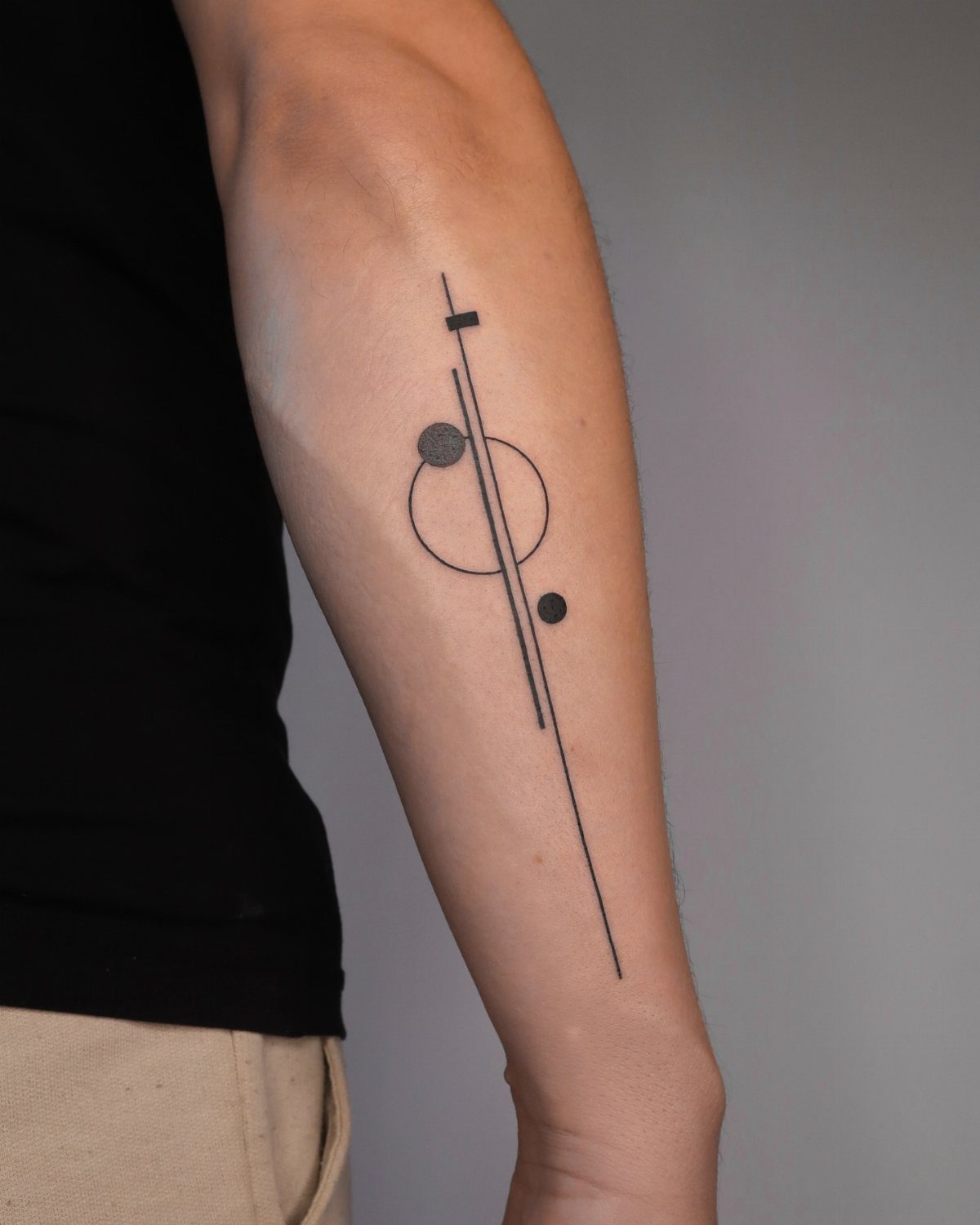
Circles, triangles and straight lines arranged into an abstract composition give you a design that looks finished without relying on recognizable symbols. The appeal is purely visual: clean geometry that works at small scale.
Forearm placement suits the vertical format, but this style adapts to almost any spot. Mixing solid shapes with dotwork adds texture without needing color or heavy shading.
Line weight matters. Geometric tattoos heal cleanly and age well when done right.
10. Compass Symbols
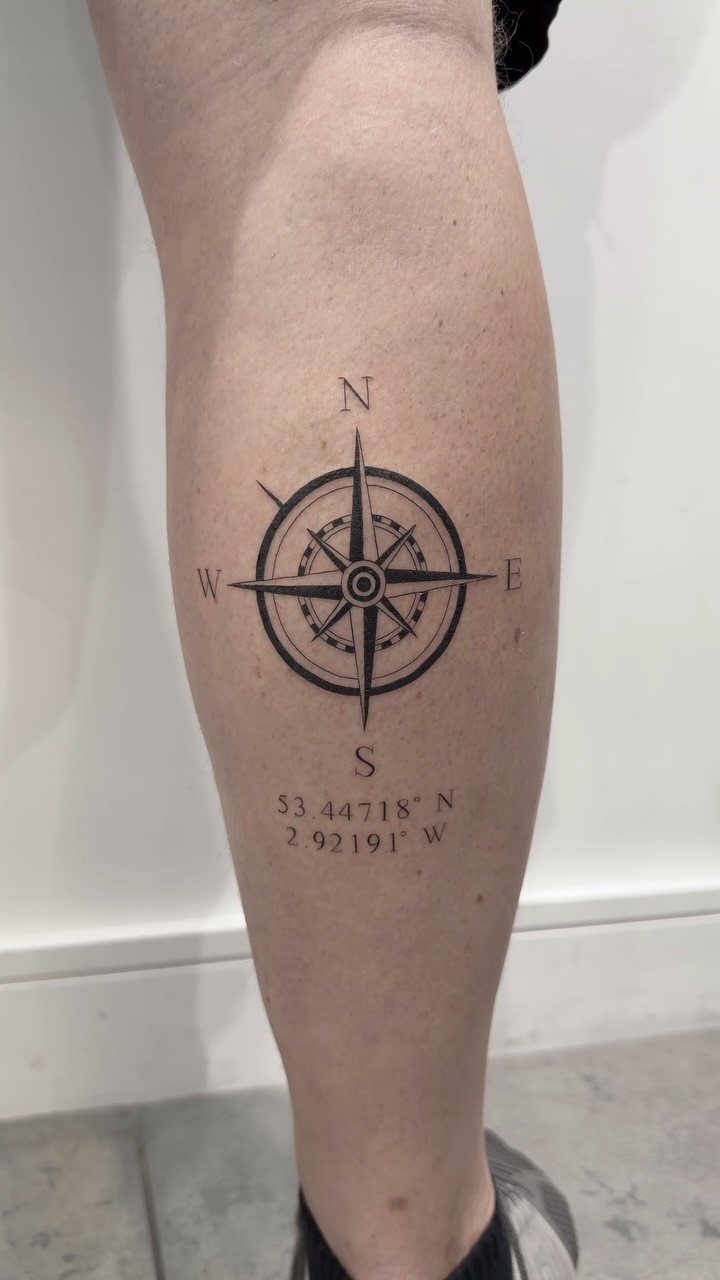
A compass rose with cardinal directions gives you a design about navigation, travel or finding your way. Adding coordinates below it ties the symbol to a specific location.
Lower leg placement like this works well for a vertical design, and the calf offers enough flat surface to keep the lines clean. This also fits on the forearm or upper chest.
The combination of the compass and coordinates takes more time than a simple icon, usually around an hour. If you only want the compass, it can be done smaller and faster.
11. Fine Line Portraits of People
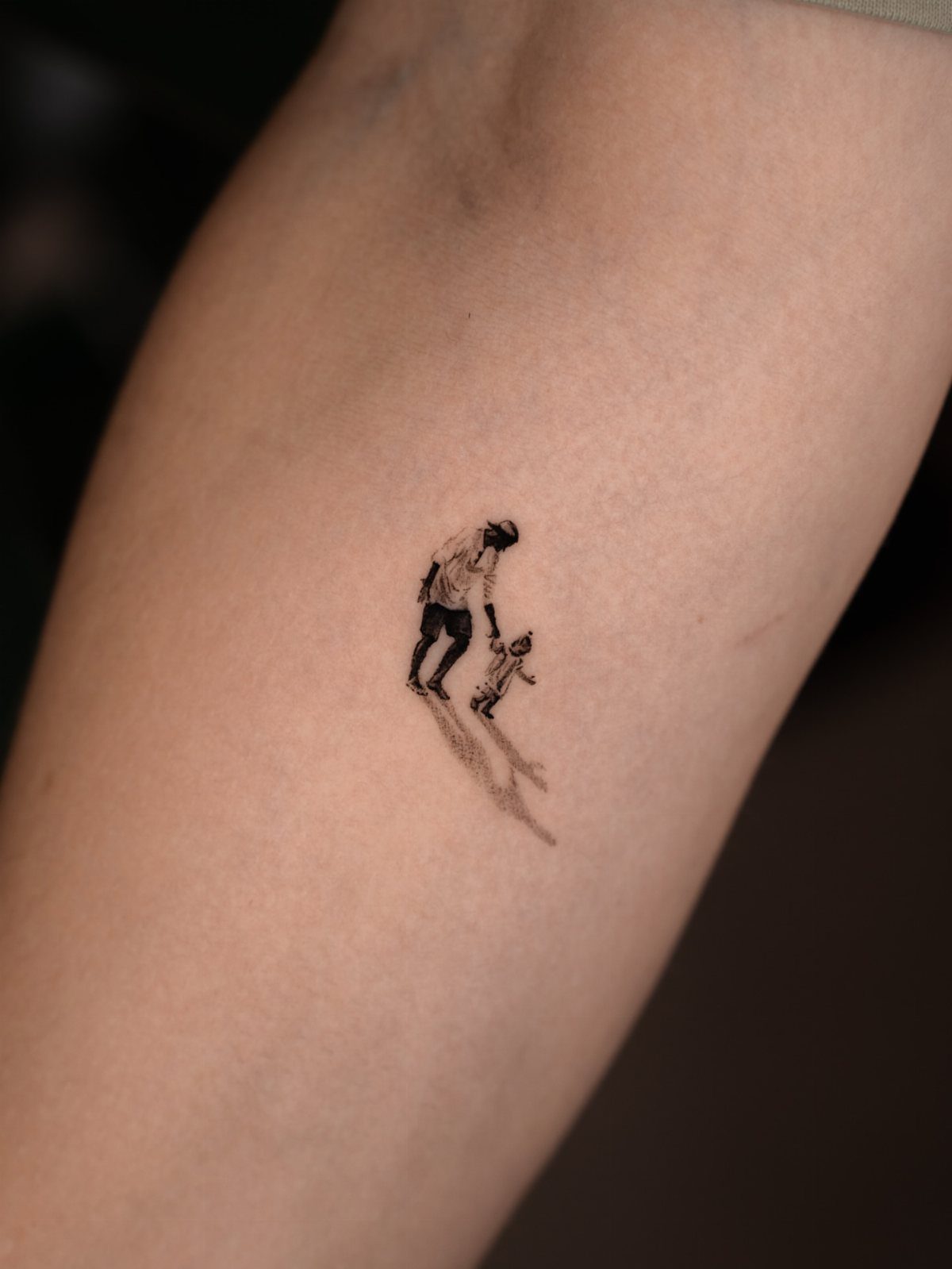
A portrait rendered in fine black line work captures a specific moment or relationship in a format small enough to fit on the arm. The silhouette approach keeps it recognizable without needing heavy shading or color.
This requires a skilled artist who can work at small scale without losing detail.
Faces and proportions have to be accurate, or the tattoo won’t read as the people it’s meant to represent. Expect to pay more and spend more time in the chair than you would for a simple icon.
Arm placement keeps it visible to you. Avoid areas with a lot of movement or stretching, which can distort fine lines over time.
12. Small Skulls
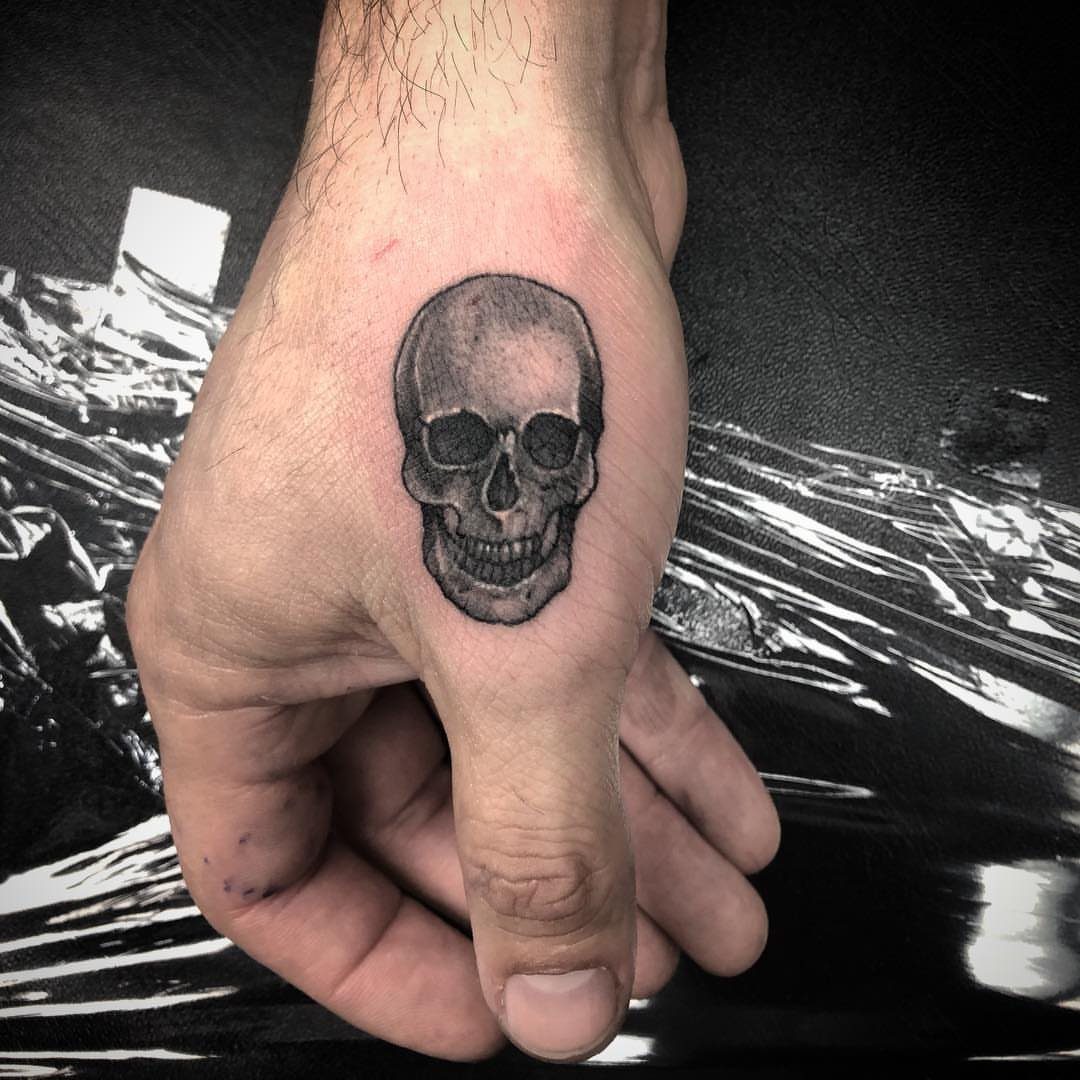
A skull in black and grey shading fits a lot of detail into a small footprint. The design is instantly recognizable and works in traditional, realism or illustrative styles.
Hand placement like this puts it in high-visibility territory, which suits some careers and not others.
If that’s a concern, the forearm, upper arm or chest are safer bets. The back of the hand also experiences more sun exposure and friction, which can fade the tattoo faster.
Shading adds depth but requires touch-ups over time. A solid black outline skull with minimal shading holds up longer with less maintenance.
13. Small Star Tattoo
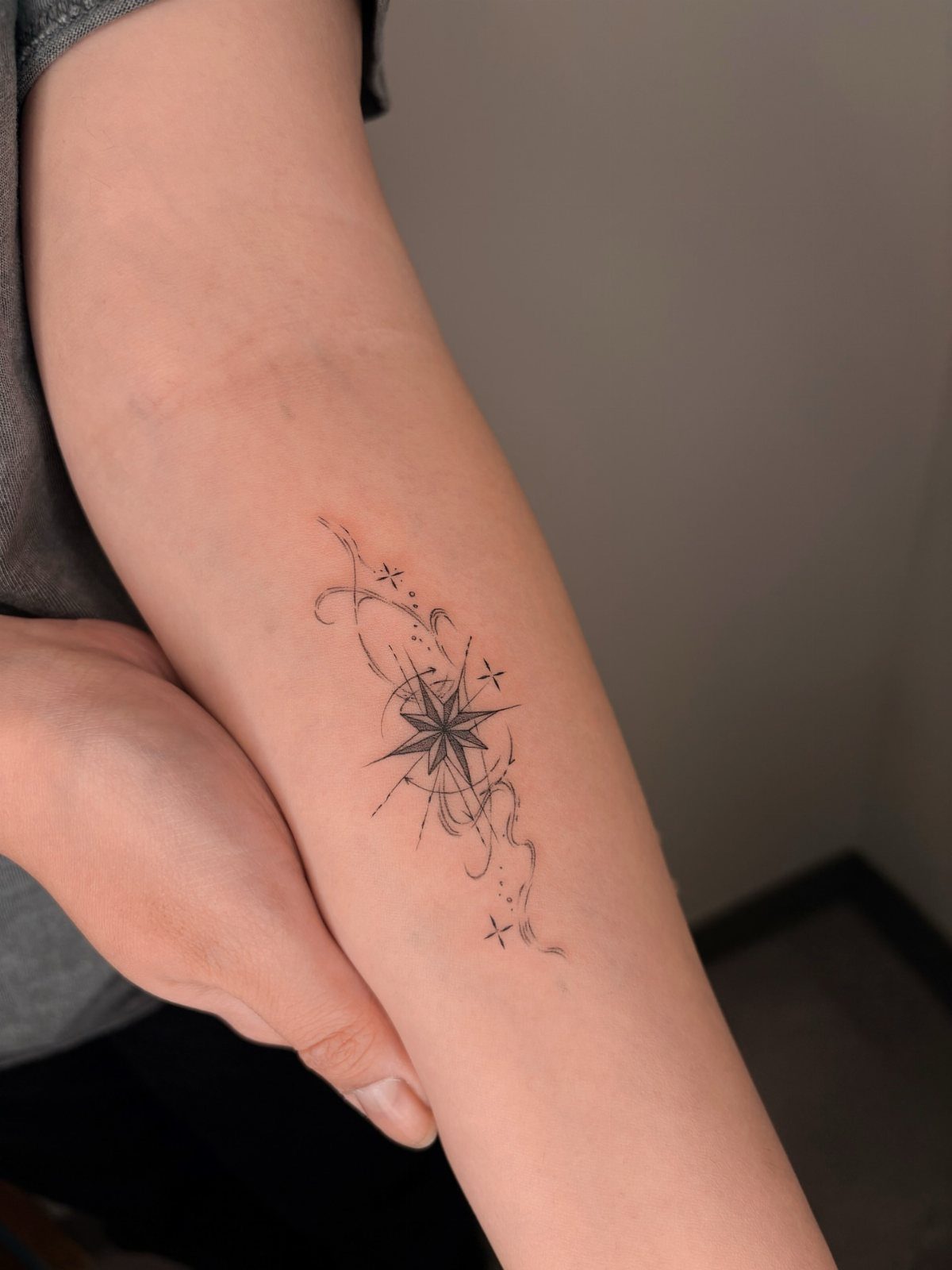
A four-pointed star with swirling lines and small dots around it adds movement to a simple shape. The design stays small enough to fit on a wrist, behind the ear or on the forearm without feeling unfinished.
The swirls and sparkles fill out the space without adding much time to the session. A plain star outline goes fast, adding the decorative elements around it takes longer.
Black ink keeps the design clean and ages well.
14. Small Cartoon Tattoo
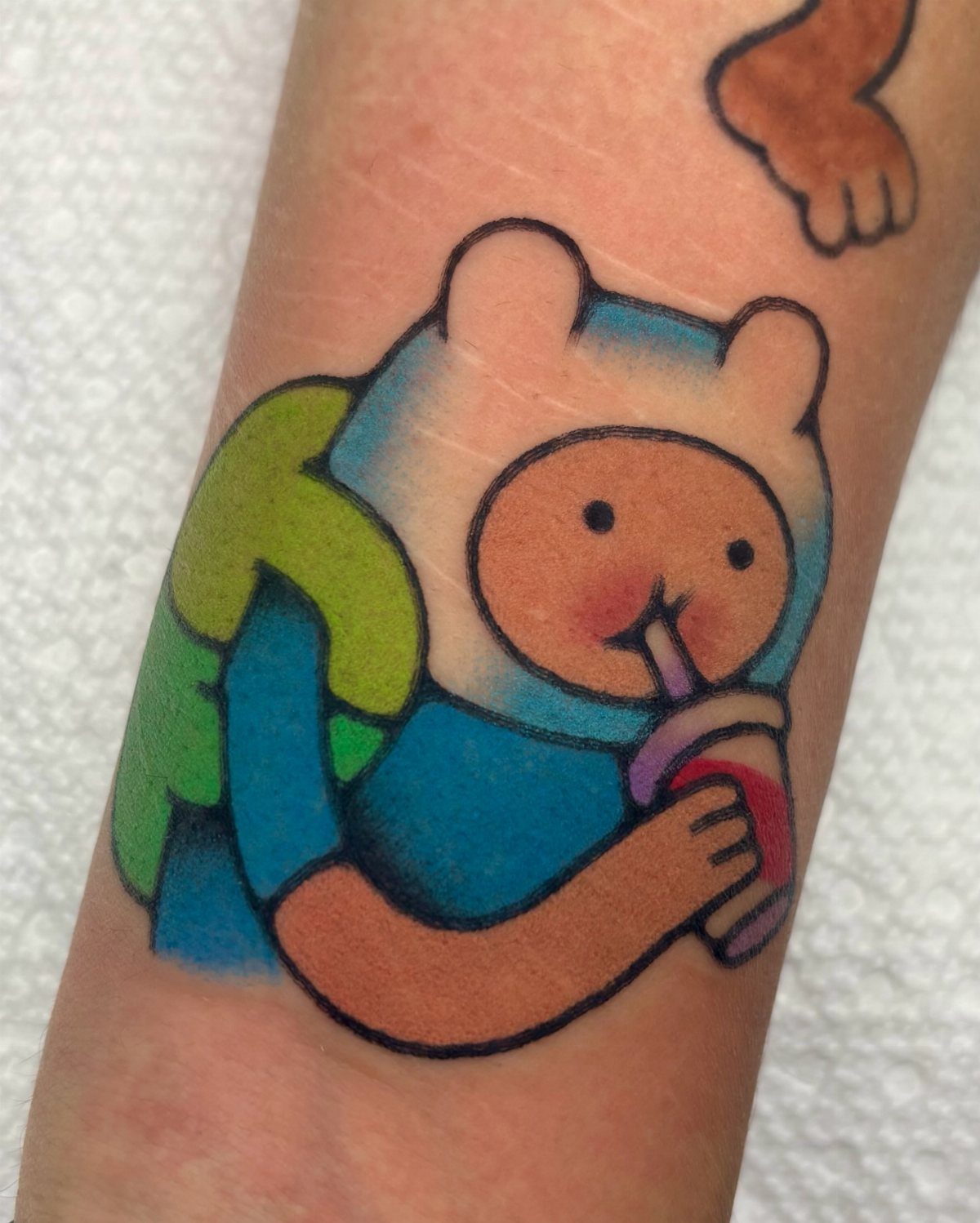
A character from a show or comic that means something to you translates well to a small tattoo when the design is simple enough to stay readable.
Color adds personality but requires more time and costs more than black line work.
Pick a character with a recognizable silhouette.
Busy designs with too many details lose clarity at small sizes. Upper arm placement like this gives you enough flat space to keep the proportions right.
Cartoon tattoos either land or they don’t. Choose an artist who has done this style before and can match the character’s proportions.
Best Placements for Small Tattoos
The inner forearm, upper arm, chest, and back of the shoulder offer flat or gently curved surfaces, heal predictably and give you control over how visible the tattoo is day to day.
Fingers, sides of hands, feet and areas right around joints need more caution. The design has to be bolder and simpler to hold up in those spots, and even then you’re looking at faster fading and more frequent touch-ups.
If a design only works when it’s tiny and tucked into a tricky spot, ask yourself whether you actually want that image or just the hidden minimal aesthetic.
Moving it slightly or going even a bit larger often produces a tattoo that reads better and lasts longer.
Common Mistakes with Small Tattoos
Too much detail packed into a small area blurs faster than you expect.
Fine lines placed close together will merge over time, and highly detailed miniature realism loses clarity within a few years. If the design needs that level of detail to work, it needs to be larger.
Delicate linework on hands, feet or anywhere that rubs constantly will fade fast and need frequent touch-ups to stay legible. Fingers, palms and feet see the most wear, so anything placed there needs bold line weight and a maintenance plan.
Densely shaded small pieces also age poorly. Spacing between elements gives the tattoo room to age without turning into a blurry patch.
Choosing the Right Artist
Ask to see healed photos of their small work, not just fresh pieces, so you can judge how it holds up.
A fine-line or micro specialist worth booking will look at your reference and tell you straight which pieces will hold and which need reworking before the needle touches skin.
If an artist is willing to pack heavy detail into a tiny footprint without mentioning the trade-offs, keep looking.
Frequently Asked Questions
What do they call small tattoos?
There isn’t an official term for small tattoos, though many call them fine-line or micro pieces when they sit under 2 inches.
They work especially well for first-time clients learning how they sit and heal, or for anyone building a collection over time.
What are good small tattoo ideas for men with meaning?
Coordinates of a place that changed you, a compass for direction, an anchor for grounding, and mountain outlines for endurance all pack meaning into a couple of square inches.
Single animals, short words in clean type, and crescent moons also fit when the image means something to you personally.
Do small tattoos age well?
Small tattoos hold up when the lines stay thick enough and the gaps between shapes give the ink room to settle without bleeding together over time.
Blackwork symbols, single-line designs and bold minimal shapes hold up better than fine lines packed closely together or highly detailed miniature work.
Are small tattoos good for first tattoos?
A small tattoo makes sense as a first piece because you spend less time under the needle, pay less up front, and get to see how your body heals ink before you scale up.
Starting small also lets you test a placement and see how you feel about visible ink day to day.