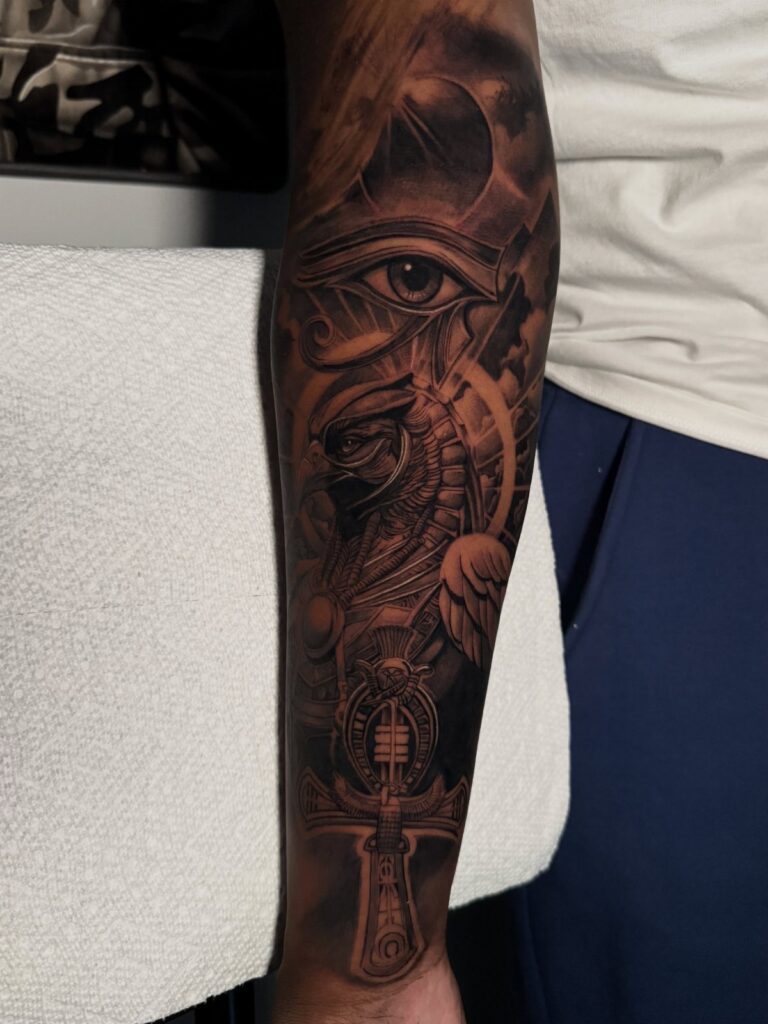
Forearm sleeves range from geometric linework and fine-line script you build piece by piece to traditional flash, realism portraits, and full-wrap floral work that takes multiple sessions.
The choice narrows fast once you know whether you want a single contained design or something you can extend into a full sleeve later.
Geometric patterns need at least elbow to wrist to keep a 12-sided grid readable at arm’s length, while fine-line work stays flexible because spacing matters more than symmetry.
1. Geometric & Abstract Tattoos
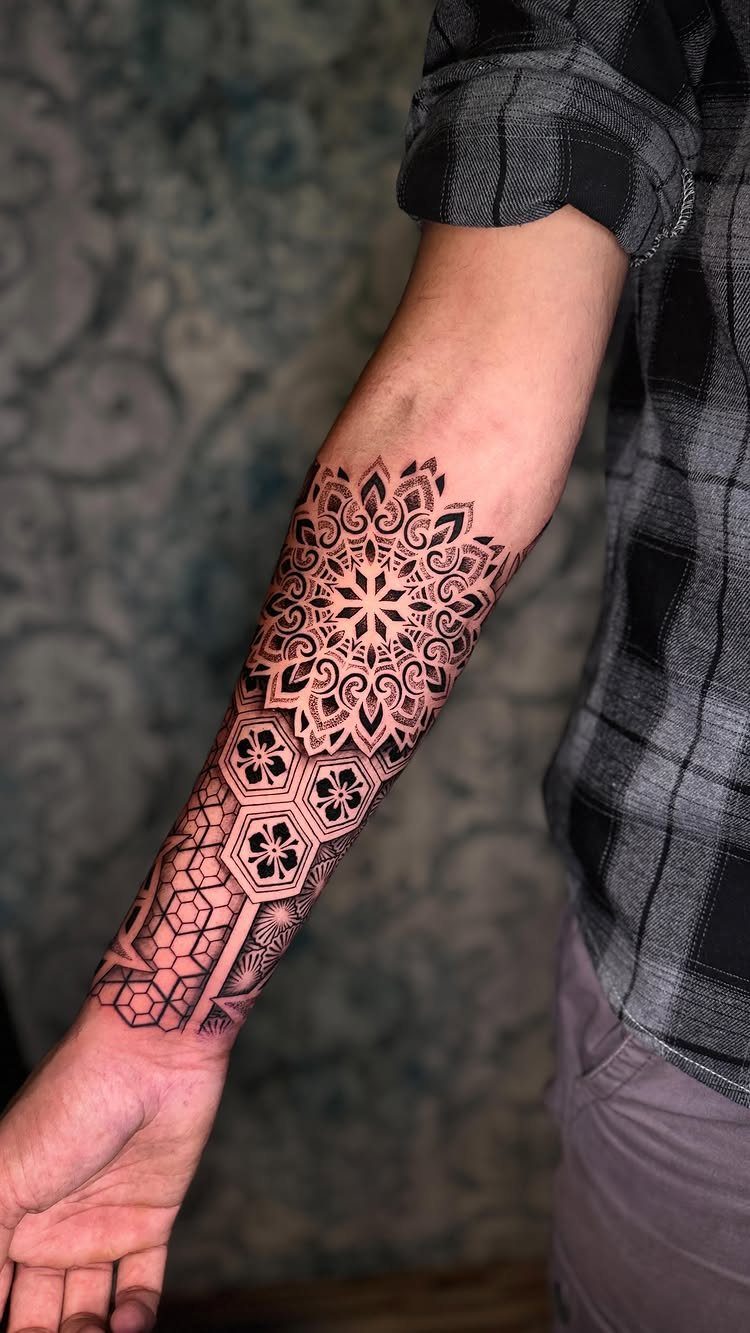
Mandala and polygonal shapes lock together in high-contrast black ink, and the precision matters more here than anywhere else. One crooked line in a 12-sided grid shows up immediately.
The pattern fills the forearm completely without shading or color, so placement is simple: inner or outer, centered or wrapped.
I’d start it just below the elbow crease and run it to the wrist, giving the design enough real estate to stay readable at arm’s length.
The repetition makes it meditative to sit through, and once healed, geometric work holds better than you’d think if the line weight is right.
2. Traditional & Classic Tattoos
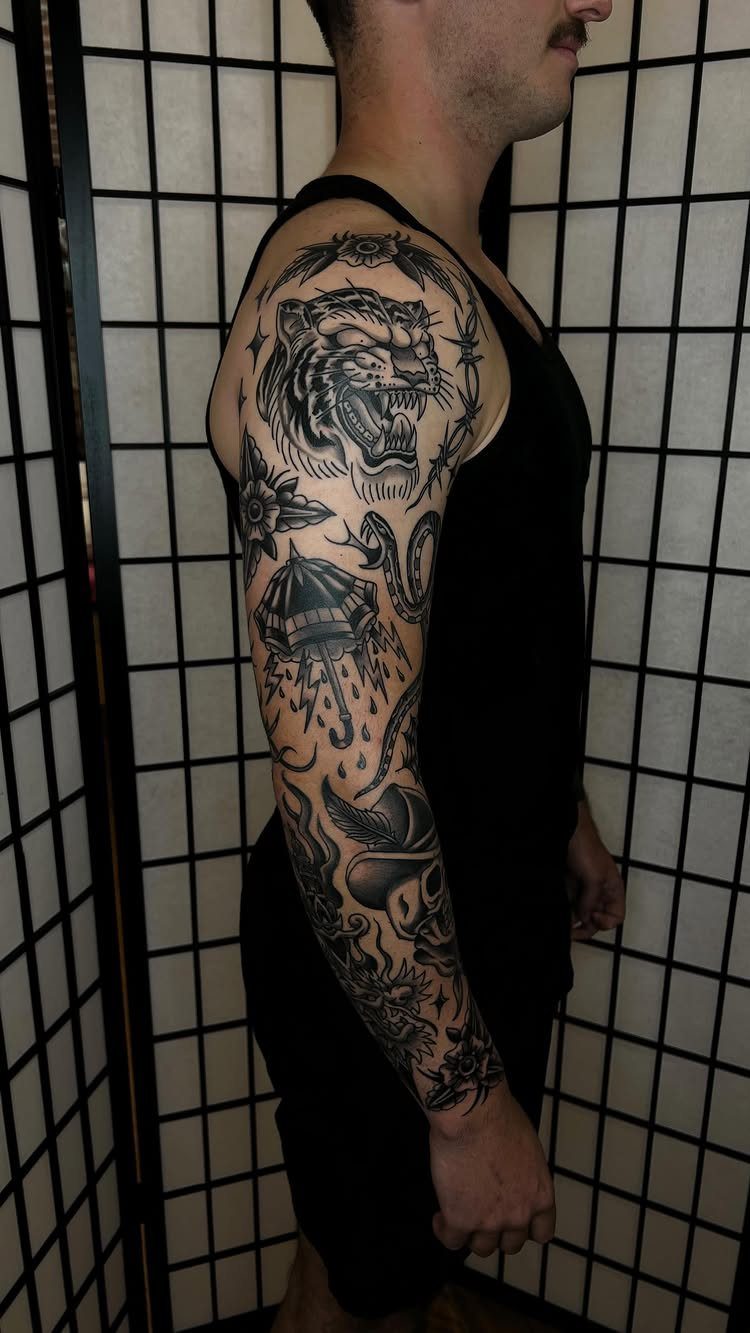
A tiger, snake and umbrella stack vertically down the arm, each element pulled from traditional flash sheets. These designs were built to read clearly at arm’s length and still do.
Traditional sleeves work as partials or full coverage.
Start at the shoulder and add panels over time, or begin with a forearm piece and build upward later. Either way, the bold outlines and limited palette make it easy to add on without clashing.
The style ages well because the thick lines resist blurring better than fine detail.
3. Minimalist & Fine-Line Tattoos
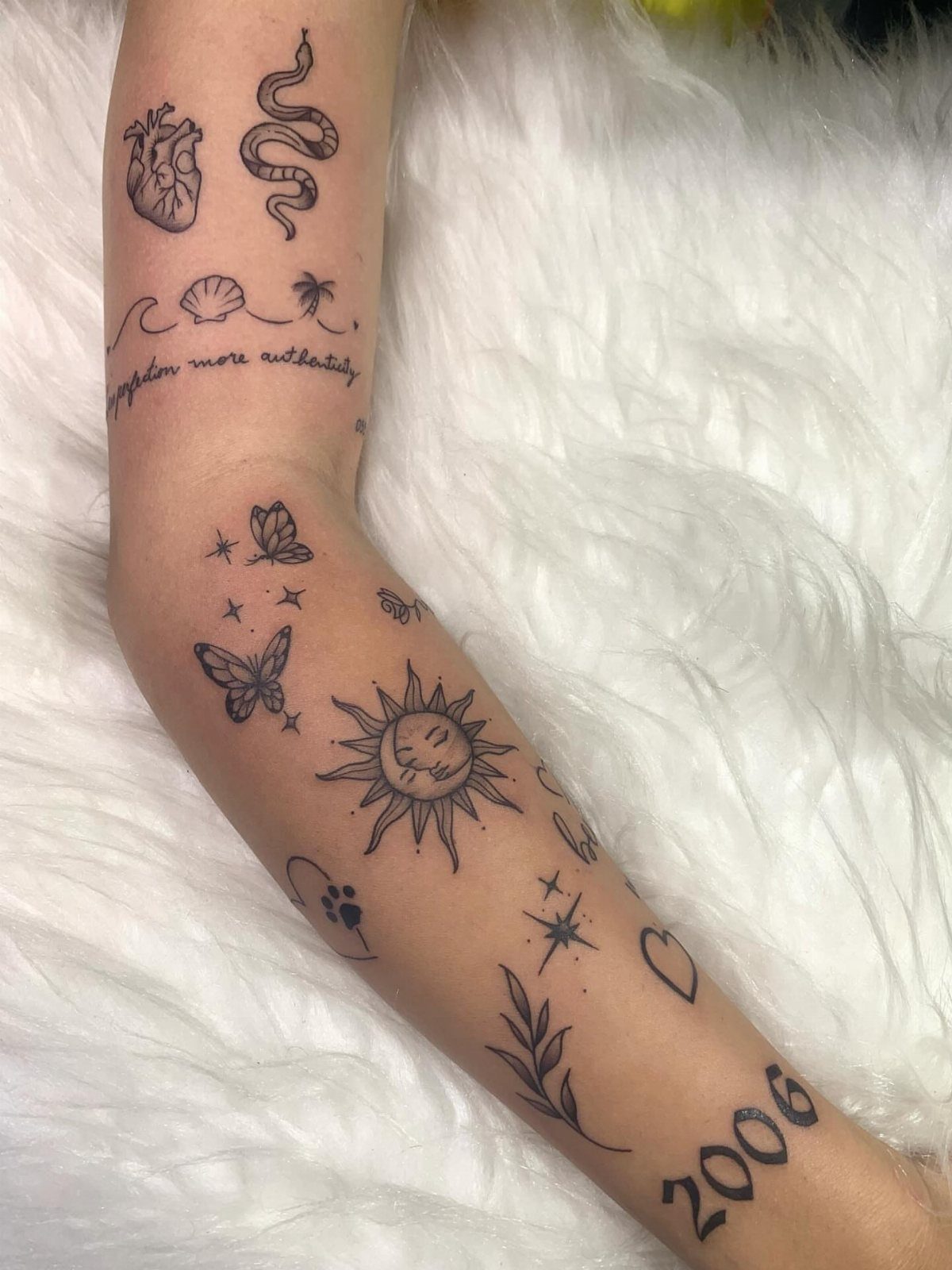
Small, scattered symbols in single-needle black ink sit lightly on the skin, each one readable on its own. A sun, butterflies, a snake, the number 2006: fine-line work lets you collect pieces over time without committing to a unified sleeve.
Placement is flexible.
Inner forearm keeps them visible to you, outer forearm shows them off. Spacing matters more than symmetry; too tight and they blur together, too sparse and the arm looks unfinished.
Pain is low because the needle moves quickly and avoids deep saturation. Lines this thin do fade faster than bold work, so touch-ups every few years keep them crisp.
4. Sun & Moon Tattoos
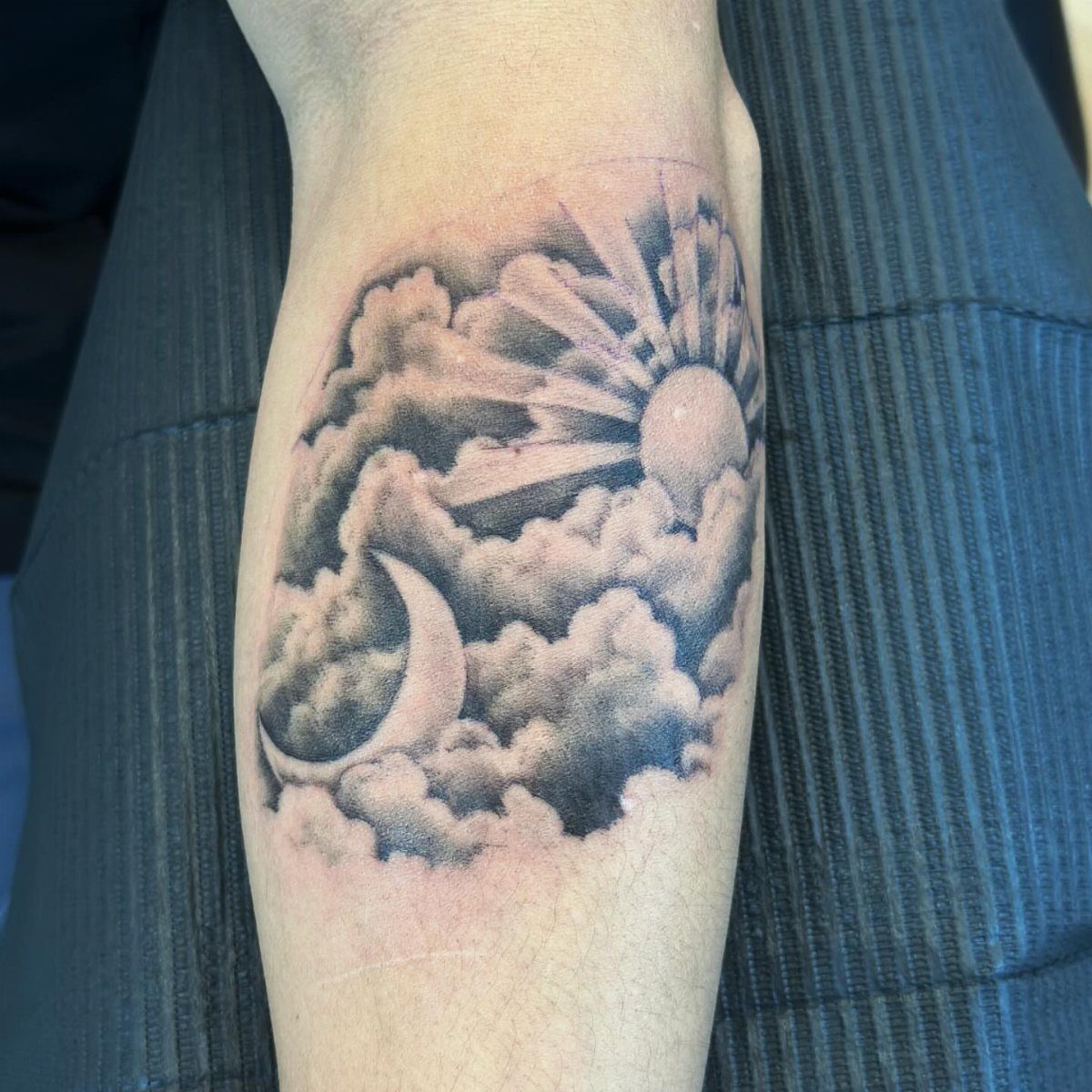
The symbolism is old, the pairing reads instantly, and clouds give the artist room to soften transitions without adding filler.
Forearm placement suits this design because both elements fit side by side without wrapping. Inner or outer works equally well; I prefer outer for the visibility.
Shading recovers faster than solid black, and the lack of color means fewer sessions.
5. Motivational Quotes
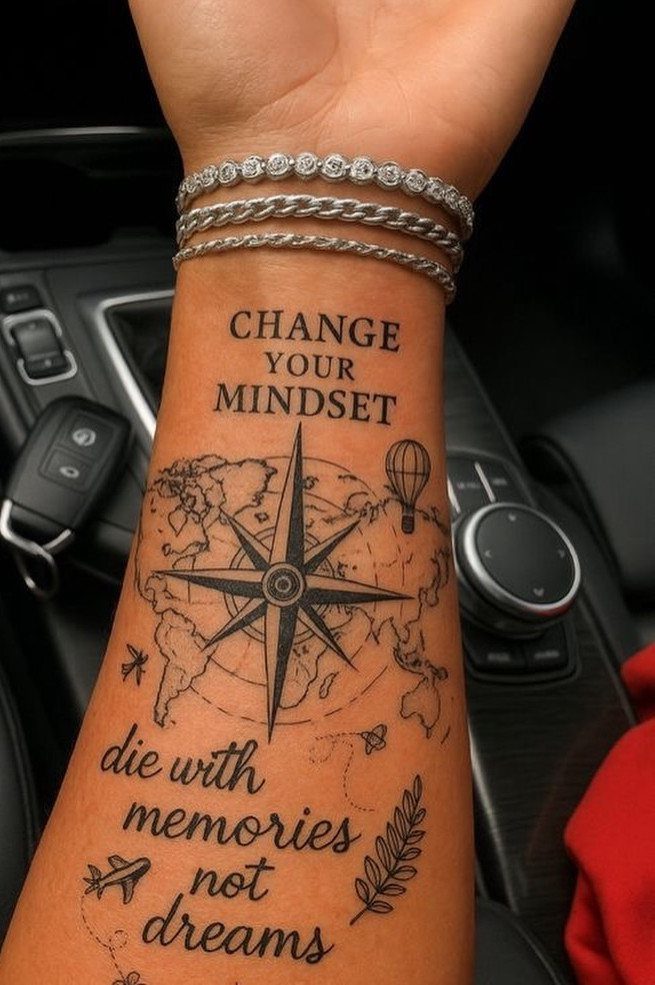
Text wraps the forearm, bracketed by a compass rose and a map outline.
Script choice matters.
All caps in a bold sans-serif stays legible as skin ages; cursive loses definition much sooner. Keep letters at least a quarter-inch tall, and avoid fonts with thin strokes.
Placement runs horizontal around the forearm or vertical down the length.
Horizontal text reads better when your arm is resting, vertical when it’s at your side. Pair the quote with imagery so it doesn’t look like a bumper sticker.
6. Floral Patterns
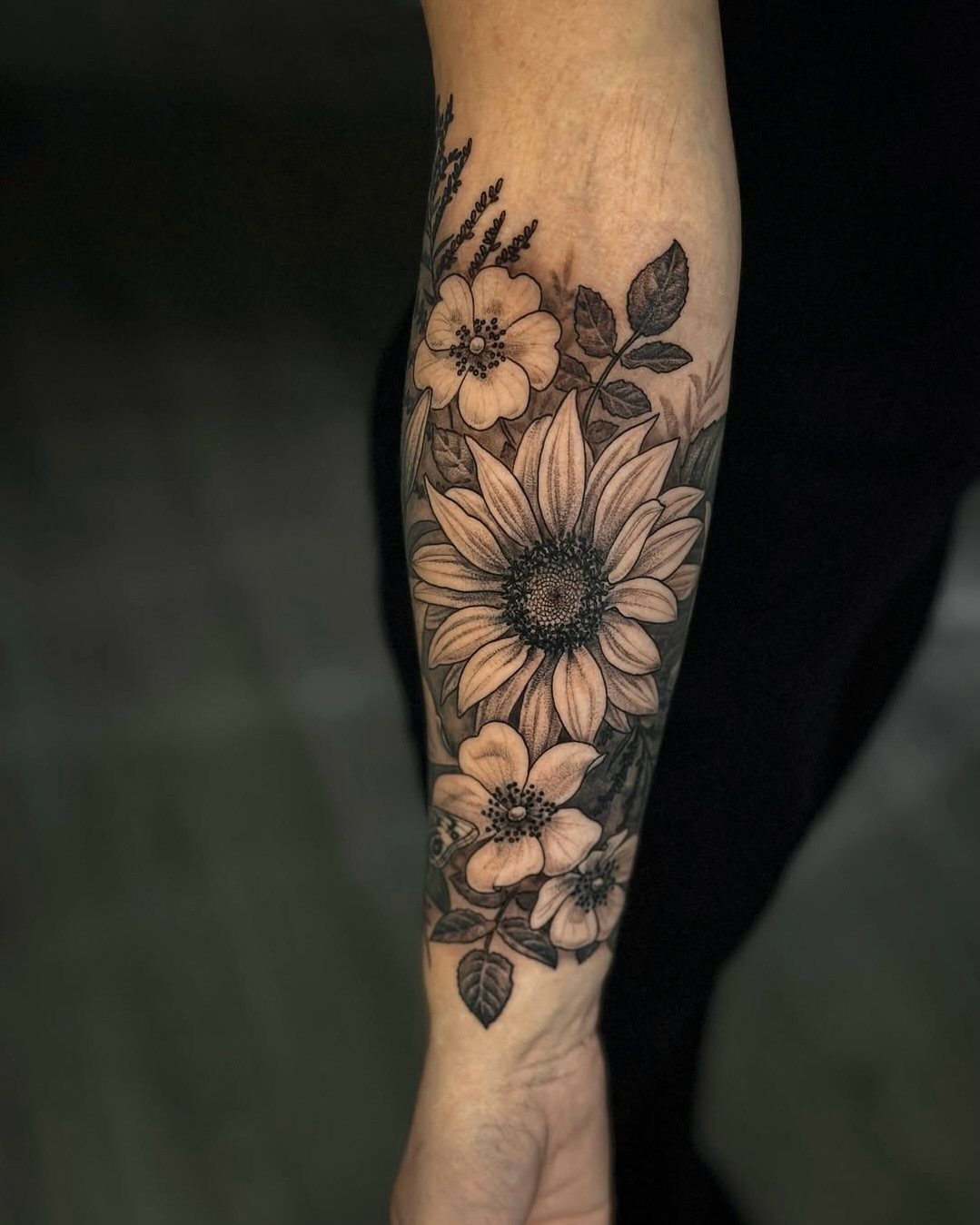
A large sunflower anchors the composition, surrounded by smaller blossoms that fill the forearm without wrapping all the way around. Grayscale shading gives depth without the maintenance color demands.
Florals suit longer forearms because petals need space to open up. Placement is usually outer forearm, angled so the flower faces forward when your arm hangs naturally.
Shading this dense requires breaks during the session. Sunflowers hold detail over time, but roses and peonies are just as common for softer edges.
7. Portraits or Realism
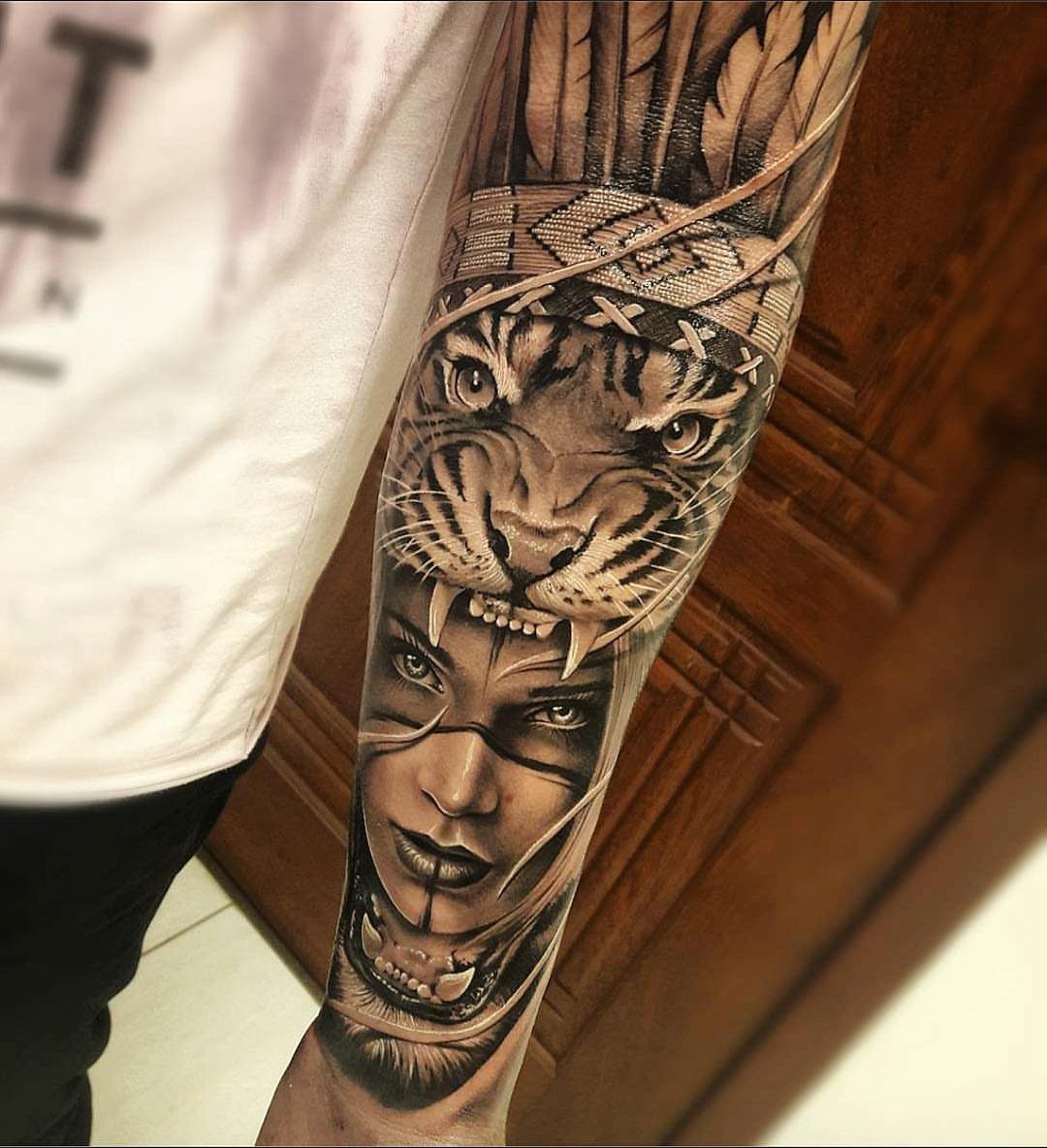
A portrait merged with animal elements fills the full length of the forearm, and the detail requires a larger canvas than most designs. Half faces, headdresses and hybrid compositions give the artist room to blend realism with something symbolic.
Inner works if you want to see it yourself, but the design will read upside-down to everyone else.
Sessions run long because shading this intricate takes time, and touch-ups are common once the skin settles.
8. Abstract or Artistic Work
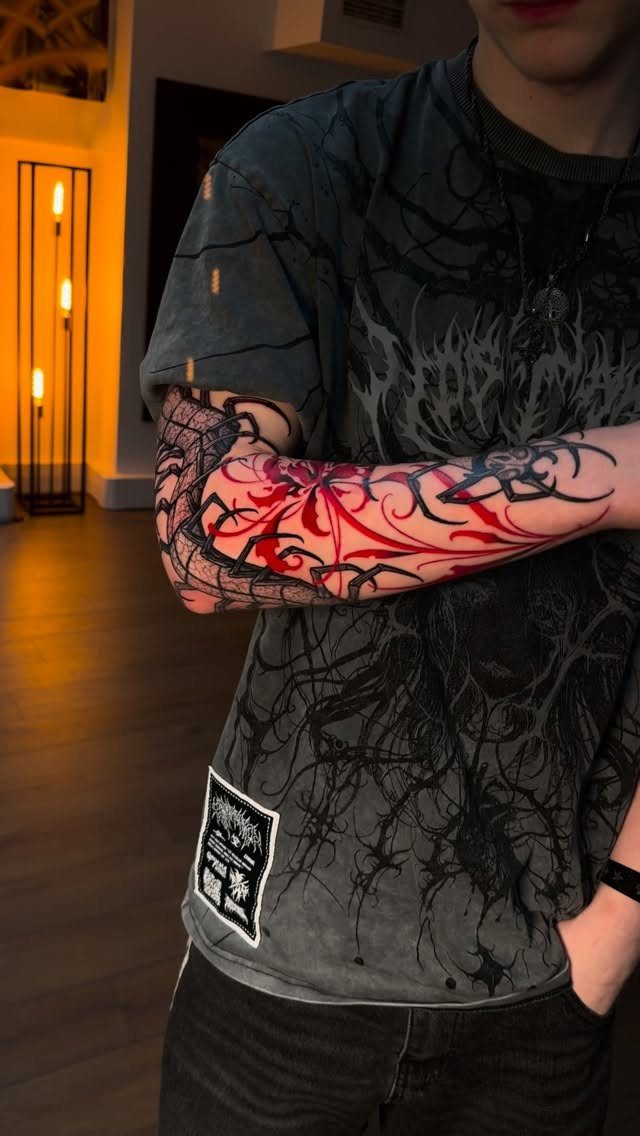
Red and black swirls layer over each other without representing anything literal, and that freedom lets the design bend to the shape of your arm instead of forcing symmetry.
Color this bold requires more sessions than black alone, and red fades faster than black, so expect touch-ups. Placement wraps the forearm completely here, which suits abstract work because there’s no fixed orientation to preserve.
The lack of recognizable imagery means the design ages without looking dated, and adding to it later is simpler than extending a portrait or landscape.
Why Choose a Forearm Tattoo?
The forearm offers visibility you control. Roll up your sleeves and the design shows, wear long sleeves in a formal setting and it disappears completely.
The flat, muscular surface means less pain than ribs, spine or hands. Fewer nerve endings and more padding make sessions easier to sit through, and the shape gives artists room to work without constant curves interrupting the stencil.
Forearms also heal faster than areas that flex constantly or stay covered under tight clothing. Air reaches the skin easily, and you can see the tattoo while it heals, which makes aftercare simpler to stay on top of.
Placement ties to meaning for some people. Sailors and military personnel used forearm tattoos to mark rank and service, and that association with strength and visible commitment still holds.
Preparing for Your Forearm Tattoo
Check portfolios before you book.
If you want geometric work, find an artist whose grids and mandalas show tight, even lines. Realism and portraiture demand different skills than traditional or fine-line work, and most artists specialize.
Finalize your design before the appointment. Changes on the day slow things down, and a last-minute redesign rarely improves the result.
Inner forearm reads upside-down to everyone else but stays visible to you.
Place it on the inner forearm if you want to read the design yourself without twisting your wrist. Pick based on who you want to see it most.
Hydrate the day before and sleep well. Dehydration makes skin harder to work with, and fatigue makes long sessions harder to tolerate.
Aftercare Tips for Forearm Tattoos
Keep the wrap on for however long your artist tells you, which runs anywhere from 2 to 4 hours depending on the product they used. Removing it early exposes the fresh wound to bacteria.
Once you peel the bandage, wash with soap that has no fragrance and dry by patting, not rubbing. Rubbing pulls at the skin and risks lifting ink.
I put a light coat of plain lotion or aftercare balm on mine 2 to 3 times a day through the first week. Too much clogs pores and slows healing.
Keep the tattoo out of direct sun until it heals completely. UV exposure fades fresh ink faster than anything else, and sunscreen should wait until scabs are gone.
Scabs fall off on their own in 1 to 2 weeks. Picking removes ink and leaves scars.
Frequently Asked Questions
Do forearm sleeve tattoos hurt?
Pain is lower than most other placements because the forearm has fewer nerve endings and more muscle padding. The flat surface also means the artist can work steadily without hitting bone or constant curves, which keeps sessions easier to tolerate.
How much should a forearm sleeve cost?
Expect the bill to scale with how much skin you’re covering, how intricate the design runs, and what the artist charges per hour.
A full forearm sleeve with detailed shading or realism runs more than simple line work, and established artists charge higher rates than newer ones.
What are some good themes for sleeve tattoos for men?
Traditional designs like tigers, snakes and anchors read clearly and age well, while geometric patterns offer high-contrast modern work. Portraits blended with animal elements fill the full length, and abstract compositions in bold color wrap the arm without fixed orientation.





