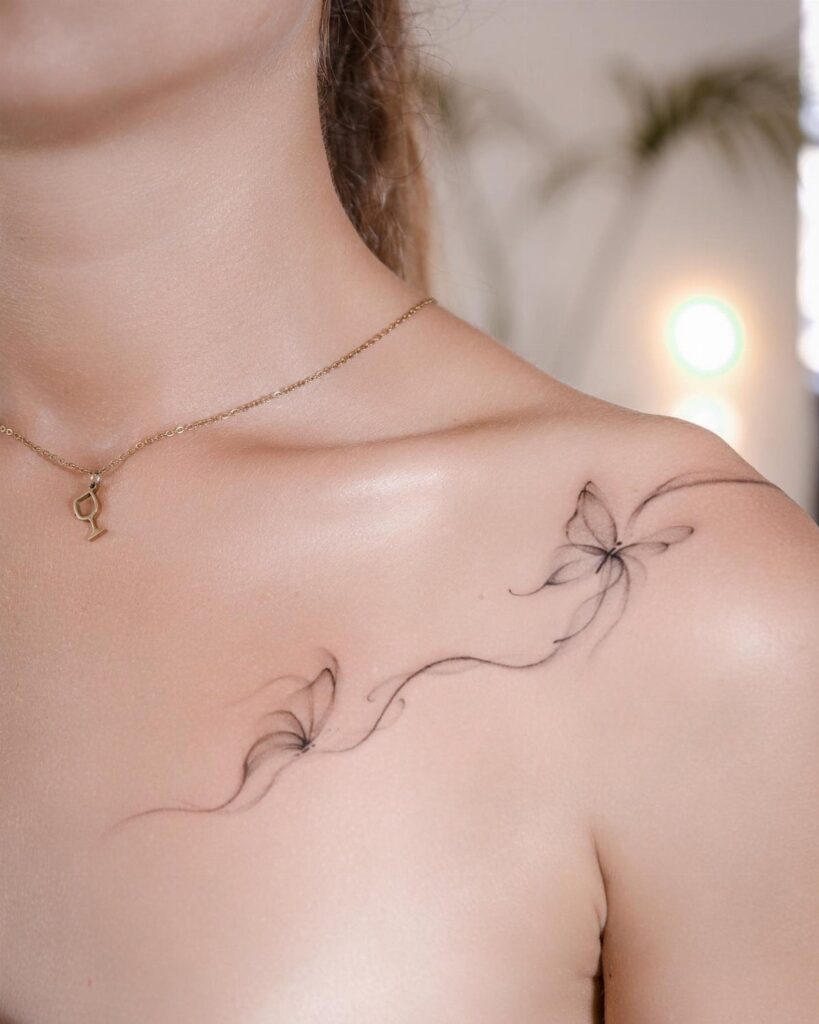
Shoulder tattoos for women cost anywhere from $150 for a small fine-line piece to $2,500 or more for a design that wraps down the arm or across the back.
The right one depends on how much skin you’re willing to commit: small designs like a fine-line constellation or curved vine sit in a 2-inch circle and take under an hour, while a realistic portrait or detailed leopard face needs 3 or more hours and fills the shoulder cap entirely.
Pain stays manageable at 3–4 out of 10 over the deltoid muscle but jumps to 6–7 near the collarbone, where the bone sits close to the surface.
1. Half Mandala Flowing Across Shoulder
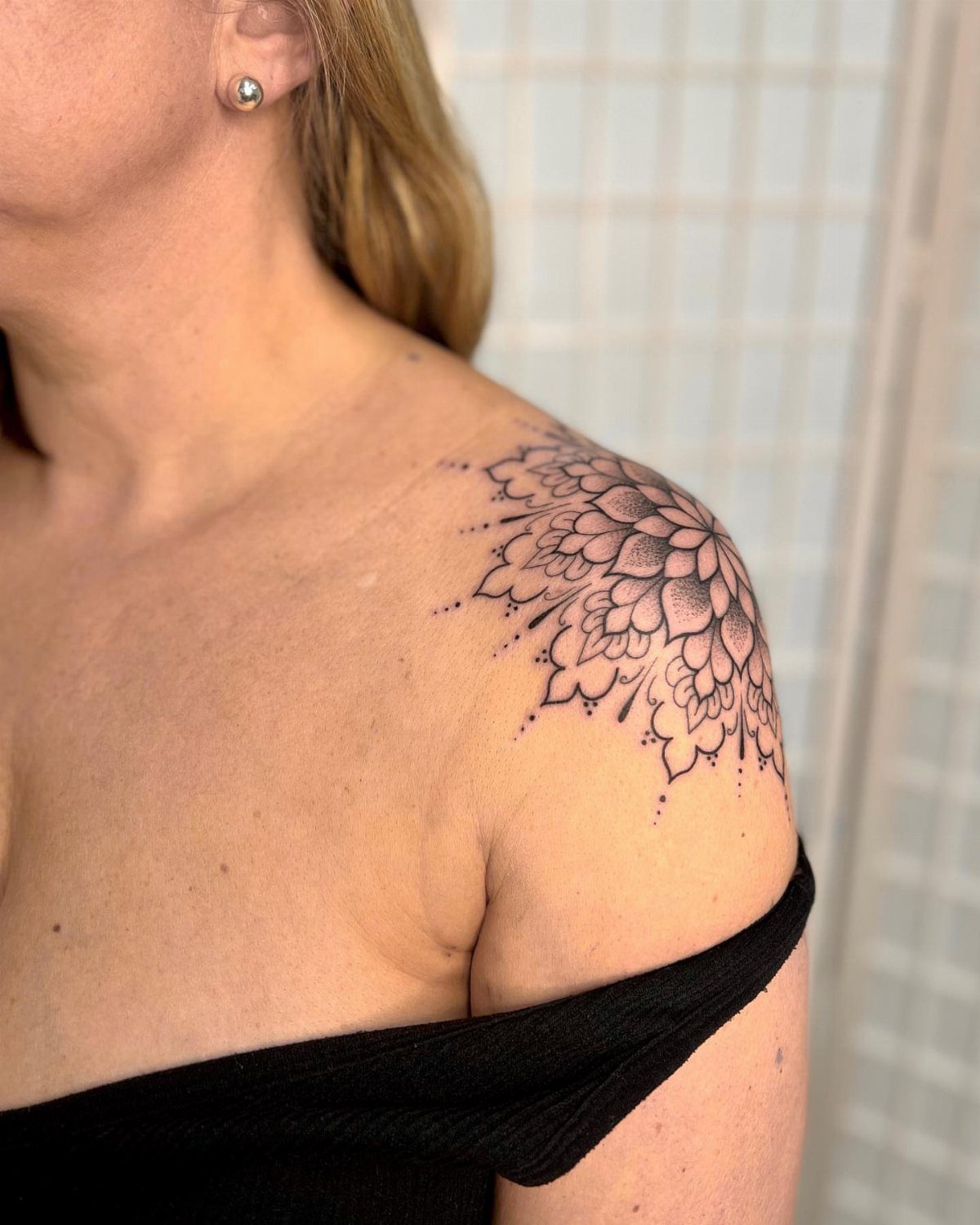
A mandala design cut in half and placed along the curve of the shoulder turns geometric symmetry into something that moves with the body.
The pattern radiates outward from the collarbone, and the shoulder’s natural contour prevents it from sitting flat.
Fine details like these stay readable if the artist uses consistent line weight and spacing; crowded petals blur together after a few years.
This placement hides under most necklines but shows in anything strapless.
2. Sunflower with Dotwork Background
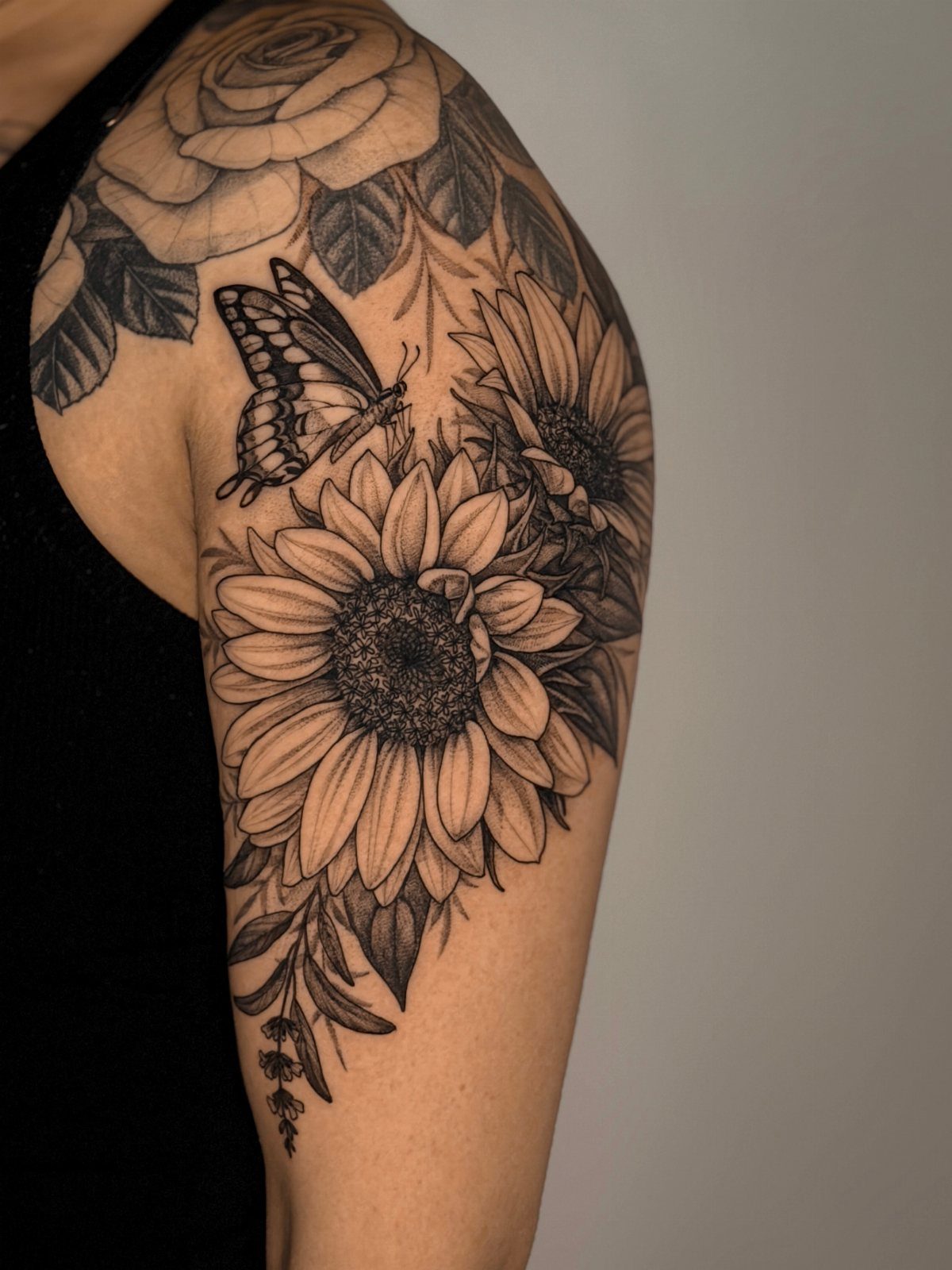
Sunflowers read clearly at a distance because their petals and centers carry strong contrast, and adding a textured dotwork background gives the whole piece depth without needing color.
The stippling technique used in dotwork takes longer than solid shading but heals evenly and ages well.
Pairing a large bloom with smaller flowers and a butterfly fills the shoulder cap without overcrowding it.
The grey tones keep everything cohesive, and the scale difference between the main sunflower and the secondary elements gives the eye a clear place to land first.
3. Watercolor Lotus with Waves
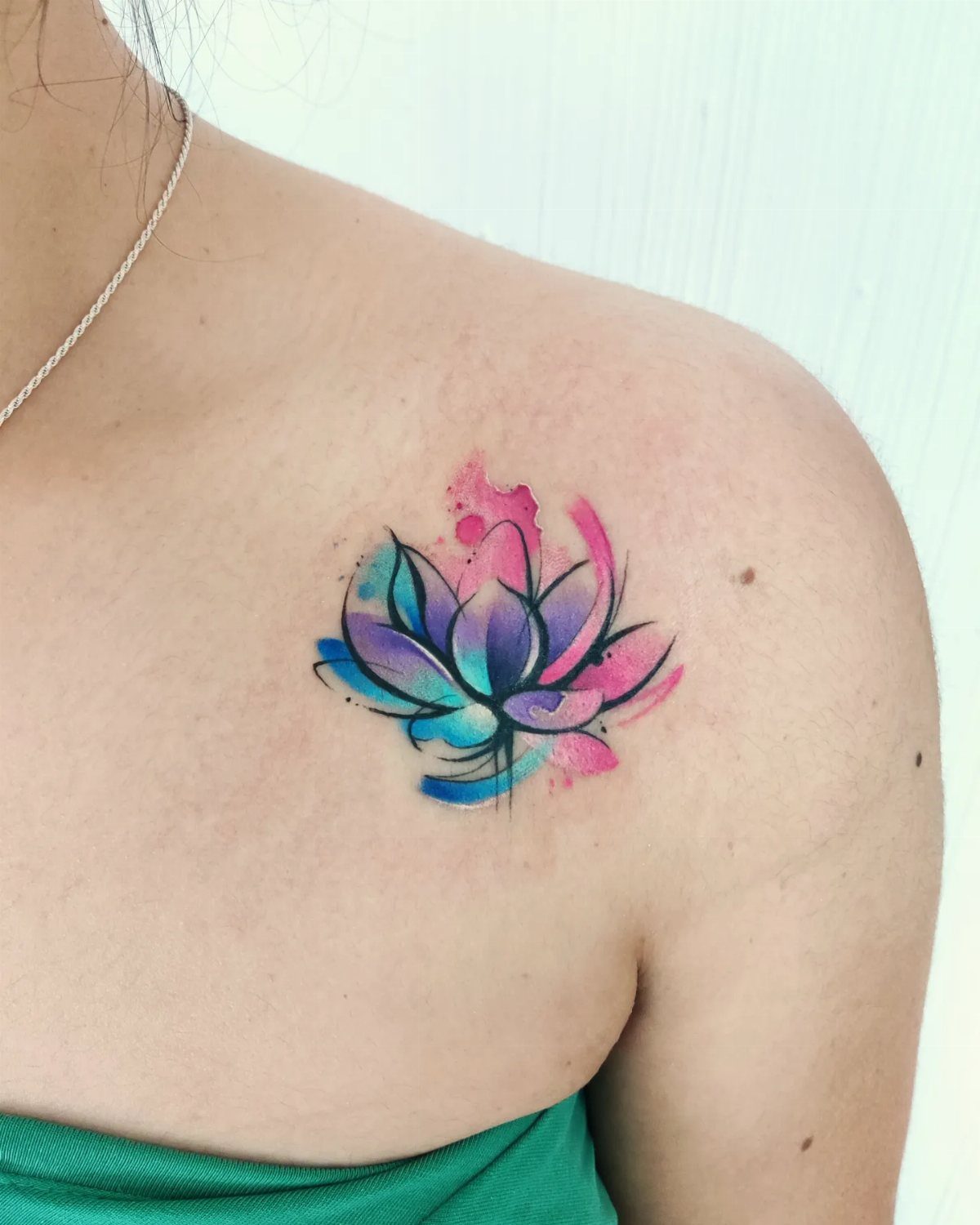
Watercolor tattoos layer soft washes of color the way paint sits on paper, and a lotus paired with blue waves gives you both movement and a clear focal point.
The technique skips hard outlines, so the ink spreads and fades at the edges, which makes the design feel lighter on the skin.
This style fades faster than traditional work because the pigment sits in thinner layers. Touch-ups every 3–5 years keep the colors from washing out completely.
The shoulder’s curve works in your favor here. The waves can wrap slightly forward or back, and the lotus sits at the highest point where the skin stays flattest.
4. Mini Orchid Wrapped Around Vine
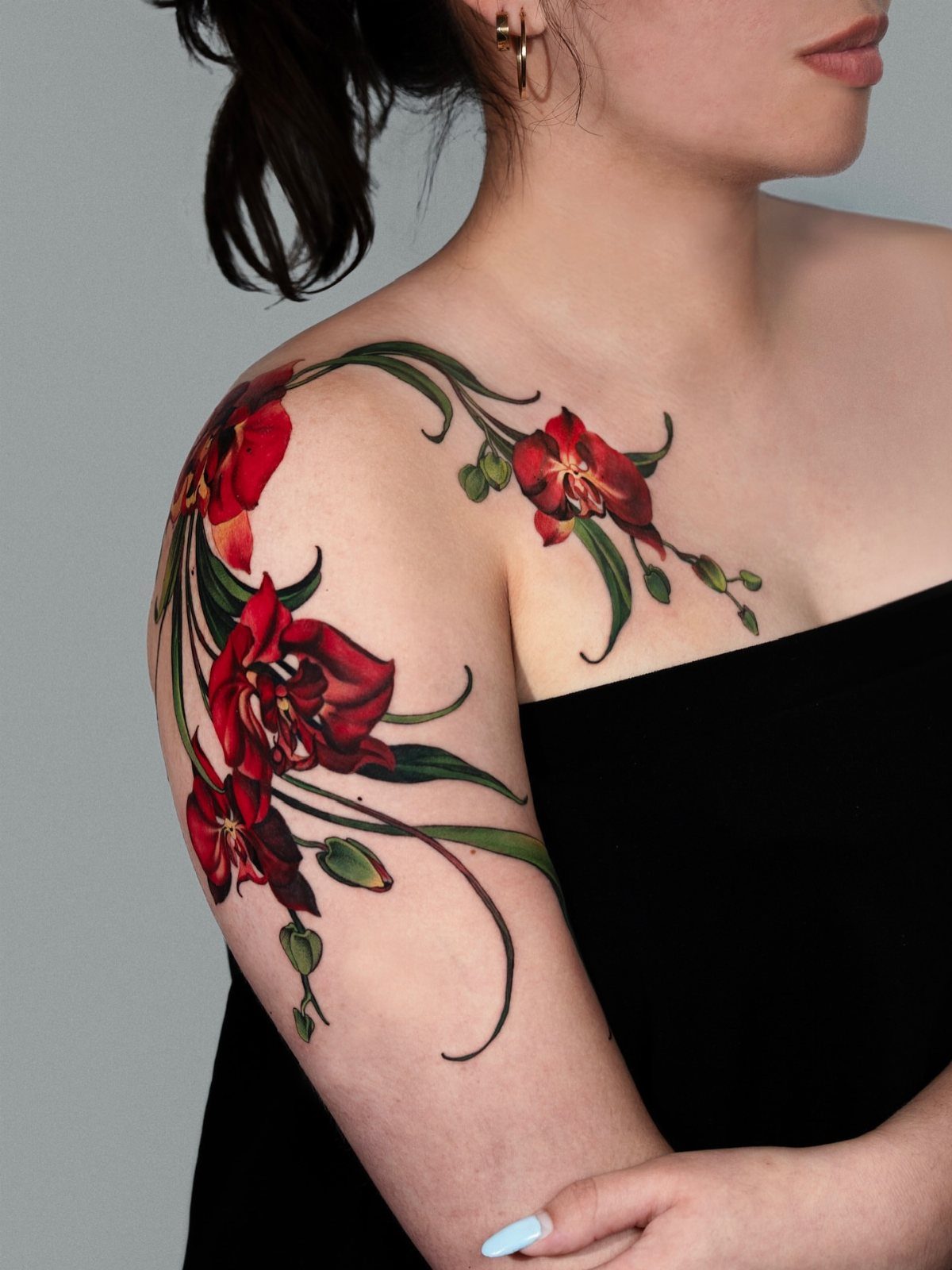
Orchids have a natural drape to them, and when you pair blooms with a trailing vine, the design follows the shoulder’s slope down the arm.
Color brings this one forward: red petals against green stems give strong contrast, and the vine acts as a guide for the eye.
This placement lets the tattoo extend past the shoulder but still stay within sleeve range. The vine can wrap around the deltoid or stop mid-bicep depending on how much coverage you’re after.
Botanical tattoos like this one need an artist comfortable with organic shapes. Stiff lines kill the flow.
5. Curved Botanical Vine with Stars
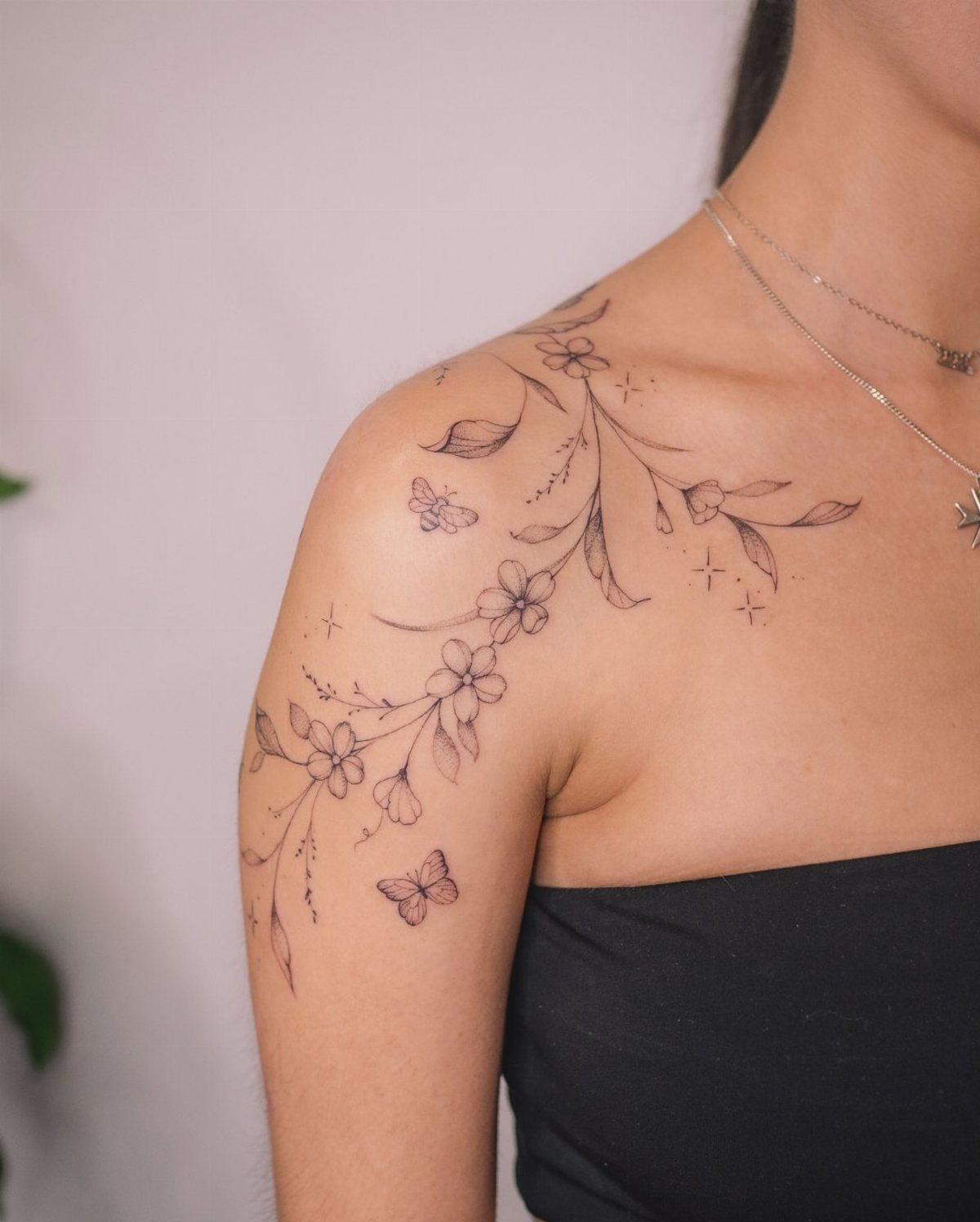
Botanical vines with small stars scattered along the stem give you a design that feels airy without disappearing. Delicate line weight holds the details, and the stars add rhythm without competing with the flowers or butterflies.
This style suits the shoulder because the curve lets the vine wrap naturally, and the smaller elements fill gaps without forcing symmetry.
Fine lines do require precise application; if the needle goes too shallow, the ink won’t hold, and if it goes too deep, the lines thicken as they heal.
The shoulder joint moves constantly, so proper aftercare matters here. Tight clothing and friction can pull ink during healing.
6. Leaf Cluster with Fine Line Detailing
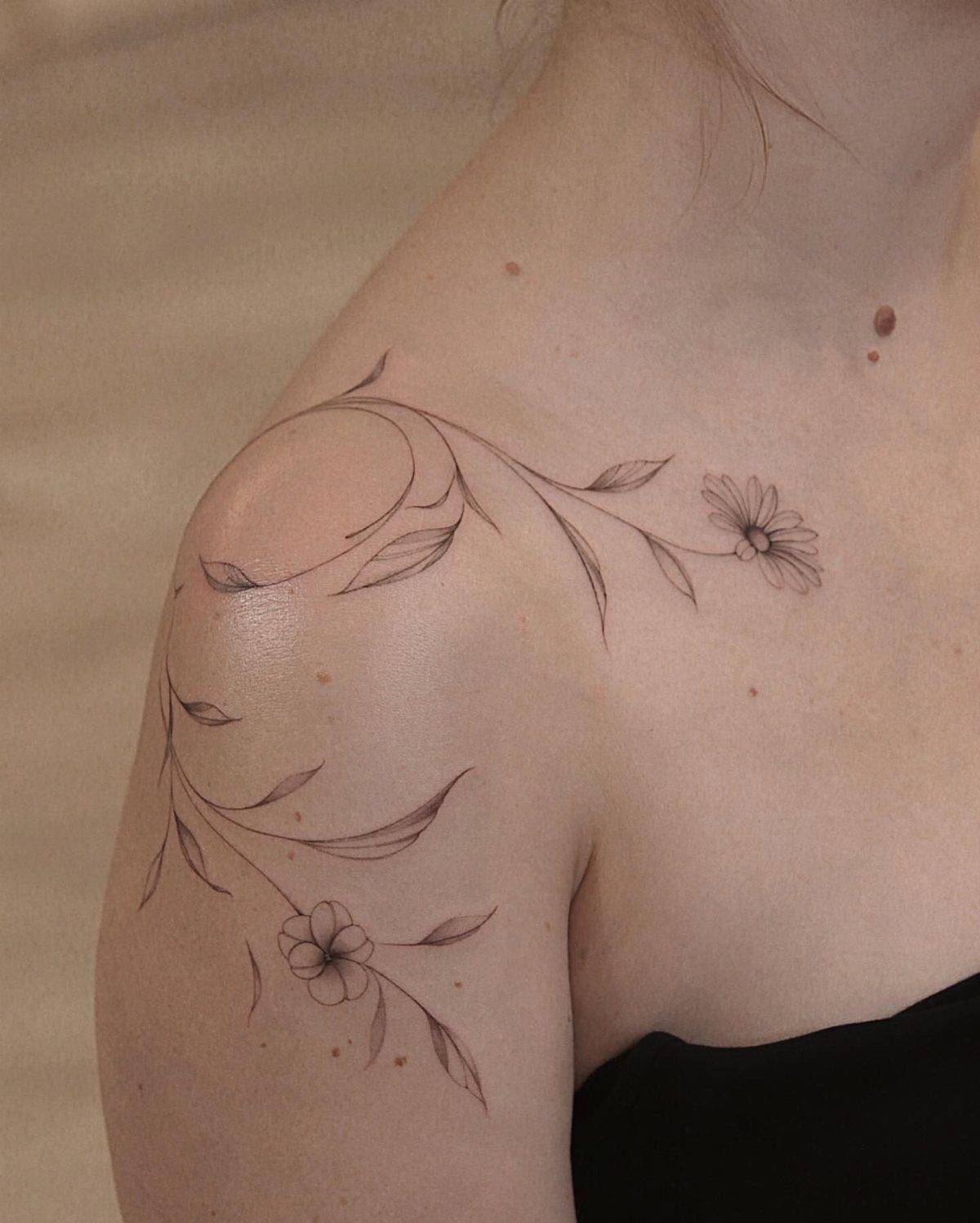
Grouping multiple leaves together instead of spacing them out creates visual weight without requiring a large central image. Fine-line detailing gives each leaf its own texture, and keeping the palette monochrome lets the linework do the talking.
This approach delivers a tattoo that reads as intentional but doesn’t demand attention. The negative space between the leaves prevents the composition from feeling heavy, and the shoulder’s natural shape holds the cluster without extra fill.
Leaves with realistic vein patterns take longer than simplified shapes.
7. Hummingbird Hovering Over Flowers
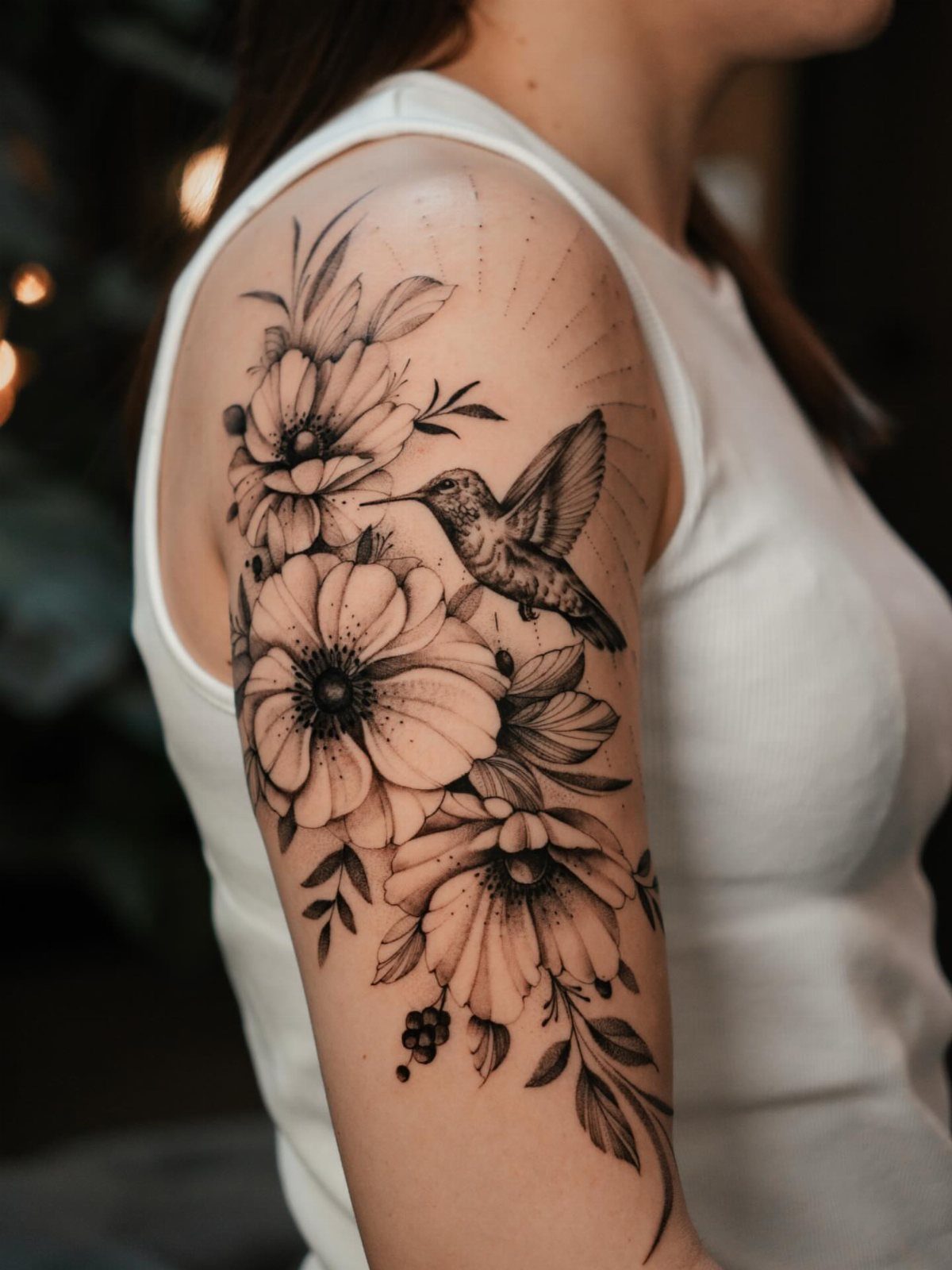
A hummingbird frozen mid-flight above open blooms gives you motion without requiring color. The bird’s wings read clearly when the artist separates the feather detail from the body, and the flowers anchor the composition so the whole piece doesn’t float.
Black and grey suits this design because hummingbirds rely on shape more than color to register at a distance. The shoulder’s curve lets the bird hover naturally over the flowers without tilting awkwardly.
This placement gives you something immediately recognizable with no explanation needed.
8. Minimal Planet with Orbit Lines
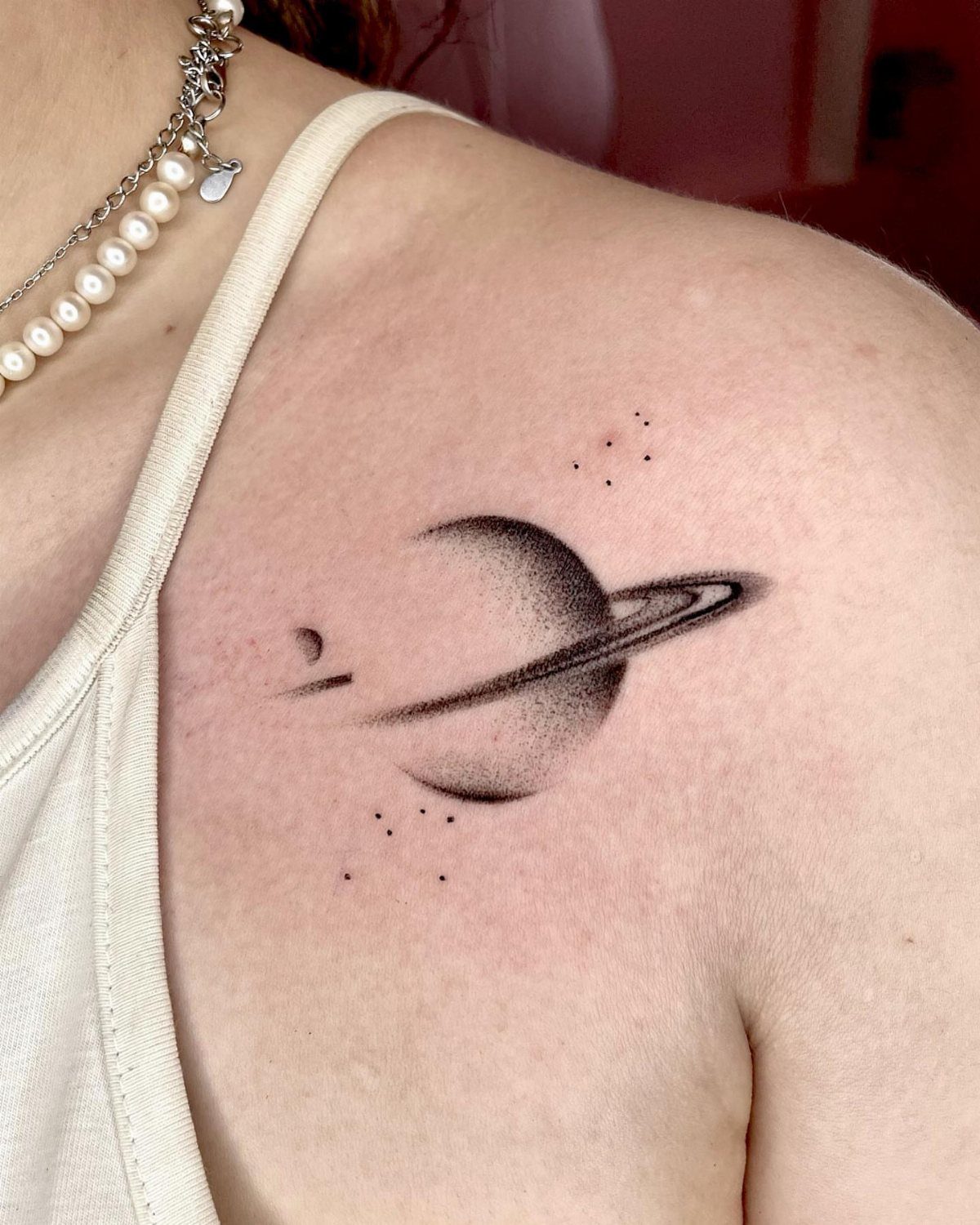
A small planet with rings and a few surrounding dots delivers a clean design that doesn’t demand much real estate. The simplicity keeps it readable, and the negative space prevents it from feeling crowded.
This style ages well because there’s no fine shading to blur out. The lines stay sharp, and the scale means you can place it where the shoulder meets the collarbone without wrapping onto the chest or arm.
If you want something small that still reads as intentional, this one does the job without requiring a full session.
9. Bold Blackwork Flower Cluster
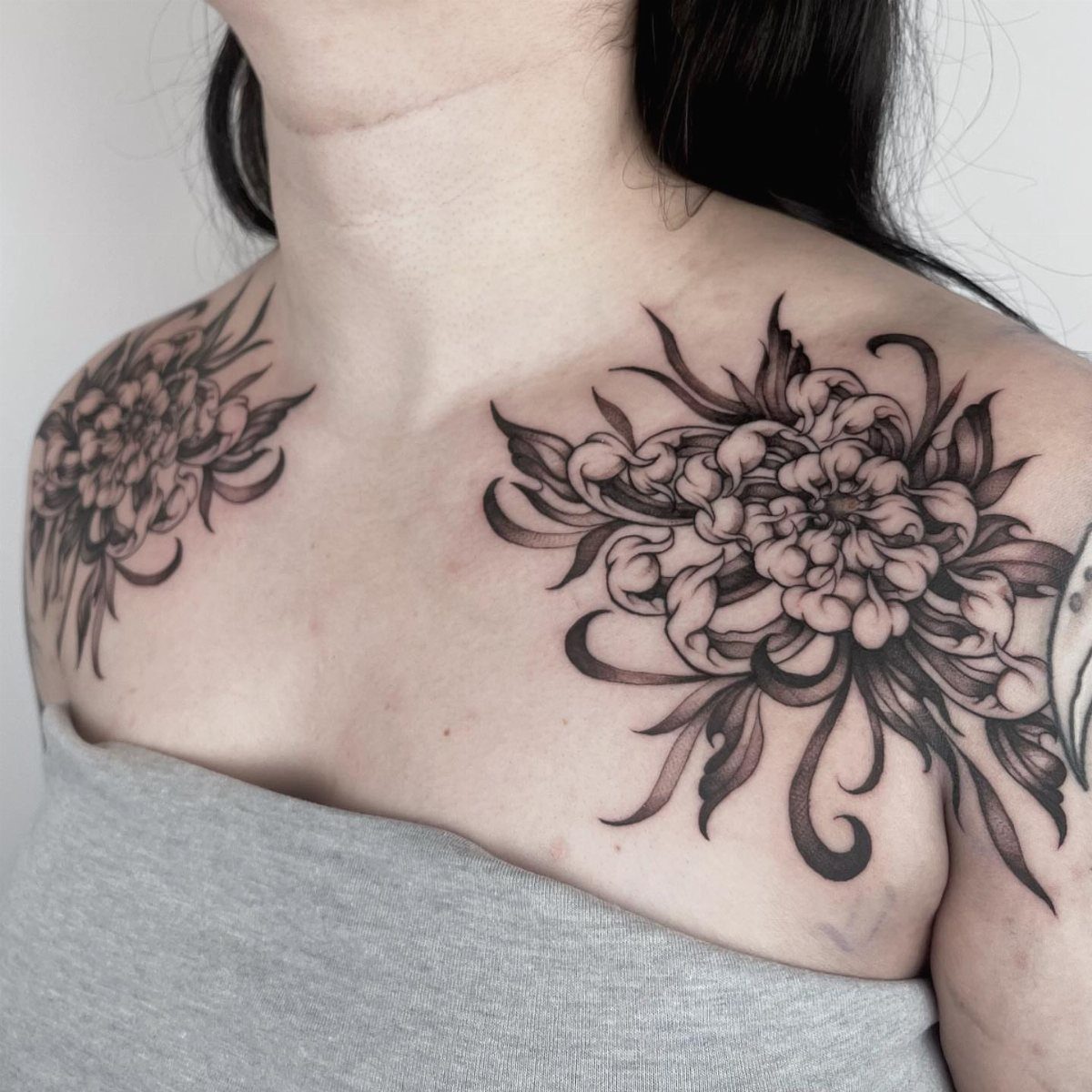
Blackwork uses solid black fills and high contrast instead of gradients, and a flower cluster done this way sits heavy on the skin without needing color.
The petals read as shapes rather than realistic details, and the negative space between them keeps the composition from turning into a dark blob.
The shoulder placement mirrors well if you want matching designs on both sides, and the bold approach holds up better over time than delicate linework.
Expect this to take longer than a fine-line piece of the same size.
10. Tribal-Inspired Decorative Lines
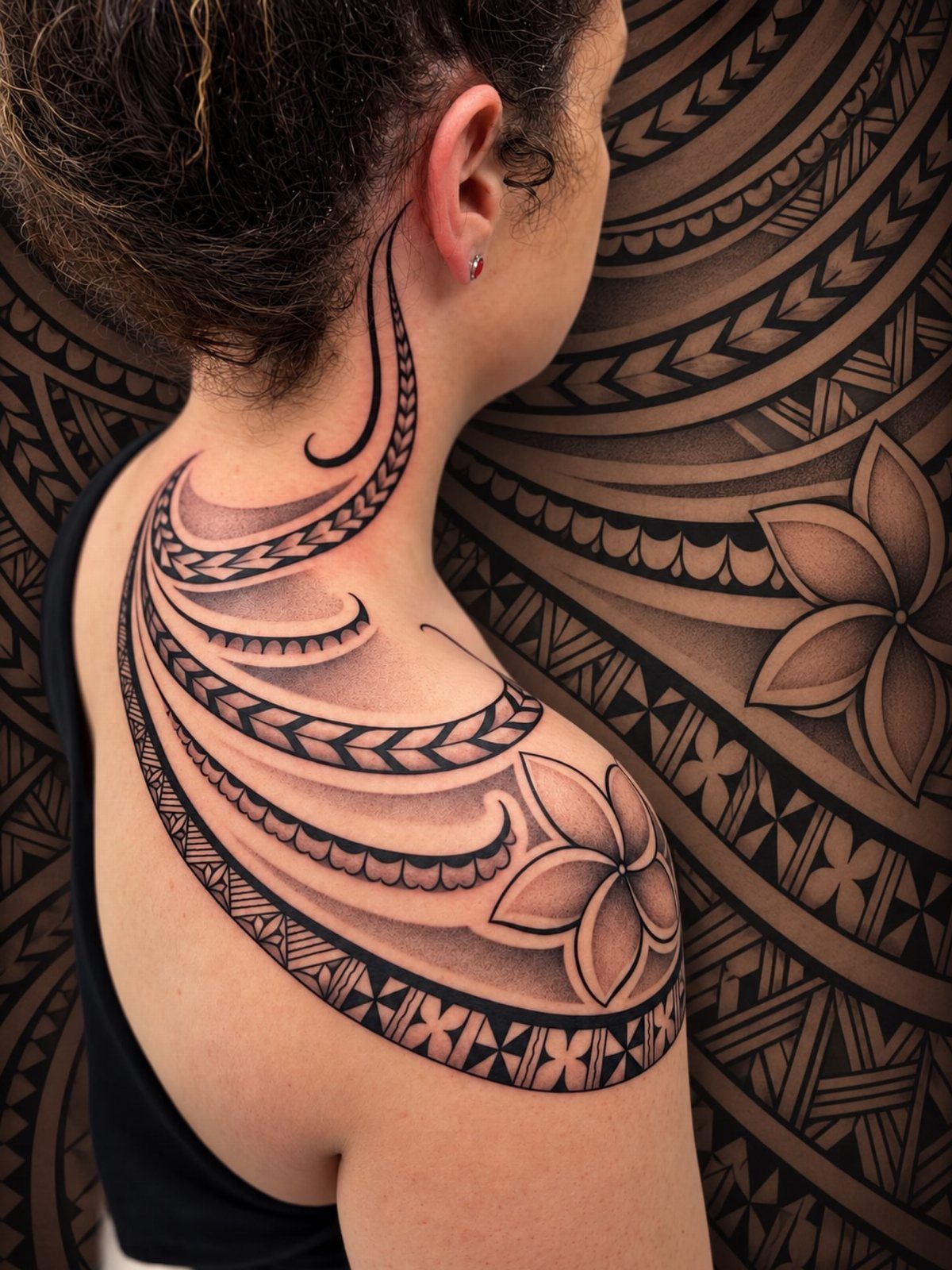
Tribal designs borrow from patterns originally used in Polynesian, Maori, and other indigenous traditions, and modern adaptations focus on the decorative flow rather than cultural symbolism.
The lines curve and thicken in rhythm, and the shoulder’s slope lets the pattern wrap from the collarbone down toward the arm.
This style relies on solid black ink and negative space to create movement. The lines need consistent thickness where they’re meant to be bold, and any wobble shows immediately.
If you’re after something that feels structural rather than soft, this approach delivers clean edges and high contrast. Placement on the neck and shoulder means it’s visible in most tops.
11. Butterflies with Crescent Moon
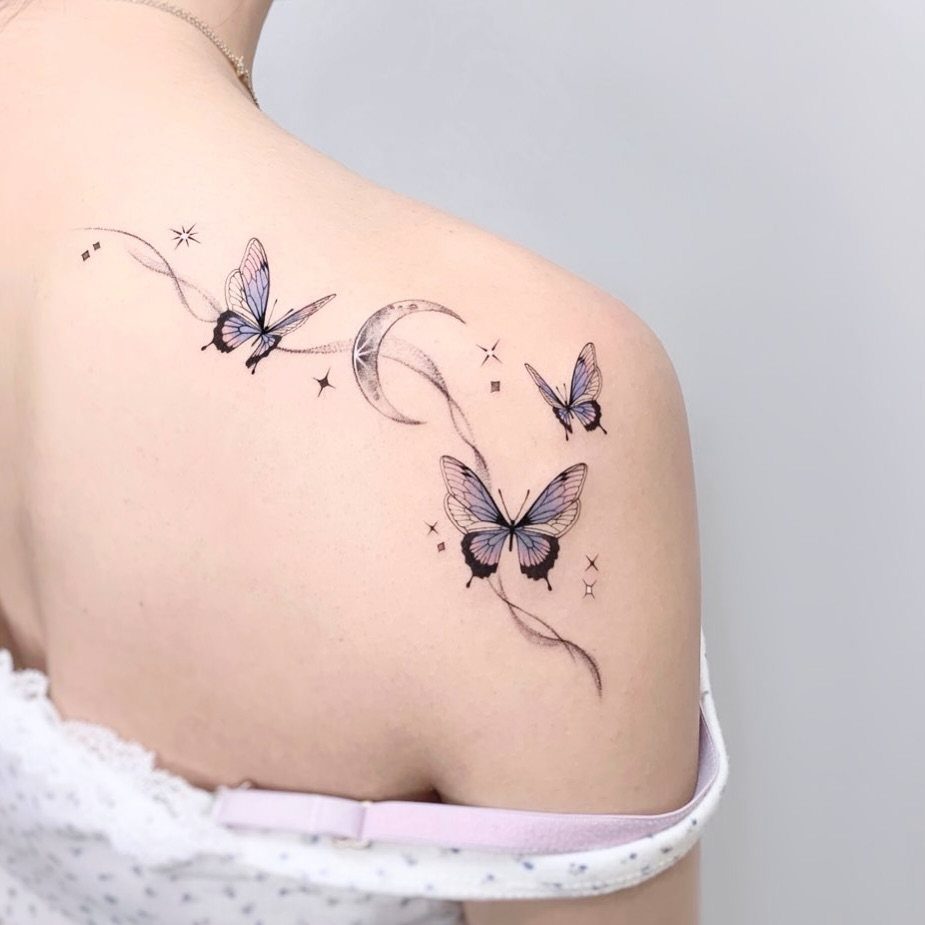
Purple butterflies paired with a crescent moon and small stars give you a design that feels lighter than a full floral piece.
The color sits in the butterfly wings, and the moon and stars stay outlined, which keeps the whole tattoo from feeling too dense.
Color fades faster than black ink, so purple tones will soften over the years unless you commit to touch-ups.
This one works if you want something feminine that still reads clearly from a few feet away.
12. Fine-Line Star Constellation
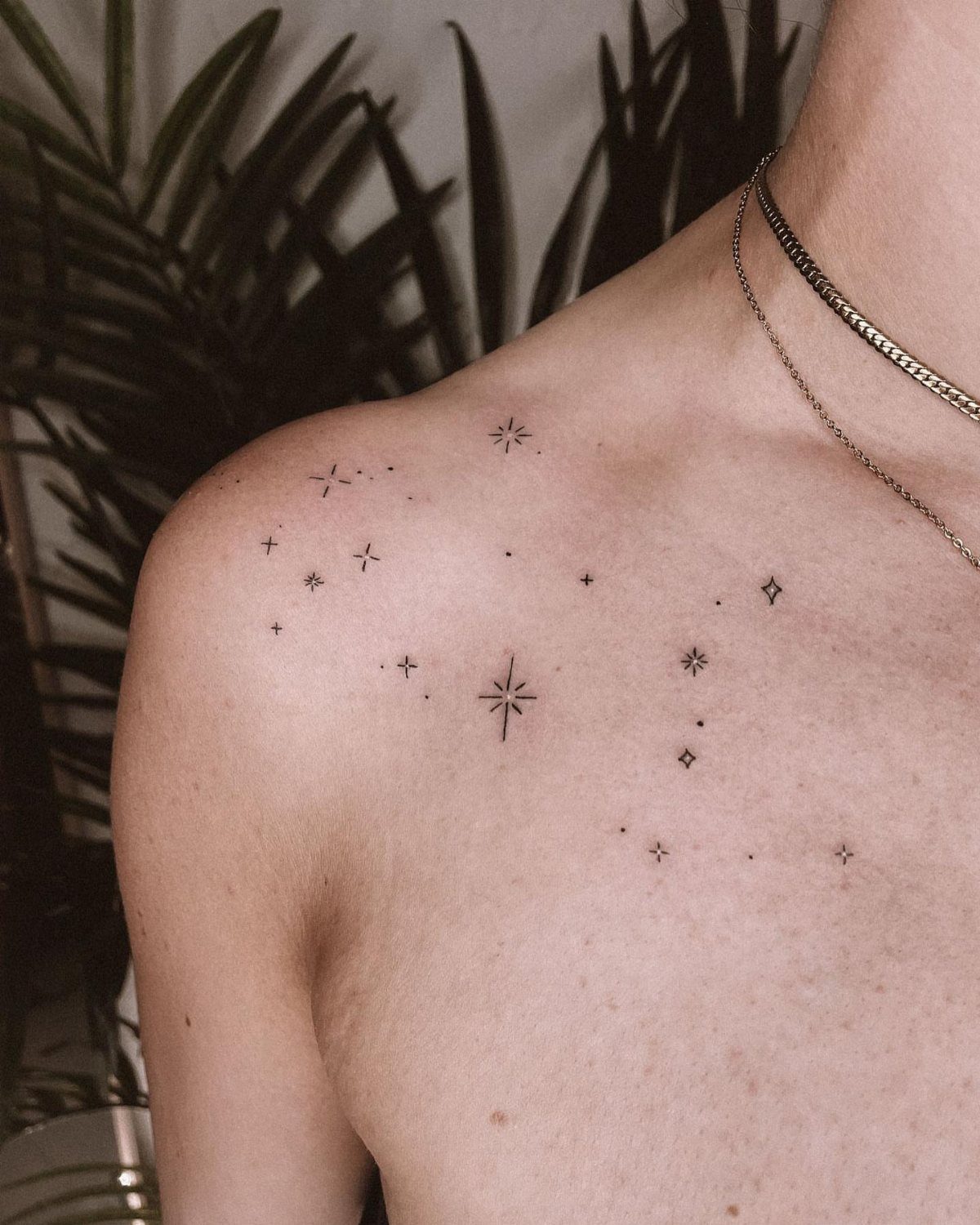
Stars and dots arranged as a constellation give you a tattoo that stays subtle but still carries meaning if you choose a pattern tied to a specific date or person.
The fine lines and small dots sit lightly on the skin, and the shoulder and collarbone placement lets the design follow the natural angles of the body.
This style works if you want something that shows in sleeveless tops but doesn’t compete with other tattoos. The simplicity also means a shorter session and lower cost than a detailed piece.
13. Soft Watercolor Wildflowers
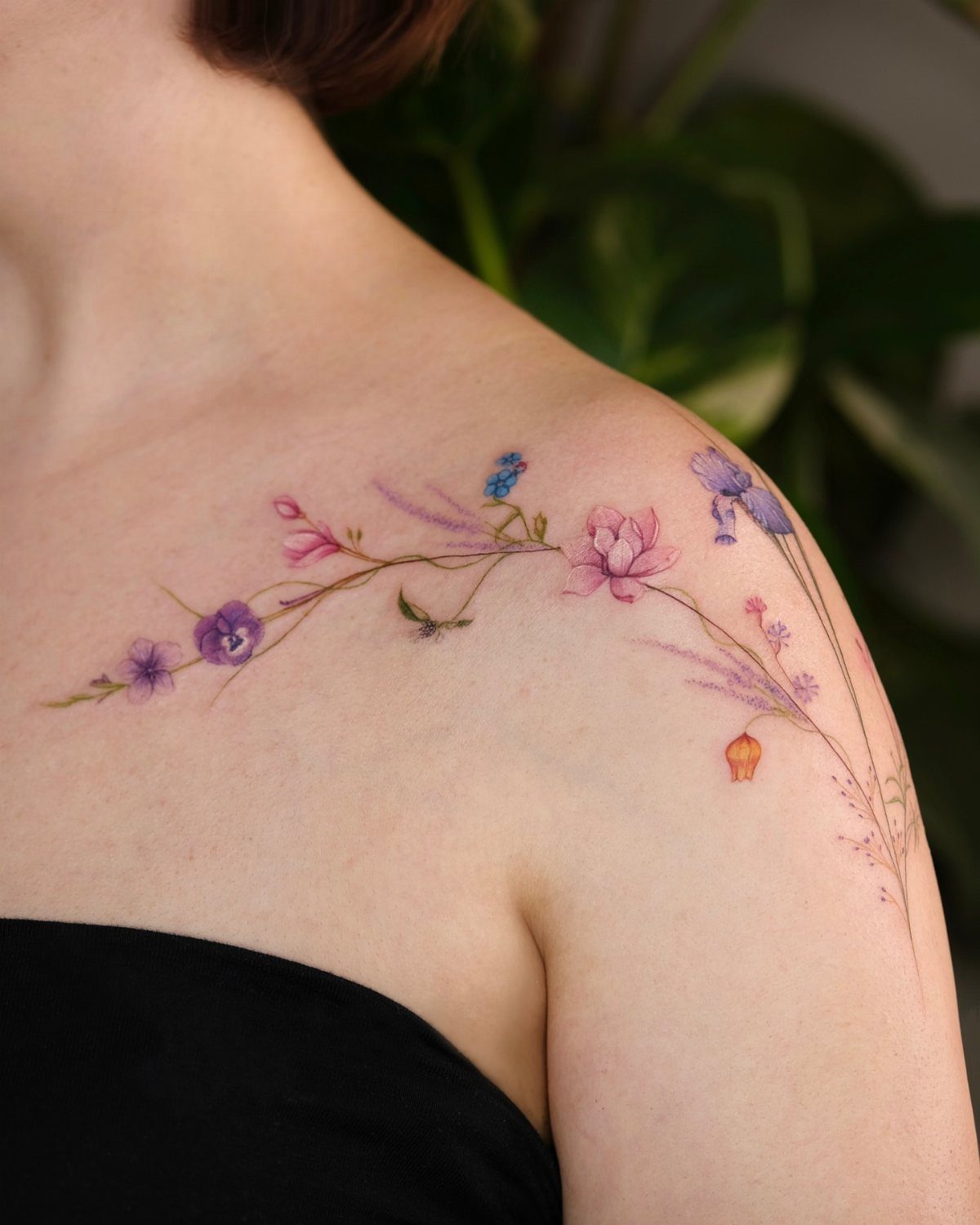
Watercolor wildflowers in soft purple, pink, and blue sit across the shoulder without defined outlines, and the lighter palette keeps the design from feeling too heavy.
The stems stay delicate, and the blooms layer over each other the way loose florals do naturally.
This style reads best when the colors stay in the same tonal range. Mixing too many hues makes the whole piece look muddy once it settles into the skin.
The shoulder’s curve lets the flowers spread without wrapping too far forward or back, and the open space around each bloom keeps the composition from crowding.
14. Leopard Face Framed by Lilies
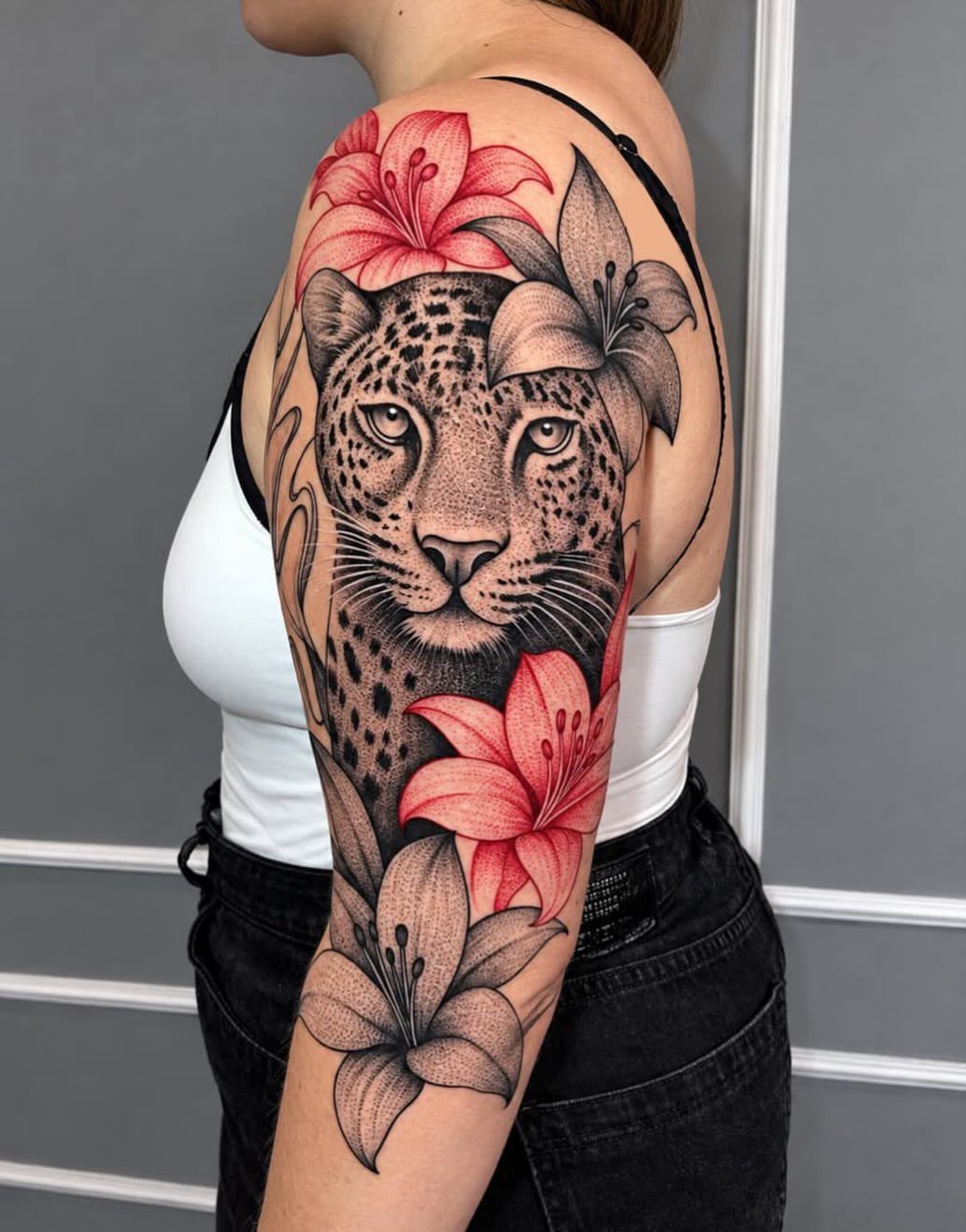
A leopard face in solid black ink paired with red and grey lilies gives you a design that splits the difference between bold and decorative.
The animal sits as the focal point, and the flowers soften the edges without taking over.
Red ink holds color longer than most shades, but it also fades faster than black, so the contrast between the leopard and the lilies will shift over time. The red will need a refresh every few years to stay bright.
This placement lets the design extend from the shoulder down the upper arm, and the size fills the space without leaving gaps.
15. Crescent Moon with Ocean Wave
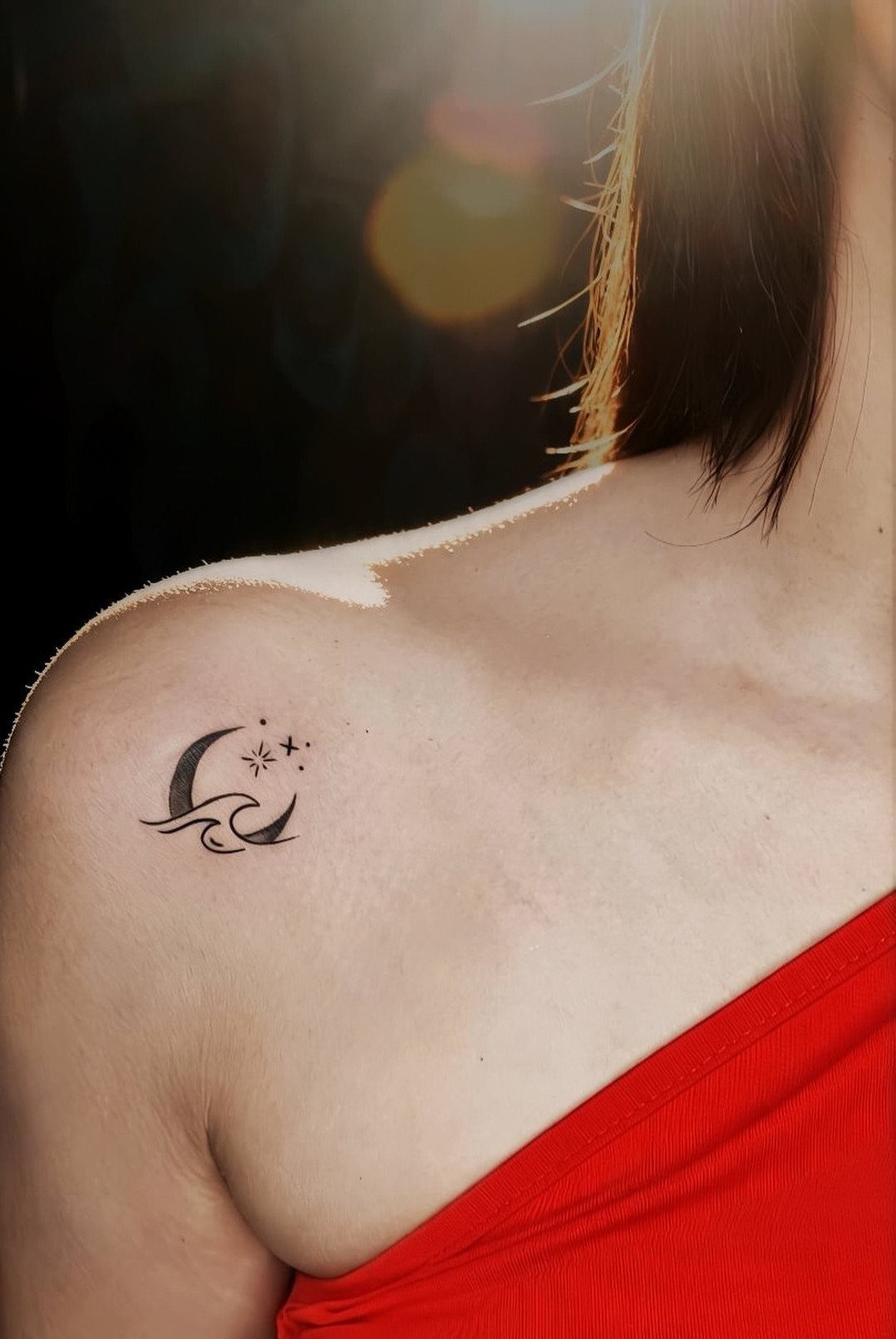
A crescent moon filled with a wave pattern gives you two symbols in one small design, and adding a few stars keeps the composition from feeling too isolated.
The black ink holds sharp lines, and the scale makes this one easy to place without committing to a large piece.
This sits well on the shoulder because the curve matches the crescent’s natural shape. The wave inside adds texture without needing shading, and the whole design stays readable from a few feet away.
Simple pieces like this one take less time and cost less than detailed work.
16. Fine-Line Flower with Swirling Stem
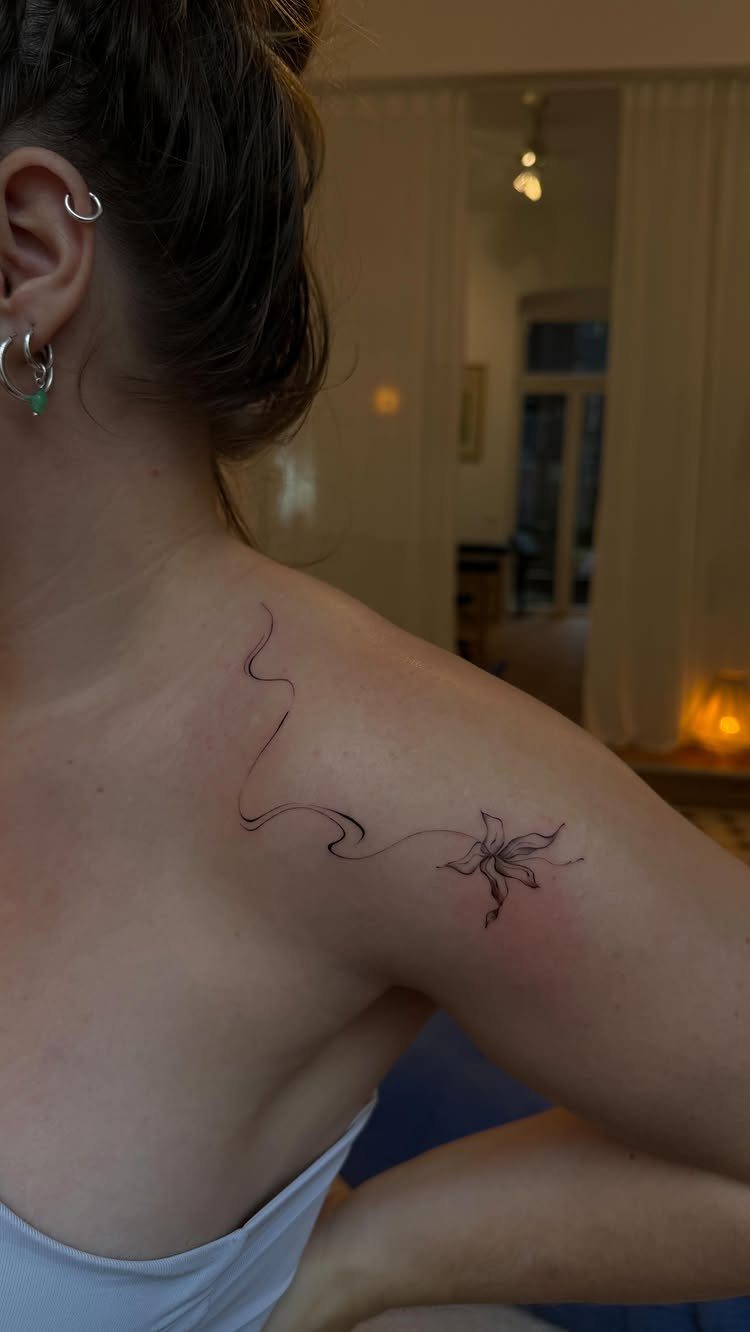
A single flower with a long stem that swirls up toward the neck turns a minimal design into something that moves with the shoulder’s natural lines.
The fine linework keeps it light, and the extended stem gives the tattoo vertical flow without requiring multiple elements.
This style suits the shoulder and neck because the swirl follows the body’s curve, and the single bloom prevents the design from feeling cluttered. Fine lines do fade faster than bold ones, so expect some softening after a few years.
Placement this high means it shows in most necklines.
17. Butterfly and Cherry Blossom Branch
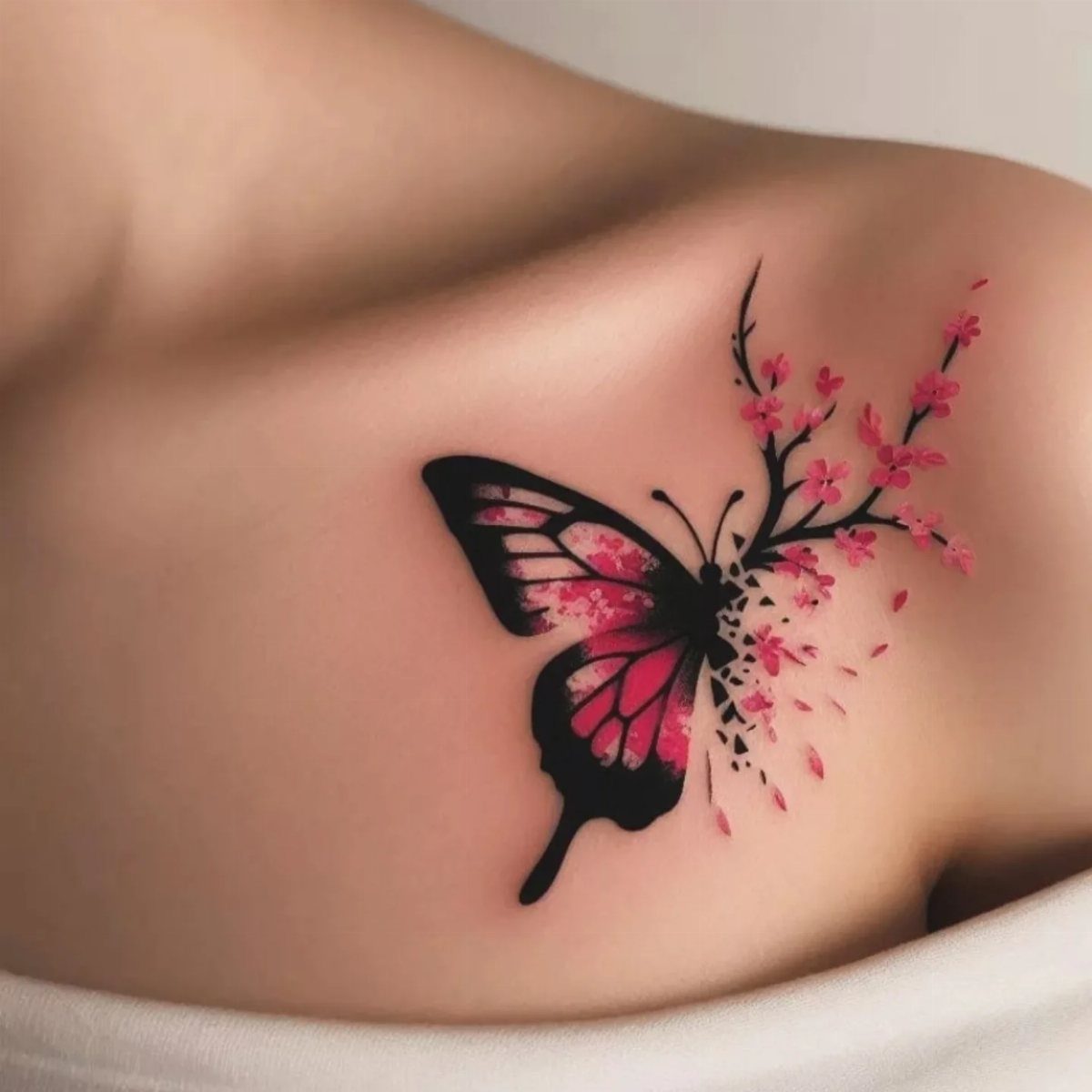
Blending a butterfly into a cherry blossom branch gives you a design where one element transitions into the other, and the black and pink palette keeps the whole piece cohesive.
The butterfly’s wings merge with the flowers, and the branch extends across the shoulder to anchor the composition.
Cherry blossoms carry cultural meaning tied to renewal and fleeting beauty, so this one lands well if you’re after something symbolic without being too literal.
The transition between the butterfly and the branch takes a steady hand, so choose an artist who works cleanly with organic shapes.
18. Realistic Eye Framed by Flowers
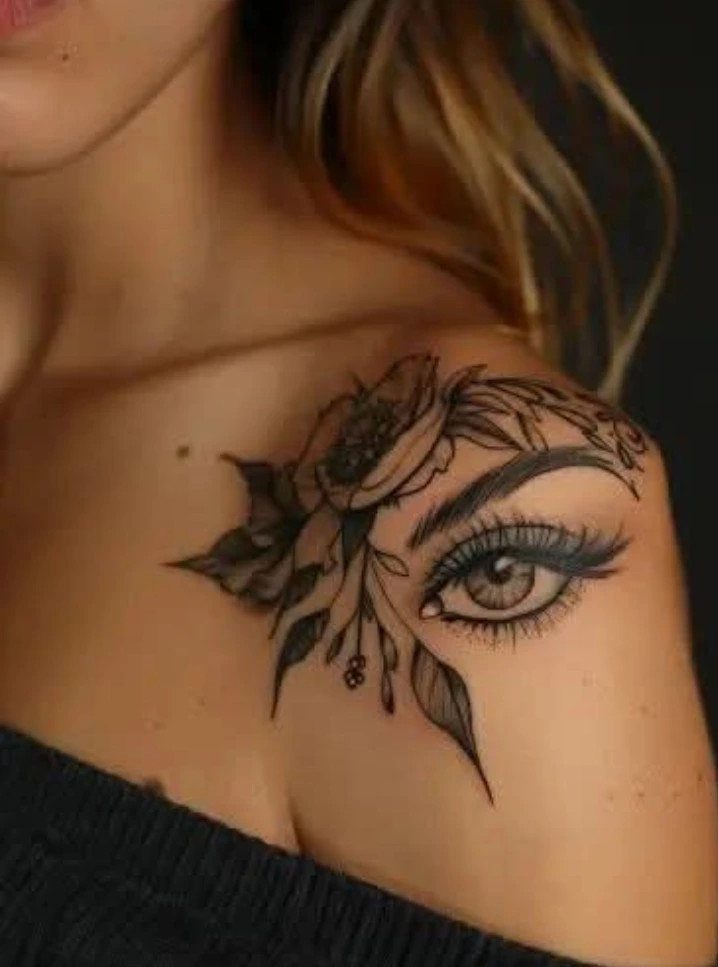
A realistic human eye surrounded by shaded flowers and leaves delivers a design that demands attention, and the shoulder placement keeps it visible without requiring a large canvas.
The eye itself needs fine detail to look realistic, and the botanical elements frame it without competing for focus.
Eyes are among the hardest subjects to tattoo well because the pupil, iris, and sclera all need precise shading to look lifelike. If the proportions are off or the shading isn’t smooth, the whole piece reads as flat.
This one suits you if you want something that feels intentional and layered. The flowers soften the intensity of the eye without undermining it.
19. Lilies with Butterflies and Roman Numerals
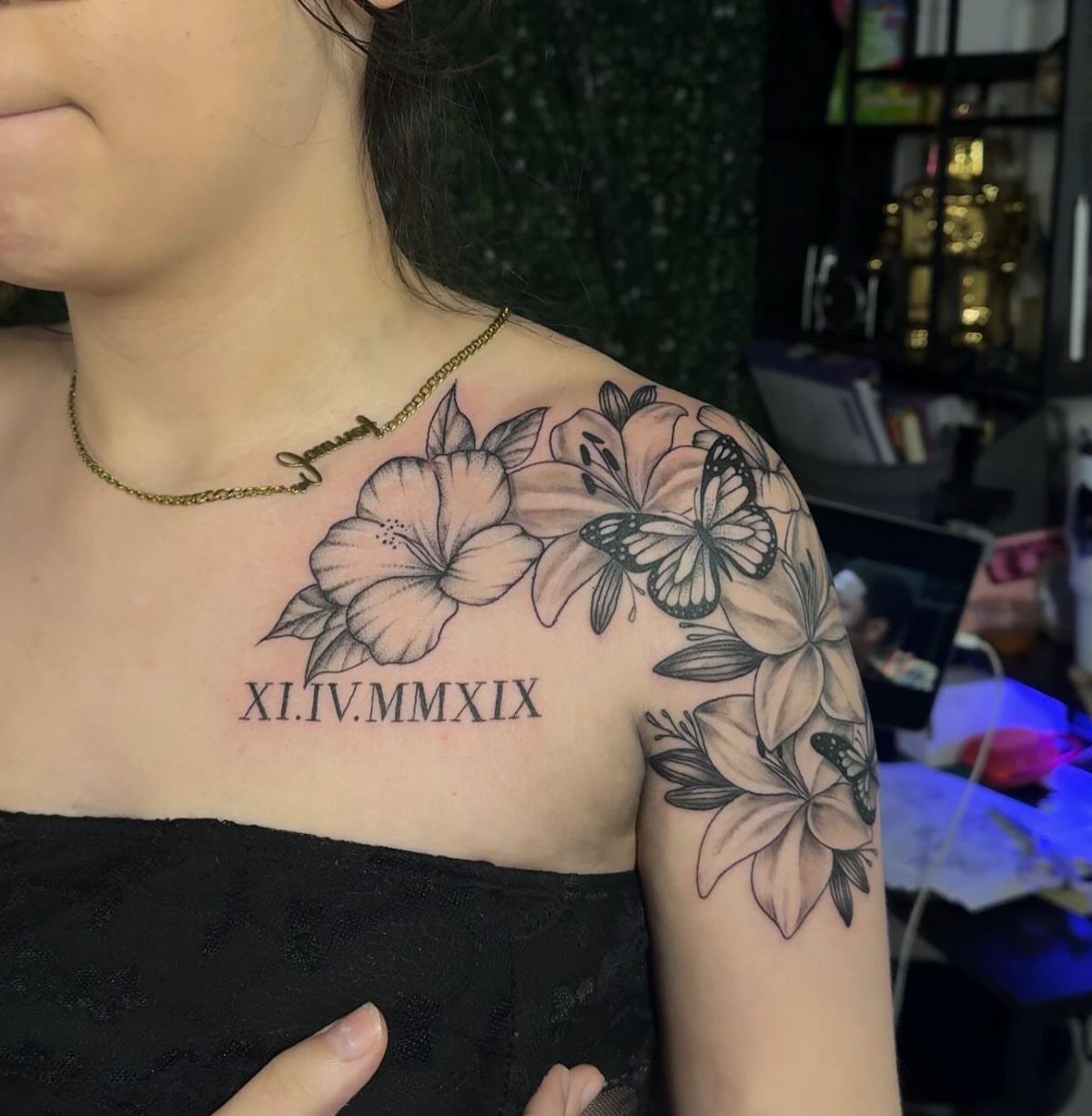
Lilies in black and grey with Roman numerals and a butterfly turn personal meaning into a shoulder piece that fills space without needing color.
The numerals sit cleanly along the collarbone, and the shaded petals anchor the composition so the date doesn’t float on its own.
Roman numerals read well at a distance, but they do take up more horizontal space than Arabic numbers. If the date matters, this layout keeps it visible in most necklines.
The butterfly adds movement without requiring a second focal point, and the monochrome palette ages more predictably than colored ink.
20. Geometric Starburst and Vertical Lines
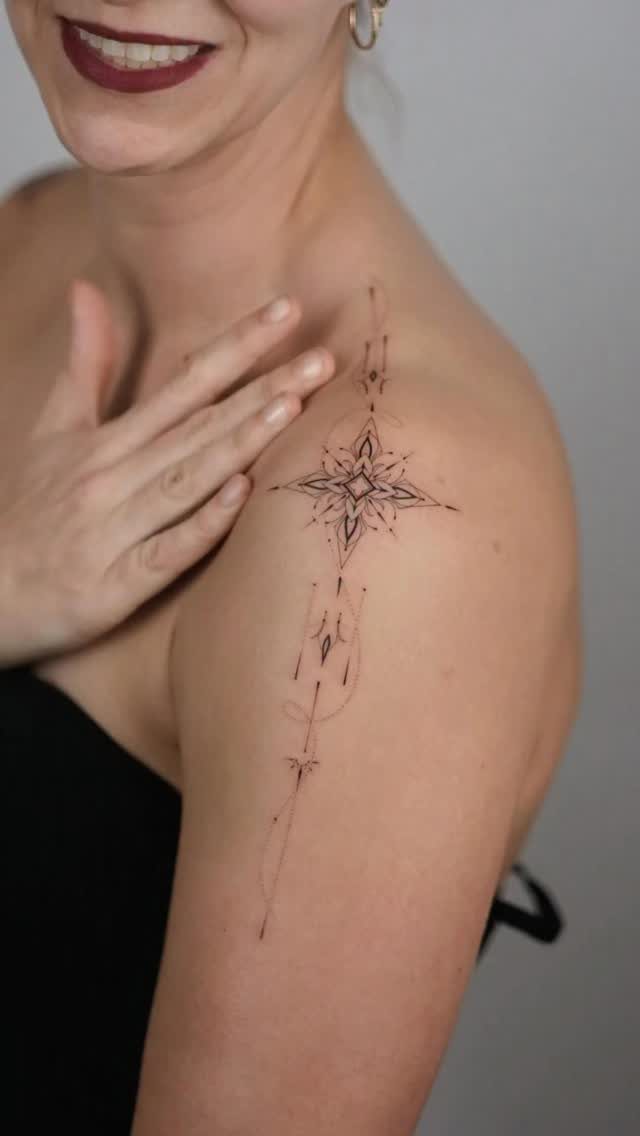
A geometric star with fine vertical lines extending down the shoulder delivers clean symmetry without soft edges. The starburst sits as the focal point, and the thin lines add length without turning the design into a full sleeve.
This style reads as intentional rather than decorative, and the solid black center holds contrast against the finer details. The shoulder placement keeps the design visible in tank tops and off-the-shoulder cuts.
Straight lines show every wobble, so precision matters here more than in organic shapes.
21. Sunburst with Flowing Abstract Ribbon
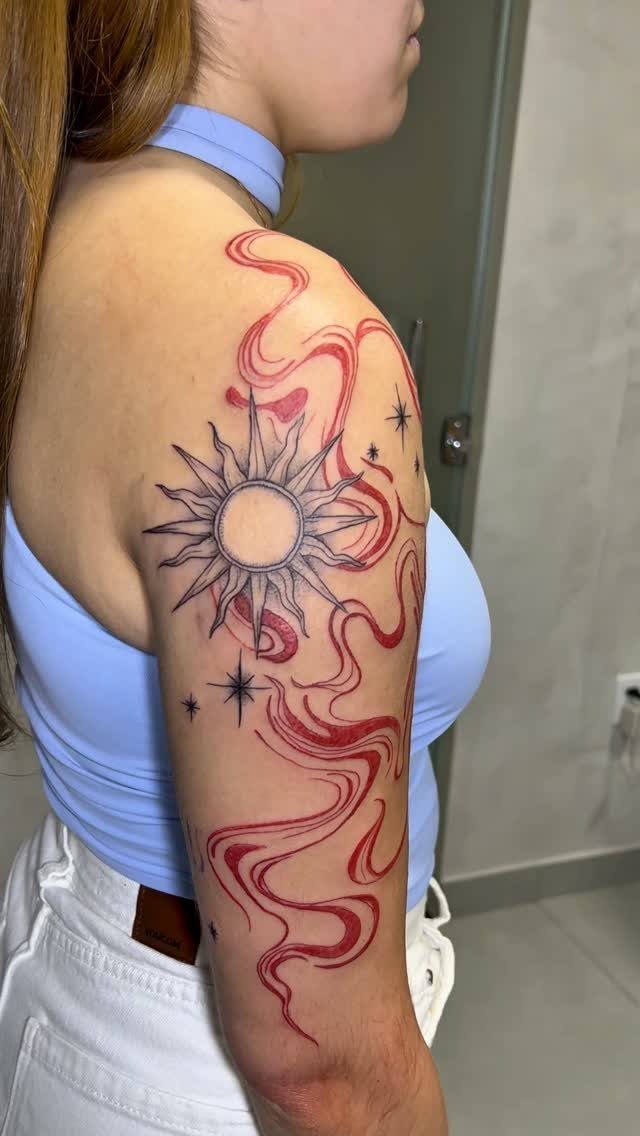
A black linework sun with spiked rays paired with flowing red ribbons and small stars gives you a design that mixes structure with movement.
The sun stays geometric, and the red accents add warmth without filling the whole piece with color.
Red will lighten first, so the contrast in those ribbons depends on how often you’re willing to come back. The contrast between the sharp sun and the fluid lines keeps the composition from feeling static.
It holds up at arm’s length but rewards a closer look.
22. Vibrant Pink Peonies
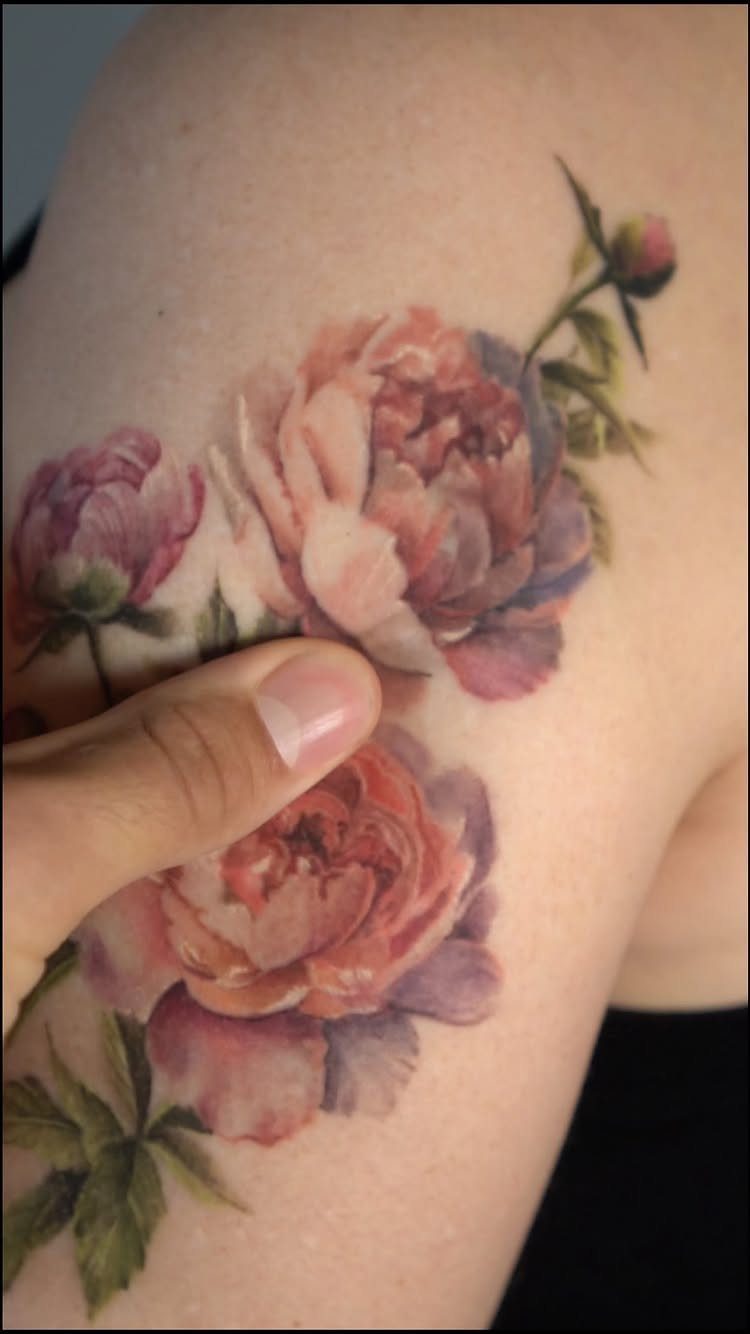
Pink and peach peonies with green leaves deliver a realism piece that uses color to create depth. The petals layer naturally, and the foliage keeps the composition grounded without competing with the blooms.
Color realism takes longer than black and grey because the shading requires multiple passes to build saturation. The shoulder’s natural curve gives the blooms room to sit flat instead of bending around your arm or chest.
Expect this to require touch-ups as the colors settle into the skin over the first few years.
23. Woman’s Portrait with Floral Crown
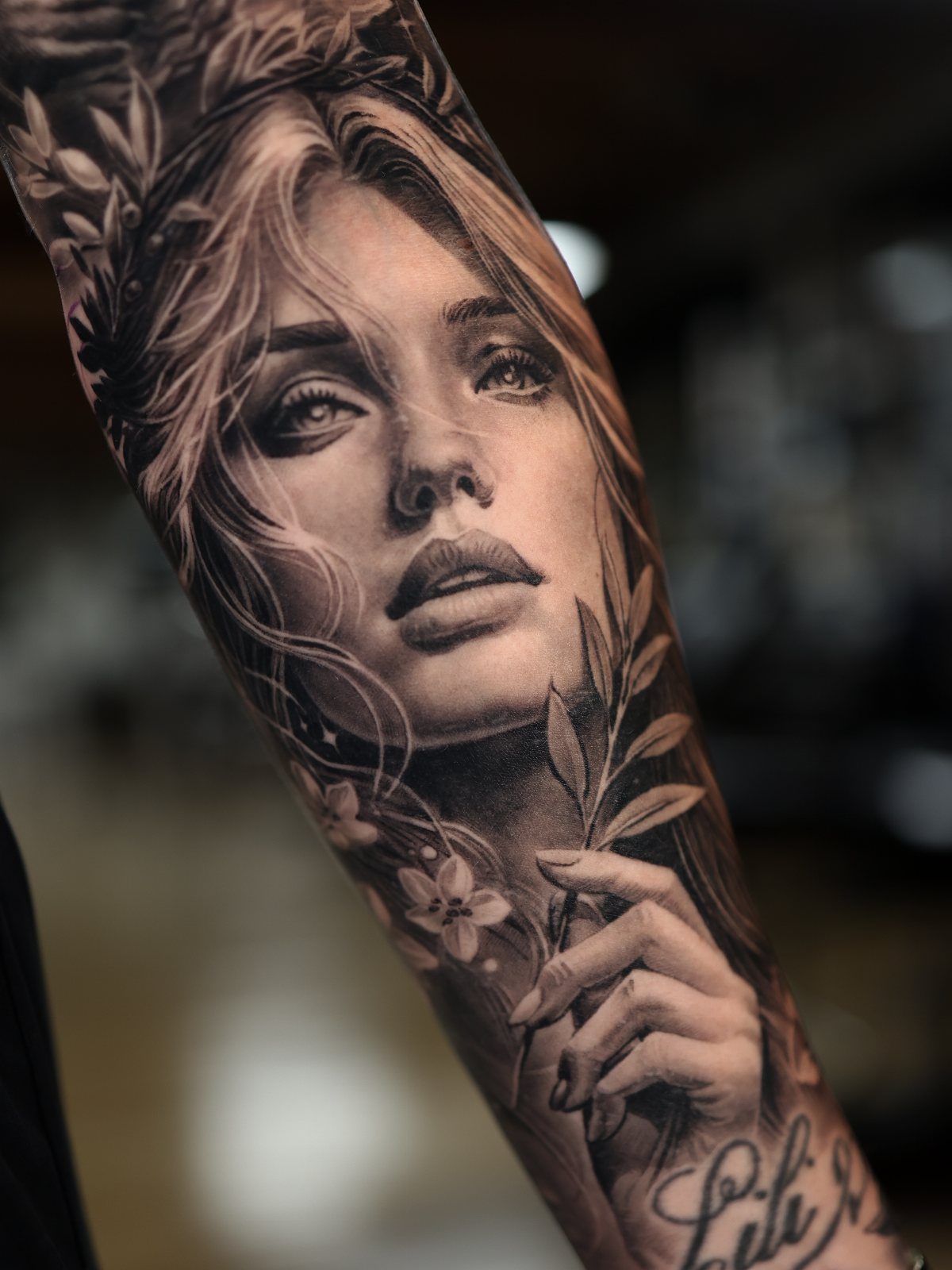
A woman’s portrait in black and grey realism with a crown of leaves and flowers gives you a design that demands a steady hand and clean shading.
She anchors the design, and the florals build a frame that supports her instead of competing.
Portraits demand precision because a millimeter off in the eyes or mouth changes the whole expression. Uneven shading or a crooked feature kills the realism.
This fits if you want a piece that tells a story in layers. The shoulder and upper arm give enough space for the detail to breathe.
24. Hibiscus with Tribal Patterning
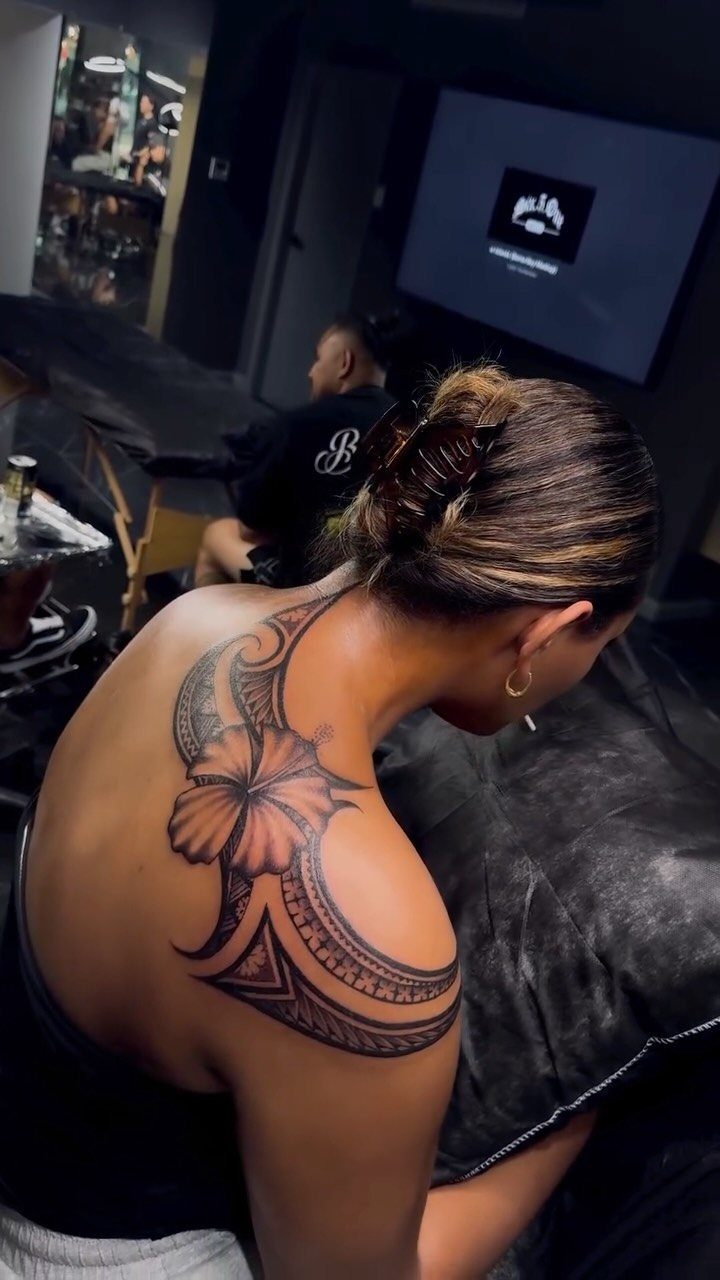
A hibiscus bloom in solid black ink blended into Polynesian-style tribal curves gives you a design that splits botanical detail with geometric flow. The hibiscus holds the center, and the tribal work spreads the design wider without needing mirror symmetry.
This style uses negative space to separate the hibiscus from the patterning, and the bold black fills hold up better over time than fine lines. The shoulder blade placement means it shows in backless tops and swimwear.
Tribal patterns borrow from specific cultural traditions, so choose an artist familiar with the motifs if accuracy matters to you.
Pain Expectations and Healing Realities
The shoulder cap sits over the deltoid muscle, which gives you natural cushioning. Pain here runs 3–4 out of 10 for most people, manageable enough that you can sit through a 2- to 3-hour session without much trouble.
The collarbone changes that.
Thin skin directly over bone pushes the pain to 6–7 out of 10, and the needle vibration carries through the whole area. If your design wraps forward toward the neck or down near the shoulder blade, expect those sections to feel sharper.
The top layer closes in 2–3 weeks; full settling takes closer to 3 months.
Bra straps cause the most trouble during that first 2 weeks. Bra straps drag on fresh ink and delay healing, so go strapless or skip the bra if the tattoo lands where the strap sits.
Investment Guidelines
A small shoulder piece between 2 and 4 inches costs $150–$400, covering most shop minimums and up to 2 hours of work.
If the design extends from the shoulder down the arm or across the back, expect $1,000–$2,500 or more. These pieces take multiple sessions, and the final cost depends on how much ground the tattoo covers.
Watercolor and photorealism land at the top of the price range because the shading and color blending add hours to the appointment. An artist working in fine line or blackwork will often finish faster than one layering soft color gradients.
Body Type Considerations
Wide shoulders handle multi-part designs with room left over for shading and fine detail. The added width keeps complex arrangements from looking cramped, and the muscle underneath holds the design flat enough that intricate patterns stay readable.
Narrow or petite frames look better with vertical designs that don’t try to pack too much into a small area.
If you’re adding serious muscle, hold off until your routine shifts to maintenance. Light muscle gain won’t budge a tattoo much, but heavy deltoid growth can stretch geometric lines or portrait features out of shape.
Frequently Asked Questions
Do shoulder tattoos hurt for women?
The outer shoulder registers around 3–4 out of 10 on the pain scale because the area carries enough muscle and fat to cushion the needle.
The collarbone and the top of the shoulder blade both register around 6 out of 10 because there’s very little cushion between the needle and the bone.
How much is a floral shoulder tattoo?
A floral shoulder piece that stays contained on the shoulder cap typically runs $400–900, while designs that extend across the back or down the arm push past $1,000 depending on detail and color work.
Session length and the artist’s hourly rate shift the final number more than the subject itself.
How do I protect a fresh shoulder tattoo from bra straps?
Friction from bra straps pulls at scabs and can lift ink before it sets, so strapless bras or going without for the first 14 days keeps the area clear.
Loose, off-the-shoulder tops work the same way by keeping fabric from rubbing directly on the fresh ink.
Do watercolor shoulder tattoos fade quickly?
Watercolor designs that skip the outline typically blur and lighten by year 3 to 5, since the ink goes in softer and lacks a framework to keep each color locked in place.
A watercolor hybrid that adds fine black outlines keeps the design readable even after the soft color washes out, so the piece ages better without needing constant touch-ups.
What to wear with a shoulder tattoo?
Tank tops, strapless cuts, and off-the-shoulder styles show the design cleanly, while most standard necklines hide it for professional settings.
Designs that extend higher toward the neck or collarbone stay visible in crew necks and scoop necks, so placement decides how much control you have over when it shows.





