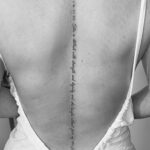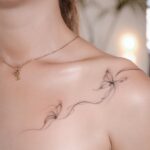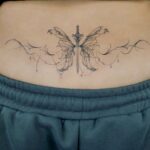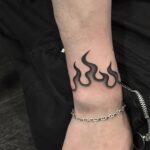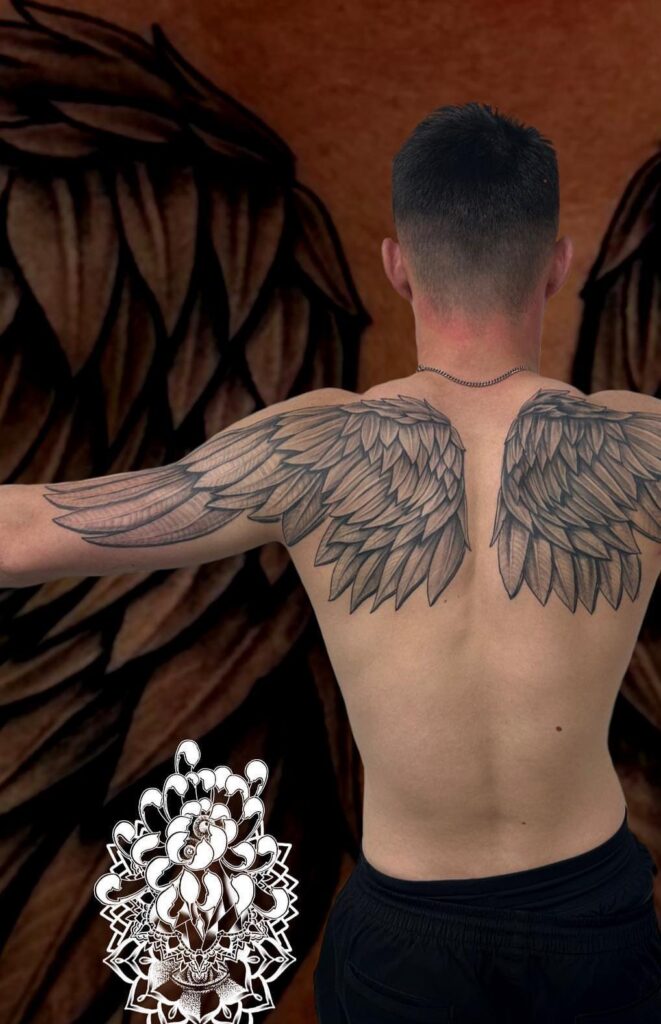
Wing tattoos range from soft black and grey gradients that fade feather tips into skin to bold gothic linework with distressed edges, and from traditional angel wings spanning thousands of dollars across multiple sessions to mechanical designs built from gears and rivets.
Script placed between the wings needs lettering at least half an inch tall for long-term legibility as the ink settles over time.
1. Symmetrical Feathered Wings
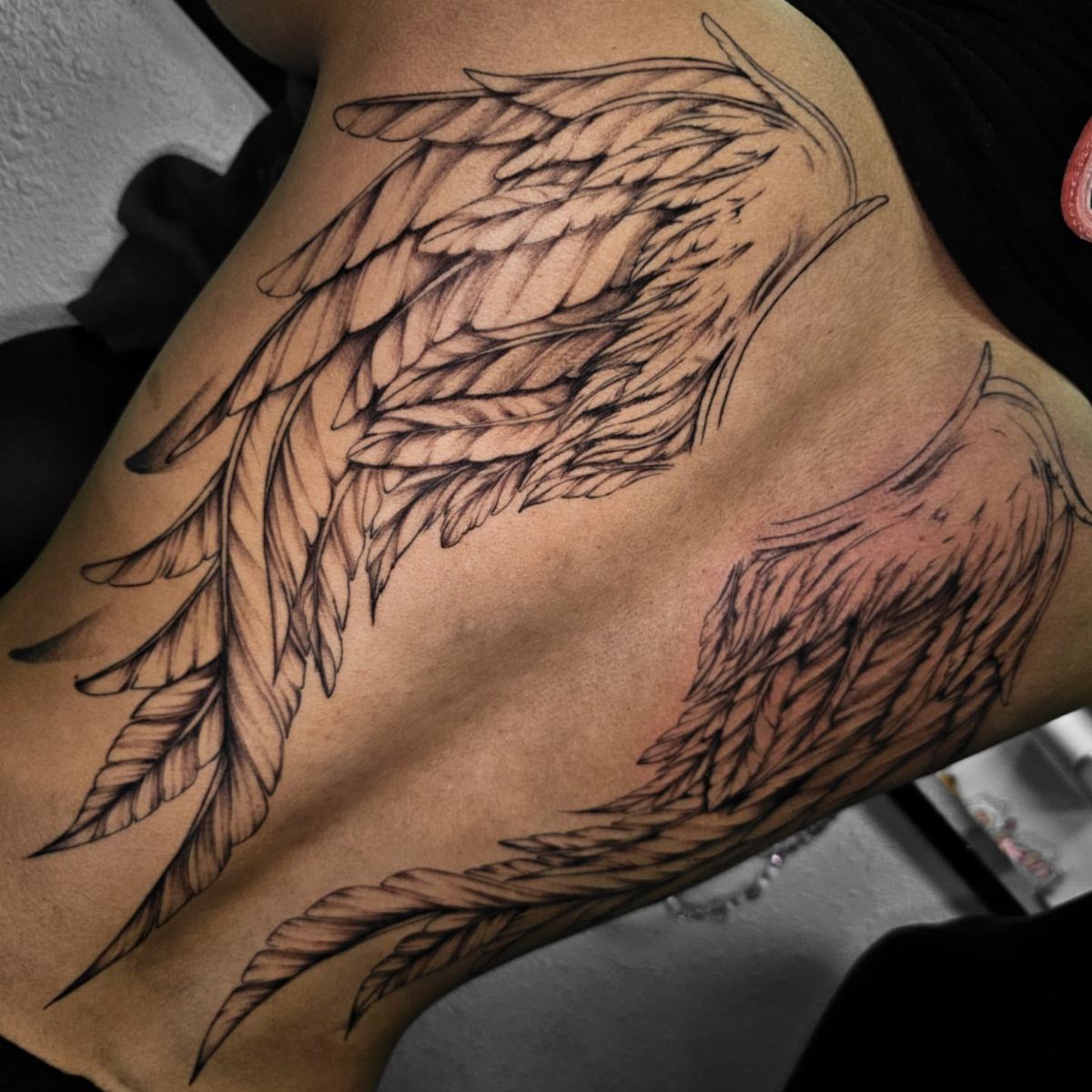
Feathered wings placed on either side of the spine create a balanced silhouette that works with the natural contours of your back. The feathers layer outward from the shoulder blades, giving depth through the way each one overlaps the next.
Symmetry matters here.
A skilled artist will mark both sides carefully so the wings mirror each other in shape and spacing. If one wing sits higher or wider than the other, it reads as uneven.
This design covers a lot of skin, so expect multiple sessions. Shading each individual feather takes time, and rushing it shows.
2. Black and Grey Ink Wings
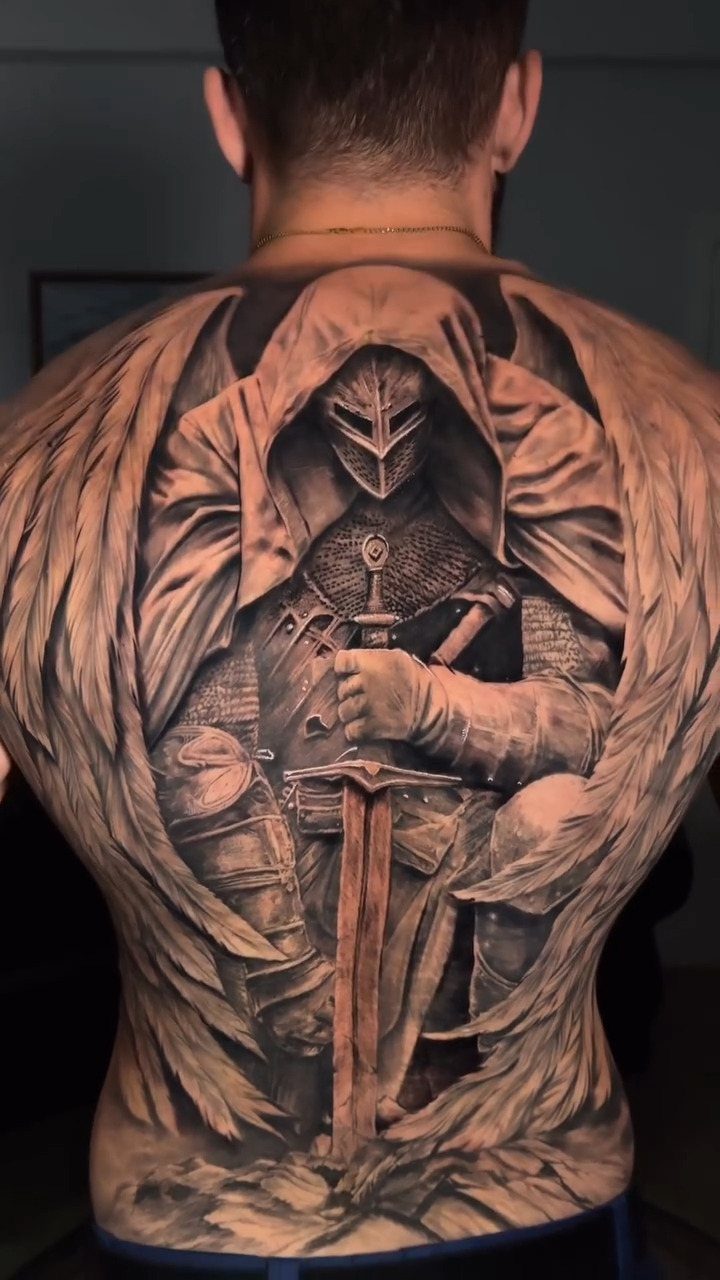
Wings in black and grey rely on shading alone to carry the form. Without color to lean on, the artist uses gradients and contrast to separate each feather, building dimension through light and shadow alone.
The technique gives a softer, more realistic look than solid black linework.
Feather tips fade into the skin, and the darker sections near the spine anchor the design. Black and grey also ages more predictably than color, holding its clarity over years without the shifting tones that colored ink sometimes develops.
Full back coverage like this requires several sessions, often spaced weeks apart to allow healing between areas.
3. Large Angel Wings
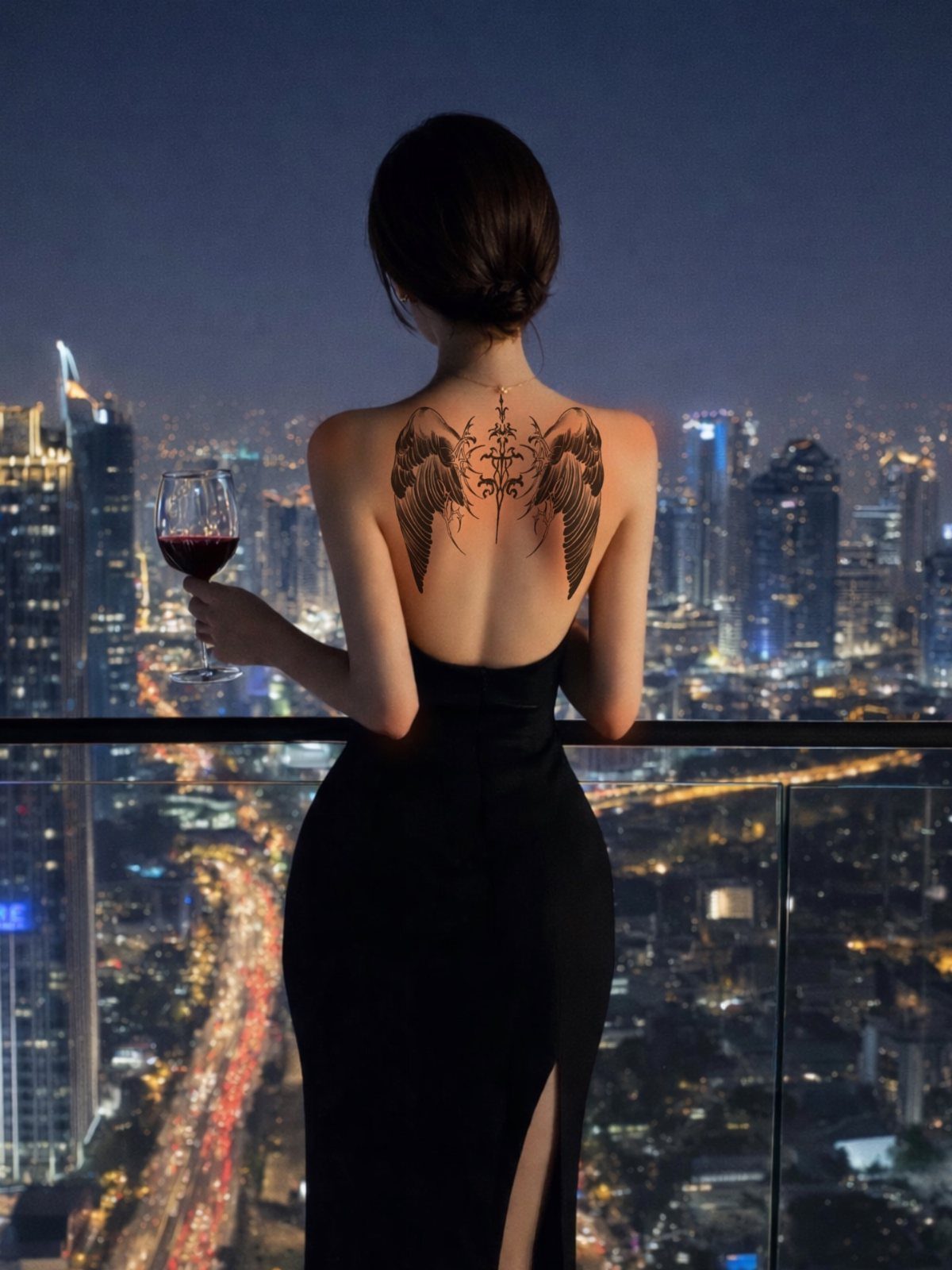
Angel wings span the full width of the back, from shoulder blade to shoulder blade, and often reach down toward the lower back.
The size makes them a serious commitment, so placement is something to think through before you go ahead.
Larger pieces take longer to finish. Cost scales with time, and full back work typically runs into the thousands.
Angel wings read as a statement piece. They’re bold, and they take over the space they occupy.
4. Wings Extending Down the Arms
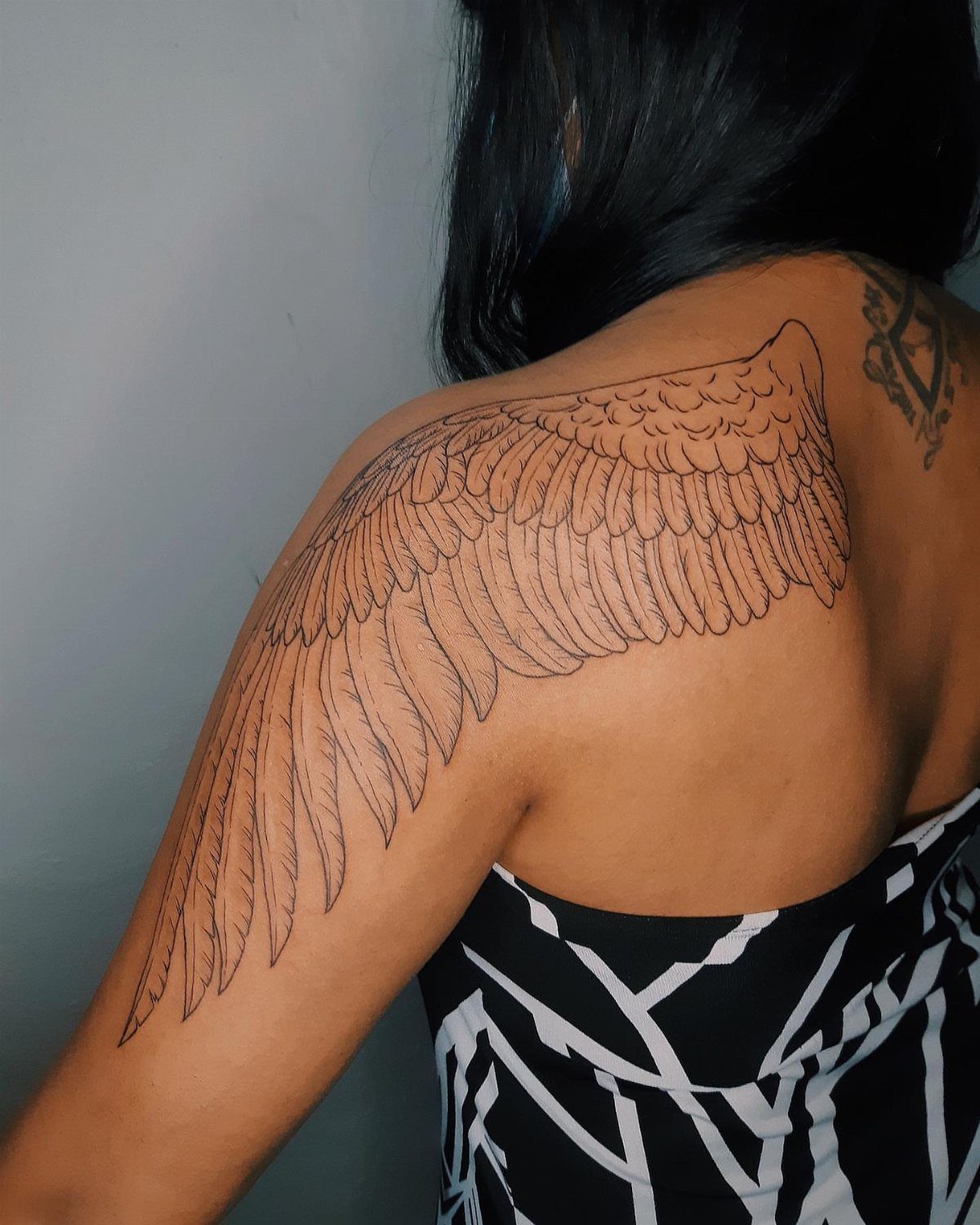
A wing that starts on the back and flows down the arm turns the design into something that moves with you.
The feathers follow the curve of your shoulder and wrap around the upper arm, creating a piece that reads from multiple angles instead of just one.
This layout works well if you already have arm ink or plan to build toward a sleeve. It ties the back and arm together as one continuous design.
Placement affects pain. The shoulder and upper arm are generally more tolerable than the spine or ribs, though everyone feels it differently.
5. Mechanical Wing Designs
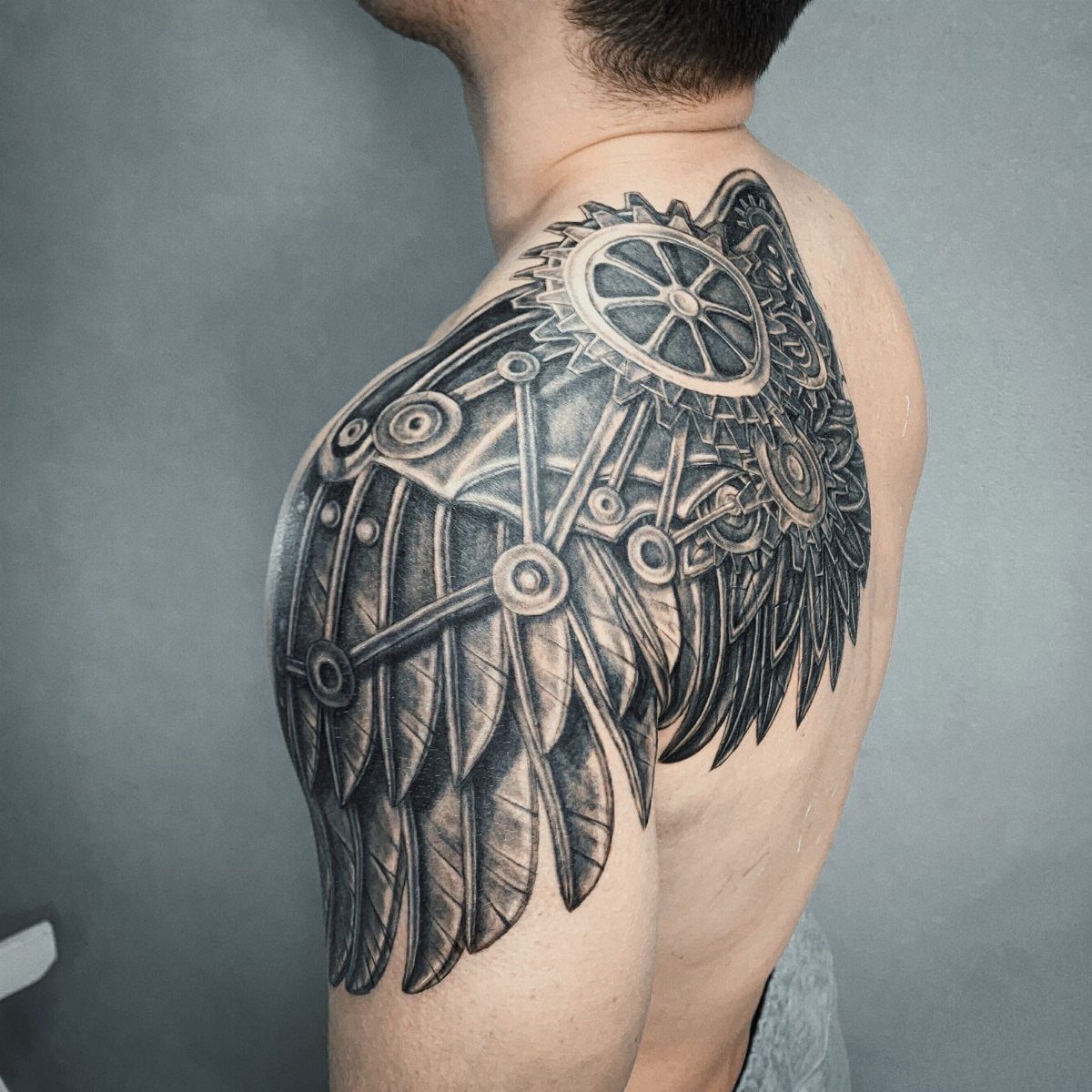
Mechanical wings replace feathers with gears, plates and rivets, giving the design an industrial edge.
The shading mimics metal textures, with highlights that suggest polished steel or brushed aluminum, and the layered components create depth the same way feathered wings do.
This style suits anyone drawn to steampunk or biomechanical aesthetics.
The detail work is intricate, so choose an artist experienced in technical tattooing. A poorly executed gear looks flat, and the illusion of dimension collapses.
Grayscale works best here. Color can flatten the metallic effect unless handled carefully.
6. Gothic Wings
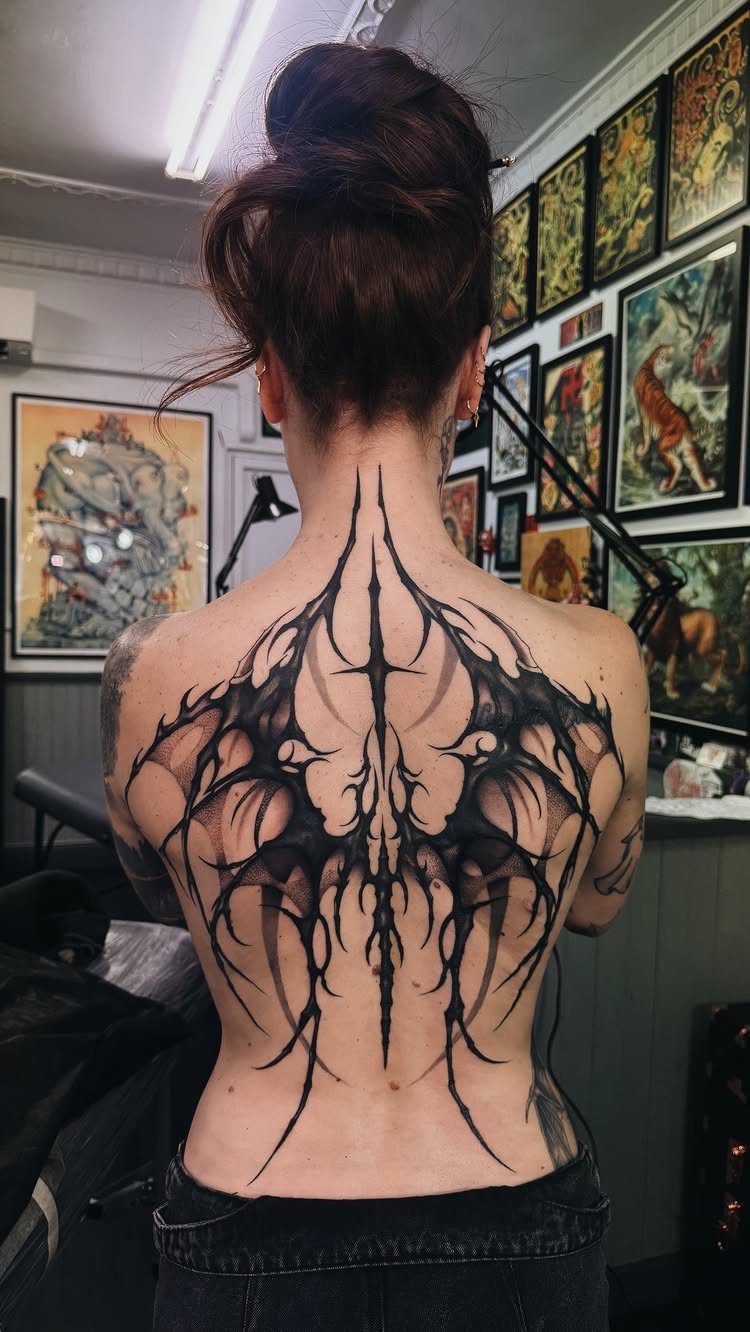
Gothic wings lean into sharp angles and heavy black ink, trading soft feather gradients for bold, distressed linework. The symmetry is deliberate but rough, with edges that feel weathered or torn rather than pristine.
This style reads darker and more graphic than traditional angel wings.
It suits anyone who wants their tattoo to feel aggressive rather than serene. The solid black sections also mean faster sessions compared to highly detailed feather shading, though the coverage area still demands multiple appointments.
Gothic wings pair well with other dark imagery if you’re building a larger back piece.
7. Wings with Text
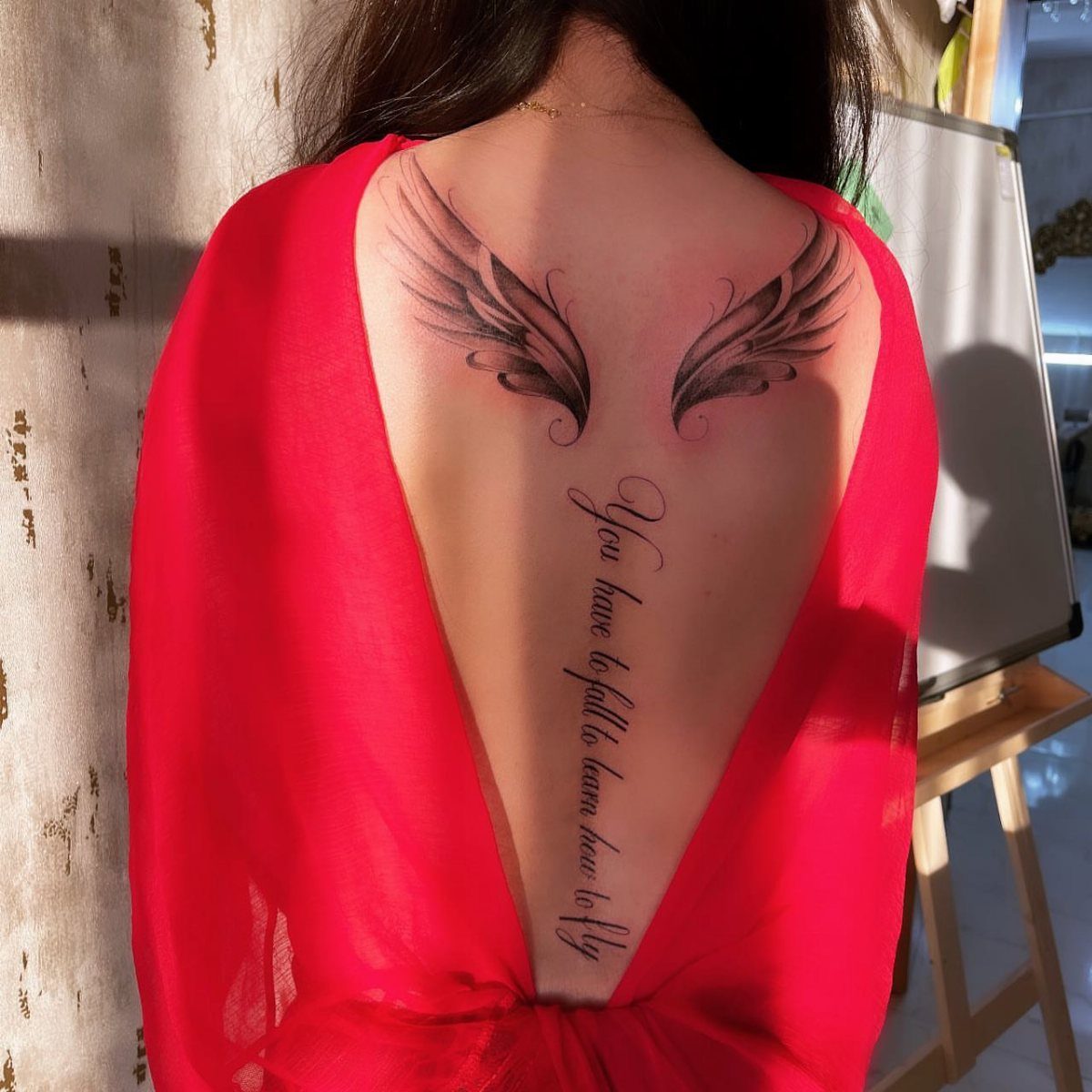
A quote placed between the wings makes the design about a specific moment or belief instead of the imagery alone. The text usually sits centered along the spine, with the wings framing it on both sides.
Script fonts read clearly at this scale, but the letter height matters. Too small and the words blur as the ink settles over time.
Too large and the text crowds the wings. Most artists suggest lettering at least half an inch tall for long-term legibility.
Placement is permanent. Choose words you’ll stand by years from now, not something tied to a single chapter.
Color Options
Color shifts the entire feel of a wing tattoo.
Black and grey stays classic and ages predictably, but adding color opens different reads. Blue and teal feathers pull cooler, while warmer tones like amber or rust give the wings an earthier presence.
Gradients add depth, blending one hue into another across the span.
Done well, they create movement. Done poorly, they muddy as the pigment oxidizes over time.
Colored ink fades differently than black.
UV exposure hits certain pigments harder, which means you’ll need to book follow-up sessions to keep the color sharp. If you live somewhere sunny or spend time outdoors without covering the tattoo, expect the vibrancy to shift over years.
White ink for highlights adds dimension on lighter skin tones. On lighter skin it can read as scar tissue once healed, so discuss contrast with your artist before committing.
Placement Considerations
Wing span dictates how much of your back the tattoo claims.
Full-width designs that reach shoulder to shoulder sit high enough to show above most shirt collars if the neckline dips. If you work somewhere formal or prefer discretion, test how your usual clothing sits before finalizing the layout.
Designs that extend down past the mid-back stay hidden under standard shirts but show with anything cropped or backless. Map your wardrobe before the first session.
Your shoulder blades move when you reach or twist, and the skin stretches with them.
An artist accounts for this, but extreme poses will still distort the shape temporarily. That’s normal.
Sleeping on your back becomes difficult while fresh ink heals. Plan for at least a week of side or stomach sleeping, longer for larger pieces.
Meaning of Wing Tattoos
Wing tattoos carry weight beyond the image.
Freedom is the most common read, the idea of lifting off or breaking loose from something that held you down. Some people get them after a divorce, a recovery, or leaving a job that crushed them.
Protection shows up almost as often.
Wings as a shield, or as something watching over you. Parents get them for children they lost, and the design becomes a permanent reminder that the person still matters.
Spirituality ties in when the wings reference angels or deities. The meaning there is personal and varies widely, but the connection to something larger than yourself is usually part of it.
The symbolism matters to the person wearing it. What it signals to someone else is secondary.