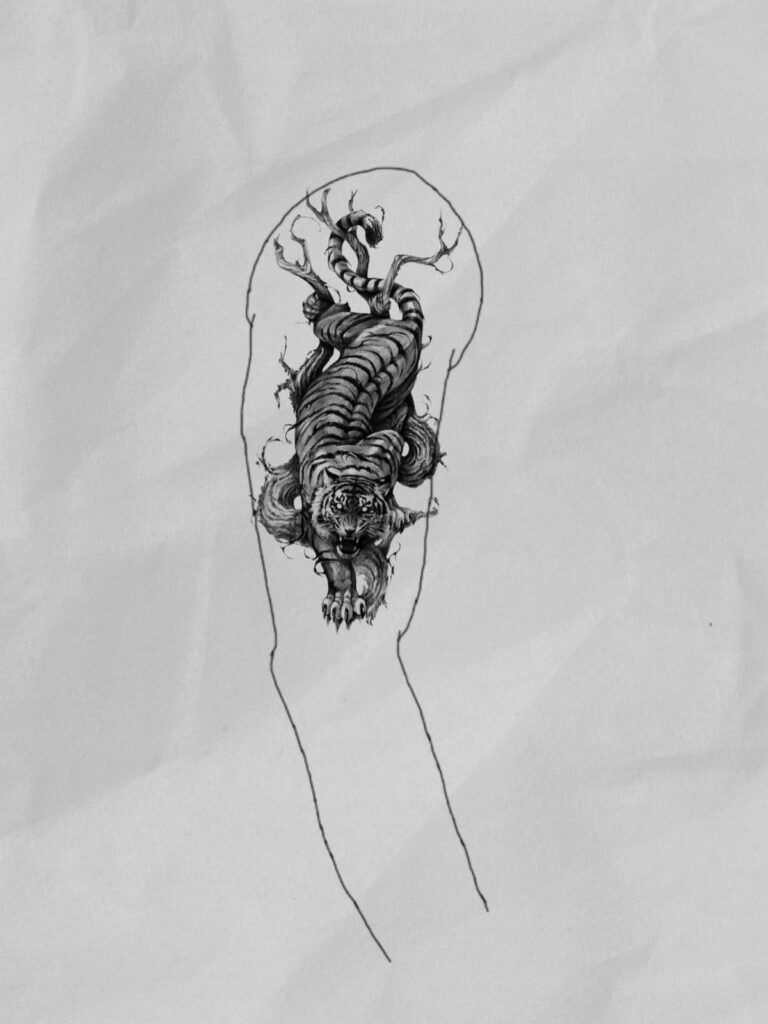
The shoulder cap gives you enough flat surface for designs that need symmetry or fine detail, and pain there runs around 3 or 4 out of 10.
If you want a tattoo you can extend later, pick something with a natural direction, like a dragon’s body curving down the arm or a koi swimming into a sleeve.
Realistic pieces and geometric mandalas take the longest because the line work and shading need multiple sessions, while a minimalist sun or lightning bolt finishes in under an hour.
1. Japanese Koi Fish Swimming Against Current
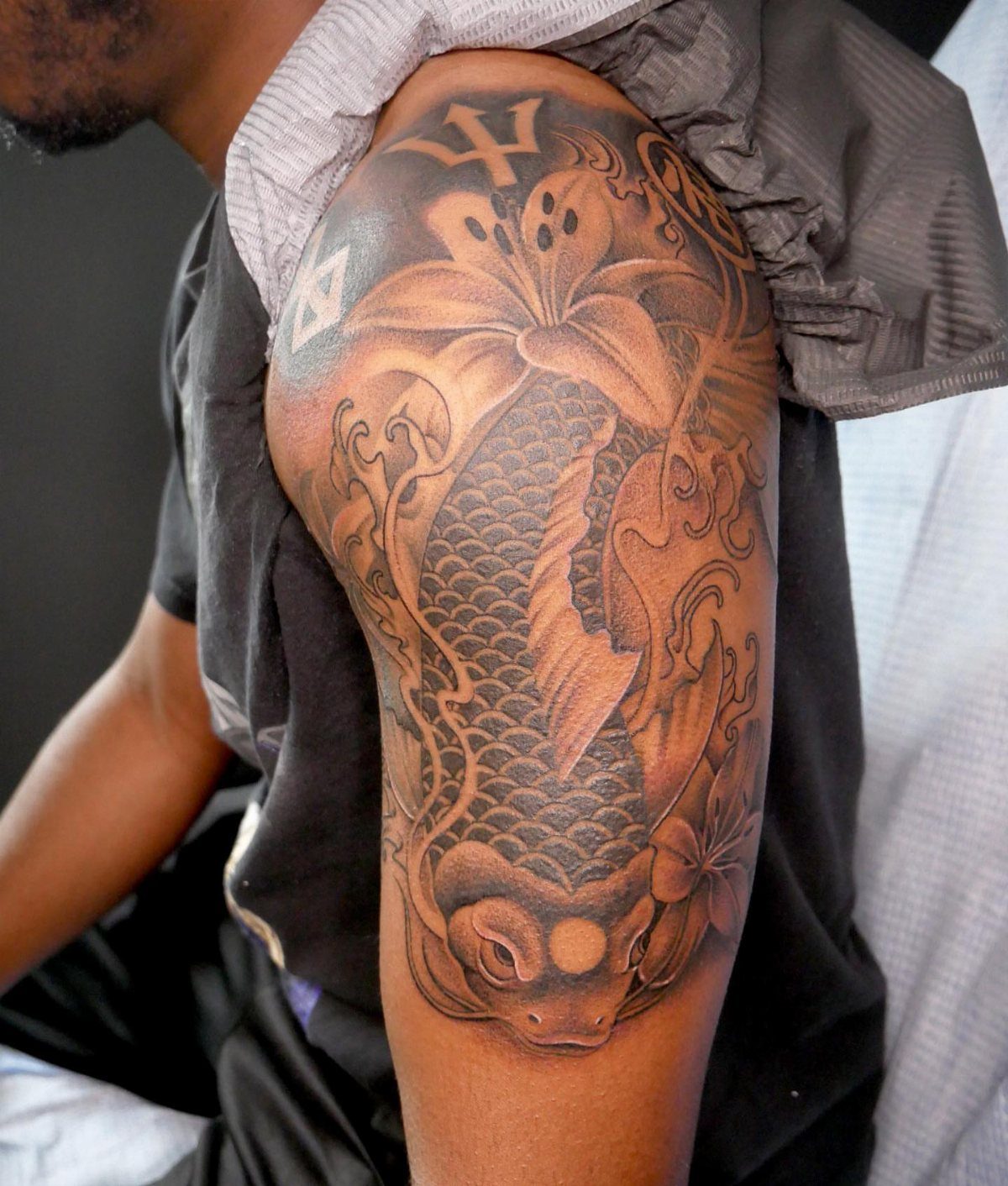
A koi swimming upward through water, usually paired with waves that push back against it, reads as perseverance.
The fish itself takes up most of the shoulder cap, and the waves give the artist room to extend down the arm or across the collarbone if you want more coverage later.
Black and grey keeps the focus on shading and movement.
Color, especially in traditional Japanese style, calls for orange, red or gold on the fish and blue in the water, which raises both the cost and the time in the chair.
The current makes the design. Without it, the koi floats and loses its meaning.
2. Patchwork Shoulder Tattoo
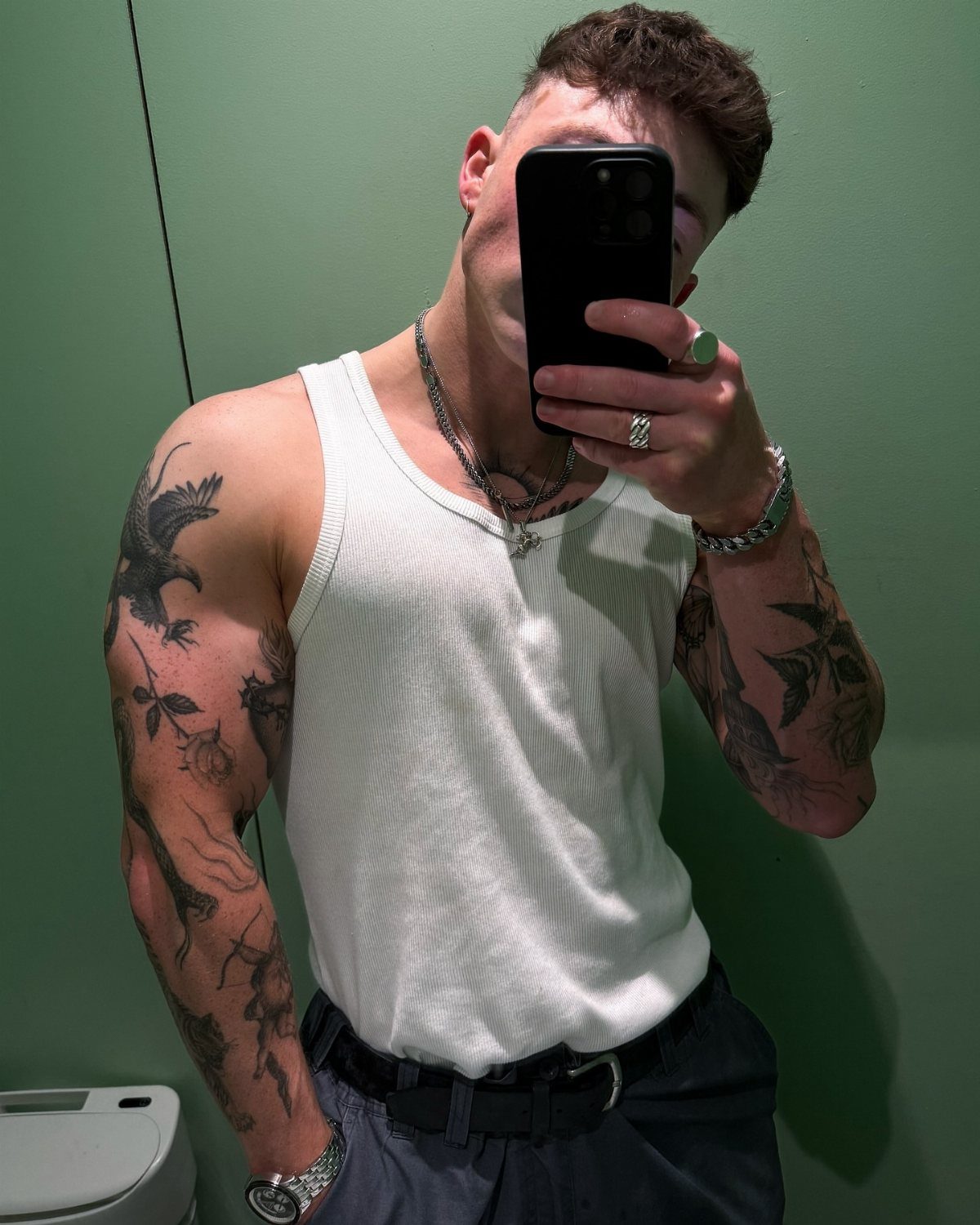
Several smaller tattoos placed close together, each one complete on its own, filling the shoulder over multiple sessions. You can add them as you go, one at a time, rather than planning the whole thing upfront.
This approach suits people who collect ideas slowly or who want flexibility. Each piece can come from a different artist, and the styles do not need to match.
Blank skin eventually runs out, and once the gaps are filled, adding more means covering something or moving to a new part of the body.
Spacing matters early. Leave enough room between pieces so the last few additions do not feel squeezed in.
3. Baroque Skull
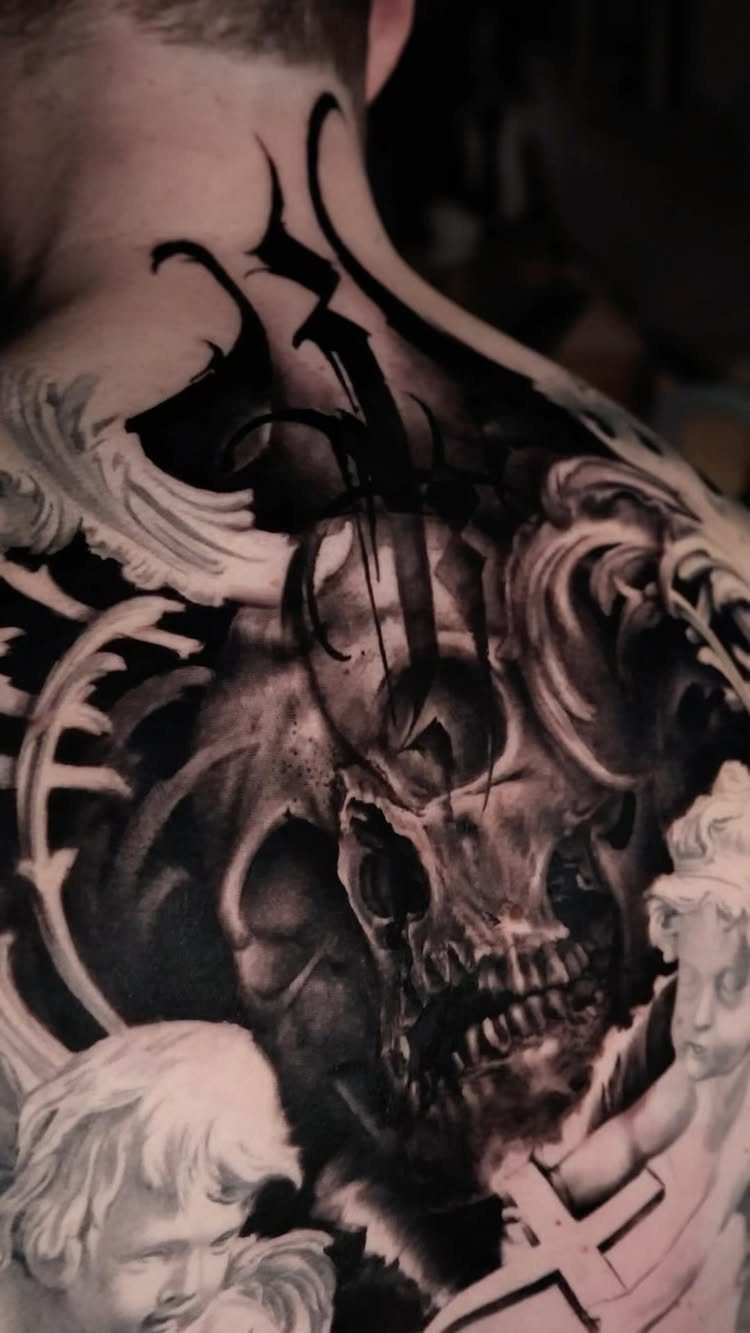
Filigree follows the skull’s curves the same way it does on old church metalwork or book covers, and adding cherubs pulls the design further into that period look.
The ornament softens the skull without removing what makes it a skull in the first place.
Monochrome suits this style better than color. The detail lives in the line weight and the contrast between the bone and the decoration around it.
Shoulder placement offers enough flat surface to keep the symmetry tight. If the filigree extends too far down the arm, it starts to warp as the muscle curves, and the balance falls apart.
4. Floral Shoulder Tattoo
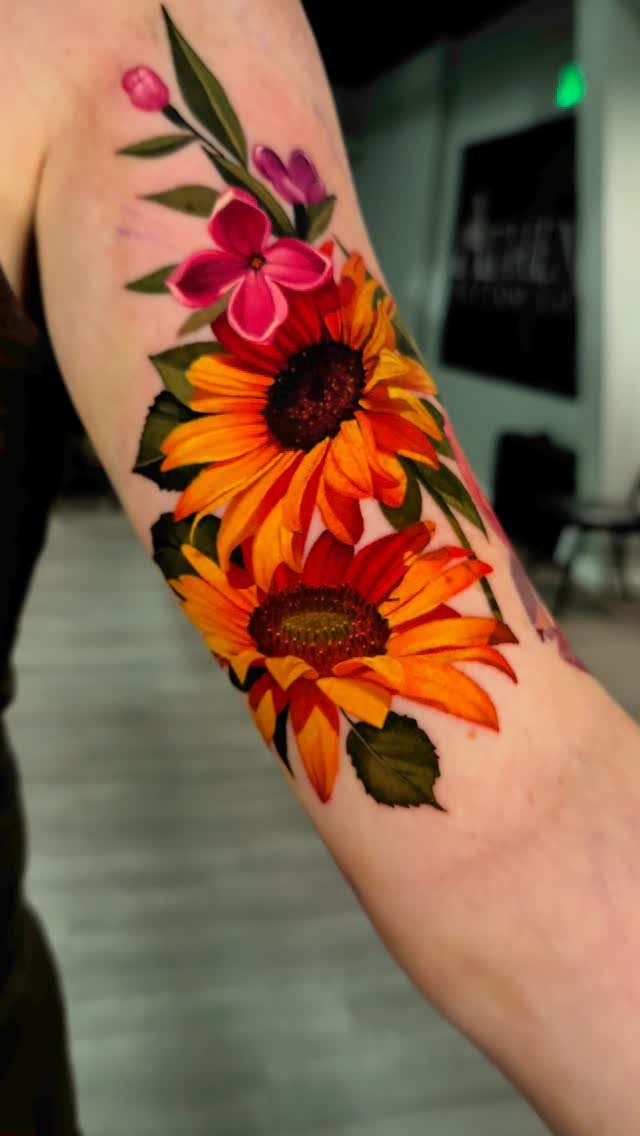
Flowers carry different meanings depending on which species you choose, so picking the right ones matters if symbolism is part of the reason you are getting it.
Color makes the design.
Floral work in monochrome exists, but most people go this route because they want the petals to read as vivid, and that means saturation. Expect more time per session and higher cost compared to black ink alone.
The shoulder gives enough room for 2 or 3 blooms without crowding the stems and leaves. Adding too many turns it into wallpaper, and the individual flowers stop reading clearly at any real distance.
5. Mandala Shoulder Tattoo
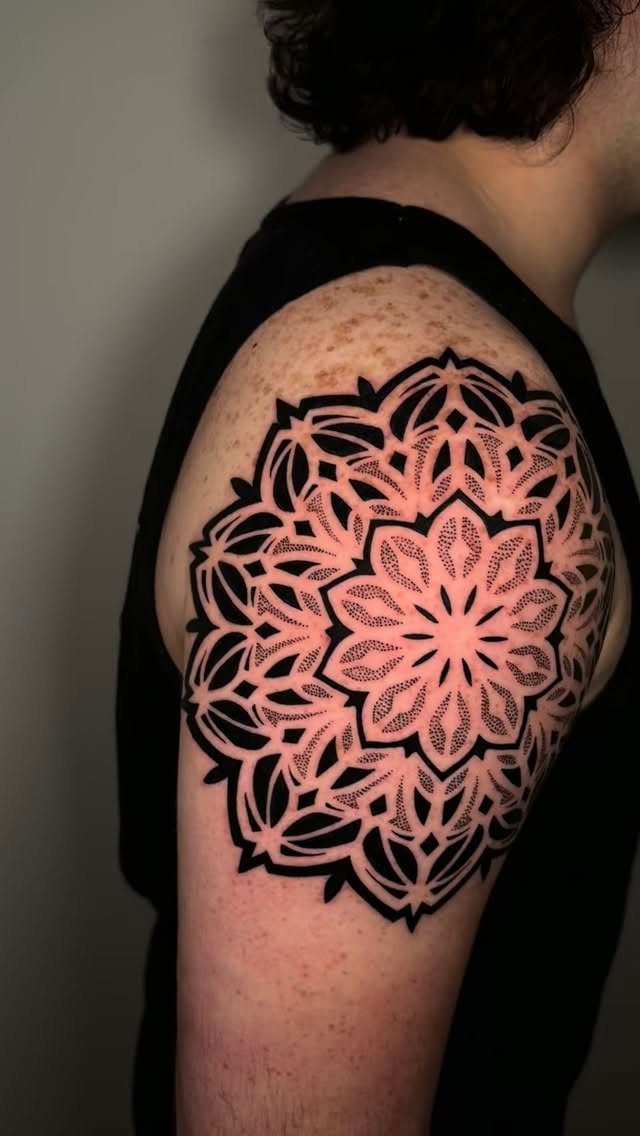
Geometric patterns radiate out from a center point, and the shoulder cap gives the artist a naturally round surface to work with.
Symmetry is everything here. If the stencil shifts during application or the design does not account for how the skin moves, the balance breaks and the whole piece looks off.
Black ink is standard.
Adding color is possible but rare, since the appeal is usually the precision and repetition of the line work itself. Shading can add depth between layers without introducing new hues.
Mandalas take time. Each ring adds another hour or more depending on how dense the detail runs, and touch-ups are common because fine lines do not always heal evenly on the first pass.
6. Dragon Tattoo
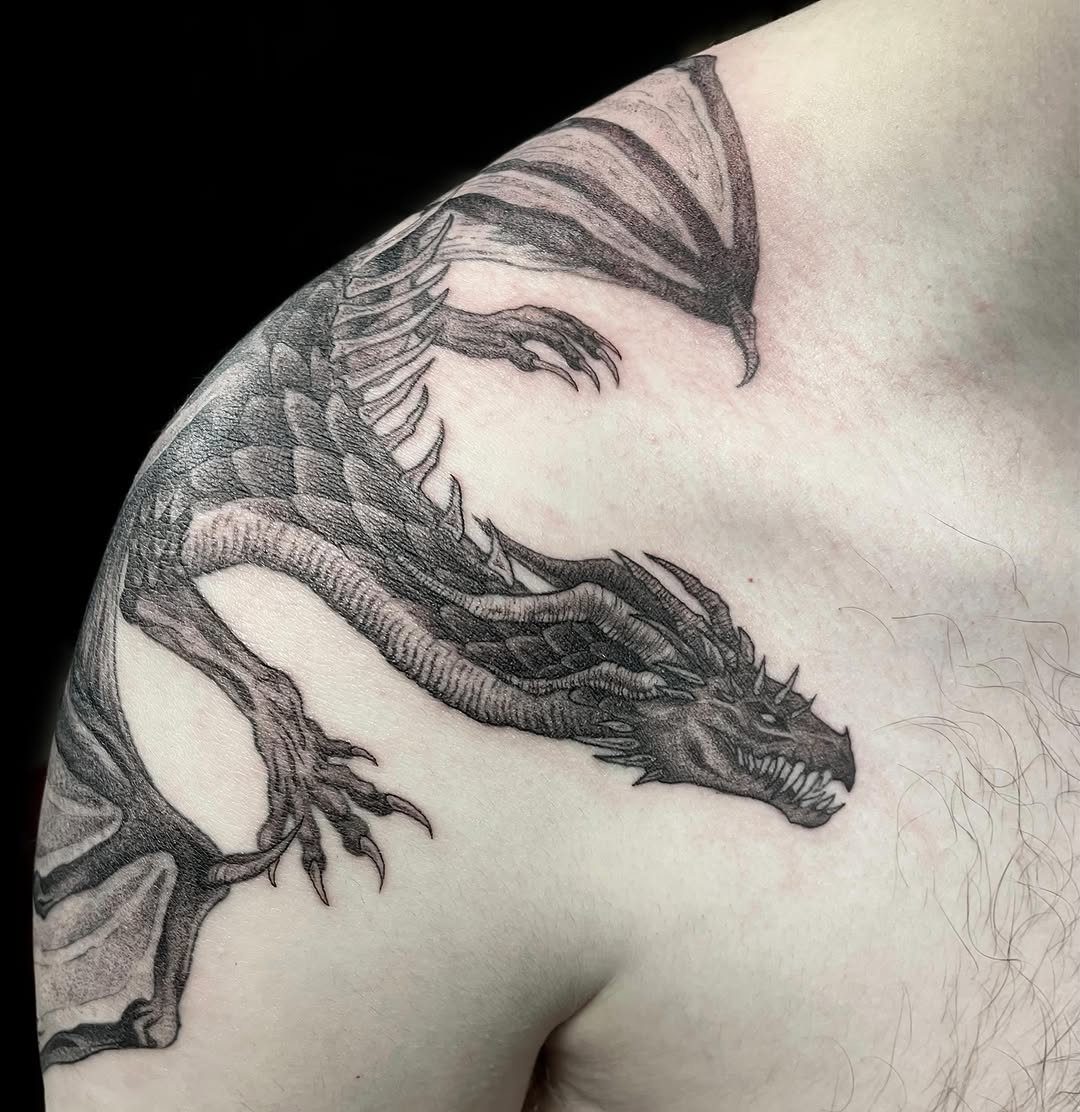
Dragons adapt to nearly any style, from traditional Japanese to realism to blackwork, and the meaning shifts depending on which tradition the design pulls from. Eastern dragons often represent wisdom or strength, while Western versions lean toward power or danger.
Shoulder placement works because dragons are long.
The body can curve across the cap and either stop there or continue down the arm, depending on how much coverage you want. Wings, if the design includes them, fill the space above the shoulder blade.
Scales take the most time.
Each one needs shading to look three-dimensional, and rushing through that part flattens the whole piece. Budget for multiple sessions if the design is larger than your palm.
7. Realistic Stag
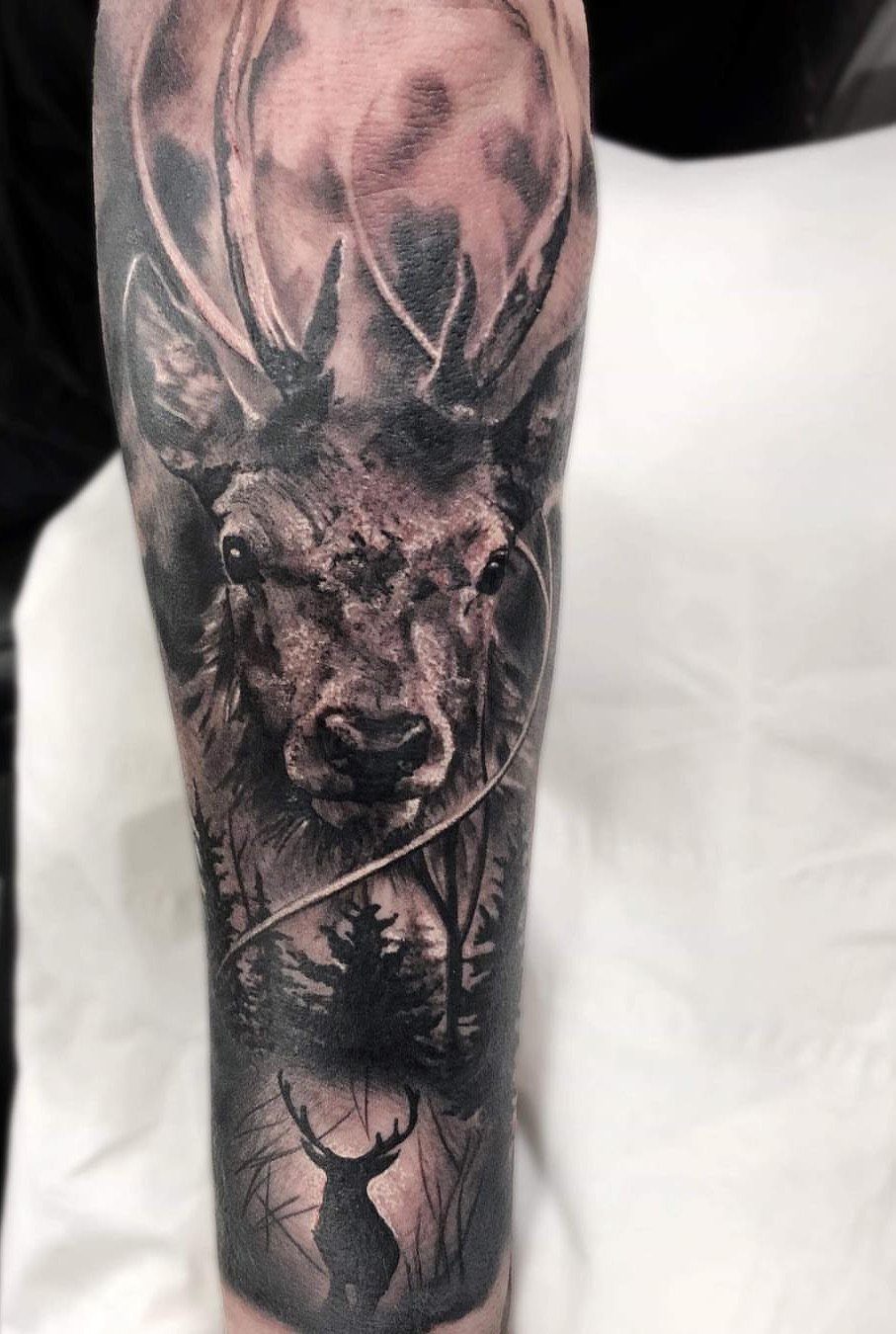
The detail work in the fur and antlers is what separates this from a simpler outline, and it requires an artist who can handle smooth gradients and texture.
Realism takes longer than most other styles. A piece this detailed usually takes several hours, sometimes split across multiple sessions depending on how much surrounding scenery you add.
The shoulder cap gives enough flat space to keep the proportions accurate. Realism on curved areas can distort as the skin stretches.
8. Eagle and Sun Tattoo
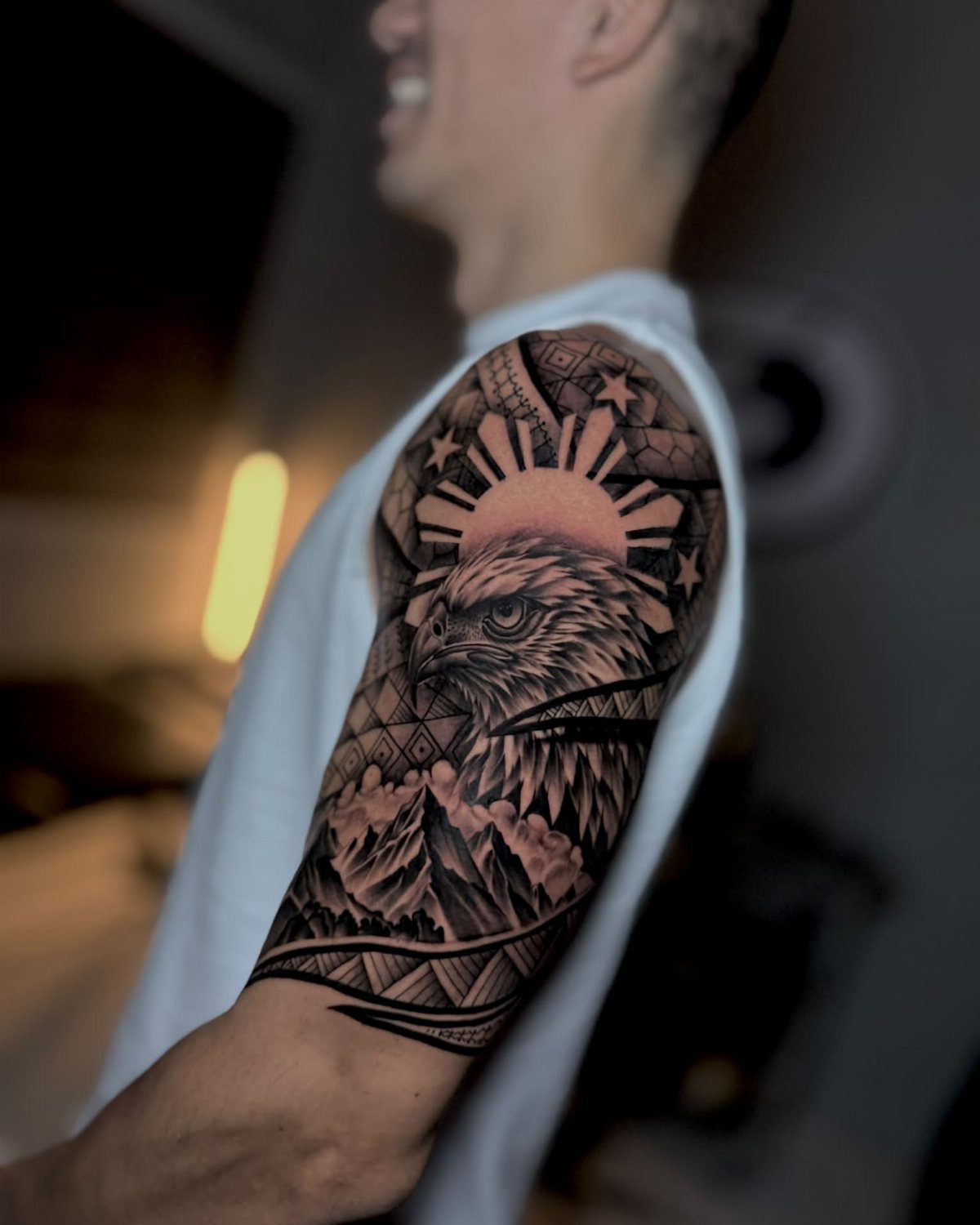
An eagle paired with a rising sun, usually with mountains or geometric elements filling the space below. Freedom and power are the main associations, and the sun adds a life or renewal angle to it.
Color is less common here but works if you want the sun in yellow or orange.
The shoulder gives the eagle’s head and the sun behind it room to sit without crowding. If the design extends too far down the arm, the proportions start to feel cramped.
9. Lightning Bolt Shoulder Tattoo
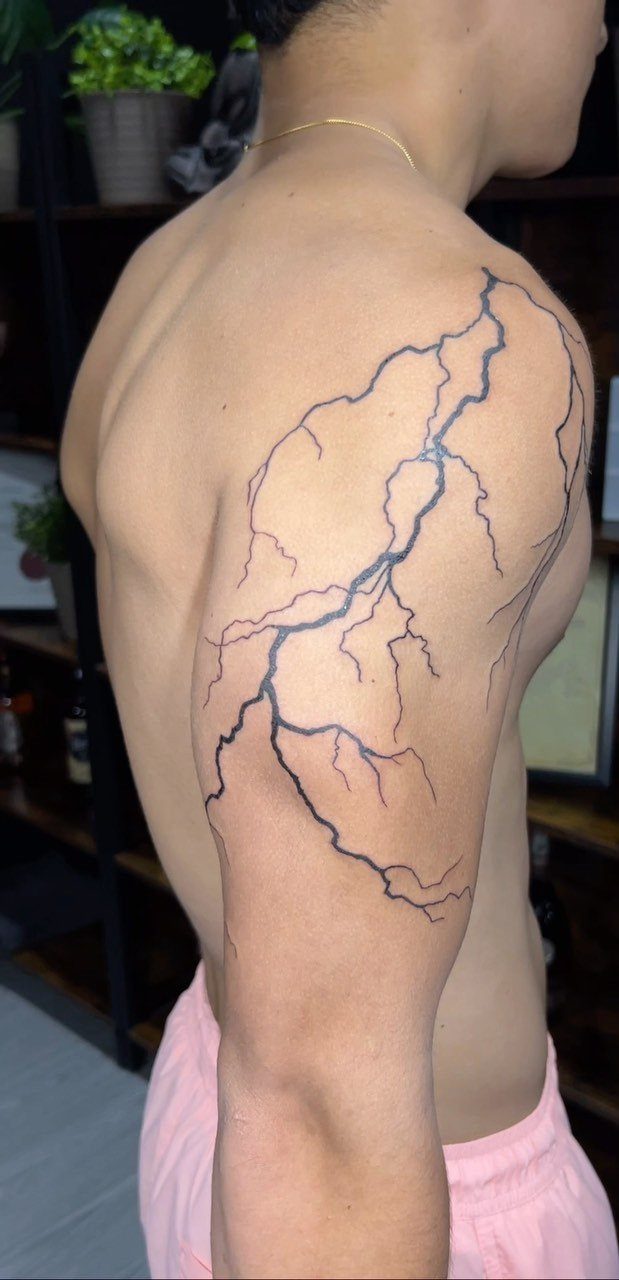
A single bolt, usually running vertically from the shoulder cap down onto the upper arm.
The shape is simple enough that it works in solid black with no shading, though some people add white highlights to make it look like it is glowing.
This one is fast.
Most artists can finish it in under an hour, and the cost reflects that. Healing is straightforward because there is not much fine detail to worry about.
Placement affects the angle. A bolt that follows the muscle looks more natural than one that cuts straight across it.
10. Geometric Mandala
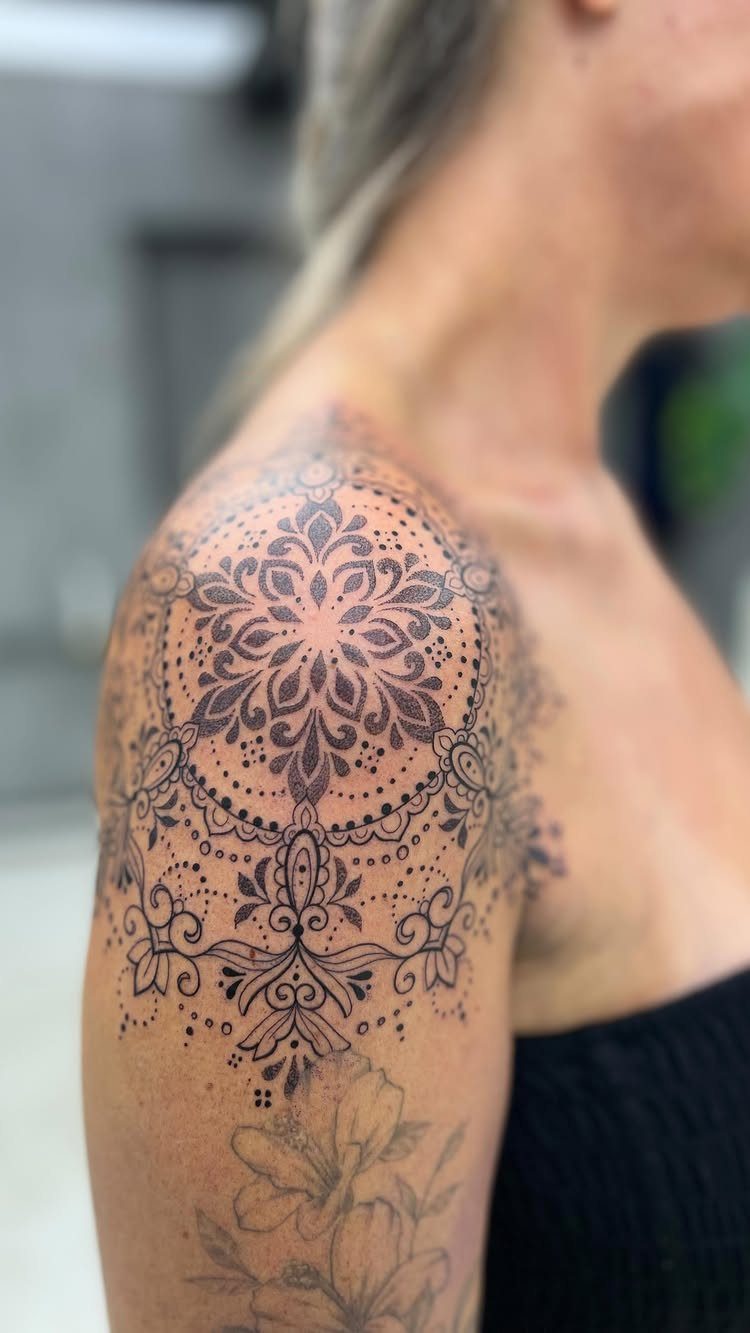
A mandala centered directly on the shoulder cap, relying on perfectly symmetrical geometry. The precision matters more here than in other designs because any wobble in the lines or uneven spacing between layers makes the whole thing look off-balance.
This is all about the line work. Shading can add depth between the rings, but the design lives or dies on how clean and consistent the lines are.
Round surfaces suit mandalas. The shoulder cap is one of the few spots on the body where the skin curves in a way that keeps the symmetry intact.
11. Minimalist Sun
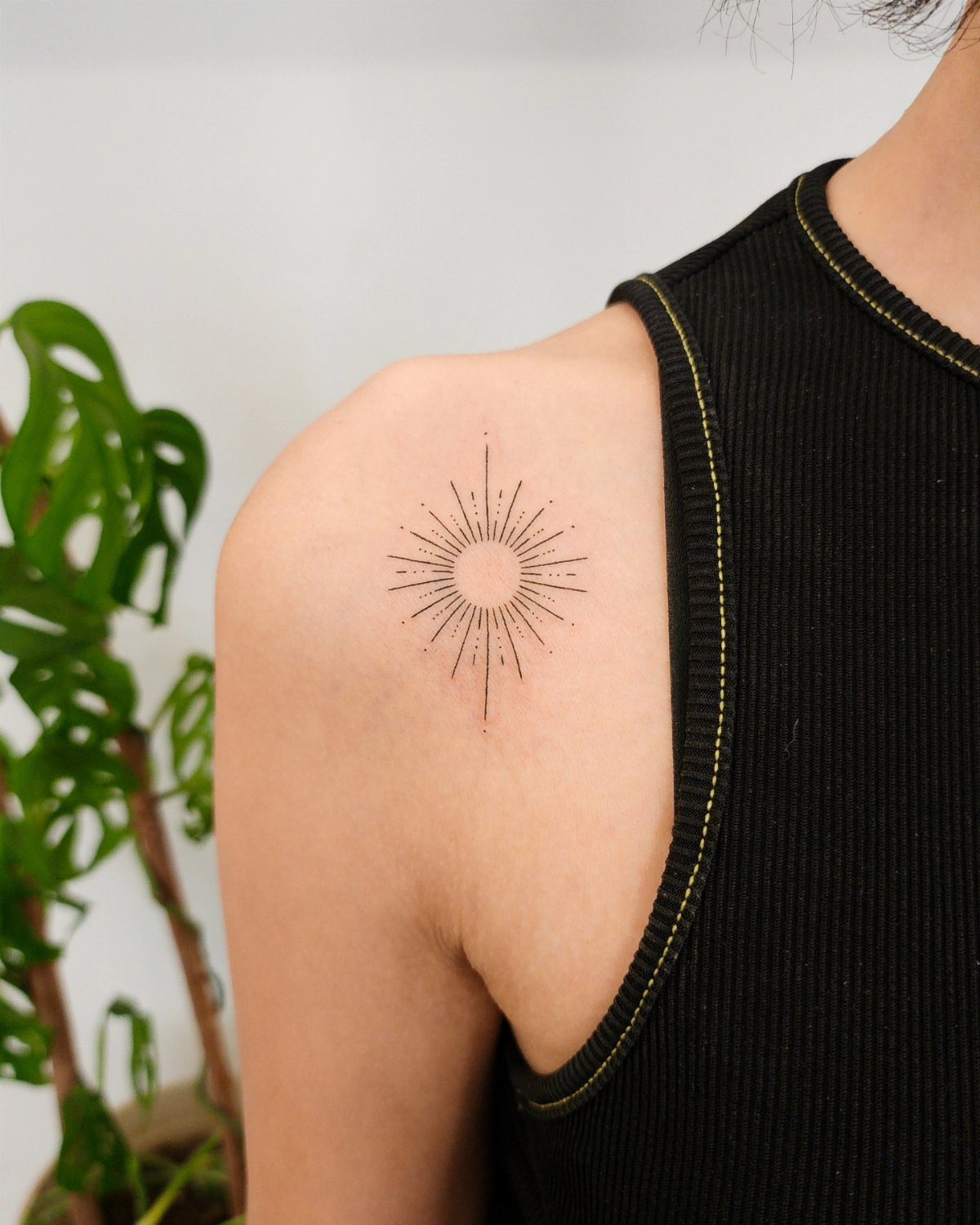
A sun built from thin radiating lines, usually centered on the shoulder or placed slightly higher near the collarbone.
The simplicity is the appeal. No shading, no fill, just line work.
This design goes fast. Fine lines fade faster than bold ones, so expect to get it touched up every few years if you want it to stay crisp.
Minimalist work depends on placement. Put it somewhere the skin stretches a lot, and the lines will blur sooner.
12. Howling Wolf at Moon Blackwork
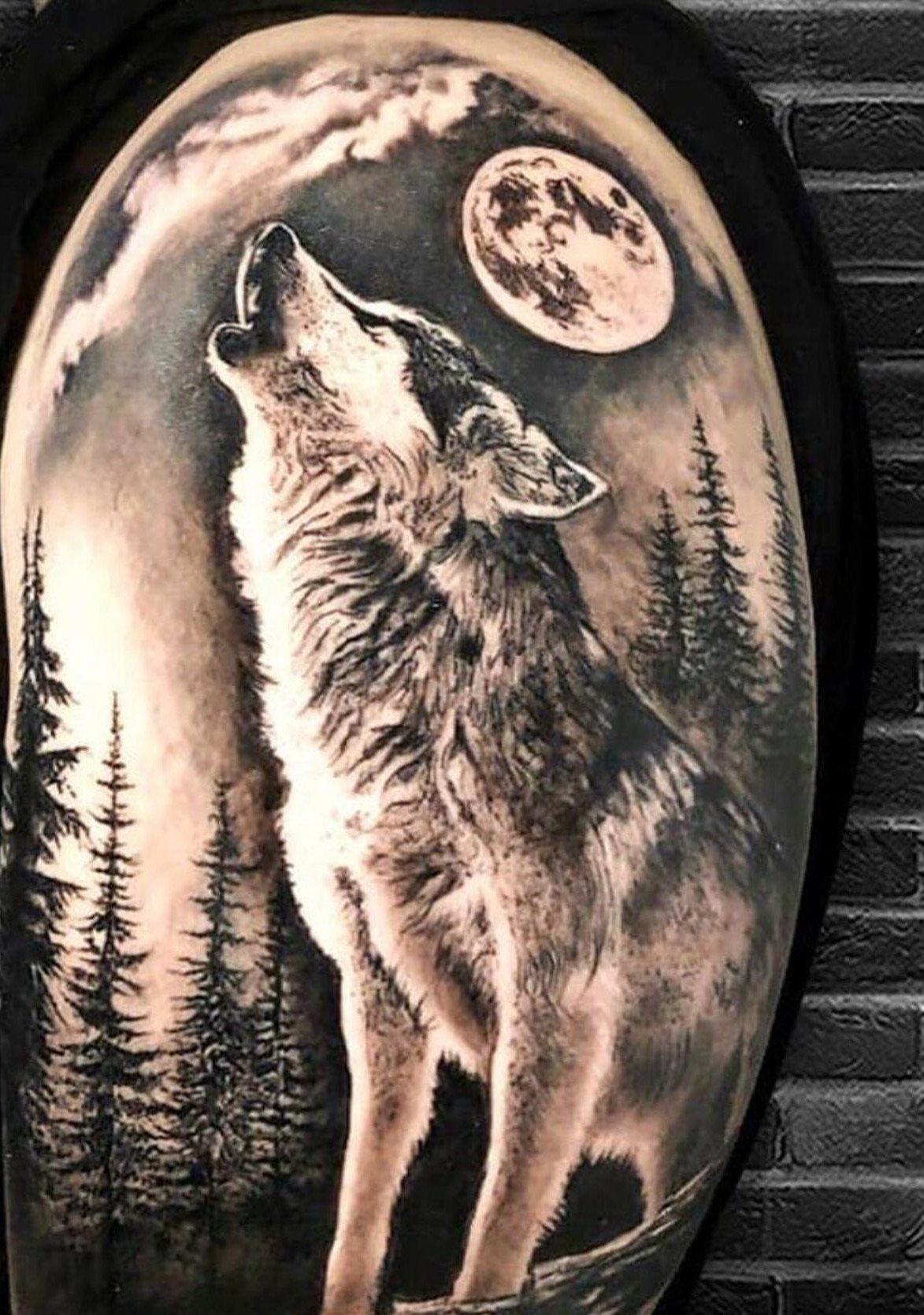
A wolf mid-howl, silhouetted against a full moon with trees and clouds filling the rest of the shoulder.
The blackwork style means heavy saturation and solid fills rather than gradients, which gives the design high contrast and makes it read clearly from a distance.
Dense black takes longer to heal than fine line work. The area will stay sore for a few extra days, and you will need to keep it moisturized more often to avoid scabbing that pulls ink out.
13. Eye Within Triangle with Sun Rays
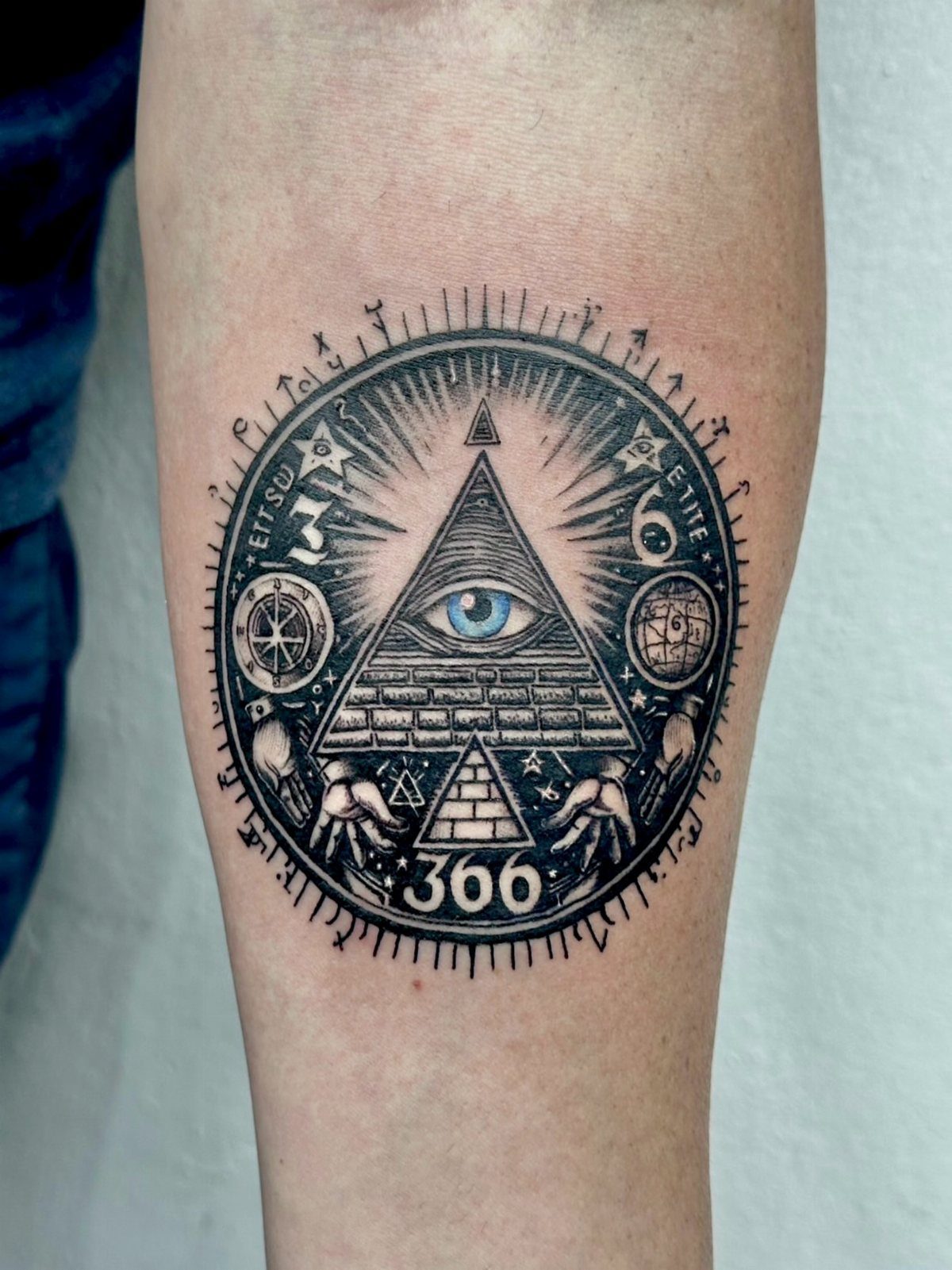
The all-seeing eye inside a triangle, surrounded by rays that extend outward like a rising sun. Occult and mysticism imagery, often associated with protection or enlightenment.
The shoulder offers a round canvas that lets the rays spread evenly in all directions.
Adding symbols around the main design fills the space but can make the piece feel busy if too much gets packed in. Keep the eye sharp and centered, since that is what people will notice first.
14. Lioness Tattoo
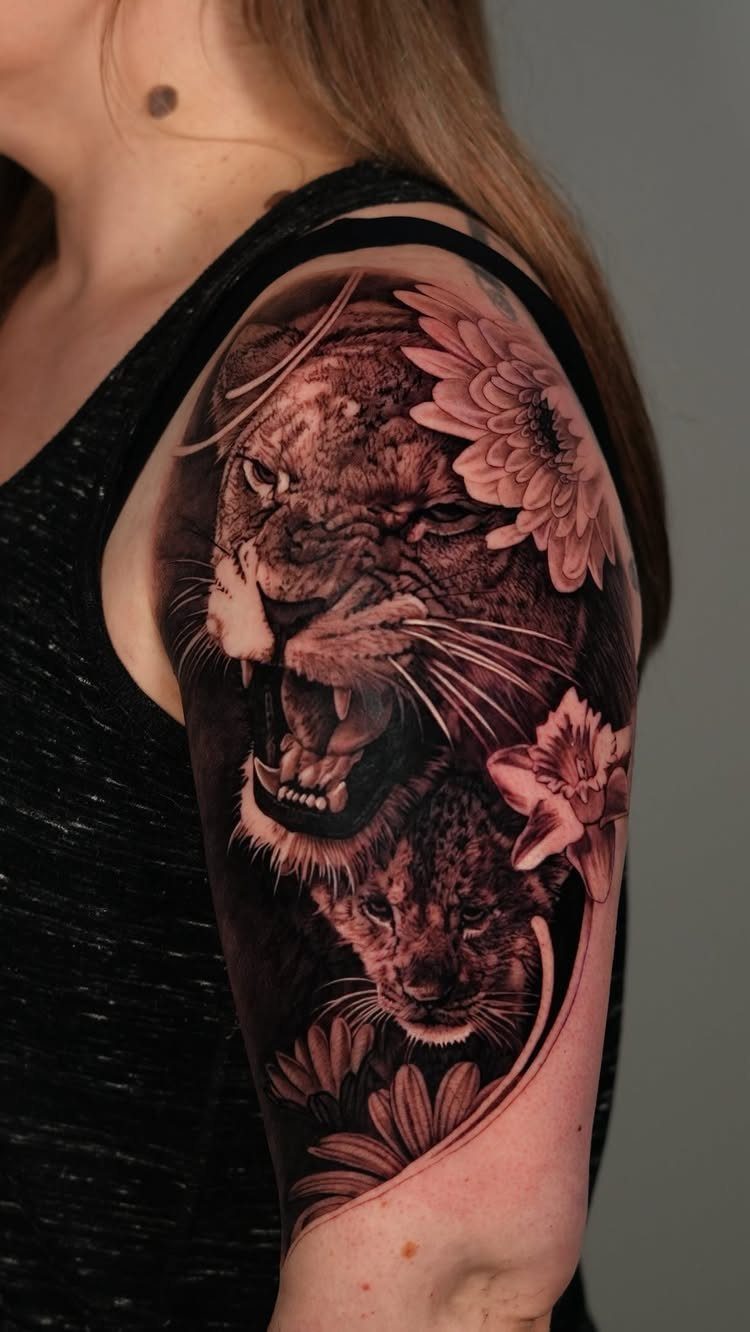
Lionesses rather than lions, which changes the symbolism from dominance to protection and fierce femininity. Pairing them with flowers softens the aggression without removing the power behind it.
Color is possible but less common, and adding it means more sessions.
2 lionesses fill the shoulder cap completely, so extending the design later means moving down the arm or across the chest.
15. Kraken Tattoo
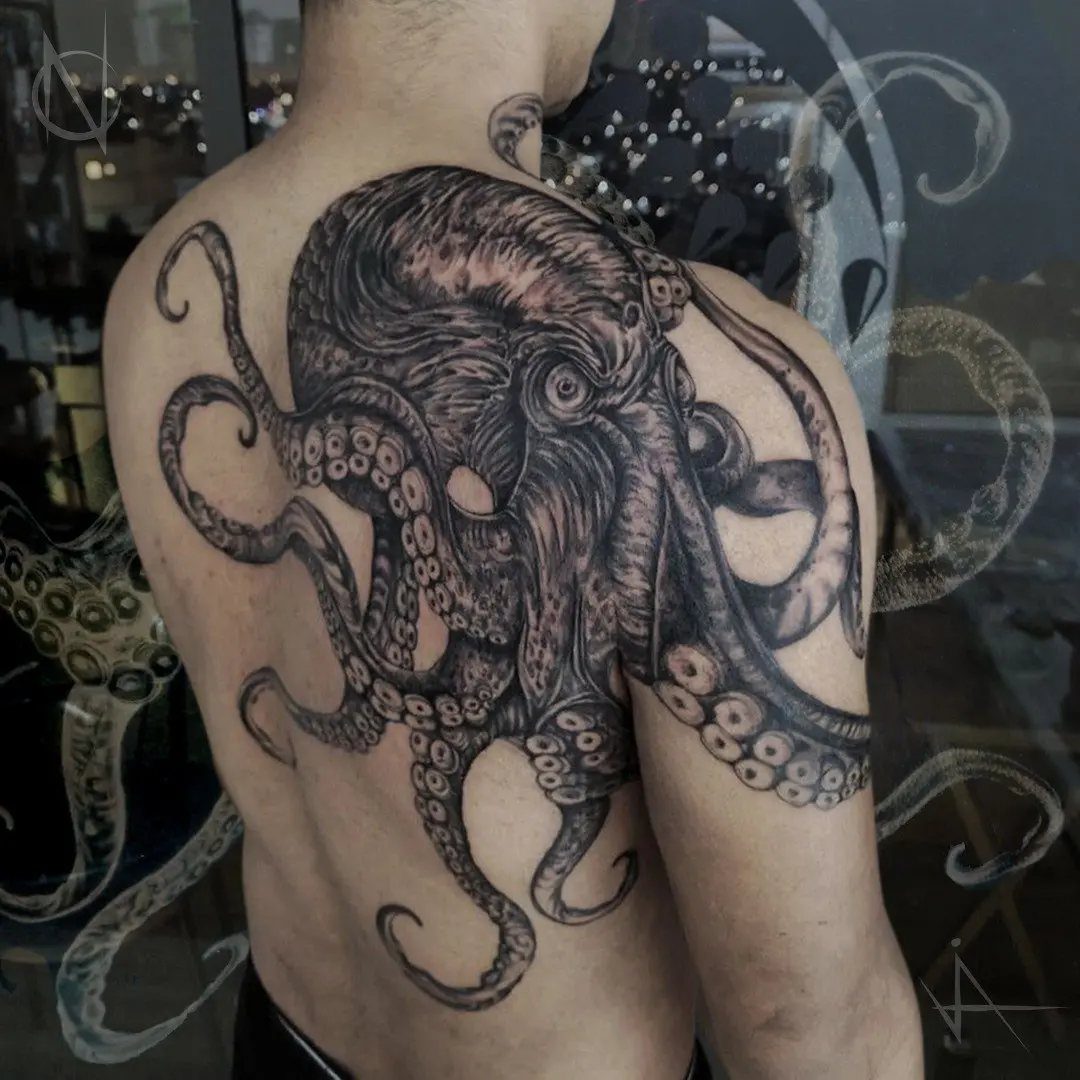
The Kraken itself can sit centered on the shoulder or off to one side depending on where the tentacles need to go.
Most pieces stay monochrome. The texture in the suckers and the way the tentacles overlap require shading to read as three-dimensional, and adding color rarely improves the result.
This design takes time. Each tentacle needs its own detailing, and the more of them you include, the longer you will be in the chair.
16. Hummingbird Tattoo
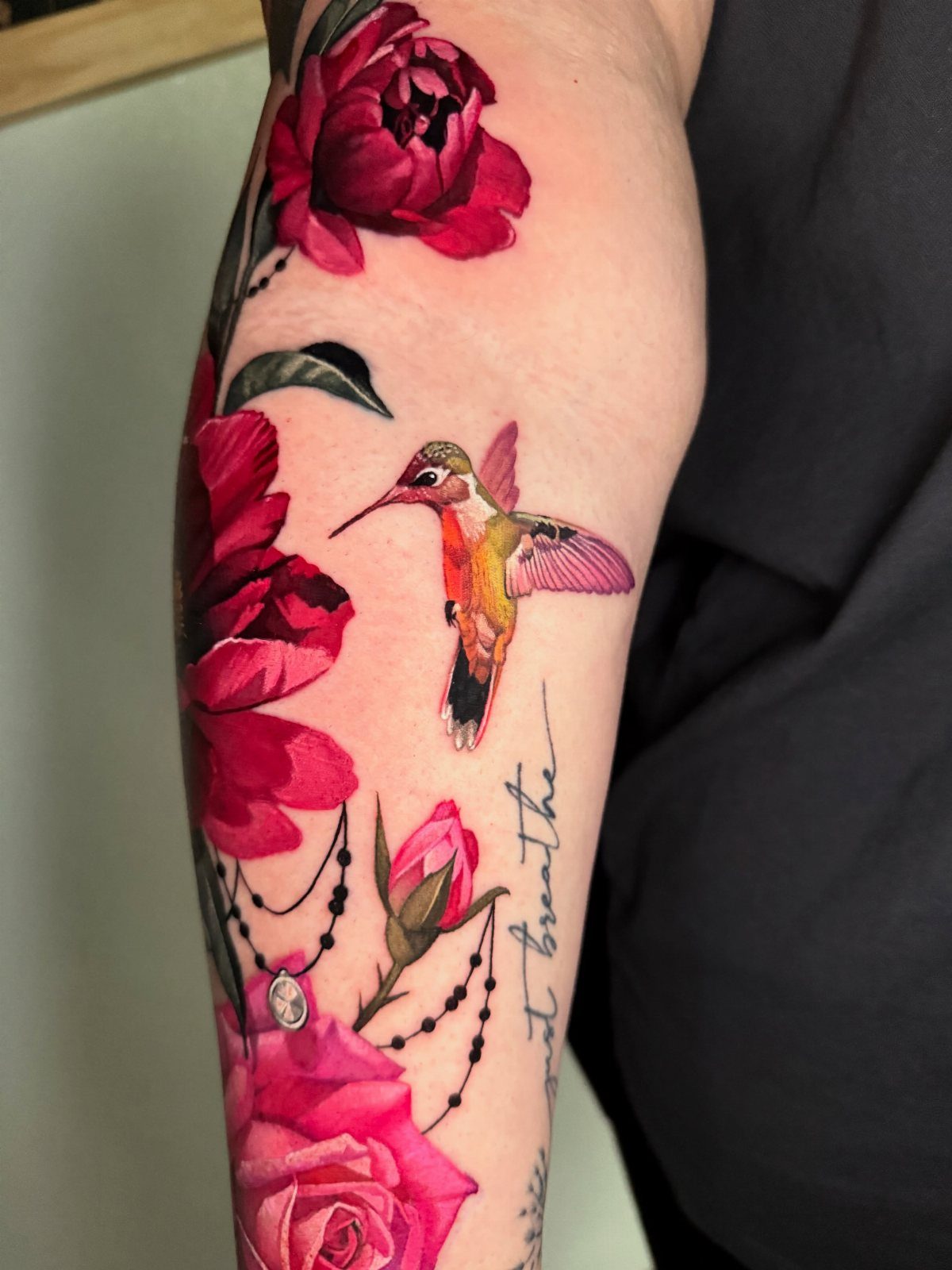
Hummingbirds move fast and hover in place, which gives the design a sense of motion even when the bird itself is still. Pairing it with flowers ties the symbolism together, since hummingbirds are drawn to blooms in nature.
Color is what makes this work. The iridescent feathers on the bird and the vivid petals on the flowers need saturation to read the way they should, and that means multiple sessions and higher cost than black ink alone.
Adding text can work if it sits along the arm rather than competing for space on the cap itself.
17. Abstract Shoulder Tattoo
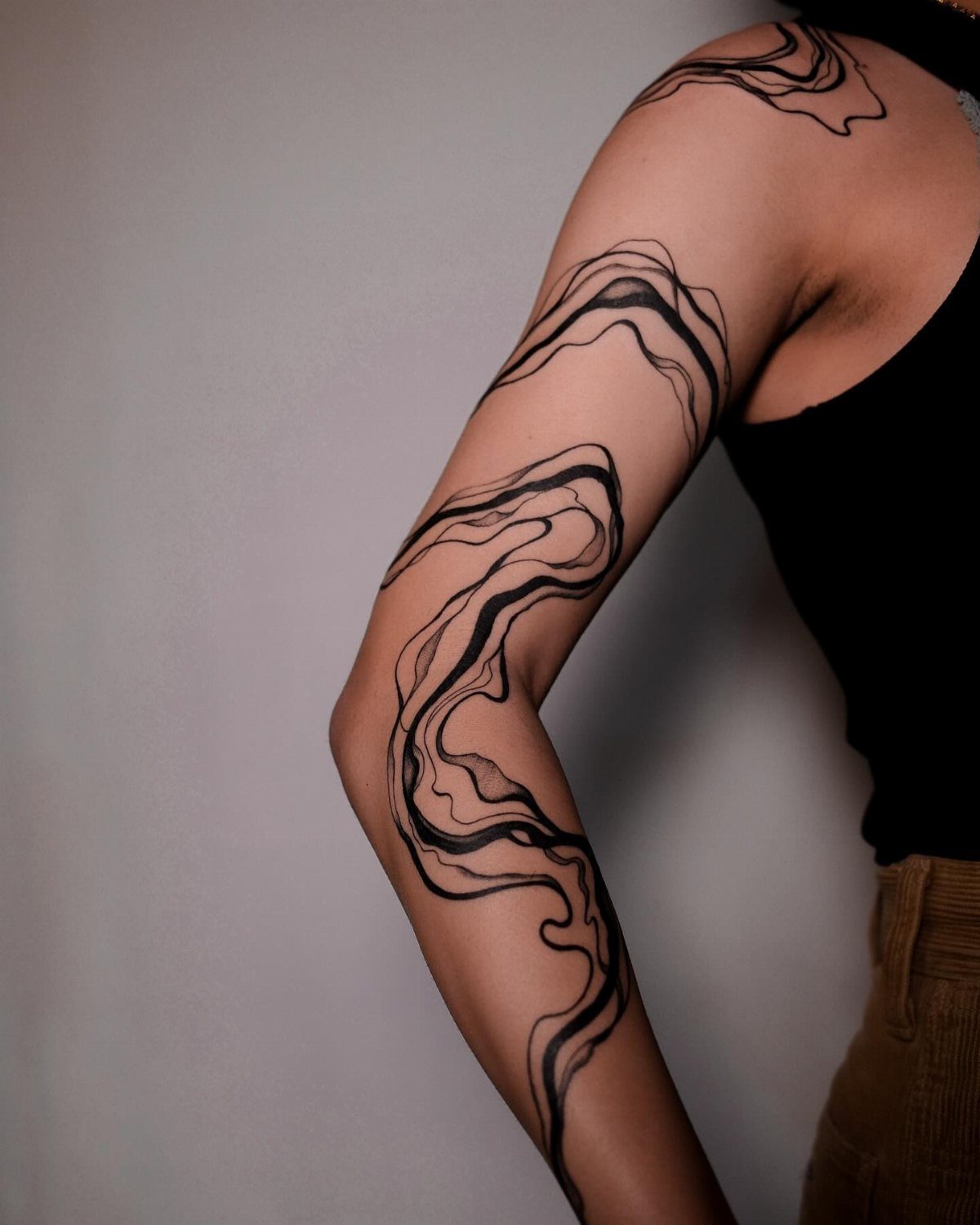
Flowing lines that do not resolve into a recognizable image, which leaves the interpretation open. This style suits people who want a tattoo for the way it looks rather than for what it represents.
The design relies on the movement and weight of the lines themselves, and adding shading or color usually distracts from that.
Abstract work depends heavily on the artist’s hand. The same general idea will look completely different depending on who draws it, so spend time looking at their portfolio before committing.
18. Skeleton’s Hand Through Stitching Tattoo
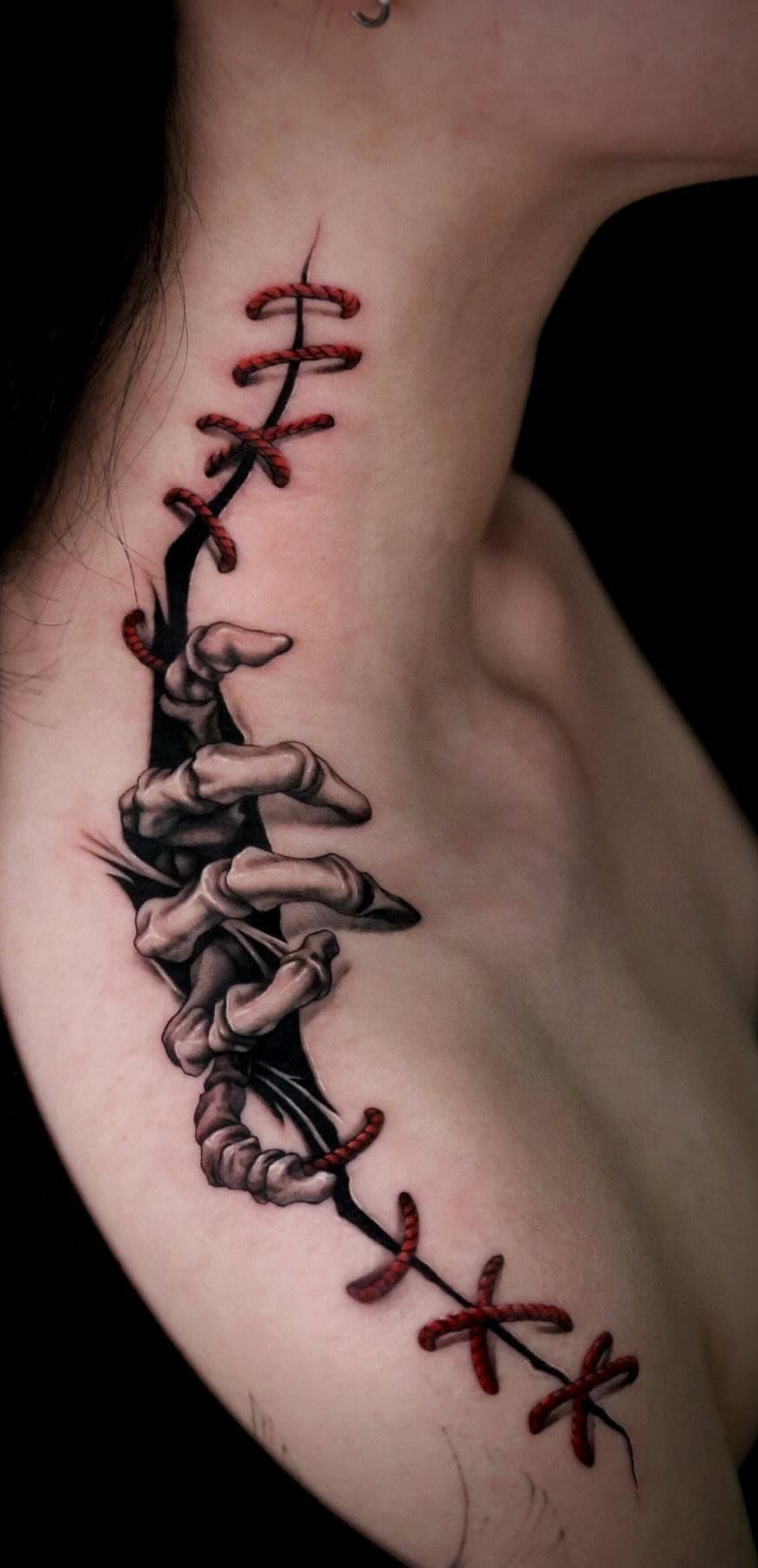
A skeleton hand breaking through the skin, with red stitching around the edges to make it look like the flesh has been sewn back together.
The effect is unsettling in a way that suits people who want body horror or surreal imagery.
The stitching is what sells the illusion.
Without it, the hand just looks like it is sitting on top of the skin rather than coming through it. Red thread is common, but black works too if you want the whole piece monochrome.
Shoulder and neck placement works because the area is visible enough to show off the effect, but you can cover it with a shirt if needed.
Shading on the hand and around the tear adds depth and makes the break look more convincing.
Pain Levels for Shoulder Tattoos
The outer deltoid sits over thick muscle, which cushions the needle and keeps pain mild.
Most people rate it around 3 or 4 out of 10. The tissue absorbs impact well, and there is enough distance from bone that the sensation stays manageable through a full session.
Move toward the collarbone or down into the armpit, and the pain jumps to 7 or 8. The collarbone sits close to the surface with almost no padding, so every pass of the needle hits sharp and stinging.
The armpit adds nerve density on top of thin skin, which makes it one of the more uncomfortable spots on the upper body.
If you want a design that extends beyond the cap, ask where the stencil will sit before you commit. Knowing which areas will take the most time helps you plan breaks or split the work across sessions.
Healing and Aftercare
Healing takes 2 to 3 weeks if you keep the area clean and avoid anything that rubs or stretches the skin.
Clean it with lukewarm water and unscented soap 2 or 3 times daily, then smooth on a thin coat of aftercare balm. Too much product traps moisture and slows the process.
Tight bra straps, backpack straps and clothing seams will irritate fresh ink, especially during the first week when the skin is still raw.
Try sleeping on your other side for the first few nights so you don’t drag the fresh ink or stick to the sheet.
Keep out of chlorine, steam rooms and direct sunlight for at least a month. Chlorine and UV both interfere with healing and can fade the tattoo before it fully settles into the skin.
Choosing the Right Tattoo Artist
Check an artist’s portfolio before you book. Not every tattooist works in every style, and someone who does clean geometric work might not have the shading skills realism requires.
Look at their recent pieces rather than the highlights from years ago, since those show what they can deliver now.
Read the Google reviews for the studio. Pay attention to comments about cleanliness, communication and how the artist handles changes during the session.
A consultation before the appointment is usually free and gives you a chance to talk through the design, placement and any adjustments that need to happen before the stencil goes on.
Visit the studio if you can.
Single-use needles, fresh gloves and an autoclave for sterilizing equipment are standard. If any of those are missing, go somewhere else.
Frequently Asked Questions
Do shoulder tattoos hurt?
The outer deltoid rates around 3 or 4 out of 10 because muscle cushions the needle, making it one of the easier spots to sit through.
Pain climbs to 7 or 8 near the collarbone or armpit, where bone sits close to the surface and nerve density spikes. Once the stencil goes on, you’ll see exactly which sections sit over bone and which stay on muscle.
How much does a shoulder tattoo cost?
A medium piece like a mandala or single animal runs $200 to $800, depending on detail and color.
Designs that cover the full cap or continue down the arm push $1,200 to $2,500 or higher, especially in styles that demand heavy shading or saturation. Time in the chair and the artist’s experience set the final number.
What designs look best on shoulders?
Designs that follow curves rather than fight them read cleanest on the shoulder cap. Dragons, florals, mandalas and tribal patterns wrap naturally around the muscle, while rigid shapes like perfect squares distort as the skin moves.
Realism works if the main subject sits on flatter areas like the shoulder blade, with softer elements flowing over the cap.
What to wear for a shoulder tattoo?
A tank top or loose shirt you can pull off one shoulder gives the artist full access without fabric in the way.
Avoid anything with tight straps or seams that press into the area, since those will irritate fresh ink during healing. Bring a button-up or zip hoodie for afterward so you don’t drag fabric over the tattoo when you leave.
How to choose a sleeve tattoo design?
Start with designs that can grow outward if you decide to extend down the arm later. Dragons, koi and narrative pieces that use the shoulder as an anchor point leave room to add background or continuation without forcing the composition.
Look at an artist’s recent work in the style you want, since sleeve coverage requires consistent shading and flow across multiple sessions.





