A full back piece runs 6–10 sessions at 3–4 hours each, costs several thousand dollars, and gives you roughly 400 square inches to work with.
The choice comes down to whether you want realism that commands the whole canvas, geometry that locks into symmetry, or cultural motifs that carry specific meaning: tigers and wolves read as single subjects, mandalas and abstract patterns fill the space with repeating structure, and dragons or nautical scenes layer foreground over background.
1. Abstract Back Tattoo
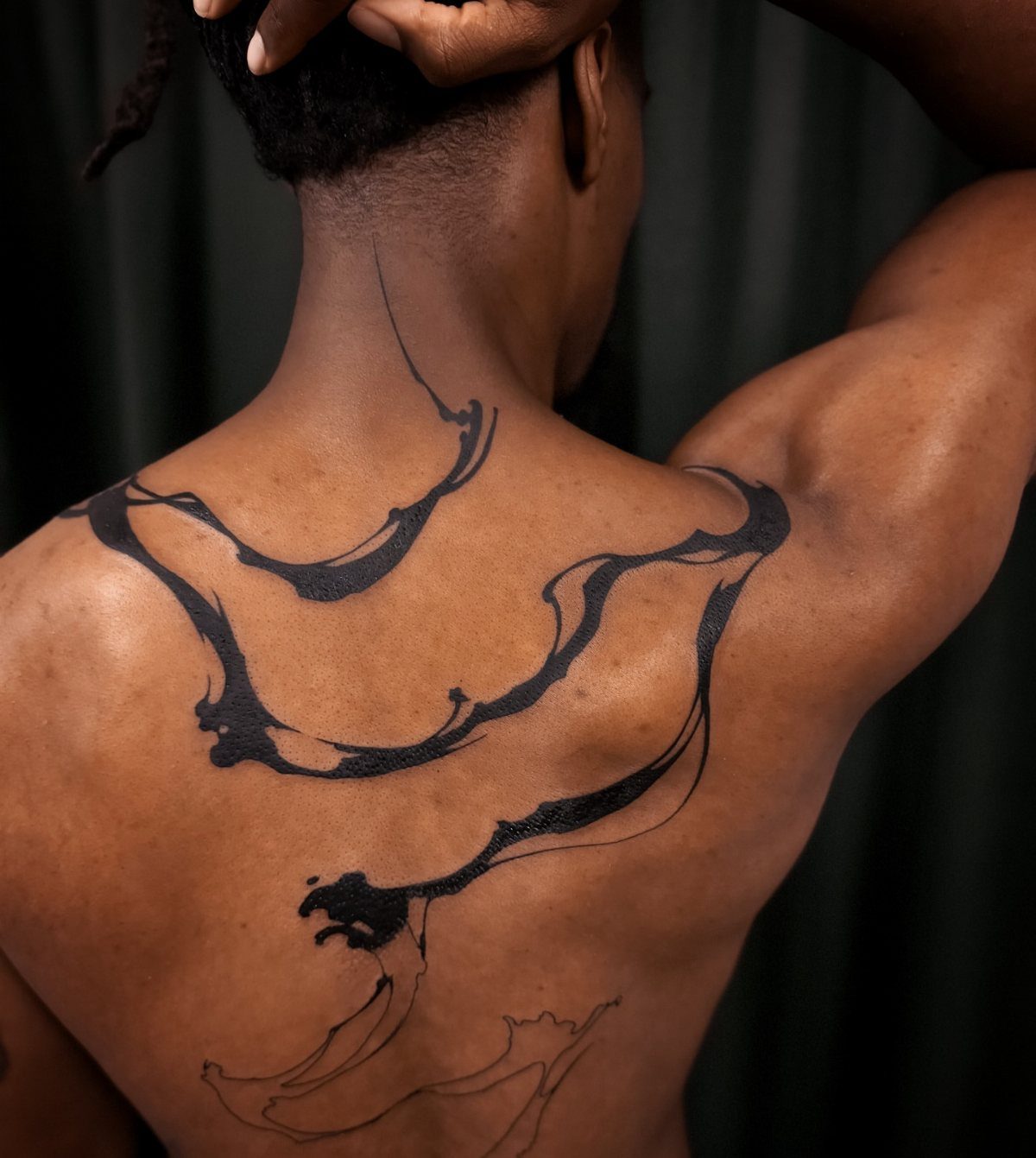
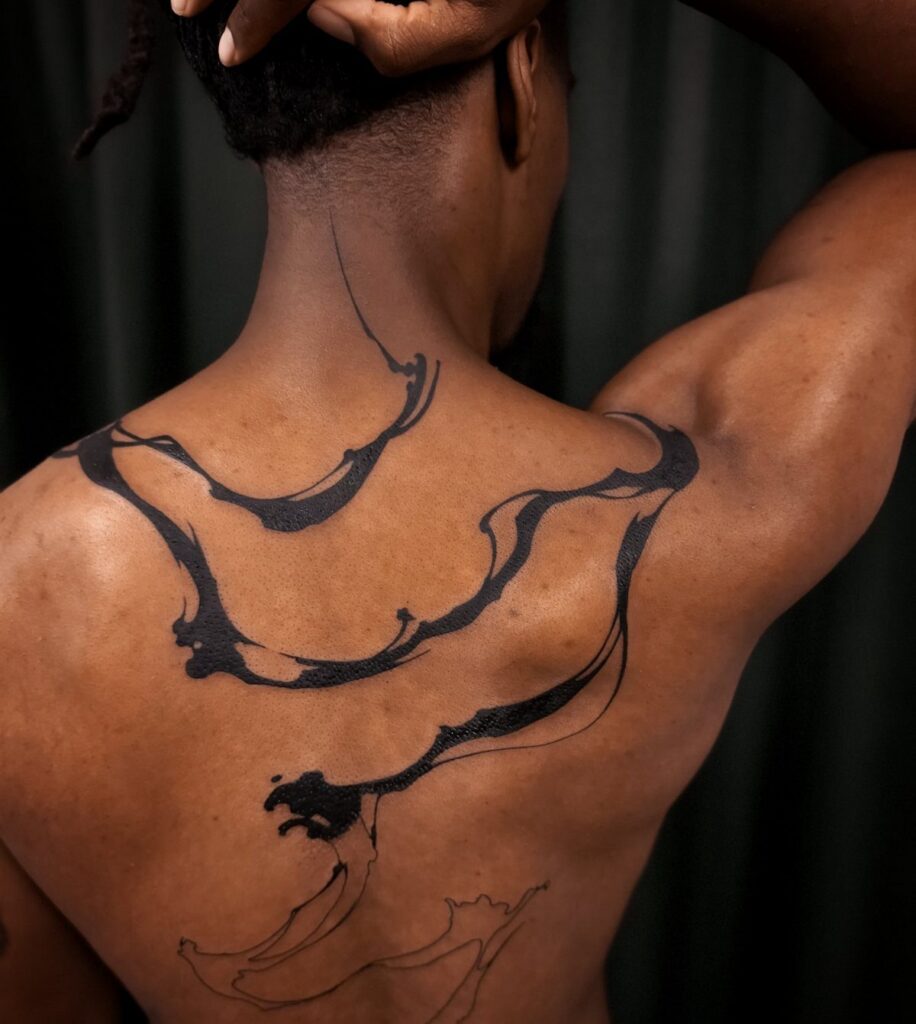
The movement holds up at a distance and keeps pulling you back when you step in close.
I like this style for its flexibility.
A skilled artist can shape the flow to fit the natural lines of your back, so the design moves with your body instead of fighting it. The all-black approach also ages cleanly, no color fade to worry about years later.
2. Cultural Tribute Tattoo
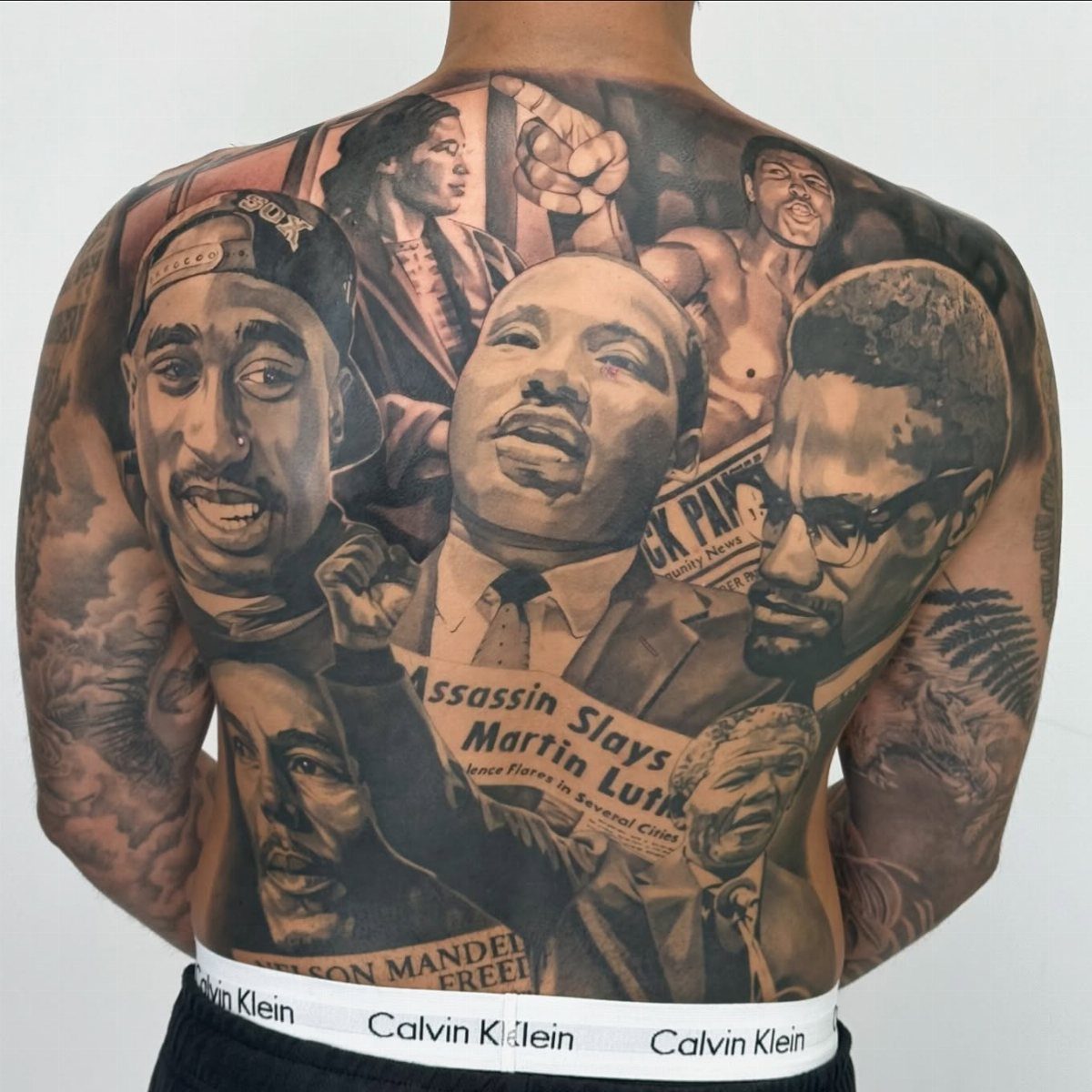
This approach builds a visual timeline across your back, pulling together the people who shaped a movement or a generation.
Portraiture demands precision, so the artist needs a strong realism background and a portfolio full of faces that actually look like their subjects.
Grayscale ink holds detail better than color for portrait work, especially when you’re layering multiple figures. The newspaper clippings and text elements here add context and still leave the faces clear.
Bring high-resolution photos, not screenshots.
3. 3D Back Tattoo
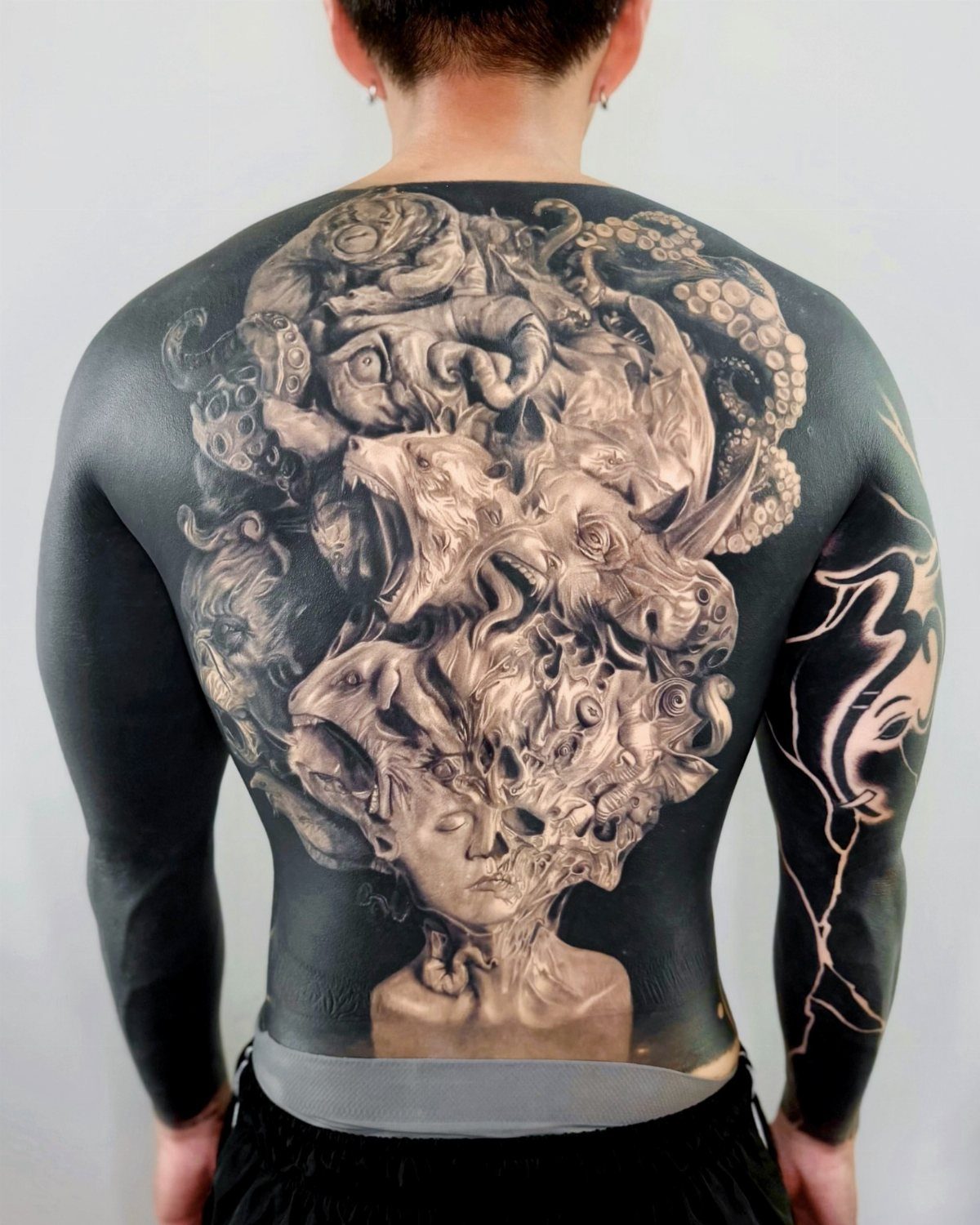
The biomechanical look bends reality, turning skin into something between flesh and machine. Shading does most of the work here: highlights and shadows placed exactly right trick the eye into seeing layers that aren’t there.
This style takes an artist who understands anatomy and can map the design to the way your back actually curves.
Flat designs read flat no matter how much shading you add, so skip the Pinterest download and work directly with someone who builds these from scratch.
4. Full Back and Spine Tattoo
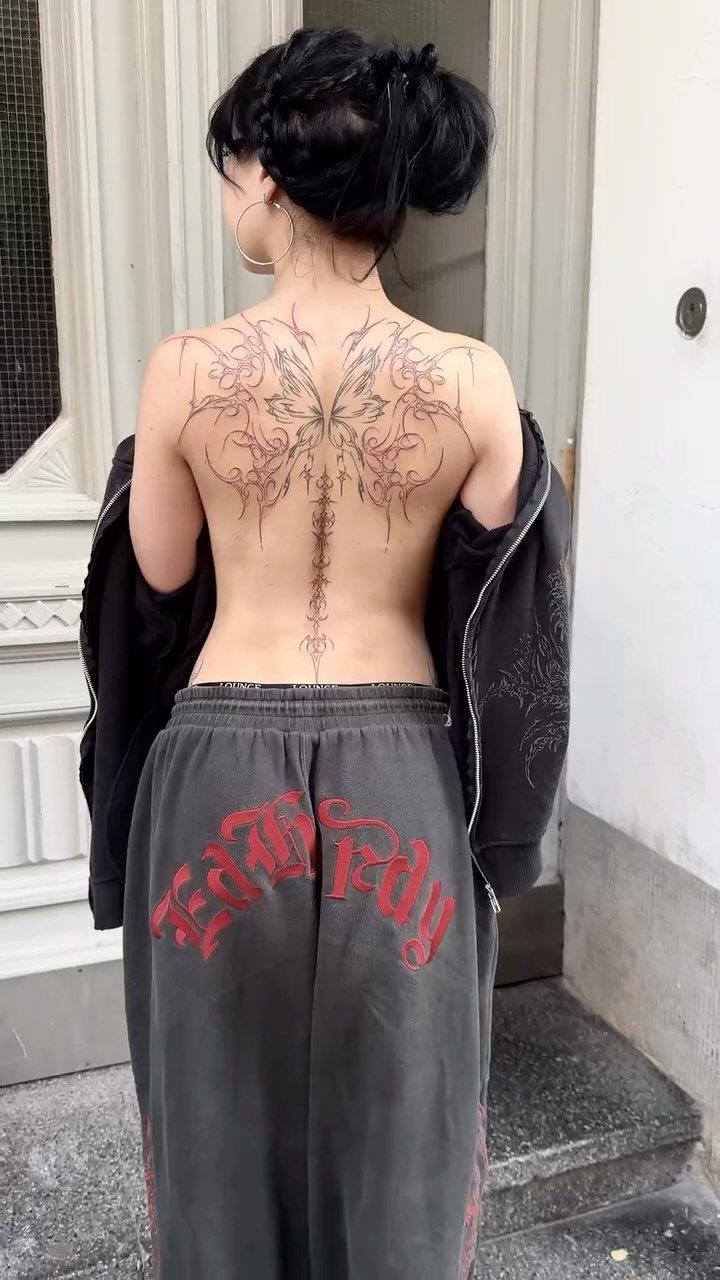
Running a design from shoulderblades down to the sacrum gives you the full vertical, and the spine itself becomes part of the composition. Pain varies: the upper back sits easier than the lower spine, where bone sits close to skin.
Floral work like this softens the lines and reads well even as a partial backpiece if you decide to stop at the mid-back. Healing takes 2–3 weeks for the initial close-up, longer for the spine section where clothing rubs constantly.
5. Geometric Patterns
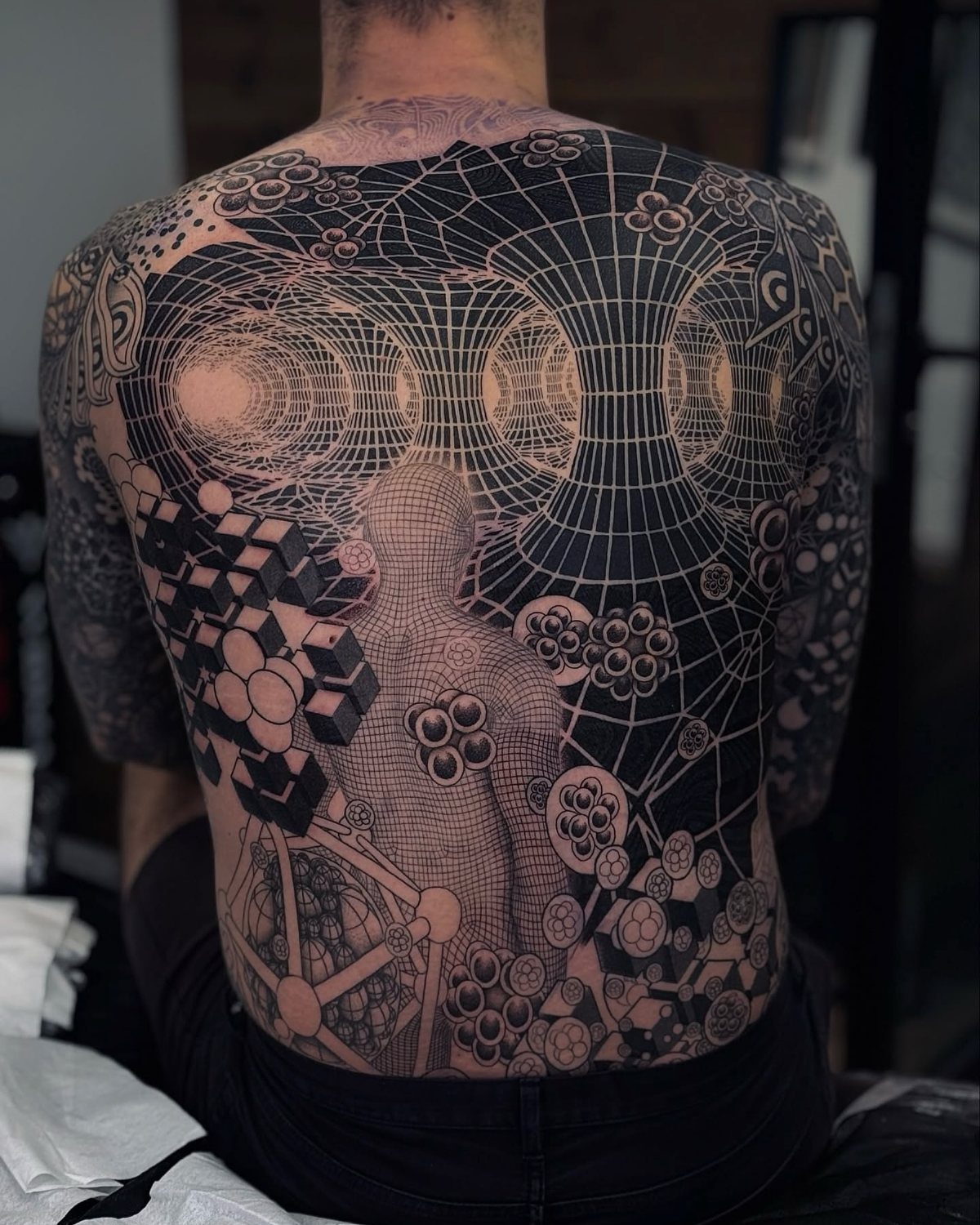
Grids, spheres and repeating shapes lock together into something architectural, and the symmetry works well on the back’s wide surface. Precision matters more here than in organic styles: a wobbly line or an off-center element breaks the whole illusion.
I’d choose an artist who posts work with clean, straight lines and crisp intersections. Geometric pieces also give you room to add on later when you extend the design down the arms or onto the ribs.
6. Wolves Back Tattoo
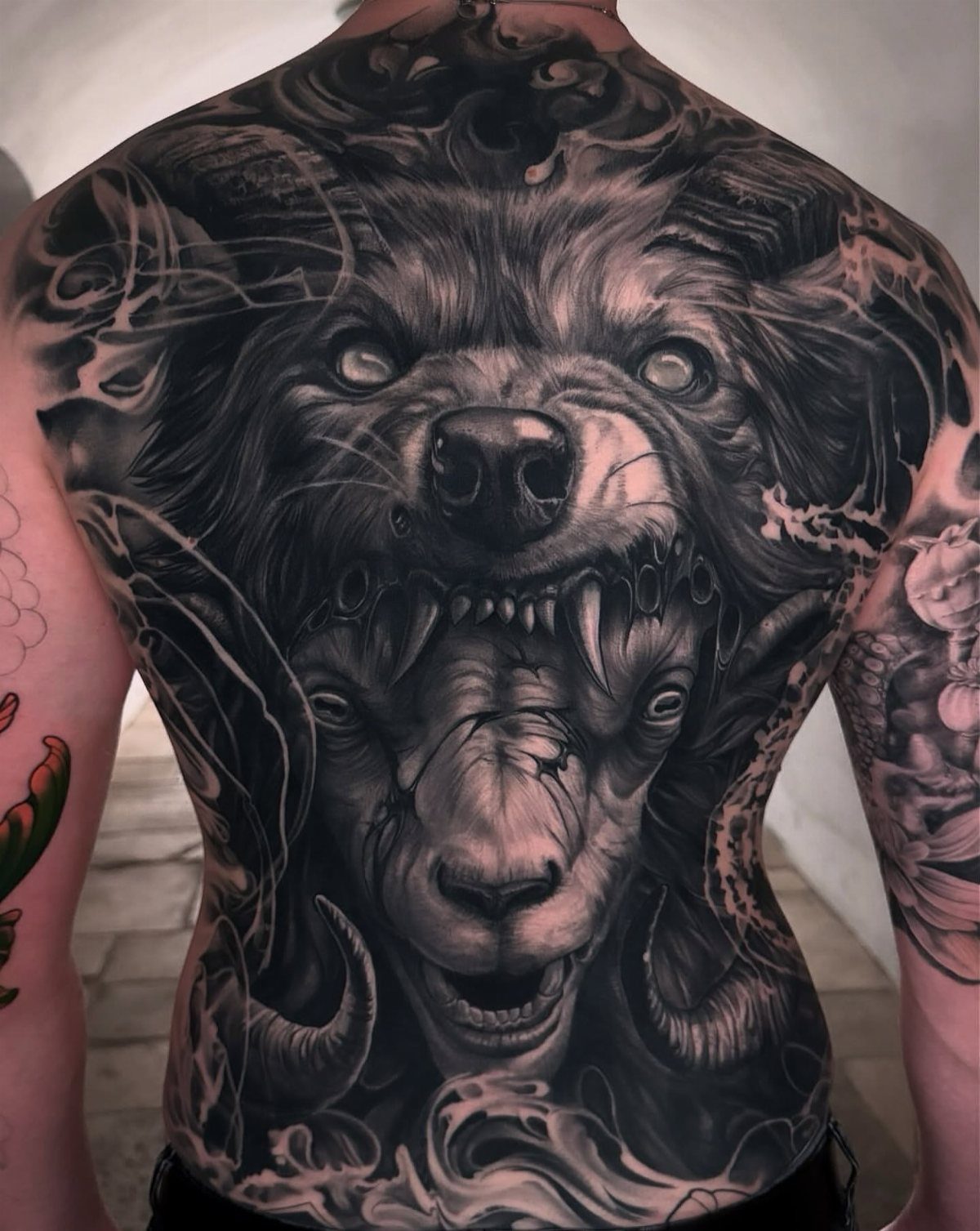
Animal realism gives you a focal point with real weight, and predators like wolves carry enough detail in the fur and eyes to fill the space without needing a heavy background.
Grayscale suits this style better than color for most skin tones, and it ages without the murky fade some color palettes develop.
The snarling expression here adds energy, but a calmer pose works just as well for something less aggressive. Either way, make sure your artist can handle fur texture: bad fur looks flat and reads more like paint than pelt.
7. Dragons Full Back Tattoo
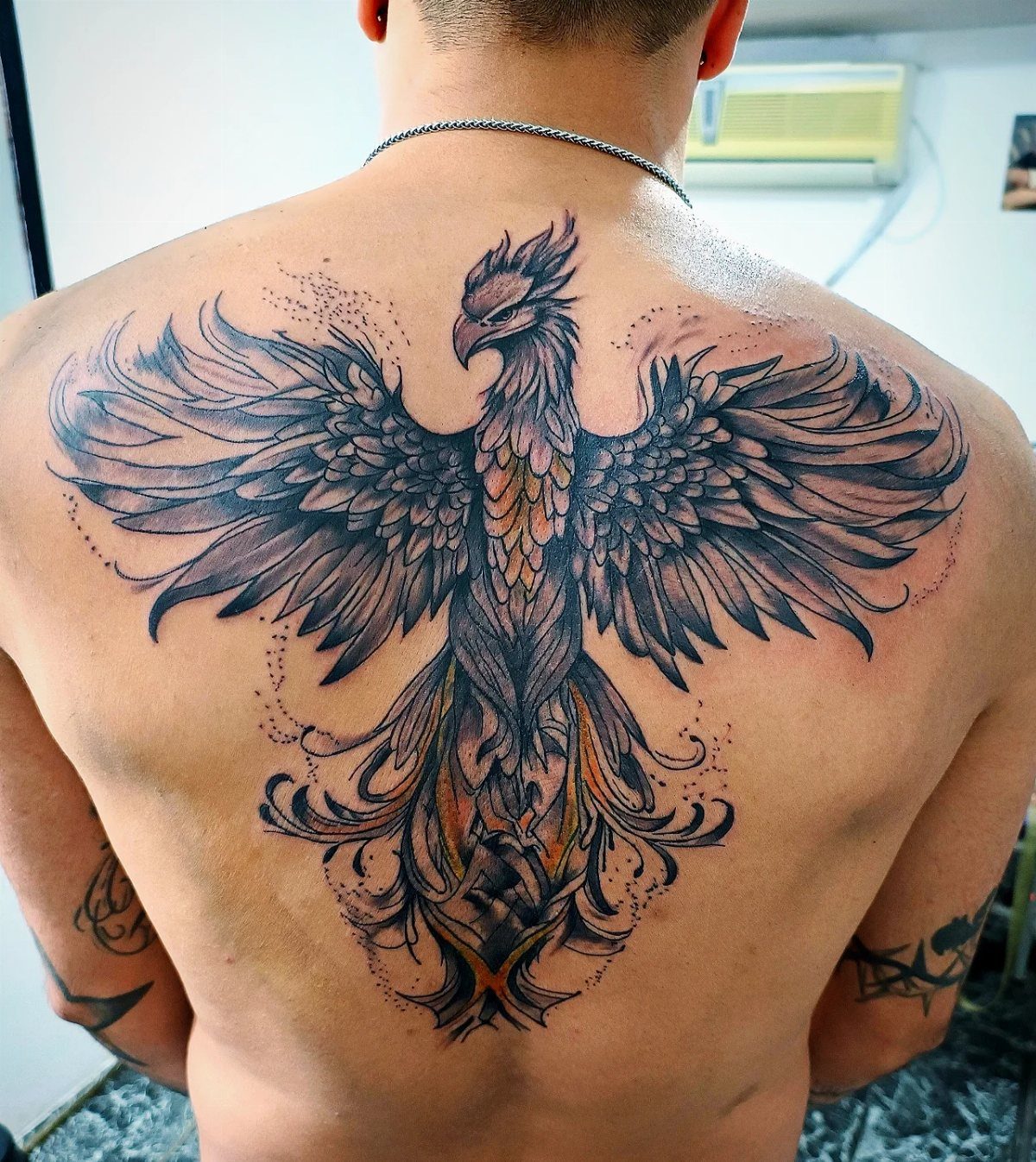
Mythical creatures stretch well across the back’s full canvas, and the wingspan of a dragon or phoenix fills the width naturally.
Scales, feathers and flame give an artist plenty of texture to work with, and grayscale with selective color pops makes each element stand out.
Orange accents like this lift the design without overwhelming it. Full saturation across a large piece can look muddy as it settles, so I’d keep color minimal and let the black work carry most of the detail.
Session count runs high for a piece this size, so budget time across multiple visits.
8. Nautical Full Back Tattoo
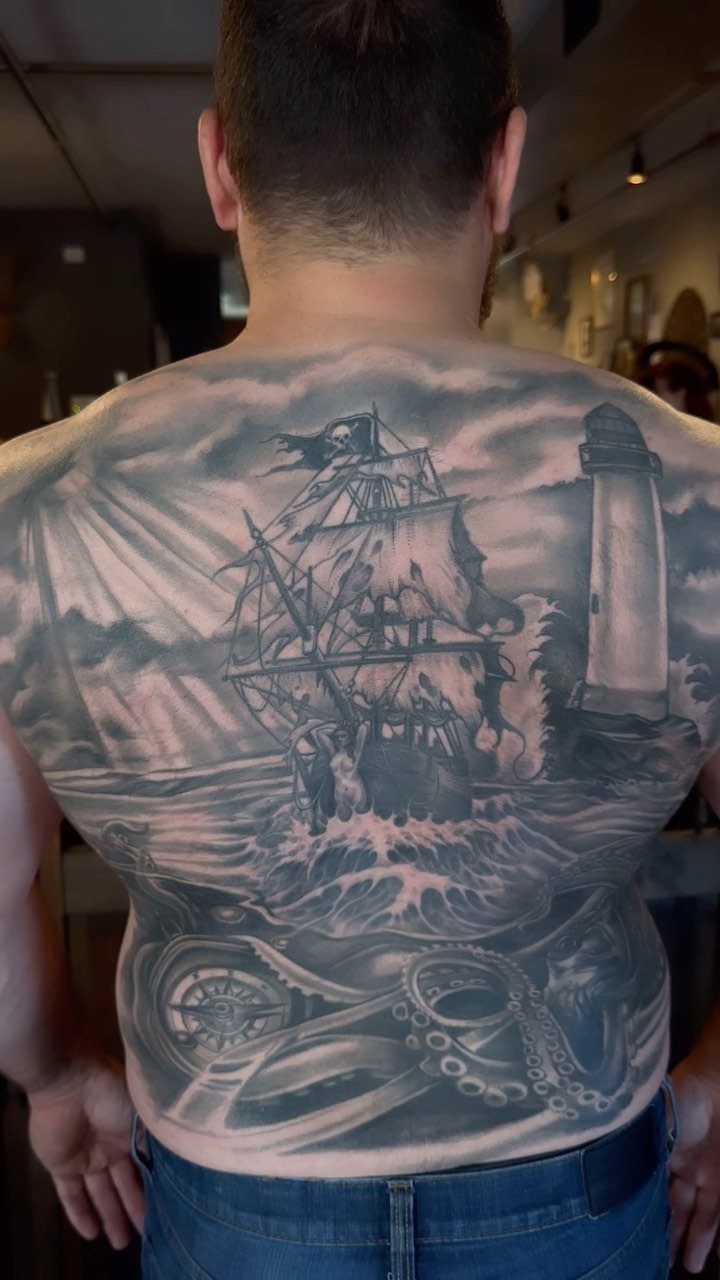
Ships, lighthouses and compasses stack into a scene instead of a single subject, and the vertical layout suits the back’s shape. Black and grey holds fine detail in rigging and brickwork better than color, and the style ages cleanly.
A compass rose anchors the composition and gives the design balance. I like maritime themes for their flexibility: you can add elements over time or stop with what’s already there and still have a finished piece.
Bring reference images for specific ship types if you want accuracy in the rigging and hull.
9. Tiger Realism Back Tattoo
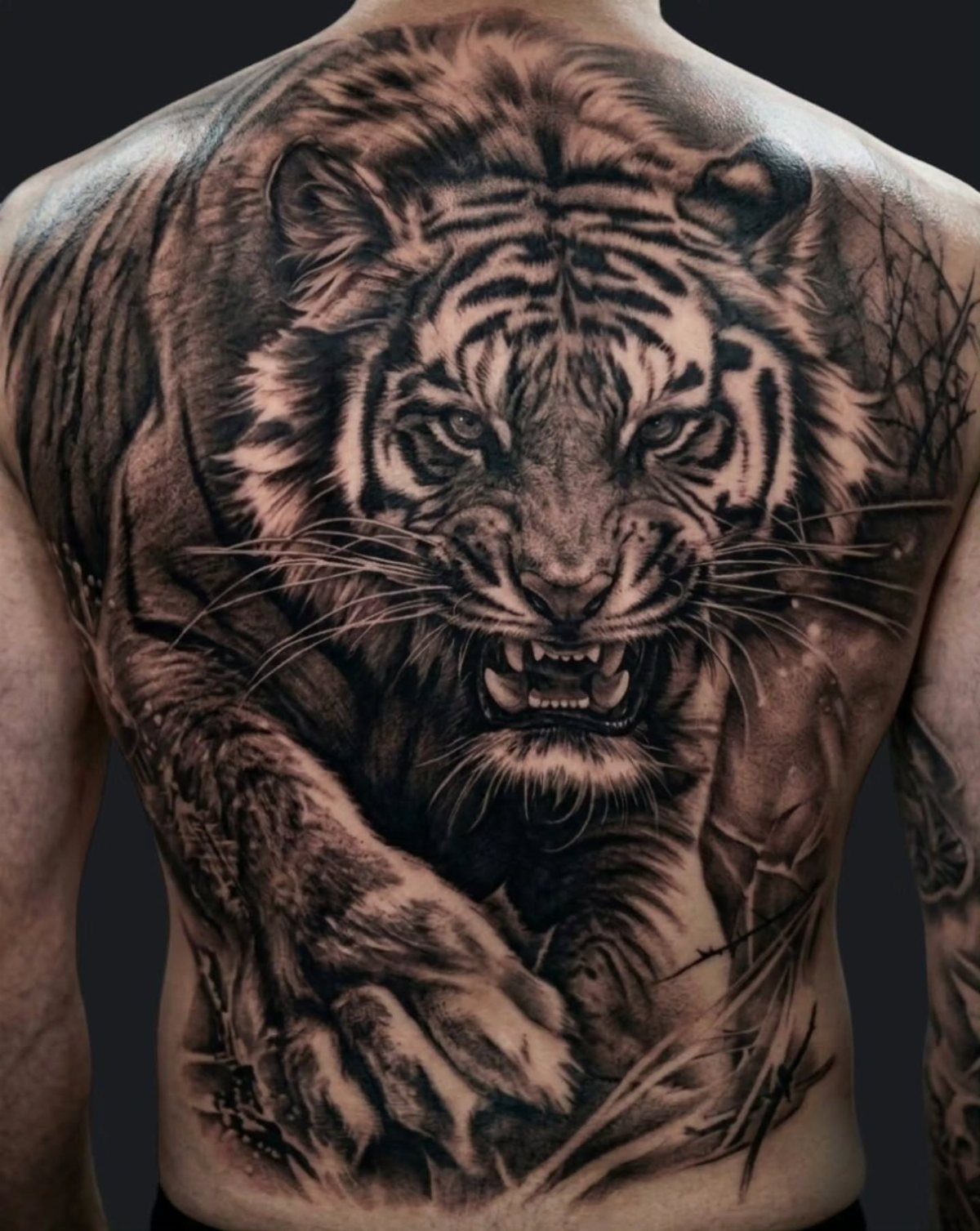
Big cats carry enough presence to stand alone without a heavy background, and a snarling pose adds motion to a stationary design.
Fur texture separates good realism from flat work, so check that your artist’s portfolio shows crisp strands and natural shading transitions.
The dark background here pushes the tiger forward and keeps the piece from looking too busy. Realism demands precision: a face slightly off proportion reads wrong immediately, so skip the artist who rushes through consultations.
Time in the chair depends on how much background you add.
10. Floral Mandala Back Tattoo
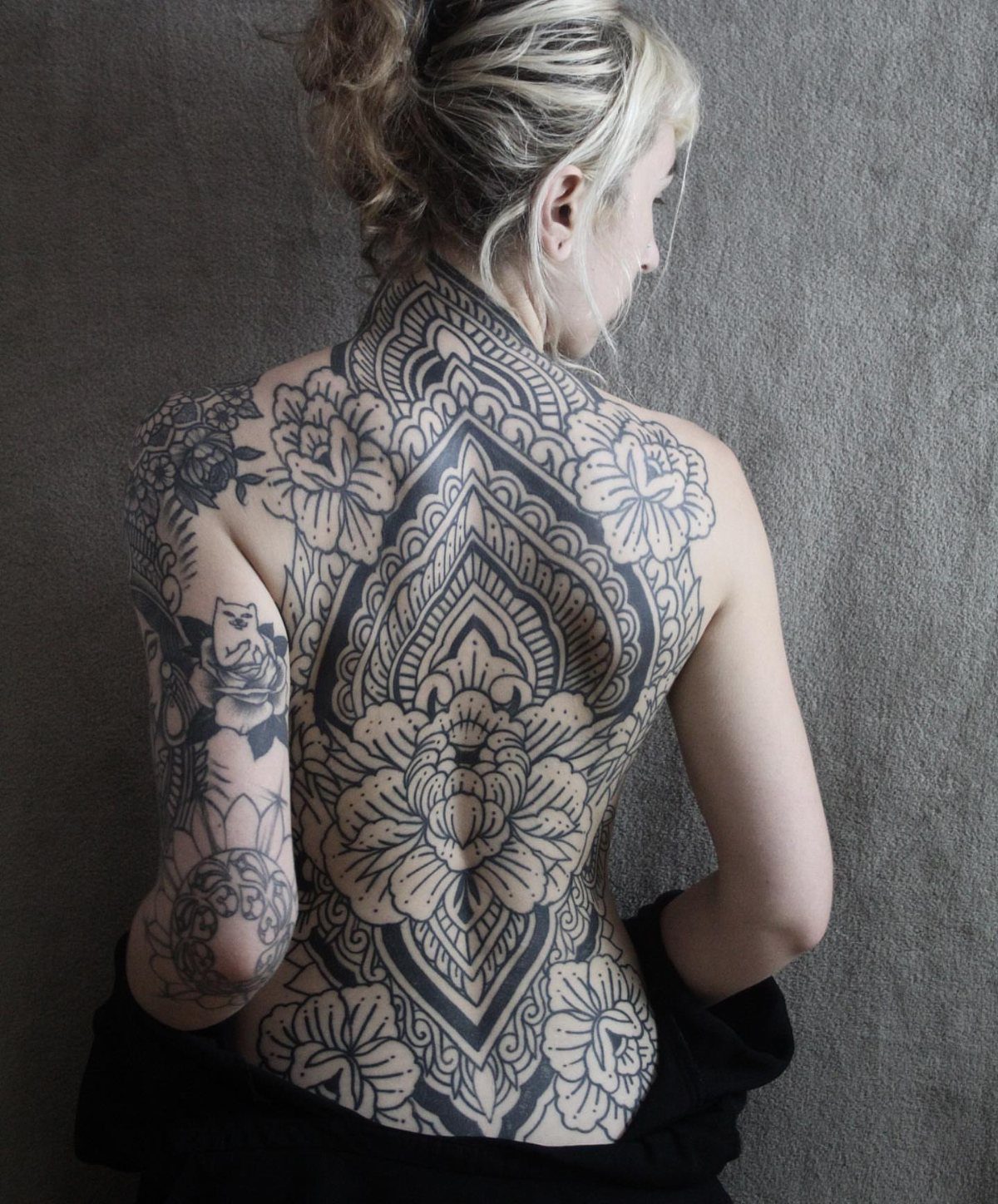
Symmetry across the spine creates a centerline that pulls the whole design together, and mandalas scale up without losing structure. Black ink alone keeps the pattern crisp and ages without the color shift that can blur fine lines over time.
Floral elements soften the geometry and give the piece a less rigid feel. I’d choose this style if you want something intricate but not aggressive, and it reads clearly even from across a room.
Stencil placement takes longer for symmetrical work, so budget extra time for the first session.
Pain and Commitment
A full back piece takes multiple sessions, sometimes more if the design runs dense with detail or color. Most artists book 3–4 hour blocks, so you’re looking at 6–10 visits minimum, often scheduled weeks apart to allow healing between sessions.
Pain varies by location. Ribs hurt more than most people expect if the design wraps around the sides.
Budget for the long haul.
A piece this size costs several thousand dollars, and stopping halfway leaves you with an unfinished design that’s hard to salvage later. I’d only commit if you’re sure about the design and can block out the time and money upfront.
Artistic Expression
The back gives you roughly 400 square inches to work with, more flat, uninterrupted space than any other part of the body. That room lets an artist build a composition with real depth: foreground, middle ground, background, all layered without cramming.
Intricate work holds up better here because you’re not fighting constant movement or tight curves.
Fine linework, portraiture, and dense shading all benefit from the stable surface, and the design won’t distort the way it might over a joint or an area that stretches with weight changes.
I’d use that space for something that needs it.
A single small symbol or word centered on your back wastes the canvas. Save minimalist designs for smaller placements and treat a back piece as the full statement it is.
Popularity Among Women
Full back tattoos used to skew heavily male, but that shifted in the early 2000s as more women chose large-scale work.
The back’s size and shape suit both intricate florals and bold graphics, and the option to cover or show the piece depending on clothing makes it practical for people who need flexibility at work.
Women tend to favor designs that follow the body’s natural lines: mandalas centered on the spine, florals that curve around the shoulder blades, or vertical compositions that elongate the torso.
Men more often go for animals, skulls, and darker imagery, though plenty of overlap exists between the two.
Popularity matters less than fit. Pick a design that suits your body and your taste, not what someone else wore well.
Frequently Asked Questions
Do full back tattoos hurt?
Pain level changes depending on where the needle hits.
Bone close to skin makes every pass feel sharper, which is why the lower spine and ribs hurt more than the upper back. Sessions run 3–4 hours, so even tolerable areas wear you down by the end.
What are some creative back tattoo ideas for men?
Wolves, dragons and biomechanical designs show up often for their bold presence and detail that fills the full canvas.
Tigers and nautical scenes work well if you want realism or layered storytelling. Abstract black work and geometric grids suit men after something less literal, and both age cleanly without color fade.
How big is a $1500 tattoo?
A full back piece costs several thousand dollars and takes multiple sessions to finish.
That budget might get you a solid upper back section or a partial design, depending on the artist’s rate and how much detail you’re adding. Full coverage takes multiple sessions and runs higher.





