The outer upper arm sits around a 3 out of 10 on the pain scale, which makes it one of the easier spots to sit through if your design needs hours of shading or tight line work.
1. Wolf Upper Arm Tattoo
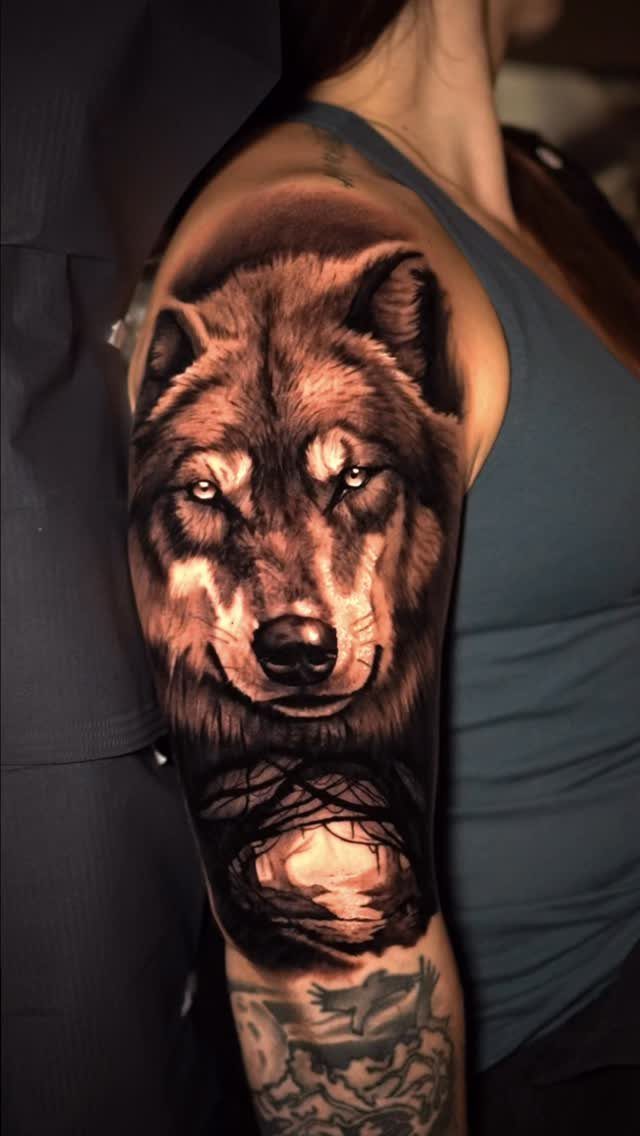
A wolf’s face fills the upper arm with enough room for fur texture and shadow work that makes the animal look ready to step off the skin.
Grayscale shading gives you control over depth without color that might fade unevenly, and the upper arm’s curve lets a good artist shape the head so it follows the muscle.
Most wolf pieces here take several hours depending on detail level. The upper arm hurts less than bonier spots, which matters when you’re sitting through that much shading work.
2. Quote Tattoos
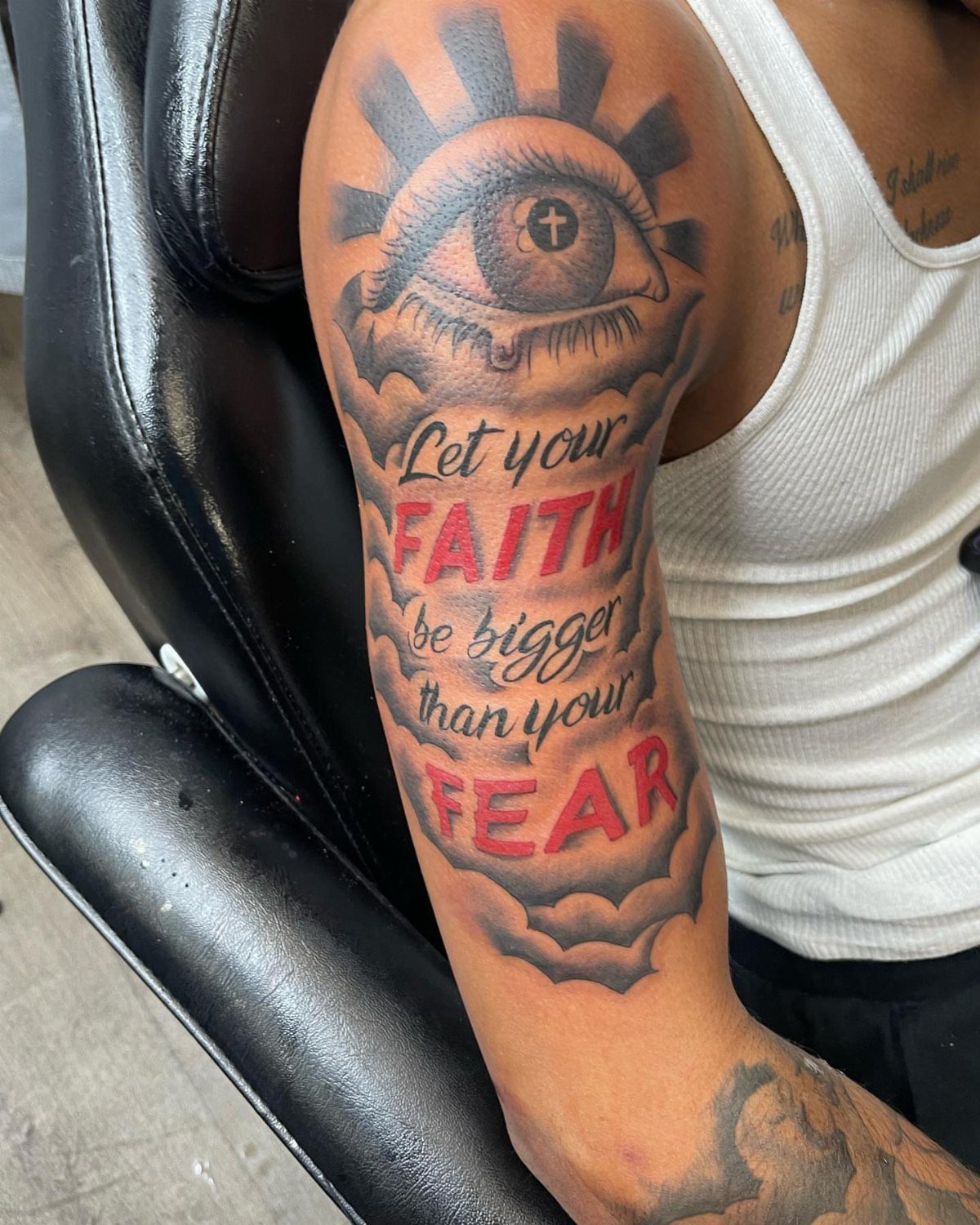
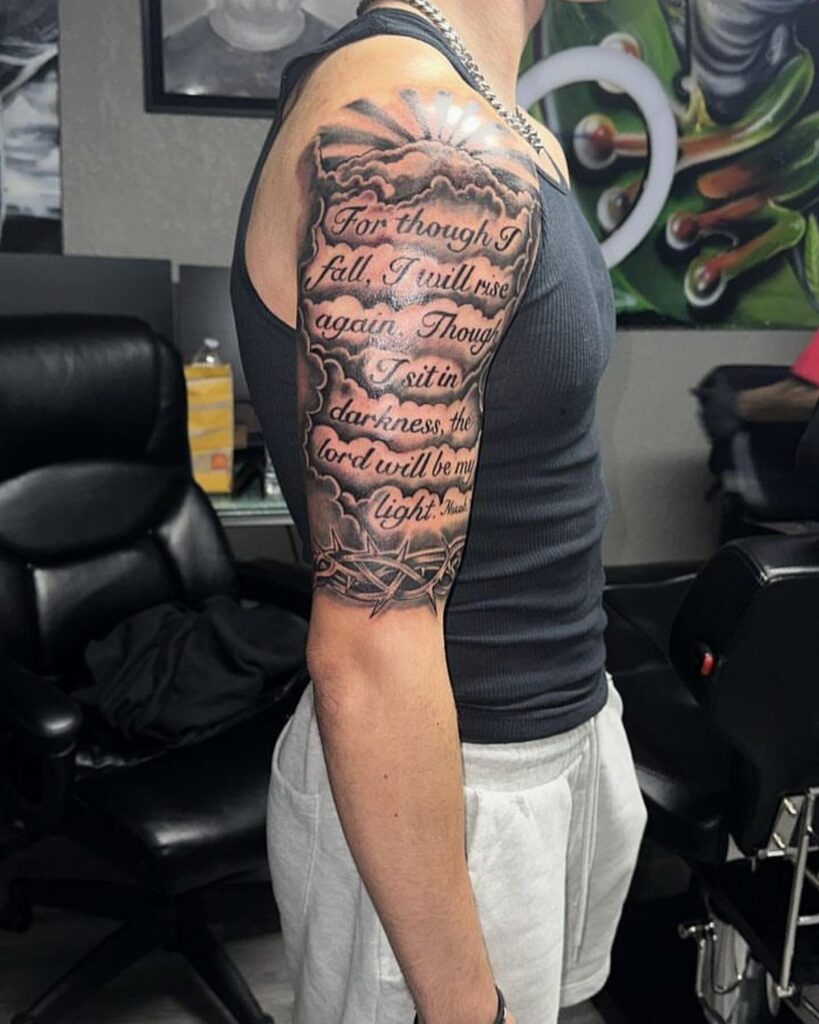
Text runs best when you give it room to breathe, and the upper arm offers a wide enough canvas that words stay readable without cramping.
Pairing the script with an image like an eye or clouds builds a scene instead of just floating letters, and mixing fonts or weights between key words adds emphasis where you want it.
Short quotes fit better than long ones. Long quotes start to wrap or shrink, and small text blurs faster as the tattoo ages.
3. Flower Upper Arm Tattoo
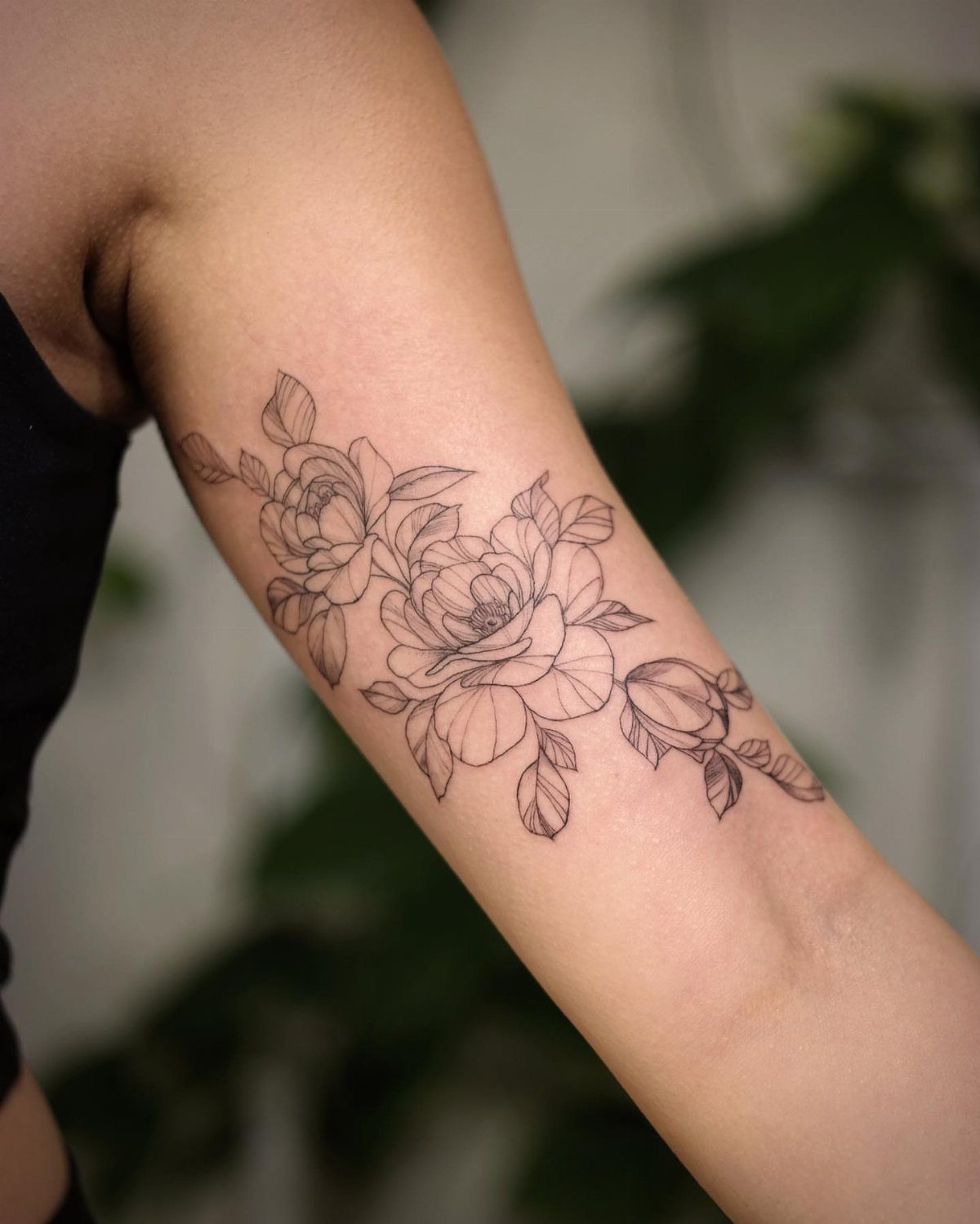
Line art flowers keep their shape longer than heavy shading because there’s less ink to spread under the skin over time.
A stem that wraps the upper arm lets you add as many blooms as the space allows, and monochrome ink alone gives you clean edges that stay readable.
Roses, peonies and wildflowers all work here. I like designs that leave some negative space between the petals instead of filling every gap, since that contrast is what makes line work pop.
4. Tribal Tattoos
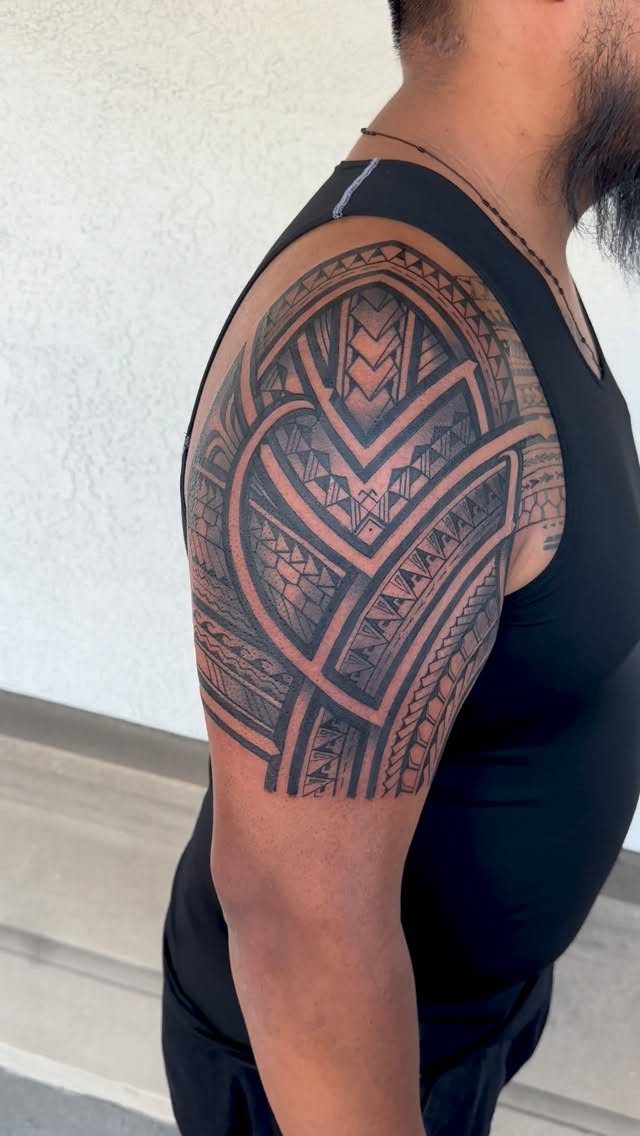
Solid black geometric shapes make tribal tattoos some of the boldest options for the upper arm, and the pattern can wrap halfway or all the way around depending on how much coverage you want.
The style draws from Polynesian, Maori and other indigenous traditions, so if you’re choosing a design with cultural roots, I’d spend time understanding what it represents before committing.
Tribal pieces age well because black ink holds its edge better than fine detail or color. The upper arm’s muscle definition adds dimension to the shapes when you move.
5. Cross Upper Arm Tattoo
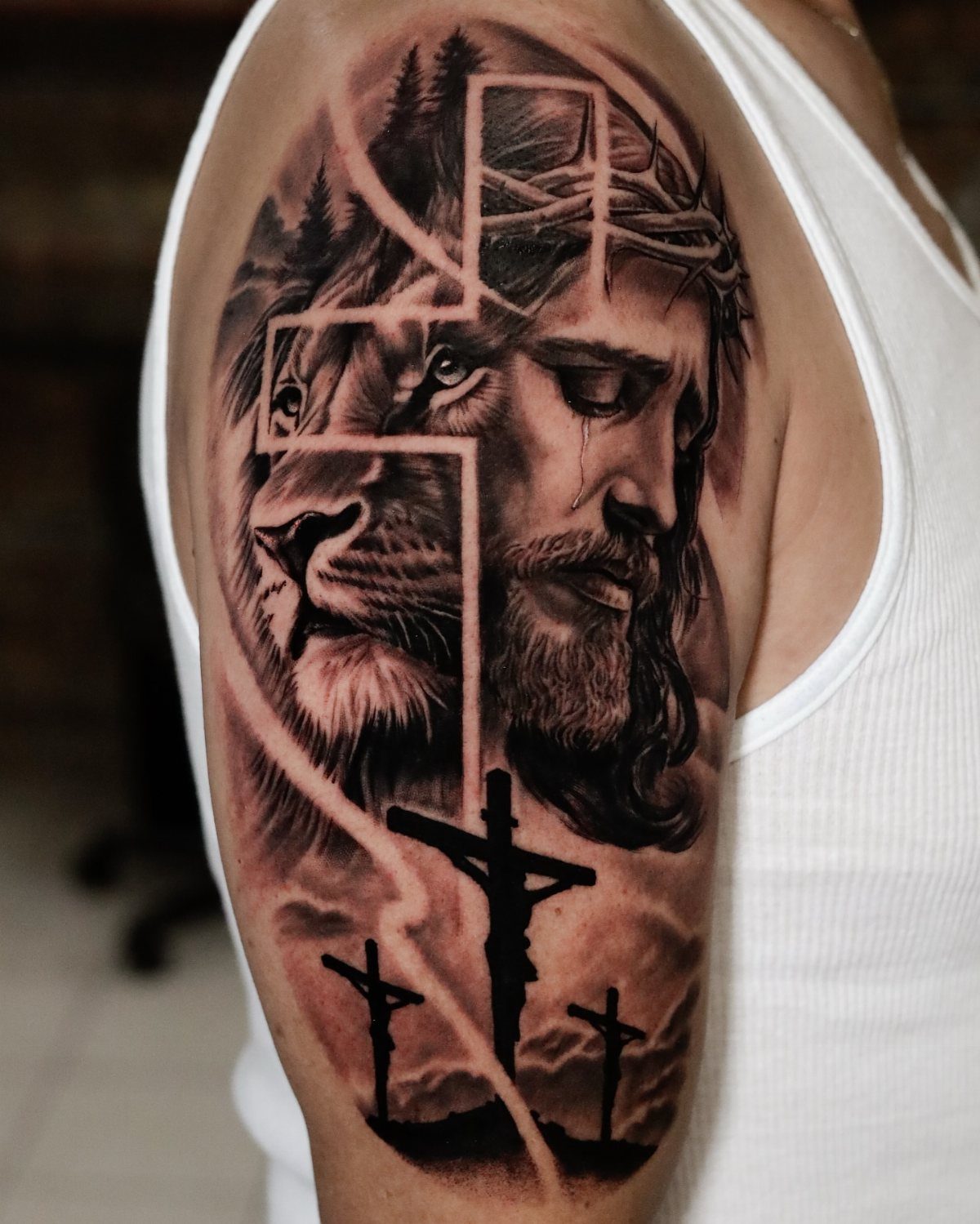
Layering a cross with other religious imagery like the face of Jesus, a lion or the hill of Calvary turns a simple symbol into a full narrative piece that covers most of the upper arm.
Grayscale realism gives you the detail needed for faces and textures, and the vertical shape of a cross works naturally with the arm’s length.
Positioning the cross as the central anchor lets the other elements frame it without competing for focus.
6. Traditional Upper Arm Tattoo
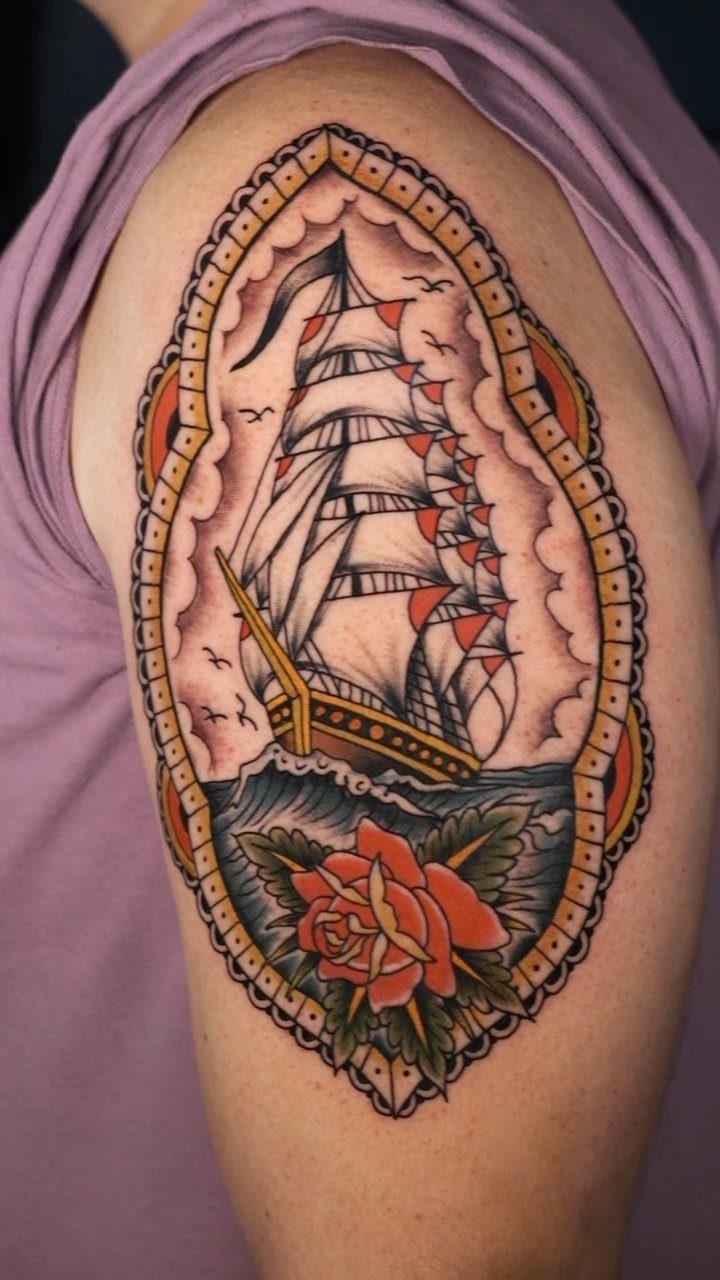
Traditional tattoos use bold black outlines, limited color palettes and iconic images like ships, roses and ornate frames that have looked right for nearly a century.
The technique holds up because thick lines and solid color don’t blur as easily as fine detail, and the upper arm offers enough space for a framed composition that reads as a complete picture.
Red, yellow and green are the standard colors here, though some artists add blue or purple. The style works for anyone after something that won’t look dated.
7. Geometric Tattoos
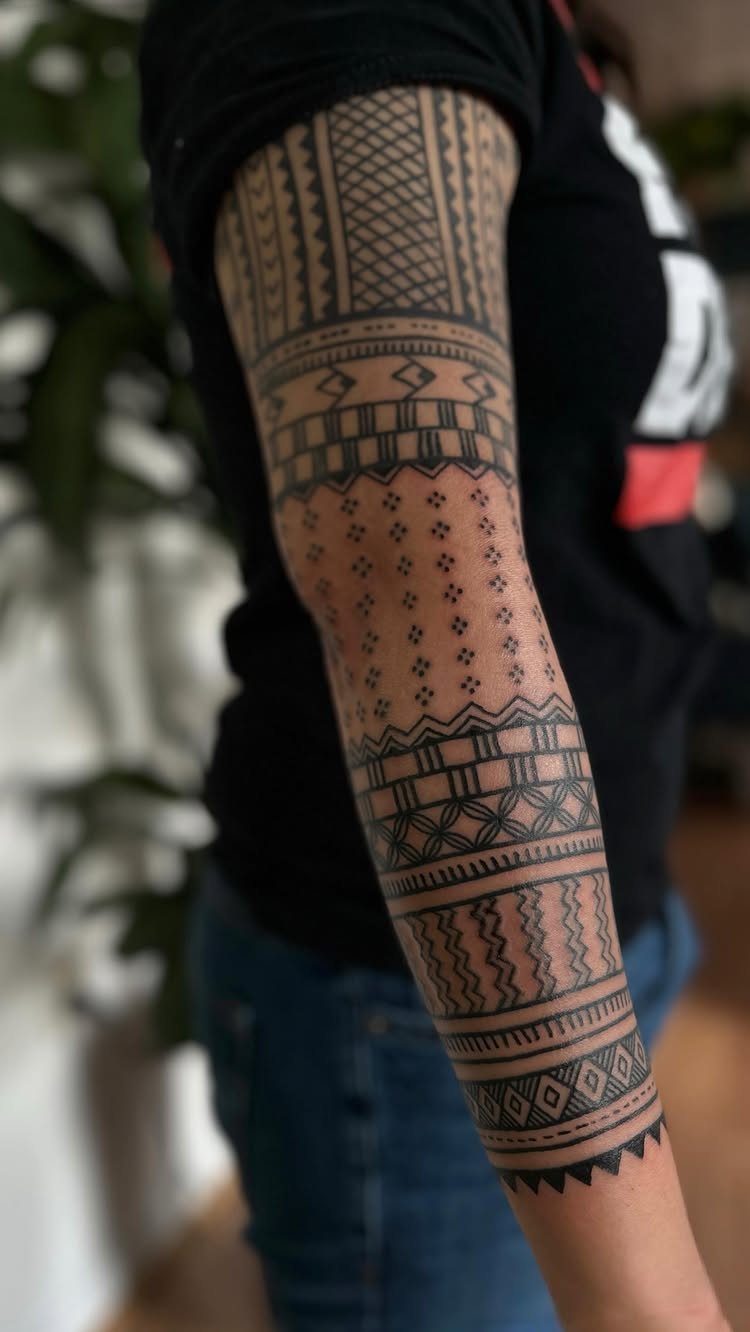
Repeating triangles, hexagons and line work that locks together across the upper arm creates a pattern that depends entirely on straight edges and clean symmetry.
Any wobble shows, so this is one style where you want an artist whose portfolio proves they can hold a steady line.
The upper arm’s shape lets a geometric piece wrap partway around or stay centered on the outer side. Black ink alone draws attention to structure instead of adding color that might soften the angular look.
8. Butterfly Tattoos
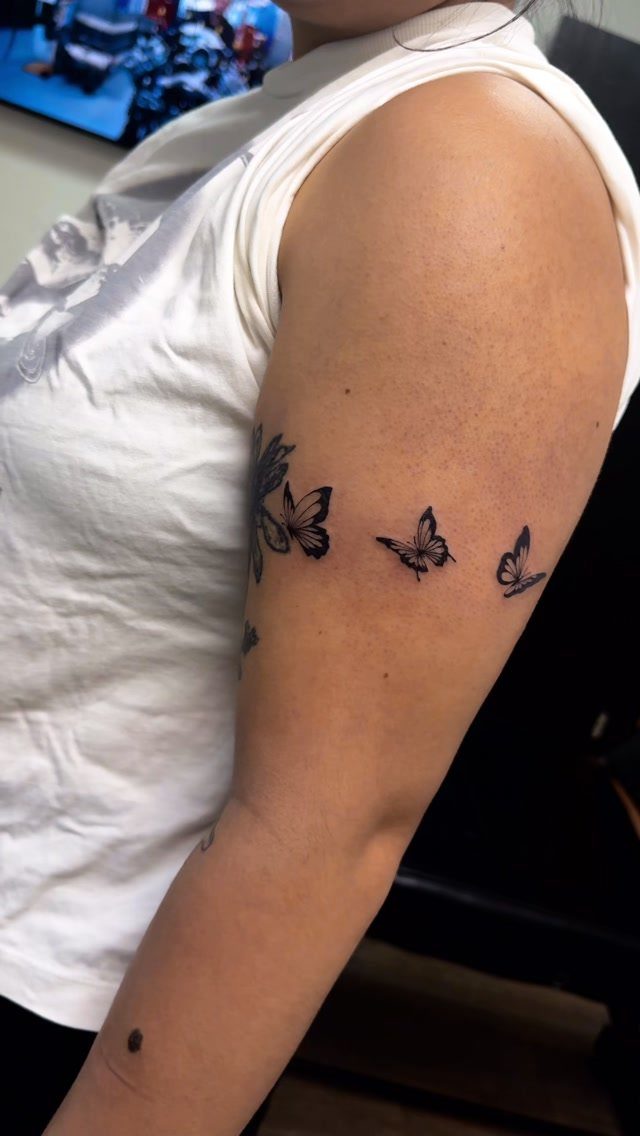
3 small butterflies stacked in a line give you a simple design that stays readable as it ages, and the upper arm’s flat surface keeps them from distorting when the muscle flexes.
Silhouette shapes in solid black need less time in the chair than shaded or colored work.
Spacing them out prevents the design from looking crowded, and keeping the size small means you can add more later as you build toward a sleeve.
9. Jellyfish Tattoos
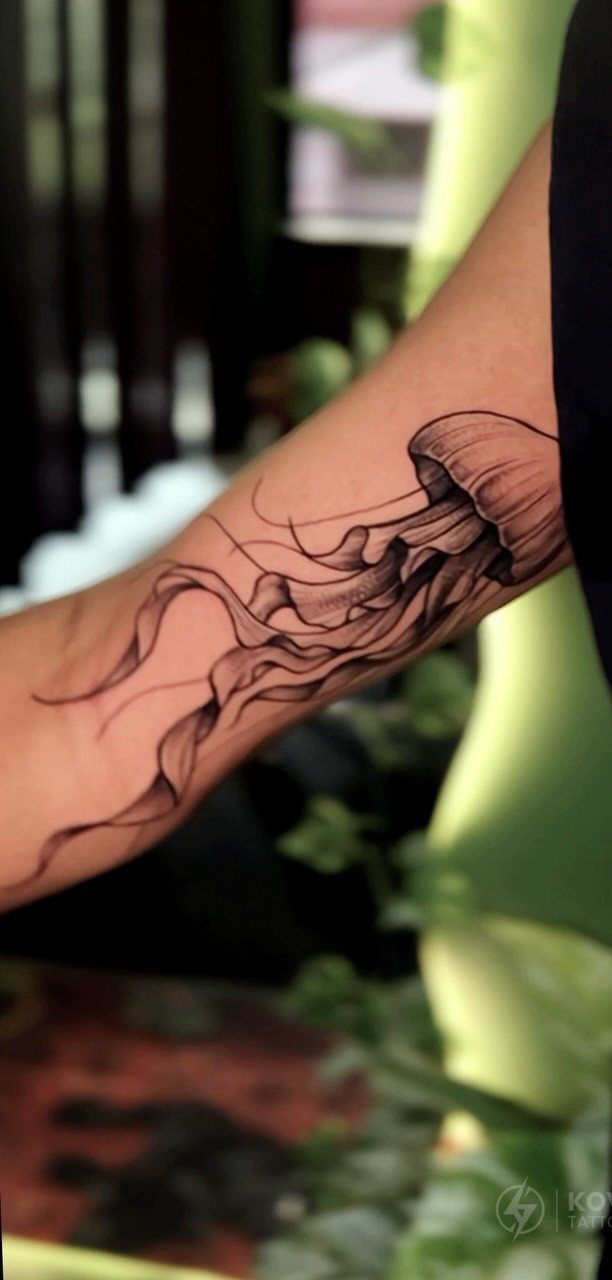
A jellyfish’s tentacles give an artist room to play with flowing lines that follow the curve of the upper arm, and grayscale shading adds dimension to the bell without needing color.
The shape works whether you want something small and tucked to one side or a larger piece that wraps.
Black ink holds detail better over time than fine colored linework. The upper arm’s muscle adds natural movement to the tentacles when you bend your arm.
10. Dragon Upper Arm Tattoo
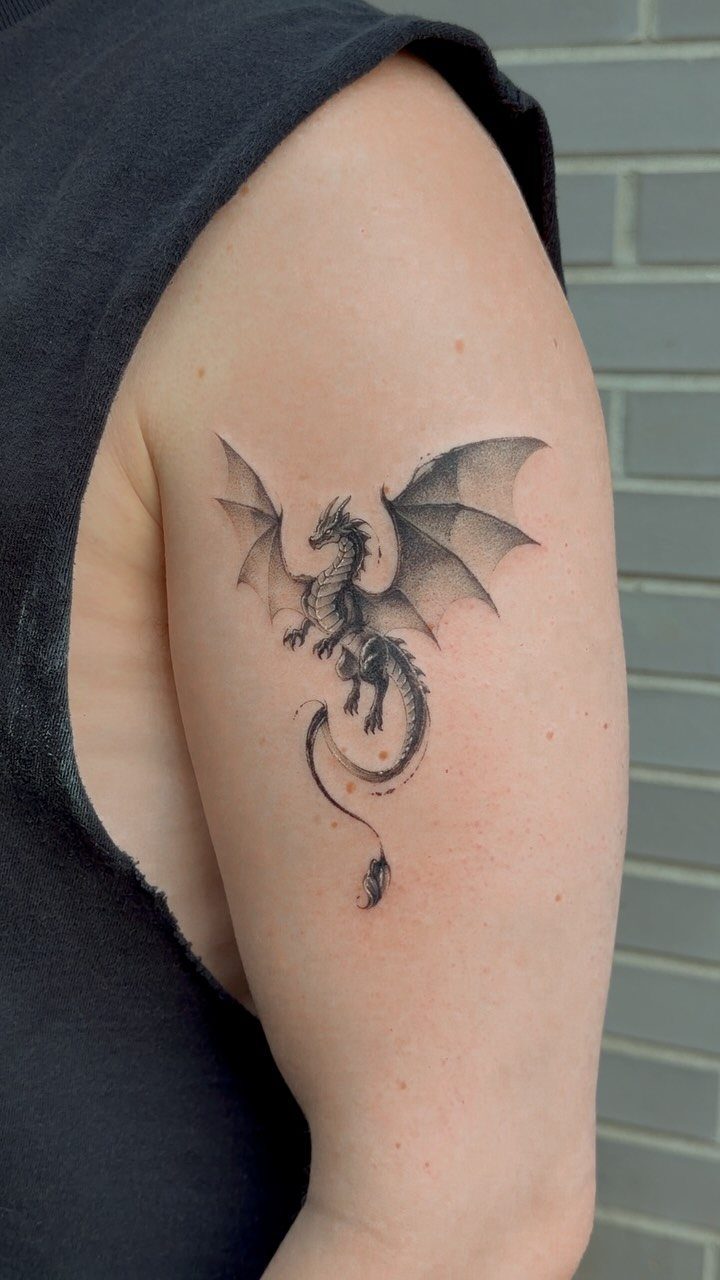
Wings spread wide enough to use the full width of the upper arm, and a dragon’s body can curve to fit the muscle underneath.
Black ink alone lets the scales and wing detail show without competing colors, and the vertical shape works whether the dragon faces up or down.
Most dragon pieces take multiple sessions if you want heavy shading or texture work on the wings. The upper arm offers enough space that you don’t have to shrink the design to make it fit.
11. Octopus Tattoos
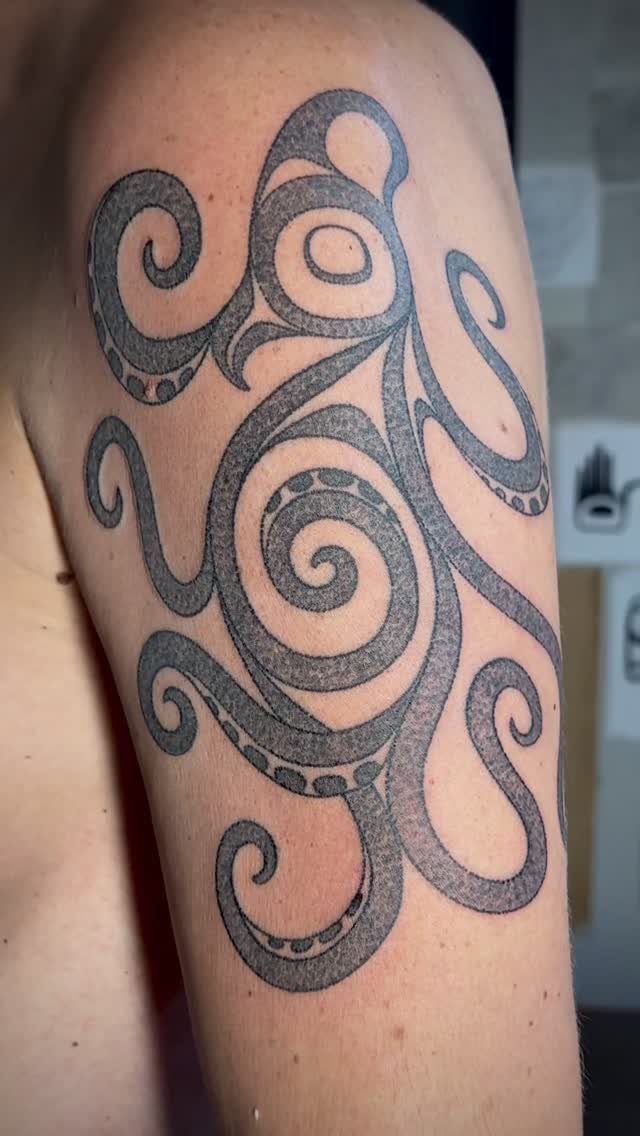
An octopus’s tentacles curl and twist in ways that let the design wrap naturally around the upper arm’s curve, and swirling shapes fill space without needing a rigid composition.
The upper arm’s width gives you room for all the tentacles without crowding them together.
12. Zodiac Sign Tattoos
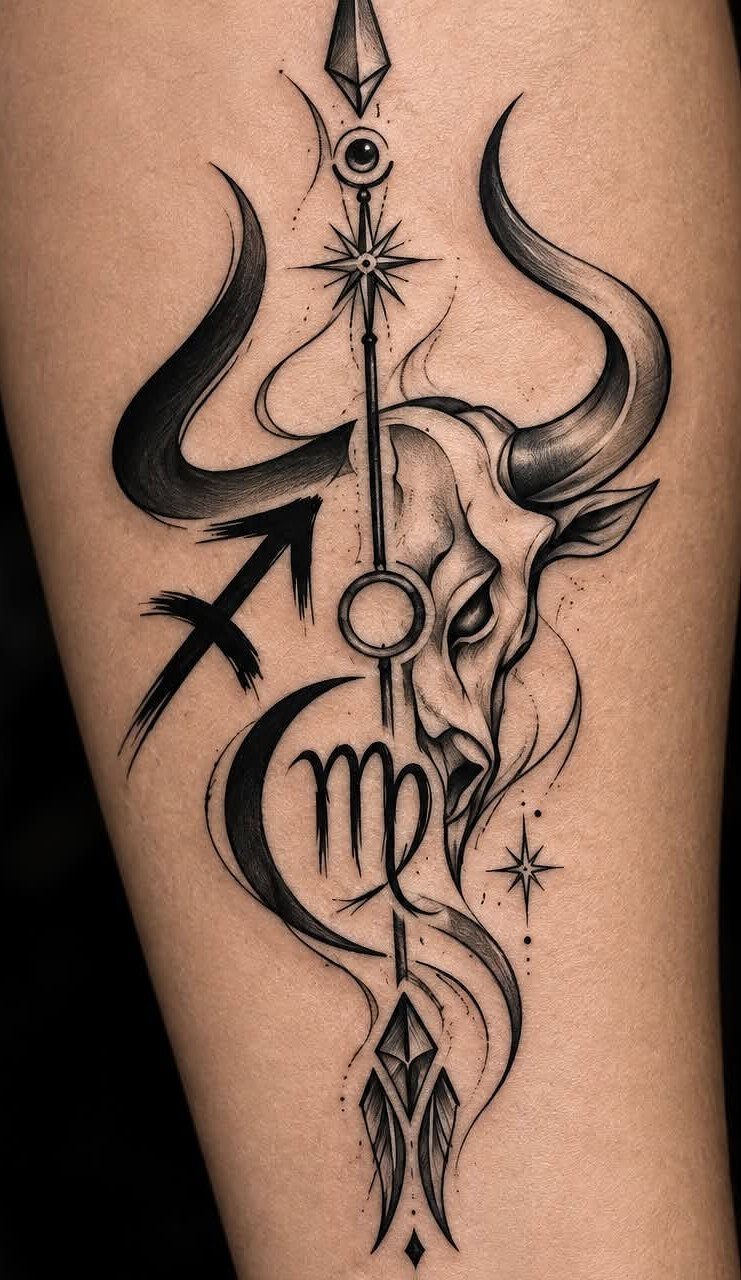
Pairing zodiac symbols with related imagery like a bull skull or arrow builds a design that tells a story instead of just showing a standalone icon.
The upper arm’s space lets you layer multiple elements without shrinking the symbols too small to read.
Grayscale shading gives depth to the skull and other details, while the zodiac glyphs stay simple and recognizable. Choosing symbols that connect to your own chart keeps the design personal instead of generic.
13. Snake Tattoos
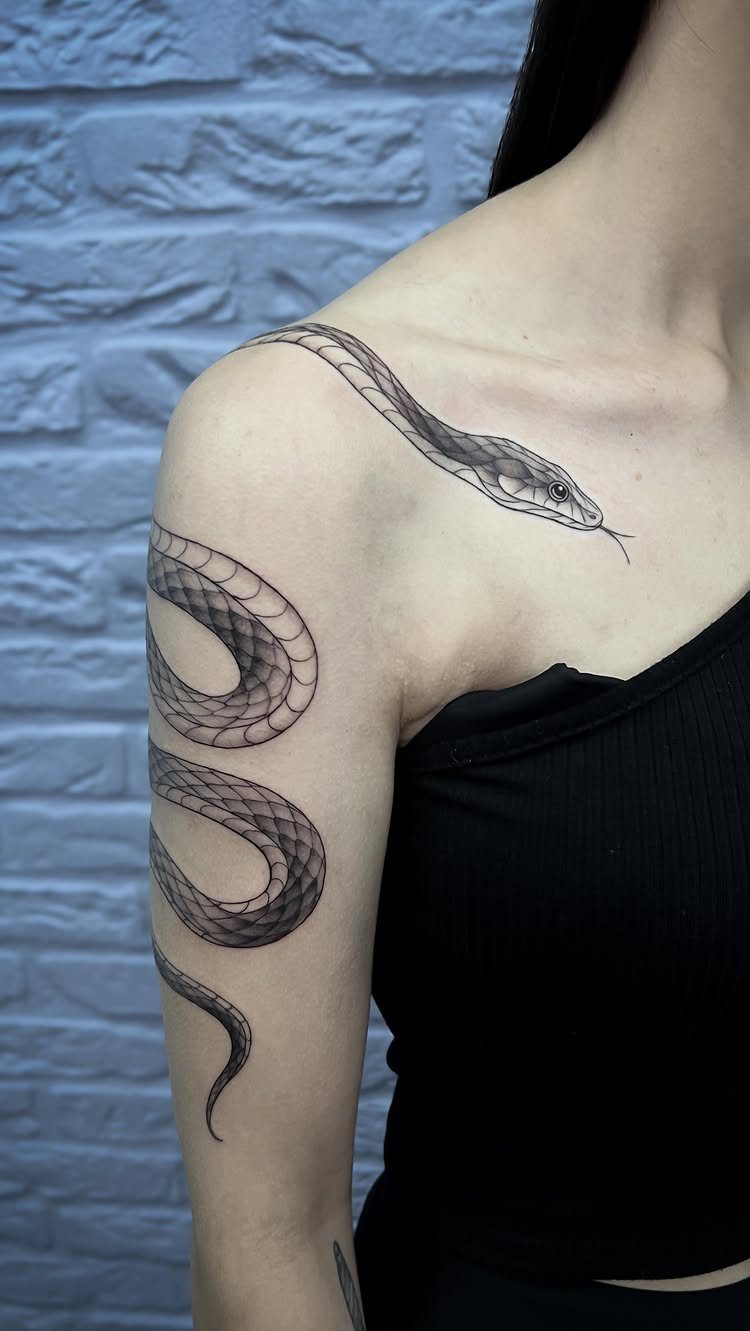
A snake’s body coils naturally around the upper arm’s curve, and the head positioned near the shoulder gives the design a clear focal point.
Monochrome ink keeps every scale crisp for years, and the coiled form takes advantage of the arm’s natural curve rather than sitting on a single plane.
Snakes carry meanings tied to rebirth and change, which makes the design feel personal if you’re marking a shift in your own life. Flexing changes how the serpent sits, so the piece shifts with you instead of reading as static.
Pain and Healing
The outer upper arm sits low on the pain scale, closer to a scratch than a burn. The inner arm near the armpit climbs to 6 out of 10 because of the nerves running through that area.
Wear loose cotton so fabric doesn’t drag across fresh ink. Peeling starts a few days in, and you’ll want to leave it alone instead of picking at it.
Sweat can carry bacteria into the healing skin and shift the ink before it settles. Surface healing finishes around 2 to 3 weeks, but keep moisturizing after that.
Clean it gently with something fragrance-free and lukewarm water. Keeping it out of the sun during those first few weeks prevents fading before the skin even closes.
Cost Estimates
Pricing starts around $150 for a small piece and climbs past $2,000 when size, detail and the artist’s reputation stack up.
A smaller piece with simple line work sits at the lower end, while a large design with heavy shading or color fills pushes toward the top.
Hourly rates vary by shop and location, so a design that takes 4 hours will cost more than one finished in 2. Color adds time because each shade needs separate passes, and realism or portrait work demands precision that stretches the clock.
If you’re budgeting, ask for a quote based on your specific design rather than guessing from averages. Some artists charge by the piece, others by the hour, and knowing which method they use keeps the final number from surprising you.
Design Considerations
The deltoid’s natural curve gives you a built-in guide for where a design should sit.
Pieces that follow the muscle line instead of fighting it look better when your arm moves, and they age without distorting as much as designs placed flat across the side.
Men’s upper arms tend to show more deltoid separation, which lets a design sit in the high pocket and emphasize width.
Women’s arms curve more smoothly, so designs that wrap or flow down the length read as longer and more fluid.
Pick something that connects to you instead of pulling a design off the wall. A design borrowed straight from another person’s arm can feel like someone else’s story once the novelty wears off.
Frequently Asked Questions
How big is a $1500 tattoo?
At that price you’re looking at either a large piece with detail and color, or a smaller design from an artist with a long wait list.
Most designs in this range take 4 to 6 hours in the chair, depending on the level of detail and whether you’re working with realism or intricate geometric patterns.
How much do upper arm tattoos cost?
Upper arm tattoos start around $150 for smaller, simpler designs and can exceed $2,000 for larger pieces with detailed shading or color.
Hourly rates and the artist’s experience drive the final cost, so a 4-hour session will run more than a 2-hour one.
What is the best size for an upper arm tattoo?
A vertical piece of 4 to 6 inches usually sits cleanly on the outer arm without wrapping or looking cramped.
Leaving some negative space around the design keeps it from looking cramped and helps it age cleanly as your skin changes over time.