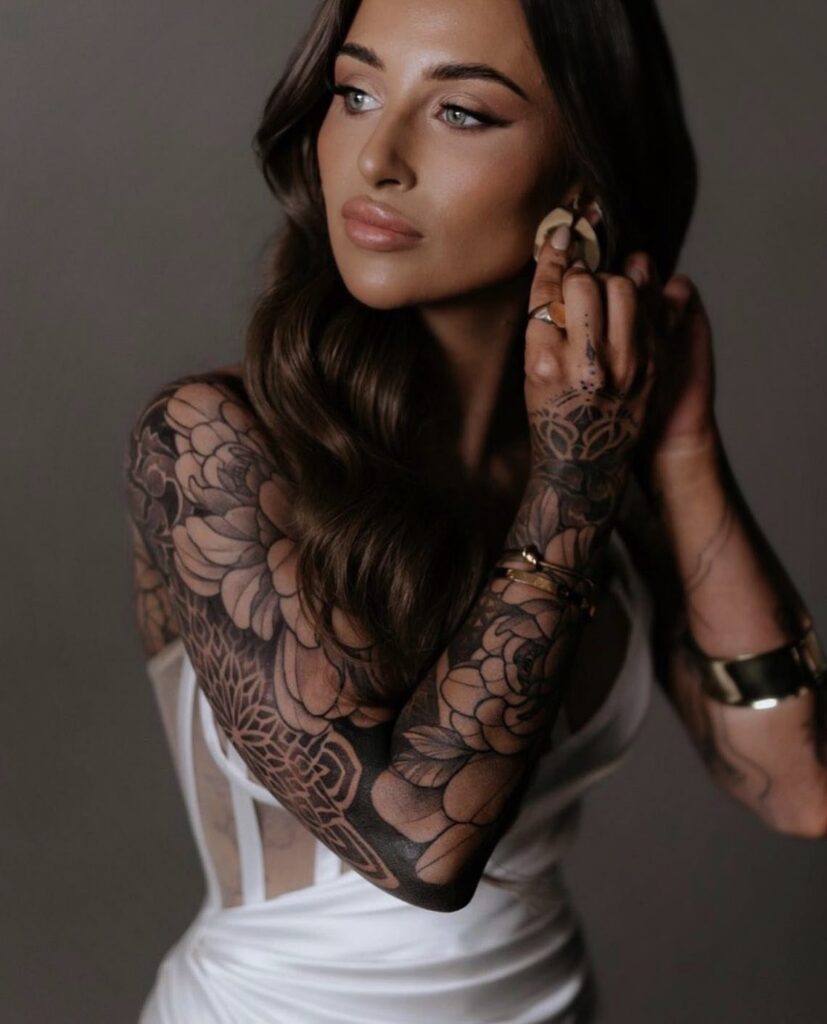
A full sleeve tattoo for women runs shoulder to wrist in one continuous design or stacks separate images side by side, and the choice between them comes down to whether you want a single flowing scene or the flexibility to build it over time.
Neotraditional and Japanese sleeves wrap the arm in one composition, water and florals following the natural curve.
Segmented old school and traditional American sleeves let you add a rose, a dagger or a portrait per session, each piece holding its own space with bold outlines.
Blackout and ornamental sleeves commit to solid ink or intricate pattern across the entire arm, while paint splatter and neon sleeves trade longevity for color that needs touchups every few years.
1. Chrysanthemum River
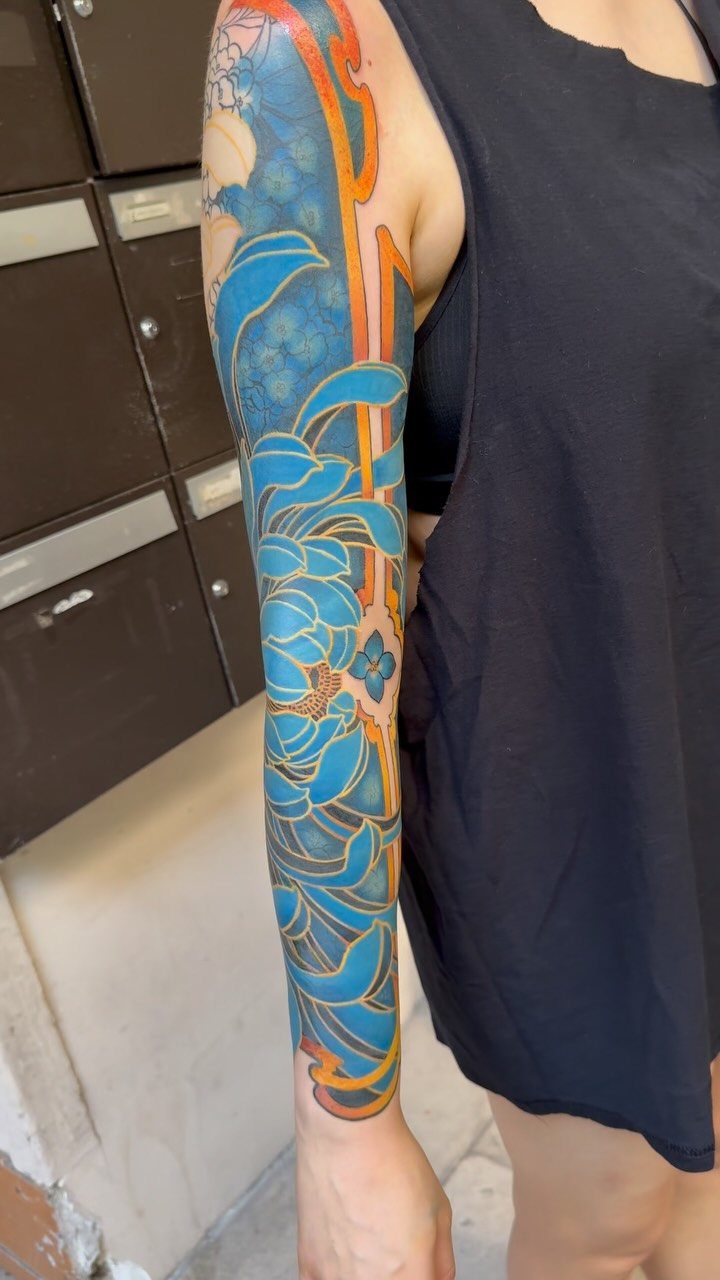
Chrysanthemums float through flowing water, wrapping shoulder to wrist in a single scene. The blue tone keeps it cool and calming, softer than the bold reds and blacks most floral sleeves lean on.
Water adds movement.
The river bends around the arm’s natural curve, and the flowers sit where the current carries them. Chrysanthemums read well at a distance because the petals are large and layered.
This stays feminine without going dark or geometric.
2. Japanese Sleeve Tattoo
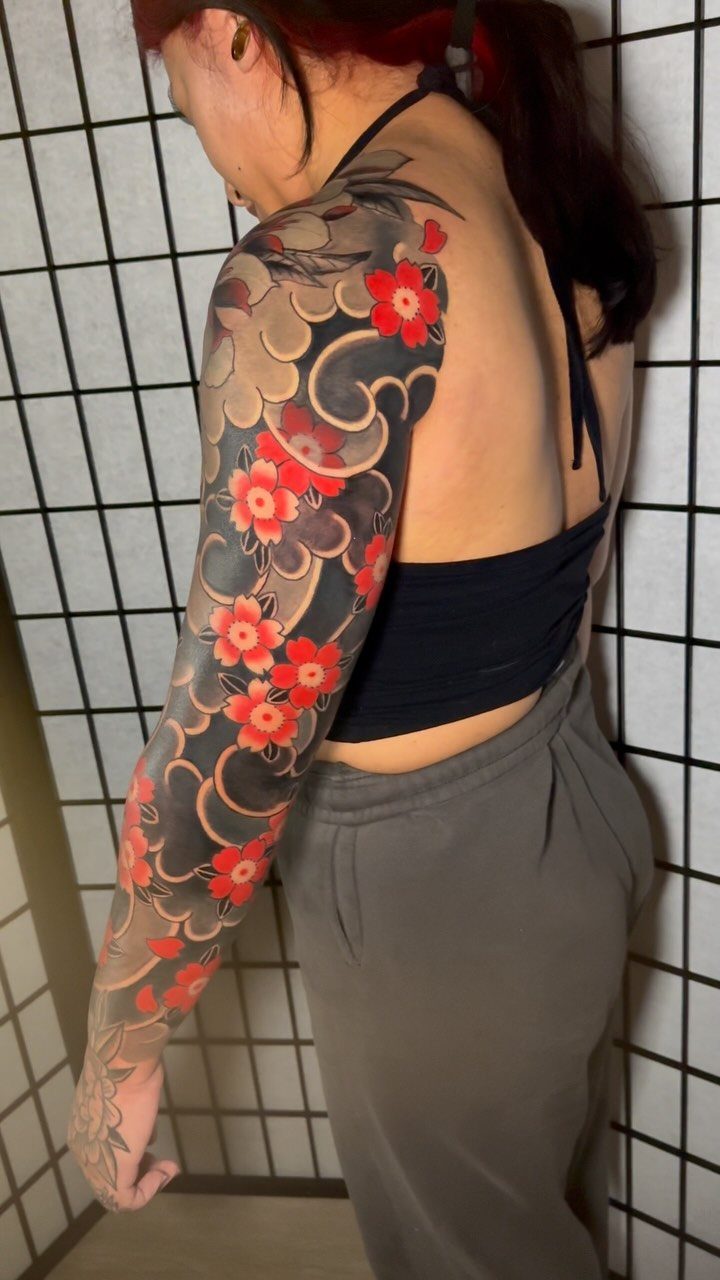
Dark waves roll into clouds, with red flowers breaking through the black and grey. Japanese sleeve tattoos build around natural elements, and this one stacks water, sky and florals into one continuous composition.
The red flowers pull focus.
Everything else stays in the dark grey range, so those blooms stand out without needing a second color or shading style. Waves and clouds fill space cleanly, no awkward gaps between motifs.
If you like bold contrast and traditional Japanese imagery, this version balances both without losing the structure a full sleeve needs.
3. Full Blackout Sleeve
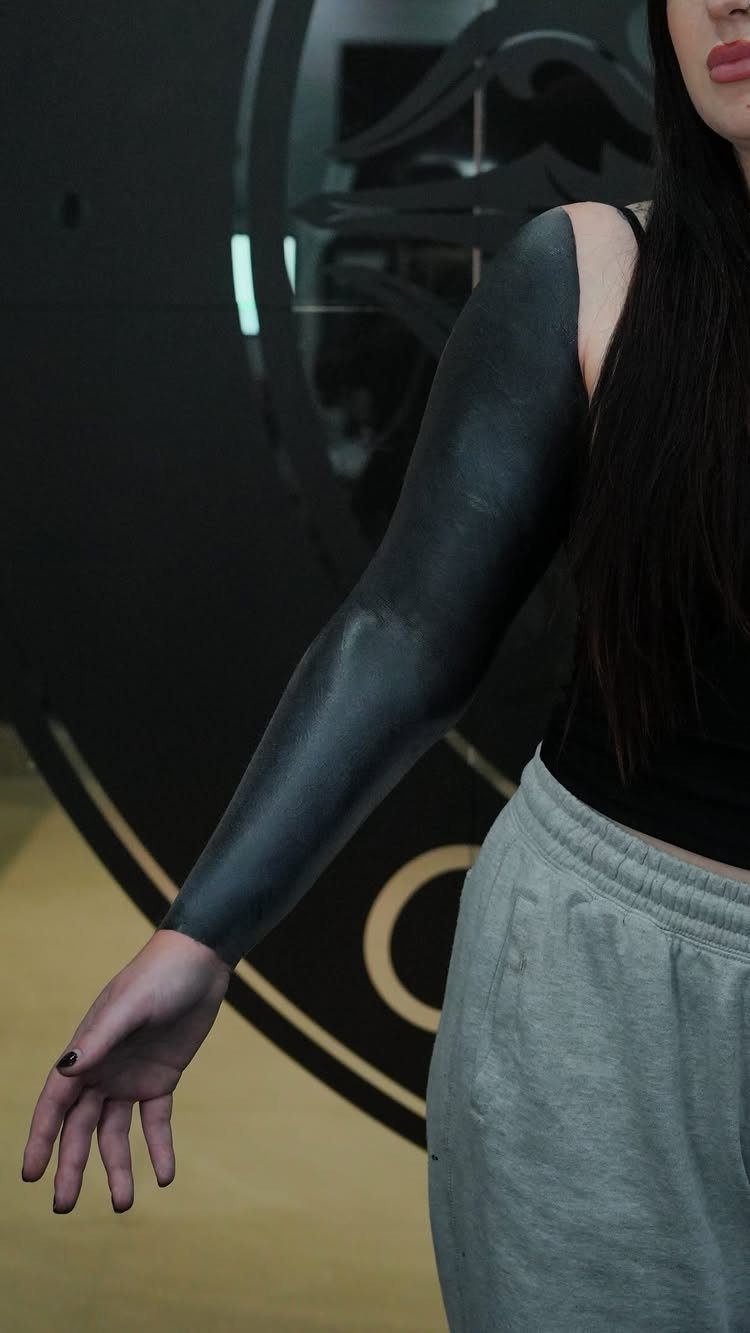
Solid black ink covers the entire arm, no design breaking through. Blackout sleeves erase everything underneath and create a uniform surface from shoulder to wrist.
This takes multiple sessions.
Covering that much skin in saturated black requires the artist to work in sections, letting each heal before filling the next. Touchups are common because black settles unevenly on some skin types.
A blackout sleeve suits maximum impact with zero detail, or covering old work you no longer keep visible.
4. Ornamental Full Sleeve
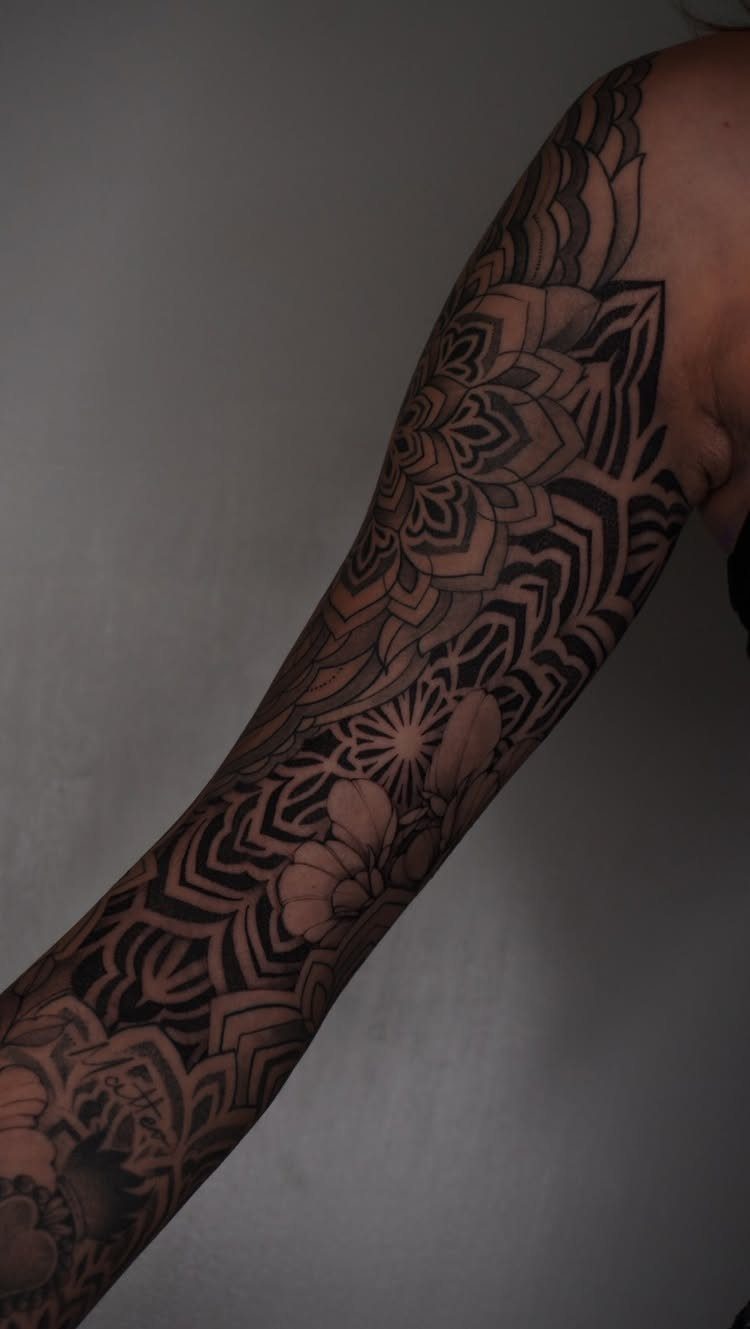
Mandalas anchor the shoulder and elbow, with geometric lace and floral elements filling the space between them. Ornamental sleeves pull from Celtic knotwork, dotwork and pattern design, and this version keeps all of it in black ink.
The symmetry matters.
Mandalas are built on radial balance, so they sit cleanest where the arm is widest: shoulder cap, mid-bicep, elbow. The rest of the sleeve connects those focal points with lines, dots and smaller motifs that follow the arm’s taper.
This reads as intricate without looking busy, and black ink ages sharp.
5. Wood Marbling Suminagashi Full Sleeve
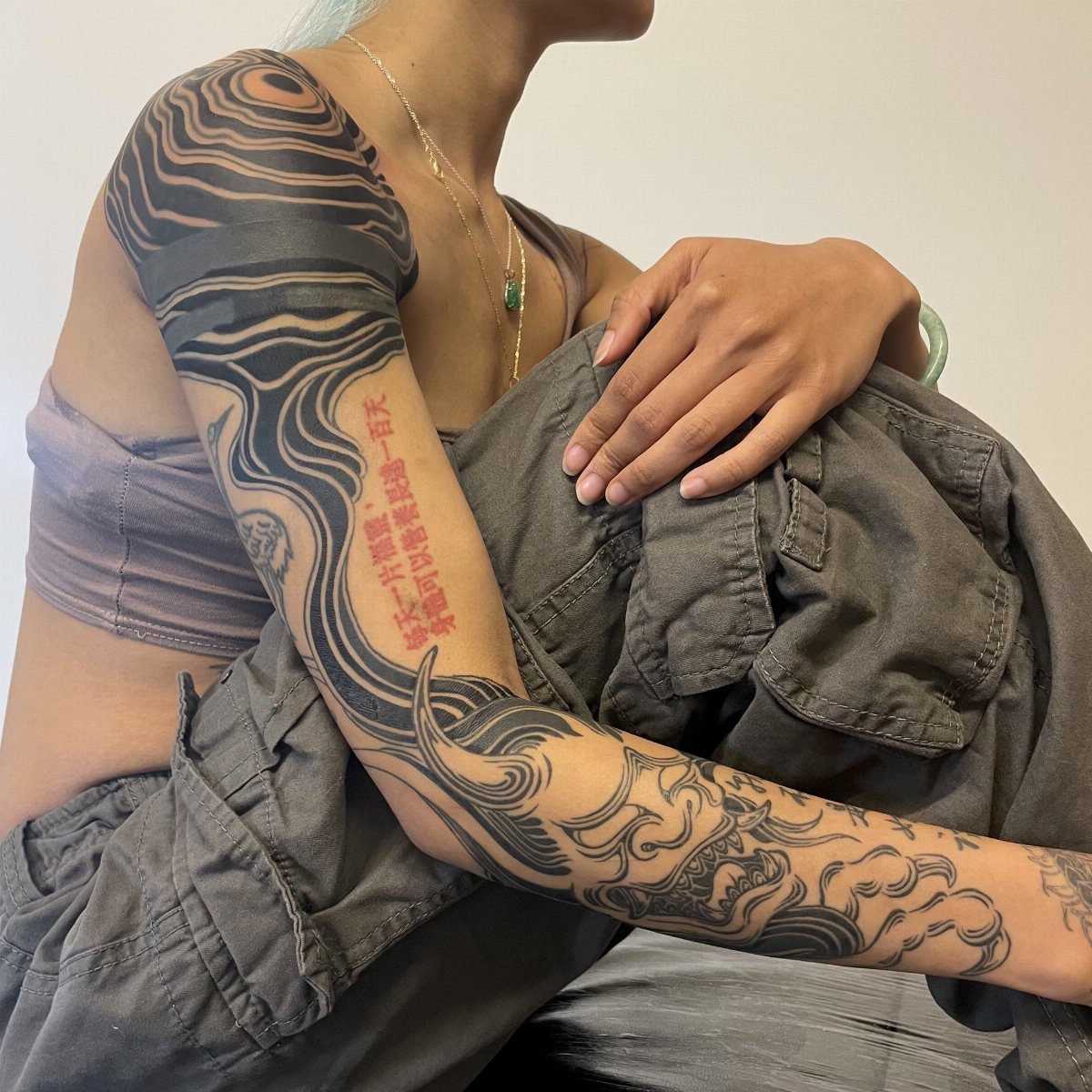
Swirling black and grey patterns mimic the look of suminagashi, the Japanese technique of floating ink on water to create marbled paper. The red Chinese characters sit over the marbling, adding text without breaking the flow.
Suminagashi tattoos translate best in black and grey because the gradient is what makes the marbling read.
Too much contrast flattens it; smooth tonal shifts keep the pattern fluid. The characters can be anything you want: a name, a phrase, a date.
This suits something abstract and textured, less recognizable than flowers or animals but still built on traditional craft.
6. Realistic Star Wars Sleeve
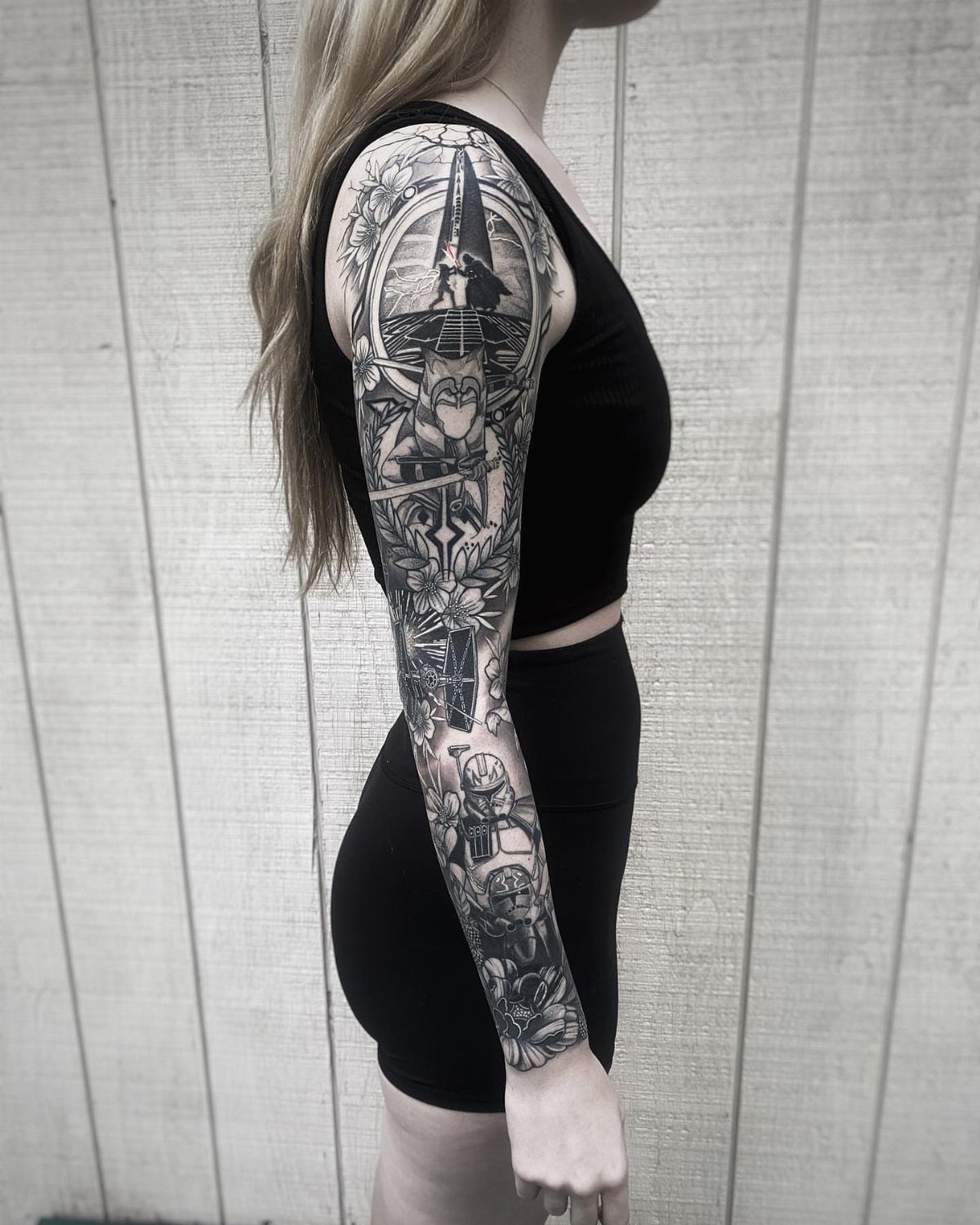
Star Wars scenes and characters fill the arm in black and grey realism. Portraits, ships, landscapes and droids stack into a full sleeve that tells a story across multiple panels.
Realism takes time. Faces need fine detail, and mechanical elements like lightsabers and starfighters require clean lines and accurate shading.
This works for a fandom piece that looks cinematic, not cartoony. Black and grey ages better than color for portrait-heavy sleeves.
7. Realistic Bird and Butterfly Sleeve
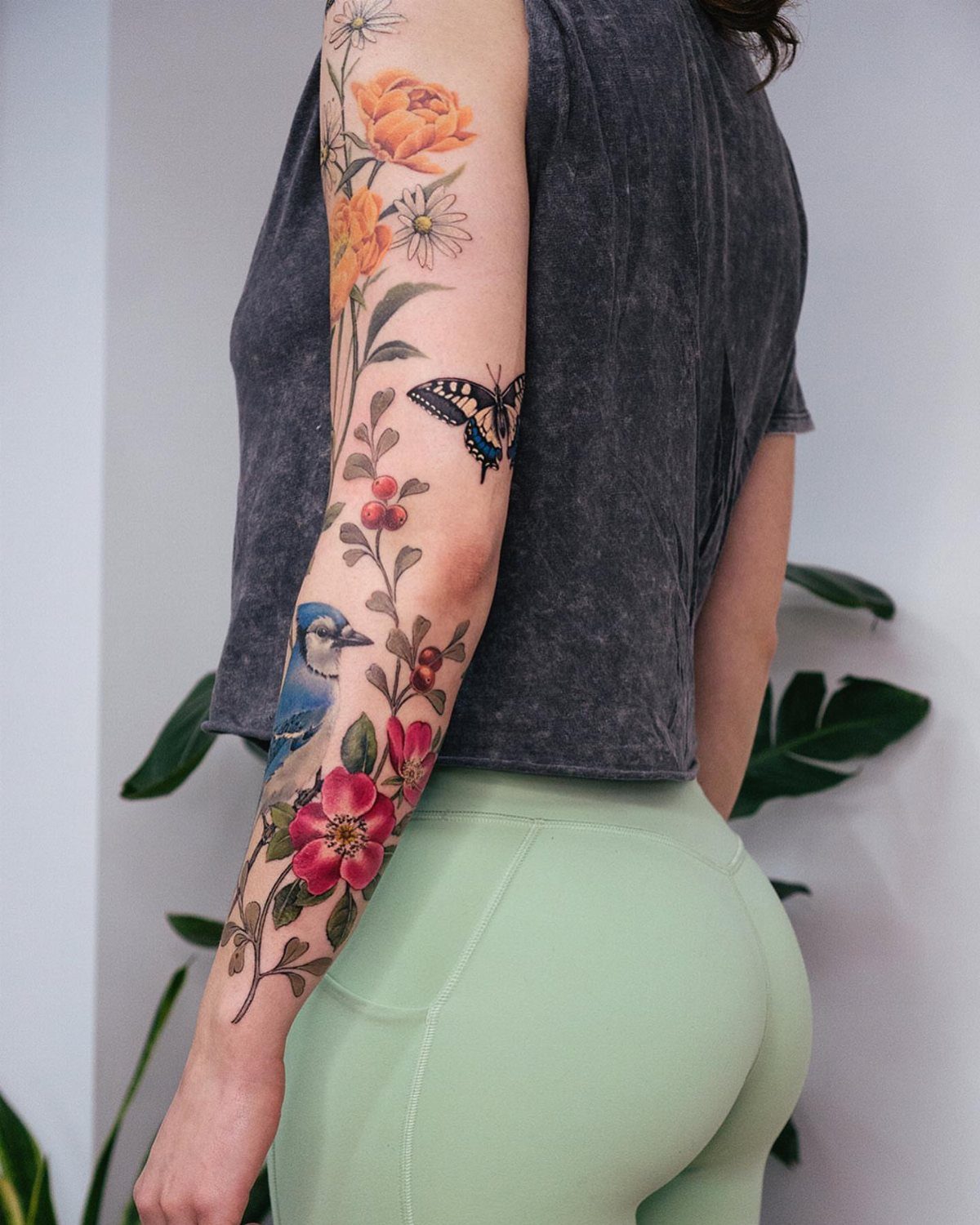
A blue jay perches near the shoulder, wings spread, with a butterfly floating lower on the forearm. Realistic birds need detail in the feathers and eyes, and color makes them pop against the skin instead of blending into grey.
The butterfly adds motion and gives the bird space to breathe. Linework flowers fill the gaps, keeping the sleeve cohesive without competing for focus.
Color realism holds up if the artist nails the shading. The blue and orange tones hold their color longer than pastels.
8. Realistic Face with Nature Elements Sleeve
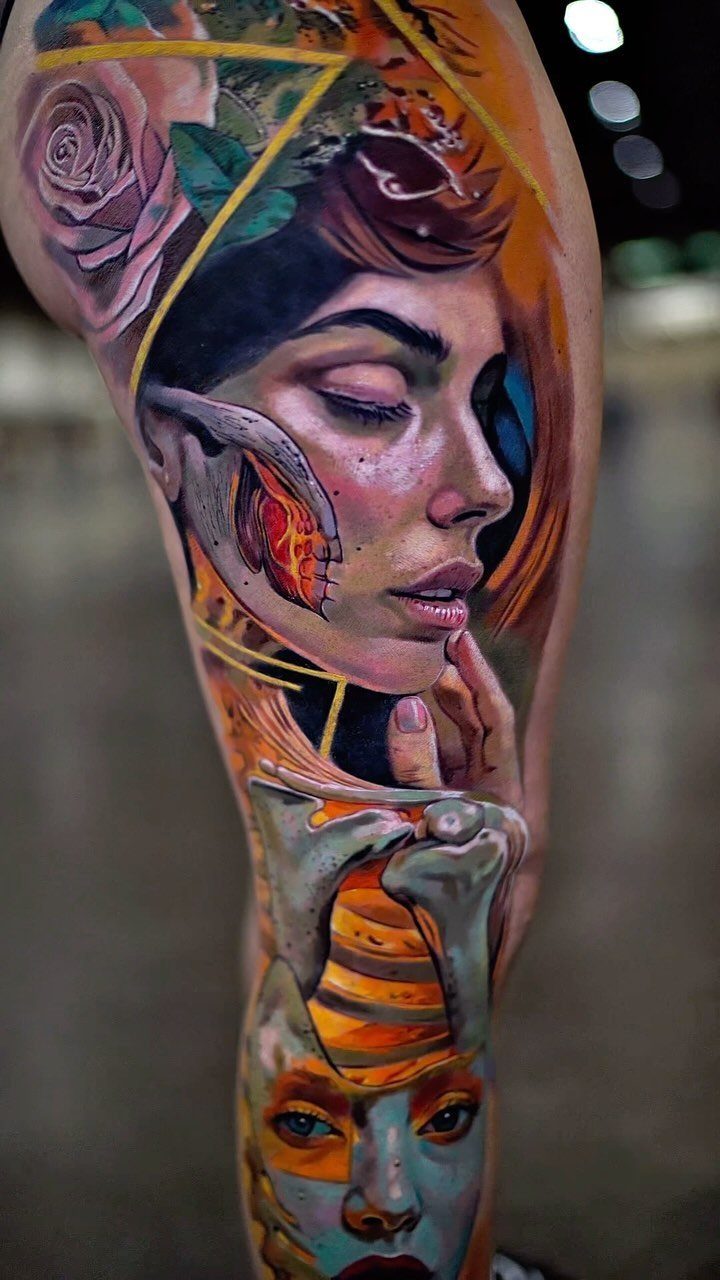
A woman’s face anchors the composition, surrounded by roses and abstract color washes. Realistic portrait sleeves rely on fine detail in the face, so the artist needs experience with skin tones and expression.
Roses fill the space around the portrait without blocking it. The color keeps the sleeve from looking too heavy, and the abstract elements soften the transition between motifs.
This suits someone who wants a portrait that feels artistic, not memorial. The florals keep it feminine without going soft.
9. Illustrative Blackwork Flowers Sleeve
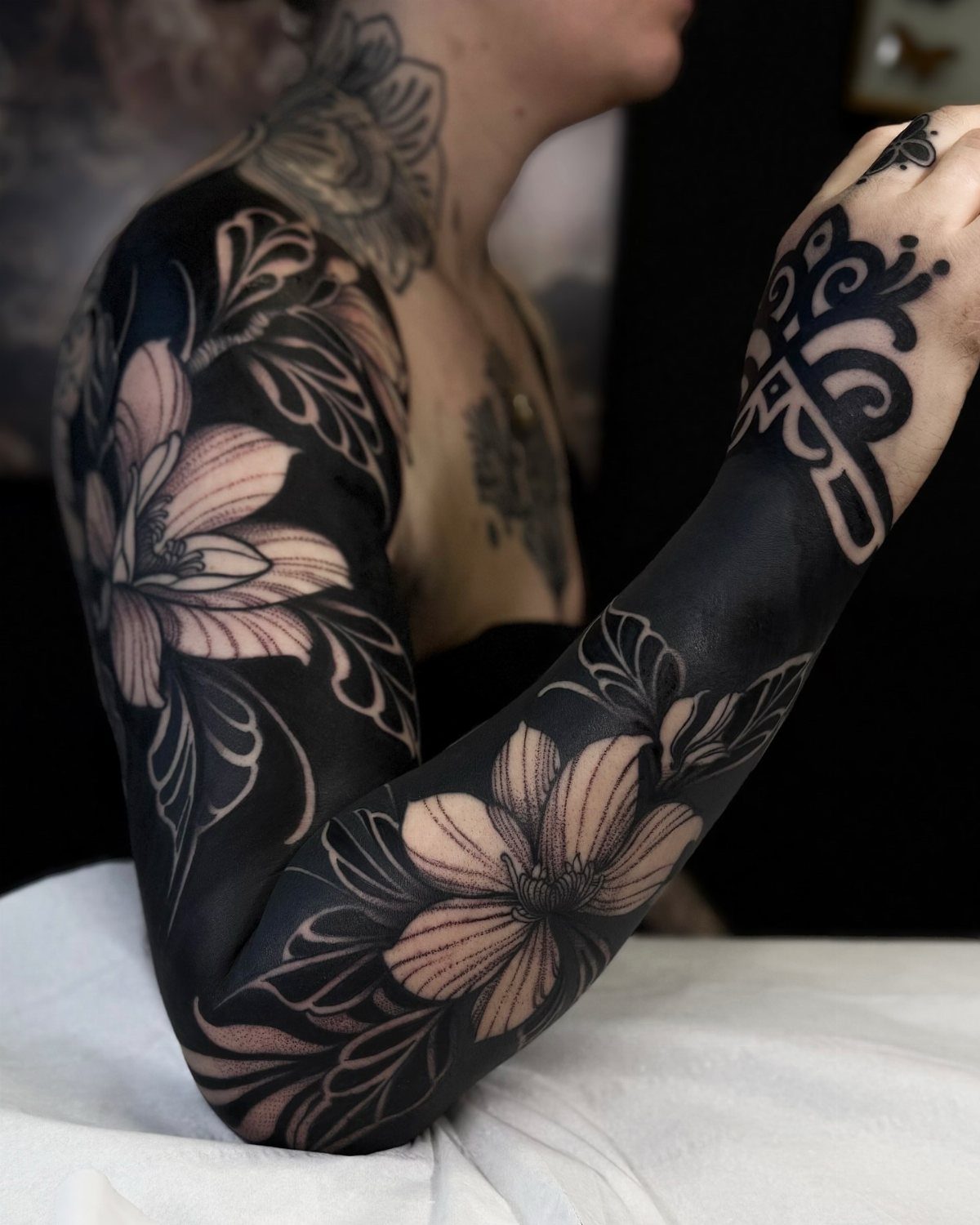
Large flowers sit against a saturated black background, with ornamental linework filling the negative space. Illustrative blackwork blends bold saturation with delicate detail, and the flowers here are built from thick outlines and solid fills rather than realistic shading.
The black background unifies the design. Instead of connecting flowers with stems or vines, the background becomes the structure, and the flowers float in it.
This reads clean from a distance and holds fine detail up close. The black ages sharp, and the contrast stays strong.
10. Linework Tribal Sleeve
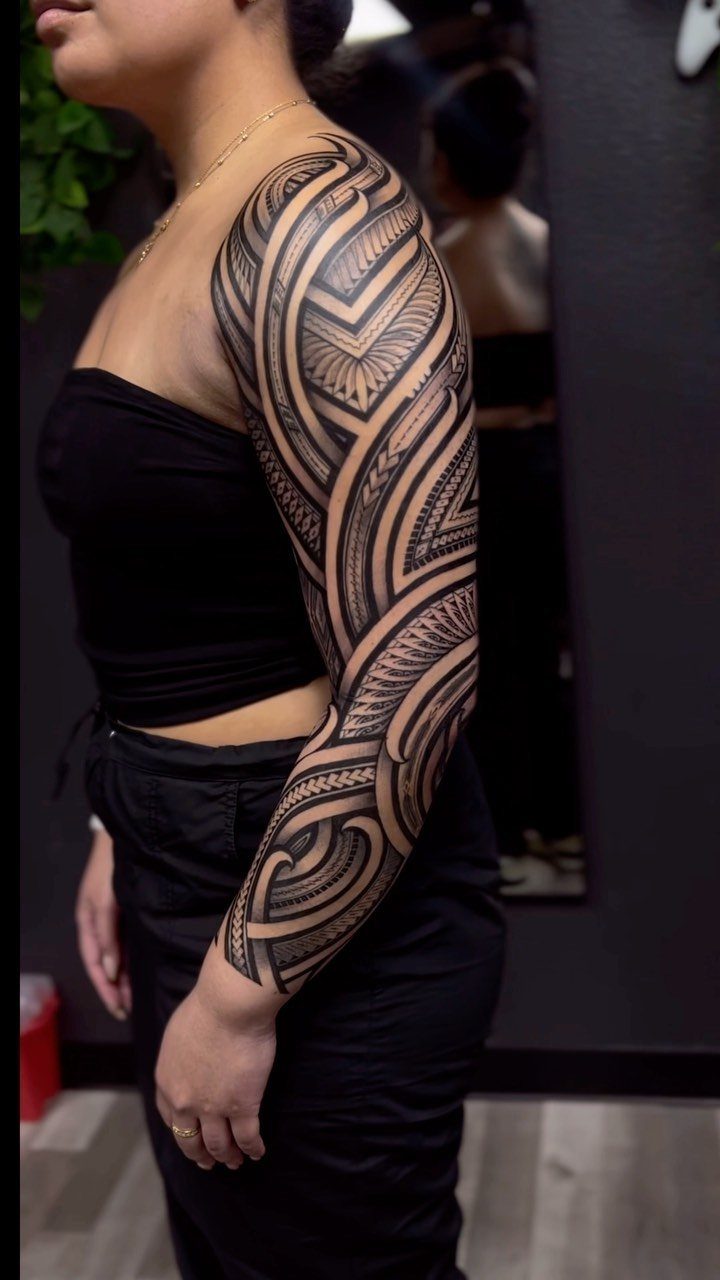
Geometric patterns wrap the arm in bold black lines, no shading or color breaking the flow. Tribal linework sleeves are built on symmetry and repetition, and this one keeps the lines thick enough to age without blurring.
Linework tribal differs from traditional solid tribal by staying open.
The patterns are outlined, not filled, so more skin shows through. The lines follow the arm’s curve, widening at the shoulder and tapering toward the wrist.
This suits sharp, graphic impact without the weight of a blackout sleeve.
11. Paint Splatter Sleeve
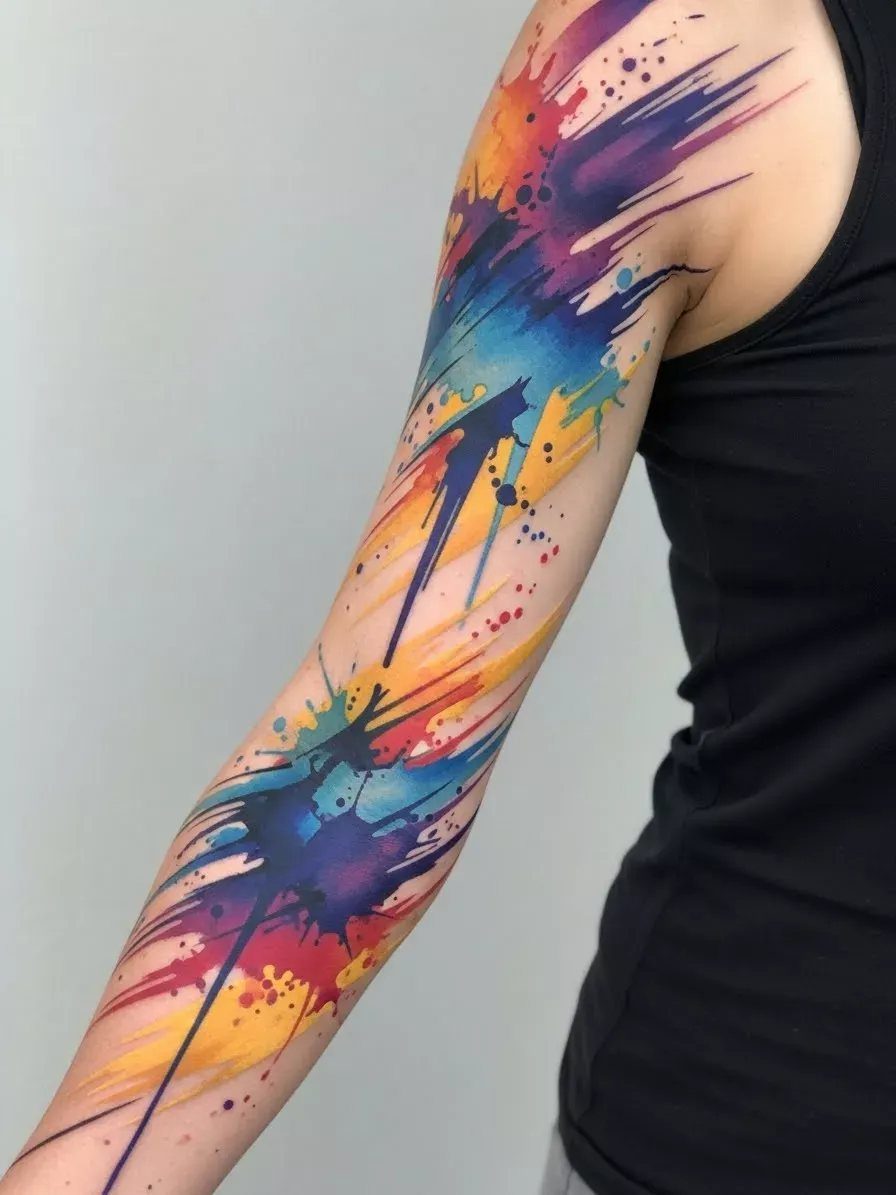
Blue, purple and yellow splashes cover the arm in watercolor-style bursts, no outlines or solid shapes. Paint splatter tattoos mimic the randomness of thrown paint, and the artist builds the color in layers to keep it from looking flat.
Watercolor tattoos lose color faster than bold traditional ink.
The soft edges and light saturation mean touchups are common after a few years. Some artists add a light black outline to hold the color in place, but this version skips that entirely.
This suits abstract, artistic ink over structured designs.
12. Black and Red Sleeve
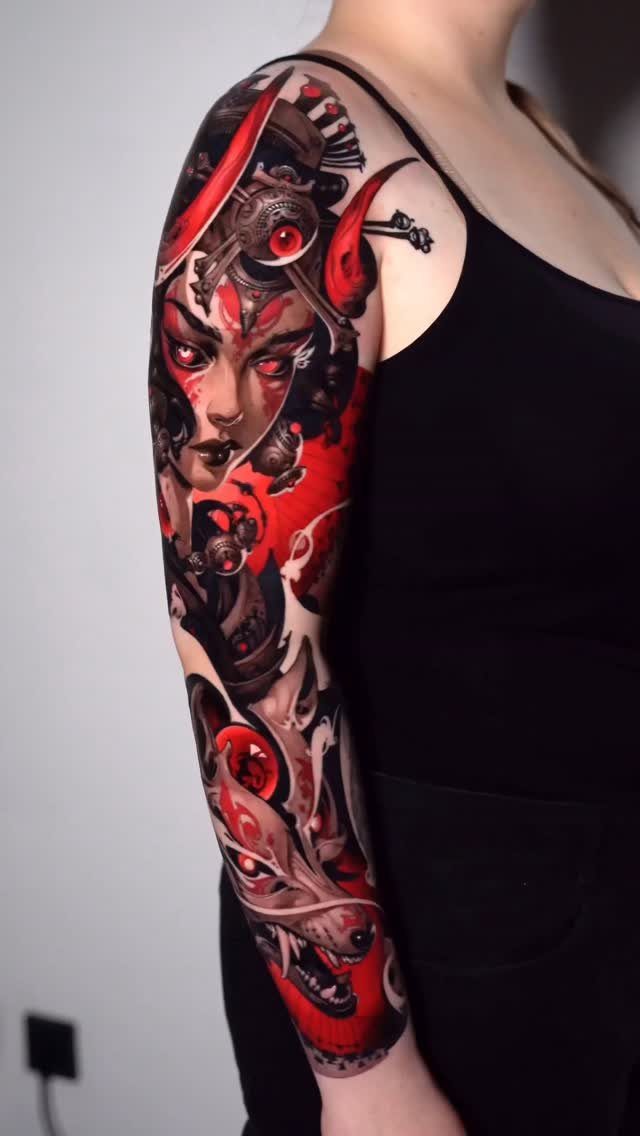
A biomechanical face and a wolf fill the arm in black and red ink, no other colors breaking the palette. The red pulls focus on the mechanical details and the wolf’s eyes.
Red shifts orange over time, so touchups keep it sharp. The black stays sharp longer, and the two-color limit makes the design easier to read than a full-color sleeve.
This suits bold, graphic ink with an edge. The red adds intensity without softening the design.
13. Segmented Old School Sleeve
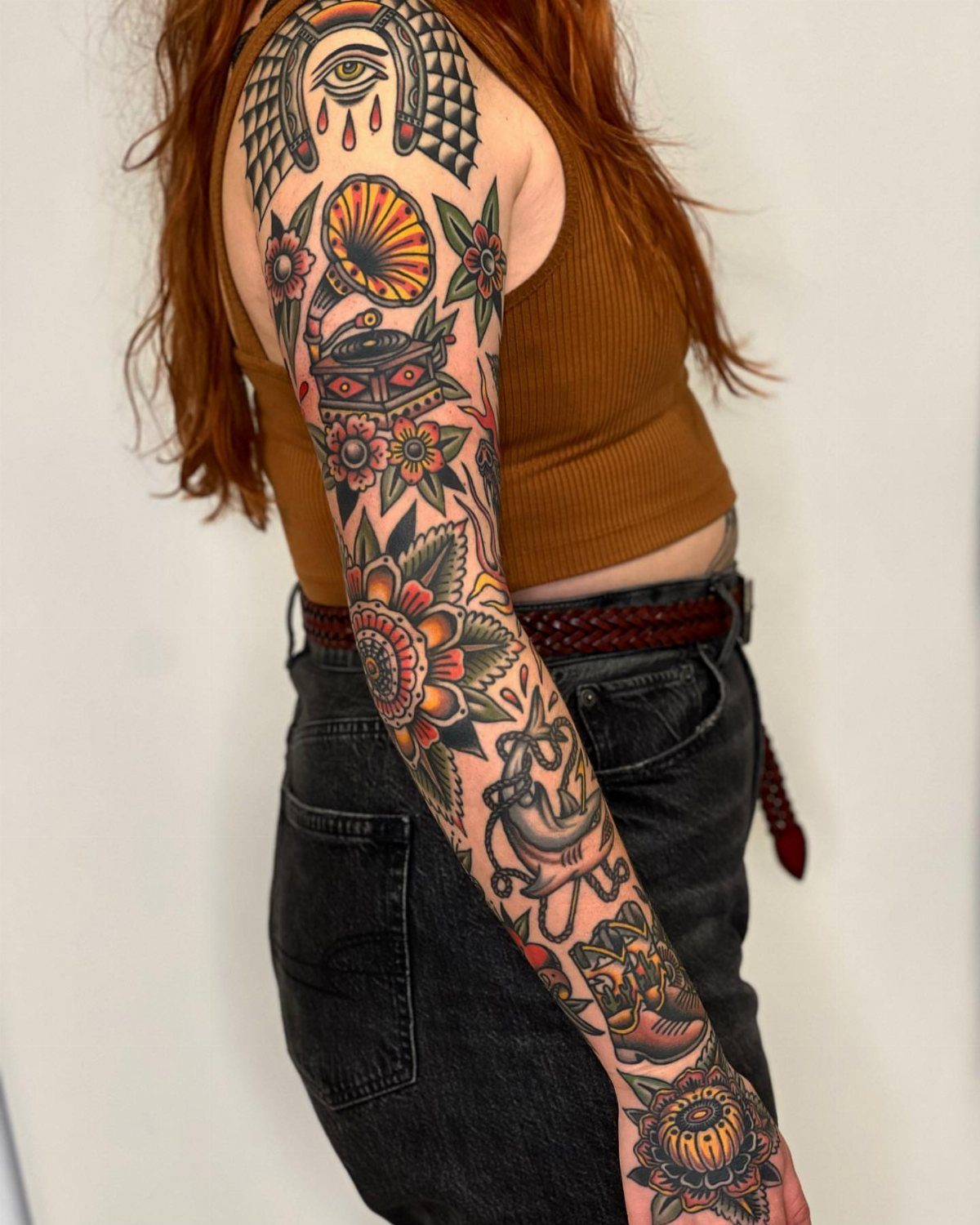
Classic motifs stack from shoulder to wrist: roses, eagles, daggers, anchors.
Old school sleeves work as separate images placed side by side rather than one flowing scene, and each piece holds its own space with bold black outlines and solid color fills.
The segmented approach lets you build the sleeve over time.
Add a piece per session, and the sleeve fills in without needing a master plan from the start. Red, yellow, green and blue are the standard palette, and the thick lines keep everything readable as it ages.
14. Trash Polka Sleeve
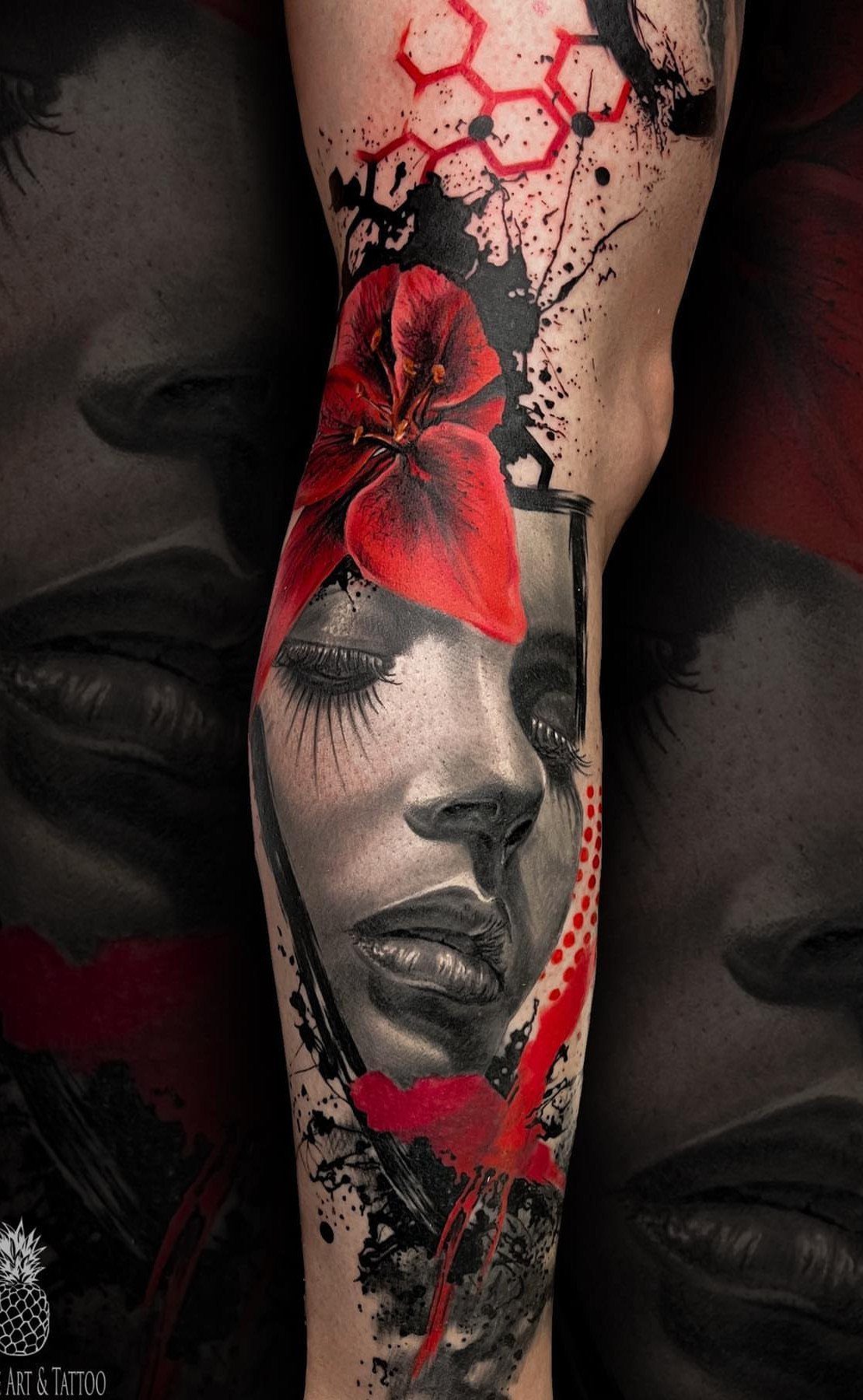
Black ink and red accents collide in abstract chaos. Trash polka pairs realistic portraits or figures with geometric shapes, paint strokes and text fragments, and the red pulls focus wherever the design needs weight.
The abstract elements fill space without competing with the realistic face. Splatters, brush marks and angular shapes break up the composition, keeping it from reading as a straight portrait sleeve.
This suits someone who wants realism but no polish. The style is intentionally rough, and the red-and-black palette keeps it sharp without softening into grey.
15. Neotraditional Snake and Peonies Sleeve
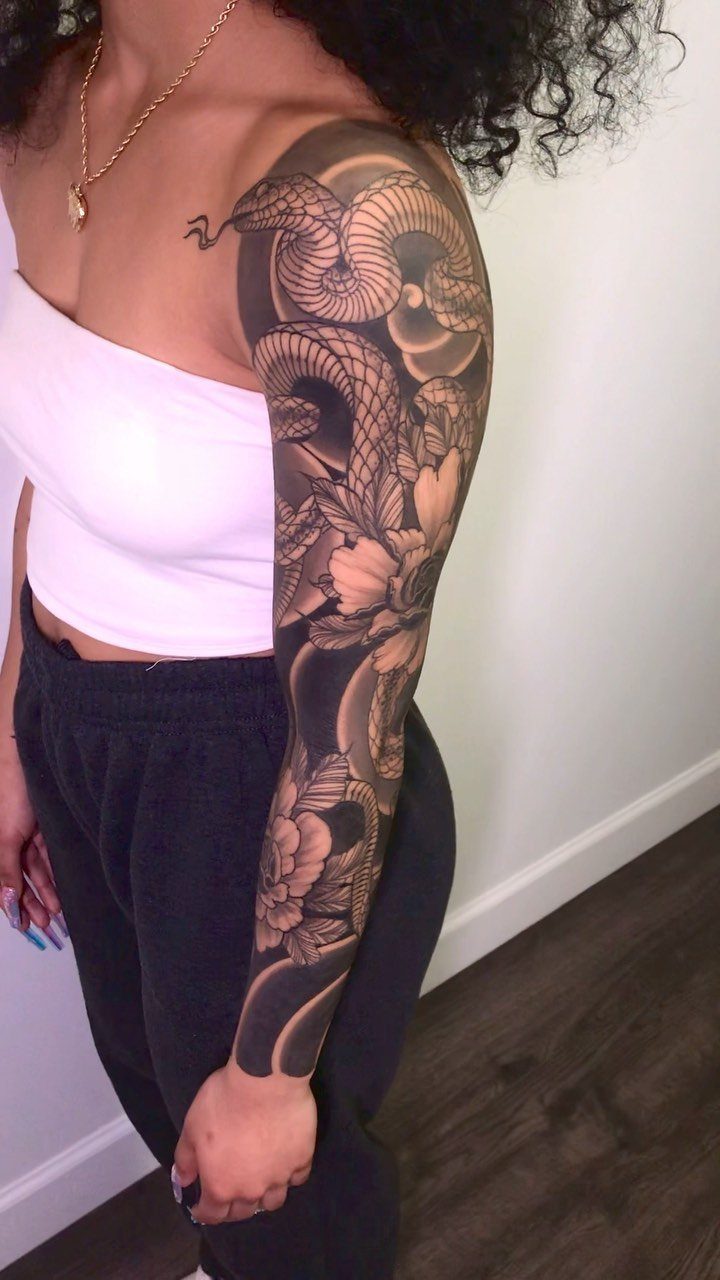
A snake coils around blooming peonies, wrapping the arm in a single continuous scene.
Neotraditional takes the bold lines of old school tattoos and adds softer shading and more intricate detail, and this version keeps the florals large enough to balance the snake’s movement.
The snake gives the sleeve direction. It leads the eye from shoulder to wrist, and the peonies fill the gaps without interrupting the flow.
This works for something feminine with an edge. The snake reads bold, the peonies soften it, and the style ages cleaner than pure realism.
16. Creepy Spiders Sleeve
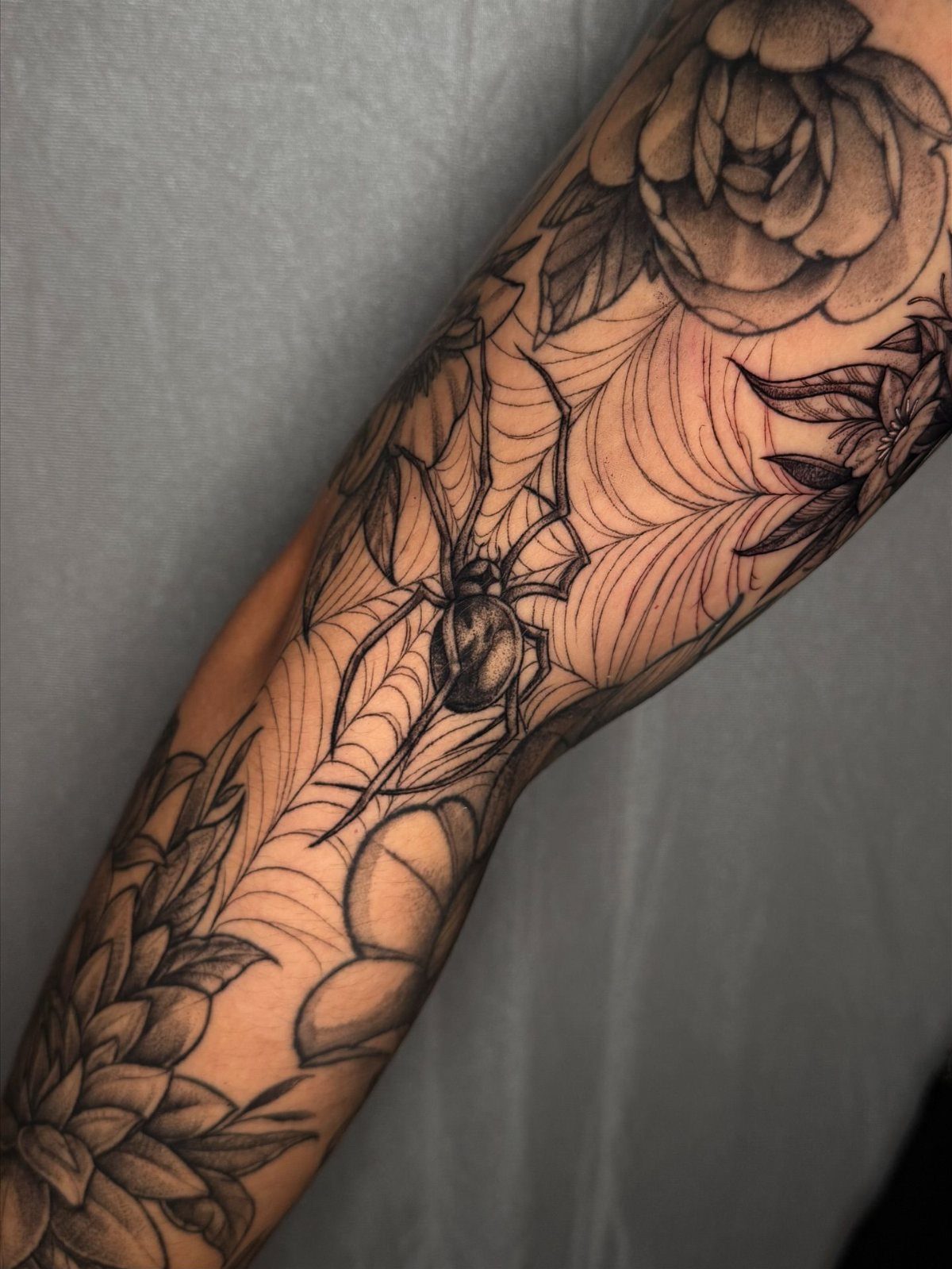
The web and roses anchor the spider motif in classic gothic imagery. Spider sleeves lean dark and gothic, and the web becomes the structure that connects the florals instead of vines or stems.
Spiders read bold with minimal detail.
The legs and body are simple shapes, so the artist can size it large without needing hours of fine work. The roses soften the design without pulling it feminine.
This suits someone who wants something dark that still reads clearly from a distance. The black and grey palette keeps it sharp, and the spider gives the sleeve a focal point that holds attention.
17. Black and Grey Flower Sleeve
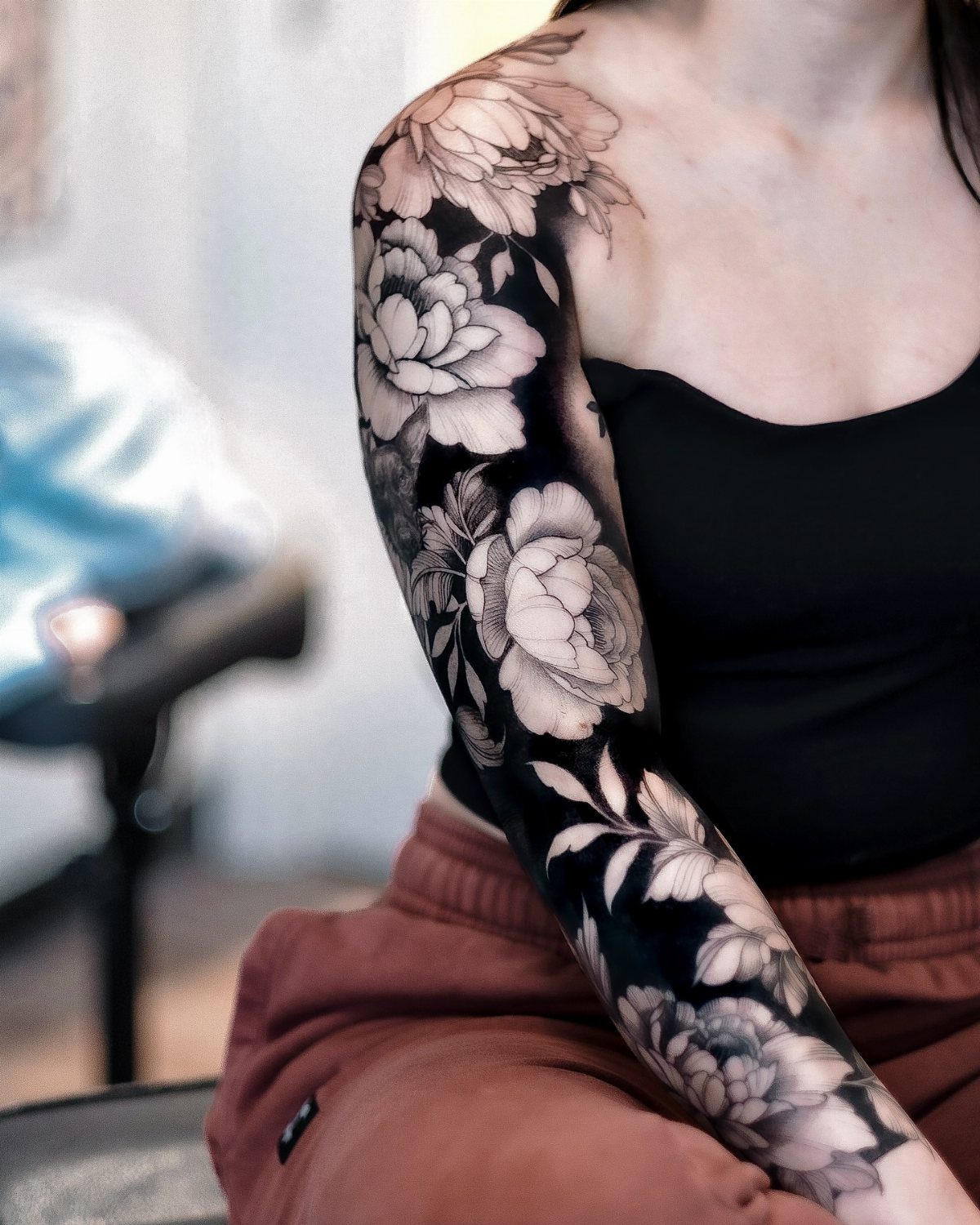
Realistic flower sleeves rely on shading to create depth, and the grey tones layer to make the petals read as three-dimensional instead of flat.
The shading holds longer, and touchups are simpler because there is no color shift to correct. The flowers can stack densely or sit spaced out with negative space between them.
This suits classic, feminine ink that reads well at any distance and holds its detail over time.
18. Traditional American Sleeve
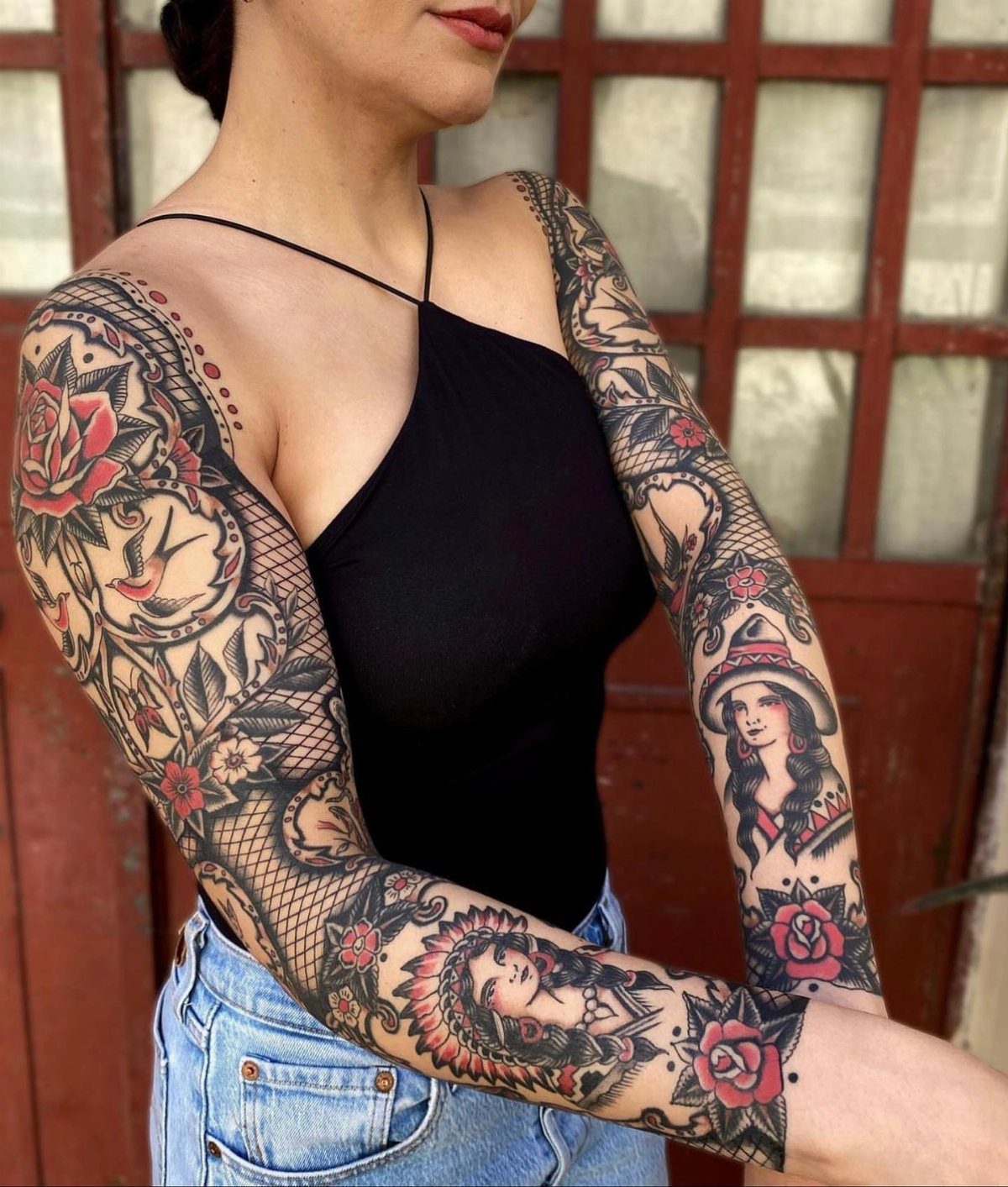
Roses, portraits and bold imagery fill the sleeve in saturated red, yellow, green and blue. Traditional American sleeves stack separate images rather than blending them into one scene, and the thick black outlines keep each piece readable on its own.
The portraits add personality. Female faces, pin-ups or memorial portraits sit among the roses and daggers, and the color makes them pop instead of fading into grey.
This works for someone who wants a full sleeve that builds over time. Each piece can be added separately, and the traditional style holds up across decades without looking dated.
19. Surreal Neon Portrait Sleeve
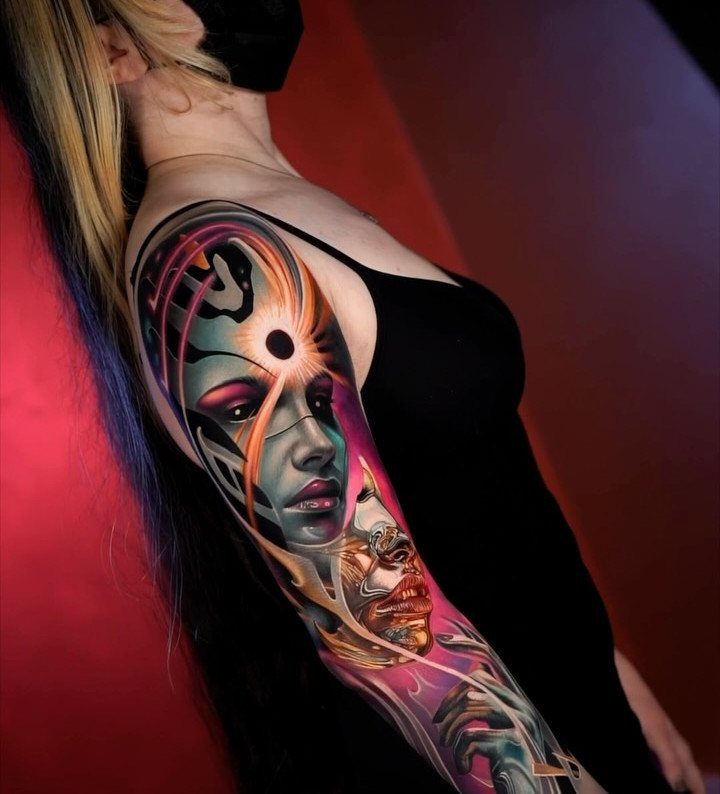
Stylized female faces layer with glowing neon shapes in bright pinks, blues and purples. Surreal neon sleeves blend illustrative portraits with abstract geometry, and the color saturation keeps it bold without needing realism.
The faces are simplified, graphic rather than photorealistic, so the design holds its clarity as the neon tones fade. Expect touchups on the bright colors every few years to keep the glow sharp.
This suits someone who wants art over accuracy. The surreal composition reads as statement ink, not memorial or narrative.
20. Dark Surreal Blackwork Sleeve
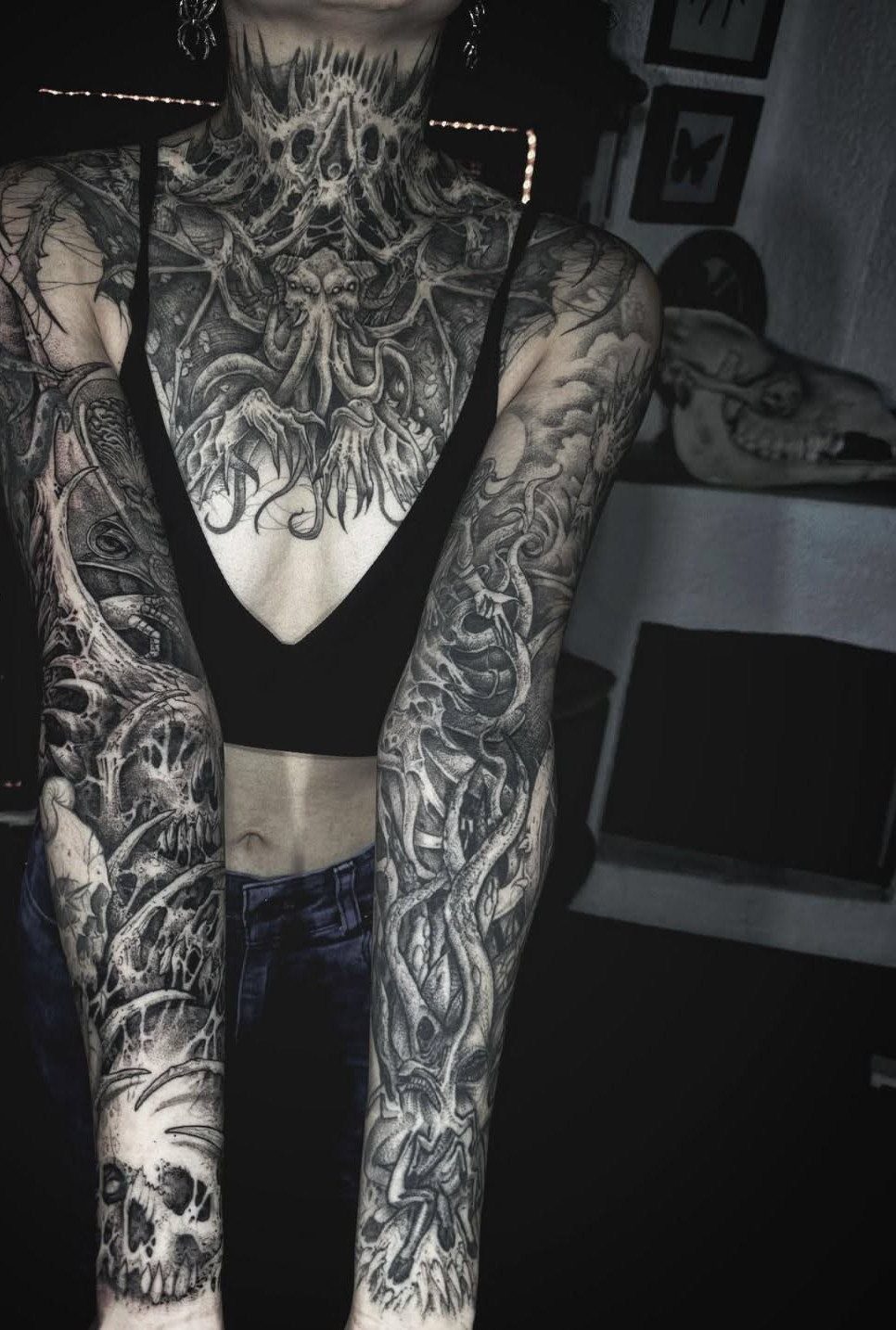
Skulls and organic shapes flow across the arm in saturated black and grey. Dark surreal blackwork pairs macabre imagery with abstract forms that twist and merge, and the heavy ink coverage gives it weight.
Solid black holds its edge over time better than anything else. Grey tones build depth without needing color, and the surreal approach lets the skulls blend into the organic shapes instead of sitting as separate images.
If your other work leans abstract or macabre, this direction fits. The design reads dark and bold without relying on horror tropes alone.
Frequently Asked Questions
Should I get a full or half sleeve tattoo?
A full sleeve gives you room for a complete composition that flows from shoulder to wrist, while a half sleeve stops at the elbow and takes fewer sessions.
Full sleeves work best when the design needs space to tell a story or connect multiple elements, and half sleeves suit a single focal point or simpler motif. If you’re unsure, start with a half and extend it later.
How expensive is a full sleeve tattoo?
A full sleeve typically costs several thousand dollars and takes multiple sessions to complete, with the final price depending on the artist’s rate, the detail level, and how many hours it takes.
Most artists charge by the hour, and the total cost depends on how much detail goes into the piece.





