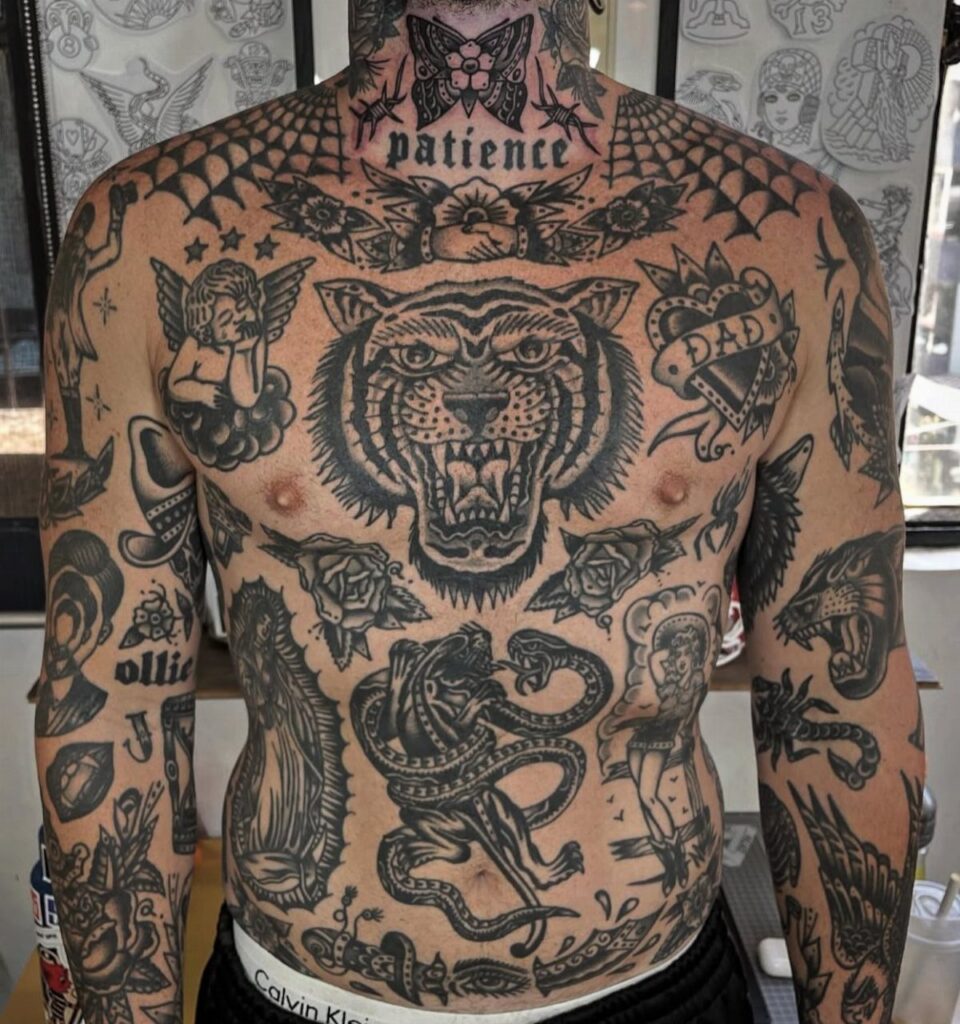
American traditional tattoos use bold black outlines and a tight palette of red, yellow, green and blue to stay readable as the ink ages, and that durability is why men still choose the same ships, eagles, skulls, anchors and roses their grandfathers wore.
1. Ship Tattoos
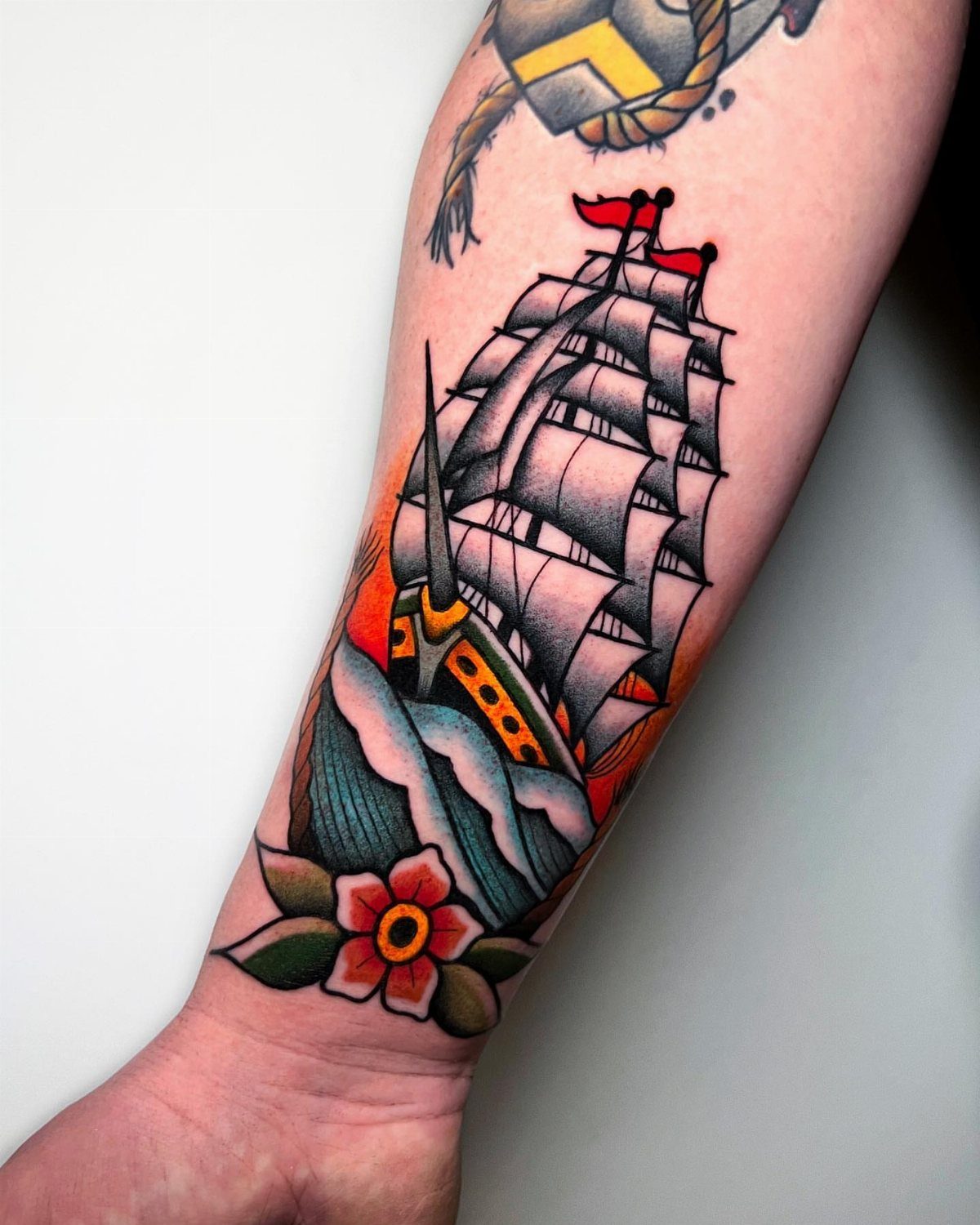
Sailors wore these to mark a voyage around the Cape or across the Atlantic, and the symbolism still holds: you’re built for rough water and long stretches.
The bold outlines and minimal shading keep the rigging readable even as the ink settles over decades.
I like the forearm for this one. The vertical format fits the mast and sails without cramping them, and you can rotate your arm to show the full broadside or tuck it away.
2. Eagle Tattoos
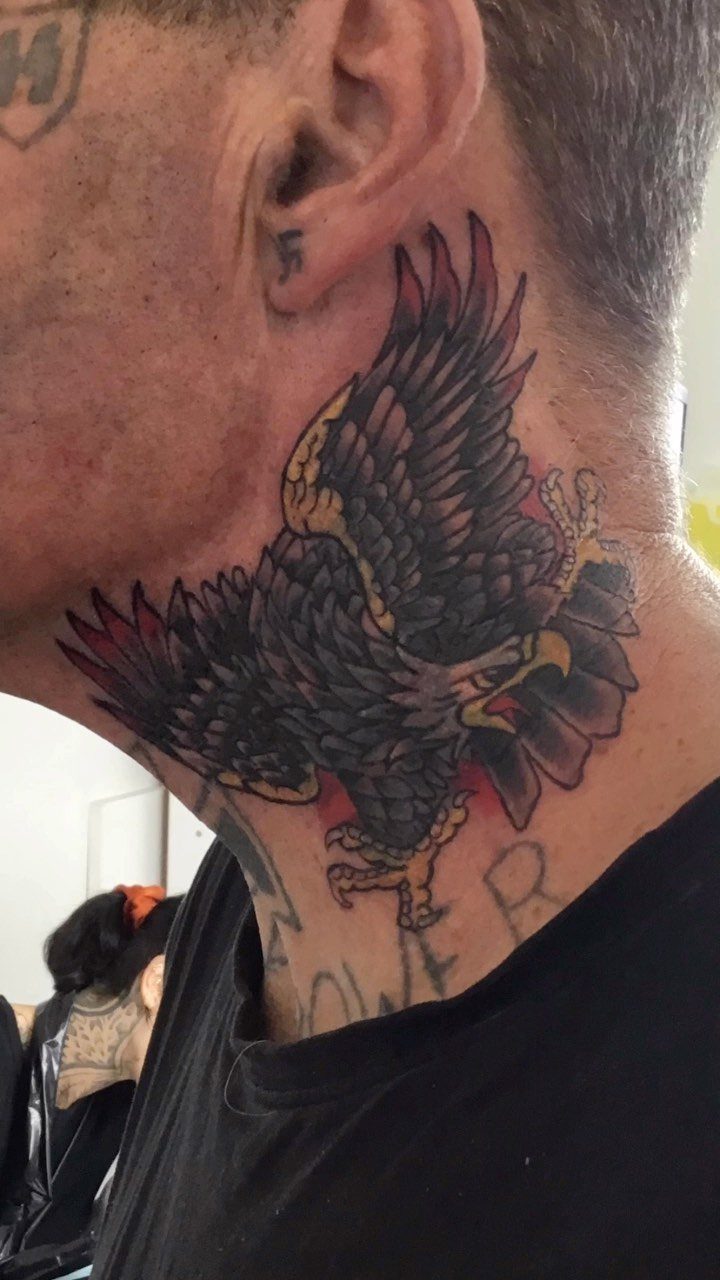
An eagle with wings spread and talons out reads as strength and defiance from across the room, and the neck is one of the few placements that gives it that kind of presence.
The bold black body and red or yellow accents are pure American traditional, and the style’s thick lines handle the curves and muscle movement better than fine detail ever could.
Neck tattoos sit in plain view most of the time, so this works best if your job allows visible ink or you’re past caring.
The pain is real but short. The neck heals faster than joints because the skin stays put.
3. Classic Skull and Dagger Tattoo
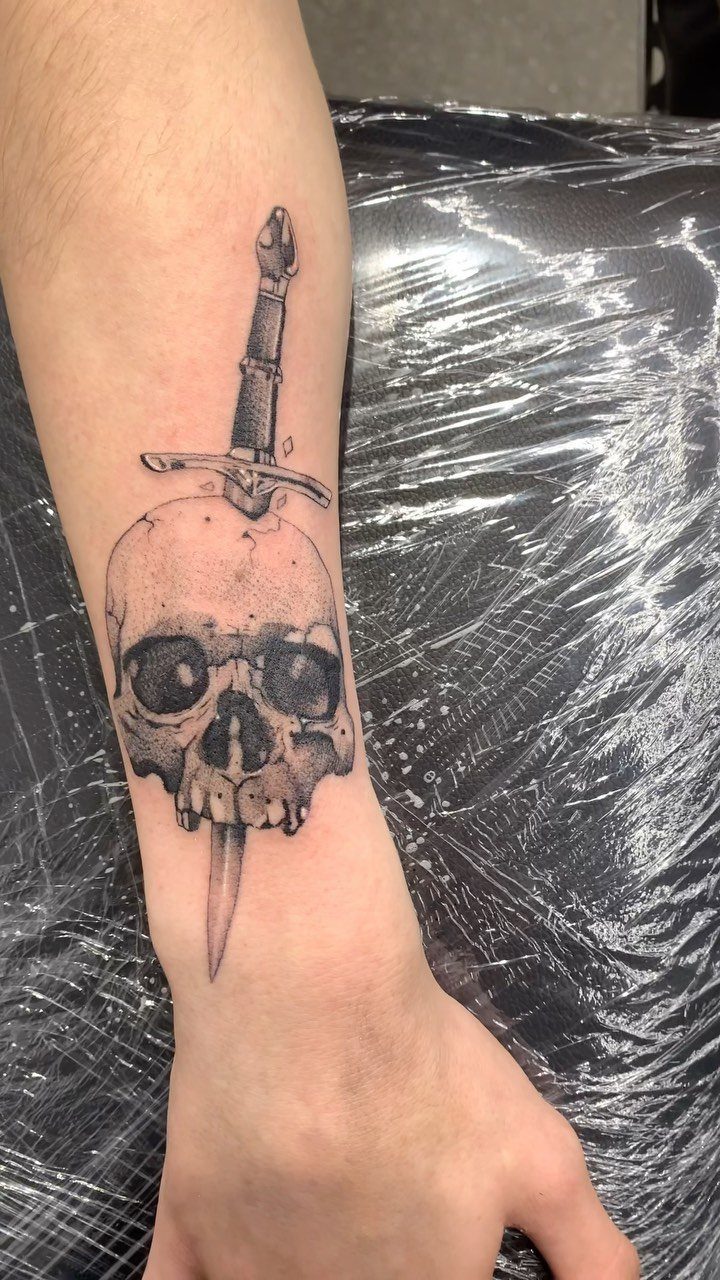
Black and grey keeps the contrast high and the shadows deep, so the forms stay crisp without color.
Forearm placement lets you orient the dagger pointing up or down.
Pointing up reads as ready, pointing down as already done. Either way, the flat surface holds the details without distortion, and you can cover it with a long sleeve when the situation calls for it.
4. Panther Tattoos
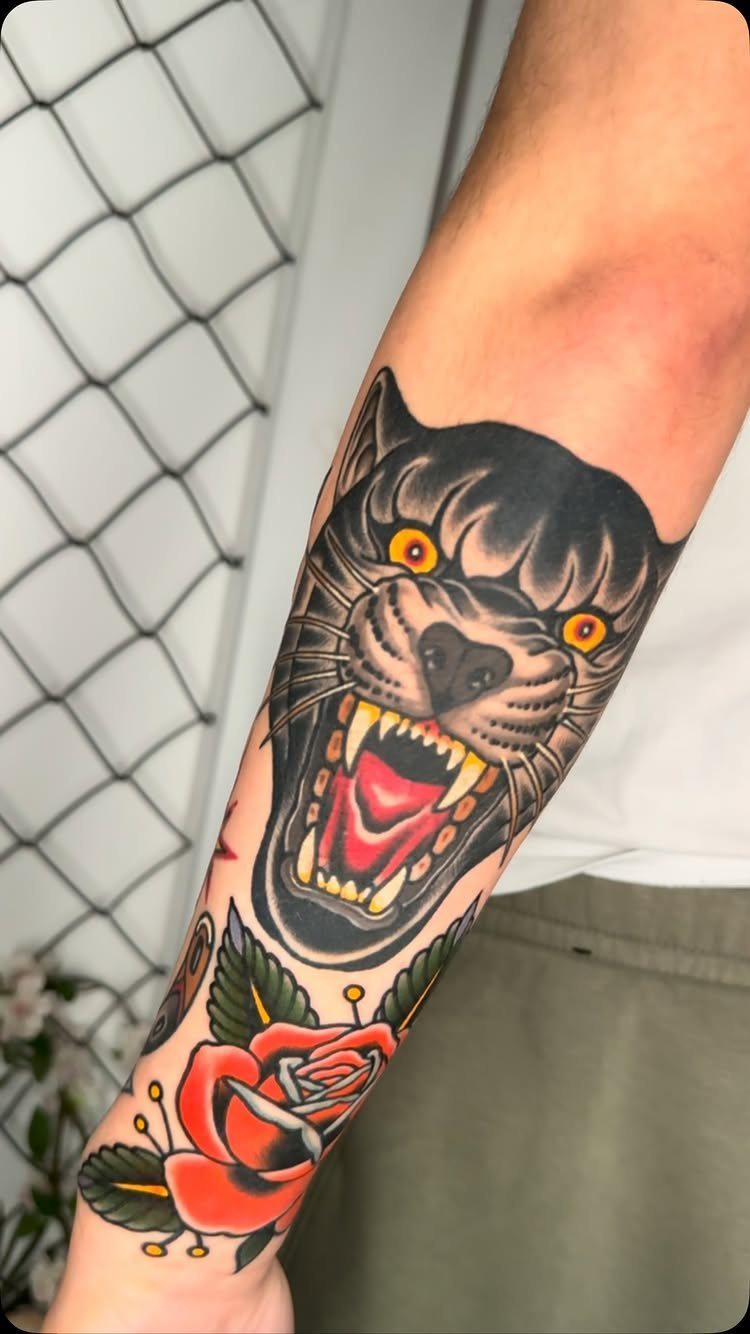
A panther head snarling straight at you, teeth bared and eyes glowing, signals raw aggression and the refusal to back down.
Traditional panther tattoos are almost always black with yellow or green eyes, and the thick outline keeps the face legible as the tattoo ages.
The forearm gives you room for a large head without cramping the features, and the rose underneath softens the image just enough to show you’re not all threat.
Panthers also work on the chest or shoulder, where the muscle adds dimension to the head, but the forearm keeps it visible and wearable in most settings.
5. Pin-Up Girl Tattoo
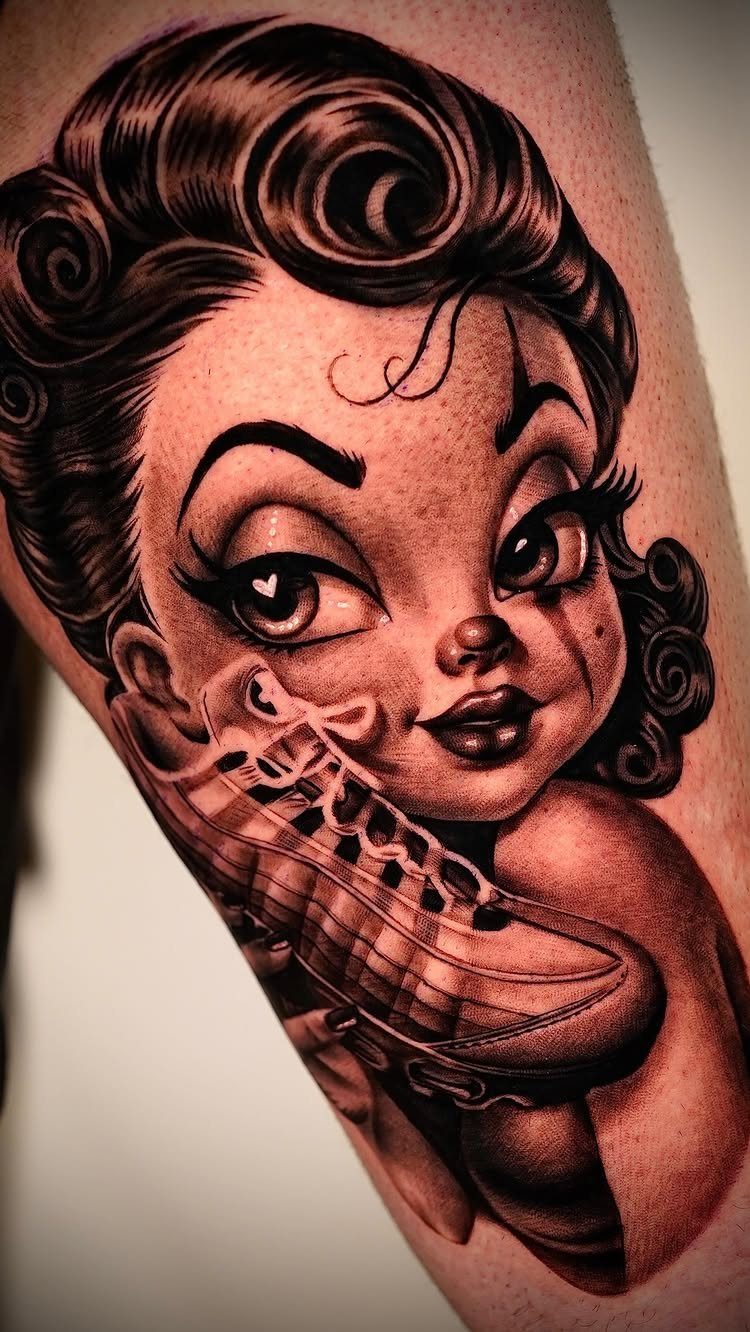
A pin-up girl with a coy smile is pure mid-century Americana, lifted straight from the nose art on bombers and the walls of barracks.
The black and grey version loses some of the warmth of color but picks up contrast and reads well at a distance.
Pin-ups work on the calf or thigh, where the vertical format fits the figure without distortion. The leg also keeps the tattoo out of constant sun exposure, which matters because faces and fine lines fade faster than bold shapes.
I prefer the thigh if you want it larger. More room means the artist can get the proportions right without shrinking details to fit.
6. Anchor Tattoo
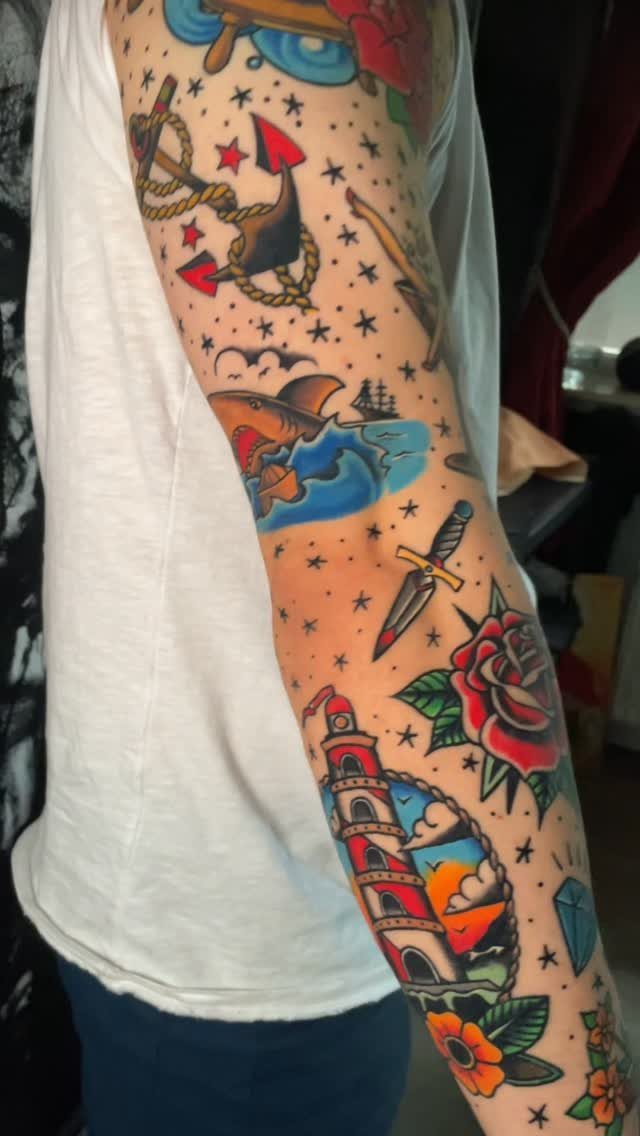
An anchor sits at the center of a traditional sleeve as both literal symbol and visual anchor for the rest of the design.
Sailors wore them to mark a successful Atlantic crossing, and the meaning still holds: you’ve put down roots, you’re not drifting, you know where you belong.
The sleeve format lets you pack in secondary images like the shark, lighthouse and dagger visible here, all connected by waves or negative space.
The anchor usually goes on the forearm or bicep where it stays visible. If you’re building a sleeve over time, start with the anchor and add outward from there.
7. Snake and Dagger Tattoo
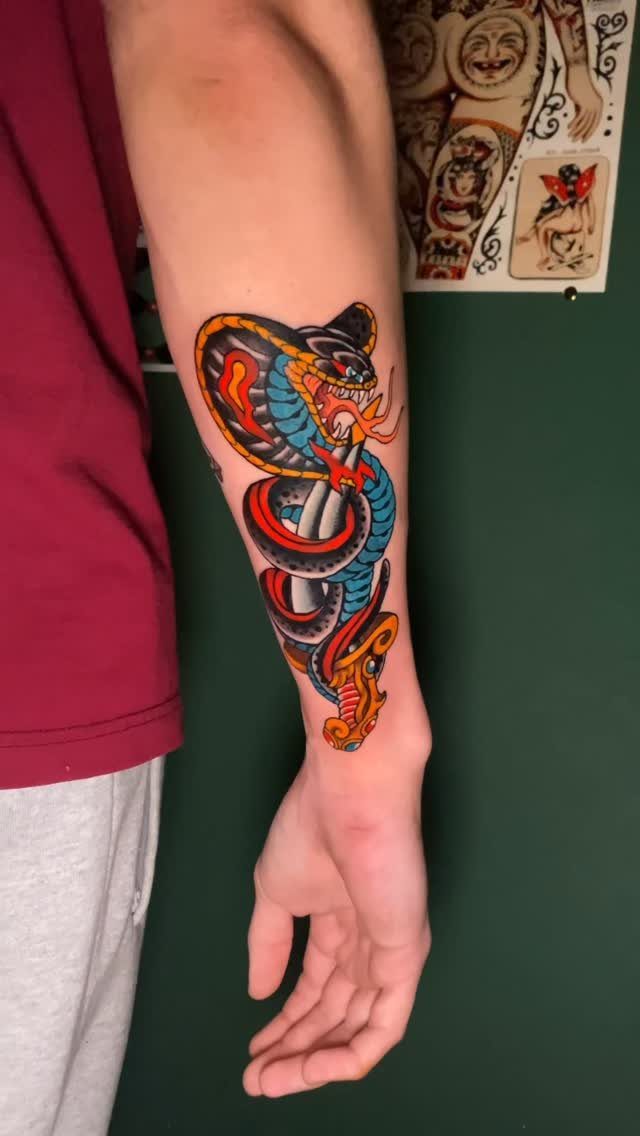
A cobra wrapped around a dagger puts 2 symbols of danger together and lets them cancel each other out: the snake is pinned, the blade is controlled, and what you’re left with is protection through force.
The forearm gives you enough length to show the full coil without cramping the snake’s body. Blue ink on the cobra breaks from the usual black and reads well against skin without losing contrast as it ages.
8. Skull Tattoos
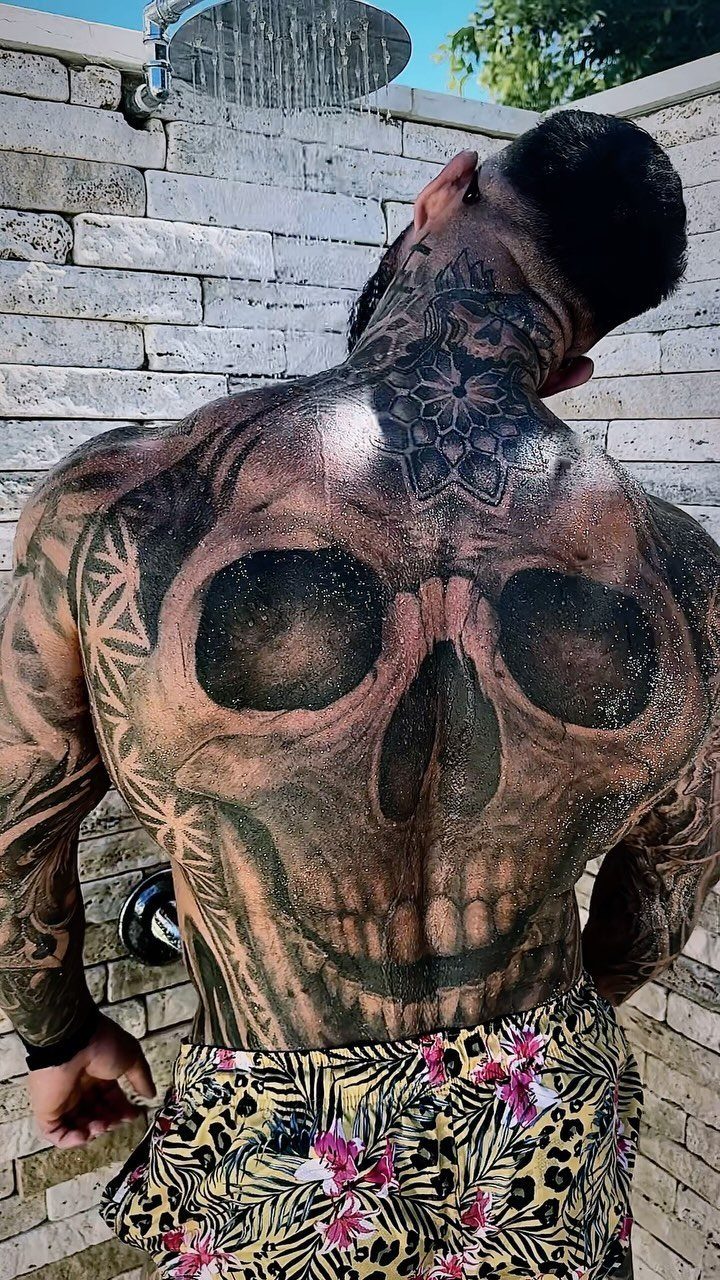
A skull sits at the center of traditional tattoo work because it says the one thing everyone knows and most people avoid saying out loud.
The back gives you room to go large without fighting the curves of a shoulder or the taper of a limb.
Florals around the skull soften the image just enough to keep it from reading as pure threat, and the flat surface between your shoulder blades holds detail better than anywhere else that size.
9. Snake Tattoos
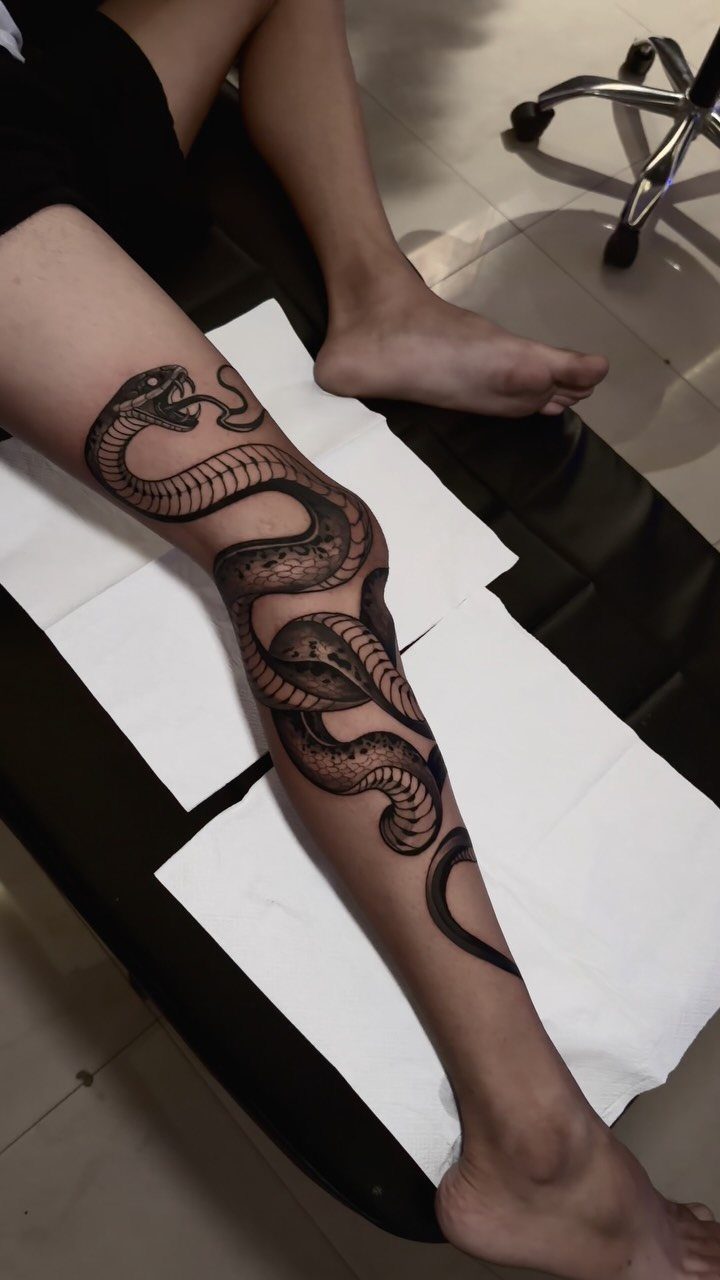
A black snake wrapping from calf to ankle follows the muscle and reads as movement even when you’re standing still. Snakes shed their skin and start over, so the symbolism fits if you’ve walked away from something and kept going.
The leg placement works because the snake’s curve matches the taper of your calf, and thick black ink stays bold longer than color or grey wash. The wrap keeps the design visible from multiple angles without needing a mirror.
10. Traditional Rose Tattoo
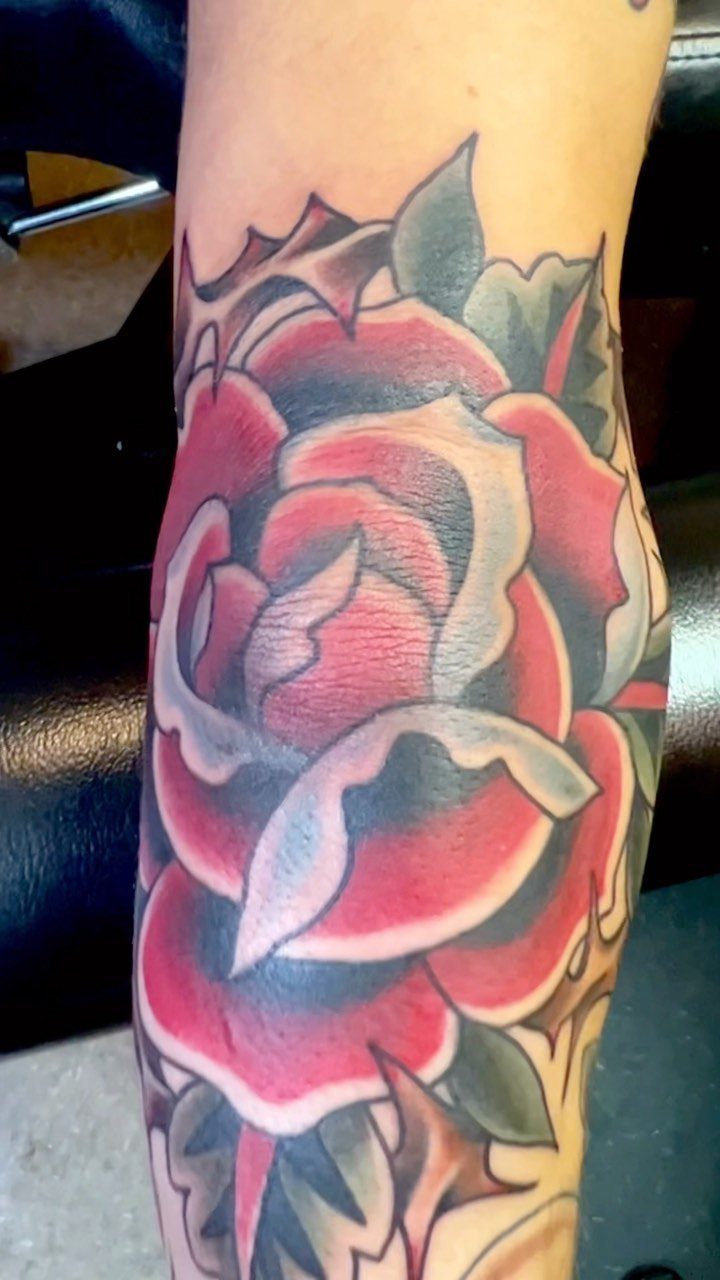
A rose in red with green leaves is the most direct way to mark loyalty or loss, and the thick petals and bold outline mean it will still read as a rose decades later.
Forearm placement keeps it visible without putting it on your hand or neck, and the flat surface holds the symmetry better than a shoulder or ribs. Grey shading in the petals adds depth without competing with the red.
11. Wolf Head Tattoo
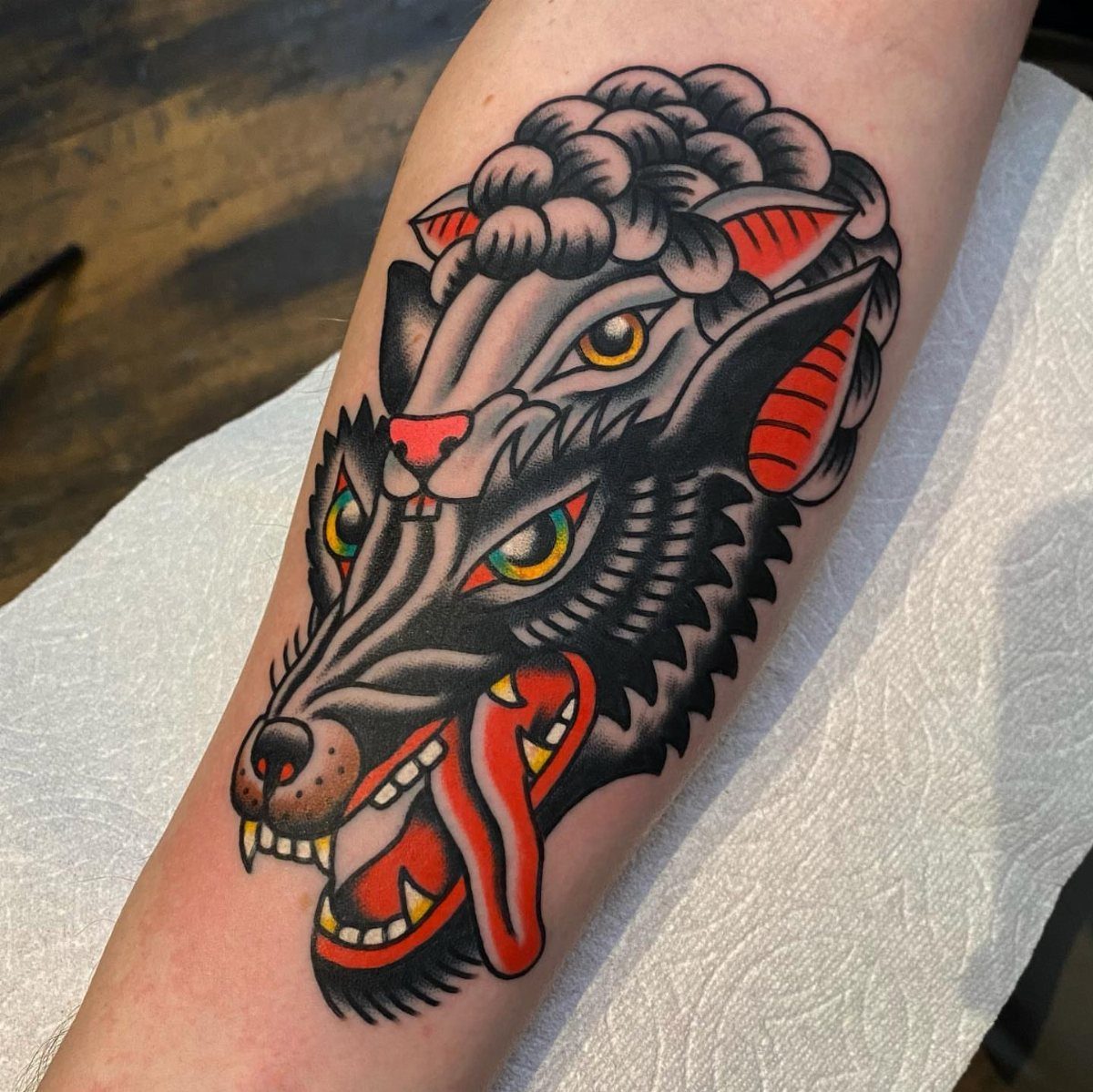
The forearm is the right size for a head without cramping the features or leaving too much empty space. The sheep behind the wolf here adds a second layer: the wolf protects what’s his.
12. Lucky 13 Tattoos
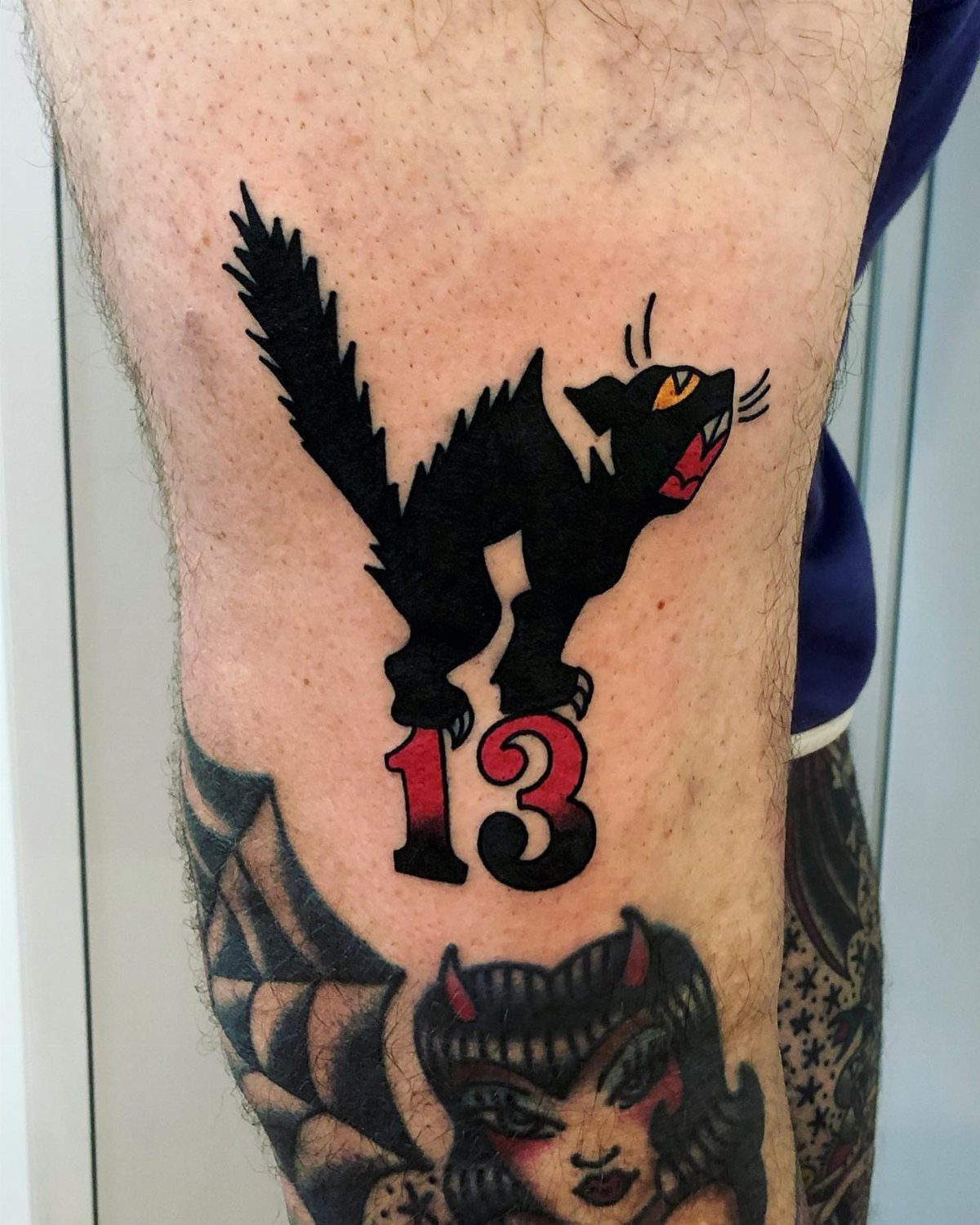
A black cat perched on a red 13 flips the bad luck symbol and wears it as a badge instead. Sailors and bikers picked it up first, and it still reads as defiance or the refusal to play it safe.
The leg gives you a vertical format that fits the stacked composition, and the bold red number stays readable from a distance.
This one works best if you already have ink and you’re adding to a collection rather than starting fresh.
13. Dragon Tattoos
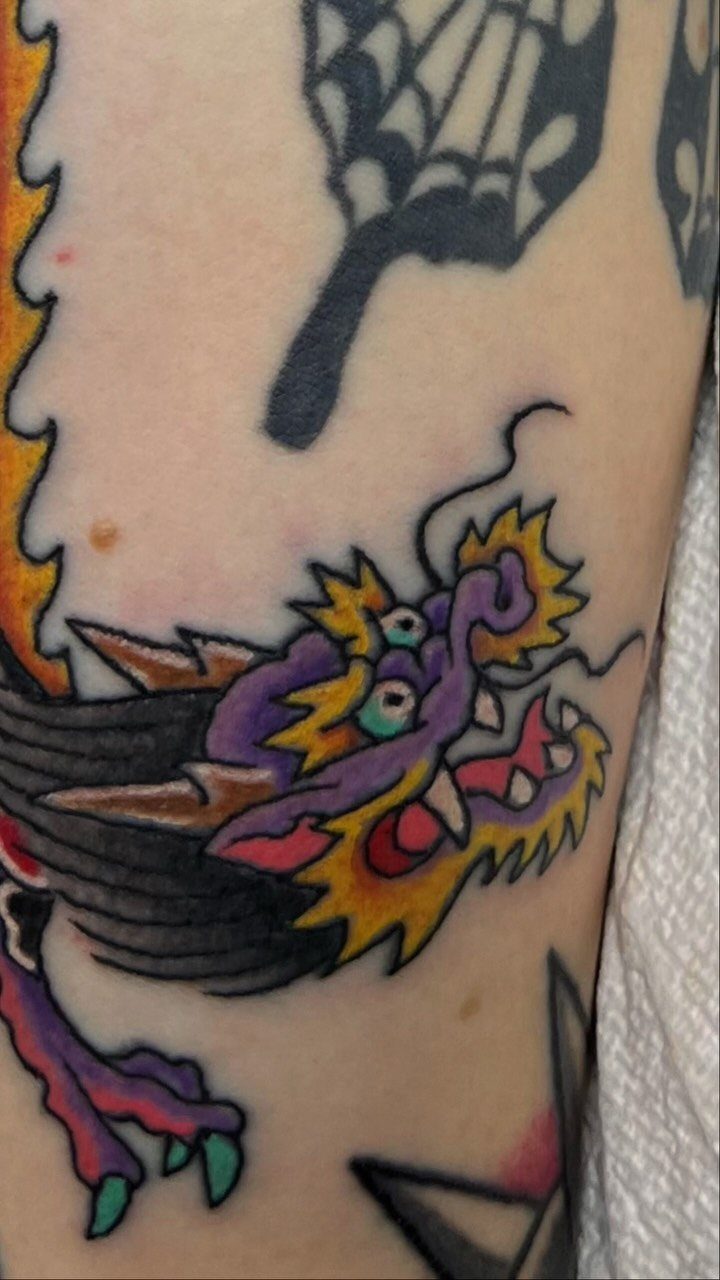
Purple and yellow scales with black outlines bring a traditional dragon to life without needing fire or wings to fill space.
Dragons in American traditional work came from Navy sailors who saw them in Asian ports, and the coiled body wraps around muscle better than a flat creature ever could.
The arm gives you room to show the full curve without cramping the scales.
14. Traditional Clock Tattoo
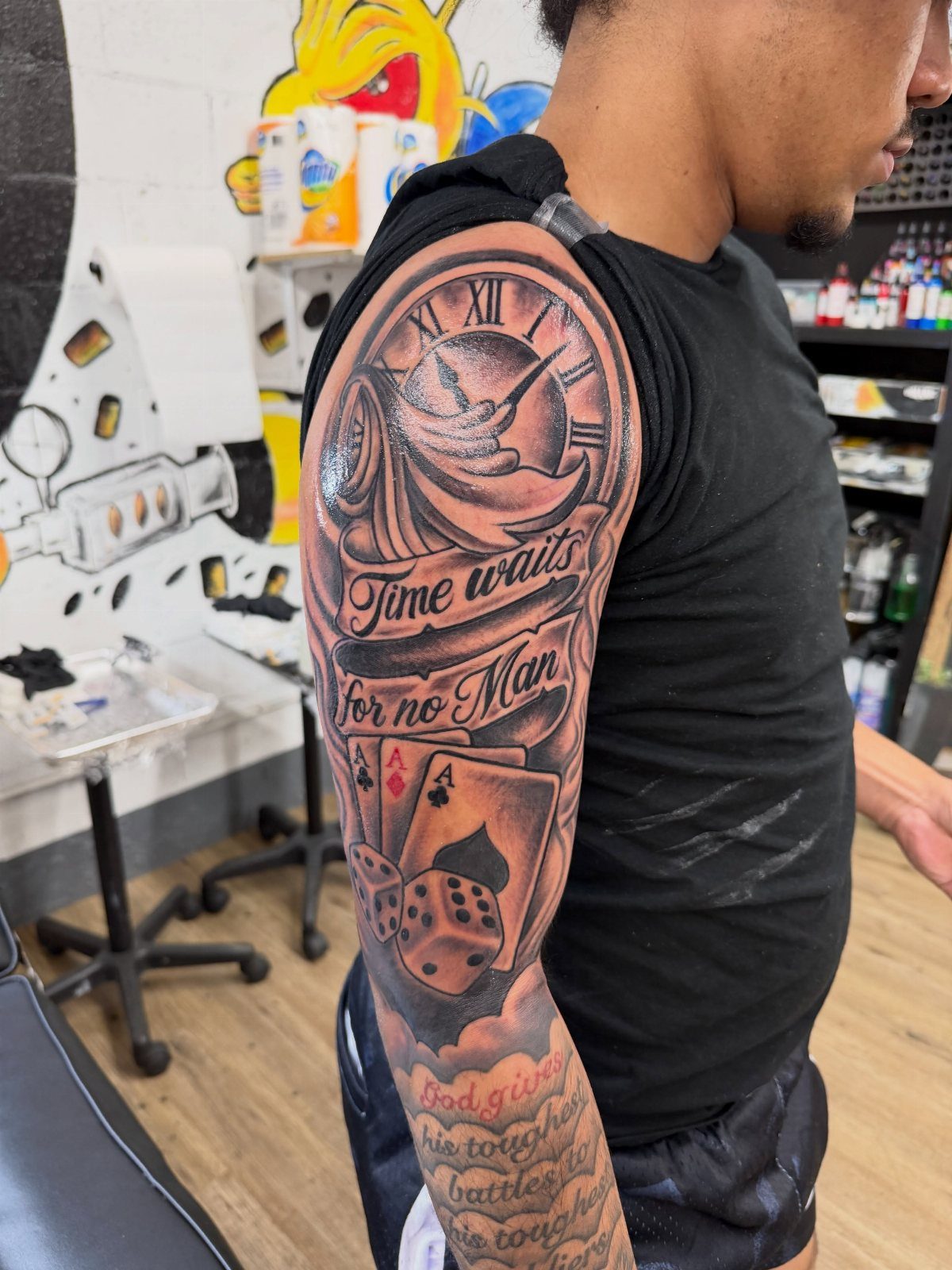
A clock face with Roman numerals marks time passing and the fact that you can’t get it back.
The banner reading "Time waits for no Man" says out loud what the clock face already implied, and the dice and cards add chance and risk to the message.
Black and grey work lets you layer deeper shadow around the gears and hands without the color shifts that soften the edges on a mechanical design.
The sleeve format here lets you build around the clock with other symbols that matter to you, all tied together by the same palette.
If you’re starting fresh, this works better as part of a larger piece than on its own.
15. Traditional Mermaid Tattoo
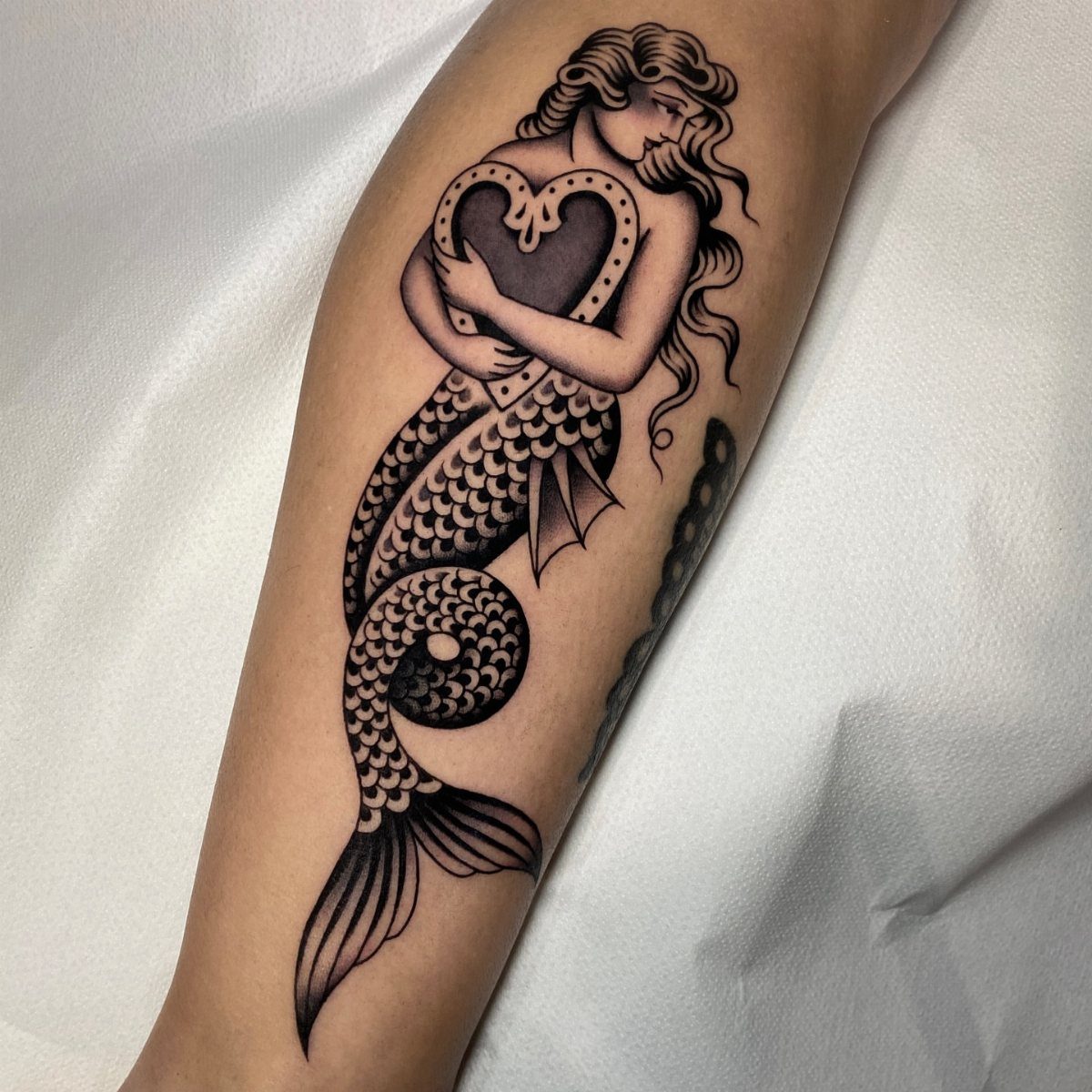
A mermaid holding a heart blends the sailor’s warning with something softer, and the black and grey approach keeps the focus on the form instead of splitting attention with color.
Mermaids in traditional work were reminders of danger at sea and temptation on shore, so the heart here shifts the symbol toward devotion or loss depending on how you read it.
The leg placement suits the vertical figure and keeps the tattoo out of constant sun. More room on the thigh lets you scale up without distorting proportions, but the calf works if you prefer something visible in shorts.
16. Traditional Tiger Tattoo
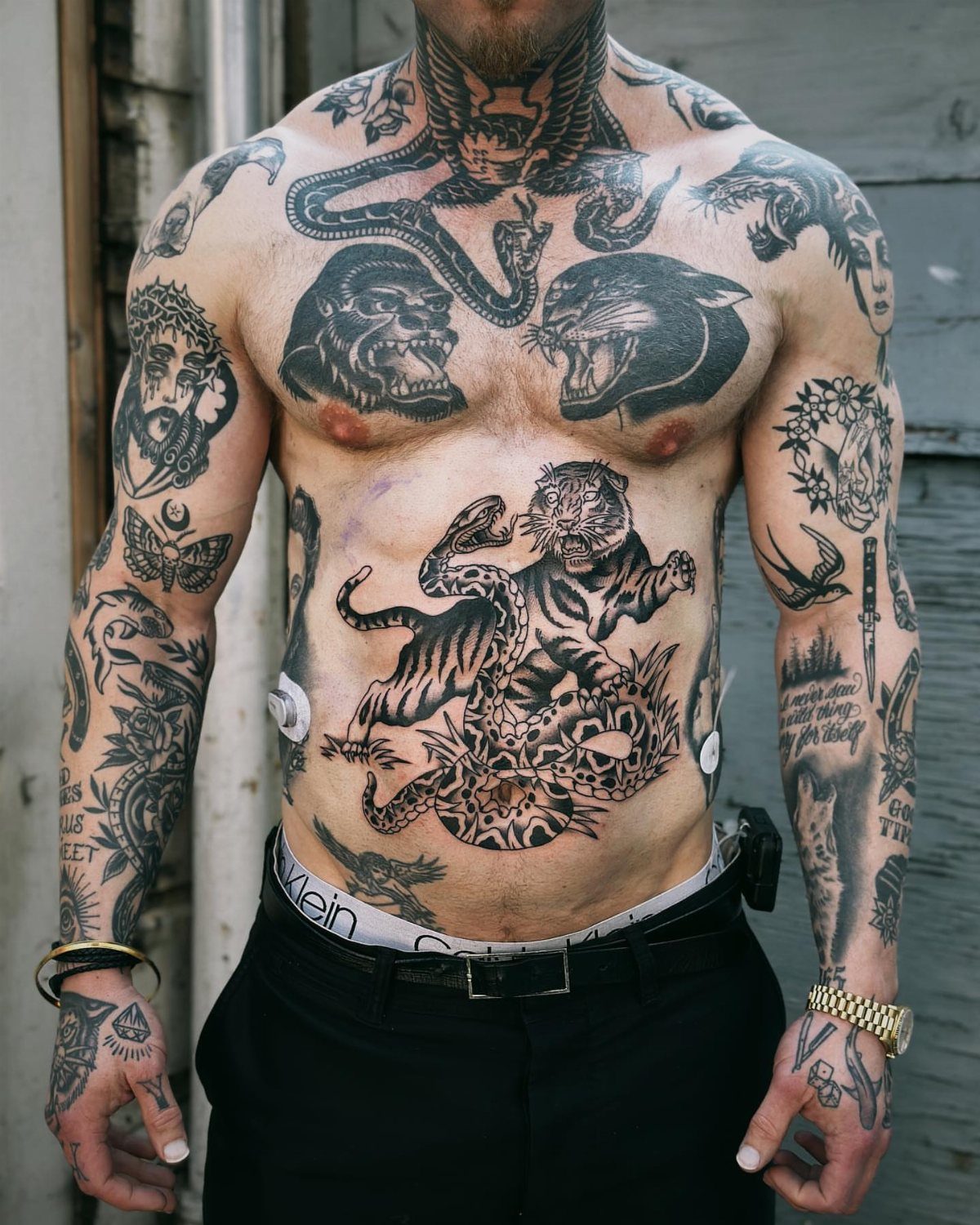
A tiger on the stomach takes confidence to wear and pain to sit through, but the placement gives the animal room to crouch or lunge without fighting the curve of a limb.
Tigers in traditional work signal aggression and the willingness to fight, and the bold stripes stay readable even as the tattoo ages.
The stomach moves and stretches more than most placements, so expect longer healing and sharper discomfort during the session. This one suits men who already have visible ink and aren’t worried about keeping it covered.
17. Traditional Hummingbird Tattoo
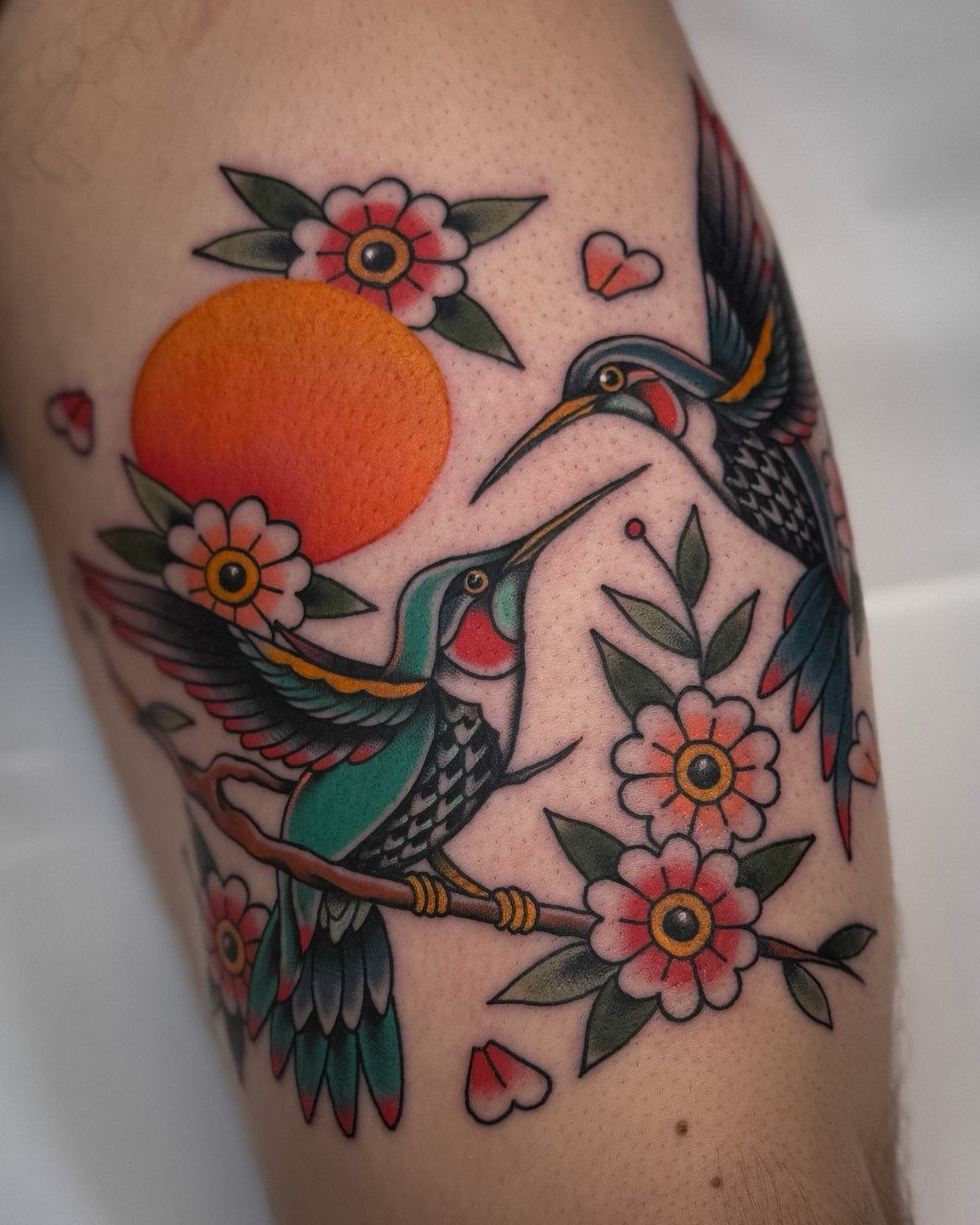
2 hummingbirds flanking flowers and a sun bring motion and color to a piece that reads as optimism without tipping into soft.
Hummingbirds move faster than anything their size, so the symbolism fits if you value speed and persistence over brute force.
Hummingbirds pair naturally with blooms, and the pink and orange range adds warmth while the heavy black line holds the read from a distance.
This one works for men who want something lighter in tone but still rooted in the traditional style.
Characteristics of American Traditional Tattoos
Bold black outlines define this style and do most of the work keeping the image readable as the tattoo ages.
The ink sits dense under the skin, which helps it hold contrast better than fine line work or soft gradients that blur together over time.
Shading stays minimal because the outline carries the form. Most designs use solid color fills in a tight palette: red, yellow, green, blue, with black doing the structure and negative space doing the rest.
That simplicity is structural, not decorative. Less detail means fewer points of failure as skin stretches and ink spreads.
The motifs pulled from sailor and military culture stay recognizable because they were designed to be read at a distance and still mean the same thing decades later.
Popularity of Traditional Tattoos
The thick outlines in traditional work age better than modern styles that rely on tight spacing or soft shading, and that durability keeps men coming back to the same images their grandfathers wore.
The symbolism ties directly to sailor and military roots, where tattoos marked a crossing, a rank, or a belief worth carrying.
Norman "Sailor Jerry" Collins built the style in the early 20th century, and the motifs he popularized still hold because they were never about fashion.
The high saturation and bold black outlines read clearly without needing adjustment for contrast, which makes the style accessible and consistent across different complexions.
Choosing the Right Tattoo Design
Start with the symbol that matches what you’re marking: a voyage, a loss, a line you won’t cross.
Traditional work uses a tight vocabulary of images, and each one carries weight that’s already settled, so pick the one that says what you mean without needing explanation.
Placement changes how the tattoo reads. Vertical designs like mermaids and daggers fit the leg or forearm.
Horizontal or circular pieces like anchors and clocks suit the chest or back. Flat surfaces hold symmetry and detail better than joints or curves that move.
Color adds warmth and tradition, but black and grey work ages cleaner and reads well in any light. How the tattoo will look in 20 years matters more than how it photographs fresh.
Frequently Asked Questions
What are some popular traditional tattoos in the United States?
Anchors, roses, eagles, skulls, daggers, ships, panthers, snakes, and pin-up girls dominate the traditional catalog.
Each motif comes from sailor or military culture and carries settled meaning: anchors mark rootedness, roses signal loyalty or loss, eagles read as defiance. The thick outlines and tight palette keep these images readable across decades.
What makes a tattoo traditional?
The palette holds to red, yellow, green, and blue, drawn inside thick black lines with light shading.
The outline carries the form and holds contrast as the tattoo ages, while solid color fills stay simple to avoid points of failure when skin stretches.
Designs borrowed from sailors and the military hold their shape and meaning over time because they were made to be read from across a room.
Do American Traditional tattoos have to use color?
No. You can work in black and grey and still call it traditional if you keep the thick outlines and the structure.
High contrast between black ink and negative space does the same job as color saturation, and grey work ages cleaner without the warmth shifts that come with fading pigment.