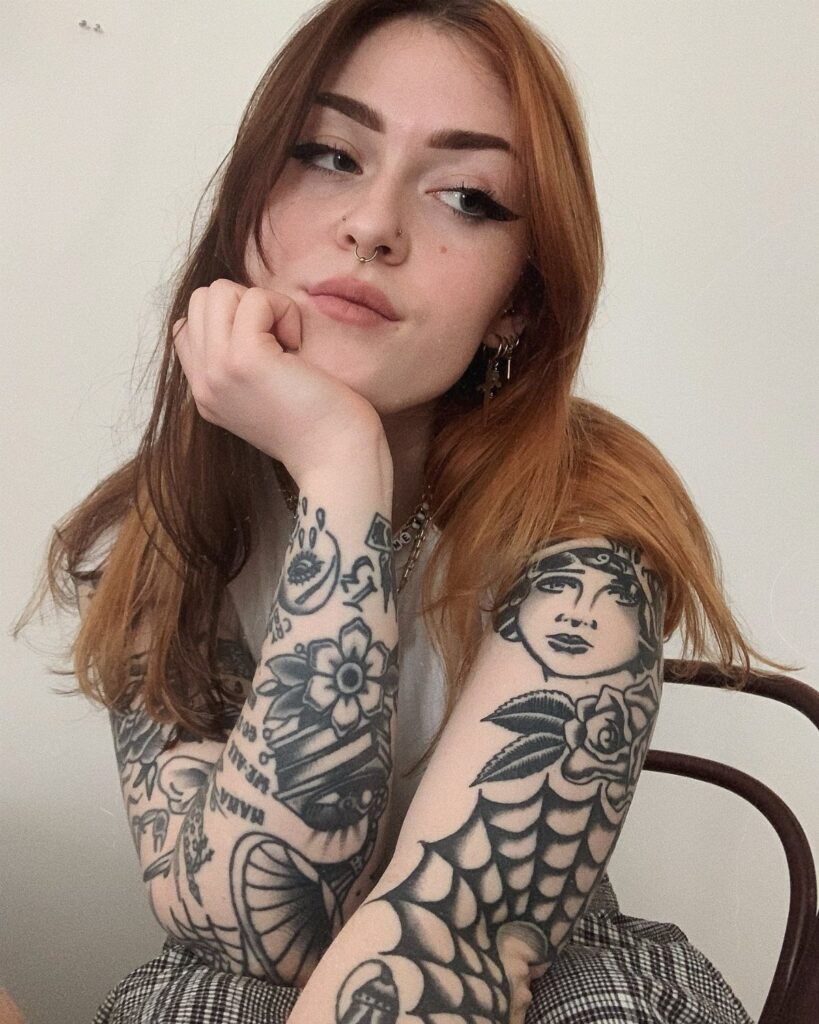
Traditional sleeves range from black and grey designs to full-color work, and you’ll find options for both men and women across every level of detail and coverage.
You can commit to a full sleeve planned as one piece, build a patchwork collection one tattoo at a time, or split the difference with a half sleeve that leaves room to expand later.
1. American Traditional Tattoo Sleeve
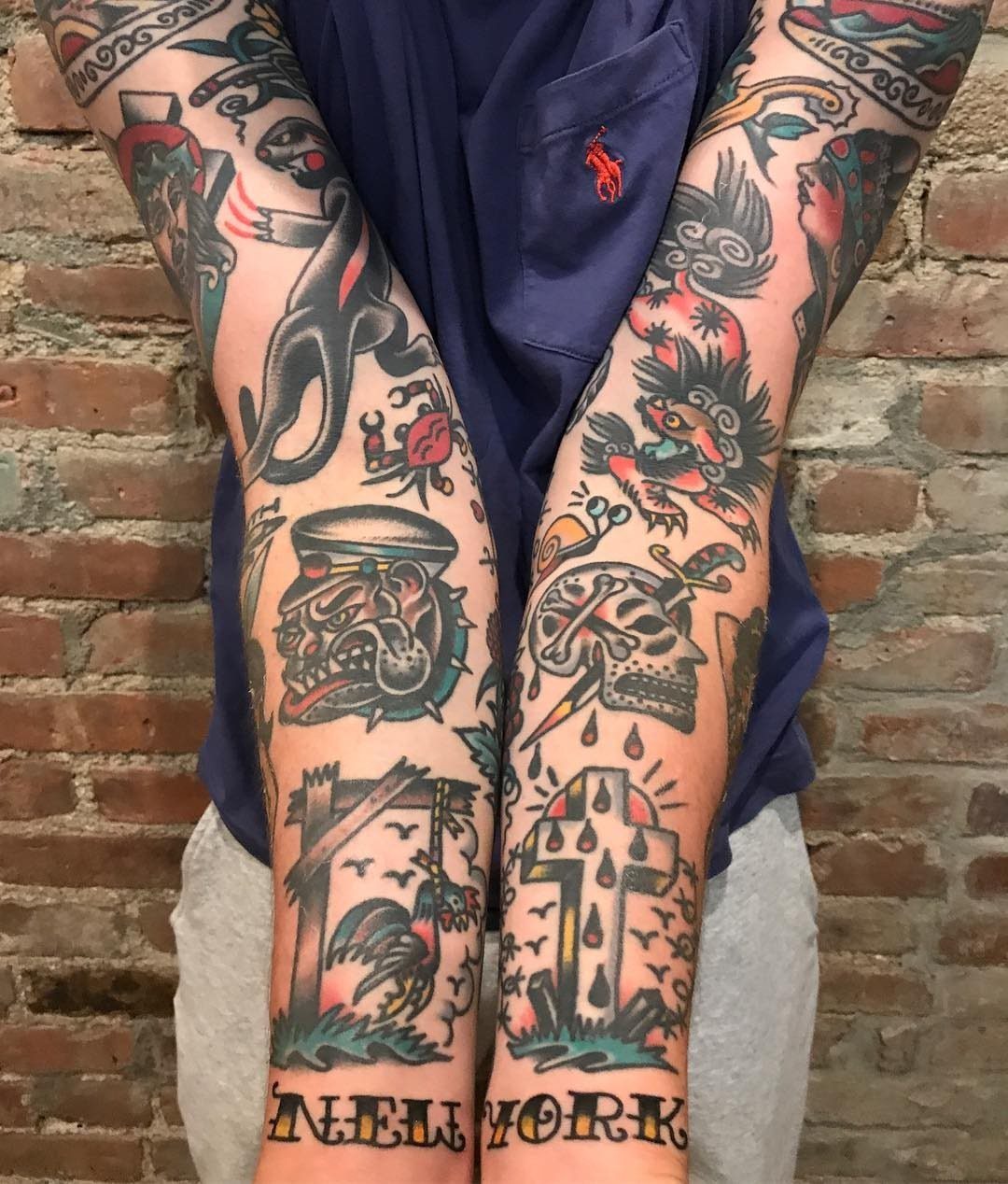
American traditional built the visual language of tattooing in this country: heavy black outlines, a tight palette of red, yellow, green and blue, and subjects pulled straight from the flash sheets—eagles, anchors, roses, daggers, ships and pin-up girls.
The thick lines age well because they hold their shape even as skin changes, and the simple shading means the design stays readable decades later.
If you plan to sit for a full sleeve in one style, traditional gives you the clearest result from a distance and the most options for filling space with smaller motifs between larger pieces.
Sessions move faster than fine-line work because the coverage is solid and the details are bold rather than intricate.
Most artists who specialize in American traditional can draw directly from the classic flash sheets, so you spend less time in the design phase and more time getting tattooed.
2. Patchwork Tattoo Sleeve
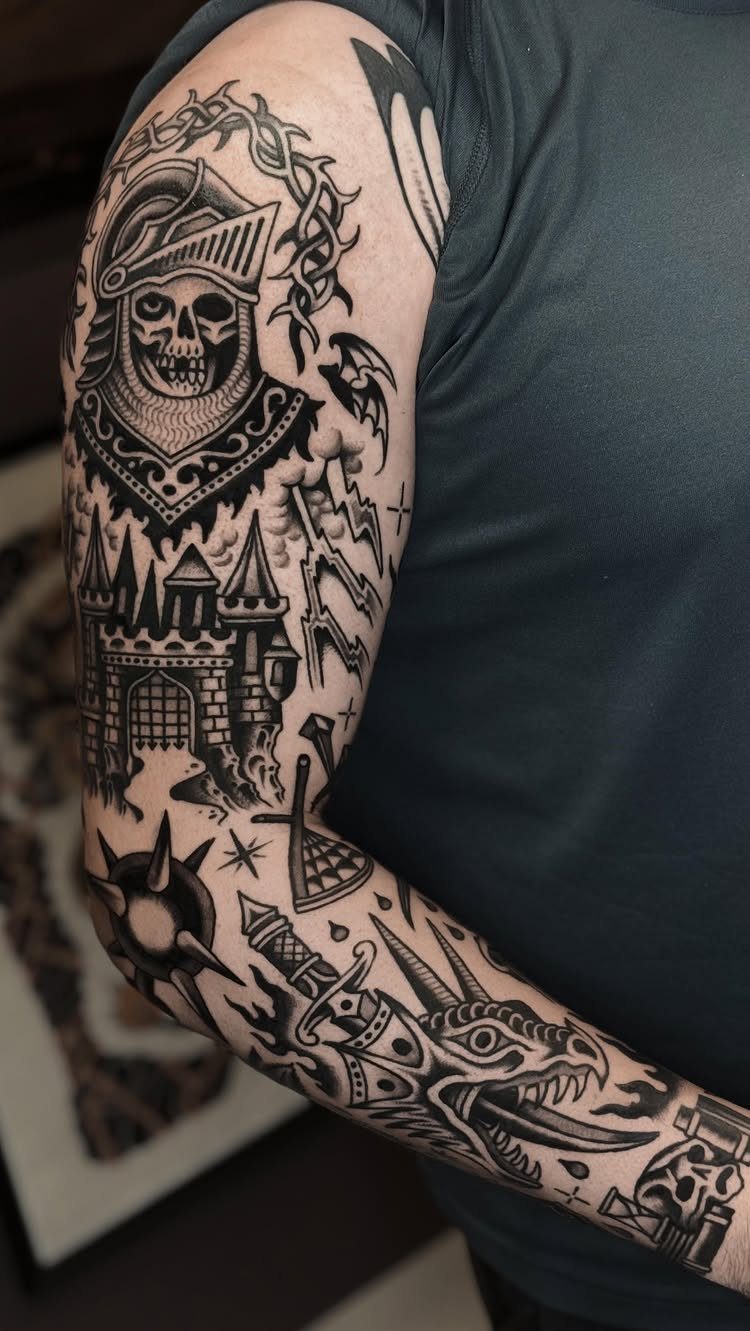
Instead of planning one unified sleeve from the start, you collect individual tattoos over time and let them sit together as separate pieces.
Each one keeps its own border of blank skin, and the sleeve builds gradually as you add more.
This approach works if your budget doesn’t allow for multiple long sessions up front or if you prefer meaningful designs without committing to a single theme.
You can get one tattoo, heal it, and come back months or years later for the next without worrying about how they flow together.
The downside is that patchwork sleeves look intentionally fragmented, and once you fill most of the arm, you lose the option to tie everything together with a background.
If you like the collected look and don’t mind the gaps, it’s the most flexible way to build a sleeve.
3. Traditional Half Sleeve Tattoos
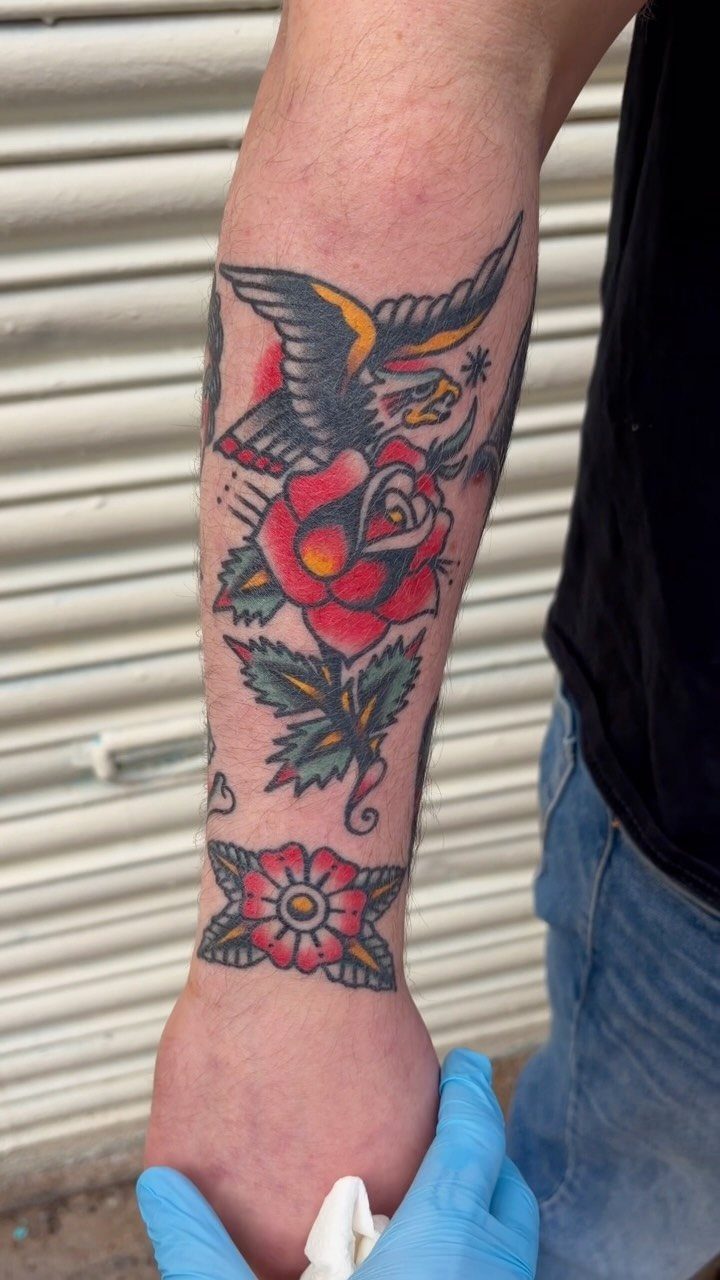
A half sleeve covers either the upper arm from shoulder to elbow or the forearm from elbow to wrist, and it lets you fit a complete design without the commitment or cost of covering the whole arm.
The forearm version is more visible in short sleeves and cheaper to complete because the area is smaller and flatter, which means fewer sessions and less time under the needle.
Upper arm half sleeves cost more and take longer, but they’re easier to cover for work and give you more space for larger centerpiece images like portraits or animals.
If you’re getting your first large piece, I’d start with the forearm: it’s less painful than the inner bicep or armpit area, and you can see the design yourself without a mirror.
Most half sleeves take 2 to 4 sessions depending on detail and color.
4. Black and Grey Traditional Sleeve
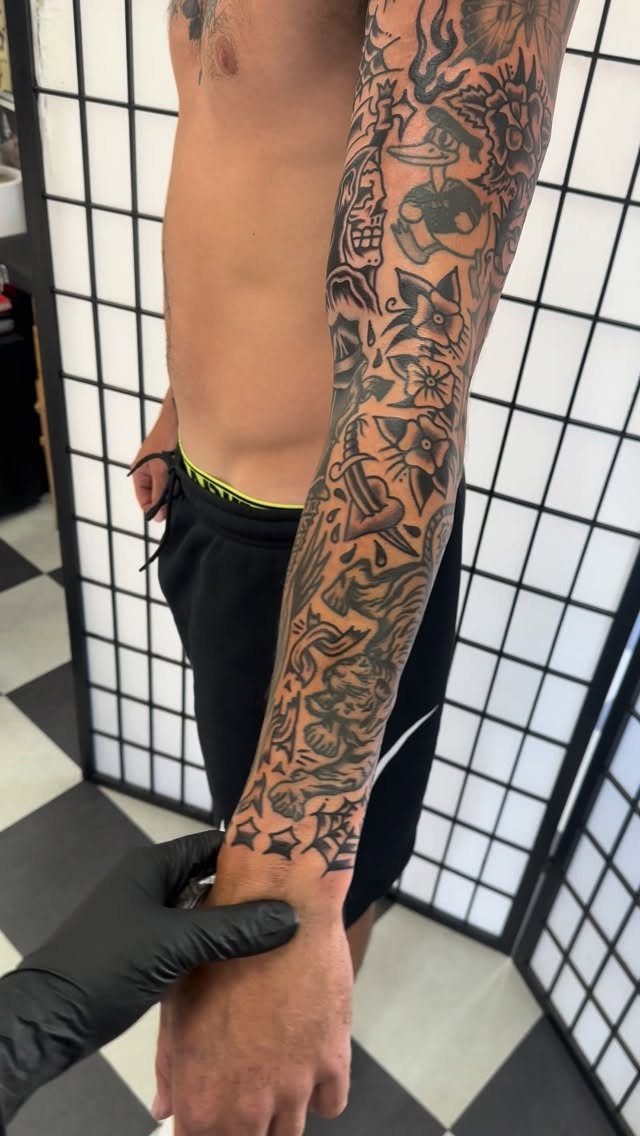
Removing color simplifies the palette to black ink and the natural tone of your skin, which shifts the focus entirely to line weight, contrast and composition.
Black and grey sleeves age predictably because there’s no color to fade unevenly, and they pair well with almost any other tattoo you already have or might add later.
The style suits traditional motifs like skulls, roses, daggers and animals, but without the bright colors those designs usually carry.
Shading is done with diluted black ink in gradual tones rather than solid blocks, so the work takes patience and multiple passes to build depth.
If you prefer a quieter look or your workplace is stricter about visible tattoos, black and grey reads as more subdued than full color even when the subject matter is bold.
5. Traditional Sleeve with Red Accents
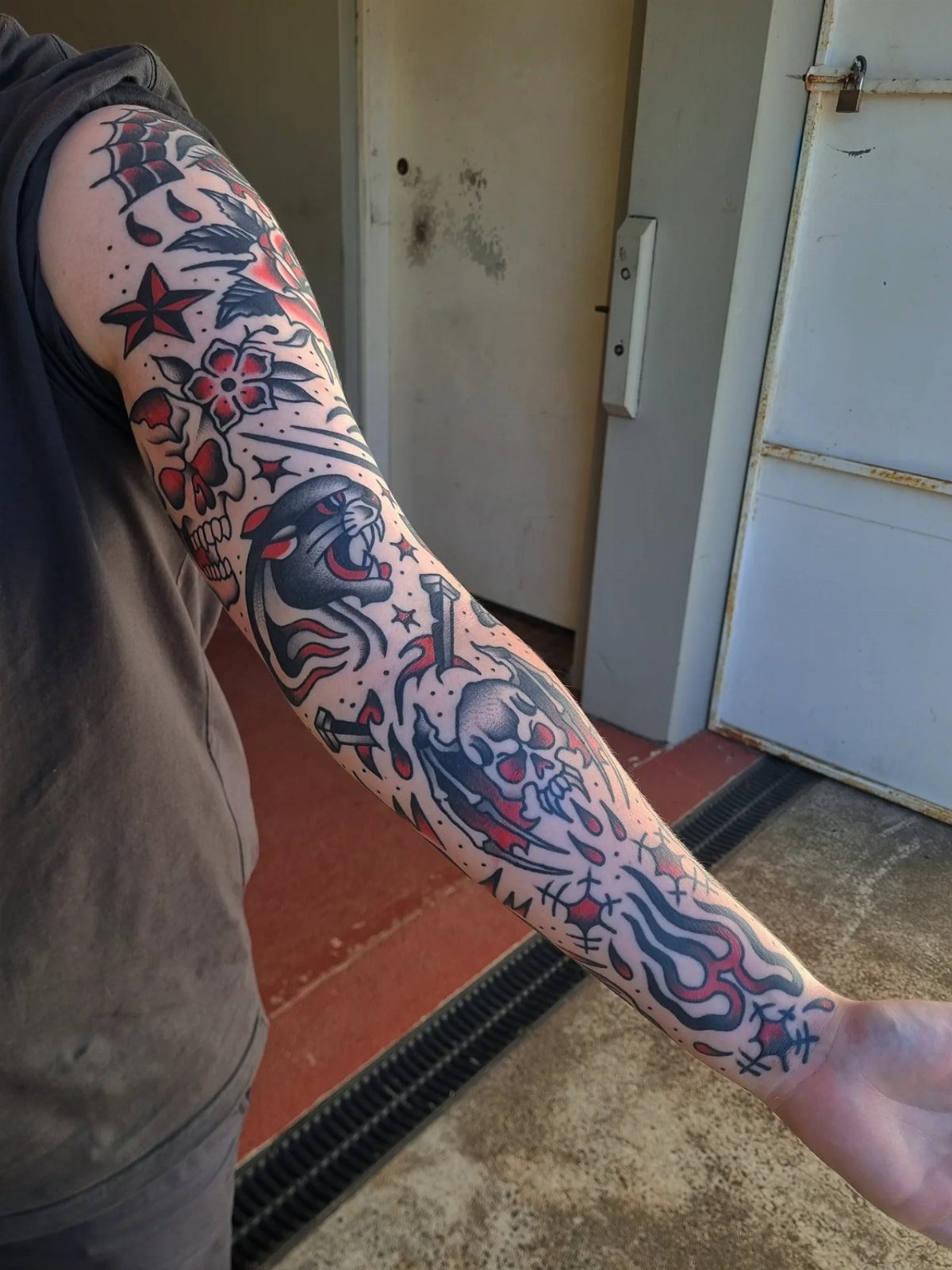
Using black ink for most of the sleeve and adding red only to specific elements keeps the design high-contrast while giving certain pieces visual weight.
Roses, blood, flames and other naturally red subjects get their color, and everything else stays black.
This approach costs less than a full-color sleeve because you’re only paying for one additional ink color, and sessions move faster since the artist isn’t switching between multiple shades.
Red also draws the eye in a way that yellow or light blue often can’t, so the accent color you choose changes the whole read of the sleeve.
If you want some color but prefer the bold look of black and grey, red gives you enough contrast to make key elements stand out without turning the whole sleeve bright.
Most traditional designs were built with red in mind, so the accent feels intentional rather than added.
6. Traditional Japanese Tattoo Sleeve
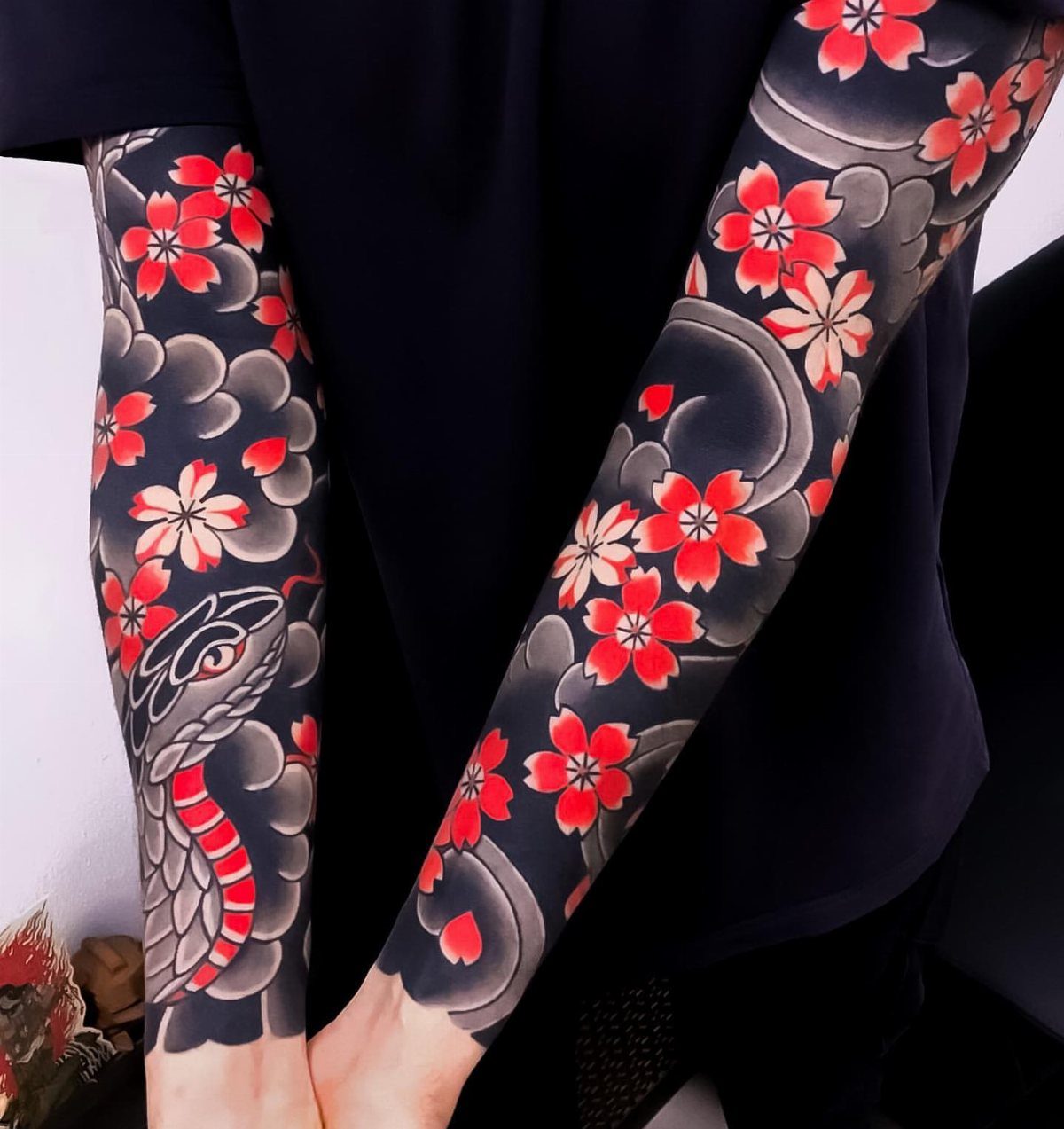
Japanese tattooing follows its own visual rules: large subjects like dragons, koi, tigers or phoenixes flow with waves, wind bars or clouds that fill the negative space and wrap the arm in continuous motion.
Cherry blossoms, peonies and maple leaves add seasonal detail and fill space between the main image.
The style traditionally uses a limited palette of black, red, green, yellow and purple, and the shading technique called bokashi creates soft gradients that give the design depth.
A full sleeve in this style usually takes multiple sessions because the coverage is dense and the background elements are as detailed as the centerpiece.
If you’re drawn to mythology or nature subjects and want a sleeve that looks complete rather than collected, Japanese traditional gives you a composition that was designed for the arm from the start.
The wrist, elbow and shoulder all get their own treatments to make the design feel intentional at every angle.
7. Full Color Traditional Sleeve
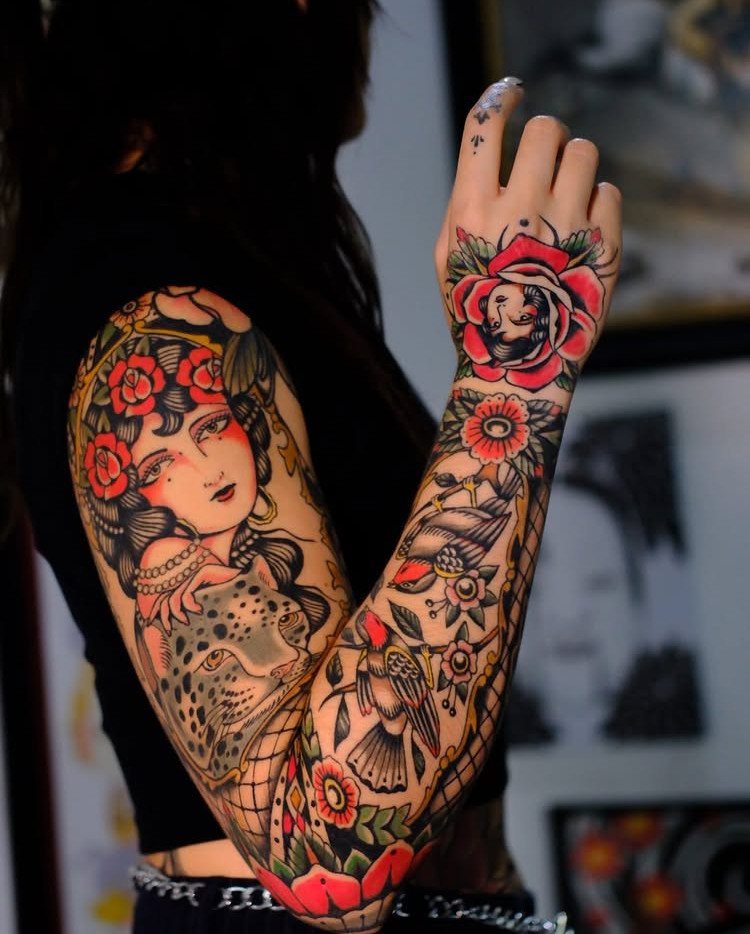
A full-color traditional sleeve uses the entire classic palette—red, yellow, green, blue and sometimes purple—so every piece on the arm gets its full intended color rather than being edited down to black and grey or one accent shade.
The bright colors make the design more visible and give each element its traditional look: red roses stay red, yellow highlights stay yellow, and green leaves read as green instead of shaded grey.
If you like the way traditional tattoos were meant to look on flash sheets, this is the version that delivers it.
Color sleeves take longer to complete than black and grey because each color requires a separate pass, and saturated coverage needs time to heal between sessions.
Budget for multiple appointments spread across several sessions, and expect the color to need a touch-up after a few years as certain shades fade faster than black.
Tattoo Design Significance
Panthers symbolize strength and protection in American folklore, originally cast as guardians between worlds. Snakes carry the idea of transformation and renewal because they shed their skin, and in tattooing they often stand for healing or knowledge.
Skulls mark mortality and the passage of time, frequently paired with flowers or birds to soften the subject or add personal detail.
These motifs come from decades of flash art, but the design you choose should connect to something that matters to you beyond the traditional meaning.
If your heritage ties to a particular culture, traditional Japanese or Celtic styles offer complete visual systems built for the arm. If a subject or place is important, build the sleeve around that instead.
An experienced traditional artist will adapt the classic imagery to fit your story while keeping the bold lines and composition that make the style recognizable.
Tattoo Healing Process
A traditional sleeve heals in 4 to 6 weeks, though the surface usually closes in the first 2 weeks and the deeper layers continue repairing after that.
During the initial healing period, skip the gym and avoid any activity that causes heavy sweating, since moisture and friction slow the process and increase the risk of infection or color loss.
Keep the tattoo clean, apply a thin layer of unscented lotion when the skin feels tight, and leave any scabbing alone.
If you’re getting the sleeve in multiple sessions, each new section restarts the healing clock, so plan your appointments with enough time between them for full recovery.
Tattoo Styles for Men and Women
Both men and women wear traditional sleeves, and the choice between a cohesive design or a patchwork approach comes down to how you want the sleeve to read.
A cohesive sleeve tied to a specific culture or style works if you want the arm to tell one story: Japanese motifs for someone drawn to that aesthetic, Celtic knotwork for Irish heritage, or religious imagery centered on a single figure.
Cohesive Japanese sleeves, Celtic heritage pieces, and patchwork American traditional all work depending on what you want the arm to say.
The subjects you choose matter more than gender. Koi fish, roses, daggers and skulls appear on everyone, and the composition adjusts to fit the arm regardless of size or muscle shape.
Frequently Asked Questions
What to wear for a full sleeve tattoo?
Wear a tank top or short-sleeved shirt you can easily remove or roll up, since the artist needs full access to your arm from shoulder to wrist.
Bring a button-up shirt for afterward so you don’t have to pull fabric over fresh ink. If you’re getting multiple sessions, comfort matters more than looking polished.
What are some popular traditional tattoos in the United States?
Flash sheets lean heavily on eagles, ships, roses, daggers, anchors and the classic pin-up.
Panthers represent strength and protection, snakes stand for transformation, and skulls mark mortality paired with flowers or birds. These designs come from decades of sailor and military tattoo culture and were built to stay readable as they age.
What are the different types of arm sleeve tattoos?
A full sleeve runs from wrist to shoulder, while a half sleeve covers either upper arm or forearm.
Patchwork sleeves collect individual tattoos over time with blank skin between each piece instead of planning one unified design. Forearm half sleeves cost less and show in short sleeves, upper arm versions give more space but take longer to finish.
How to care for your American traditional tattoo?
A thin coat of unscented lotion when it feels dry, shade instead of sun, and no picking at scabs.
Stay out of the gym for 2 weeks so sweat and friction don’t pull out color or invite bacteria. Surface healing wraps up in 2 weeks, but count on 4 to 6 before the skin finishes the job underneath.





