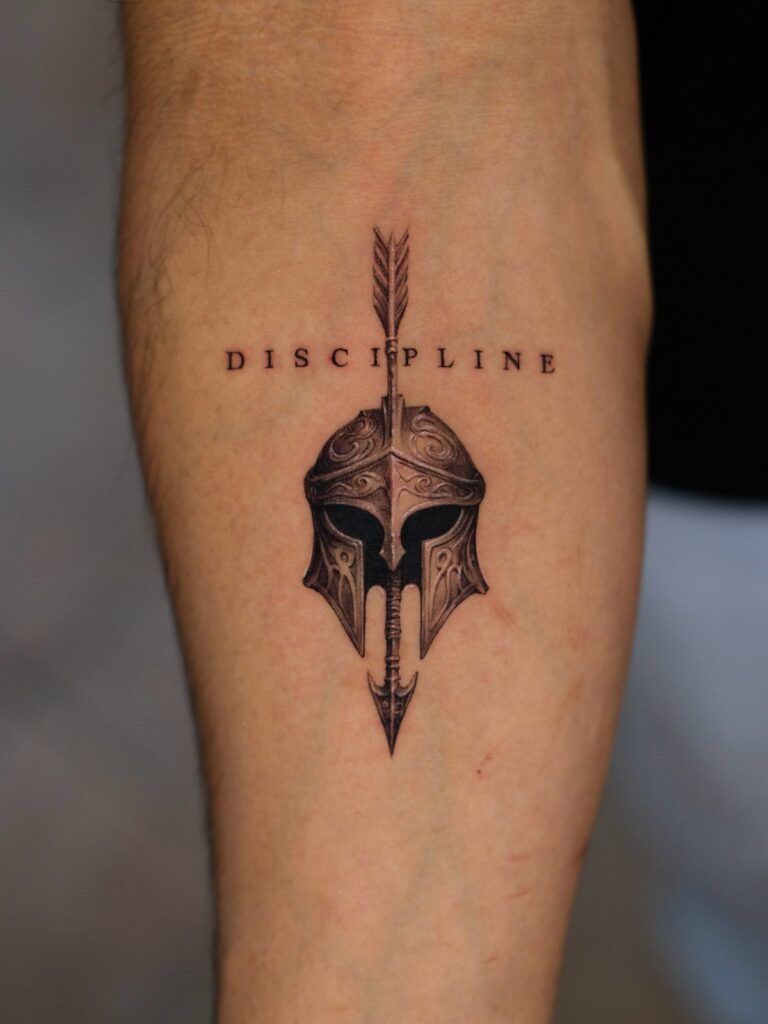
Forearm tattoos for men range from small standalone pieces that take under an hour to full sleeves requiring multiple sessions, with styles that span simple script to detailed animal portraits.
Tribal and Polynesian work rely on thick black lines that hold up as skin ages, geometric designs need fine-line precision, lettering asks for an artist who spaces and curves words to follow your arm, and realism demands someone with portrait experience who can capture fur texture and expression accurately.
1. Tribal Forearm Tattoos
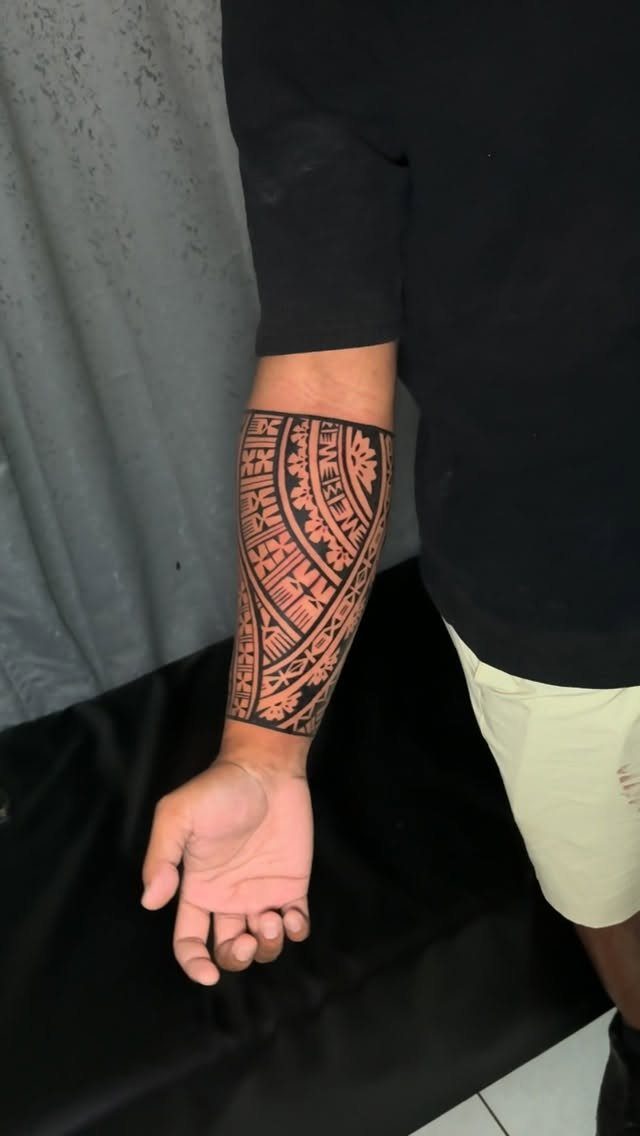
Bold black shapes and lines that build on patterns indigenous cultures used for centuries, usually covering a full band or panel across the inner or outer forearm.
This style reads from a distance and holds up over time because the lines stay thick and the forms stay simple.
Tribal work often flows better when the artist draws directly on your arm instead of tracing a stencil. Most tribal pieces take multiple hours for a forearm, longer if you wrap it around both sides or add a second pass.
Tribal sits well on the forearm because the muscle gives the pattern structure as you move. It suits men who want something visible that stays legible as the skin ages.
2. Geometric and Abstract Designs
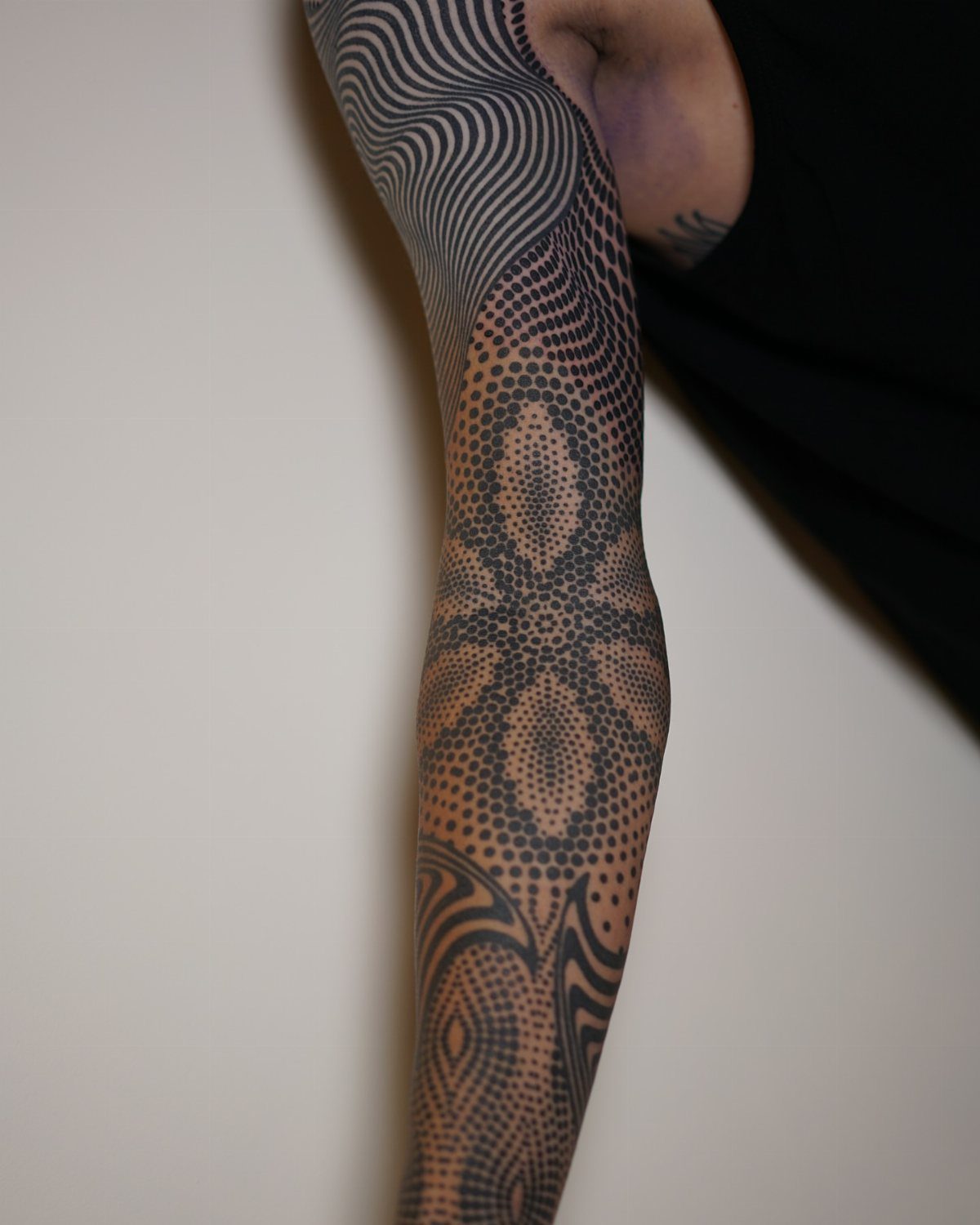
Repeating shapes, dot work, and clean lines that lock together into a pattern that feels engineered rather than drawn.
The forearm gives you enough length to stack forms vertically or run them in a band, and the flat inner surface lets precise line work sit cleanly.
This style reads best when the forms stay crisp, so find an artist who works with single-needle or fine-line technique.
Geometric pieces photograph well but rely on contrast, so black ink on lighter skin tones will hold better than grey wash over time.
The main trade-off is time: detailed geometric sleeves take multiple sessions because the line work has to stay tight.
3. Dragon Forearm Tattoo
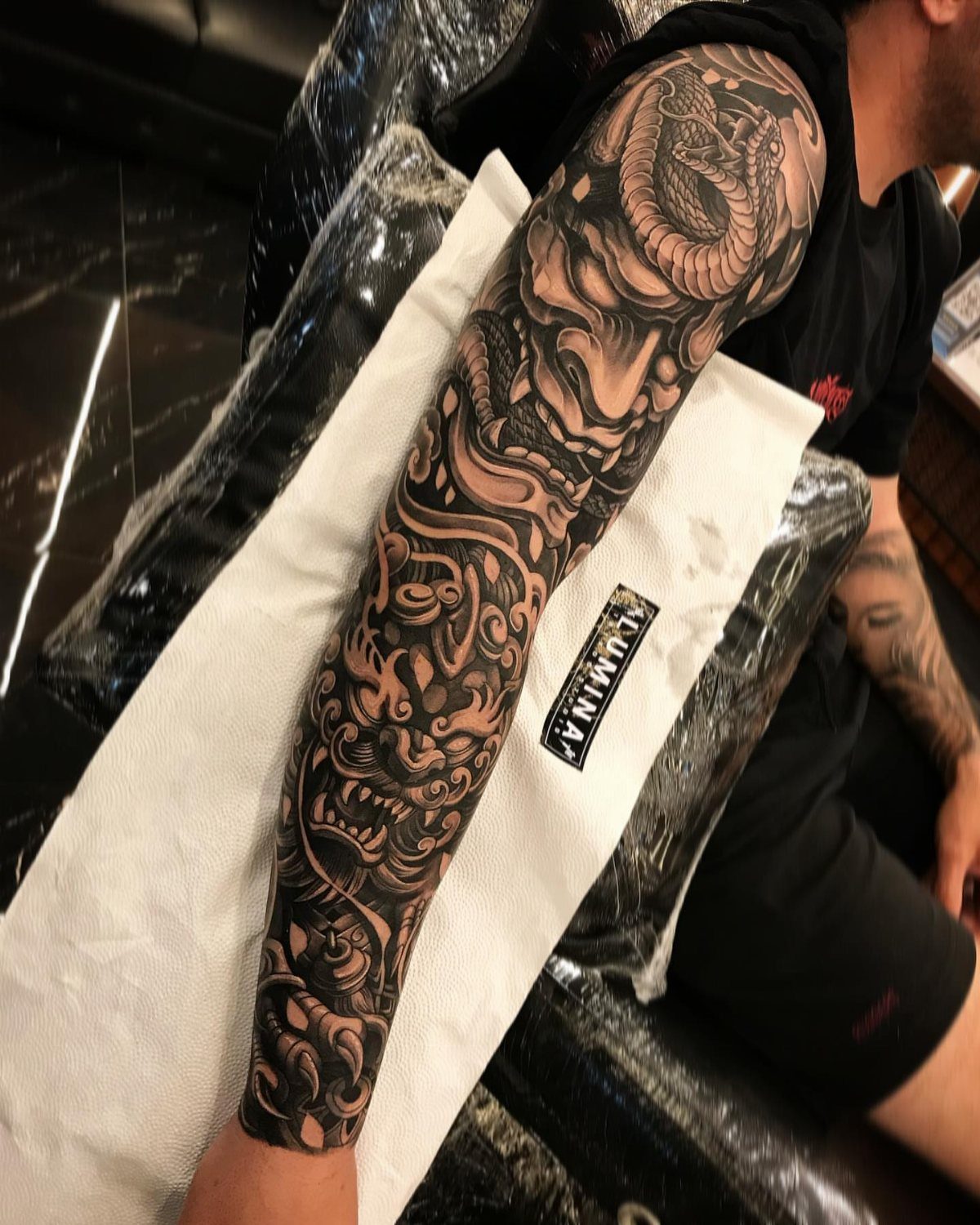
A dragon wrapping the forearm or coiling up from wrist to elbow, usually done in black and grey with shading that gives the scales depth.
The shape works because the forearm tapers, so the dragon’s body can follow that curve naturally.
This piece shows a full sleeve that includes a skull, but a simpler version that sticks to just the dragon will take less time and still cover the forearm.
Most dragon tattoos take several hours depending on how much shading and detail you want in the face and claws.
Black and grey ages better than color for large pieces because you avoid the risk of fading unevenly across different pigments.
4. Lettering and Script Tattoos
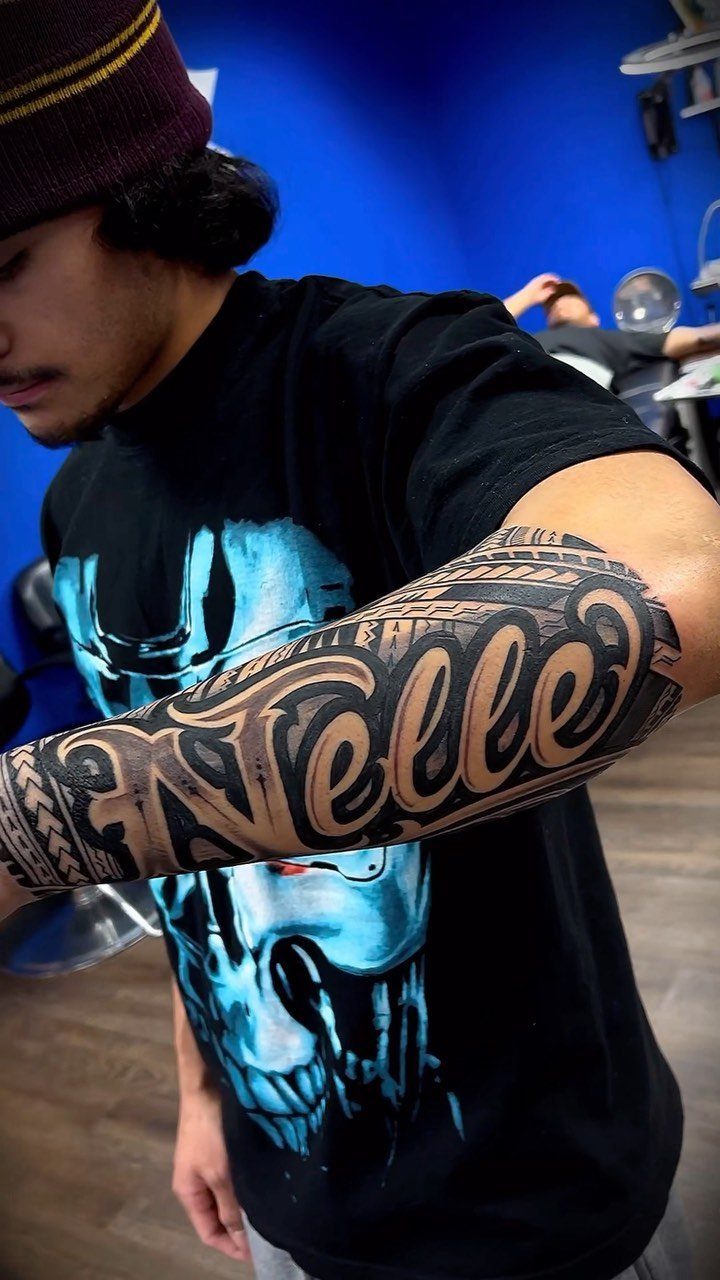
A single word, name, or short phrase in script, sometimes surrounded by tribal or decorative elements.
The forearm gives you a straight canvas for lettering that stays readable, and the placement makes it easy to show or cover depending on sleeve length.
Script works best in larger sizes, at least an inch tall for the main letters, so the word holds up as the ink settles.
Thin calligraphy fades faster than bold letters, and fine details in decorative fonts will blur over time.
Choose a font that matches the tone of the word. Serif fonts feel formal, script feels personal, and blocky sans-serif reads from farther away.
5. Sleeve Forearm Tattoos
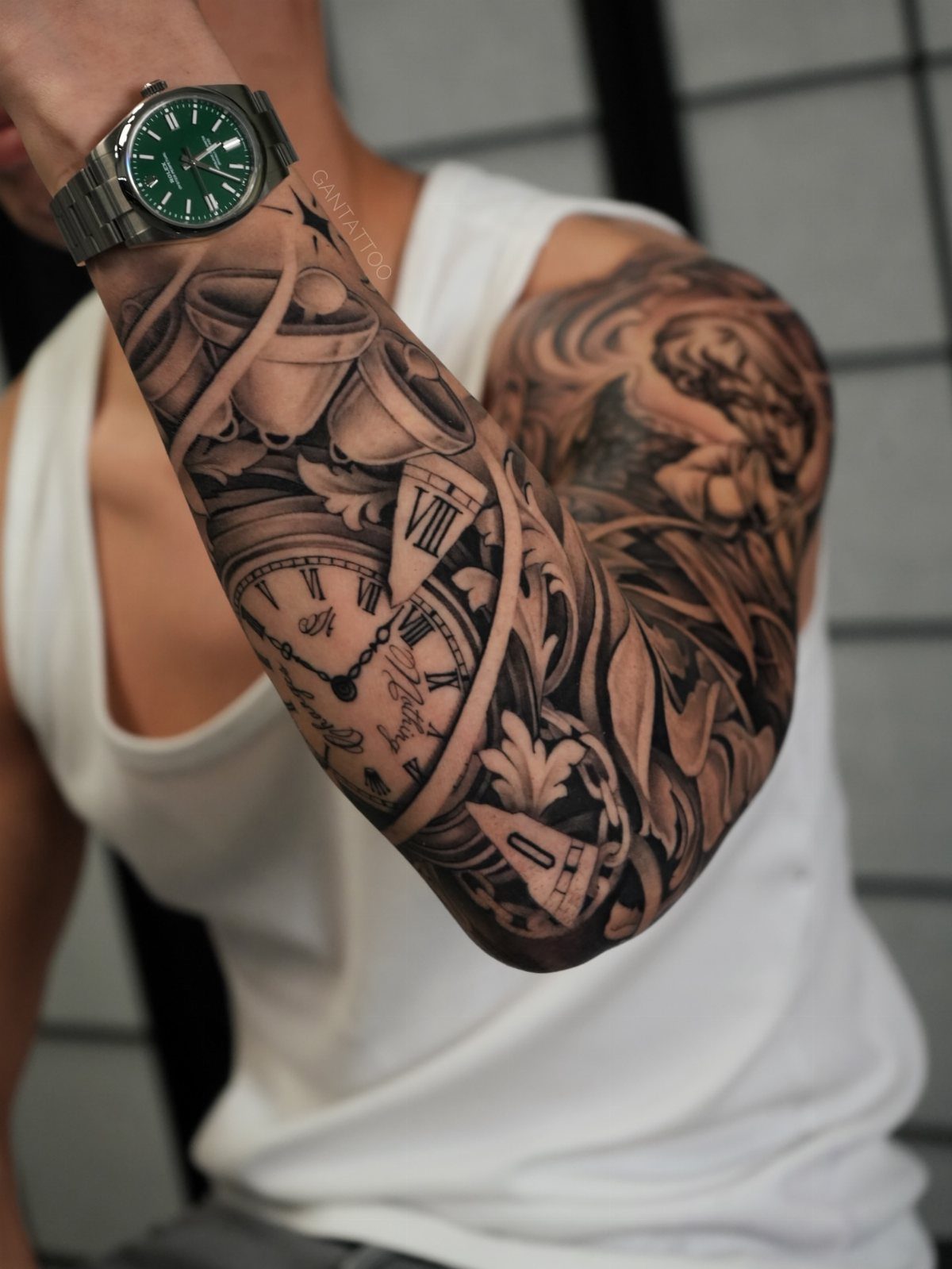
A design that wraps the entire forearm from wrist to elbow, connecting multiple elements into one piece.
A full sleeve takes multiple sessions depending on how much background fill you want. The forearm is less painful than the ribs or inner bicep, so longer sittings are manageable if you want to knock it out faster.
Sleeves suit men who already have other tattoos or who want one large piece rather than adding smaller ones later. The main consideration is commitment: a sleeve is hard to cover and expensive to remove.
6. Realistic Animal and Wildlife Portraits
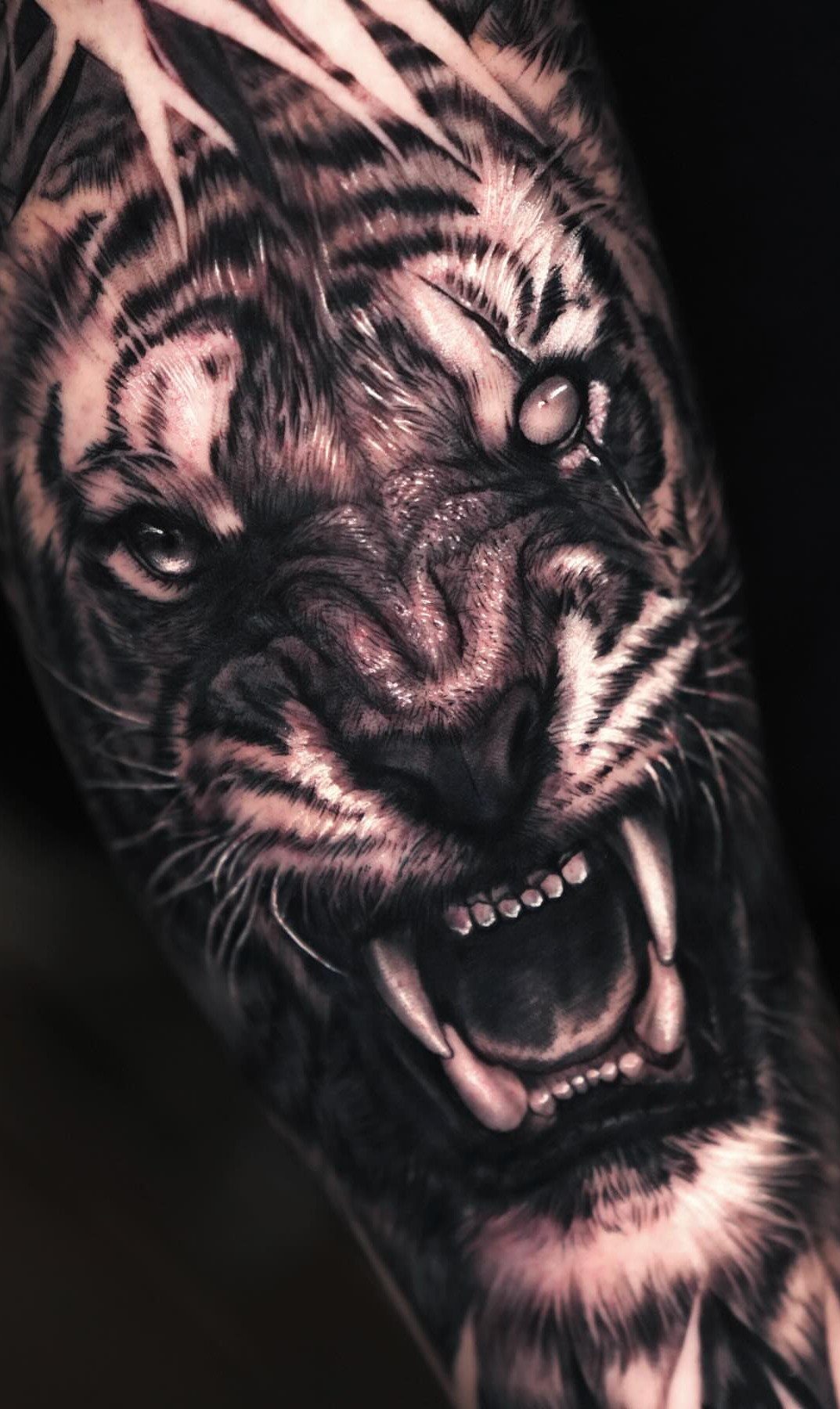
A close-up portrait of an animal’s face, rendered in black and grey with enough shading to capture fur texture and expression.
The tiger here shows teeth and tension, which gives the piece energy, but the same approach works for wolves, lions, bears, or owls.
Realism demands an artist with portrait experience because the proportions and shading have to be accurate for the animal to read correctly.
A forearm portrait usually takes several hours, and touch-ups after healing are common to darken areas that settle lighter than expected.
This style suits men who want a single focal image rather than a pattern or sleeve. The forearm placement keeps the face upright and visible when your arm hangs naturally.
7. Polynesian Forearm Tattoo
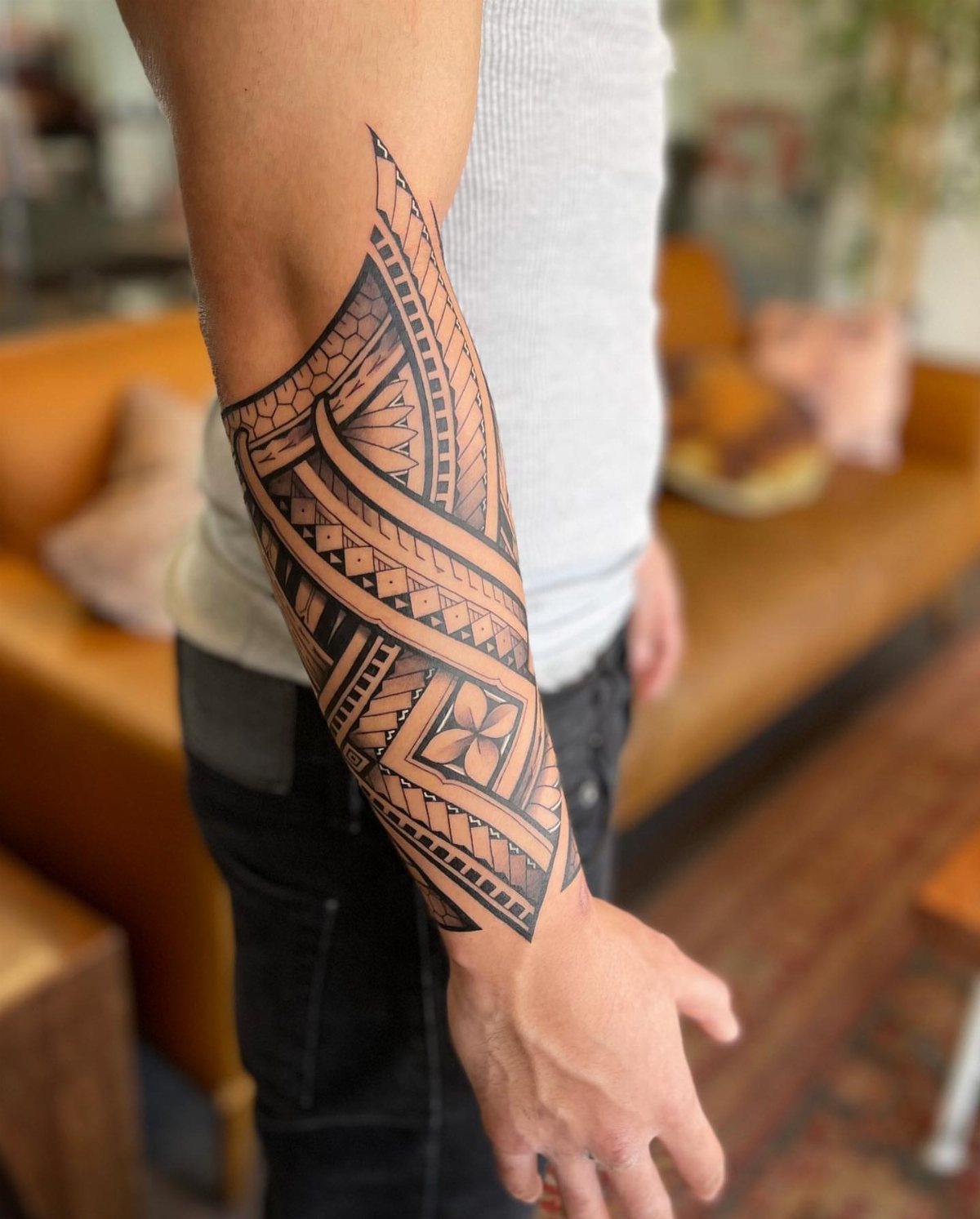
Thick black bands and geometric fills that mirror the patterns Polynesian cultures used to mark rank and story. The shapes lock together with hard angles and repetition, usually covering a full panel from wrist to elbow.
This style demands bold line work because the detail sits in how the shapes fit, not in fine shading.
A forearm panel takes several hours depending on how much coverage you want, and the black ink holds better over time than work that relies on grey gradients.
Men drawn to angular geometry and clear repetition tend to pick Polynesian over softer, flowing designs.
8. Small Forearm Tattoos
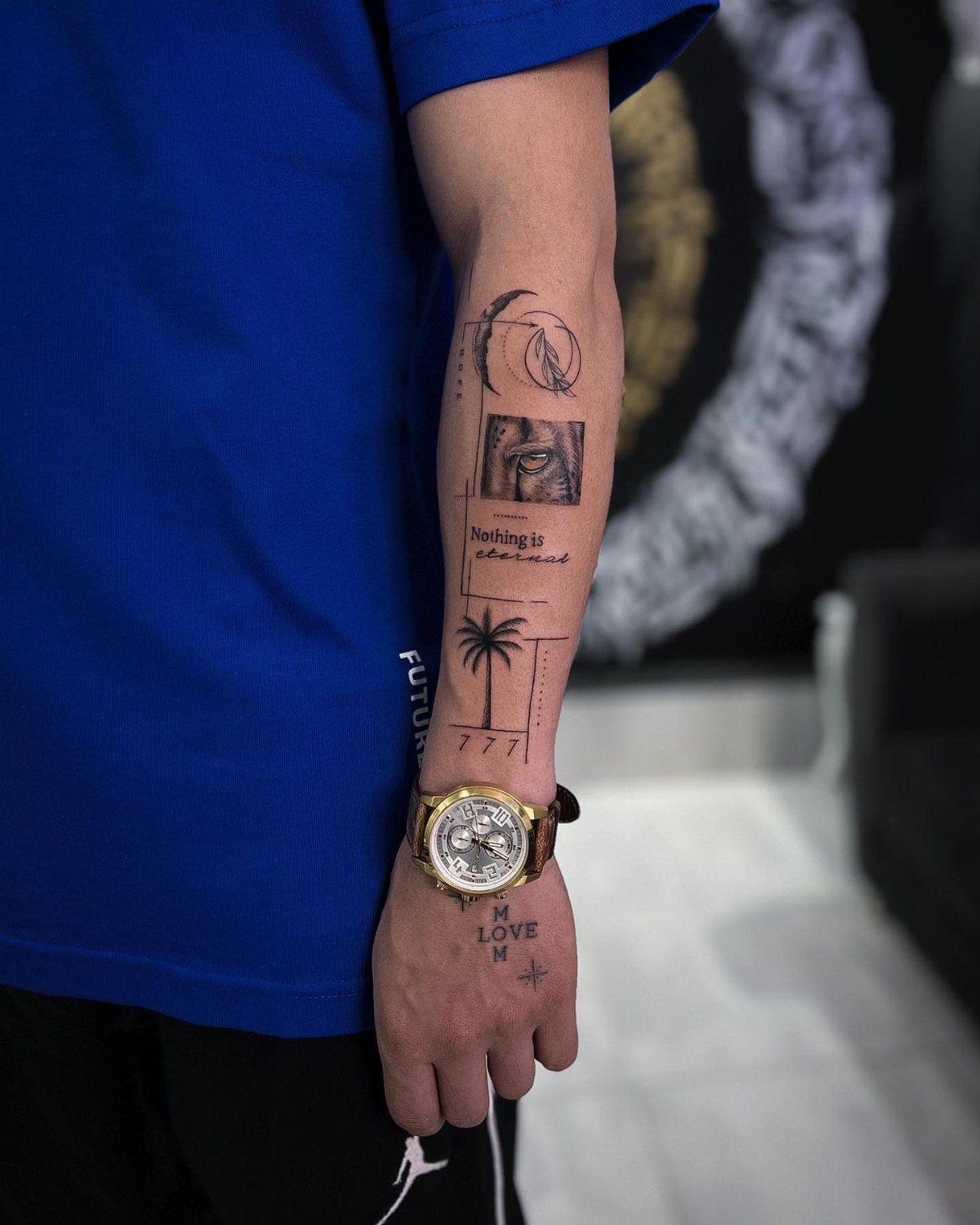
A handful of separate images placed across the forearm rather than one large piece. Each tattoo stays small enough to stand alone, but grouped together they build into a collection that covers the arm over time.
Small tattoos take less time per sitting, usually under an hour each, so you can add them gradually instead of committing to a full design up front.
Space them too close and they blur, too far apart and the forearm looks bare until you add more.
This approach suits men who want flexibility to add more later without planning a full sleeve.
Choosing the Right Forearm Tattoo
Start by deciding how much of your arm you want covered. A single image on the inner forearm stays easy to conceal with a long sleeve, while a full wraparound or outer placement shows whenever your arms are visible.
If you already have other tattoos, pick a style that matches or contrasts intentionally rather than landing somewhere in between.
Match the artist to the style. Realism demands portrait experience, geometric work needs precision with fine lines, and Polynesian or tribal pieces require someone who understands how the shapes fit together.
Look at healed photos in the artist’s portfolio, not just fresh work, because that shows how the ink settles over time.
Bring references that show the shapes, mood, and level of detail you want, even if the exact image changes.
A consultation lets the artist adjust the design to fit your forearm’s proportions instead of forcing a flat drawing onto a curved surface.
Aftercare Tips for Forearm Tattoos
Your artist will tell you which ointment to use and how often to apply it. Most recommend a thin layer 2–3 times a day for the first week, switching to unscented lotion once the initial healing finishes.
Wash the tattoo gently with fragrance-free soap and pat it dry.
Don’t soak it in a bath, pool, or ocean until the skin fully heals. Scabs will form and flake off on their own; pulling them early pulls ink out with them and leaves light spots.
Keep the forearm out of direct sun while it heals, and use sunscreen on the tattoo after that.
UV exposure fades black ink to blue-grey and washes out color faster than anything else. Moisturizing regularly after the tattoo heals keeps the skin from drying out and the ink from looking dull.





