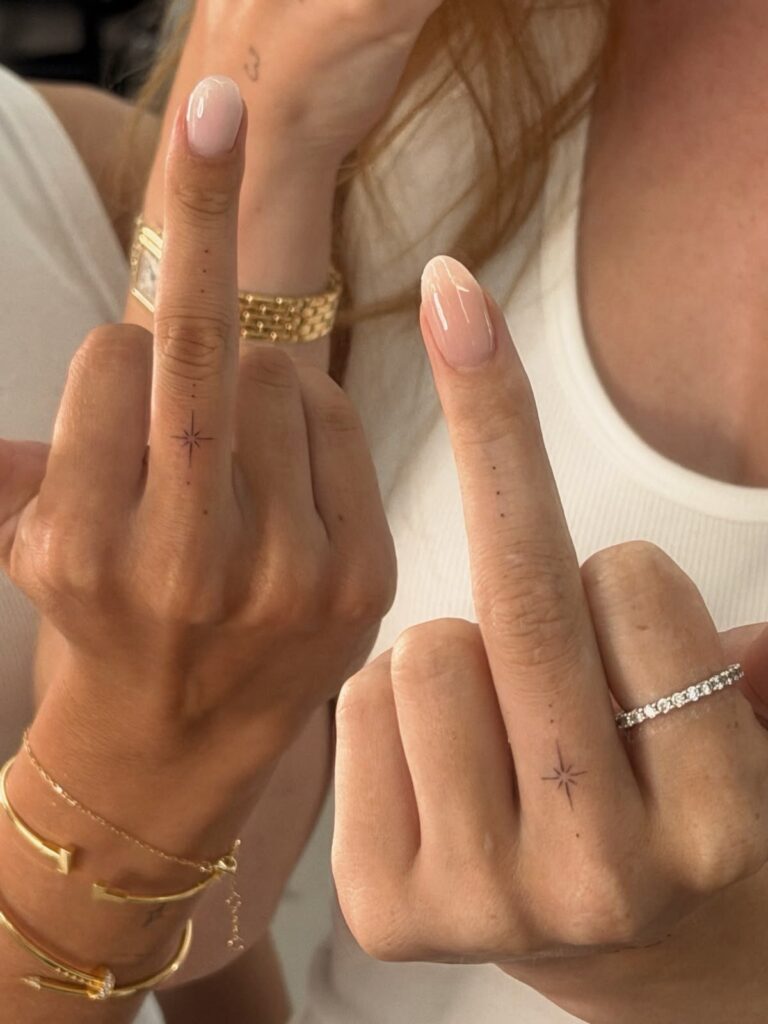
Finger tattoos fade faster than most placements because of constant friction, sun exposure and hand washing, and they need touch-ups every few years to stay readable.
Black ink lasts longest, while color and fine detail blur first. Solid shapes hold up better than fine lines: stars, crescents and Traditional motifs stay clear longer than script or detailed shading.
1. Small Floral Finger Tattoo
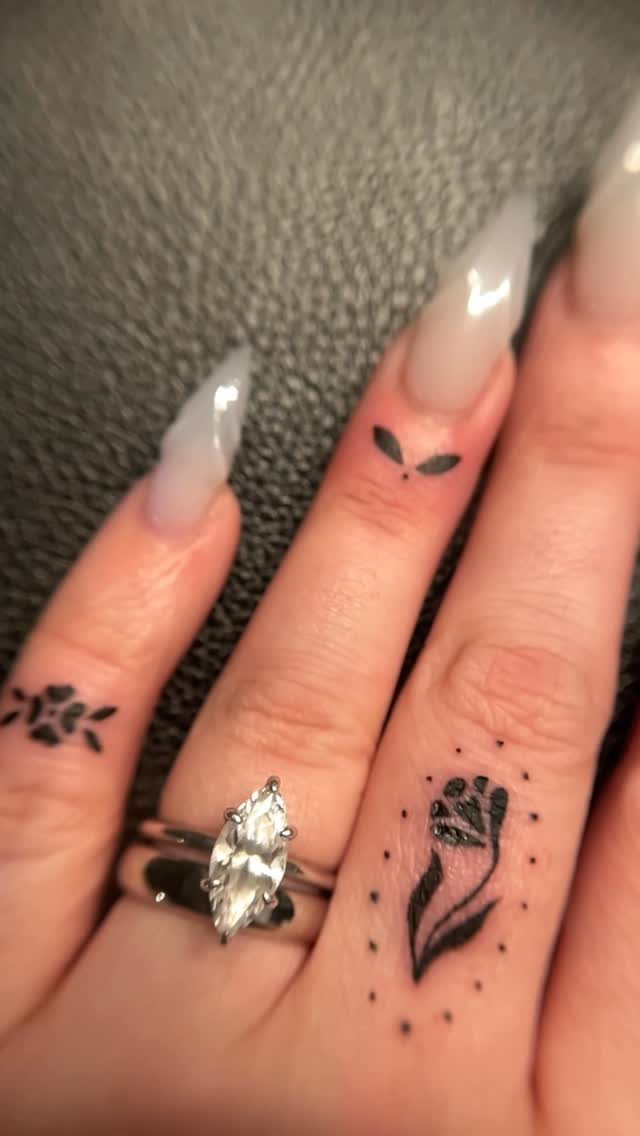
Small florals fit the narrow canvas of a finger without crowding it. Roses, daisies and single leaves read clearly when kept simple, though solid shapes will outlast delicate line work in this spot.
Fingers lose ink faster than most placements because of friction and sun exposure. Black ink lasts longest; color tends to drop out sooner on fingers.
A single bloom on the side of the finger or a thin leaf curling around the base both work well. Just keep the detail level low so the design still reads as it softens.
2. Ornamental Designs
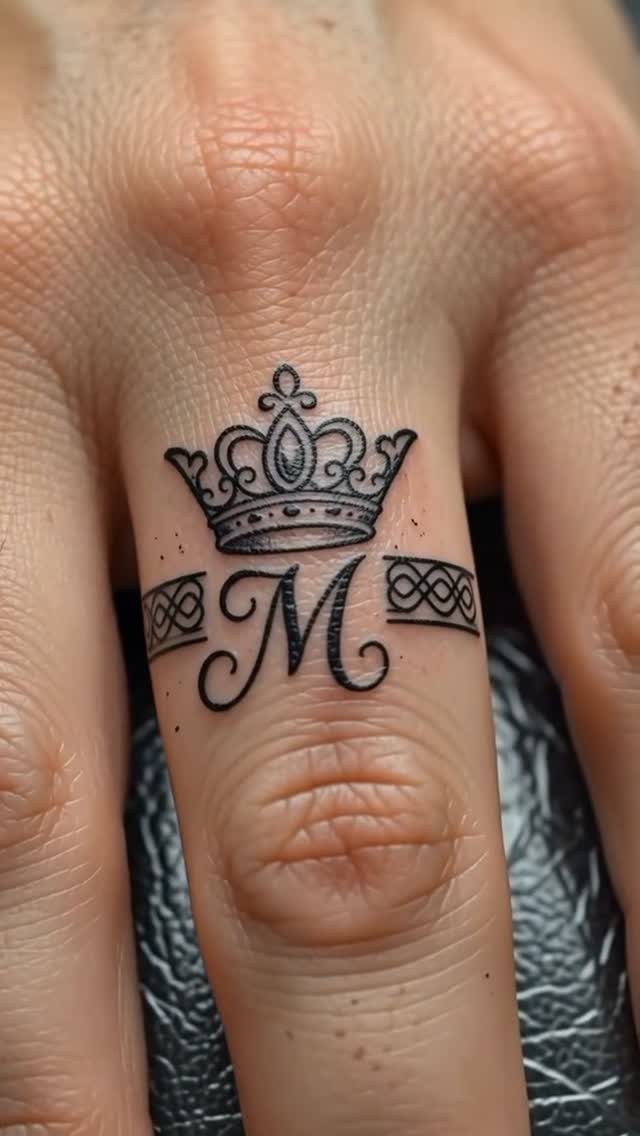
Ornamental pieces mimic the look of rings, bands and bracelets in permanent ink. A crown, a jeweled band or a lace-like border sits where jewelry would, circling the finger.
The appeal is wearing something that never comes off. Bands look sharpest when they follow the finger’s natural taper.
Finger tattoos blur faster than most, so designs with tight detail lose clarity before long.
Thicker lines and open space inside the design hold up better. If you like the idea, lean toward bold shapes over delicate filigree.
3. Butterfly Tattoos
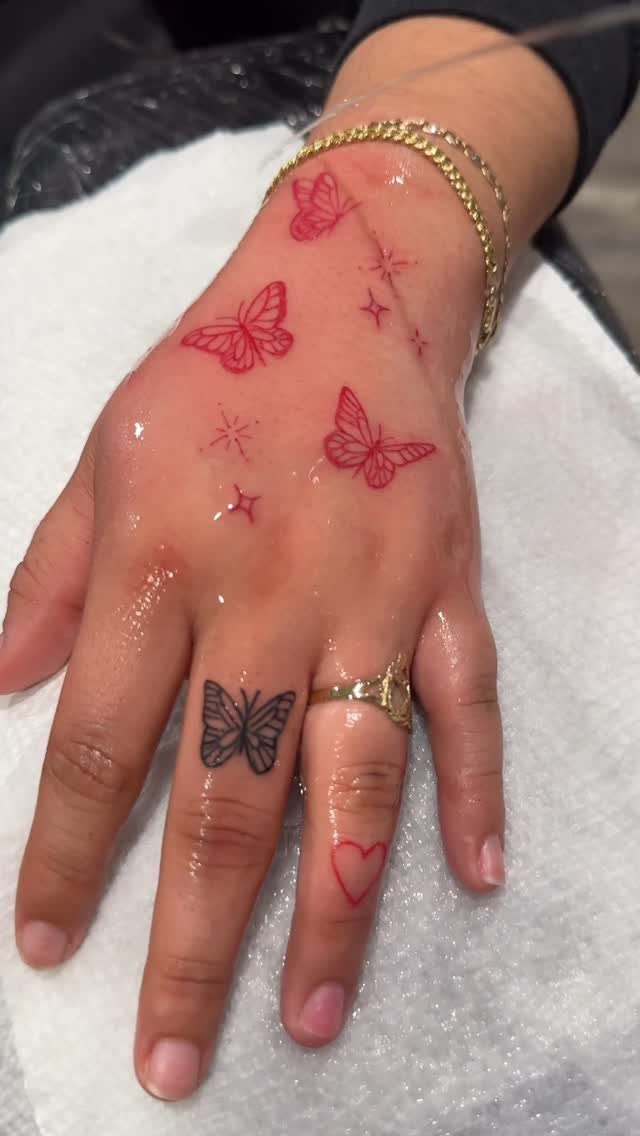
Butterflies carry transformation and change, and they scale down well for finger tattoos. A single butterfly on the side or top of a finger reads clearly without needing much space.
Black ink works best for small butterflies because color fades quickly on fingers. The wings can be outlined simply or filled solid, but fine inner detail tends to blur over time.
Placement matters. A butterfly on the side of the finger stays visible when your hand is at rest, while one on the top shows more when you gesture.
Both wear about the same, so pick based on how you want it to show.
4. Word Script Tattoos
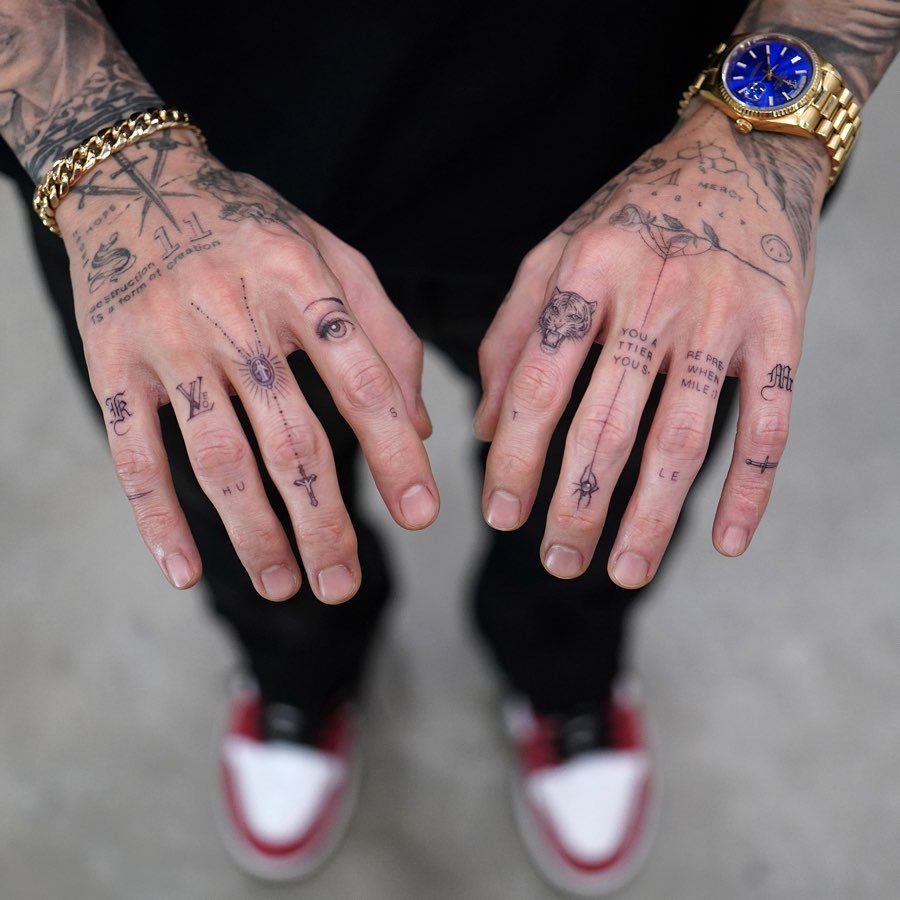
A single word on each knuckle or finger gives you space for a short message or a set of values. The letters run vertically down the finger or horizontally across the knuckles, depending on how much room the word needs.
Expect to schedule touch-ups regularly, often every other year. Thicker letters last longer than thin script, and all caps read better than lowercase once the ink starts to soften.
Pick words that will still mean something to you years from now. Names and dates hold up; trending phrases often don’t.
5. Small Animal Finger Tattoo
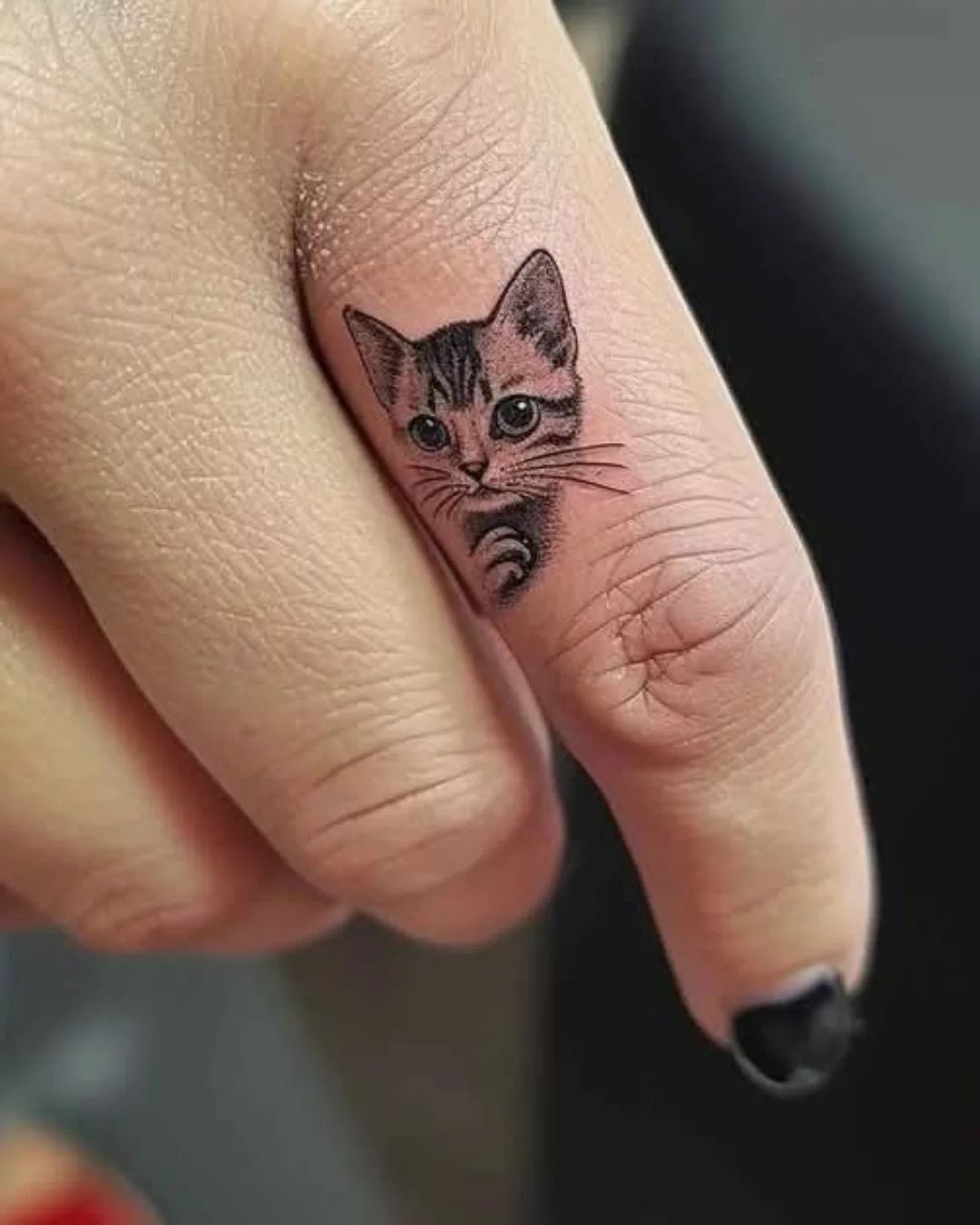
A tiny animal portrait fits neatly on the side of a finger. Cats, dogs, birds and other small creatures work when the design focuses on the face or silhouette and skips fine fur texture.
Fingers are one of the faster-fading spots on the body. Simple shapes with clean outlines hold up better than detailed shading, so a kitten face with solid black lines will last longer than one with soft gray fill.
Size is the limit here.
Anything smaller than a thumbnail loses detail as the ink spreads under the skin over time. For more than just an outline, move the design to the hand or forearm where there’s more room.
6. Simple Geometric Shapes
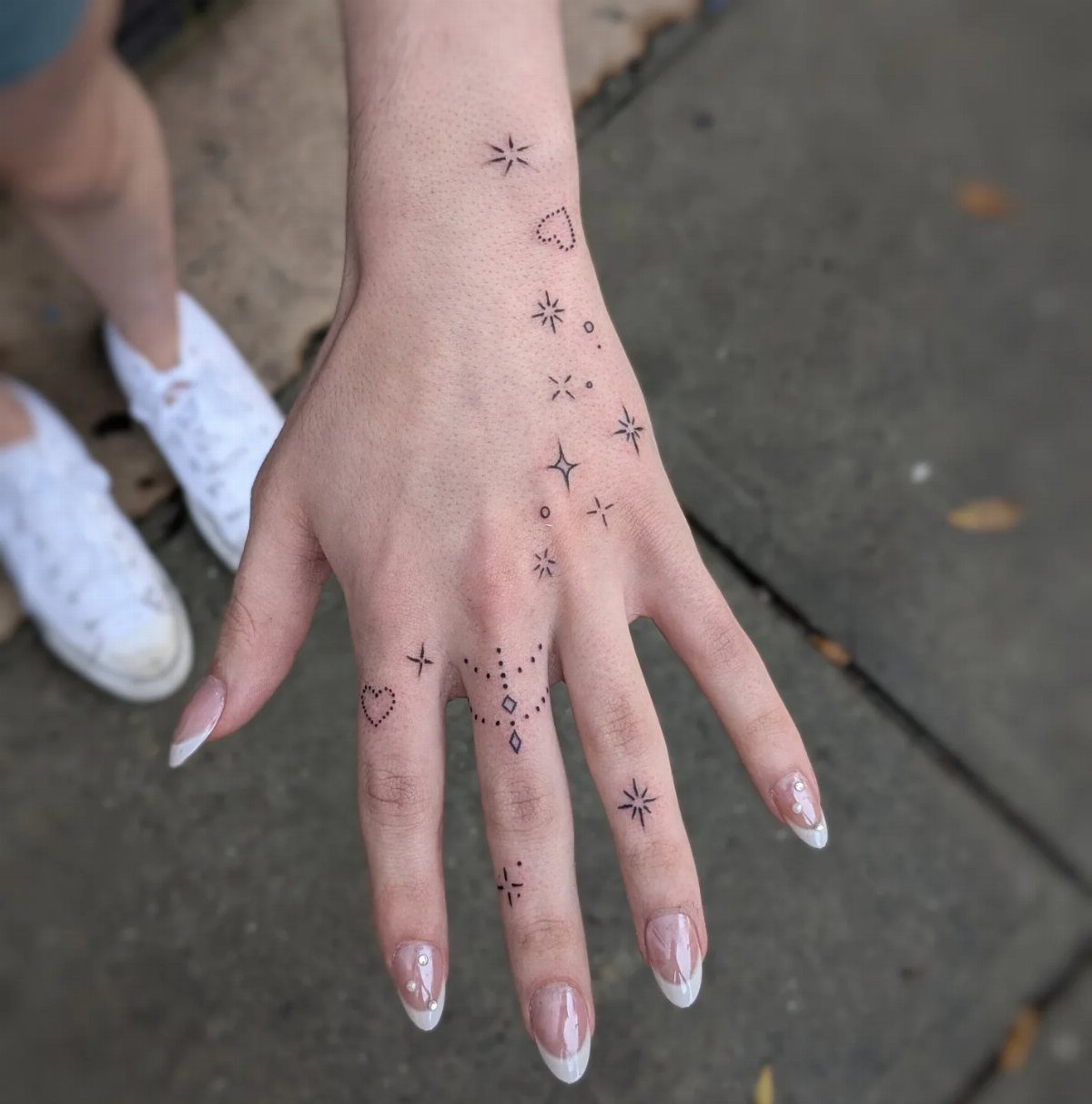
Simple shapes like stars, hearts, triangles and dots fit cleanly on fingers without trying to cram in too much. The designs read fast, they don’t need explanation, and they hold their form as the ink ages.
Geometric tattoos with thick lines and open space inside last longer than intricate patterns.
Fingers fade quickly because of friction and sun, so a solid star or a single outlined heart will still look sharp years later while fine hatching or tiny details blur out.
Placement varies.
A single shape on the side of a finger reads clearly, while a row of dots or small symbols across multiple fingers creates a set. Either way, keep the scale small and the linework bold.
7. Matching Tattoos
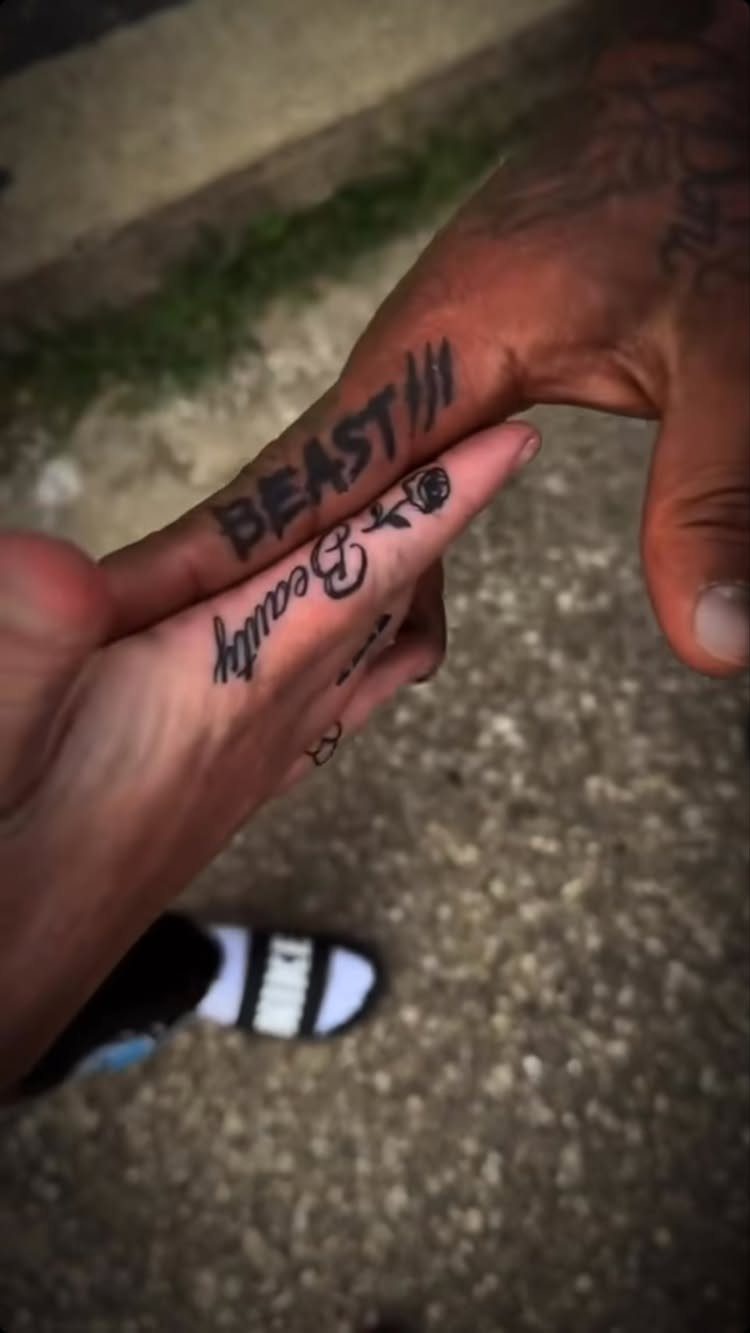
Matching tattoos on fingers let people carry the same symbol or split a phrase between their hands. The designs stay visible in daily life, and the meaning sits where both see it often.
Fingers fade faster than most spots, so matching tattoos need touch-ups on the same schedule to stay even. Simple designs with thick lines hold up better than fine script or detailed images.
Split phrases work best when each half reads on its own. "Beast" and "Beauty" or "Stay" and "Strong" make sense alone, while half a sentence on one hand looks incomplete if the other person isn’t there.
8. Tribal Tattoos
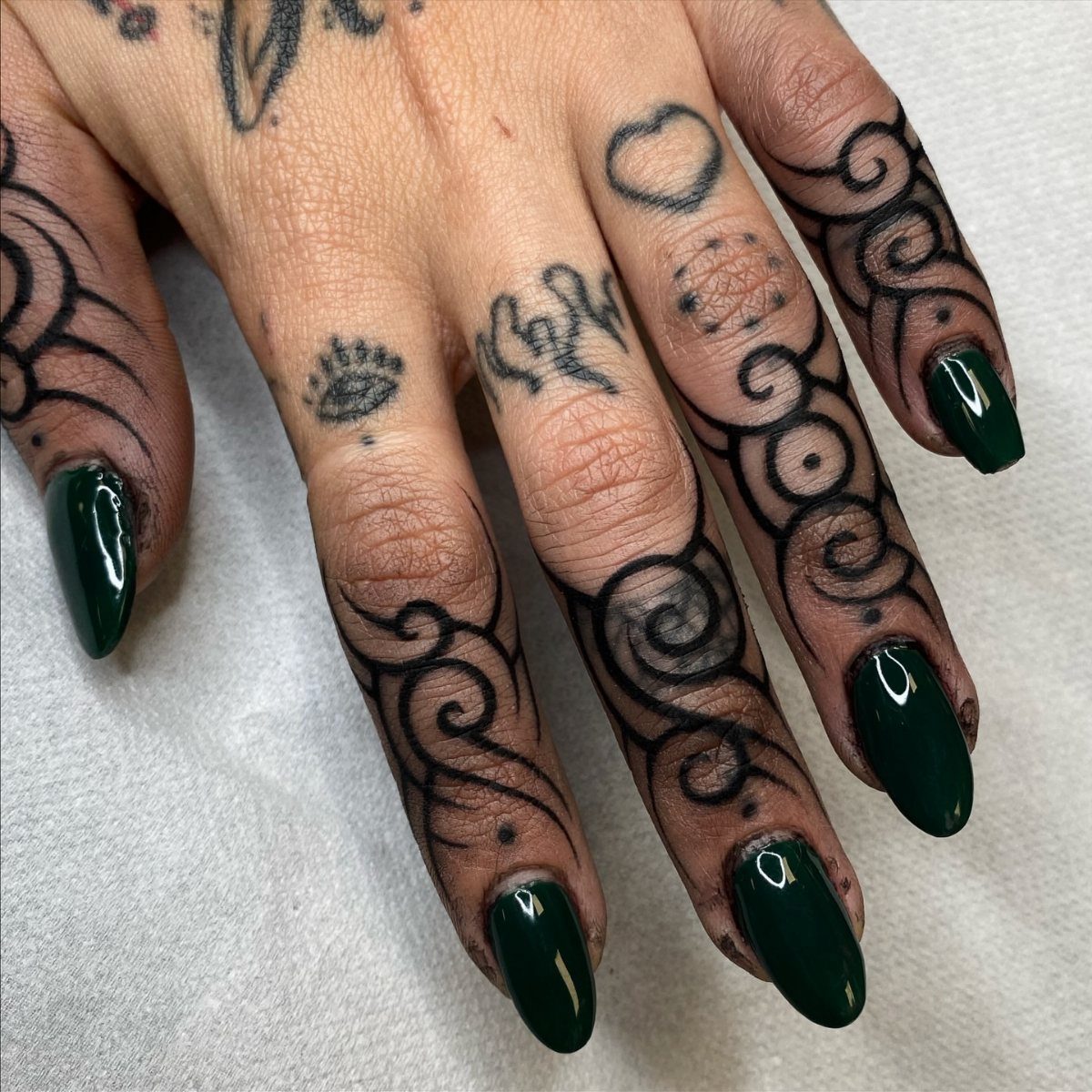
Tribal designs use bold black lines and curved shapes rooted in Polynesian, Maori or Indigenous patterns. The thick linework holds up well on fingers, where lighter ink fades quickly.
These tattoos carry cultural weight.
If the design connects to your own heritage, it belongs. If not, wearing it anyway can read as appropriation, and most artists who specialize in traditional tribal work will ask about your connection before starting.
The curves and spirals wrap around the finger naturally, following its shape. Just keep the pattern open enough that the lines stay distinct as the ink spreads over time.
9. Star Tattoos
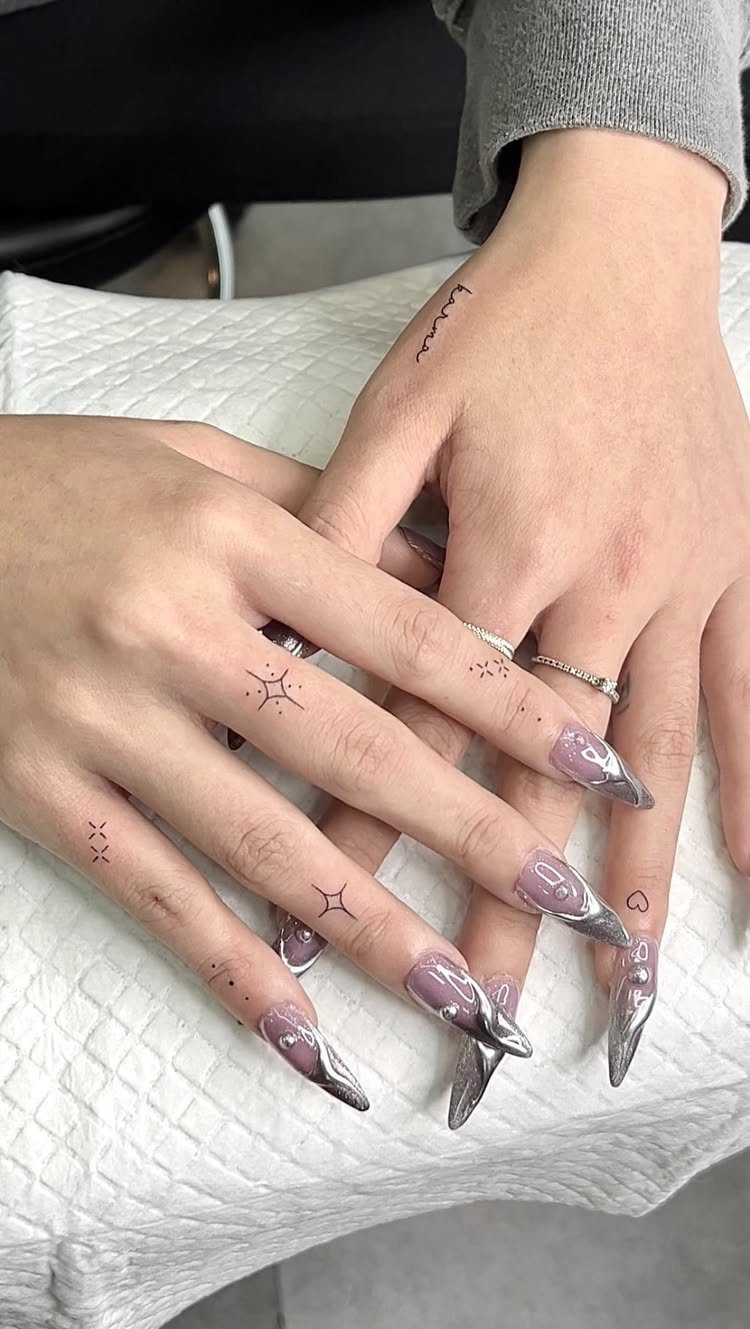
Stars fit neatly on fingers without taking up much room. A single small star or a row of them across multiple fingers reads clearly and scales down without losing shape.
The design is simple enough that it holds up as the ink fades. Solid black stars last longer than outlined ones, and a five-pointed star stays recognizable even after years of wear.
Placement changes how often the tattoo shows.
10. Roman Numerals
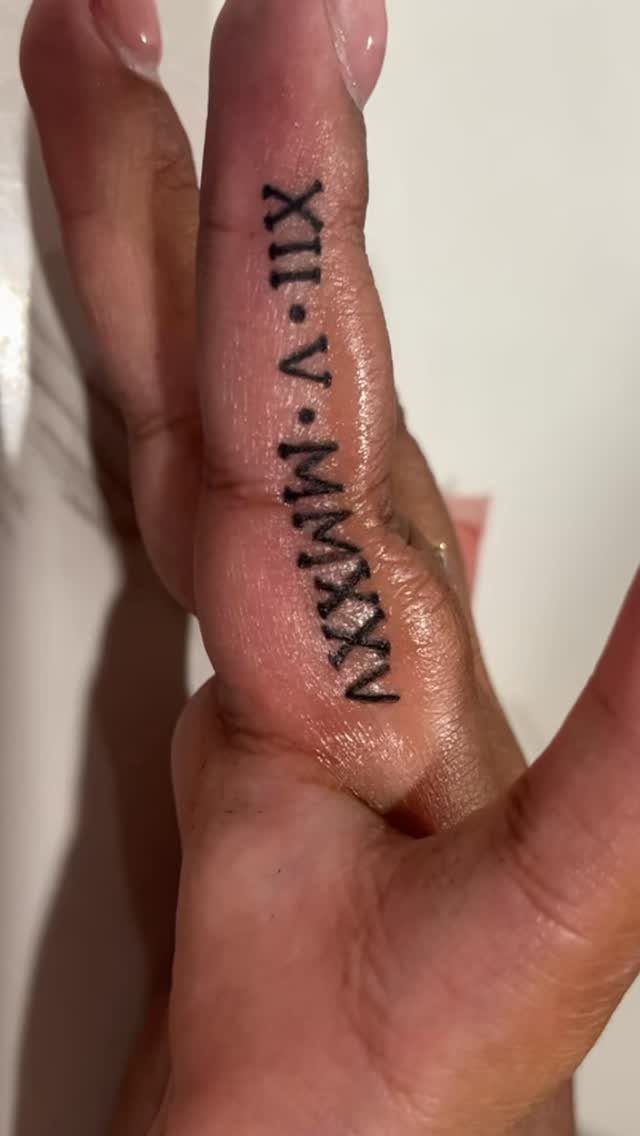
Roman numerals let you mark a date or number without spelling it out. Birth dates, anniversaries and meaningful years all fit vertically along the side of a finger in clean, narrow characters.
The letters sit close together, so thicker strokes read better than thin ones as the ink softens.
Keep the font simple. Serifs and decorative details blur fast on fingers.
Check the numeral format before you sit down.
IV and IIII both show 4, but traditional clockface style uses IIII while formal Latin uses IV. Pick the one you want and confirm it with your artist.
11. Skull Tattoos
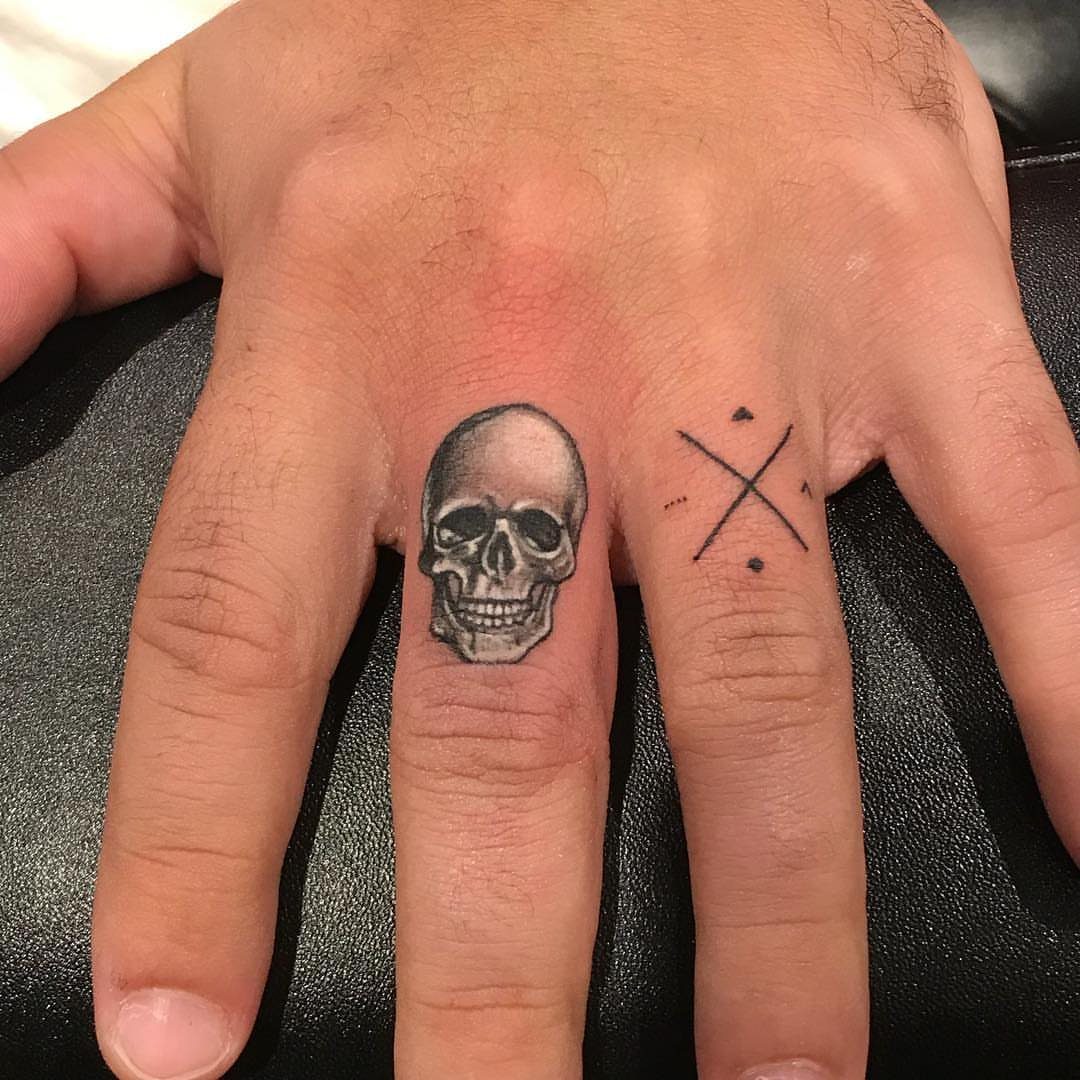
A skull on a finger carries mortality, risk or living without regret. The symbol compresses well because the basic shape is recognizable even at thumbnail size.
Shading adds depth but fades quickly on fingers, so a solid black outline holds up longer. Fine details like teeth or cracks soften over time, while the overall skull shape stays readable.
Fingers take a beating, and tattoos here need more touch-ups than most placements. If you want the skull to stay sharp, plan on booking maintenance appointments every few years.
12. Celestial Finger Tattoos
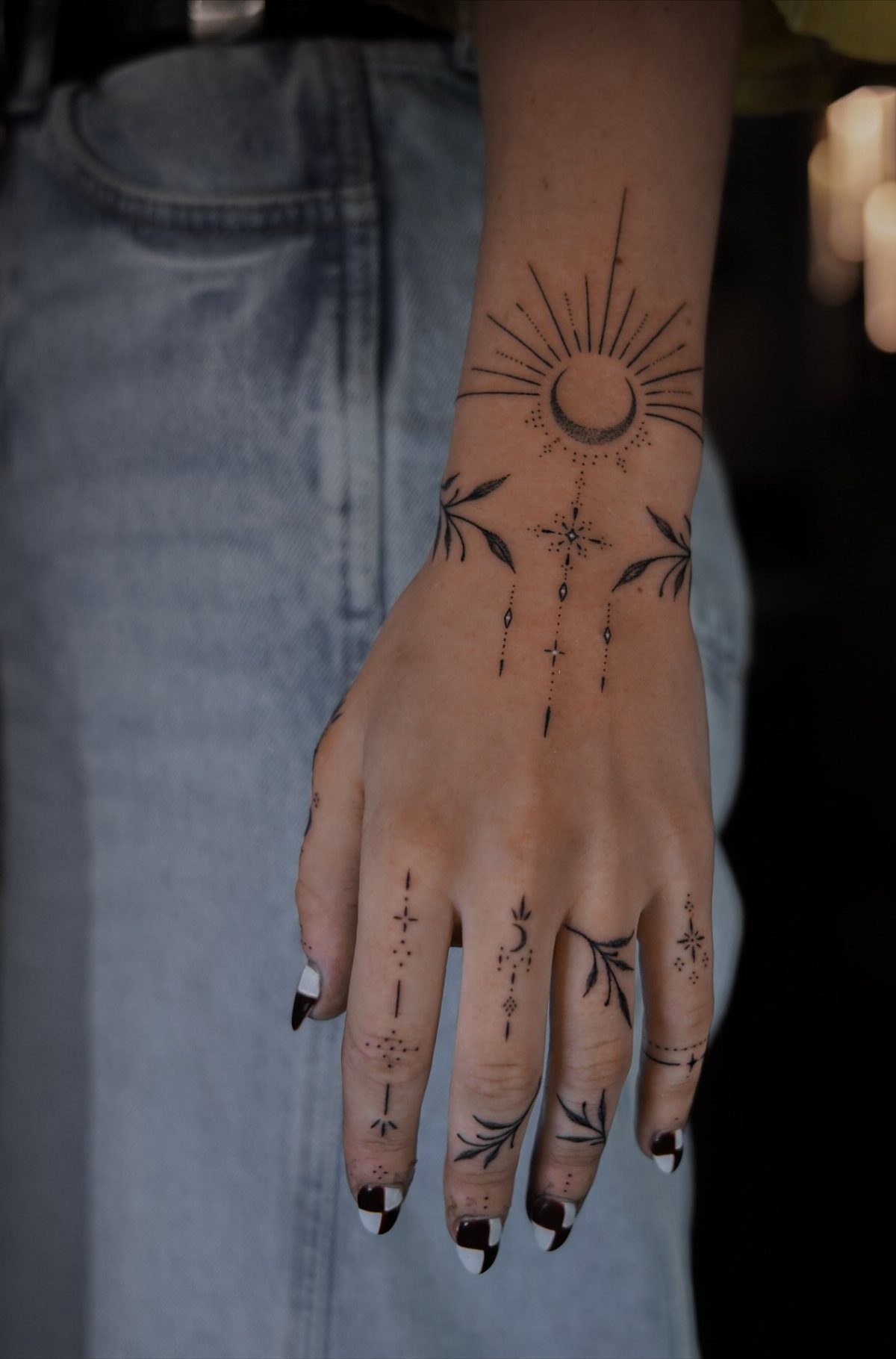
Celestial designs like moons, suns and stars fit the narrow space on a finger without looking cramped. The symbols are simple shapes that carry meaning without needing much room.
A crescent moon or a small sun reads clearly at small scale. Stars, planets and phases can run as a set across multiple fingers or sit alone on one.
Placement affects visibility. Moon tattoos and star tattoos both fade at about the same rate on fingers.
13. Traditional Finger Tattoos
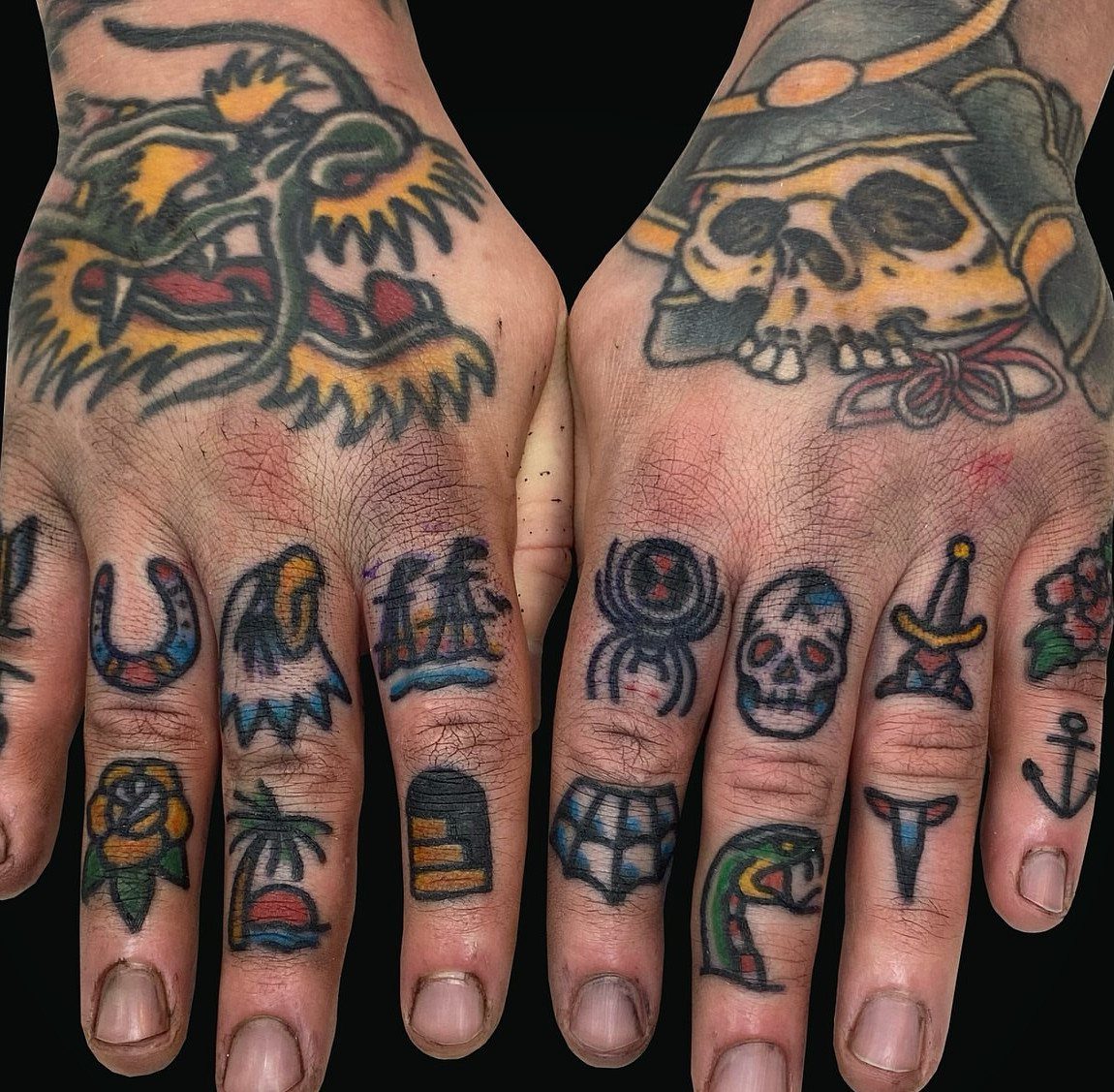
American Traditional designs shrink down well for fingers because the style relies on bold black outlines and solid color fills. Anchors, daggers, swallows and tiny skulls all hold up better than fine-line work once the ink starts to fade.
A dagger placed vertically on the finger can look like it’s piercing through the knuckle when your hand bends. The illusion works best when the blade sits on the top segment and the handle crosses the joint.
Traditional tattoos were built for longevity, and that matters on fingers where everything fades faster.
14. Sun Finger Tattoo
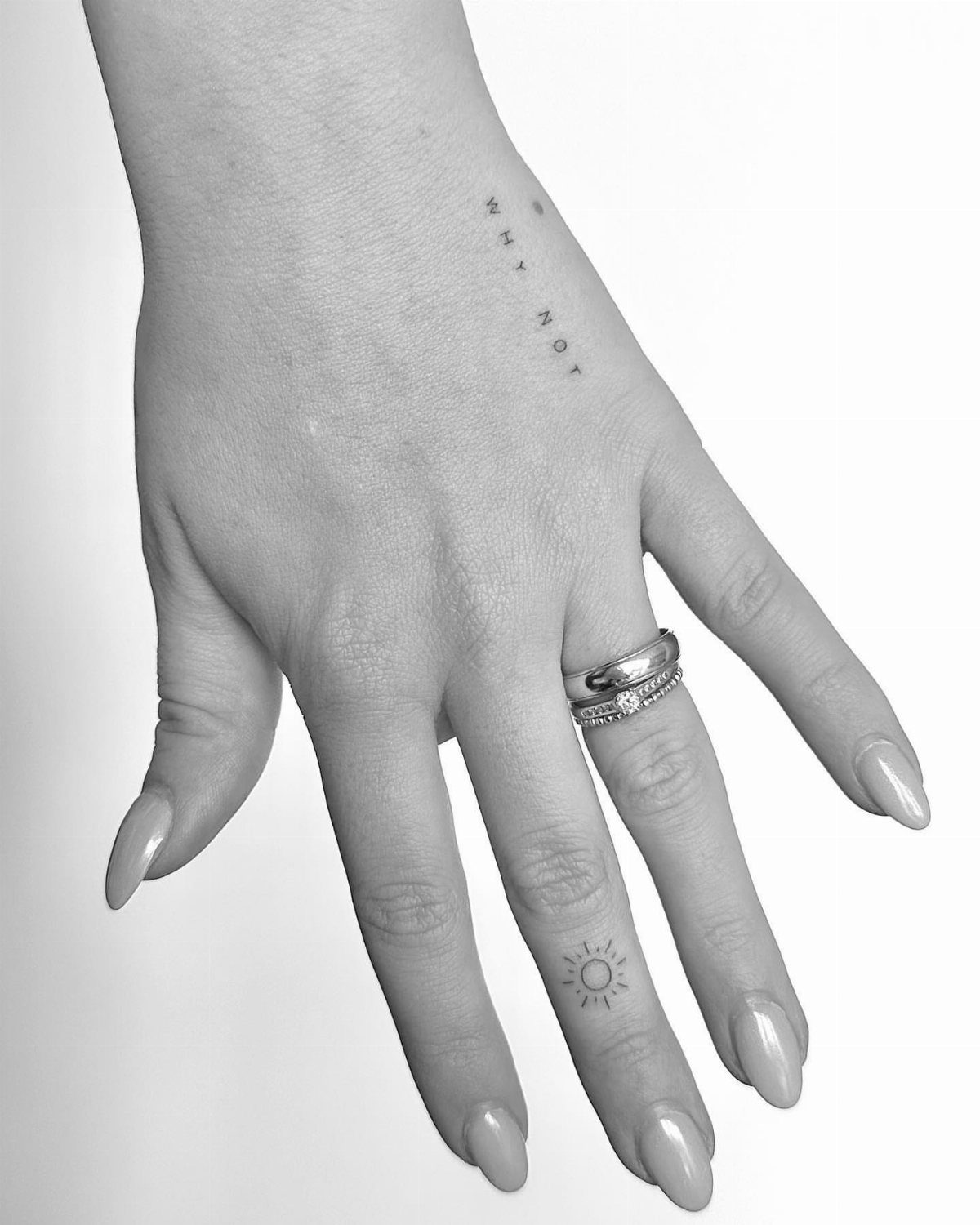
A sun on a finger can mark vitality, energy or a fresh start. The symbol scales down cleanly because a circle with rays reads at any size.
Simple rays work better than detailed ones. Straight lines radiating from a solid center hold their shape longer than delicate linework, and the design stays recognizable even after years of wear on a high-friction spot.
Ring finger placement lets the sun sit where a band would go.
15. Snake Finger Tattoo
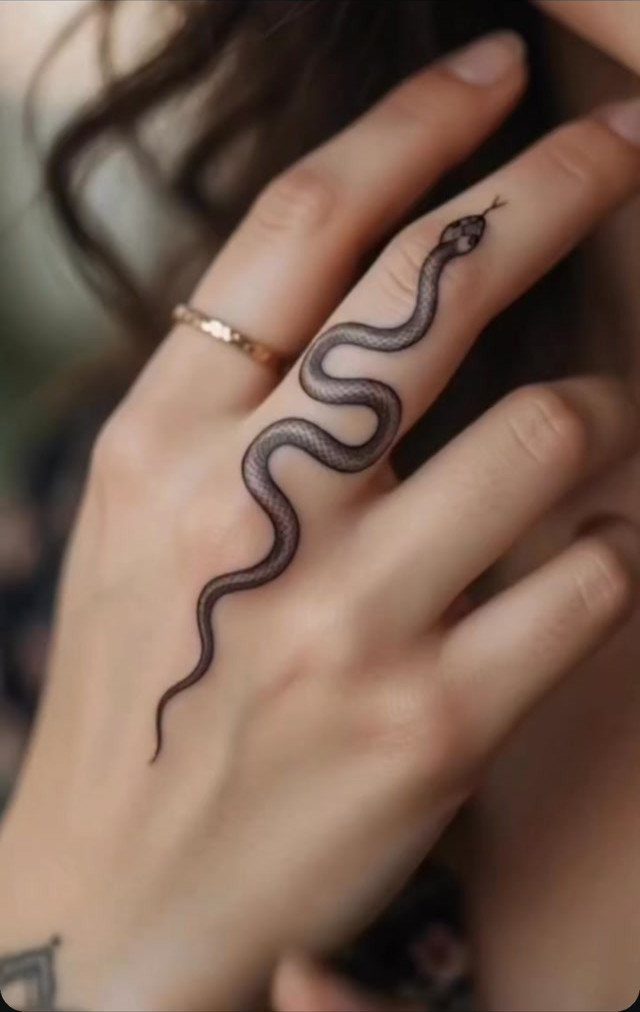
A snake winding up from the hand onto the finger follows the natural curve of the body.
The design works because the snake’s shape fits the space without forcing it, and the symbol carries transformation and renewal instead of just danger.
The head usually sits at the fingertip or wraps around the top segment, with the body trailing down toward the hand.
Snakes need room to curve, so this design takes up more space than a single-finger tattoo. Plan for it to cover part of the hand as well.
16. Rose Finger Tattoos
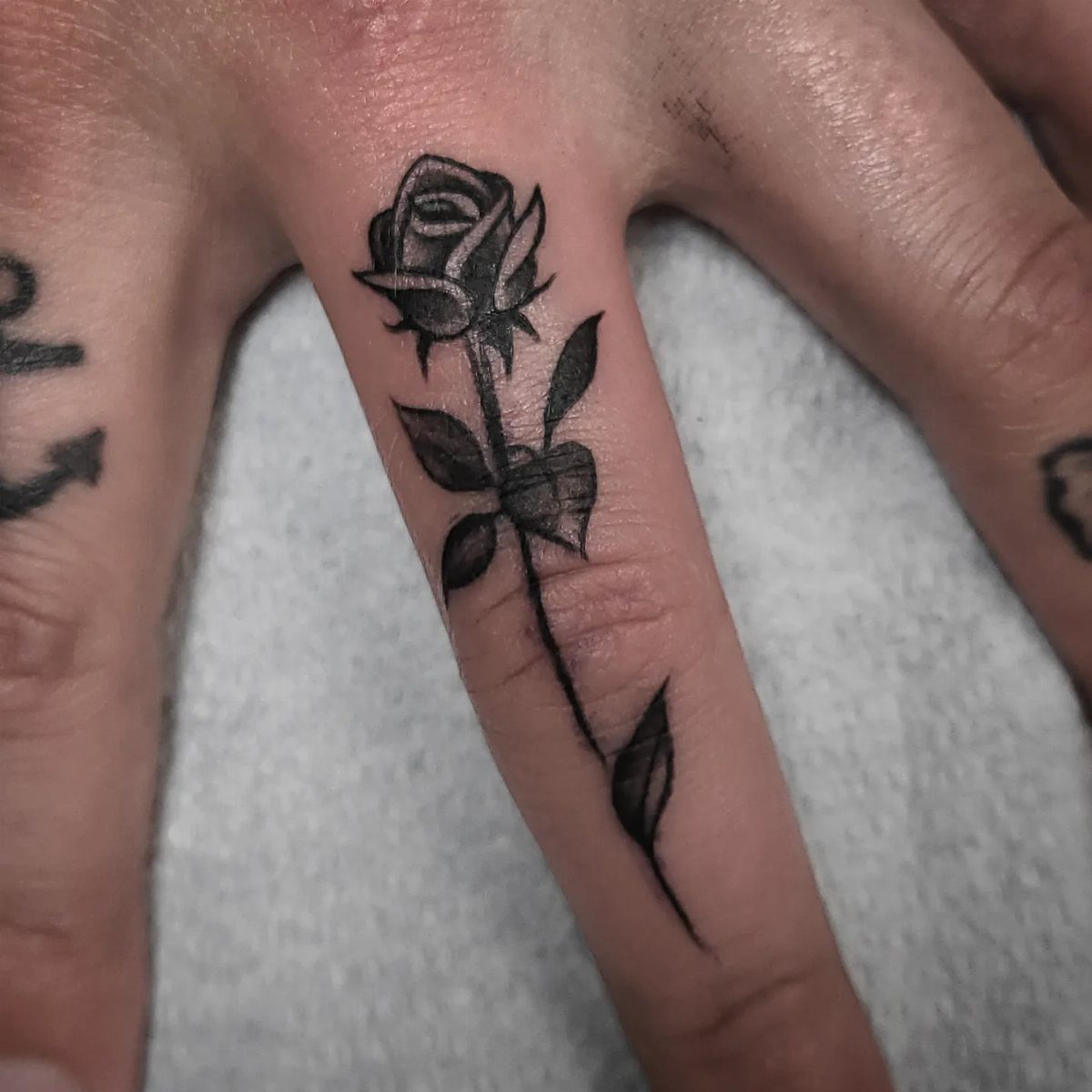
A rose fits cleanly on a finger when the design focuses on the bloom and skips the stem, or includes just a short one. The flower reads clearly at small scale, and the meaning stays familiar without needing explanation.
Black ink holds up best.
Placement depends on how much of the flower you want visible. A full bloom on the side of the finger shows more than one on the top, which hides when your hand is flat.
17. Knuckle Tattoos
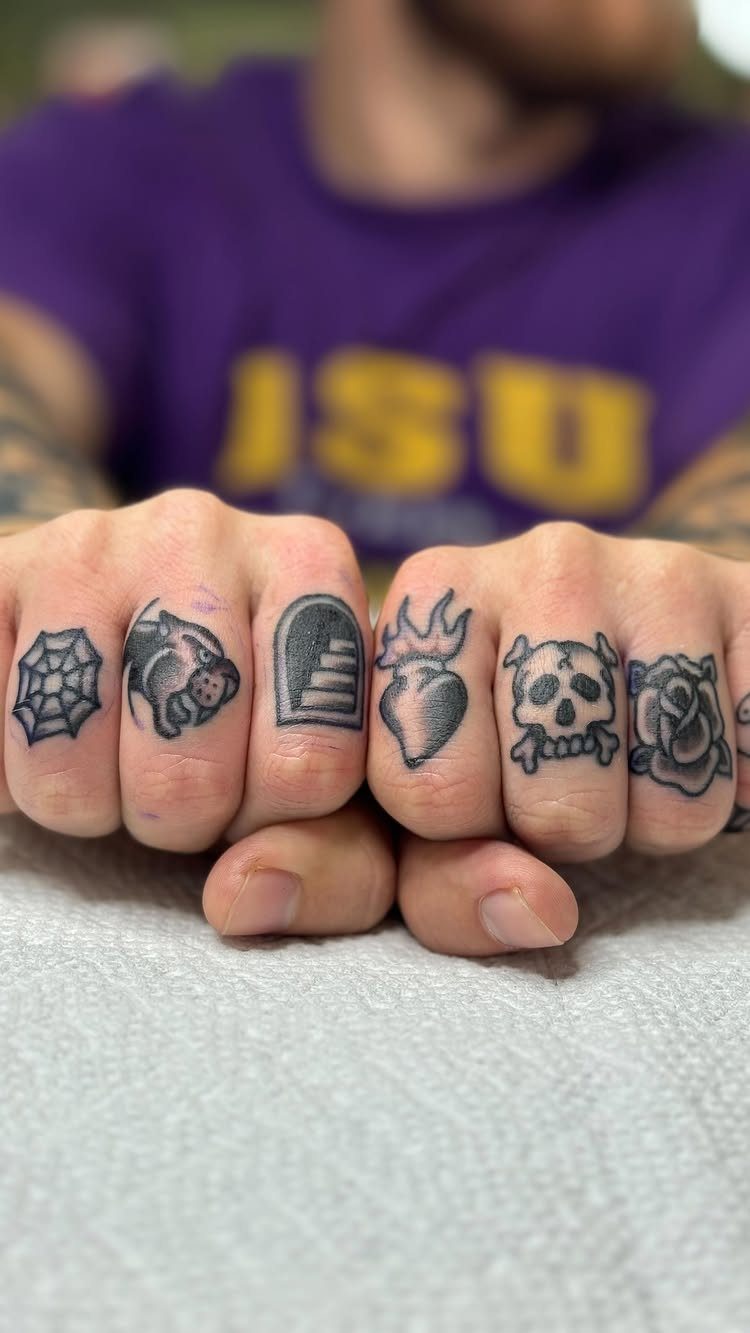
Knuckle tattoos sit directly on the joint, often one small design per knuckle. The placement shows when you make a fist or gesture, and the tattoos move with your hand instead of sitting still.
Each knuckle gets its own symbol, so a set of designs can build a theme or spell out a message. Hearts, skulls, stars, roses and other compact shapes work because they fit the small, curved surface without crowding it.
Knuckles fade faster than the rest of the finger because the skin stretches and folds constantly. Touch-ups keep the designs readable, and thicker lines last longer than fine detail.
18. Flame Tattoos
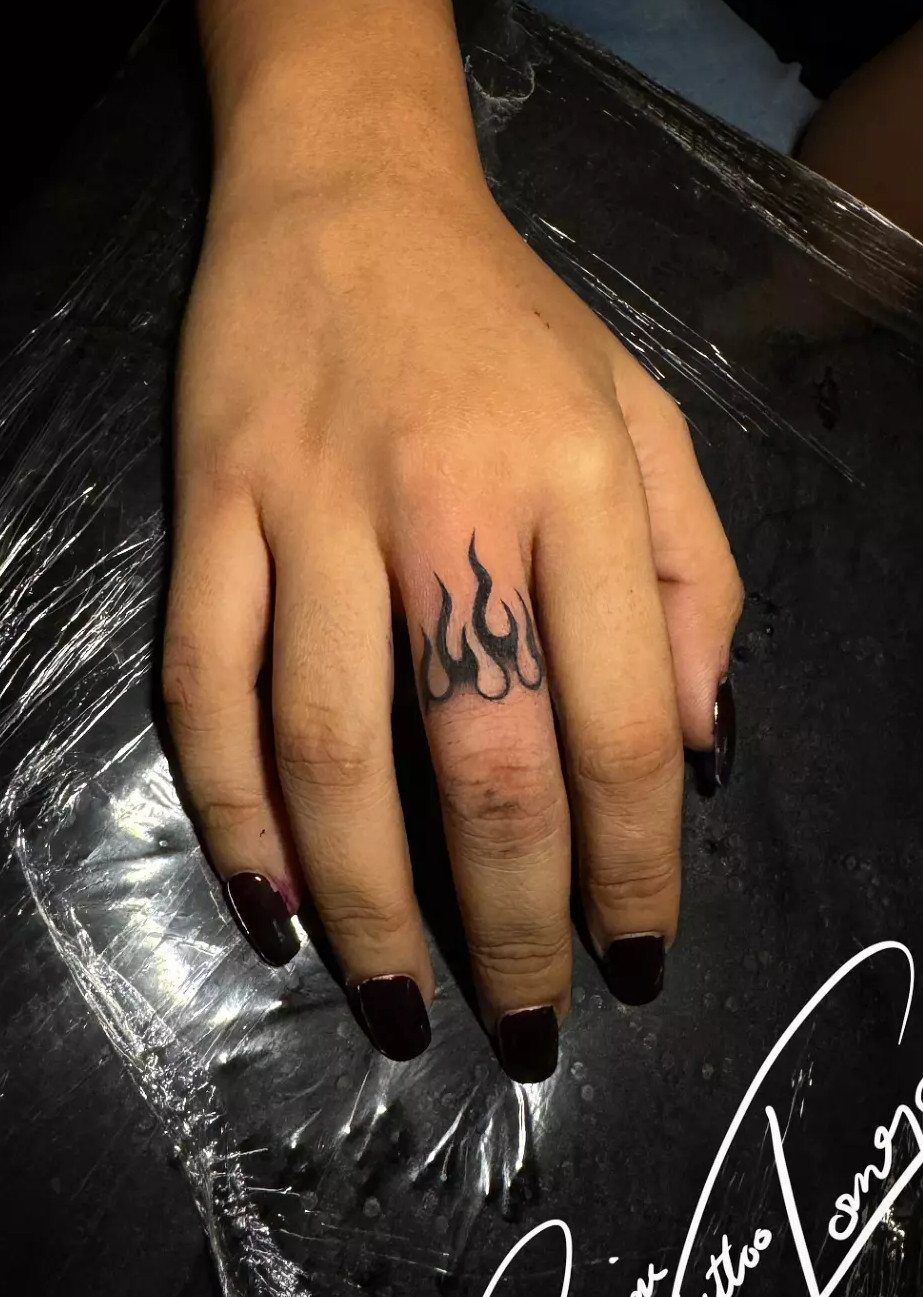
Flames wrap around a finger and follow its curve naturally. The pointed shapes taper as they rise, so the design fits the space without looking forced.
Black flames hold up longer than colored ones, and keeping the individual flame tips separate instead of blending them together means the design stays readable as the ink spreads.
Fine details inside each flame blur quickly, so solid fills work better than shading.
Flames starting at the base and rising toward the tip create movement, while a band of flames around one segment stays contained.
19. Vine Wrap Tattoos
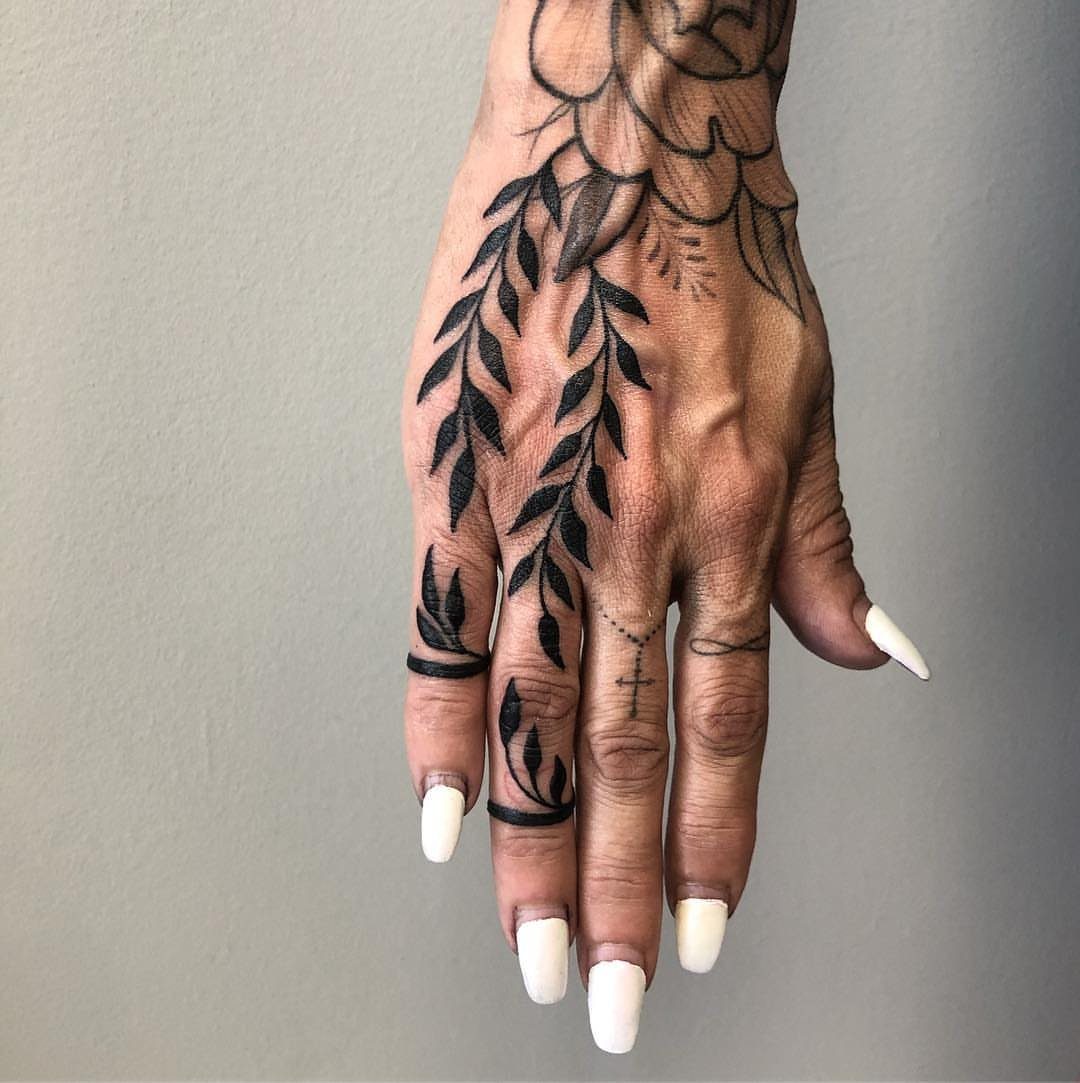
Vines wrapping around a finger follow the shape naturally, spiraling up from the base or crossing over the knuckles.
Leaves and tendrils fill the space without needing a full sleeve, and the organic curves soften the hard edges of the hand.
Green ink fades faster than black once your skin starts shedding cells. The lines stay visible longer, and you can add leaves or thorns without worrying about color fading unevenly.
The wrap can cover one finger or trail across several. Either way, the design moves with your hand instead of sitting flat.
20. Crescent Moon Tattoos
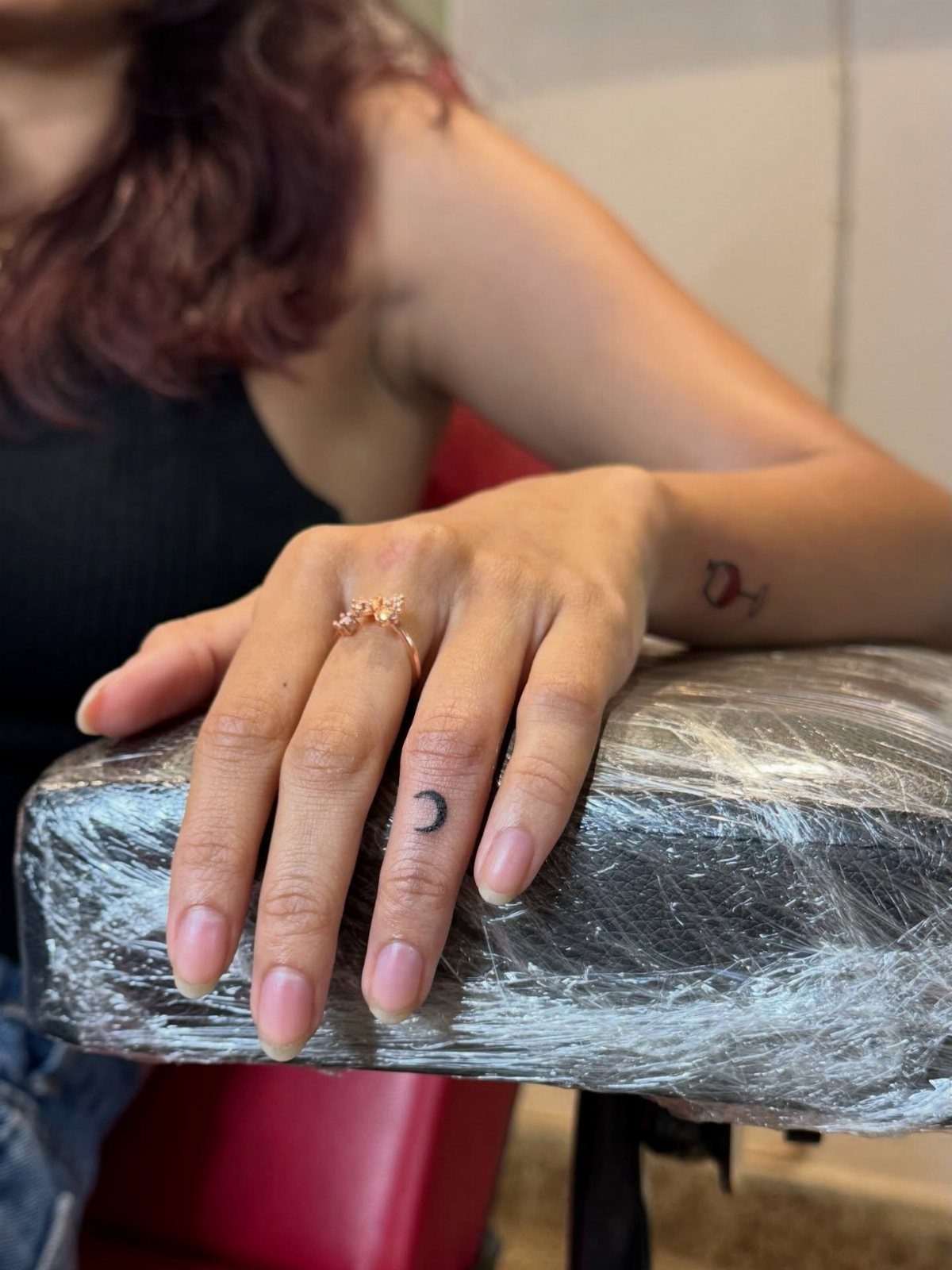
A crescent moon marks cycles, change and what comes next. The curved shape fits a finger cleanly, and the symbol reads at small scale without needing detail.
Solid black crescent moons last longer than outlined ones. The shape stays recognizable as the ink fades, and touch-ups are simpler.
21. Yokai Tattoos
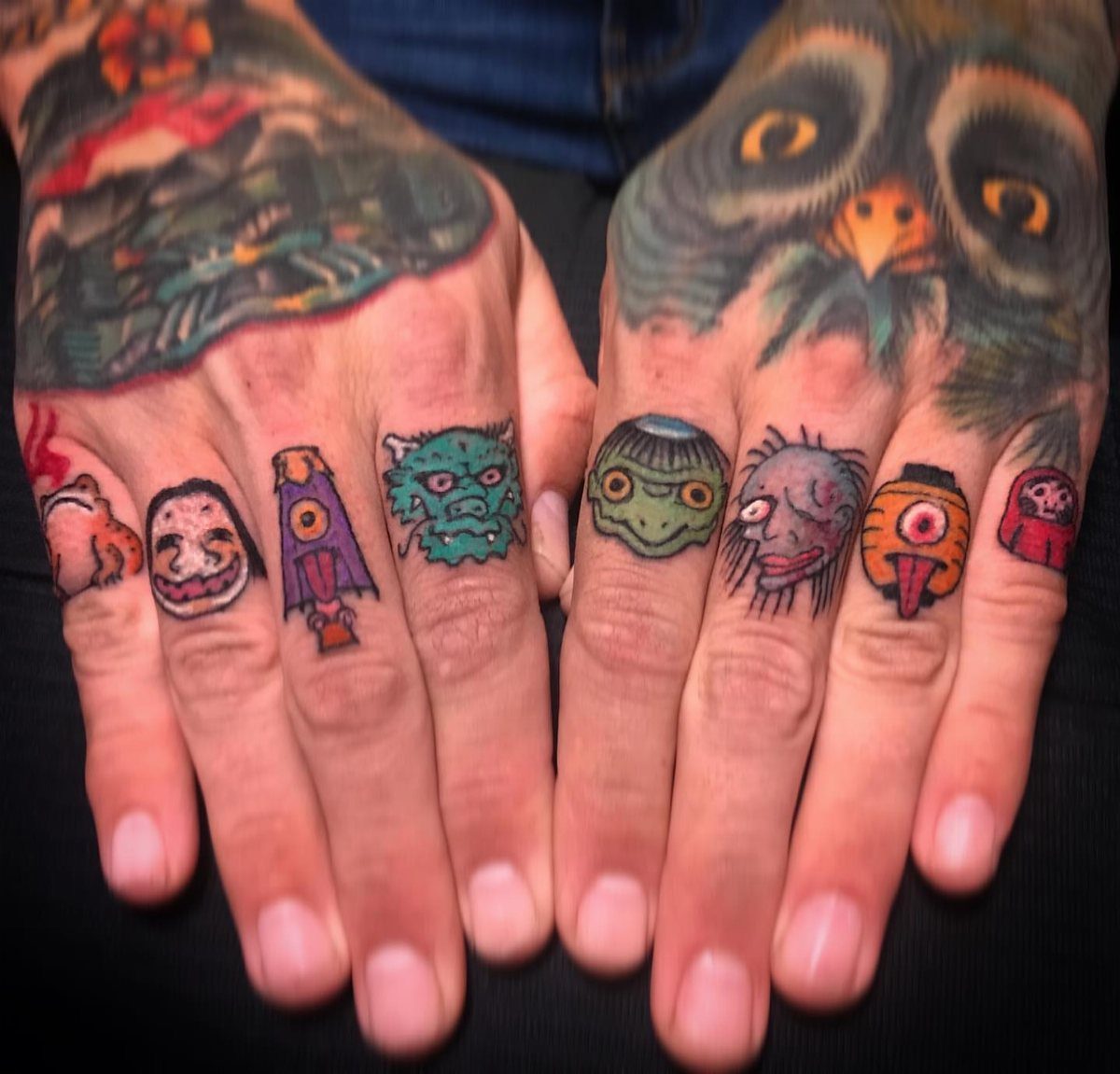
Japanese folklore creatures bring mythology to your fingers. Oni masks, kitsune, tanuki and other yokai compress into small spaces because the designs rely on bold shapes and recognizable features.
Color adds character but fades faster on fingers than black ink does. Red, blue and green soften over time, so expect to schedule touch-ups if you want the hues to stay bright.
Each finger can hold a different creature, building a set across your hand. The designs sit where they show when you gesture or rest your hand flat.
22. Red Ink Finger Tattoos
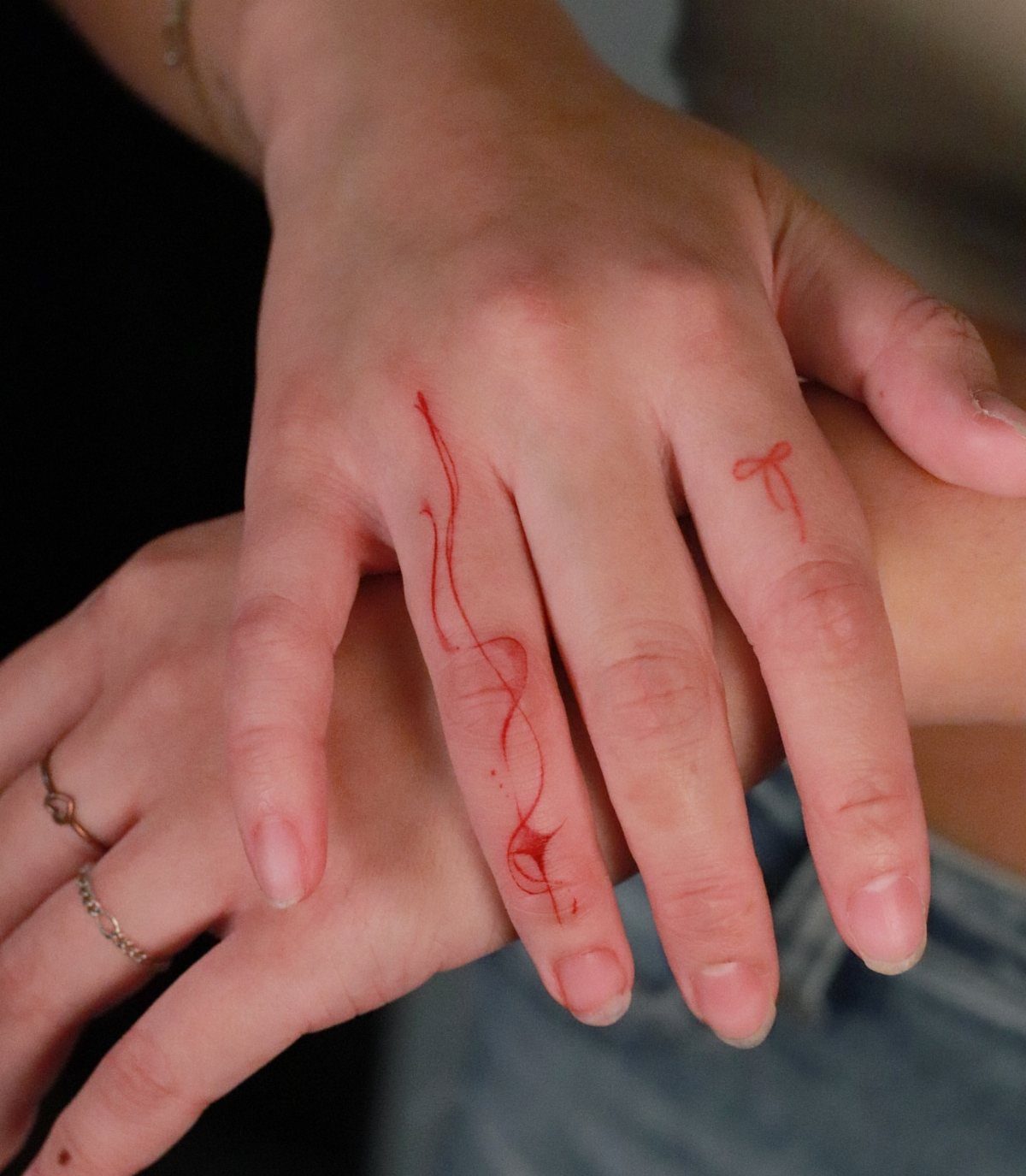
Red ink on fingers reads softer than black but fades faster. The color shows up best on lighter skin tones, and even then it lightens over time as the pigment breaks down under sun and friction.
Thin red lines blur quickly, so keep the design simple. A bow, a heart or a short vine holds up better than fine script or detailed shading.
Touch-ups every couple of years keep the color visible. Red ink also heals differently than black, sometimes looking pink or orange before it settles.
23. Sharp Abstract Finger Tattoos
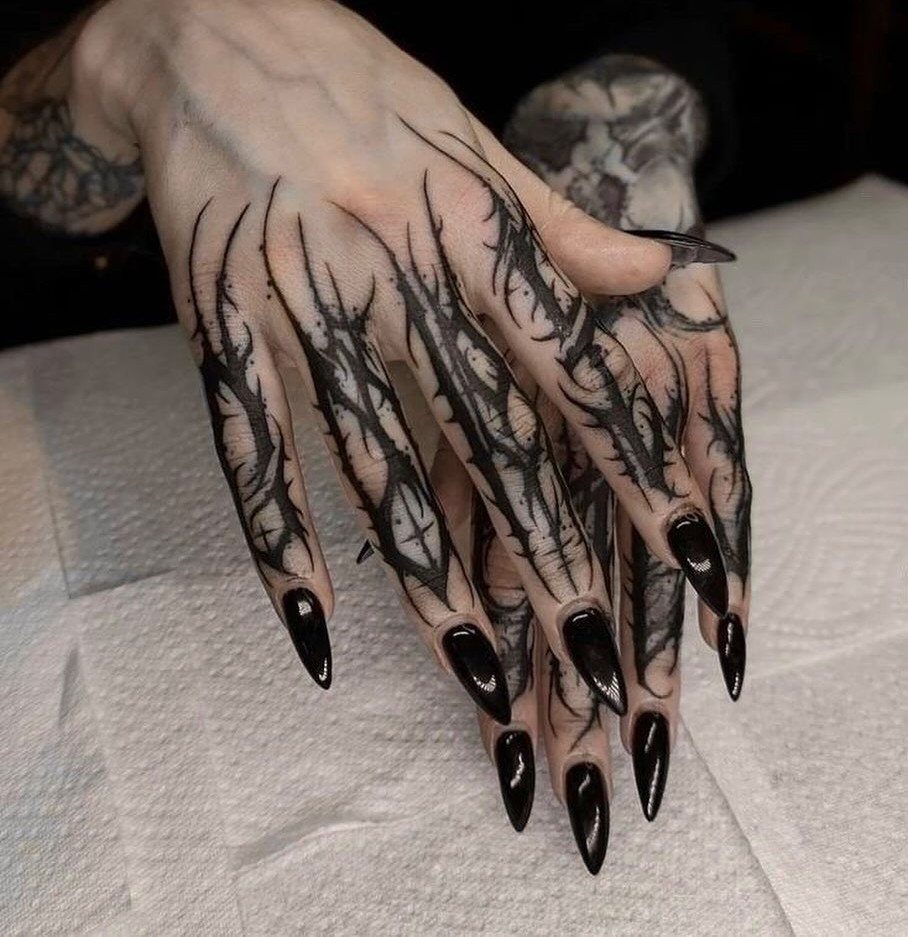
Sharp abstract patterns turn fingers into a canvas for angular lines, geometric fragments and bold black shapes that don’t represent anything specific.
The designs read as intentional chaos, and the style suits people who want ink that doesn’t need a story attached.
Heavy black coverage fades slower than fine linework, and the abstract nature means small shifts in the ink over time don’t ruin the design. A blurred edge or spreading line just becomes part of the pattern.
Covering multiple fingers creates a cohesive set. The designs can connect across the hand or sit separately on each finger.
Finger Tattoo Maintenance
Sun exposure, constant movement, hand washing and friction from pockets and clothing all wear down the pigment faster than it would on your arm or back.
The ones who do know the design won’t stay crisp, and touch-ups become part of the deal.
After healing, I put on gloves before doing dishes or handling cleaning products.
Detergents and bleach strip moisture from your skin and carry ink along with it. Keep your hands moisturized several times a day, and use a moisturizer with SPF to block sun damage.
Talk to your artist about a schedule that fits how the ink settles on your skin.
However, as tattoo artist Hailey Kim wants you to know, it’s very likely you’ll need a touch-up. “It depends on the person, but in most cases, finger tattoos will need at least one or two touch-ups,” she says.
— Allure
Pain and Healing
The skin sits thin over bone, and nerve endings pack in tighter here than on fleshier spots like the forearm or thigh.
Getting tattooed during your period can make it worse, since you’re already managing one source of discomfort and the needles add another layer.
The upside is that finger tattoos finish fast. The designs are small, so the session runs shorter than it would for a larger piece.
Ibuprofen or acetaminophen taken after the appointment can take the edge off lingering soreness. Some artists offer topical numbing products, though those work better before the needle starts than during.
Visibility and Job Considerations
Finger tattoos stay visible all the time. You can’t cover them with a sleeve or shift your position to hide them during a meeting.
Hand tattoos still get called "jobstoppers" in some fields. Certain employers won’t hire anyone with visible ink on their hands, neck or face, and that rule holds in industries where client-facing roles matter or dress codes stay formal.
If your work allows it, the visibility is part of the appeal. If not, think about whether you can afford the limitation before you sit down.
A few states and cities still prohibit tattooing the hands entirely. Check local laws before you book, because not every artist can legally do the work even if they’re willing.
Frequently Asked Questions
How painful is a finger tattoo?
The skin over your fingers sits thin, with bone close beneath and nerve endings dense enough that most people rank this spot higher on the pain scale than a forearm or shoulder.
The inside of the finger near the palm side tends to hurt worse than the outer surface. The sessions finish fast since the designs are small, so the discomfort doesn’t last long.
How long will finger tattoos last?
Most finger tattoos need a refresh every few years because the ink fades faster here than it does on steadier skin.
Your hands take more abuse than nearly any other body part, and all that washing, friction and sun adds up. The design will last for decades in some form, but maintaining the crisp look requires regular appointments.
What does a finger tattoo symbolize?
Finger tattoos often mark personal beliefs, relationships or moments that matter to the person wearing them. The symbolism depends entirely on what the wearer wants it to represent.





