Men’s tattoos run from small forearm script to full sleeves in realism or geometric work, and a piece holds detail only when the design fits the surface area it actually has.
1. Black and Grey Eagle Tattoo
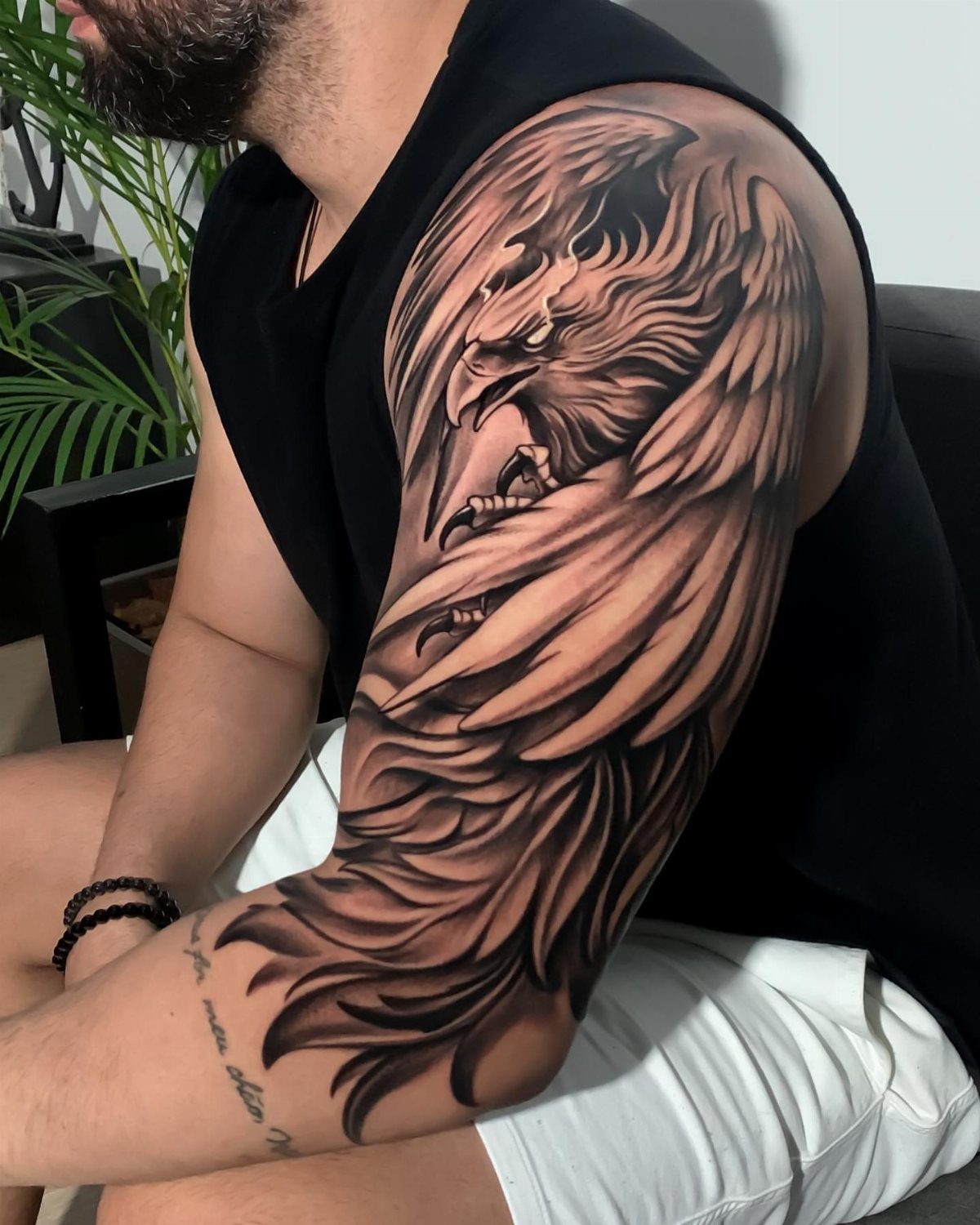
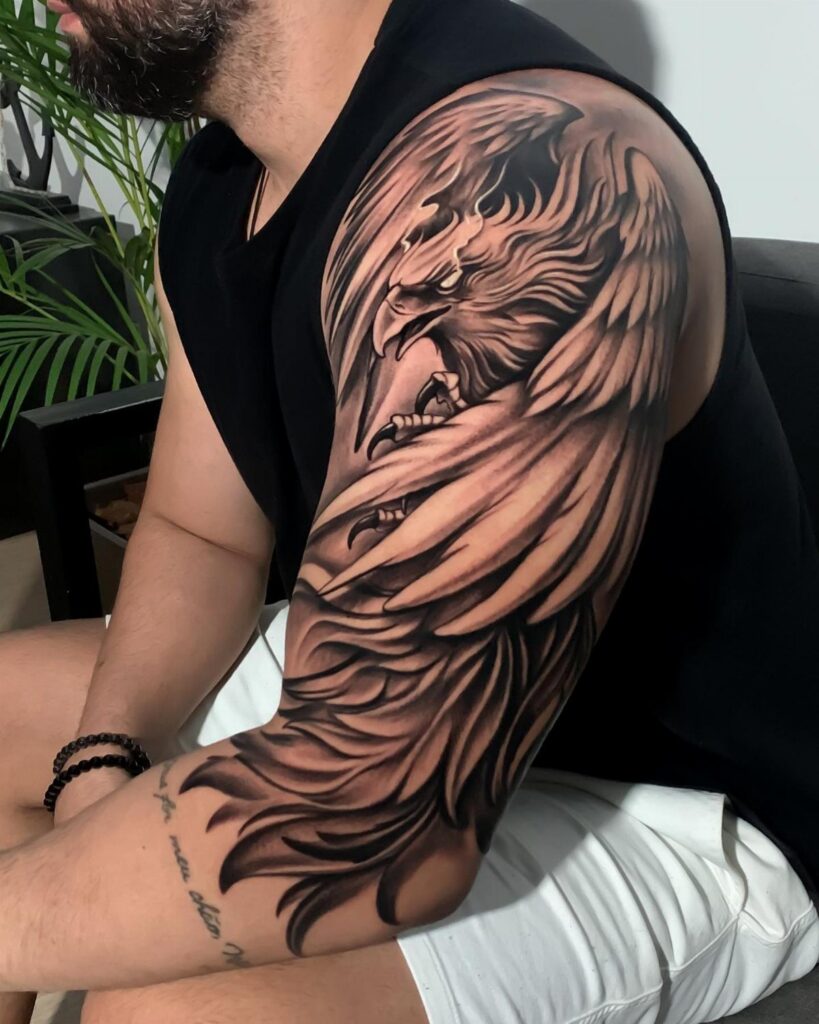
An eagle in black and grey can cover the entire upper arm or sit on the shoulder, and the wings alone give you enough width to make it read from across the room.
The detail in the feathers and the way the head sits against the body set it apart from a flat silhouette.
If you want something that looks finished without a sleeve, this works as a standalone piece. Black and grey holds fine detail better than color over time, and an eagle already carries enough shape that shading does the work.
2. Tribal Tattoo
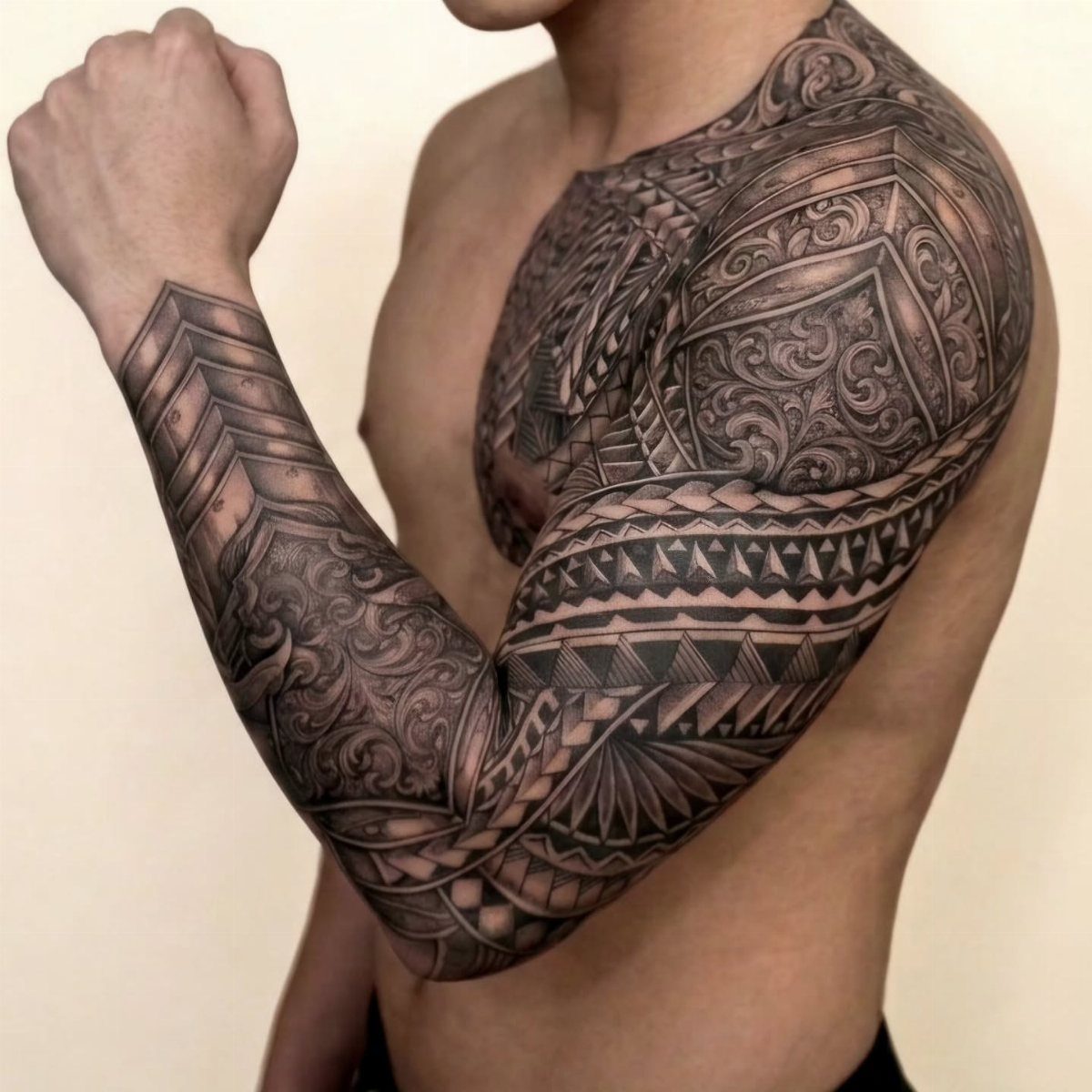
Tribal patterns use solid black and open skin to build rhythm, and the best ones flow with the muscle underneath instead of fighting it.
This one runs from chest to shoulder and down the arm, which keeps the lines connected instead of breaking them into separate pieces.
The weight of the black makes it bold at a distance, and the curves keep it from reading as a band.
If you already have ink on the other side, a piece this large balances it. Just make sure your artist has tribal work in their portfolio, because spacing and line weight matter more here than in most styles.
3. Mountain Tattoo
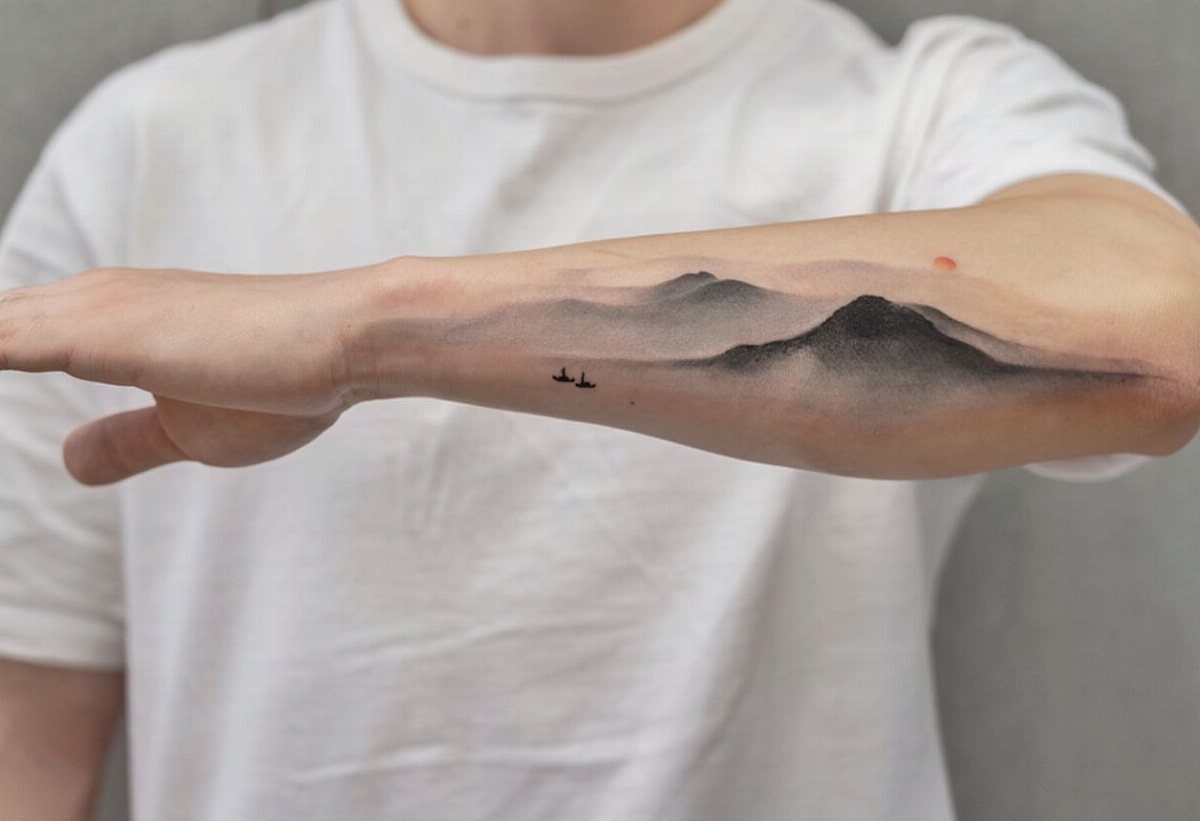
A mountain range on the forearm fits the shape of the muscle and reads clearly whether your arm is hanging or bent.
Adding birds introduces movement, and the black and grey wash lets the peaks fade into shadow without a hard outline.
This placement shows up in short sleeves, which makes it a solid choice for something visible but not in your face. Mountains scale well, so adding trees or a lake later lets the piece grow without looking crowded.
4. Greek God Zeus Tattoo
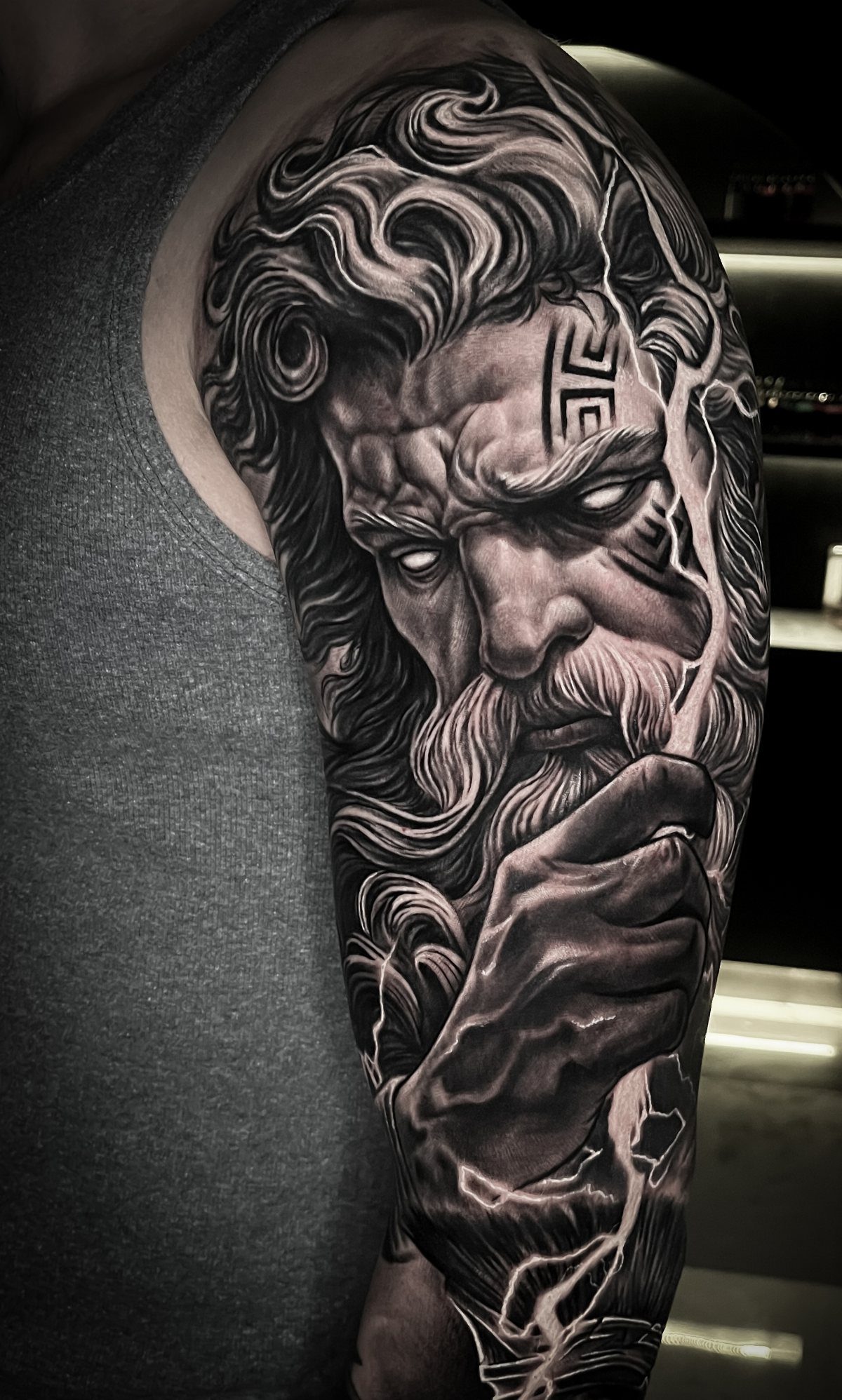
Zeus gives you an excuse to pack detail into a single figure: the beard, the lightning, the expression.
The geometric symbol on the forehead adds a modern edge to what could otherwise read too classical, and the lightning bolts give the piece movement.
Upper arm and shoulder placement works because Zeus needs room.
If you go smaller, the face loses definition and you end up with a blur. This sits well on its own or as the anchor for a larger sleeve if you add more Greek mythology later.
5. Lion Tattoo
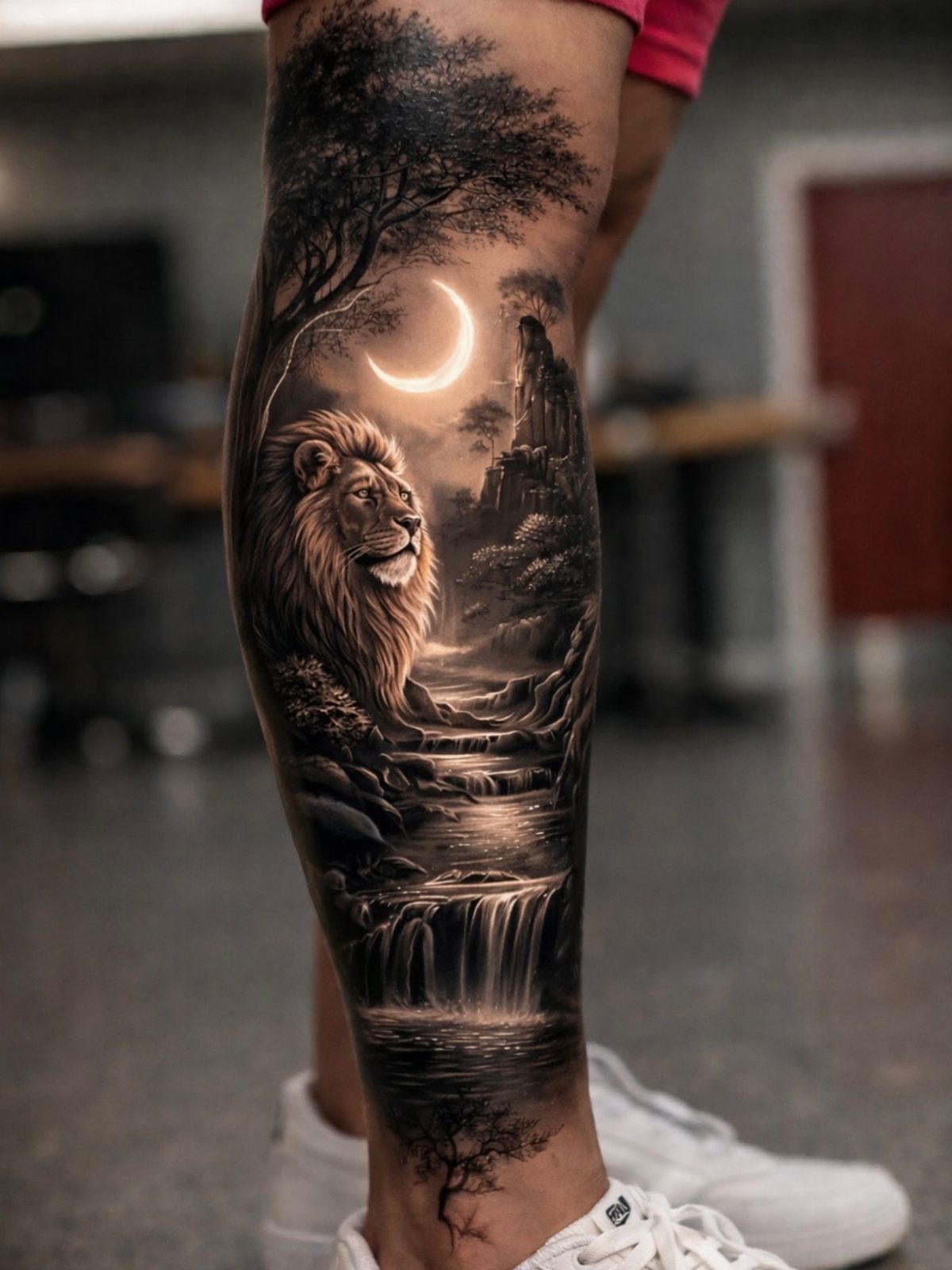
The portrait orientation suits the calf, and the detail holds because there’s enough surface area.
Lower leg tattoos hurt more than the arm, and the heal time is longer because your socks and shoes sit right on top of it.
If you want the lion but don’t need the background, a portrait of the head alone works on a smaller space.
6. Portrait Tattoo
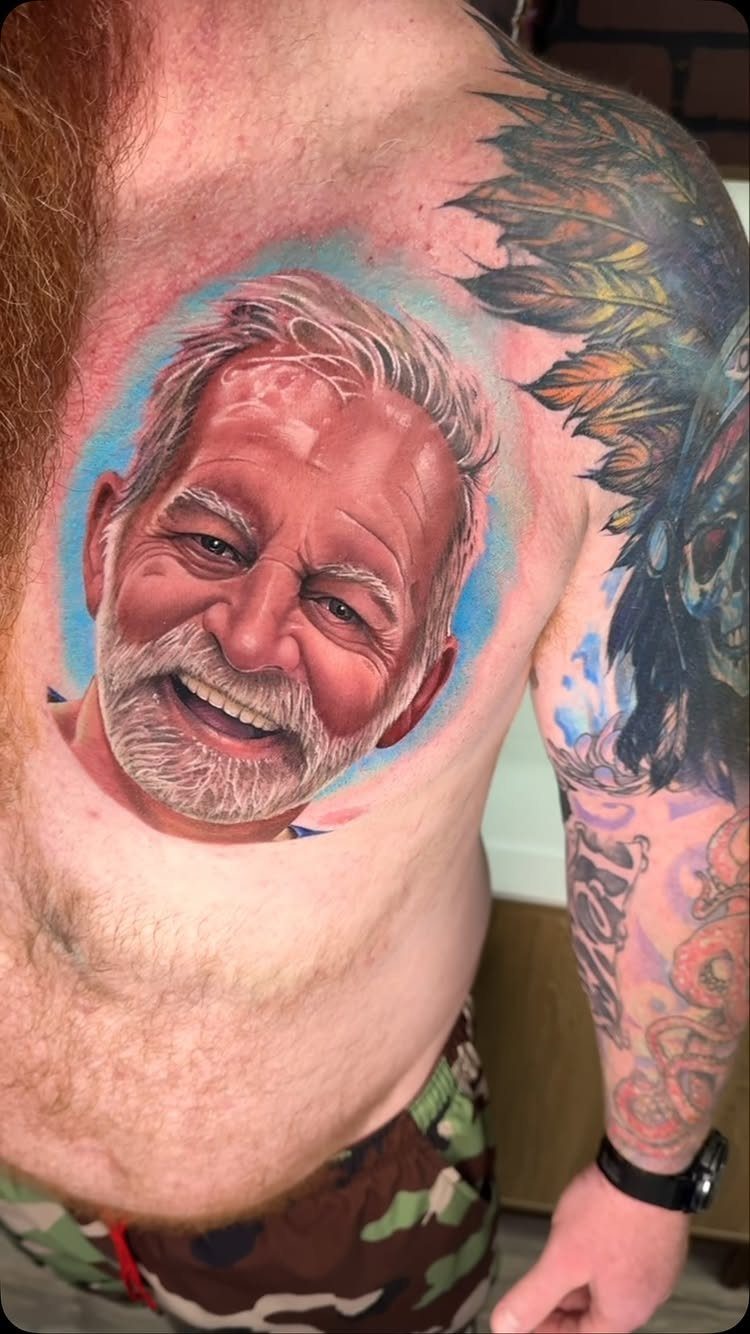
A portrait tattoo is the hardest style to get right, and if the artist misses the proportions or the shading, it looks off forever.
This one sits on the chest, which gives enough flat space for a face, and the realistic style means every line matters.
Pick an artist who already does portrait work and check their healed photos, not just fresh ones.
If you’re memorializing someone, bring a high-resolution reference photo with good lighting. Chest placement keeps it close but not always visible, which suits a piece this personal.
7. Lettering Tattoo
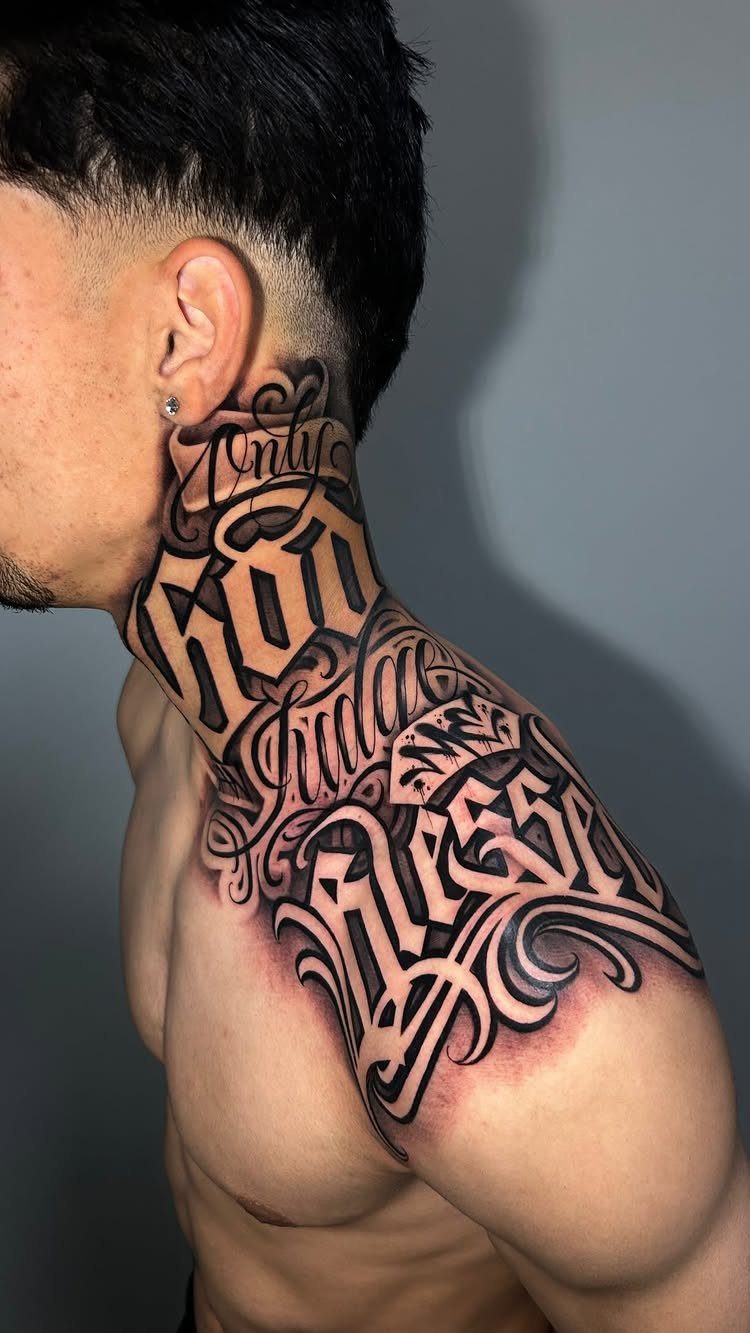
Lettering on the neck and shoulder reads best when the script is large enough to hold its curves, and this placement follows the line from collarbone to jaw instead of sitting flat.
The neck shows up more than most placements, so pick words you still want visible in a decade.
Script styles vary, and a heavy hand makes some letters blur together as the tattoo settles.
Bring a reference for the exact font you want, and ask your artist to draw it at full size before committing. Neck tattoos hurt more than the arm because the skin is thinner and closer to bone.
8. Neo-traditional Tattoo
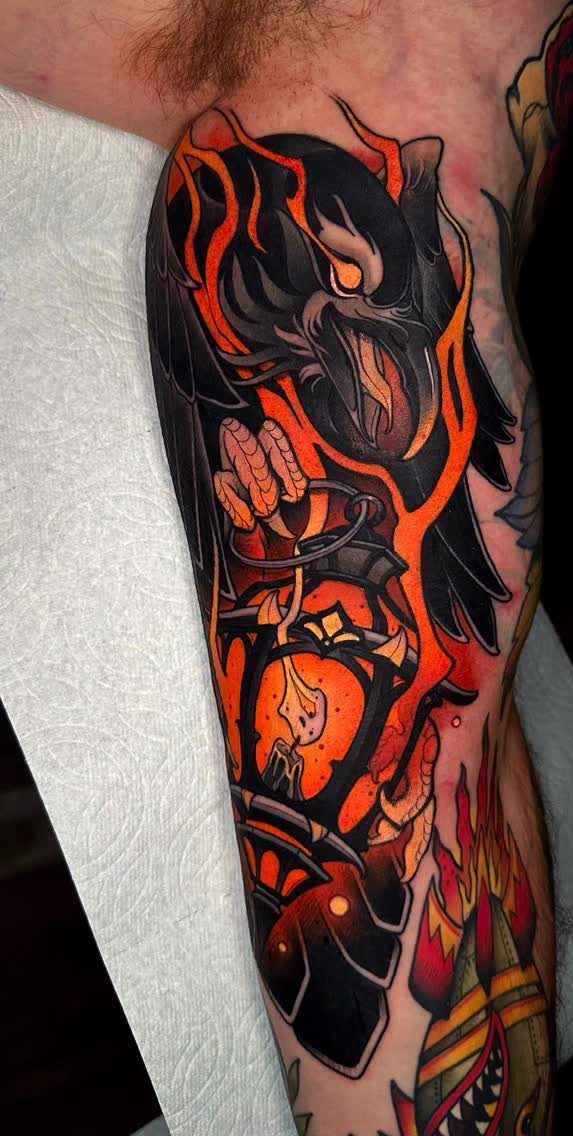
Neo-traditional gives you the bold outlines and solid fill of traditional work but opens up the color palette and lets the shapes bend further.
Neo-traditional gives you bold outlines and saturated color that holds up across decades, even in areas that see a lot of sun.
Upper arm placement keeps the piece visible in short sleeves and gives enough room for layered elements.
If you already have traditional work, neo-traditional sits next to it without clashing. Color stays sharper with touch-ups every few years, and darker tones hold longer than pastels.
9. Geometric Shape Arm Tattoo
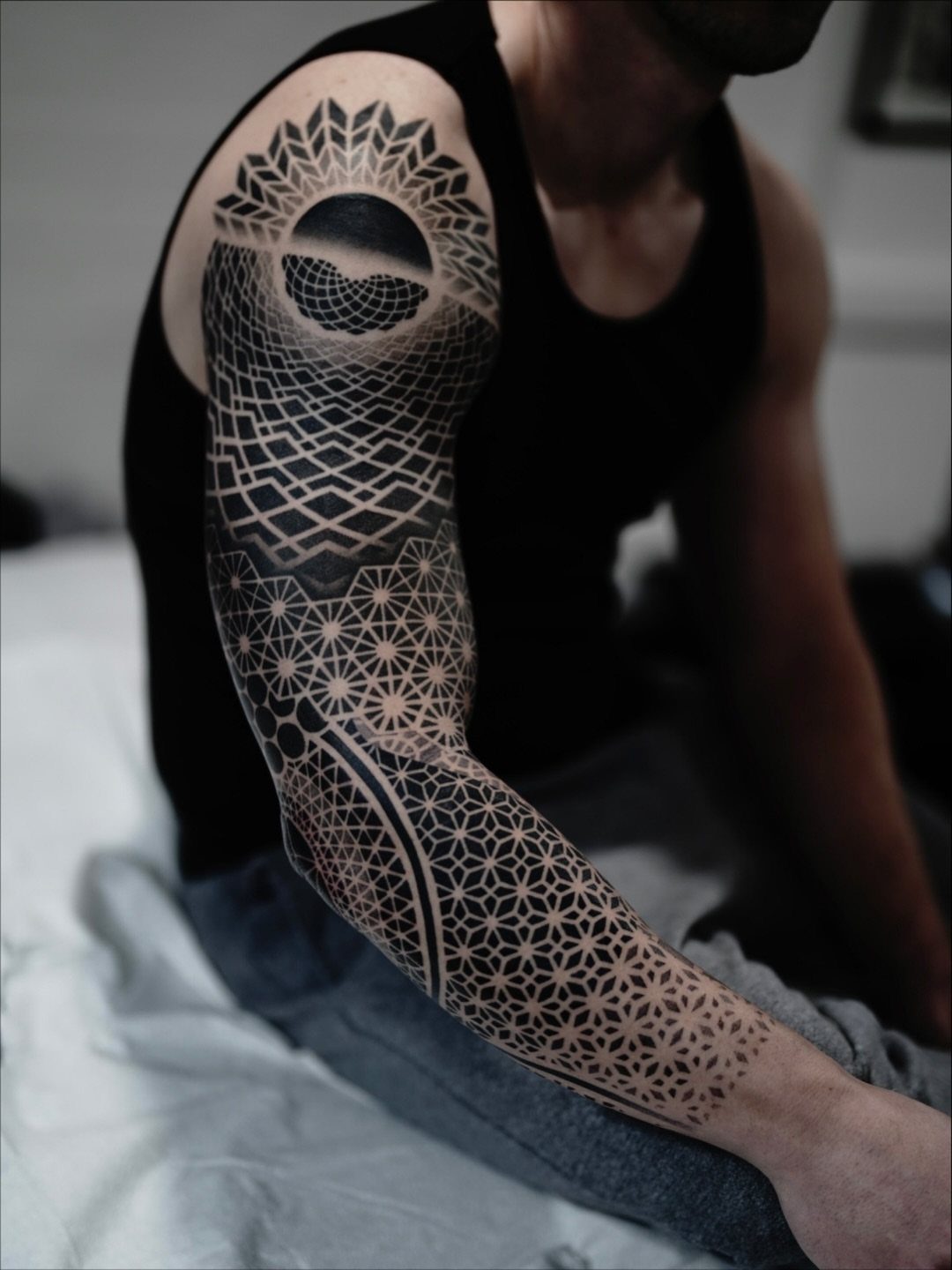
Geometric sleeves stack shapes and patterns into a full arm, and the repetition gives it structure without needing a single focal point.
The black ink and hard edges make it read as technical, and the symmetry keeps it balanced when your arm moves.
This works if you want a sleeve but don’t want a scene or a portrait. The shapes can extend onto the shoulder or stop at the bicep, and adding more later is easier because the pattern repeats.
Line weight matters here, so find an artist who can keep straight edges straight and consistent spacing across the whole piece.
10. Small Arm Tattoo
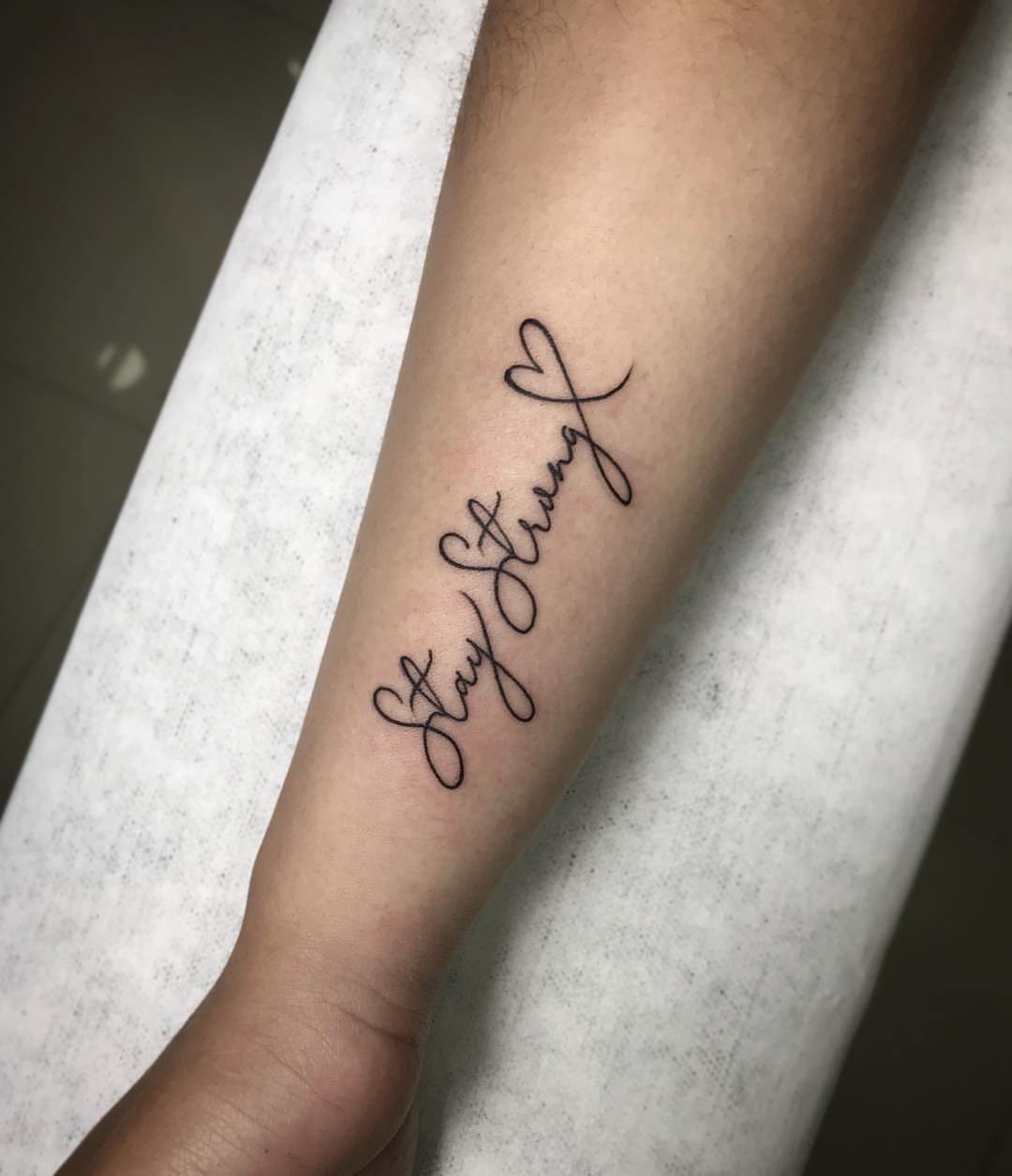
A small forearm tattoo shows up when you want it to and disappears under a long sleeve when you don’t. Script stays readable when you give each letter room and place it on the inner forearm where skin stays tight.
If you’re testing whether you want more ink, this placement heals faster than most and hurts less than ribs or neck.
Keep the phrase short, because cramming too many words into a small space makes it hard to read once the lines soften.
11. Wolf Sleeve Tattoo
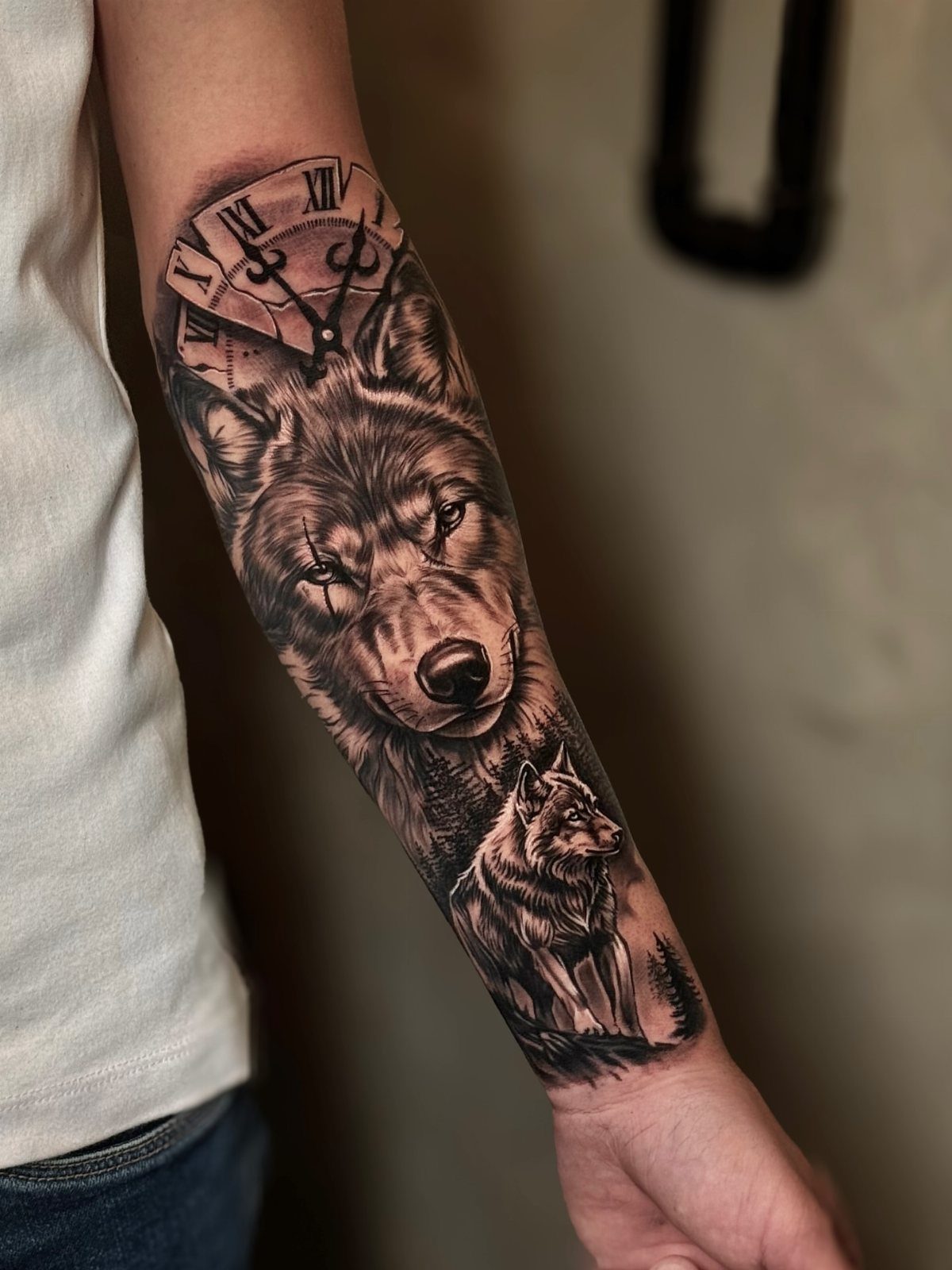
Realism sleeves layer multiple elements into one scene, and the wolf here anchors the piece while the clock and trees fill the background.
Black and grey realism needs an artist who can control shading, because the depth comes from gradients, not outlines.
Forearm placement keeps the design visible and gives enough surface area for fine detail.
If you want a sleeve that tells a story, this approach lets you add more elements over time without redoing the whole arm. Expect multiple sessions, because realism takes longer than simpler styles.
12. Snake Shoulder and Arm Tattoo
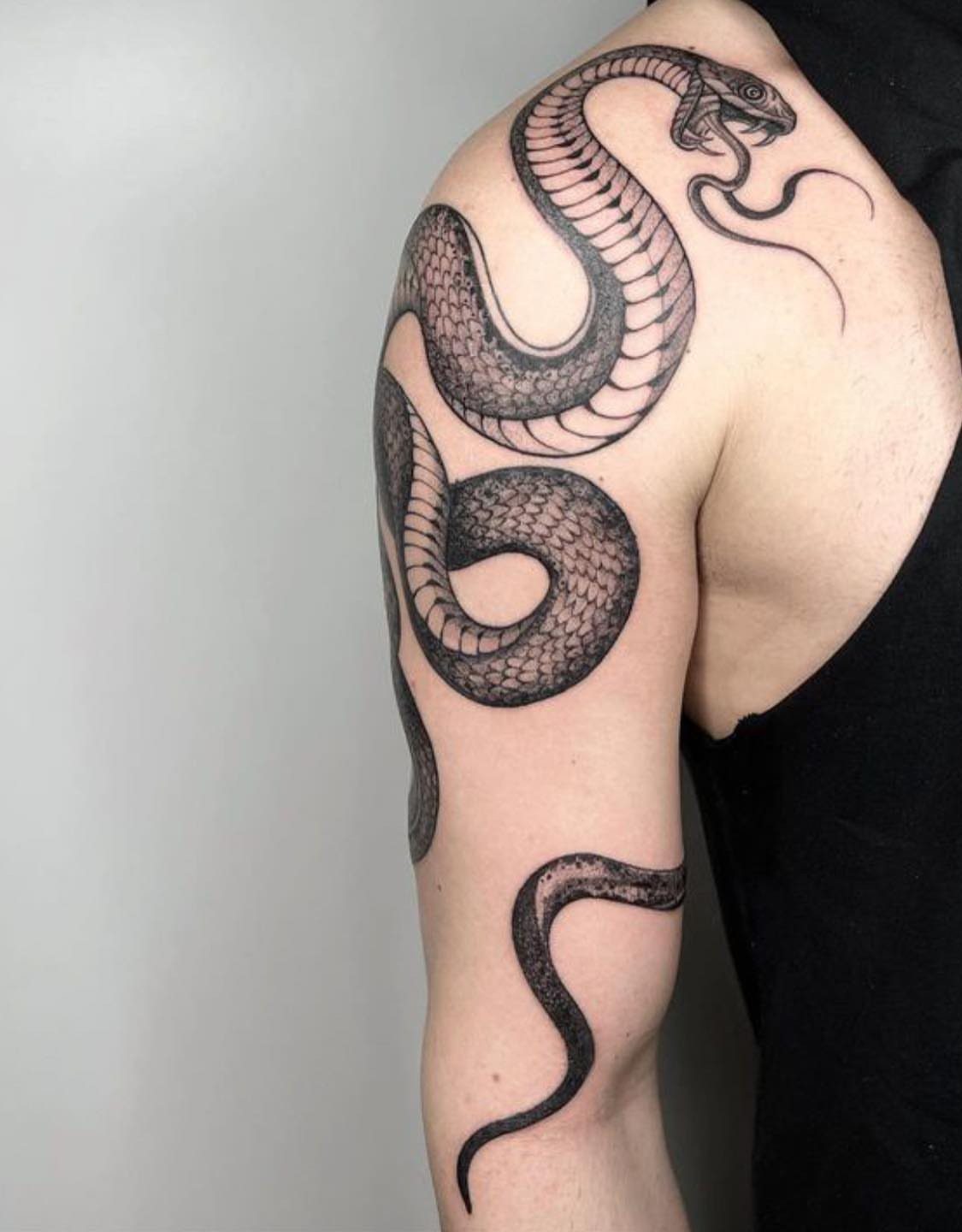
Snakes wrap naturally around the shoulder and upper arm, and the curve of the body follows the muscle instead of sitting flat like a sticker.
The open mouth and extended tongue add movement, and the black ink keeps it sharp without needing color to make it read.
Shoulder tattoos hurt less than ribs or spine, and this placement works under most shirts while still showing in a tank top.
If you want the snake to continue down the arm or across the chest, the head and first coil give you a starting point that stands alone until you’re ready to expand it.
13. Koi Fish Forearm Tattoo
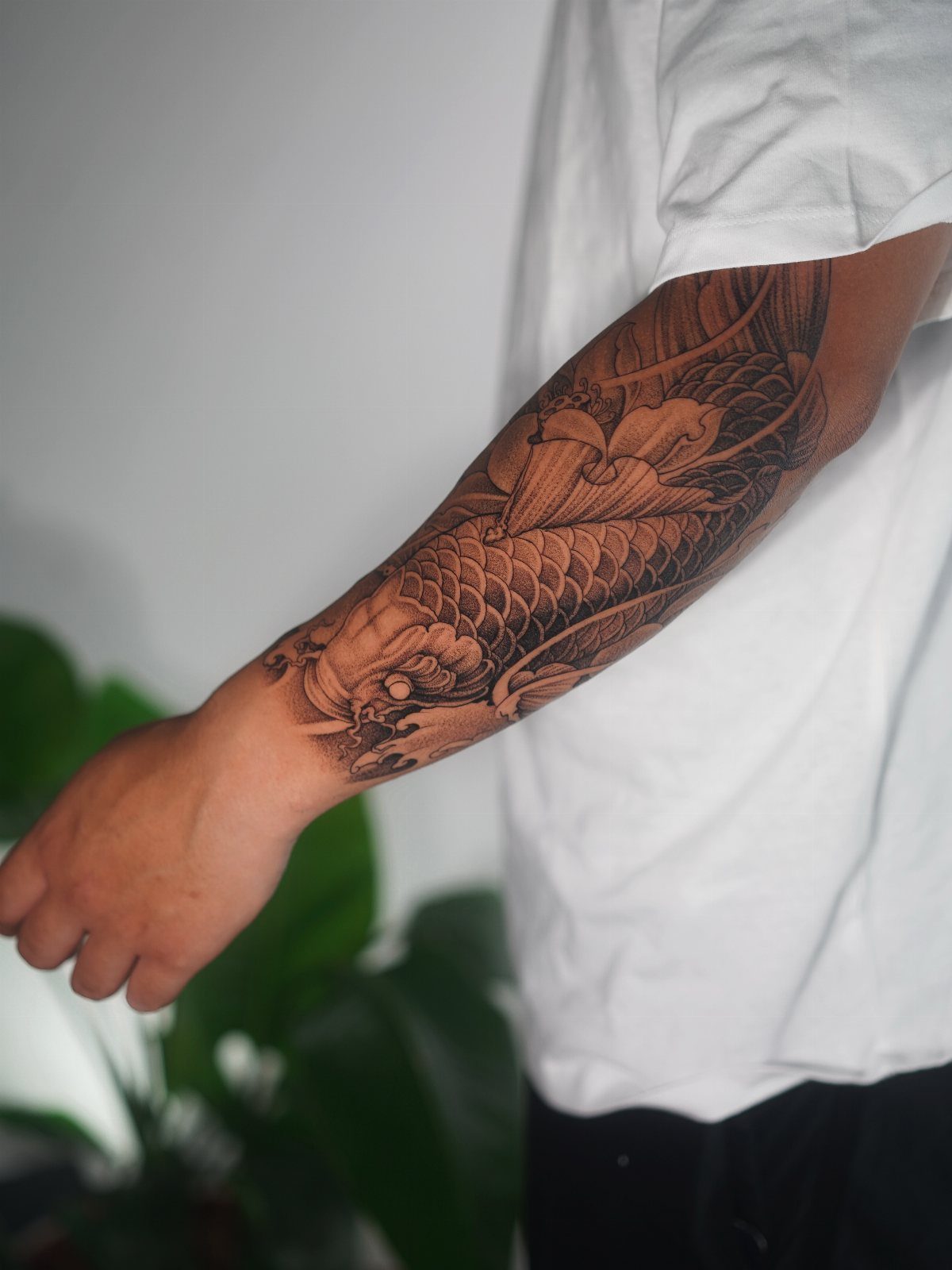
A koi fish on the forearm gives you room for the curve of the body and the flare of the tail, and the black and grey wash lets you build depth in the water without needing color.
The swirling lines around it add movement and keep the piece from sitting flat.
Forearm placement shows in short sleeves and heals faster than shoulder or ribs.
If you want the fish swimming up the arm instead of across it, the vertical orientation fits the muscle better and leaves room to add more water or flowers later without crowding the original piece.
14. Crowned Skull Tattoo
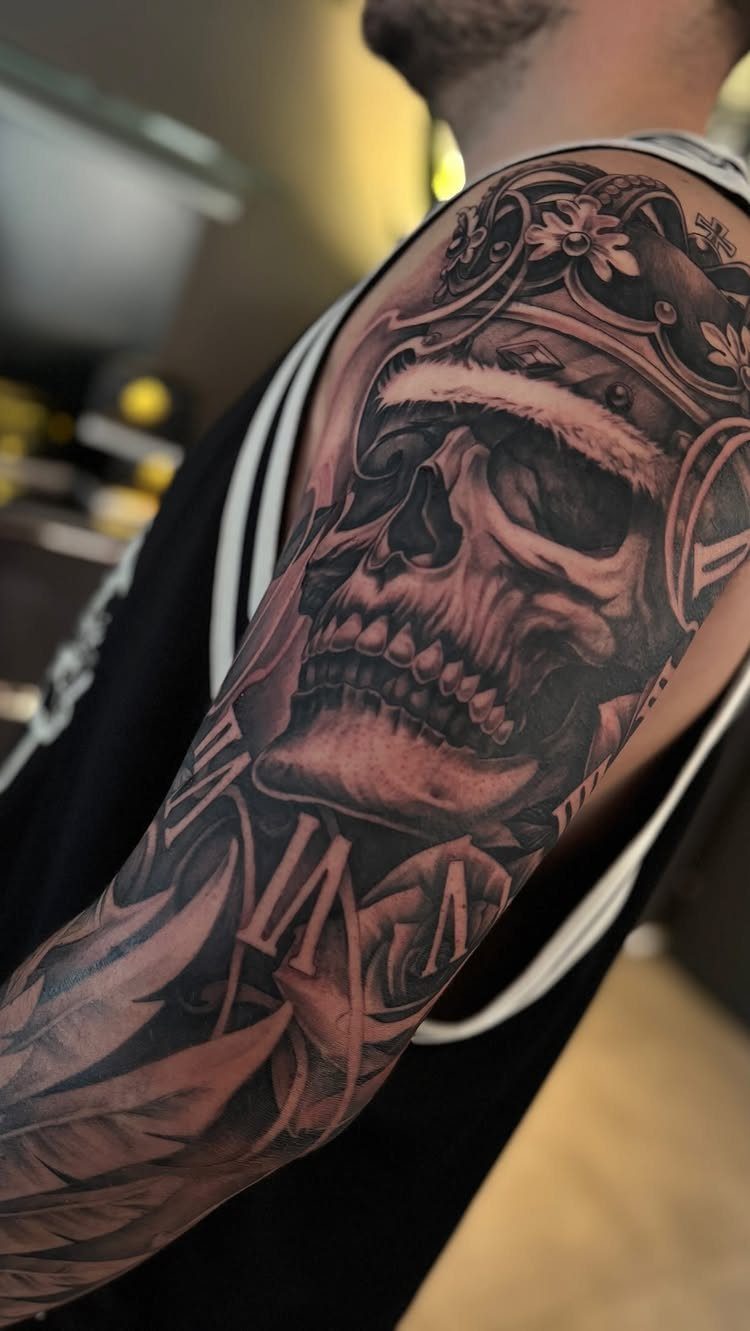
A skull with a crown sits well on the upper arm because both elements need vertical space, and the realism style lets the shading do the work instead of relying on heavy outlines.
The crown adds a focal point at the top and keeps the piece from reading as generic.
Upper arm placement hurts less than ribs or collarbone and stays covered under most shirts.
Black and grey realism shows wear over time, so pick an artist who can build contrast with shading alone. If you want it darker, adding background smoke or geometric shapes later frames the skull without redoing the face.
15. Black and Grey Floral Sleeve
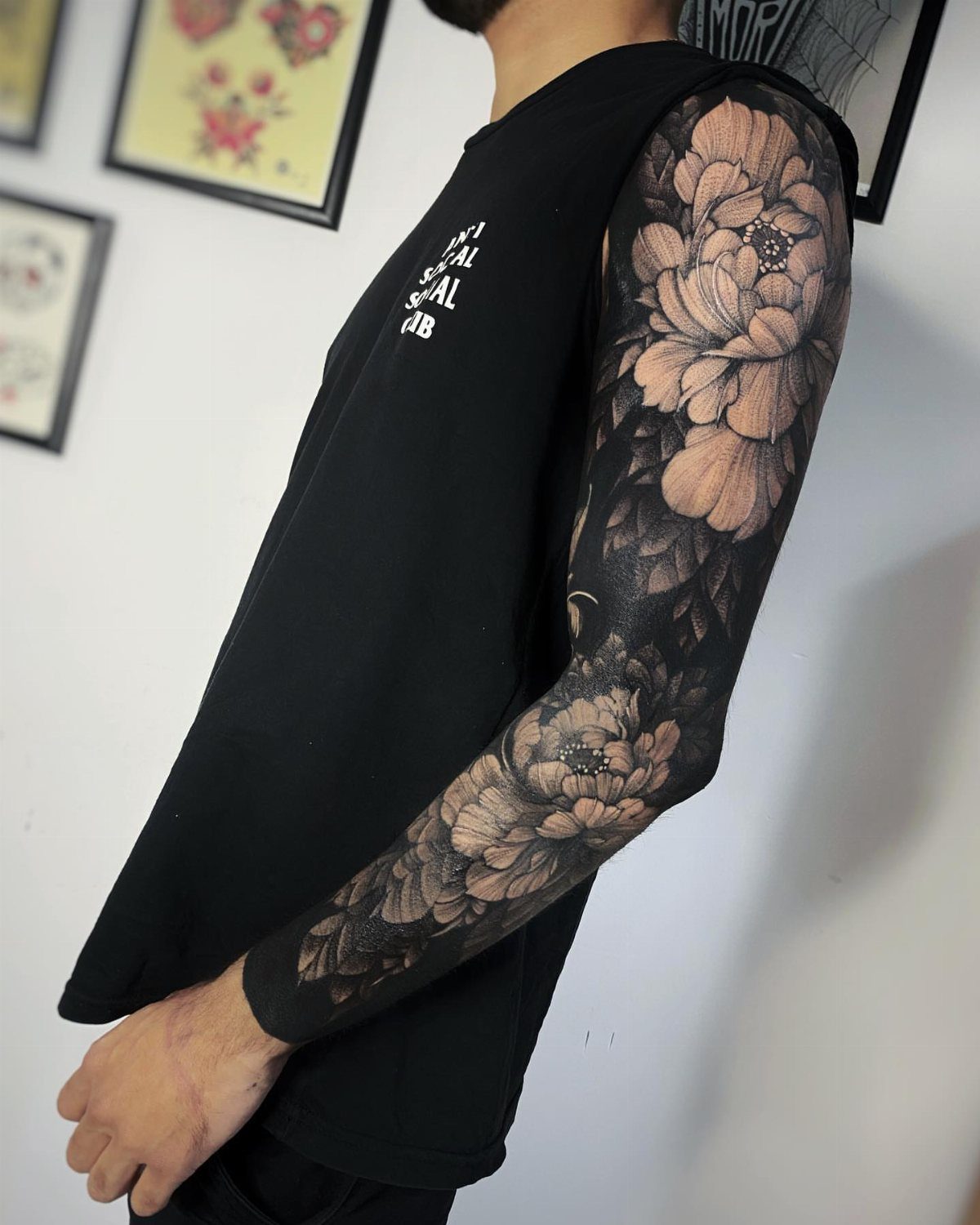
Floral sleeves in black and grey give you full coverage without the upkeep that color demands, and peonies have enough petal detail to fill the arm without repeating the same shape.
The clouds between the flowers tie the elements together and keep the background from looking empty.
A full sleeve takes multiple sessions, and the inner arm hurts more than the outer.
If you already have a chest or shoulder piece, extending the florals across keeps the style consistent. Black and grey fades slower than bright color, and touch-ups focus on contrast rather than restoring lost pigment.
16. Tree Arm Tattoo
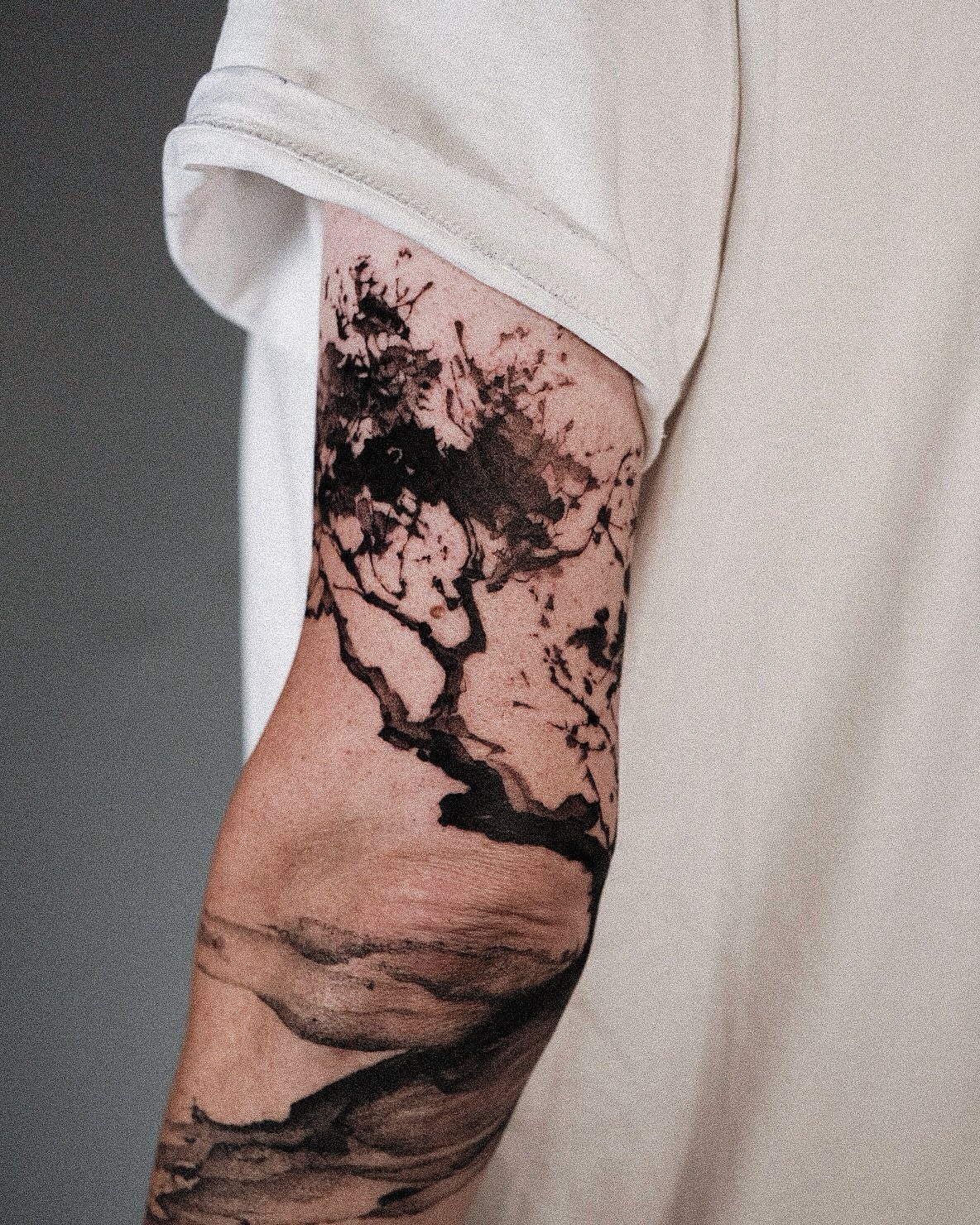
The branches spread across the upper arm and give you an organic shape that follows the muscle, and the abstract approach skips fine detail in favor of bold strokes that hold up as the tattoo ages.
The smoky shapes around the tree add texture without turning it into a full scene.
This placement works under a short sleeve and leaves the forearm open if you want more ink later.
Abstract pieces are harder to fix than geometric ones, so check your artist’s portfolio for loose, organic work before committing. The branches already drawn make it easy to add length as the design moves toward the wrist.
Choosing the Right Style
Realism puts a picture on your skin, and the detail depends on finding an artist who can handle gradients and shadows without heavy outlines.
Ask your artist what styles they actually work in, because switching between realism and traditional takes different skills.
Tattoo Placement Tips
Skin texture on the forearm keeps lines sharp longer than areas that stretch or fold often.
This spot works for vertical designs like daggers or snakes and horizontal ones like script or mandalas, and the length lets you build a half sleeve without committing to the full arm.
Pain is lower here than ribs, neck or inner arm, which makes it a common first placement.
Tattoo Aftercare Advice
Proper aftercare keeps the ink from fading early and stops infection before it starts. Follow your artist’s instructions for the first 48 hours, because how you treat it during that window affects how it heals for the rest of your life.
Tattoos peel as they heal, and scratching pulls ink out and leaves gaps in the design. Keep it clean, keep it moisturized, and stay out of direct sun until the skin has fully closed.
If you see redness spreading beyond the tattooed area, swelling that gets worse after the first day, or discharge that smells, get it looked at. Most infections start because someone skipped washing their hands before touching fresh ink.
Frequently Asked Questions
What are some popular men’s tattoo styles?
Animals like eagles, lions and wolves show up often because they carry symbolic weight and give an artist room for detail.
Portraits of family or icons work for men who want to memorialize someone specific, and lettering stays popular because it can say anything from a date to a full quote.
Neo-traditional relies on thick linework and rich color that stays legible as it ages, while geometric pieces use clean shapes that resist blurring.
What is the best place for a guy to get a tattoo?
The forearm works for most designs because the skin texture keeps lines sharp and it shows up in short sleeves without being in your face all day.
The upper arm and shoulder give you more surface area for larger pieces like portraits or eagles, and pain is lower there than ribs or neck.
If you want something that stays covered most of the time, the chest or upper leg keeps it hidden under regular clothes.
Which tattoo is best for men with meaning?
Pick a symbol, animal or portrait that already means something to you instead of choosing based on what looks popular right now.
A wolf or lion can represent traits you value, a portrait honors someone specific, and lettering lets you put the exact words or date on your skin. The meaning comes from your own life, not from the design itself.
Where do tattoos hurt the least for men?
The forearm and outer bicep hurt less than most placements because the skin is thicker and sits farther from bone.
The shoulder also ranks lower on pain because there’s more muscle underneath, and it gives you room for larger designs without the sharp sting you get on ribs, neck or inner arm.





