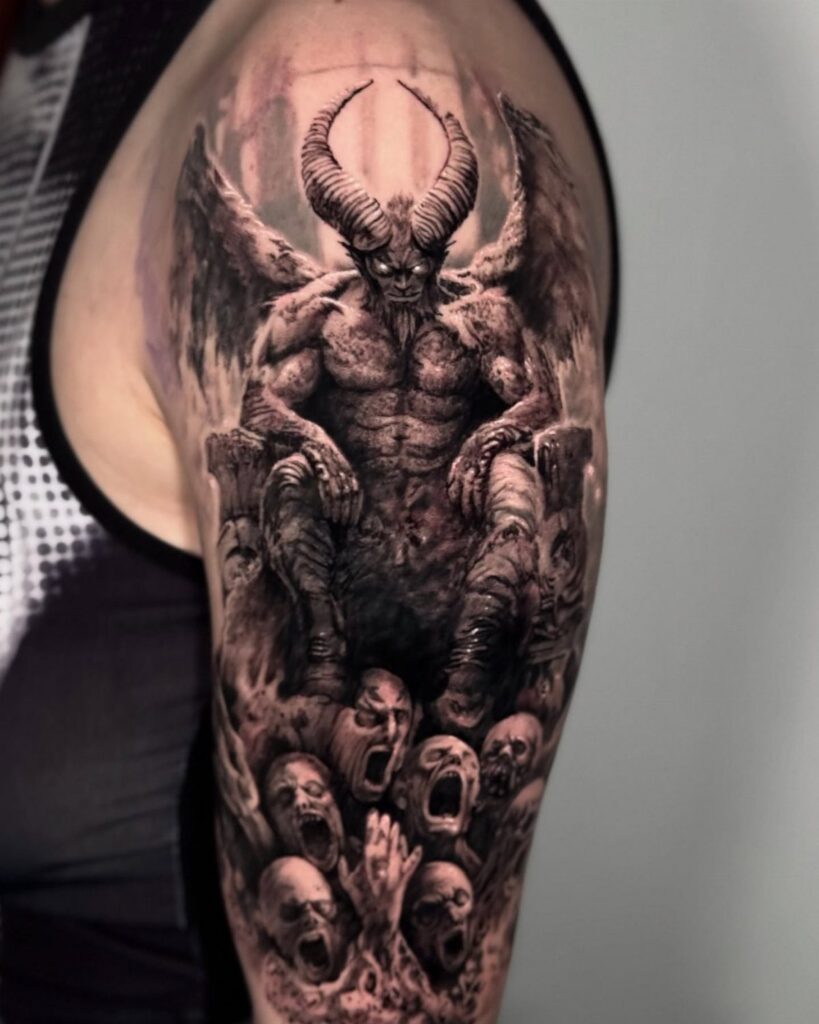
Dark tattoos include traditional blackwork on the forearm, geometric patterns, Japanese designs, full blackout coverage, ornamental pieces, tribal bands, chaotic hand work, heavy chest panels, sleeve compositions and skull motifs from the knee to the back.
The right choice depends on how much skin you’re willing to commit to heavy black coverage and whether you want a design that holds fine detail or one that reads from across a room through sheer visual weight.
Traditional blackwork and geometric pieces fit a forearm or thigh in one sitting, while blackout sleeves, gothic full sleeves and spider web back coverage take multiple sessions because of how much solid ink goes into the skin.
1. Traditional Blackwork Tattoo
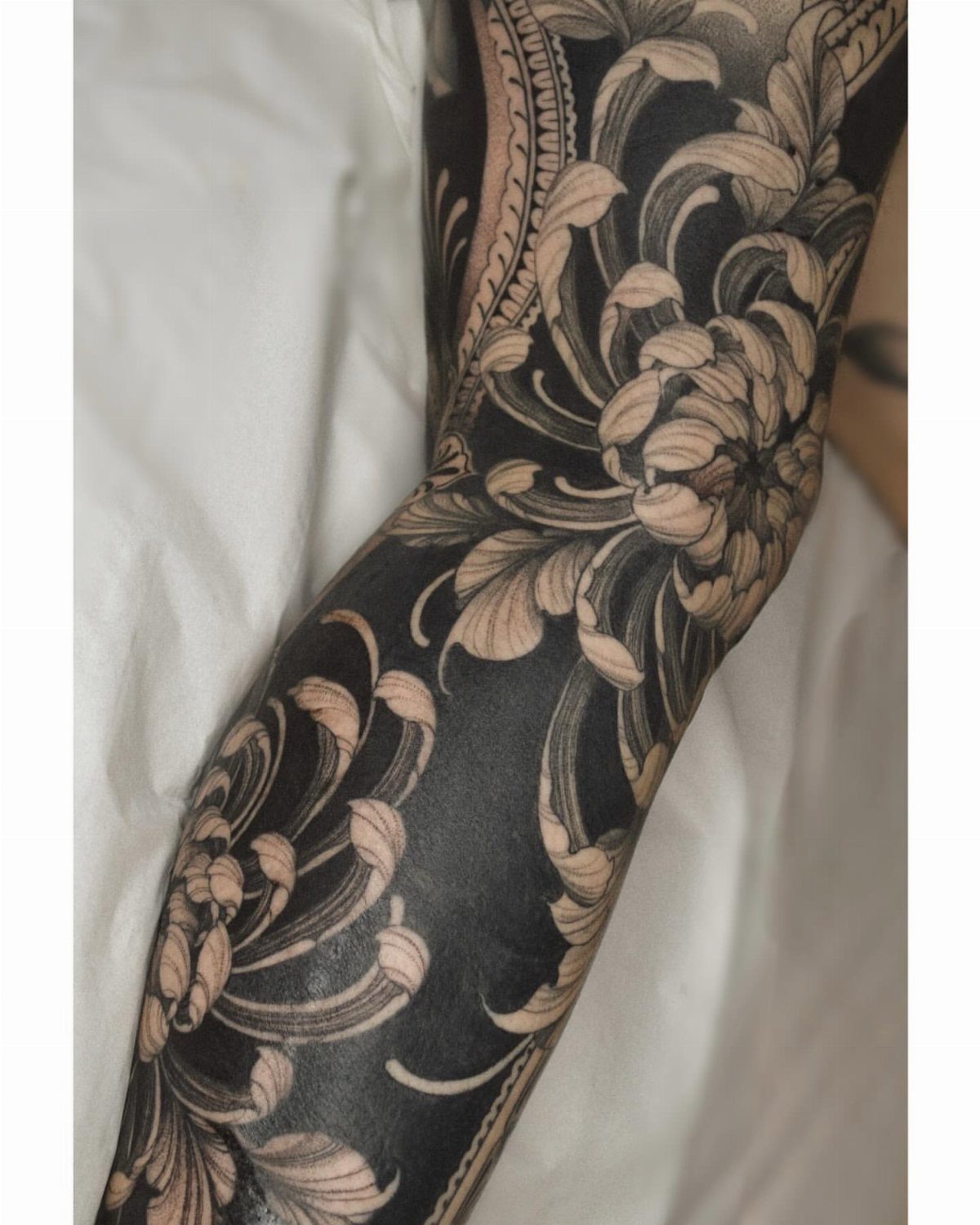
Traditional blackwork borrows bold outlines from American tattooing and the solid fill and flow from Japanese work, then strips away the color. What remains is a design that reads clearly from across a room but holds detail up close.
The flowers and patterns in this style scale well to a forearm or upper arm.
Expect 3 to 5 hours for a piece this size, longer if you add background fill. Solid black needs less touch-up than shading, so the longer upfront session saves you time later.
2. Blackwork Flower Tattoo
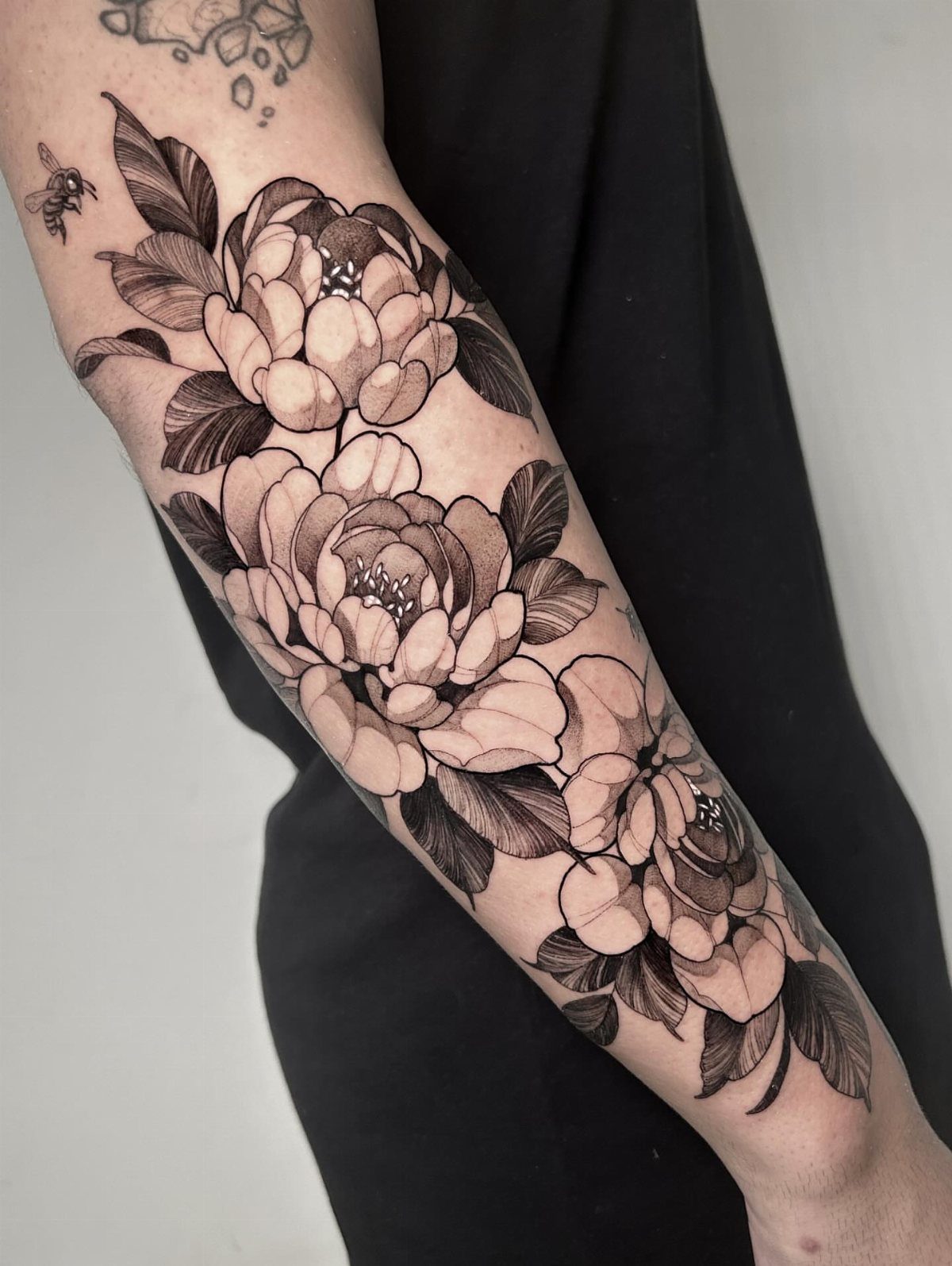
Flowers in blackwork lose none of their shape when you remove color. Peonies, roses and chrysanthemums all hold their structure in solid black ink, and the contrast between filled petals and open skin gives them depth without shading.
A forearm piece like this one runs longer if the artist packs more detail into the leaves. Adding small elements like a bee or butterfly fills gaps and balances the composition without crowding it.
Blackwork flowers stay crisp longer than color. The ink stays dark, and even as lines spread slightly over decades, the design keeps its shape.
3. Geometric Blackwork Tattoo
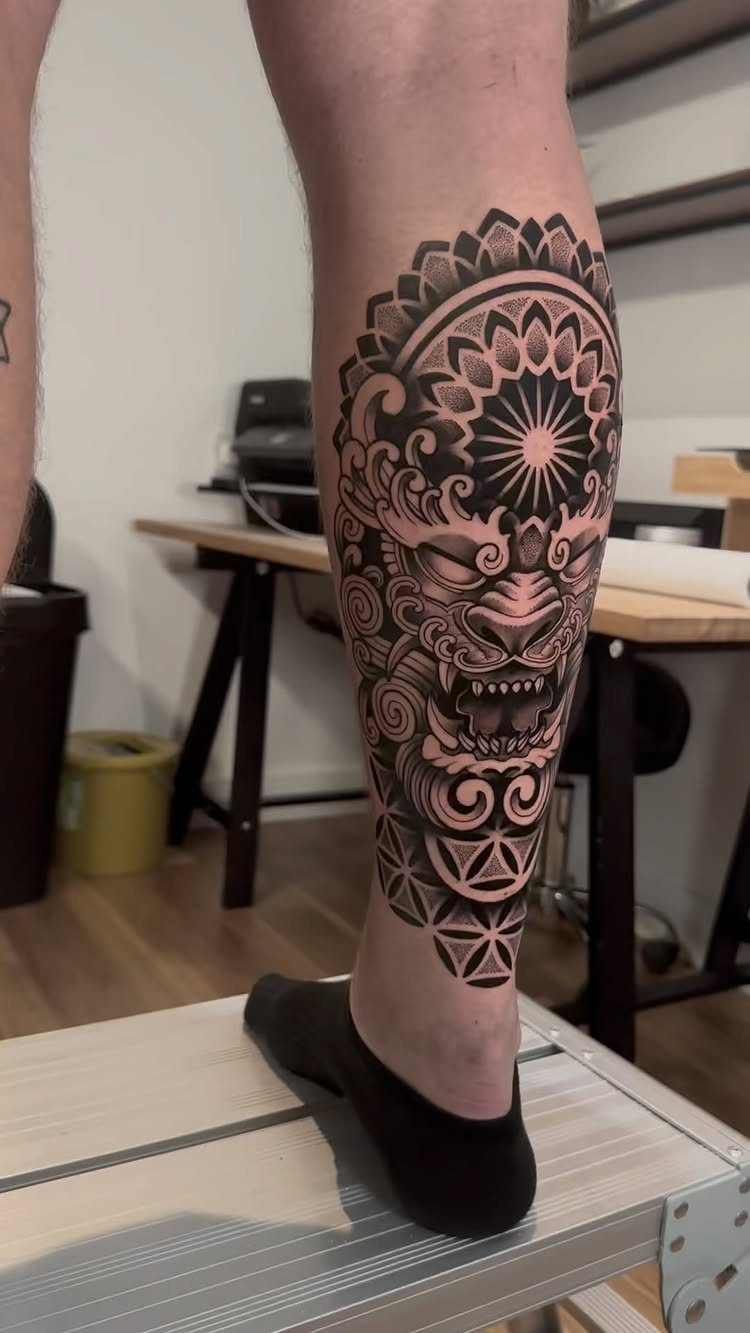
Geometric blackwork builds patterns from repeating shapes: triangles, hexagons, mandalas, or in this case a stylized animal face broken into angular sections.
The precision matters more here than in any other style. A line that wobbles or a corner that does not meet will show every time you look at it.
This style suits a calf, thigh or outer forearm where the skin is flat and the muscle underneath does not shift the design too much.
A piece this dense sometimes gets split across 2 sessions if your pain tolerance runs out before the artist finishes.
4. Japanese Blackwork Tattoo
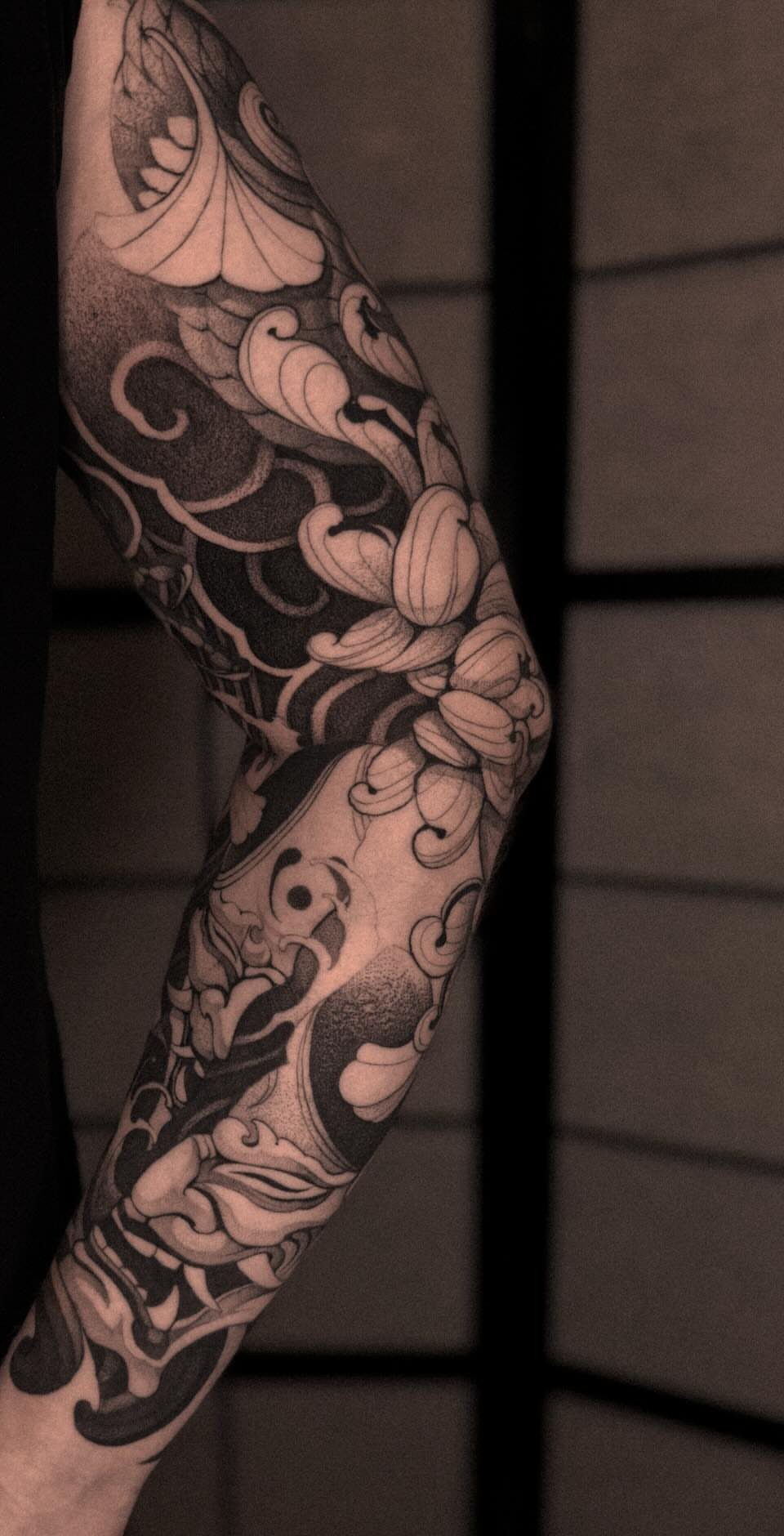
Japanese blackwork keeps the imagery, waves, flowers, masks, dragons, but replaces the color with solid black and high-contrast negative space. The result feels quieter than a full-color irezumi sleeve but still carries the same visual weight.
A piece covering the whole arm gets spread across multiple sessions. I recommend committing to the whole sleeve from the start rather than adding to it later, because Japanese composition relies on balance and flow from shoulder to wrist.
Stopping halfway leaves the design incomplete in a way that standalone pieces do not.
5. Illustrative Blackwork Tattoo
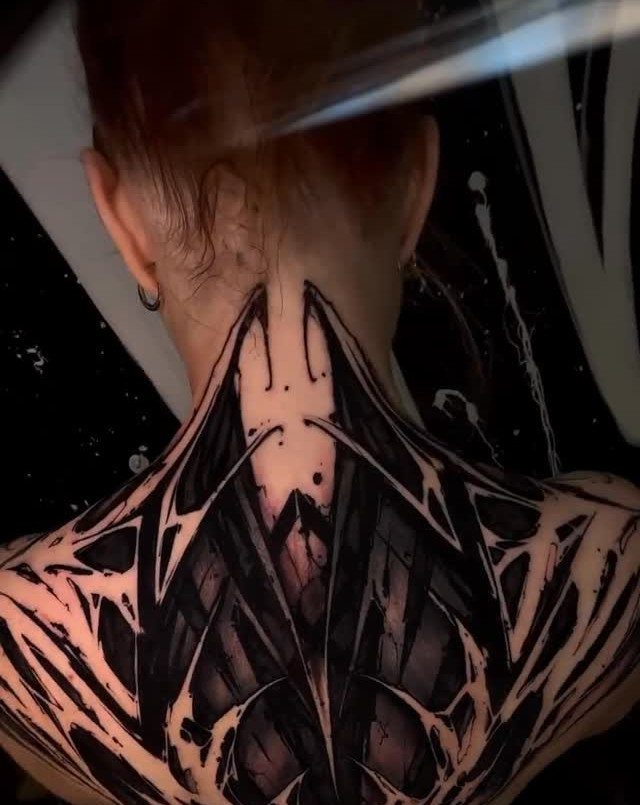
Illustrative blackwork mixes realistic textures with graphic shapes, often layering them in ways that feel abstract but still recognizable.
This style gives an artist room to interpret a subject rather than copy it exactly, so the same idea can look different depending on who draws it.
Placement matters more here than with simpler designs. The organic shapes in this piece follow the contour of the upper back and neck, which makes it sit naturally instead of feeling pasted on.
Expect 5 to 8 hours for coverage like this, and choose an artist whose drawing style you already like, because illustrative work lives or dies on the quality of the linework.
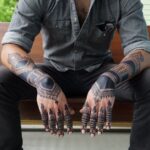
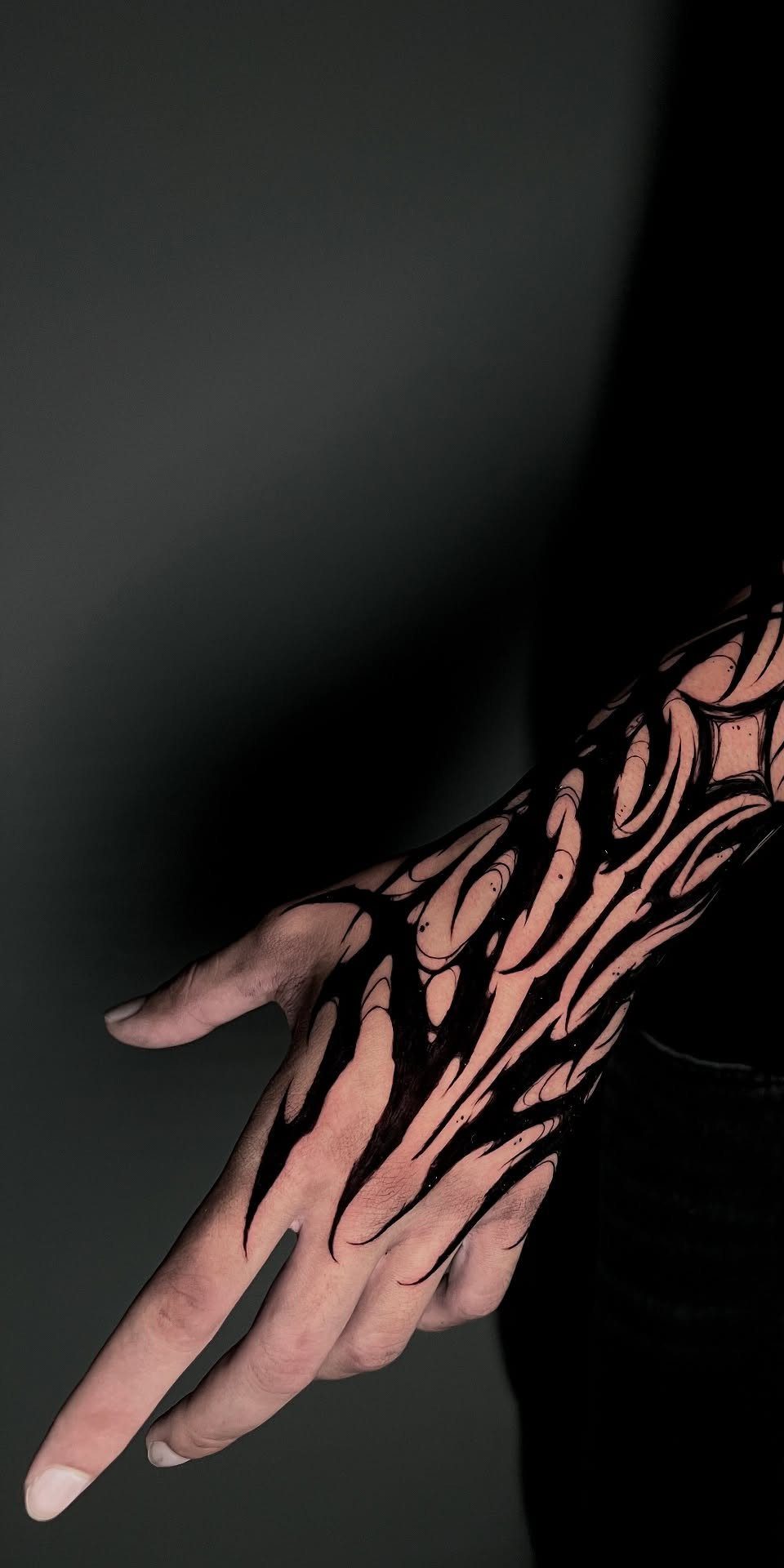
6. Chaotic Blackwork Tattoo
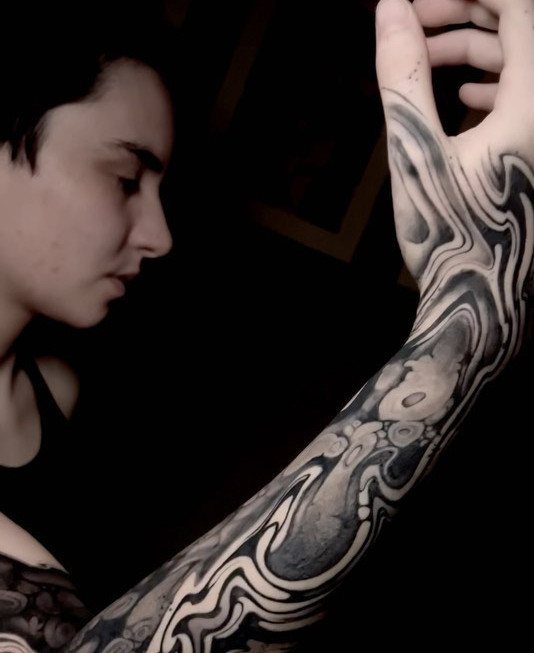
Chaotic blackwork fills a space with overlapping shapes, tangled lines and unpredictable negative space.
You want controlled disorder: it looks spontaneous, but every line is placed to balance the next. This style suits someone who wants a piece that feels raw and unfinished even when it is done.
The hand portion will hurt more than almost any other placement.
The design wraps around curves and bends, so it looks different from every angle. That makes it harder to photograph but more interesting to wear.
7. Heavy Blackwork Tattoo
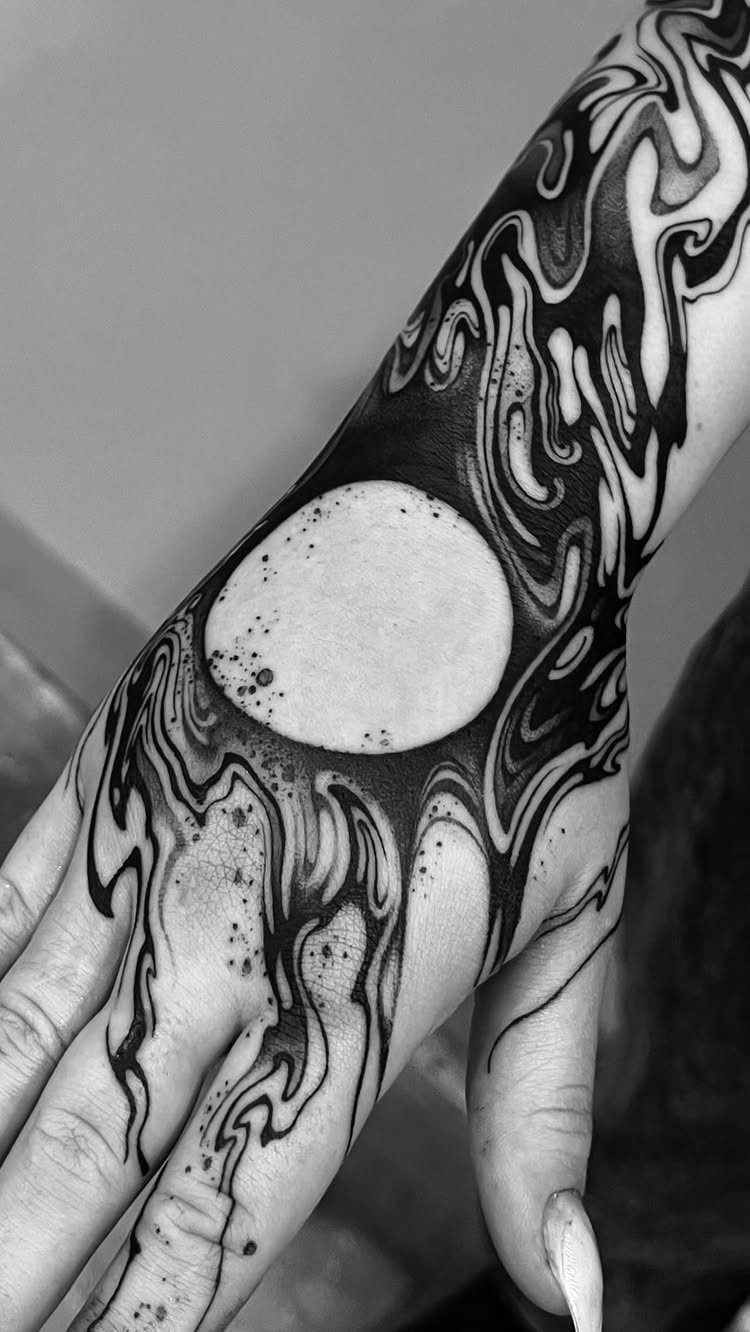
Heavy blackwork fills large sections of skin with dense, swirling ink that leaves only small gaps of bare skin for contrast. The weight of the piece comes from how much black covers the area, not from shading or gradients.
The solid fill feels more intense than linework alone, and most people need breaks during the session.
Healing takes longer when this much skin is covered in ink. Keep the area moisturized and out of the sun for at least 3 weeks, because any patchiness in the black will show.
8. Blackout Tattoo
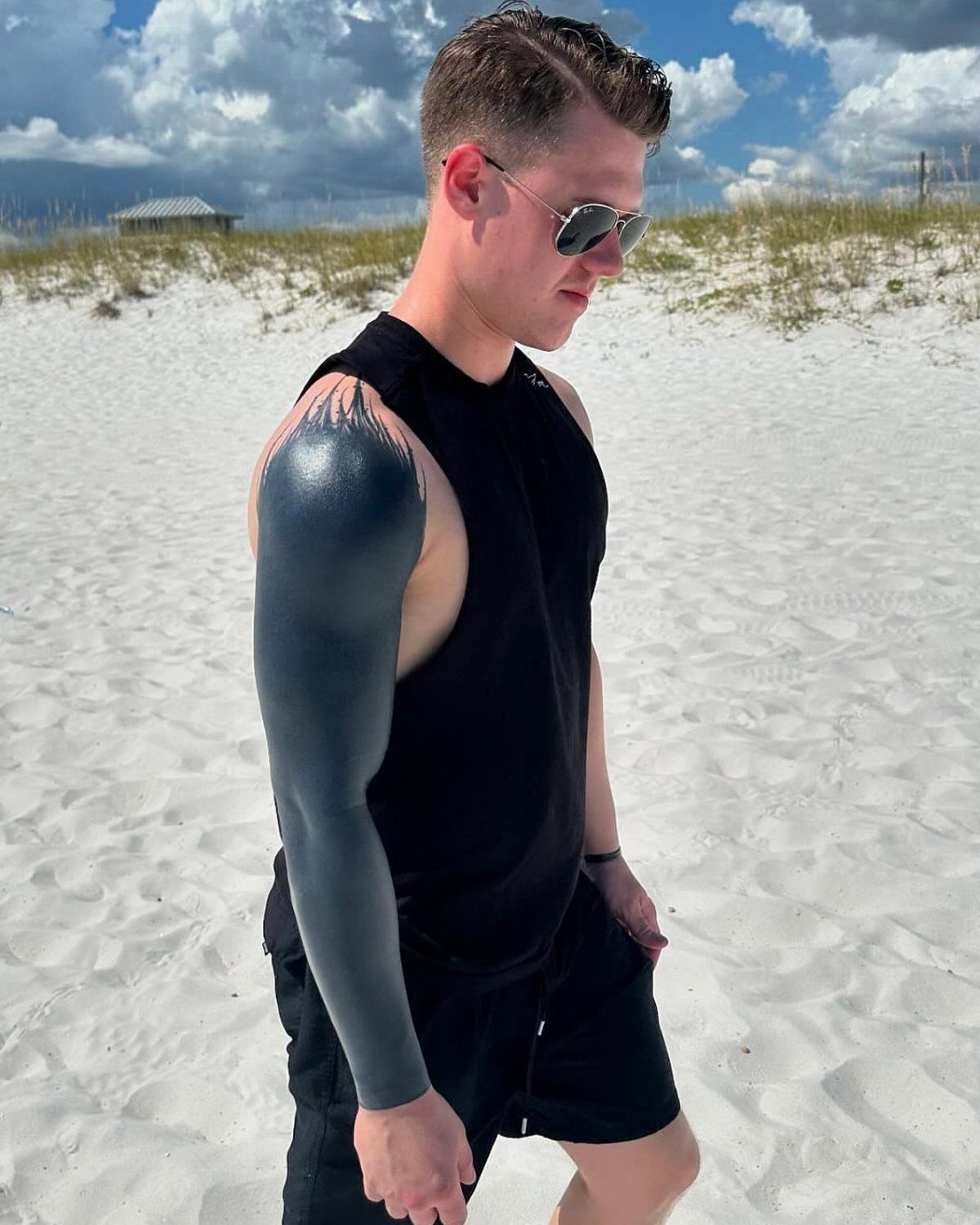
Blackout covers an entire section of the body in solid black ink, no patterns, no negative space. A full arm like this one takes multiple sessions because the skin can only handle so much at once.
Sitting for hours while an artist fills every inch is not something most people finish in one go, and some spots on the arm hurt more than others as the needle moves over bone.
This style covers old tattoos completely, which is why some people choose it. Once it heals, the black stays dark for years.
9. Ornamental Blackwork Tattoo
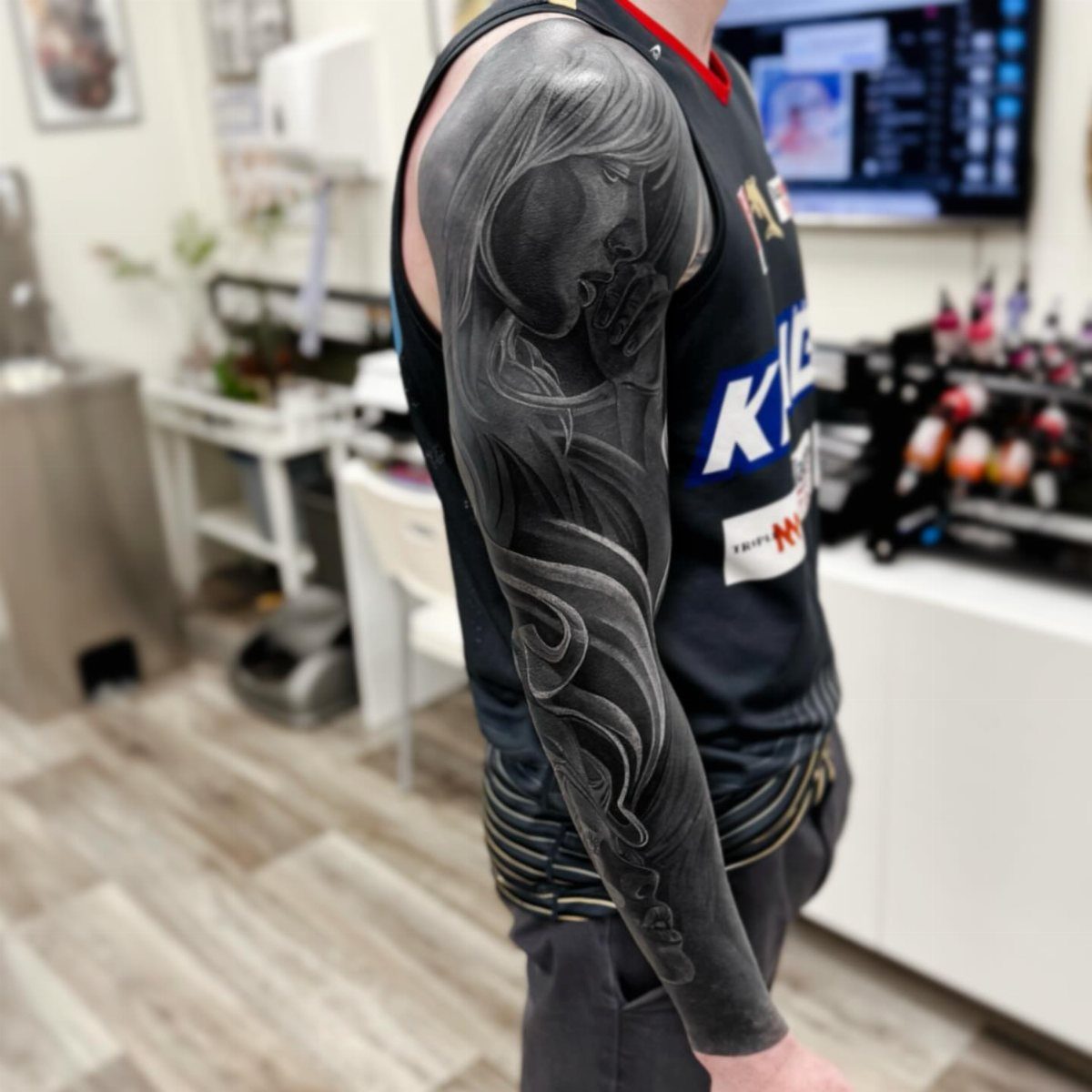
Ornamental blackwork uses symmetry and flowing patterns to create a design that looks carved into the skin. The shading and layering give it dimension, so the tattoo reads as raised or recessed depending on how light hits it.
The artist builds depth by varying the density of the black, which requires more planning than flat blackwork.
Placement on the arm lets the pattern wrap around curves, so the design shifts as you move. This style ages well because the structure holds even as lines soften over time.
10. Tribal Blackwork Tattoo
Tribal blackwork uses flowing, organic shapes with sharp edges and smooth curves that follow the contours of the body.
The style pulls from Polynesian and other indigenous traditions but has evolved into a modern design language that stands on its own.
The bold lines read clearly from a distance and hold their shape longer than fine-line work.
Tribal designs suit the forearm, calf or shoulder where the muscle creates natural movement under the ink. The black stays dark, and touch-ups are rare.
11. Dark Chest Tattoo
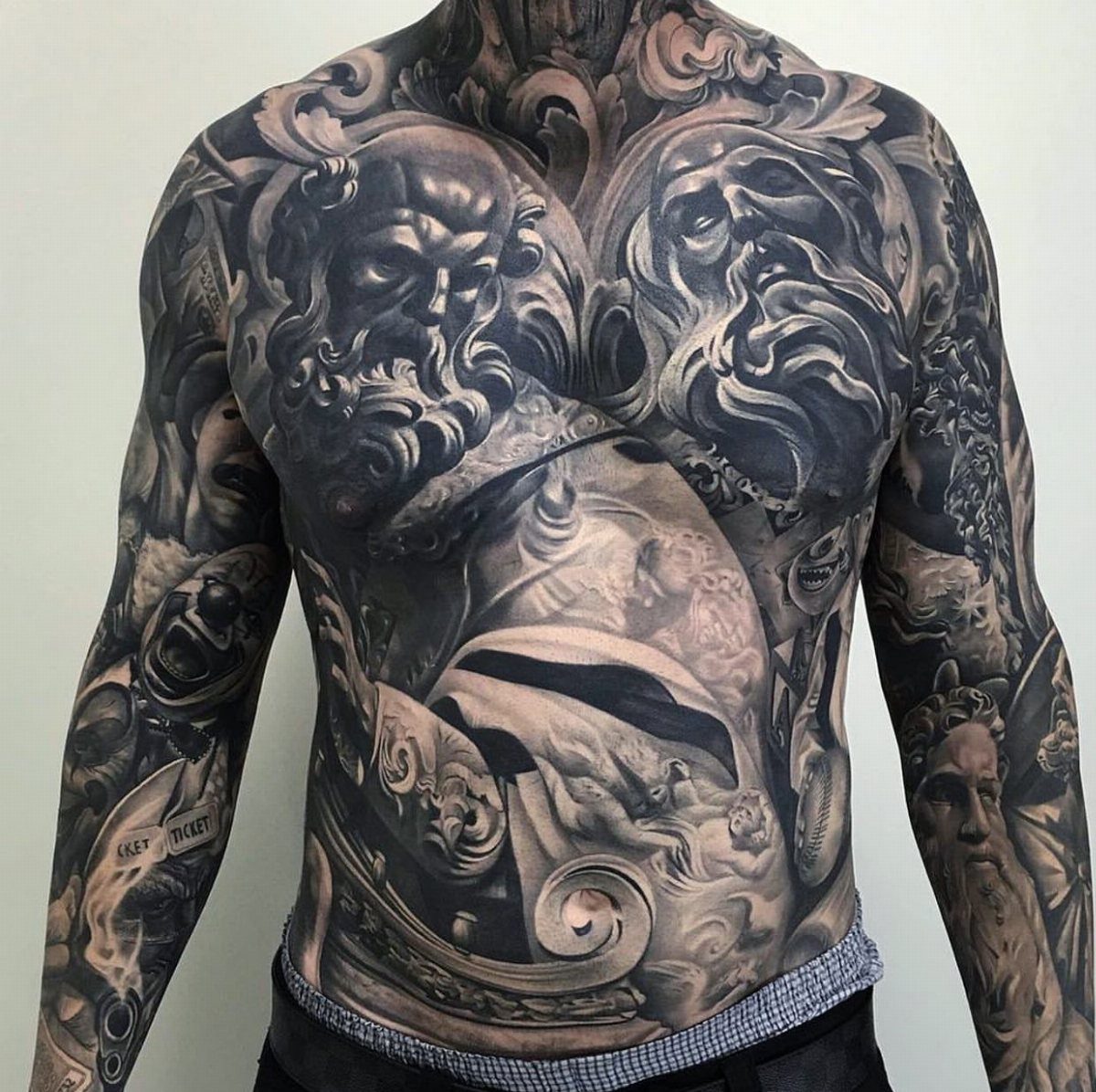
A dark chest tattoo covers the torso with realistic figures, sculptures or portraits rendered in black and gray.
The chest gives an artist a large, relatively flat canvas to work with, so the design can include multiple elements that connect across the space.
The sternum and ribs hurt more than the pectoral muscle, and most people split the work into separate appointments.
This placement works best for someone who wants a statement piece that stays covered in most daily situations.
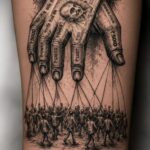
12. Dark Surrealist Sleeve Tattoo
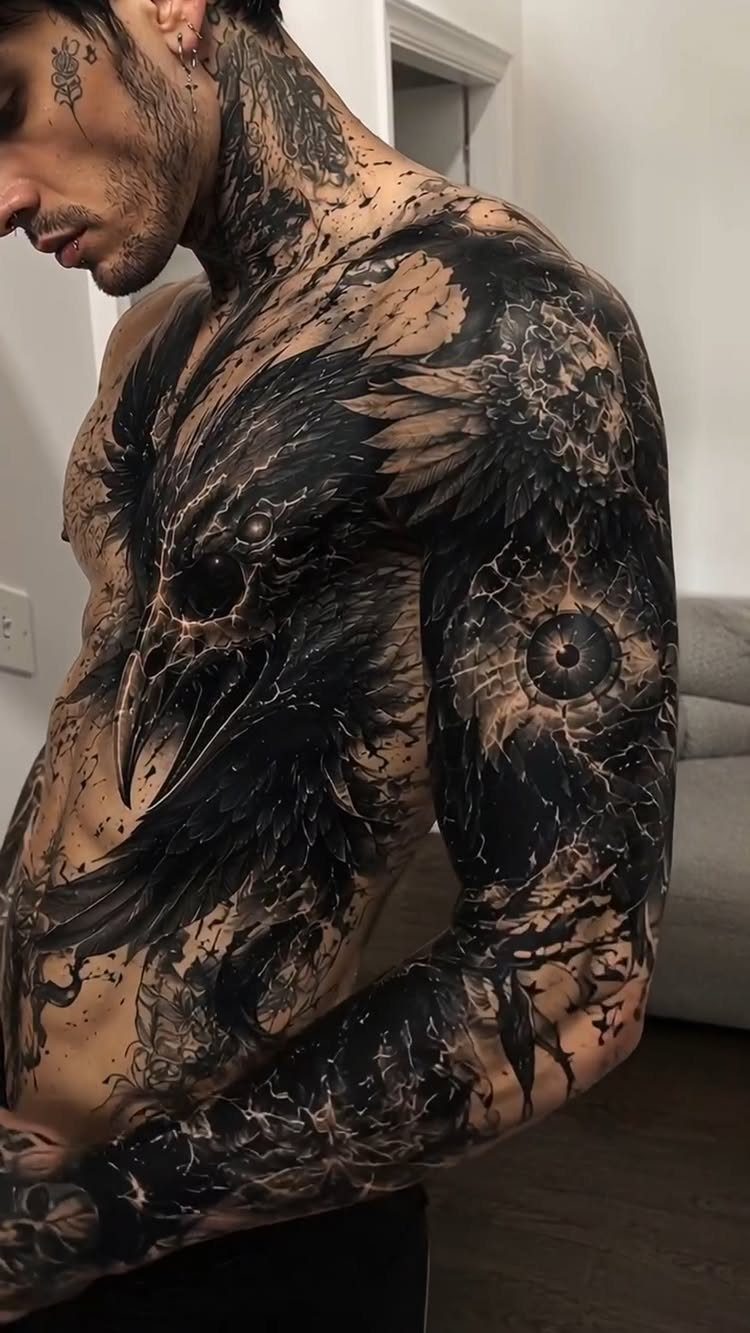
A dark surrealist sleeve layers distorted imagery, skulls, eyes and abstract shapes into a composition that feels unsettling on purpose.
The style breaks realistic proportions and combines elements that do not belong together, which gives the piece a dreamlike or nightmarish quality.
The artist builds texture through shading and layering, so the work is more detailed than a simple blackwork piece.
Surrealist tattoos suit someone who wants a design that holds attention and does not resolve into a single clear image.
13. Gothic Architecture and Skull Sleeve
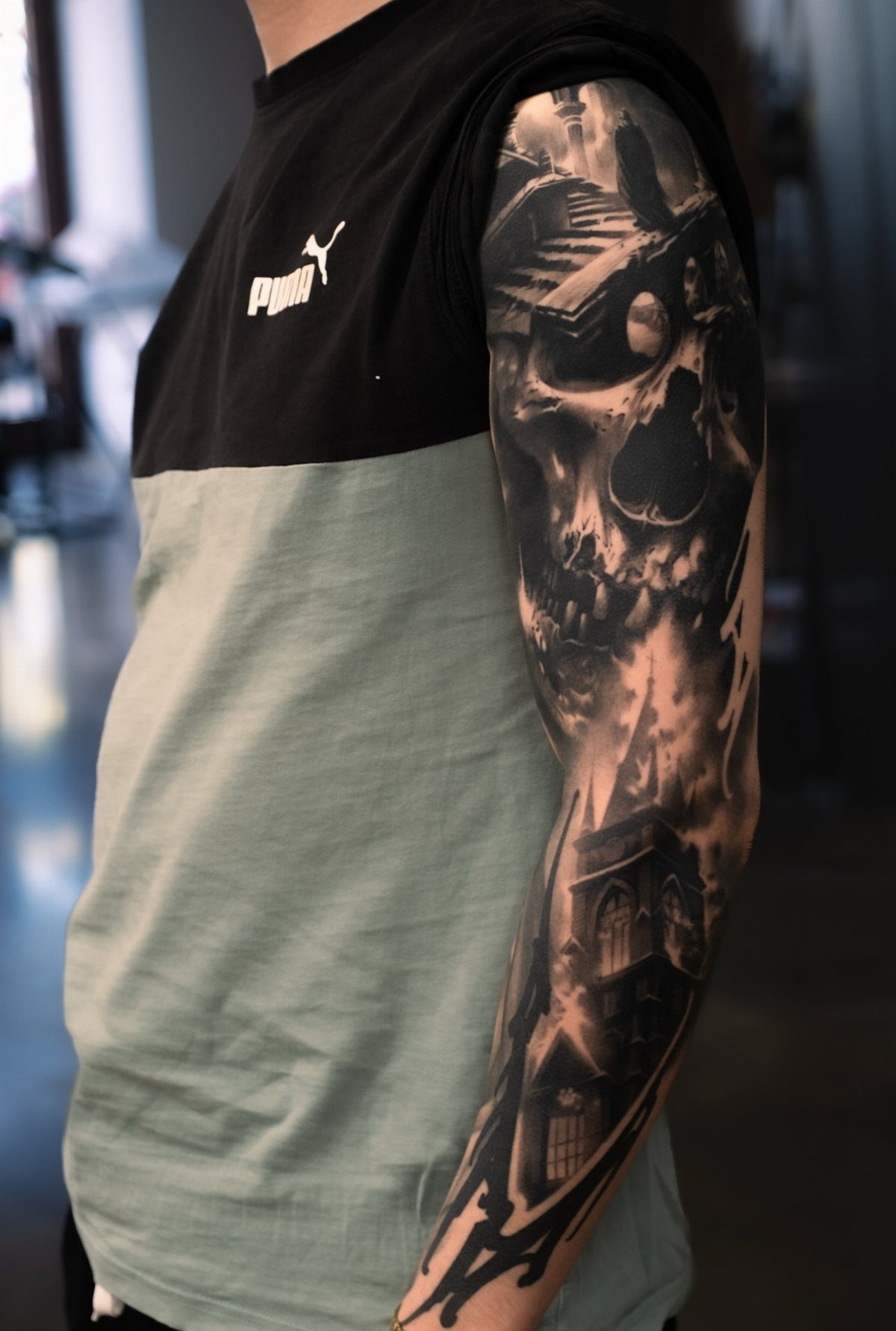
Gothic architecture gives this sleeve depth and structure that a skull alone would not hold. The buildings create a dark, shadowy background that extends the design across the full arm and ties the separate elements together.
A full sleeve like this needs multiple sessions to finish. The shading builds atmosphere, so the piece needs an artist comfortable working in black and gray rather than solid blackwork.
The skull anchors the composition, but the architectural detail makes it readable as a complete scene rather than a single subject floating on skin.
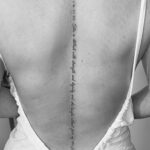
14. Spider Web Back Tattoo
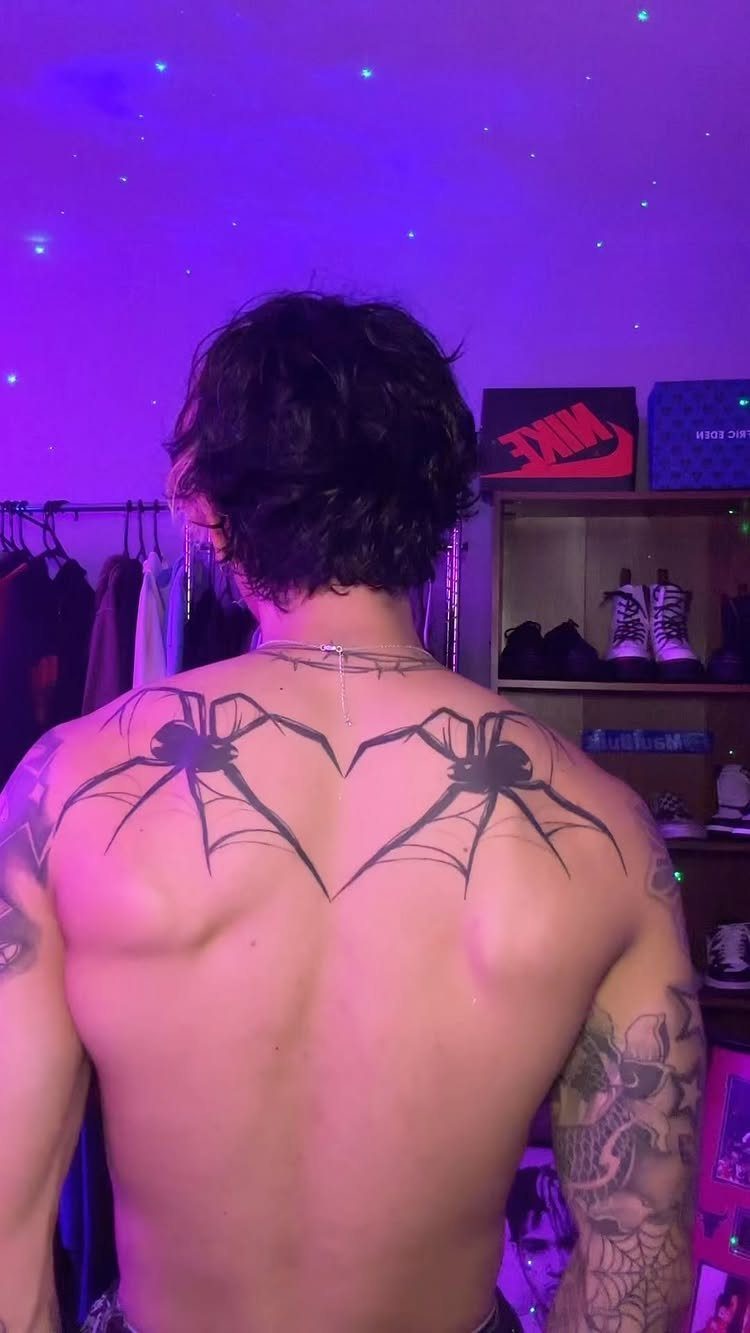
A web bent into the shape of a heart turns a familiar symbol into something darker. The upper back gives the design room to spread without wrapping around curves, so the shape stays clear.
The web requires precise linework.
If the spacing between strands looks uneven, the whole piece loses its symmetry. Most artists can finish this in one sitting if you keep the size contained.
Skin on the upper back heals faster than areas with more friction, so recovery is straightforward.
15. Monster Skull Knee Tattoo
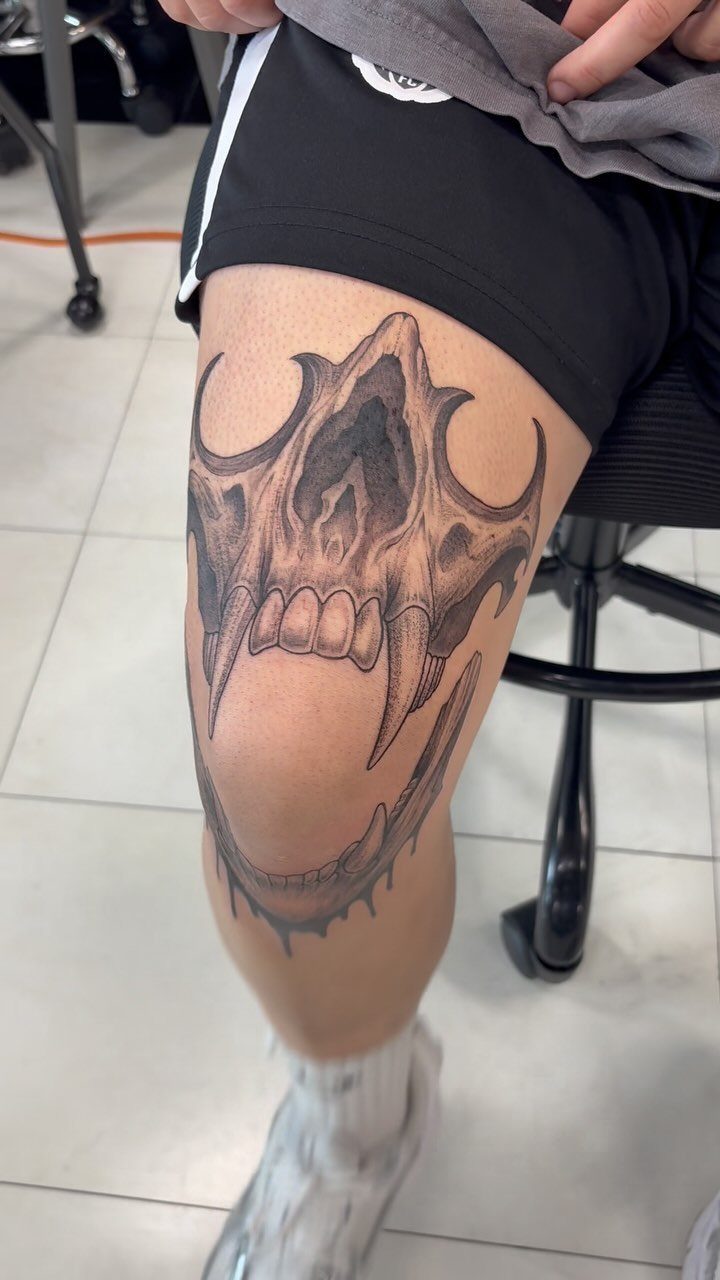
A horned skull across the kneecap follows the natural curve of the joint, so the design bends with your leg.
The fangs and exaggerated features make this more aggressive than a human skull, which suits someone looking for something less literal.
The knee hurts.
Skin here sits close to bone with little padding, and the session will feel longer than work on the thigh or calf. Most people finish a piece this size in a single session.
Knees take longer to heal because the skin flexes every time you move.
16. Decaying Skull Tattoo
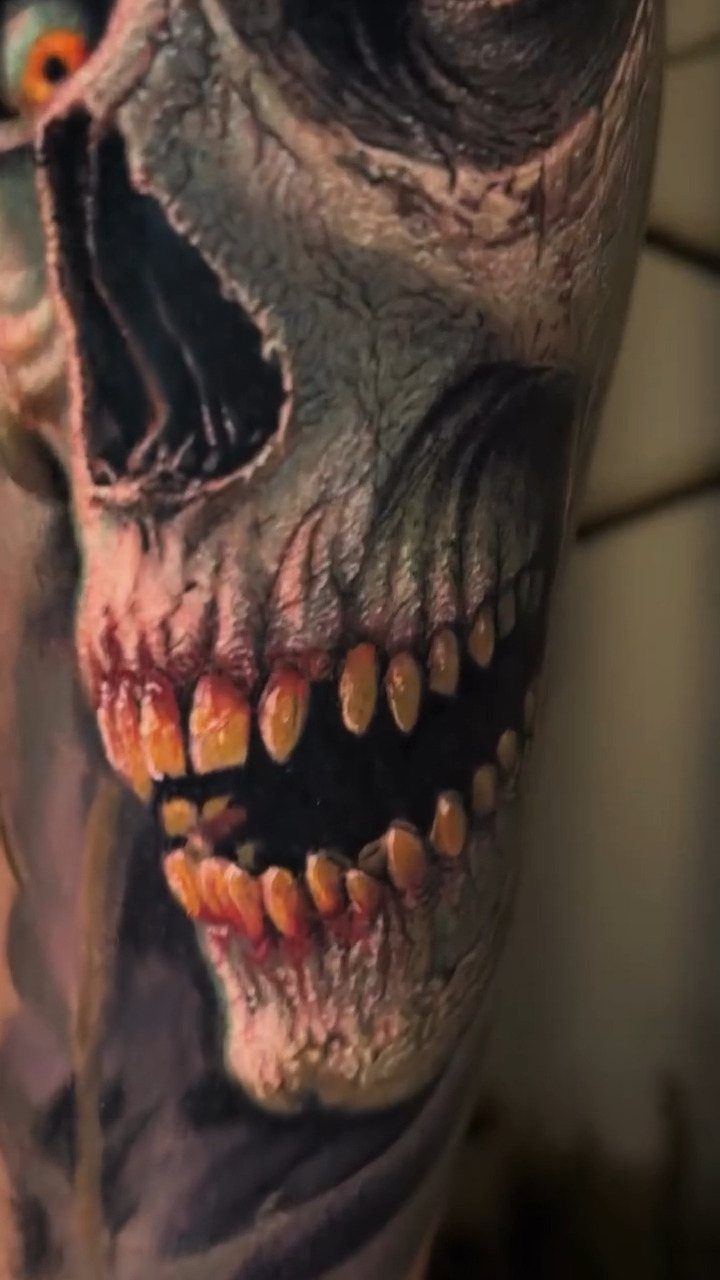
Decay adds texture a clean skull does not have. The cracks, weathering and darkened teeth give this piece a gritty, almost forensic realism that reads as aged bone rather than a graphic symbol.
The yellowed teeth and realistic shading give the skull weight without relying on color. Most of the design stays in black and gray, so the red stays restrained and does not compete with the shading.
Realism requires an artist who can build depth through gradients. The piece will look flat if the shading does not separate the planes of the skull.
Mistakes to Avoid with Dark Tattoos
The worst mistake is cramming too much detail into too little space.
People bring me phone screenshots of digital paintings with 40 layers of shading and expect all of it to fit on a bicep. The problem is negative space.
When there’s no bare skin between the shapes, every shade of black eventually runs together. Give it a decade and those delicate lines blur into one solid smudge that reads like a bruise.
Bold will hold.
Trim your concept down by half. You’re designing for the person you’ll be at 50, not the mood you’re in today.
Dark tattoos cover old work completely, but they also demand commitment to that much solid ink.
Importance of Artist Skill
Good dark work demands someone who knows how to control saturation.
Any tattoo looks bold when the skin is swollen and the ink sits fresh on the surface. What separates a skilled artist is their ability to deposit black so deep it stays true after healing.
Low-budget artists tear up the skin by running the needle over the same line again and again. Save money now and you’ll be paying someone else to fix it in 3 years.
Sunlight Effects on Dark Tattoos
Sunlight destroys black ink faster than anything else. UV radiation fractures the pigment molecules, and your body slowly filters the fragments out through the lymph system.
On heavy blackwork, that degradation becomes visible much sooner than it does on color or fine-line pieces. Solid black can shift to muddy green or washed-out navy after repeated sun exposure without coverage.
I worked with a landscaper who got a blackwork geometric chest piece and hated wearing shirts in summer.
After 2 years the sharp blacks had gone flat and gray, and every edge looked soft. It took 3 appointments to repack the shading and restore the contrast.
Frequently Asked Questions
What are some good tattoo ideas for men?
Traditional blackwork, geometric patterns, Japanese-inspired designs without color, and ornamental symmetrical work all hold up well over time.
Solid black designs and bold tribal pieces hold their contrast longer than fine-line work, which makes them a practical choice if you want something that will still look sharp in 10 years.
Placement on the forearm, chest, or full sleeve gives you enough space for the design to breathe without crowding.
What is a blackwork tattoo?
Blackwork uses only black ink without lighter pigments or shading tones mixed in.
The style relies on solid fills and negative space to create contrast instead of gradients. Bold lines and heavy coverage make these pieces age better than work that depends on fine detail.