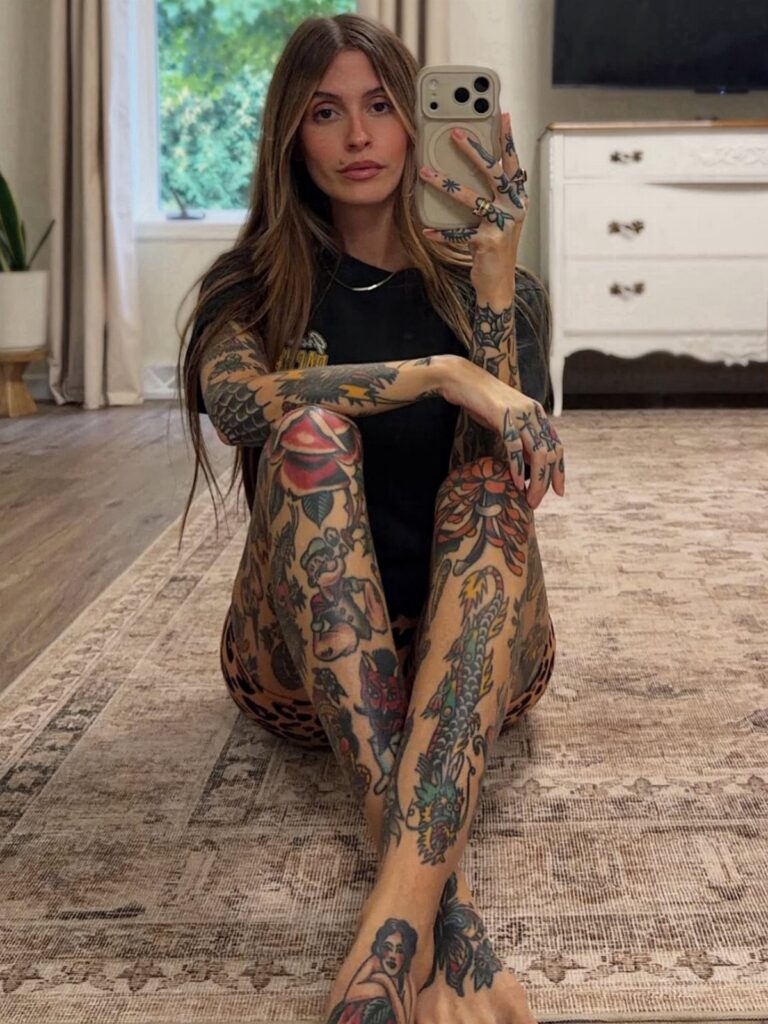
Traditional tattoo designs rely on bold black outlines and saturated color that stay readable as the skin ages, and the 11 ideas below range from single-session pieces to multi-day projects.
Small designs like a single rose or horseshoe take under an hour and fit an ankle, wrist or forearm. Full sleeves need multiple sessions and enough space for the design to stay clear when the leg or arm flexes.
A pin-up girl needs at least palm width to hold the face detail, while a swallow or horseshoe stays sharp even at 2–3 inches.
1. Classic Rose Tattoo
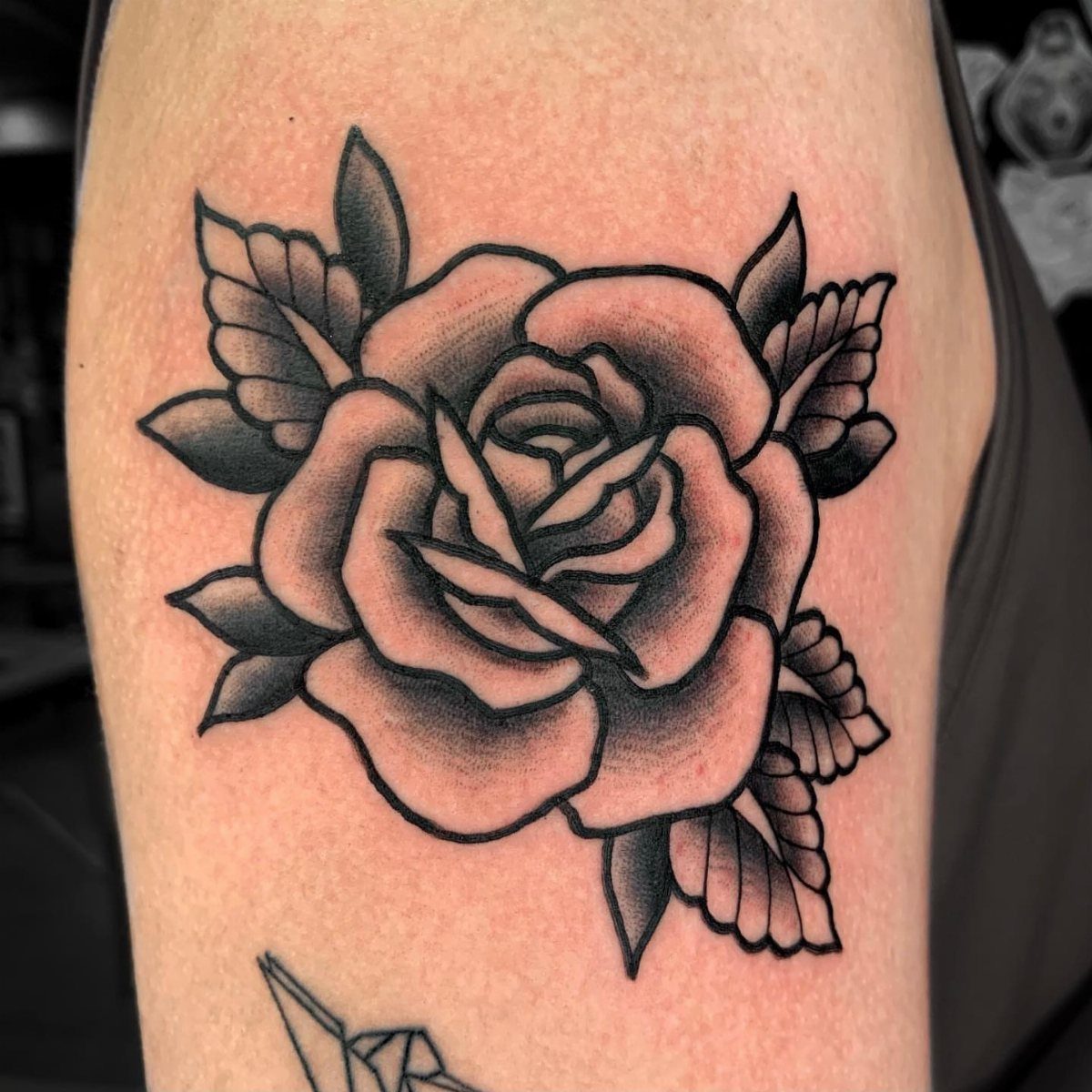
The rose is the most reliably readable design in the traditional playbook. Those thick black outlines hold their shape for decades, even as ink spreads slightly under the skin.
Grey shading gives dimension without the upkeep color needs.
A single rose fits a forearm, shoulder or ankle. If you want color later, red fills drop in cleanly over grey.
Roses pair well with anything: daggers, skulls, banners. Alone, they read as confident and classic.
2. Mermaid Tattoo
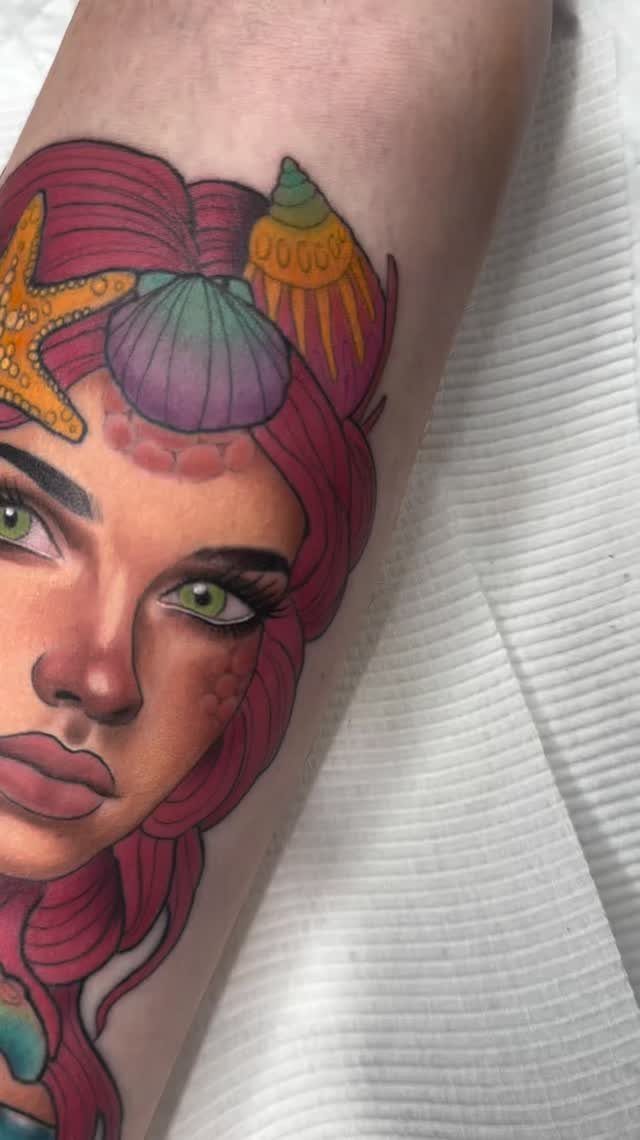
A mermaid gives you room to play with the details that make traditional work feel personal. The hair can be any color, the scales can spiral or stack, and you control how much torso shows.
Pin-up mermaids lean flirtatious.
Folk-style mermaids lean eerie. Both hold up in the traditional format because the bold outline does the work, and the color inside can fade a bit without losing the read.
3. Lucky Horseshoe Tattoo
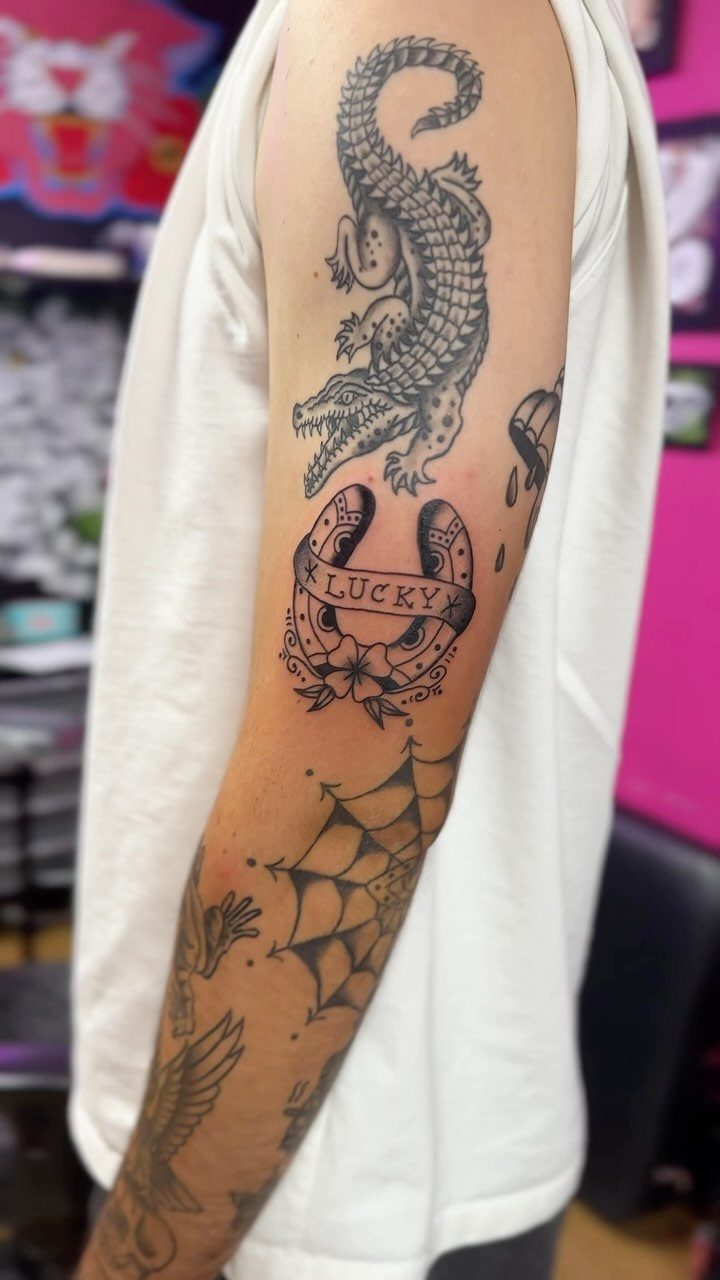
A horseshoe stamped with roses turns a good-luck charm into something that fits a woman’s style without losing the original symbolism. The horseshoe reads bold and graphic, the roses soften the geometry.
Traditional tattoo reads best when the elements are sized close to each other.
Small roses tucked inside a large horseshoe look tentative. Same-scale elements share the space better.
This one works on a forearm, calf or shoulder.
If you want text, a single word like "Lucky" fits inside the curve. Longer phrases crowd it.
4. Butterfly Dagger Tattoo
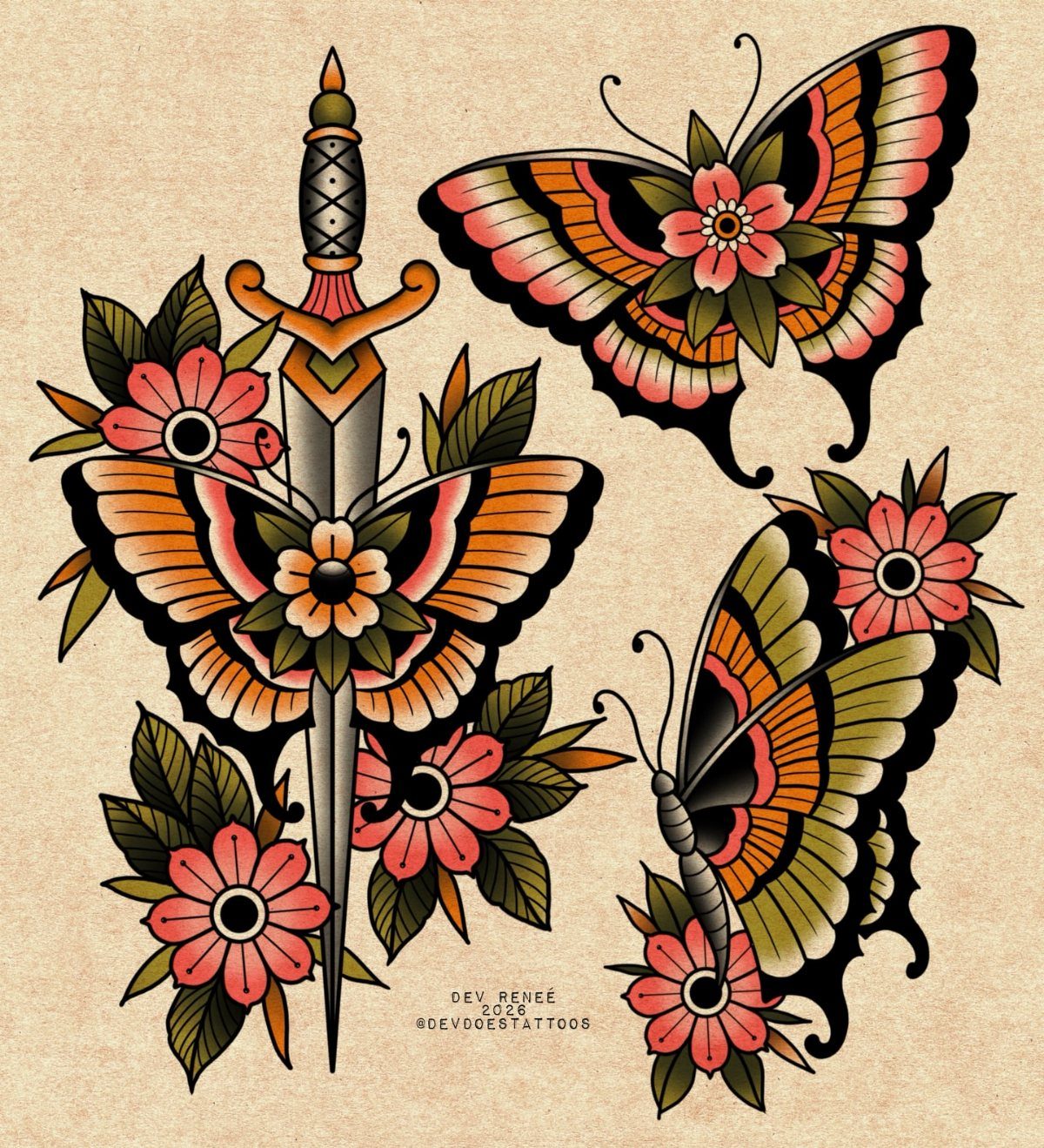
A butterfly pinned by a dagger reads 2 ways at once: delicate and violent, beautiful and brutal. That contrast is the point, and it only works if both halves are drawn with equal weight.
The butterfly needs enough wingspan to balance the blade.
A tiny butterfly on a large dagger looks like an accident. When both are drawn to the same scale, the image holds tension.
Flash designers often include flowers around the dagger handle or behind the wings. Those details are optional, the core read is the butterfly and blade alone.
This design fits a forearm or outer thigh. Expect 2–3 hours for a palm-sized version.
5. Woman Face with Flowers Tattoo
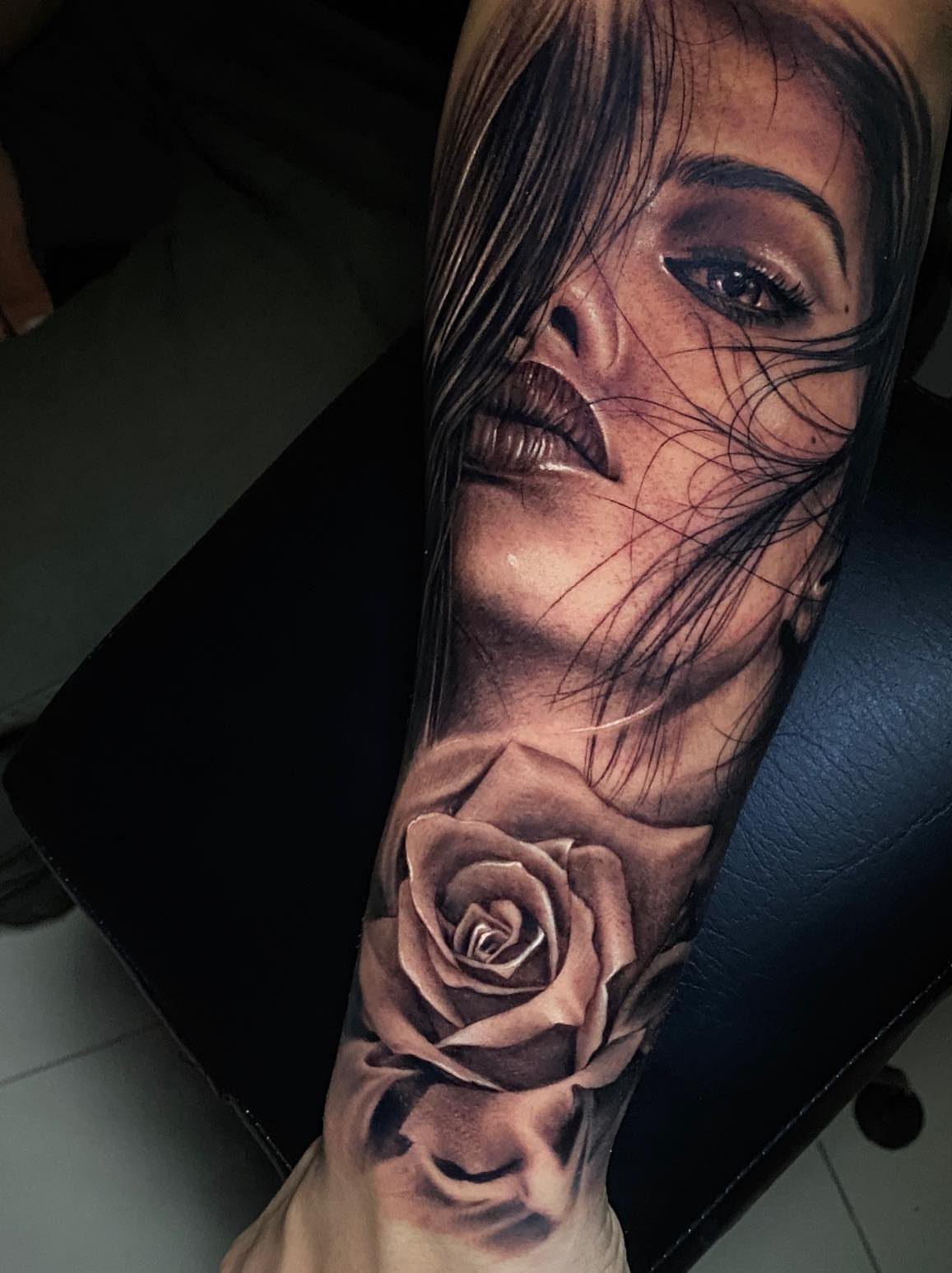
A woman’s face framed by a rose adds softness to the portrait without turning it into something purely decorative. The flower gives the artist room to build texture and shadow, and it anchors the face in a specific tradition.
Black and grey keeps the focus on the portrait. Color splits attention between the face and the flower, and not every artist balances that well.
Traditional portraits live or die on the face. If the artist nails the expression, the rose can be simple.
If the face feels flat, more petals will not fix it. Look at healed portrait work before you book.
6. Swallow Bird Tattoo
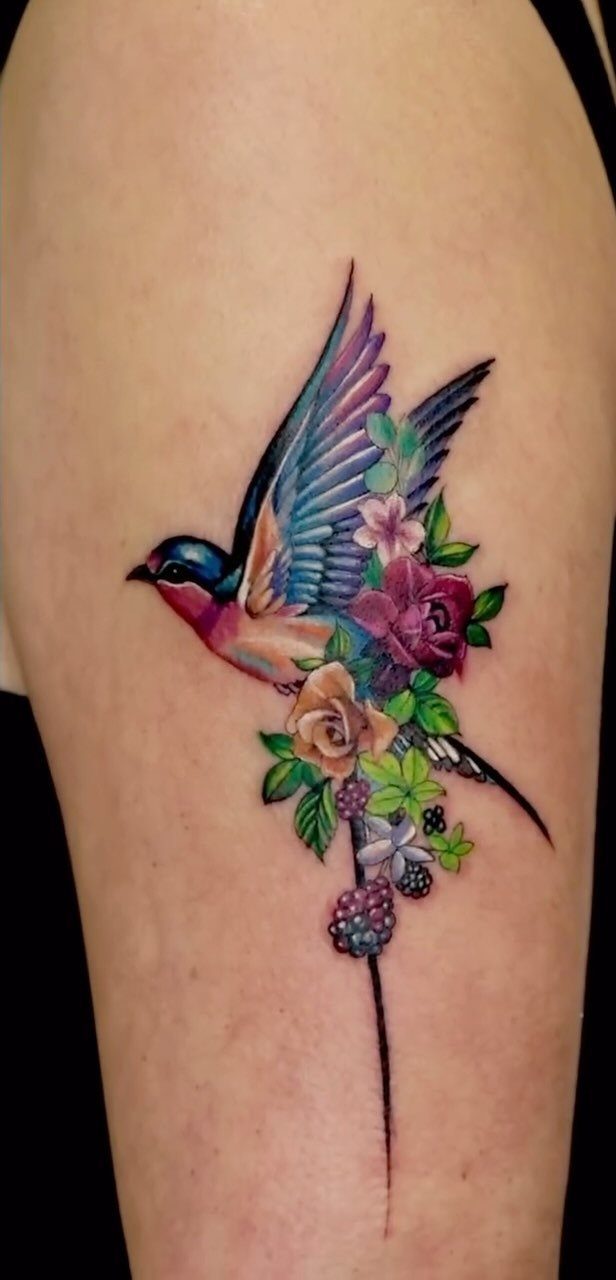
Swallows were the sailor’s tattoo for safe return, earned after logging thousands of miles at sea. That history gives the design weight beyond its small size.
A single swallow fits an ankle, wrist or behind the ear.
A pair works on collarbones or forearms. Color is traditional, black and grey reads more modern but still holds.
Flowers and berries soften the composition without erasing the original meaning. The bird stays the focus, the florals frame it.
Swallows are small, fast tattoos.
Most take under an hour. If you are testing how you handle the needle, this is a good starter.
7. Pin-Up Girl Tattoo
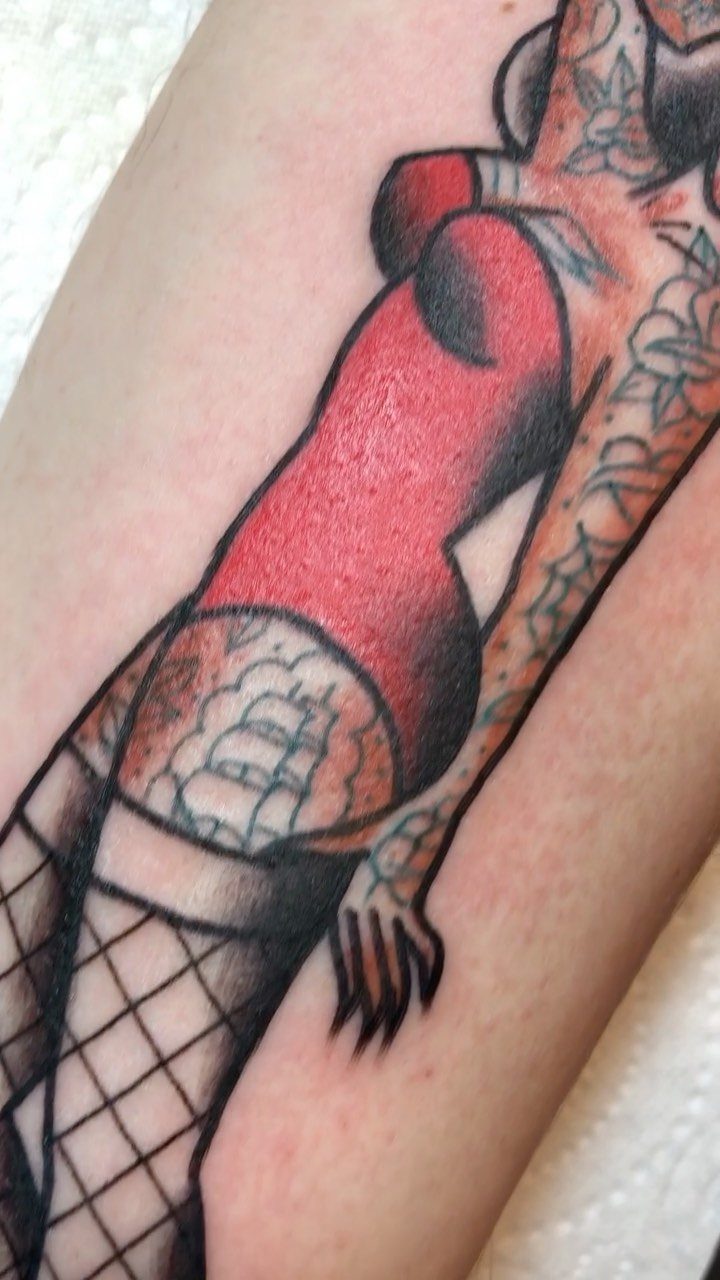
Pin-up girls in traditional tattooing are all pose and attitude.
The figure does the work: one hand on a hip, a knee bent, a look over the shoulder. Background stays minimal because the story is in the body language.
Color brings these to life.
Red lips, skin tone, fabric detail. Black and grey flattens what should feel dimensional.
Sizing matters more than you’d think.
A pin-up smaller than your palm loses the expression, and the expression is half the tattoo. Forearms and outer thighs give enough room for the face to read clearly.
8. Floral Sleeve Tattoo
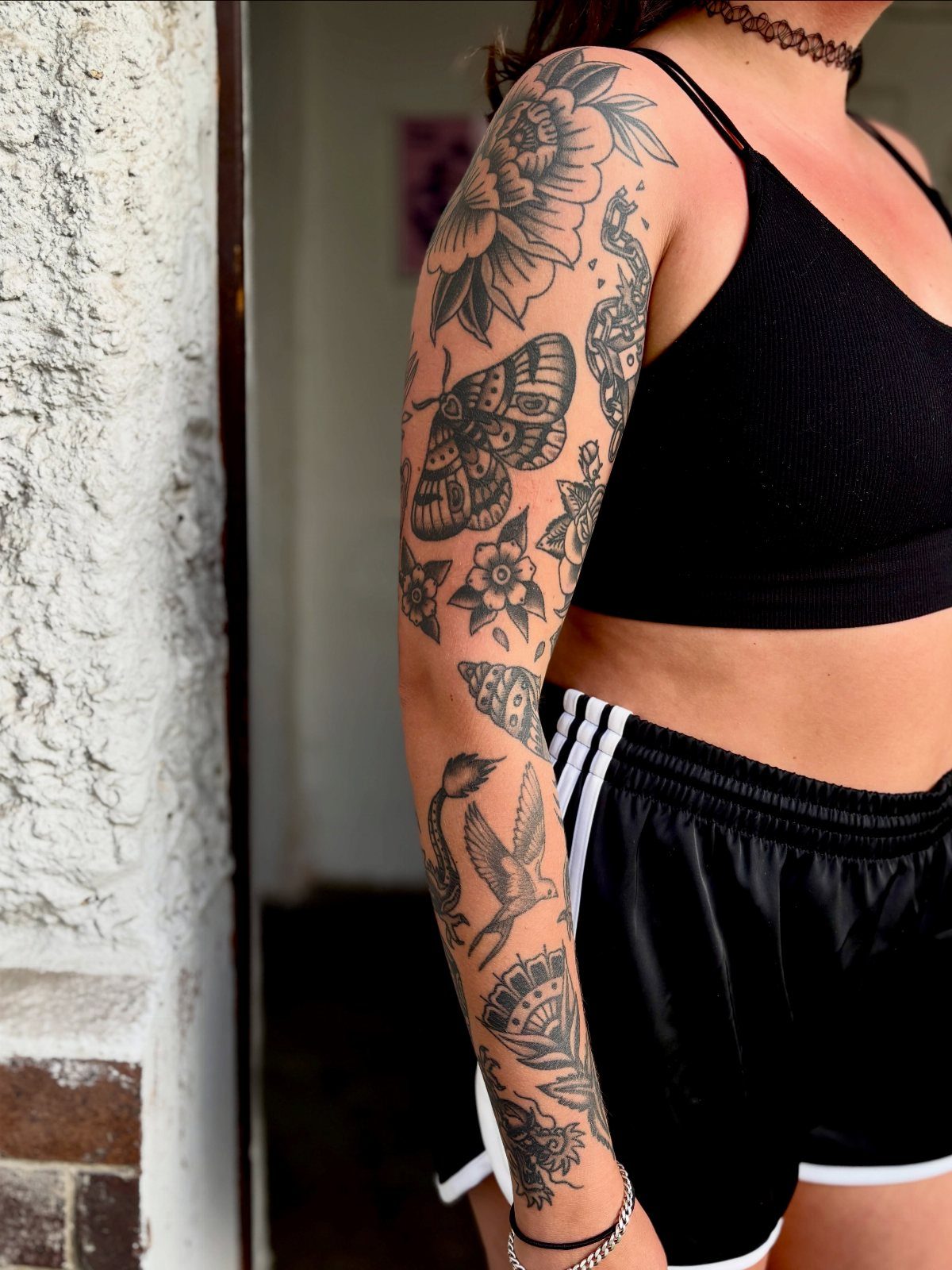
A floral sleeve lets you build outward over time without a master plan. Start with one large flower, add another when you’re ready, fill gaps with leaves and buds as you go.
Traditional style forgives that approach because every flower gets its own black outline. They sit next to each other without blending, so adding one more never looks like an afterthought.
Roses, peonies and chrysanthemums all hold their shape at arm scale. Smaller blooms like daisies read better as filler than as focal points.
Sleeves take multiple sessions. Budget plenty of time for a full arm.
9. Traditional Leg Sleeve Tattoo
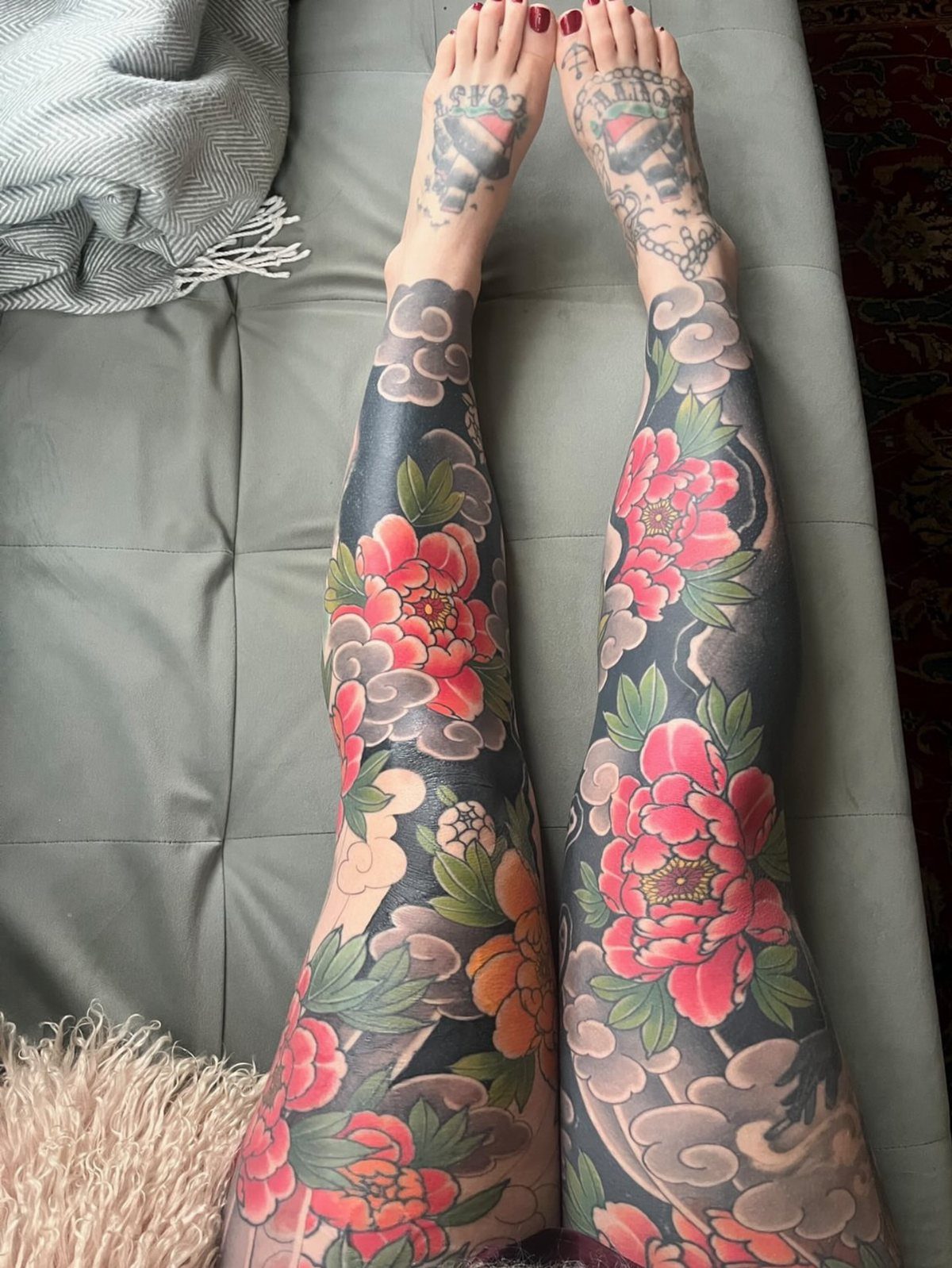
Legs move, so a leg sleeve needs designs large enough to stay readable as the muscle shifts. Small details that look crisp on paper can blur into a busy mass once the leg bends.
Peonies, clouds and waves are traditional choices because they fill space without relying on fine lines. The boldness carries from across a room.
Color holds better on the thigh and calf than on the shin, where skin sits closer to bone and heals slower. If you want saturated reds or yellows, place them where there’s more flesh.
Full legs take serious hours. Most artists split that across multiple sessions.
10. Flowered Fan Tattoo
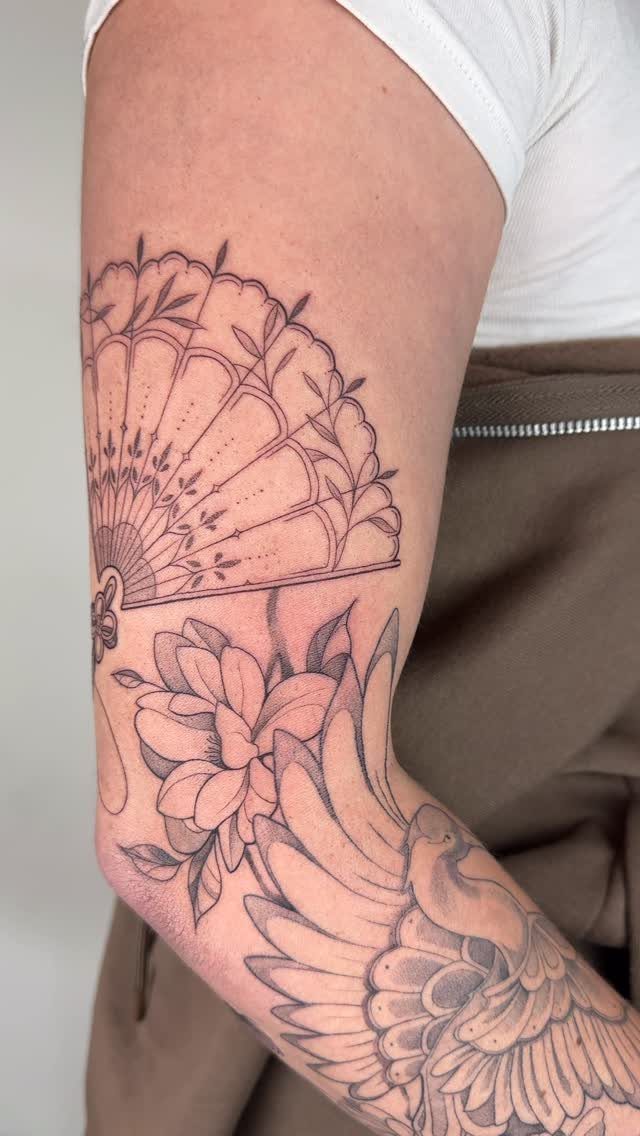
A folding fan gives you geometry that feels feminine without leaning soft. The straight ribs contrast with the curved flowers around it, and that balance keeps the design from reading as purely decorative.
Fans pair well with lotus, peony or cherry blossom.
The flower can sit on top of the fan or float beside it. Both work, but overlapping the 2 keeps the composition tight.
This fits an upper arm or forearm. The fan needs width to show all the ribs clearly, so anything too small starts to lose detail.
Black and grey reads clean. Color adds weight but can make the fan feel busy if the flowers are also heavily saturated.
11. Regal Eagle Tattoo
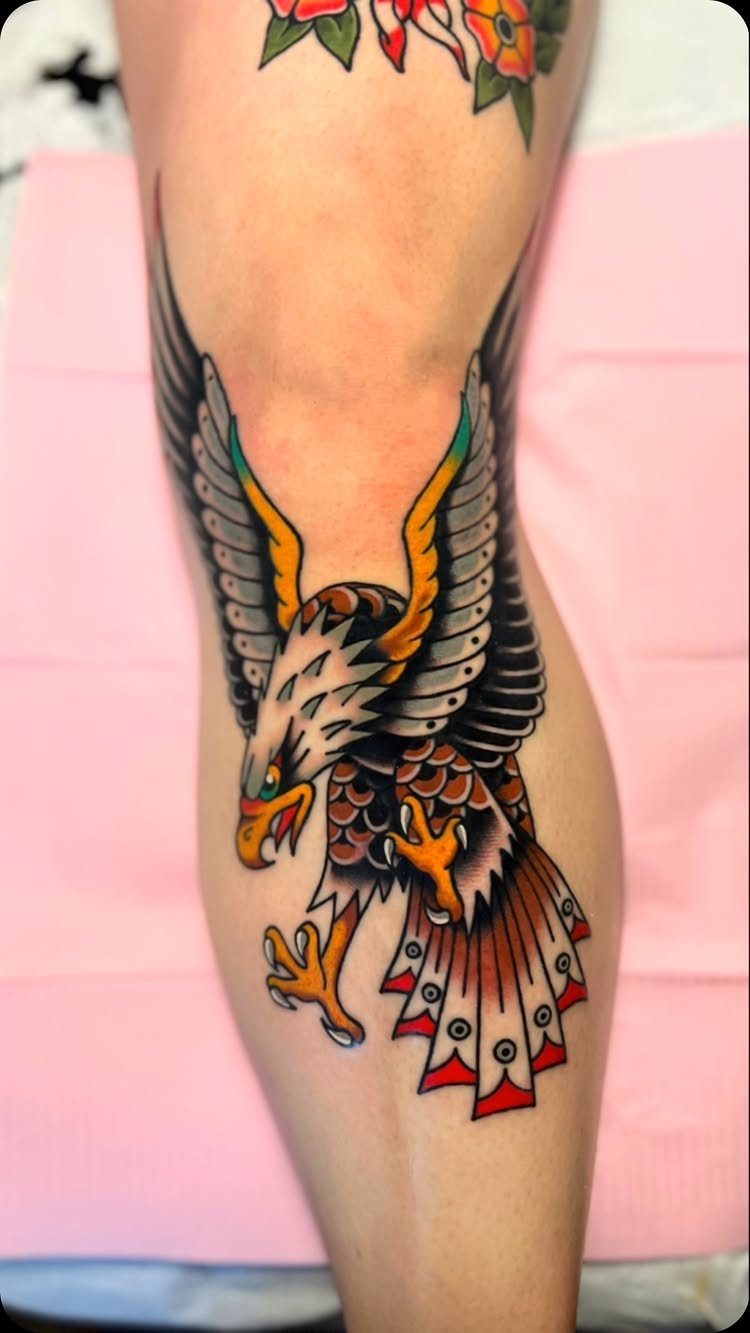
An eagle in traditional style is all wingspan and talons.
The bird is drawn mid-dive or with wings spread, and that aggression is the point. This is not a subtle tattoo.
Bold outlines and saturated color keep the design from looking muddy as it ages.
Reds, yellows and browns fill the body and wings. Black shading adds depth without softening the impact.
Eagles need space.
A calf or thigh gives the wings room to spread without cramping the composition. Smaller placements force the artist to fold the wings in, and that kills the movement.
This one takes a few hours depending on size and color density.
Aftercare for Tattoos
Bony spots and high-friction areas need different aftercare than a piece on your thigh or shoulder.
Ribs and ankles sit close to bone and rub against fabric more often. Wear something loose over the fresh ink for 2 weeks so fabric doesn’t drag pigment out while the skin closes.
Hands are in water all day, so finger tattoos blur and fade faster than most other placements.
Expect 20–30% of the pigment to lighten within the first few years, and budget for a touch-up every 2–3 years if you want the lines to stay sharp.
A thin layer of unscented lotion 2–3 times a day keeps the skin from cracking without waterlogging the tattoo. Too much moisturizer can make a scab swell and peel early, taking ink with it.
Pain Levels by Placement
Pain changes depending on where the needle hits. Bony areas with less padding hurt more, and spots with more nerve endings register sharper.
Inner wrist sits at a 3 out of 10.
The skin there has some cushion, and the session finishes fast. A watch or bracelet hides it when you need that.
Ribs and underboob land around 7–8 out of 10.
The skin pulls tight over bone, and breathing shifts the surface under the needle. Most small traditional pieces take 45–90 minutes, so even if the spot is sensitive you’re done before it becomes unbearable.
Behind the ear sits at a 4 out of 10.
The buzz feels louder because it’s close to your skull, but the pain itself stays mild. Hair covers it, or an updo shows it off.
Upper thigh rates a 2 out of 10. More flesh means less bite, and the spot stays private unless you choose otherwise.
Color Palettes in Traditional Tattoos
Traditional tattoos leaned on primary colors because those pigments were stable and read clearly from a distance. Red, yellow, blue and green filled the outline, with black doing the structural work.
Pastel takes the same format and drops in pink, lavender and mint where you’d expect red and green.
Swap bright red for blush pink or trade bold teal for a muted version. The black outline still holds the design together, which keeps it from drifting into watercolor territory.
Blackwork traditional pulls out every trace of color and leaves only black linework and shading.
High contrast, no fade concerns with color dropping unevenly, and it pairs cleanly with any jewelry. Grey and black hold their contrast on any skin tone because there’s no red or yellow to shift as the ink settles.
Also called old-school or classic American tattoos, American traditional tattoos are recognizable for their crisp black outlines and bold color palettes, as well as their imagery of sailors, pinup girls, swallows, hearts dedicated to moms, anchors, and roses.
— CafeMom
Frequently Asked Questions
What are some popular traditional tattoos in the United States?
Roses, swallows, pin-up girls and eagles are the most common designs. Each one carries its own history: swallows marked miles traveled at sea, roses signaled permanence, eagles showed aggression and pride.
The thick black outlines and saturated color keep these designs readable for decades, which is why they still hold up today.
What are good tattoo ideas for women?
A woman’s face framed by flowers gives you softness without losing weight. Mermaids let you control how much detail shows in the hair and scales.
What is the minimum size for traditional tattoos?
I’d go at least 1.5 inches if you want the piece to age well.
Below that size, the outlines start thin, and even minor ink spread will eat the detail. Traditional style depends on thick outlines to stay crisp, so sizing down compromises the whole read.
Do small traditional tattoos hurt?
How much it hurts comes down to the spot, not the size of the design. A tiny piece on the ribs can still hit a 7 because there’s almost nothing between skin and bone.
A small piece on your thigh stays closer to a 2 out of 10 because there’s more flesh to cushion the needle. Small designs finish faster, usually 30–90 minutes, so even a painful spot is over quickly.
How much do small traditional tattoos cost?
Simple designs run $80–$150 depending on detail and color. Most shops charge a minimum that covers setup time and the artist’s skill, so a tiny tattoo often costs the same as something an inch larger.
If you want saturated color or extra shading, expect the price to climb toward the higher end.





