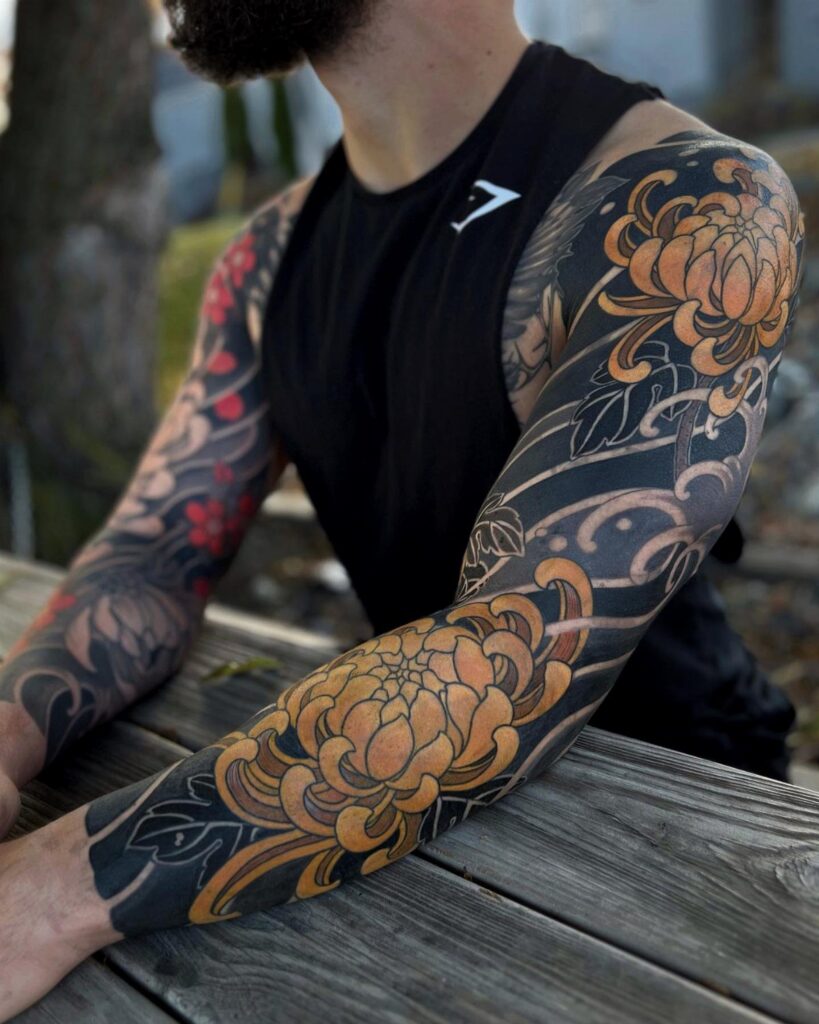
A full sleeve costs anywhere from $500 to over $10,000 depending on the artist and your location, while a half sleeve runs lower since you’re covering less skin.
A half sleeve covers either the forearm or upper arm and stops at the elbow, while a full sleeve runs shoulder to wrist and stays visible year-round.
Japanese motifs like dragons and koi balance power with perseverance, Viking runes spell out phrases from old alphabets, and blackout sleeves cover older tattoos in solid black across multiple sessions.
1. Japanese Sleeve with Dragons and Koi Fish
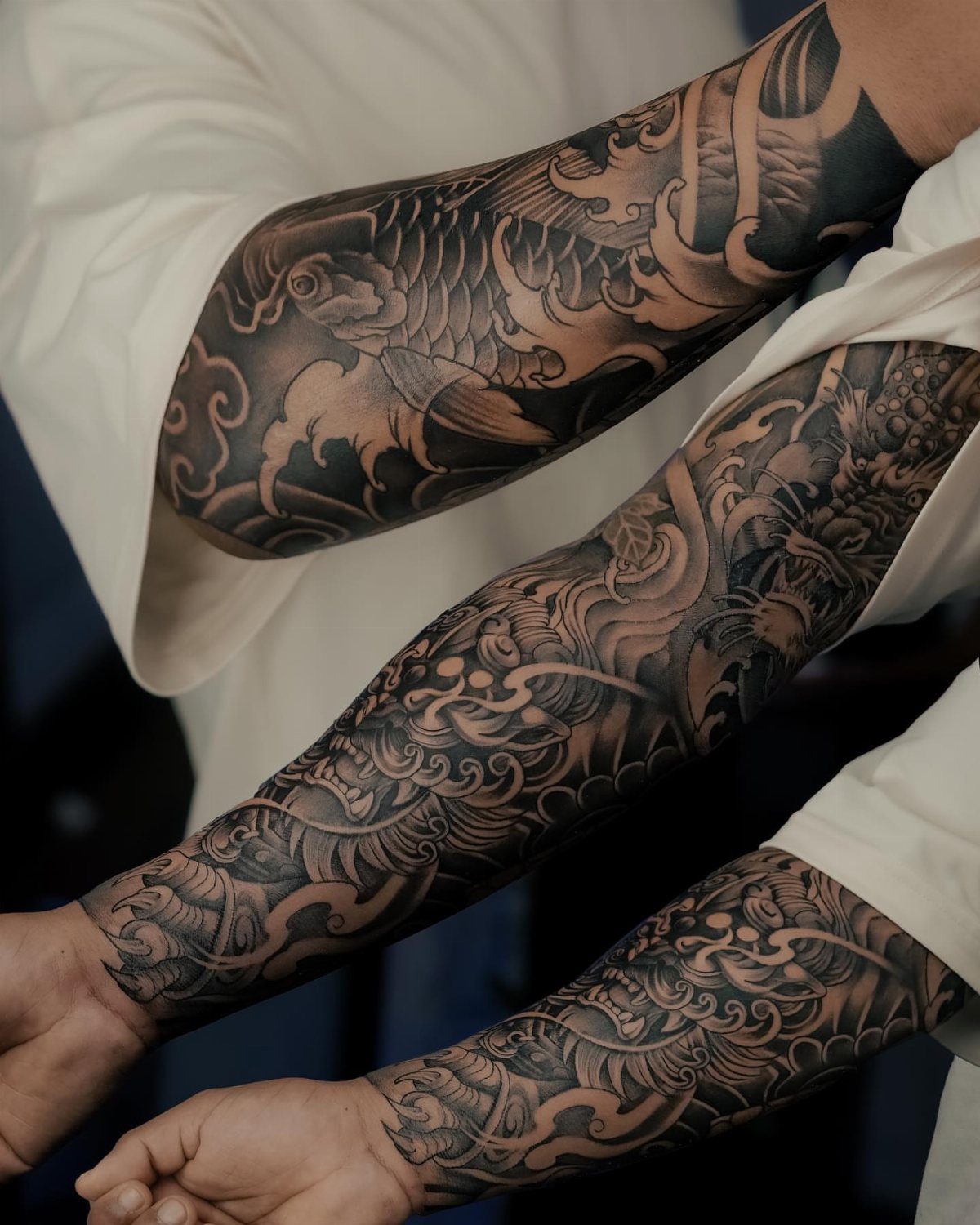
Dragons and koi fish in Japanese tattooing carry distinct meanings, often combined in a single sleeve to balance power with perseverance.
The black and grey work here keeps the focus on the shading and line detail that define traditional Japanese style.
A full sleeve like this takes multiple sessions to complete, usually spread over months. The forearm offers the most visible real estate for the main motifs, while the upper arm and shoulder can hold background elements like waves or clouds.
If you want the symbolism without committing to a full sleeve right away, start with one motif on the forearm and expand it later.
2. Nordic/Viking Sleeve
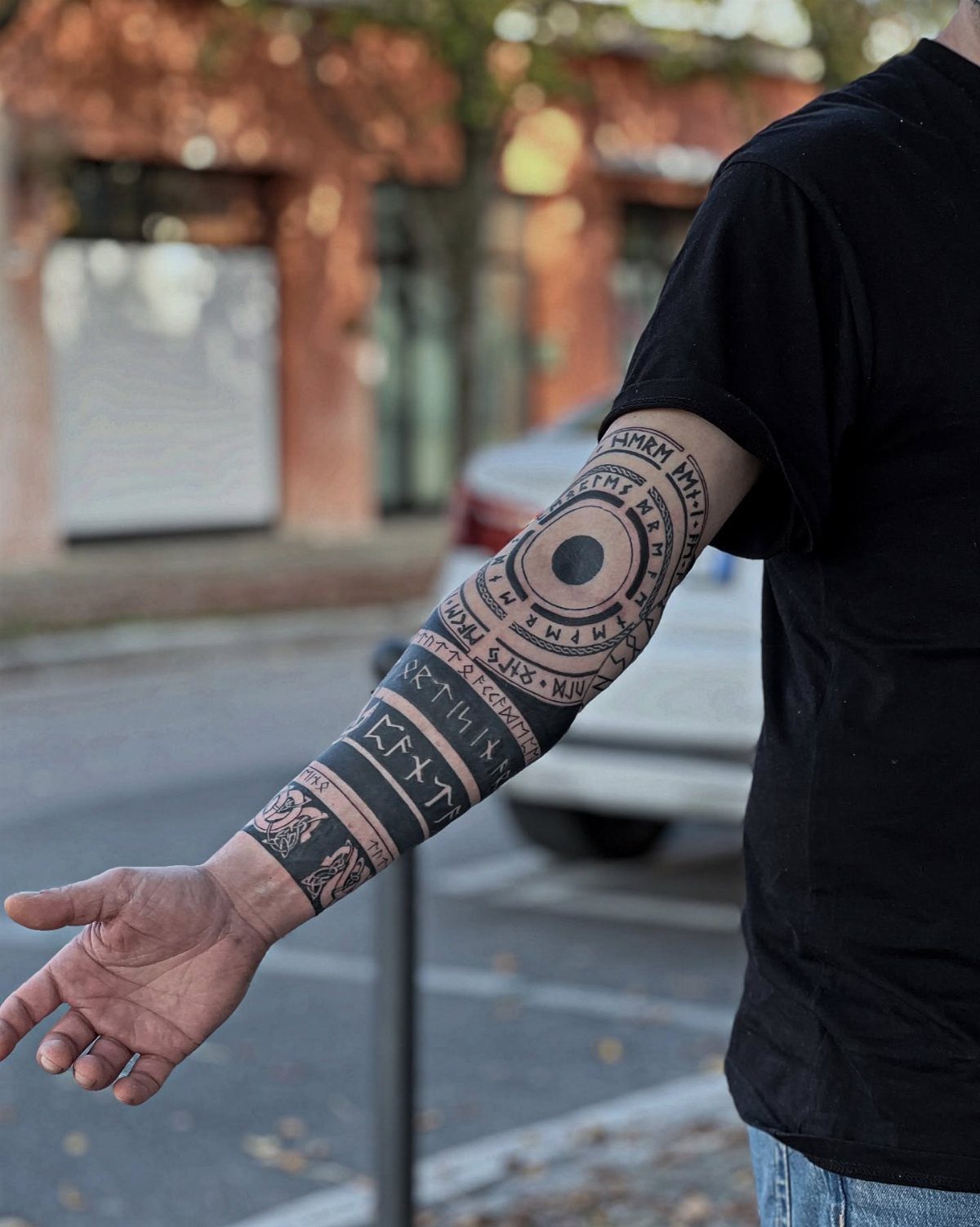
Runes and circular symbols drawn from Norse mythology give a Viking sleeve its identity.
The monochrome ink and bold geometric layout create high contrast, and the runes themselves can be chosen to spell out a phrase or represent specific concepts from the old alphabets.
This style reads well at a distance because the shapes are clean and the negative space is used deliberately. A forearm sleeve like this one wraps the design around the arm so it stays visible from multiple angles.
Pain level on the forearm is moderate compared to inner arm or elbow, and healing is straightforward if you keep it clean and moisturized.
3. Half Sleeve
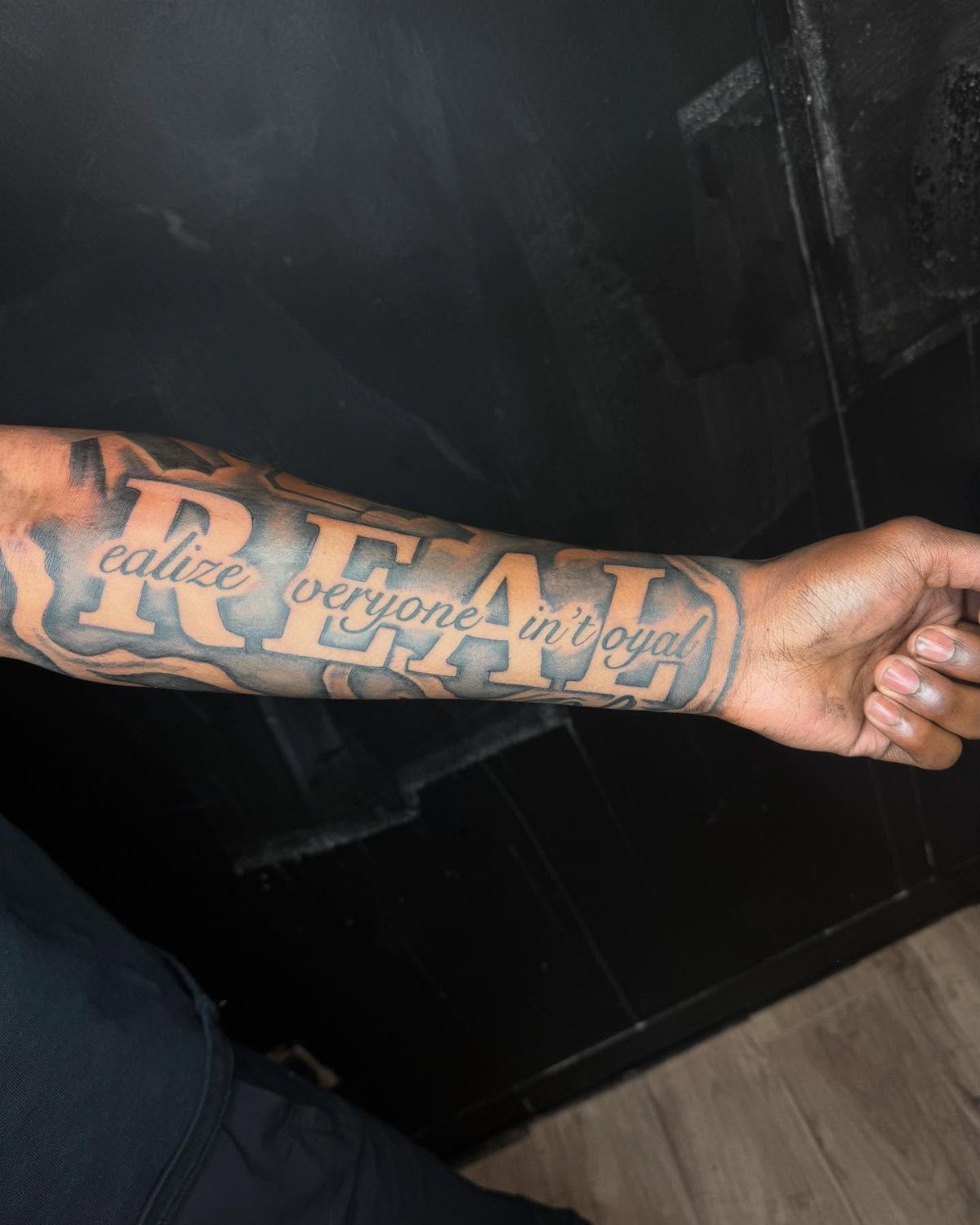
A half sleeve covers either the forearm or the upper arm, stopping at the elbow instead of running the full length.
Cost runs lower than full coverage since you’re covering less skin, and sessions are shorter. Forearm half sleeves stay visible in short sleeves but disappear under long sleeves, which matters if you work in a conservative field.
Script can lose clarity if the letters are too small or too close together, so size your text larger than you think you need.
4. Tribal Sleeve
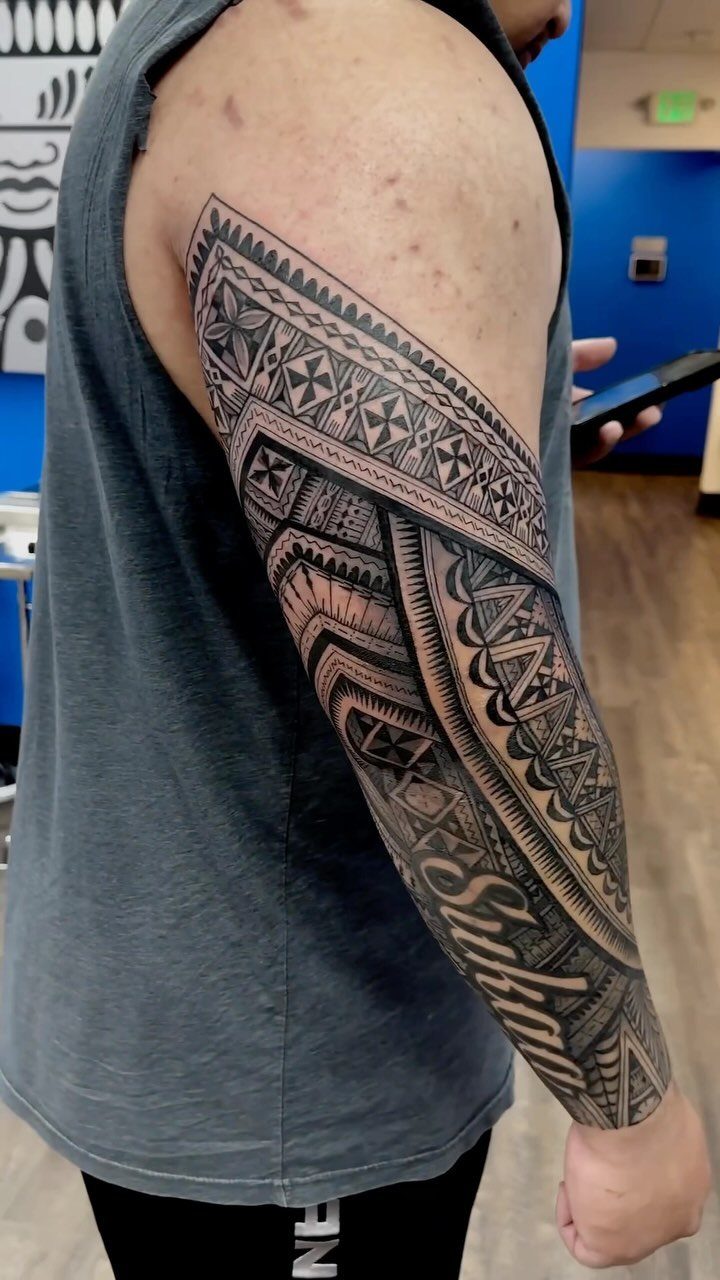
Tribal sleeves use heavy monochrome patterns that follow the muscle and wrap the arm in continuous flow. The geometric shapes and negative space here create movement, and the lettering integrated into the design adds a personal element.
This style takes fewer sessions than detailed realism because there’s no shading or color blending, just solid black fill.
According to the artist who finished this piece, it was the final session to cap off the shoulder, meaning the sleeve built outward from the forearm over time.
Tribal reads clearly even as it ages because the shapes are simple and the contrast stays strong.
5. Blackout Sleeve
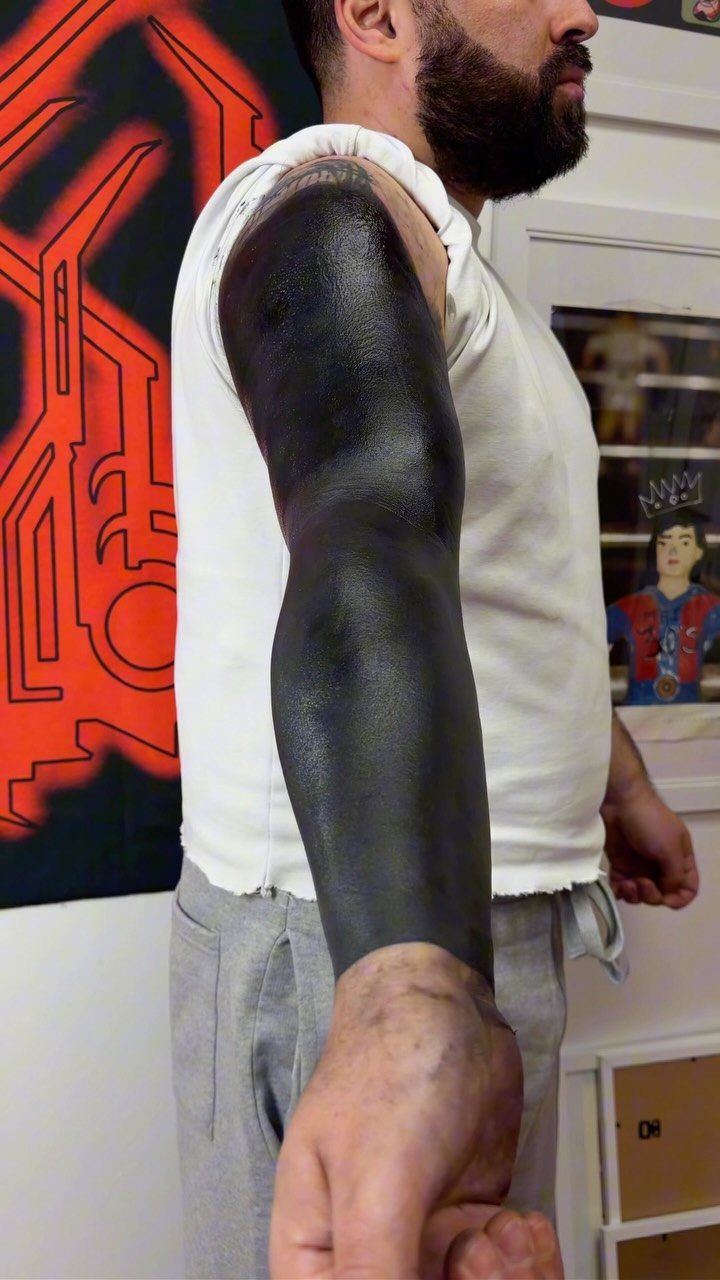
A blackout sleeve covers the entire arm in solid black ink, leaving no skin showing through. It’s often chosen to cover older tattoos or scars, or simply for the bold visual impact.
This takes multiple sessions because the ink needs to be packed densely and evenly, and healing between sessions is necessary to avoid overworking the skin.
Pain level is high since every inch of the arm gets tattooed, and aftercare is straightforward but lengthy.
The result is a clean, high-contrast look that stands out in any setting. If you want detail later, negative space designs can be added on top of the black.
6. Geometric Sleeve
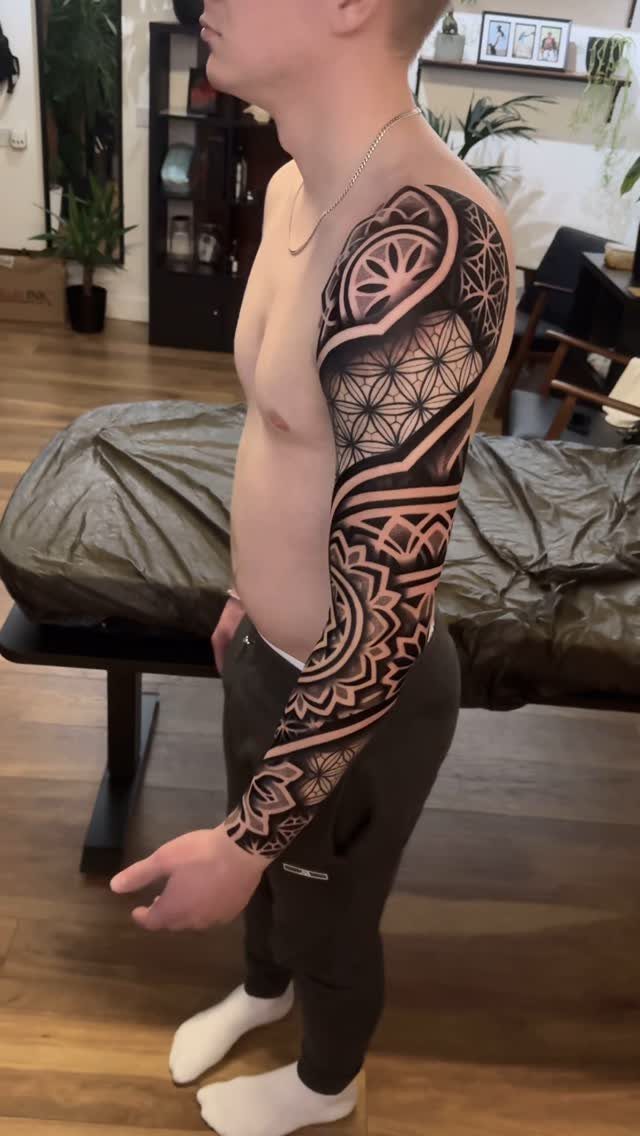
Geometric sleeves layer shapes like mandalas, triangles, and dotwork into a cohesive pattern that wraps the arm. Expect several full-day sessions if you go for this level of coverage.
Symmetry matters here, and a good artist will map the design around your arm so the patterns align when your arm is at rest.
Black ink keeps the geometry sharp, and the contrast between filled and open areas gives the design depth.
This style suits men who want a modern, structured look without traditional imagery. Forearm and upper arm both hold the patterns well.
7. Lion Sleeve
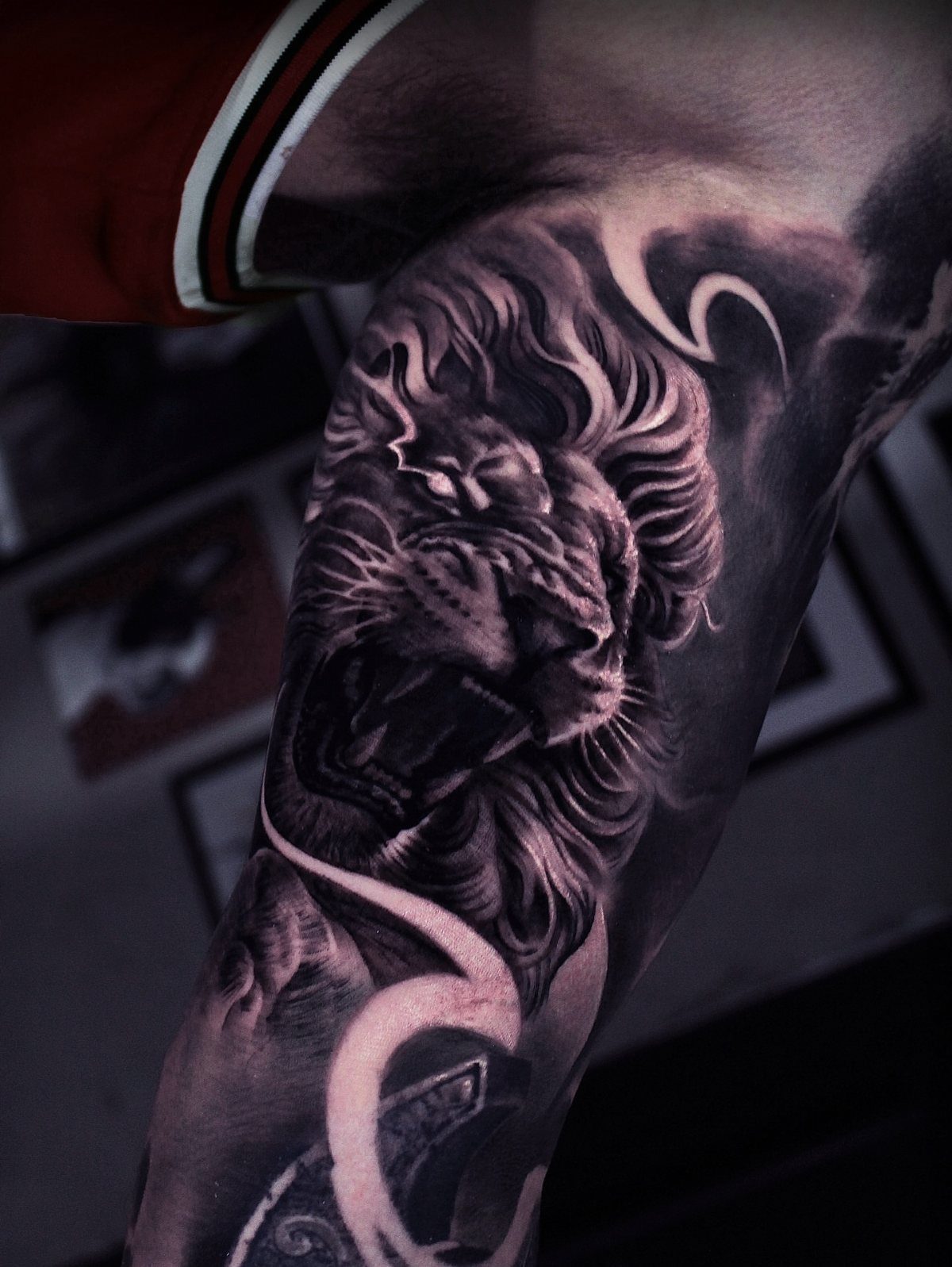
A roaring lion in black and grey grounds the design in strength and dominance. The shading in the mane and face gives the piece depth, and the monochrome palette keeps the focus on the detail work.
Lions work well on the upper arm or shoulder where the rounded muscle fits the shape of the head.
If you want the design to wrap, the mane can extend around the arm with background elements like geometric patterns or landscape.
This reads clearly from a distance and holds up as the ink ages.
8. Full Sleeve
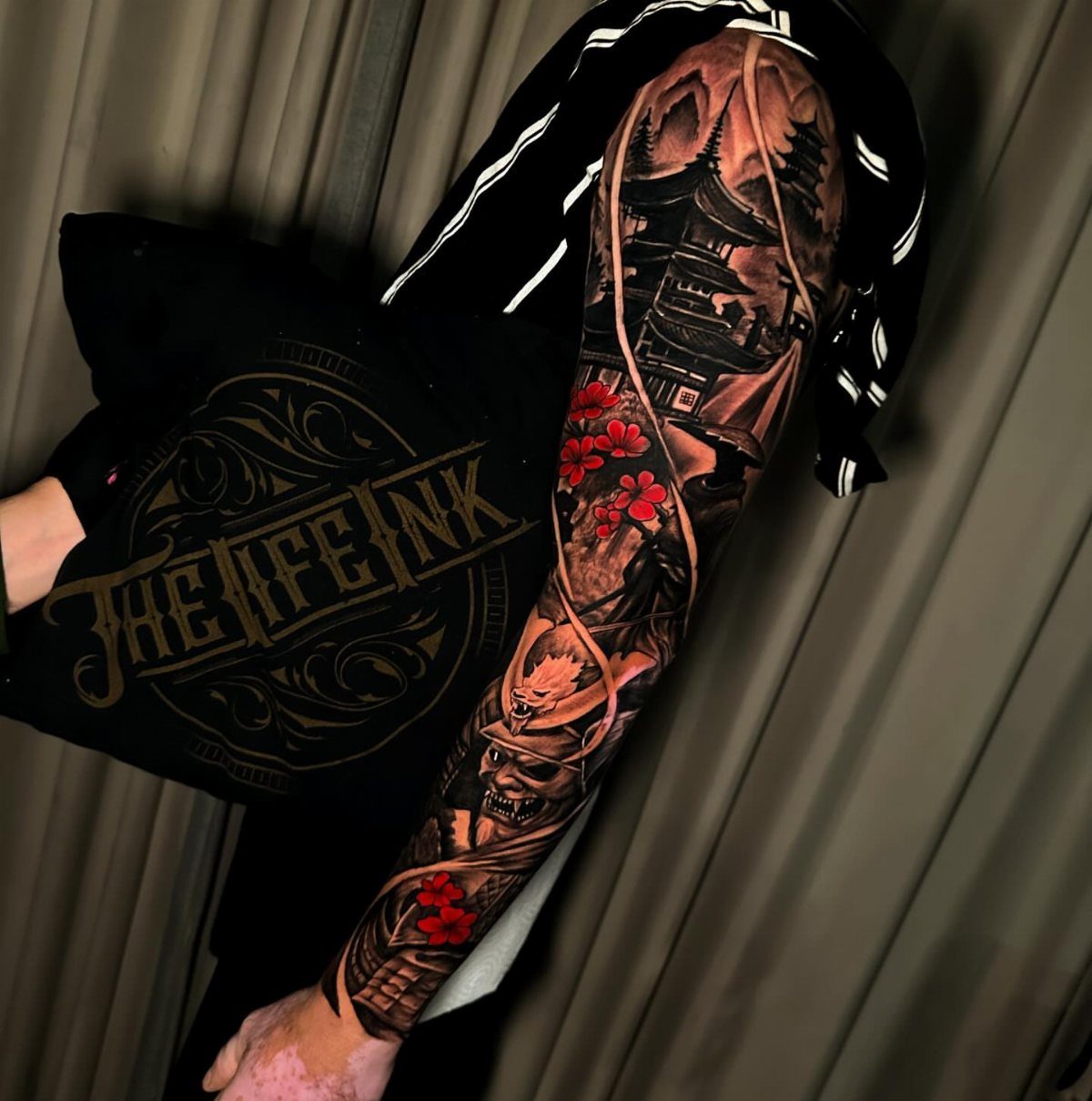
A full sleeve runs from wrist to shoulder, covering the entire arm in one continuous design. Japanese motifs like pagodas, flowers, and masks layer together without competing for space.
Cost depends on the artist’s rate and the complexity of the design, but expect a significant investment for this much coverage.
If you’re not ready to commit to the full length, start with a half sleeve and expand it later.
9. Watercolour Sleeve
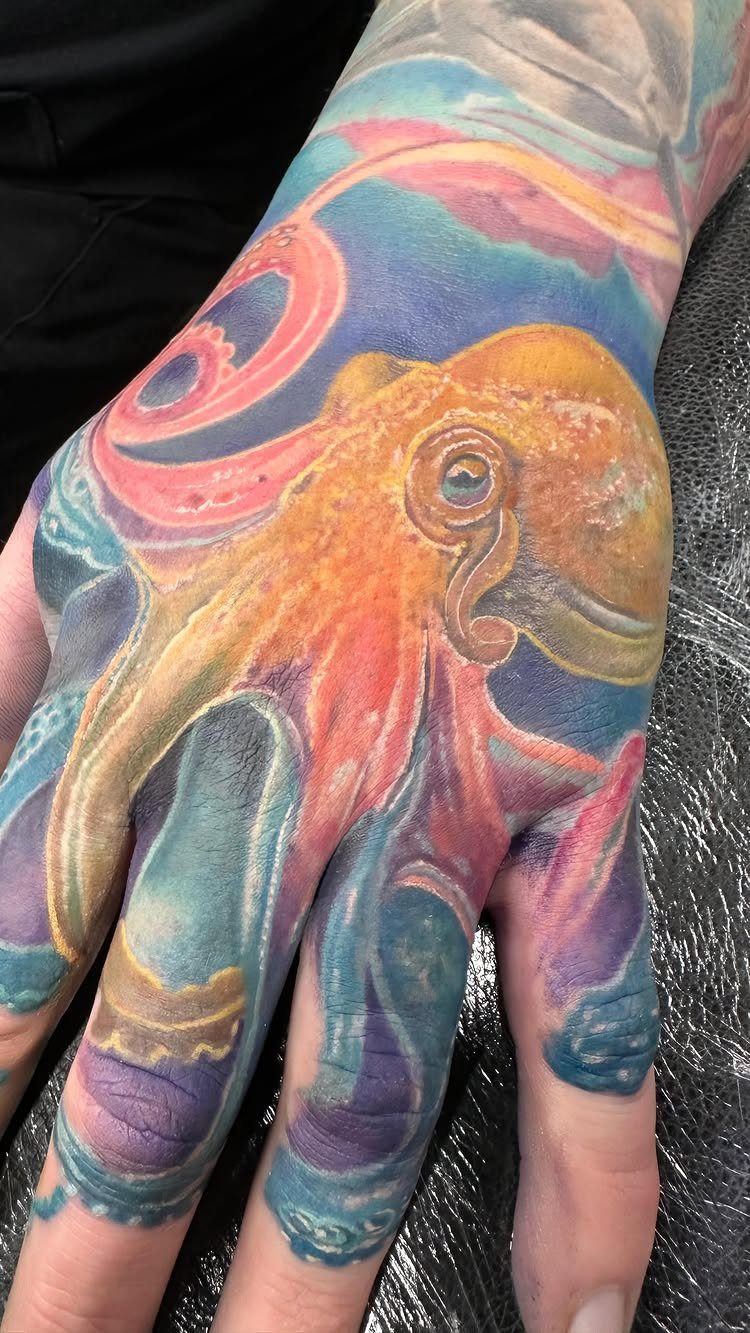
Watercolor tattoos mimic the look of paint splashes, with color bleeding outside the lines and soft gradients replacing hard edges. The style works well on organic shapes where tentacles or branches can flow with the color.
This style fades faster than traditional tattooing because the colors are less saturated and there’s no bold outline to hold the design together. Touch-ups every few years keep the vibrancy.
10. Nature Sleeve
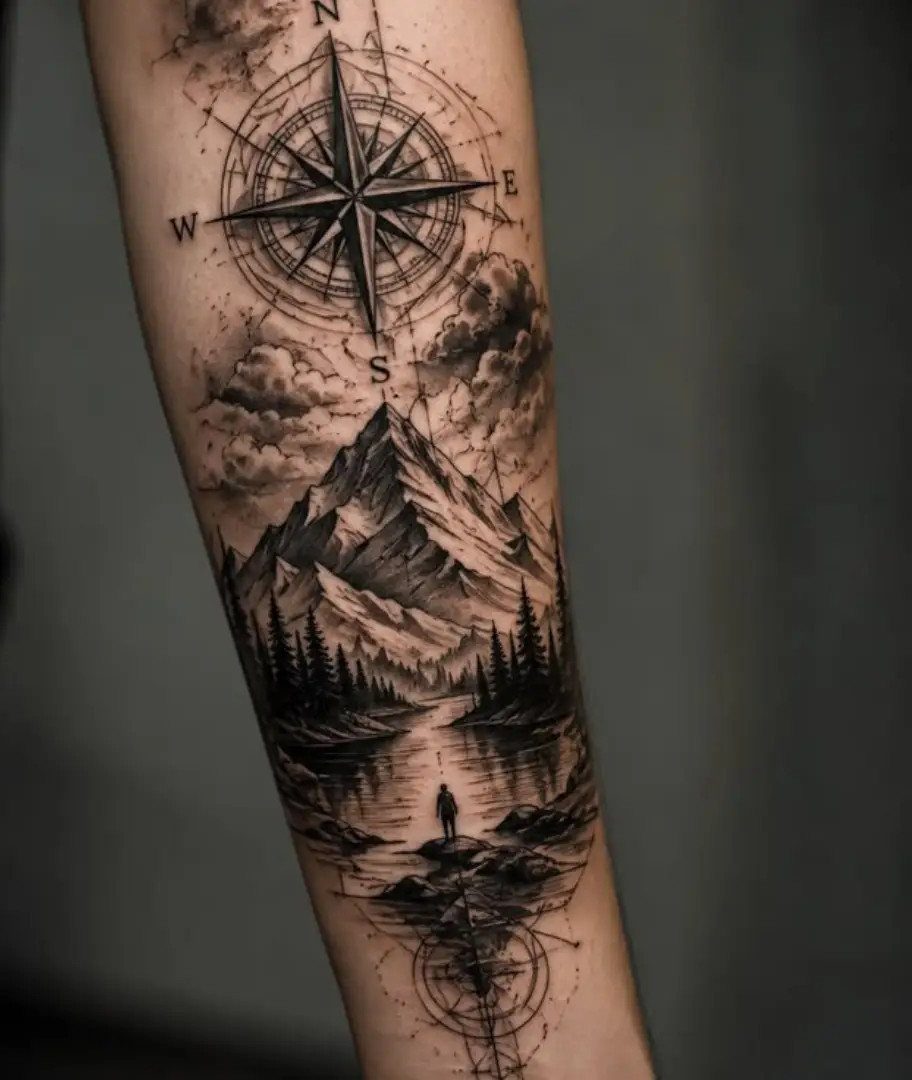
Nature sleeves work well for men who spend time outdoors or want to mark a connection to a specific place.
The black and grey palette keeps the design cohesive even with multiple elements, and the detail in the trees and landscape holds up at a distance. Forearm placement makes the compass readable when your arm is at rest.
If you want to add color later, earth tones like green and brown blend into the existing ink without overpowering the line work.
11. Anime Sleeve
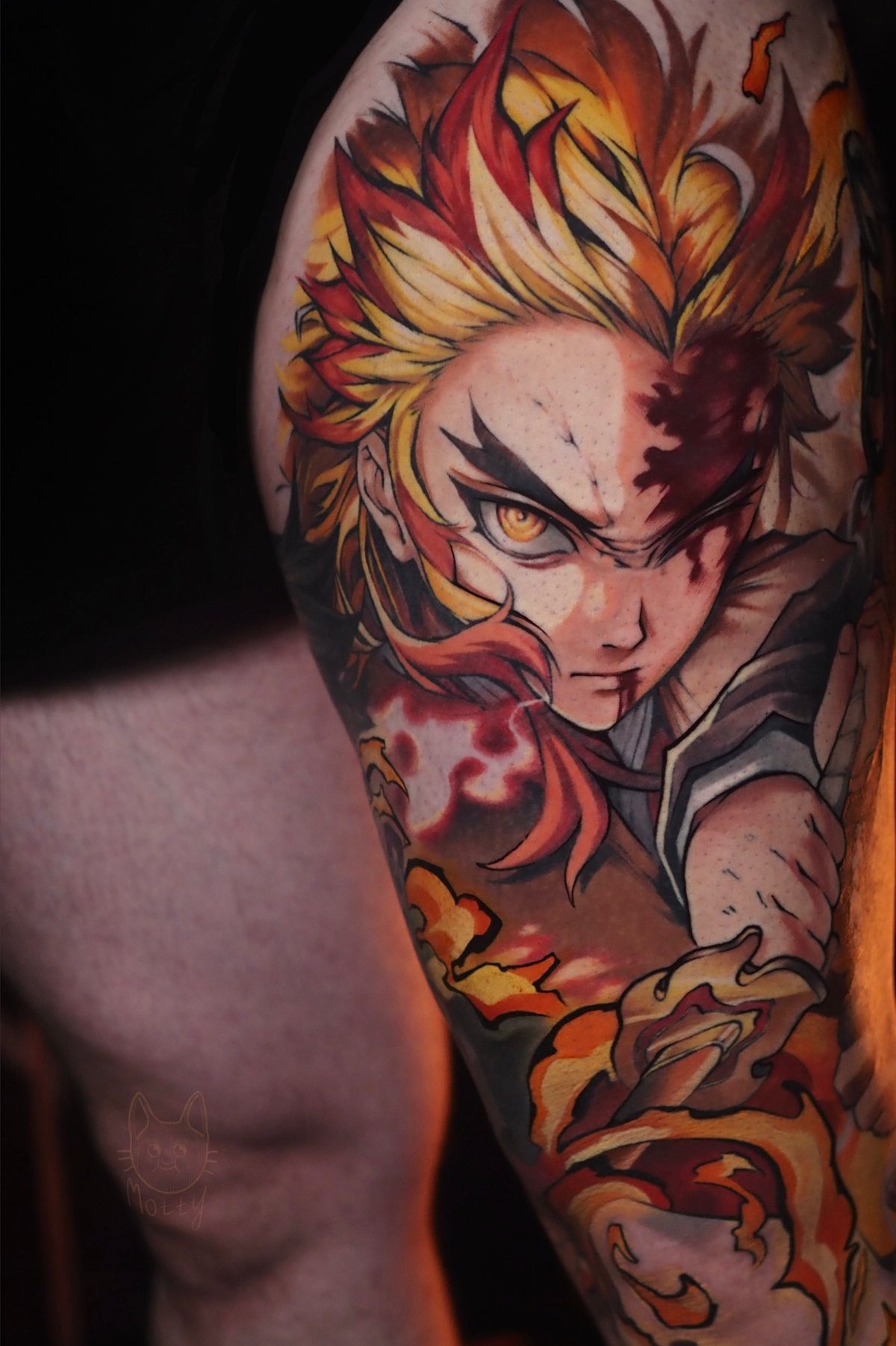
Characters from anime translate well to tattoos when the artist can match the original art style. The bright colors and defined outlines here stay true to the source material, and the fiery hair gives the design movement.
This style requires an artist familiar with anime illustration, since the proportions and shading differ from realistic portraiture. Color saturation matters, so expect longer sessions to pack the ink densely enough that it stays vibrant.
Forearm placement keeps the character visible, and the vertical layout fits the shape of the arm.
12. Portrait Sleeve
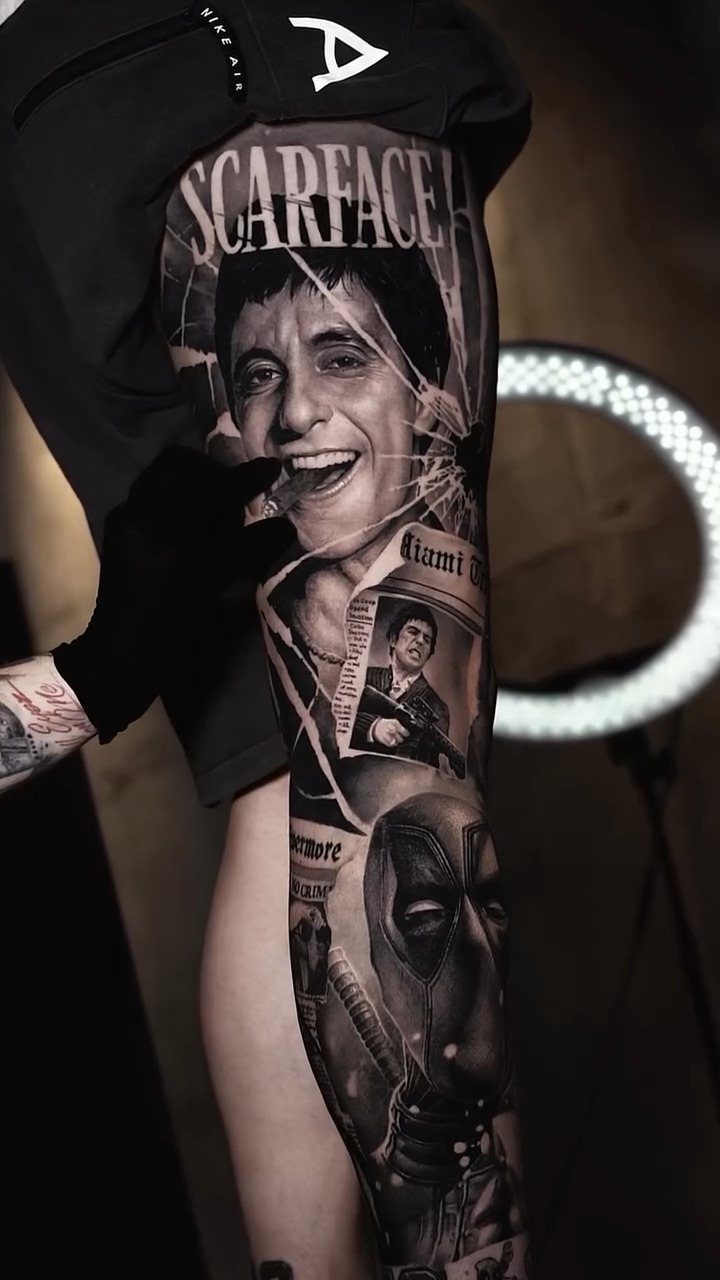
Realistic portraits require an artist who specializes in faces, since the proportions and shading need to be precise for the likeness to read. A sleeve can combine fictional characters who share a theme, even if they come from different stories.
Black and grey portraiture ages better than color because it relies on contrast rather than saturation.
Sessions are longer for portraits since the detail work takes time, and touch-ups are rare if the artist gets the likeness right the first time.
Leg placement gives more surface area for multiple portraits without crowding.
13. Sleeve Tattoo with Flowers
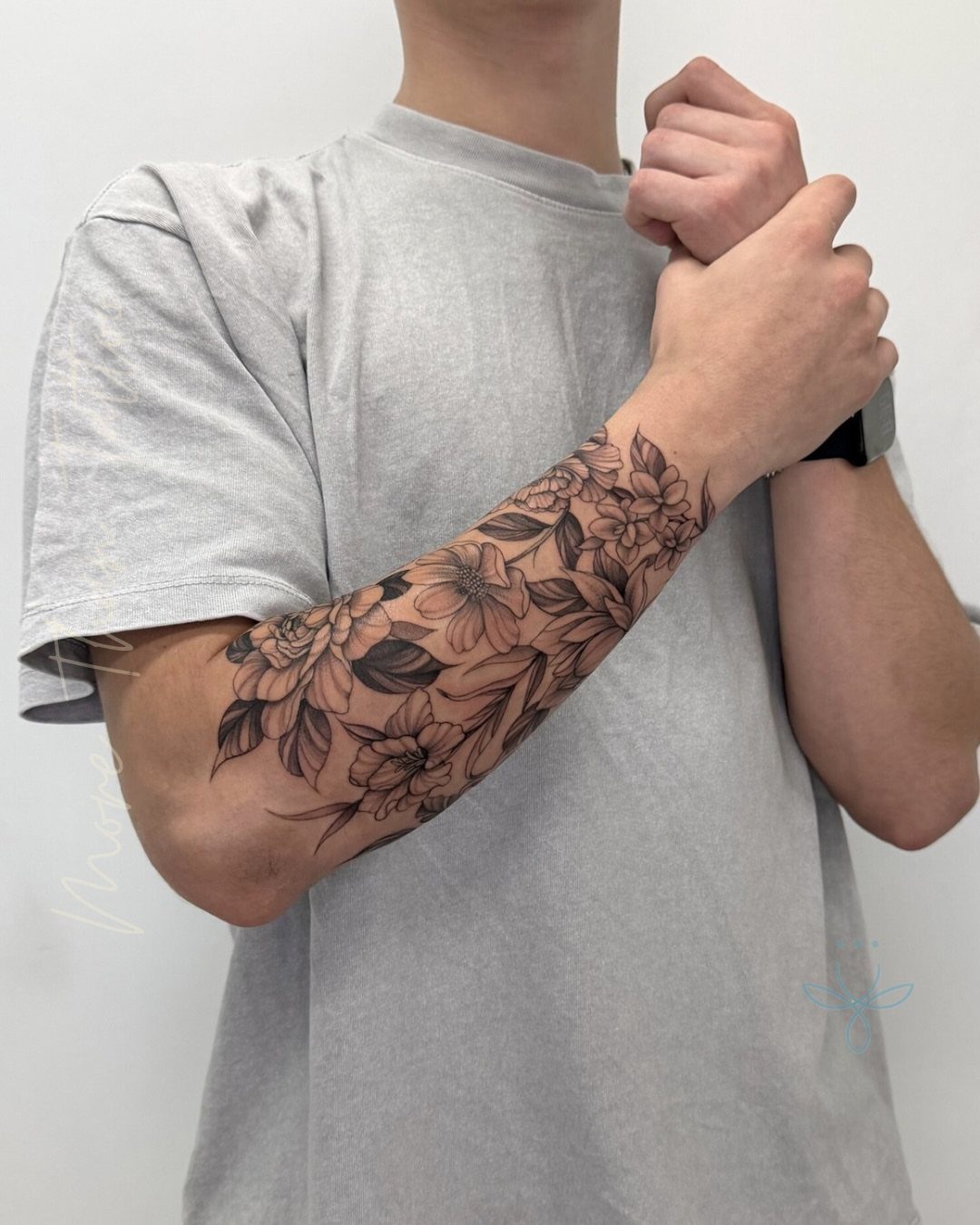
Flowers in black and grey hold detail through shading rather than color, and the monochrome palette keeps the design masculine even when the motifs are traditionally softer.
The blossoms here wrap the forearm with enough negative space that each flower reads separately.
This style works for men who want organic shapes without the usual skulls or animals. Roses, peonies, and chrysanthemums are common choices, and the shading technique determines how realistic or stylized the final piece looks.
Forearm placement keeps the flowers visible and the skin heals well in that area.
Sleeve tattoos are more than just a trend – they’re a full-on commitment to personal style, storytelling, and serious ink.
14. Mechanical Sleeve with Gears and Machinery
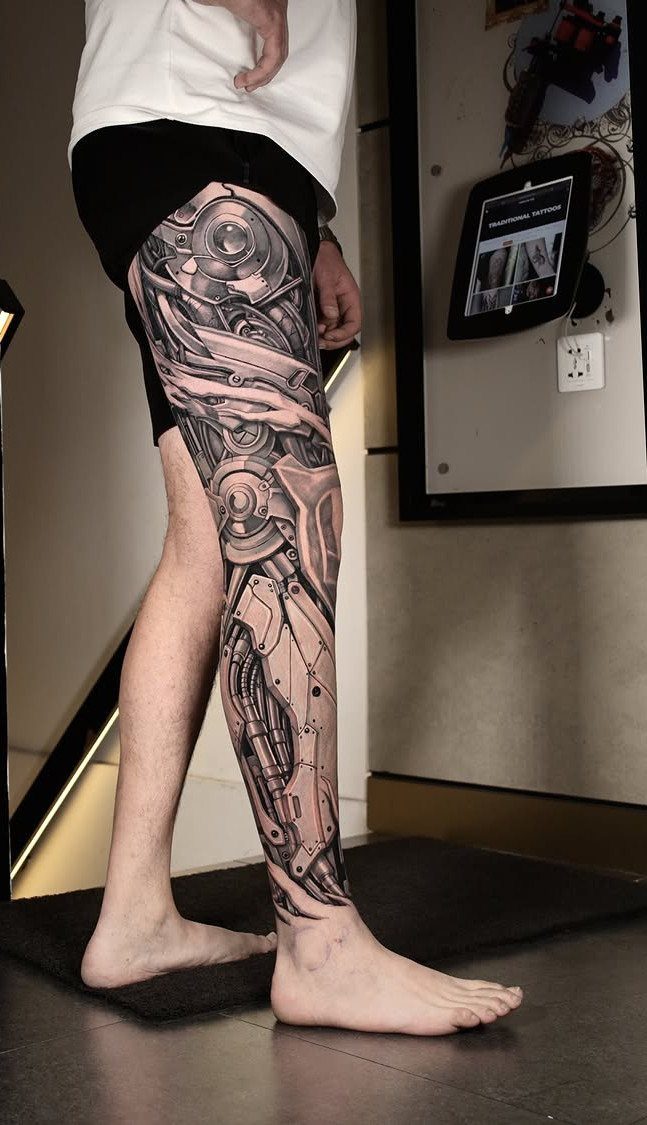
Biomechanical tattoos layer gears, pistons, and machinery under the skin as if the body is part machine. The shading here creates depth, making the mechanical parts look like they sit beneath the surface.
This style requires an artist who can render metal textures and realistic shadows. Leg placement gives more room for the full effect than an arm, and the muscle contours help the illusion that the gears are built into the body.
15. Abstract Sleeve
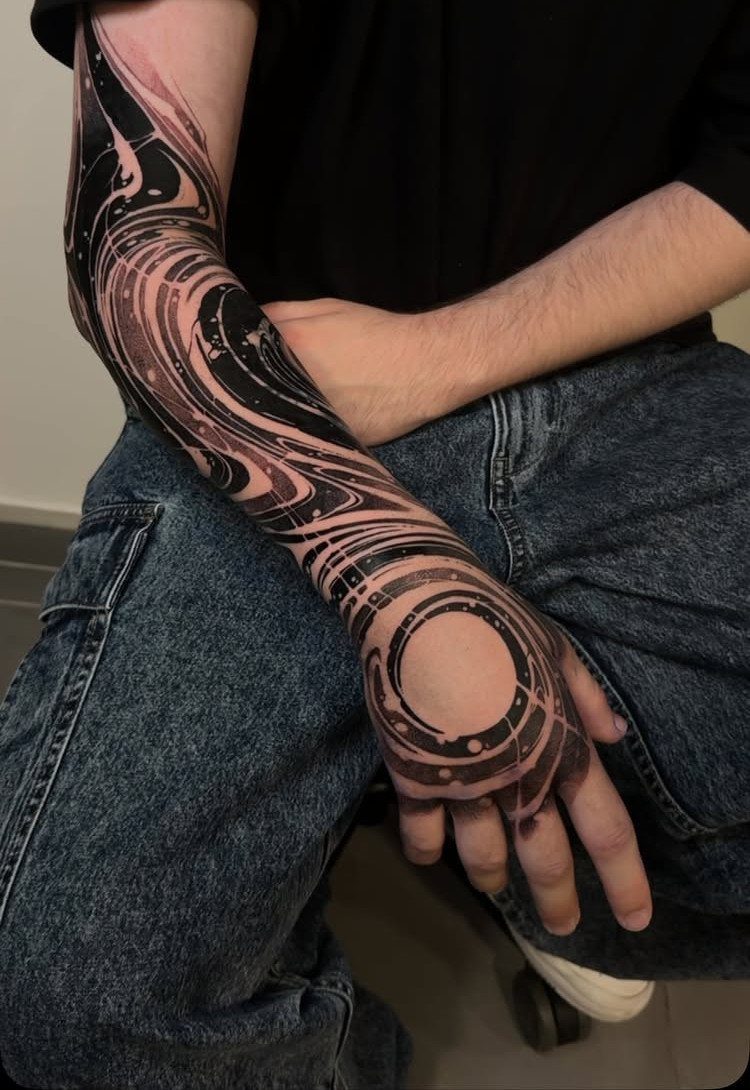
Abstract sleeves don’t follow a recognizable subject, so the design is about shapes, flow, and contrast instead of symbolism. Coverage over the hand means the design stays visible in short sleeves and at work.
This style gives the artist more freedom to adapt the design to your arm’s shape, and there’s no reference image to match. Black and grey abstract work reads clearly and ages well because the forms are simple.
Hand tattoos fade faster than forearm ink because the skin is thinner and gets more sun exposure.
16. Samurai Warrior Sleeve
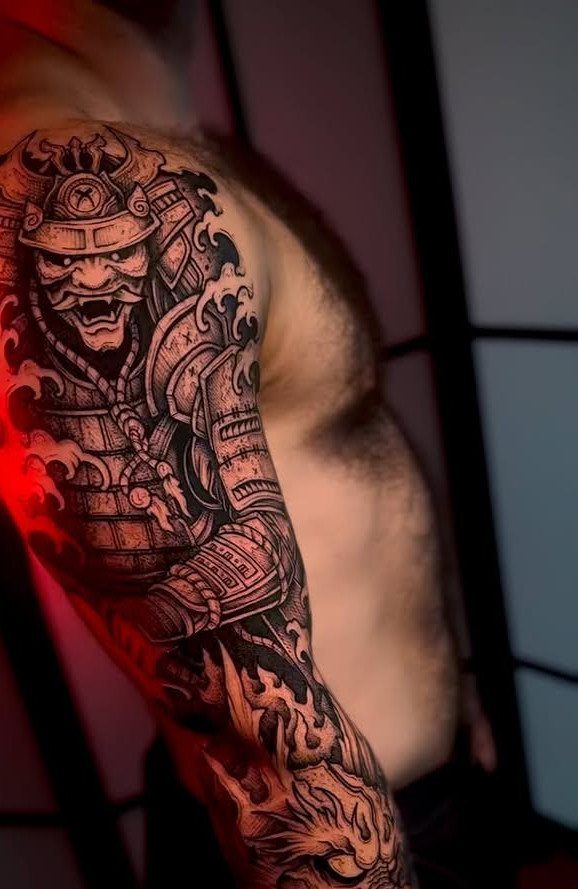
Samurai warriors in traditional armor give a sleeve a historical weight, and the waves and clouds around the figure are classic elements in Japanese tattooing.
This style pairs well with other Japanese motifs if you want to expand the sleeve later. Upper arm placement fits the vertical composition of a standing warrior, and the muscle underneath helps the figure look dimensional.
Sessions are longer for pieces this detailed, and healing is straightforward if you keep the area clean and out of direct sun.
17. Japanese Oni Mask Sleeve
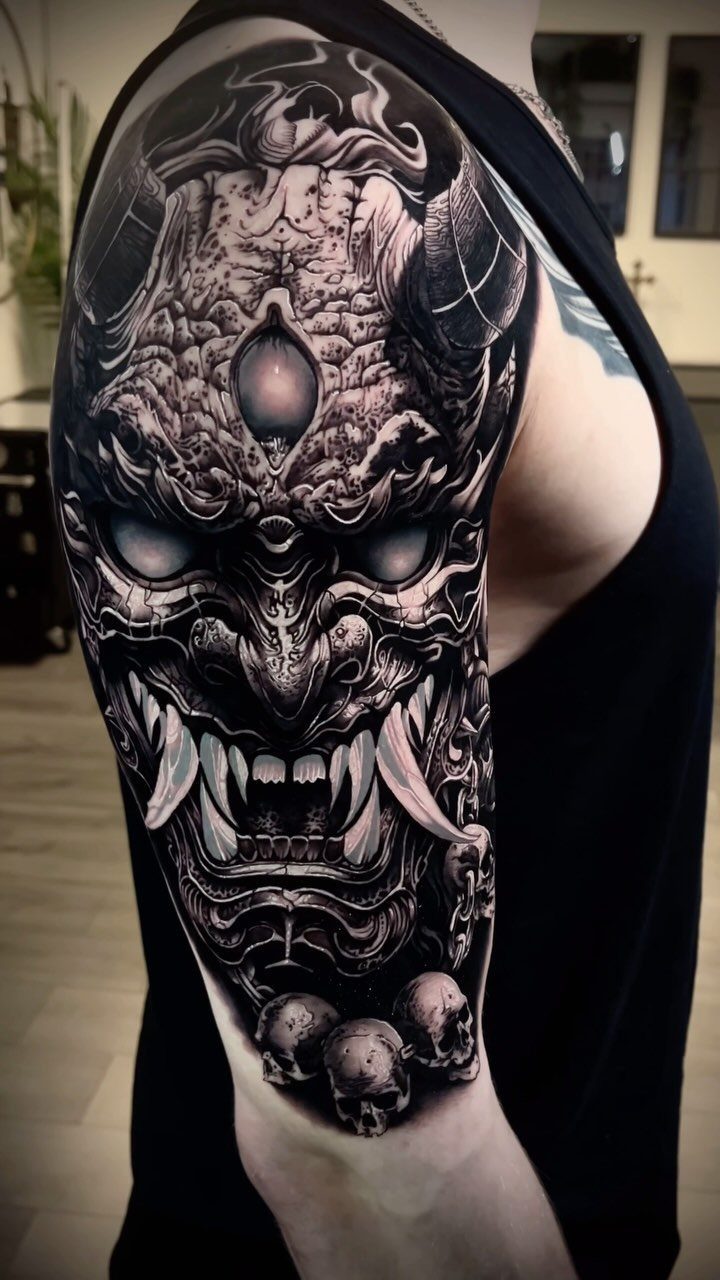
Oni masks in Japanese tattooing represent demons or spirits, and the horned version here combines with skulls for a darker aesthetic.
The black and grey shading gives the mask depth, and the clouds soften the edges without losing the intensity of the expression.
Upper arm placement works well for this composition because the mask sits front and center when your arm is at rest. If you want to expand it later, traditional elements like waves or fire fit naturally around an Oni.
Cost Considerations for Sleeve Tattoos
Full sleeve tattoos cost anywhere from $500 to over $10,000 depending on the artist and where you live.
High-profile artists working in New York or LA will hit the ceiling on hourly rates, while a skilled tattooist in a smaller market typically charges half that.
A flat rate for the entire sleeve is how some artists prefer to work. Others charge by the hour, which means the final cost depends on how fast they work and how still you can sit.
Color work takes longer than black and grey, so expect at least 2 full days of sitting if you go that route.
If the artist you want isn’t local, factor in travel costs. Set your budget before you start looking at portfolios, and be honest about what you can spend across multiple sessions.
Pain and Time Commitment
The real source of pain in a sleeve is how many hours you spend in the chair, not the sensitivity of your arm.
Each session runs several hours, and you’ll need to sit for at least a few of them to finish the piece. Plan for this commitment before you book the first appointment.
Pain levels shift depending on where the needle hits. Softer areas like the inner arm hurt more than the outer forearm, but the length of each session matters more than the spot.
If you’re getting a sleeve in summer, apply sunscreen to the healed ink when you’re outside. Color tattoos and fresh work both need protection from direct sun.
Design Considerations
Faces and portraits sit poorly right below or above the elbow because that joint moves constantly and distorts the image. Plan the layout so your main motifs land on stable areas like the upper arm or forearm.
Avoid placing key details over the elbow itself. The skin stretches and folds there, which can break up the design as it heals and make fine lines look uneven.
Clothing creates friction on the tattoo while it heals, so think about what you wear regularly. If you favor long sleeves or tight fabrics, that pressure can slow healing or pull ink during the first few weeks.
Frequently Asked Questions
How much does a sleeve tattoo for a man typically cost?
Expect to spend anywhere from $500 to past $10,000 for a full sleeve, depending on who’s doing the work and where you’re getting it done.
City artists cost more than small-town shops, and color takes longer to pack in than black and grey.
You’ll pay either a flat project rate or by the hour, so final cost turns on session count and how quickly your artist works.
Are sleeve tattoos attractive on men?
Sleeve tattoos show a commitment to personal style and tell a story through ink.
Many men choose them to display what matters most to them, whether that’s Japanese mythology, nature imagery, or abstract patterns. The look reads as intentional and finished rather than scattered, which is part of the appeal.
How long does a sleeve tattoo last?
A sleeve tattoo is permanent, but how well it holds up depends on the style and how you care for it.
Watercolor fades quicker than traditional because the pigment sits lighter and there’s no bold line to hold it, so plan on touch-ups every few years.
Black and grey sleeves age better because they rely on contrast rather than color saturation, and applying sunscreen to healed ink when you’re outside keeps it from fading in direct sun.





