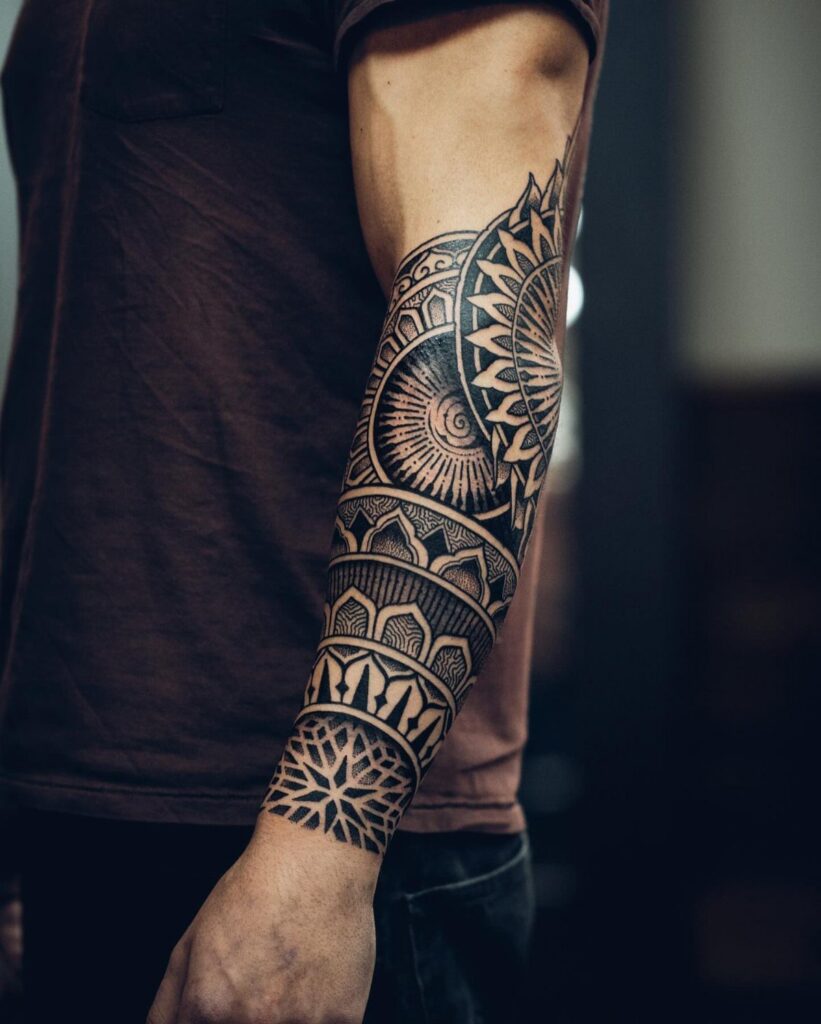
Mandala tattoos for men range from a simple wrist piece to a full back or sleeve that takes multiple sessions, and the list below covers placement, pain and how long each style takes.
The placement you choose decides how much pain you’ll sit through and how often people see it: thigh and chest mandalas stay covered under most clothing, while hand and neck versions put the design in every conversation.
A mandala’s radial symmetry works best when the body part gives enough flat surface to keep the pattern from warping, which is why the back, chest and sleeve hold detail better than spots that curve sharply.
1. Large Mandala Back Tattoo
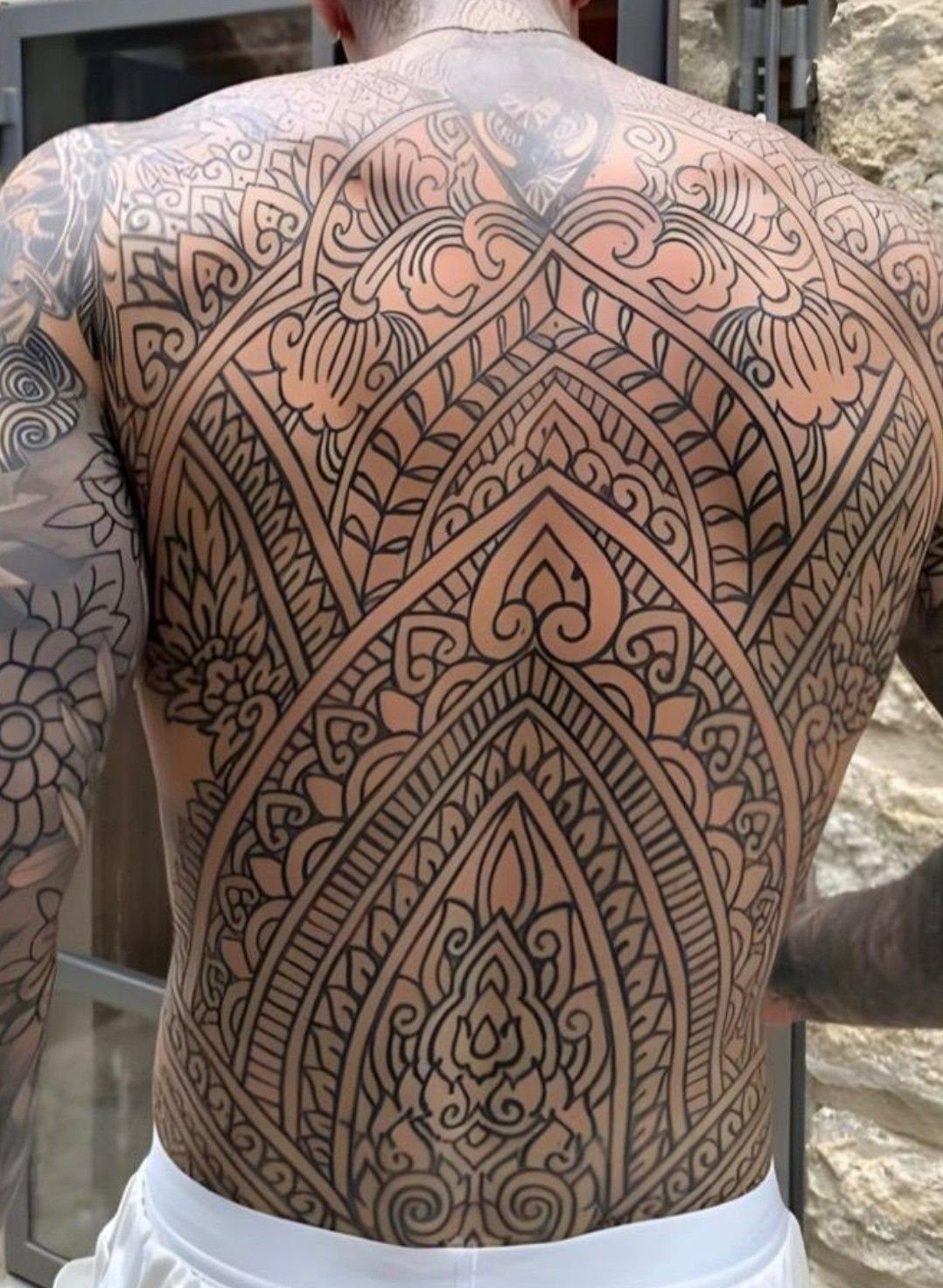
A full-back mandala takes the body’s largest single canvas and fills it completely.
The symmetry works with the spine as a natural center line, and the circular pattern can expand all the way to the shoulders and waistline without looking cramped.
This is a commitment piece.
You’re looking at multiple sessions, and a price that scales with the detail density. Healing takes longer because the back flexes constantly.
If you want a mandala that reads from across a room and gives an artist space to pack in fine linework, this is the version that delivers.
2. Simple Mandala Tattoo
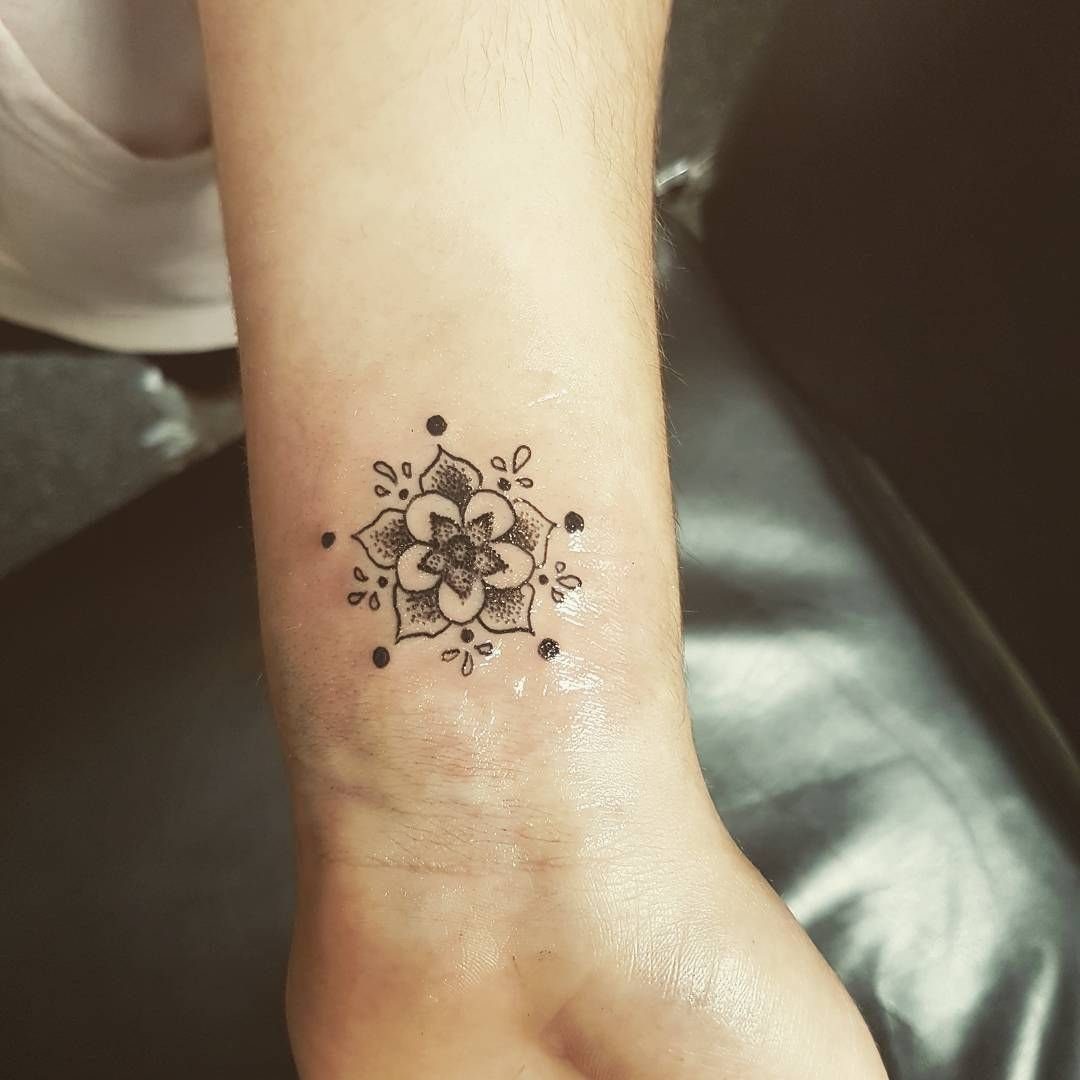
A wrist mandala strips the design down to its core geometry. No shading, no fill, just the essential circle and its radial divisions in clean black line.
It fits where larger designs can’t. The wrist keeps the tattoo visible without demanding a bold statement, and the small scale means a single session and a manageable price in most cities.
Pain is moderate.
The wrist has less padding than the forearm, but the piece is small enough that you’re done quickly. Healing is fast.
3. Mandala Sleeve Tattoo
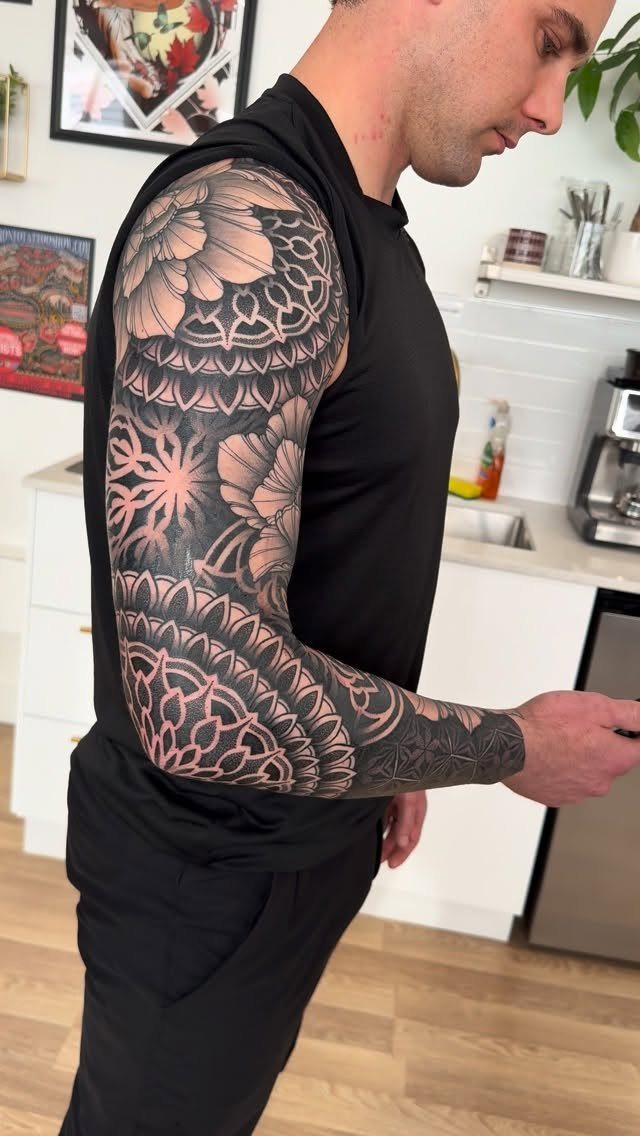
A mandala sleeve wraps the arm from shoulder to wrist in repeating circular patterns. Some versions stack multiple mandalas vertically, others use one large design that spirals or flows down the limb.
Black and grey holds detail better than color over this much skin, and dotwork shading keeps the pattern from looking too solid. You’re committing to several sessions that add up quickly, sometimes more if the artist works slowly.
The forearm section gets the most visibility. If you wear short sleeves regularly, that’s where the design should read clearest.
4. Mandala Neck Tattoo
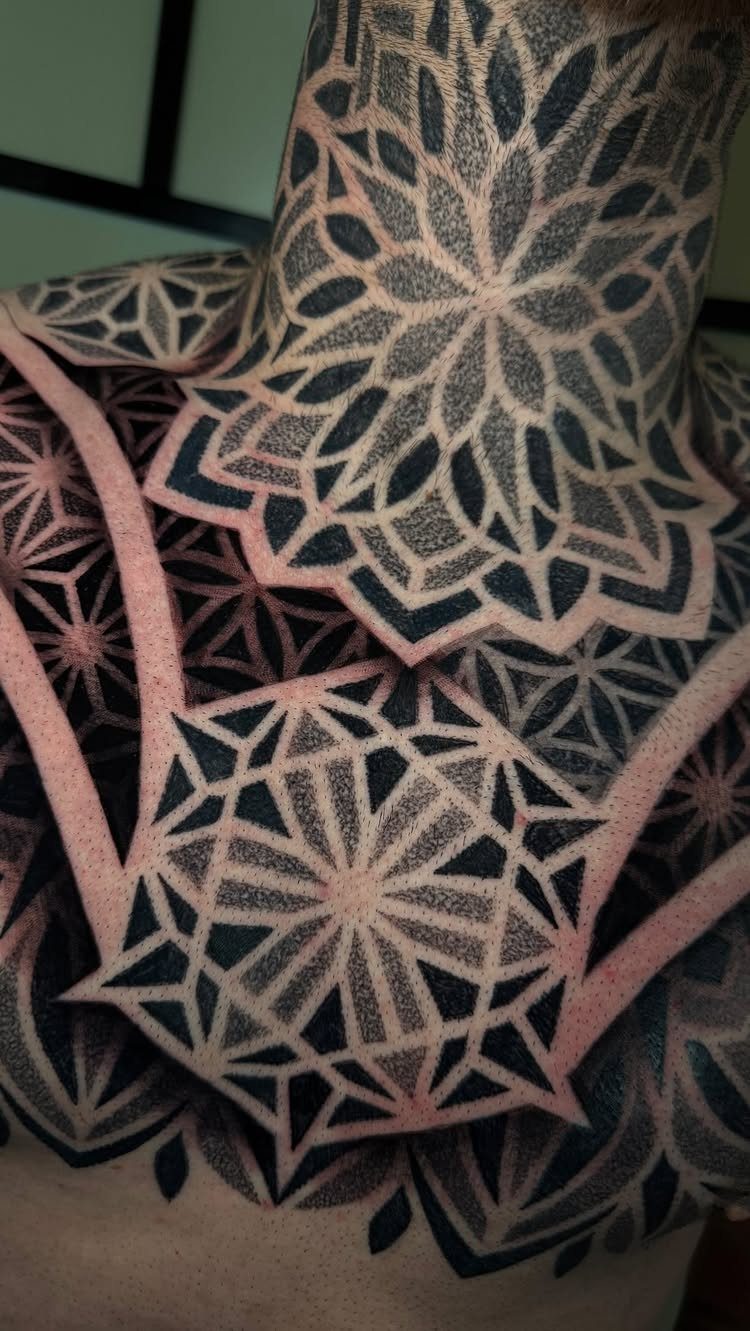
Neck mandalas sit where every conversation and every mirror puts them front and center. The design usually wraps the throat or climbs from the collarbone toward the jawline, following the natural curve of the neck.
Pain is high.
The neck has thin skin, sits close to bone, and you’ll feel the vibration through your skull. Sessions are shorter because most people need breaks.
This is not a discreet tattoo.
It’s visible in every professional setting, and removal or cover-up options are limited. If you’re fine with that, the placement gives a mandala instant visual weight.
5. Geometric Mandala Tattoo
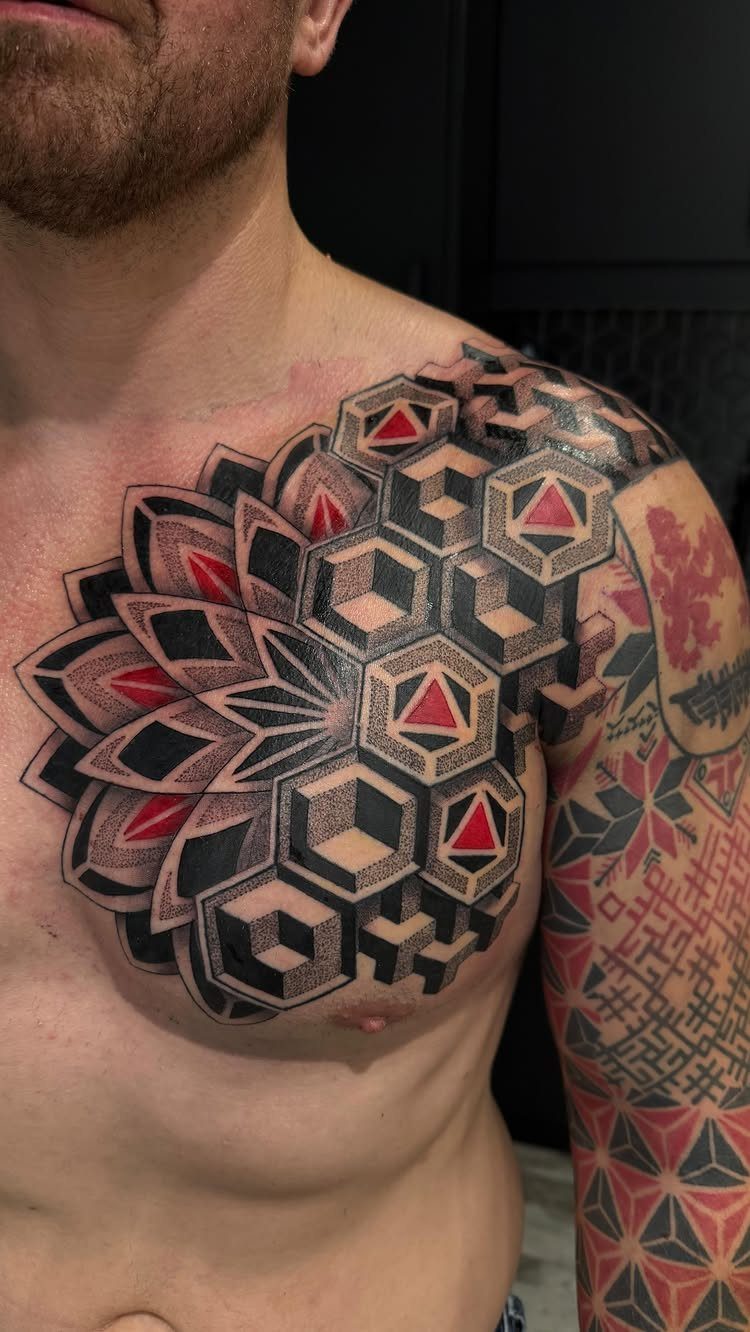
Geometric mandalas replace the traditional petal shapes with hard-edged forms: triangles, hexagons, cubes that stack or tessellate outward. The version here uses 3D shading to make the cubes look like they’re floating off the skin.
Red ink adds contrast without softening the design. Most geometric mandalas stay black only, but a single accent color can mark the center or highlight one layer of the pattern.
The chest gives enough flat surface for the shapes to align properly. Curved placements like the shoulder or ribs will distort straight lines unless the artist adjusts the stencil carefully.
6. Floral Mandala Tattoo
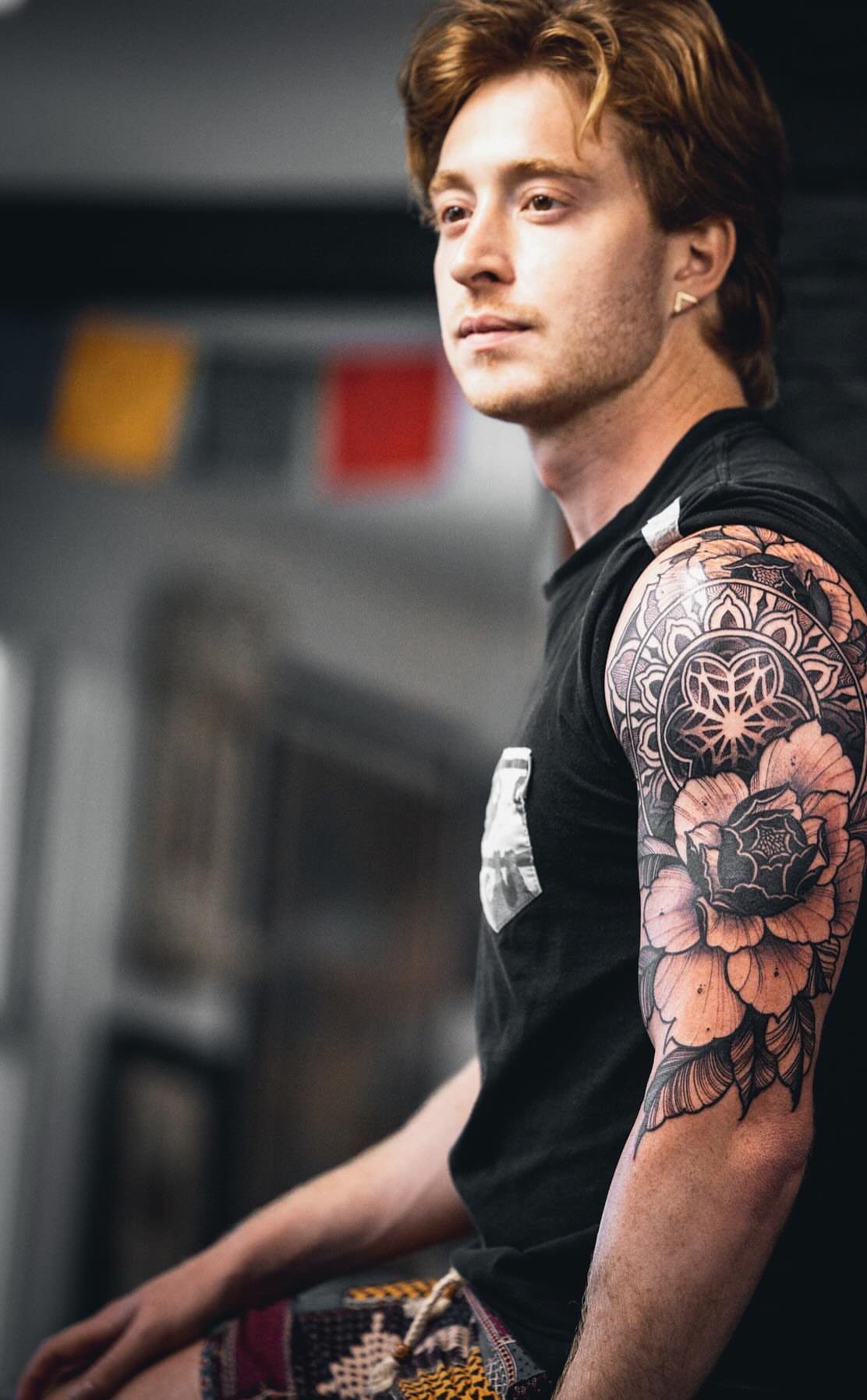
Floral mandalas trade strict geometry for organic shapes.
Petals, leaves and stems fill the circular structure, and the flower at the center anchors the whole design. The peony here softens the mandala without losing its radial symmetry.
This version suits men who want the mandala format but prefer something less architectural. The botanical detail gives an artist room to add shading and texture, and black-and-grey work keeps it masculine.
Upper arm placement offers good visibility and moderate pain. The muscle cushions the needle better than bonier spots, and you can cover it with a sleeve when needed.
7. Mandala Hand Tattoo
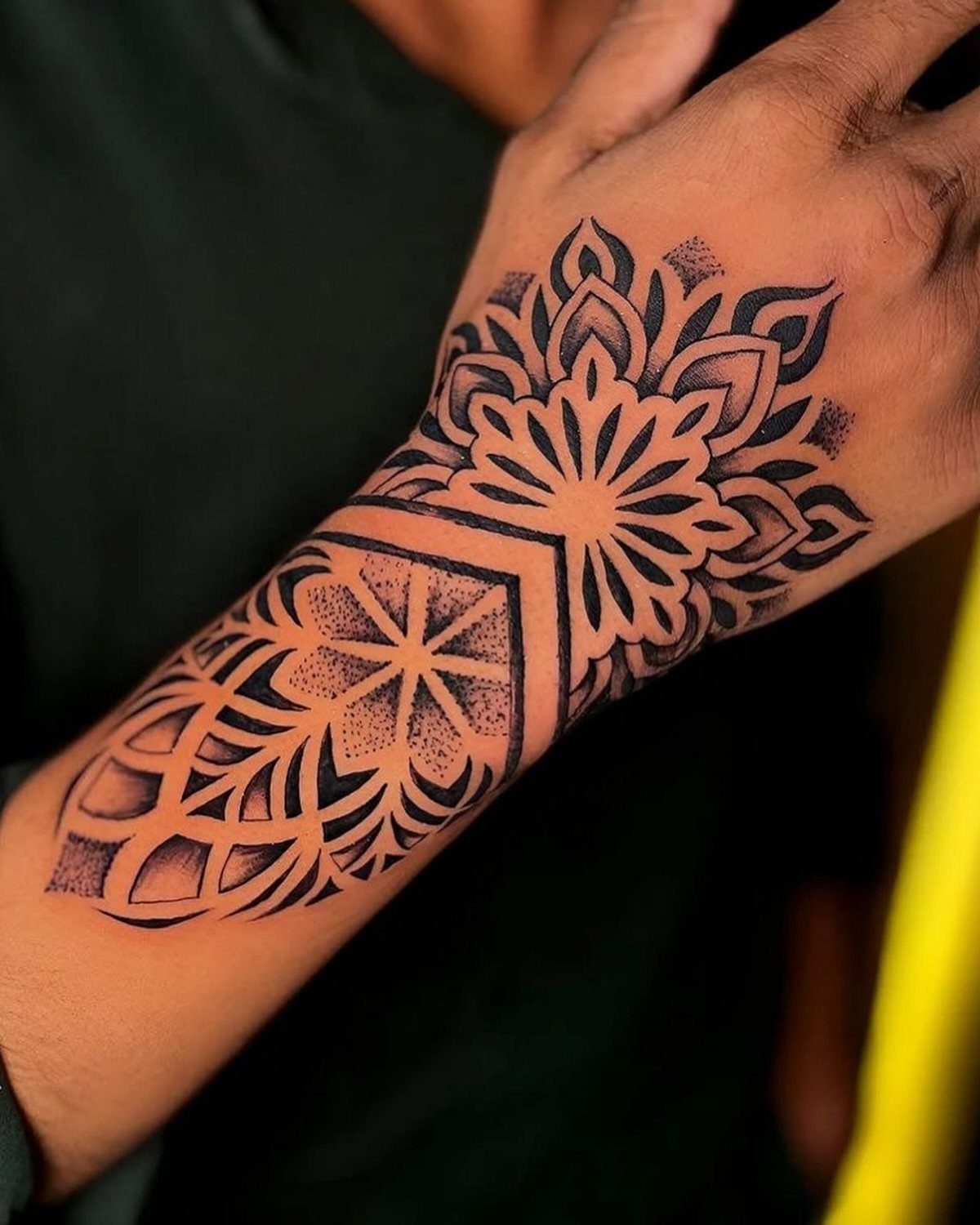
Hand mandalas sit where gloves and long sleeves are the only way to hide them. That placement means bone sits close to skin, so expect sharper pain than you’d get on fleshier spots.
Sessions are short because the skin is thin and most people tap out after an hour. Healing takes longer than most placements because hands flex constantly and pick up more dirt.
If you work in a field where visible tattoos close doors, this one stays open. Otherwise it’s a bold move that reads immediately.
8. Mandala Chest Tattoo
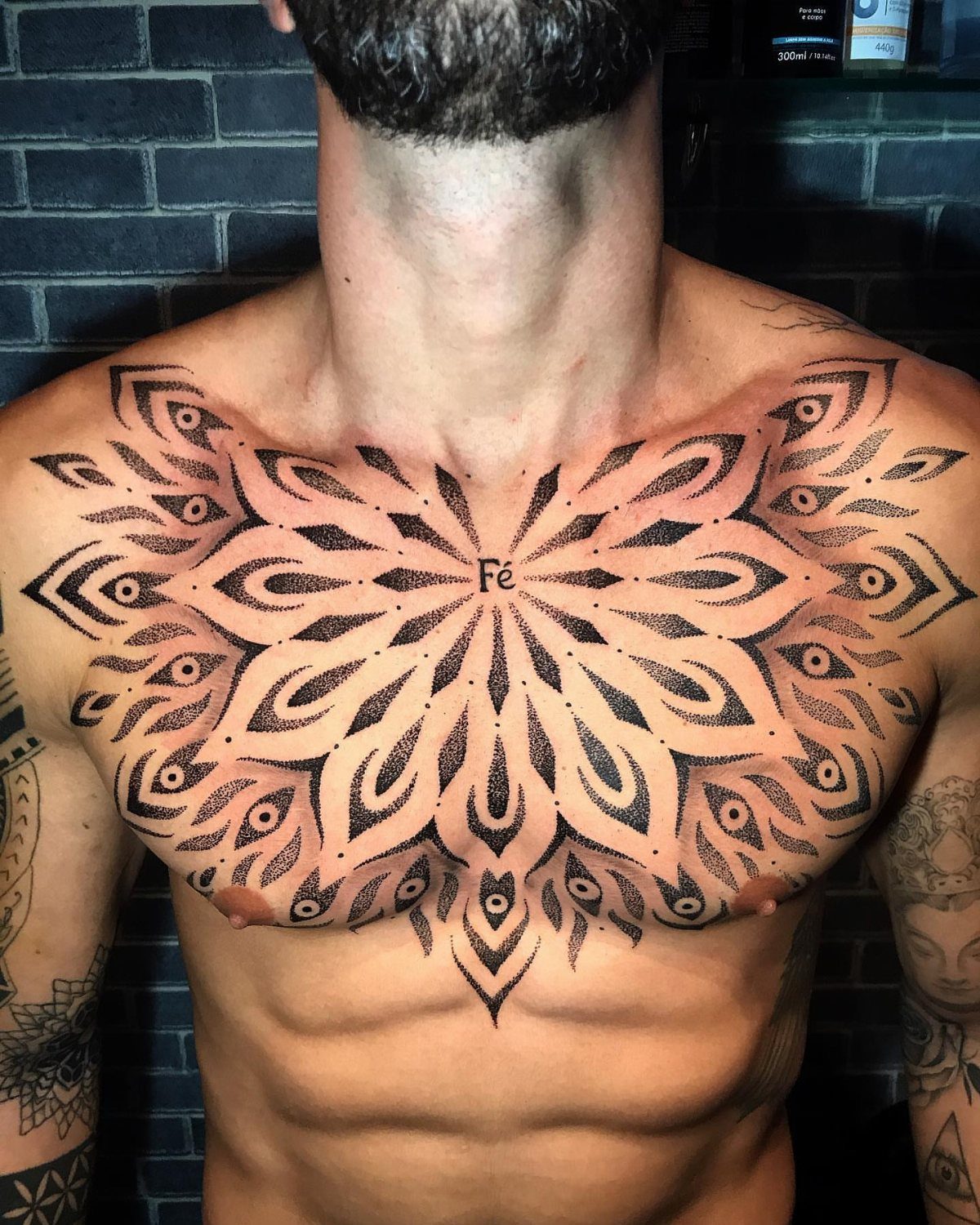
The chest centers a mandala on the sternum or spreads it wide across both pecs. The flat surface keeps symmetry intact, and the heart sits directly behind the design, which gives it symbolic weight for men who want that layer.
Pain varies.
The sternum is sharp and bony, the pecs cushion better. Larger designs that cover both areas mean longer sessions and more money.
This placement stays covered in most shirts. You control when it’s visible, which makes it easier to live with in mixed company.
9. Mandala Thigh Tattoo
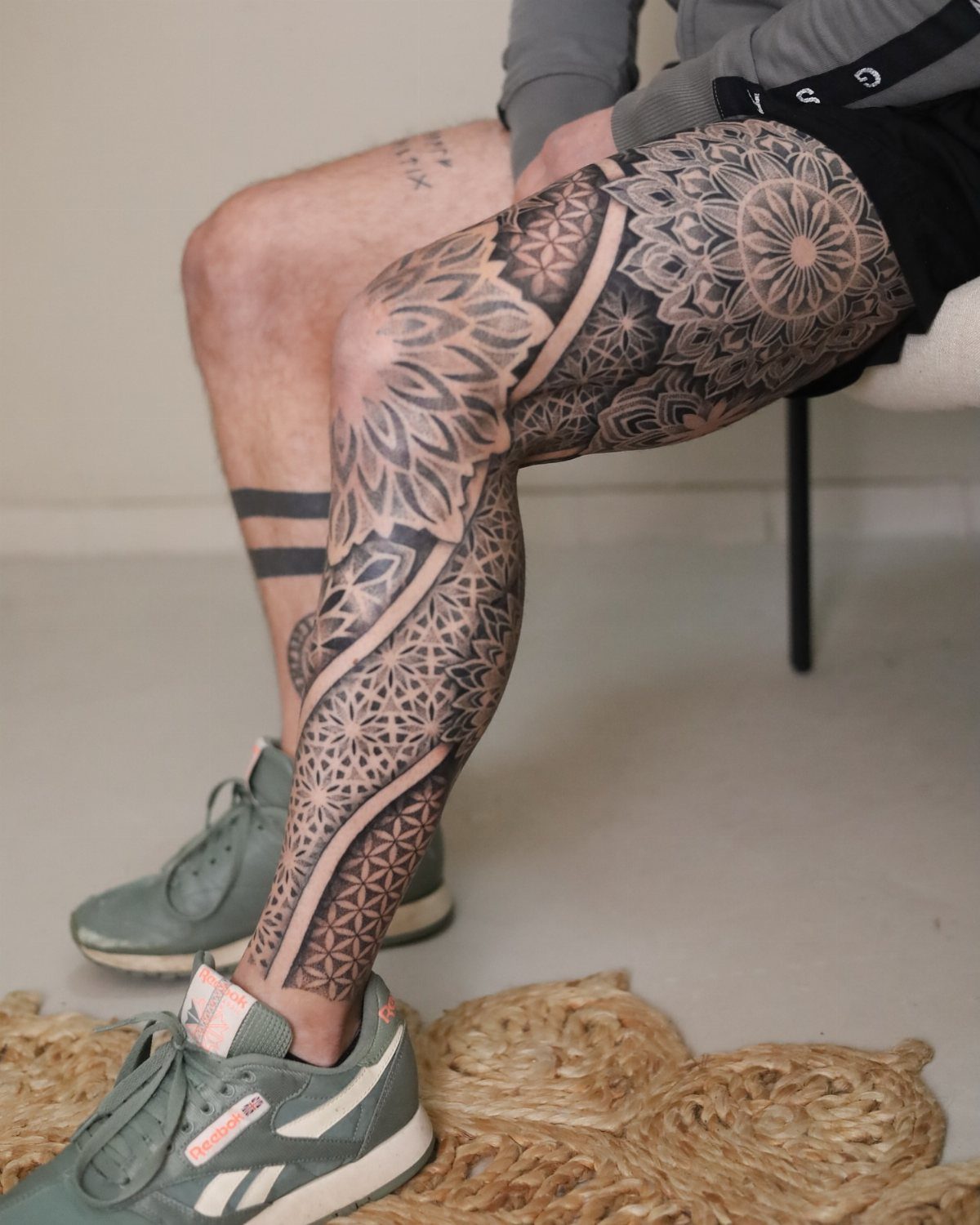
The thigh gives a mandala room to expand without competing for space with other tattoos. The muscle underneath cushions the needle well, and pain stays moderate even across a multi-hour session.
Pain here is mild, and aftercare stays straightforward since fabric doesn’t rub constantly. The skin is thick, motion is limited during recovery, and clothing keeps it protected without rubbing constantly.
Most men choose the outer or front thigh. Shorts show it off; long pants hide it completely.
Mandala Tattoo Meaning
Mandala is a Sanskrit term that means circle. In Buddhism and Hinduism, it stands for the universe: a sacred geometry connecting the individual to a larger cosmic structure.
Radial symmetry defines the mandala in tattoo form.
The design radiates outward from a center point in repeating layers, pulling the eye inward and outward at once. That structure creates both stillness and a sense of infinite expansion.
Men most often choose mandalas to mark spiritual growth, balance between opposing forces, or a completed chapter.
The cycle of transformation is another common thread. Some want the meditative quality the pattern carries, a visual anchor that holds focus.
The meaning shifts with the design you choose and where you place it. A mandala’s symbolism remains personal.
Tattoo Pain Levels
Bone and thin skin make the needle feel sharper. That difference decides how much a mandala session will test you.
The thigh, outer arm, and chest away from the sternum sit over muscle.
Pain stays moderate even across long sessions, and most men finish without needing breaks. The back has good coverage except near the spine.
The hand, neck, ribs, and sternum sit close to bone with little padding. Pain is high, sessions run shorter, and you’ll feel the vibration through surrounding bone.
Placement decides how long you’ll sit and how much the process asks of you.
Tattoo Time Commitment
Mandala tattoos demand precision.
Radial symmetry has to stay consistent across every layer, and dense detail slows the process down. An artist working methodically will take longer than one who rushes, and rushing shows.
A simple mandala on the wrist or ankle usually finishes in a single session.
Medium complexity designs on the forearm, upper arm, or thigh run 6–12 hours and usually split across 2 or 3 appointments. A large back or chest mandala can reach 20–40 hours or more, spread over several months.
Once your artist sees the design and knows where it’s going, they can tell you how long it will take. Expect the number to climb if you add shading, dotwork, or multiple colors.
Mandala tattoos are among the most time-intensive designs in tattooing — the geometric precision required for consistent radial symmetry and the density of detail in complex mandala compositions demand unhurried, methodical execution. A simple mandala may be completed in 3–5 hours.





