Most hands rate 4–6 out of 10 on pain scales when ink stays on the back, though knuckles and fingers climb to 6–8 where bone meets skin with almost no cushion between.
If your job needs clean hands or you want to test how your skin holds ink before going visible, pick a different spot first.
Hands wash more than anywhere else, catch sun daily, and rub against everything you touch, so thin lines blur faster here than on your ribs or shoulder.
1. Black and Grey Realism Hand Tattoo
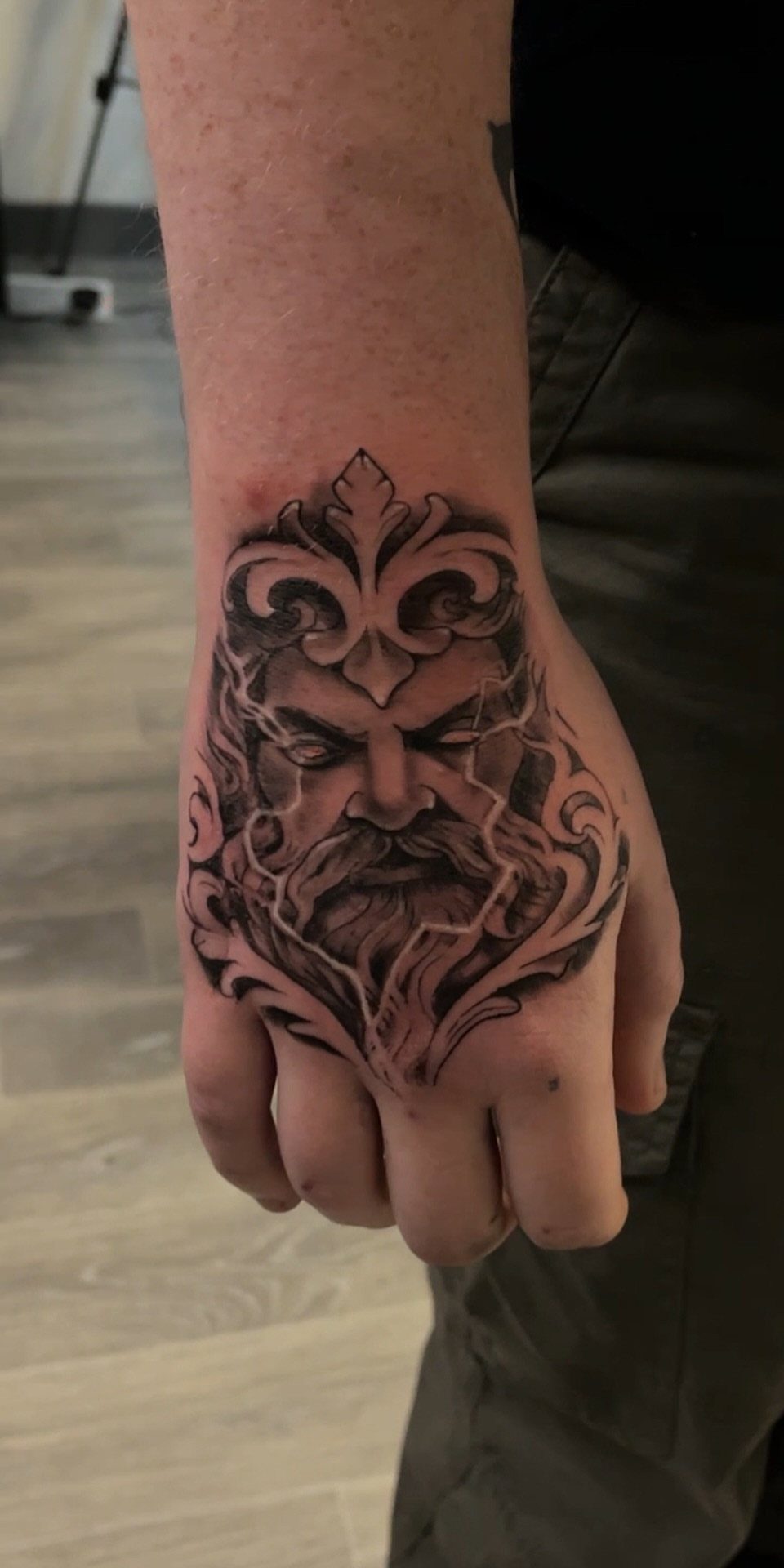
A portrait or figure in black and grey realism pulls attention instantly; hands are high-visibility, and a bearded face like this makes a statement every time the hand moves.
The style demands an artist who knows how to render depth and shadow in tight quarters.
Fingers and the back of the hand carry a face or symbolic piece without crowding it. Sessions run longer than they would for simpler work, and healing means babying the flexing skin through constant movement.
2. Anchor Hand Tattoo
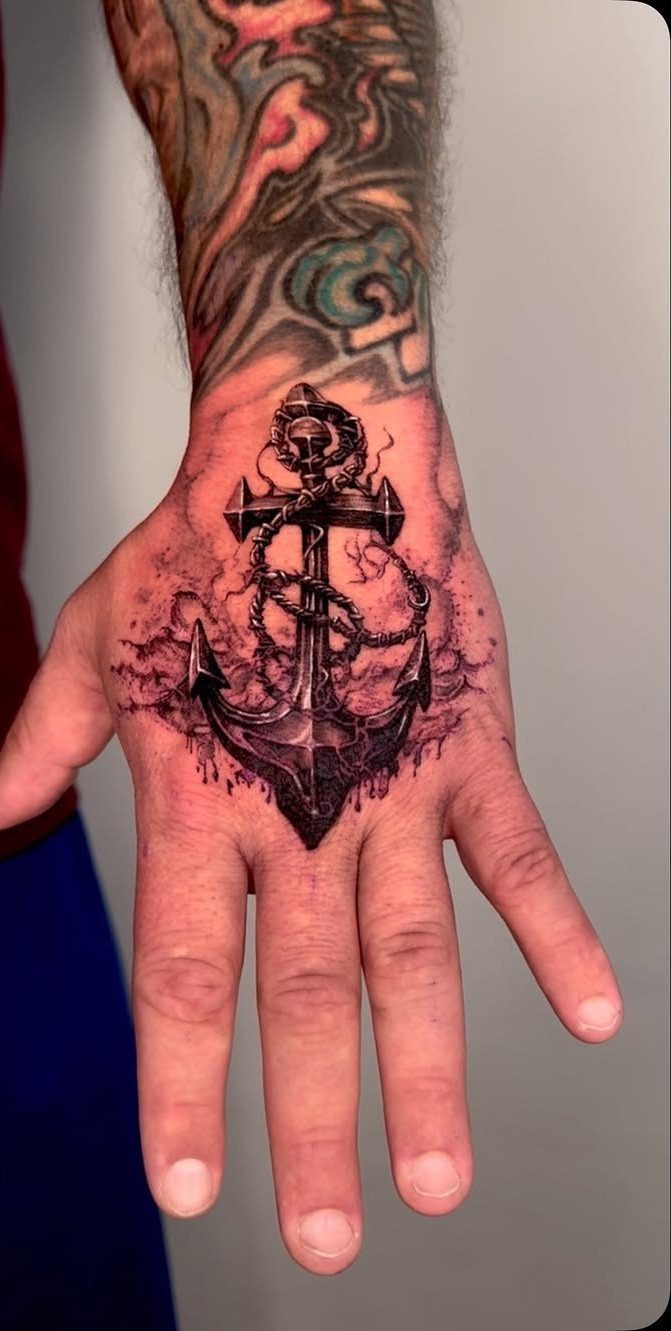
An anchor on the hand ties back to maritime tradition and reads clearly at a distance. Rope detail and smoke shading around the edges soften the hard lines of the anchor itself.
This one sits well from wrist to knuckles and holds up over time because the main shape stays bold.
Pain is manageable on the back of the hand; the thin skin over bones on the sides or knuckles is sharper. Keep it moisturized through healing, and plan for touch-ups if the shading fades unevenly.
3. Colorful Hand Tattoo
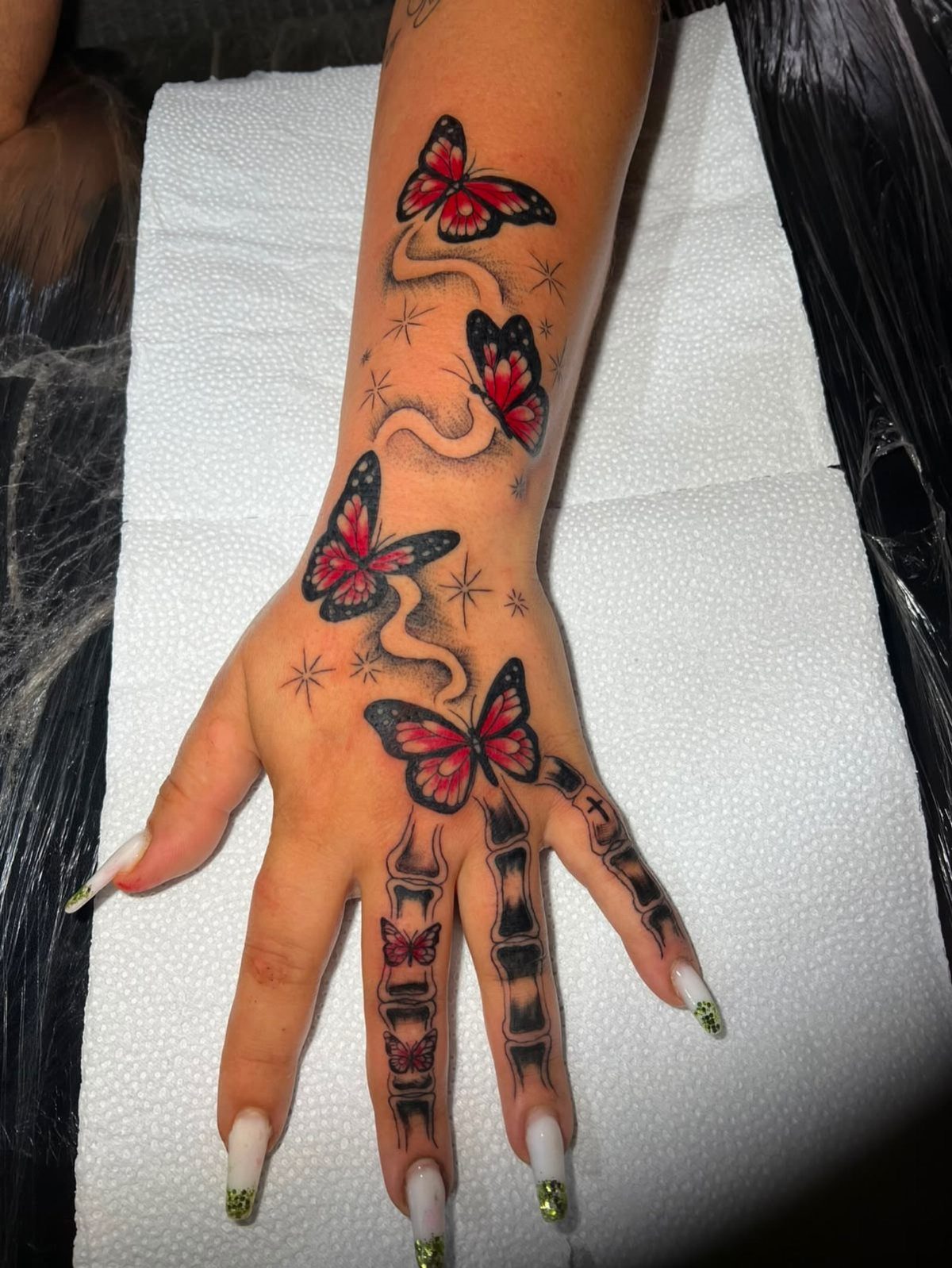
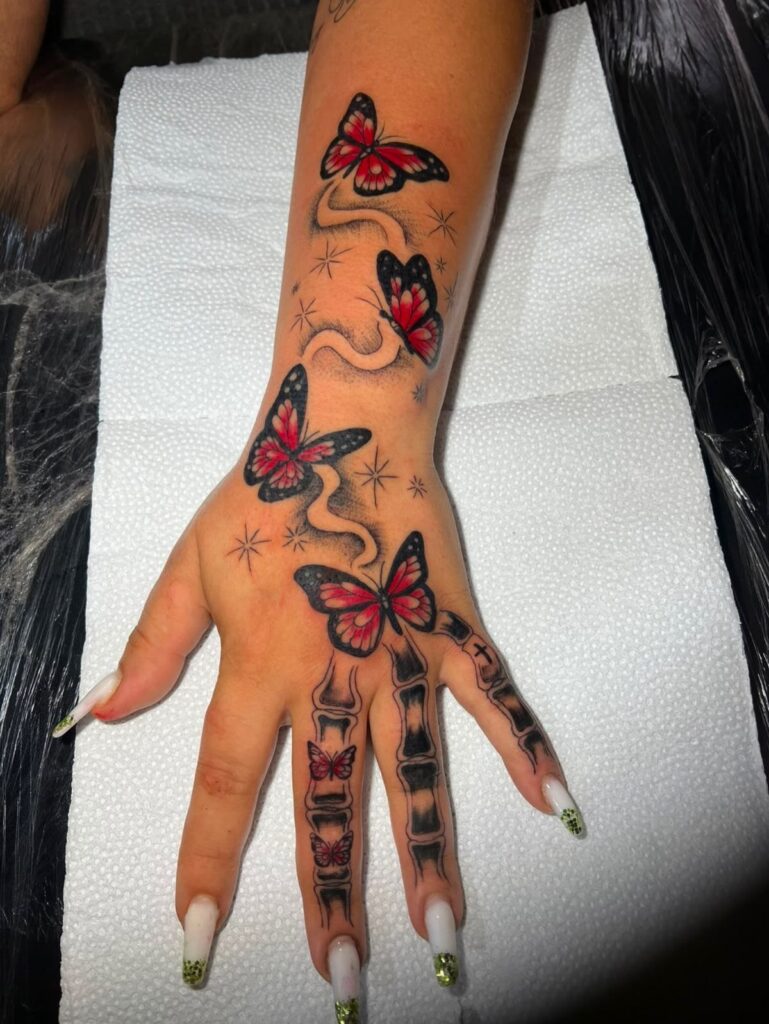
Red butterflies paired with skeletal finger bones mix life and death imagery in a way that feels personal rather than generic.
Color on hands is a gamble; red holds better than pastels, but even saturated ink fades faster here than on covered skin.
Red loses brightness over time and needs a touchup to stay saturated. The skeletal fingers extend the design naturally onto each digit.
4. Geometric Hand Tattoo
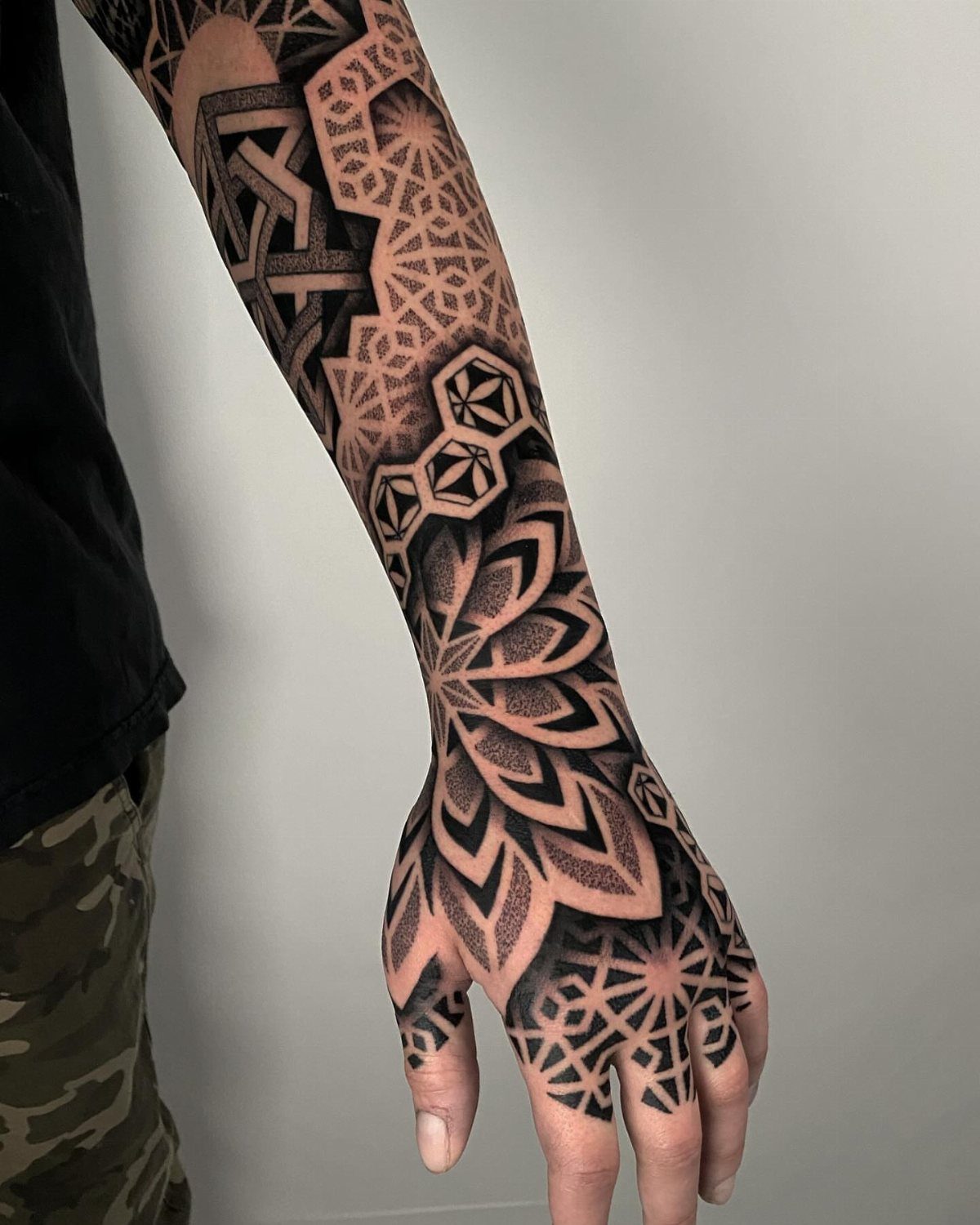
Lines, dots and symmetry turn the hand into a surface for pattern rather than image. Geometric work fits the hand’s natural angles and wraps around contours cleanly when the artist plans for movement.
Fine linework this precise needs a steady artist and solid aftercare. Hands lose ink more quickly than most spots, so book with someone whose line weight will last.
The back of the hand offers the flattest canvas; wrap designs over the sides only when you accept that the pattern will shift as the hand moves.
5. Ornamental Hand Tattoo
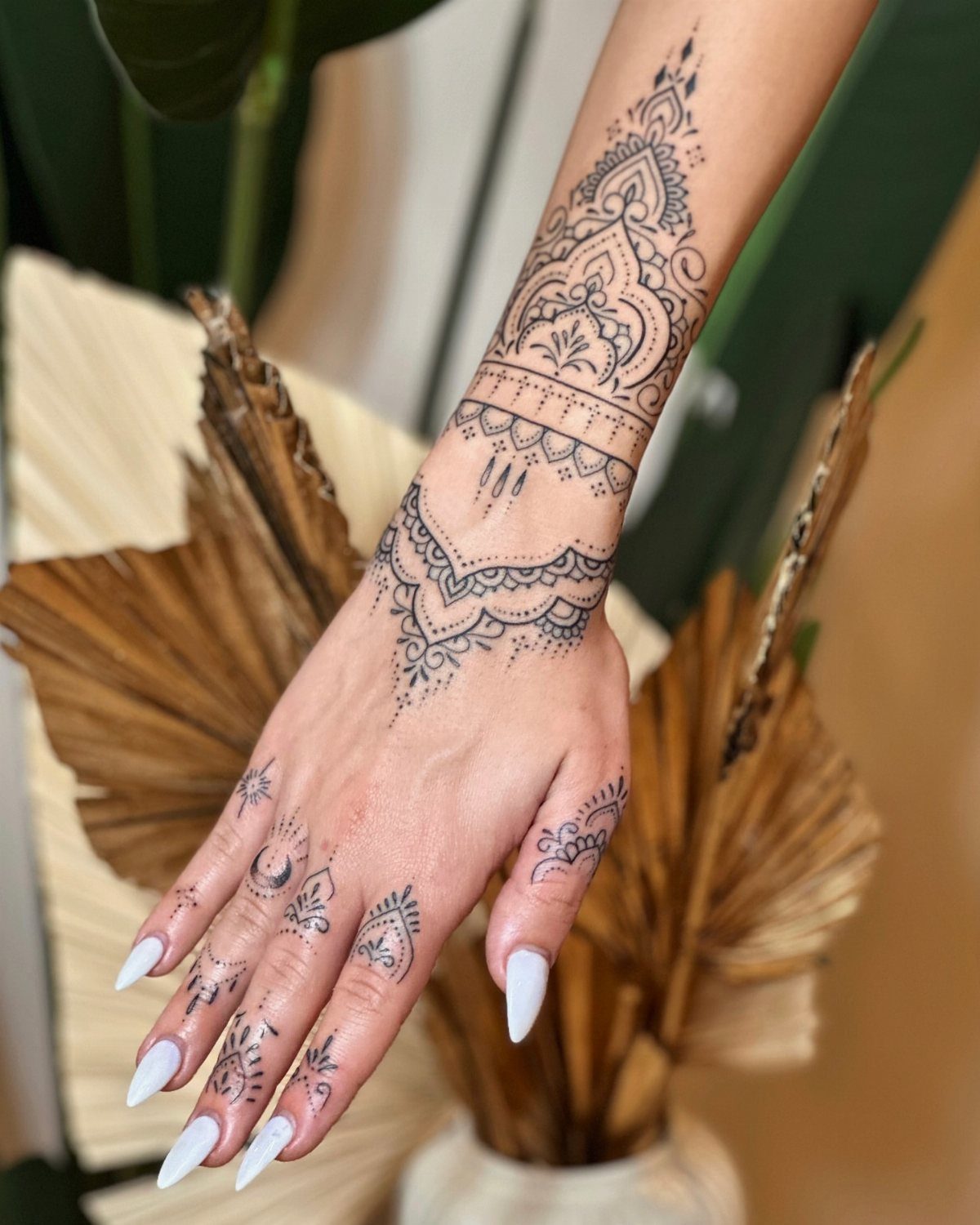
Lace, filigree and chain-like lines turn the hand into something adorned. This style mimics jewelry but sits permanent, which means the pattern needs to sit evenly across knuckles and bones that move.
Ornamental work reads best in black ink; fine lines stay crisp and the detail holds.
Artists who specialize in mandalas or henna-inspired work usually nail this style. Keep the lines thick enough to age well; ultra-fine detail blurs once hands start taking real wear.
6. Floral Hand Tattoo
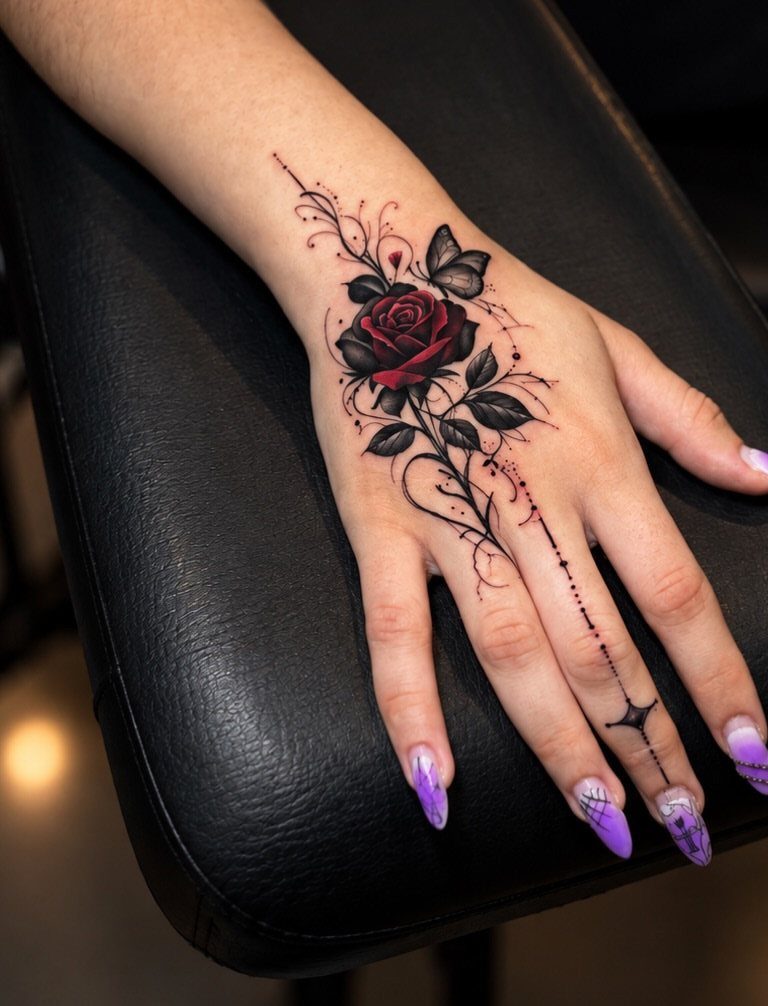
A rose on the hand feels classic for a reason: petals and leaves fit the contours naturally. Black leaves and swirls around a red bloom give the design depth and keep the main element from looking flat.
Roses scale well to hand size and hold up over time if the artist uses bold outlines. The back of the hand takes shading better than fingers, where color and detail fade fast.
7. Small Hand Tattoo Ideas
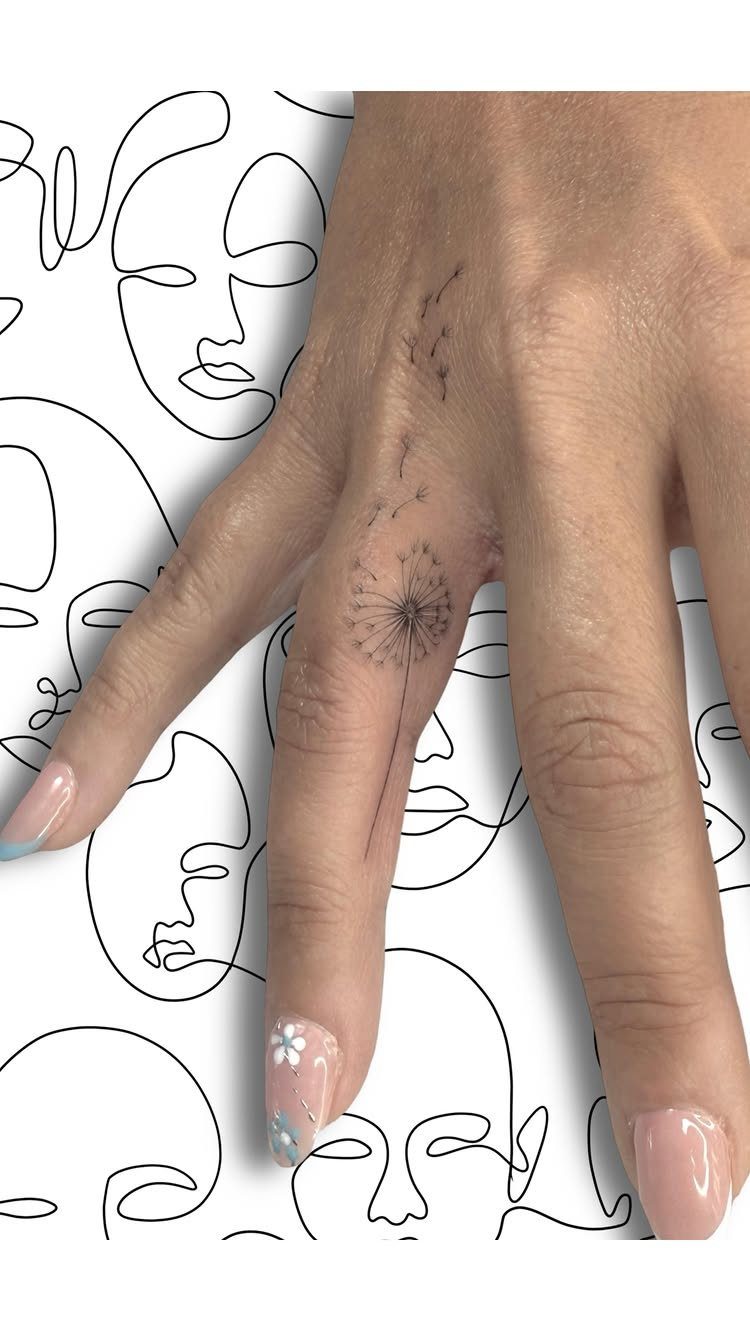
A dandelion or single-element design on a finger stays subtle but readable up close. Fingers take ink differently than flat skin; expect faster fading and repeat sessions to keep it sharp.
Small pieces work best in simple shapes with enough line weight to last.
Ultra-fine detail blurs quickly on fingers. Pain is sharp on the sides of fingers where bone sits close to the surface, less so on the top.
Placement on one finger keeps it contained. If you work with your hands constantly, expect wear.
8. Ring Finger Tattoo
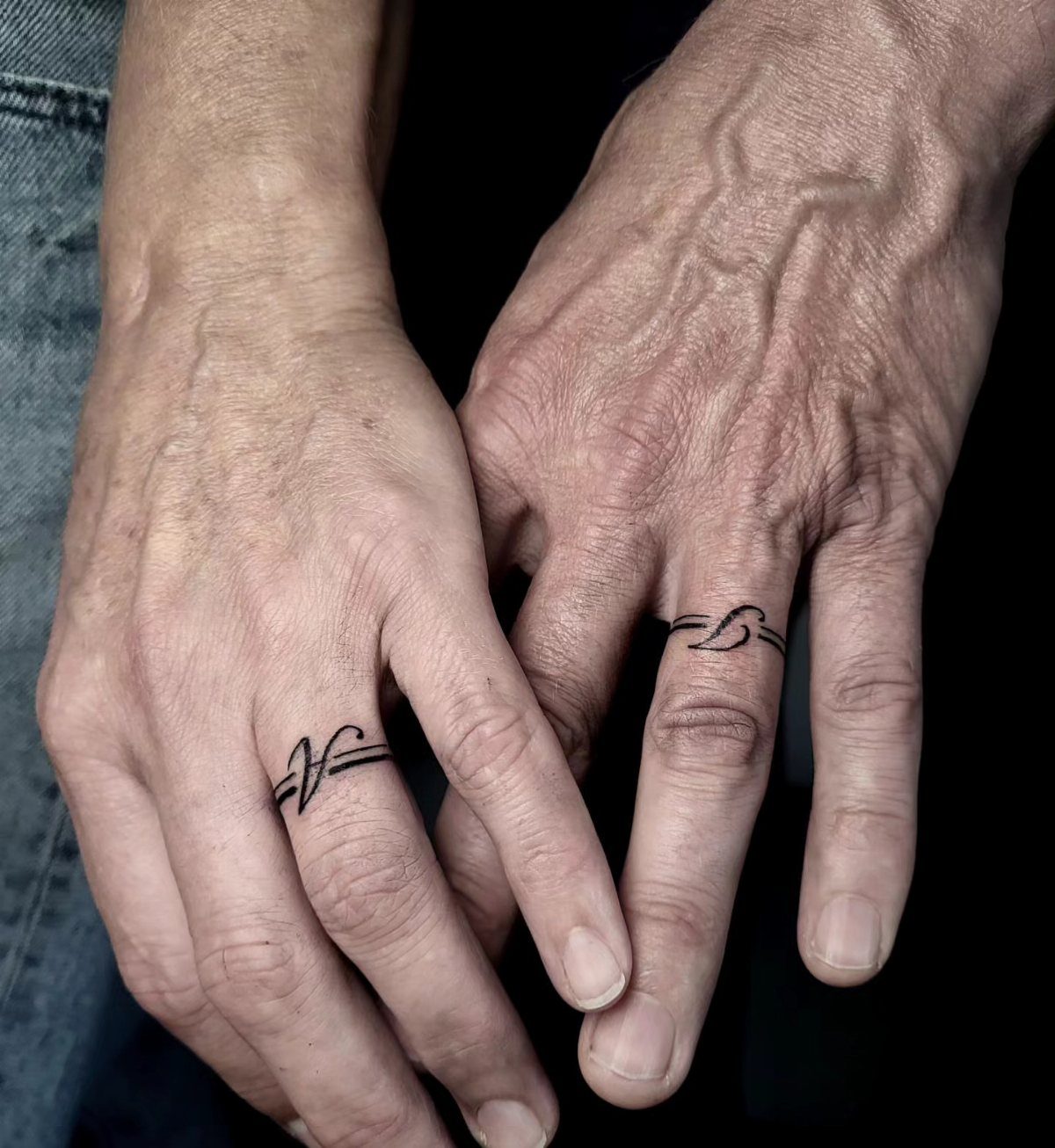
A band or initial on the ring finger replaces metal with ink. The design stays visible without the bulk of a ring, and it will not come off in water or catch on fabric.
Black bands hold up better than fine script because fingers move constantly and thin lines fade fast. Sessions are quick but the spot is bony, so pain is sharper than on the back of the hand.
Removal or coverup later is harder on fingers than on larger areas. Commit to the design before you sit down.
9. Knuckle Tattoos
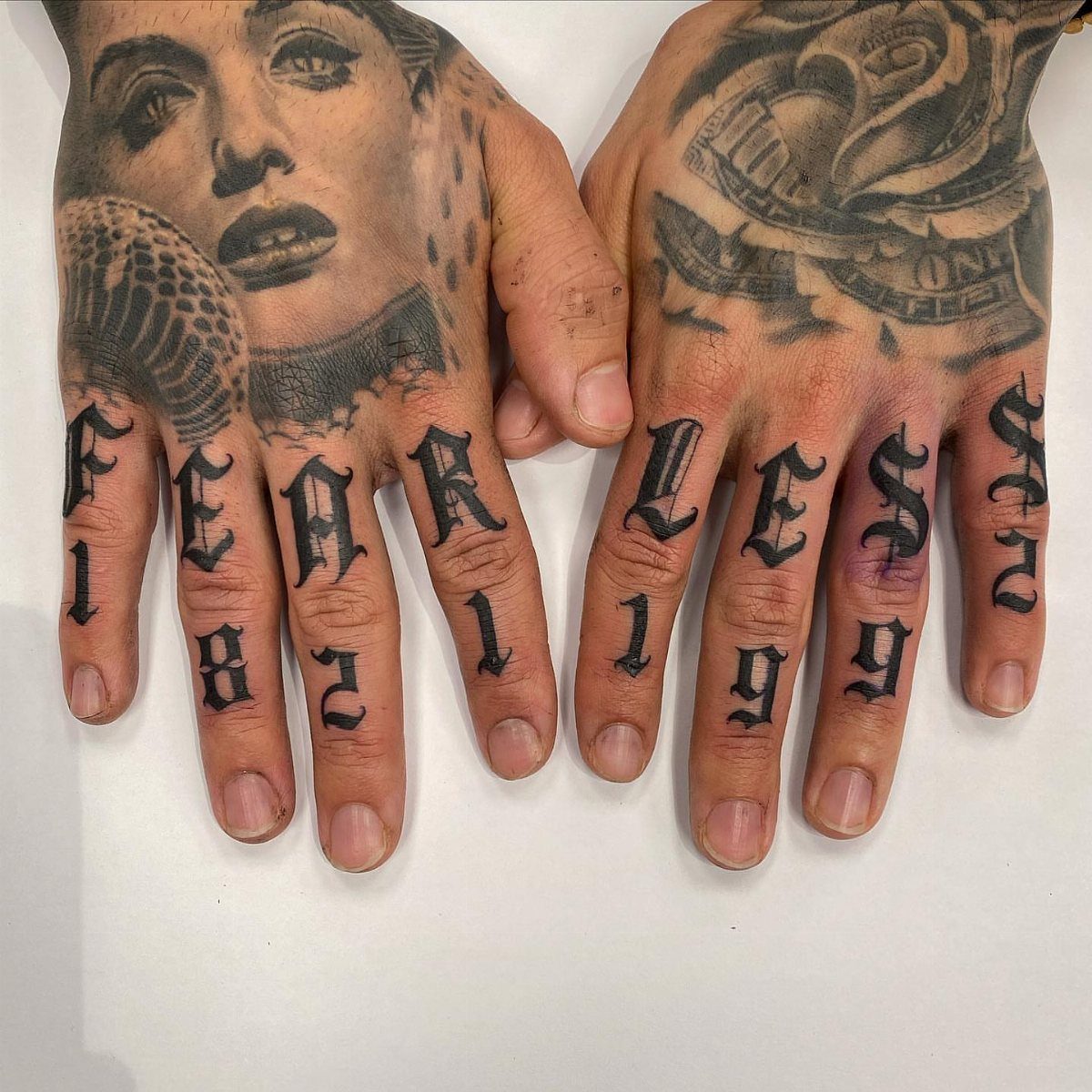
4 letters per hand spell a word or phrase across the knuckles. Gothic or bold sans-serif lettering stays legible at a distance and holds up as the skin ages.
Knuckles are among the most painful spots to tattoo because the needle hits bone with every pass.
Sessions are short but intense. Ink fades faster here than on the back of the hand, so expect touch-ups.
Choose a word that still makes sense if one hand is visible alone. Healing takes longer because knuckles flex constantly.
10. Script Hand Tattoo
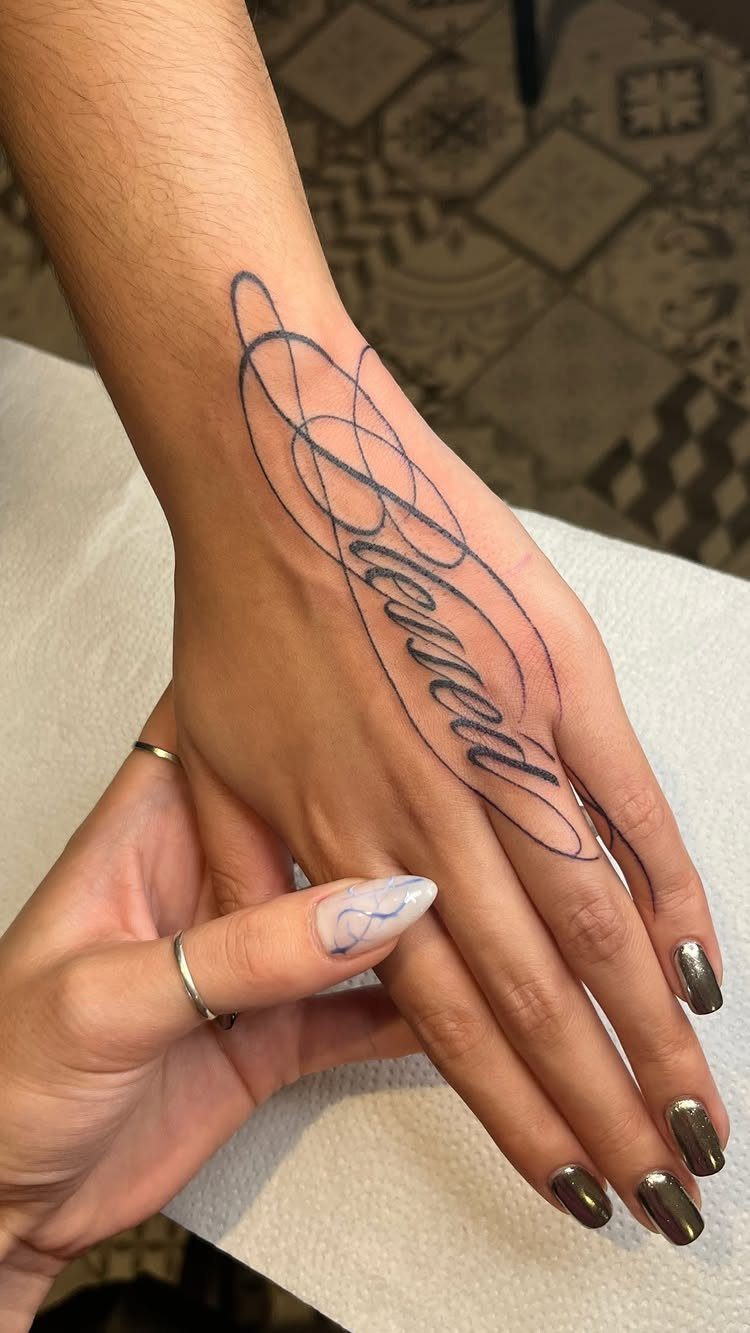
Script across the back of the hand gives a word or short phrase permanent visibility. Cursive flows naturally with the hand’s shape, but legibility depends on the font: swirling letters blur together as ink spreads over time.
Simpler script with clear spacing between letters ages better than ornate calligraphy. The back of the hand ranks lower on the pain scale, though shading near the knuckles stings more.
Keep the word short. Long phrases cramp the space and force the artist to shrink the lettering, which fades faster.
11. Animal Motifs Hand Tattoo
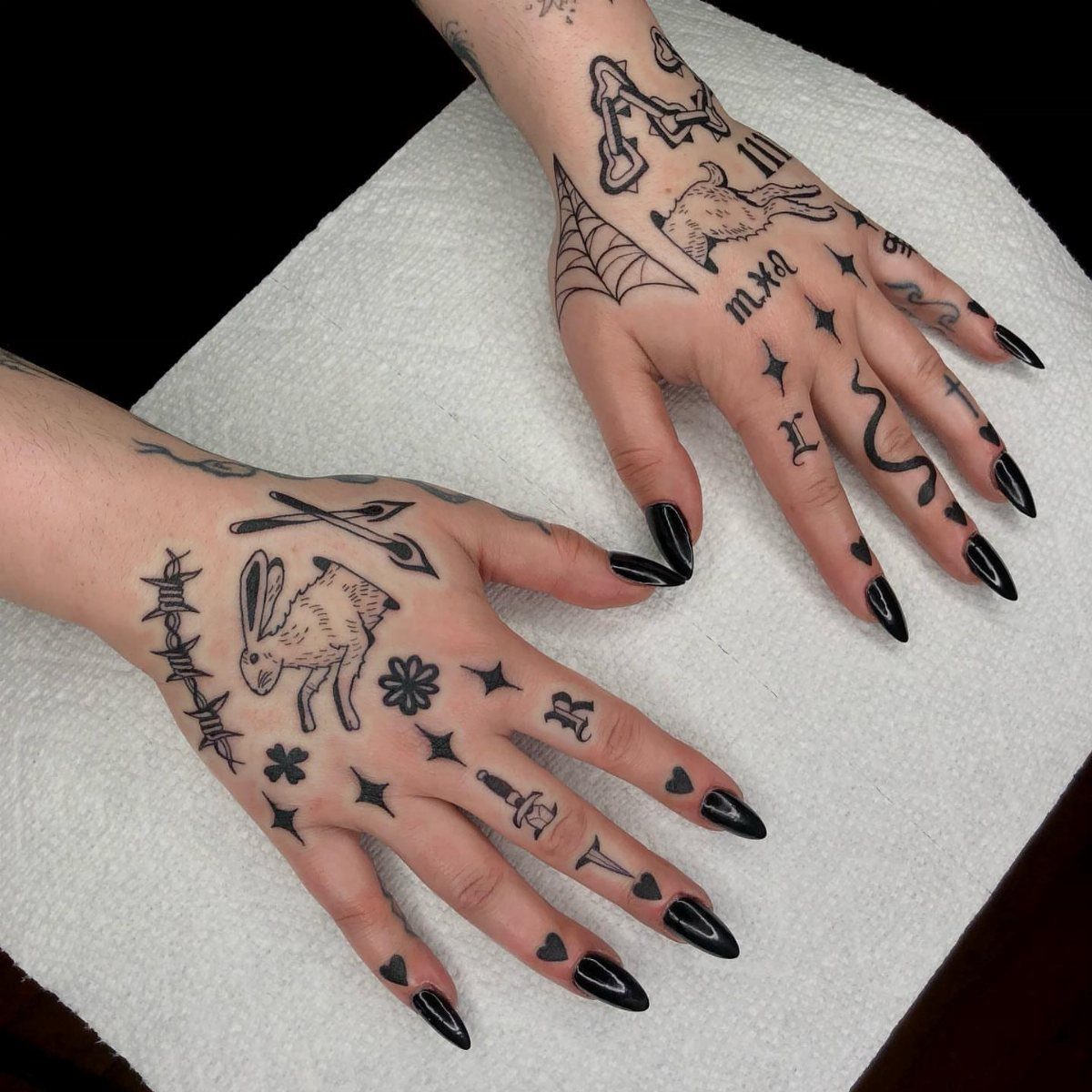
Rabbits, birds and other animals scattered across the hand and fingers turn the skin into a mini gallery. Each piece sits small enough to fit a finger or knuckle, and together they build a cohesive look.
Black ink holds better than color on hands, and simple silhouettes last longer than detailed fur or feathers. Stars and symbols fill gaps between larger pieces.
Fingers fade fastest, so place your favorite motifs on the back of the hand. Sessions can be broken up over multiple appointments if you want to add pieces gradually.
12. Patchwork Hand Tattoo Collection
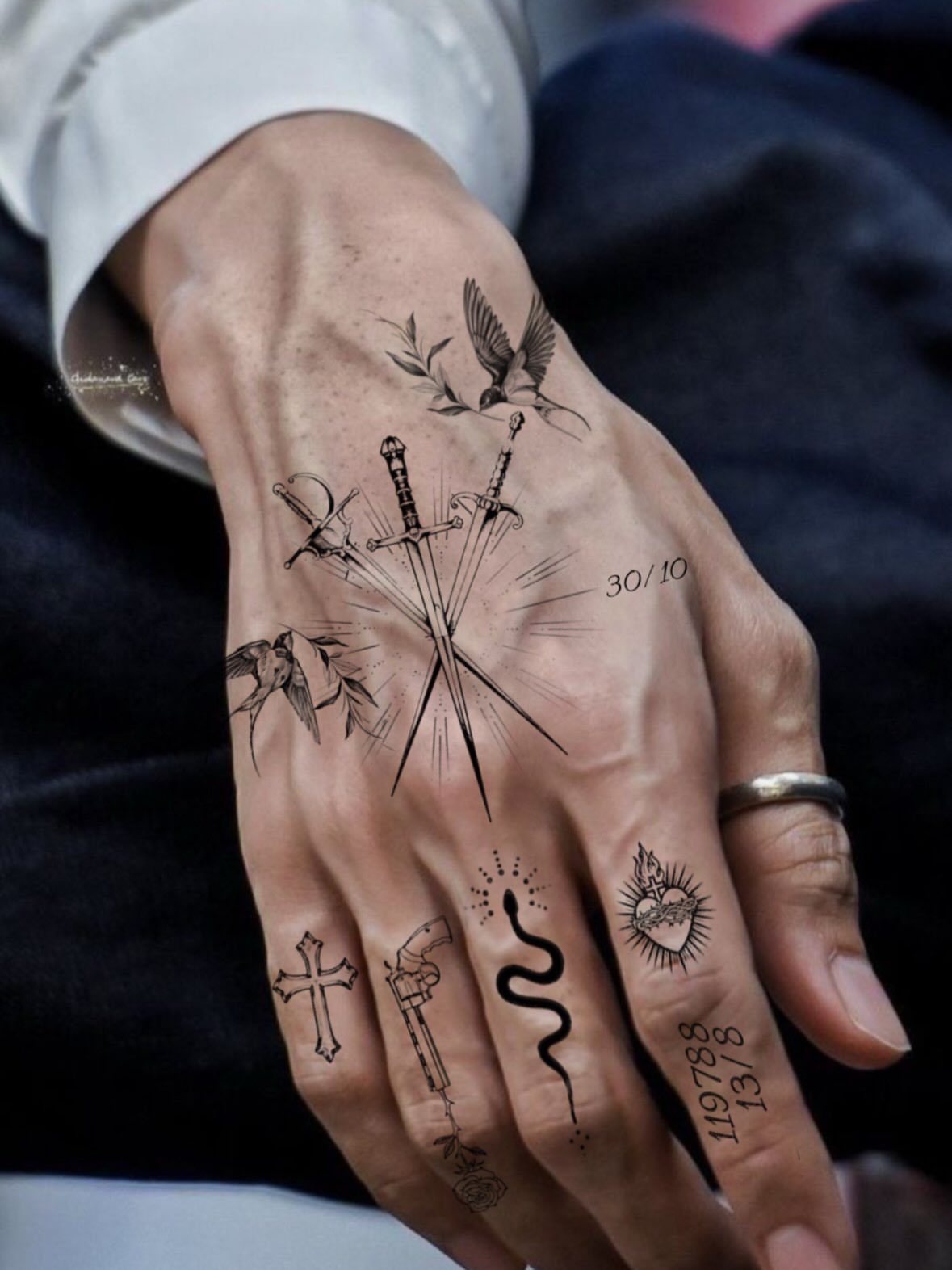
Multiple small tattoos collected over time cover the hand and fingers without one overarching design. Swords, snakes, hearts and numbers each stand alone but share a style or ink weight that ties them together.
Patchwork builds gradually, so start with a few pieces on the back of the hand and fill in as you go.
Black ink keeps the collection cohesive even when the subjects vary. Pain depends on placement; fingers and knuckles hurt more than the flat back.
Leave enough space between pieces so each one stays readable as the ink ages and spreads.
Pain Levels of Hand Tattoos
On most pain scales, the back of the hand sits at 4–6 out of 10, tolerable for anyone who has sat through other placements. More tissue between skin and bone cushions the needle, and sessions move quickly enough that intensity stays manageable.
Fingers and knuckles jump to 6–8 out of 10 because bone sits directly under thin skin with almost no padding.
Because nerve endings pack densely into the palm, pain there climbs to 8–9 out of 10.
Most artists will steer you away from palm work unless you have extensive coverage elsewhere and understand what the session will feel like. Sessions on hands run shorter than larger pieces, which helps, but the intensity per minute is real.
Aging and Fading of Tattoos
Hands wash more often than any other part of the body, sit under sunlight daily, and rub against fabric, tools and surfaces constantly. All of that breaks down ink faster than it would on your shoulder or thigh.
Fine lines fade first: they hold less ink and sit close to the surface, right where friction and UV hit hardest.
Touch-ups every few years keep them sharp, and you should budget for that upfront rather than treating it as a failure of the original work.
Sun protection and moisturizer slow fading, but they will not stop it entirely.
Hands live in the world, and the tattoo will show that over time. Choose an artist whose line weight and contrast will hold up, and accept that maintenance is part of the commitment.
First-Time Tattoo Considerations
Hands hurt more than most first placements, and the visibility changes how people read you before you say a word. If your job involves client-facing work or conservative environments, hand tattoos close doors that forearms or ribs leave open.
Starting somewhere less conspicuous gives you time to learn how your skin takes ink, how healing feels, and whether you want something visible all day.
A first tattoo on the ribs, upper arm or thigh stays private until you choose to show it.
Hand tattoos suit collectors who already know their pain tolerance, understand fading and touch-up cycles, and have decided that visibility serves the statement they want to make.
If this is your first piece, place it where you can control when it is seen.
Frequently Asked Questions
Which tattoo looks good on the hand?
Geometric patterns, florals, and minimalist designs suit hands because they fit the natural contours and scale well to the available space.
Flat designs with solid fill settle best across the back of the hand, while fingers need thick outlines that stay readable through fading.
Do hand tattoos fade?
Hand tattoos fade faster than pieces on covered skin because hands wash constantly, sit under UV light daily, and rub against surfaces and fabric.
Delicate linework loses definition faster than bold ink, often needing a refresh within 2 to 4 years depending on sun exposure and hand washing.





