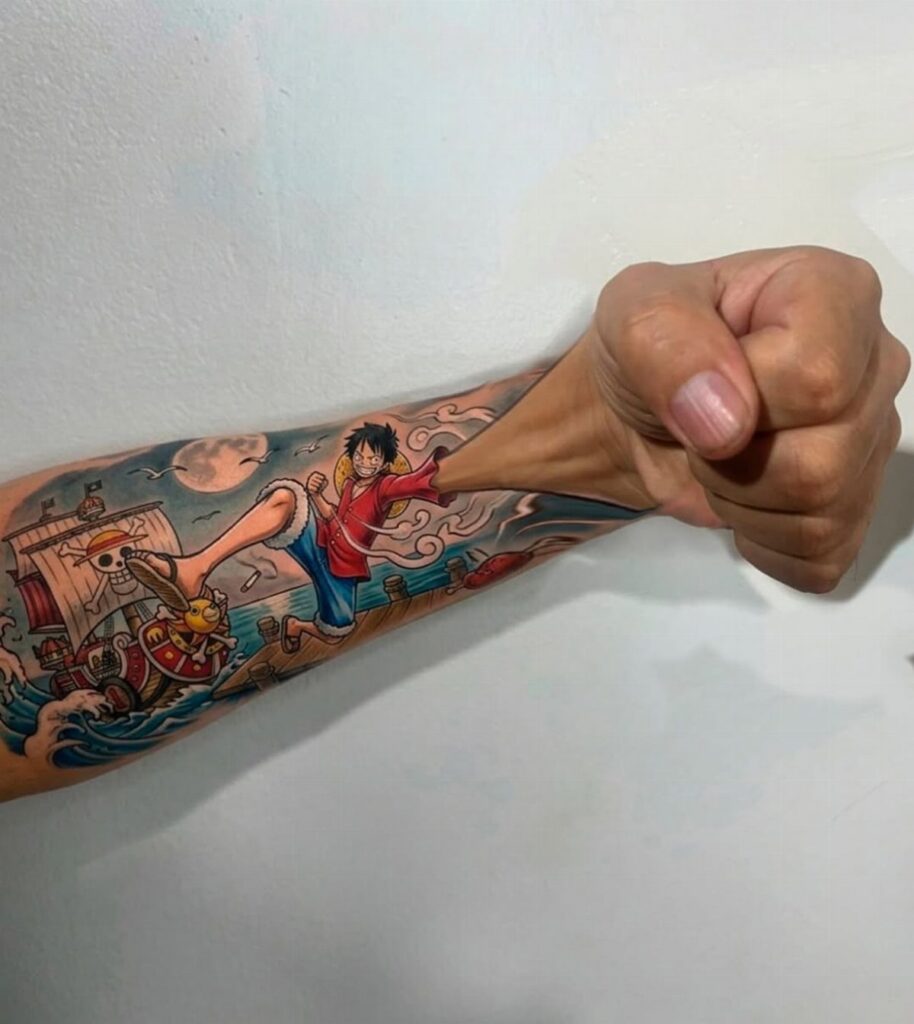
Men’s tattoo art runs from single-line minimalist marks and geometric shapes through full-chest tribal pieces, Japanese dragons that wrap the torso, and portraits that demand a flat canvas.
Geometric patterns, script and portraits need flat space and read well on the forearm or chest, while a wolf or eagle gains impact across the shoulder or back.
Pick a design that fits the spot you’re willing to ink and that you can cover or show depending on where life takes you.
1. Geometric Tattoos
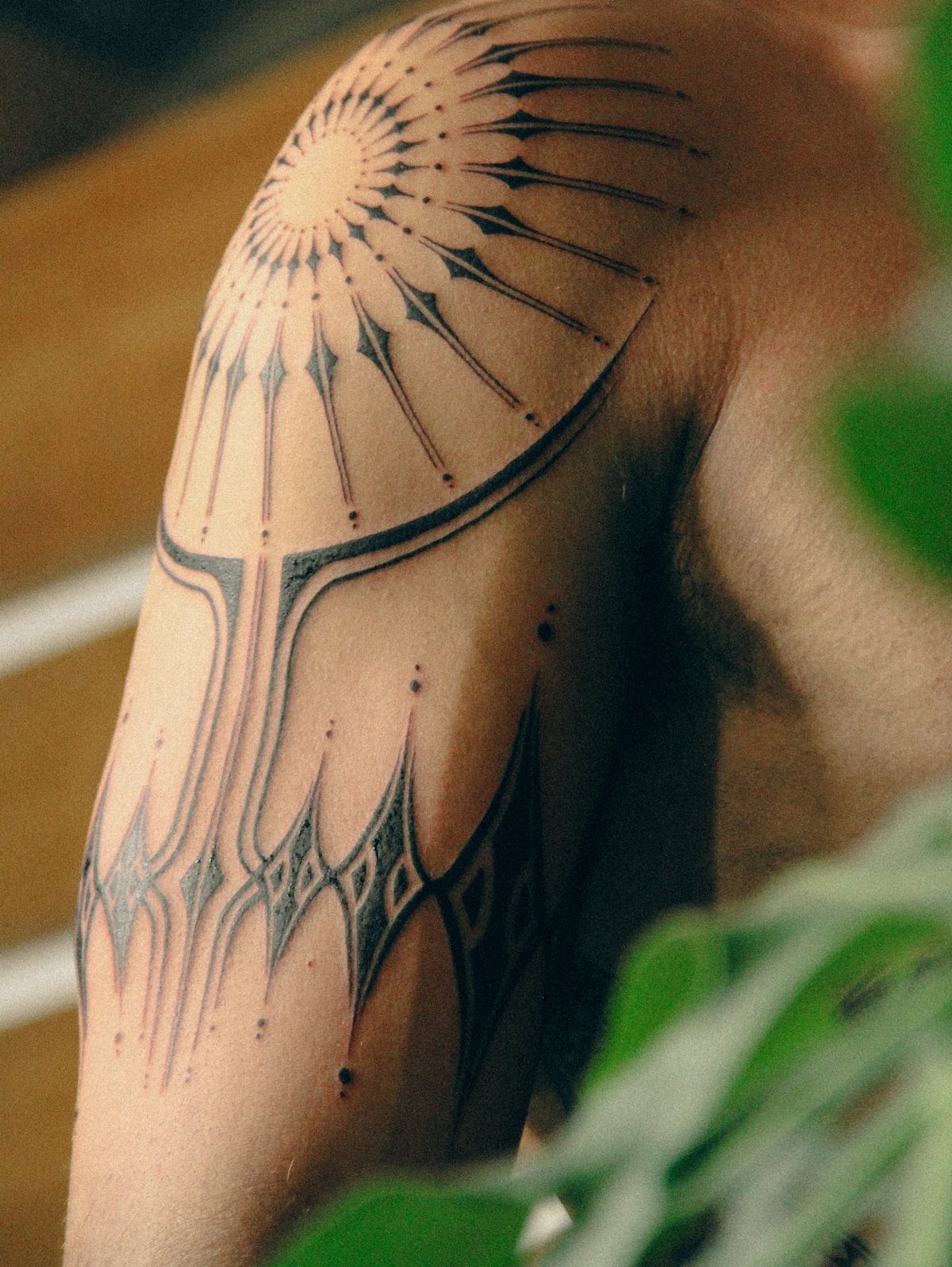
Geometric patterns break down into sharp angles, repeating shapes and symmetry that hold up at any size. Lines stay crisp, which matters when ink spreads slightly over the years.
Geometric shapes need enough flat skin to hold their angles, and the shoulder cap and upper arm give you that space.
Muscle curves add dimension to flat patterns, and the area gives enough room for designs that need space to read clearly. Pain is moderate here, less than ribs or spine but more than the outer forearm.
Black ink alone keeps geometric pieces clean. Adding shading or color can blur the structure that makes these designs work.
2. Minimalist Tattoos
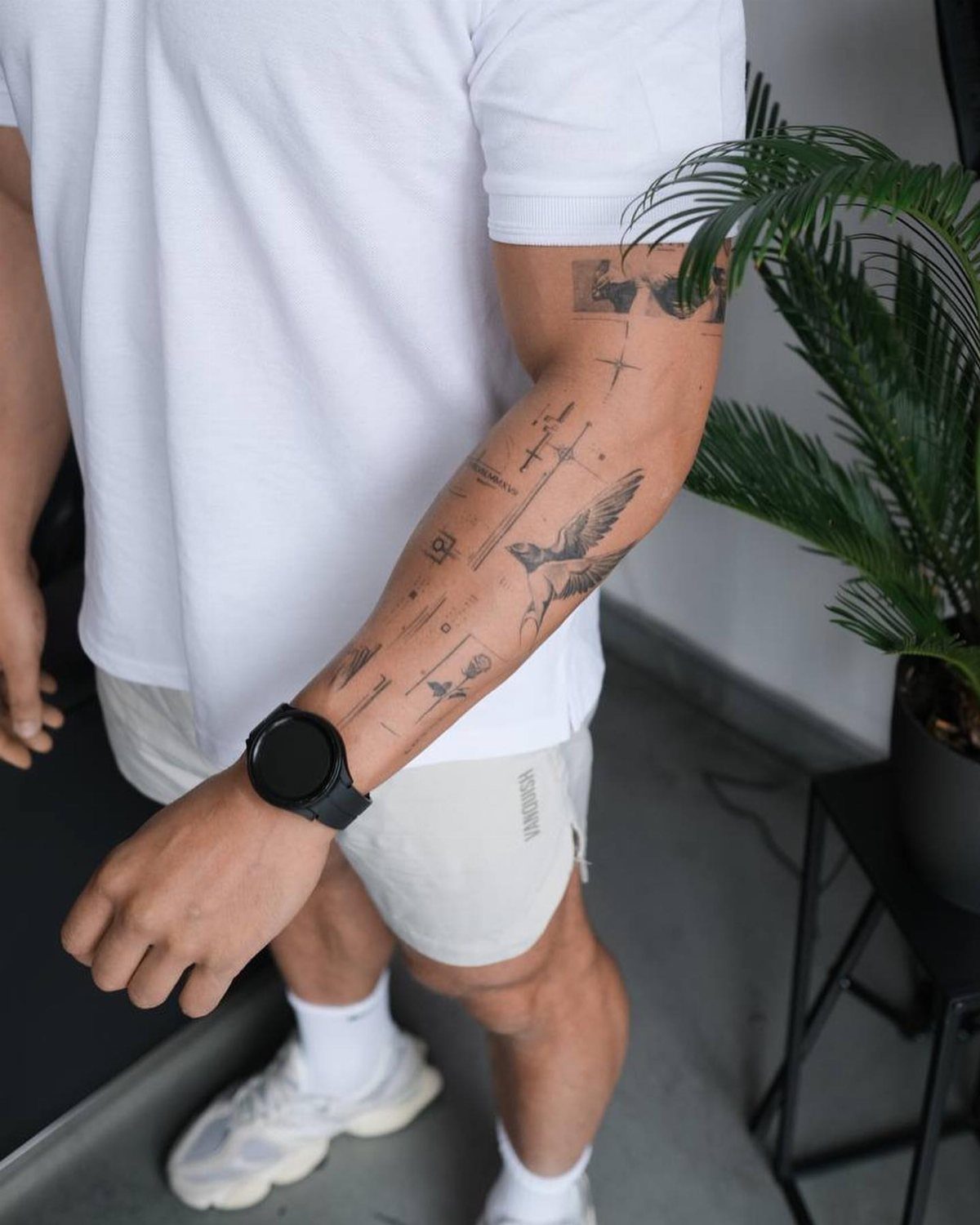
Single-line designs, small symbols and spaced layouts strip out detail to keep the idea readable. The forearm works for minimalist pieces because the flat surface shows fine lines without distortion, and you can fit several small tattoos side by side.
Thin lines need a steady hand.
Not every artist works at that scale, so check portfolios for line weight and spacing before booking. Minimalist work looks simple but any wobble shows.
These age well if the lines start thick enough.
Hair-thin lines can fade or blur, losing definition. A thicker line holds better over time.
3. Skull Tattoos
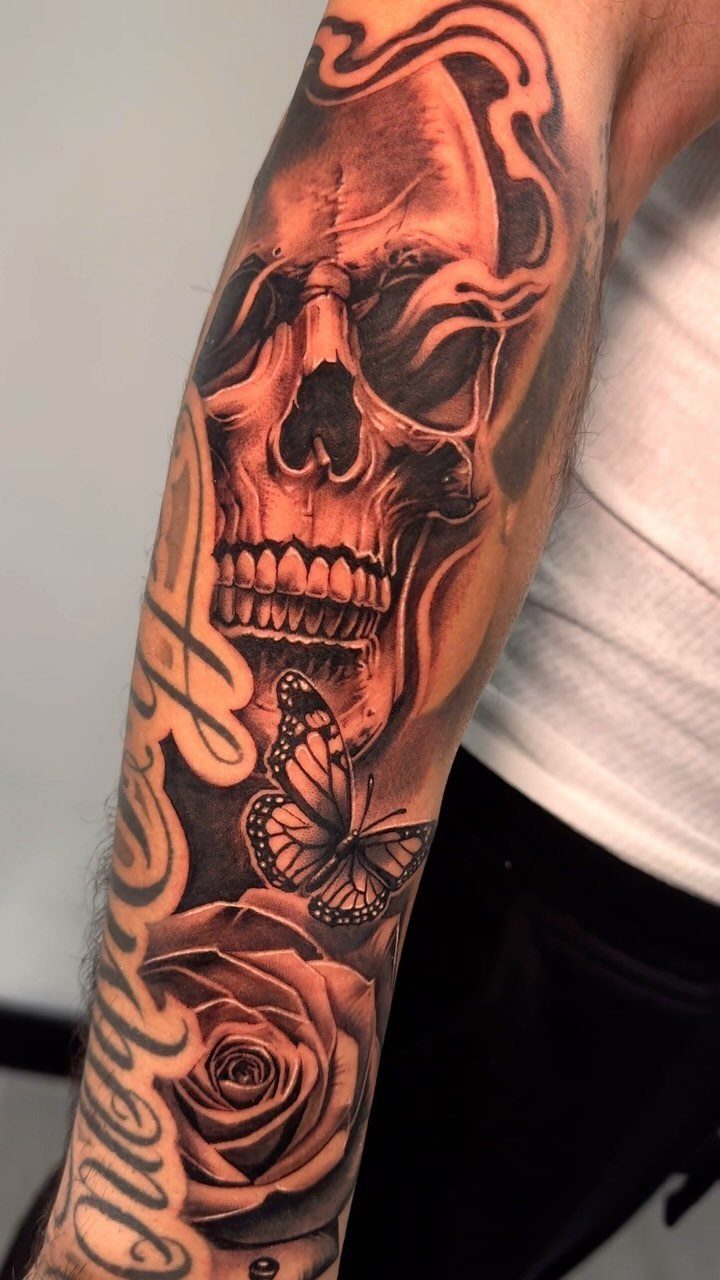
Skulls carry weight, whether you lean toward realism, traditional bold outlines or something abstract. Pairing one with organic elements like roses or butterflies softens the edge while keeping the central image grounded.
Black and grey work adds depth while keeping the focus on form.
The forearm offers a long canvas for vertical compositions, and the relatively low pain level makes it a solid choice for detailed work that spans more than one sitting.
Periodic touch-ups keep blacks deep and highlights sharp.
4. Portrait Tattoos
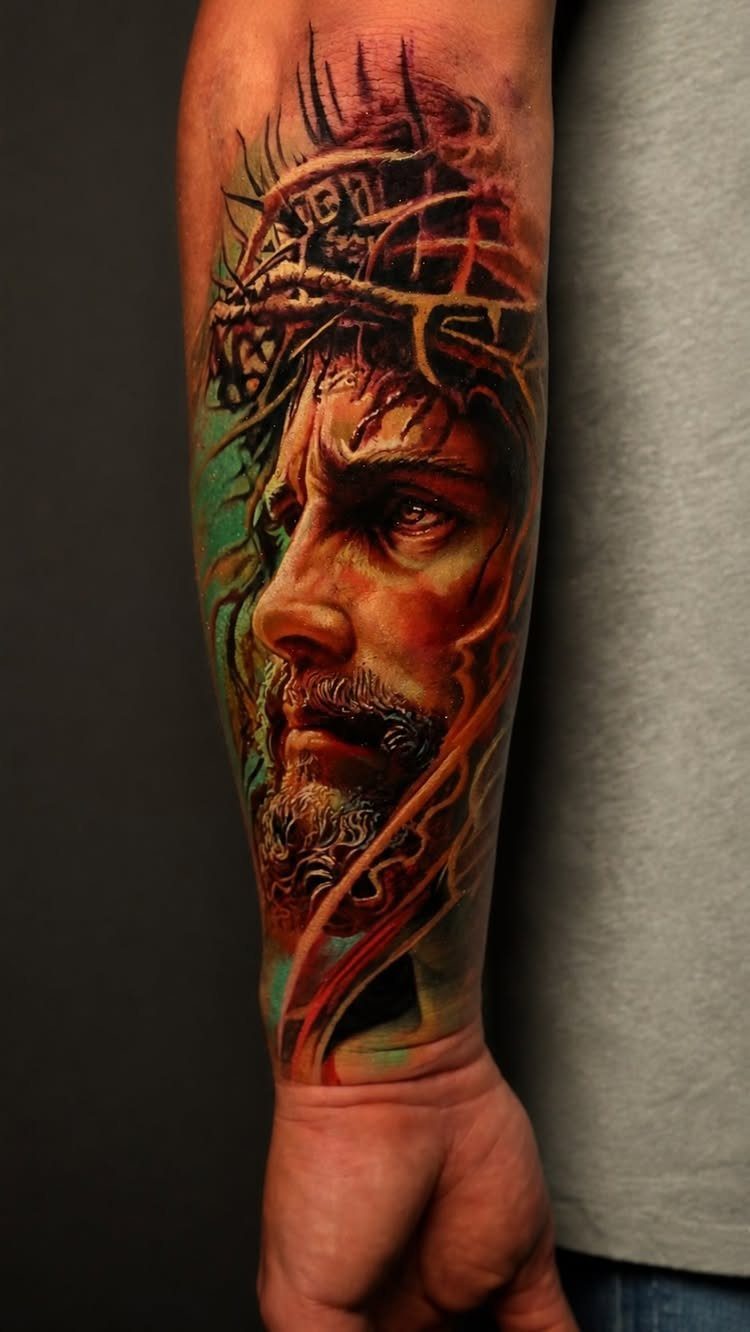
Portrait work demands precision.
Faces require accurate proportions, correct shading and enough contrast to make features read when someone stands back. Religious figures like this one carry personal meaning, and realism keeps the image recognizable.
Color adds life but also complexity.
Skin tones, fabric folds and fine details like the crown of thorns need an artist who specializes in portraiture. Not all tattoo artists do faces well, so look at healed work in their portfolio, not just fresh ink.
Forearms offer a flat surface with minimal distortion as you age.
5. 3D Tattoos
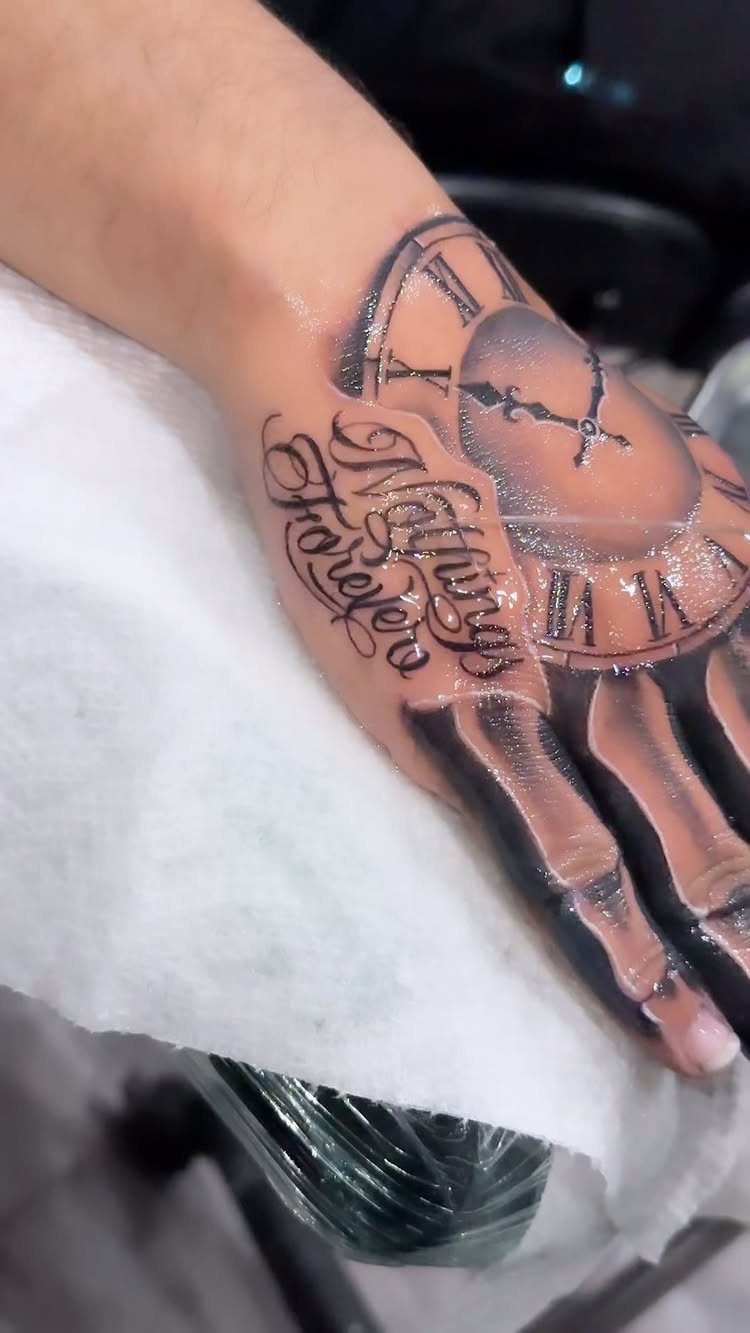
3D tattoos use shading, highlights and perspective to make flat images appear raised or recessed.
Clocks, gears and mechanical elements work well because their structure gives clear depth cues. The hand is a high-visibility spot, though the thin skin and proximity to bone make it one of the more painful placements.
This style requires an artist with strong drawing fundamentals.
Poor shading flattens the effect, and the illusion only works from certain angles. Hands also wear faster than most areas because of sun and friction.
Script adds meaning but keep it short. Long phrases crowd the design and reduce legibility as the skin moves.
6. Ocean Wave Tattoos
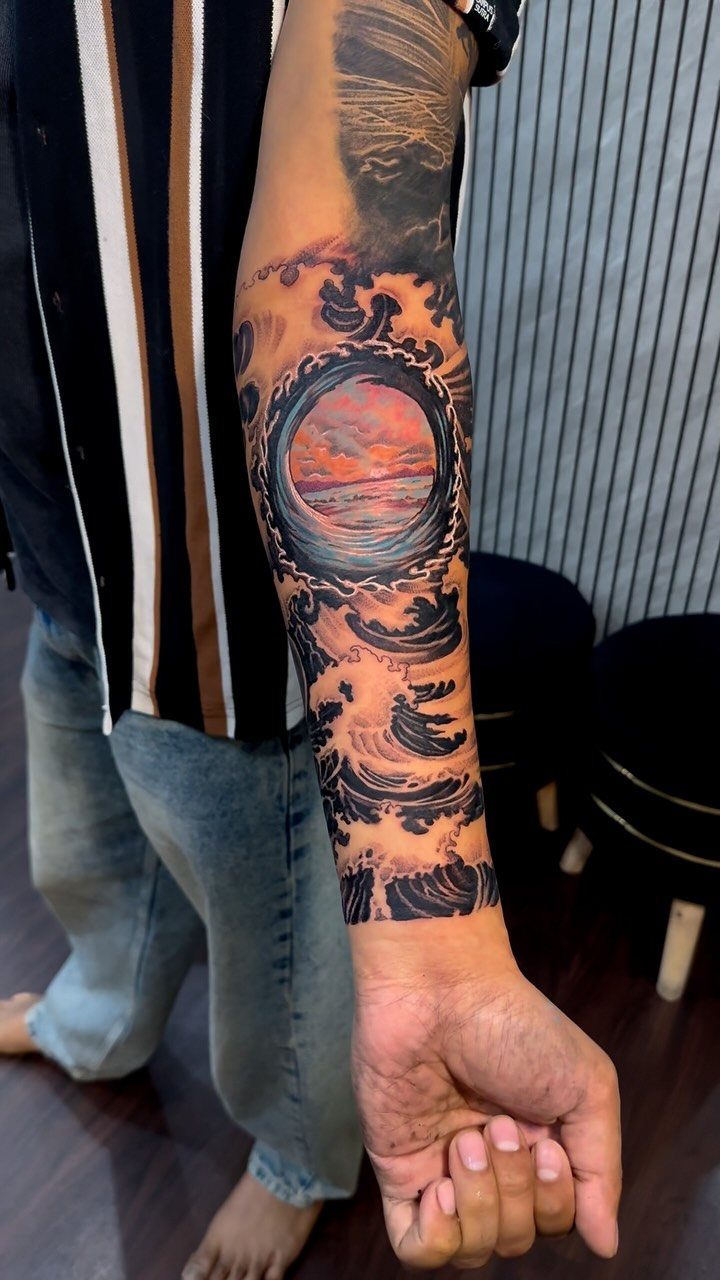
Waves capture movement, and a circular frame contains the energy while keeping the motion visible. Color brings out the contrast between water and sky, especially when you use deep blues against warm sunset tones.
The forearm gives enough space for detail in both the waves and the background scene.
Curved water lines follow the natural shape of the arm, which makes the piece feel integrated rather than pasted on. Pain is manageable here, lower than bony areas like the wrist or elbow.
Color work requires more sessions than black ink alone, and touch-ups keep the gradient smooth as it heals.
7. Black Ink Tattoo
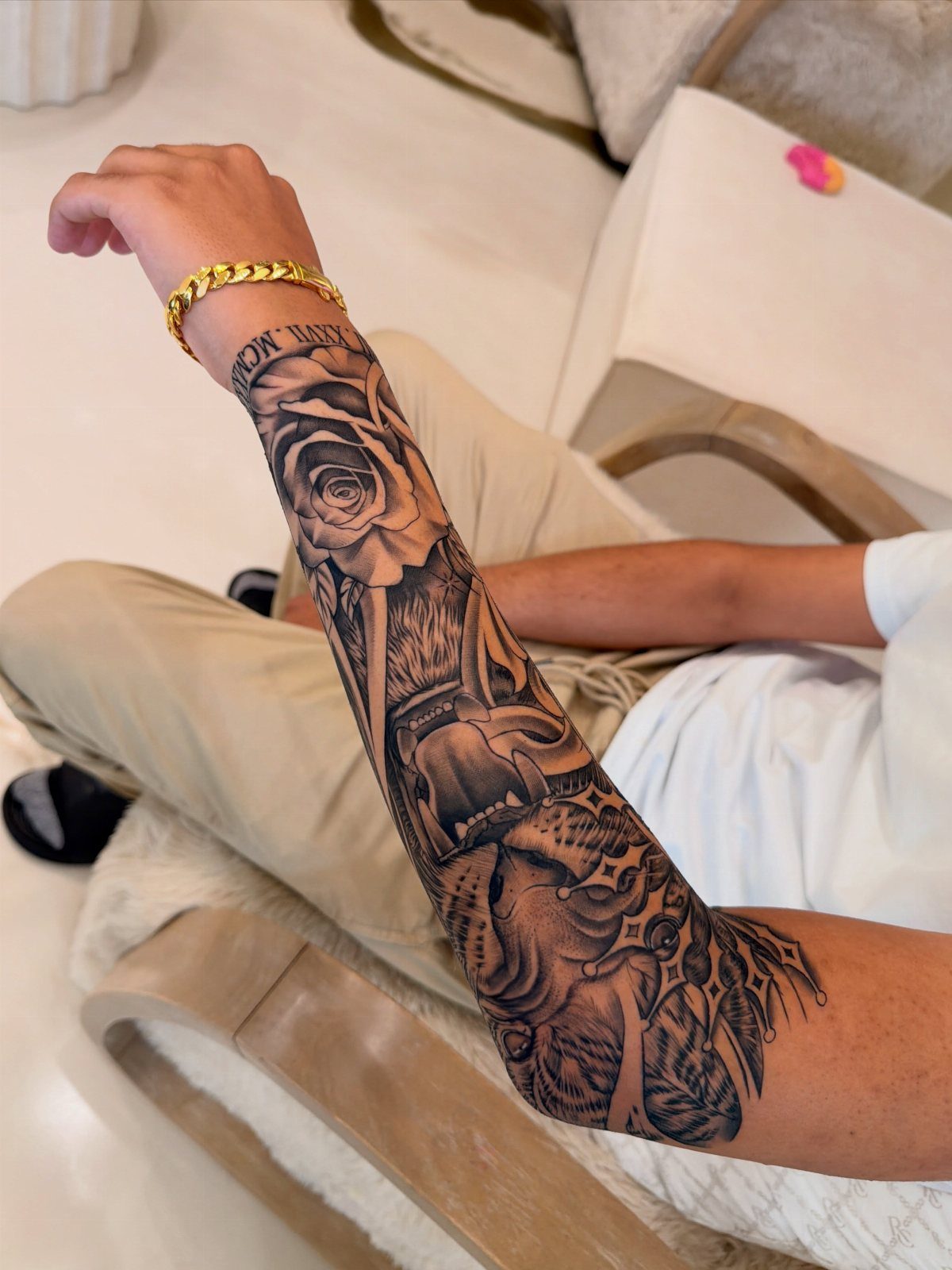
Black work ages better than color because there is no fading across multiple pigments. A single ink means less time in the chair and fewer passes over the same area, which cuts down on skin trauma.
The rose and tiger pairing balances organic and predatory forms. Black allows high contrast through shading alone, and the forearm placement keeps both elements visible without competing for space.
Solid blacks need touch-ups less often than fine grey wash, but expect some settling in the darkest areas within the first year.
8. Angel Tattoo
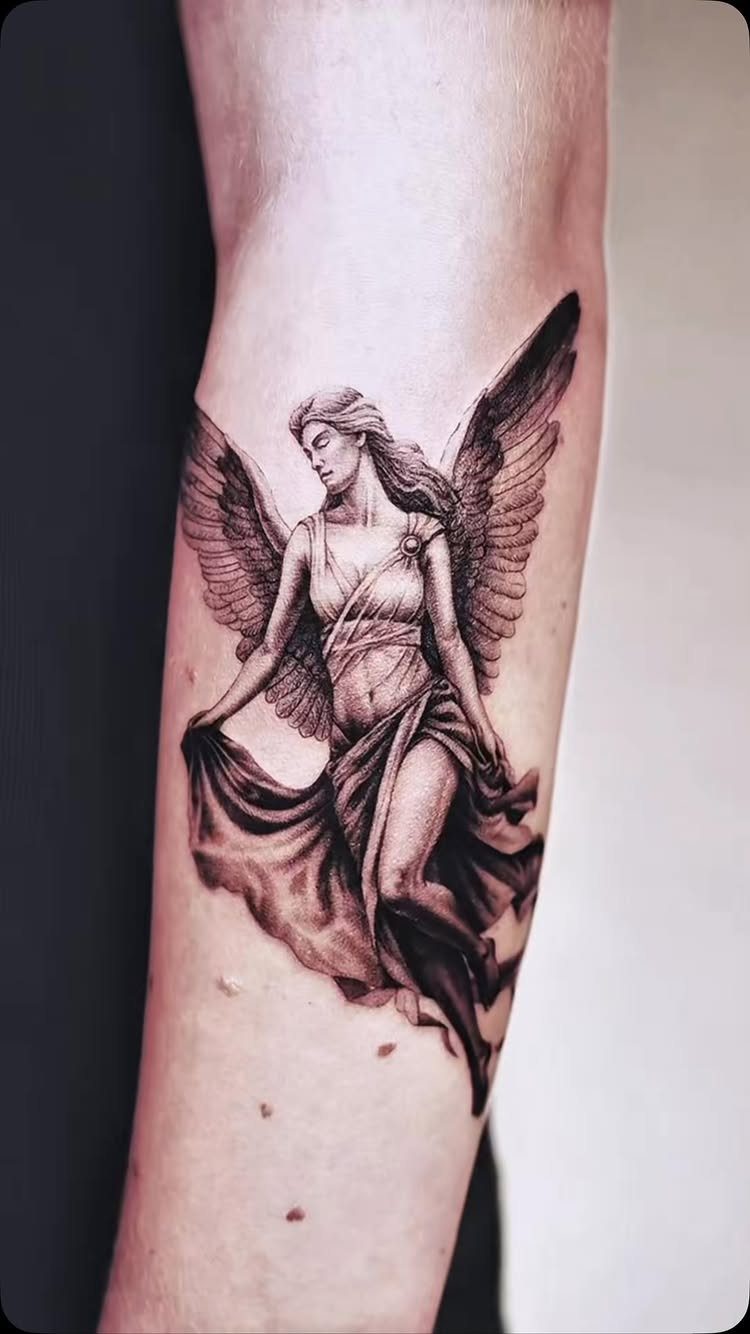
Winged figures work when you want a vertical piece that follows the natural length of the forearm. The wings add height without requiring extra width, and grey shading gives depth to feathers and fabric folds.
Religious meaning drives most angel tattoos, but the visual alone carries enough weight if symbolism is not part of your plan. Forearm placement puts the piece in view without committing to full sleeve coverage.
Expect multiple sessions for detailed feather work and fabric shading. Face details require an artist comfortable with portrait-level precision.
9. Wolf Tattoo
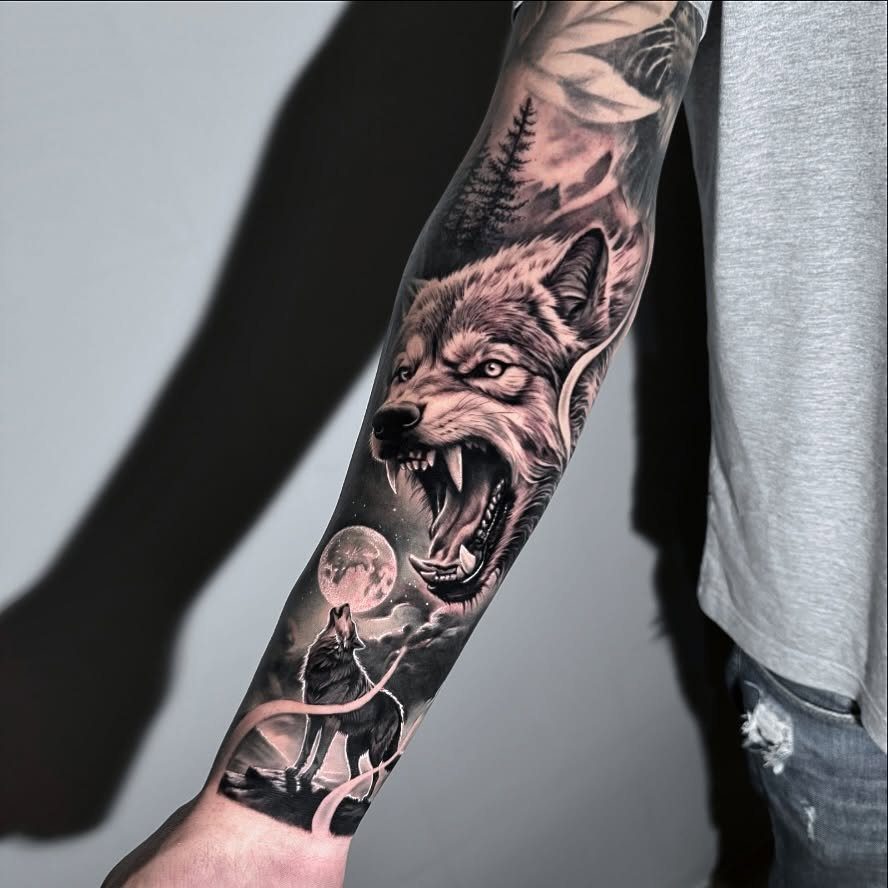
Wolves read as fierce or loyal depending on the pose.
A snarling head gives you aggression, while a howling wolf leans toward the symbolic. Combining both, along with moon and forest elements, builds a scene rather than a single subject.
Black and grey realism suits this subject because fur texture needs fine gradation.
The forearm has enough length for a multi-element composition without crowding. Pain is manageable compared to areas closer to bone.
Fur detail fades faster than solid shapes, so plan for a touch-up down the line.
10. Owl Tattoo
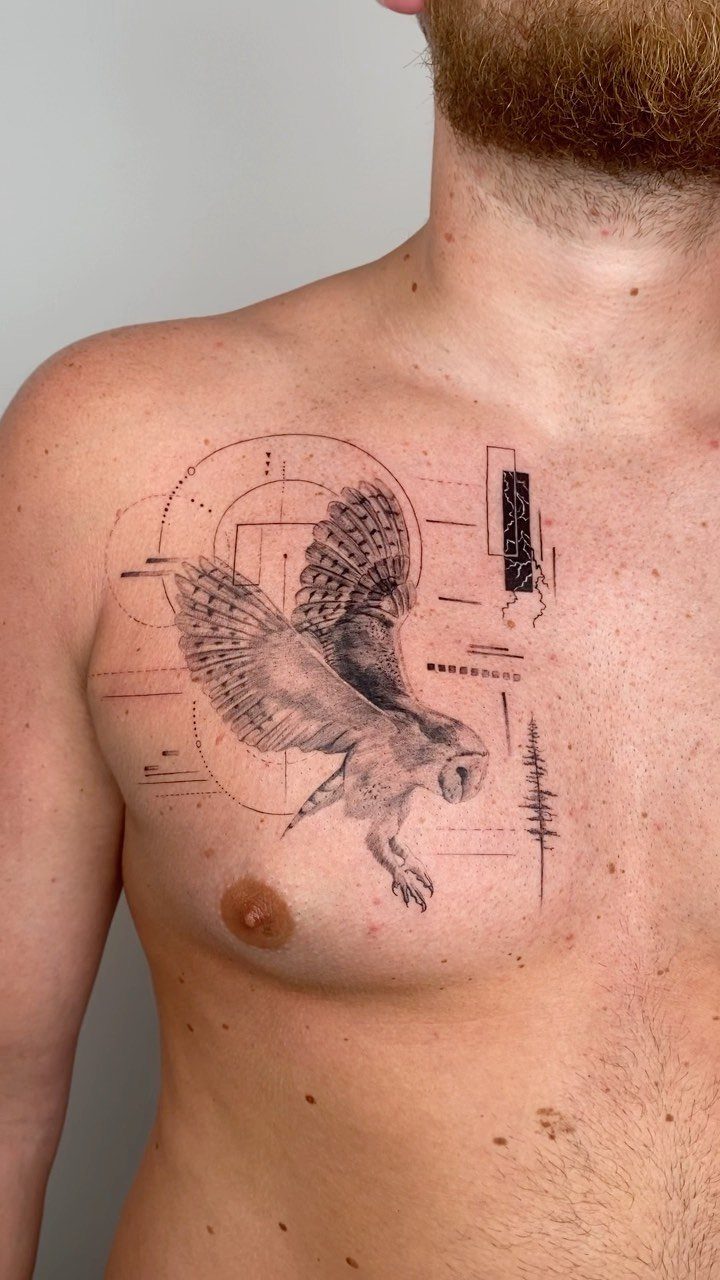
An owl in flight adds motion, and pairing it with geometric lines turns a natural subject into something architectural. The contrast between organic feather detail and hard angles keeps both elements distinct.
The chest offers a broad canvas, though the sternum and ribs rank high for pain.
Flying poses take more real estate than a static head shot, so confirm size and placement before starting.
11. Snake Ouroboros
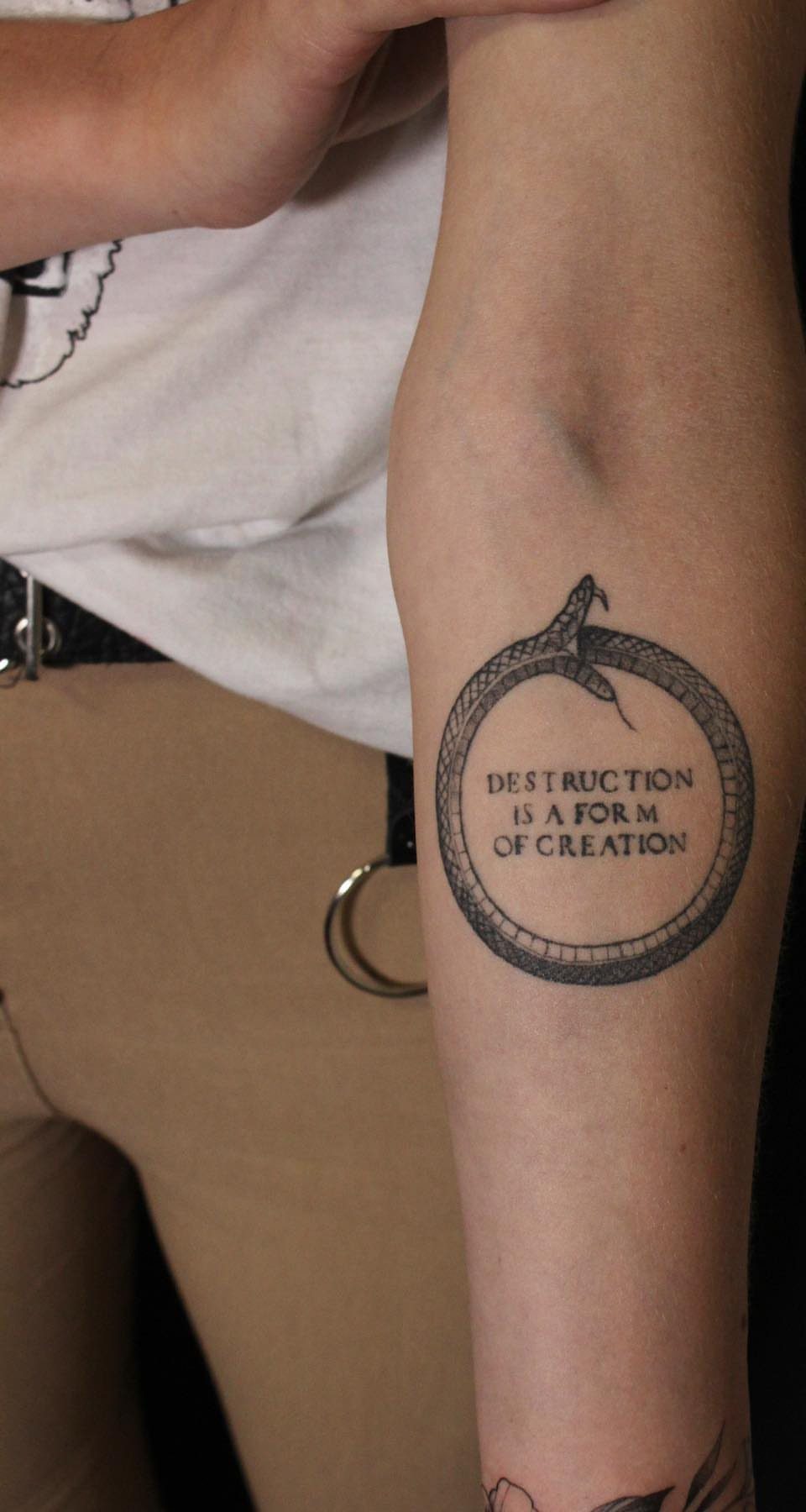
A snake eating its tail forms a closed loop, and the circular shape fits areas where you want contained symbolism. Adding text inside the circle gives you a second layer of meaning without cluttering the design.
The upper arm works because the muscle holds the circle without distortion as you move. Black ink keeps the snake’s body clear against the skin, and lettering inside stays readable if the type size is large enough.
Text ages with the tattoo. Choose a weight that will hold up as the ink spreads slightly over time.
12. Tribal Tattoos
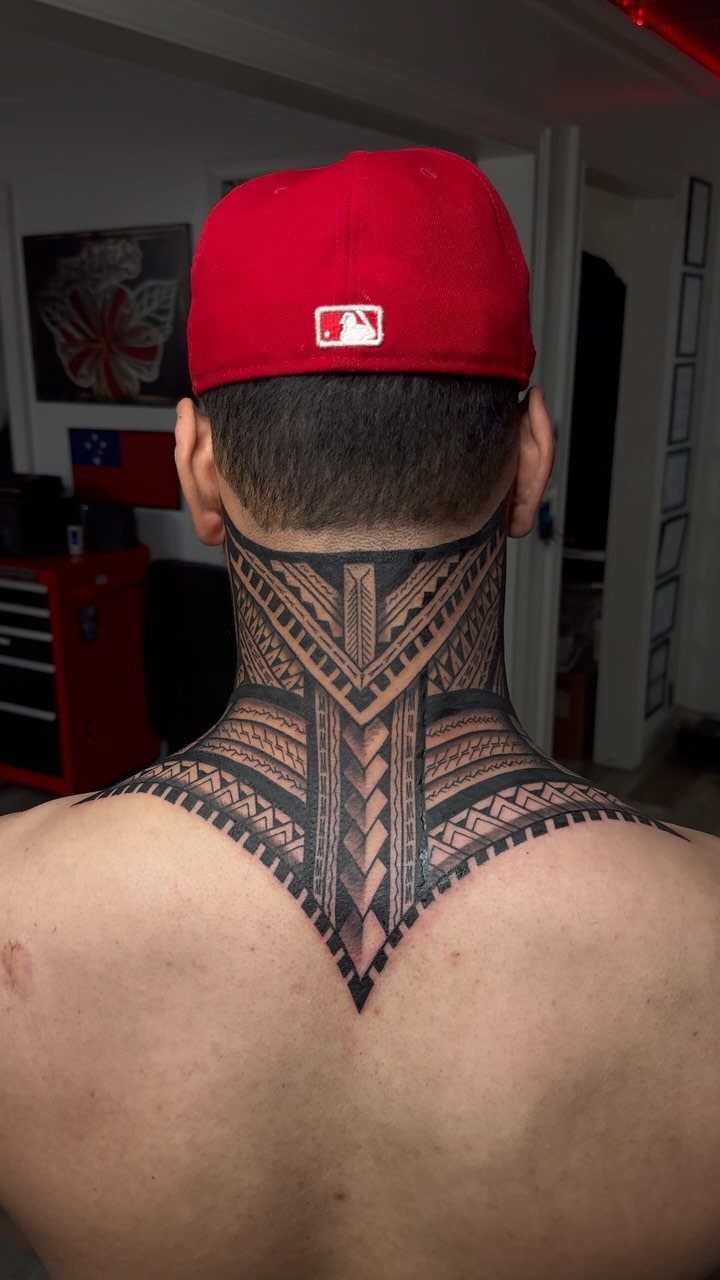
Tribal designs rely on bold black shapes and negative space. The style works across cultures, though the specific patterns carry different meanings depending on origin.
Neck and upper back placement makes this visible in most shirts, so think through workplace or social contexts before committing.
The neck ranks high for pain because of thin skin and proximity to bone, but the upper back spreads the work over a less sensitive area.
Solid blacks hold well over time. Touch-ups are rare if the original work goes deep enough.
13. Lion Tattoos
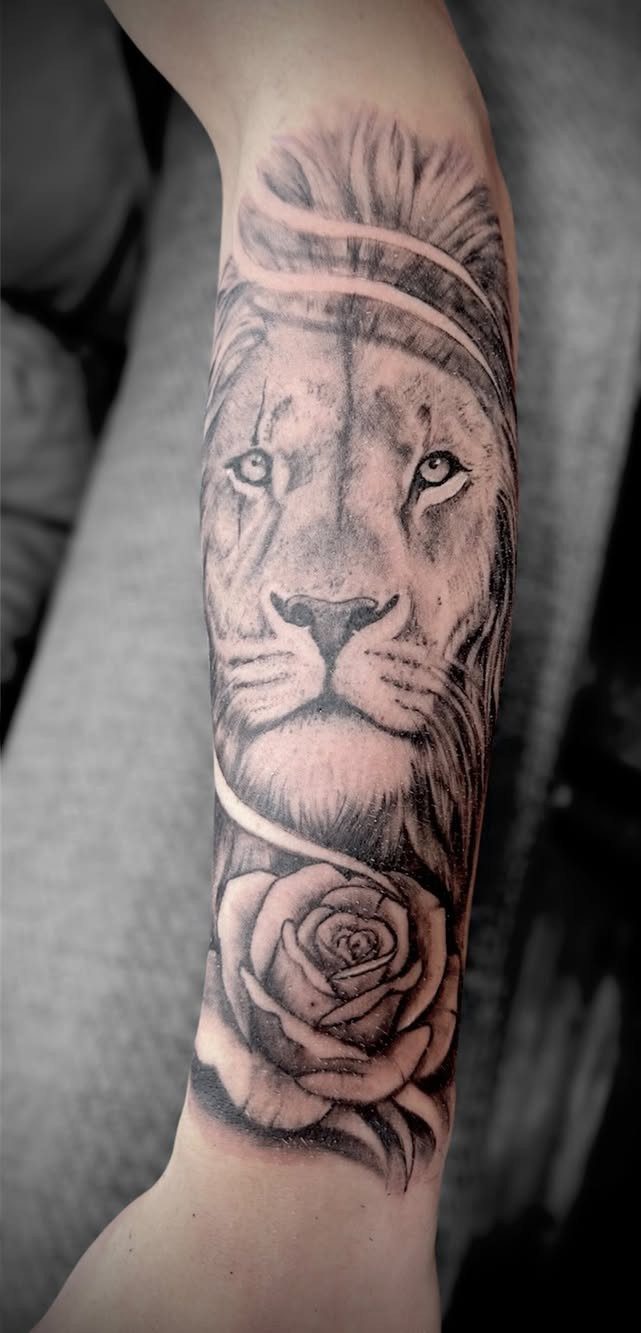
A lion’s face paired with a rose balances strength with softness. The combination works because the 2 subjects occupy different visual weights without competing for space.
Forearm placement keeps both elements readable at a glance. Black and grey suits this pairing better than color because it holds the contrast between the mane’s texture and the rose’s smooth petals.
Shading depth separates the 2 forms, and the flat surface of the forearm lets the detail read clearly.
Fur texture requires fine grey gradation. Expect some fading in the lightest areas over time.
14. Script Tattoos
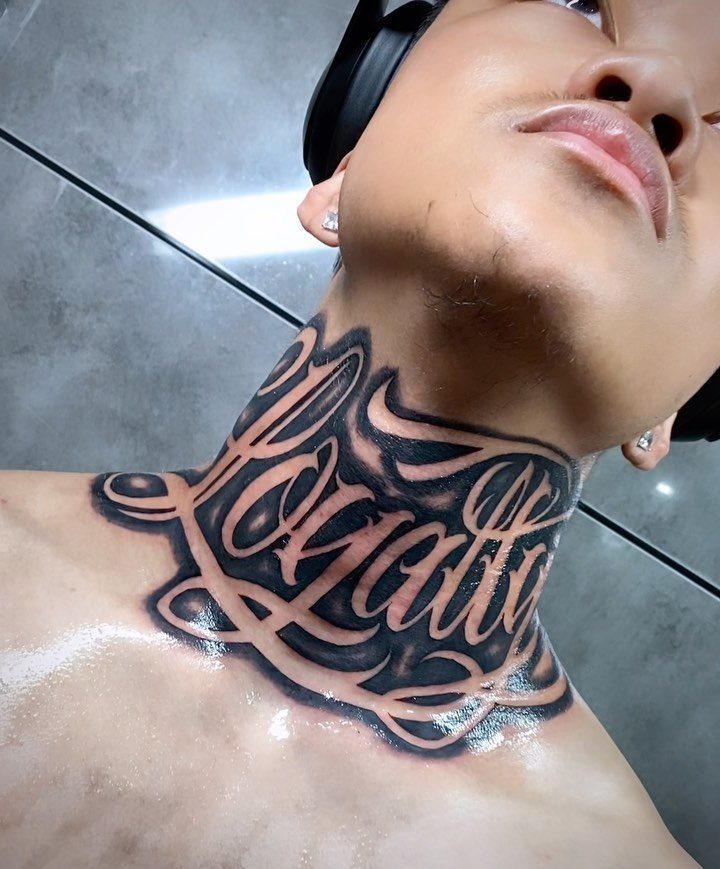
Script tattoos put words in view, and the neck makes them visible in most situations. Single words work better than full phrases because the neck’s curve distorts long lines of text.
Letter height matters. Too small and the script blurs as the ink settles.
Too large and the word loses readability at a distance. Cursive adds style but requires an artist who understands letter spacing and flow.
Thin skin over bone makes it one of the sharper spots. Sessions are usually short.
15. Mountain Tattoos
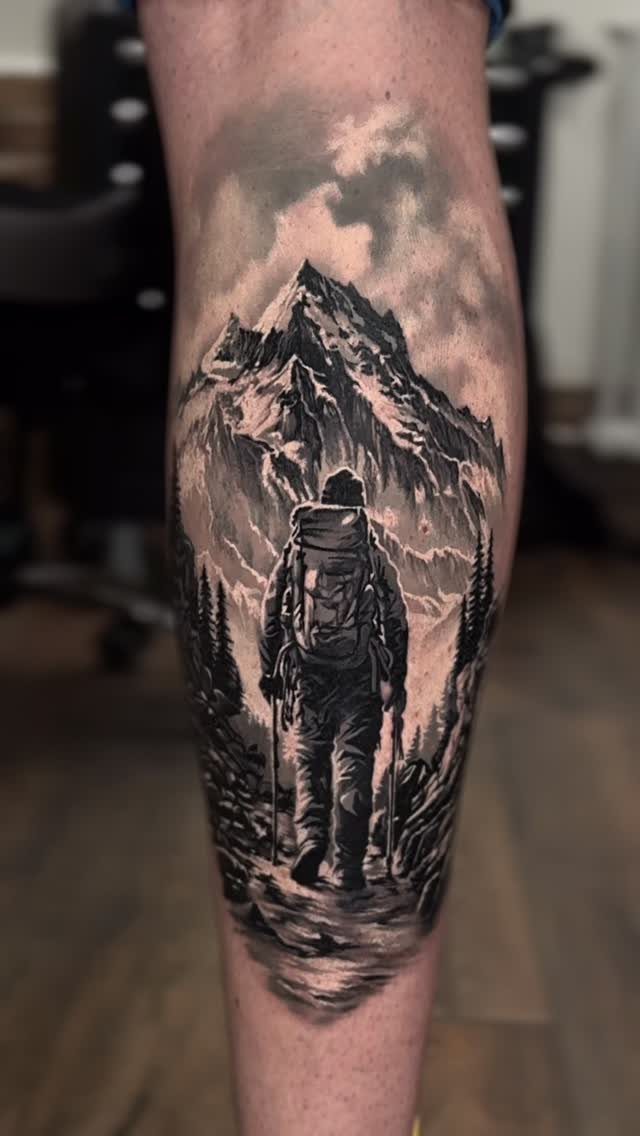
A hiker moving toward a peak adds narrative to a mountain scene. The figure gives the piece scale and turns a landscape into a moment.
The leg offers enough vertical space for a full composition with foreground, midground and background. Monochrome lets the ridgelines and shadow do the work.
Calf placement offers moderate pain and good visibility when you want it.
16. Arrow Tattoos
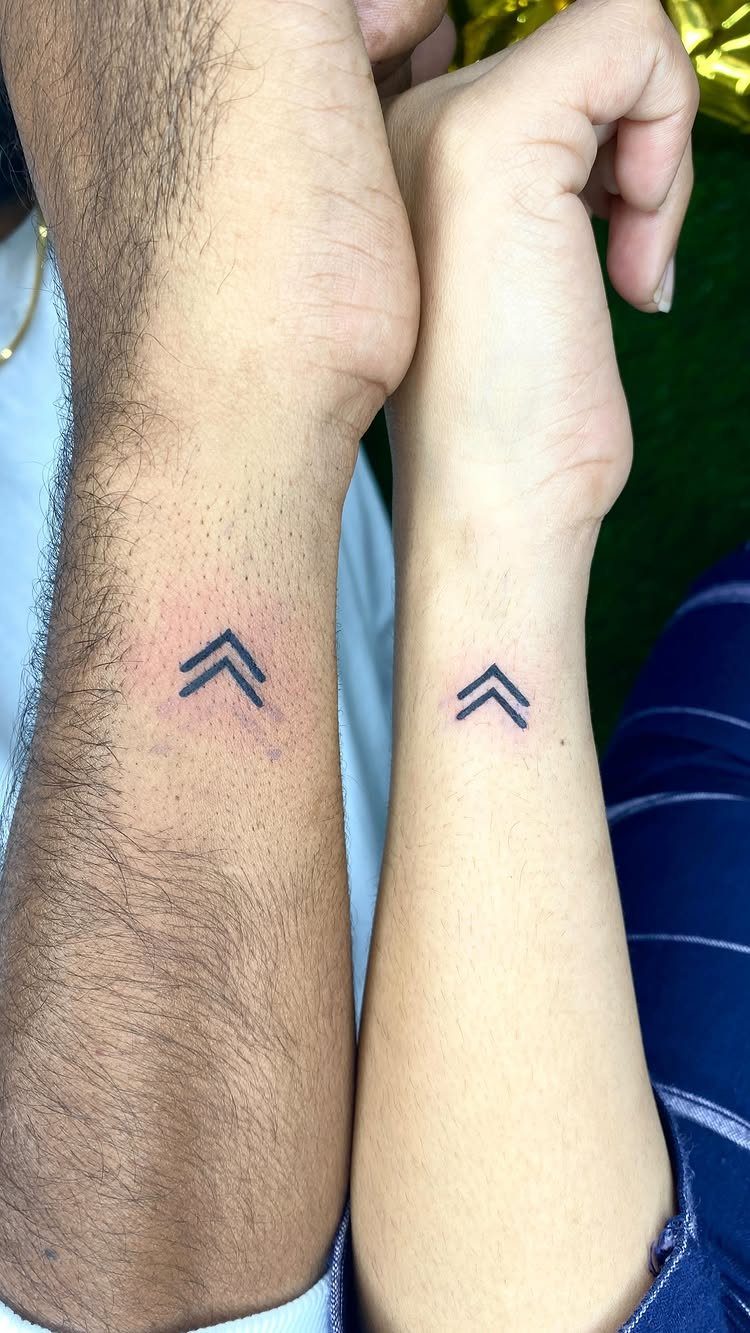
Small arrows fit tight spaces like the wrist, where larger designs distort. Matching tattoos work when the design is simple enough to reproduce identically across different skin textures and arm sizes.
Arrows point forward, and upward orientation reads as progress or direction.
Start with enough weight and the shape holds for decades. Hair-thin lines blur over time.
The wrist sits close to bone, so pain is higher than the forearm. Sessions are quick because of the small size.
17. Feather Tattoos
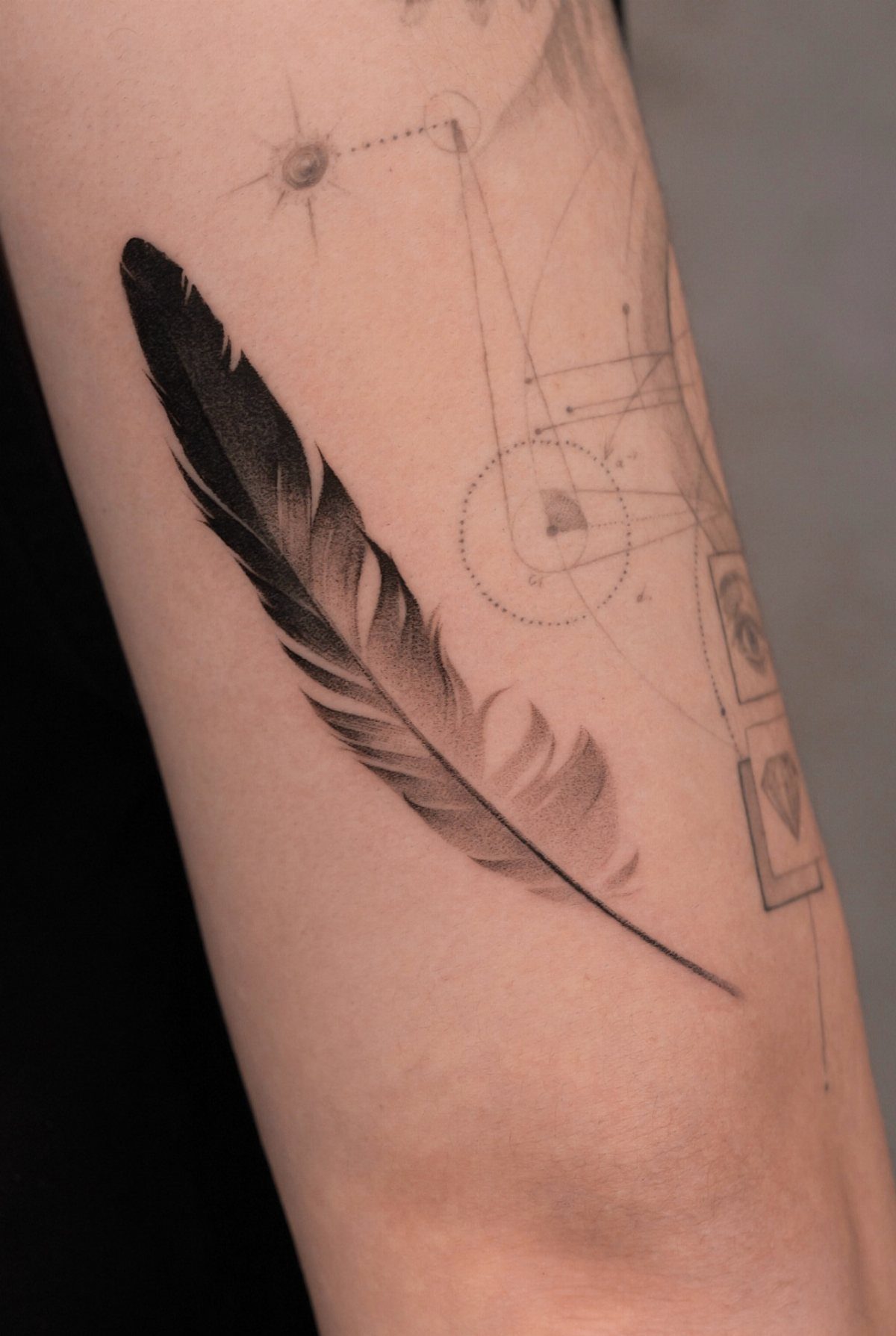
Feathers hold detail in their texture, and pairing one with geometric lines gives structure to an organic shape. Pure black on each part means neither competes or muddies the other.
The arm offers flat space for vertical designs, and feather placement follows the natural line of the limb. Black ink emphasizes texture through shading alone, and geometric additions create visual separation between the feather and the surrounding skin.
Fine detail in the barbs fades faster than solid shapes. Plan for a touch-up if you want the texture sharp long-term.
18. Biomechanical Tattoos
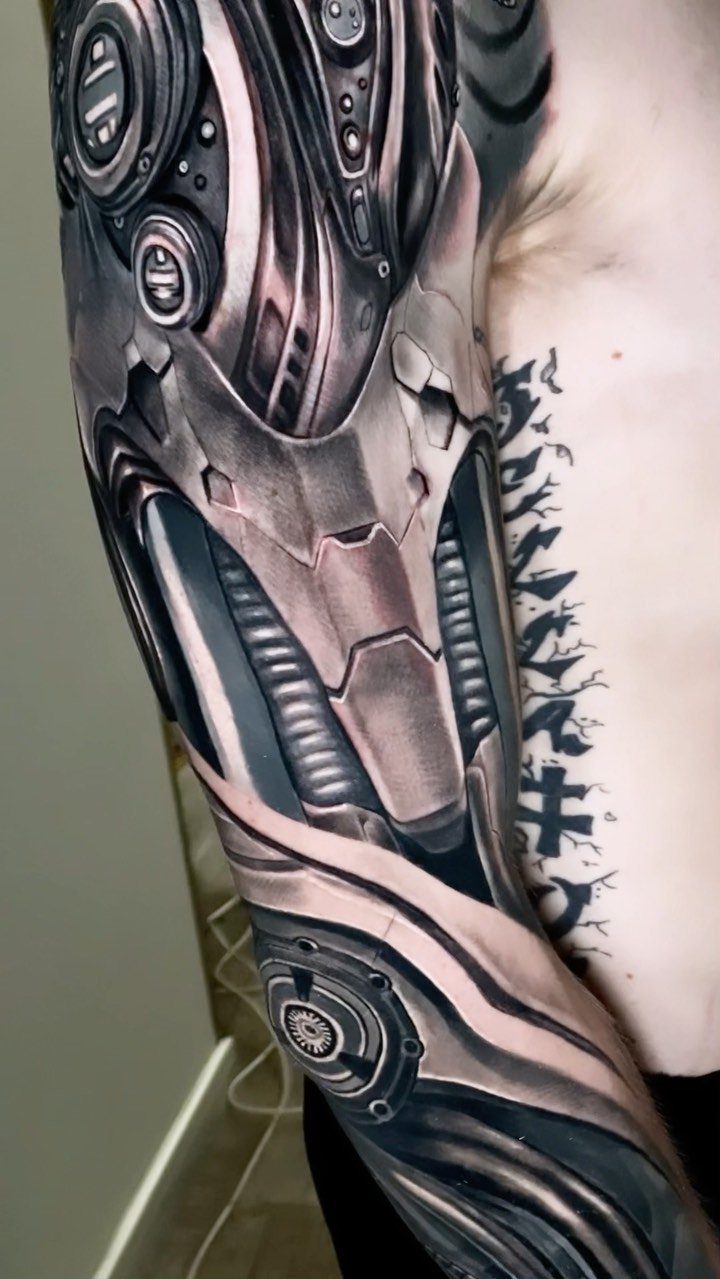
Biomechanical work layers machine parts under the skin, creating the illusion that metal replaces muscle. Plates, gears and pistons need precise shading to read as dimensional rather than flat.
The arm curves, so an artist who understands anatomy will place mechanical elements along muscle lines rather than fighting them. Adding text in another language personalizes the piece but keep it short so both elements stay clear.
This style requires multiple sessions. Shading depth makes or breaks the effect, and rushing it flattens the illusion.
19. Nature Tattoos
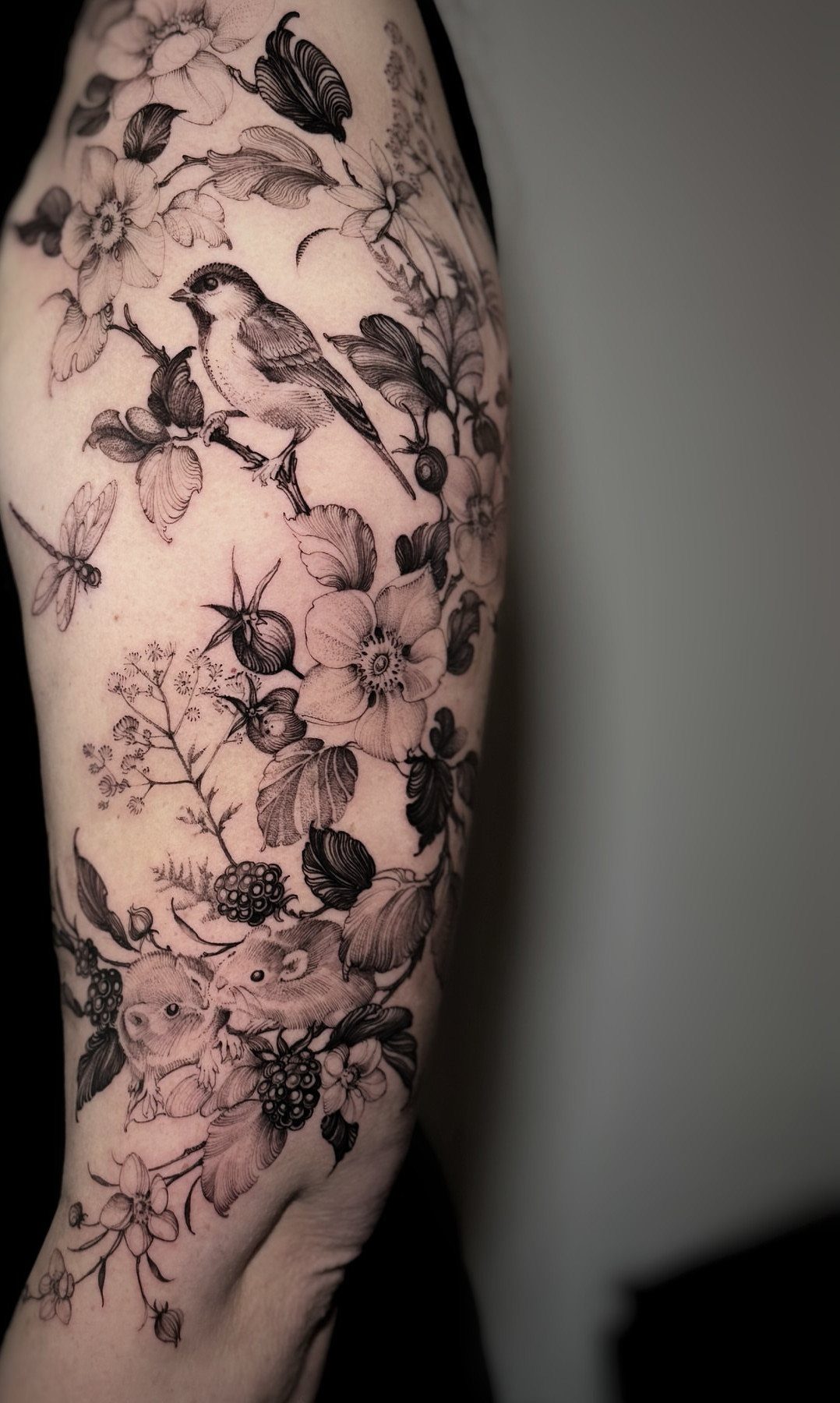
Combining multiple subjects from the outdoors creates a scene rather than a single focal point.
Birds, small animals, flowers and insects give you layers that read at different distances, and black and grey keeps the composition unified without color competing for attention.
Detailed work like this requires patience.
Fine lines in the wings, petals and fur need an artist who handles texture well. The arm’s flat surface holds the elements without distortion, though expect multiple sessions for a piece this dense.
Small details fade faster than bold shapes, so touch-ups keep the fine work sharp.
20. Cosmic Tattoos
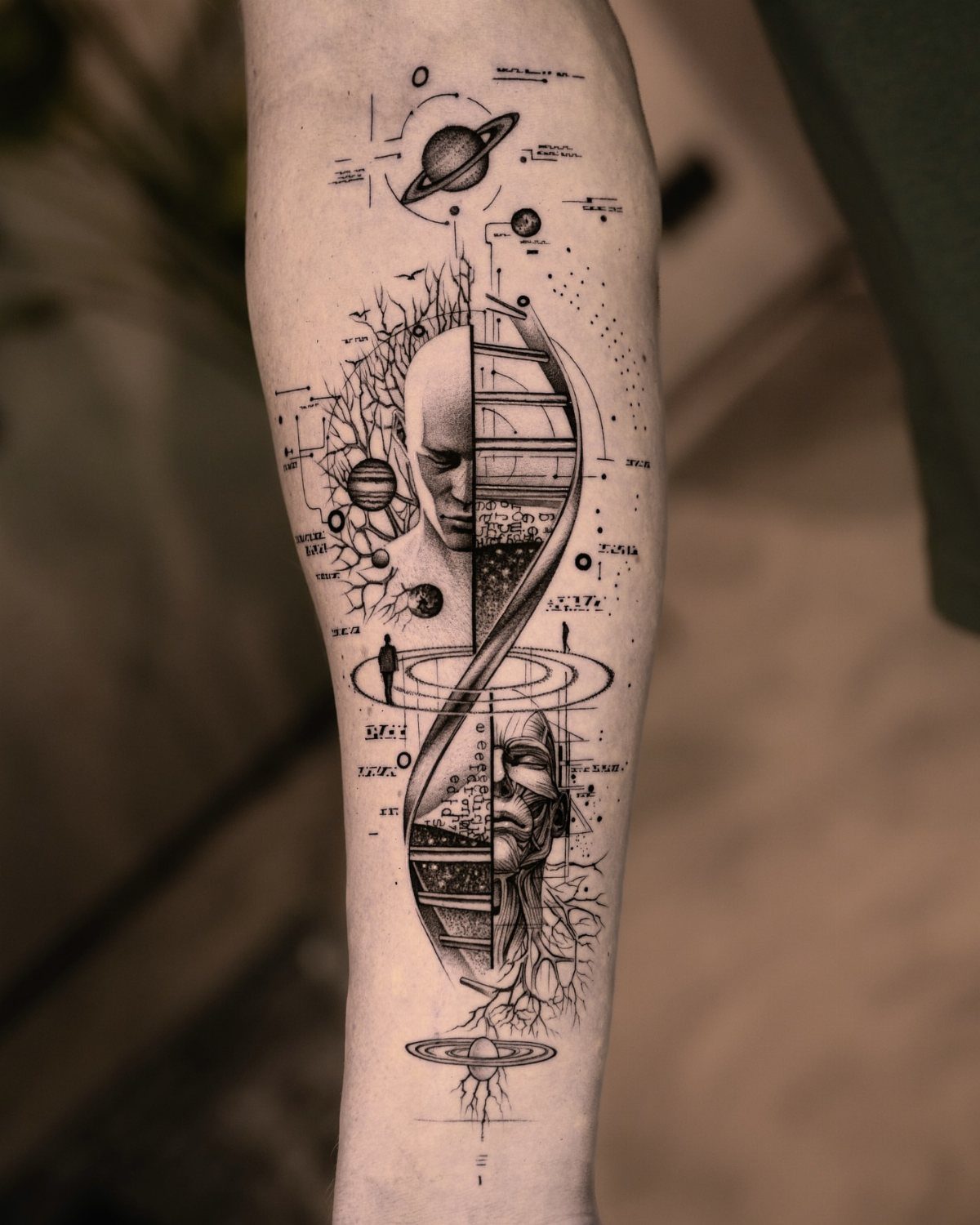
Layering faces, celestial bodies and DNA strands turns an abstract idea into something visual. The mix of organic and geometric forms gives structure without losing the surreal quality.
Black ink suits this style because shading alone creates depth across different elements. The forearm holds a composition this complex without needing full sleeve coverage, and pain stays moderate compared to bony areas.
Planets and helixes are more forgiving, but proportion matters across all three.
21. Clock Tattoos
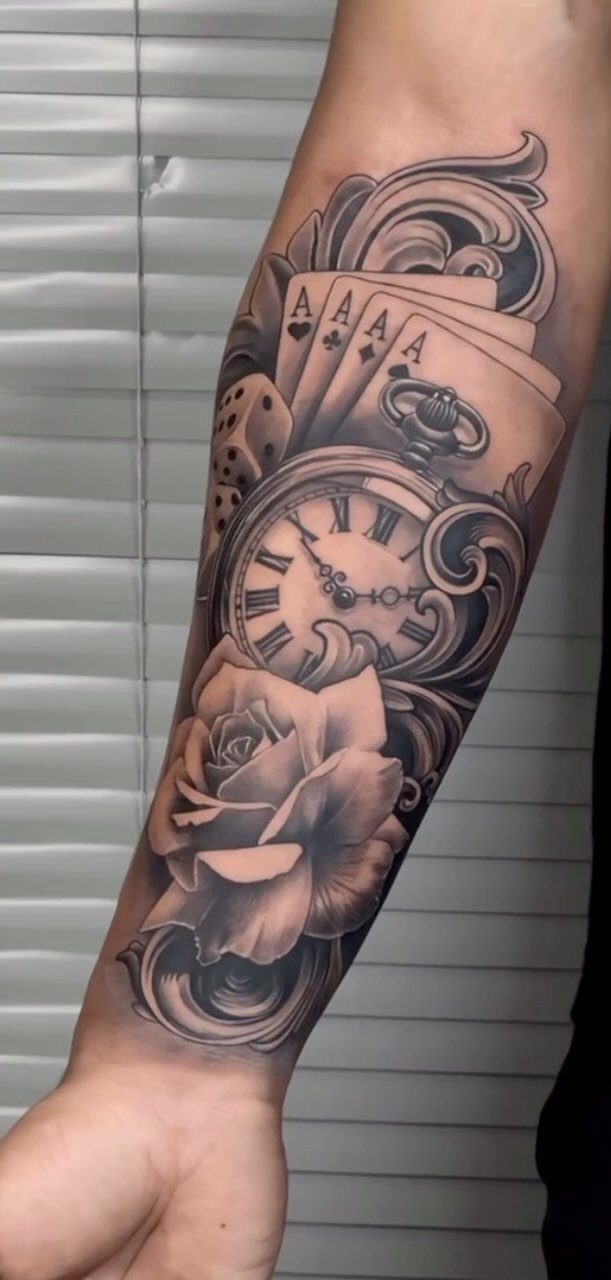
Pocket watches anchor time-themed pieces, and adding playing cards, dice or flowers builds a narrative around chance and mortality.
The ornate detailing in the watch face and case requires fine line work, while the surrounding elements fill space without crowding the central image.
Forearm placement gives you room for multiple objects without forcing them to overlap. Black and grey shading separates each element through contrast alone, and the flat surface keeps all the detail legible.
Dense compositions like this take multiple sessions. Intricate patterns inside the watch need steady hands and time to heal between passes.
22. Dagger Tattoos
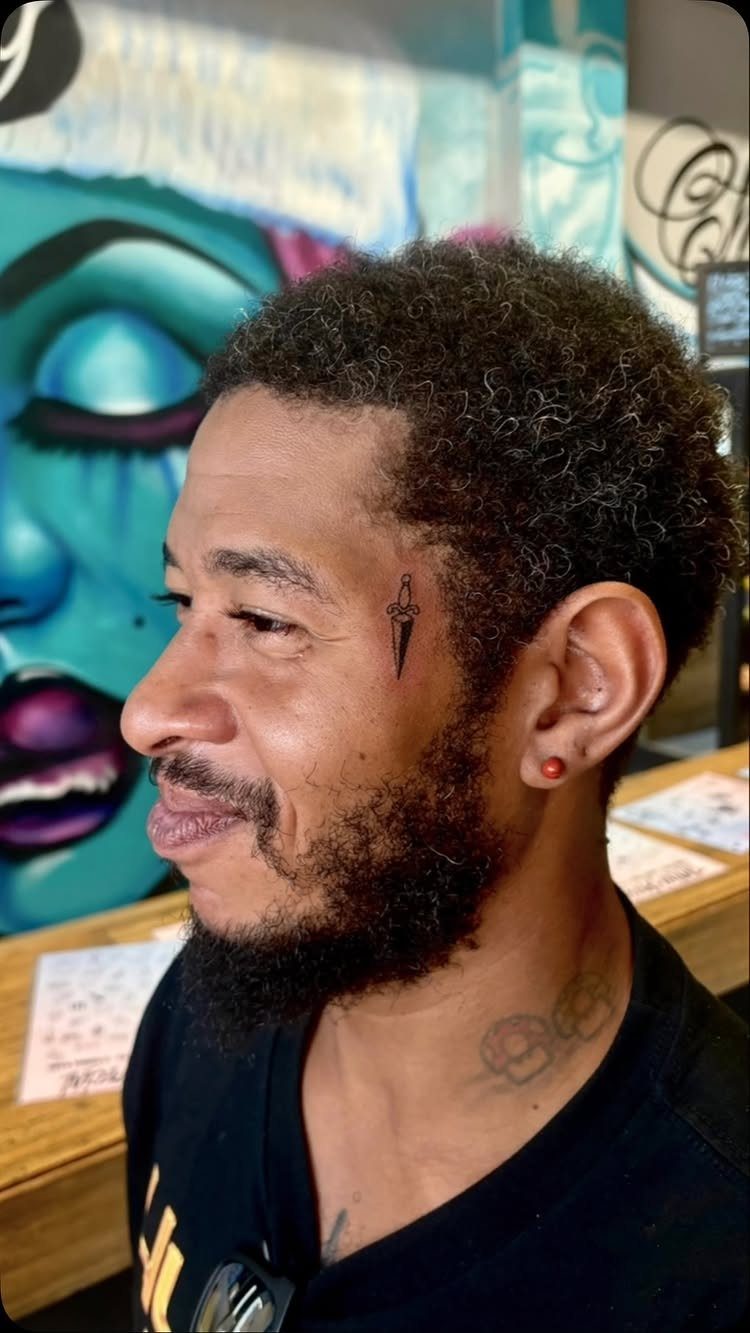
A dagger on the face puts you past subtle. The temple and cheek are high-visibility spots, and the pain is sharp because of thin skin over bone.
Small scale keeps the design from overwhelming your features, but even a simple shape here makes a statement. Most jobs and social settings will see it, so think through long-term context before committing to facial work.
Black ink needs sunscreen once it heals, since constant UV turns solid lines gray within a few years.
23. Sports Tattoo
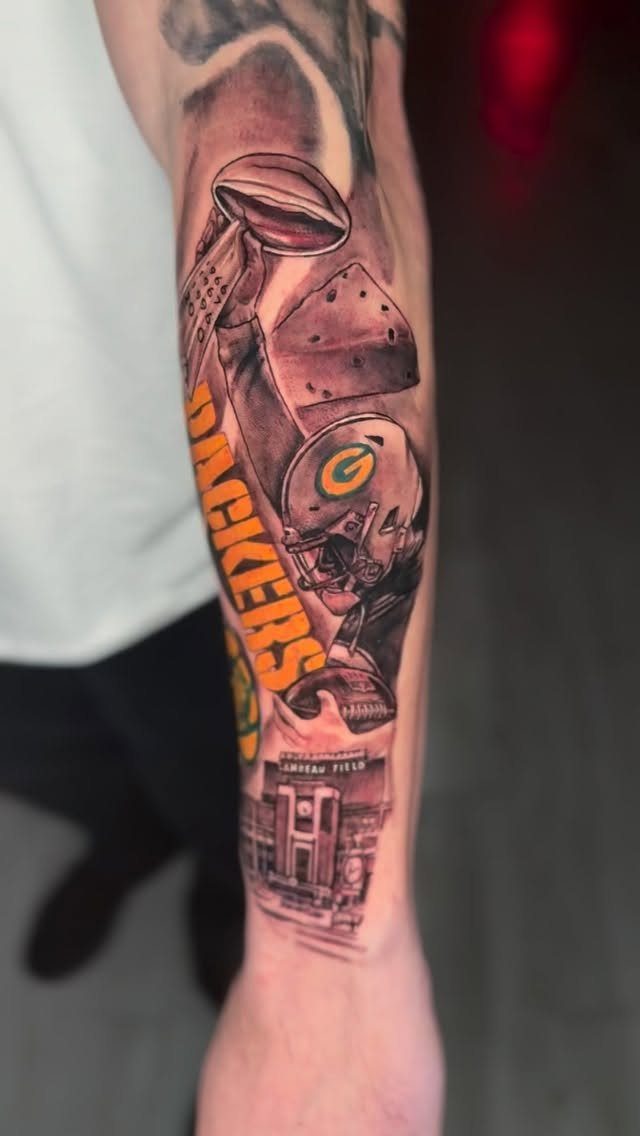
Team tattoos signal loyalty, and a forearm piece keeps it visible. Combining a helmet, player portrait, stadium and text builds a composition that tells a story rather than just showing a logo.
Color would add team branding, but black and grey holds detail better over time.
24. Traditional Japanese Body Art
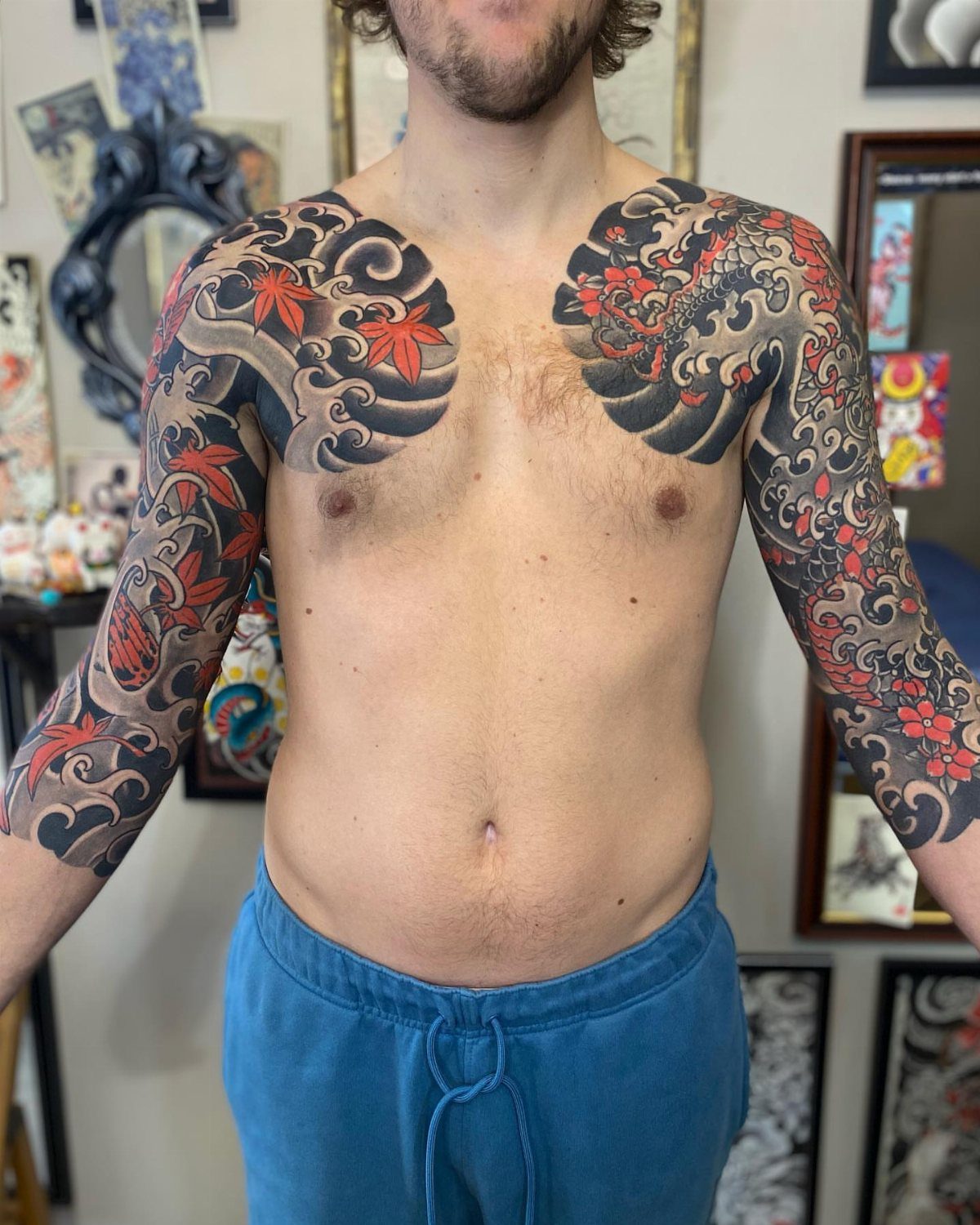
Japanese body art builds symmetry across the shoulders and arms, using waves, wind bars and natural elements like maple leaves. The style follows centuries of refined technique, with bold outlines and controlled color that age well.
Shoulder placement offers broad, curved surfaces that follow muscle contours. The work extends naturally down the arms or across the chest, and the symmetrical composition balances both sides without requiring identical mirror images.
Building a full sleeve or back piece takes months of appointments, since each sitting adds another layer of shading and color.
25. Dragon Tattoos
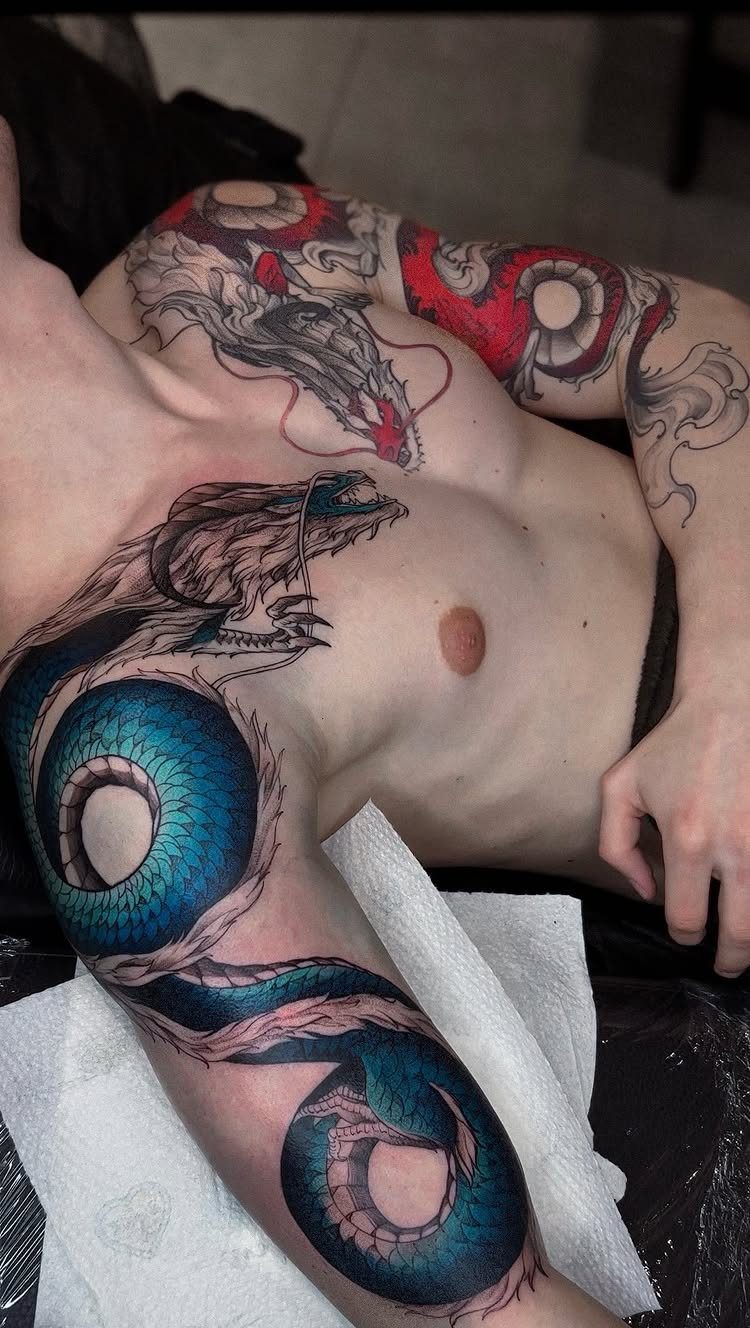
Dragons wind across the body, and full coverage on the chest and arms lets the form follow muscle and bone.
The detail in the scales, claws and face needs color to read at its best, with reds, blues and golds holding the traditional palette.
Chest work ranks high for pain near the sternum, though the outer pectorals are more manageable. Sessions stretch over months because shading this dense cannot be rushed.
Color holds well if you avoid sun exposure during healing.
26. Ship Tattoo
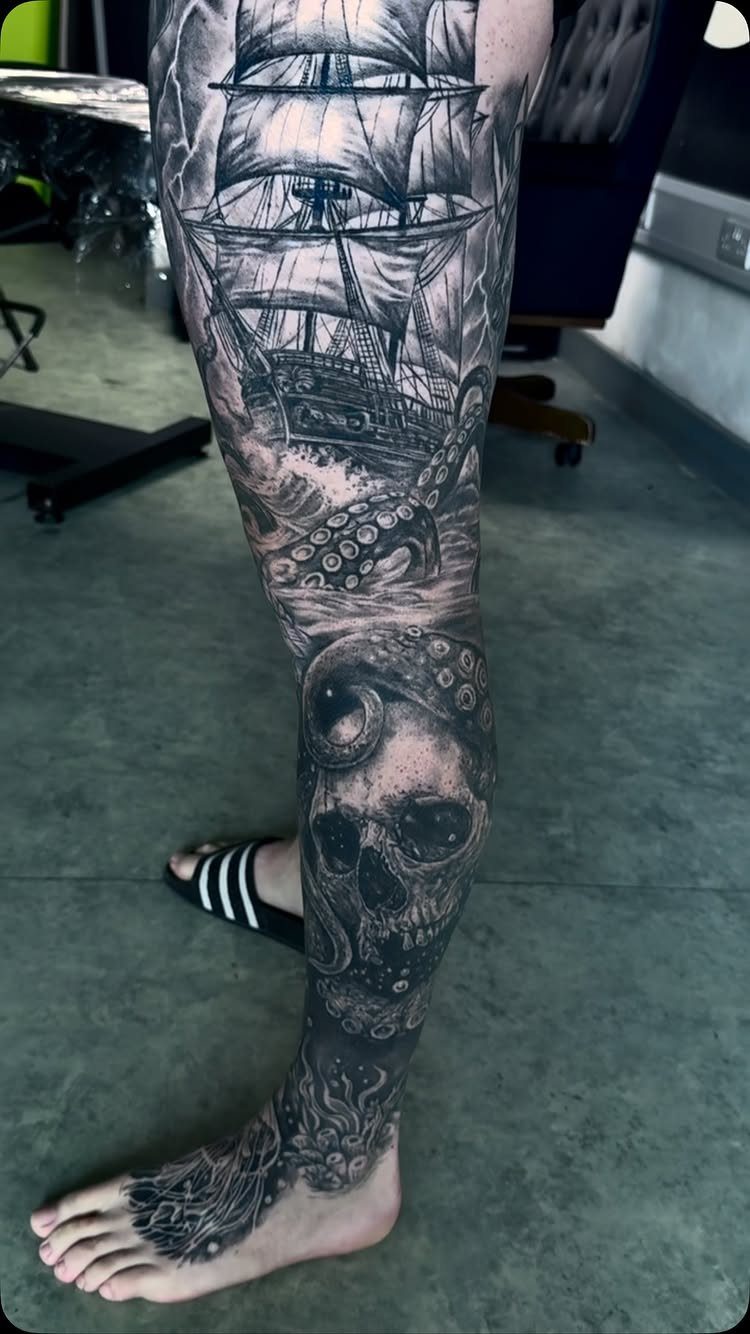
A ship paired with an octopus and skull builds a full leg sleeve with classic maritime themes. The leg’s length lets you stack multiple elements without crowding, and black ink keeps the composition unified.
The shin bone sits right under the skin, making this one of the sharper placements. A full leg piece takes several sessions, since the surface area demands time.
Bold outlines age better than fine detail in areas that flex constantly.
27. Phoenix Tattoos
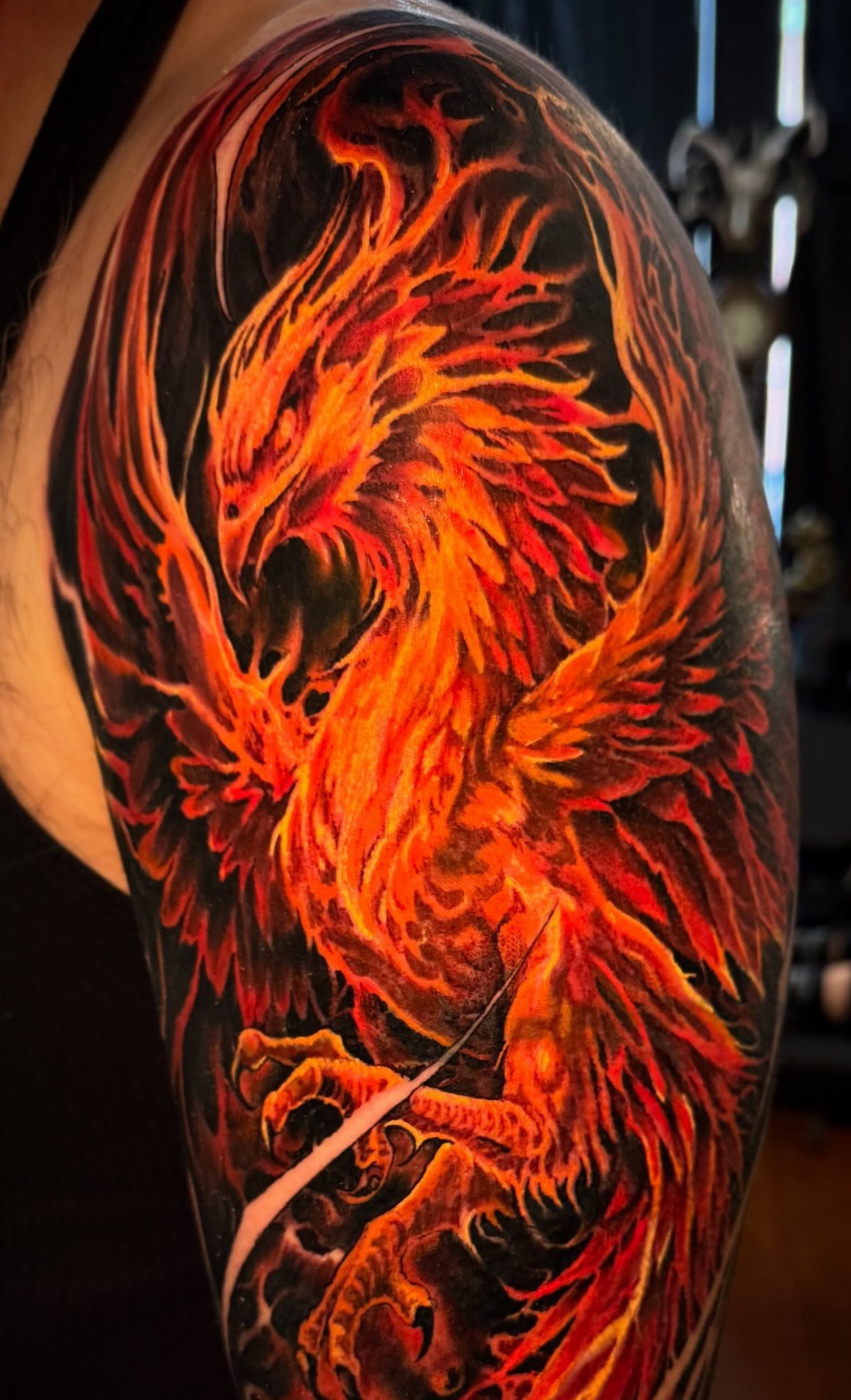
A phoenix rising in flame covers the shoulder and upper arm, and the wing spread needs room to read clearly. Color gives this subject its impact, with reds, oranges and yellows pulling the fire forward against black shading.
Shoulder placement offers a curved surface that follows the deltoid, though the cap itself is more painful than the outer arm. Feather detail requires fine shading, so expect multiple sessions for a piece this layered.
Reds and oranges lose intensity faster than black ink, meaning a session every few years to restore the glow.
28. Family Crest Tattoos
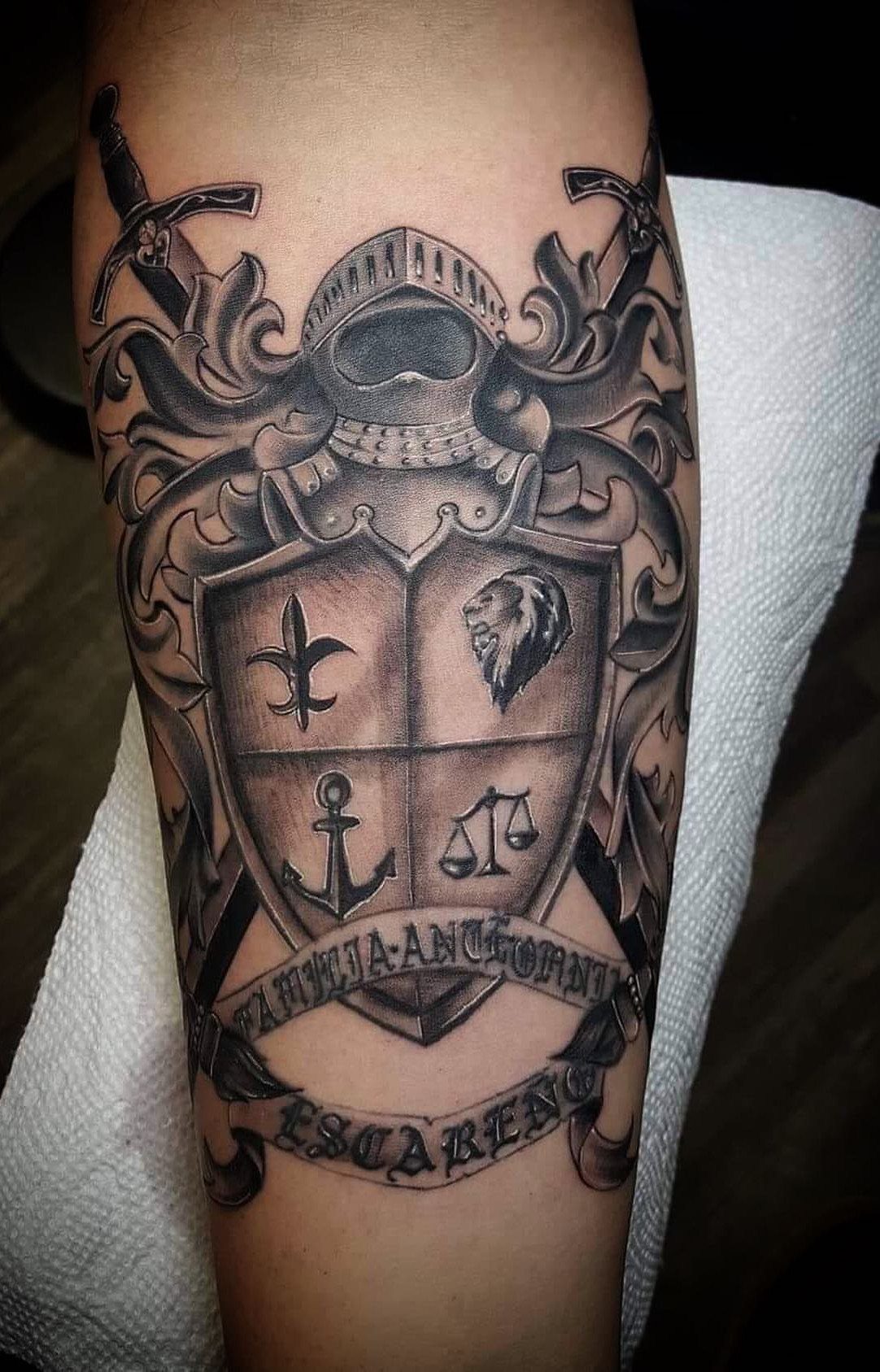
A heraldic shield with helmet, swords and banners ties personal history to a visual form. The forearm holds the composition without distortion, and black and grey shading separates the metal textures from the ribbon text.
Banner lettering stays readable if the font size is large enough and the spacing is clean. Tiny script turns to mush once the skin heals and the lines spread.
Pain on the forearm is moderate, and sessions are typically short for a piece this size.
29. Compass Tattoos
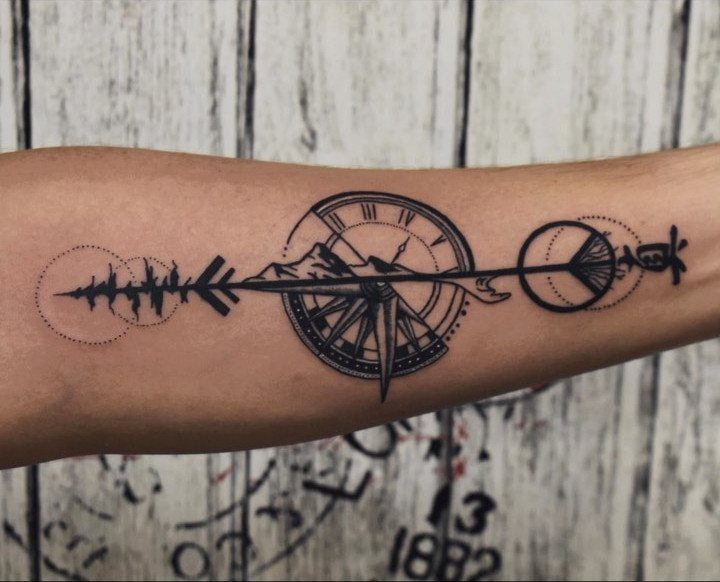
A compass anchors a scene with mountains, an arrow and moon, turning a navigational tool into a personal marker. The forearm’s flat surface keeps all the elements legible, and black ink lets shading do the depth work.
Combining symbols adds layers of meaning, though each piece needs enough size to stay clear as the tattoo ages. Line weight matters here, thin details fade faster than bold shapes.
Forearm pain is manageable, and a piece this size usually finishes in one or two sessions.
30. Eagle Tattoos
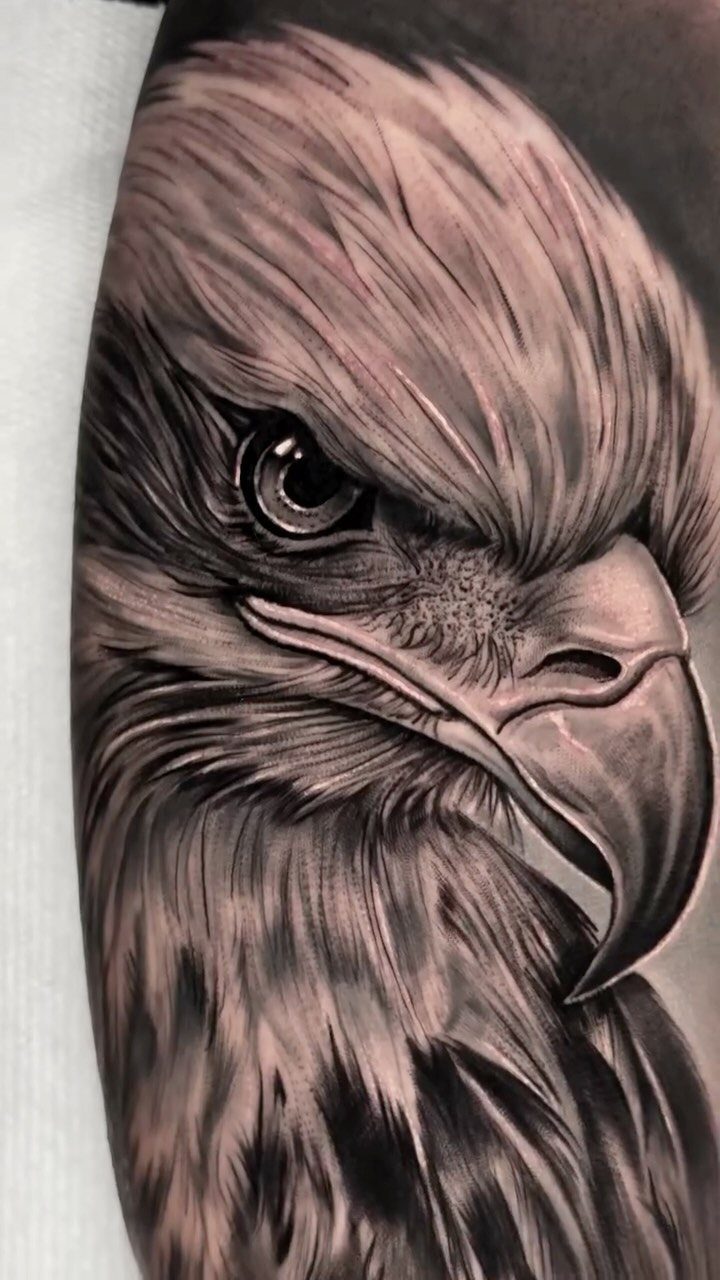
An eagle head in black and grey realism demands fine shading in the feathers and beak.
The detail reads best when the piece is large enough for texture to come through, and placement on a flat area like the upper arm or chest keeps the proportions true.
Realism requires an artist who can handle gradation without muddying the midtones. Fine feather work softens after a decade, so budget for a refresh if crisp edges matter to you.
Pain varies by placement, though most flat muscle areas stay moderate.
31. Samurai Tattoos
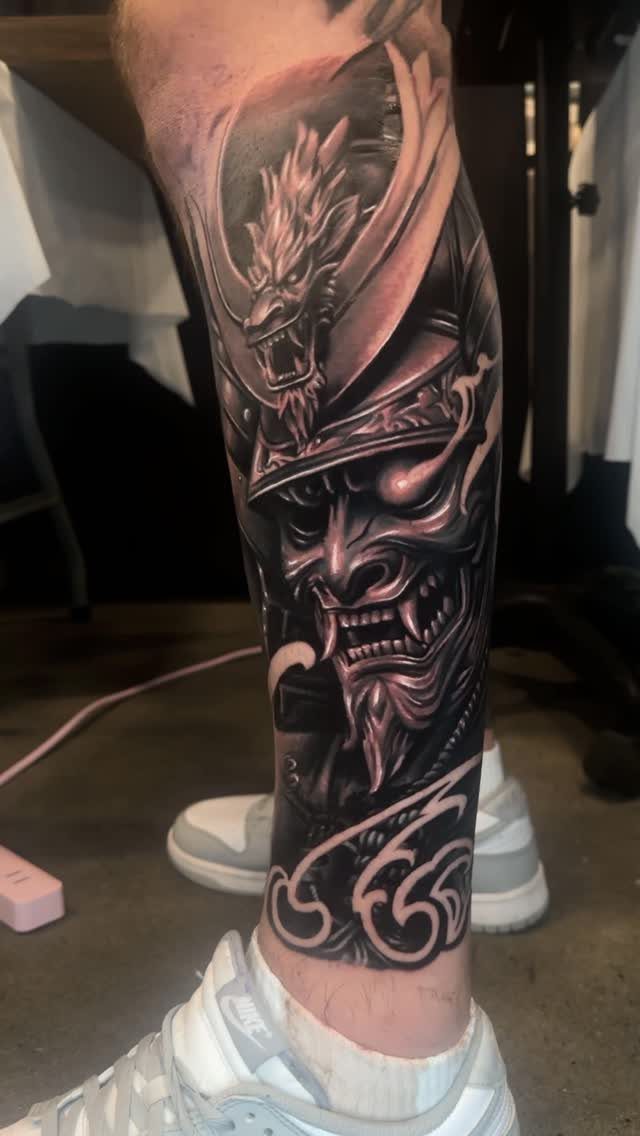
A demonic samurai mask paired with a dragon creates a composition that reads as defiance and honor. The lower leg handles vertical designs well, and the muscle curve adds dimension to the mask’s structure.
Black and grey shading gives the metal plates and dragon scales depth without competing for attention. Fine detail in the teeth and eyes needs solid line weight to hold clarity as the tattoo ages.
Sessions depend on coverage, but a piece this detailed usually takes two or three appointments.
32. Abstract Tattoos
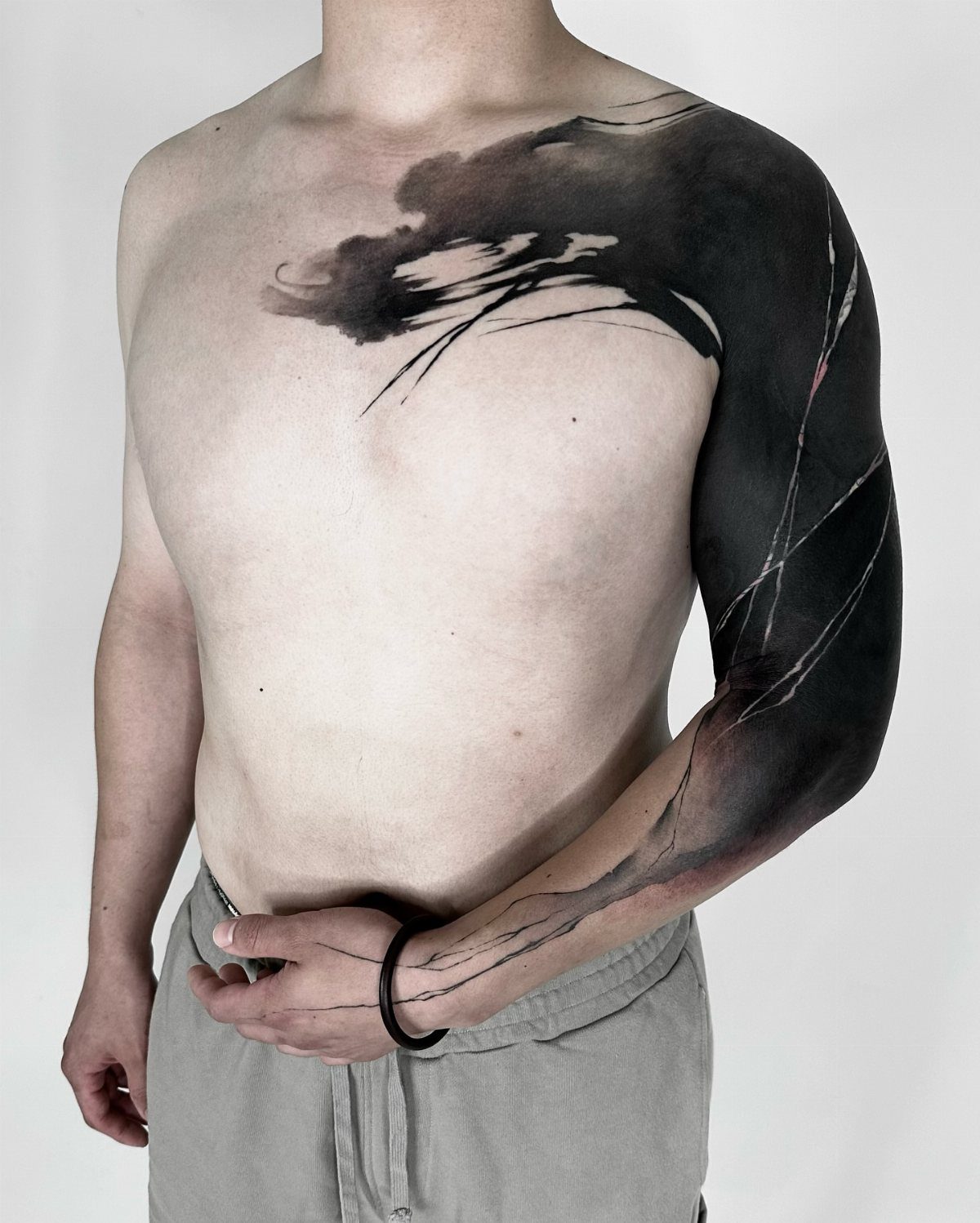
Brushstroke tattoos borrow from calligraphy and abstract painting, leaving edges rough and the form open to interpretation. The chest and shoulder offer a broad canvas, and the black ink follows the body’s natural lines without forcing symmetry.
This style ages differently than realism. Soft edges and intentional voids mean the piece evolves with your skin rather than fighting it, and touch-ups are rarely needed because precision was never the goal.
Chest work near the sternum hurts more than the shoulder, though a single-session piece like this keeps the time manageable.
33. Cross Tattoo
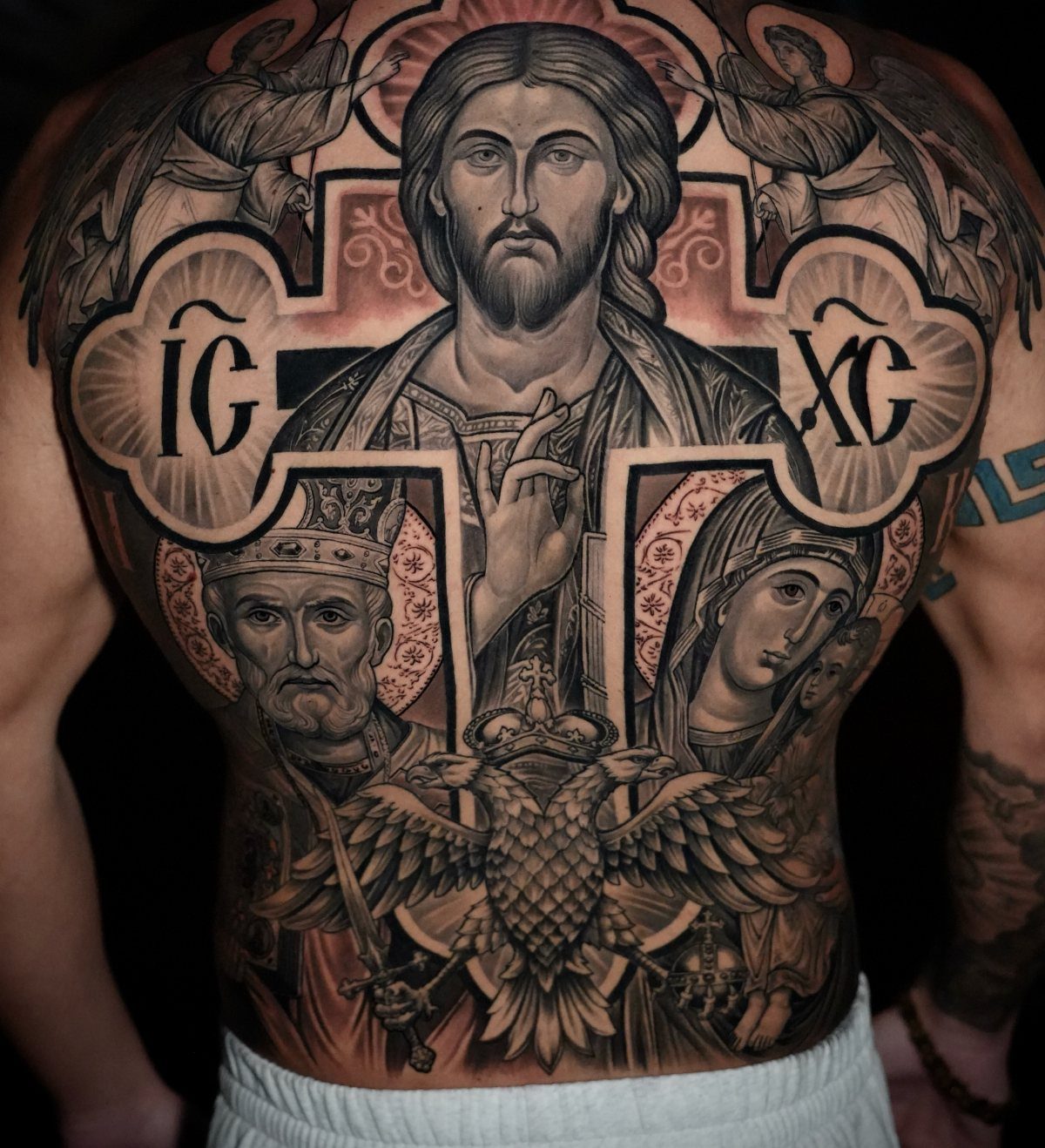
A full back piece combining Christ, Mary, saints and iconography builds a religious narrative across the largest uninterrupted surface on the body. The cross frames the composition, and layered figures create depth through shading alone.
Black and grey realism demands an artist who handles faces well. Proportions shift across the spine’s curve, so the layout needs to account for how the body moves.
Back work takes months. Pain varies from moderate along the lats to sharp near the spine, and each session covers a section rather than finishing the whole piece at once.
34. Zodiac Tattoos
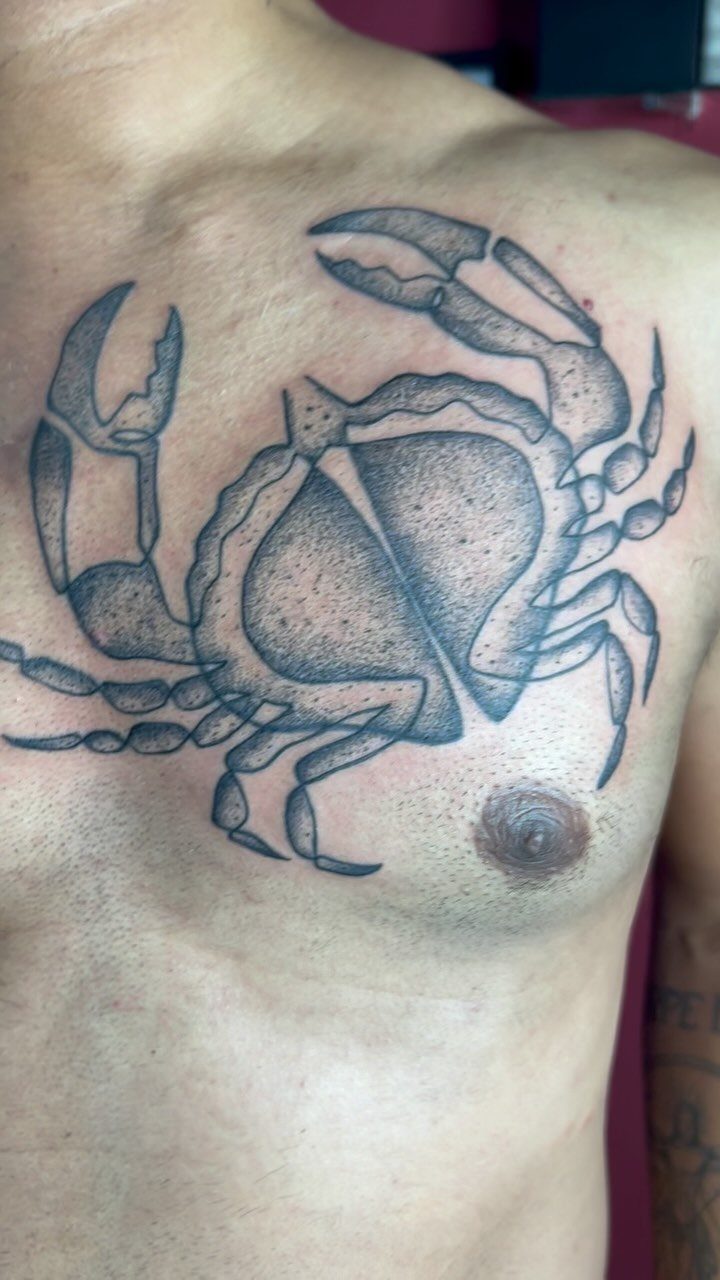
A crab on the chest marks Cancer, and the detail in the shell and legs gives the symbol weight. Chest placement centers the piece, and black and grey shading keeps the focus on texture rather than color.
Zodiac tattoos work when the symbol is recognizable without needing text to explain it. The crab reads clearly at this scale, and the chest offers flat space that holds detail without distortion.
35. Heart Tattoos
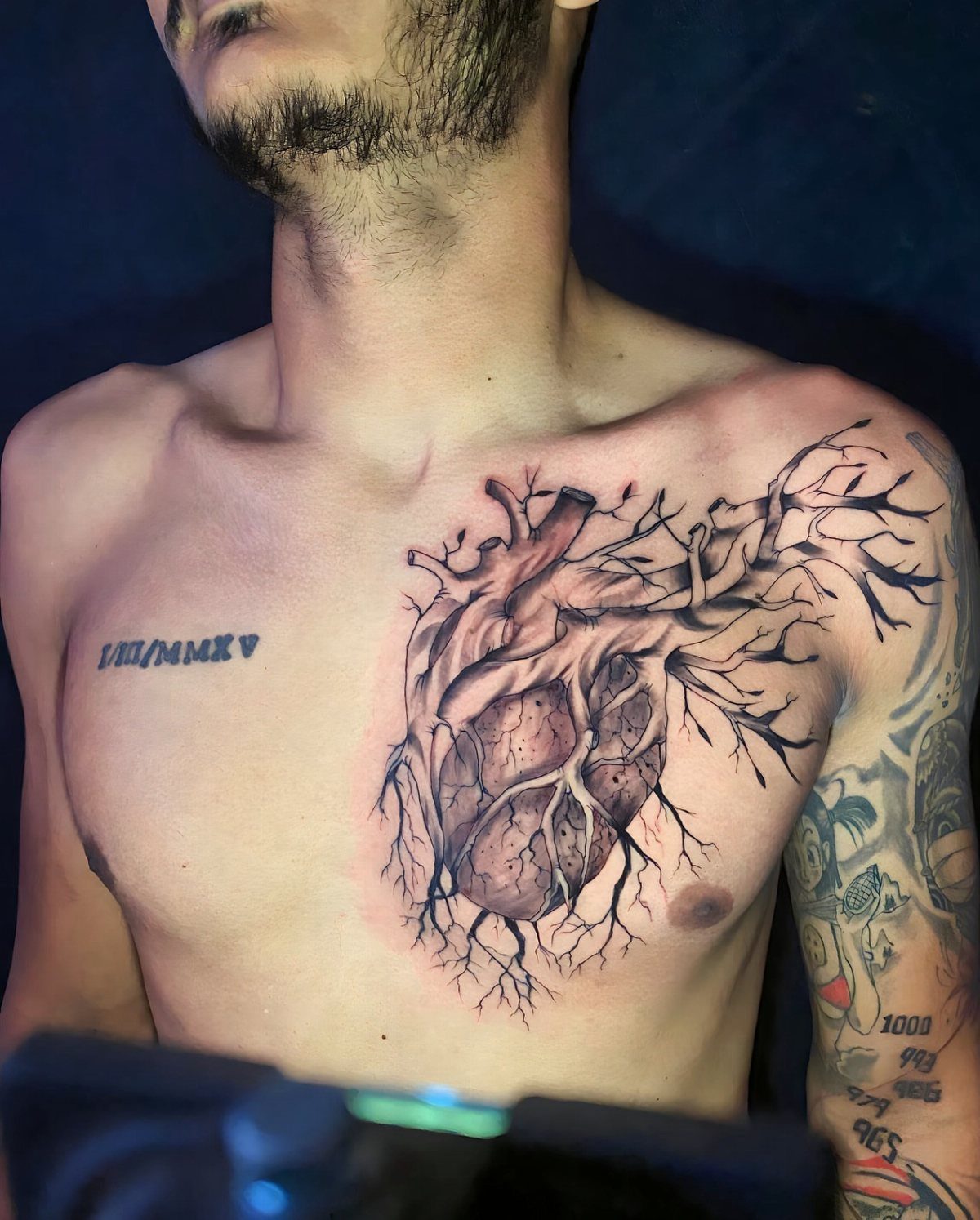
An anatomical heart trades symbolism for realism, replacing the smooth curve of a traditional heart with branching arteries and chambers that reward close detail.
The chest centers the image where the real organ sits, and the root-like vessels extend the design across the skin without needing a border.
Black ink handles the valve detail and shading in the chambers, and the veins give the piece movement. Realism requires an artist who understands the anatomy they are rendering, or the proportions fall apart.
Chest pain is highest near the sternum. A piece this detailed takes multiple sessions to finish the shading without overworking the skin.
36. Star Tattoos
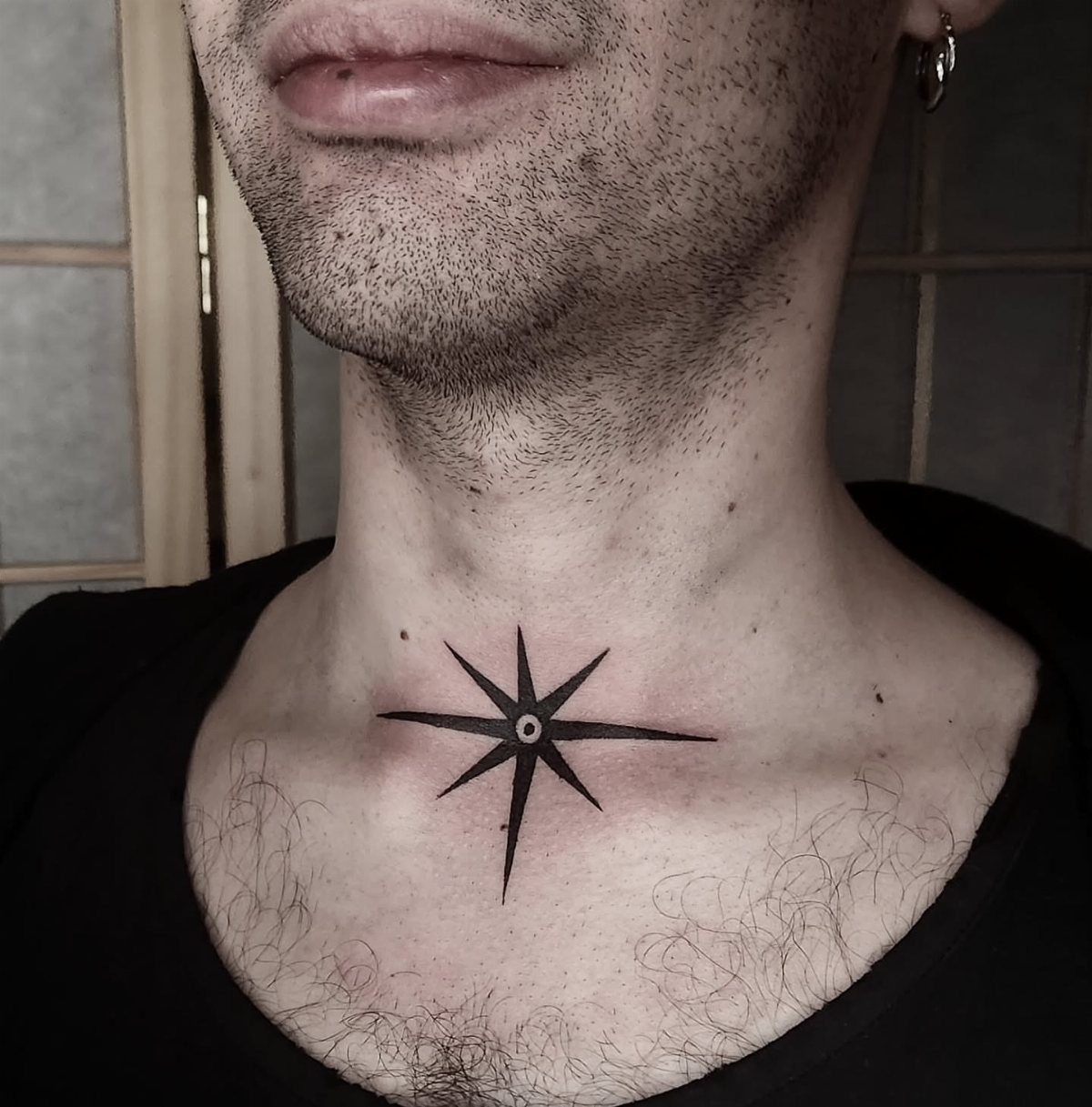
A star on the throat puts the piece at eye level in every conversation. The neck offers no fat or muscle to cushion the needle, so pain is high and the session feels longer than the small size suggests.
Black ink on the throat fades faster than other placements because of constant movement and sun exposure. Touch-ups keep the edges sharp, but expect to revisit it every few years.
Choosing the Right Tattoo Artist
Portfolio review separates capable artists from those who cannot handle your specific style. Ask to see healed tattoos, not just fresh work photographed right after completion.
Schedule a consultation before committing. An artist who listens to your placement concerns, explains how your idea will age, and suggests adjustments for legibility is better than one who agrees to everything without questions.
Check how the shop handles booking deposits and reschedules. Studios with long wait times often mean experienced artists, but a wait does not guarantee quality if the portfolio does not match your needs.
Ask about touch-up policies. Some artists include one session in the original price, others charge separately.
Tattoo Placement Considerations
Visibility affects job prospects and social situations differently depending on your field. Hands, neck and face limit options in client-facing roles, while upper arms and torso stay hidden under most work attire.
Pain tolerance varies by person, but bone proximity determines baseline intensity. Sessions on high-pain spots run shorter, which spreads large designs across more appointments.
Skin that stretches with weight changes or aging affects how designs hold their shape over decades. The forearm and upper arm stay relatively stable, while hands and fingers see more distortion from joint movement and skin texture shifts.
Tattoo Aftercare Tips
Follow the cleaning schedule your artist gives you. Most recommend washing with unscented soap 2 to 3 times daily for the first week, then switching to a thin layer of fragrance-free lotion once the skin stops weeping.
Avoid submerging the tattoo in water.
Showers are fine, but pools, hot tubs and baths introduce bacteria while the skin is open. Direct sun fades ink faster, so keep new work covered or use high-SPF sunscreen after the initial healing finishes.
Itching starts around day 3 or 4 as scabs form.
Do not scratch or pick at them. Peeling is normal and means healing is progressing.
Redness and swelling should decrease. If either worsens or you see yellow discharge, contact your artist or a doctor.
Frequently Asked Questions
What is a good first tattoo for a man?
A small symbol, short script or simple geometric pattern works well to start.
The forearm, shoulder or upper arm offer manageable pain and enough flat space to keep the design readable, and you can gauge how sitting through the process feels before committing to larger coverage.
What are the most popular tattoos for men?
Skulls, lions, wolves and tribal designs rank at the top, along with geometric patterns and minimalist line work. Black ink suits most of these subjects because it holds detail better than color as the tattoo ages.
Where do tattoos hurt the least for men?
The forearm, shoulder cap and upper arm sit over muscle with enough padding to keep pain moderate. Areas closer to bone like the ribs, sternum, wrist and neck rank much higher for discomfort.





