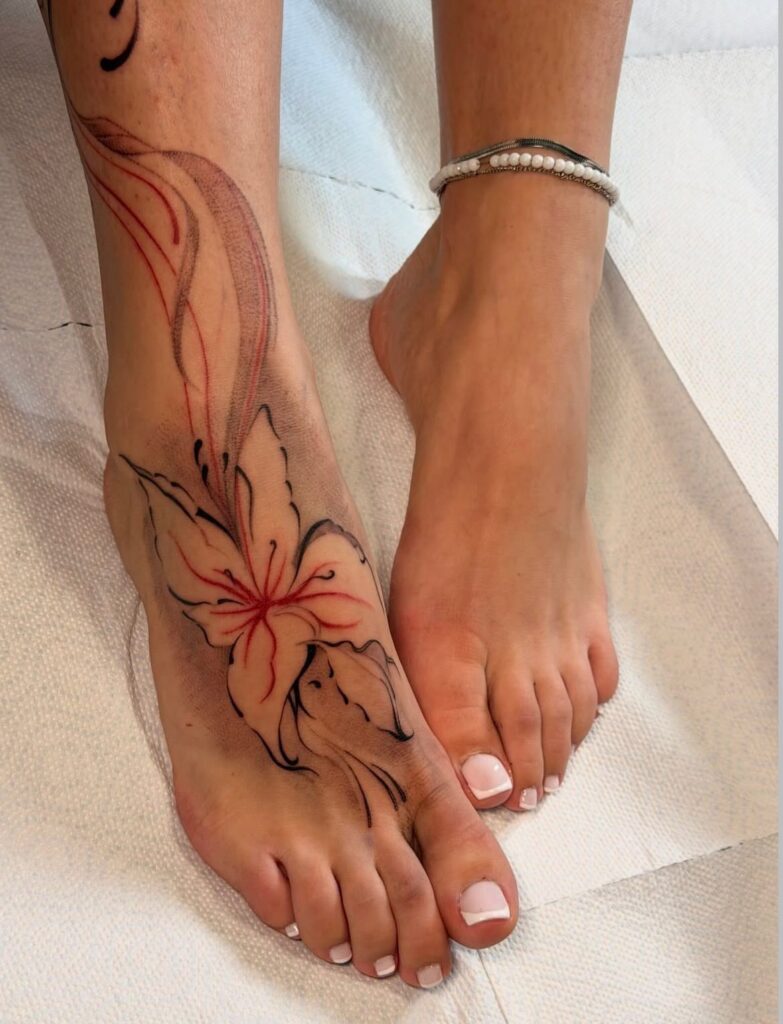
Leg tattoos for women range from minimalist line work on the calf that finishes in under 2 hours to full-leg sleeves requiring multiple sessions spread across several appointments.
Placement decides pain and visibility together: the outer thigh and calf stay tolerable and heal faster, while the kneecap and shin hurt sharper as the needle crosses bone.
1. Lion Animal Tattoo
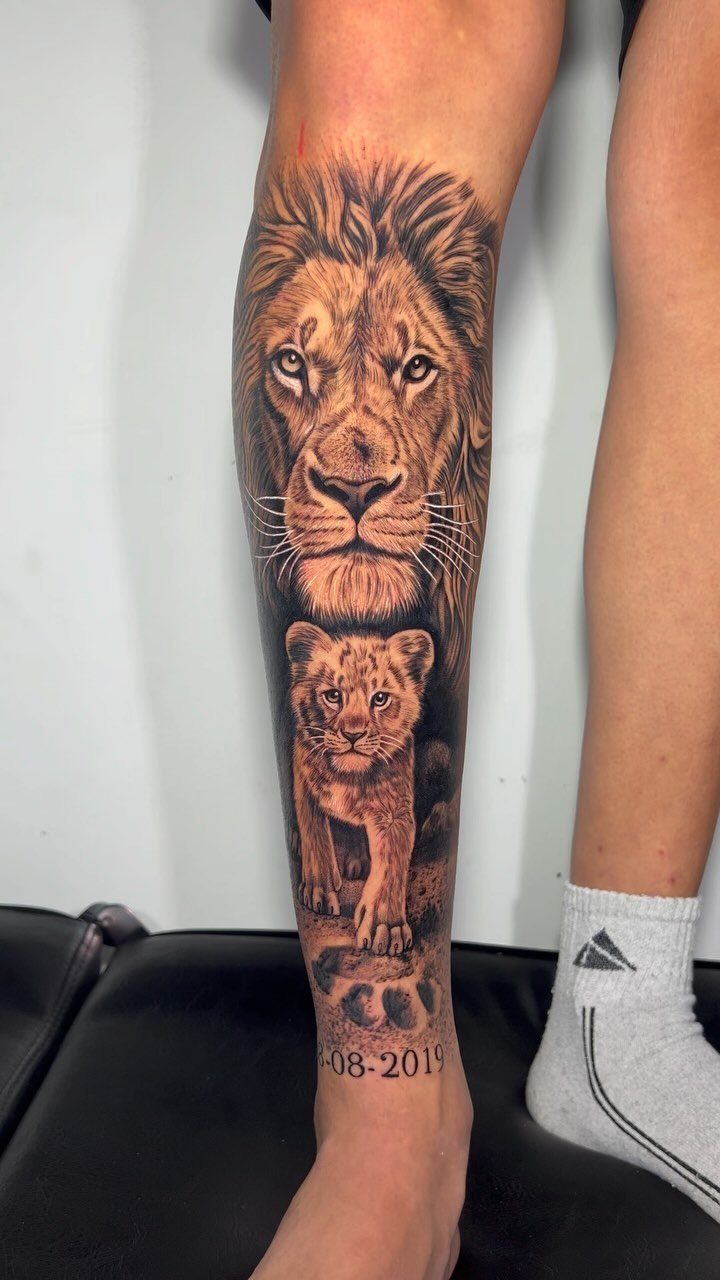
A lion and cub paired on the lower leg reads as protection and family, and the date or paw detail gives it personal weight. The grayscale shading lets the faces hold focus without competing colors.
Leg placement suits large animal portraits because the calf gives enough vertical space for both figures without cramping the composition. Pain stays moderate on the outer calf, sharper over the shin bone if the design wraps forward.
2. Mandala Tattoos
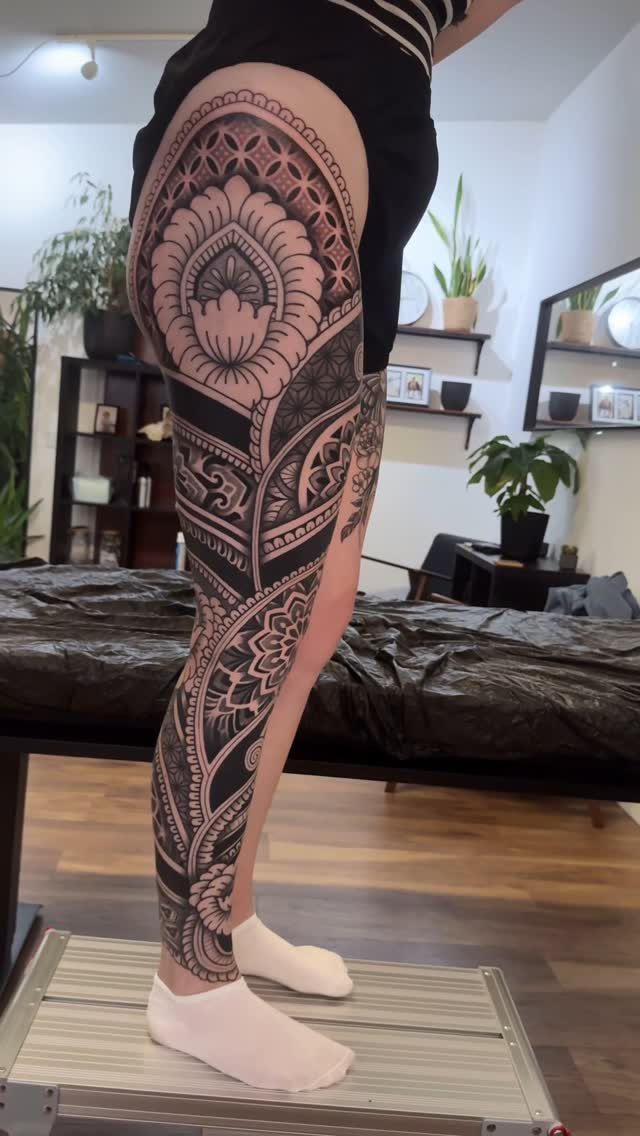
Mandala geometry fills the leg in concentric rings that follow the limb’s natural curve, and the black ink keeps the pattern readable from a distance.
The repeating symmetry suits full-leg coverage because it transitions smoothly from thigh to ankle, with no single focal point required.
Sessions for a design this dense usually split across 2 or 3 appointments, with the knee area taking the most time to heal between sittings. Pain peaks around the kneecap and inner thigh where skin sits closer to bone.
Line precision matters here: a mandala with uneven spacing or wobbly curves loses its balance fast.
3. Phoenix Tattoo
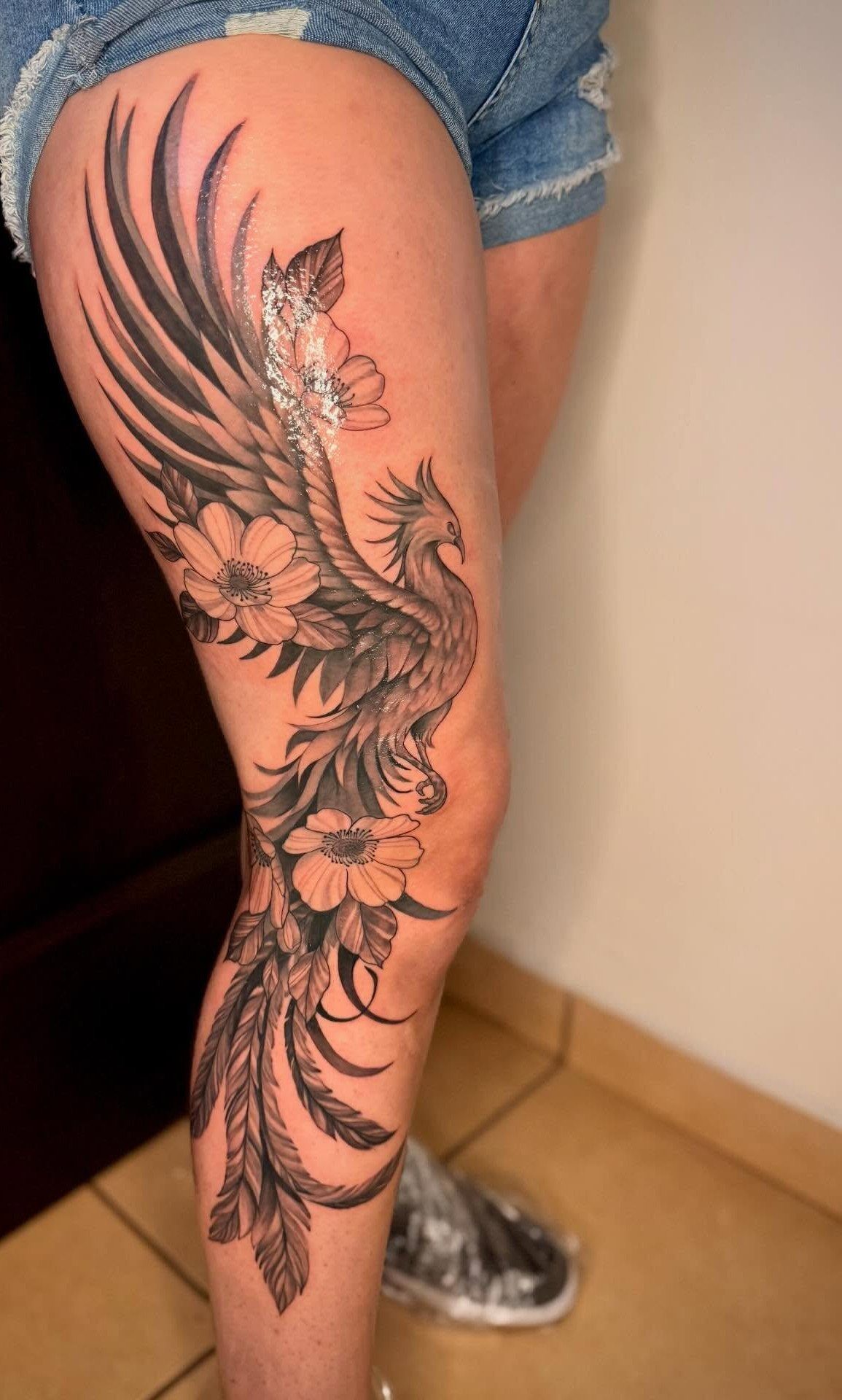
A phoenix running from thigh to shin uses the leg’s length to show the full wingspan and tail feathers in one unbroken sweep.
Black and grey shading gives the bird depth without the color commitment, and adding roses or other florals softens the composition if you want contrast against the phoenix’s sharper lines.
Leg placement hides the tattoo easily under pants but shows the full design in shorts or skirts. Pain varies: the outer thigh stays tolerable, the shin and knee hurt more as the needle crosses bone.
4. Watercolor Flower Tattoo
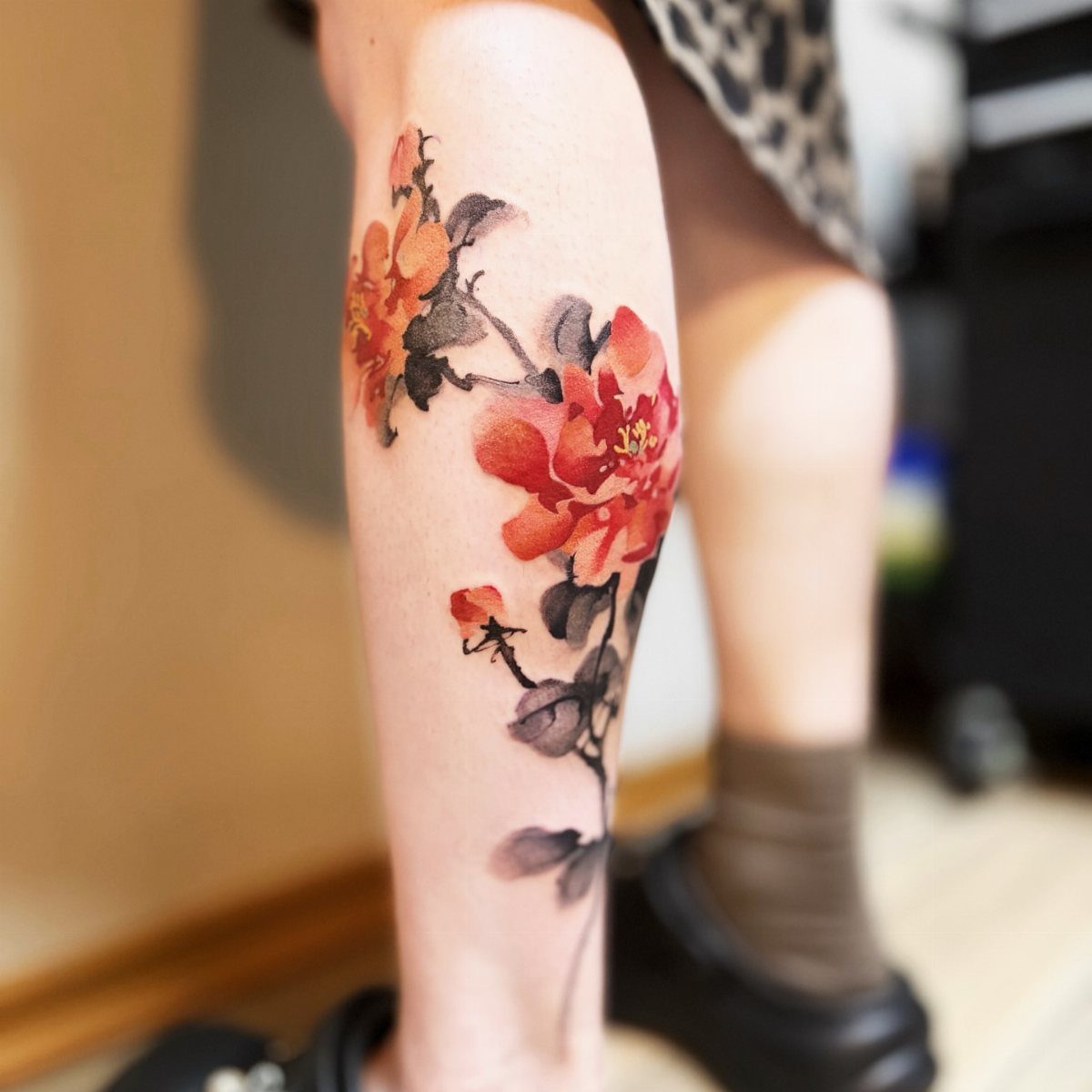
Watercolor florals on the lower leg mimic brushstrokes and color bleeds, skipping the hard black outline most tattoos rely on. Red petals with soft edges catch attention without the rigidity of traditional flower work.
The style needs more frequent touch-ups than bold linework because the color sits in lighter layers, so expect maintenance every few years to hold the saturation.
Lower leg placement keeps pain manageable and heals more quickly than areas that bend or rub against clothing constantly.
5. Colorful Butterfly Tattoo
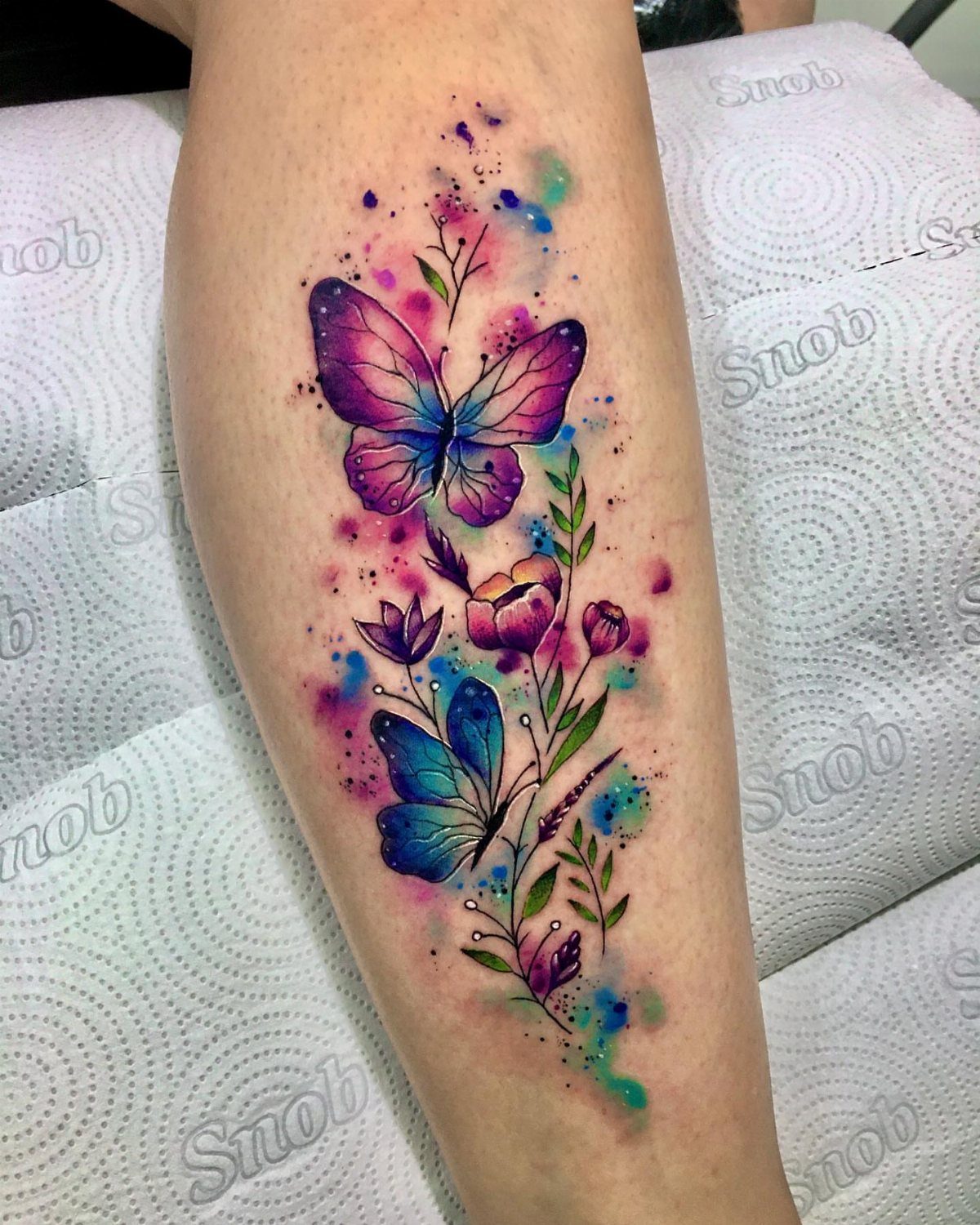
Butterflies in purple and blue with surrounding flowers give the leg a soft, decorative look that still reads clearly from across a room. Watercolor blending between the wings and petals keeps the design cohesive without rigid borders.
Butterfly tattoos suit women who want something recognizable but personal, and pairing 2 butterflies instead of one fills the space better without overcrowding. Leg placement keeps the tattoo easy to cover or show depending on what you wear.
Color vibrancy depends on your skin tone and how well you protect the tattoo from sun exposure after it heals.
6. Upper Leg Tattoo
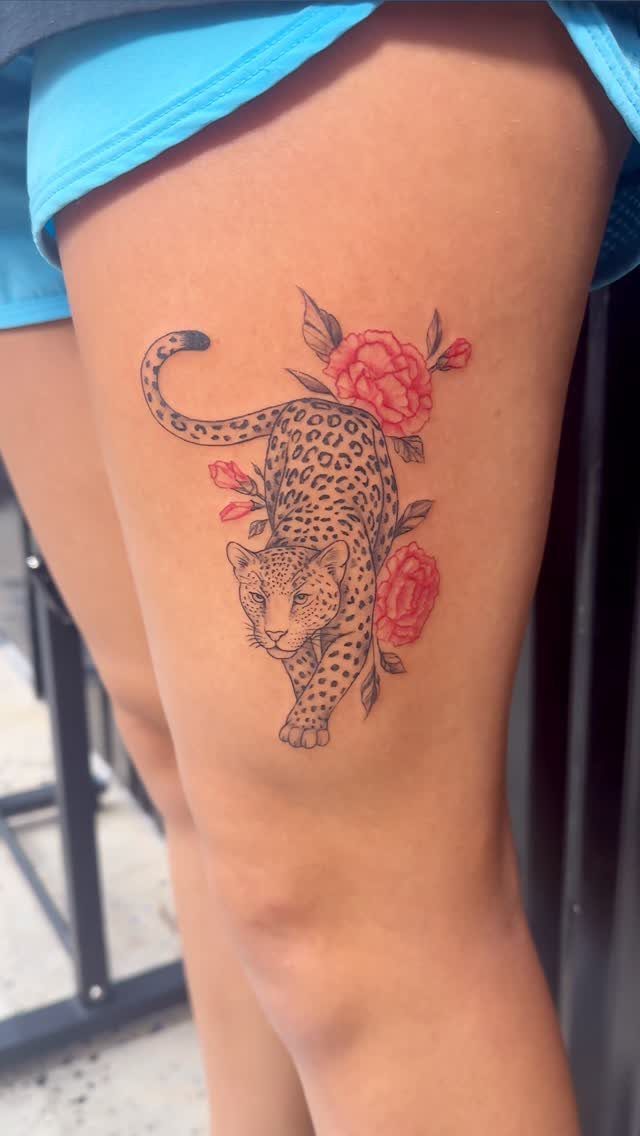
Upper leg placement, specifically the thigh, gives you room for bold designs like a leopard wrapped in roses without the sharp bone pain that comes with shin or knee work.
The muscle and fat padding here make longer sessions easier to sit through.
Thigh tattoos stay hidden under most clothing but show fully in swimwear or shorts, which suits women who want flexibility in visibility. Friction from tight pants can slow healing, so plan your wardrobe around it.
7. Minimalist Leg Tattoo
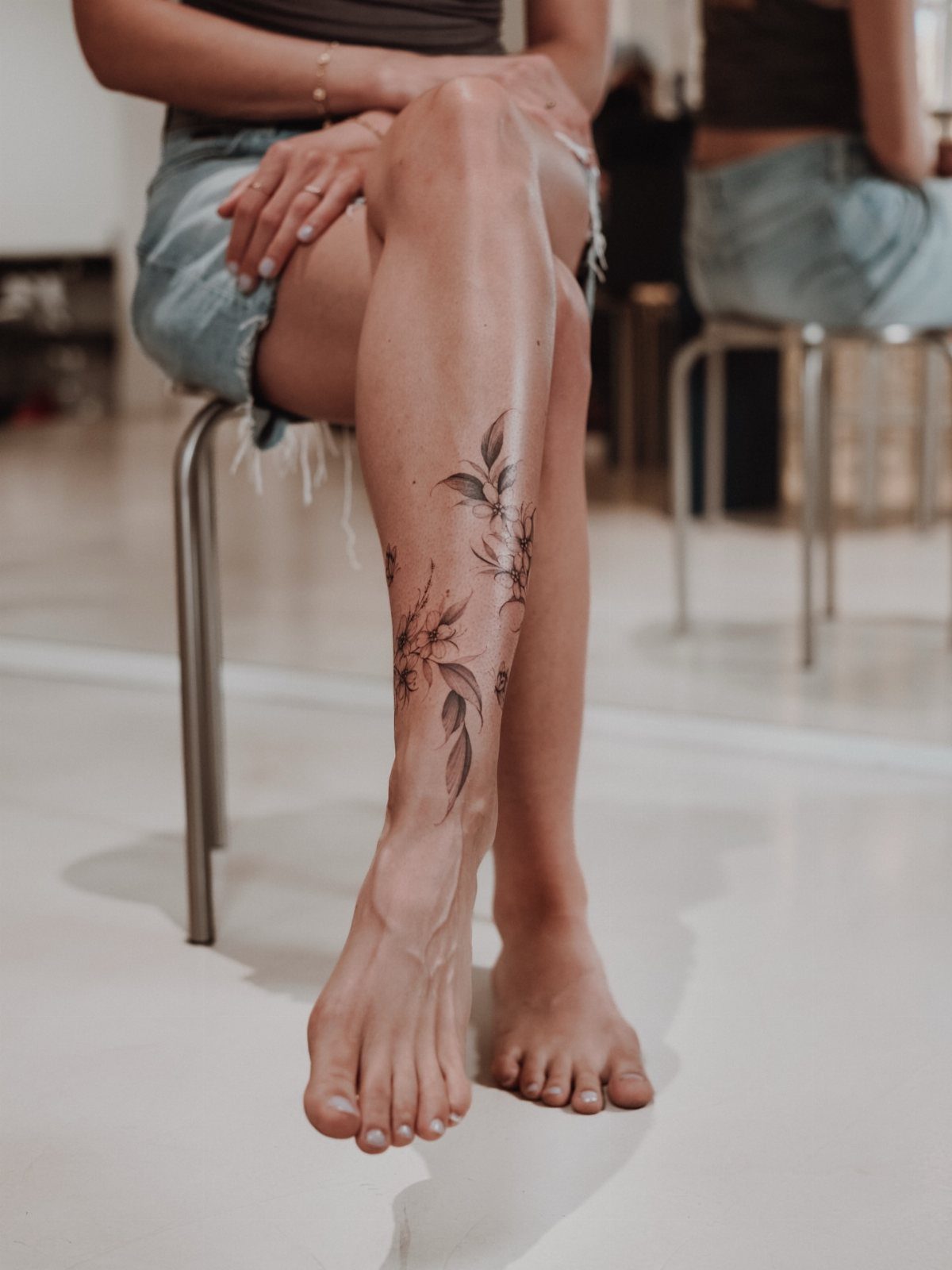
Fine-line florals and leaves on the lower leg keep the design understated without losing detail. Black ink at this scale ages well if your artist uses consistent line weight and avoids overly delicate work that blurs within a few years.
The lower leg offers a flat canvas that makes small, precise designs easier to execute cleanly. Pain here stays mild compared to ankle or knee work, and healing moves quickly with minimal friction from clothing.
Minimalist tattoos suit women who want something visible in dresses or skirts but prefer subtlety over bold coverage.
8. Geometric Black Ink Tattoo
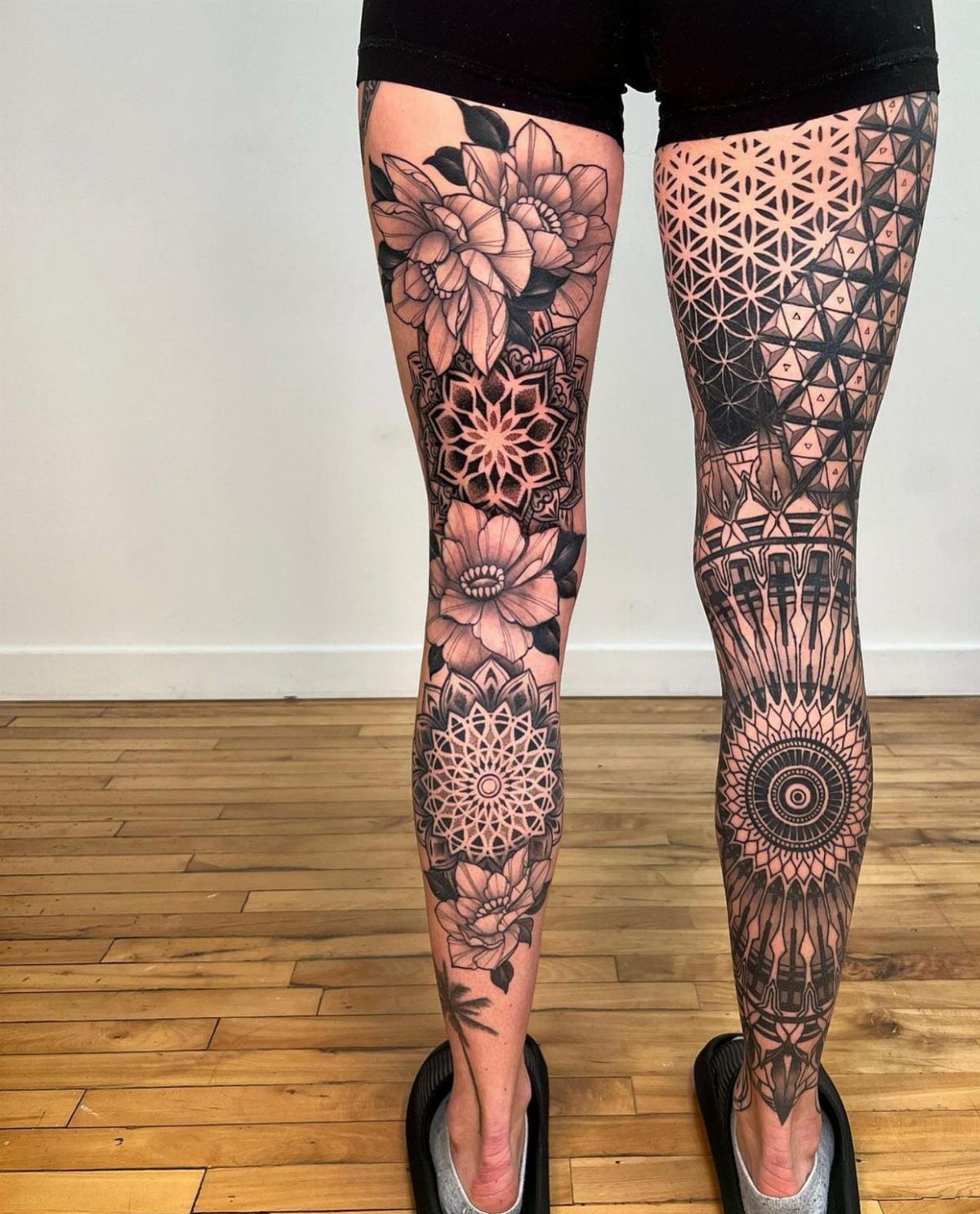
Geometric patterns paired with florals create structure without the softness that standalone flowers carry. Black ink at this density reads sharply from a distance and holds its edges longer than color or fine-line work.
Full-leg coverage like this usually requires multiple sessions to complete, with shading and detail work filling the spaces between larger shapes. The combination of straight lines and organic forms keeps the design balanced as it moves from thigh to ankle.
Leg placement lets you control visibility depending on what you wear, and the flat surface makes precise linework easier for your artist to nail.
9. Full Leg Sleeve Tattoo
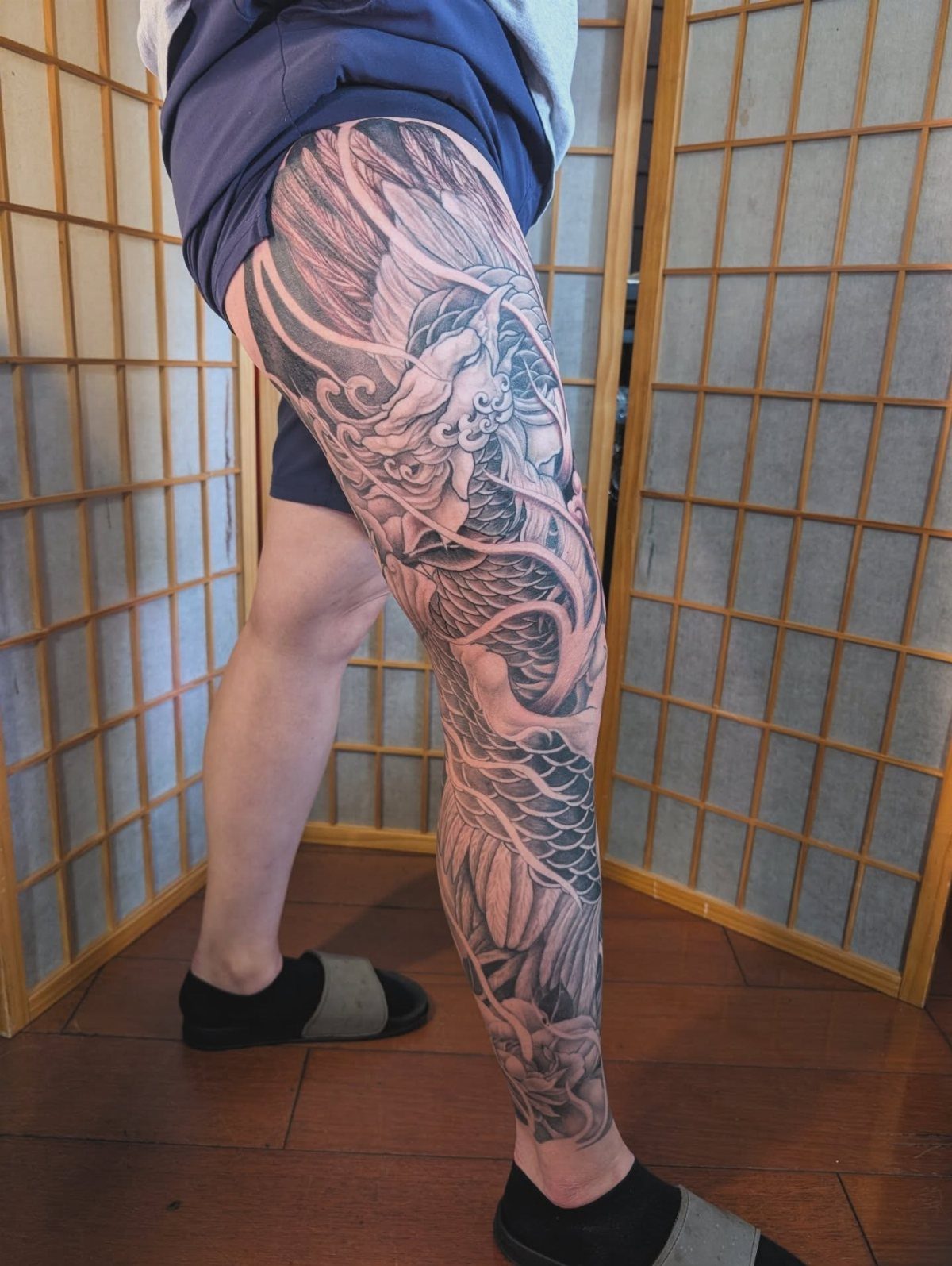
A dragon wrapped in florals from thigh to ankle uses the leg’s full length to show movement and scale without cramping the composition. Black and grey shading gives the design depth and keeps it cohesive across the entire limb.
Sessions for full-leg sleeves typically spread across several appointments.
Full sleeves suit women who want a bold statement piece that can still be covered when needed.
10. Knee Tattoo
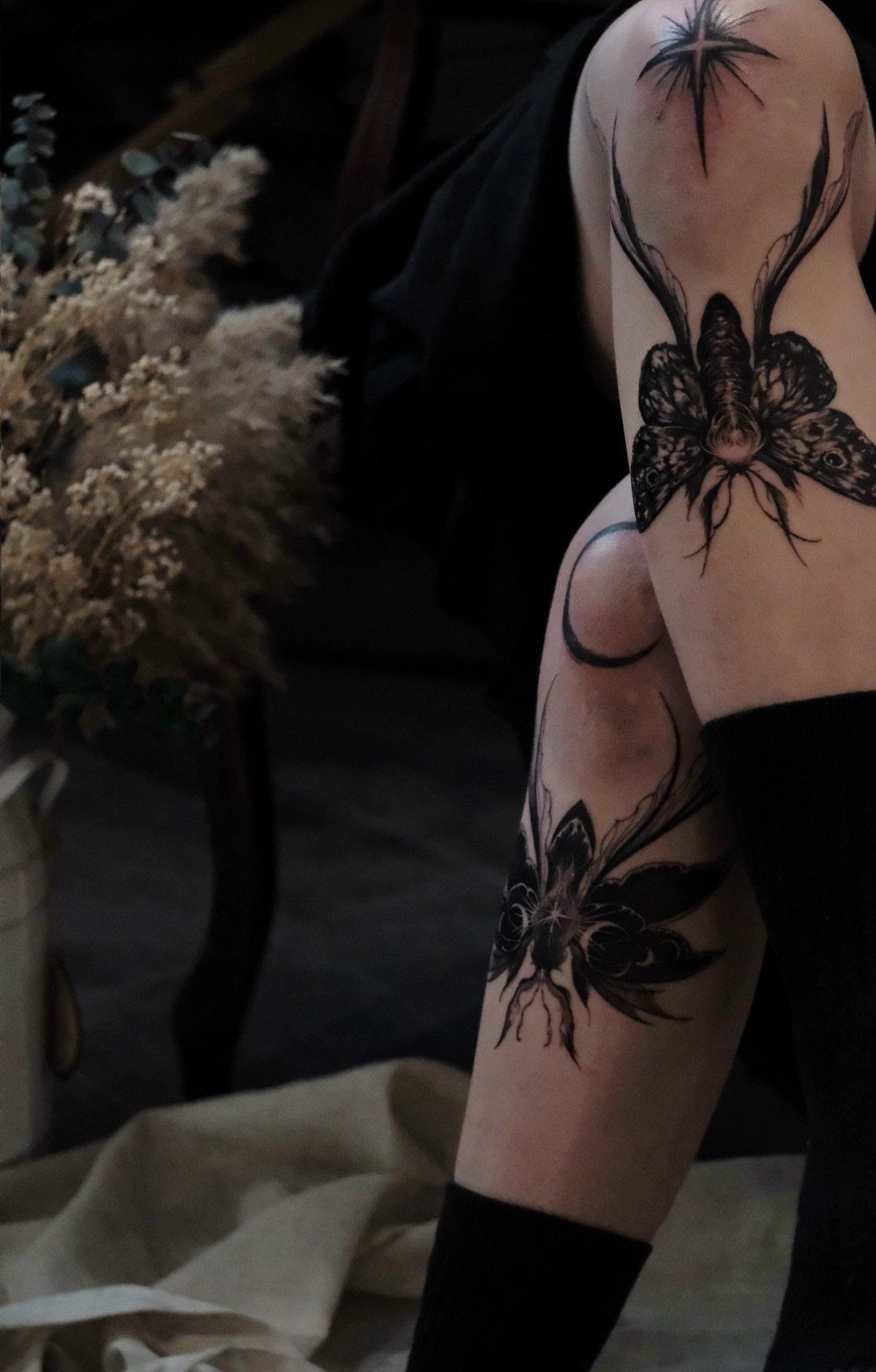
Tattooing directly on the knee takes a symmetrical design like a moth or mandala and centers it where most people avoid ink.
The joint’s natural creases distort the image when your leg bends, so designs here need bold lines and solid shapes to stay readable.
Pain on the kneecap ranks among the sharpest spots for leg tattoos because there’s almost no padding between skin and bone. Healing takes longer than most leg placements because constant movement pulls at the fresh ink.
Knee tattoos suit women who want something unexpected and are willing to sit through a tough session for it.
11. Scattered Birds Tattoo
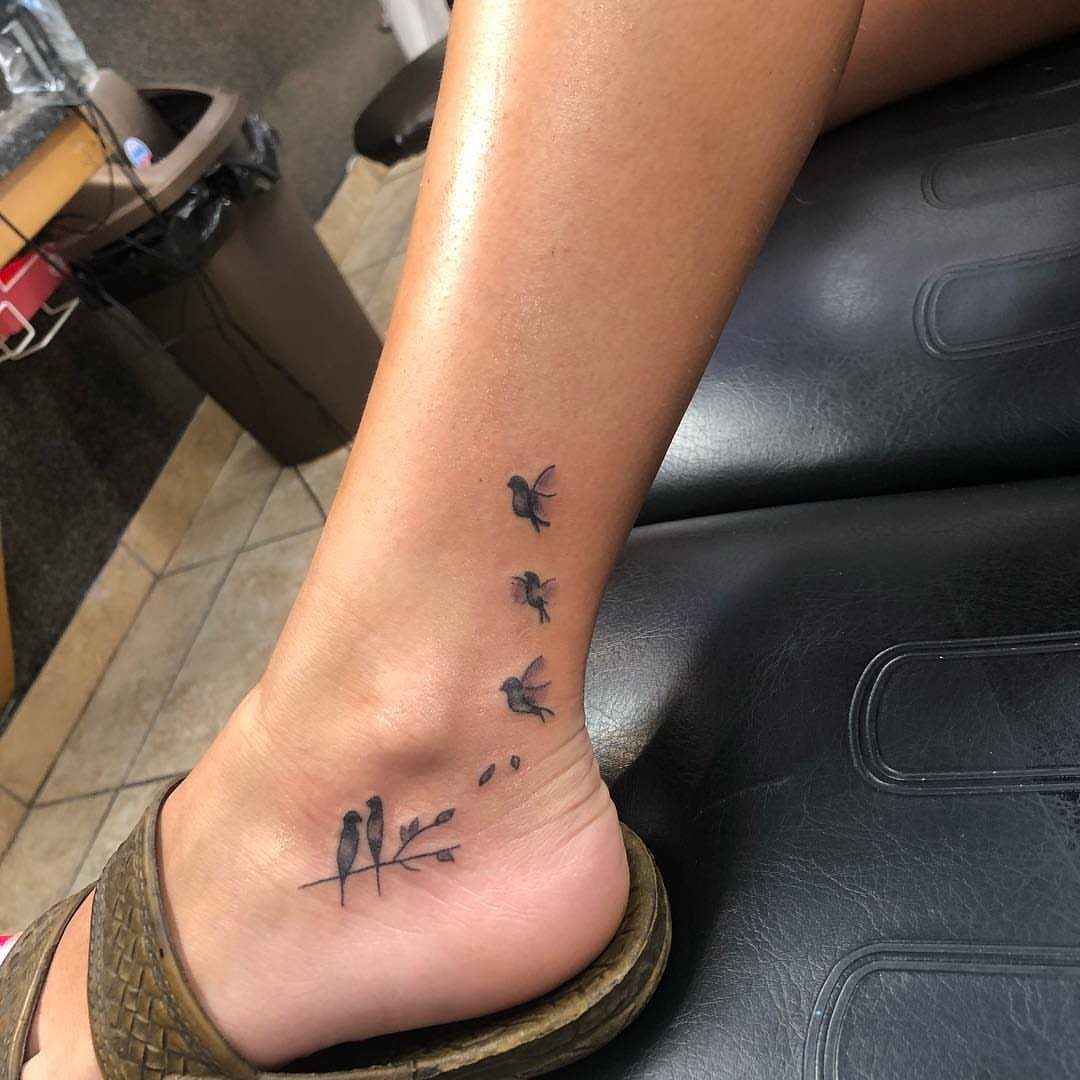
Small birds clustered near a branch on the ankle create movement without filling the entire lower leg. The scattered placement keeps the design light and works well as a standalone piece or an addition to existing ink nearby.
Ankle tattoos hurt more than calf work because the skin sits tight over bone with little cushioning underneath. The compact size means shorter sessions, usually under 2 hours, and faster healing if you avoid tight shoes during recovery.
Birds in flight read as freedom or travel, and the scale keeps them legible without dominating the leg.
12. Disney Characters Tattoo
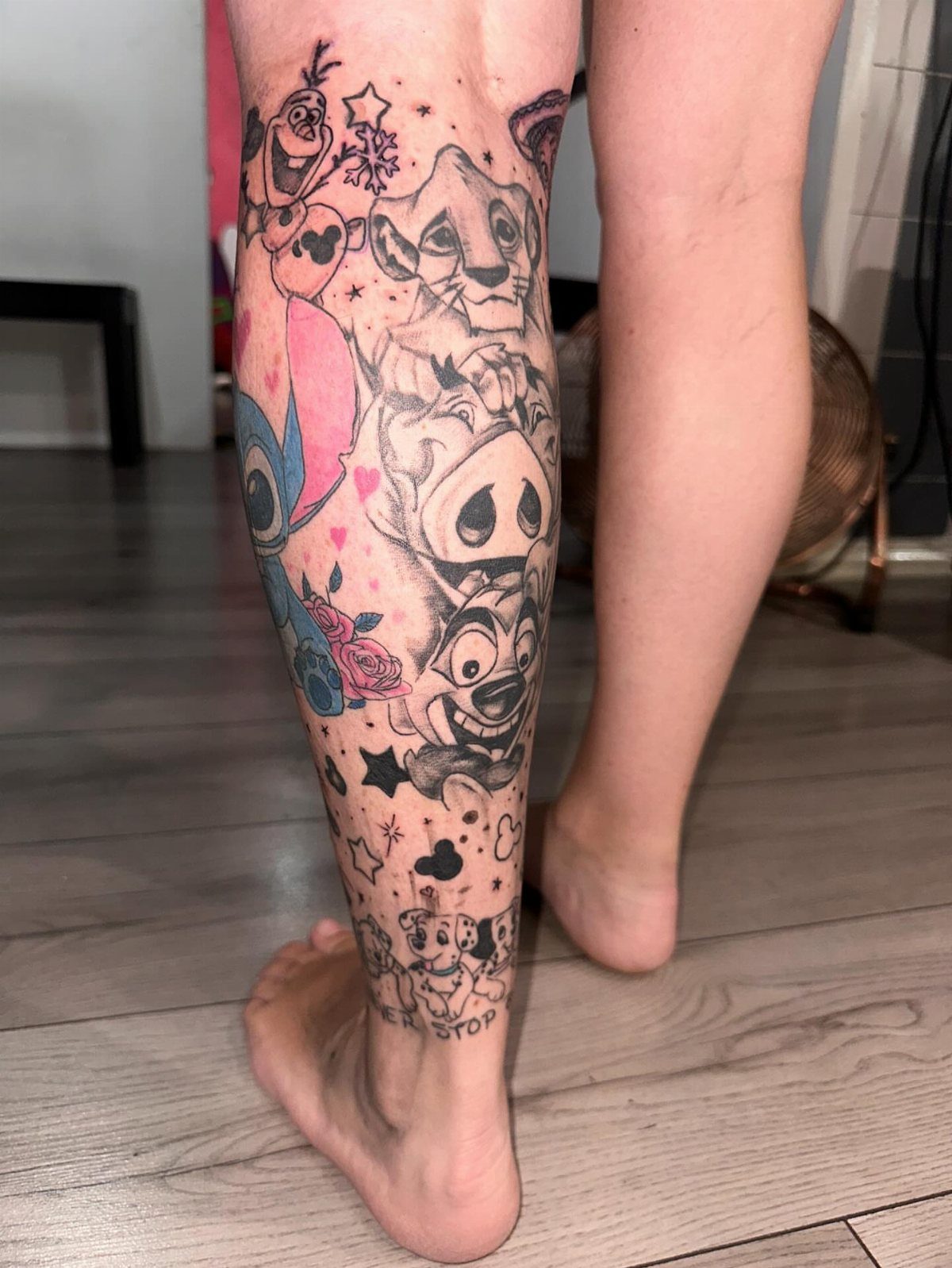
Disney characters stacked on the lower leg lean into nostalgia and color saturation, with each figure keeping its recognizable palette and expression. Mixing multiple characters in one piece requires careful spacing so no single face gets lost in the composition.
Color tattoos need more upkeep than black ink because the pigment fades faster, especially in sun-exposed areas like the lower leg. Touch-ups over time keep the vibrancy intact.
This style suits women who want playful, personal ink that sparks conversation and reflects childhood favorites.
13. Black Rose Tattoos
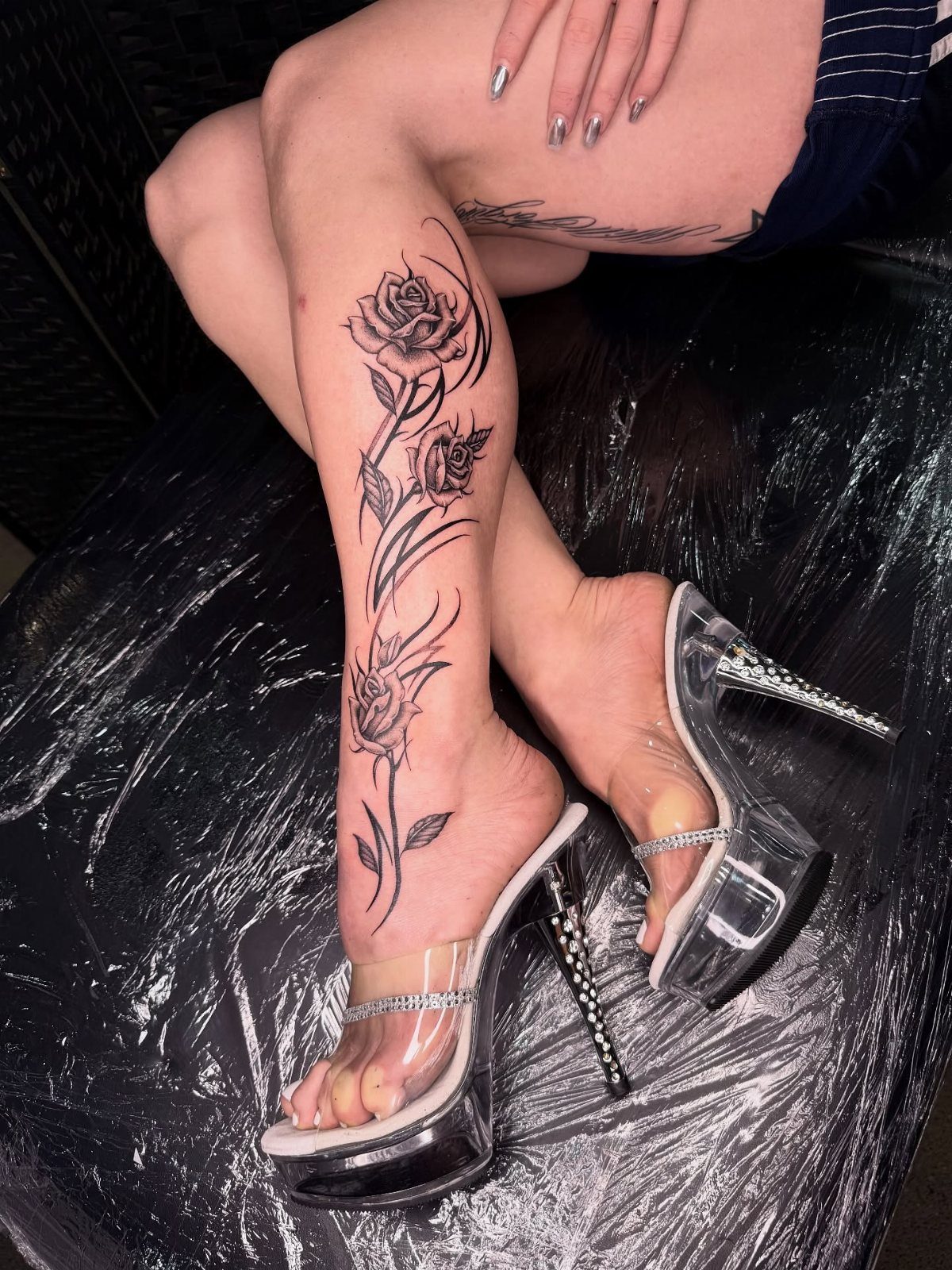
Black roses on the lower leg carry the flower’s softness with none of the color commitment, and the dark shading holds up better over time than lighter ink. Stacking 3 blooms with leaves fills the space without needing background elements.
Lower leg placement keeps pain moderate and lets you wear the tattoo openly or cover it depending on your footwear and hemline. Black ink needs less touch-up work than color because it fades slower and holds its contrast longer.
14. Fantasy Fox Tattoo
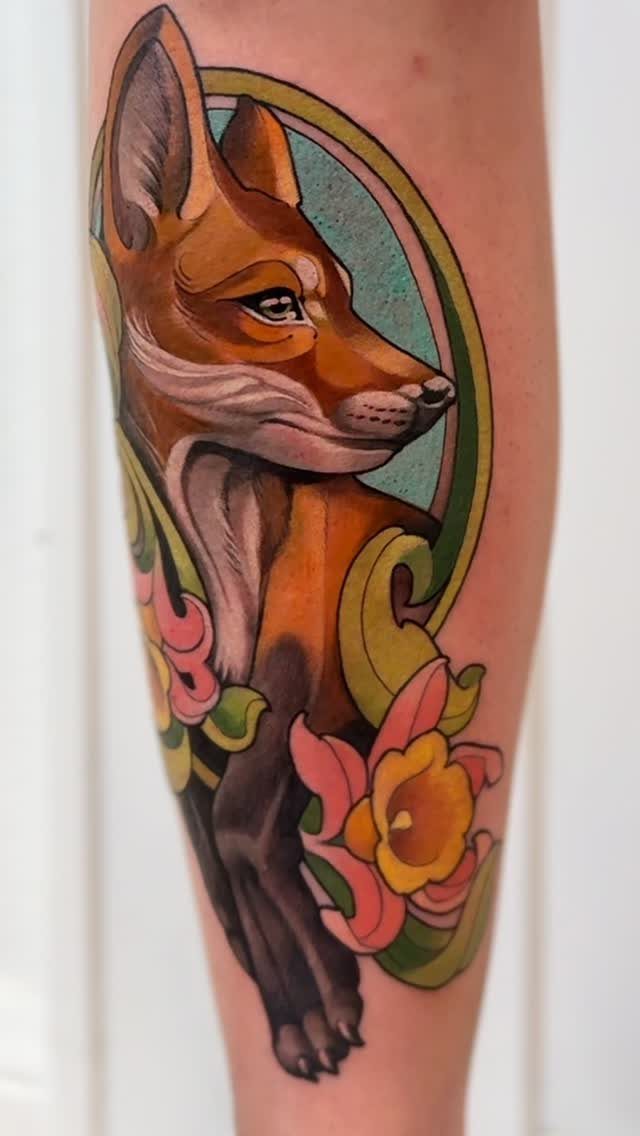
A fox portrait framed in a circular border and surrounded by pink florals combines realism with decorative elements, and the warm orange tones against cooler flower colors create contrast without clashing.
The circular frame keeps the composition contained and makes the design work as a standalone piece.
Fantasy animal tattoos suit women who want something playful and visually dense without committing to a full sleeve. Leg placement gives enough room for detail work in the fox’s face and fur without cramping the surrounding flowers.
15. Cute Cat Tattoo
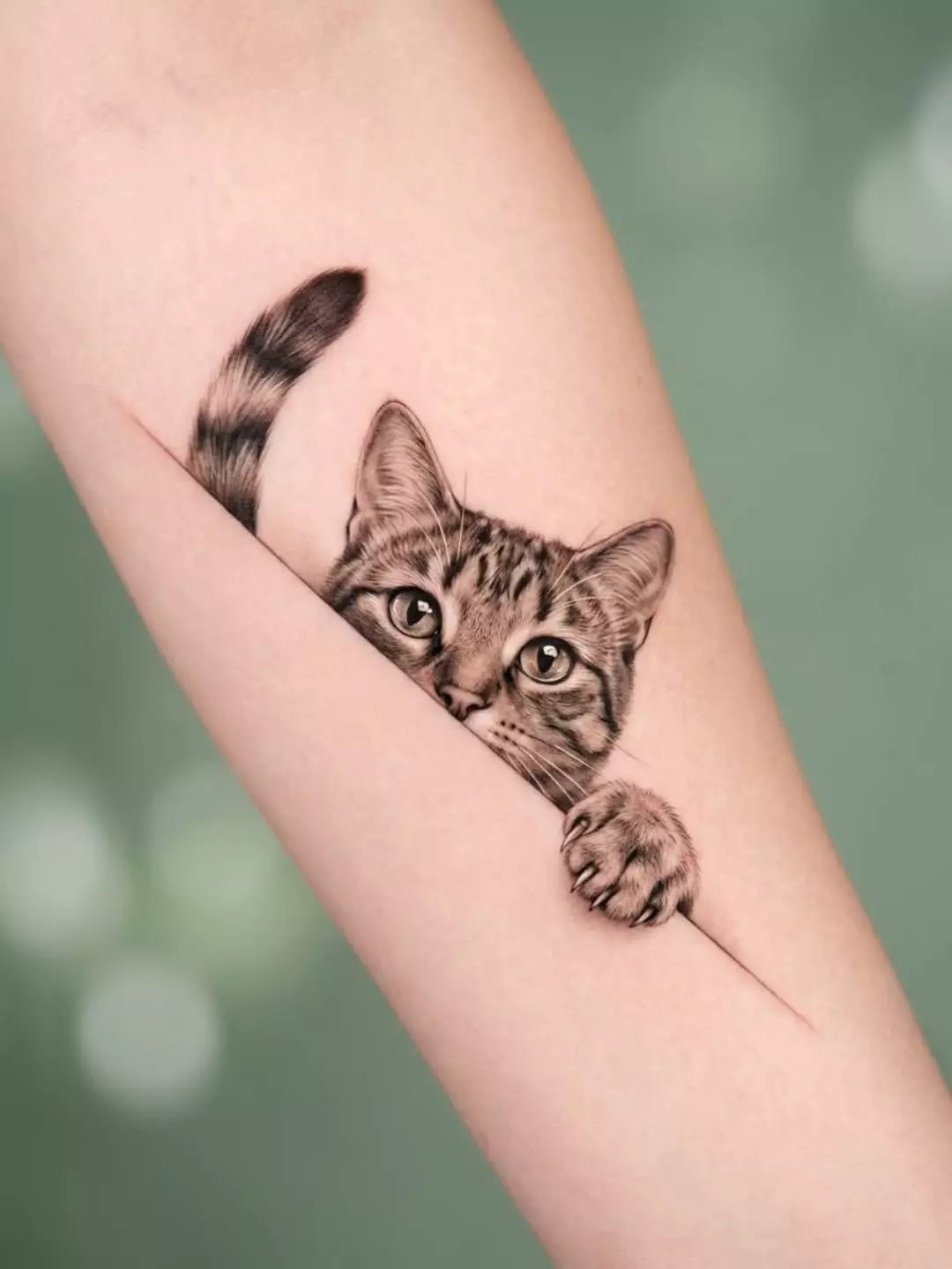
A cat appearing to peek through torn skin uses shading tricks to create depth, making the flat tattoo look three-dimensional. The tabby markings and wide-eyed expression keep the design cute rather than aggressive.
This style works best in black and grey because the realism depends on subtle shading gradients that color ink can muddy.
Leg placement gives your artist a smooth, flat area to execute the fine detail in the fur and the shadow illusion that sells the effect.
Meaning of Leg Tattoos
Leg tattoos for women connect to movement and the path you’re on, both literally and as metaphor. The leg as canvas lets you carry something personal that shifts between private and visible depending on what you wear that day.
In tribal societies, leg tattoos marked strength and endurance, traits tied to the limb’s role in carrying you forward. Some cultures treated them as markers of maturity or passage into a new stage of life.
The leg’s size supports intricate work that smaller placements can’t hold, so complexity in the design often mirrors depth in meaning.
Floral designs, mandalas, script, and tribal patterns each bring their own symbolism, and the scale lets those details stay legible as the tattoo ages.
The flexibility in visibility makes leg tattoos practical for women who want control over when the ink shows.
Choosing a Tattoo Design
The design you pick needs to fit the actual dimensions of the placement you have in mind.
A thigh gives you room for dense compositions or large single subjects, while the ankle or lower calf works better for compact designs that don’t require sprawling space.
Pattern matters as much as subject. Florals and animals with organic shapes tolerate small adjustments better, but realism still demands accurate proportions and shading gradients that hold up over time.
If the design includes text, make sure the font size and letter spacing stay readable as the tattoo settles. Fine script can blur within a few years if the lines sit too close together.
Frequently Asked Questions
What do you call a leg tattoo?
A tattoo on the leg is just called a leg tattoo, though if it’s specifically on the back of your lower leg, you’ll hear it called a calf tattoo.
Full-leg coverage from thigh to ankle is often called a leg sleeve, borrowing the term from arm tattoos. The names stay simple because the placement itself tells you what it is.
What is the best tattoo for a woman?
The best leg tattoo depends on how much space you want to fill and whether you need to hide it regularly.
Florals, mandalas, and animal portraits all work well because the leg’s length and width support detail that smaller placements can’t hold.
Pick something that fits the actual dimensions of your thigh, calf, or ankle rather than forcing a large design into a compact spot.





