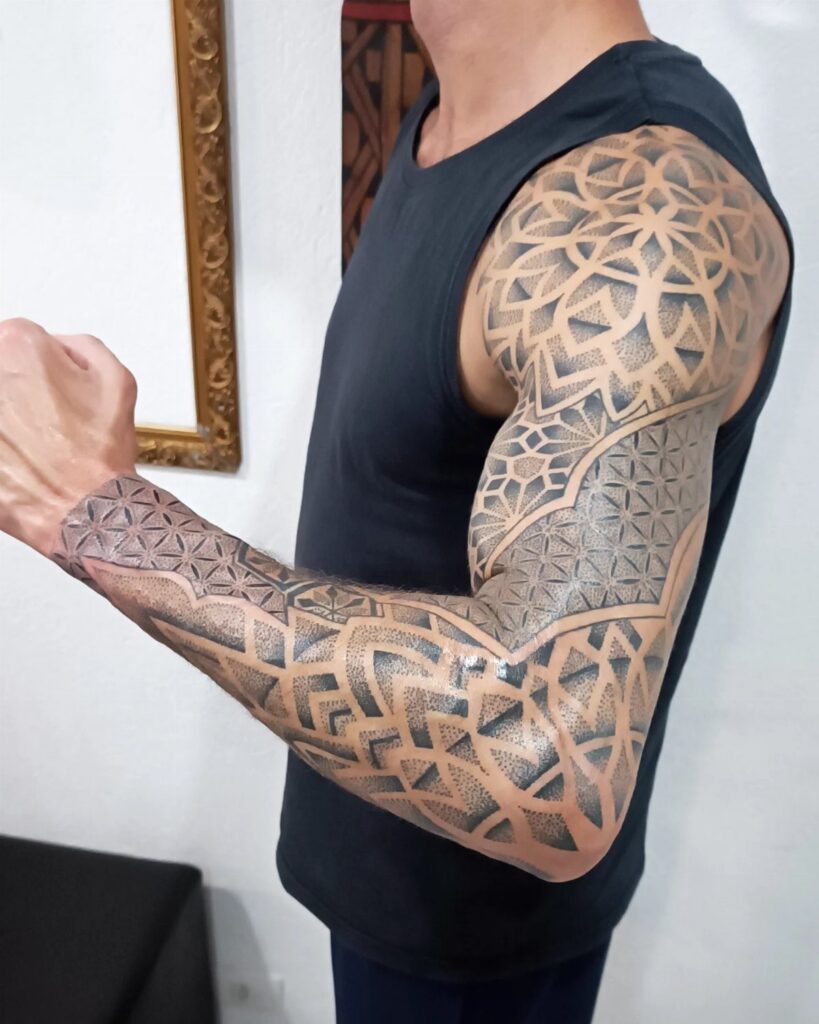
Mandala tattoos for men range from full arm sleeves that take multiple sittings to chest or shoulder pieces finished in 6–10 hours, and the style shifts from clean geometric angles to dotwork stippling that ages differently than solid shading.
Black ink stays the standard because it ages predictably and keeps the focus on linework, though a single accent color like purple or blue can define layers without the maintenance that comes with a full palette.
1. Full Arm Sleeve
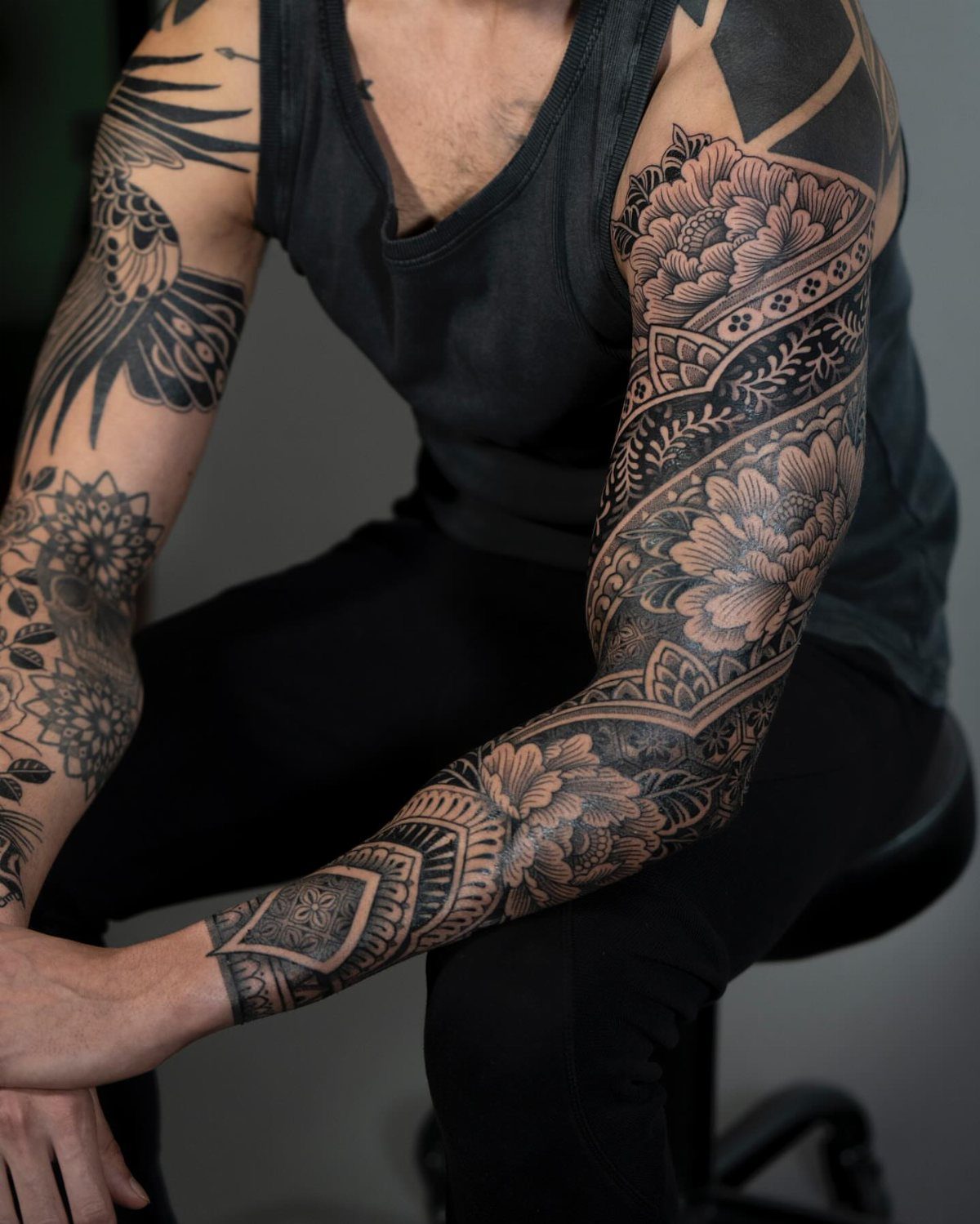
A full arm sleeve gives you room to build a complete composition, and mandala work fills that space without looking busy. The circular geometry wraps the arm naturally, and adding floral elements between mandalas softens the hard edges.
Black and grey reads clean and ages well.
The coverage makes this a commitment piece, but for masculine mandala designs, a sleeve lets you layer patterns in a way smaller placements can’t.
2. Geometric Mandala
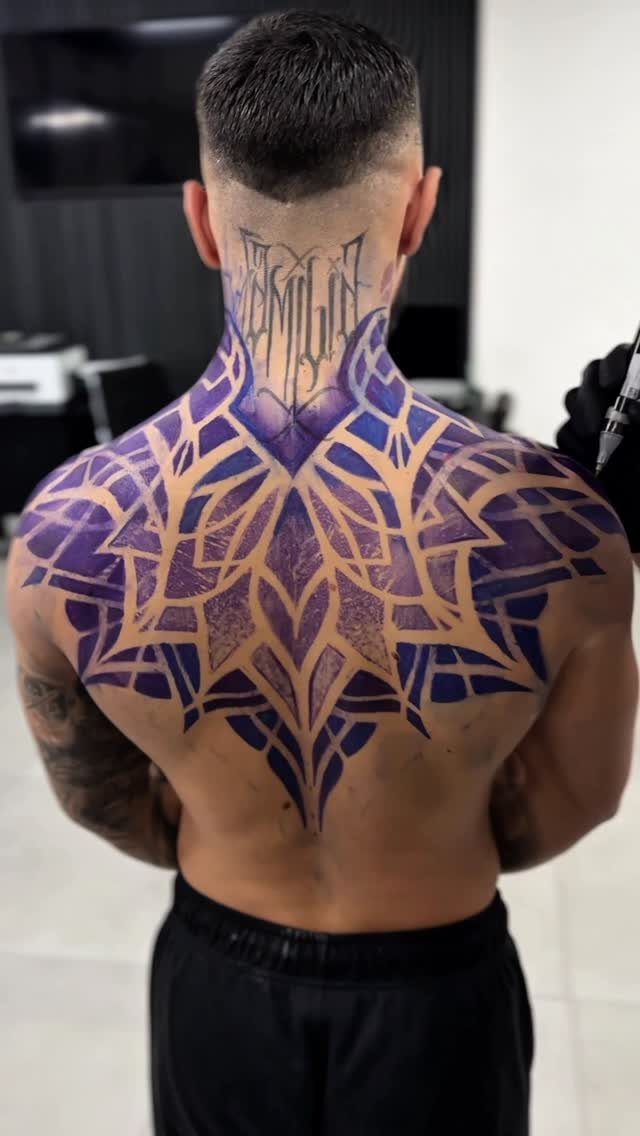
Geometric mandalas strip out the organic detail and build the design from clean lines and angular shapes. Purple ink adds dimension without going full color, and the contrast with black makes each layer stand out.
This style works best on flat, broad areas like the upper back or chest where the symmetry can sit square.
The sharp angles and repeating shapes give you a modern take on traditional mandala work, and the geometric approach keeps it masculine without extra ornamentation.
Expect longer sessions for precise linework. A back piece this size takes multiple sittings to finish.
3. Dotwork Shading Mandala Tattoo
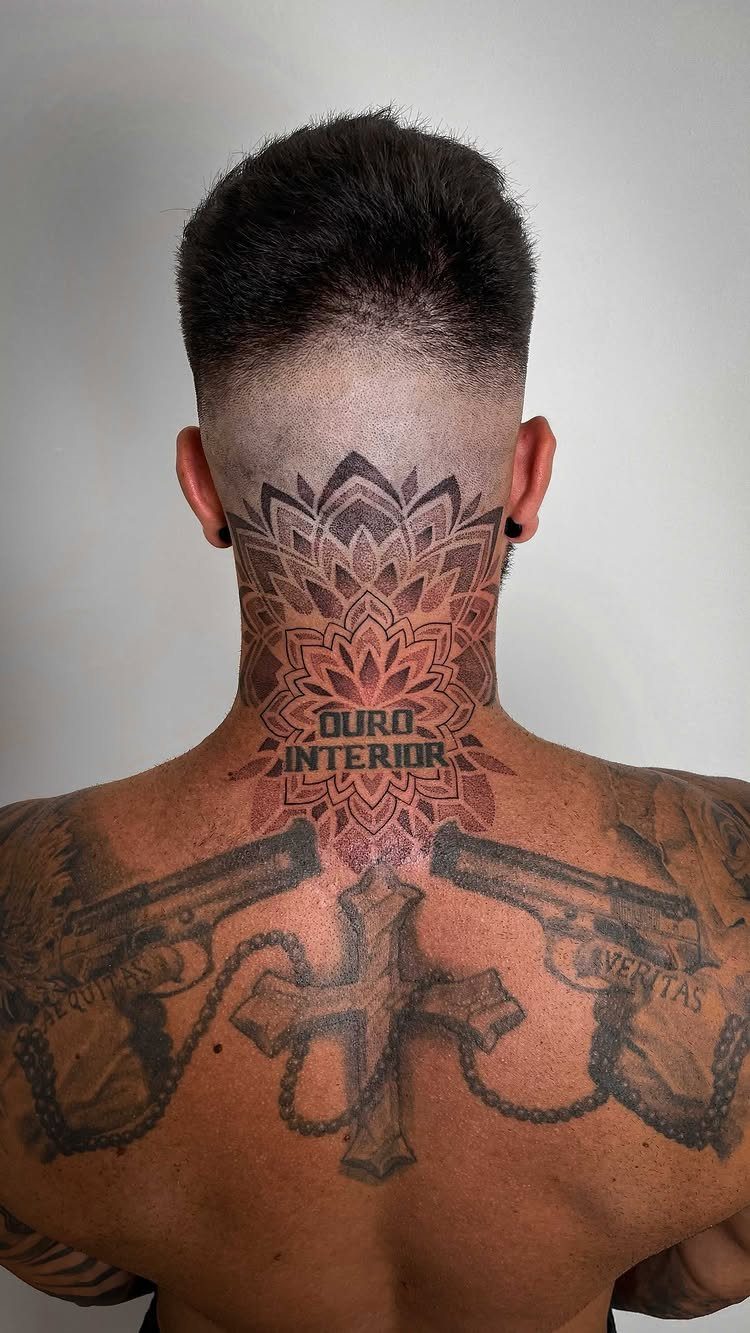
Dotwork shading builds depth without solid black fill, and the technique gives mandala tattoos a softer gradient while keeping the design bold.
Placing it on the neck makes this highly visible, so the dotwork keeps it from looking too heavy in a spot people see first.
The stippled texture ages differently than line shading.
Dots hold their individual shape longer, so the piece stays crisp even as the skin changes. Neck tattoos hurt more than most other placements, and healing takes care since the area moves constantly.
If you want mandala work that stands out without full blackout, dotwork delivers.
4. Lotus Mandala
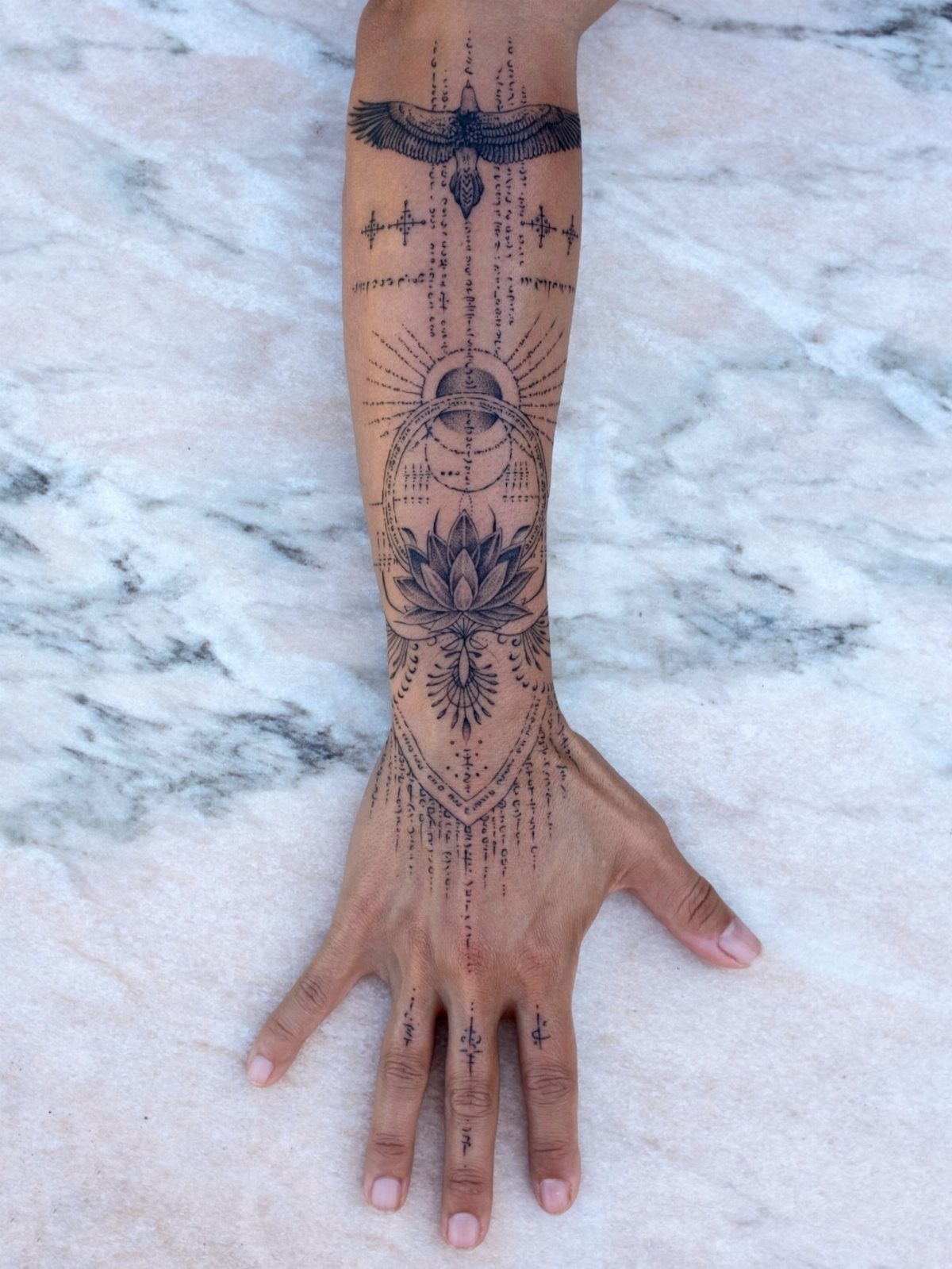
Lotus mandalas combine 2 symbols that already carry weight, and the result feels deliberate without needing explanation. The petals fit naturally into mandala geometry, and the pairing works on the forearm where the design can follow the muscle.
Forearm placement heals faster than most spots and shows or hides depending on sleeves.
Adding script or smaller geometric elements around the lotus extends the design without crowding it. Black ink keeps the focus on the linework, and a single-color approach ages more predictably than multicolor pieces.
Budget 6–10 hours for a detailed forearm lotus mandala.
5. Skull Mandala Tattoo
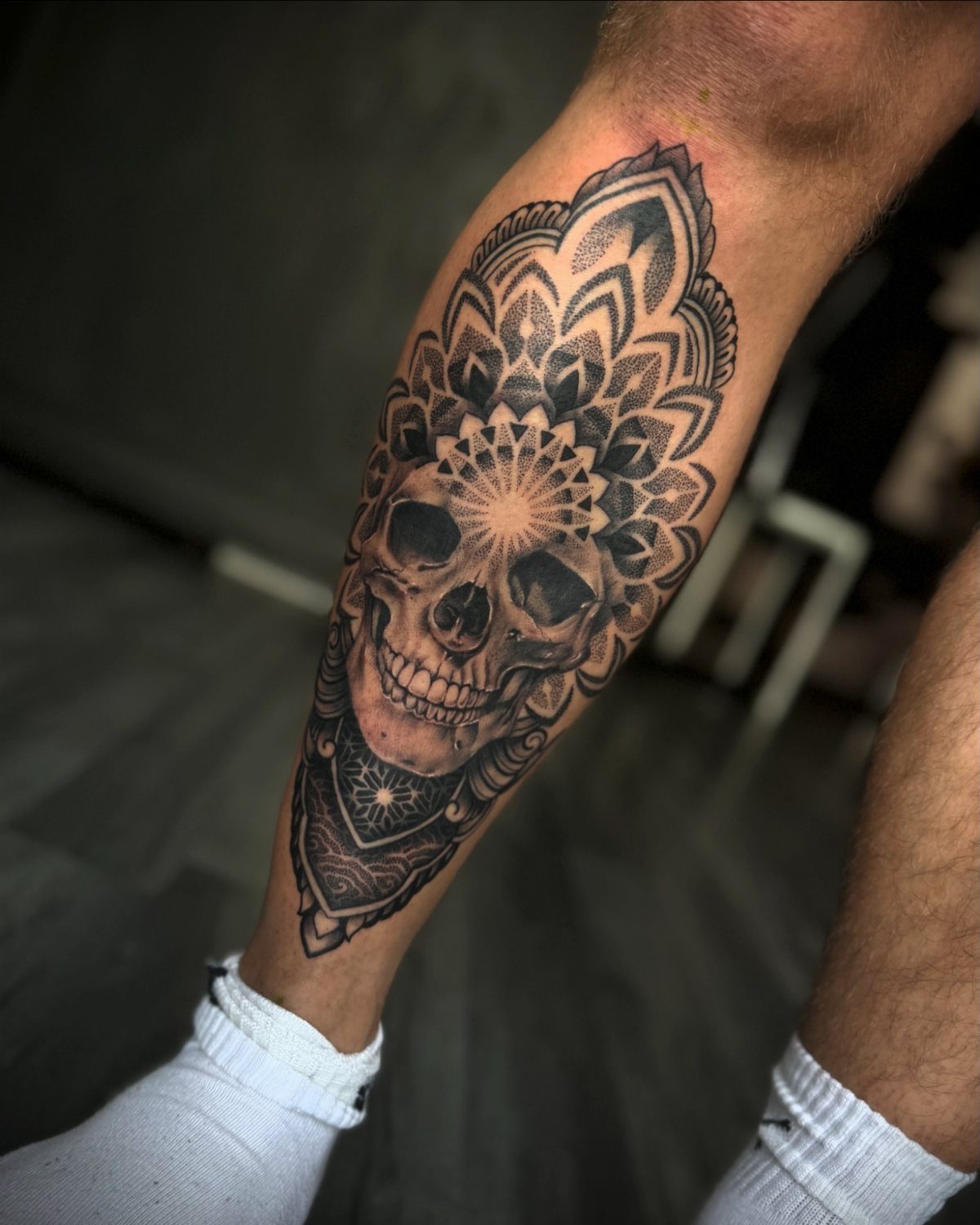
Skull mandalas merge two bold images into one, and the lower leg gives you vertical space to stack the elements without compressing either.
The mandala pattern frames the skull or replaces part of it, depending on how much geometry you want.
Leg tattoos hurt less than ribs or spine, and the placement works for men who want masculine imagery but prefer it covered most of the time. Black and grey shading gives the skull dimension while keeping the mandala patterns sharp.
The curve of the leg means the artist has to adjust the design as they work, so expect some adaptation from the stencil.
Symbolism of Mandala Tattoos
The mandala originates from Sanskrit and translates to circle. Across spiritual traditions, the mandala stands for cosmic order and the link between inner thought and feeling.
That symbolism carries into tattoo work.
Mandala designs convey harmony, inner peace, and a sense of completeness. The repeating patterns and symmetry reinforce the idea of balance, both visually and conceptually.
For men choosing masculine mandala tattoos, the meaning can sit quietly in the background or guide the design. Geometric builds lean into structure and order.
The circular form adapts to nearly any placement, and the meaning holds whether the tattoo is visible or covered.
Placement Considerations
Size dictates where a mandala fits.
Larger designs with multiple layers need broad, flat areas like the upper back, chest, or thigh. Smaller mandalas work on the forearm, hand, or behind the neck.
Visibility matters more for some placements than others.
Forearm and hand tattoos show unless you actively cover them. The back, chest, and leg stay hidden under most clothing, giving you control over when the tattoo is seen.
The arm wraps naturally, so sleeve compositions flow without forcing the geometry. Flat spots let symmetry sit square, which matters more for angular, geometric mandala styles.
Pain varies by placement. Neck and hand tattoos hurt more than the forearm or leg.
Choosing Colors
Black ink stays the standard for mandala tattoos. It ages predictably, keeps the focus on linework, and works across all mandala styles.
Some designs add a single color for contrast.
Purple or blue can define individual layers or add dimension to geometric builds without shifting the piece into full color territory. Color gradients bring depth, especially in dotwork shading where stippled texture supports smooth transitions.
Multicolor mandalas exist, but they complicate the design and age less evenly than black or single-color work. Ink fades over time, and multiple hues shift at different rates.
If you want color, keep it restrained. One accent shade paired with black gives you contrast without the maintenance that comes with a full palette.
Frequently Asked Questions
What tattoo should I get for guys?
Mandala tattoos work well for men because they adapt to nearly any placement and read as bold without extra ornamentation.
Geometric builds, skull pairings, and lotus mandalas all deliver masculine imagery that stays legible as the tattoo ages. Stick with black if you care about sharp lines over the long run.
Are shoulder tattoos masculine?
Shoulder tattoos can read as masculine, especially when the design uses bold, structured imagery like geometric mandalas or skull pairings.
The shoulder offers a broad, flat area that supports symmetry and detailed linework. Placement there also gives you control over visibility since most shirts cover it.





