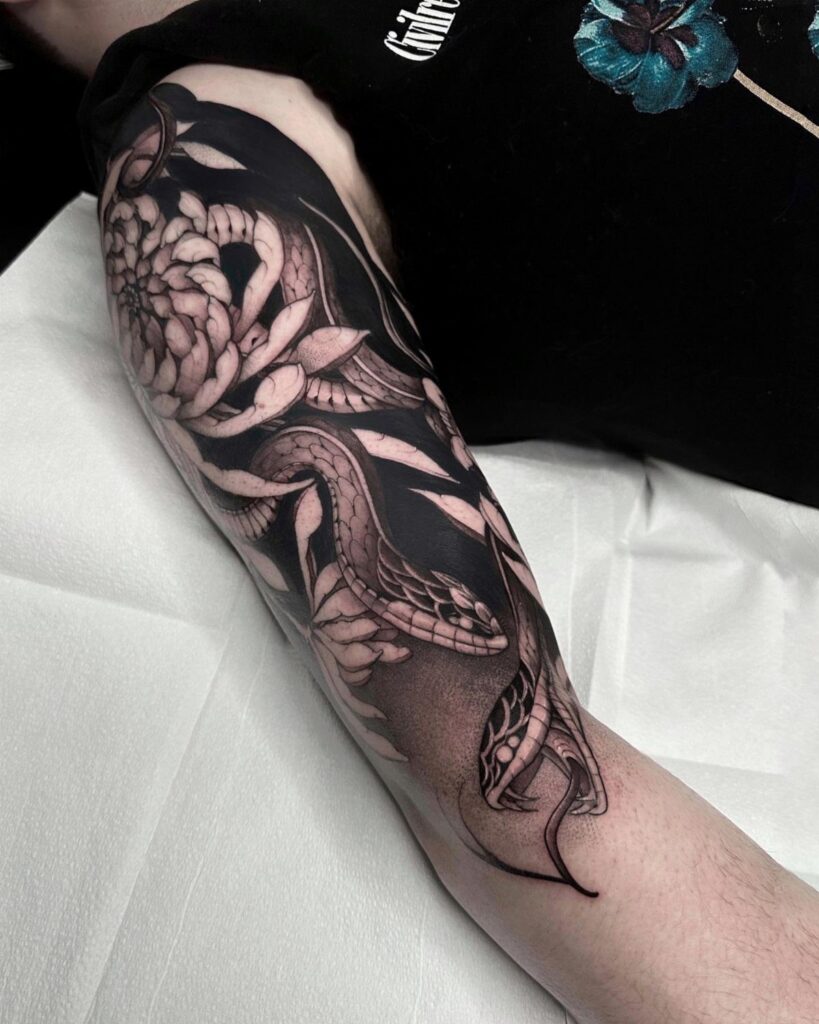
A full sleeve covers the arm from shoulder to wrist and takes multiple sessions to finish, with cost and time climbing sharply for realism or dense color work.
The style you pick changes how much skin gets covered and how long the ink lasts: Japanese and Irezumi need thick backgrounds that fill the whole arm, blackwork and tribal sit mostly in solid black so they heal cleaner, geometric and fine line leave more negative space, and realism asks for the most hours because shading takes longer than outline.
Eastern dragons flow with the arm’s shape better than winged ones, and Celtic knotwork reads clearer on thicker arms where the narrow spaces between lines stay distinct.
1. Japanese Full Sleeve Tattoo
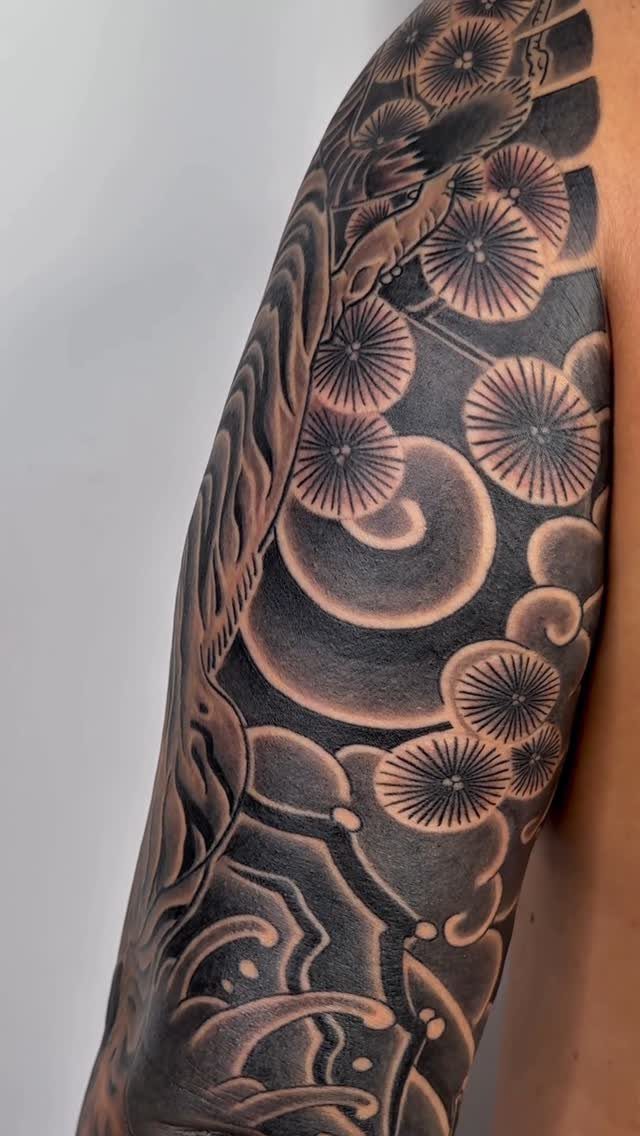
A full sleeve built around chrysanthemums, waves and cloud shapes, all drawn in Japanese tattooing style. The contrast between organic blooms and geometric wave patterns keeps the arm readable from shoulder to wrist.
Black and grey holds up better over time than full color in Japanese sleeves.
The shading stays crisp, and the design reads clearly even as the skin ages. Each element connects to the next without obvious breaks, so you need multiple sessions to finish the full coverage.
If you prefer the composition without koi or dragons, floral and wave motifs alone fill a sleeve just as well.
2. Floral Sleeve Tattoo
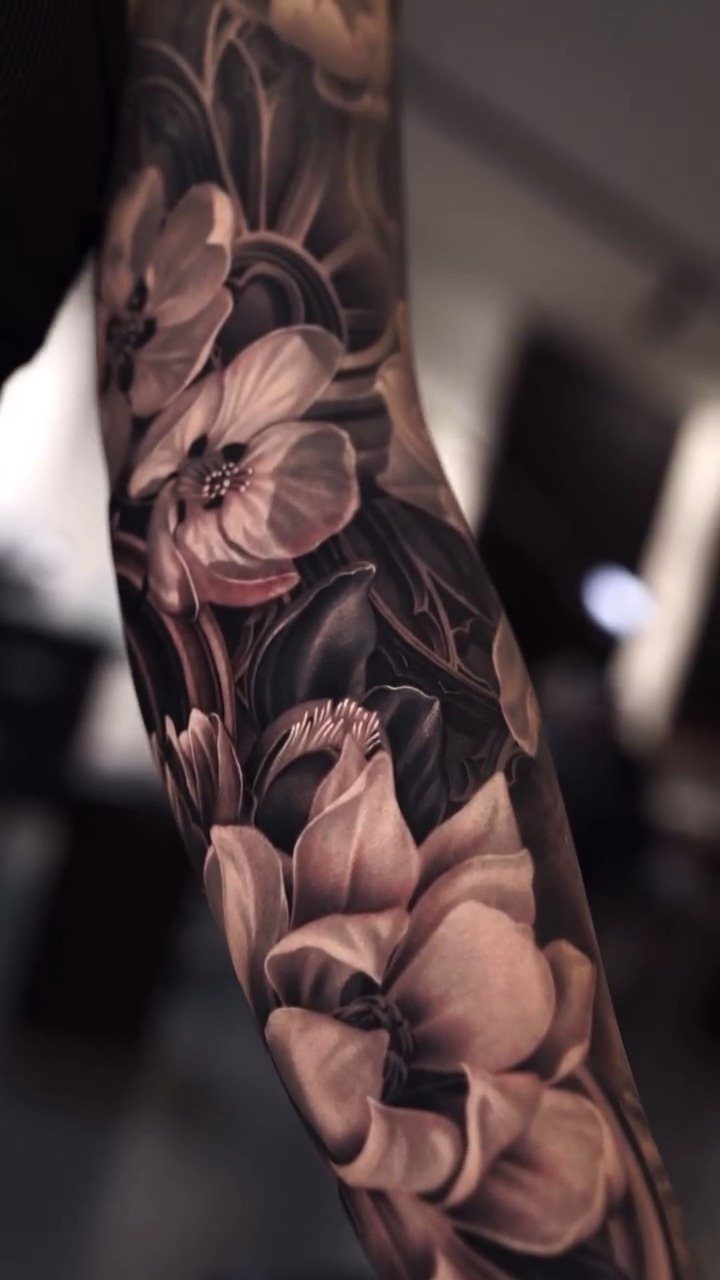
Flowers sized to cover the whole arm, shaded in soft tones with enough contrast to keep each bloom distinct. The leaves and stems tie everything together, so the sleeve reads as one piece rather than a stack of separate flowers.
Realism in florals demands precise shading.
A good artist will map out the composition first to balance light and dark sections across the arm. Sessions run long because shading fine petals takes time, and rushing it flattens the whole design.
Avoid cramming too many flower types into one sleeve. A few varieties repeated at different scales hold together better than a dozen competing blooms.
3. Half Sleeve Tattoo for Men
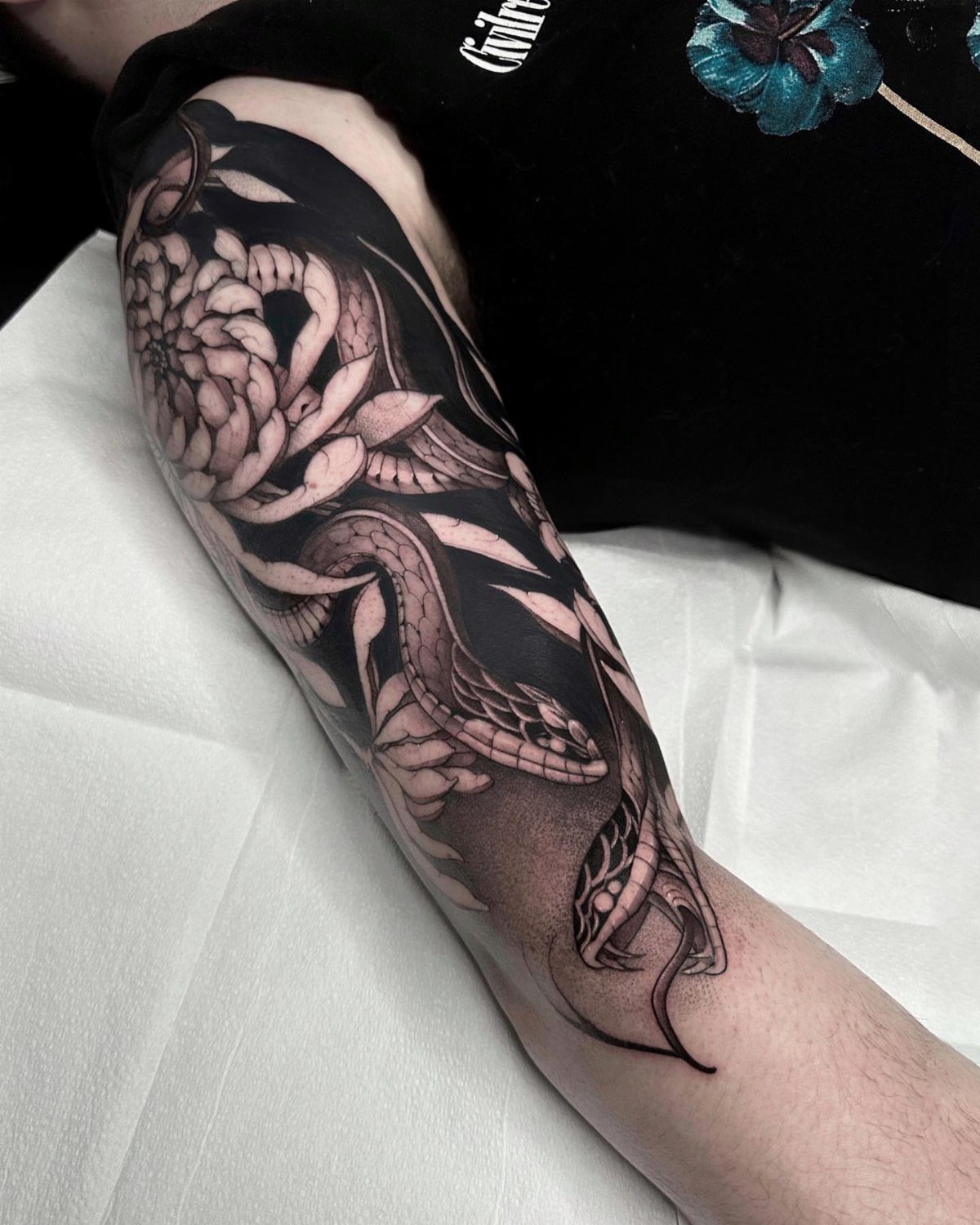
A half sleeve stops above the elbow or just below it, covering either the upper arm or the forearm.
Half sleeves cost less and take fewer sessions than a full sleeve. The shorter coverage also means you can test how you feel about a large tattoo before committing to the full arm.
If you plan to extend it later, pick a design that flows naturally downward. Adding to a finished half sleeve works better when the original layout leaves room to grow.
4. Traditional Sleeve Tattoo
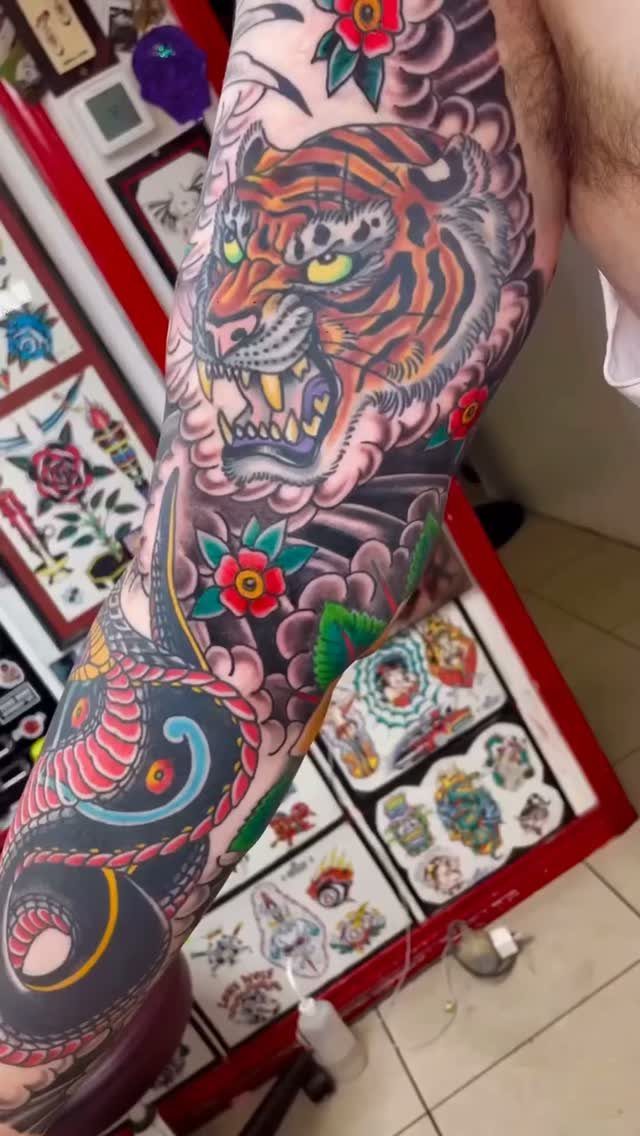
Bold outlines, solid color fills and designs pulled from American traditional flash sheets. The tiger and flowers here follow that formula: thick black lines, saturated orange and green, and no gradient shading.
Traditional sleeves heal faster than realism or fine line work because the thick lines and color blocks hold their shape under the skin.
The style also ages predictably, so what you see fresh is close to what you’ll have years later.
Cost depends on how much color the design uses. A full palette across a sleeve runs more than black and grey, but the pigment density keeps it bright longer.
5. Dragon Sleeve Tattoo
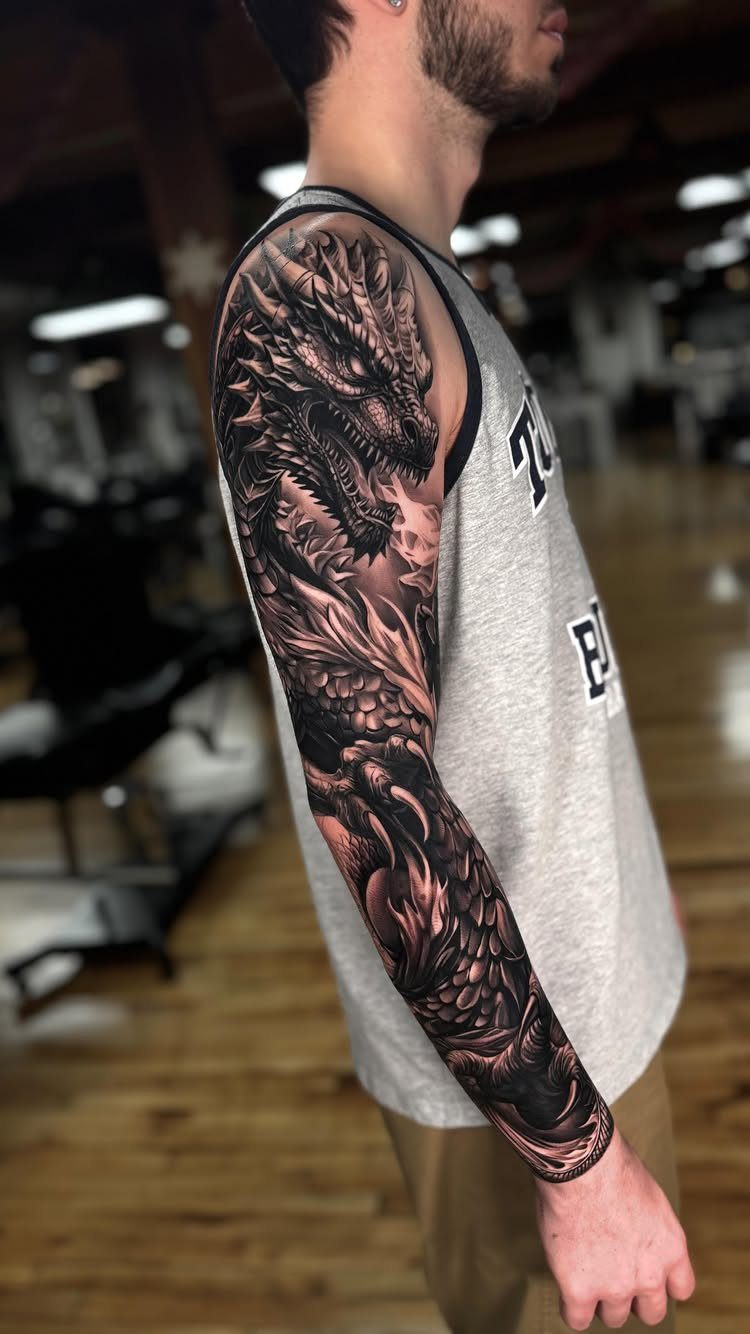
A dragon scaled and detailed from shoulder to wrist, usually coiled around the arm in a way that shows the full body from multiple angles.
Dragons fill a sleeve naturally because their length matches the arm.
The head typically sits on the shoulder or upper arm, and the tail wraps down toward the wrist. A detailed dragon sleeve takes multiple sessions, more if you add background elements like clouds or fire.
Eastern dragons work better for sleeves than Western ones. The serpentine body flows with the arm’s shape, while winged dragons often need cropping to fit.
6. Blackwork Sleeve Tattoo
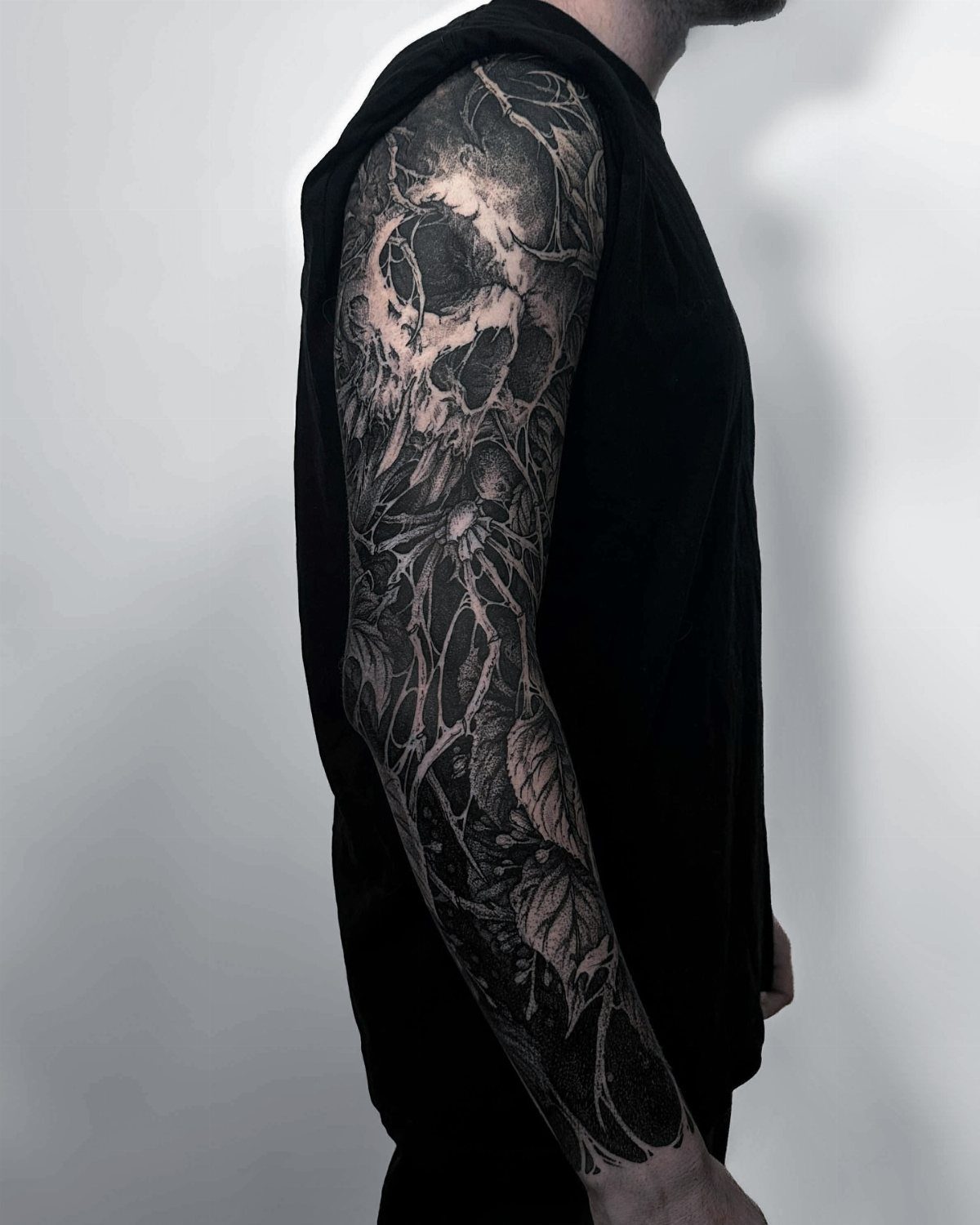
Heavy black ink covering large sections of the arm, often with negative space carved out to form patterns or images.
The skull and organic shapes here rely on solid black fills rather than shading, so the design reads as pure silhouette.
Blackwork sleeves sit bold and stay that way.
The ink holds darker longer than fine line or color work, and touch-ups are simpler because you’re only maintaining solid black. Sessions can be intense since blacking out large areas takes time and pressure.
If you bruise easily, blackwork will test that. The repeated passes needed to pack in solid black cause more swelling than linework or light shading.
7. Rose Sleeve Tattoo
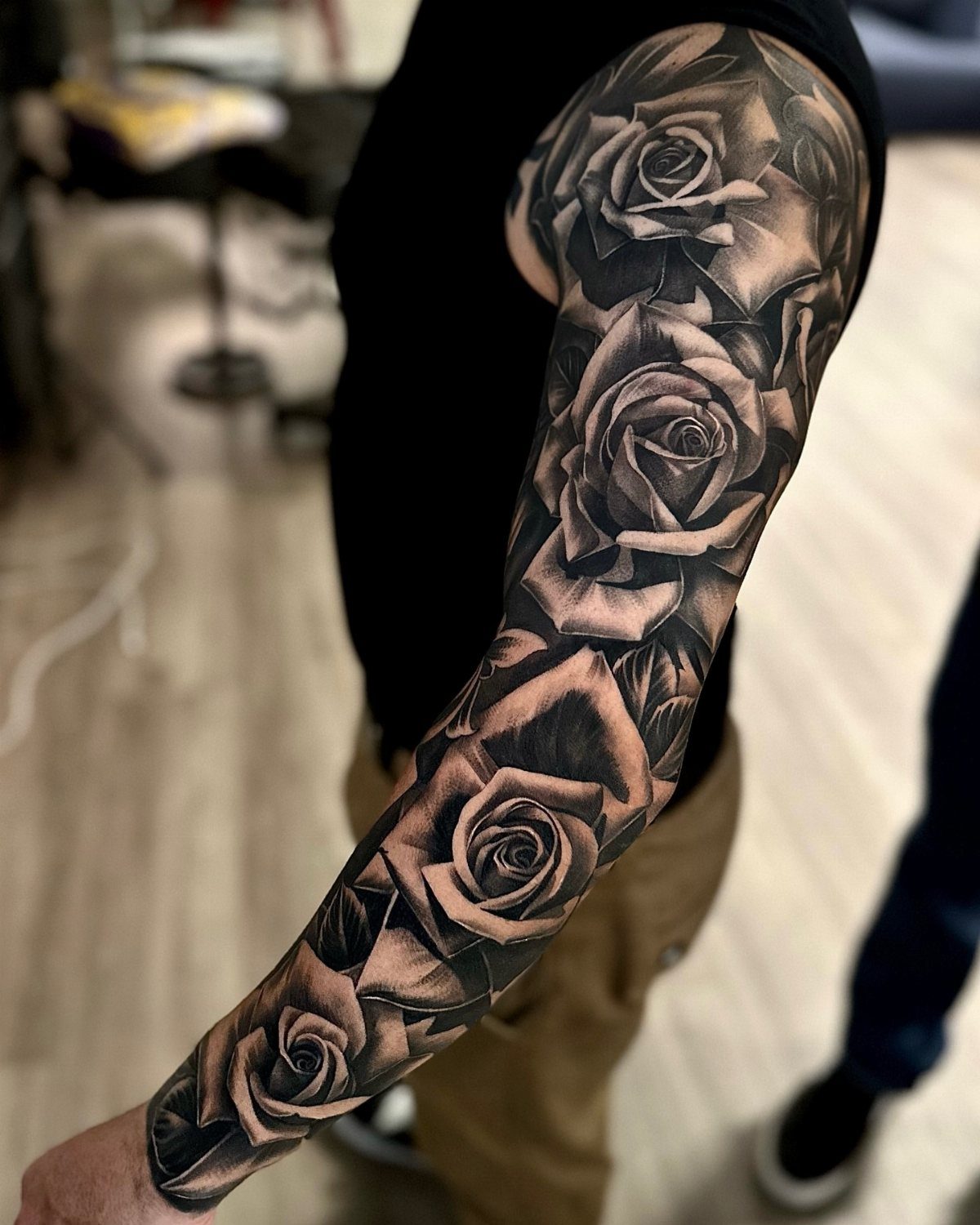
Roses stacked from shoulder to wrist in black and grey, shaded to bring out the folds in each petal. The monochrome palette keeps the design masculine, and the repetition of one flower lets the detail speak without competing motifs.
Roses in black and grey keep their shape longer than most colored designs. Each rose can sit at a different angle to wrap the arm naturally, so the sleeve flows instead of looking pasted on.
If you want contrast, add thorns or bare stems between the blooms. It breaks up the softness without changing the overall theme.
8. Irezumi Style Full Sleeve Tattoo
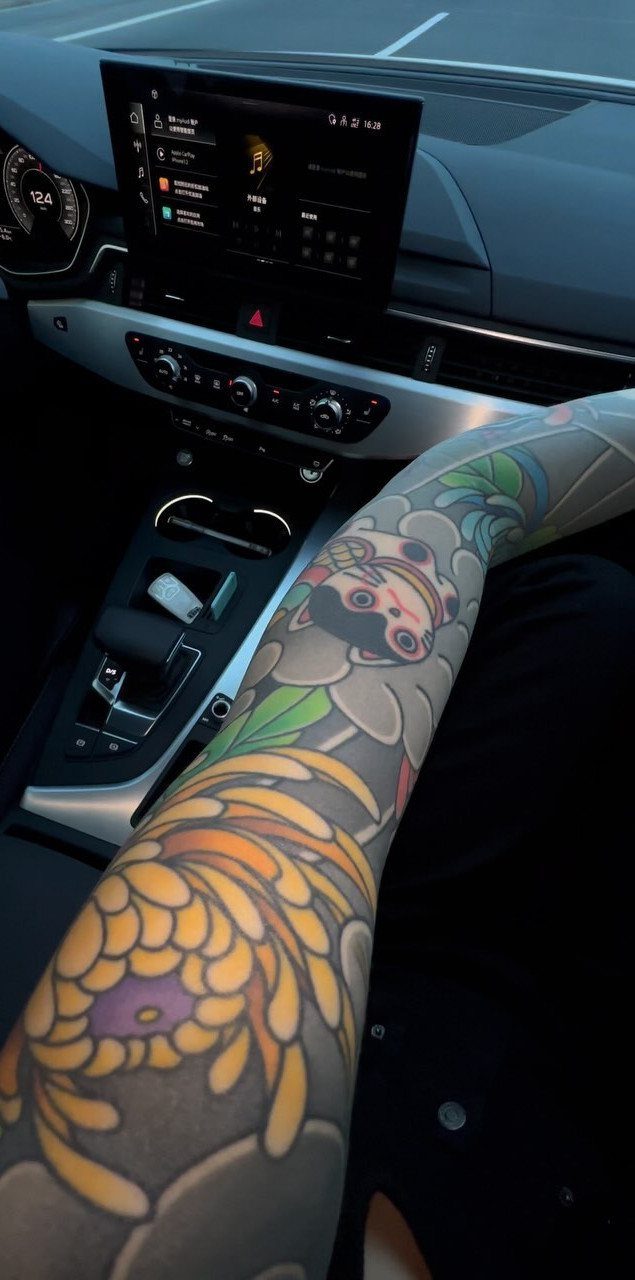
Traditional Japanese tattooing carried over the full arm, typically with bold color, thick outlines and motifs like koi, peonies, waves or foo dogs.
Background fill in Irezumi keeps the arm from looking patchy; waves, clouds and wind bars tie the bigger pieces together.
Irezumi sleeves take months to finish.
The coverage is dense, the color saturation is high, and each session builds on the last. Cost runs higher than most other sleeve styles because of the hours involved.
Wear long sleeves if your workplace has visibility rules. Full color Irezumi stands out, and covering it daily matters for some jobs.
9. Tribal Sleeve Tattoo
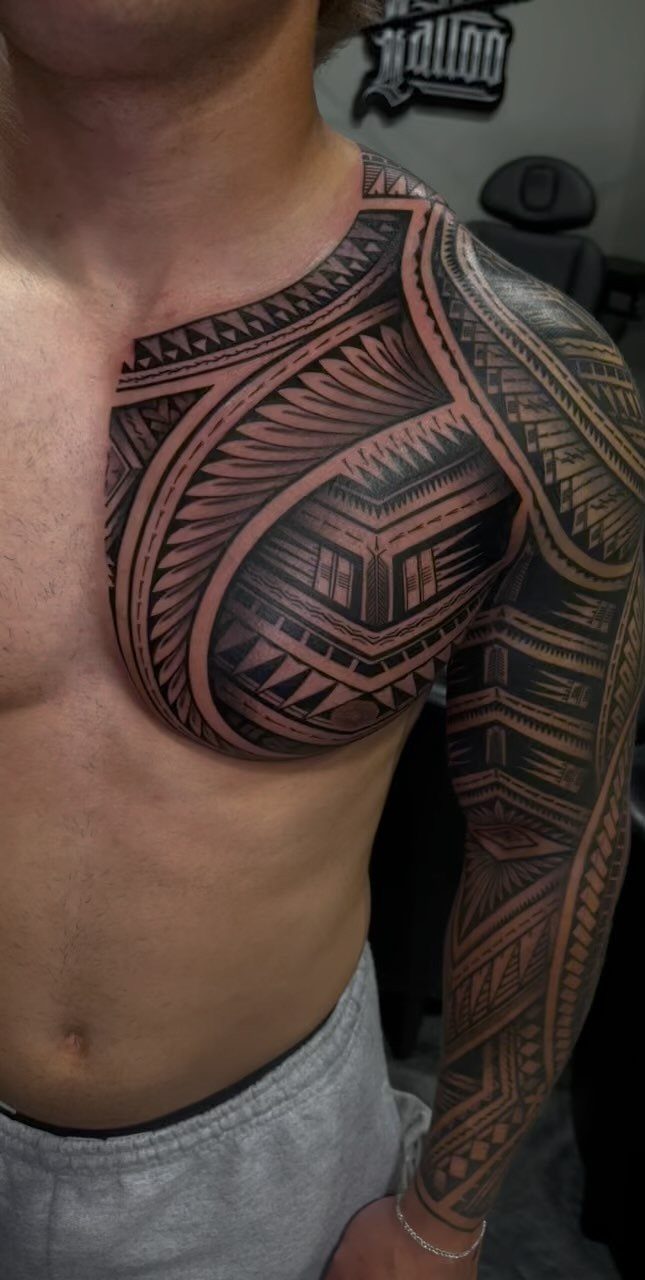
Thick black lines formed into curves and points, filling the arm with interlocking shapes that follow the muscle. The solid ink and negative space create a design that reads bold from any angle.
Tribal sleeves heal faster than shaded work because the style uses heavy black rather than gradients.
The ink stays dark for years, and touch-ups are rare. Sessions are shorter than realism or color sleeves, but the solid black can be uncomfortable to sit through.
Pick a design that fits your arm width. Tribal patterns sized for a thicker arm will look cramped on a narrow one.
10. Realism Sleeve Tattoo
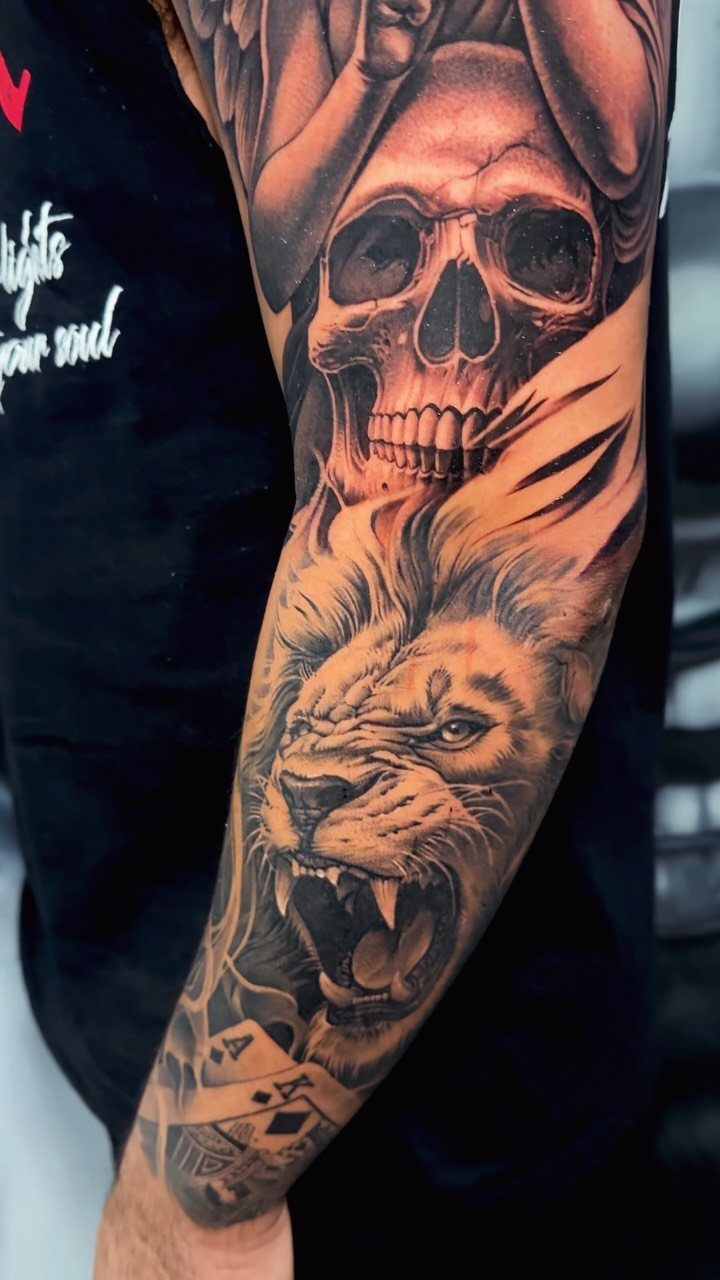
Photorealistic images combined into one sleeve, each element shaded to look three-dimensional. Realism depends on contrast to read from a distance: shadows placed right make a flat surface look three-dimensional.
Realism demands an experienced artist.
Poor shading turns a detailed design into a muddy mess, and fixing it later is expensive. Sessions run long because every highlight and shadow has to be placed by hand.
Budget more for realism than for traditional or blackwork. The time required to match photographic detail drives the cost up, and you’ll need multiple sittings to finish a full sleeve.
11. Geometric Sleeve Tattoo
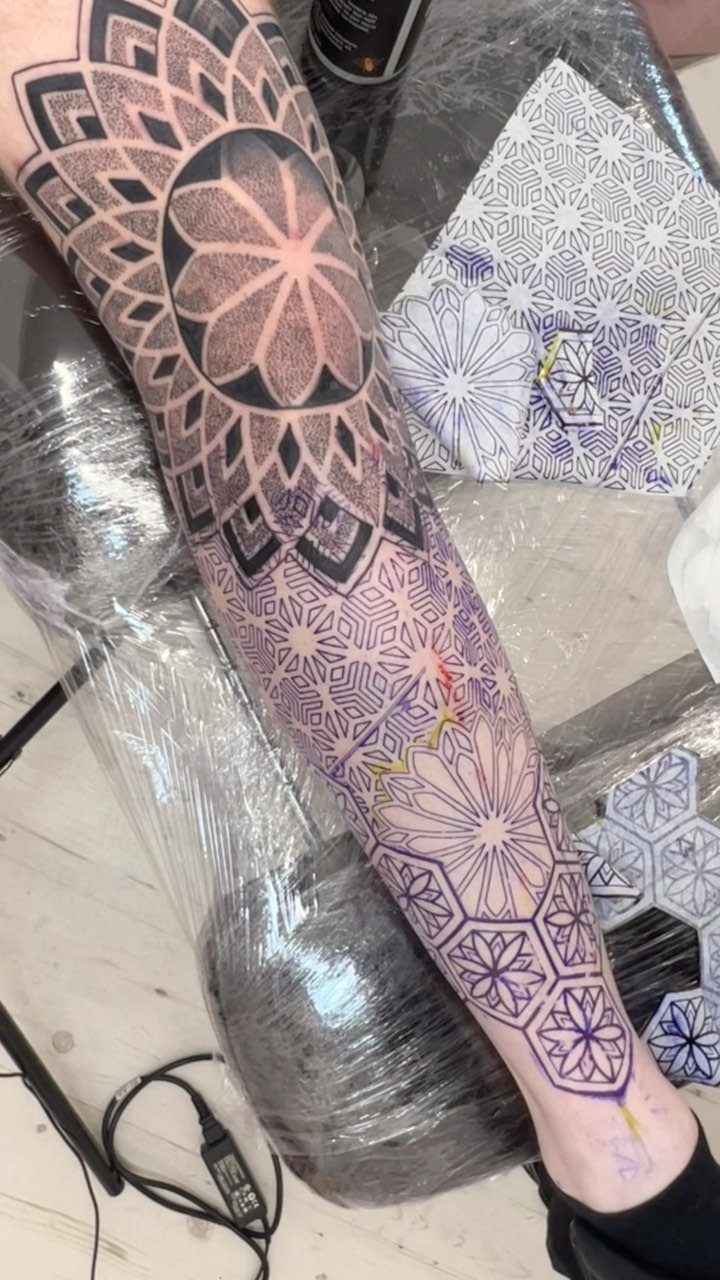
Repeating shapes built into mandalas, sacred geometry or abstract patterns, all inked in black.
The precision here matters: even one line slightly off breaks the symmetry, so the stencil work before the tattoo starts is just as important as the ink itself.
Geometric sleeves suit men who want a clean, modern look without traditional imagery. The style holds up well over time because the shapes are simple and the lines are thick enough to stay sharp.
Placement on the arm affects how the pattern reads. A mandala centered on the shoulder or elbow keeps the design balanced when your arm is bent.
12. Biomechanical Sleeve Tattoo
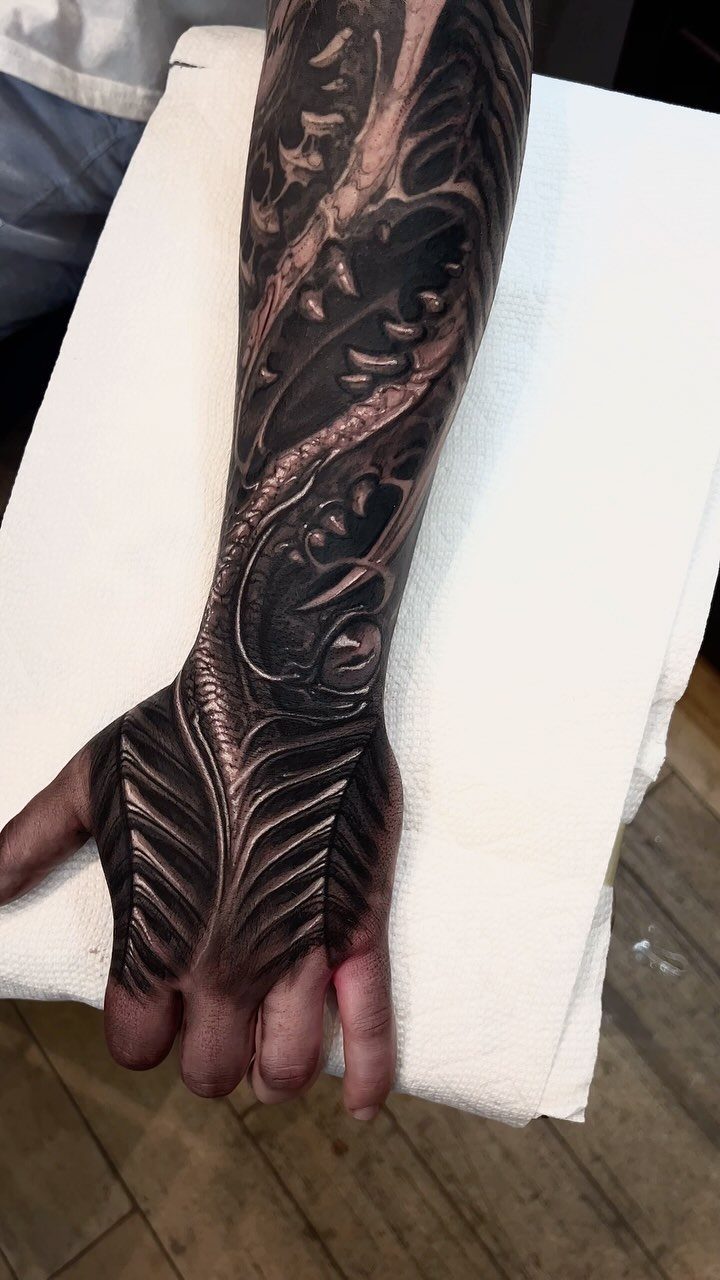
Gears, pistons and mechanical parts inked to look like they sit under the skin, as if the arm has been opened to reveal a machine inside.
The shading and perspective here create the illusion of depth, so the design appears to go into the arm rather than just sitting on top of it.
Biomechanical sleeves take longer than most styles because of the fine detail and the way each piece has to connect logically to the next.
Adding a hand piece later means finding an artist who can match the mechanical detail and shading style, or going back to the person who did the sleeve.
Cost runs high for this style. The detail work alone adds hours, and poor execution ruins the effect entirely.
13. Anime Sleeve Tattoo
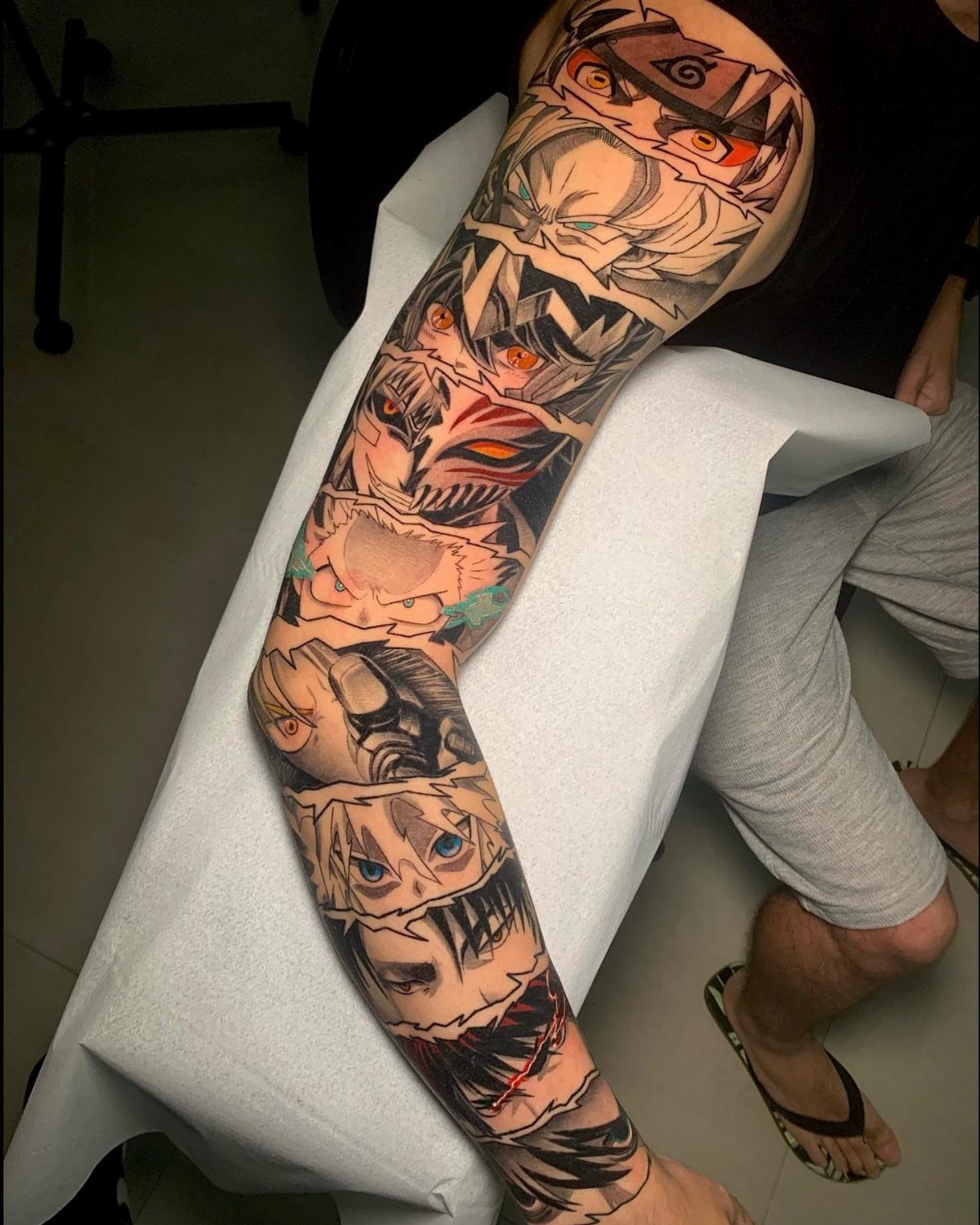
Characters from different series combined into one sleeve, each face or scene inked as its own piece but placed close enough that the arm reads full.
The style here leans realistic rather than flat color, so each character gets shaded depth.
Anime sleeves work best when you limit the number of shows.
Too many competing art styles make the sleeve look crowded. Choose a few series with similar color palettes or line weight, and the whole thing holds together better.
Cost depends on detail level. Faces take longer to shade than simple logos or symbols, so expect multiple sessions for a full realistic sleeve.
14. Lion Sleeve Tattoo
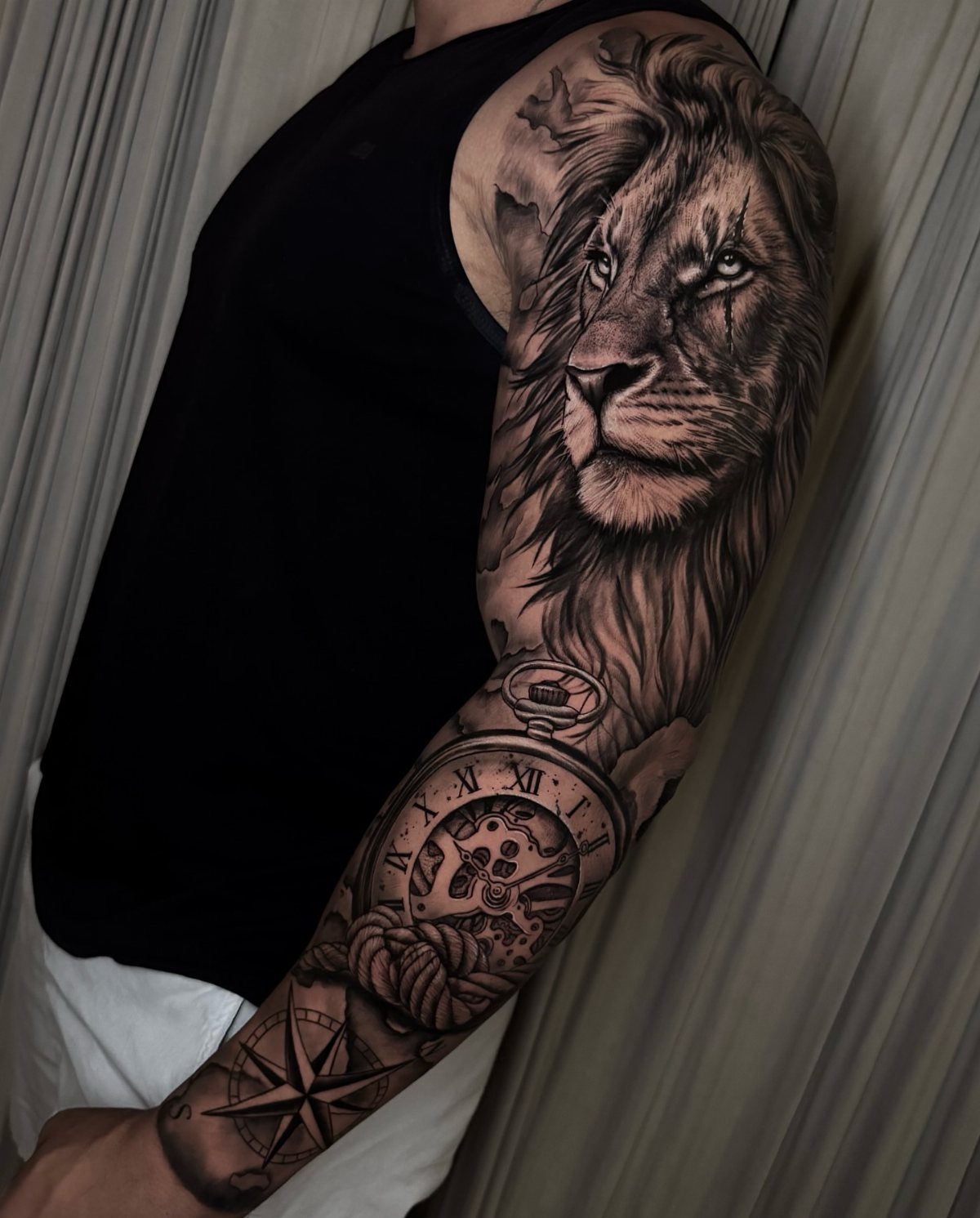
A lion’s face placed on the upper arm or shoulder, paired with objects that reinforce the theme.
Lions fill the shoulder well because the mane spreads naturally across the curve. Adding smaller elements lower on the arm balances the composition and gives the eye somewhere to move after the main image.
If you want the lion to stand alone, size it larger and let it cover more of the upper arm. Smaller supporting pieces work only when the main image is strong enough to anchor them.
15. Celtic Sleeve Tattoo
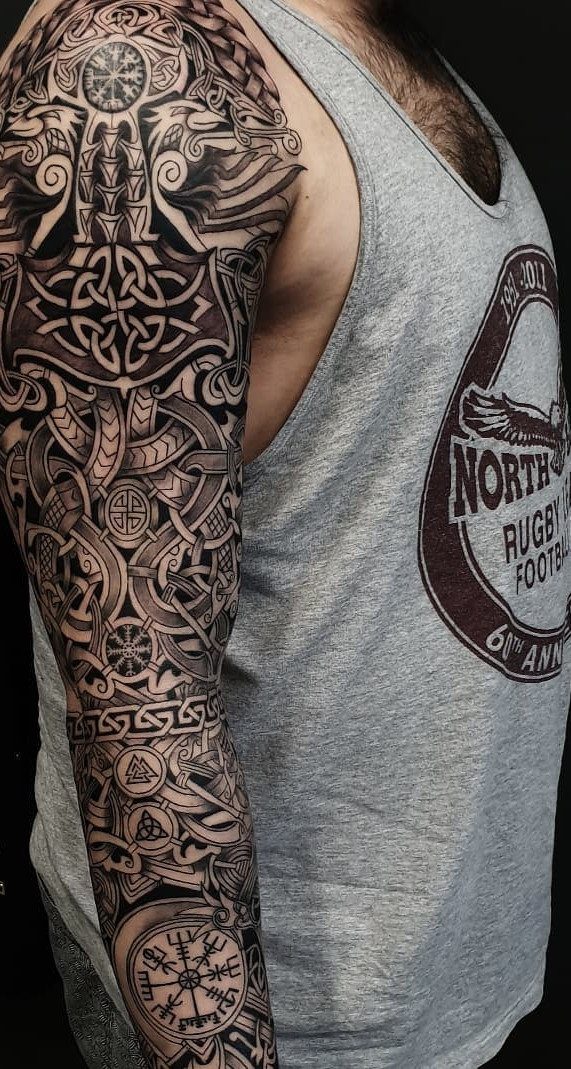
Interlocking knots inked in black, with each line weaving over and under the next in a continuous loop. The patterns here repeat down the arm, and the lack of color keeps the focus on the geometry itself.
Celtic knotwork demands precision. One line that doesn’t connect correctly breaks the pattern, so stencil placement matters more than in most styles.
Sessions are shorter than shaded work because the style relies on linework rather than fill, but touch-ups are harder to hide if the lines drift over time.
Knots read better on thicker arms. The narrow spaces between lines need enough skin to stay distinct, and on a thin arm the design can look cramped.
16. Patchwork Sleeve Tattoo
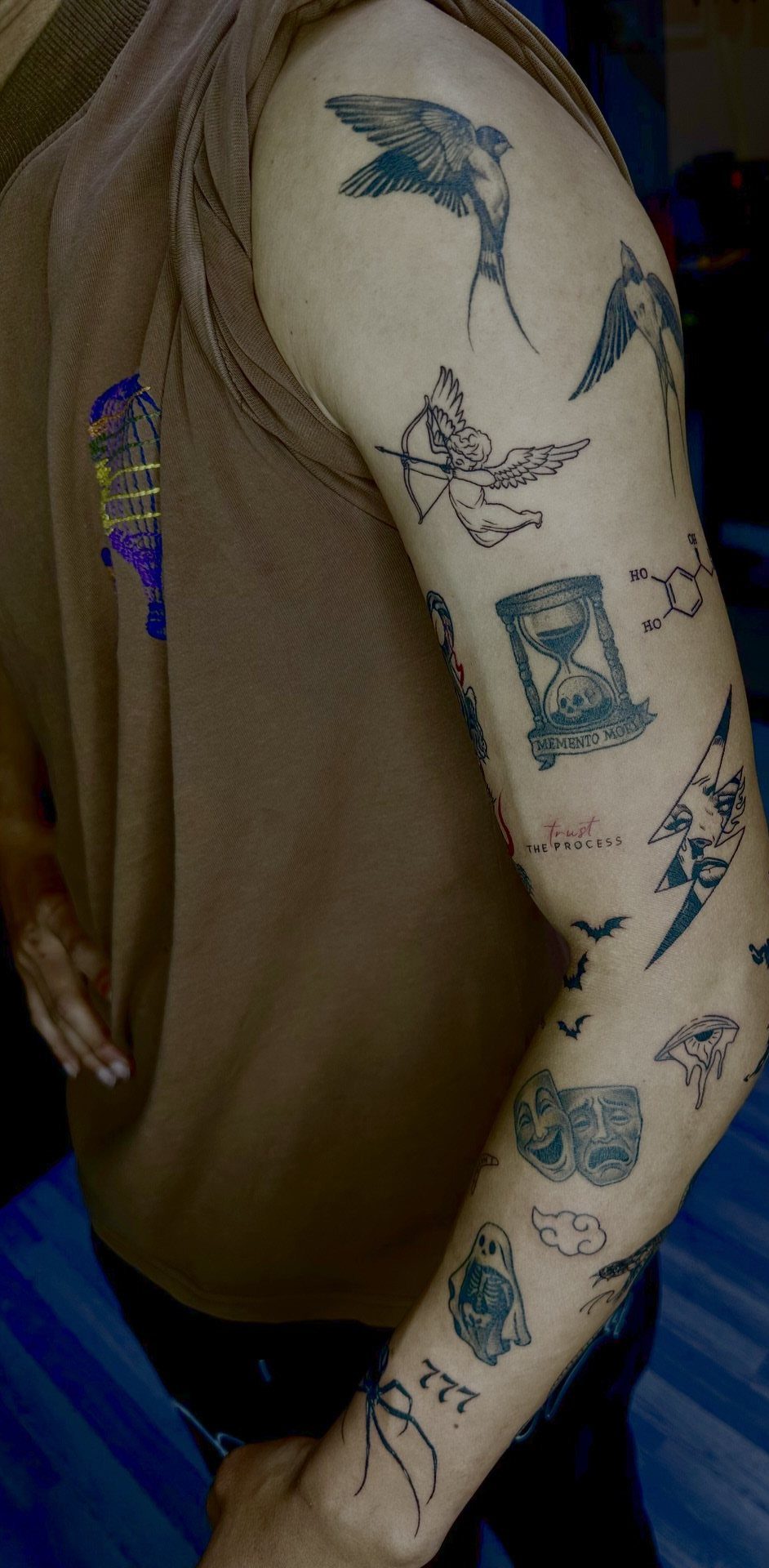
Small tattoos placed independently across the arm, each one finished on its own without connecting to the others. The gaps between pieces let the skin show through, so the sleeve builds over time rather than all at once.
Patchwork lets you add tattoos as you go. You can start without a full plan, and each piece can come from a different artist or style.
The downside is that cohesion depends on spacing: too many pieces jammed together look chaotic, and too much skin left open makes the sleeve feel unfinished.
If you already have random tattoos, a patchwork sleeve grows naturally from what you’ve got.
17. Balinese Sleeve Tattoo
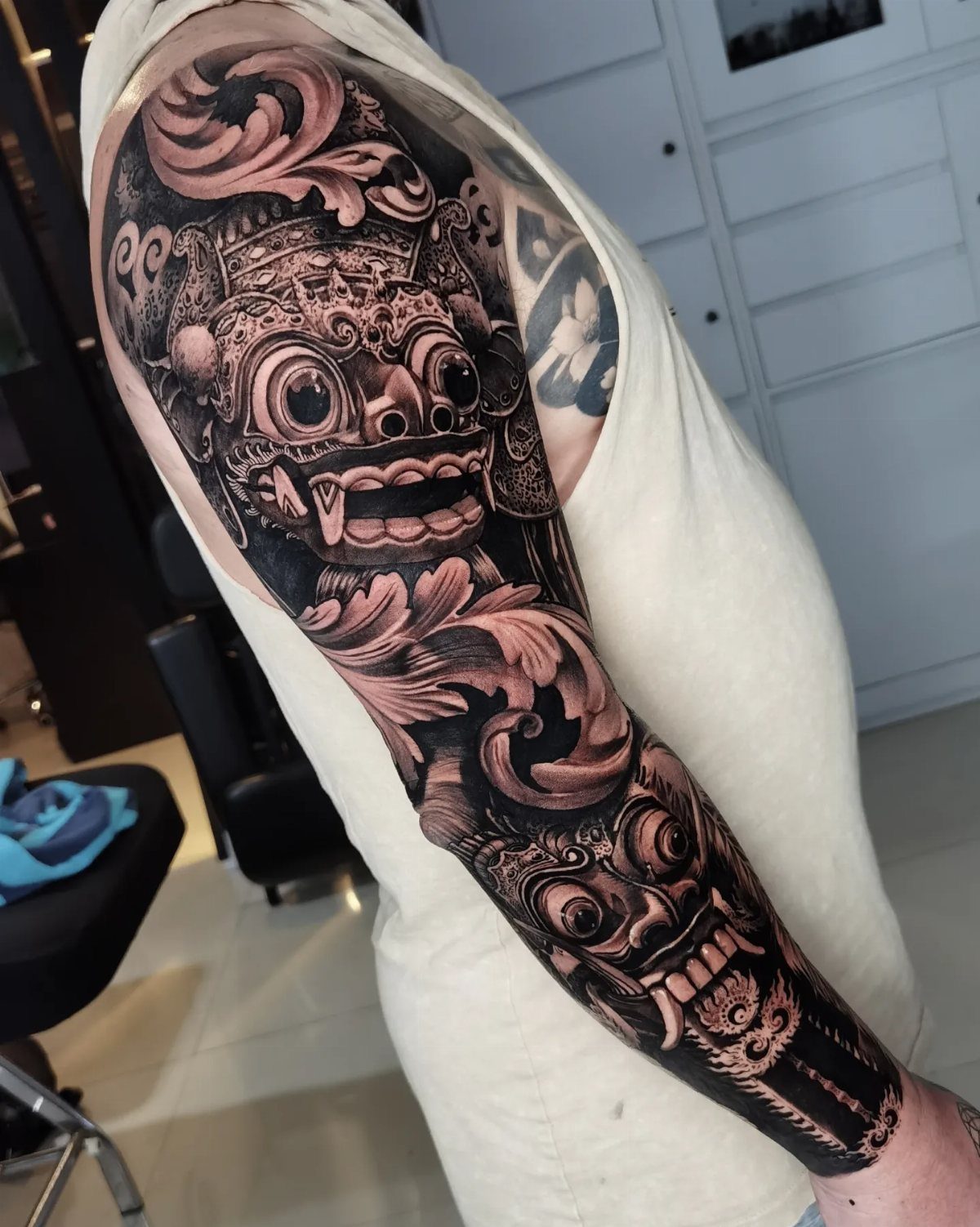
Balinese masks and carved ornamental details shaded in black and grey, arranged to fill the arm without gaps.
The detail in Balinese motifs takes time.
Each carving-style flourish and mask feature needs precise shading to look three-dimensional, so sessions run long. The style works well in monochrome because the shapes already carry enough visual weight.
Avoid mixing Balinese motifs with unrelated imagery. The cultural specificity of the designs makes them hard to blend with other styles, and forcing it usually weakens both.
18. Nordic Sleeve Tattoo
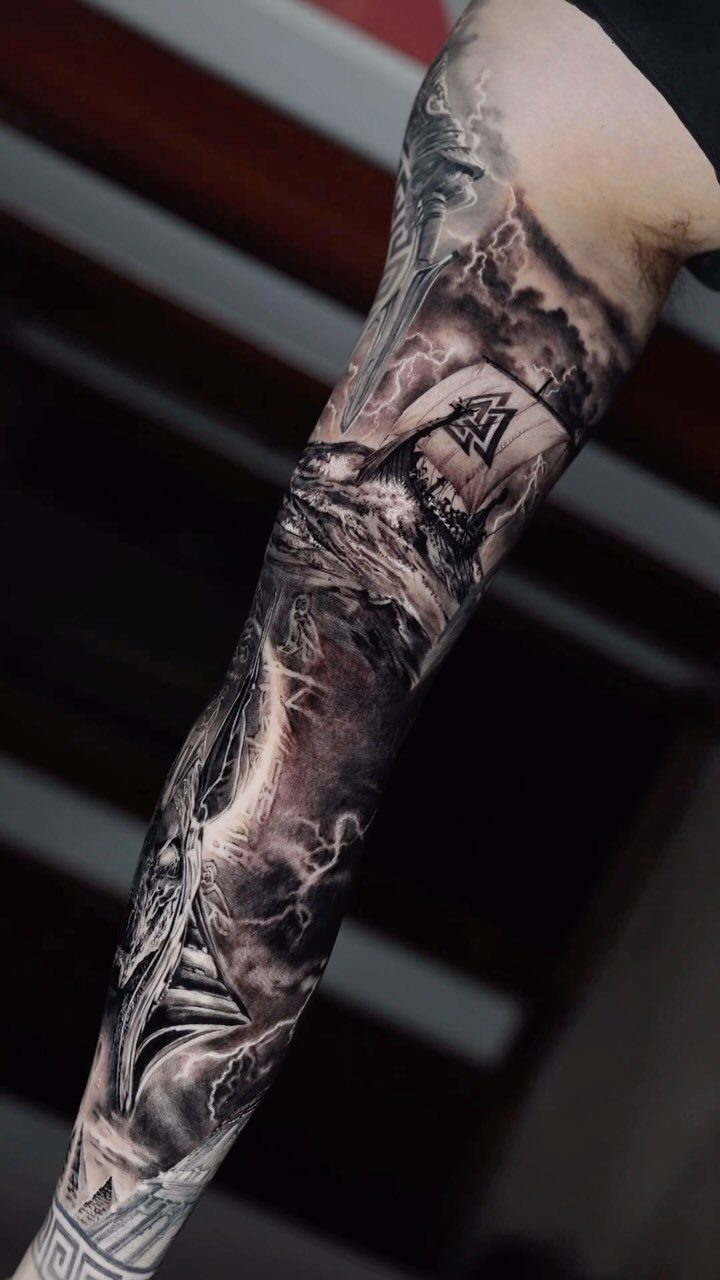
Norse imagery layered across the arm: Viking ships, lightning, figures from mythology, all shaded in black and grey. The composition here stacks elements vertically, so the design flows from shoulder to wrist without obvious seams.
Nordic sleeves suit men who want storytelling in their ink.
Each element can reference a specific myth or symbol, and the monochrome palette keeps it readable even when the design is dense. Sessions depend on how much fine detail the artist adds to the ships, armor or runes.
If you plan to add color later, map it out before the black and grey goes in. Adding color to a finished black sleeve is possible but limited.
19. Fine Line Sleeve Tattoo
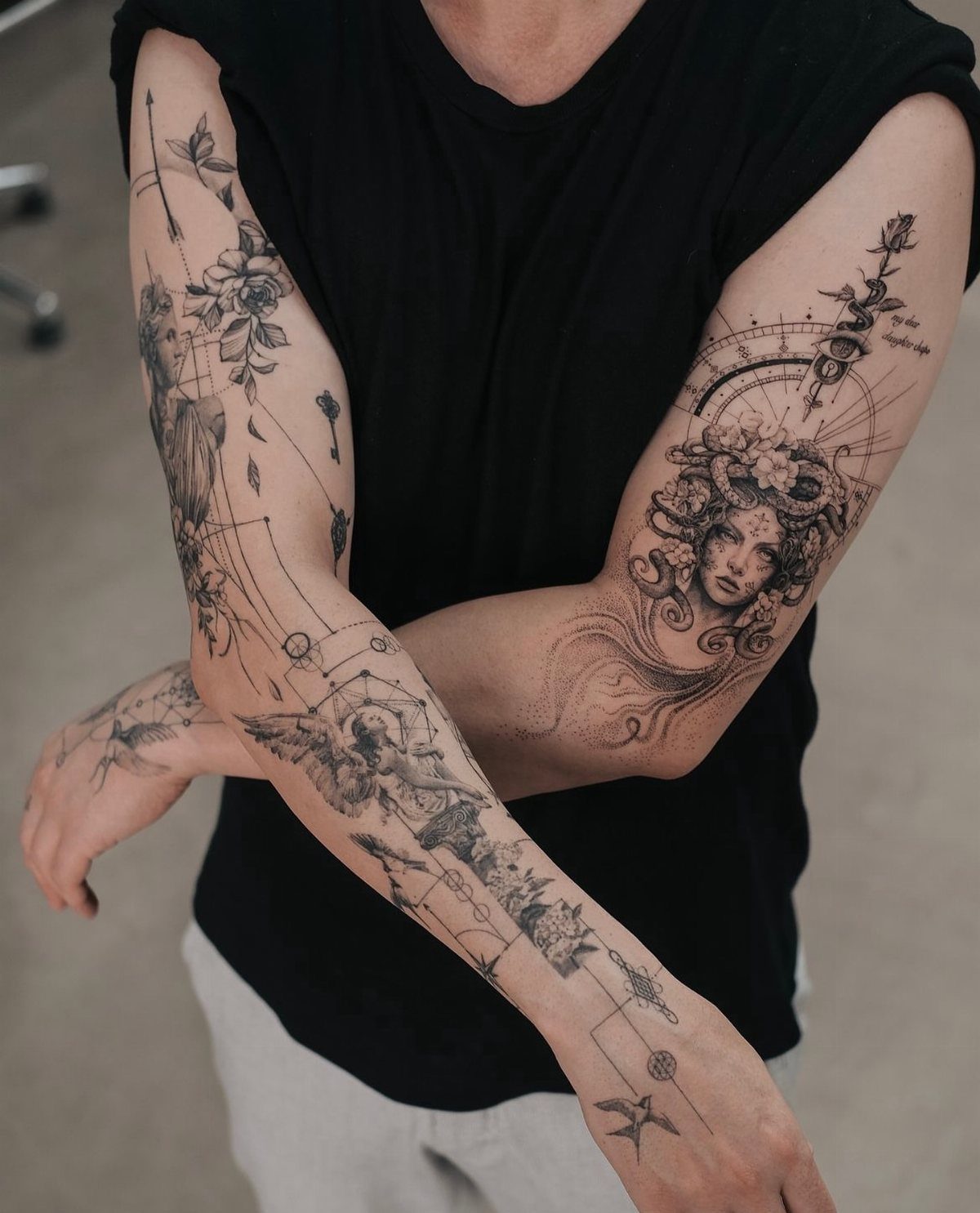
Single-needle tattoos covering the full arm, each line thin enough that the design reads delicate rather than bold. Fine line work suits men who want a full sleeve without the heaviness of traditional or blackwork styles.
The thinner lines mean less ink trauma per session, so healing is quicker.
But fine line fades faster than thick black, and touch-ups every few years keep the design sharp. Not every artist works in this style well; poor line weight control turns delicate into blurry.
Fine line shows detail better on lighter skin. On darker tones, the contrast drops and some elements may not read from a distance.
20. Christian Sleeve Tattoo
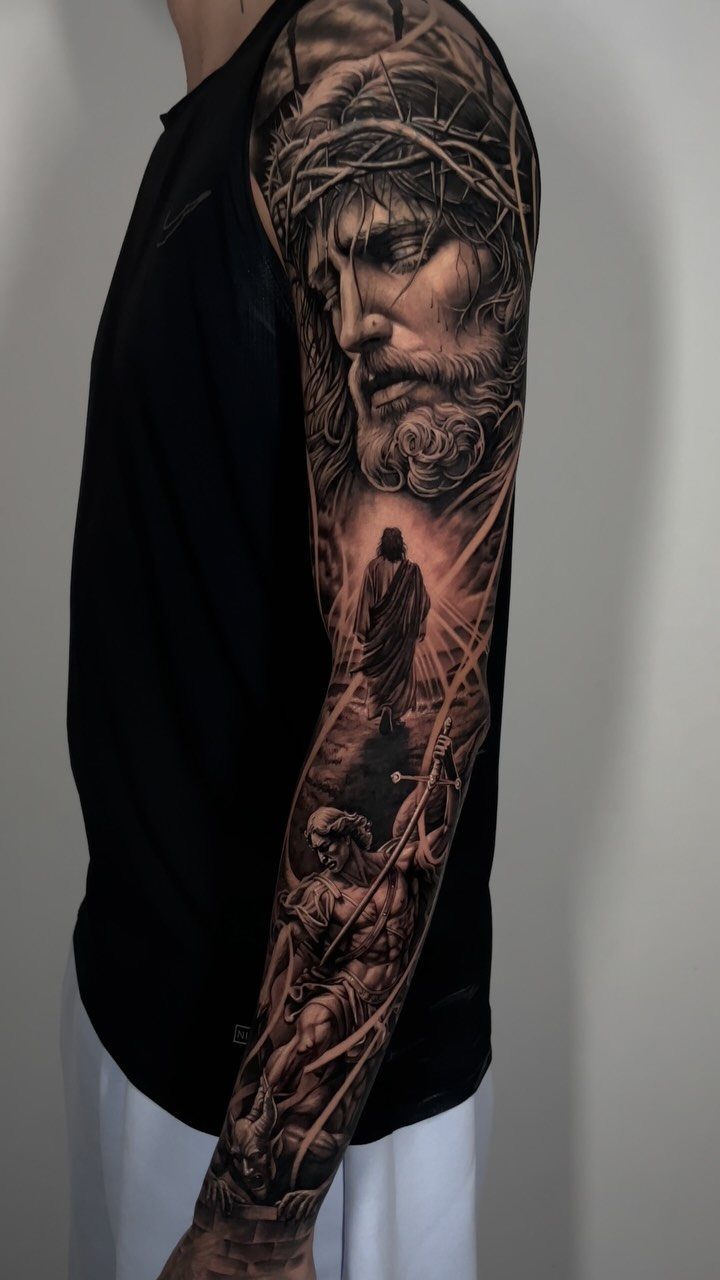
Religious imagery stacked from shoulder to wrist, typically centered on a portrait of Christ with supporting scenes like crosses, scripture or praying hands.
The shading here brings depth to the face, and the composition flows down the arm without hard breaks between elements.
Christian sleeves take planning.
Each piece needs to connect thematically, and cramming too many symbols into one arm weakens the impact. Sessions depend on how much portrait work you include; faces take longer to shade than geometric crosses or text.
Visibility matters if your workplace or community has rules about religious displays. A full sleeve is hard to hide in short sleeves but a long-sleeve shirt will cover it entirely.
Frequently Asked Questions
How much does a full sleeve tattoo cost?
Plan on $2,000 to $8,000 or higher, driven by your artist’s rate, how intricate the design runs, and the number of sessions it takes to finish.
Realism and biomechanical styles run higher than traditional or blackwork because they take more hours to finish. Travel costs matter if you’re going to an artist outside your area.
How long does it take to heal a full sleeve tattoo?
The skin surface heals in 2 to 3 weeks after each appointment. Because most sleeves take multiple sessions spread a month apart, count on 6 months or longer from your first sit to completely healed.
Do full sleeve tattoos hurt?
Absolutely, and different parts of the arm register pain differently. The outer arm sits around 4 out of 10, manageable for most people.





