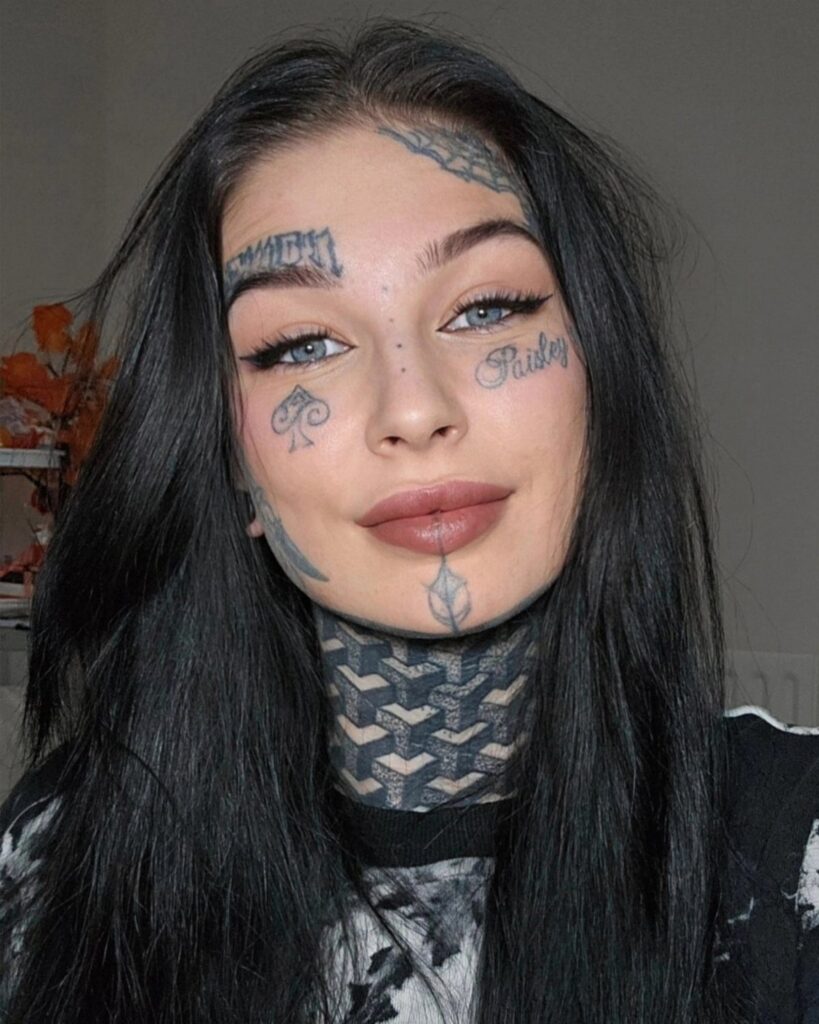
Face tattoos for women range from freckle dots that take a week to heal to full mandalas on the forehead, geometric chin patterns, and script lettering across the cheek.
The choice comes down to how much visibility you can accept in every professional and social setting: a small star near the eye reads as jewelry, while lettering across the face announces itself before you speak.
1. Freckle Tattoos
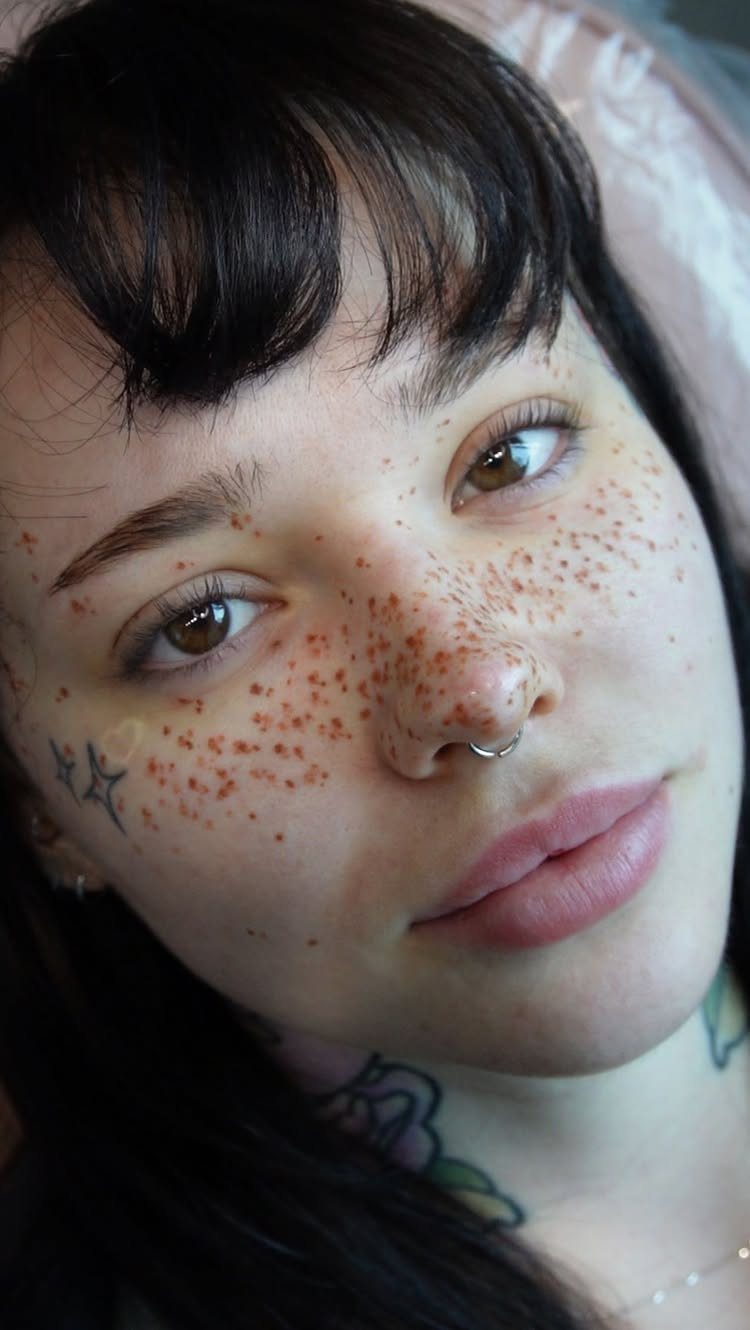
Freckle tattoos place small brown dots across the nose and cheeks, mimicking natural sun spots. The effect reads as subtle until you look closely: the spacing stays even, the size consistent, and the color never fades with the seasons.
Most artists apply them freehand with a single-needle setup, spacing them to match your existing freckles or building a pattern from scratch.
Healing takes about a week, and touch-ups after 6 months keep the color from turning blue-gray as the ink settles.
If you already have freckles, adding a few fills gaps without looking drawn on. Starting fresh means trusting your artist’s eye for natural spacing.
2. Kat Von D’s Star Tattoos

Small star tattoos sit near the outer corner of the eye or just below the lower lash line, a minimalist take on face ink that reads more like jewelry than a full design.
The shapes stay simple: solid fills or single-line outlines, usually black, sized small enough to sit in the orbital hollow and leave the eye clear.
Placement this close to the eye means swelling for the first few days and being careful with aftercare around sensitive skin. The stars stay readable because they sit on a flat plane and don’t wrap around curves.
This works for something visible but not dominant. One star keeps it subtle; a small cluster along the temple makes more of a statement.
3. Moko Kauae Tattoos
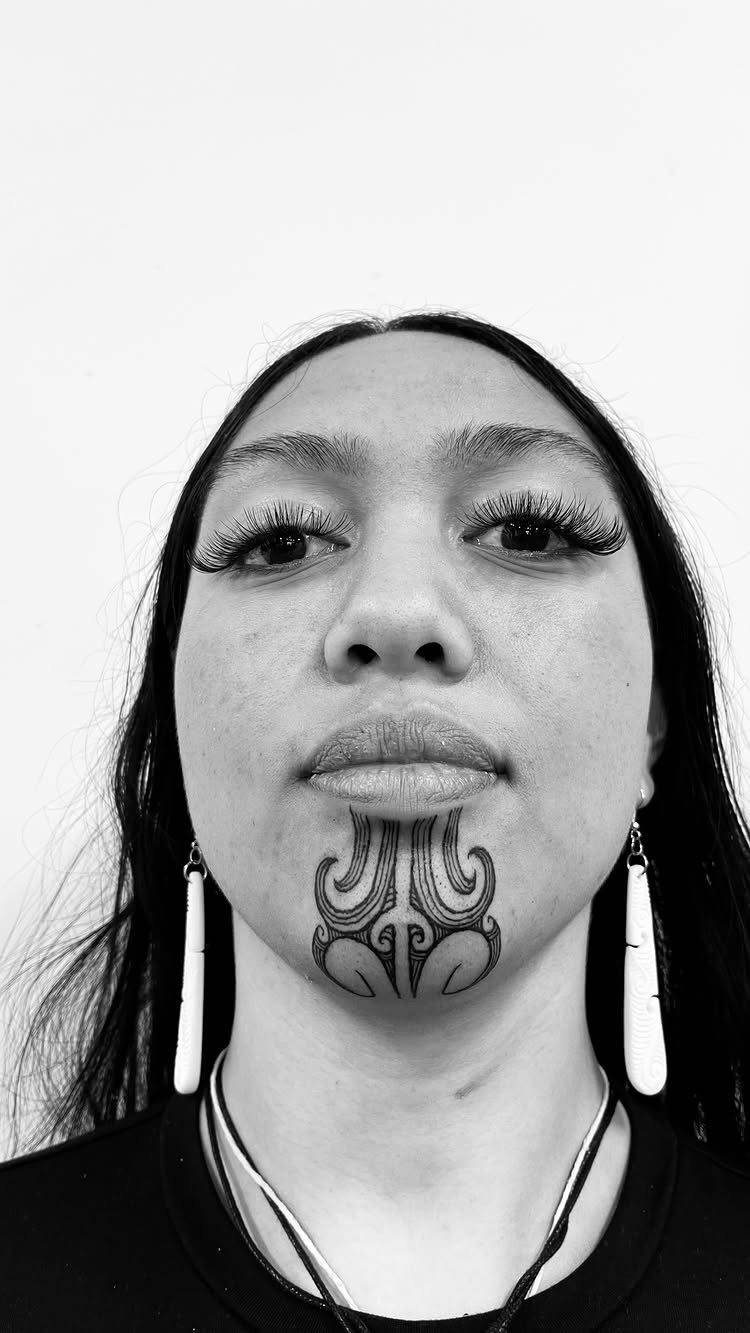
A Moko Kauae sits on the chin and sometimes extends onto the lower lip, a traditional Māori tattoo historically worn by women to mark lineage, status, and connection to whānau.
The design follows vertical and horizontal bands, with fine geometric patterning that curves with the shape of the jaw.
This is not decorative body art you choose from a flash sheet. Receiving a Moko Kauae is tied to Māori identity and is traditionally applied by a tohunga tā moko, often using tools and techniques passed down through generations.
If you are Māori and considering one, look for someone who practices traditional methods and understands the cultural weight. If you are not, this is not for you.
4. Flower Tattoos
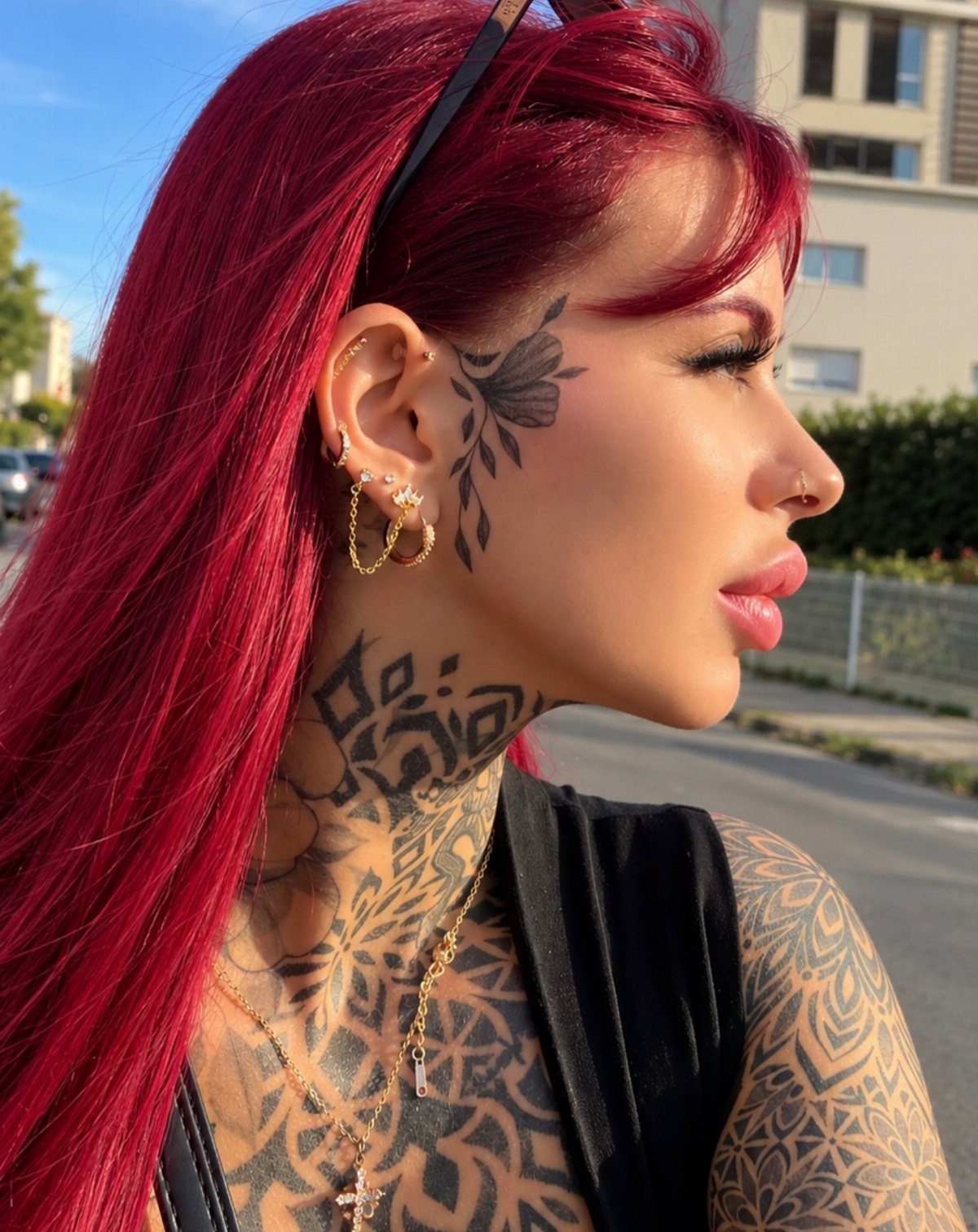
A flower on the cheek or temple brings organic curves to a part of the body that reads as hard edges: bone structure, jawline, the frame of the face.
The petals sit flat against the skin, and the design stays readable because it doesn’t wrap or distort when you move.
Black holds best on the face, where sun exposure fades color faster than anywhere else.
Shading stops the flower from looking flat, and a single bloom works better than a cluster, which can crowd the space and blur as it heals.
Choose a flower that fits the size of your cheekbone. A rose needs room; a daisy or cherry blossom stays compact and legible.
5. Mandala Tattoos
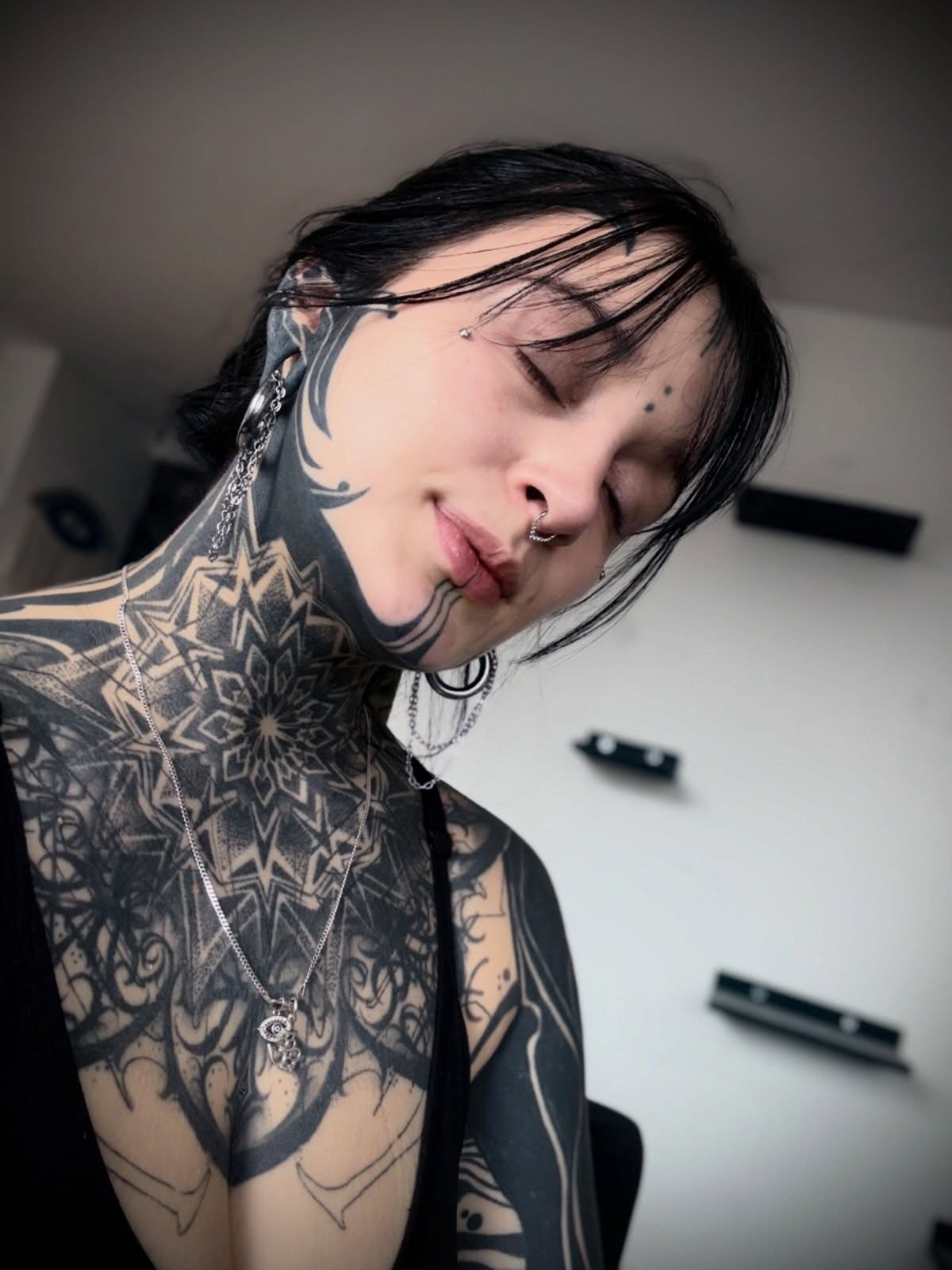
A mandala on the neck or jaw uses repeating geometric petals and dots to build symmetry around a central point.
The design sits well on a flat plane like the throat or just under the chin, where the circular shape can spread without distortion.
Fine lines and tight spacing mean this needs an artist who works clean at small scales.
Blowouts happen easily on the face and neck, where skin is thin and takes ink differently than the arm or leg. Expect multiple sessions if the mandala is large or covers the full throat.
Mandalas read as spiritual or meditative, but on the face they also function as bold, visible symmetry. For something geometric without hard edges, this is the option.
6. Ornamental Lace and Jewelry-inspired Designs
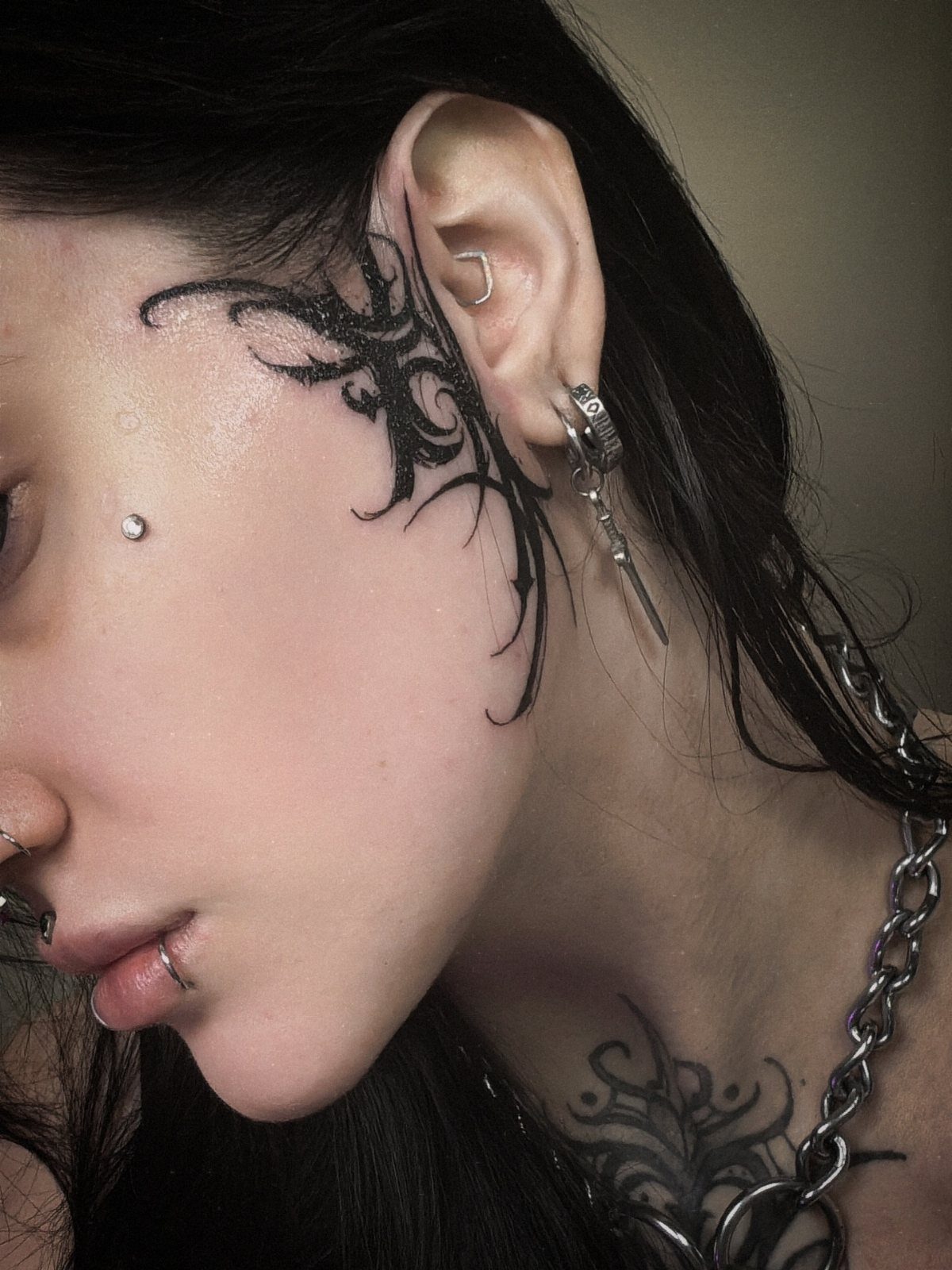
Ornamental lace tattoos mimic the fine detail of jewelry or fabric, with filigree curves, dots, and connecting lines that drape across the cheek or temple. It looks like a delicate accessory, but it sits permanently and doesn’t shift or tarnish.
Black ink works best for this level of detail.
Thin lines need an artist who can hold consistent pressure, because any wobble shows. Placement on the face means the skin moves constantly, so the lace has to follow the bone structure rather than fight it.
This suits you if you want something ornate that still frames your features instead of covering them. Fine linework fades faster on the face than on less mobile skin, so plan for later sessions every few years.
7. Face Script and Lettering Tattoos
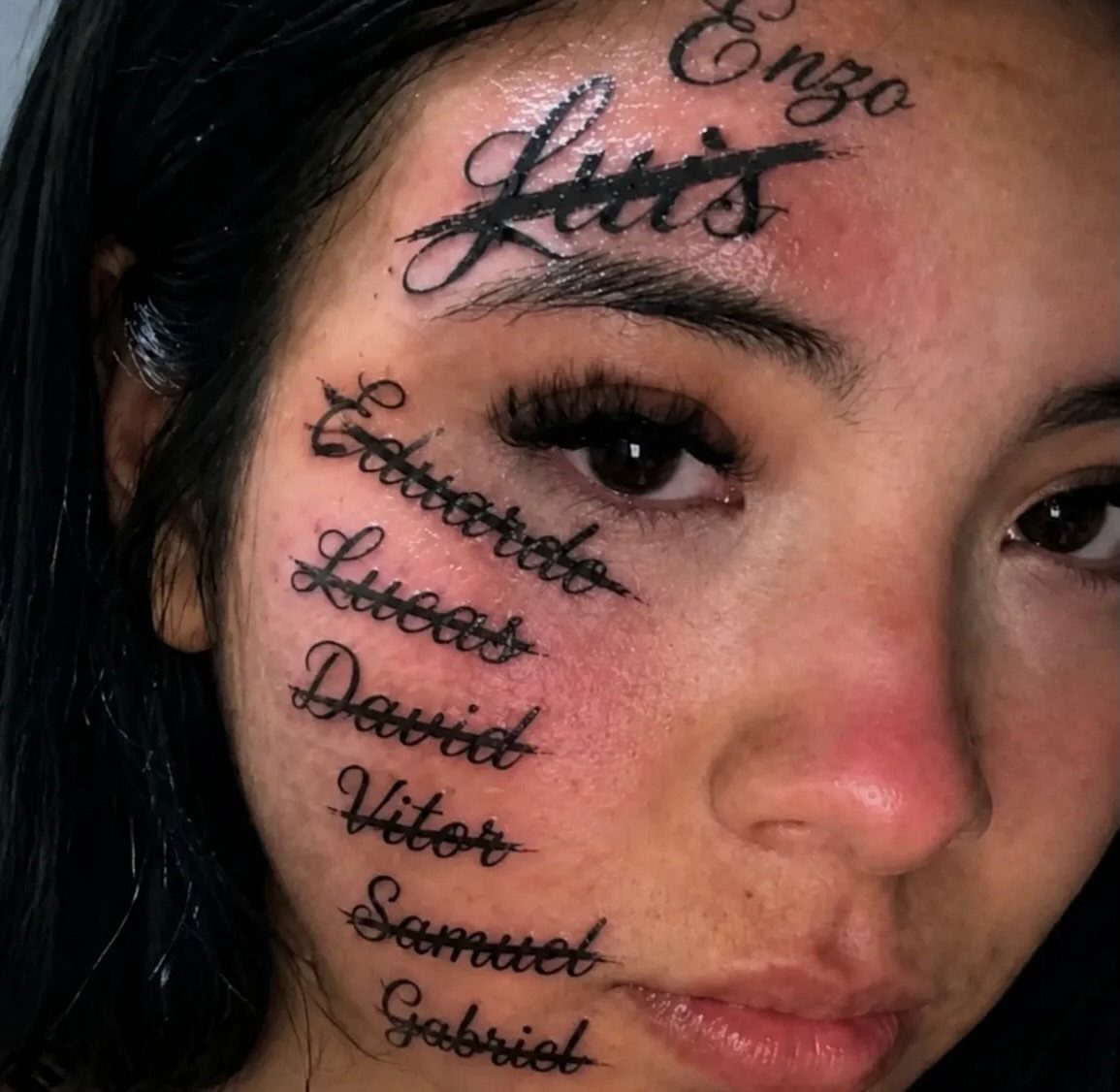
Script tattoos on the forehead and cheek place names or words in black lettering across the most visible skin on the body.
The lines stay readable because the face is flat, but the boldness is absolute: this is ink that announces itself before you do.
Each name sits in its own space, sized to fit between features without crossing into the eye socket or hairline. Healing is quick, about a week, but the placement means constant visibility and no way to hide it.
This works if you want something that cannot be missed. Choose a font that stays legible as the letters age and the edges soften.
8. Butterfly and Crown Face Tattoos
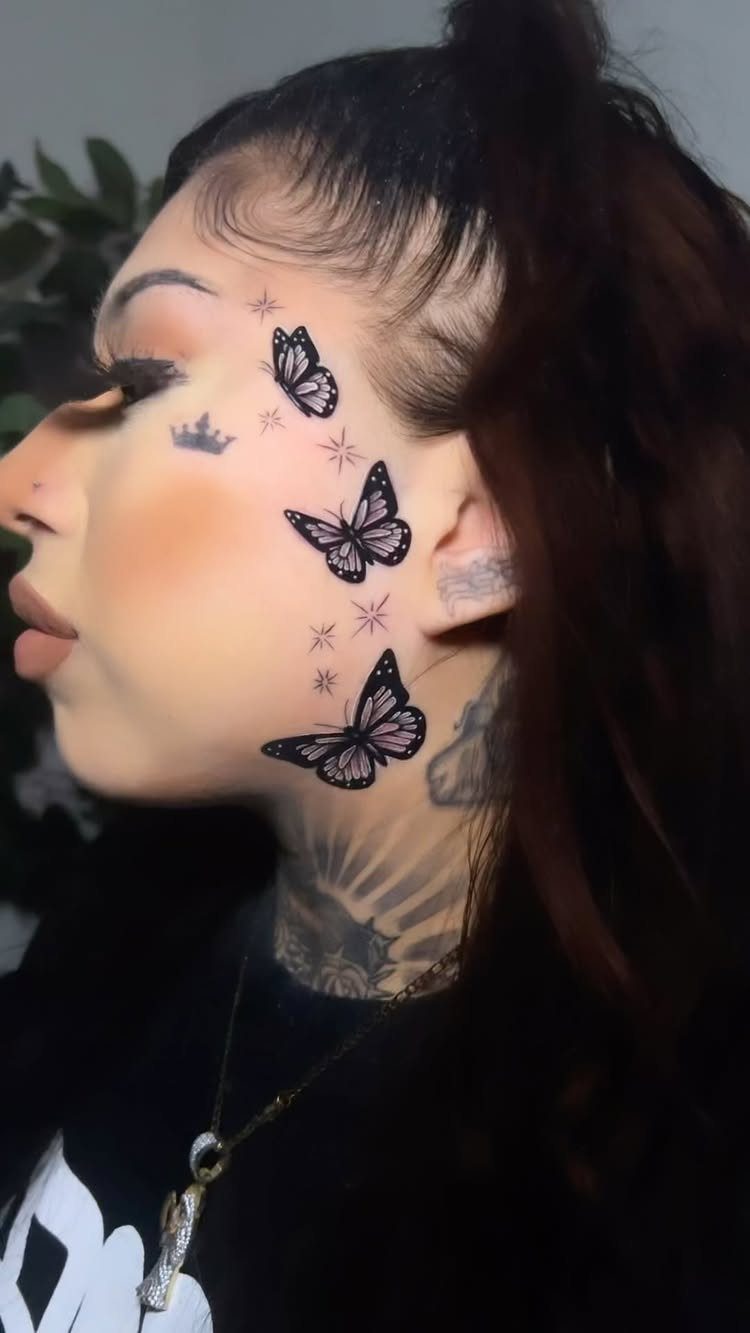
Butterflies along the cheek bring organic shapes to a flat plane, with wings that sit parallel to the skin and a crown near the eye that adds a second focal point without competing for space.
Black ink keeps the silhouettes sharp, and the arrangement follows the natural curve of the cheekbone.
Placement on the cheek means high visibility and fast fading from sun exposure. Plan for touch-ups every few years to keep the wings from blurring.
The butterfly is soft; the crown grounds it.
9. Geometric Chin and Lip Tattoos
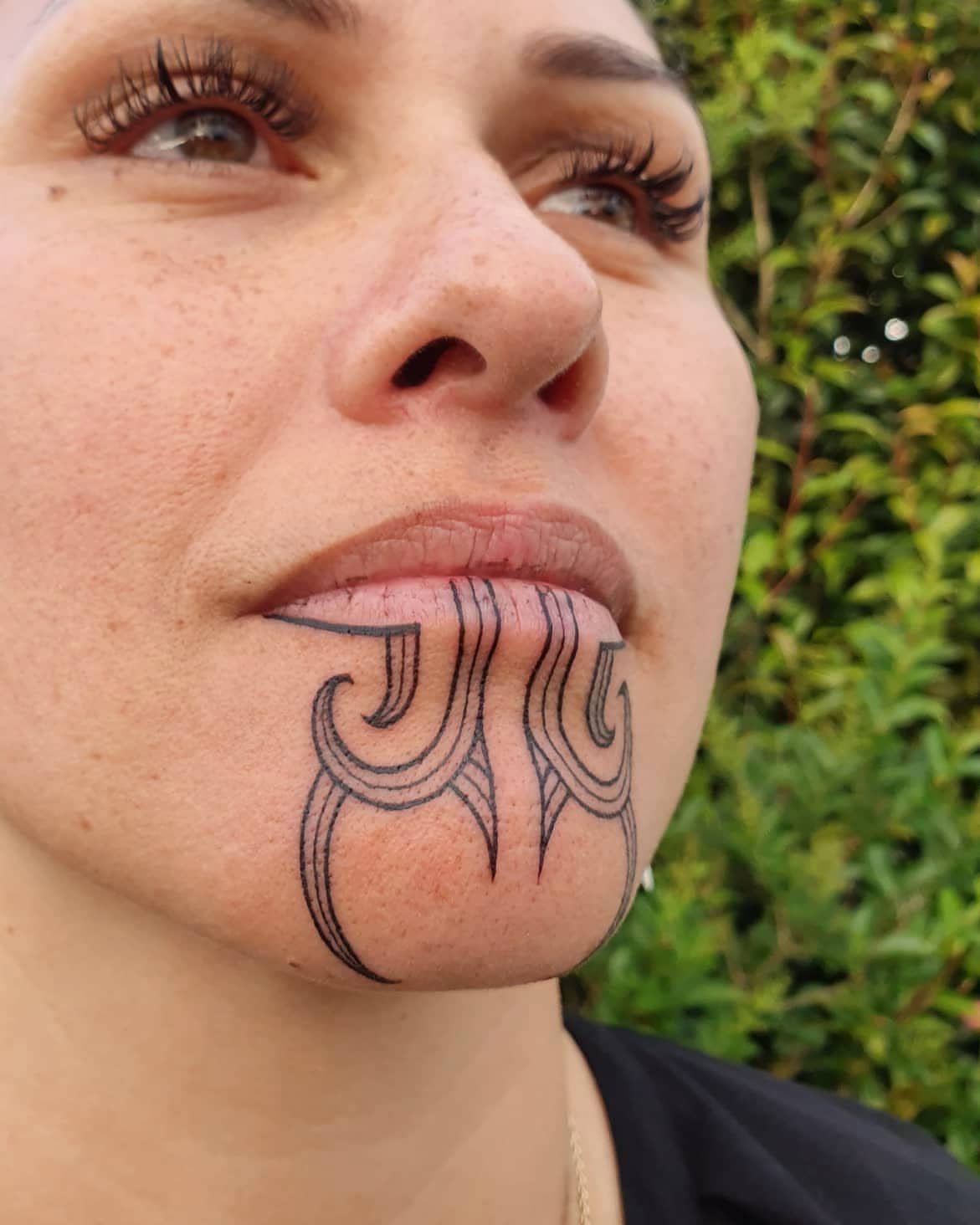
Geometric linework on the chin and lower lip follows the vertical symmetry of the face, with repeating patterns that mirror across the center line.
The design sits on thin skin that takes ink differently than the rest of the body, so clean lines require an artist who can work light and avoid blowouts.
Placement on the lip means the tattoo moves when you talk, and color fades faster here than on the chin. Black holds longest, and keeping the design simple prevents it from muddying as it ages.
This reads as bold but balanced. The symmetry frames the mouth without covering it.
10. Geometric Linework Across the Face
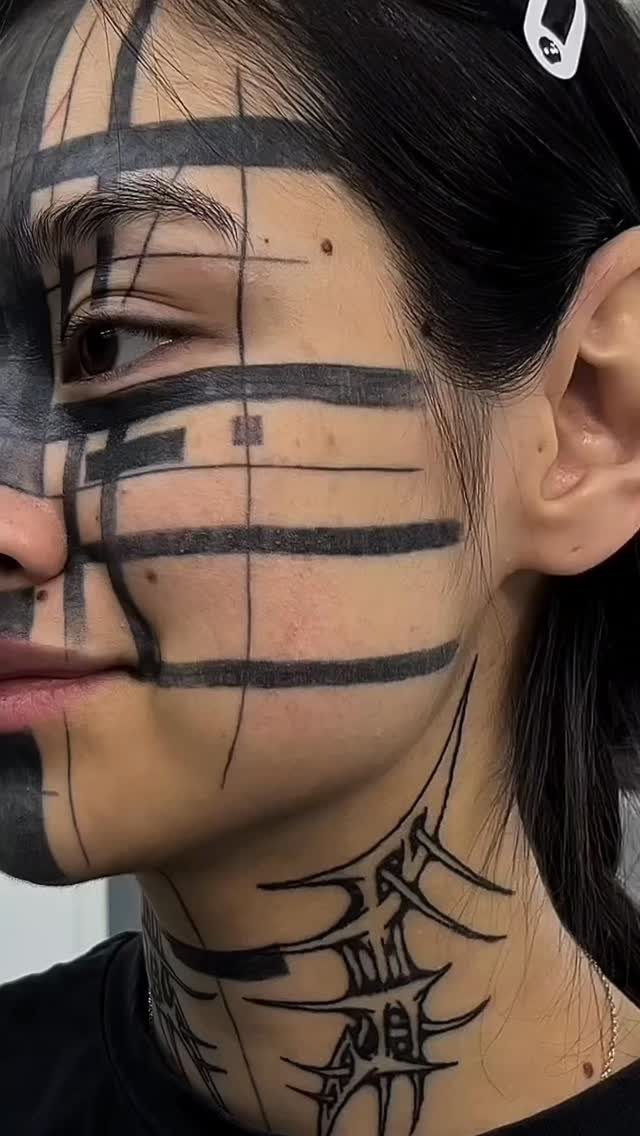
Geometric lines across the face build an abstract grid that covers the cheek, forehead, and neck in intersecting shapes and angles. The design treats the face as a canvas, with bold black strokes that read from across the room.
This level of coverage means committing to face ink as your primary look. The lines stay sharp because they sit on flat planes, but any distortion shows immediately, so the tattoo has to follow the bone structure.
If you want something minimal, this is not it. This is full-face geometry that defines how people see you.
Cultural Significance of Face Tattoos
Face tattoos carry deep cultural roots that predate their modern visibility. Māori, Inuit, and Berber communities tattooed faces to record status, rites of passage, and personal milestones.
For the Berber people of North Africa, face tattoos also served therapeutic purposes. The Partridges Eye, a diamond marked with small crosses, was believed to bring grace and speed to whoever wore it.
In the 20th century, Western subcultures adopted face tattoos as symbols of rebellion and individuality, particularly within punk and alternative communities. What began as countercultural expression has shifted toward broader acceptance, though the weight of the choice remains unchanged.
If you are drawn to a design with cultural origins, research its history and meaning first. Some patterns are tied to specific communities and carry significance that goes beyond aesthetics.
Social Perceptions of Face Tattoos
Face tattoos remain visible in every professional and social setting, and how people respond depends on where you work and who you interact with.
Fields like finance, law, and medicine still treat visible facial ink as a barrier to promotion. The judgment is real, even if unstated.
Creative industries offer more room. In creative industries like fashion and design, a face tattoo reads as brand identity rather than a liability.
Socially, expect strangers to ask questions you did not invite.
Once the ink is on your face, it shapes how people see you before you speak.





