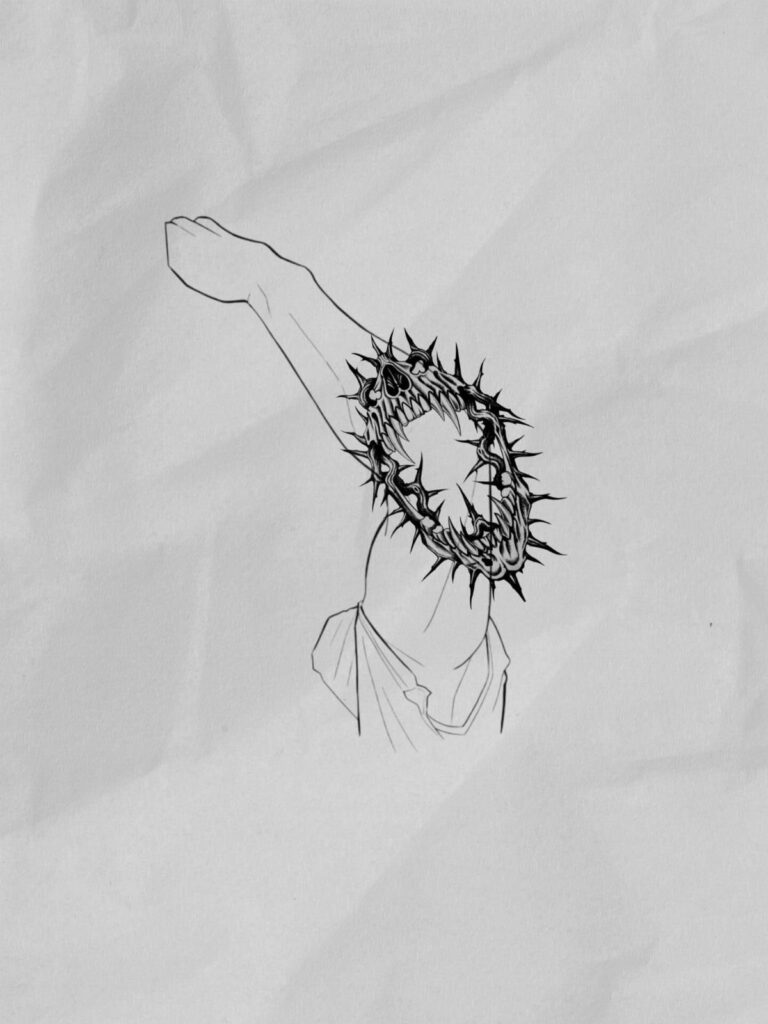
Elbow tattoos center on a joint that moves constantly, so designs that radiate outward or follow the arm’s vertical line hold their form better than patterns that fight the curve.
A spider web or mandala uses the elbow’s rounded surface as a natural focal point, while patterns like Polynesian tribal work and tree rings extend the composition up the forearm without forcing the joint to carry too much flat detail.
1. Spider Web Elbow Tattoo
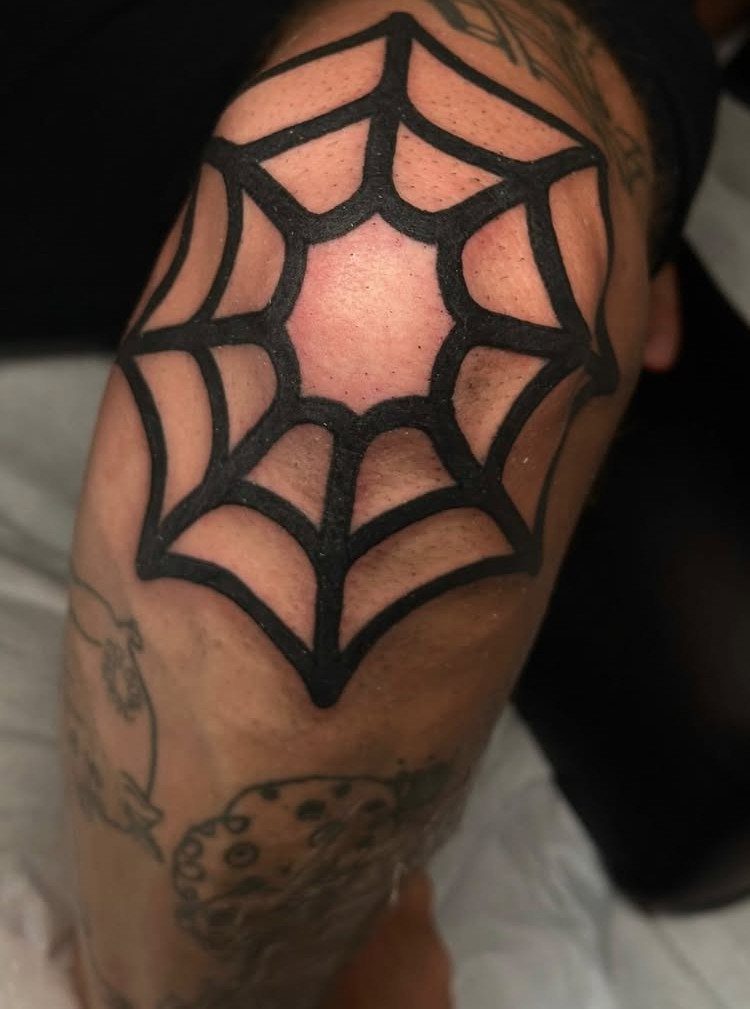
The web radiates out from the center point of the elbow, letting the joint’s natural motion pull and compress the design every time you bend your arm. That movement gives the piece a restless energy no flat surface could match.
The pattern is simple to scan at arm’s length but holds detail up close: each strand needs to stay bold enough to age well without blurring together.
Black ink keeps the contrast sharp. Pain is high here since you’re working directly over bone, but the coverage is fast.
2. Geometric Star Pattern
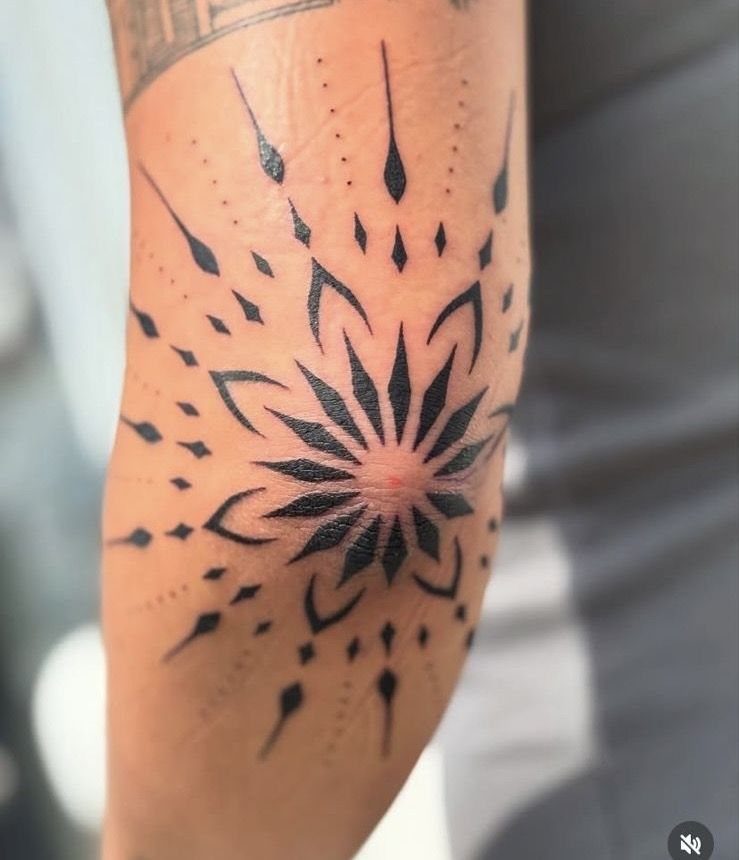
A geometric star anchors itself at the elbow’s center and sends radiating lines outward, turning the joint into a focal point instead of a gap between designs. The symmetry reads clearly whether the arm is bent or straight.
Sharp lines and precise angles demand a steady hand and tight needle control, so find an artist comfortable with geometric work.
Dotwork shading around the rays adds depth without softening the structure. The symbolism carries weight: direction, aspiration, a fixed point in uncertain territory.
3. Floral Bloom Tattoo
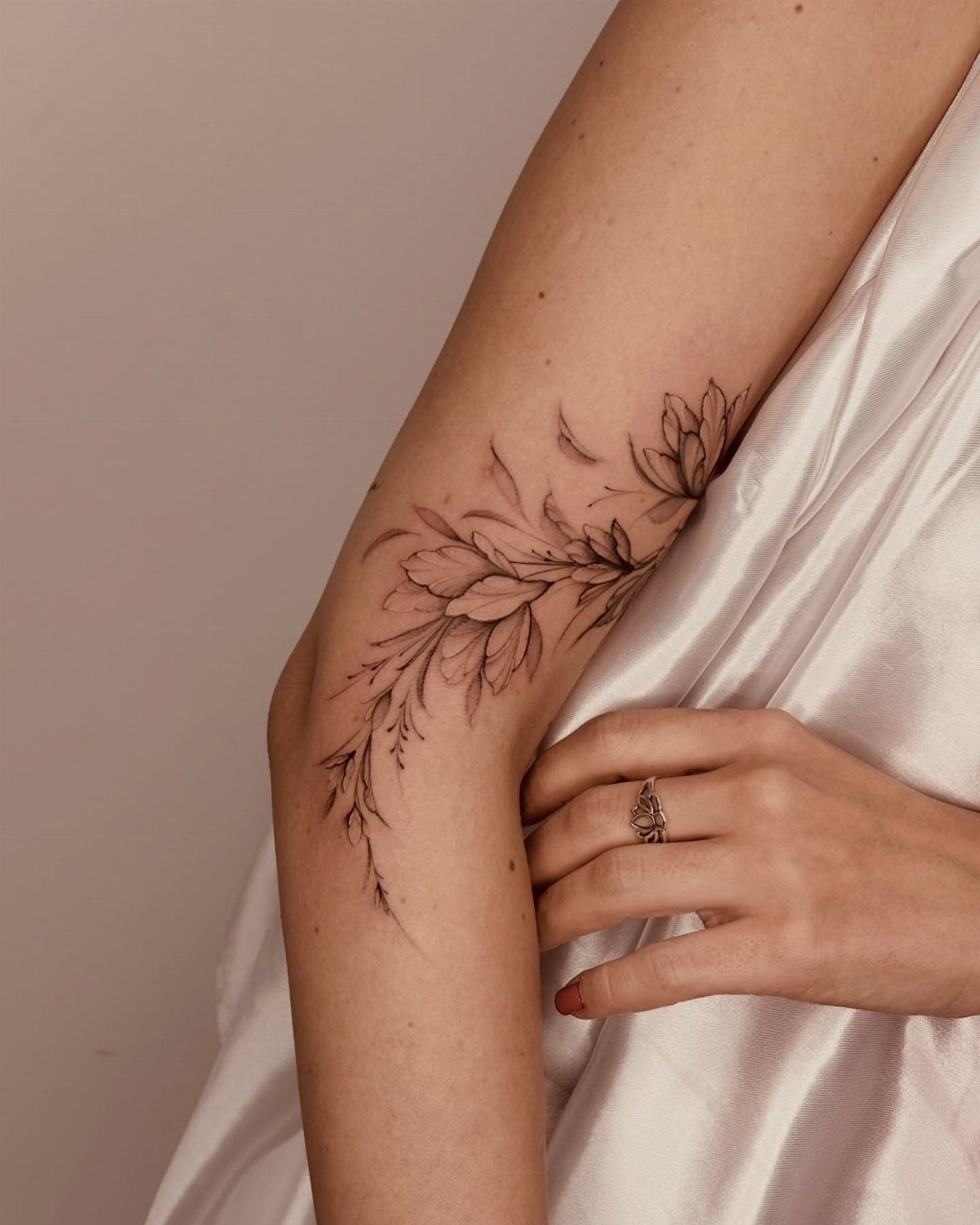
Flowers soften the elbow’s hard angles and let you build a design that flows up the forearm or wraps onto the bicep without a visible seam.
Petals and leaves bend naturally around the joint’s curve, so the piece reads as one continuous composition.
Linework blooms work better here than heavy shading, since the skin stretches and folds with motion.
Peonies carry the symbolism: prosperity, honor, beauty that doesn’t need explanation. Placement around the elbow rather than directly on top reduces pain and opens up more room for the composition.
4. American Traditional Tattoo
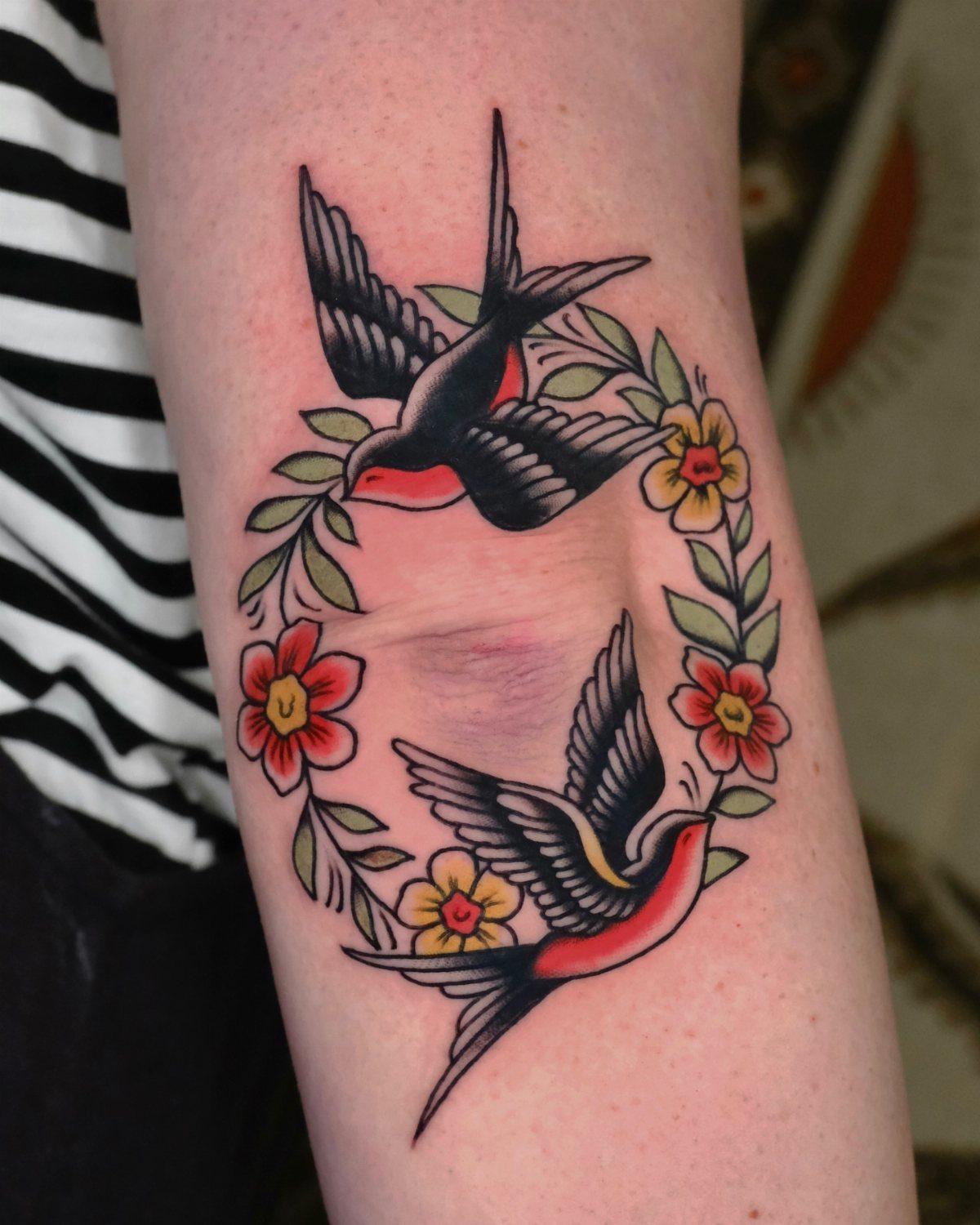
Bold black outlines and a limited color palette give American traditional designs the clarity they need to survive decades of sun, friction and joint movement.
Swallows, roses, anchors and daggers are the classic choices, and they still work because the imagery is simple enough to scan at a glance.
The elbow’s curve suits symmetrical pairs: 2 birds flanking the joint, flowers mirroring on each side. Solid color fills age better than gradient blending, and the thick outlines prevent fine details from bleeding together over time.
5. Sun and Moon Tattoo
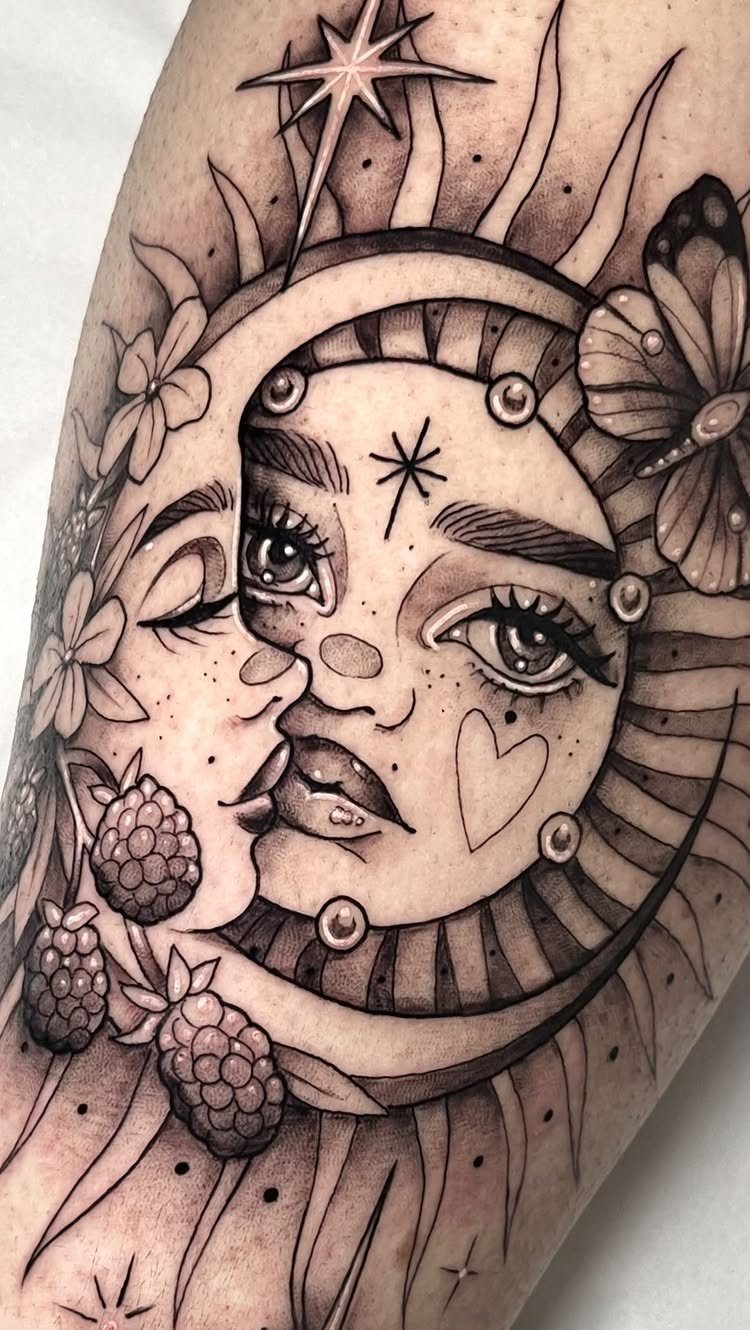
A sun and moon face merged into one image gives you balance without symmetry: light and dark, conscious and subconscious, two halves of a day compressed into a single symbol.
Surrounding elements like butterflies, berries and florals soften the composition and let the piece extend outward when you’re ready to build a larger sleeve.
Black and grey shading pulls attention to form rather than color, and the tonal range holds up better on the elbow’s textured skin. The face sits at the joint’s center, so every bend shifts the expression slightly.
6. Compass Tattoo
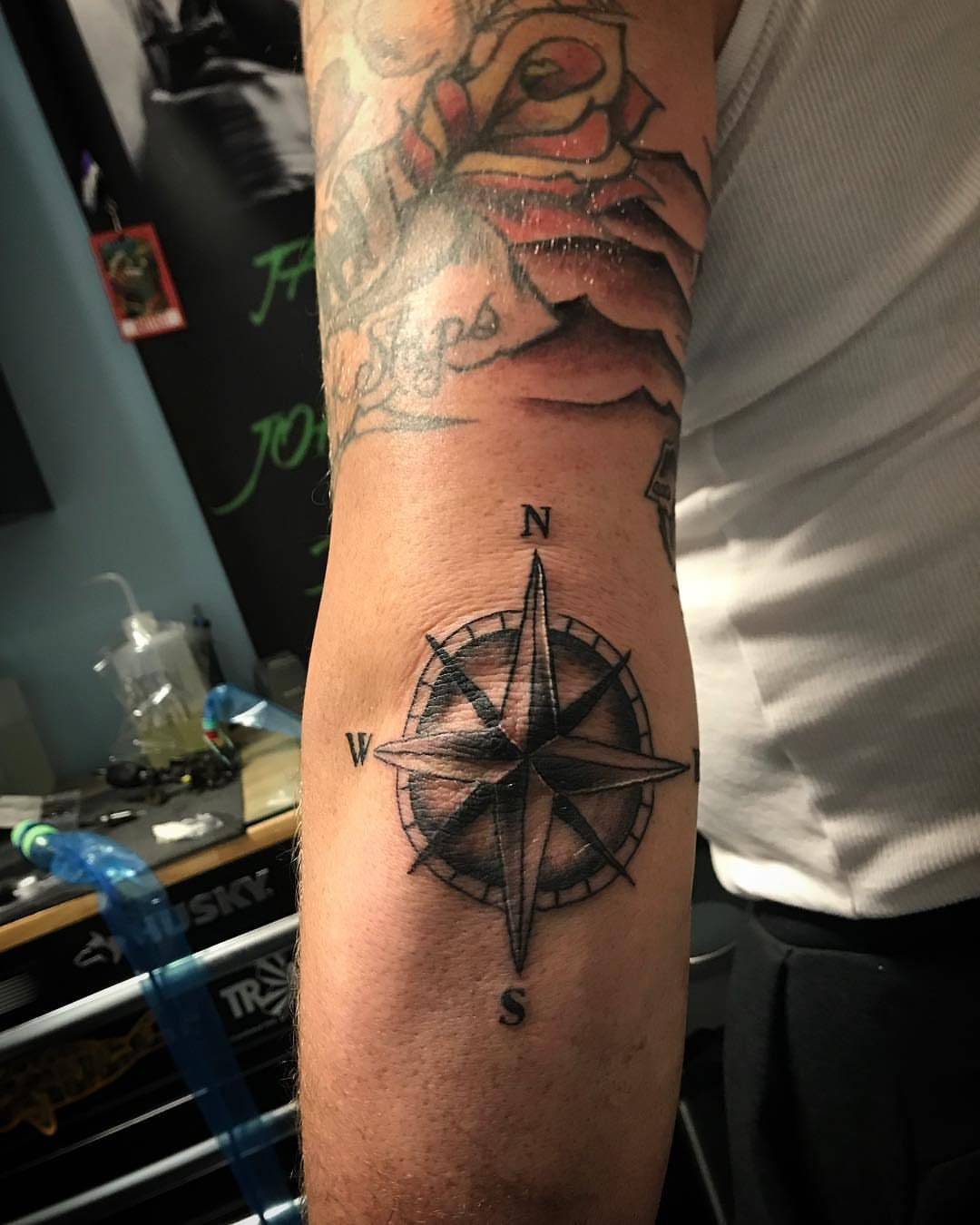
A compass rose maps your direction onto the body’s natural pivot point, turning the elbow into a literal reference for orientation. The cardinal markers give the design structure, and the circular frame sits cleanly on the joint’s rounded surface.
Fine line detail works if the cardinal points and outer ring stay bold enough to anchor the piece, but simpler designs age more reliably.
Shading inside the rose or behind the needle adds dimension without cluttering the readability. Pain is sharp but brief, and healing takes careful movement during the first few days.
7. Symmetrical Butterfly
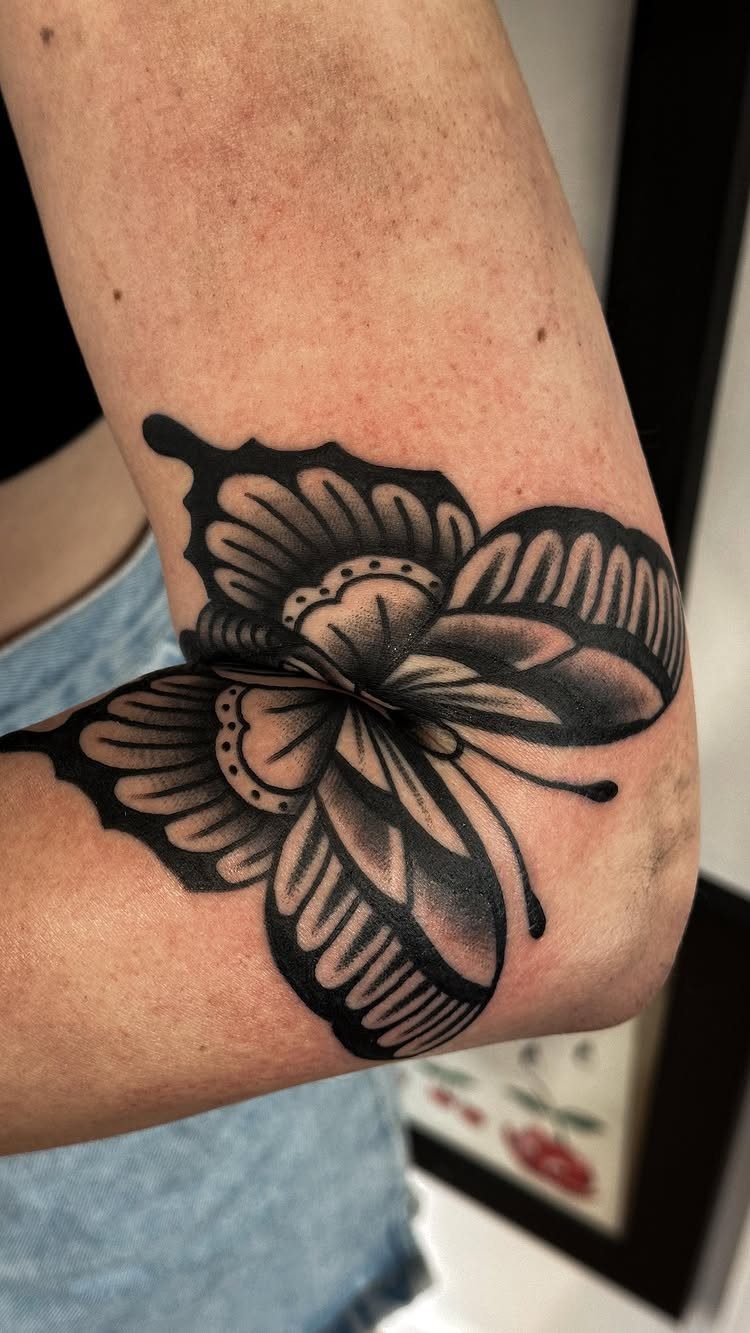
Wings spread from the center of the elbow give you a design that shifts as you move, the symmetry collapsing and opening with every bend. The form reads clearly in black and grey without needing color to define it.
Butterfly tattoos carry transformation and growth, and placing one on the elbow ties that meaning to a joint in constant motion.
Shading in the wings adds depth, but keeping the outlines strong prevents the detail from fading as the skin stretches over time.
8. The All-Seeing Eye
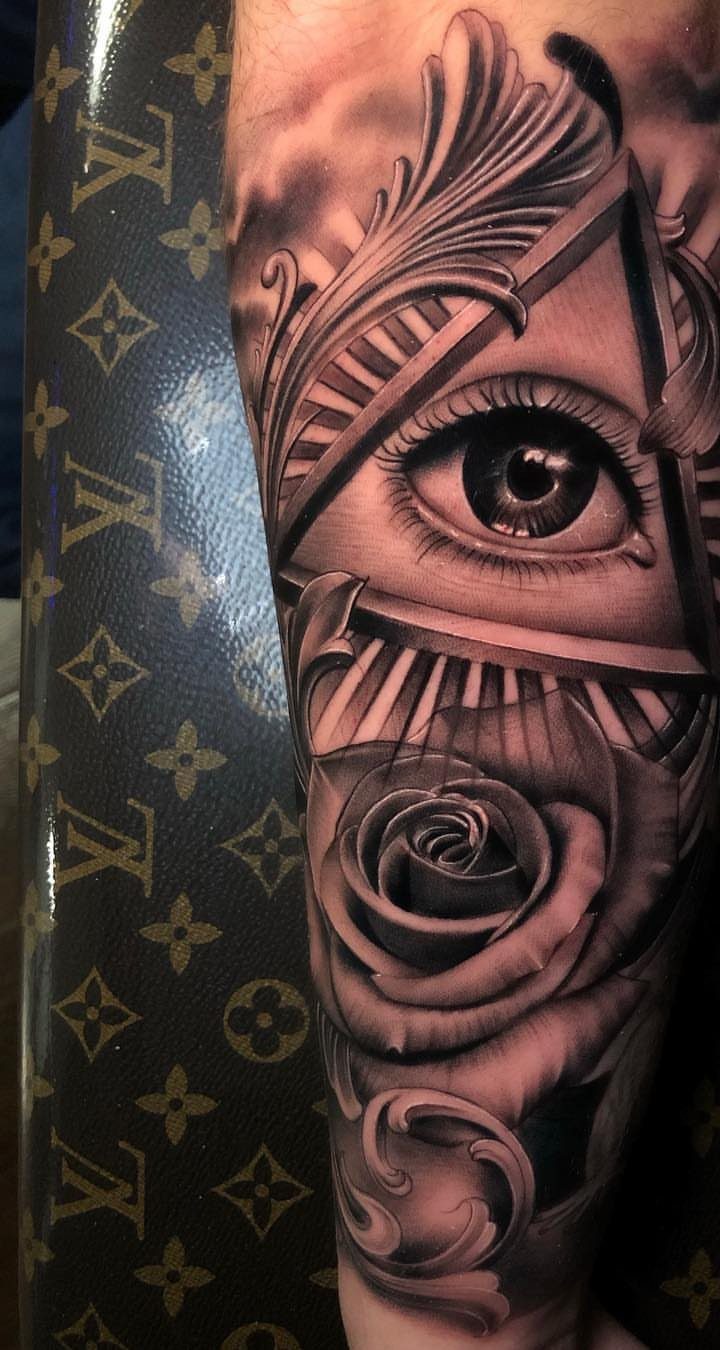
An eye inside a triangle pulls double duty: the shape fits the elbow’s geometry, and the symbol carries centuries of meaning tied to awareness and protection.
Ornamental flourishes and paired imagery like roses fill out the composition without overwhelming the central icon.
Black shading keeps every line readable.
The triangle’s clean lines anchor the design, and the eye itself sits where the joint naturally draws attention. Placement directly on the elbow means high pain but fast coverage.
9. Tree Ring Chronology
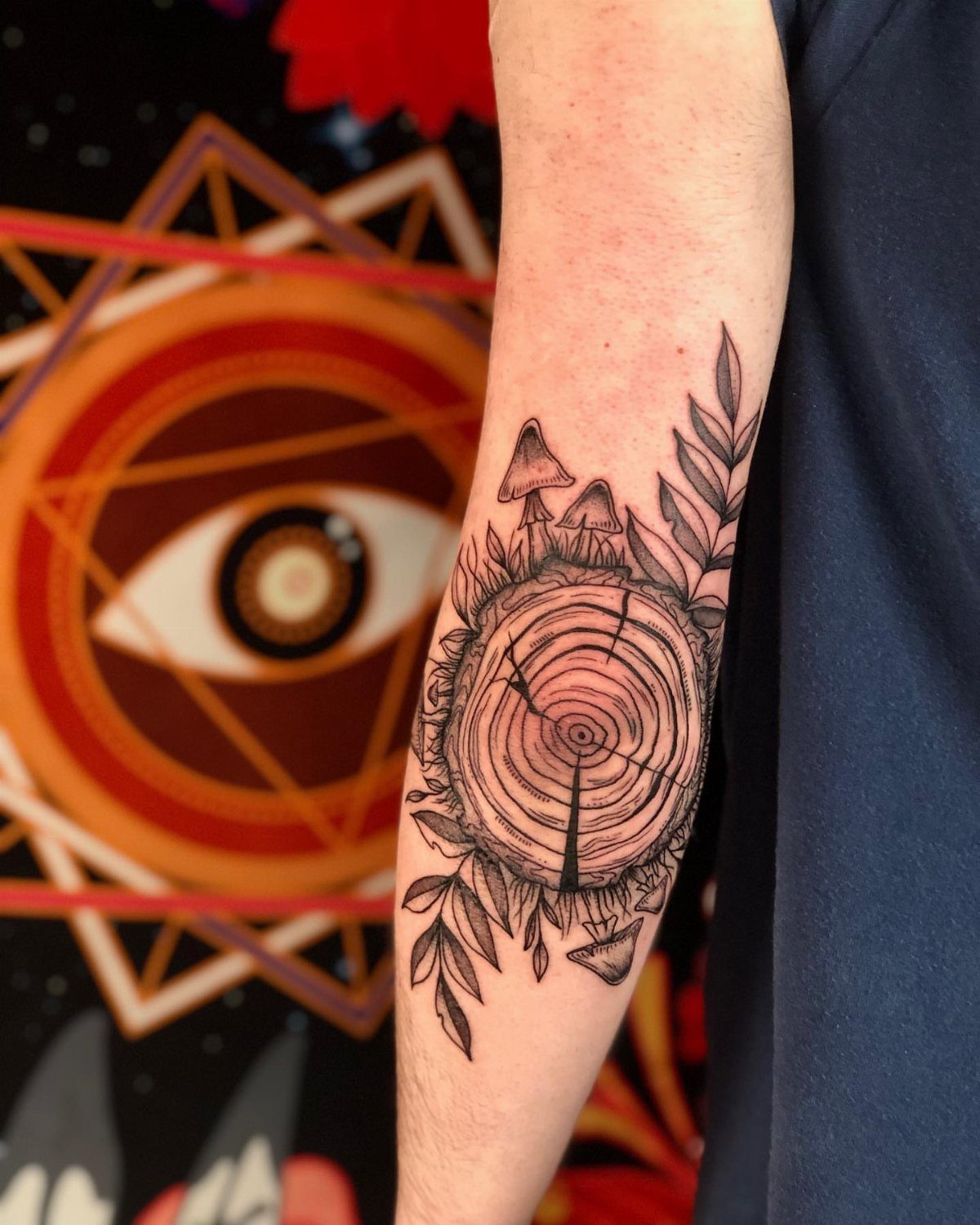
Concentric rings mark time the way a tree does, turning the elbow into a record of growth and change.
Adding mushrooms, leaves or other natural elements breaks up the circles and gives the piece organic texture without losing the central idea.
The design works best placed slightly off the joint itself, where the forearm or upper arm offers more surface area for detail.
Black ink keeps the rings distinct, and the symbolism stays personal: each ring can represent a year, a milestone, whatever chapter you choose to mark.
10. Gothic Architecture Cathedral Tattoo
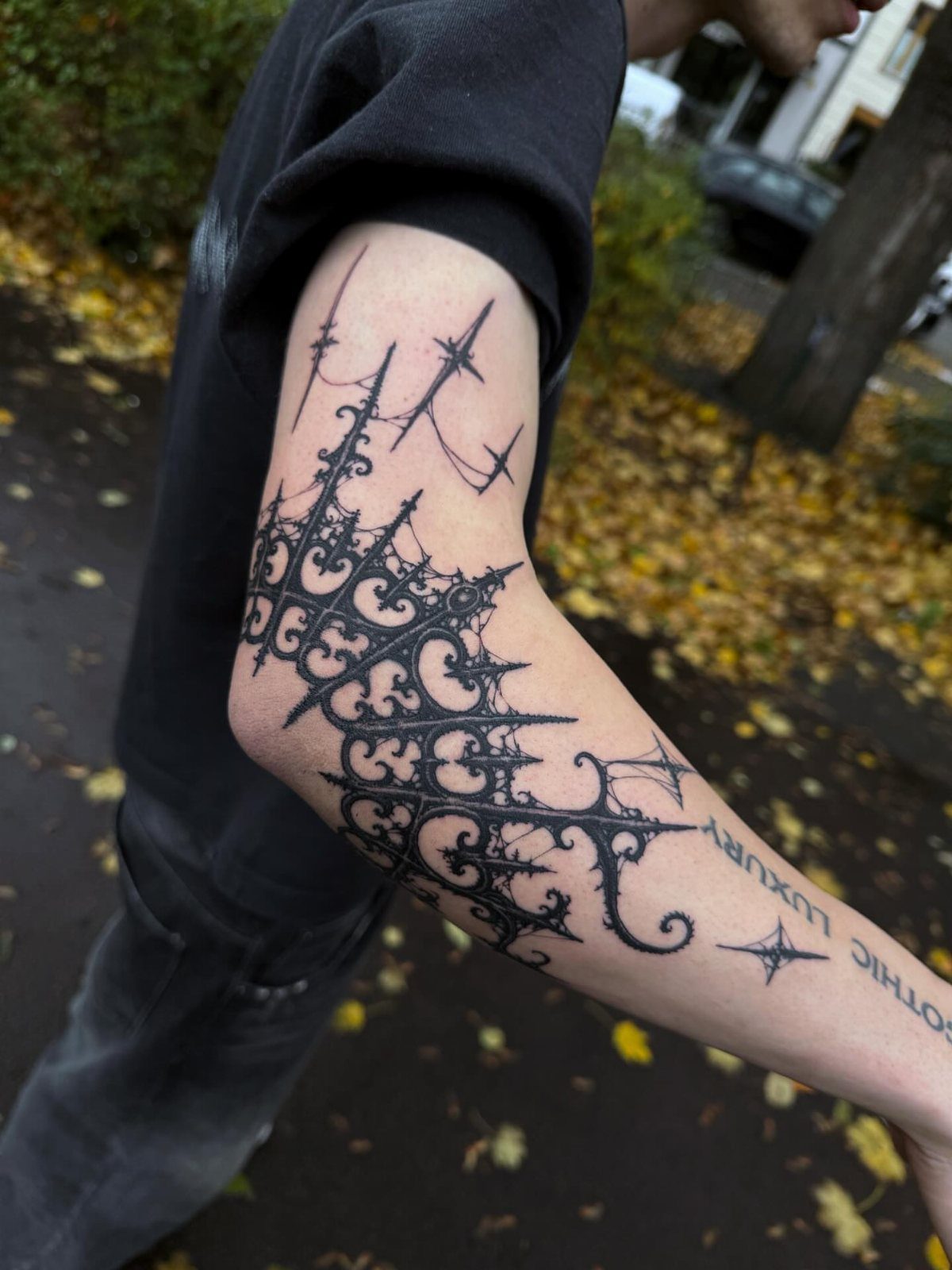
Vaulted arches and spires wrap around the elbow’s curve, turning the joint into a vertical composition that extends naturally up the arm. Gothic architecture gives you intricate linework and strong vertical lines that suit the body’s proportions.
Pain is sharp since you’re working over bone, but the design ages well if the artist keeps lines bold enough to stay crisp through years of movement.
11. Polynesian Tribal Patterns
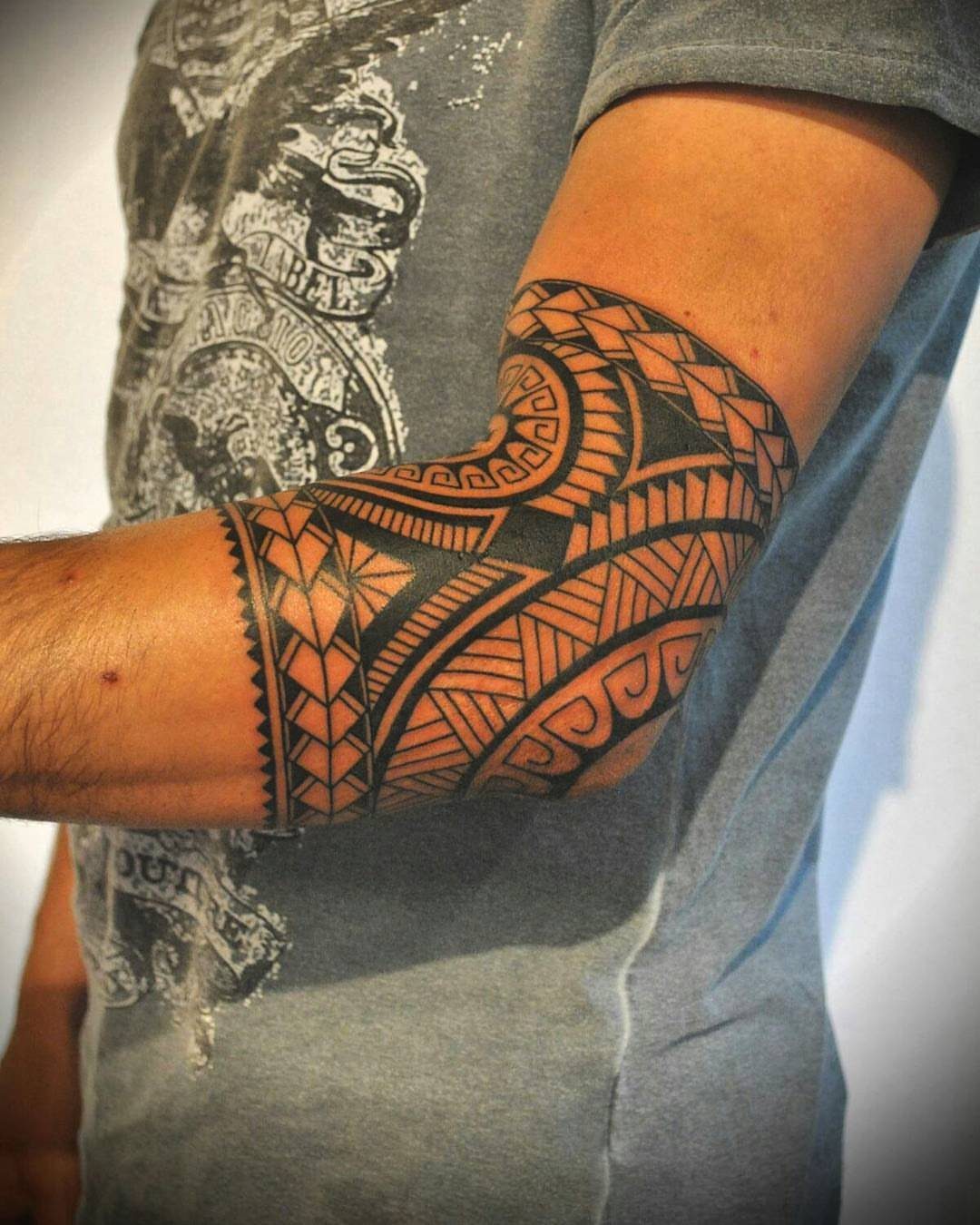
Polynesian patterns turn the elbow into a study in repetition and rhythm, with geometric shapes that lock together and flow around the joint’s contours. The bold black forms hold up longer, and the coverage wraps the area completely.
Each pattern carries its own meaning within Polynesian tradition, so research the symbols before you commit. Pain runs high on the elbow, but the saturated black ink heals cleanly if you keep the area still during the first week.
12. Mandala Elbow Tattoo
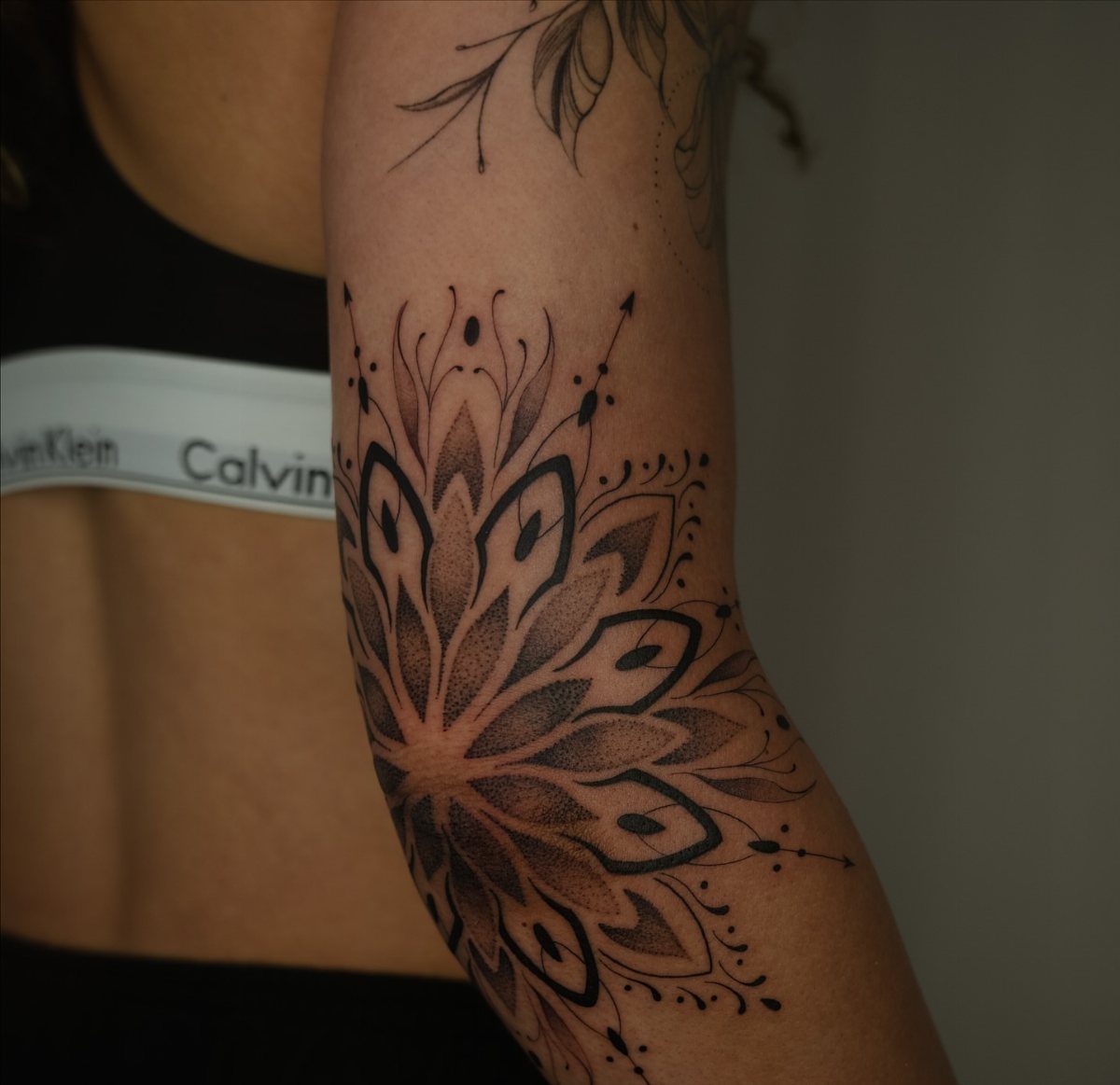
A mandala centers itself on the elbow and radiates outward in layers of symmetrical detail, using the joint as the natural focal point.
The circular form sits cleanly on the rounded surface, and the repeating patterns give the piece visual weight without needing color.
Fine line mandalas demand precision, so find an artist comfortable with geometric layouts and steady hand control.
The symbolism is flexible: balance, unity, the center holding through change. Healing takes care since any bend stretches fresh ink, but the result anchors sleeve work or stands alone.
Pain Level of Elbow Tattoos
The elbow ranks high on the pain scale because there’s almost no fat or muscle between the needle and the bone.
Every pass vibrates straight through the joint, and the skin here is thinner and more sensitive than most other spots on the arm.
Pain is sharpest at the very center of the elbow where the bone sits closest to the surface.
Moving the design slightly off-center, onto the forearm or upper arm, reduces the intensity but changes the composition. If you’re committed to placing the piece directly on the joint, expect a shorter session but sharper sensation throughout.
Healing adds another layer of difficulty since you bend your elbow constantly. Each movement stretches fresh ink and can slow the process if you’re not careful about keeping the area still during the first few days.
Placement Considerations
A design that ignores the elbow’s curve will look distorted the moment you bend your arm.
Radial patterns like webs, mandalas and compass roses work because they center on the joint and spread outward evenly, so the symmetry holds through the full range of motion.
Vertical compositions like architecture or trees extend naturally up or down the arm, while horizontal bands and wrapped designs can look pinched when the joint bends.
Test the placement by marking the outline on your skin and moving through normal positions: bent, fully extended, resting on a table.
The elbow’s rounded surface also limits how much flat detail you can fit without wrapping onto the forearm or bicep.
Designs that try to cram too much onto the joint itself end up cramped and hard to read from any angle.
Care for Elbow Tattoos
Elbow tattoos fade faster than most other placements because the area deals with constant friction from clothing, pressure when you lean on a surface, and repeated stretching every time you bend your arm.
Dry skin accelerates the wear, so keeping the area moisturized becomes part of long-term maintenance, not just aftercare.
During the first 2 weeks, limit how much you bend your elbow.
Every flex stretches the fresh ink and can pull apart lines that haven’t fully set. Sleeping with your arm extended or propped on a pillow reduces accidental movement overnight.
Clothing that rubs directly on the tattoo during healing will lift ink and slow the process.
Loose sleeves or keeping the area uncovered at home gives the skin room to breathe. Some areas may need a touch-up after a few years, especially if the design includes fine lines or light shading.





