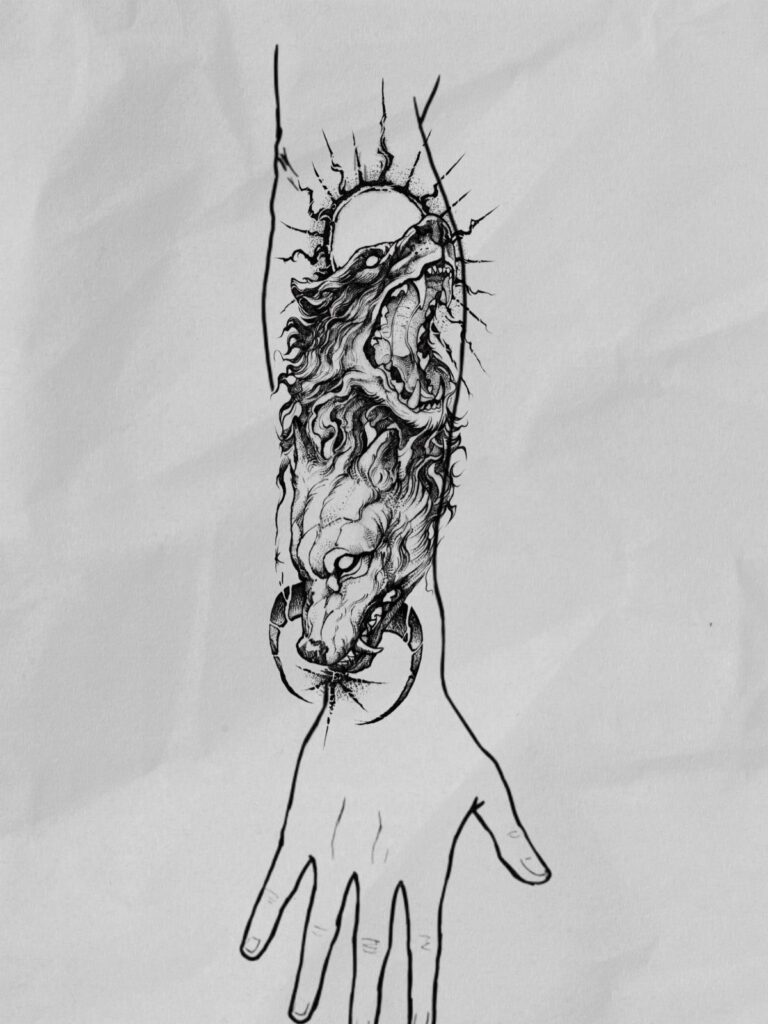
Forearm tattoos range from small 2–3 inch pieces starting around $80 to half sleeves that can run $800 to $2,500 or more, depending on detail and color work.
Bony spots near the wrist hurt more than the muscle-covered outer side, and pigment on any forearm placement breaks down faster under sun and friction than it does on your shoulder or thigh.
1. Floral Tattoos
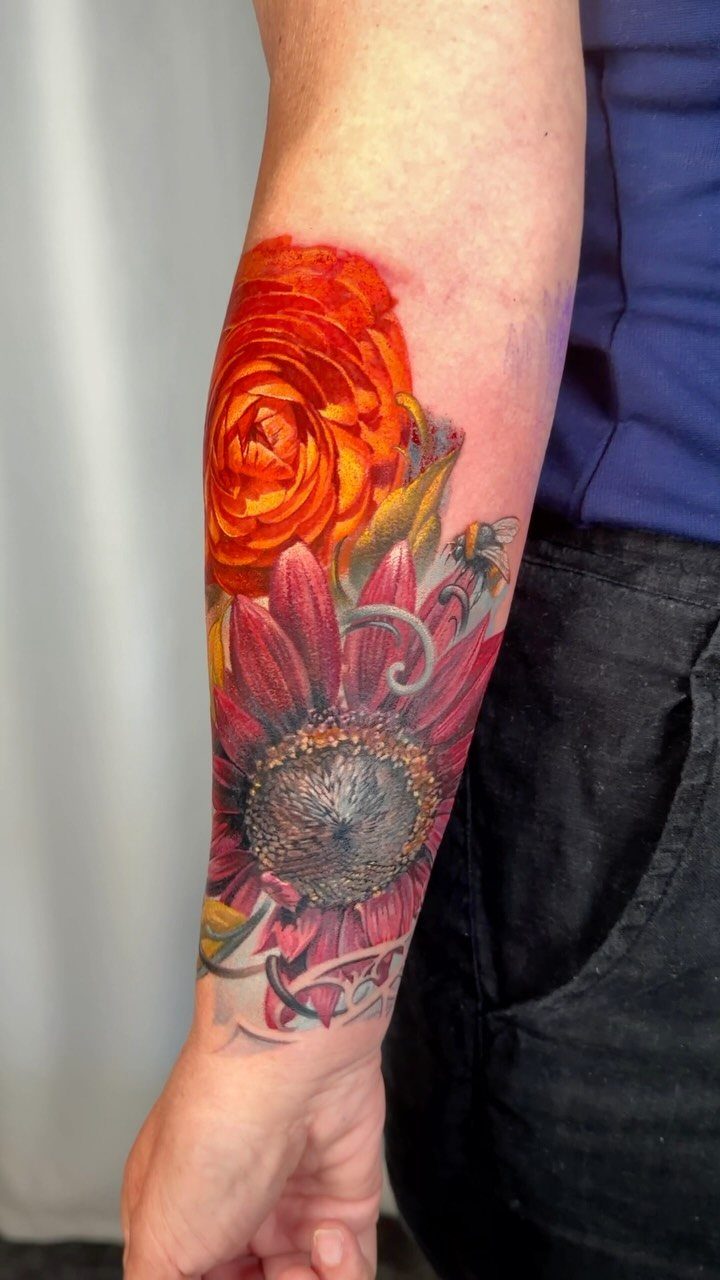
Florals bring color and dimension to a flat canvas, and the forearm gives you enough room to layer petals without crowding the composition.
Color saturation fades faster on the forearm than on fleshier spots like the upper arm, so plan for a touch-up down the line if you want the oranges and reds to stay vivid.
Black line work holds longer and reads well even after the fill softens.
2. Forearm Half Sleeve Tattoo
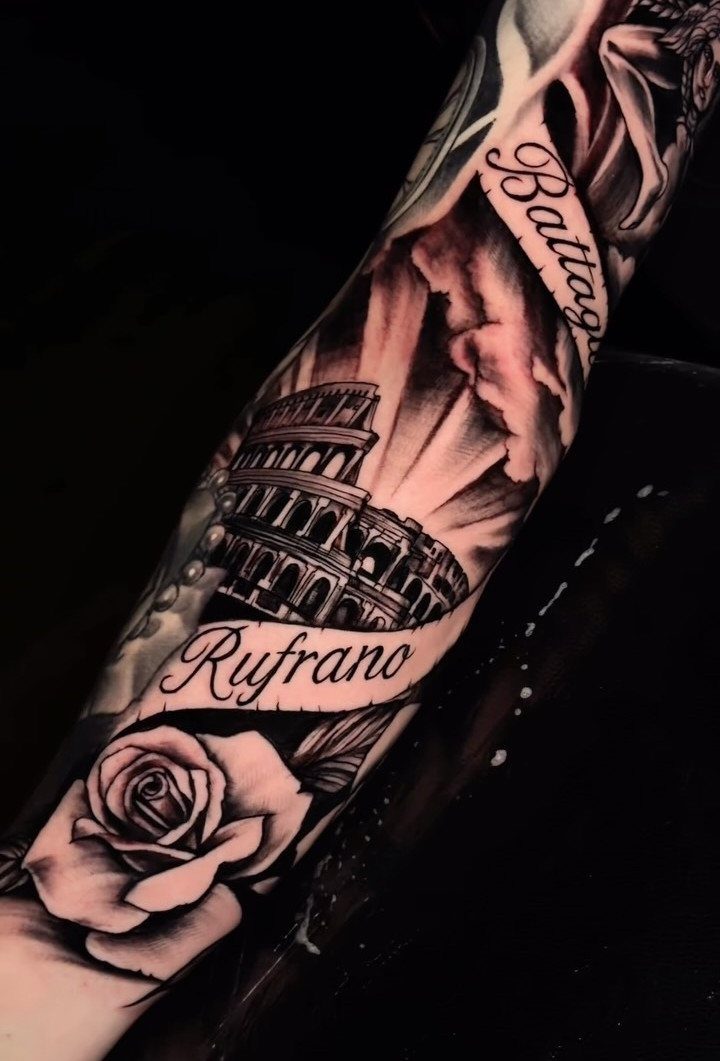
A half sleeve runs from elbow crease to wrist and gives you a vertical strip to build a scene or stack symbols that matter.
Architecture, a flower and script can layer into one cohesive piece that wraps the forearm without jumping to the upper arm.
Most artists book half sleeves across 2 or 3 sessions, depending on detail density.
3. Inner Forearm Tattoo
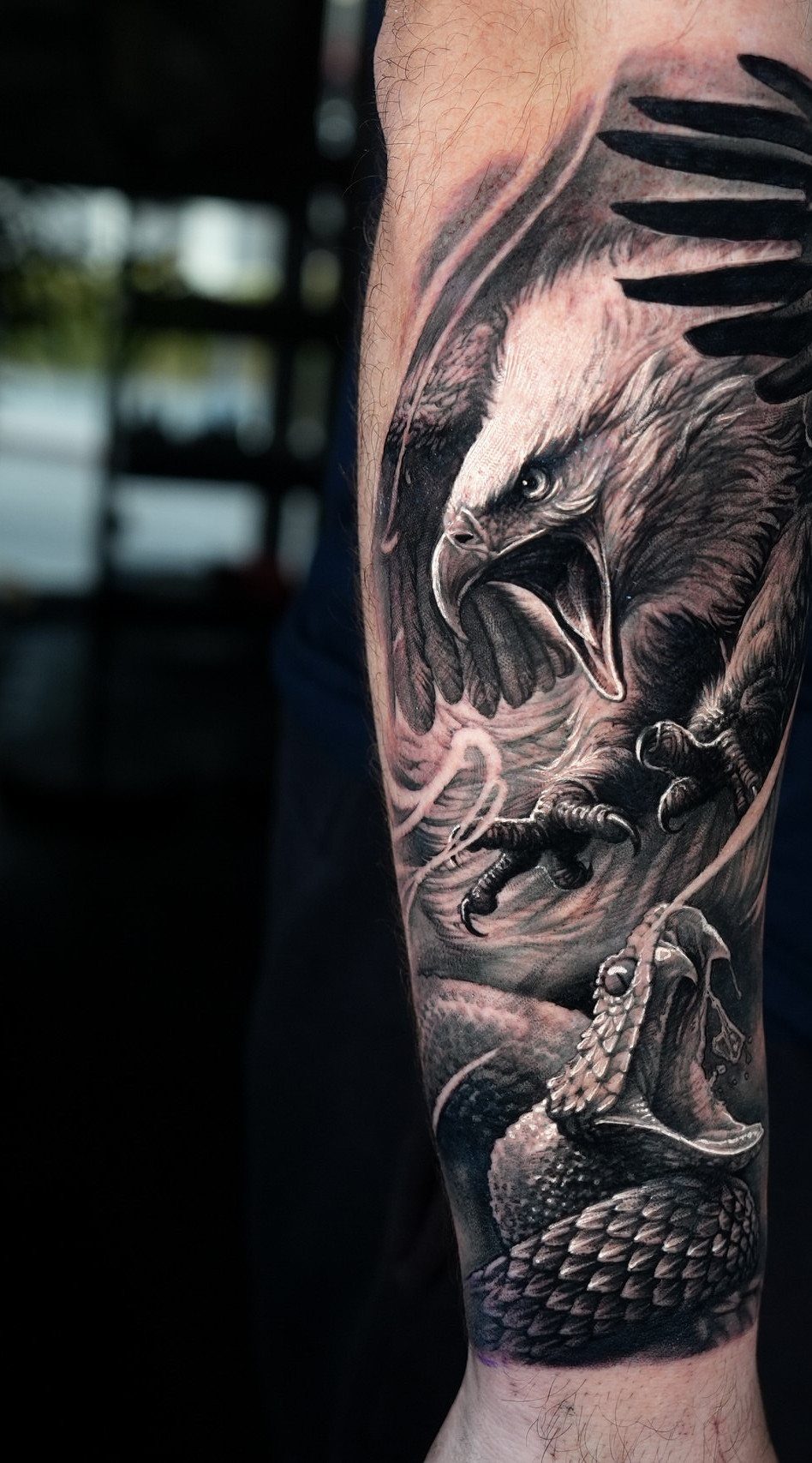
The inner forearm sits where you can see it every time you check your phone or rest your hands on a desk, which makes it ideal for designs you want to live with daily.
Pain level here sits above the outer forearm because the skin is thinner and closer to nerve pathways, though it’s still more tolerable than directly over the wrist bone.
Placement on the inner side also means easier concealment with a long sleeve or watch when needed. Black and grey realism holds detail well on this flatter surface without the color upkeep that bright ink demands.
4. Mandala Geometric Forearm Tattoo Design
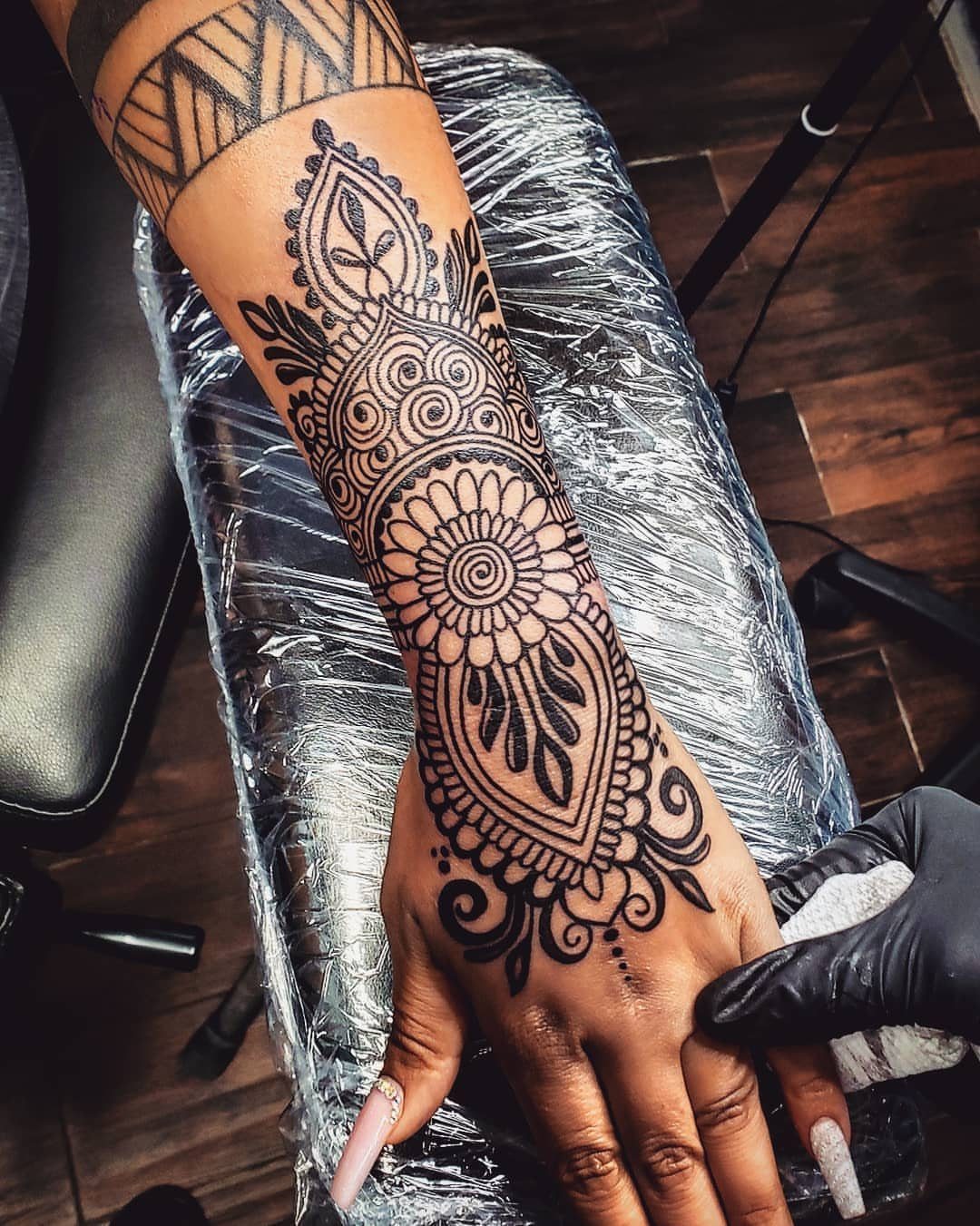
Mandalas and geometric patterns follow radial symmetry, so they fit the forearm’s cylindrical shape without awkward cropping. A mandala centered on the wrist with linework extending up the forearm uses the arm’s natural curve to guide the pattern outward.
Clean geometric work demands steady hands and precise stencil placement, so choose an artist whose portfolio shows crisp lines and balanced symmetry.
Touch-ups are rare if the original line work goes in clean, but sun exposure will blur black ink over time, so keep sunscreen on this spot year-round.
5. Portrait Tattoos
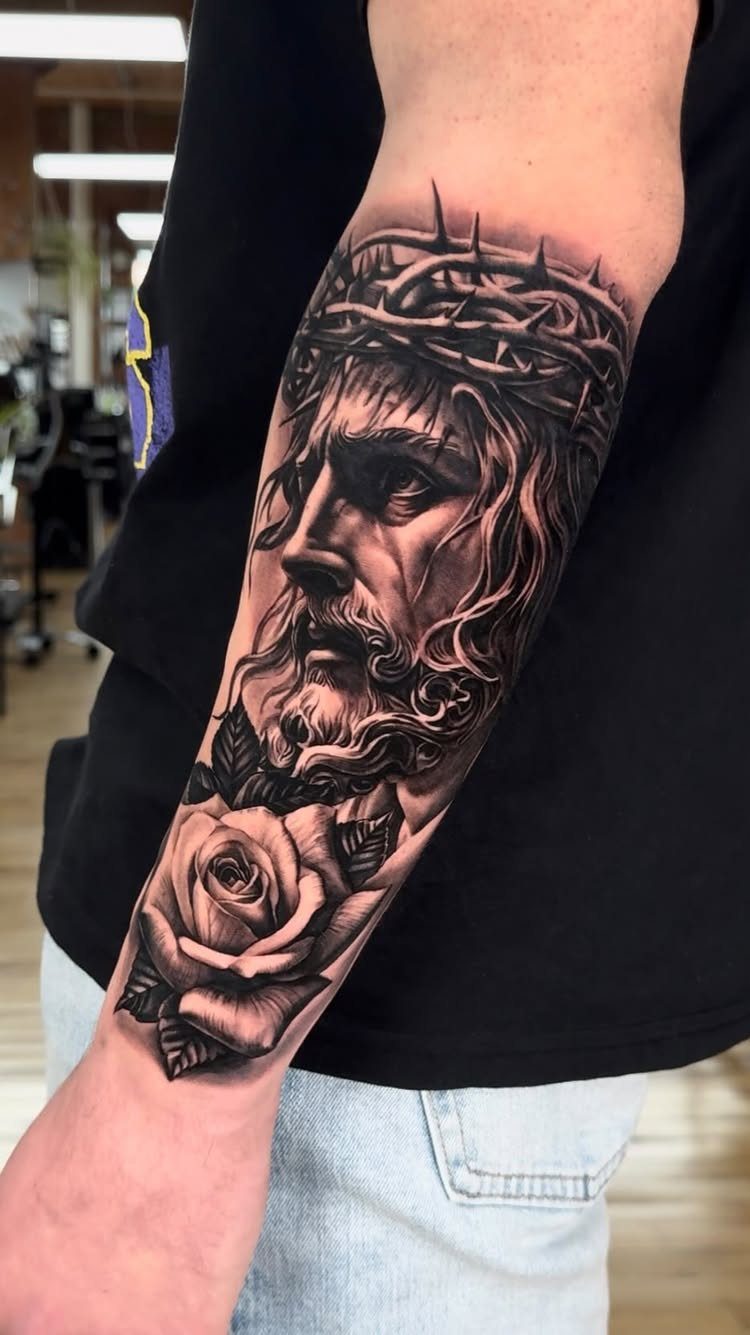
Portrait tattoos pull likenesses from photos and translate them into skin, and the forearm offers a flat, visible canvas for faces you want to carry.
Realism demands an artist trained in portraiture, not just general tattooing. Line weight, shading gradient and proportion errors show immediately on a face, so vet portfolios for multiple finished portraits before booking.
6. Outer Forearm Tattoo
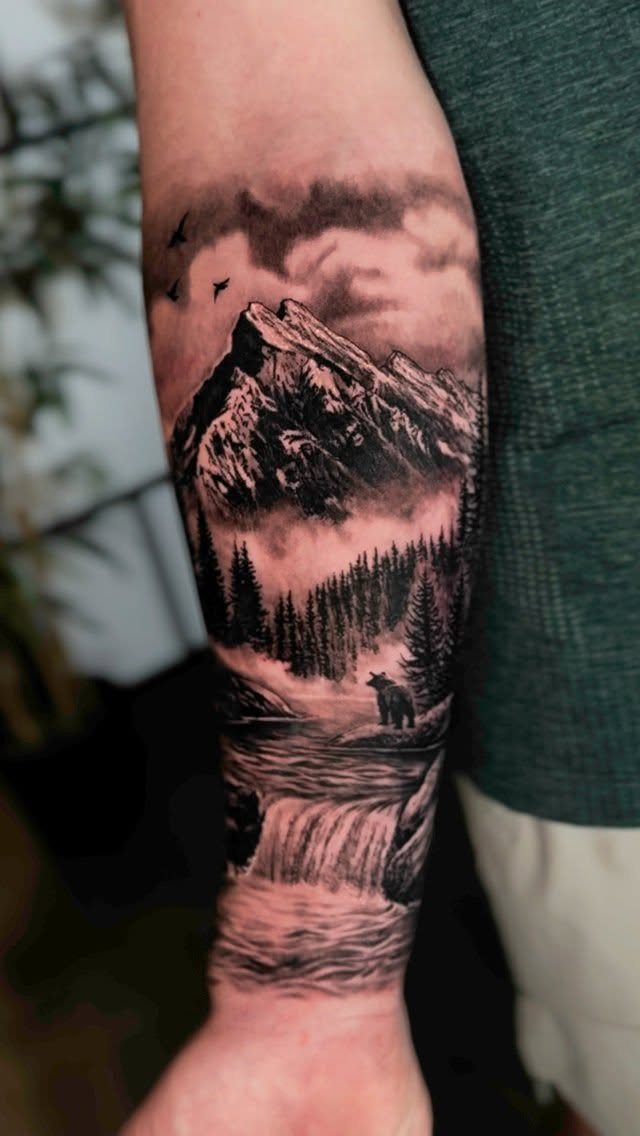
The outer forearm sees less friction from clothing and desk contact than the inner side, so ink here fades slower and heals with fewer complications.
It’s also the most visible placement when your arms hang naturally, which makes it beginner-friendly if you want a tattoo you can show without effort.
Landscape scenes work well on this vertical strip because the composition can flow from wrist to elbow without wrapping. Pain here registers lower than bony spots like the wrist or elbow, though everyone’s threshold differs.
7. Tree Nature-inspired Forearm Tattoo Design
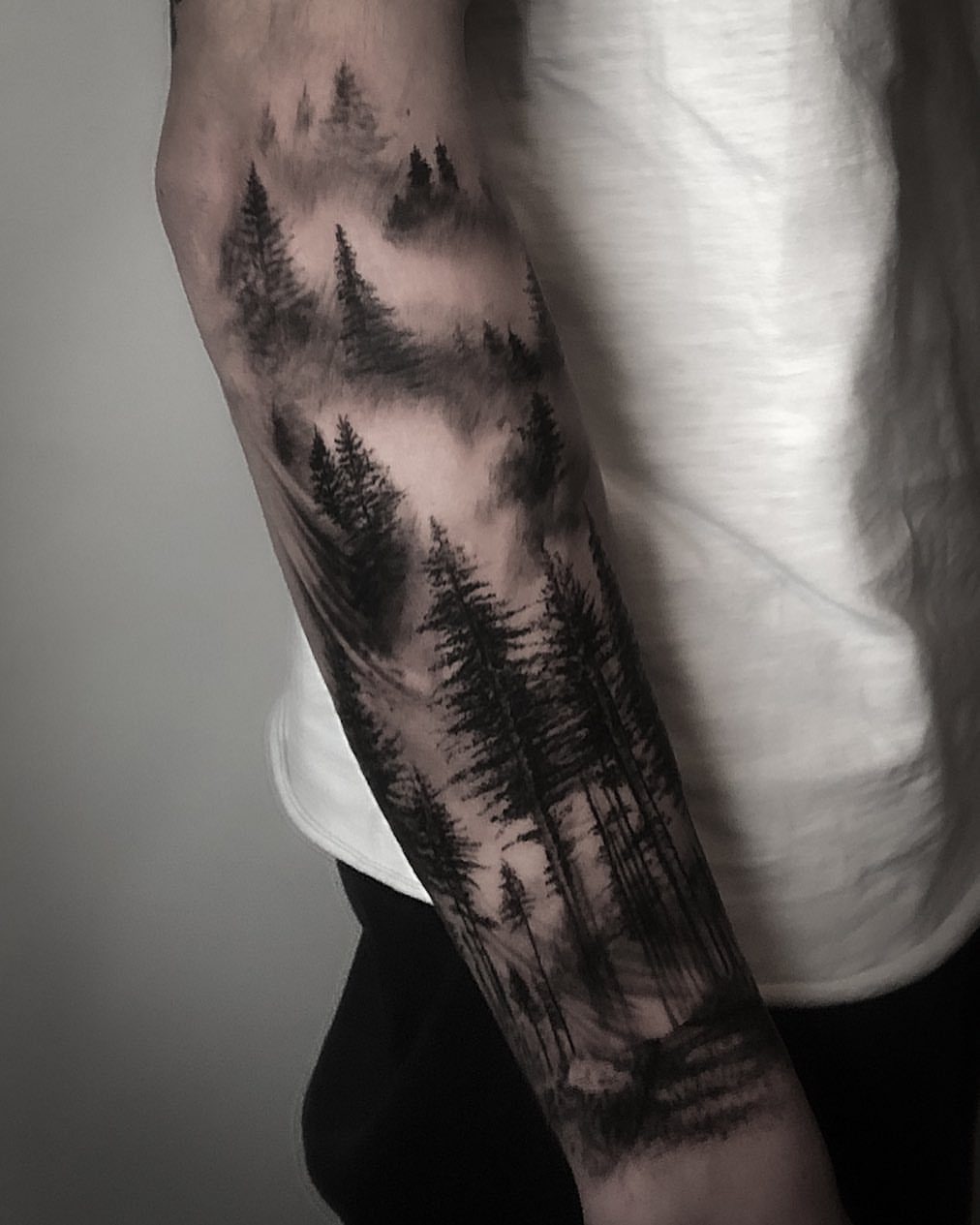
Trees follow the forearm’s vertical stretch naturally, with roots at the wrist and canopy filling the space toward the elbow.
The misty forest look in black and grey adds depth without the maintenance color ink requires, and atmospheric shading like this reads well even as the ink softens over years.
Thin line work for distant trees and branches demands precision, so check that your artist’s healed work still shows crisp detail. Forearm skin moves less than joints, which helps fine lines stay intact longer.
8. Quotes Script Forearm Tattoo Design
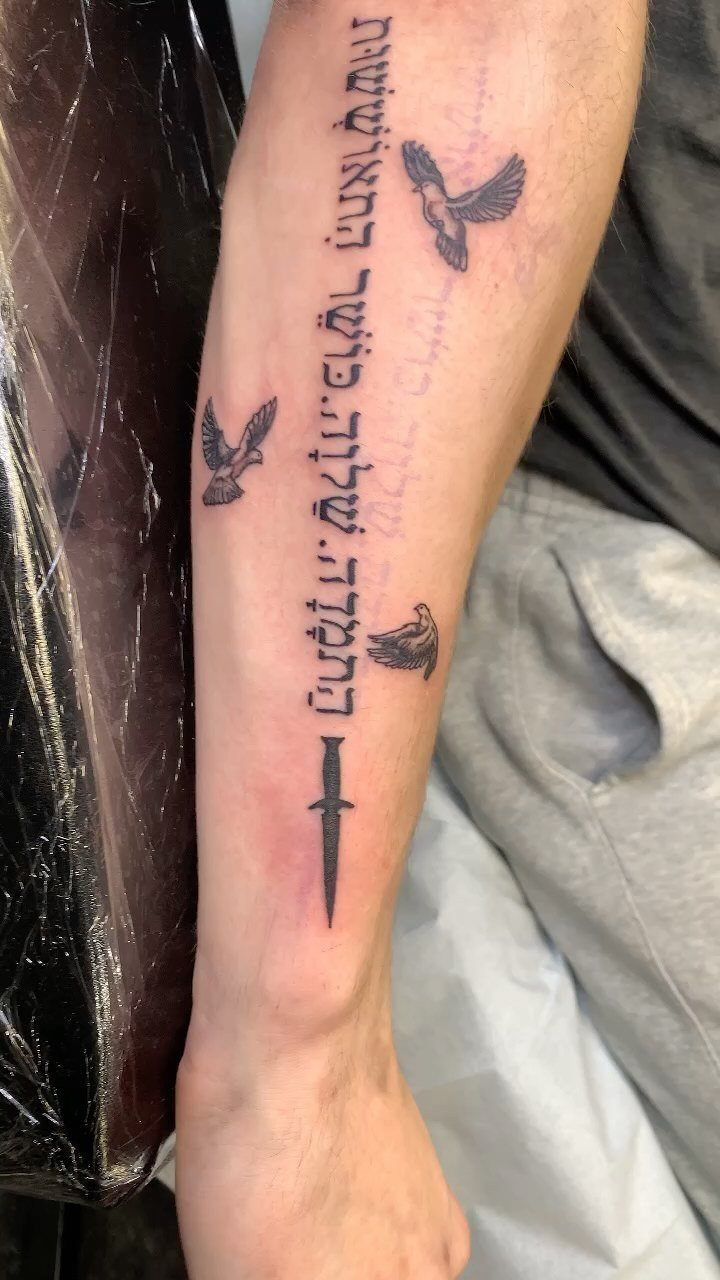
Script placed vertically along the forearm uses the arm’s length for longer quotes or phrases without shrinking the font to illegibility.
Pair it with small symbols like birds or objects that tie to the words, the way the dagger and birds sit alongside the text.
Font choice matters more than you’d think. Ornate or cursive scripts blur faster than bold sans-serifs, and some lettering styles are unreadable once the ink spreads.
Bring your quote typed in a few fonts and let your artist steer you toward what will still read clearly down the line.
9. Pop Culture Character Forearm Tattoo Design
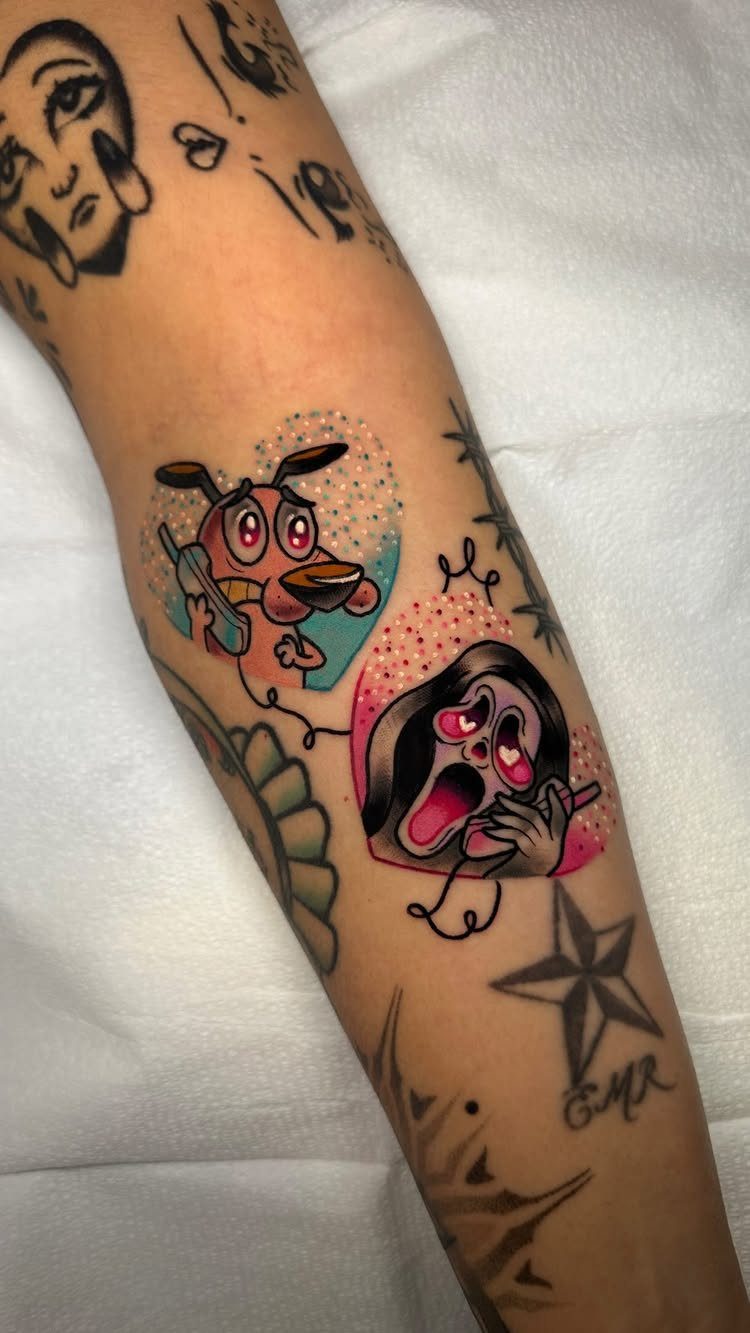
Pop culture pieces work when the character or symbol already means something specific to you, not just because the show was popular.
Cartoon styles like Courage translate well to skin because the bold outlines and flat colors age better than photorealistic attempts at live-action characters.
Mixing multiple characters from different franchises can look cohesive if they share a similar style or color palette.
10. Butterfly Tattoos
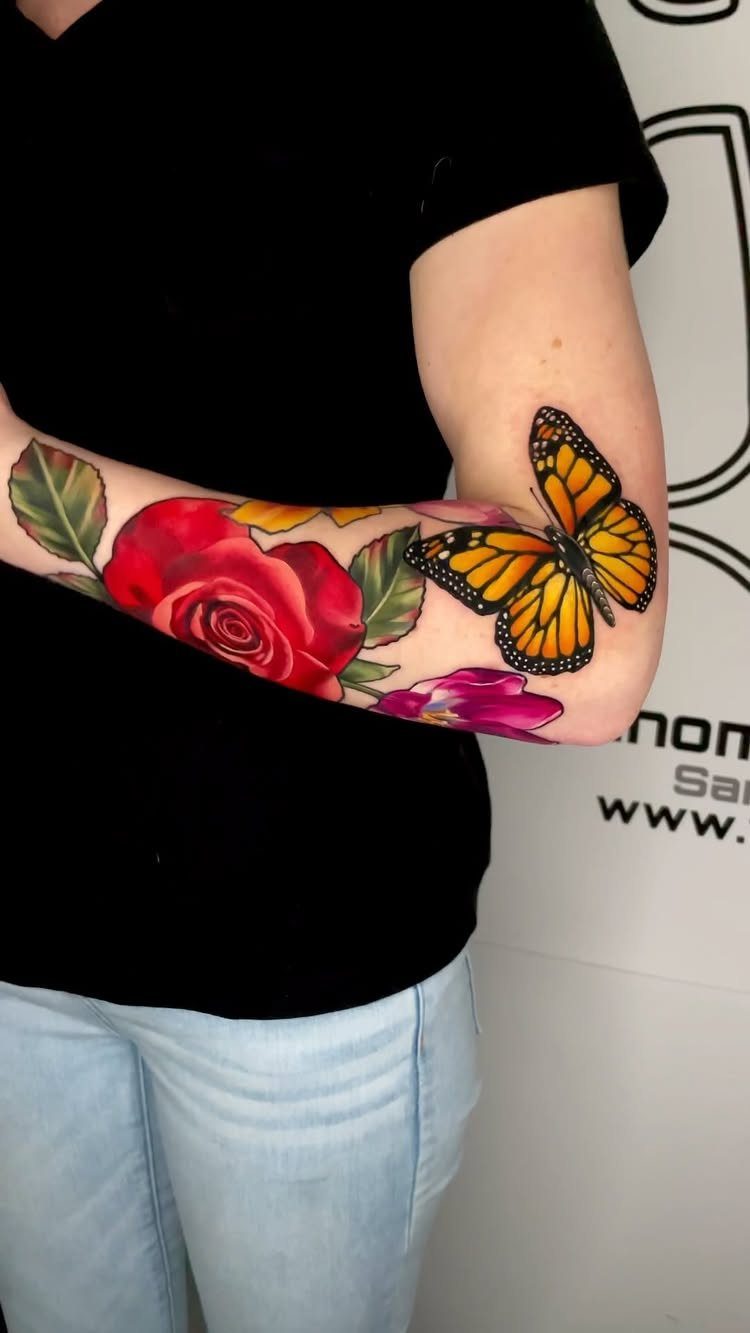
Butterflies sit naturally on the forearm’s curve, wings open or closed depending on how much width you want to cover.
Monarch orange and black holds contrast well, and pairing it with florals like roses ties the organic shapes together without one element dominating.
Color upkeep on a butterfly is higher than black and grey work because those reds and oranges fade noticeably within a few years. If you skip the touch-up, the piece will still read as a butterfly, just softer.
11. Buddha Spiritual Forearm Tattoo Design
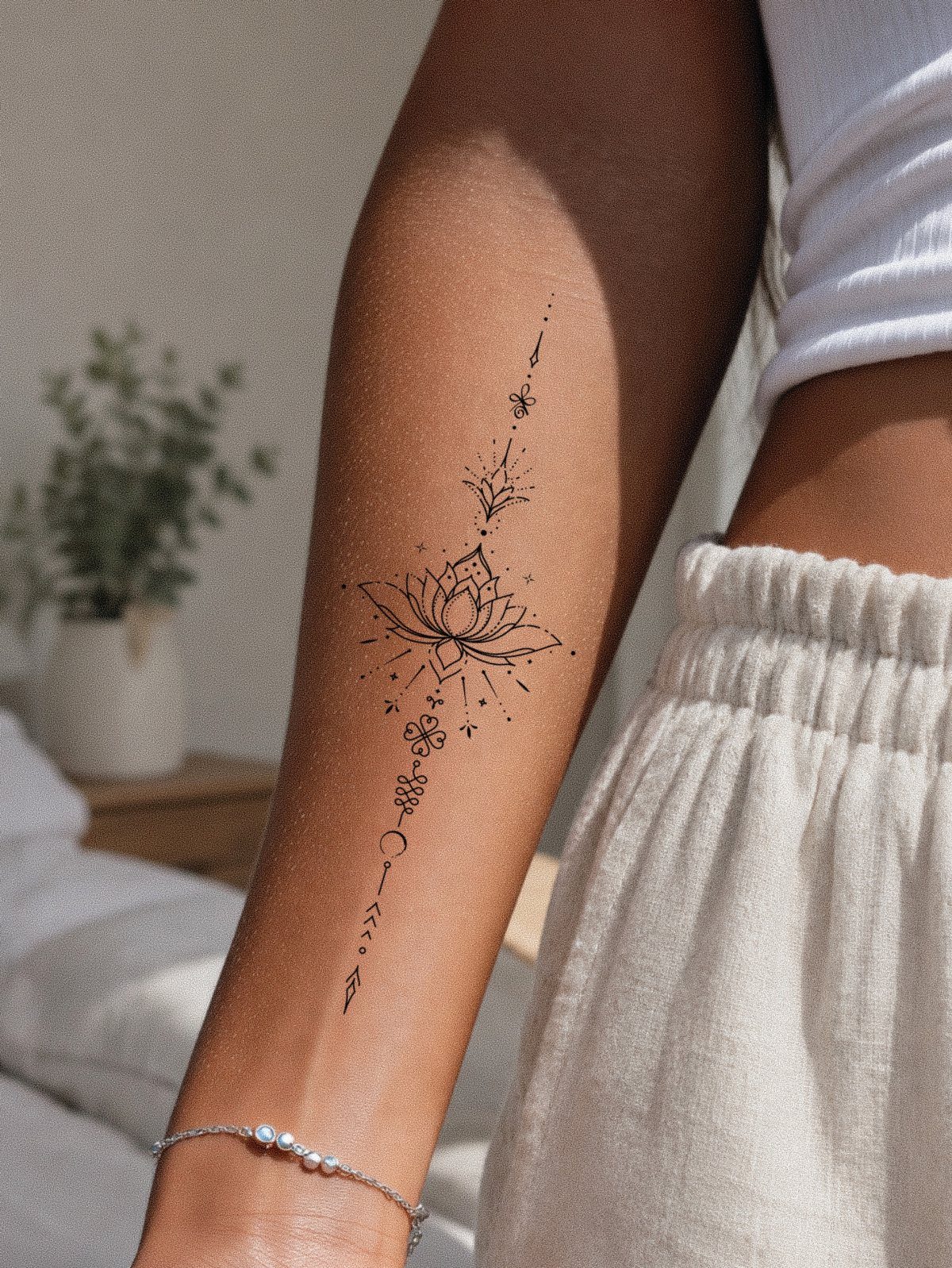
Spiritual symbols like the lotus carry meaning that outlasts trends, and geometric linework around it adds structure without overcomplicating the design.
Black ink on this kind of sacred geometry stays legible longer than shaded realism, and the forearm gives you a flat surface where symmetry won’t distort when your arm bends.
Lotus petals and mandalas both rely on balanced linework, so an artist who rushes stencil placement will leave you with a design that looks off-center every time you glance down.
Pain and Healing
The outer forearm ranks among the least painful spots for a tattoo because the skin runs thicker there and nerve endings sit farther apart.
Pain tolerance varies by person, but placement makes a measurable difference on the same arm. If you’re sensitive or sitting for your first piece, starting on the outer side can make the session easier to finish.
Aftercare controls how cleanly the tattoo heals.
Keep the area clean, moisturize according to your artist’s directions, and avoid submerging it in water or letting fabric rub constantly against fresh ink. Proper healing preserves line clarity and color saturation longer than careless aftercare ever will.
Visibility and Cover-up
Forearm tattoos sit where you and everyone else will see them, which makes visibility part of the decision from the start.
You can cover the area with a long sleeve when workplace policy or context calls for it, but the tattoo remains visible in short sleeves, during handshakes, and anytime your arms rest in view.
Some employers still maintain tattoo policies that restrict visible ink, so check your company’s stance before committing to a forearm piece.
A long sleeve solves the problem at work, but if your job keeps you in short sleeves year-round, plan accordingly.
The forearm also gives you control over display. You’ll see your own tattoo every day without a mirror, which matters if the design carries personal meaning you want present.
Cost of Forearm Tattoos
Forearm tattoo prices start around $80 for a small piece measuring 2–3 inches and climb to $200 for that size range. Medium designs spanning 4–6 inches typically run $200–$600, while a large piece covering the outer forearm can cost $400–$1,200.
A forearm half sleeve, which stretches from elbow to wrist, generally falls between $800 and $2,500 or more, depending on detail density and color work.
Artists price by the hour or by the piece, and complexity drives the final number higher than size alone.
Budget for a tip on top of the quoted price. Tipping your artist is standard practice.
Frequently Asked Questions
What are some different styles of forearm tattoos?
Popular styles include florals with layered petals, geometric mandalas that follow the arm’s curve, portrait realism, script quotes running vertically, pop culture characters with bold outlines, and nature-inspired designs like trees that stretch from wrist to elbow.
Each style sits differently on the forearm’s cylindrical shape, so choose based on how the composition will wrap or flow along the vertical canvas.
How big is a forearm tattoo?
Small forearm tattoos measure 2–3 inches, medium designs span 4–6 inches, and large pieces can cover the entire outer forearm.
It covers elbow to wrist in one unbroken piece. Size depends on how much detail you want to fit and whether the design needs room to breathe or can sit compact.
Do forearm tattoos hurt?
Thick skin and fewer nerve endings make the outer forearm one of the easier places to sit through. The inner surface and the skin close to your wrist or elbow ditch crease feel sharper, but tolerance varies widely.





