A butterfly at the nape or script running down the side spans discreet to impossible to miss, and the zone you pick decides how much of your day the tattoo shows up in.
Side placements tuck under longer hair and register less pain than the throat, back of the neck heals fastest since clothing rarely touches it, and full coverage from ear to ear commits to visibility that follows you into every room.
Red ink holds its intensity without the mass of black but loses color faster under UV, and vertical script borrows the neck’s height instead of fighting the curve from jaw to collarbone.
1. Butterfly Neck Tattoo
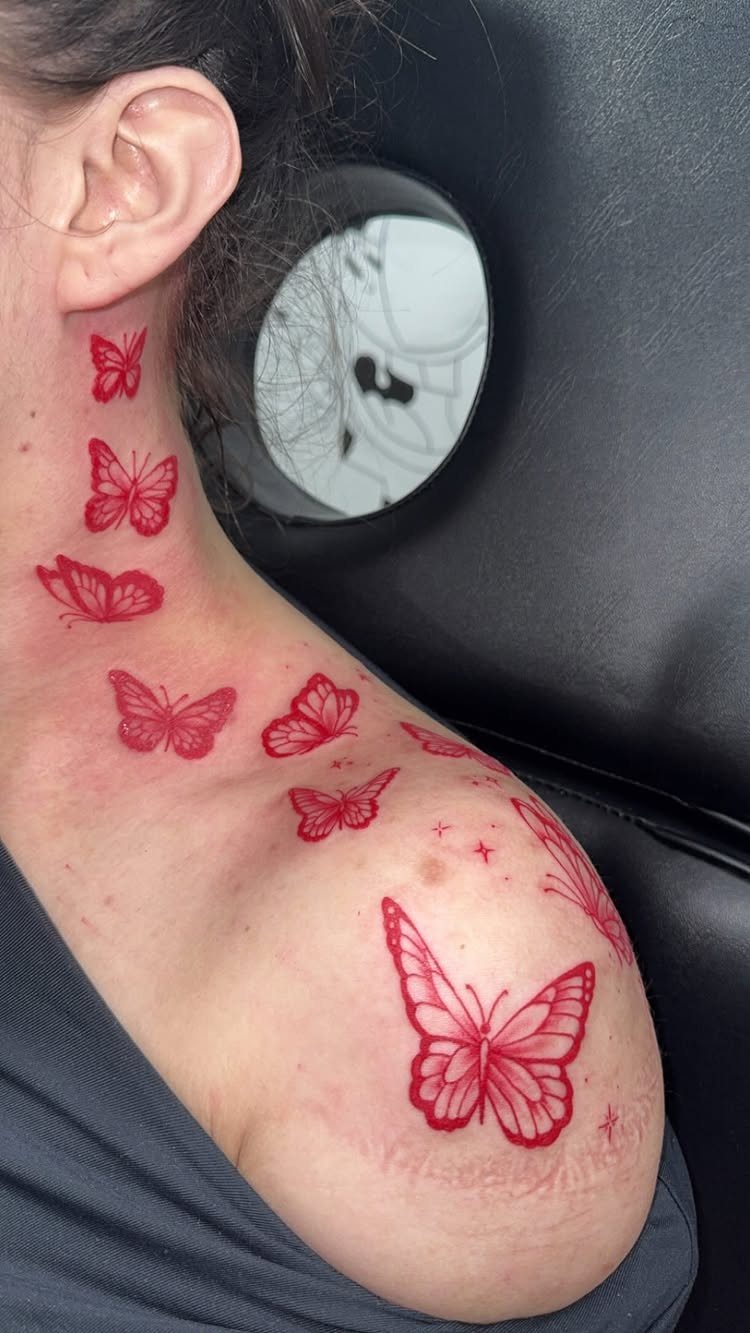
A butterfly placed on the neck carries transformation and freedom in a spot that catches light every time you turn your head. The shape reads cleanly at this scale, wings spread or folded depending on how much coverage you want.
Red ink like this stays bold without the weight of black, though it can fade faster in sun. Multiple sizes let you scatter them across the shoulder or keep a single butterfly centered at the nape.
2. Classy Flower and Leaves Neck Tattoo
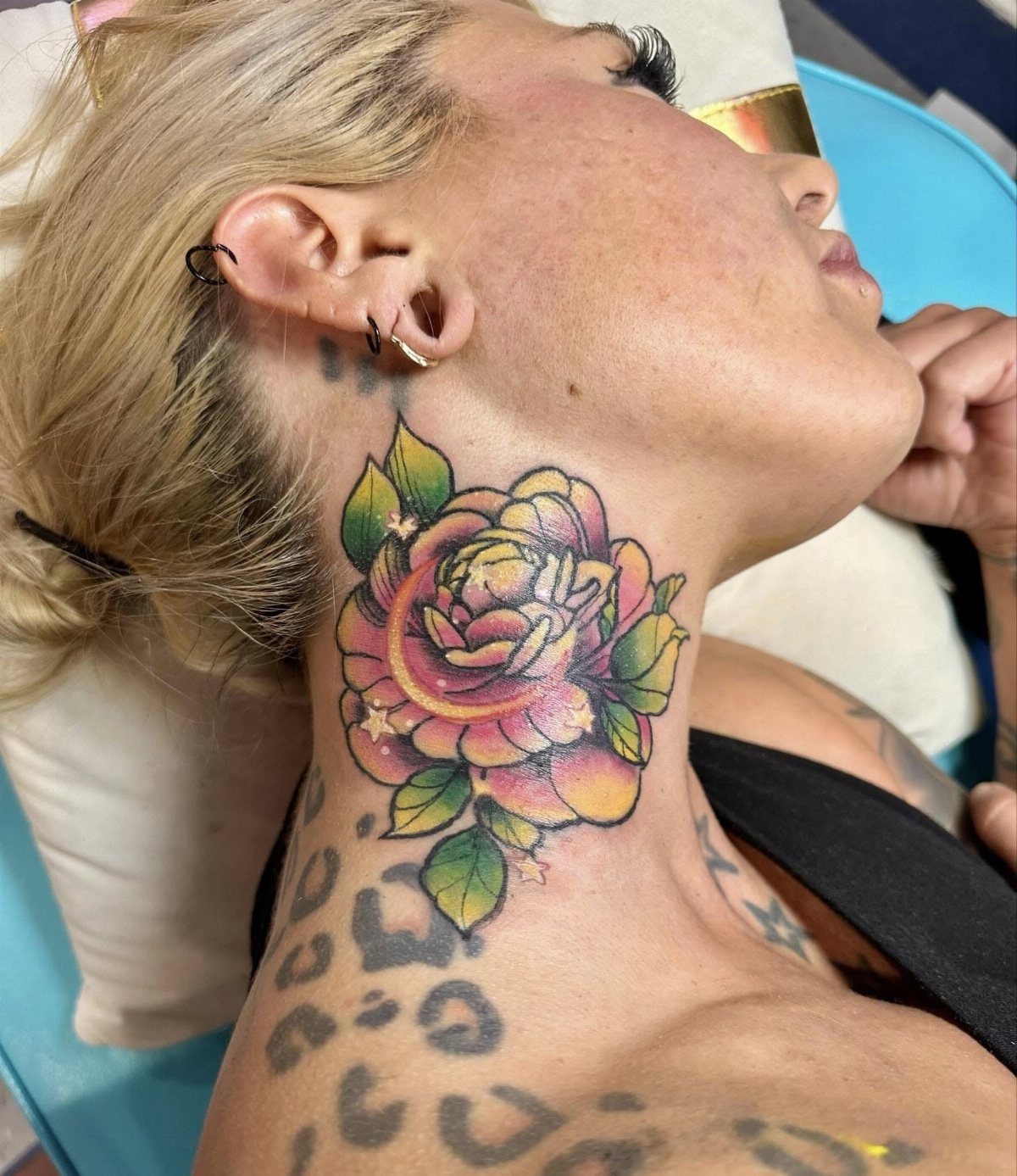
Flowers and leaves wrapping the side of the neck soften the angle between jaw and shoulder, especially when color fills the petals. A rose or peony with trailing greenery follows the natural curve without fighting it.
Fine-line leaves look delicate now, though they fade and blur faster than bold lines, and color holds longer when you keep it out of direct sun.
I’d start with the bloom at the jawline and let the stems taper down. Sleeping on the opposite side helps while it heals.
3. Cross Neck Tattoo
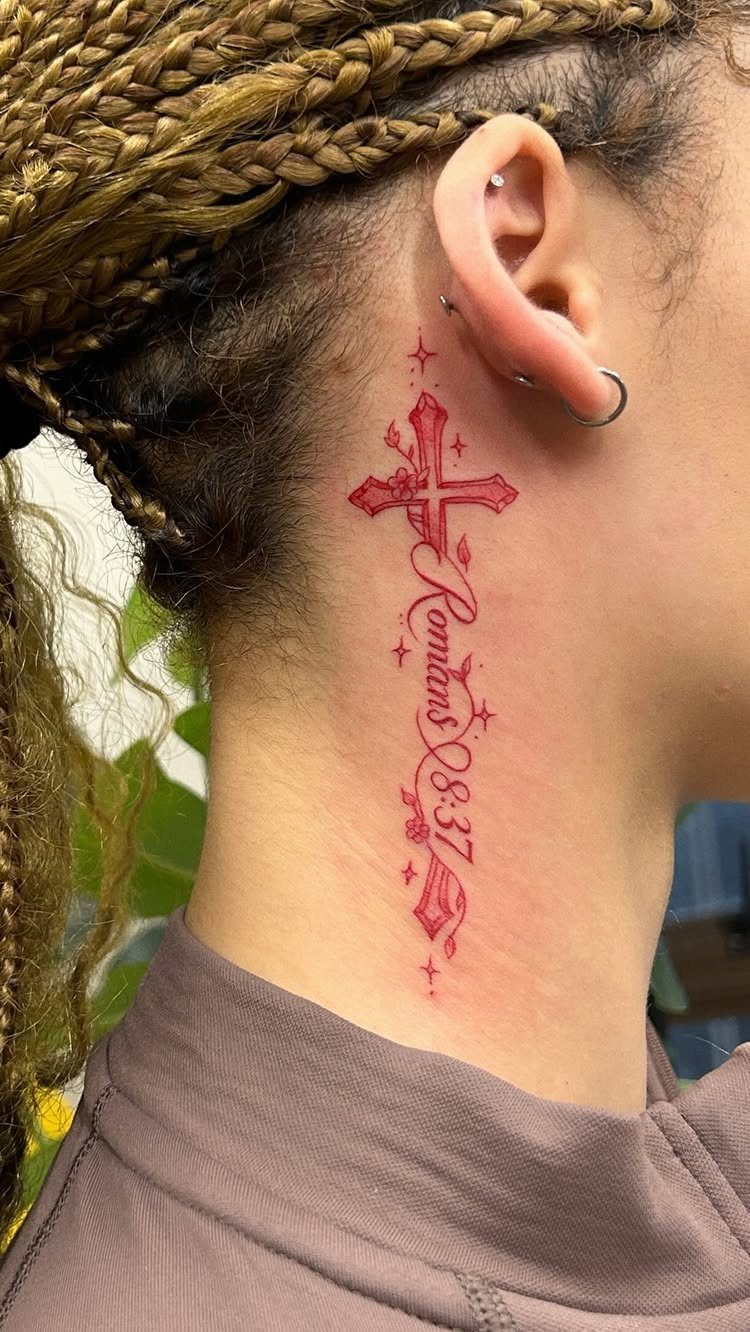
A cross on the side of the neck pairs faith with visibility, and adding a Bible verse grounds the symbol in a specific passage. Romans 8:37 in this case, though any reference that fits vertically will work.
Red ink keeps the design lighter than black while still reading from a few feet away.
The side placement means it shows when your hair is up or pulled back, and script this size stays legible as long as the font isn’t too ornate.
Expect about a week of soreness when you turn your head, and avoid high collars until the skin closes.
4. Full Neck Tattoo
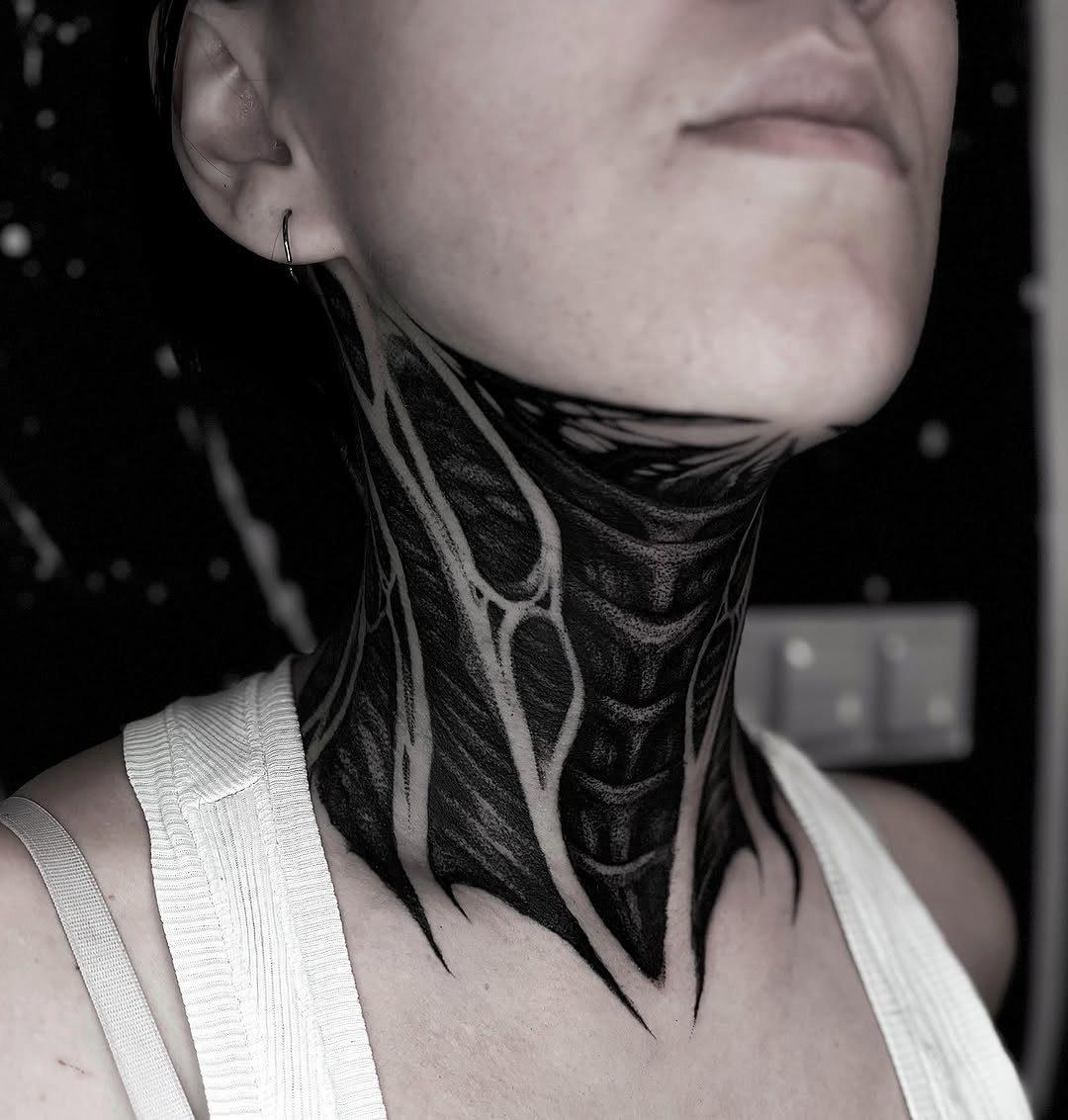
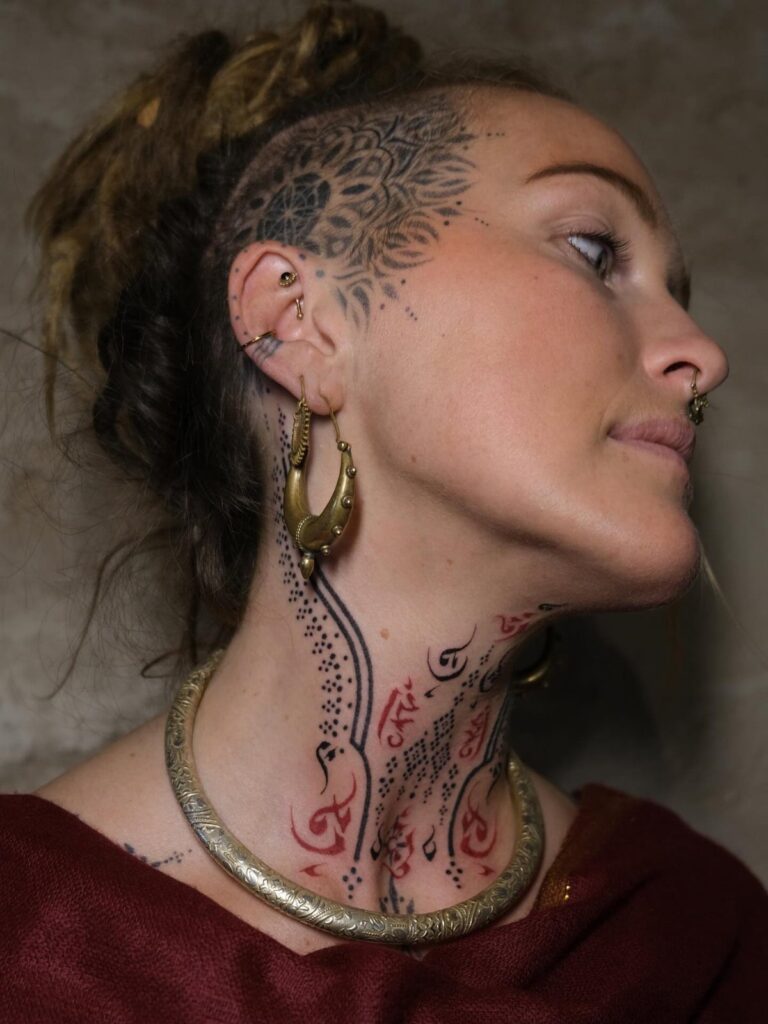
Covering the entire front of the neck commits to bold, and biomechanical or organic patterns fill that space with depth that flat designs can’t match. Black ink at this density creates texture that reads as structure, not decoration.
Full coverage means longer sessions depending on detail, and healing takes longer since this area moves constantly. The neck also ranks high for pain, especially over the throat and collarbone.
Professional visibility matters here.
This much ink doesn’t hide, so think through work and social settings before you book it. Once it’s done, sunscreen becomes non-negotiable.
5. Placement Options for Neck Tattoos
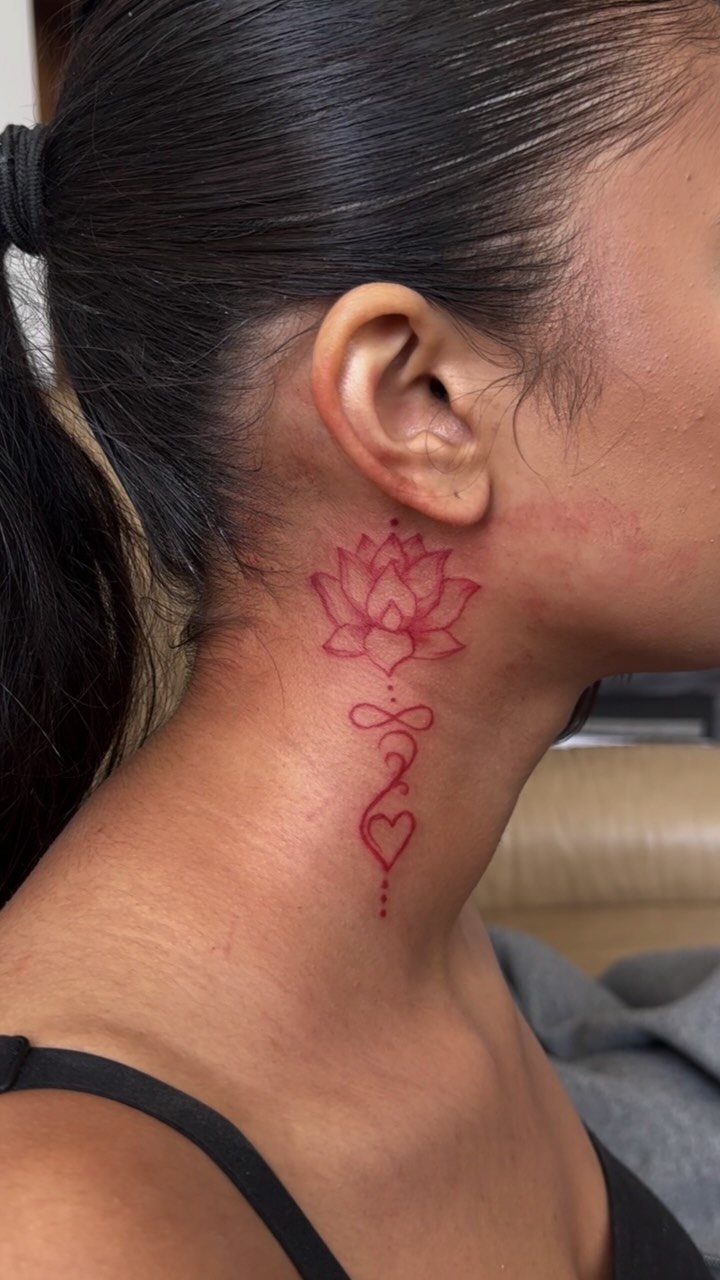
The neck offers 3 main zones: side, back, and front, each with different visibility and pain levels. A side placement like this lotus and infinity symbol shows when you turn but hides under longer hair.
Back of the neck, just below the hairline, stays the most concealable and hurts less than the sides. Front of the neck, over the throat, gets the most attention and the most tenderness during healing.
Red ink lightens the look compared to black, and stacking symbols vertically uses the neck’s natural length. Skip tight scarves or collars until the skin settles.
6. Side Neck Script Tattoo
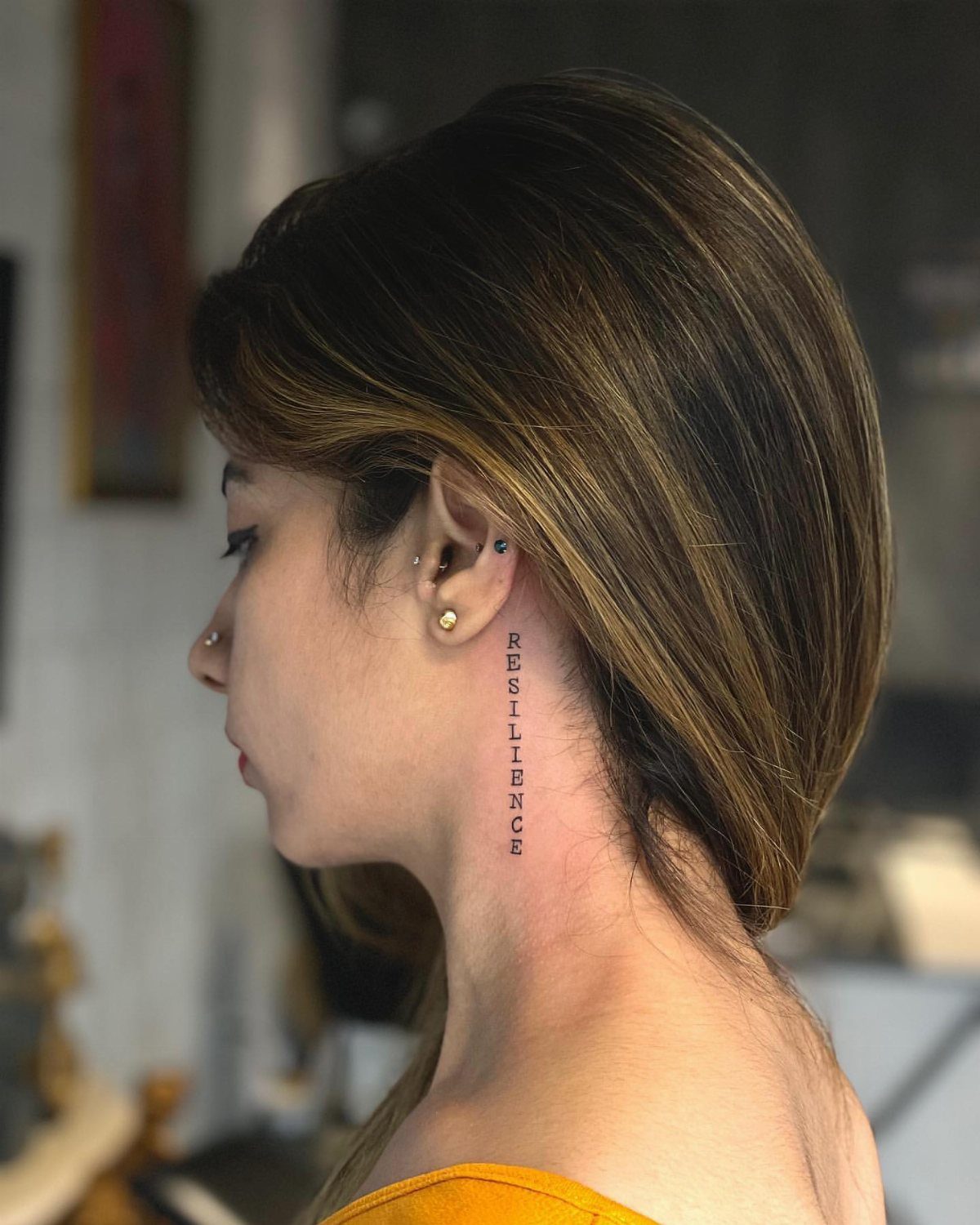
A single word running vertically down the side of the neck reads clearly and uses the length of the placement without crowding. "Resilience" here, but any short word fits the same way.
Vertical script flows with the line from ear to collarbone, and it stays legible even as skin shifts with age. Black stays sharpest, though you can go finer if the font has clean lines and no serifs.
7. Colorful Hummingbird Neck Tattoo
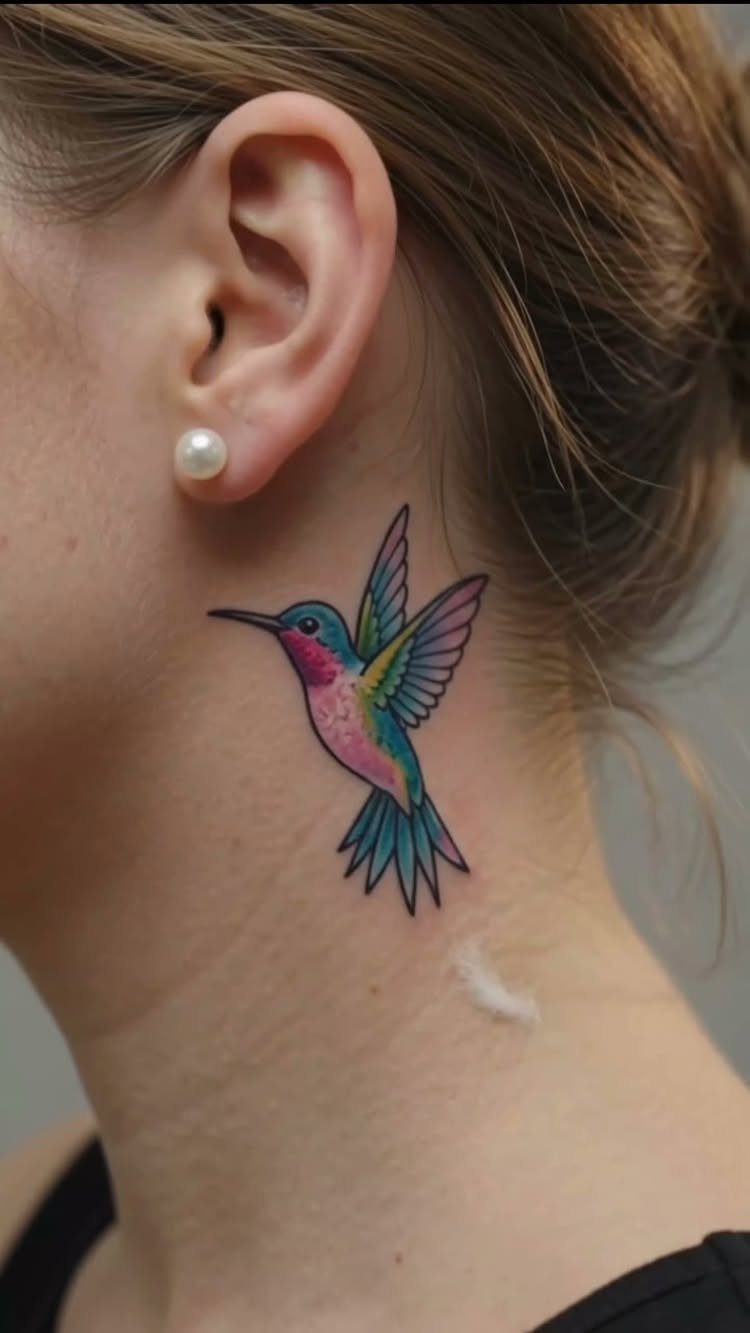
A hummingbird on the side of the neck, tucked just below the ear, captures motion in a spot that moves with you. The shape fits naturally into the curve, and color brings the bird to life in a compact space.
Pink and blue plumage like this stays vibrant longer than yellows or greens, which tend to fade faster. Multiple colors mean touch-ups later, but you get depth that black alone can’t deliver.
Placement this high stays visible most of the time, so plan around hair length and work dress codes.
8. Minimalist Geometric Back Neck Tattoo
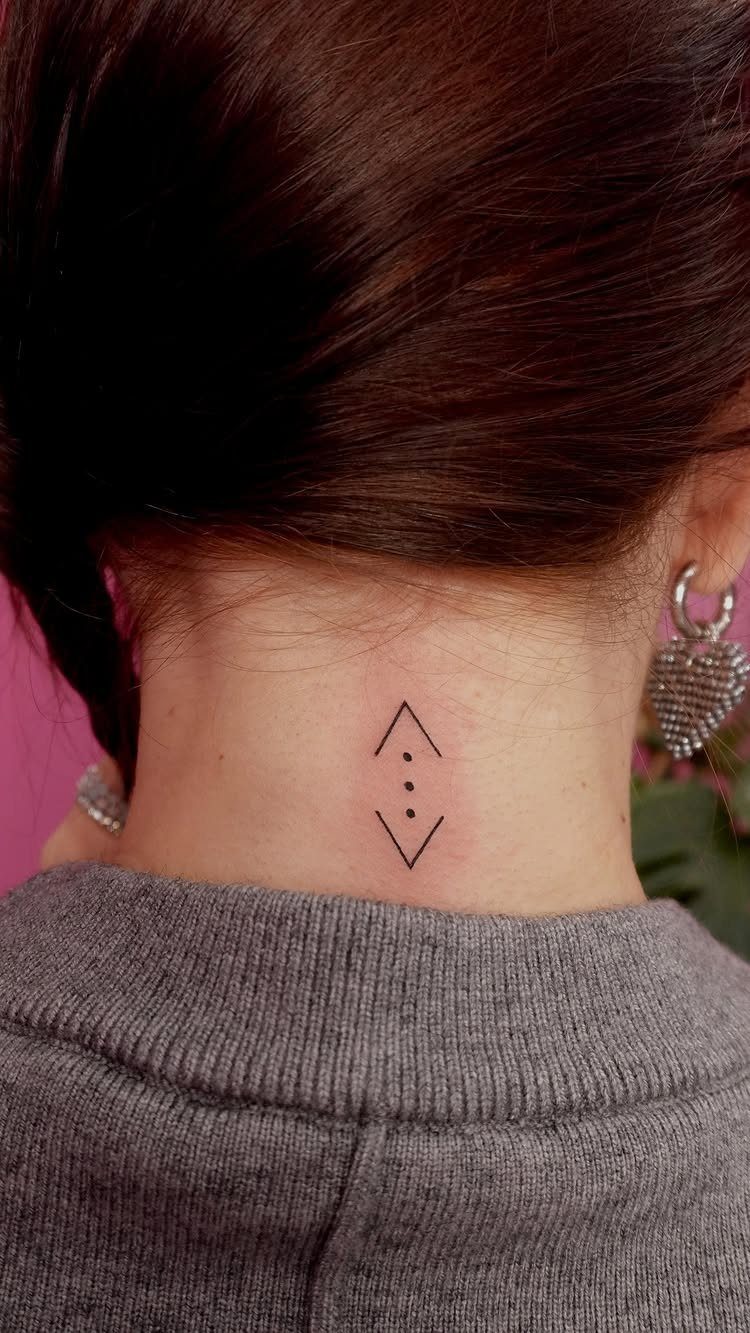
A small geometric diamond centered at the nape reads clean and stays subtle, especially in black ink. 3 dots stacked below add balance without complicating the design, and it fits under a palm.
Back of the neck ranks lower for pain than the sides, and it heals faster since clothing rarely touches it. The spot hides under most hairstyles but shows when you wear it up.
Black line work this thin stays sharp as long as the artist uses a single needle and doesn’t overwork the skin.
Frequently Asked Questions
What are some common neck tattoos for women?
Flowers and leaves wrapping the side of the neck, butterflies, script running vertically, and small geometric shapes at the nape show up most often. These designs fit the neck’s natural curves and stay legible as the skin ages.
Do neck tattoos hurt for women?
Thin skin over bone makes the throat and collarbone especially sensitive. The nape is gentler than the sides or front, though turning your head will feel stiff for several days.
Are neck tattoos allowed at work?
That depends on your workplace dress code. Front pieces stay visible, and side designs show the moment you pull your hair back.