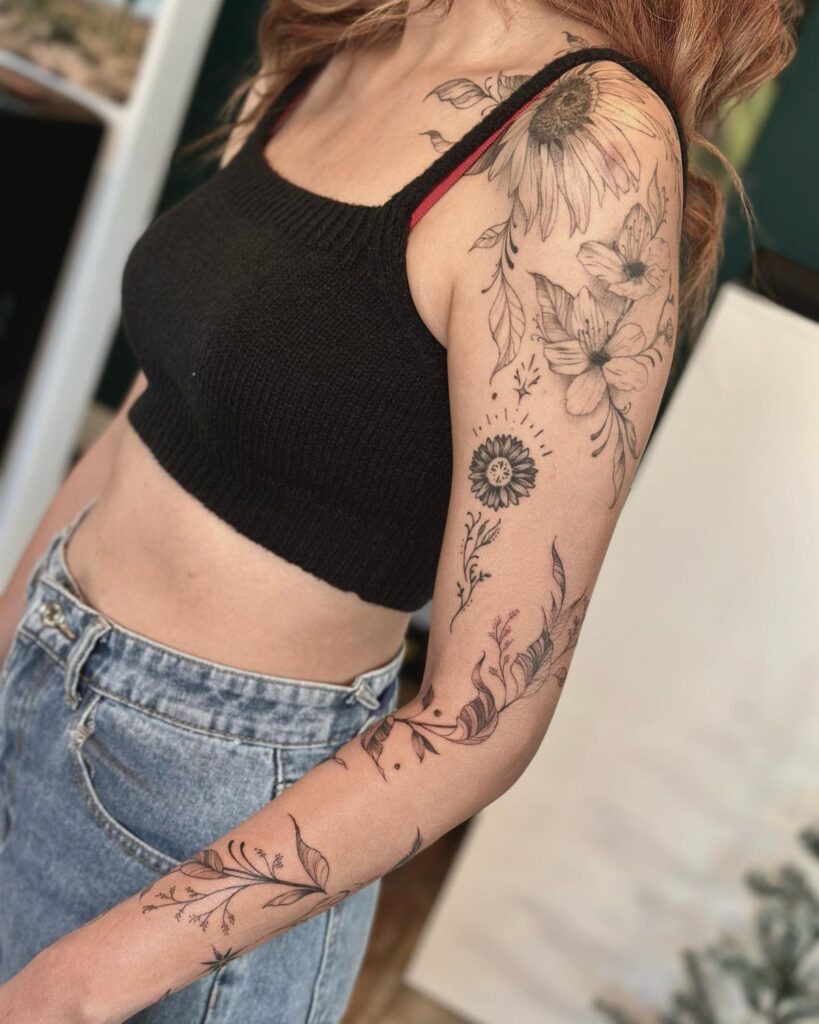
The bicep’s muscle cushions the needle enough to rate low for pain, and healing takes 2–3 weeks with minimal friction if you skip tight sleeves.
Florals follow the bicep’s natural curve cleanly, dragons wrap from shoulder to forearm without stopping abruptly, and a portrait or favorite character needs the bicep’s width to hold facial detail without stretching when your arm bends.
1. Floral Bicep Tattoos
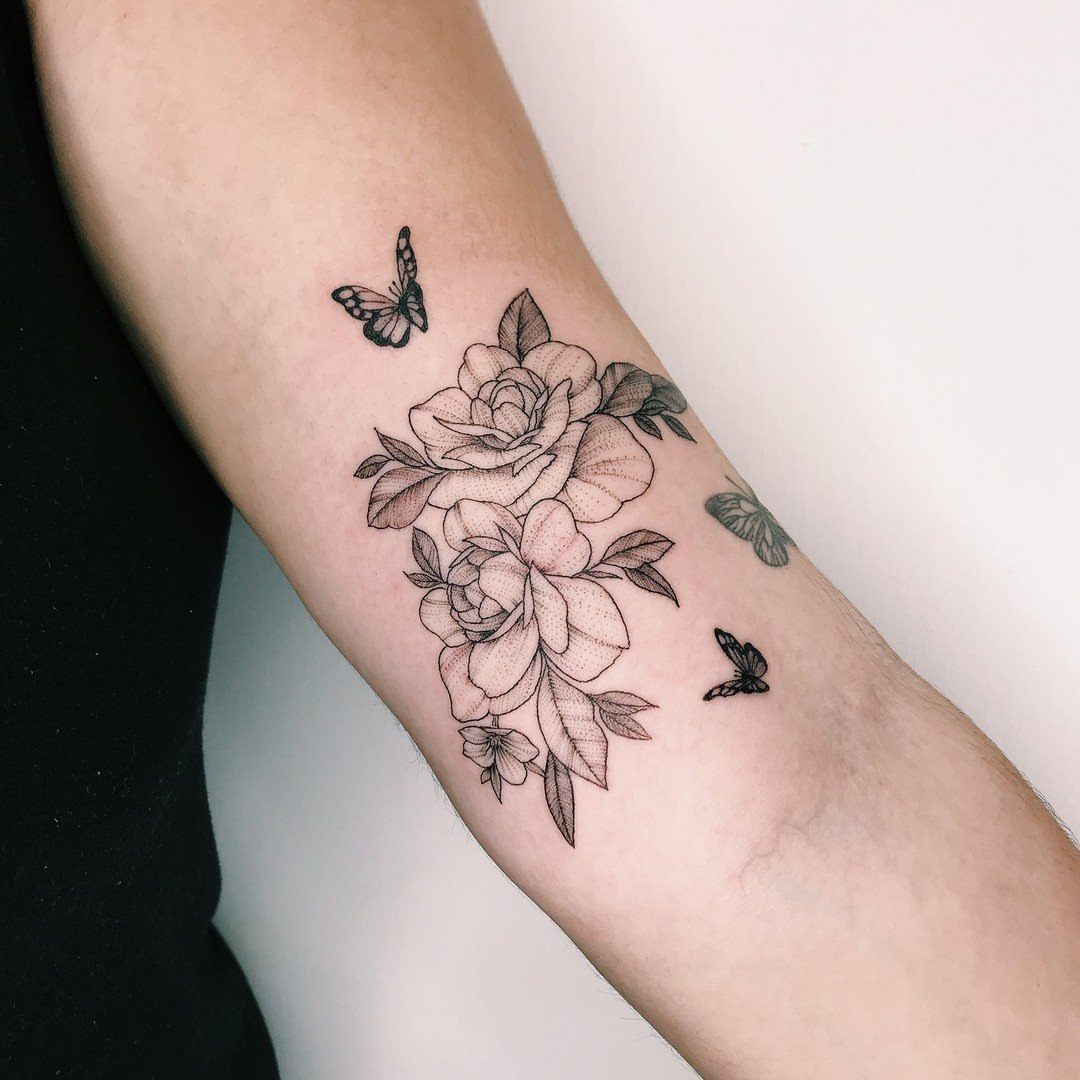
Roses, peonies and botanicals follow the bicep’s natural curve instead of fighting it. The shape wraps cleanly whether you go full sleeve or stop at a single stem.
Solid black shading and crisp linework last longer on muscle that moves every day than delicate color gradients. Butterflies and leaves fill negative space and keep the composition open.
Placement on the outer bicep shows when you want it to; inner bicep stays private until you lift your arm. Both heal in 2–3 weeks if you skip the gym during that window.
2. Script and Quote Tattoos
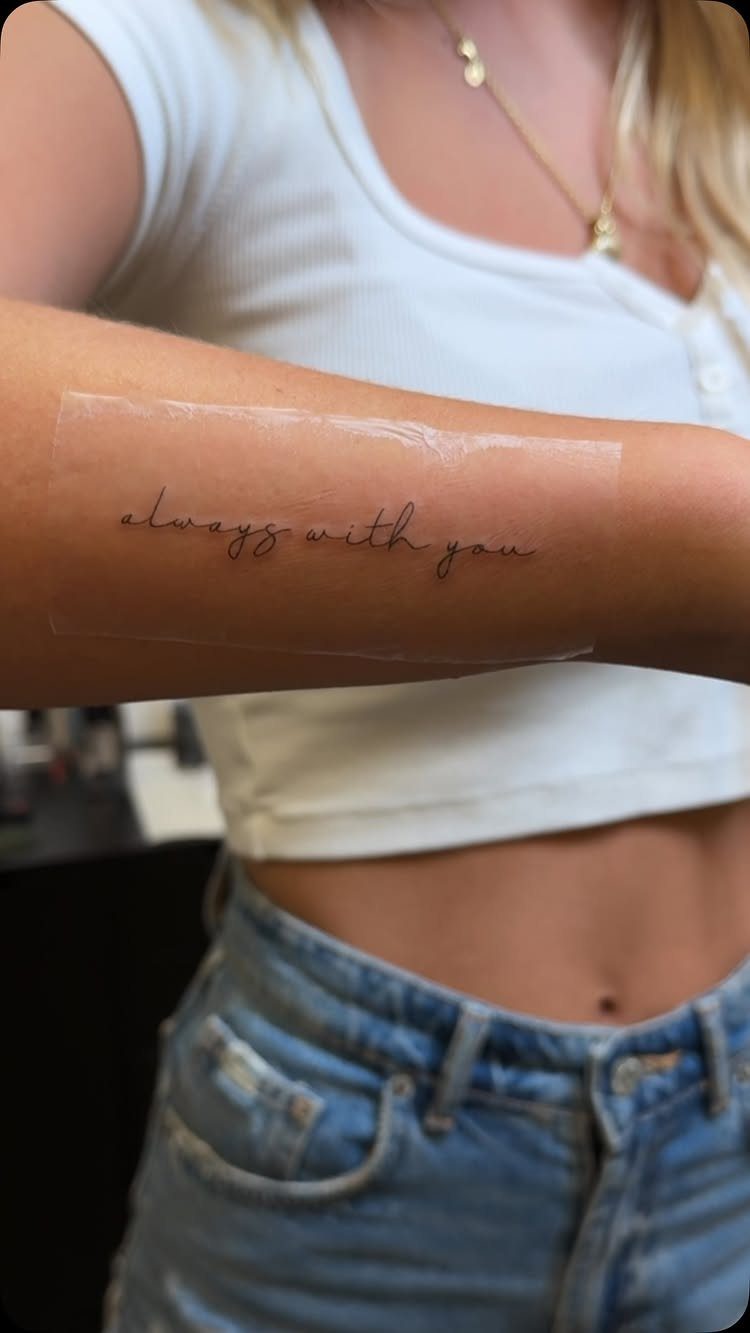
A line of script follows the inner bicep’s length without bending awkwardly at the shoulder. Short phrases work best; longer text wraps or shrinks into illegibility.
Cursive reads softer, block letters hold up clearer over time. I’d stick with black ink and a medium weight so the letters don’t blur together as the tattoo settles.
Inner bicep hurts more than outer, the skin sits thinner there. Healing matters here since clothing rubs that spot constantly during the bandage stage.
3. Celestial Designs
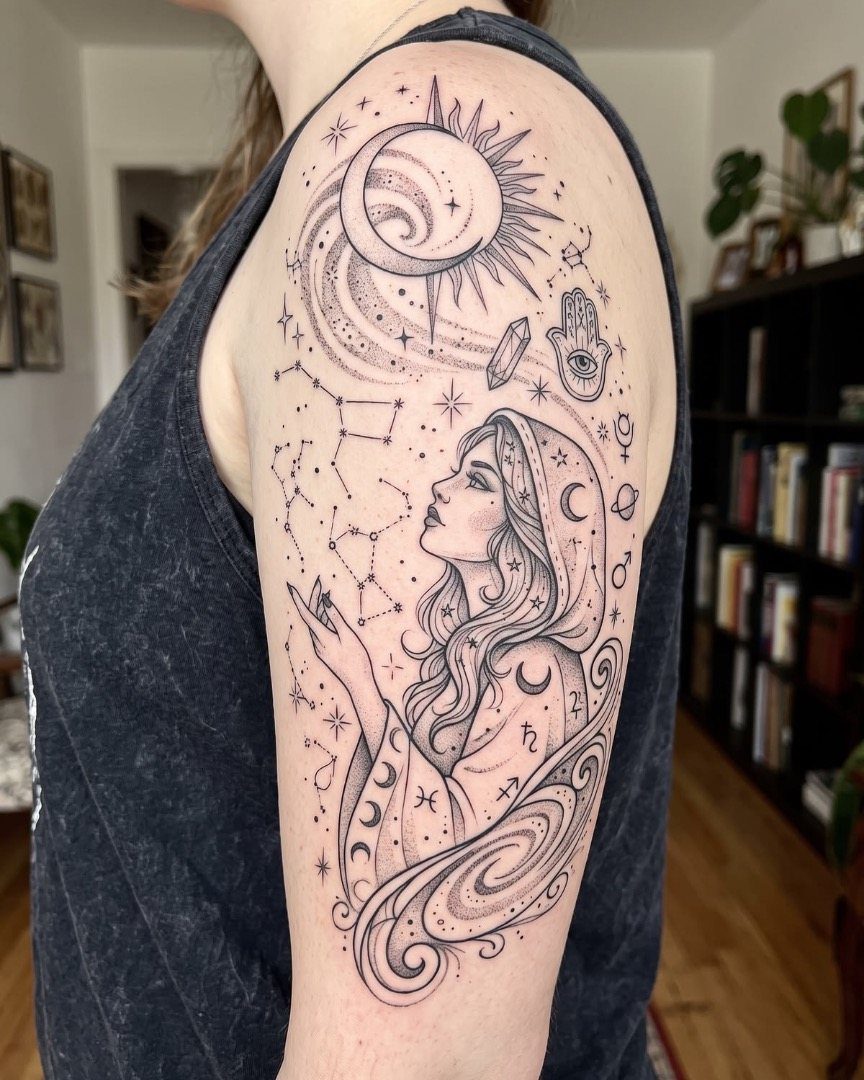
Moons, stars and constellations scale up or down to fit the bicep without losing their shape. A crescent moon anchors the composition, and smaller stars scatter around it to fill the arm’s width.
Black ink keeps the design readable from a distance. Delicate linework looks clean at first but can fade on areas that see a lot of sun, so plan for touch-ups if you wear sleeveless shirts often.
Outer bicep placement leaves the design visible; inner bicep hides it when your arm hangs naturally.
4. Ornamental Mandala Tattoo
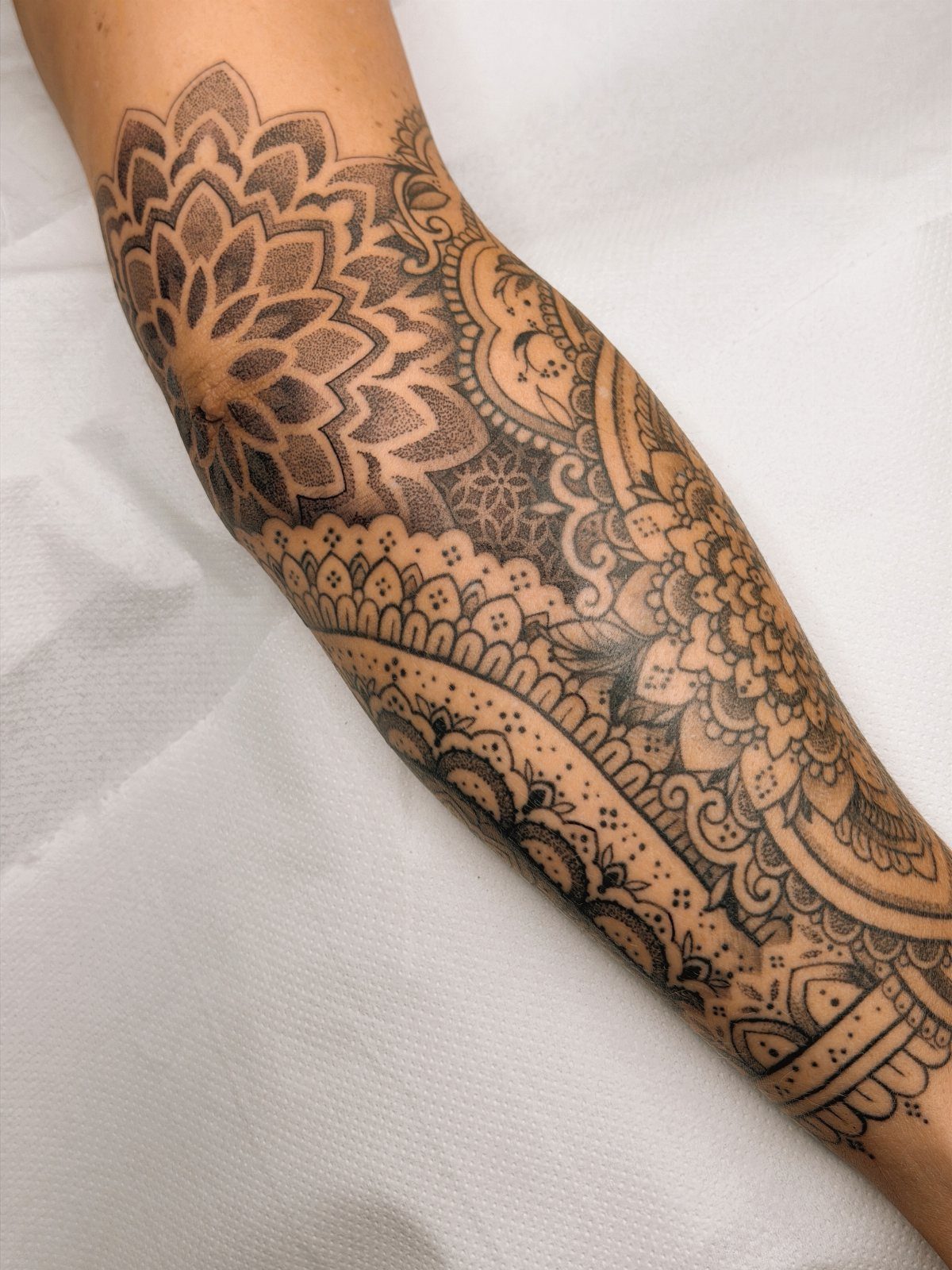
Geometric circles and repeating patterns sit naturally on the bicep’s round surface. Dotwork builds dimension without color, and the symmetry holds even as the arm moves.
I like mandala tattoos for their flexibility: you can extend them into a sleeve or cap them cleanly at the elbow. Black ink and tight dotwork age well if the artist spaces the dots consistently.
Outer bicep shows the full pattern; wrapping it around to the inner arm adds coverage but makes the design harder to see as one piece.
5. Nature Scenes and Landscapes
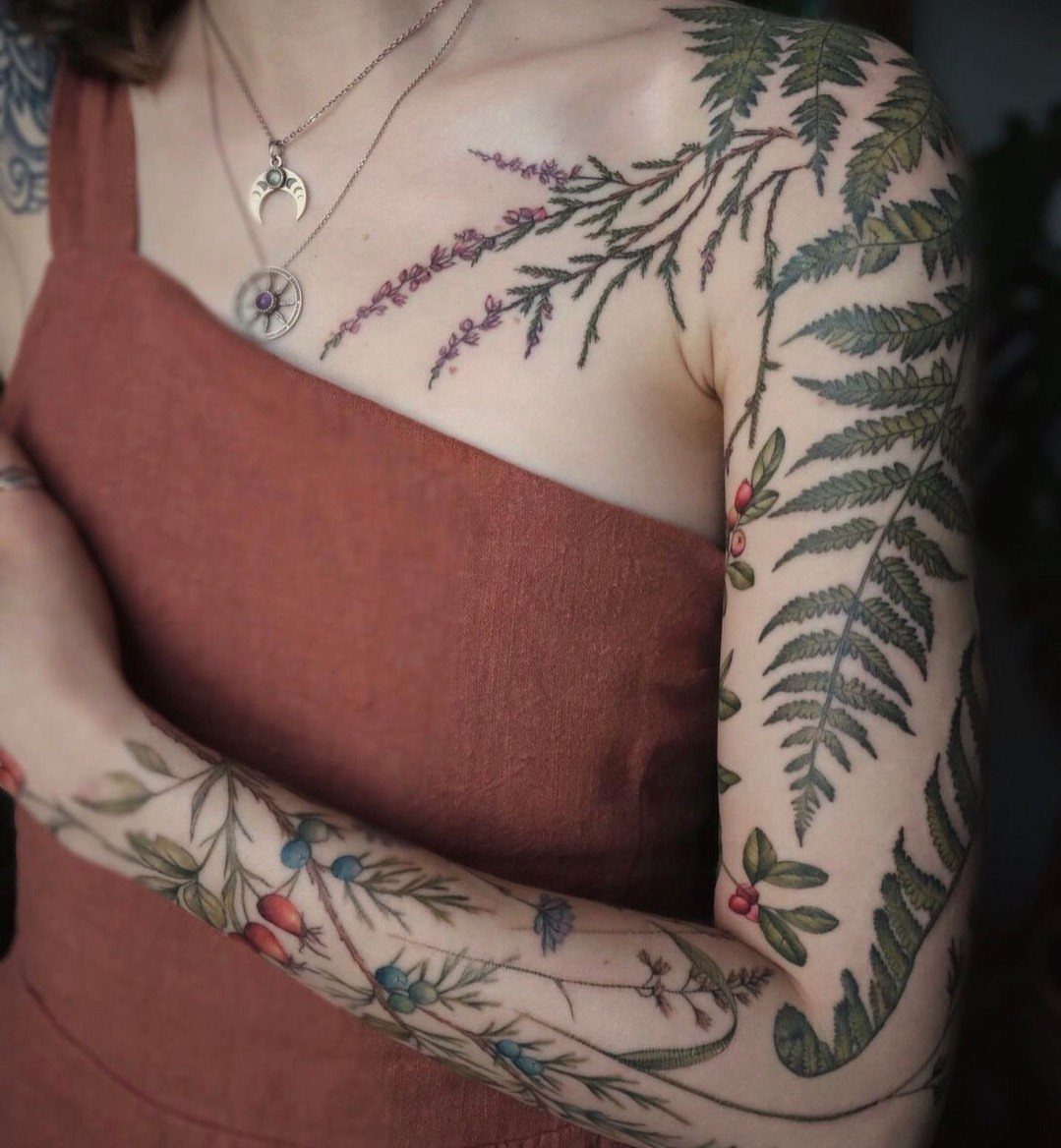
Ferns, wildflowers and branches fill the bicep’s vertical length and need no rigid frame. The stems follow the muscle’s natural line, and leaves spread to cover more skin without looking forced.
Botanical tattoos read clearly in black ink, and shading adds depth where petals overlap. I’d avoid tiny details; fine lines on the bicep blur faster than on flatter skin since the muscle flexes constantly.
Outer bicep leaves the design visible in short sleeves. Pair it with forearm florals for a cohesive arm, or stop it at the elbow for a standalone piece.
6. Portraits and Favorite Characters Tattoo
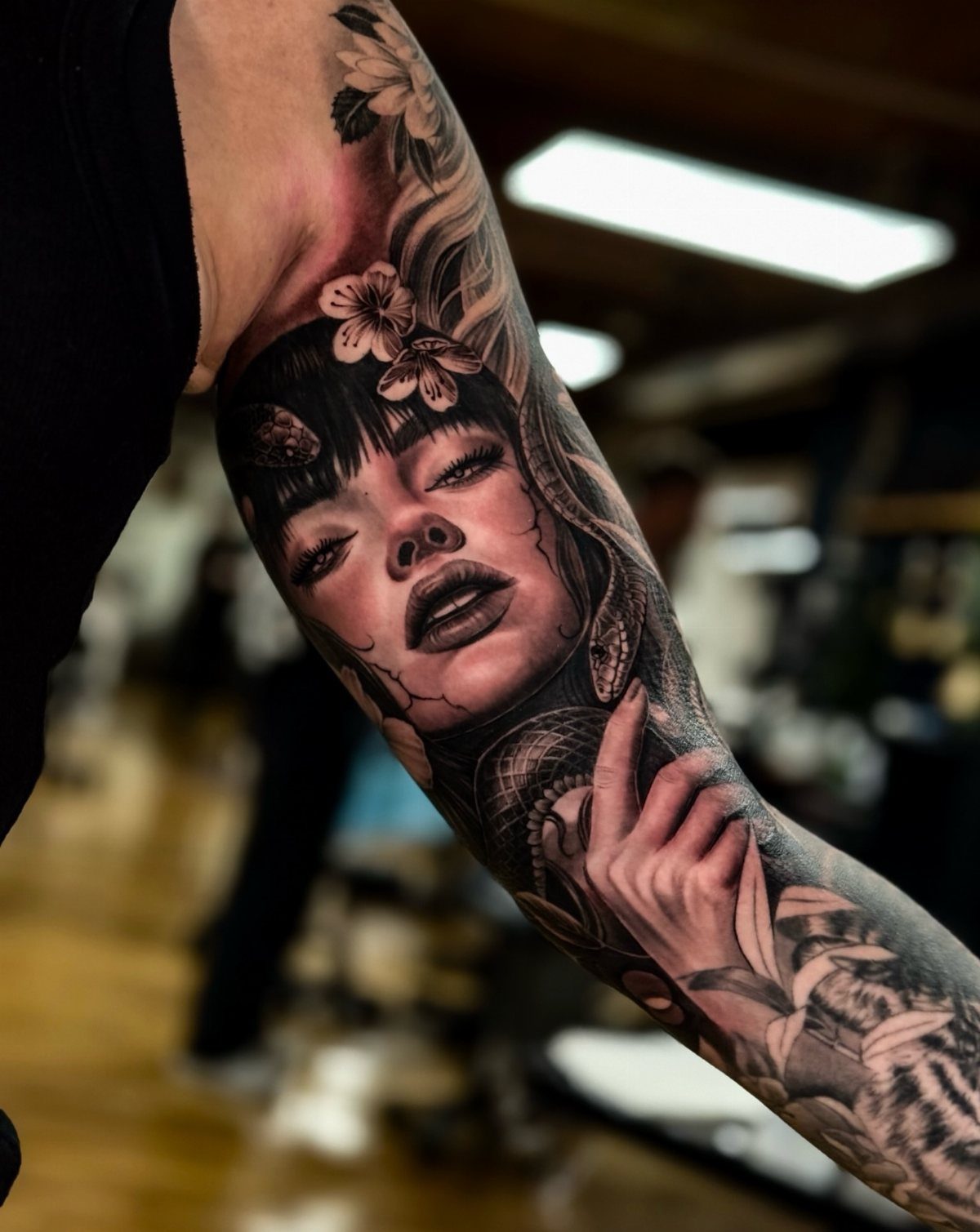
A portrait needs enough space to capture facial detail, and the bicep gives that width without stretching the image when your arm bends. Realism works best in black and grey; color portraits fade unevenly on muscle that moves.
Choose an artist who specializes in faces. A portrait tattoo only works if the proportions hold, and fixing a bad one means covering the whole piece.
Adding flowers or a snake frames the face and fills the surrounding space cleanly.
7. Dragon Bicep Tattoos
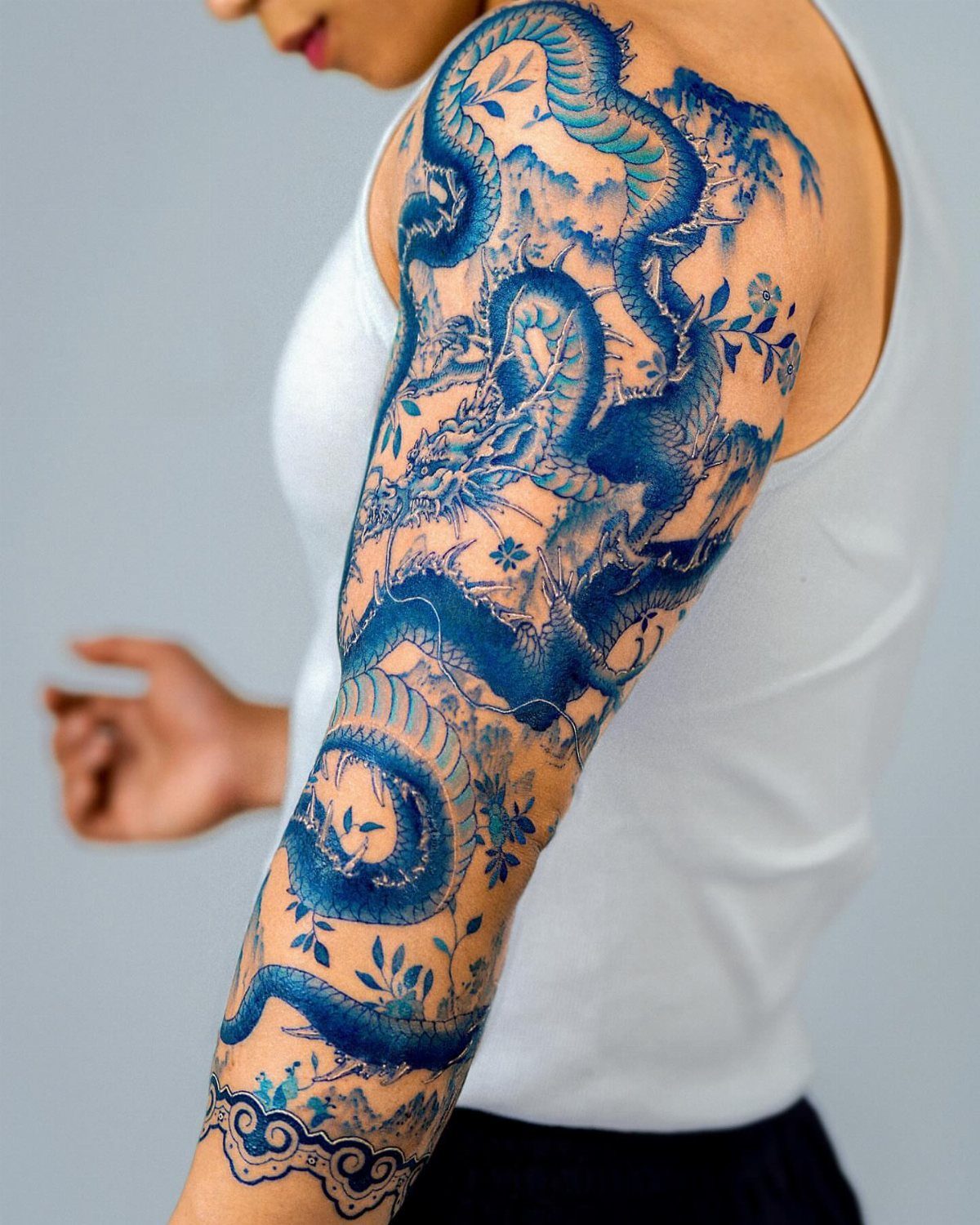
A dragon wraps the bicep’s curve and extends naturally into a shoulder or forearm piece without stopping abruptly. The long body and tail follow the muscle’s shape, and scales add texture where solid color would flatten.
Blue ink reads clearly against most skin tones and ages better than bright reds or purples that fade unevenly. Black and grey work just as well if you want higher contrast.
The bicep gives enough width for a detailed head without cramping the features. Adding claws or clouds fills the surrounding space and keeps the composition balanced.
8. Big Cat Bicep Tattoos
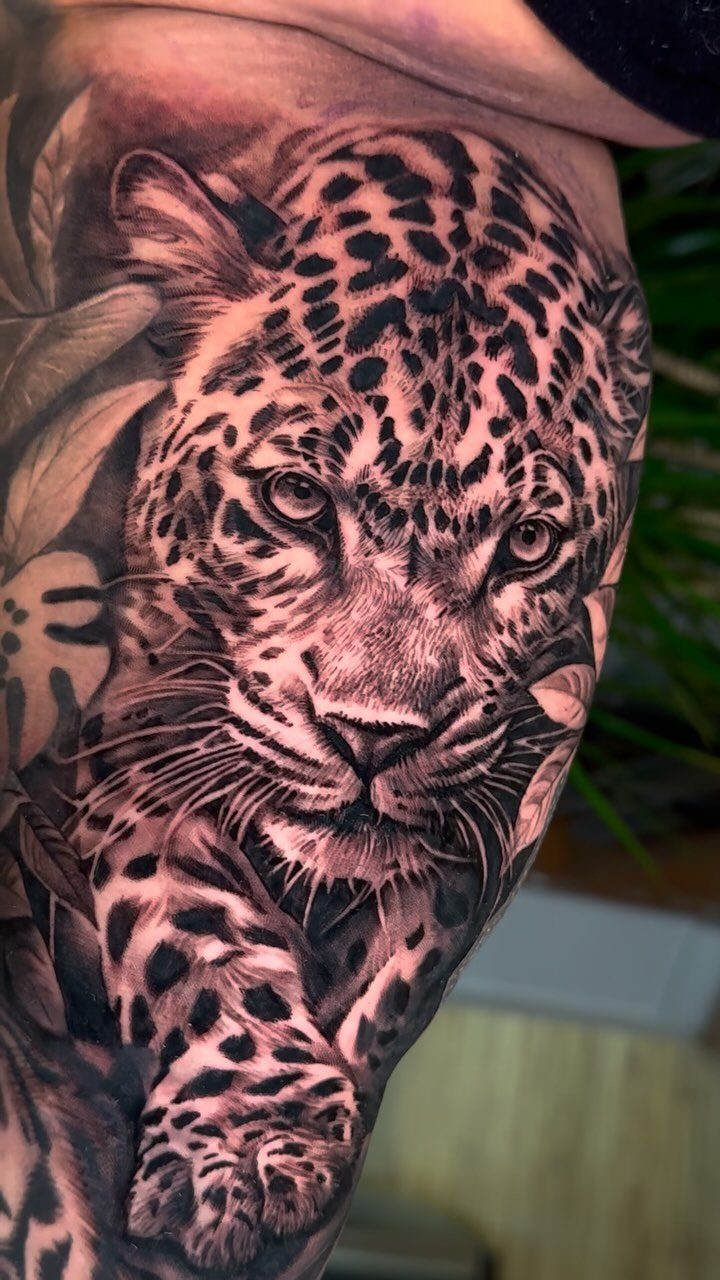
A leopard or tiger head sits naturally on the bicep’s round surface, and the face scales large enough to show whiskers and fur texture without crowding. Black and grey realism holds detail longer than color on muscle that flexes constantly.
Tropical leaves frame the cat and add negative space so the design doesn’t feel heavy. The foliage also softens the transition if you extend the piece toward the shoulder or elbow later.
Realism demands an artist who works in that style regularly. A big cat portrait only reads right if the proportions and shading stay accurate.
9. Mythical Winged Lion Tattoo
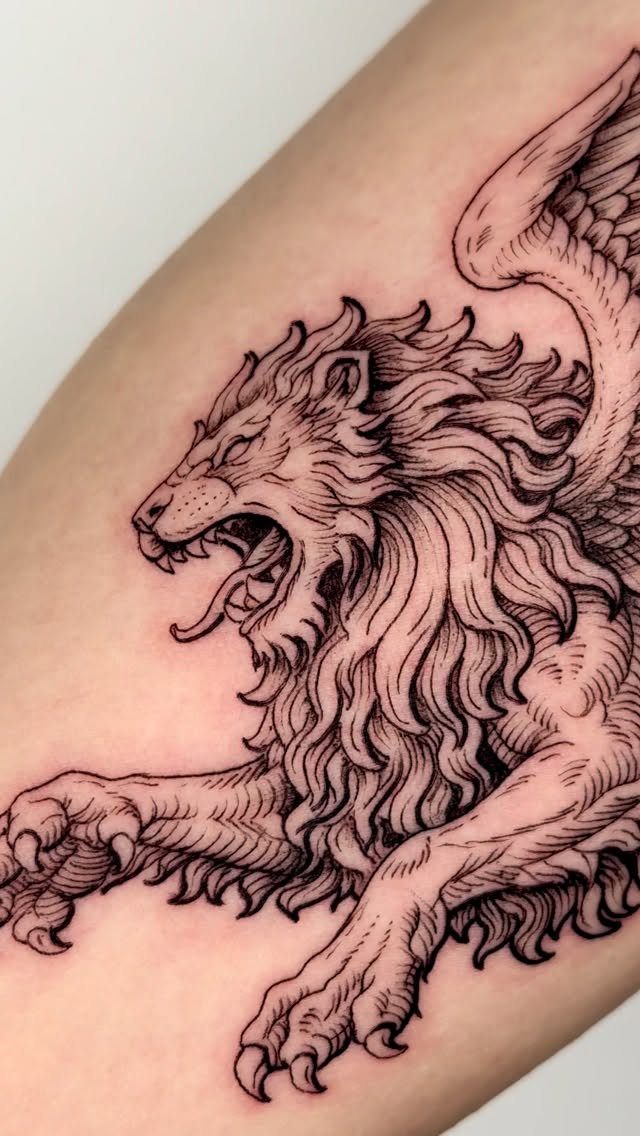
A winged lion combines the strength of a big cat with the fantasy element of feathered wings, and the bicep holds both without compressing the details.
Black ink keeps the linework sharp, and the symmetry of the wings balances the composition even as your arm moves.
I like this one for its mix of mythology and anatomy. The wings add height, so the design fills the upper arm cleanly without wrapping too far around to the inner bicep.
Tight linework and controlled shading keep it readable over time.
Choosing Tattoo Design and Placement
Muscle cushions the needle, so the outer bicep reads milder than areas where skin sits right over bone.
Inner bicep stays hidden when your arm hangs at your side but shows in flashes when you reach, wave or hold something overhead. A sleeve that runs to your shoulder or elbow will hide it entirely.
Starting with a standalone piece on the bicep leaves room to extend it toward the shoulder or down the forearm later without redrawing the whole arm.
Strong linework on the outer bicep stays readable even if your weight shifts, while delicate shading on the inside tends to blur.
Aftercare for Bicep Tattoos
Leave the wrap on for 24 hours or however long your artist says, then rinse with saline and spread a thin coat of the balm they gave you. Days 2 through 7 call for the same routine twice daily.
Loose sleeves matter more on the bicep than on flatter placements because the muscle flexes with every arm movement, and tight fabric rubbing against fresh ink slows healing and irritates the skin.
Peeling starts around week 2; leave it alone and keep wearing loose shirts through week 3.
Sunscreen goes on every time the tattoo sees daylight once it finishes healing. The bicep gets direct sun in sleeveless shirts, and UV exposure fades ink faster than anything else you control.
Pain Levels of Bicep Tattoos
The bicep usually rates low for pain because there’s enough muscle and tissue between skin and bone to cushion the work.
How much rest you got, whether you ate, and your mood that day will change your pain tolerance more than the body part will.
If pain worries you, schedule a short session first so you know what it feels like before you book something longer.
Frequently Asked Questions
Is a bicep tattoo painful for women?
The outer bicep ranks as one of the milder spots because muscle and fat cushion the needle work, while the inner bicep stings more since the skin sits thinner there.
Your energy level and whether you’ve had a meal matter more than which spot on your body you pick. Start with a smaller piece if the needle bothers you, then decide whether you want to sit for a full session.
What size works best for a bicep tattoo for women?
A piece between 10 and 20 cm follows the bicep’s natural curve without looking cramped or stretched when your arm bends.
That range leaves enough space for detail in the design while staying proportional to the rest of your arm. Anything smaller loses clarity, and anything much larger needs to wrap around to the inner bicep or extend toward the shoulder.
Can a bicep tattoo be hidden at work?
A regular tee hides most of the bicep when your arm is down, and anything with a long sleeve covers it entirely. Ink on the inside stays out of sight until you raise your arm or gesture.
Tell your artist you need it contained under a sleeve line, then hold up your phone camera in work clothes to confirm the stencil placement before the needle starts.
What is the best tattoo for women?
The bicep suits anyone who wants enough space for detail without committing to a visible piece they can’t cover.
Florals, script, celestial designs and animals all fit the arm’s shape, and the placement lets you show or hide the tattoo depending on what you wear.
Choose the subject that means something to you rather than the one that appears most often in photos, since you’re the one who lives with it.





