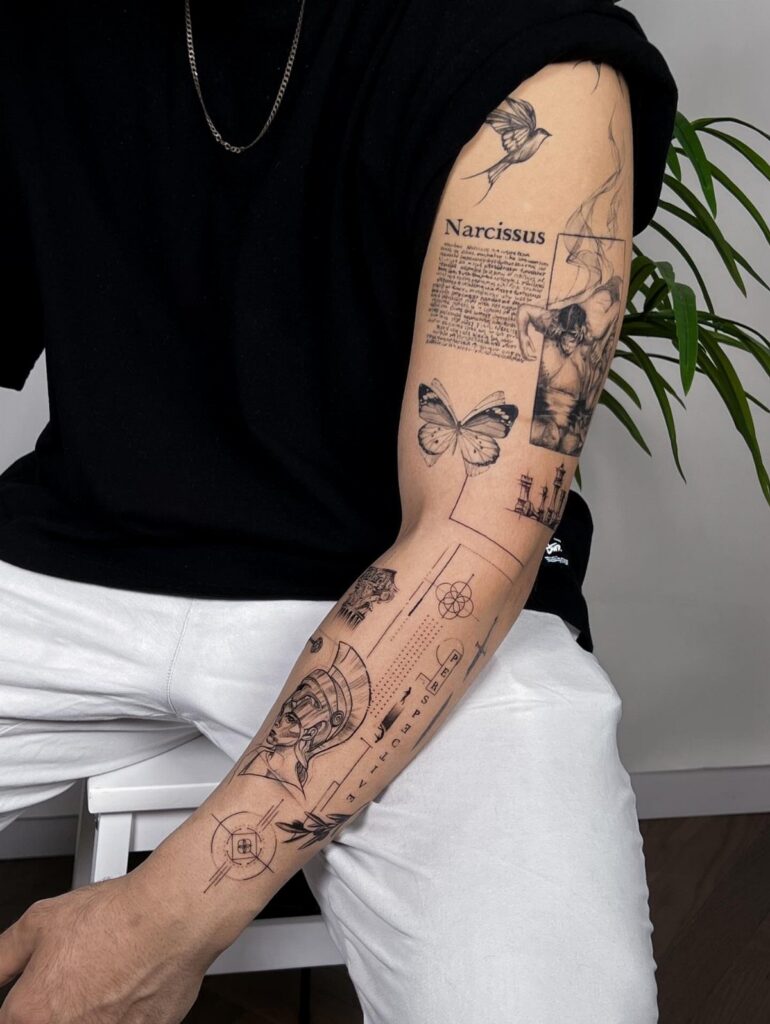
Geometric tattoos for men range from a single minimalist triangle that takes an hour to a full leg or chest piece stretching across 6 or 8 sessions over several months.
Placement changes how a design reads on the body: radial patterns like mandalas curve with a shoulder or knee, linear work follows the length of an arm or leg, and anything with fine symmetry needs enough flat surface to stay intact when you move.
1. Mandala Shoulder Piece
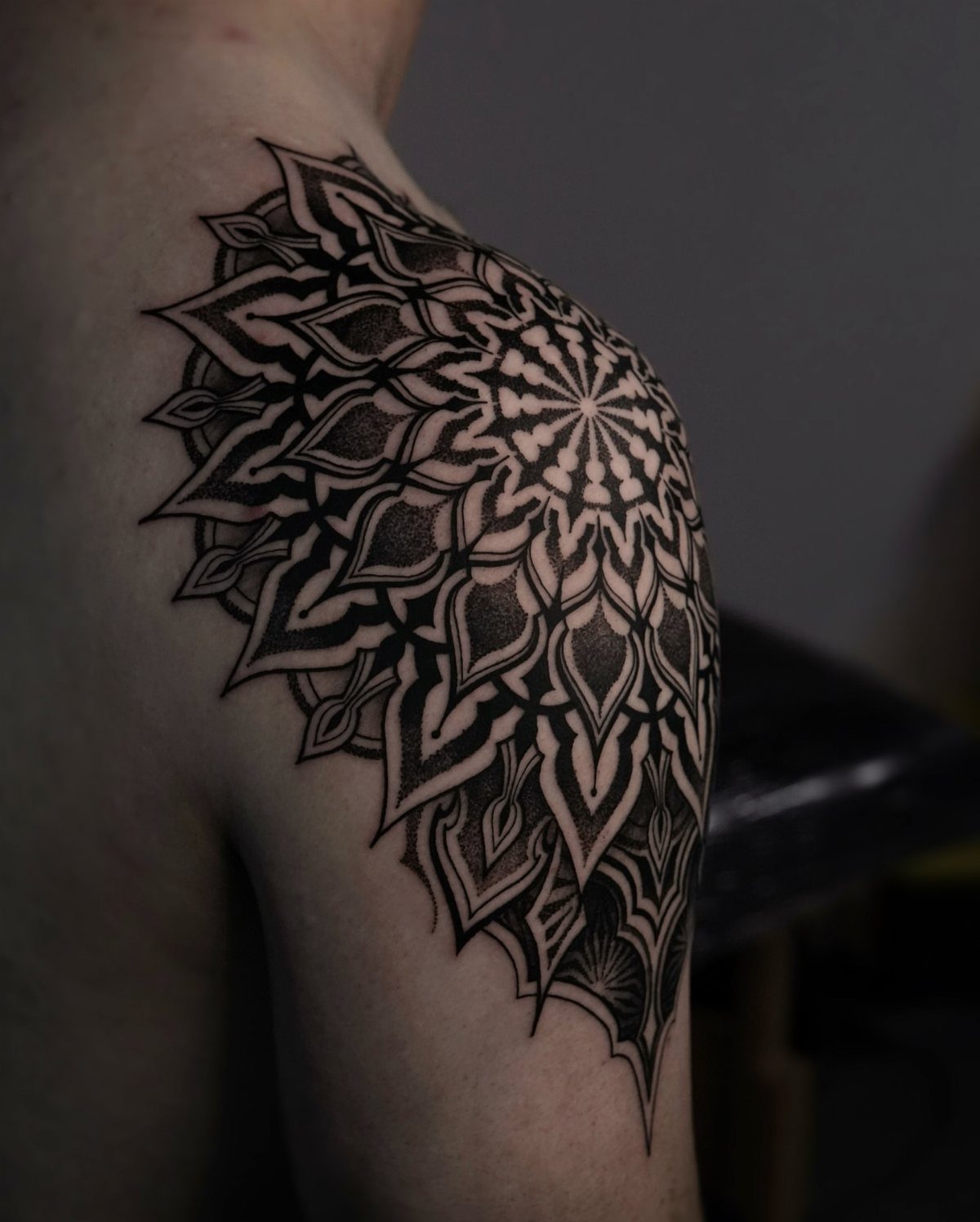
The shoulder cap’s natural curve matches a mandala’s circular layout. The circular composition wraps the rounded muscle and holds its center no matter which angle someone sees it from.
Black ink keeps the pattern crisp, and the repeating geometry ages well since small flaws blend into the symmetry.
Placement here means the tattoo shows when you wear anything sleeveless but stays covered under most shirts.
2. Geometric Vs. Mandala Tattoos
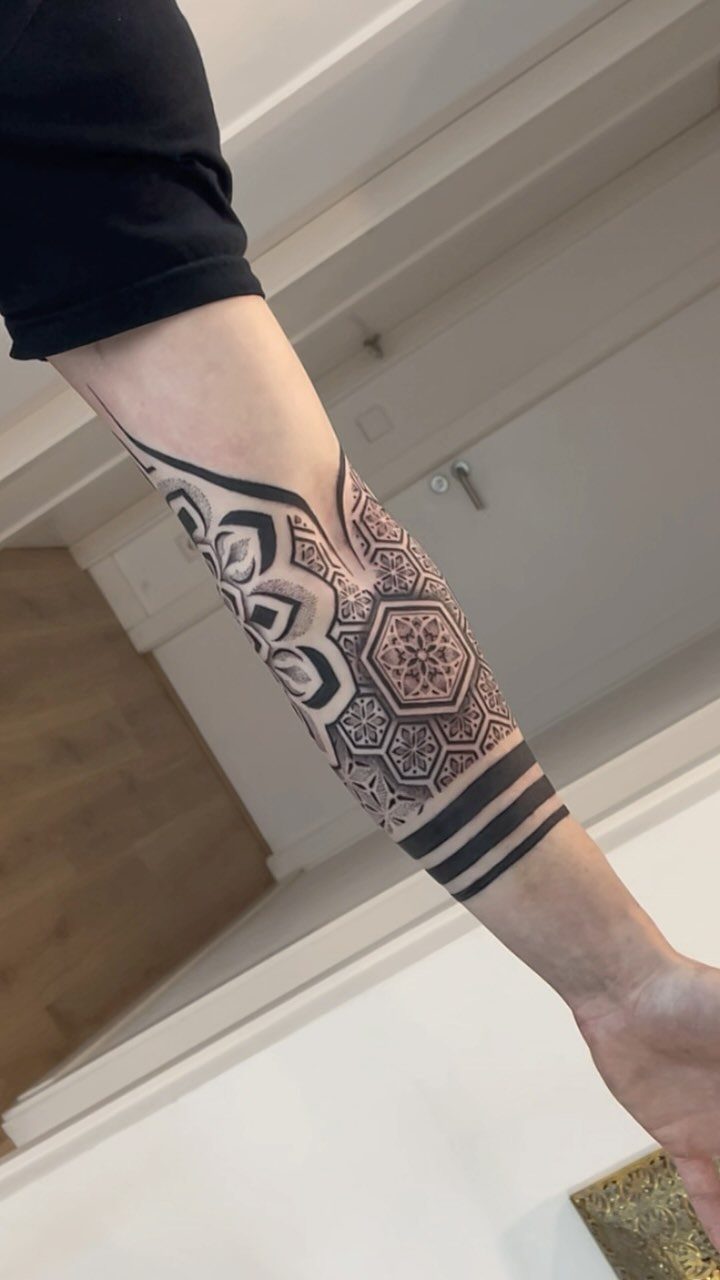
Mandalas are geometric tattoos, but not all geometric work is a mandala.
A mandala follows radial symmetry outward from one center point. Geometric designs can break symmetry, stack shapes without a focal point, or run in straight bands.
The difference shows up in how the piece reads.
A mandala pulls the eye into its center and holds it there. Geometric bands and polygons guide the eye along a direction, which works better on long surfaces like forearms.
You can combine both, the way this forearm does, by anchoring a mandala at one end and extending geometric patterns from it. That gives you a centered composition with movement.
3. Fibonacci Spiral
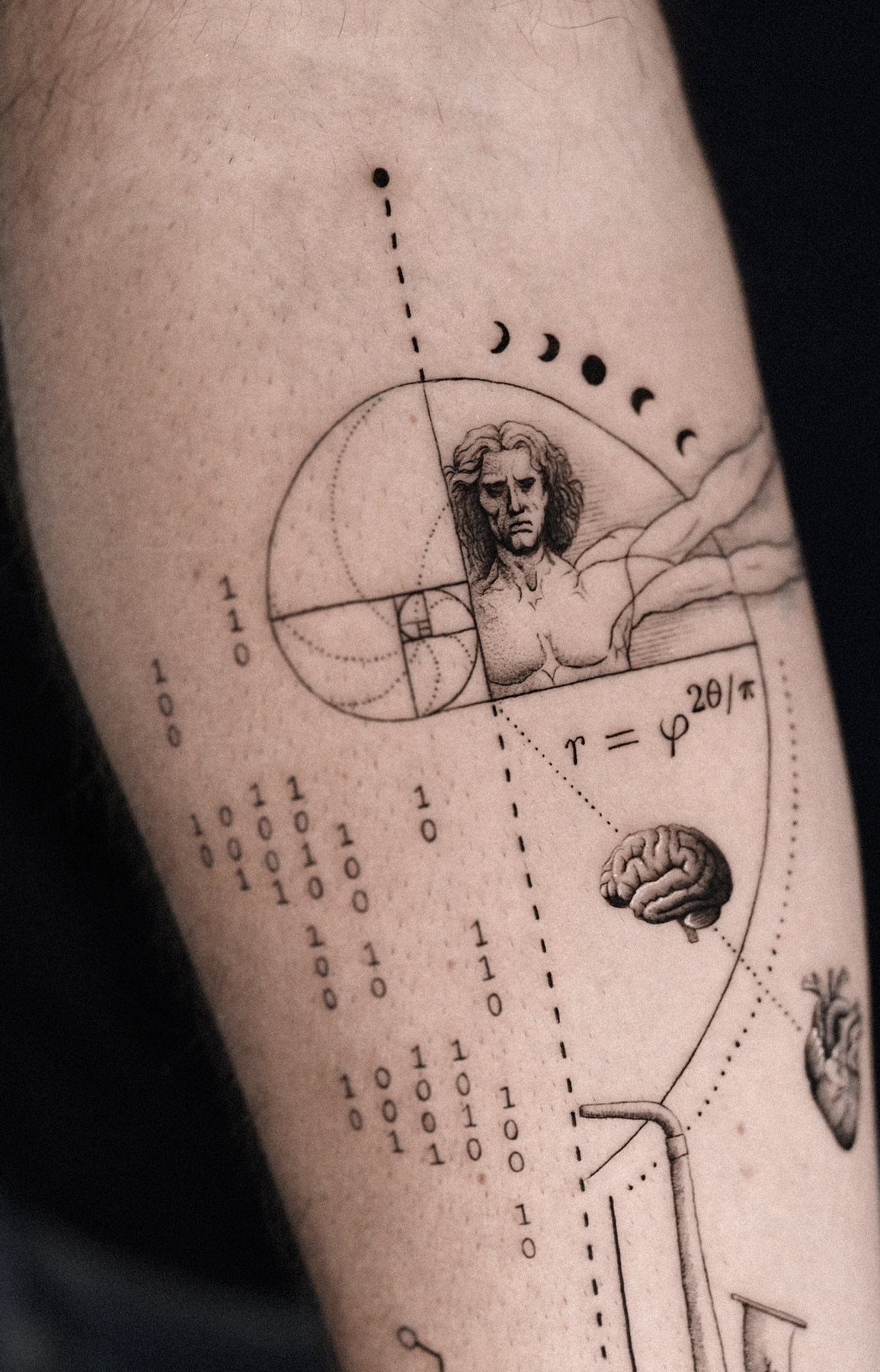
The Fibonacci spiral grows by the same ratio that governs pinecones, nautilus shells and galaxy arms. Each quarter-turn expands by 1.618, the golden ratio, which makes the curve feel balanced without symmetry.
This arm layers the spiral with a portrait, anatomical drawings and mathematical notation. That approach turns the tattoo into a narrative about the connection between math, nature and human thought.
A spiral needs size to read clearly.
Small Fibonacci tattoos lose the curve’s proportions. A forearm or upper arm gives enough length for the spiral to complete at least 2 full rotations, which is where the pattern becomes recognizable.
4. Geometric Sleeve Tattoos
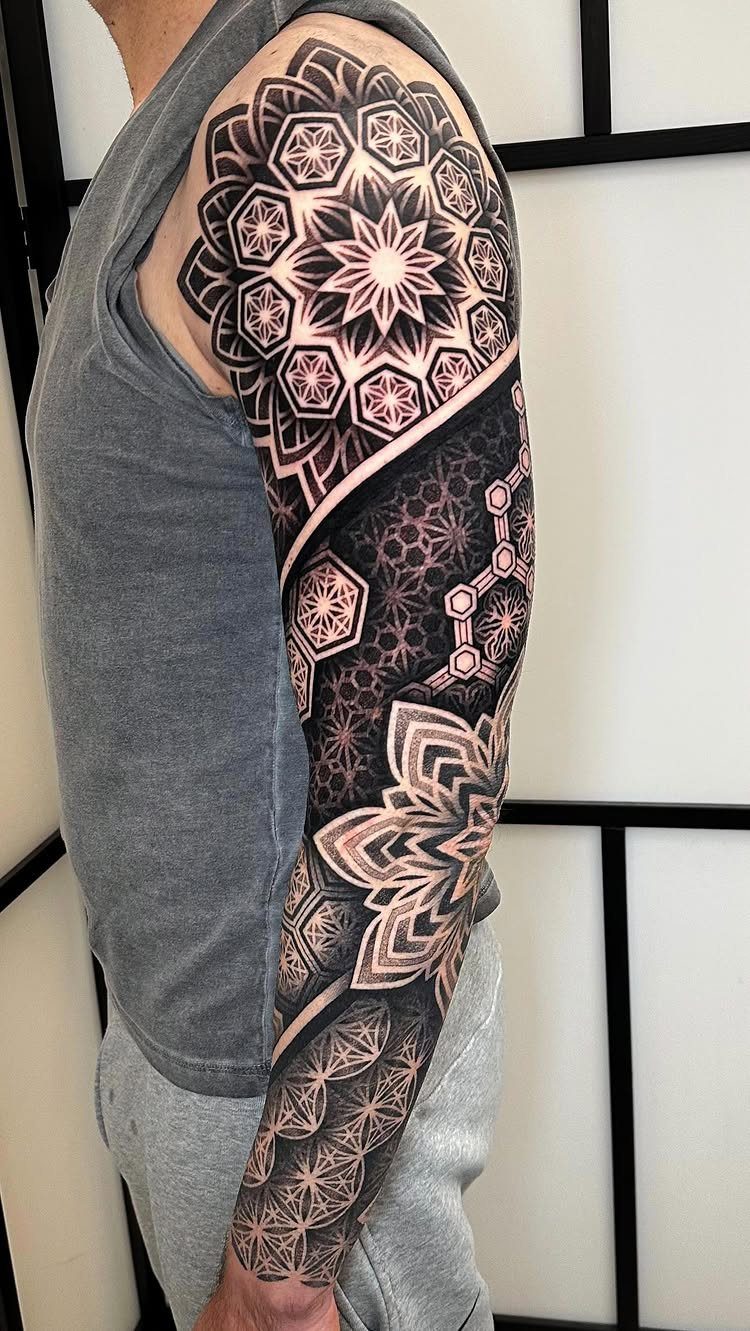
A geometric sleeve moves through connected sections rather than one repeating motif. Mandalas anchor the shoulder and elbow, while polygons, dotwork and linework connect them.
Most people split that across 3–6 sessions. Black ink dominates because it holds detail better than color, and geometric work depends on clean edges.
The composition needs to account for how the arm moves.
Straight lines distort when the elbow bends, so patterns either follow the muscle or accept the break. A good artist maps the design on your arm before starting, not on flat paper.
5. Geometric Tattoo Patterns
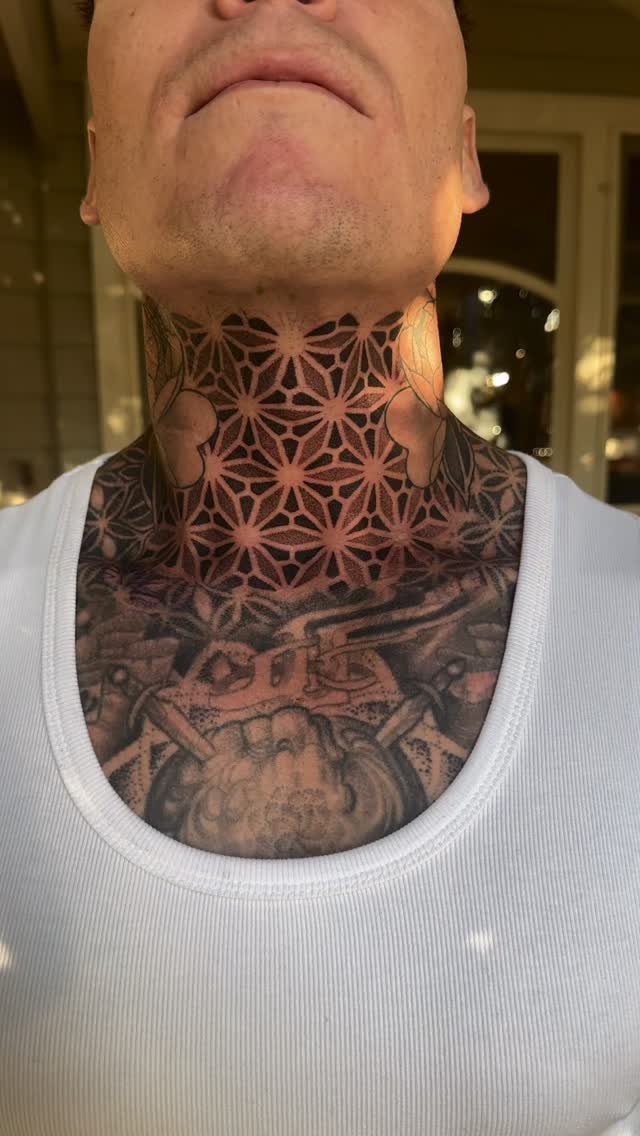
Repeating geometric forms create rhythm the way a tiled floor does. Triangles, hexagons or diamonds lock together in a grid, and the pattern holds whether you see it up close or at a distance.
Patterns like this scale to any body part.
A small section works on a forearm, and a larger grid can cover a back or thigh. The floral geometry visible here softens the hard edges while keeping the mathematical structure underneath.
Precision matters more in patterned work than in organic designs.
One crooked line throws off the whole grid. Find an artist whose portfolio shows clean geometric repetition, not just one-off mandalas.
6. Minimalist Geometric Triangle Tattoo
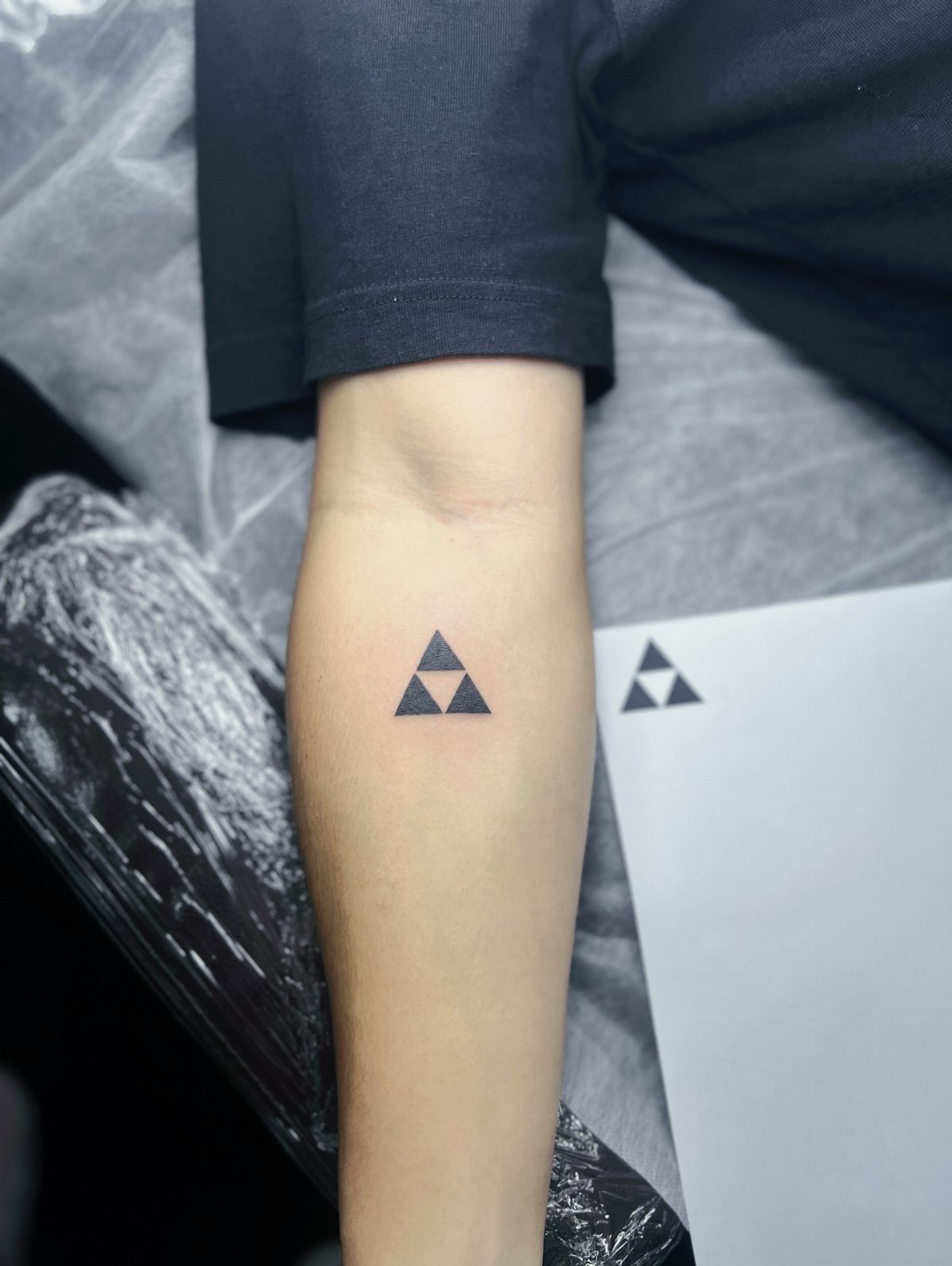
3 interlocking triangles sit small enough to fit on a forearm, wrist or behind the ear. The design reads instantly because the geometry is simple, and there is nothing extra.
Minimalist tattoos depend on line quality. Thin lines lose definition over time, so ask your artist to go slightly thicker than the stencil suggests.
Placement here keeps the tattoo easy to cover or show. Forearms work for people who want a visible piece that does not dominate their look.
7. Geometric Animal Tattoo
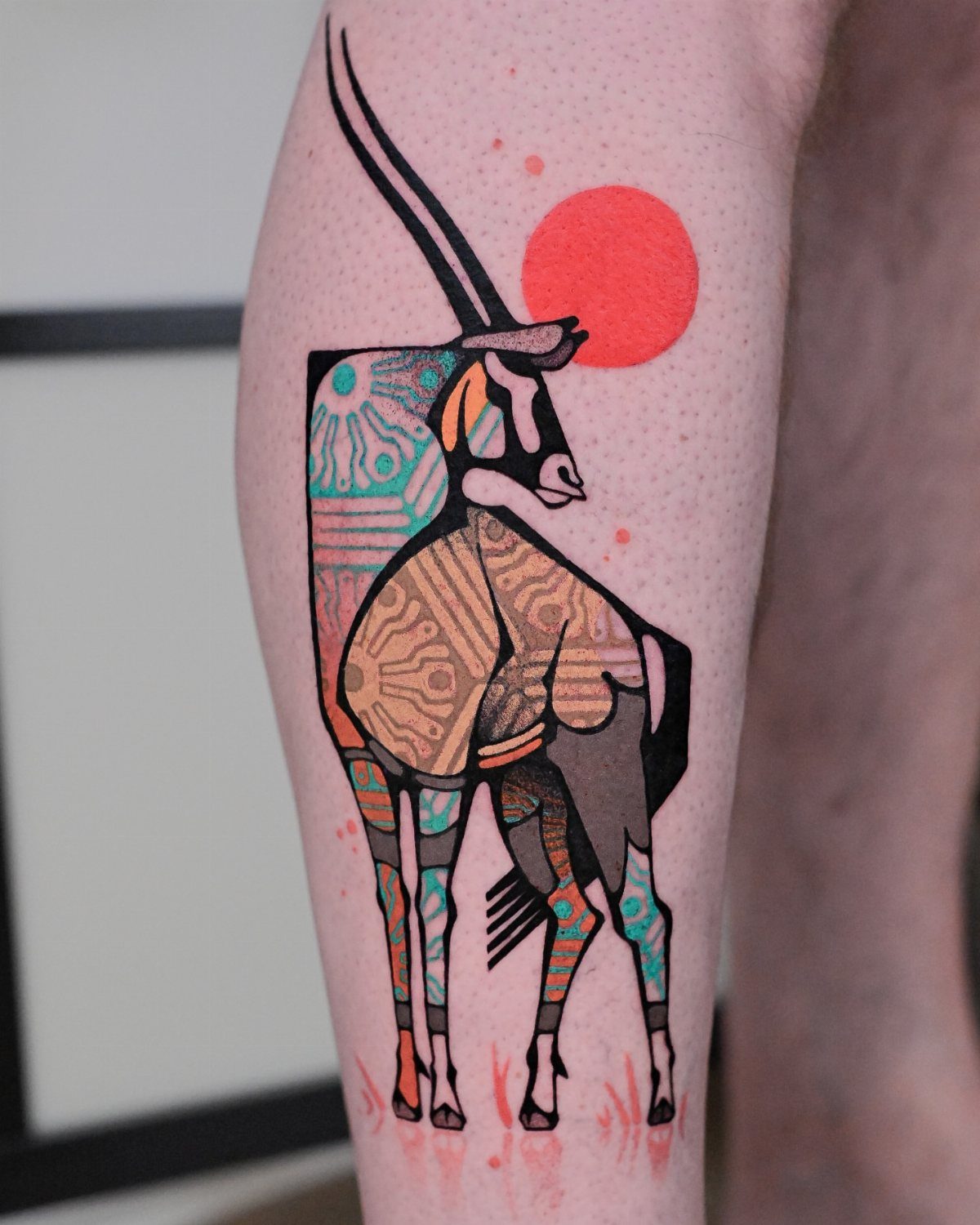
Breaking an animal down into polygons and straight edges gives you a recognizable form without realism. This oryx holds its shape through triangles and layered planes instead of shading or fur texture.
The approach scales better than photorealistic animals. Geometric forms stay readable as the tattoo ages, and the hard edges hold ink more reliably than gradients.
Color here is minimal, just the red sun, which draws the eye straight to the line work. Most geometric animals stay black ink only, since the structure carries the design.
8. Geometric Tattoo Placement
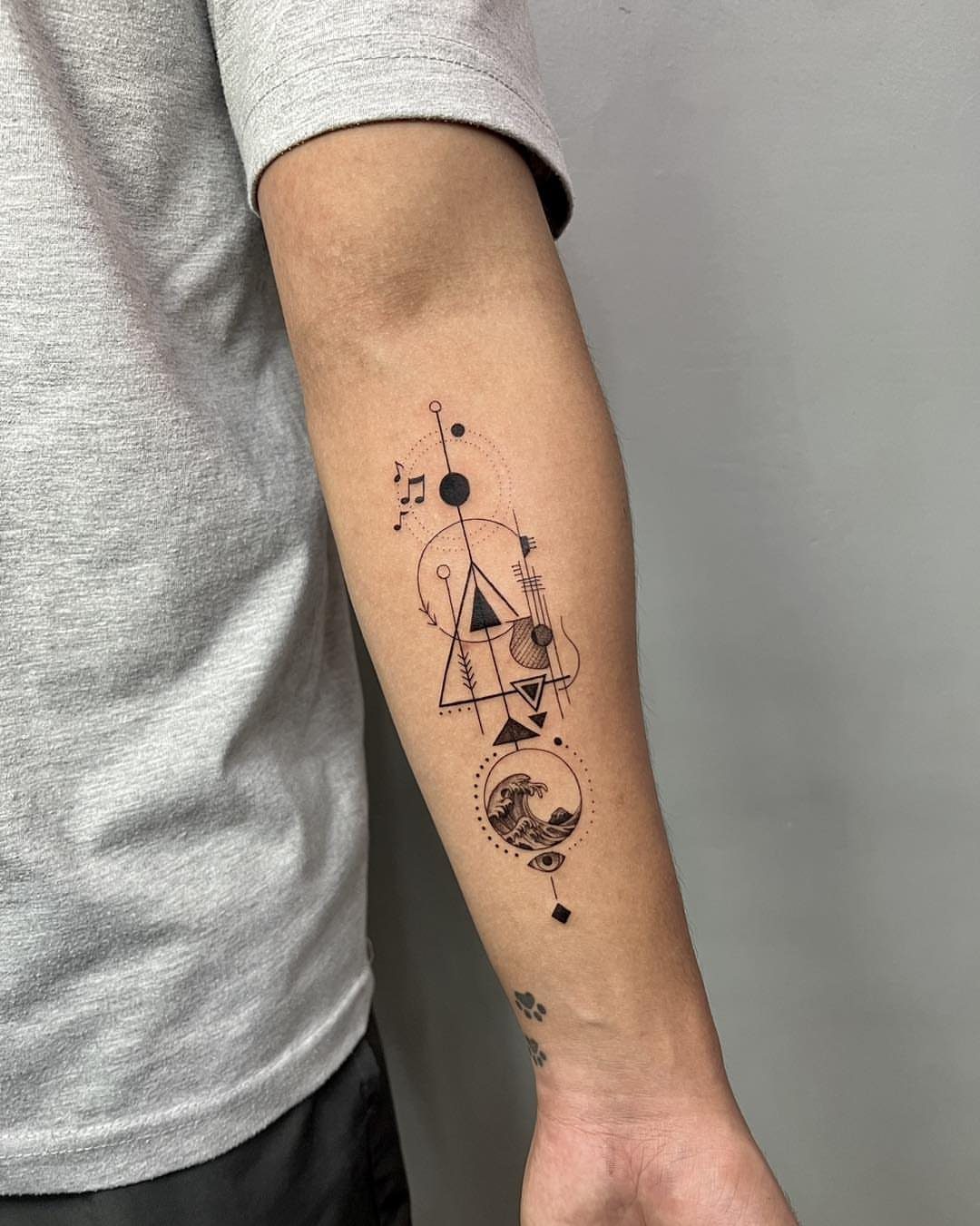
Geometric designs work anywhere, but long shapes favor long surfaces. This forearm runs vertical geometry down the length of the arm, which keeps the composition intact when the wrist rotates.
Circles and radial patterns suit rounded areas like shoulders, while angular designs fit flat planes like the chest or outer thigh.
Inner forearms show the tattoo to you more than to others, which matters if the design is something you want to see daily. The skin here is thinner, so expect sharper pain than the outer arm.
9. Geometric Mountain Range
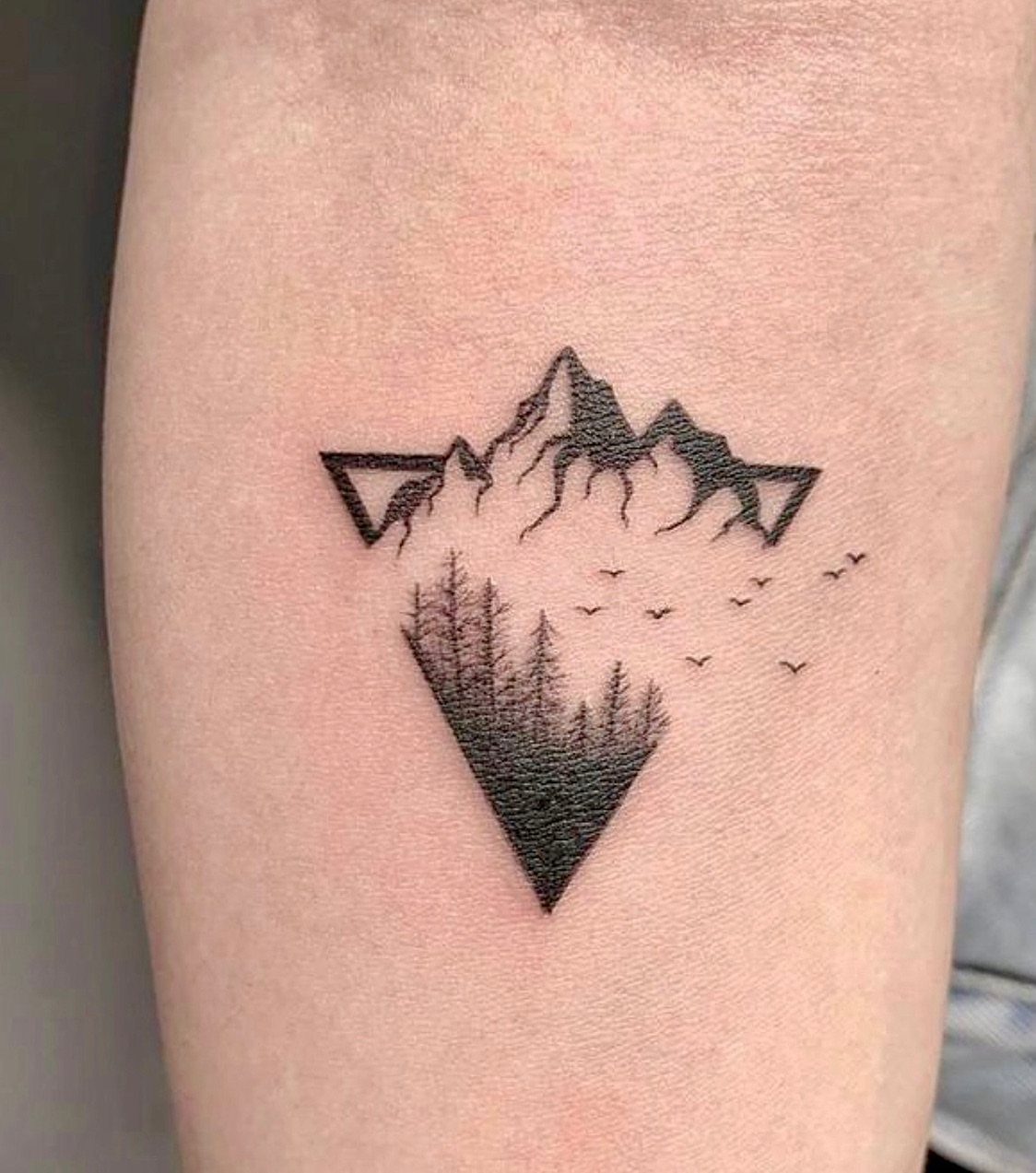
Peaks reduced to stacked triangles read as mountains without needing shading or atmospheric perspective. The diamond frame holds the scene and separates it from the rest of the arm.
Framing a landscape inside a geometric border makes the tattoo modular. You can add more framed scenes later without them bleeding into each other.
Forearms give enough width for a diamond this size. The flat plane between wrist and elbow keeps the frame level, so the composition does not warp when your arm bends.
10. Optical Illusion Forearm Tattoo
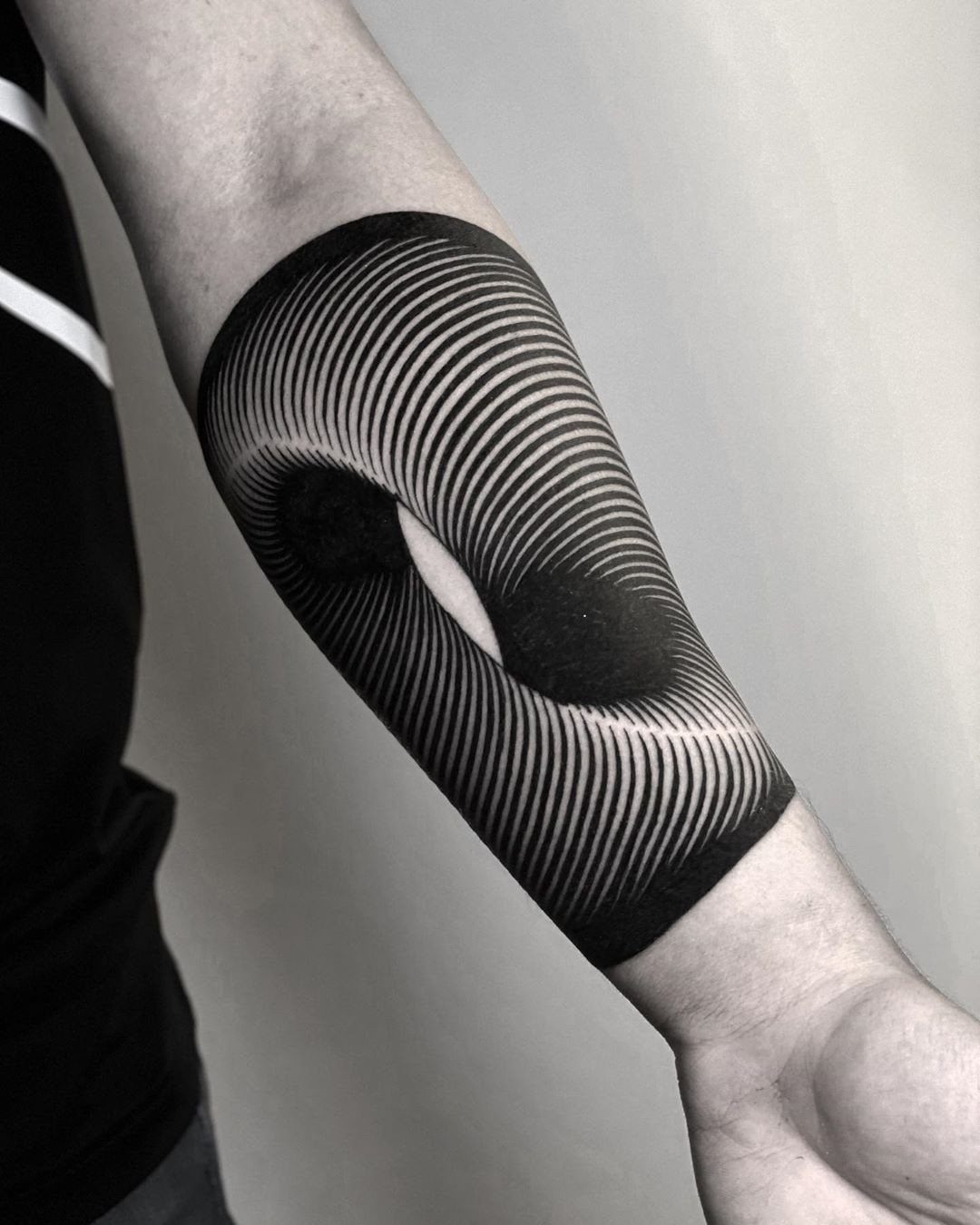
Curved parallel lines spaced at the right intervals create depth where there is none. This hole effect depends on consistent spacing and smooth curves, so the design needs a steady hand.
The illusion holds best when viewed straight on. From the side or at an angle, the effect flattens but the geometry still reads.
Adding gray shading can enhance the depth, but clean black lines are enough if the spacing is right.
11. Valknut Hand Tattoo
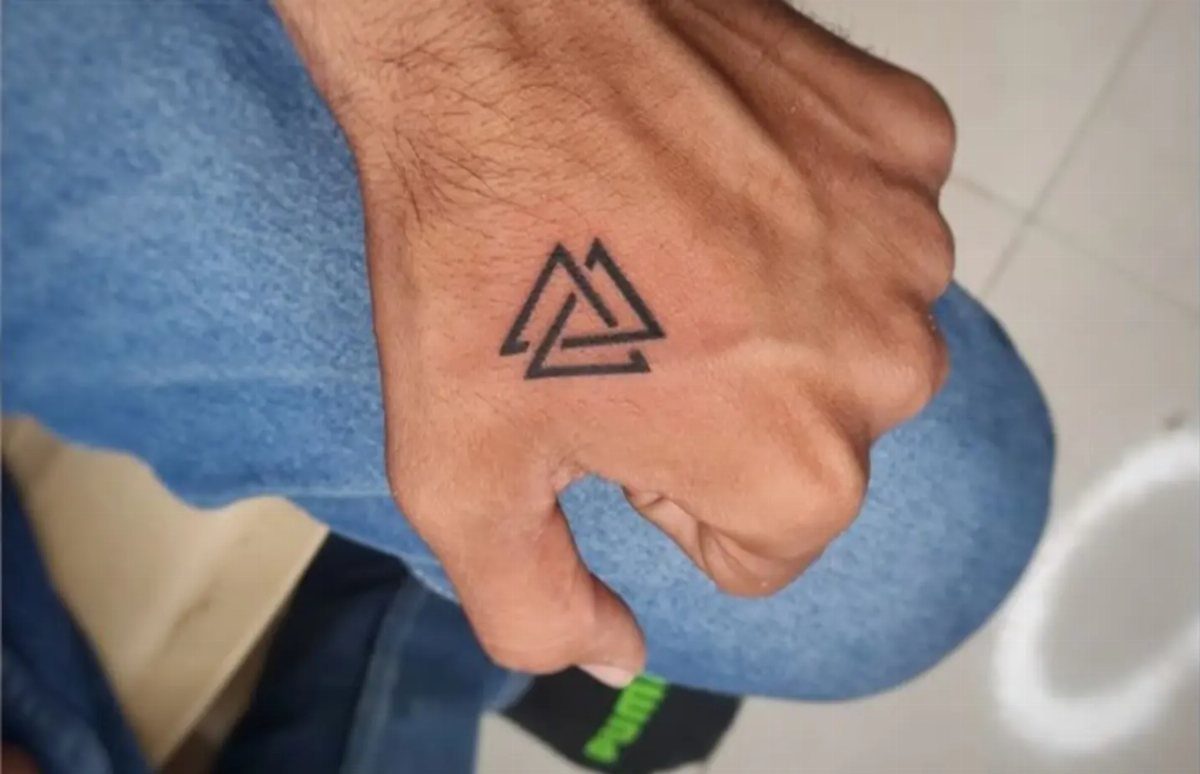
3 interlocking triangles form the Valknut, a Norse symbol tied to Odin and the afterlife. The triangles weave through each other without breaking, which takes precision to ink cleanly.
Hand tattoos need more touch-ups than other placements because skin here sheds constantly and sees more sun. Expect touch-ups every few years to keep the lines sharp.
Hands are high-visibility. A tattoo here is visible in most professional settings, so consider that before committing to the placement.
12. Full Leg Geometric Tattoo
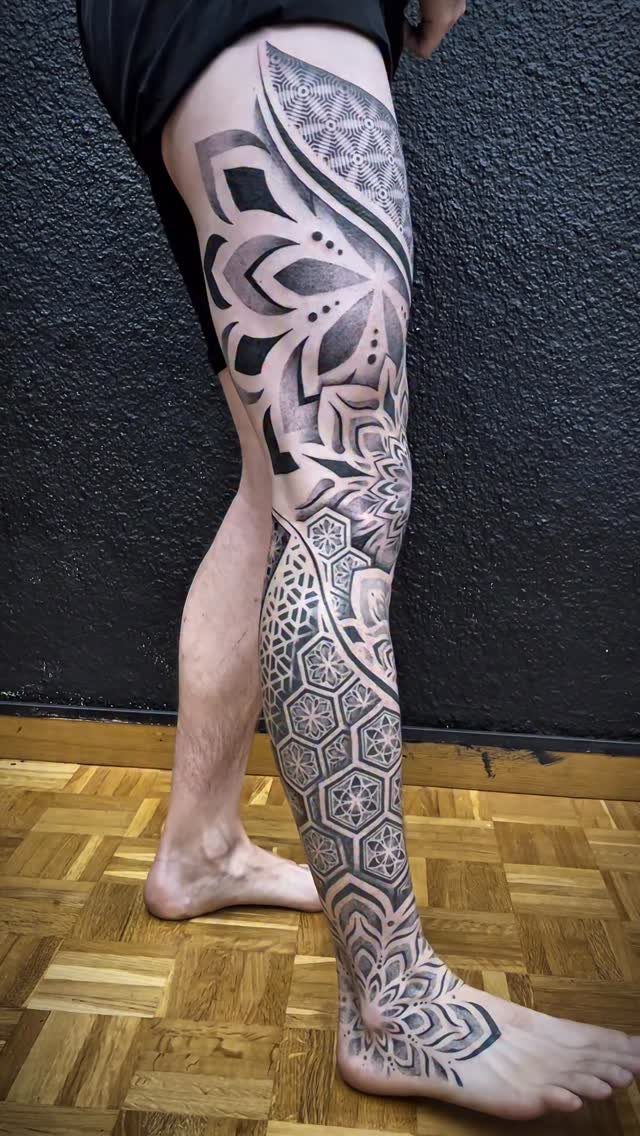
Covering the entire leg from thigh to ankle requires multiple sessions. This piece combines mandalas, honeycomb grids and abstract geometry into one cohesive flow.
The leg’s length lets you stack different patterns without them competing. Mandalas anchor the knee and thigh, while repeating patterns like hexagons fill longer sections.
A full leg is a commitment in time and cost.
Each session runs several hours, and the total cost typically hits several thousand dollars. Healing between sessions takes a few weeks.
13. Geometric Neck Tattoo
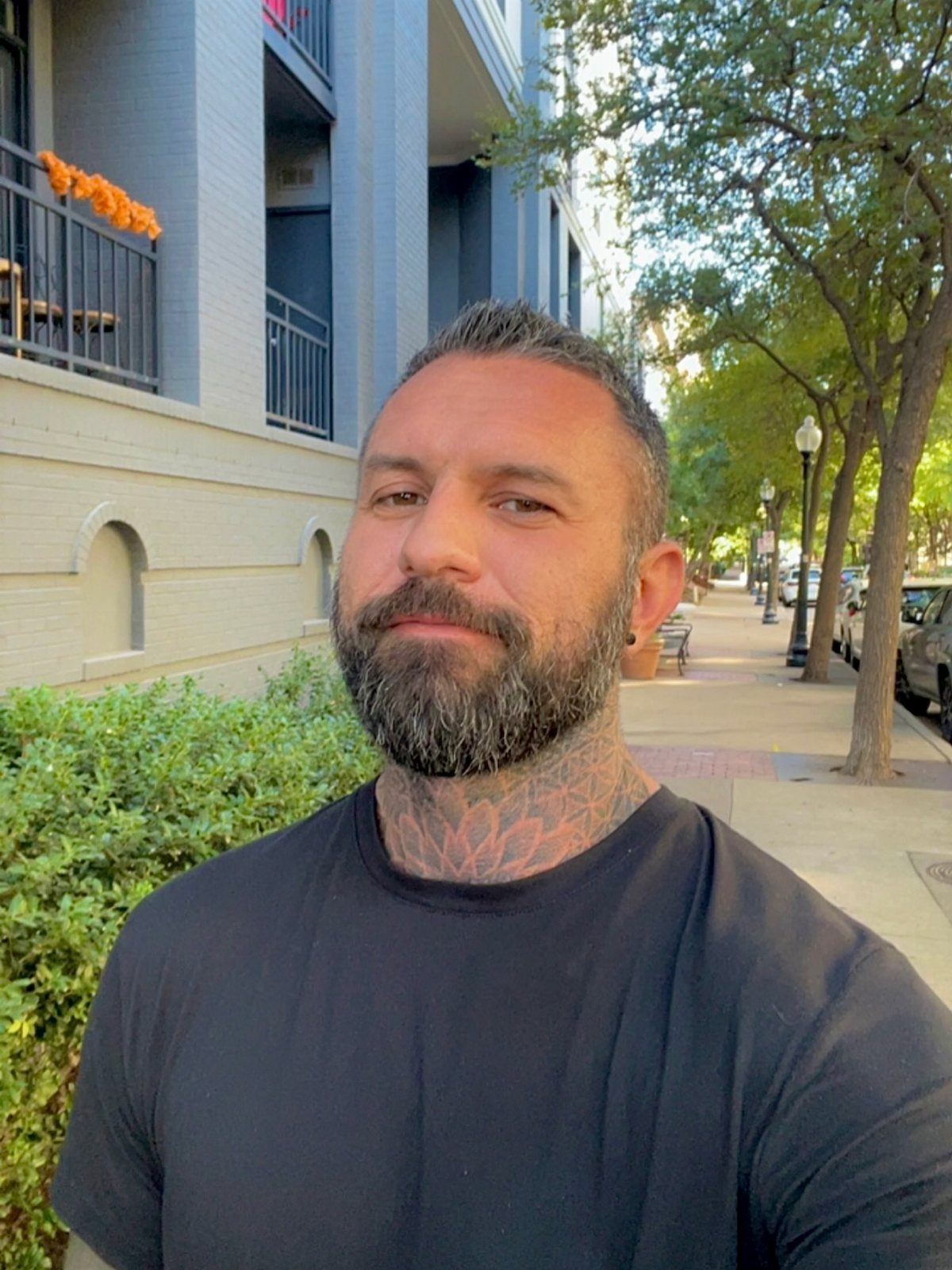
A neck tattoo sits where it cannot be hidden. The throat and front of the neck are visible in nearly every outfit, and most jobs will not allow a tattoo this prominent.
The mandala here covers the side and front of the neck, wrapping around the curve. Skin on the neck is thin, and the throat sits close to bone, which makes this one of the more painful placements.
Black ink stays sharp longer than color, and the repeating symmetry of a mandala holds up better than fine detail as the tattoo ages.
14. 3D Polyhedron Arm Tattoo
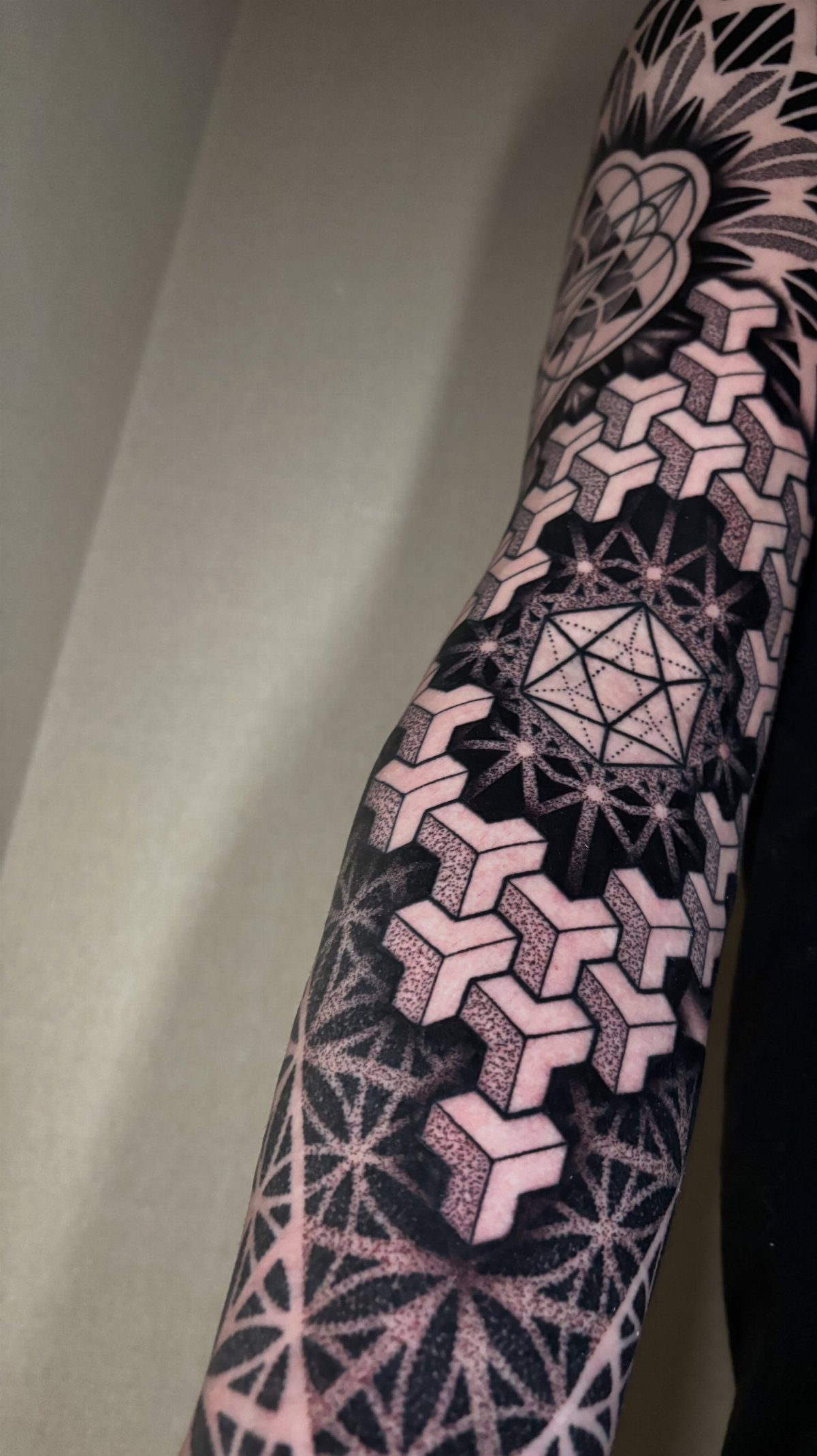
Shading turns flat geometry into depth. The icosahedron here looks three-dimensional because the dotwork darkens on one side and fades on the other, mimicking light and shadow.
The cubic patterns stacked beside it use the same shading technique to create volume.
Dotwork takes longer to ink than solid black because the artist builds tone with individual dots, but it ages smoothly since there are no hard edges to blur.
Forearms give enough flat surface for geometric detail like this to stay readable. Curved placements distort the perspective.
15. 3D Spherical Grid Tattoo
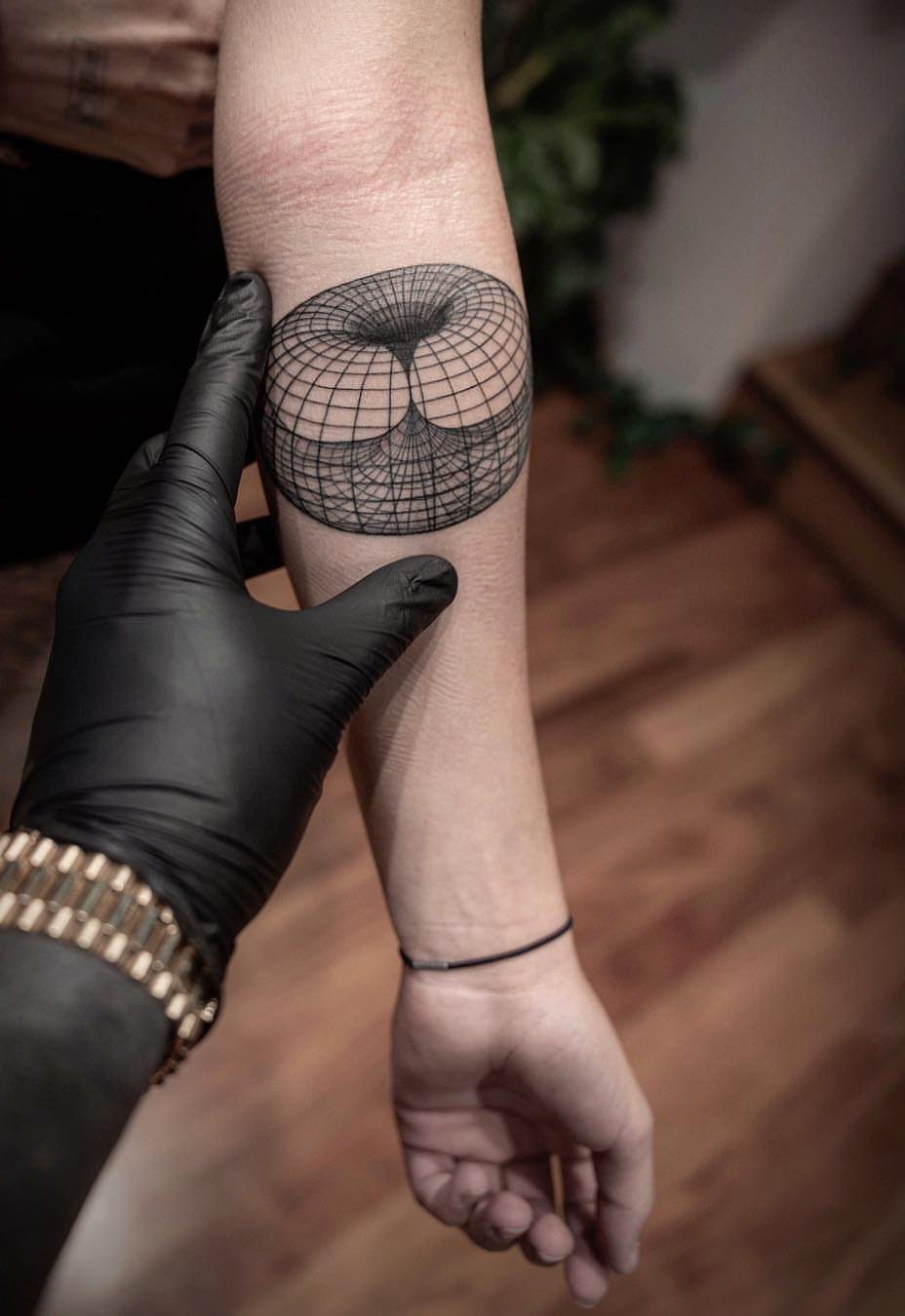
A spherical grid made of intersecting lines creates the illusion of a ball sitting on the skin. The lines curve at the right intervals to suggest depth, and the sphere appears to rise off the forearm.
This design depends on the symmetry and spacing staying precise. One uneven line breaks the effect.
Forearms work well for spherical designs because the flat surface keeps the grid from distorting when your wrist moves. The skin here is easier to tattoo cleanly than areas with more muscle shift.
16. Geometric Chest and Body Tattoo
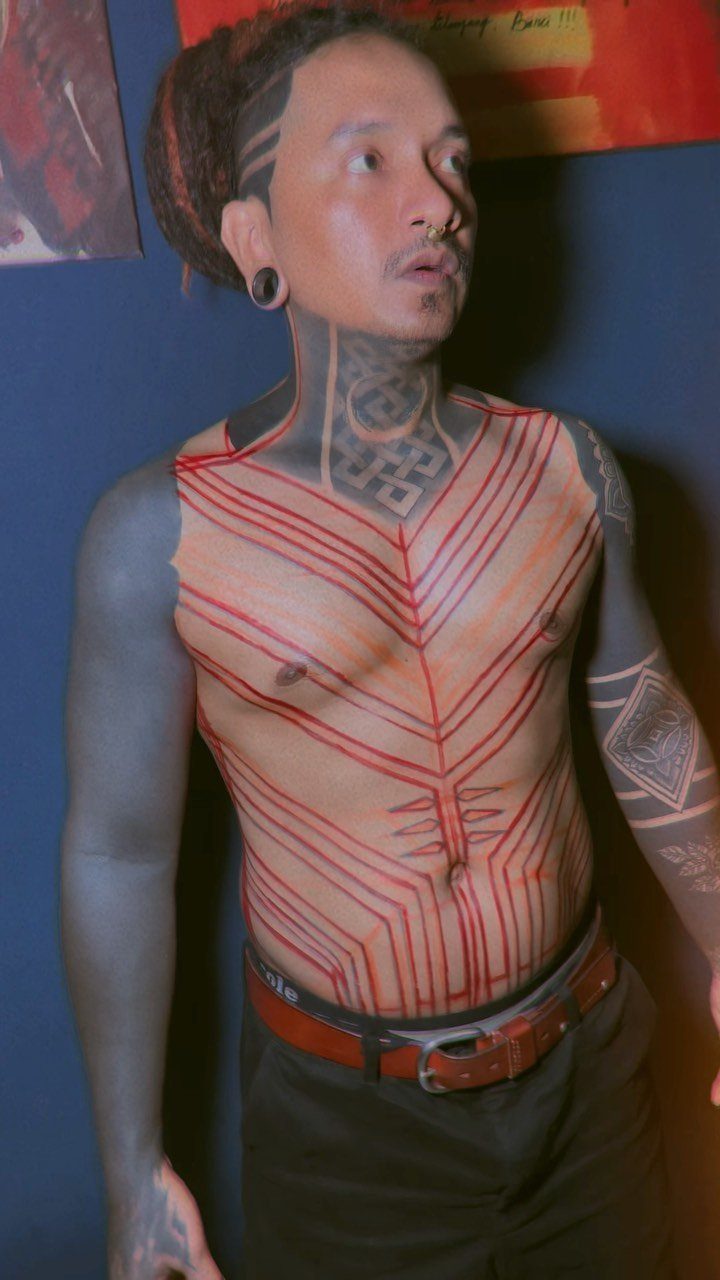
Covering the chest, neck and arms in connected geometric patterns requires multiple sessions and a willingness to live with high-visibility ink.
Red and black together create more visual weight than black alone, and the contrast makes the lines stand out from a distance.
Linear geometry like this follows the body’s natural lines. The chest piece anchors the design, and the patterns extend outward onto the neck and down the arms.
This level of coverage takes years to complete.
You’ll wait several weeks between appointments while each new section heals. Cost runs into the thousands.
Choosing a Geometric Tattoo
Geometric tattooing is one of the few styles where a specialist and someone who does a bit of everything produce work that looks entirely different.
Fresh line work always looks crisp. A piece that’s been settled for a year shows you whether the lines stay crisp or blur.
Consider what the shapes mean to you and how they’ll sit on the body part you’re choosing. A good artist can tighten up your concept before the needle starts.
Geometric sessions take time because precision can’t be rushed, and sitting for hours is where the real discomfort lives.
Stick to your artist’s aftercare instructions, keep it out of direct sun for the first few weeks, and if you see spreading redness, heat or anything leaking, see a doctor.
Geometric Tattoo Aging
Fine-line geometric pieces lose definition faster than bolder work because thin lines gain a little width as they age.
Every tattoo fades, and sun does most of the damage. Good aftercare and sunscreen keep the ink looking sharp longer.
Small flaws blend into the pattern instead of standing out the way they would in realism or portraiture.
Pain and Duration of Tattoos
Pain depends on where you put it and how much discomfort you can tolerate, same as any other tattoo.
Duration varies by design complexity and size. A small triangle might take an hour; a sleeve or full leg can stretch across 6 or 8 sessions over several months.
Frequently Asked Questions
What are some good tattoo ideas for men?
Bold blackwork geometric designs hold their definition for decades and age better than fine-line pieces.
Mandalas on the shoulder, geometric sleeves, polyhedrons with dotwork shading, and angular animal forms all work well for men who want technical precision. If you want something quieter, minimalist triangles or framed mountain ranges stay readable without dominating your look.
What do geometric tattoo designs symbolize?
Geometric tattoos symbolize balance, symmetry and harmony, often representing unity and the mathematical order underlying natural forms. The Fibonacci spiral and similar sacred geometry shapes trace back thousands of years and carry spiritual weight across cultures.
Most geometric work focuses on visual structure itself rather than hidden symbolism, letting the precision and mathematical form speak on their own.
Are geometric tattoos more expensive?
Shop rates stay the same, but a geometric piece takes longer because the artist cannot rush a straight line.
Small pieces take 1–2 hours, medium forearm designs run 6–10 hours, and full sleeves or legs stretch across multiple sessions totaling several thousand dollars.
How long does a geometric tattoo take?
A small geometric piece like interlocking triangles takes 1–2 hours, while a medium forearm design runs several hours in one session.
Full sleeves require 6–8 sessions spread over months, and a full leg can hit 20–40 hours total. Geometric sessions take longer than organic designs because the precision cannot be rushed, and one uneven line breaks the pattern.





