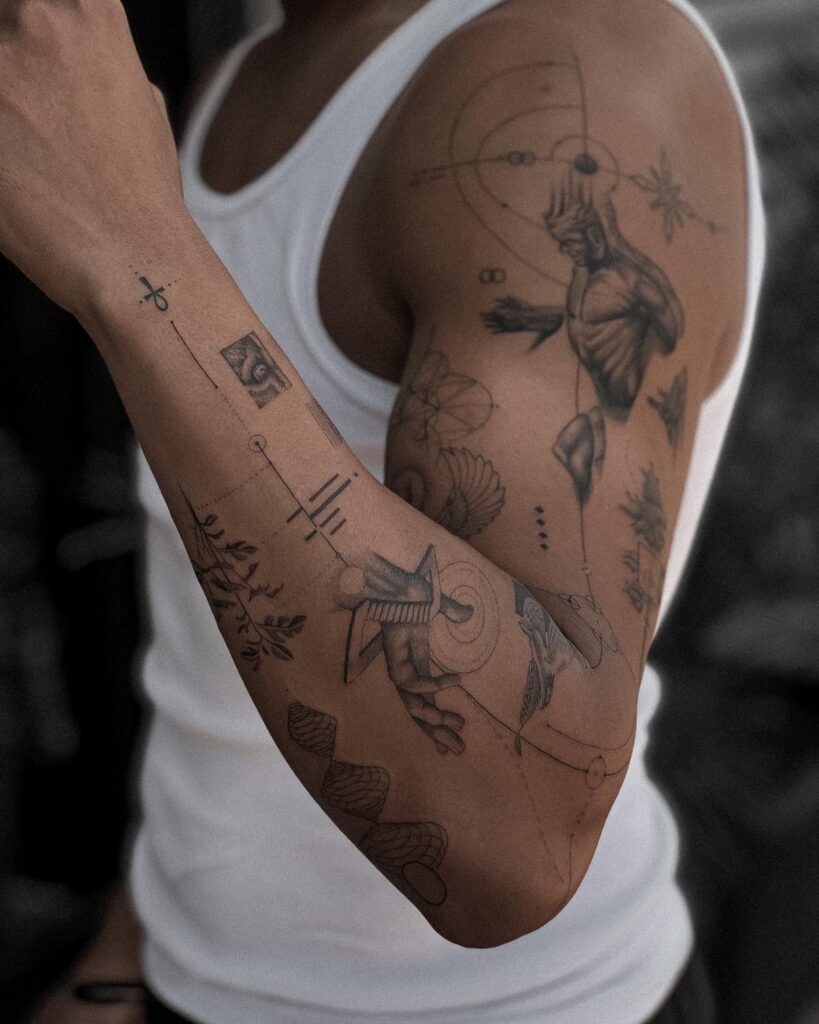
Upper arm designs start around $150 for minimalist work and run past $1,000 for a detailed sleeve that layers multiple elements across the full length.
Placement decides how much the piece shows: outer arm and forearm stay visible in short sleeves, while the upper arm and inner bicep give you control over when the ink reads.
Pain level follows nerve density and bone proximity, so the outer arm and shoulder register as moderate, the inner bicep and elbow higher, and the forearm somewhere between the two.
1. Lion Tattoo
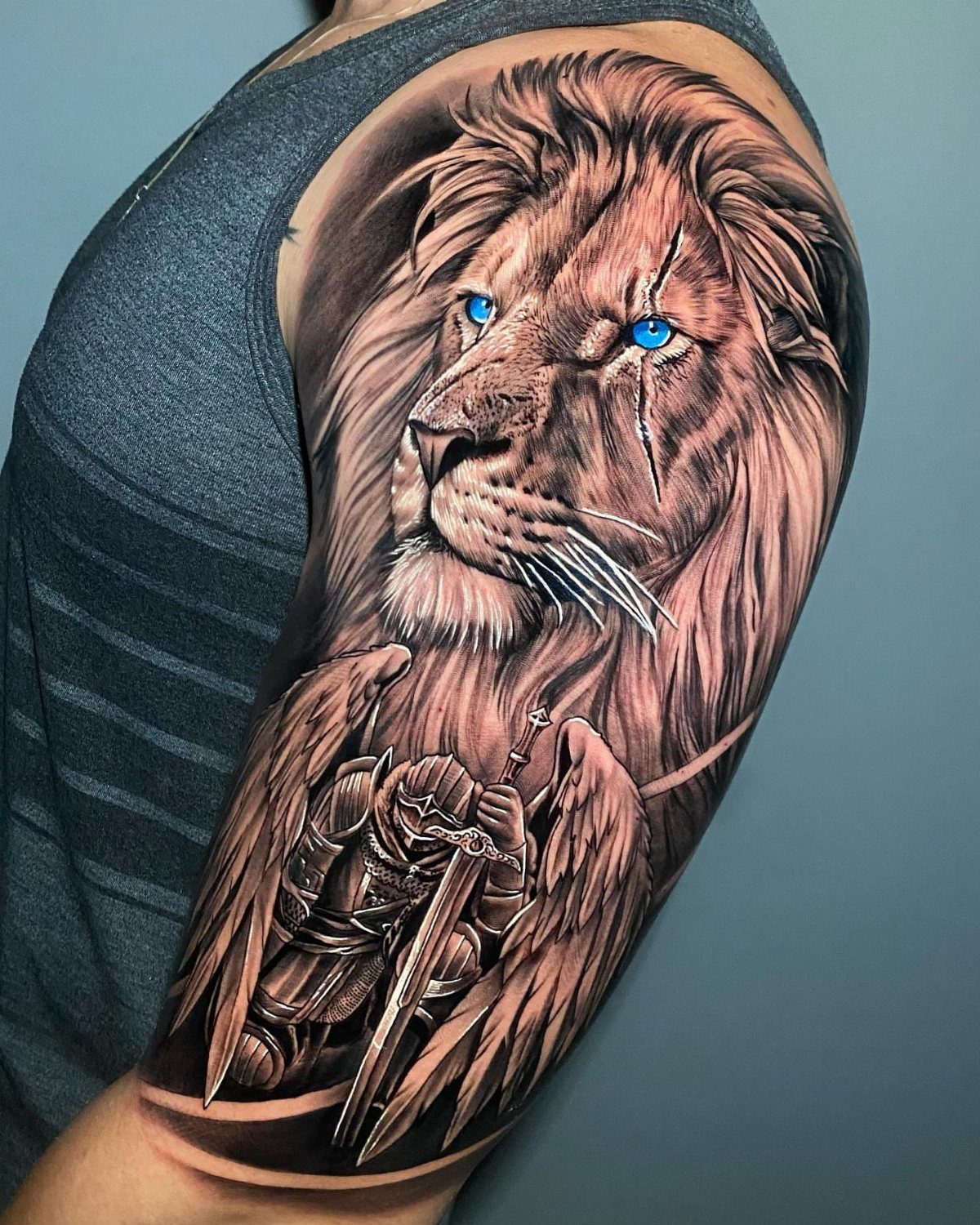
A lion centered on the upper arm gives you a symbol built for strength and leadership. The mane gives the artist room to work with layered shading, and the face takes detail well in black and grey.
Pairing it with another figure, like an armored angel or a weapon, adds a second layer of meaning. Blue eyes lift the realism and make the piece more personal without changing the overall read.
Upper arm placement keeps the whole design visible in one frame and heals faster than areas that bend more often.
2. Wolf Tattoo
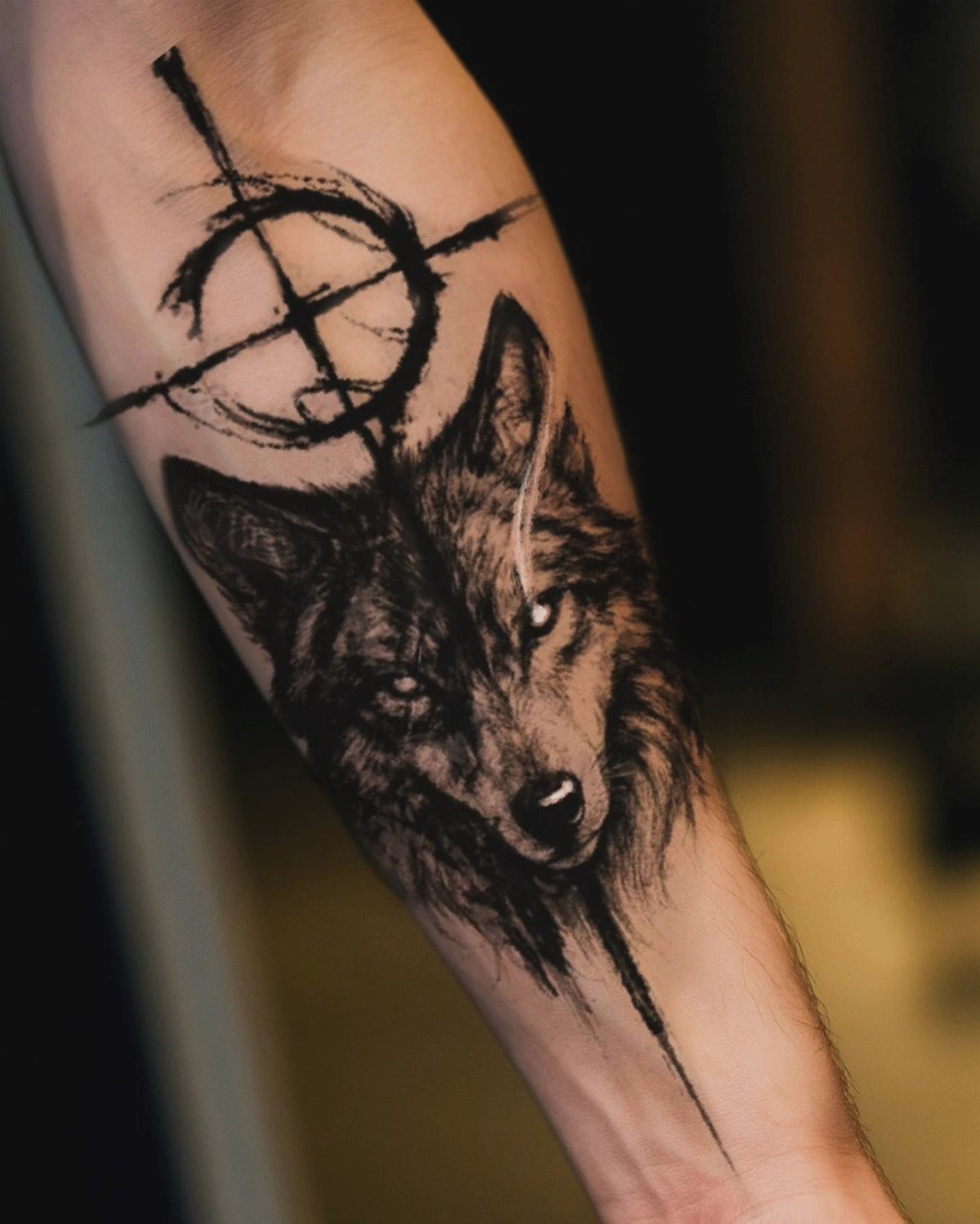
A wolf head on the forearm reads as loyalty and survival instinct. The fur texture works well in black and grey realism, and the head alone gives you a complete image without needing a full scene.
Adding a geometric element above or below the wolf, like a circle or abstract linework, breaks up the organic detail and gives the design structure.
Forearm placement means the piece faces outward when your arm is relaxed, so the wolf reads right-side-up to someone across from you.
3. Dragon Tattoo
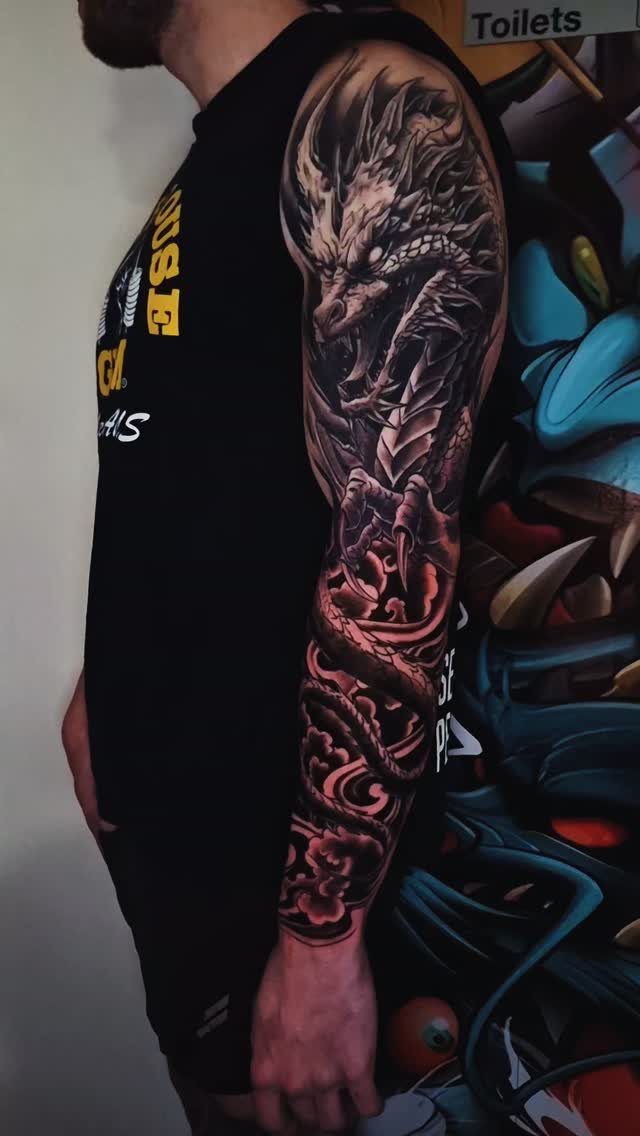
A dragon wrapping around the upper arm uses the muscle curve to give the design movement. The body can coil partway or spiral all the way around, and the head usually sits on the outer arm where it stays visible.
Dragons fit Eastern or Western styles, so you can match the look to what you already have or plan to add later.
Upper arm placement gives you enough space for a full dragon without committing to a sleeve, and the piece reads clearly from any angle.
4. Arm Tattoo Sleeve
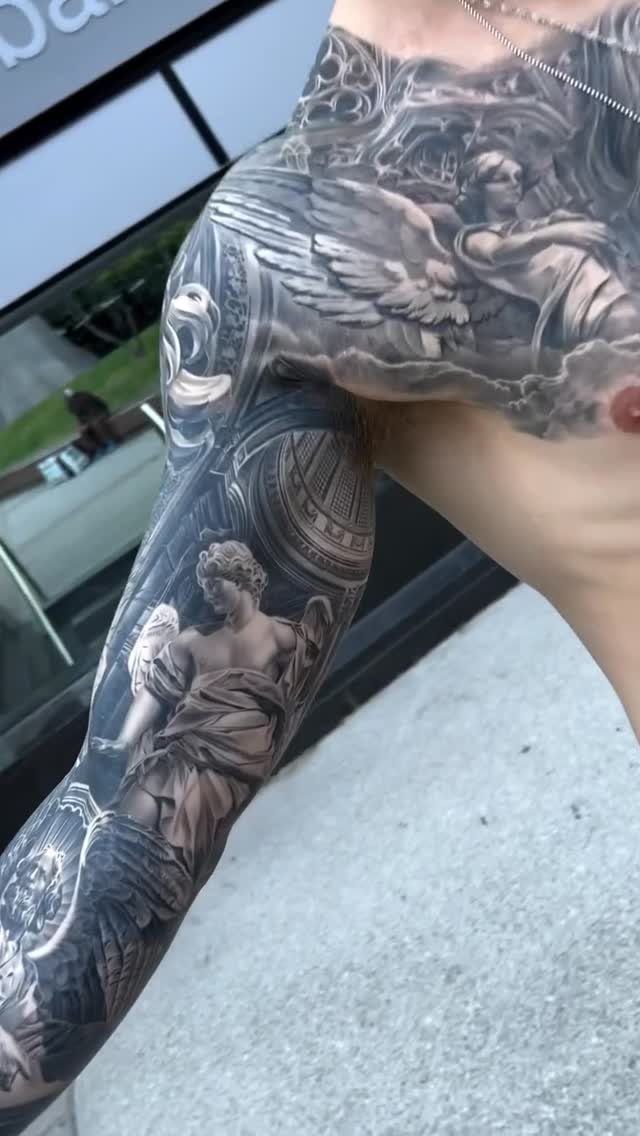
A sleeve covers the arm from shoulder to wrist in one continuous design.
It gives you more space to layer multiple elements, like figures, architecture, or natural forms, and the whole piece reads as a single composition instead of separate images.
Black and grey shading ties everything together and keeps the level of detail consistent across the arm. Classical figures and wings give you a religious or mythological theme that scales well over a large area.
A sleeve takes multiple sessions with healing time between them, and costs more than smaller pieces because of the coverage and hours involved.
5. Tribal Tattoo
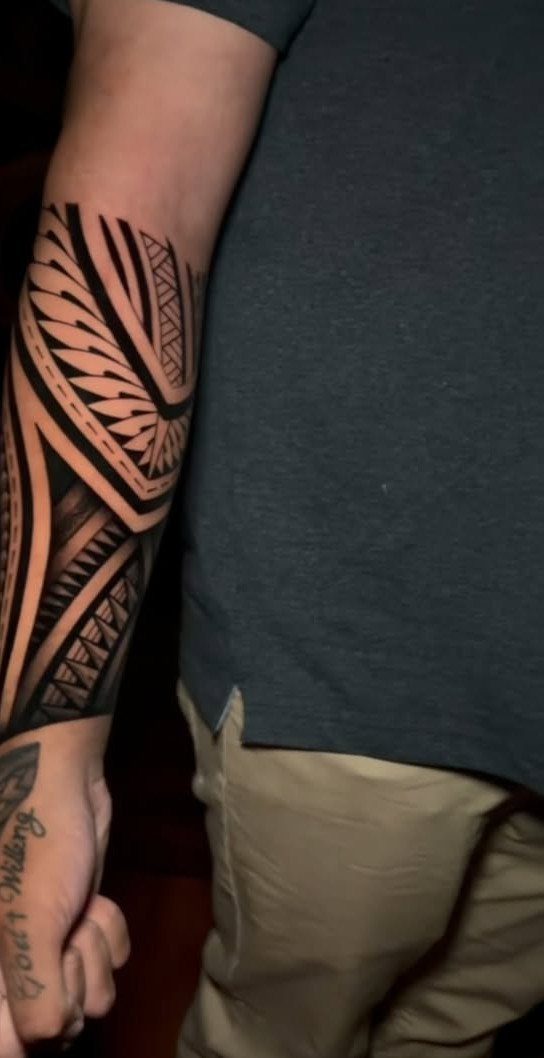
Tribal designs use bold black lines and geometric shapes rooted in Pacific Islander, Maori, or Native American traditions.
The patterns often carry specific meanings tied to lineage, status, or spiritual beliefs, so choosing a design from your own background keeps the symbolism accurate.
The forearm gives you a flat surface that shows the pattern clearly, and the bold black ink holds up well over time without needing touch-ups as often as fine line or color work.
If you’re not connected to the culture, a modern geometric design gives you a similar bold look without borrowing closed symbols.
6. Angel Tattoo
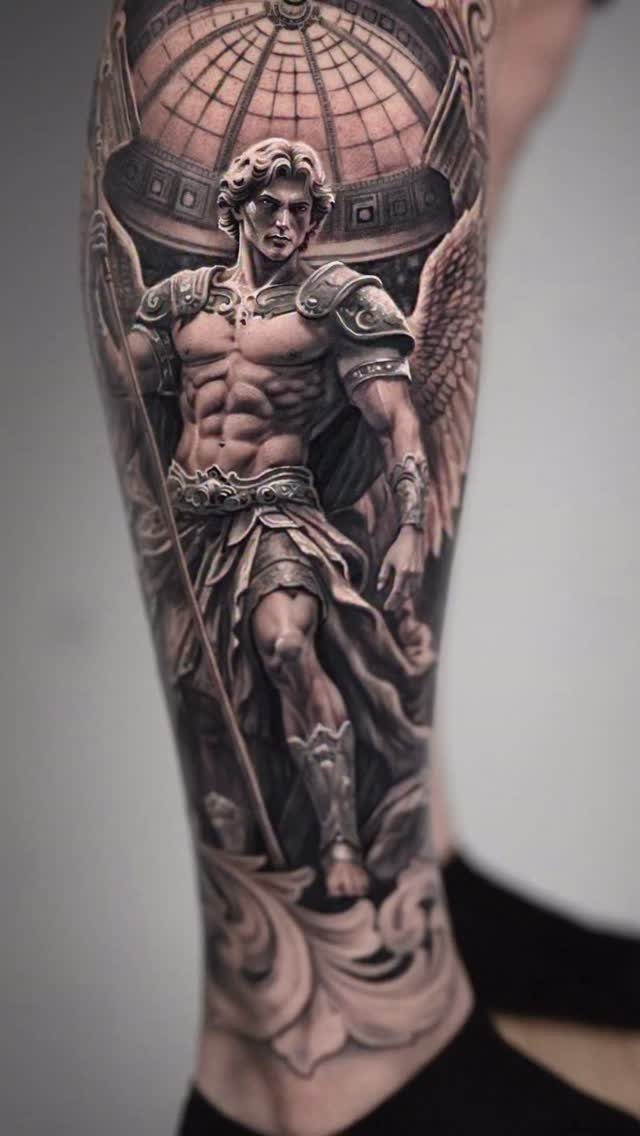
An angel in armor on the arm brings together protection and faith. The wings give the piece vertical structure, and armor detail adds texture that fills the space without looking empty.
Placing the figure under an architectural element, like a dome or archway, frames the angel and gives the design depth. Black and grey realism suits this style because it keeps the focus on form and light instead of color.
Upper arm placement works well because the muscle gives the figure dimension, and the piece stays covered or visible depending on what you wear.
7. Geometric Tattoo
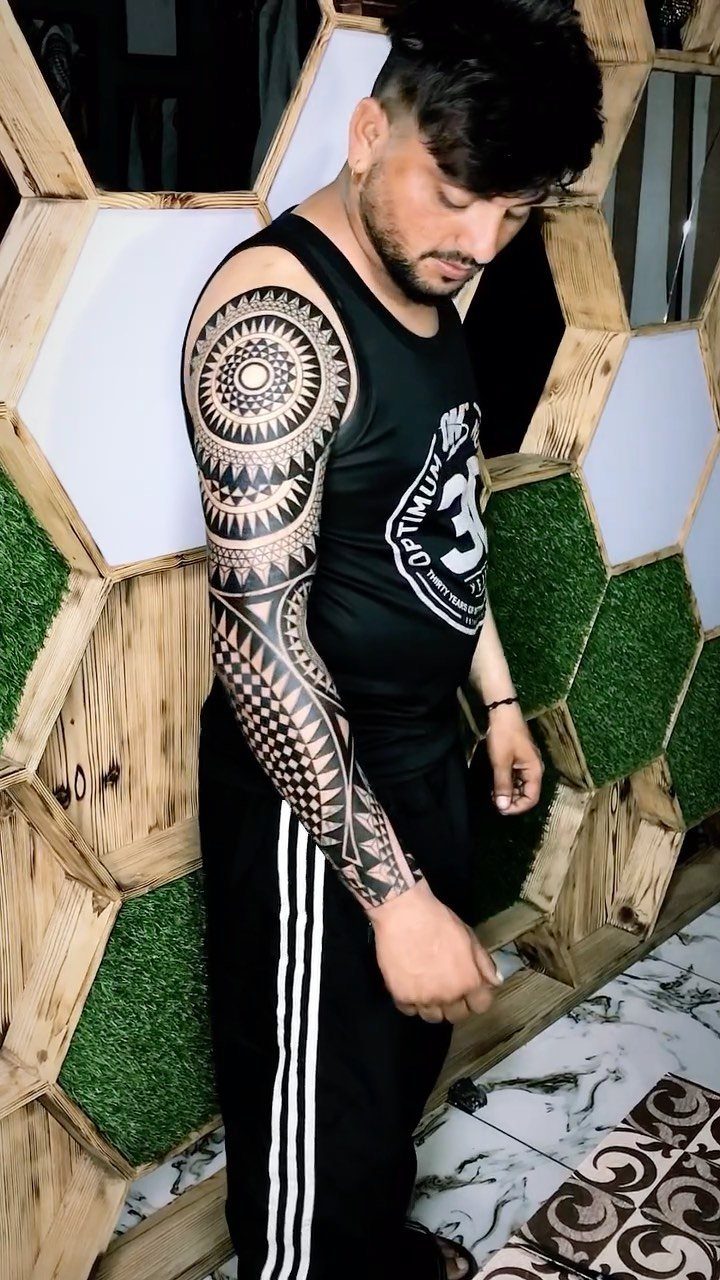
Geometric patterns rely on repeating shapes and symmetry, so the design stays balanced no matter how far you take it. Triangles, hexagons, and dot work build up a full sleeve or sit alone on the forearm.
Black ink keeps the lines sharp and the shapes readable, and the lack of shading means fewer touch-ups over time. The forearm works well because the flat surface shows the symmetry clearly without distortion.
Placement can expand later by adding more shapes around the original pattern, so you can start small and build out as you go.
8. Skull Tattoo
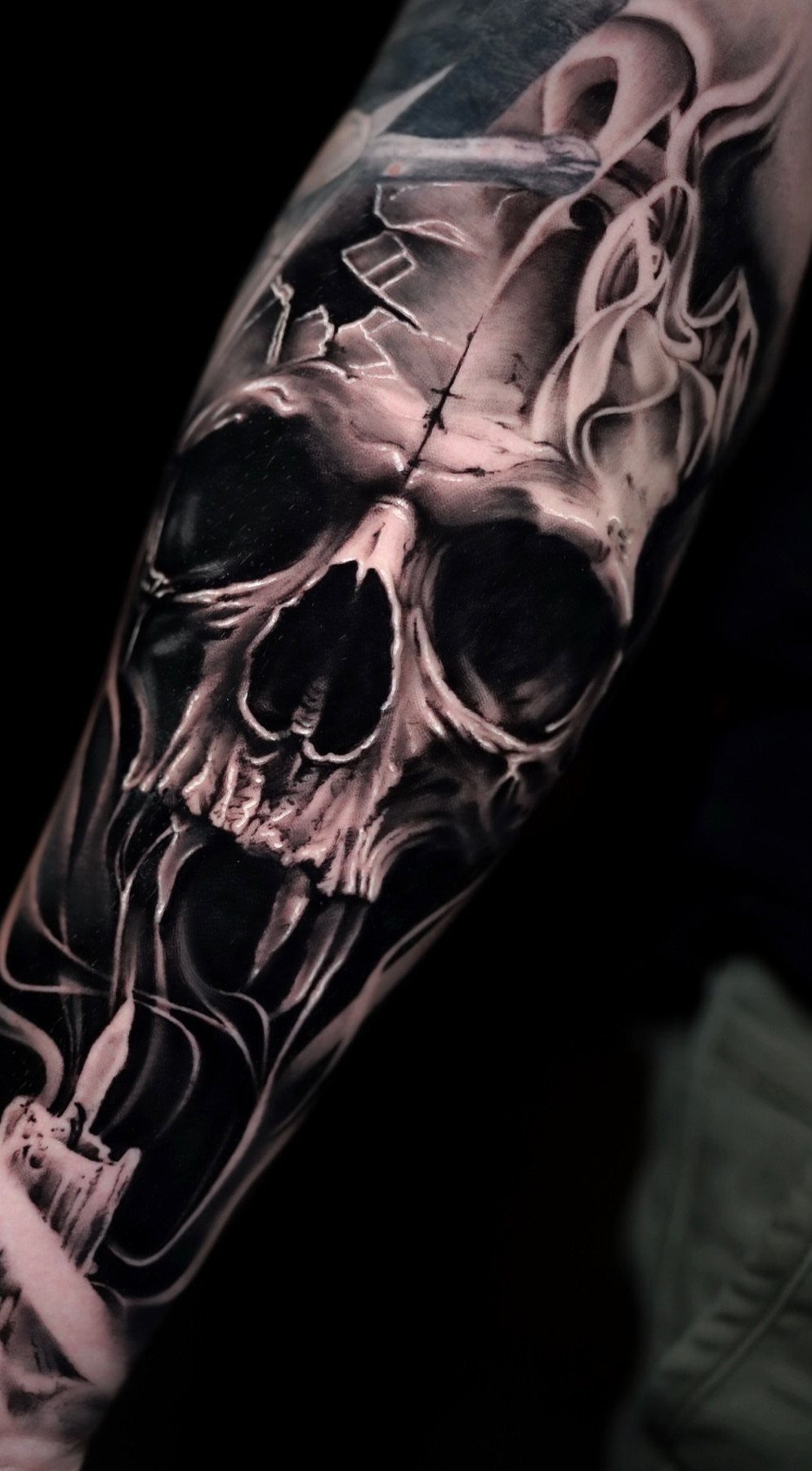
A skull on the arm gives you a symbol that reads as mortality or defiance, depending on how it’s styled.
Shading inside the eye sockets and along the bone structure gives the skull dimension, and the smoke softens the edges without losing the hard detail of the skull itself.
Forearm placement keeps the design visible and heals well because the area flexes less than the inner elbow or wrist.
9. Minimalist Tattoo
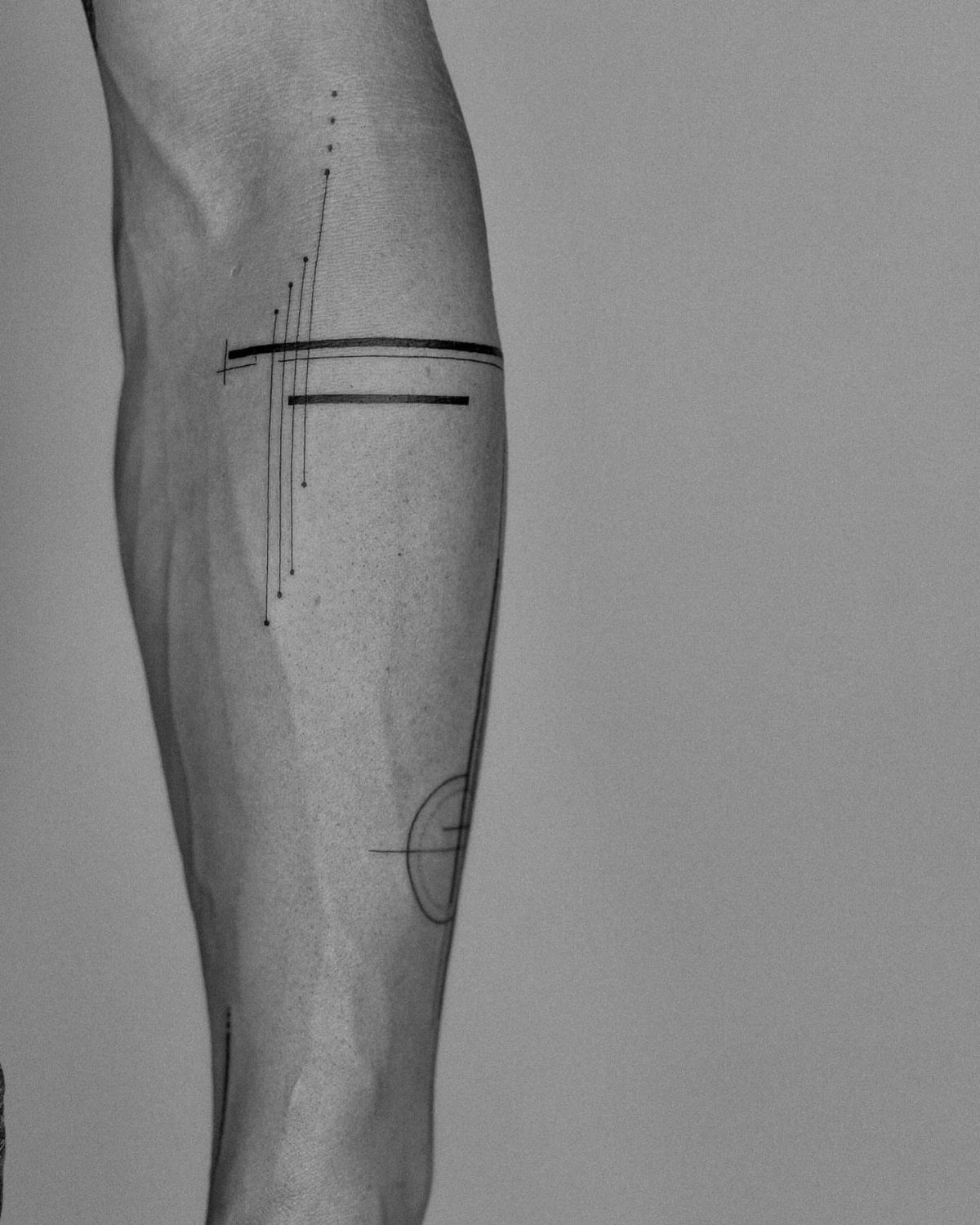
Minimalist tattoos use thin lines and negative space instead of heavy shading. A few dots, a simple geometric shape, or a small line drawing gives you a finished piece without the coverage of a larger design.
The style suits someone who wants ink that stays subtle or who prefers a clean look that won’t compete with other pieces. Black ink holds the lines, and the small scale means shorter sessions and faster healing.
Forearm or upper arm placement works because the skin stays flat and the lines stay crisp over time.
10. Arm Tattoo with Flowers
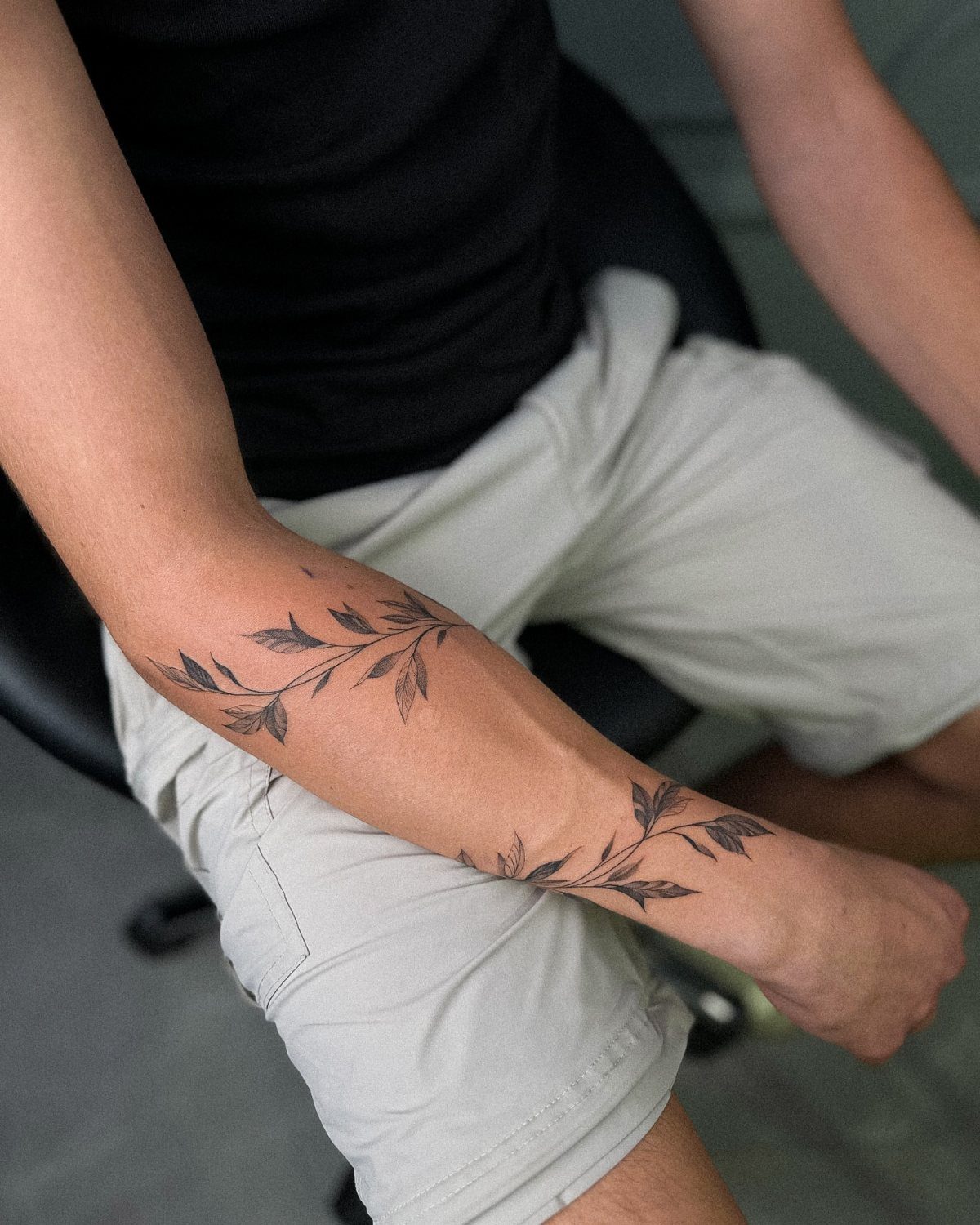
Branch and leaf designs bring natural forms onto the arm without the softness of roses or peonies. Heavy black shading and curved linework keep the piece bold and follow the natural shape of the muscle.
Leaves can wrap partway around the forearm or sit flat on one side, depending on how much coverage you want.
The organic shapes fill space without needing a defined border, so the piece can expand later by adding more branches above or below.
The forearm sits away from waistbands and tight sleeves, which means less friction and a smoother heal.
11. Owl Tattoo
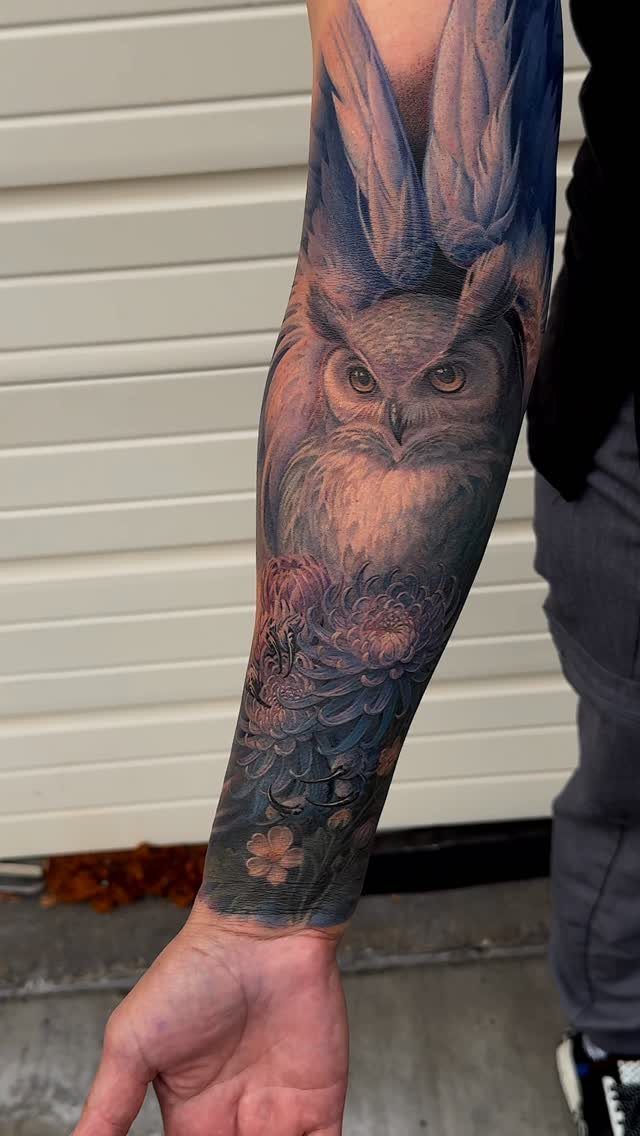
An owl facing forward gives you a detailed focal point with room to add color or keep it in black and grey.
The feather texture takes fine shading well, and the eyes carry most of the expression, so getting that detail right matters.
Adding flowers underneath the owl softens the composition and fills the lower arm without crowding the main figure. Blue tones in the feathers or eyes lift the realism and add depth without full color saturation.
Forearm placement centers the owl where it stays visible, and the vertical shape fits the natural length of the arm.
12. Scorpion Tattoo
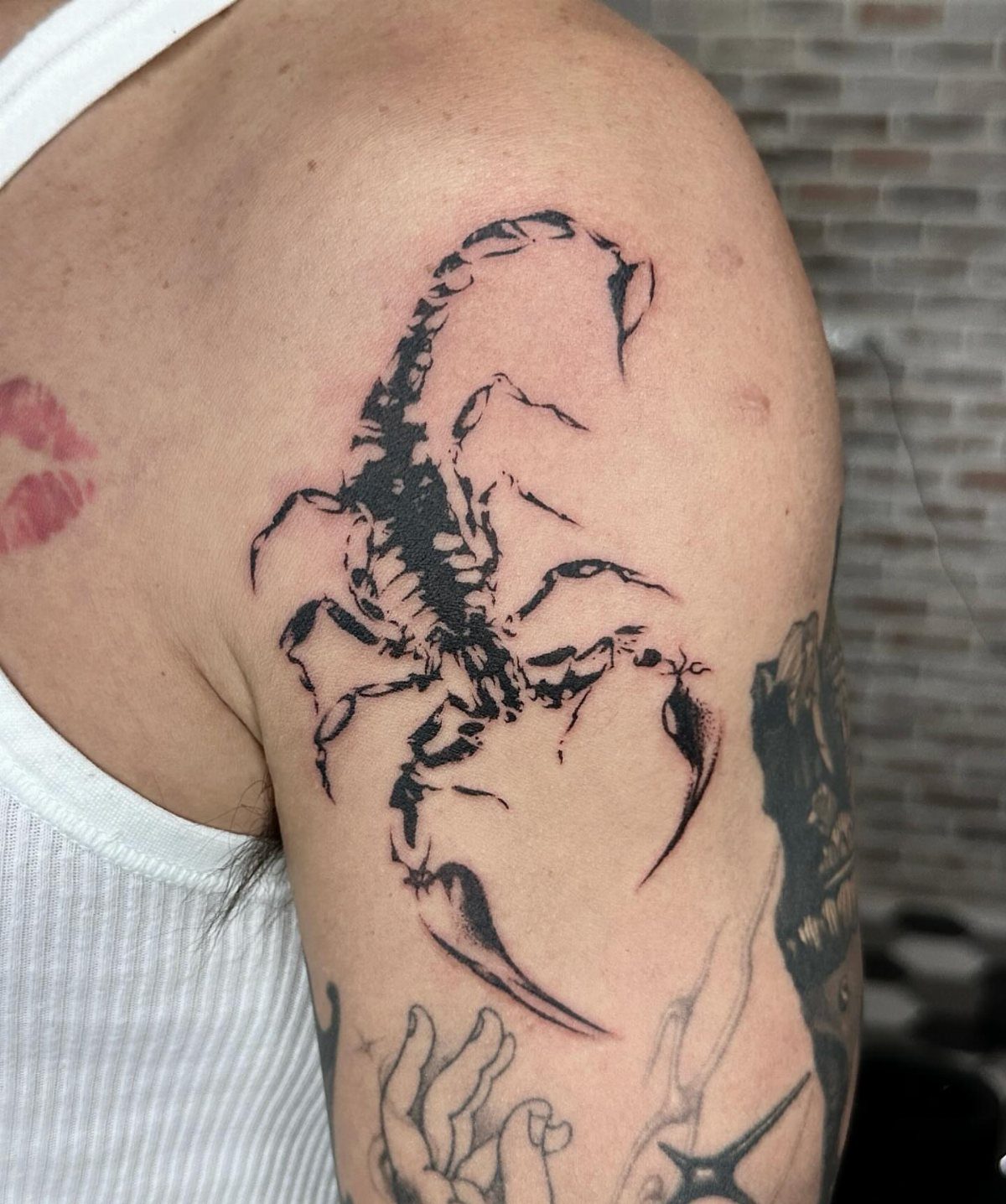
Upper arm and shoulder placement give the scorpion room to spread its claws and curve its tail into a defensive pose.
The pincers and segmented tail add detail that reads clearly in black ink, and the natural curve of the scorpion fits the muscle without needing extra elements.
Upper arm placement keeps the piece visible in short sleeves and lets the tail curve around the shoulder if you want more coverage.
The design scales well, so you can size it to sit alone or pair it with other symbols later.
Black ink holds the hard edges of the exoskeleton and keeps the piece readable as it ages.
13. Realistic Animal Face Arm Tattoo
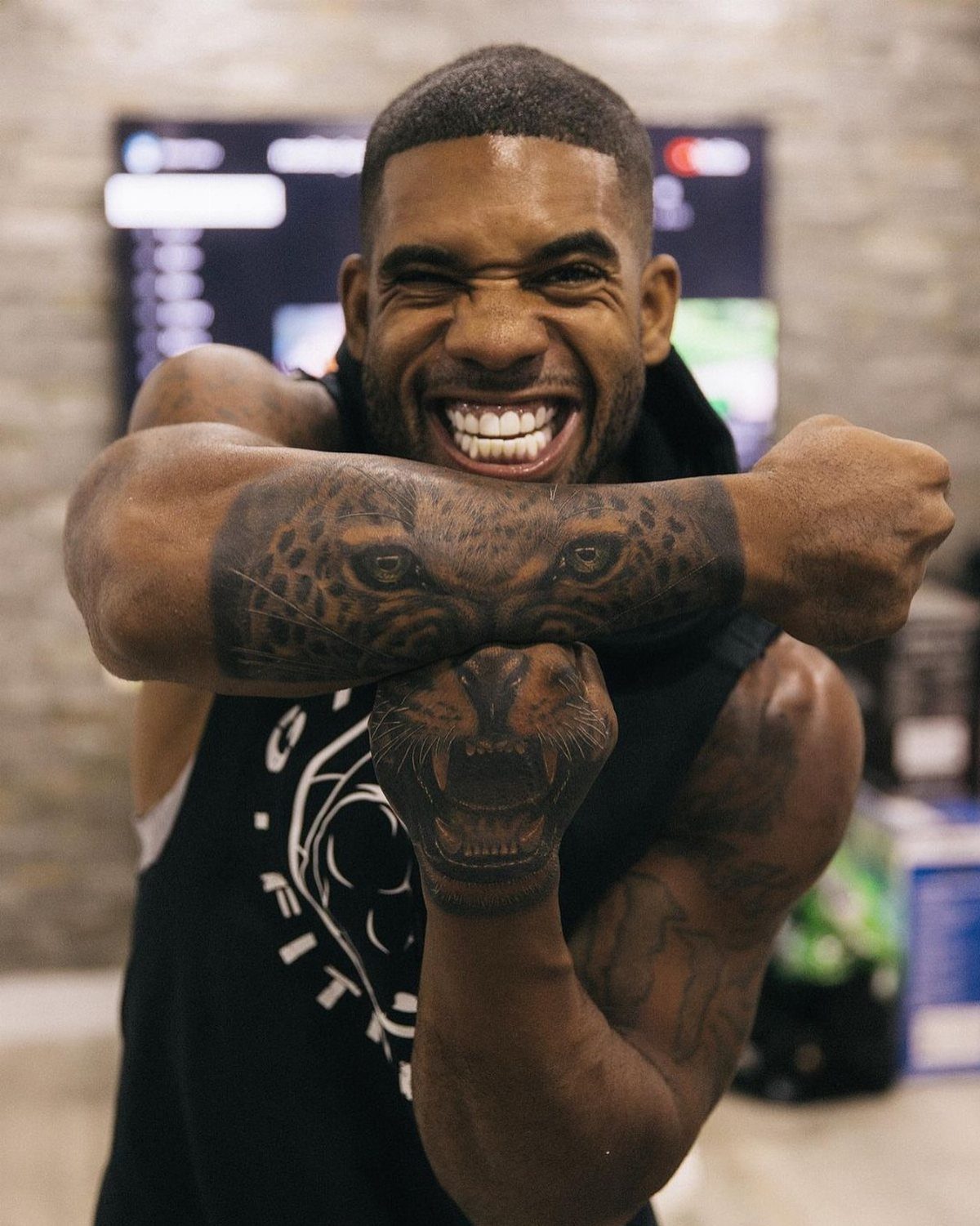
A leopard face across both forearms gives you a matched pair that reads as one image when the arms are together.
The spotted pattern and muscle structure of the face take fine shading, and black and grey realism keeps the focus on texture rather than color.
Forearm placement means the design stays visible and can be shown together or separately depending on how you position your arms. Skin on the mid-forearm stays taut through most motion, which keeps ink crisp during the first few weeks.
14. Script or Quote Tattoos
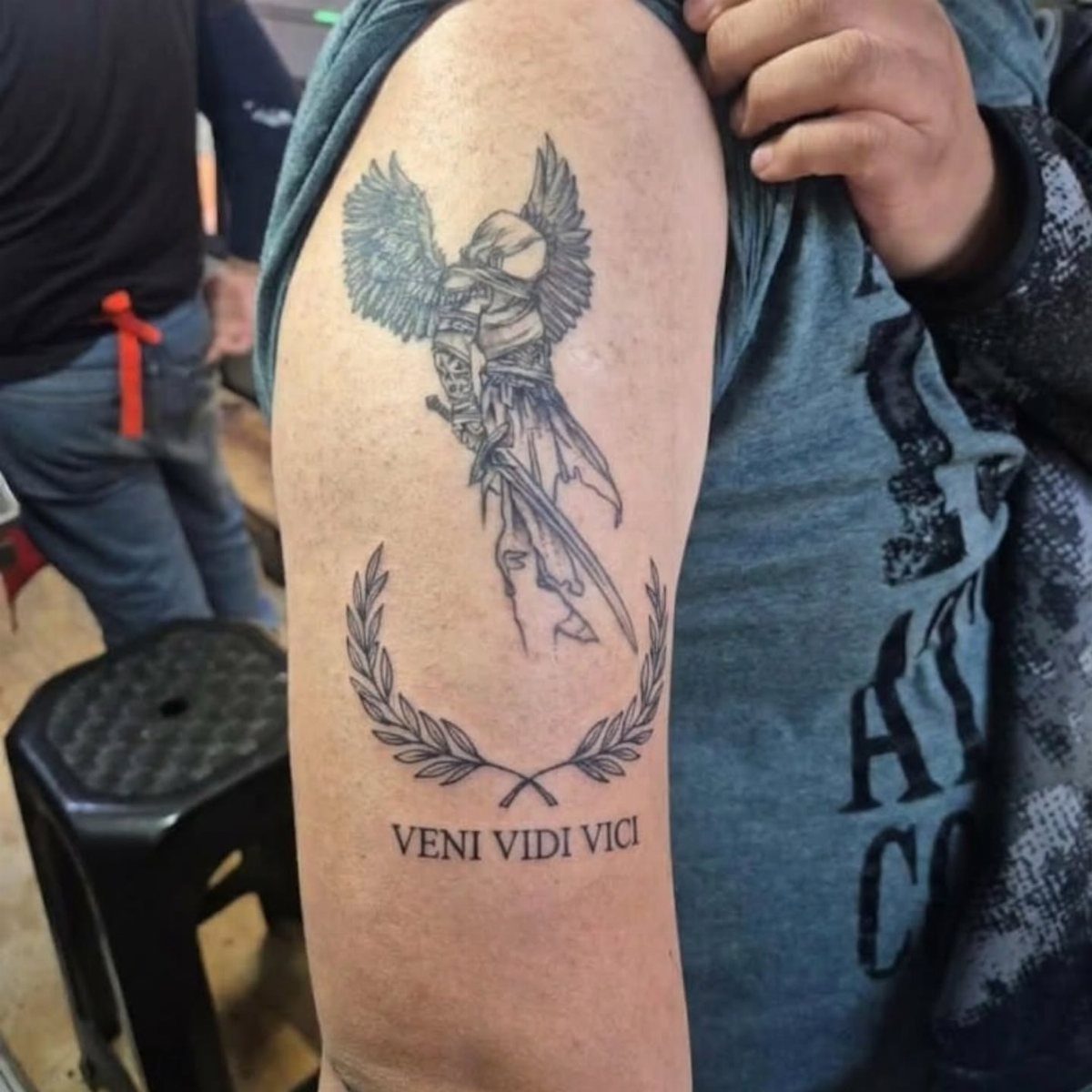
Script alone or paired with a figure gives you a statement that reads clearly without needing interpretation. Latin phrases like "Veni Vidi Vici" carry historical weight, and serif or block lettering keeps the text legible as it ages.
Placing the script under a symbolic figure, like a winged form or wreath, adds visual structure and frames the words without competing with them.
Upper arm placement keeps the text horizontal and readable, and the larger surface area prevents the letters from distorting as the skin moves.
15. Biomechanical Arm Tattoo
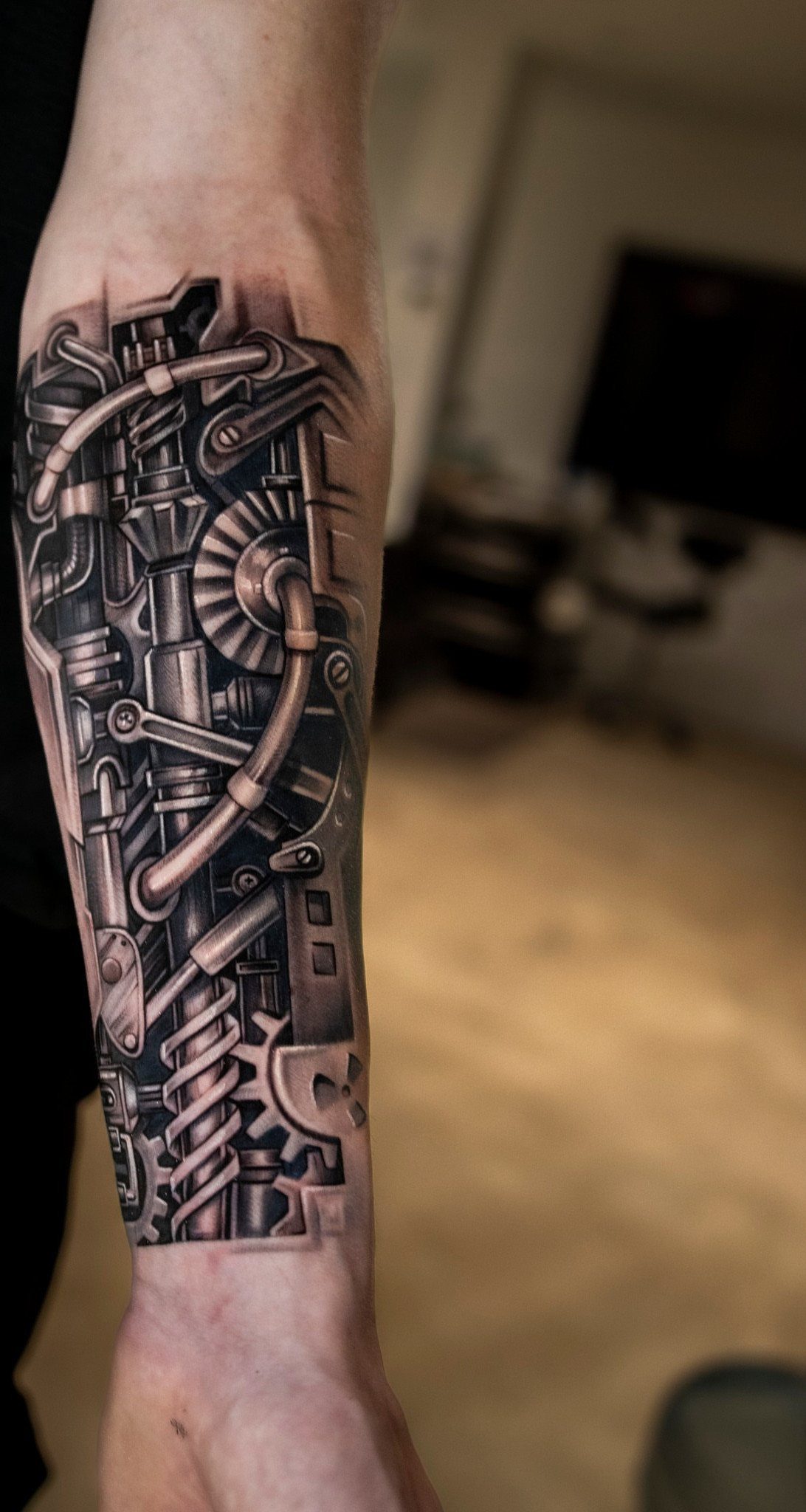
Biomechanical designs show mechanical parts under the skin, like gears, pistons, and metal plating breaking through.
The style relies on shading that creates depth, so the pieces look like they sit beneath the surface rather than flat on top of it.
Forearm placement gives you a long surface to layer multiple mechanical elements, and the natural curve of the arm adds dimension to the design.
Black and grey ink keeps the metallic look realistic, and the hard edges of the machinery read clearly without color.
16. Mountain and River Scene Forearm Tattoo
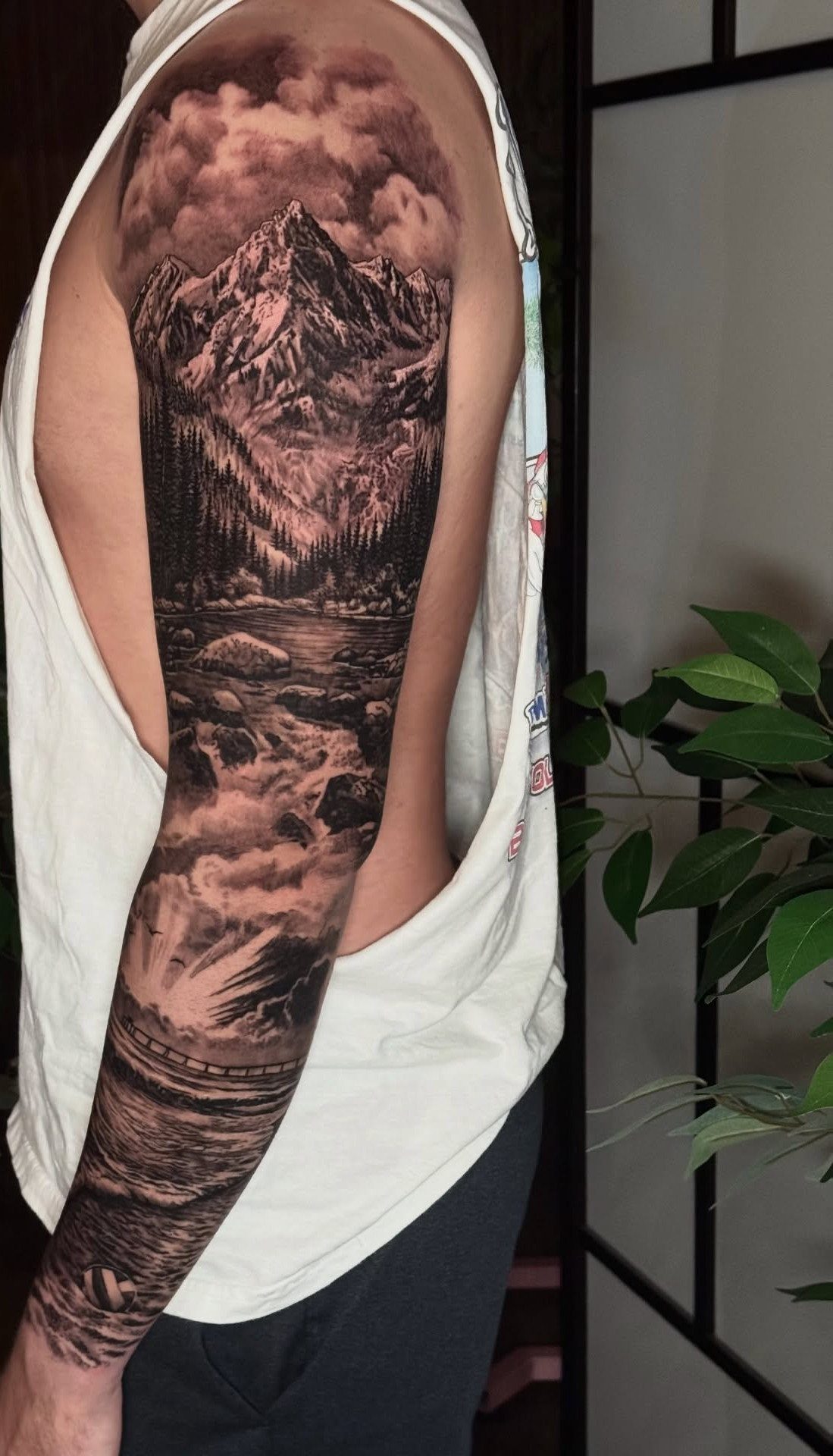
A mountain and river scene gives you a natural landscape that wraps around the forearm or runs vertically from shoulder to elbow.
Pine trees and water add layers of depth, and black and grey shading creates distance between the foreground and background.
The design scales well because you can add more terrain above or below the original piece, and the natural forms don’t need a hard border to look complete.
A flat canvas heals more predictably than curved or mobile zones, so detail holds up through the aftercare window.
17. Compass Tattoo
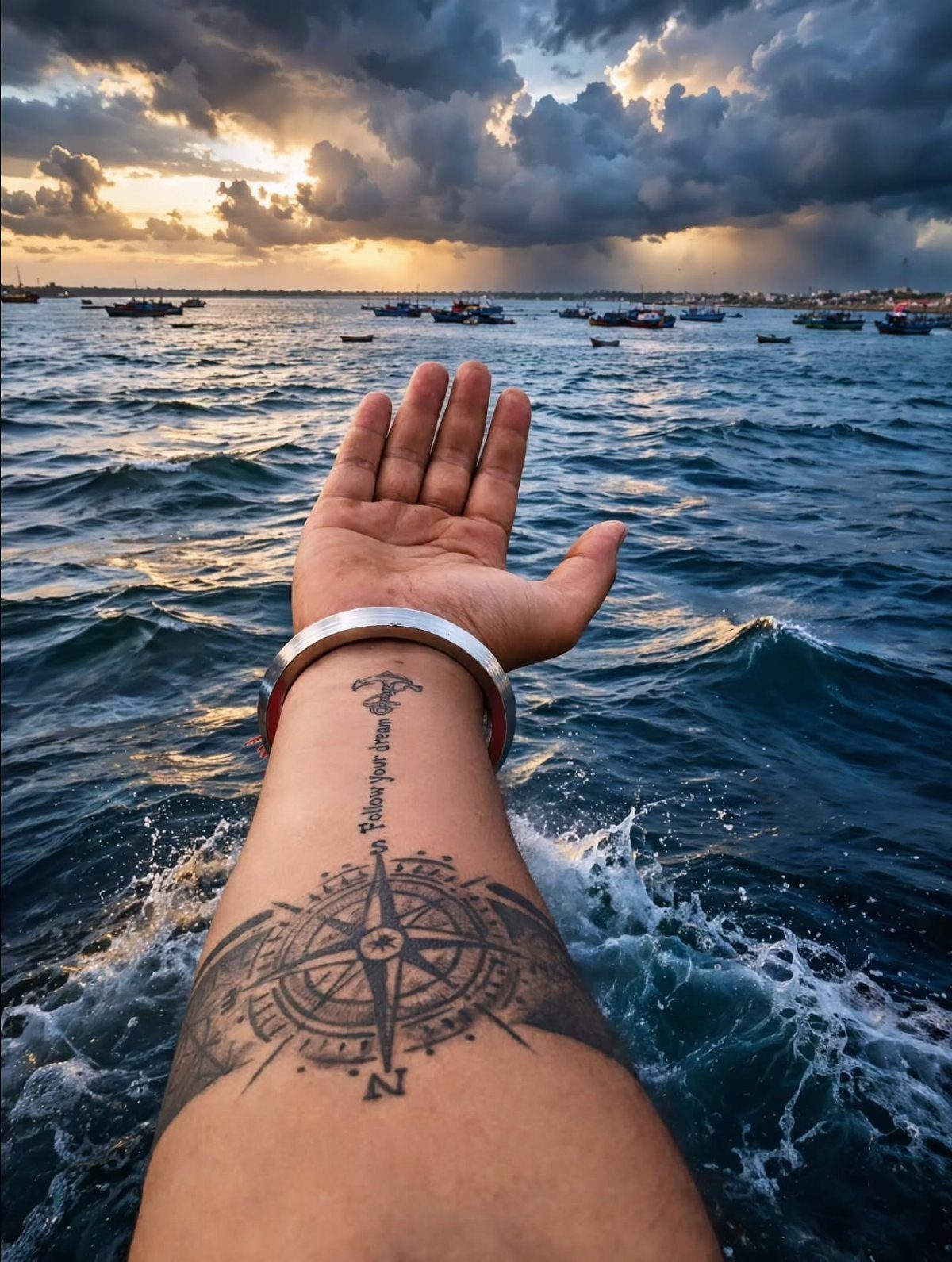
A compass on the forearm reads as guidance and decision-making. The cardinal points give the design symmetry, and adding a short phrase underneath personalizes the piece without changing the central image.
Forearm placement keeps the compass face-up and readable, and the circular shape fits the width of the arm without wrapping all the way around.
Black ink holds the fine detail of the compass markings, and the design stays clear over time without needing frequent touch-ups.
Choosing the Right Tattoo Design
Personal meaning anchors the decision. Symbols tied to personal growth, values, or heritage give the piece weight that lasts longer than a style you saw once and liked.
Style preference matters because realism, geometric, tribal, minimalist, traditional, and blackwork all age differently. Realism needs an artist who can handle fine shading.
Blackwork and tribal hold up well over decades with less maintenance. Geometric stays sharp if the lines go in clean.
Pain tolerance changes where the piece goes. The outer arm sits in moderate territory.
Inner bicep and elbow areas register higher on sensation, so if this is your first piece, starting on the outer arm or shoulder gives you a better read on how your skin takes ink.
Quality lines and shading come from an artist working with premium needles, machines, and lighting.
Tattoo trends come and go, but no matter what you choose to ink on your arm, make sure you’re in it for the haul.
Pain Levels for Arm Tattoos
Most spots on the outer arm land somewhere in the middle for pain. Skin sits over muscle without much nerve density, so most people handle sessions there without issue.
Inner bicep jumps higher in sensation because the skin is thinner and nerve endings sit closer to the surface. The elbow registers even more because bone sits right under the skin with less padding between the needle and the joint.
The inner forearm sits between the two. The inner forearm reads as personal or symbolic without broadcasting it, and you can roll your sleeve down when the setting calls for it.
That surface takes coordinates, quotes, dates, names, and spiritual symbols in a clean vertical or horizontal run.
Tattoo Costs
Small line work starts around $150. A single minimalist design, a short script, or a small geometric shape falls into that range because the session runs short and the ink coverage stays light.
Detailed sleeves run over $1,000. A composition that layers multiple elements or uses black and grey realism costs more because of the hours and technical work.
Mid-range pieces, like a single animal head on the forearm or an upper arm design with shading, sit between those 2 ends.
Session length, level of detail, and the artist’s rate all factor in, so asking for a quote based on the specific design gives you a clearer number before you commit.
Frequently Asked Questions
How much does an arm tattoo cost?
Small line work begins around $150 for a short session with light ink coverage. An animal head with clean shading sits in the middle of that range, and full sleeves push past $1,000 once you account for the hours and line detail.
Is $1000 a lot for a forearm tattoo?
It sits at the higher end for a forearm piece unless the design layers multiple elements or uses detailed realism.
Most forearm work with shading stays under $1,000, but a sleeve from shoulder to wrist crosses that line once you add up the coverage and chair time.
Are tattoos on arms painful?
The outer arm reads as moderate pain since muscle cushions the skin and nerve endings stay sparse.
The inner bicep stings more because skin thins out and nerves run closer to the surface, and the elbow spikes harder still when bone meets the needle with almost no padding between.





