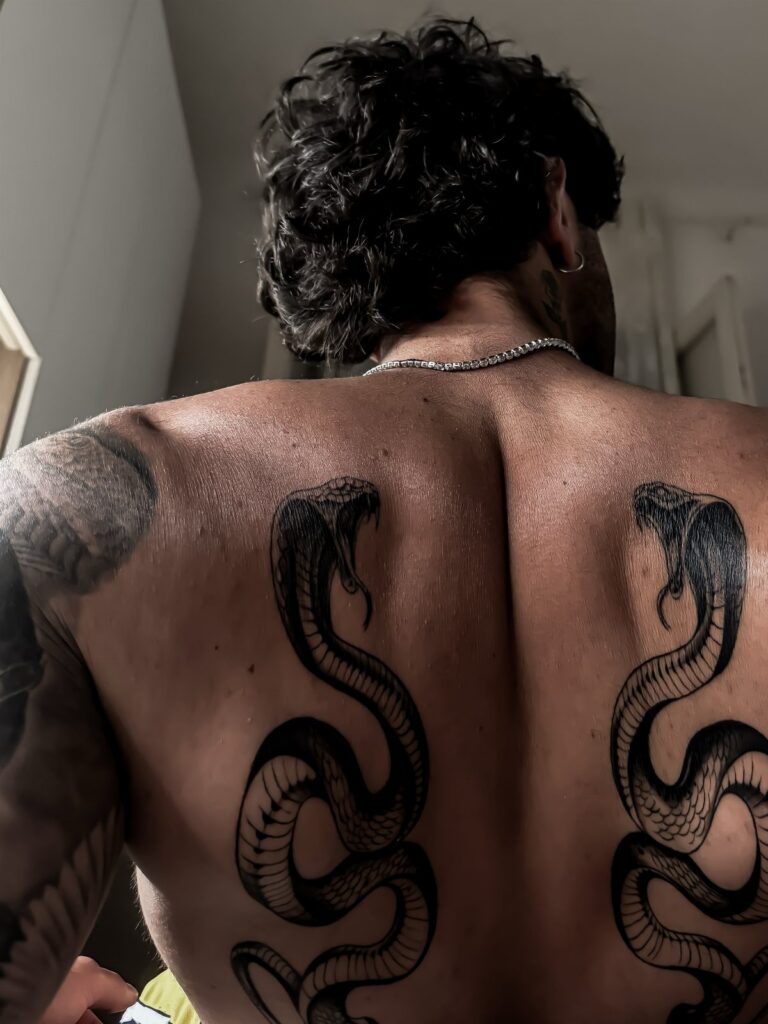
A full back piece runs into the thousands and takes months to finish across multiple sessions, while an upper back placement or mandala can wrap in one appointment for a fraction of the cost.
The rule that decides which idea works is how much canvas you need: a warrior figure or Japanese irezumi uses the entire vertical and horizontal span from shoulders to waistline, but a spine design stays narrow and leaves the width open for future work.
1. Warrior Tattoos
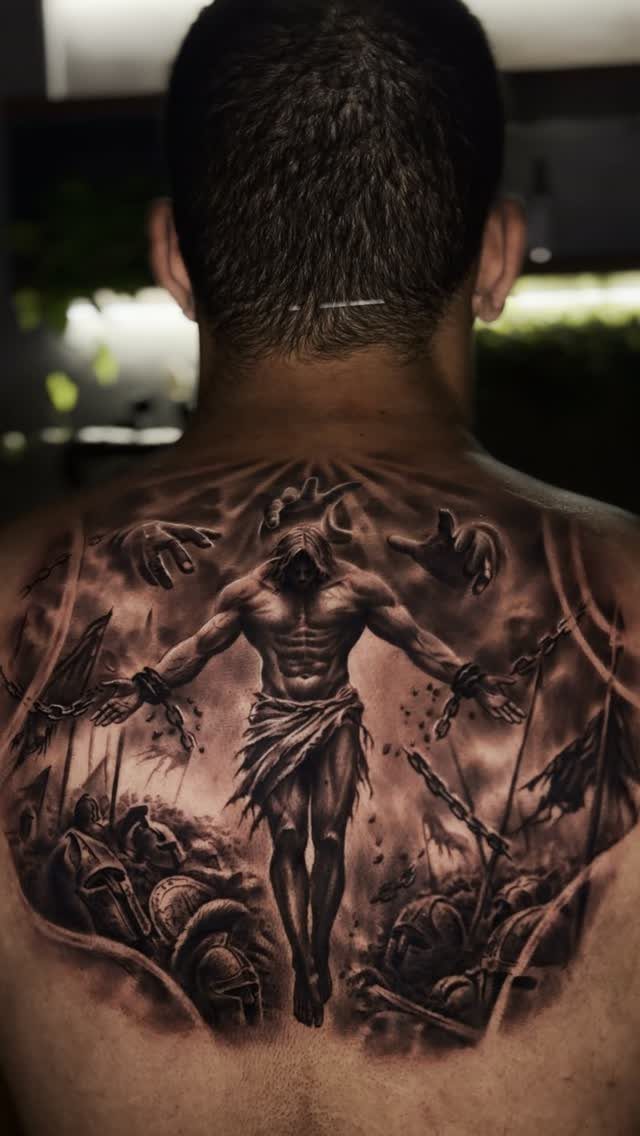
A warrior figure centered on the back reads as power and endurance, especially when you add context like chains, weapons, or fallen fighters around the central character.
The design fills the space and gives you room for detail work that holds up over time.
Black and grey keeps the focus on form and shadow, which suits the theme.
Expect several sessions for a piece this size, and budget accordingly. The back tolerates long sitting hours better than most spots, so you can cover more ground per appointment.
Whether it’s a tribute, a mark of strength, or a symbol of guidance, the best back tattoos for men provide a powerful means to convey one’s story, making each tattoo a unique and enduring reflection of individual personality and experiences.
2. Japanese Irezumi Koi Fish Tattoo
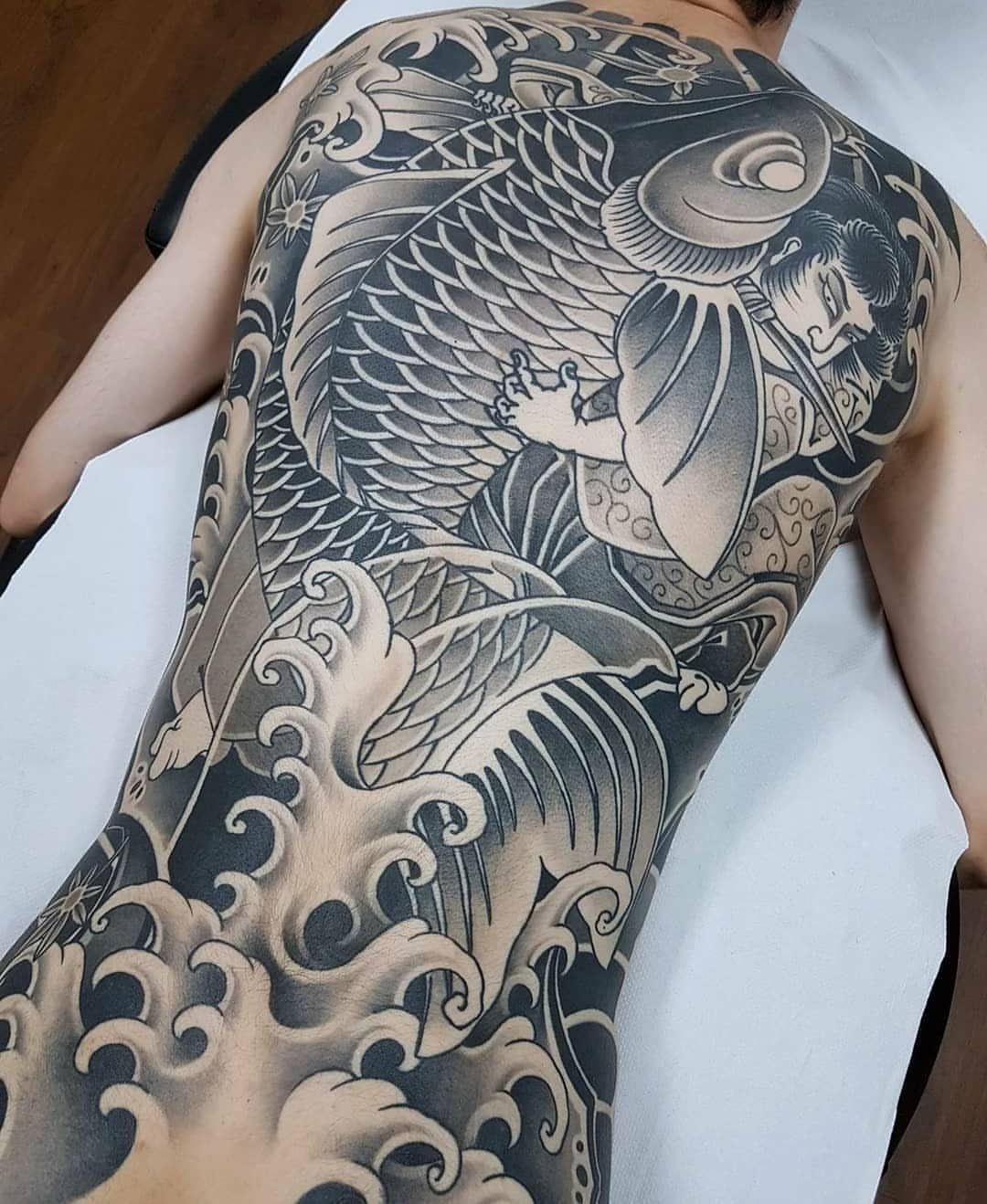
Irezumi covers the back with large-scale imagery rooted in Japanese tradition: koi, waves, dragons, peonies. The work is done in bold color or black and grey, with high contrast and flowing composition that follows the body’s shape.
A full back piece takes months to finish and costs several thousand dollars.
Sessions run long because the design wraps continuously from shoulders to lower back. The style ages well when the linework is clean and the shading is packed tight.
Find an artist who specializes in Japanese work. The difference in movement and proportion is easy to spot when you compare portfolios.
3. Nature Landscape Back Tattoo
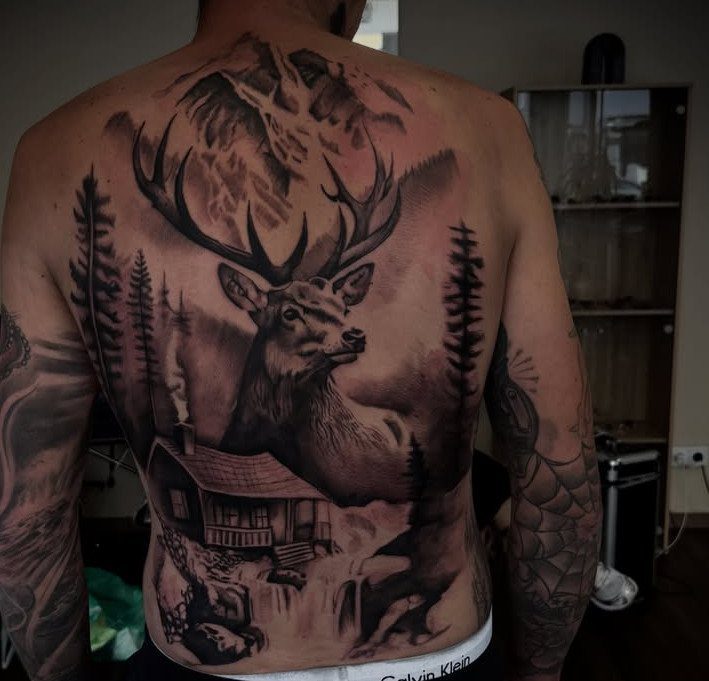
Mountains, trees, deer, cabins: landscape tattoos turn the back into a scene with depth. The vertical canvas suits the way a mountain range stacks layers, and you can add foreground detail like wildlife or structures to anchor the composition.
Black and grey works best for realism.
Color can muddy the depth if it’s not handled carefully. The back offers enough width to let a ridge line stretch, and enough height to run from treeline to sky.
Plan for 3 to 5 sessions depending on detail density. The back is low on the pain scale, so long appointments are manageable.
4. Mythological Creature Back Tattoo
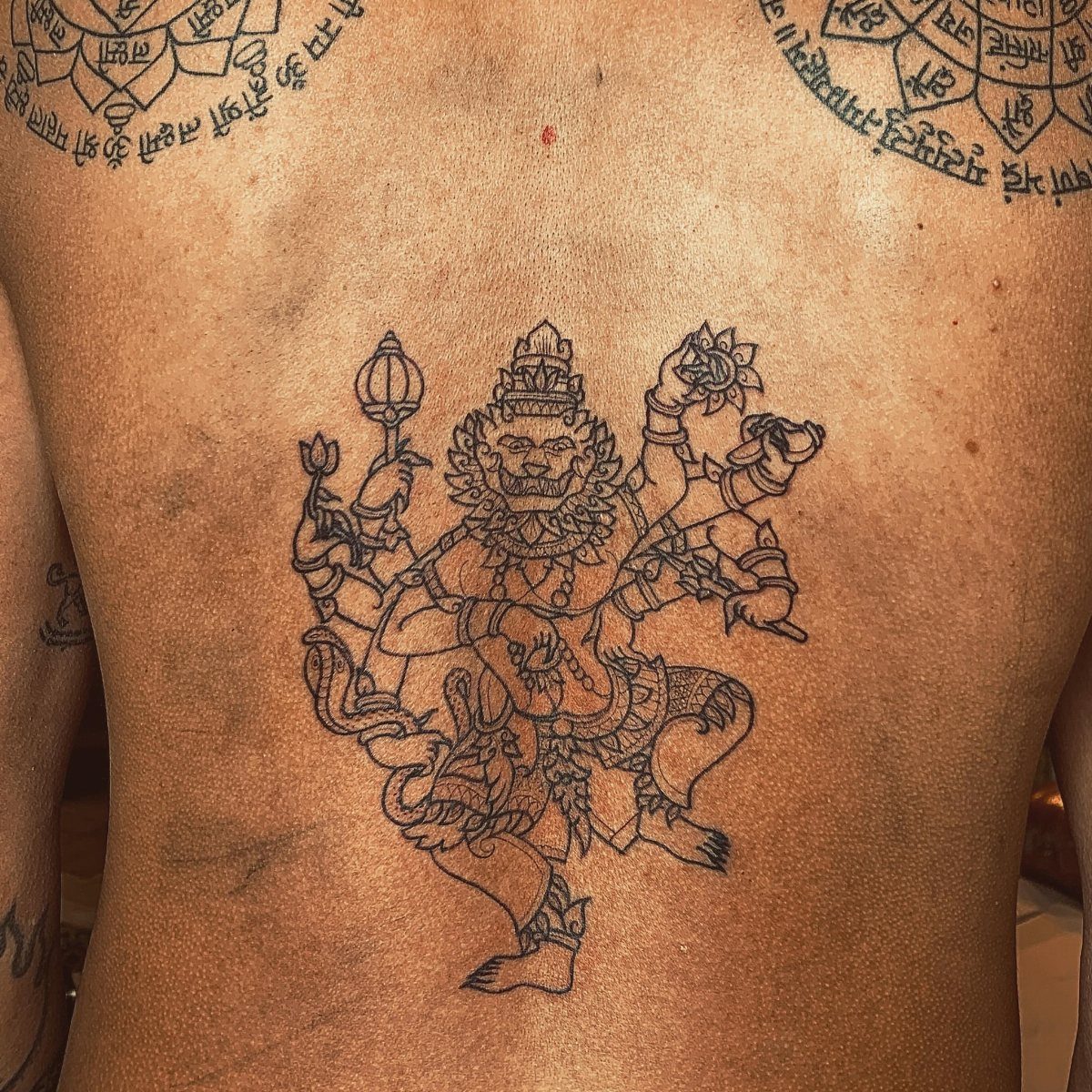
Mythological figures bring symbolic weight and visual drama. Multi-armed deities, hybrid creatures, or gods from any tradition give you a subject that commands the back’s vertical space and lets the artist build out detail in faces, hands, and surrounding iconography.
Adding script or geometric elements around the main figure can frame it without cluttering the design. Research your subject before committing; cultural or religious imagery carries meaning beyond the visual.
The back handles complex linework well and gives you room to let detail breathe without interruption.
5. Full Back Tattoo Piece
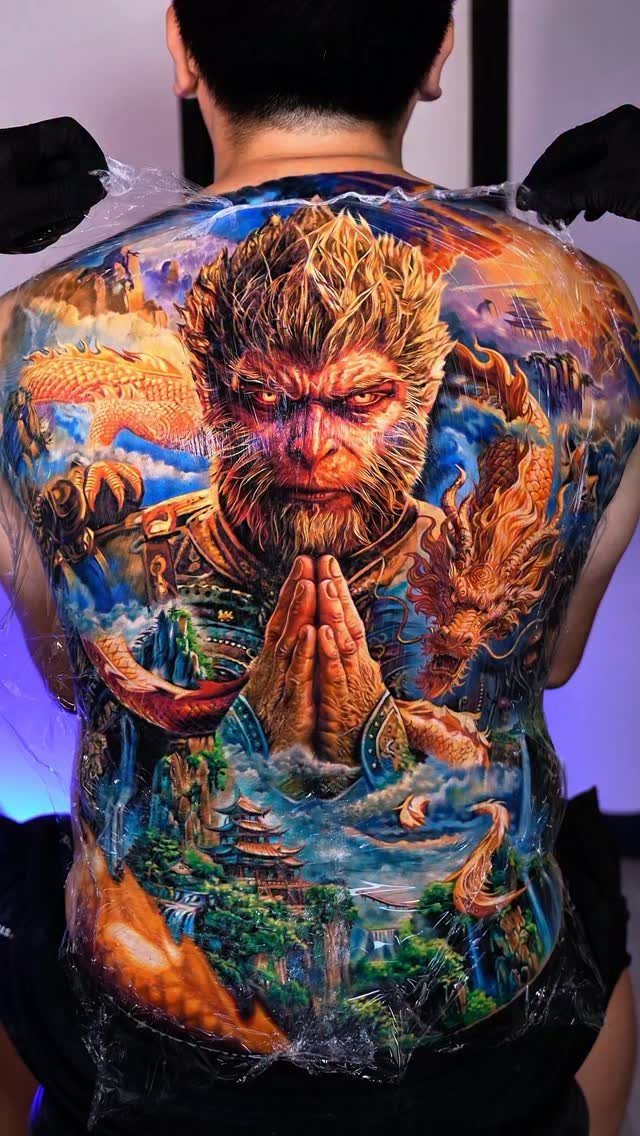
A full back piece runs from shoulders to waistline and often wraps onto the ribs or hips. You’re committing to a single unified image rather than separate smaller tattoos, which gives the artist freedom to design with flow and scale.
Color work at this size requires multiple long sessions.
Black and grey cuts that time slightly. The cost runs into the thousands, and you’ll need to block out appointment windows over several months.
Healing is straightforward on the back, but sleeping face-down or leaning back in a chair becomes awkward for the first week after each session.
6. Upper Back Tattoo
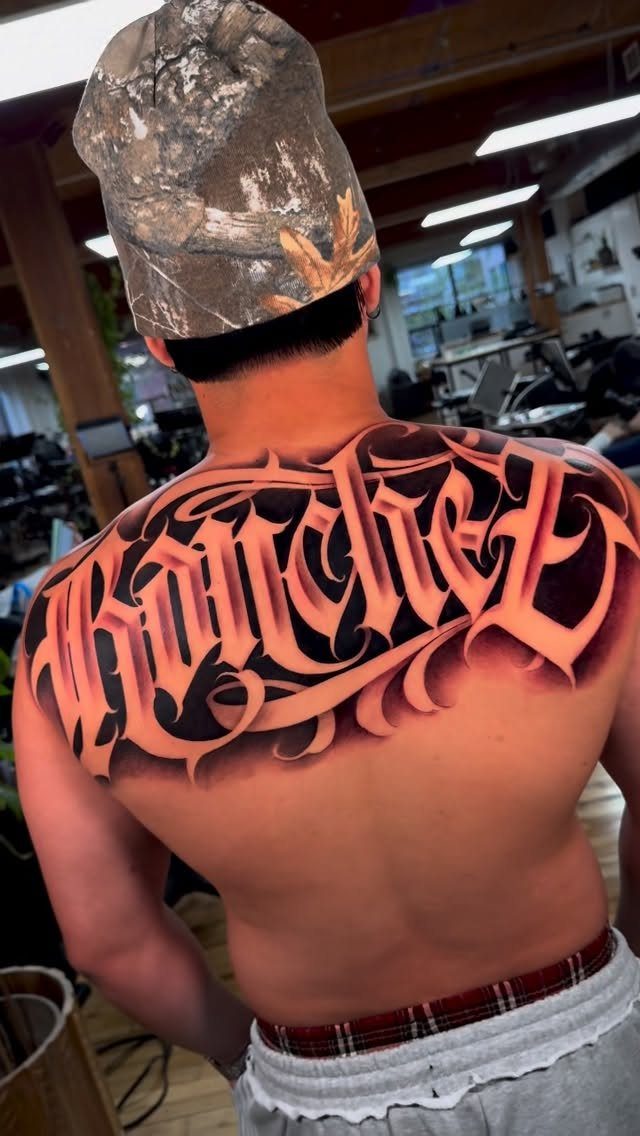
Script across the upper back, from shoulder to shoulder, uses the horizontal plane for names, phrases, or dates.
The area is wide enough for large lettering that stays readable from a distance and ages without blurring if the font is bold and the spacing is generous.
Keep the line count low.
One or two lines read cleanly; more than that and the text starts to crowd. Avoid thin scripts or heavy ornamentation, both lose clarity as the ink settles over time.
Upper back script sits high enough to show above a low-cut shirt and stays covered under a standard crew neck. Pain is moderate, and most pieces finish in a single session.
7. Biomechanical Tattoos
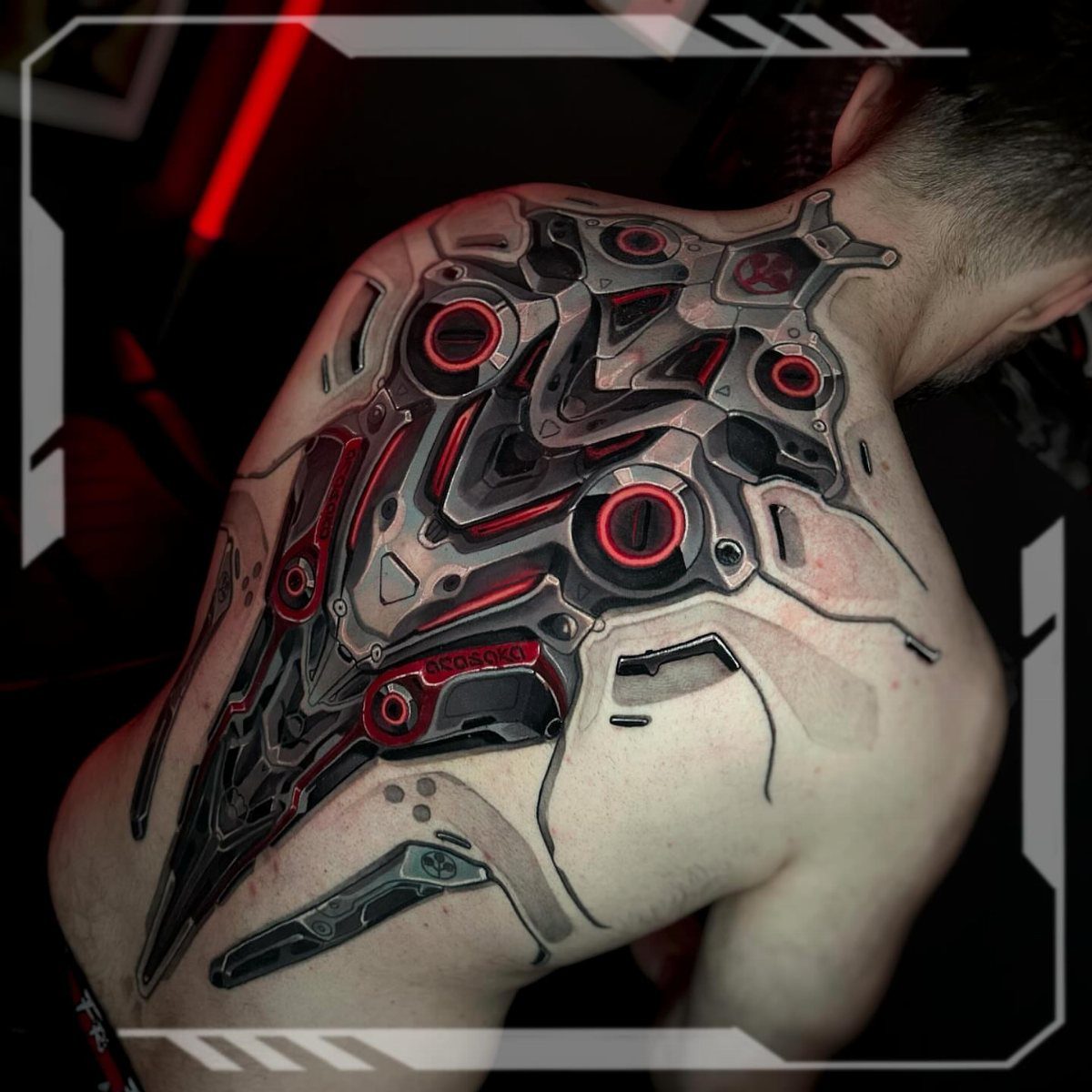
Biomechanical designs merge muscle, bone, and machine parts into a single image that looks like the body has been opened to reveal gears, pistons, or circuitry underneath.
The back gives you the height and width to build layers: exposed ribs transition into metal plating, or tendons blend into cables.
Black and grey with selective color accents, usually red or blue, keeps the mechanical elements distinct from the organic ones. Detail density is high, so expect multiple sessions and a price tag to match.
The design ages well if the contrast stays strong and the linework is tight. Pain is manageable across most of the back.
8. Skull Tattoos
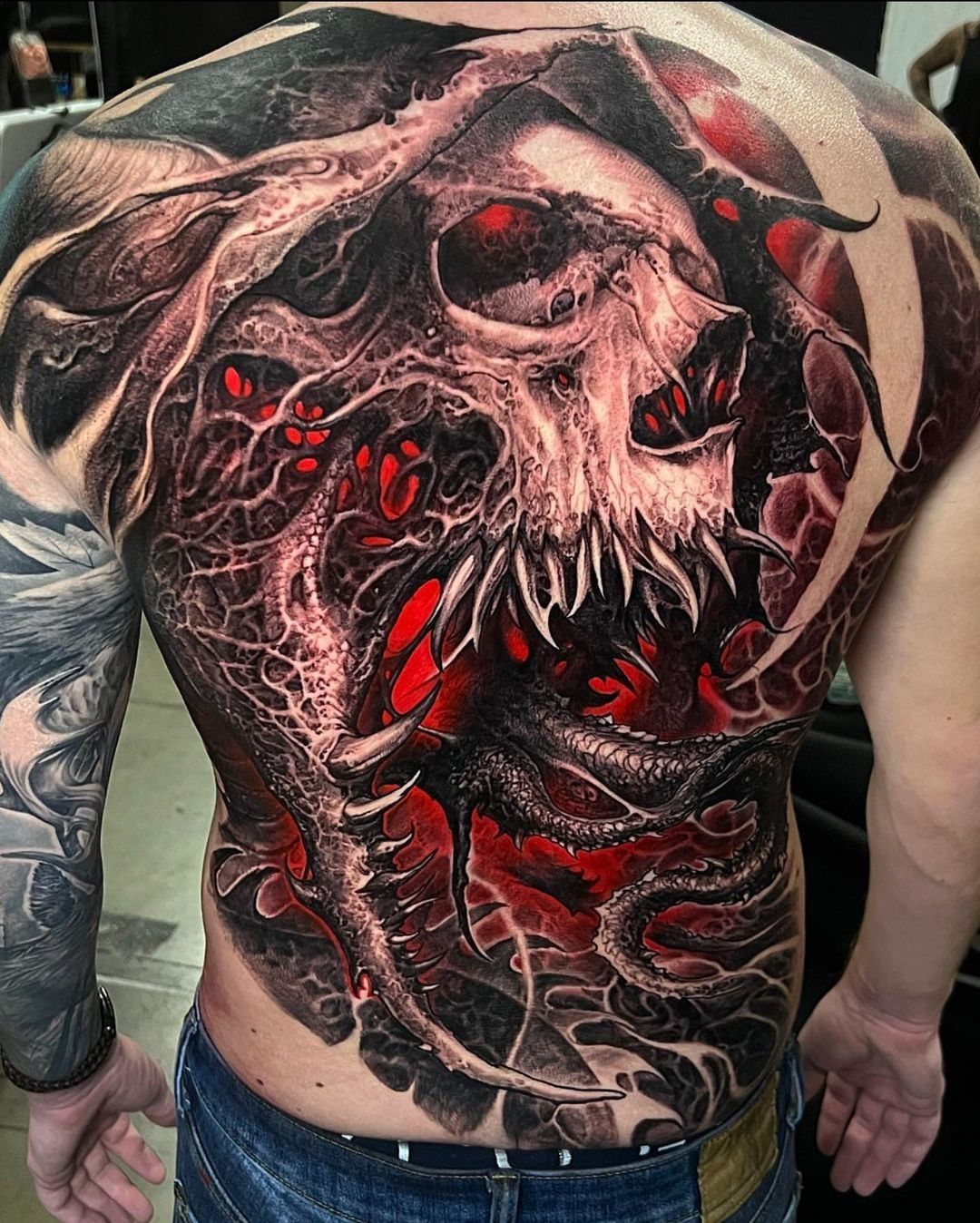
A skull centered on the back carries weight without needing explanation. The symbolism is direct, and the form holds up over time because the shape is simple enough to read clearly even as ink settles.
Realism, illustrative, or heavily stylized all work. Adding texture like cracks, flowers, or biomechanical elements around the skull can fill out the canvas without crowding the main image.
Black and grey is standard, but color accents on specific details, like red in the eye sockets, can pull focus where you want it. The back tolerates fine detail work and heals cleanly.
9. Geometric Tattoos
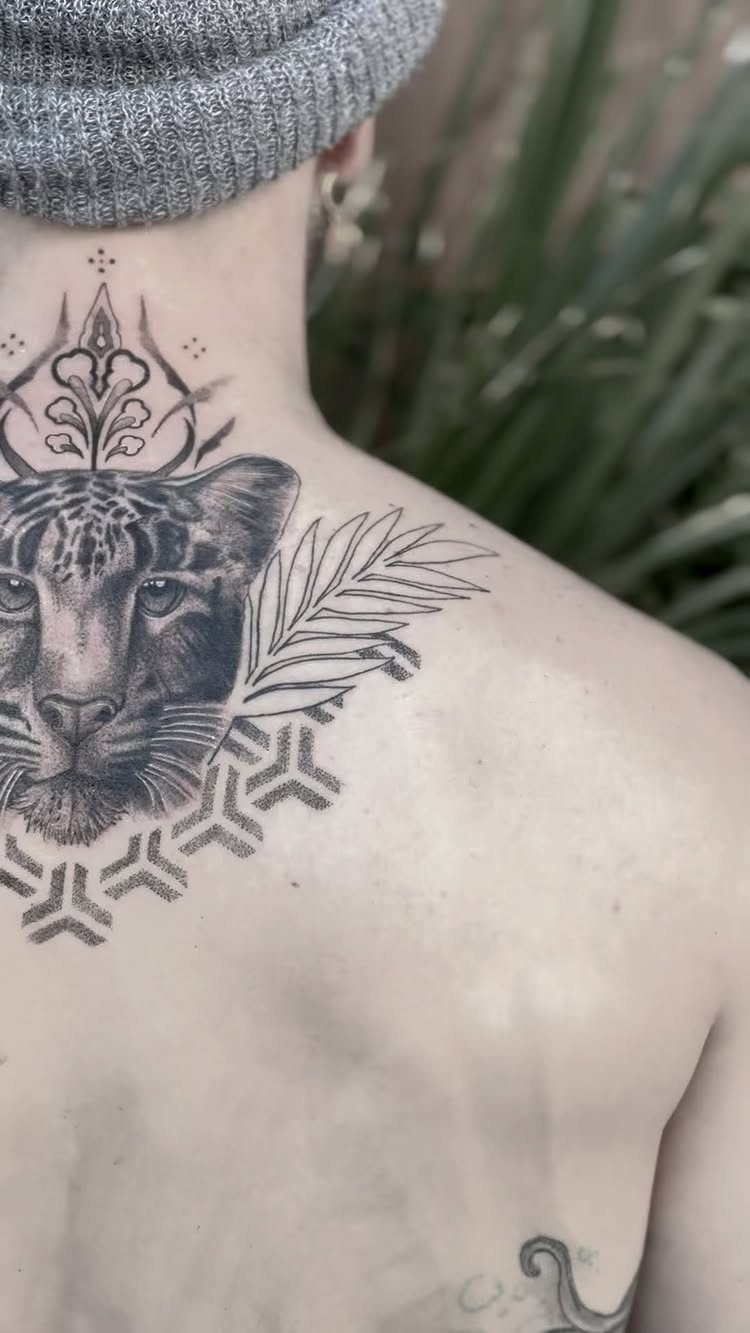
Geometric designs use clean lines, repeating shapes, and symmetry to build patterns that sit well on the back’s flat surface.
Combining geometric elements with an animal face or botanical form gives the design a focal point and keeps it from reading as purely abstract.
Precision matters.
A crooked line or uneven spacing shows, so find an artist who works clean. Black ink is typical, but dot shading or negative space can add depth without color.
Upper back placement works for smaller geometric pieces, while a full back lets you expand the pattern outward from a central figure.
10. Spine Tattoos
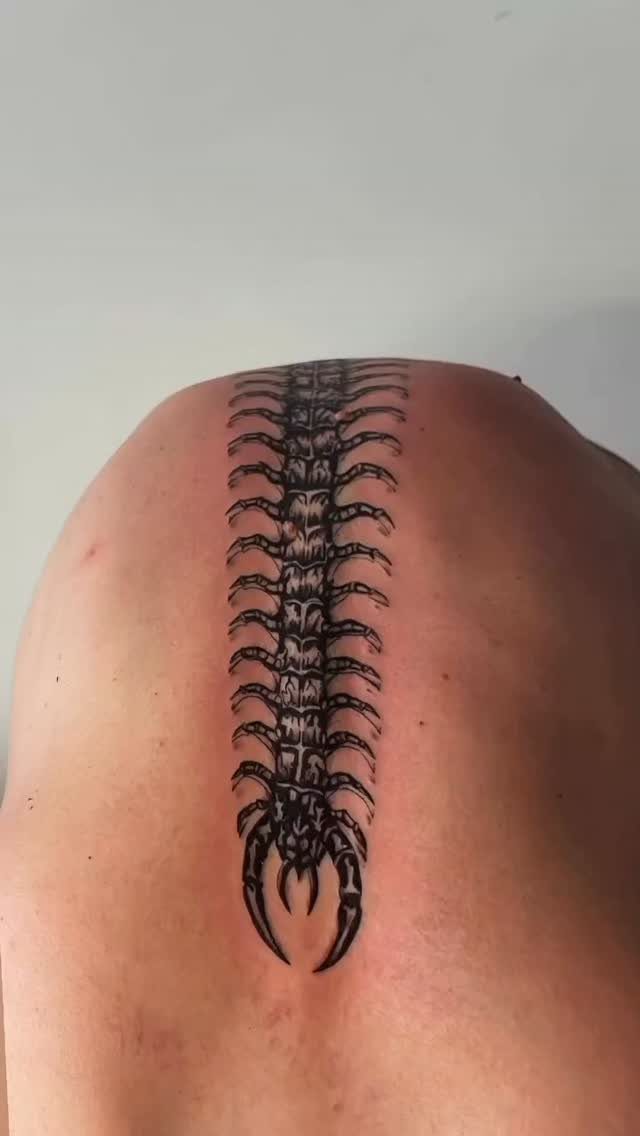
A spine tattoo follows the body’s natural vertical line and draws the eye straight down the center of the back.
The design sits on bone, so pain is higher than other back placements, but the visual impact is worth it for most people who choose this spot.
Keep the design narrow.
A centipede, vine, script, or chain of symbols all fit the vertical format without spilling wide. The back’s width stays open for future work if you keep the spine piece tight.
Healing requires careful positioning while you sleep, and clothing can rub the area during the first week.
11. Flower Back Tattoo
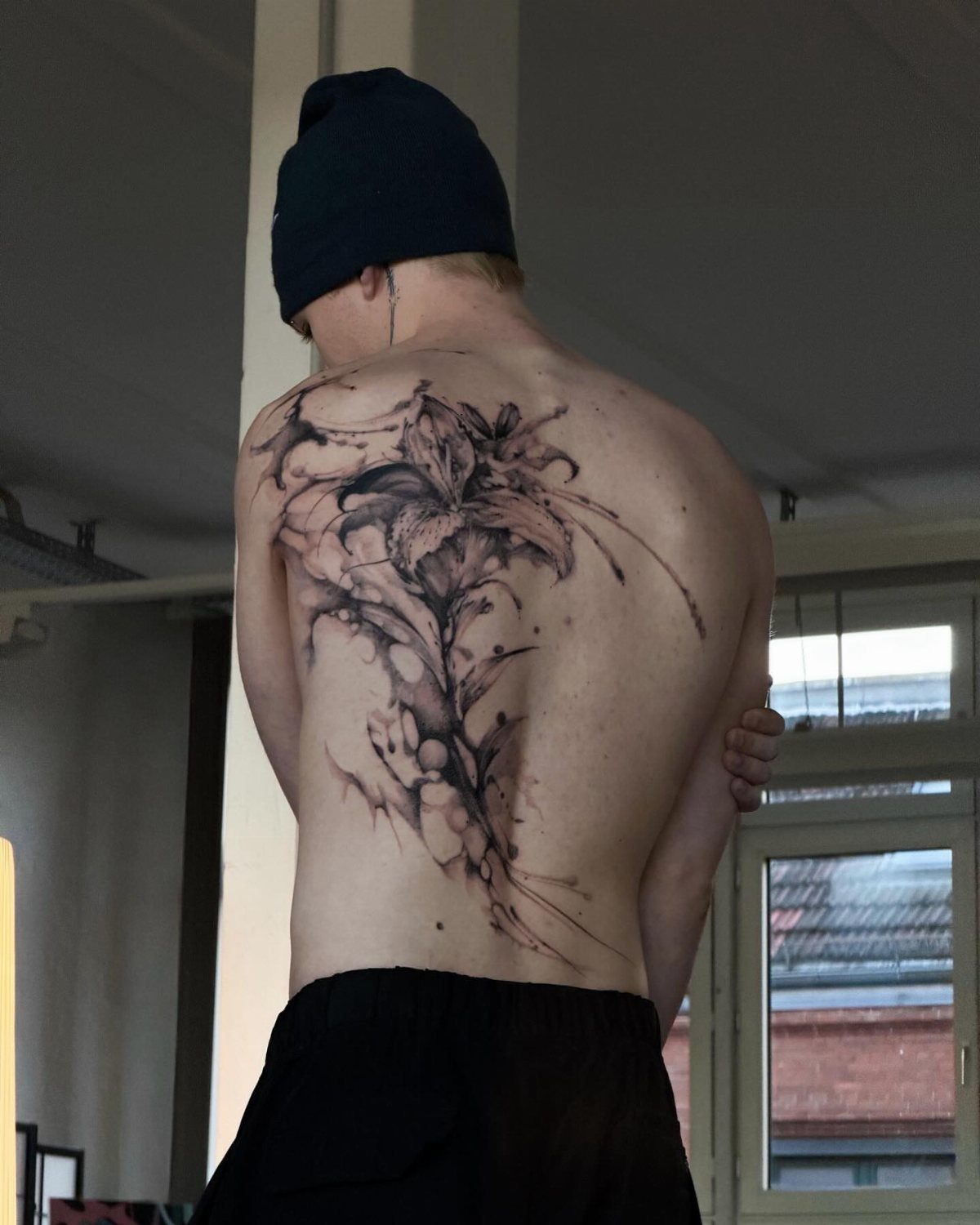
A single large flower, like a lily or peony, scaled to cover most of the back reads as a bold choice rather than a delicate one.
The petals and leaves give the artist room to work contrast and shading, and the organic shape follows the body’s natural curves.
Color is an option if you want vibrancy, but it requires touch-ups over time to stay saturated.
A full back piece with this level of detail means multiple sessions spread across weeks or months. The back sits lower on the pain scale than most other placements, which helps when the sitting runs long.
12. Guardian Angel Tattoos
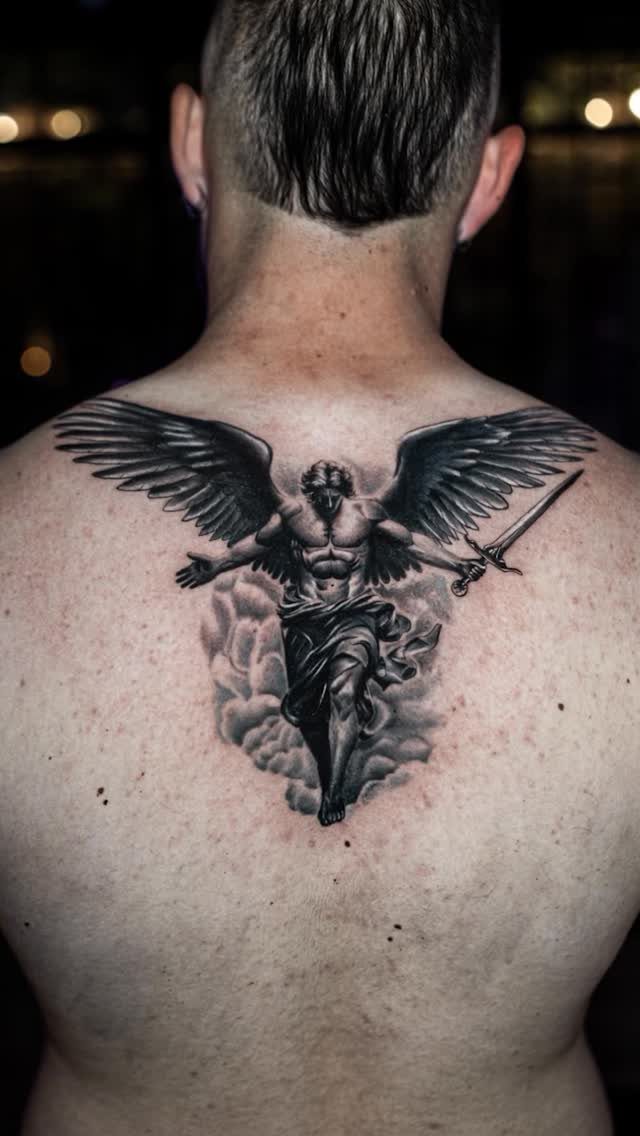
A winged figure holding a weapon or standing in a protective stance fills the upper back with clear symbolic intent.
Wings spread wide across the shoulders, and the vertical space lets you include detail in the face, armor, or surrounding elements.
Realism or illustrative styles both suit the subject. Black and grey keeps the tone serious, while selective color can highlight specific features like the wings or a halo.
Budget for multiple sessions if you’re adding fine detail in the face and feathers. The upper back is moderate on the pain scale and heals without much interference from daily movement.
13. Mandala Tattoos
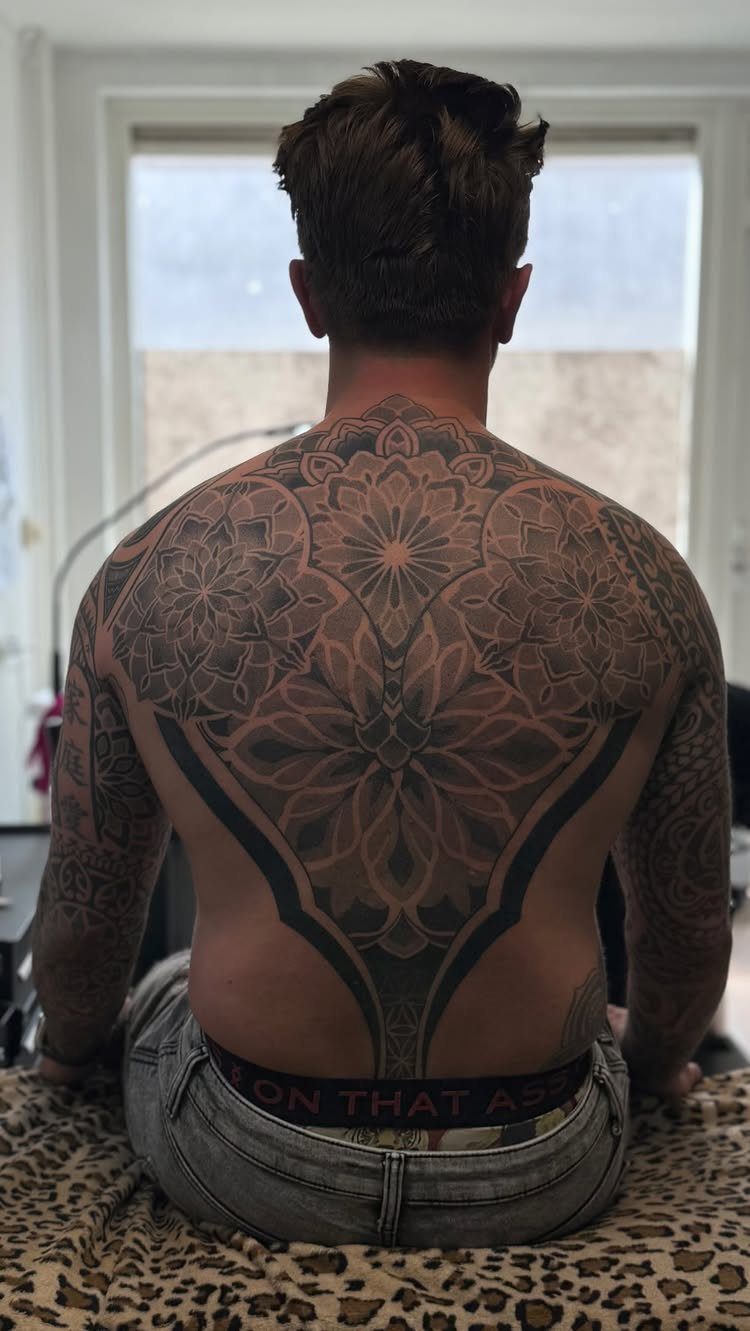
A mandala centered on the back uses repeating geometric patterns that radiate outward from a single point, creating symmetry that suits the body’s flat surface.
Symmetry lets the design breathe without hard edges, and precise lines keep it legible as the skin ages.
Black ink is standard.
The precision required means you need an artist who works steady and can keep circles round and lines evenly spaced. Sessions depend on size and pattern density, but most full-back mandalas finish in 2 to 4 appointments.
Pain stays moderate across the back, and healing is straightforward.
14. Abstract Tattoos
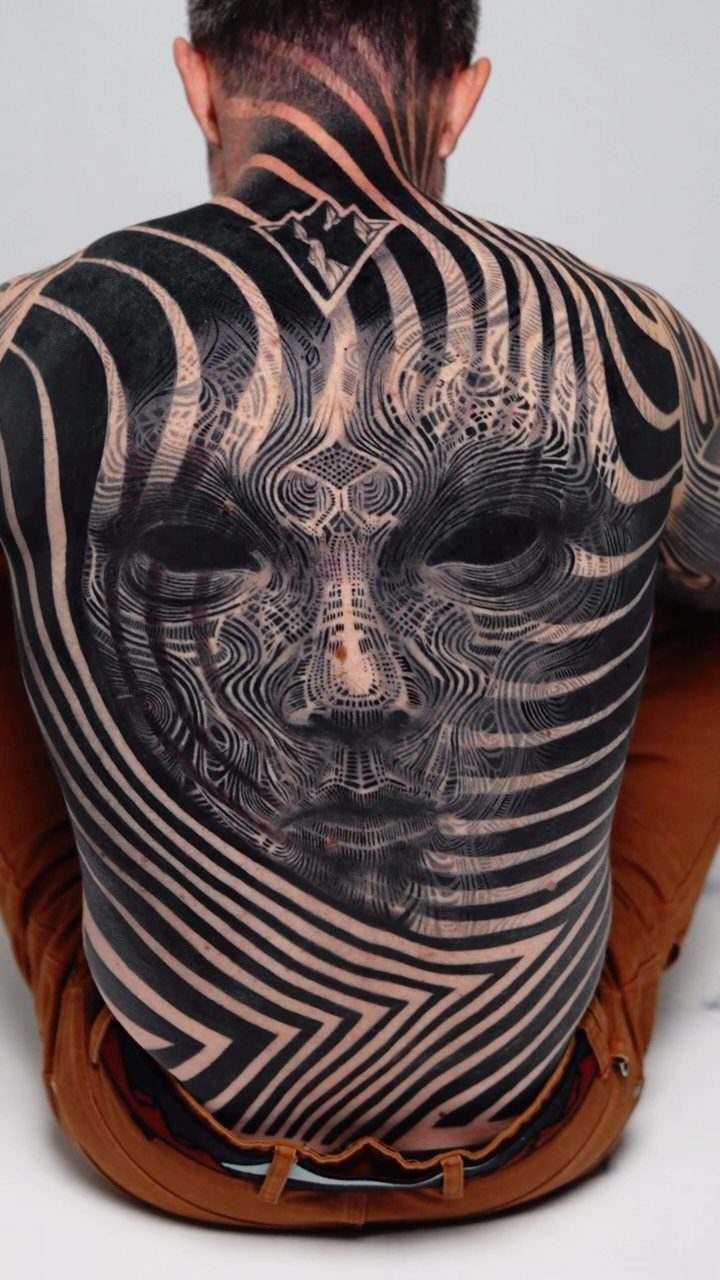
Abstract work lets you combine elements that wouldn’t otherwise sit together: faces, stripes, splashes, line fragments, all built into one piece without a literal reading. The back gives you room to layer contrasting styles and let the composition breathe.
Grayscale lets texture and composition carry the piece. The design doesn’t need to represent anything specific, which gives the artist freedom to build around your body’s shape and movement.
The back tolerates long sitting hours, and you can add or adjust sections over time without disrupting the overall flow.
15. Cool Back Tattoo
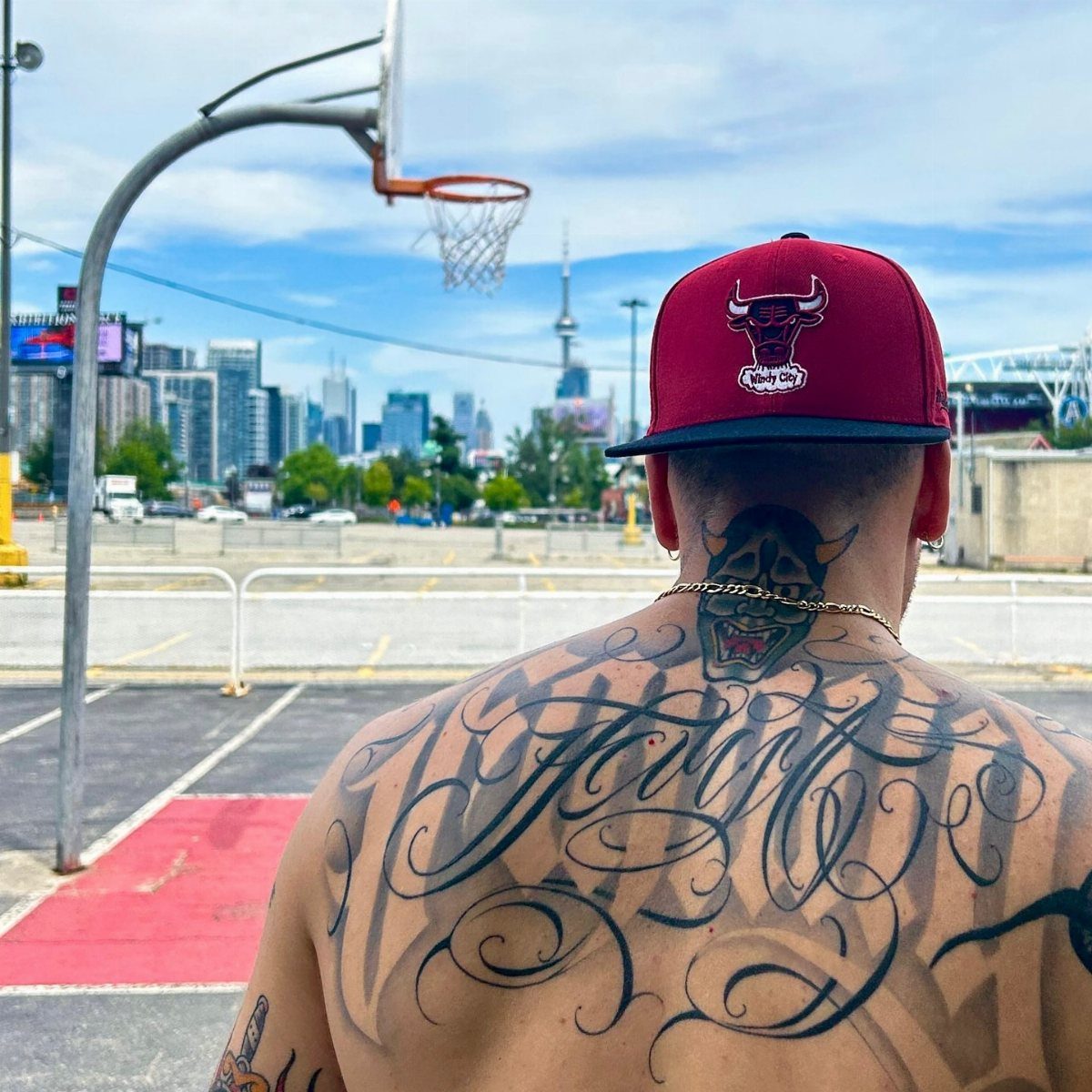
Mixing script with figurative imagery, like a demon or portrait, gives you 2 focal points that work together without competing.
The text carries personal meaning, and the image adds visual weight. Placement across the upper back or shoulder blades lets both elements read clearly.
Bold lettering ages better than fine script.
The figurative work needs contrast and clean linework to stay sharp over time. Black and grey is typical, but selective color can pull focus to the figure.
The upper back is moderate on pain, and you can add to the design later if you leave space around the existing work.
16. Phoenix Tattoo
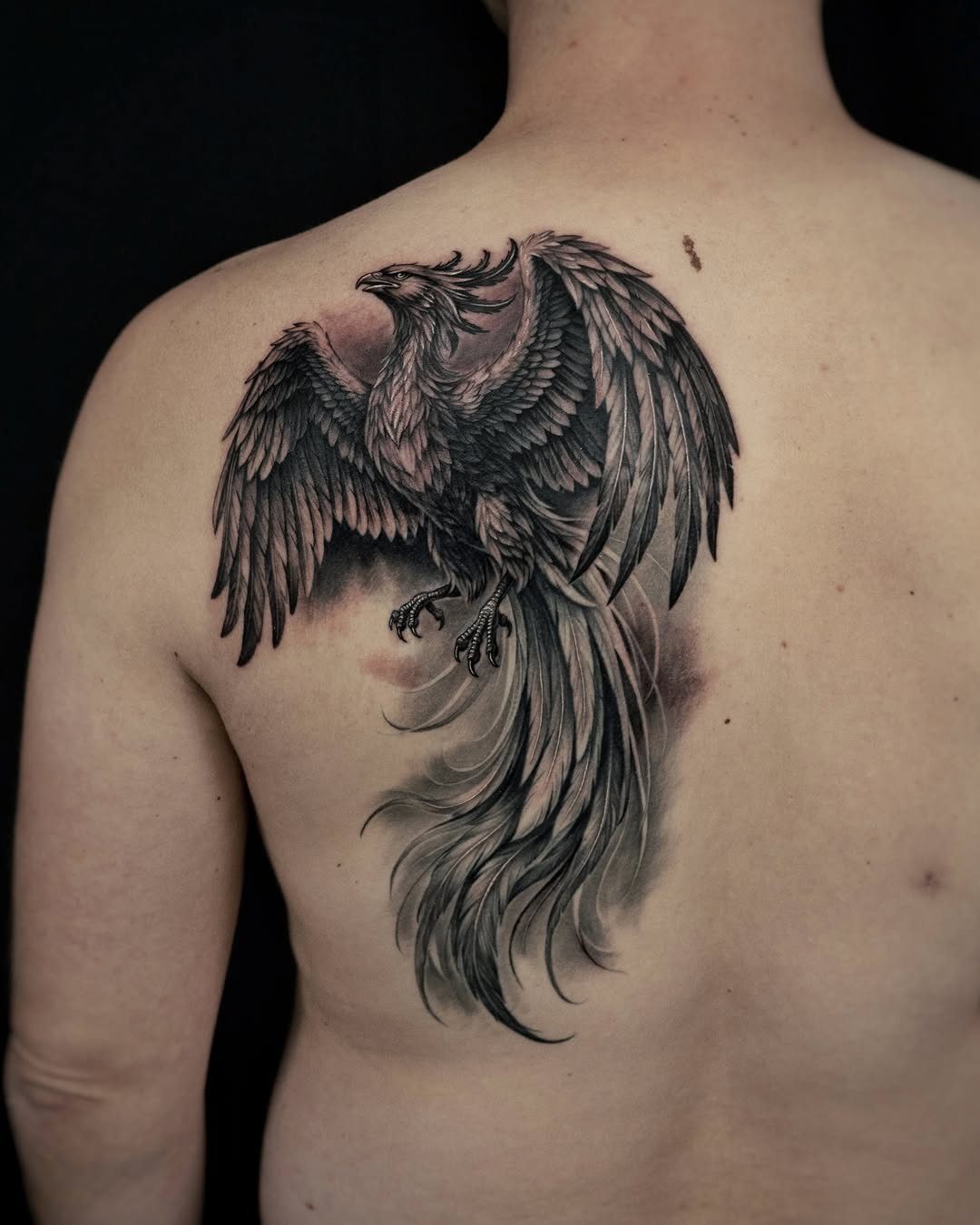
A phoenix scaled to the upper back uses the wingspan to fill the shoulders and lets the tail feathers flow down toward the spine. The bird’s shape follows the spine’s natural line, and the meaning reads without extra imagery.
Monochrome work emphasizes feather texture and gradient. Warm tones add impact but fade faster than black ink.
Pain is moderate across the upper back, and the design reads clearly from across a room if the linework is bold enough.
Pain and Healing Considerations
The upper back over the lats hurts less than you’d expect because there’s muscle underneath. Anything close to the spine or shoulder blades gets sharper fast since there’s no fat padding between the needle and bone.
The spine and lower back near the kidneys are dense with nerve clusters, so most people prefer shorter sessions of 3 to 4 hours when working those areas.
Numbing cream loses effect after 90 minutes, and the sensation coming back mid-session can feel worse than starting without it. Talk through a signal with your artist before you start so you can pause when you need to.
Healing runs 2 to 6 weeks depending on how much coverage you’re getting.
Cost Estimates
Hourly rates for back work run $150 to $300 or more depending on the artist’s reputation and location.
Back tattoos stay hidden under a shirt, which makes them a safe choice if your job has visibility concerns.
The canvas is large enough to support storytelling or complex imagery, and the privacy of the placement means you control when it’s seen.
Budget for the full cost up front and expect to space sessions across several months. Quality at this scale is expensive, and most artists require a deposit to lock in your appointments.
Tattoo Aftercare Tips
Wash the tattoo gently with unscented soap and keep it moisturized with fragrance-free lotion while it heals. Leave scabs alone and resist the urge to scratch, or you risk infection and permanent damage to the ink.
Bacteria and chlorine both interfere with the healing process. Direct sun exposure fades color and damages the skin, so keep the area covered or use high SPF once healed.
Your artist will give you specific aftercare steps.
Follow them exactly. Touch-ups may be needed years later to refresh color or sharpen linework as the tattoo settles and the skin turns over naturally.
Frequently Asked Questions
What is the best back tattoo for men?
The best back tattoo reflects what you want to wear permanently and what suits your body’s shape.
A warrior, phoenix, or Japanese irezumi fills the vertical space and holds detail over time, while geometric or mandala work uses the flat surface for symmetry. Personal significance matters more than trend when you’re committing to this much coverage.
What tattoo is most attractive on a man?
A tattoo that fits the body’s natural lines and carries clean linework reads well on anyone. Attraction comes down to execution and placement more than subject.





