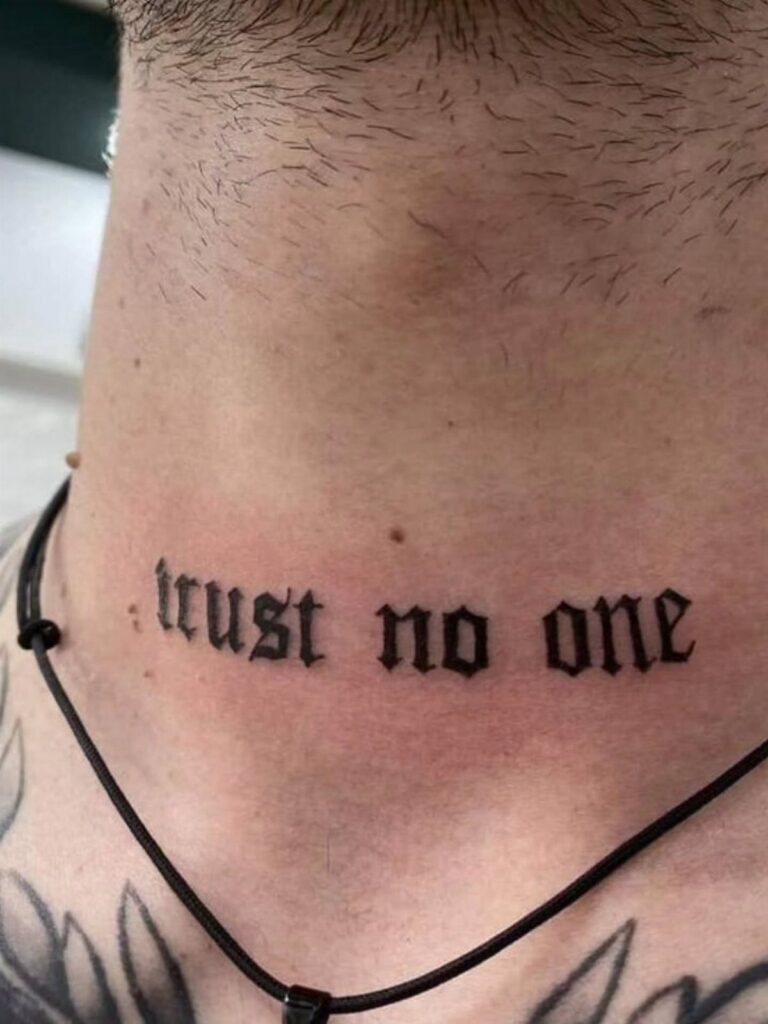
The skin on the neck sits directly over bone and nerve with almost no fat to cushion the needle, which makes every session sharper and shorter than work on your arms or chest.
Placement decides how much you can hide: the back of the neck disappears under a collar and long hair, while the front and sides stay visible in every conversation you have.
A butterfly or skull gives you one symbol that reads clearly from a distance, a lion or moth takes multiple sessions and fine shading to hold up under scrutiny, and script or geometric patterns fill the space without carrying literal imagery.
1. Butterfly
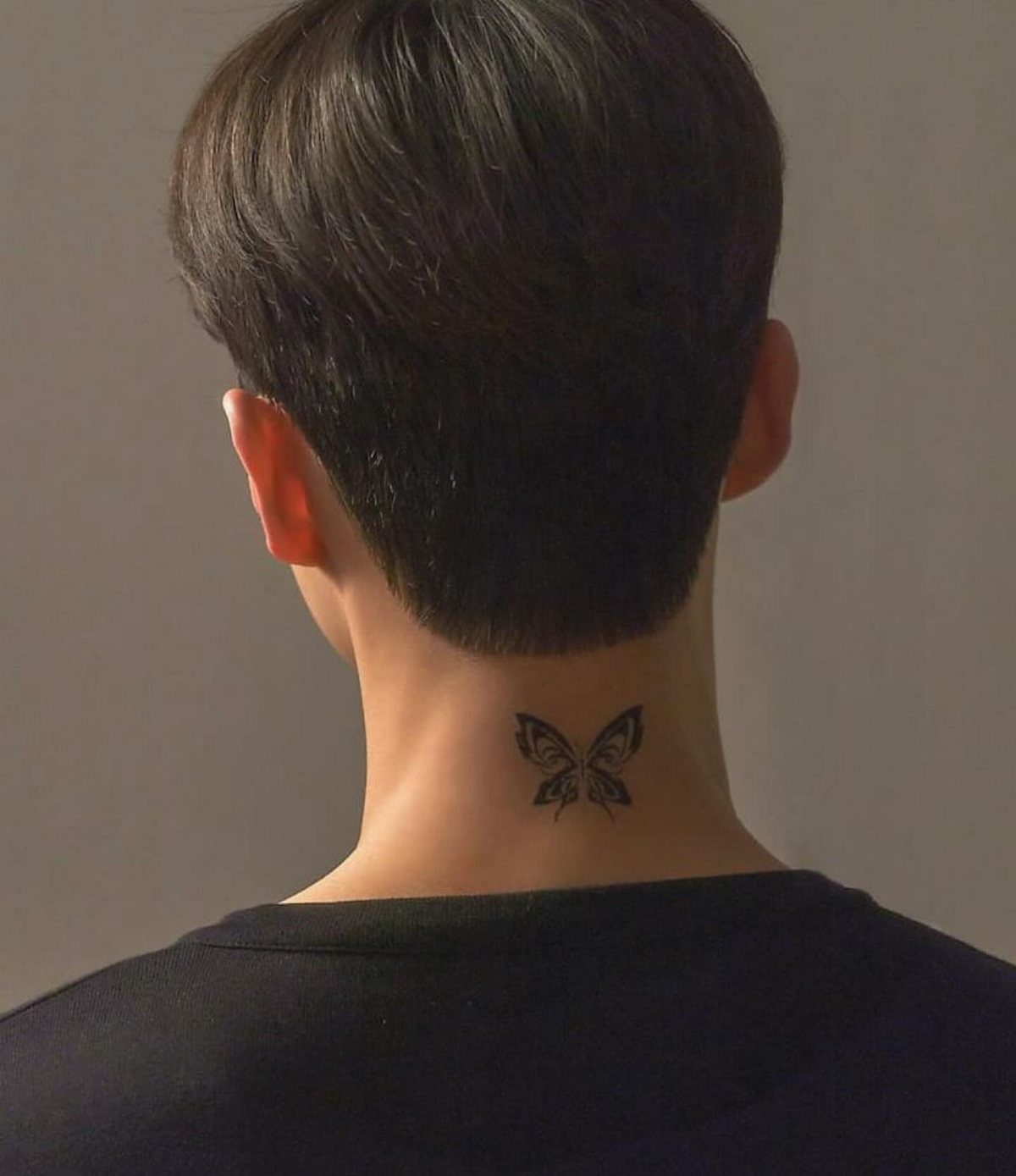
A butterfly on the back of the neck carries the idea of transformation, and the black silhouette keeps it simple enough to read from a distance.
The nape is a good spot if you want something you can show or hide depending on your haircut and collar.
The back of the neck sits on bone without much cushion, so expect sharp, high-frequency pain that gets harder to sit through toward the end.
2. Skull
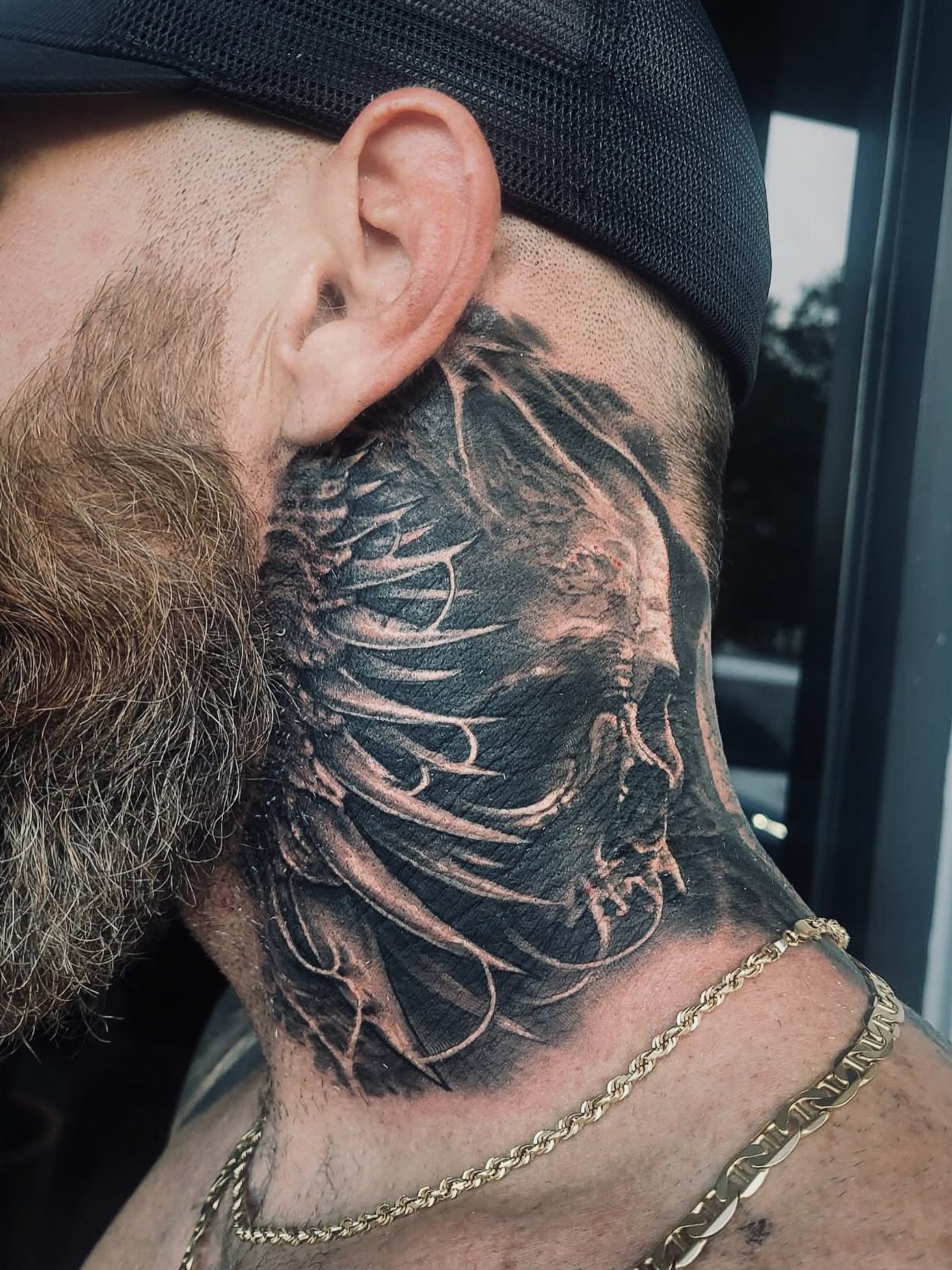
A skull on the side of the neck reads as mortality and defiance in equal measure. The shading here runs deep, with grey tones that give the bone structure dimension and make the piece look like it belongs on skin.
Side-neck placement means you feel it in your jaw and ear while the needle runs.
The visibility is permanent unless you wear a turtleneck, so the choice is binary: you want people to see it or you pick a different spot.
Detail this dense needs an artist who can hold a steady line and layer tone without overworking the skin.
3. Rose
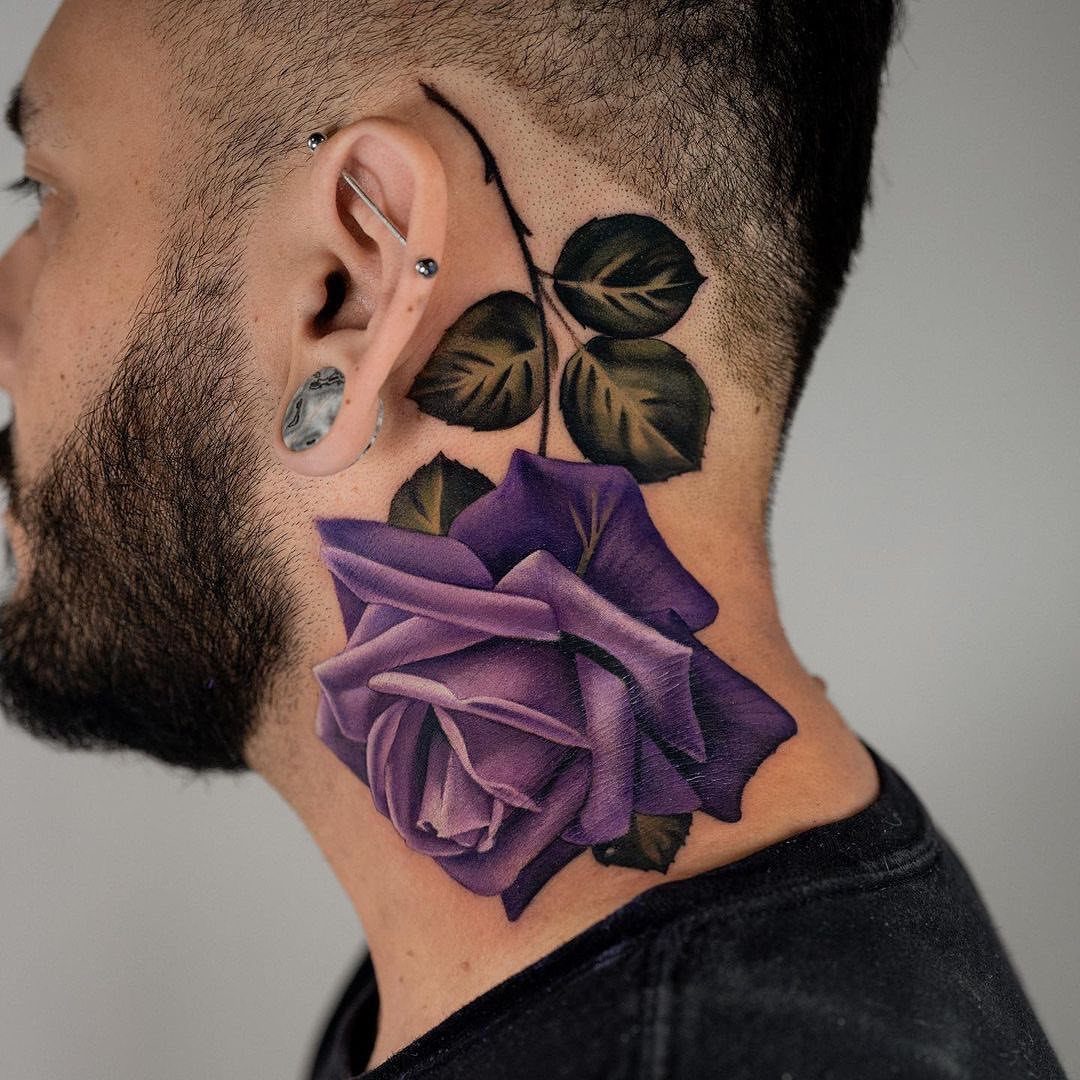
A rose on the side of the neck combines beauty and hardship in one symbol, and the purple petals here make it stand out from the usual red or black versions.
Color adds sessions and cost, but it also gives the design weight and stops it from disappearing into shadow.
Side-neck skin is tight and thin, so the needle hits hard and the color takes longer to set. Purple fades faster than black or blue, especially if you work outdoors, so sunscreen becomes part of the routine.
4. Geometric Triangles
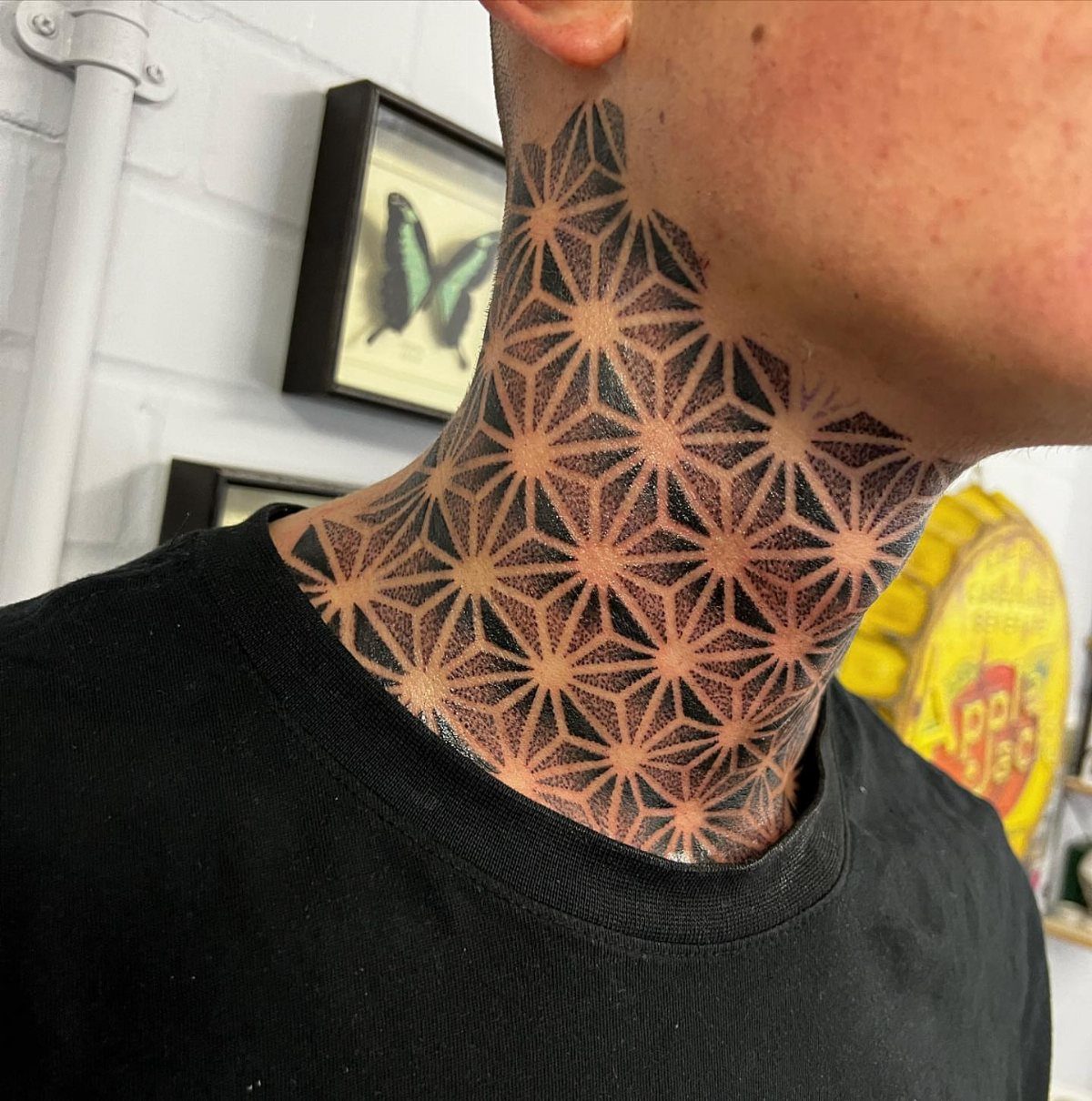
Geometric triangles on the neck give you a piece that reads as structure and pattern without carrying symbolic weight. The lines stack and overlap to fill the space, and black ink keeps the pattern sharp.
Clean geometry lives or dies on line quality. If one edge wobbles or one angle drifts, the whole piece looks off, so find an artist whose portfolio shows tight geometric work.
The front and side of the neck hurt more than the back because the skin sits directly over the throat and jaw.
The pattern can extend up toward the jawline or down to the collarbone if you want more coverage later.
5. Eagle
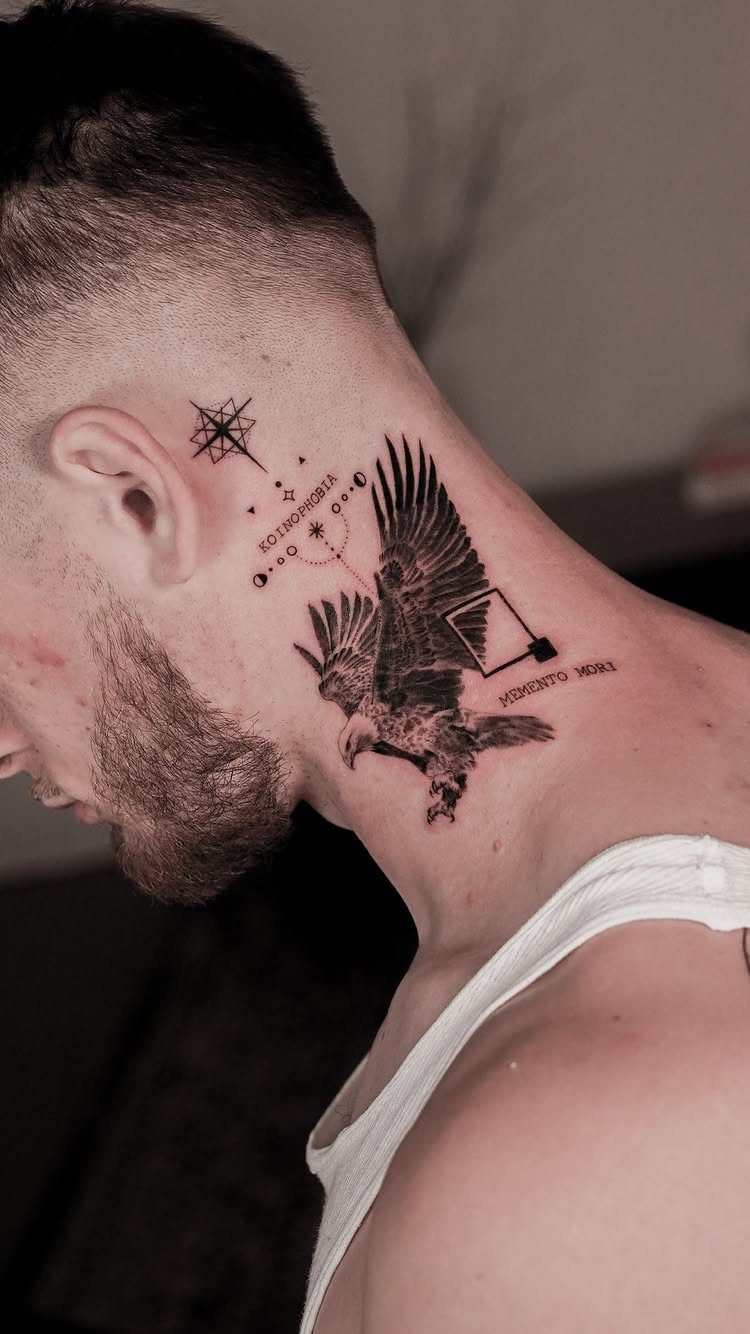
An eagle on the neck stands for strength and freedom, and the spread wings here give the design movement.
Adding text like "MEMENTO MORI" or "KOINOPHOBIA" lets you layer meaning, though the words need to be small enough that they don’t compete with the bird.
The side of the neck is one of the most visible placements you can choose, so the design needs to hold up under direct eye contact and read clearly from a few feet away.
Birds with open wings fill space better than static designs, and the geometry around the edges frames the piece without adding clutter.
6. Compass
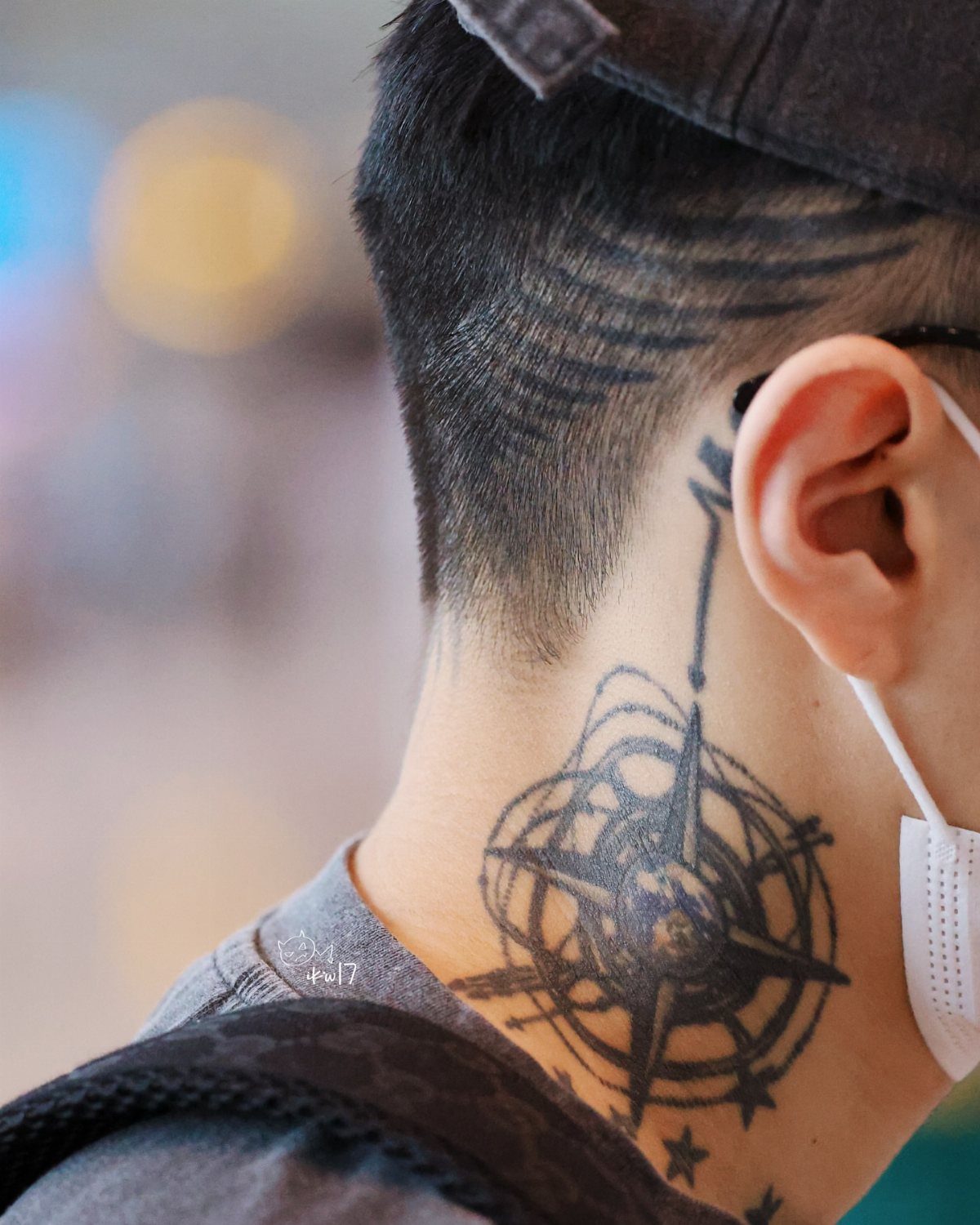
A compass on the neck is about guidance and direction, and the cardinal points give the design a built-in structure that fills the space cleanly. Stars and directional markings add detail without crowding the center.
Placement here, on the side of the neck below the ear, means the tattoo sits in a spot people see before they see your face.
The skin moves when you talk or turn your head, so the design needs strong outlines that hold their shape under motion.
If you shave patterns into your hair, the tattoo and the cut can work together, but the ink stays after the hair grows back, so design it to stand alone.
7. Cross Neck Tattoo
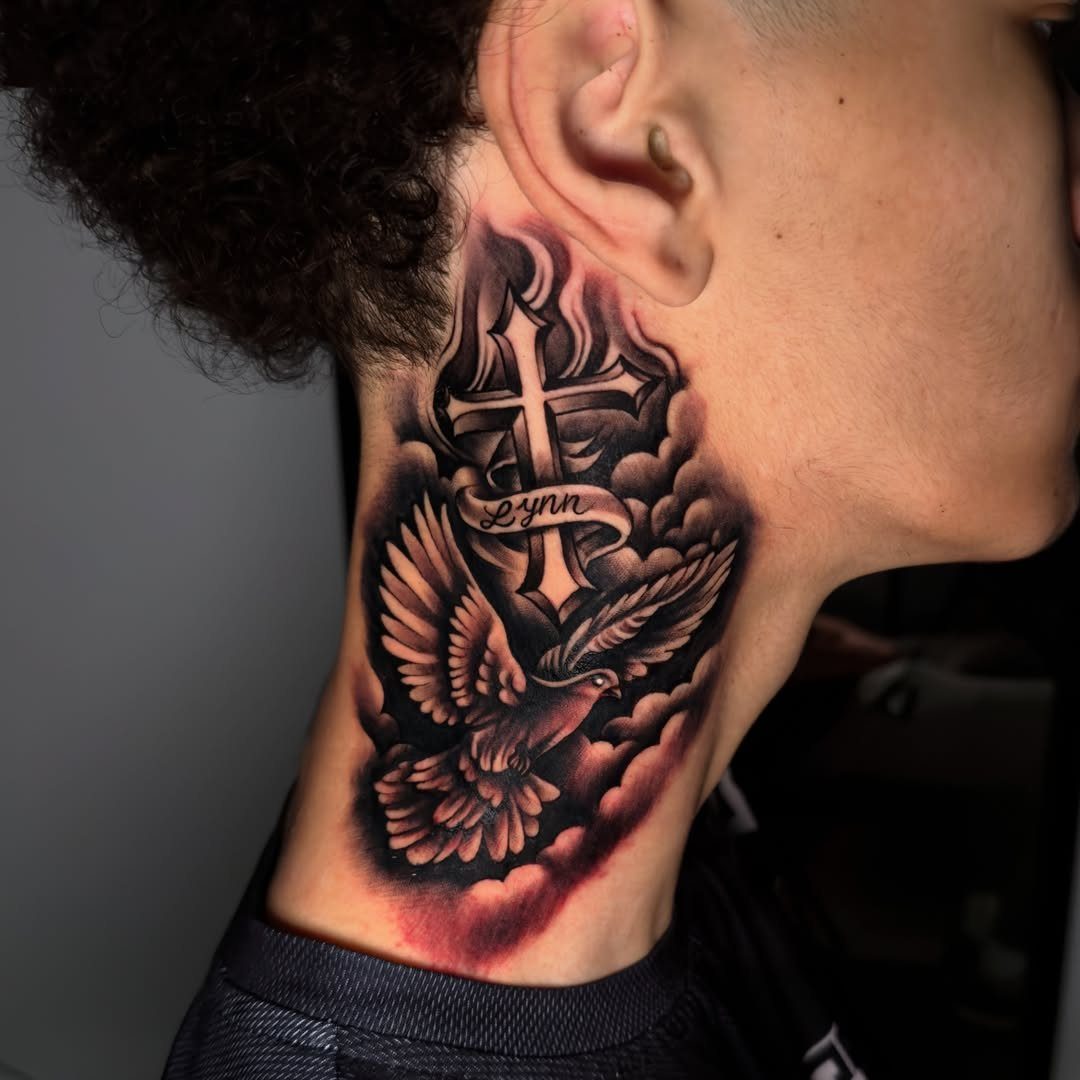
A cross paired with a dove and clouds puts faith and remembrance in one frame, and the banner with a name makes it personal.
The side of the neck gives you high visibility, so the design reads as a public statement more than a private one.
Mixing religious symbols with script means you need clean line work on both, and the ribbon holding the name has to be wide enough that the letters stay legible as the ink settles.
If the name matters enough to carry permanently, this placement commits to it.
8. Evil Wolf
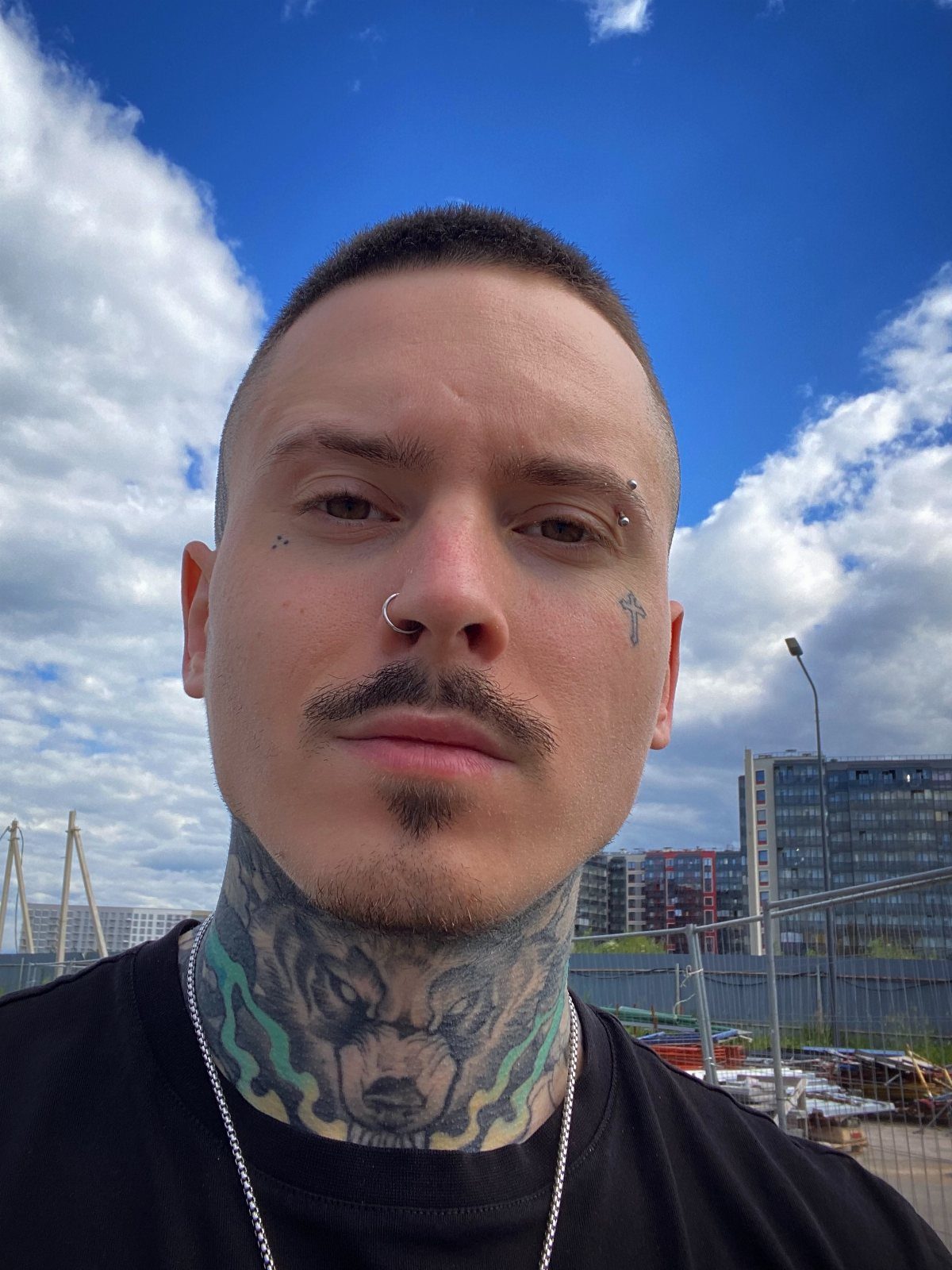
A wolf head on the front of the neck carries strength, loyalty, and independence, and the snarl adds aggression to the symbolism.
Full-front placement means the tattoo faces people directly, so the design needs bold shading and a clear silhouette to hold up under that scrutiny.
The throat sits right over cartilage and nerve bundles with barely any fat to cushion the needle. Expect the needle to feel sharp and the session to be short, because most people can’t sit through long stretches in this spot.
9. Black and White Spider with Web
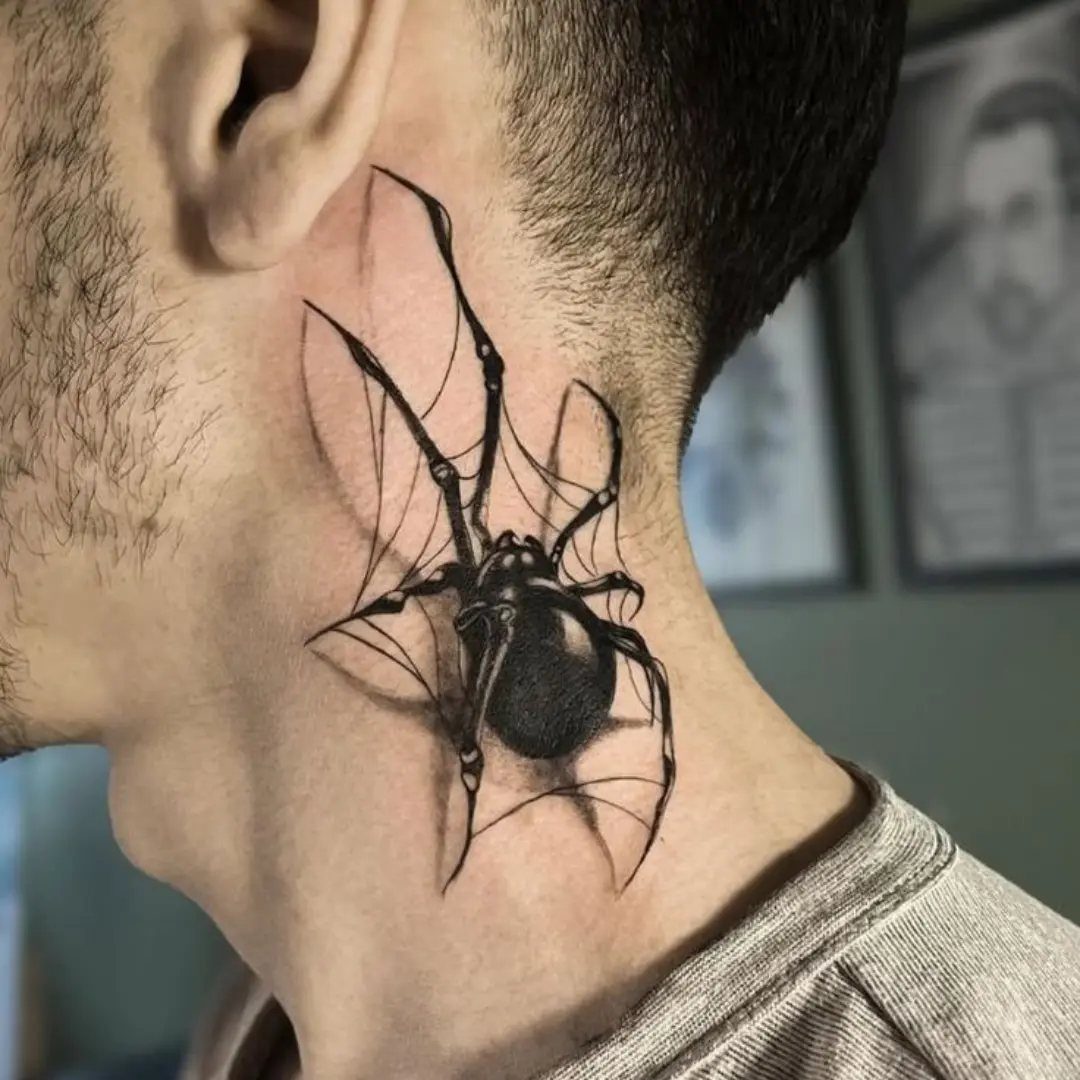
A spider on a web gives you drama through contrast and fine detail, and black and grey shading makes the legs and the web strands stand out without needing color.
The back of the neck is a natural spot for radial designs like this because the web can spread out from the spider in all directions.
Thin lines fade faster than bold ones, so the web needs enough weight to stay readable after a few years.
An artist who works in realism or geometric detail will give you cleaner results than someone who specializes in traditional bold work.
10. Flying Birds
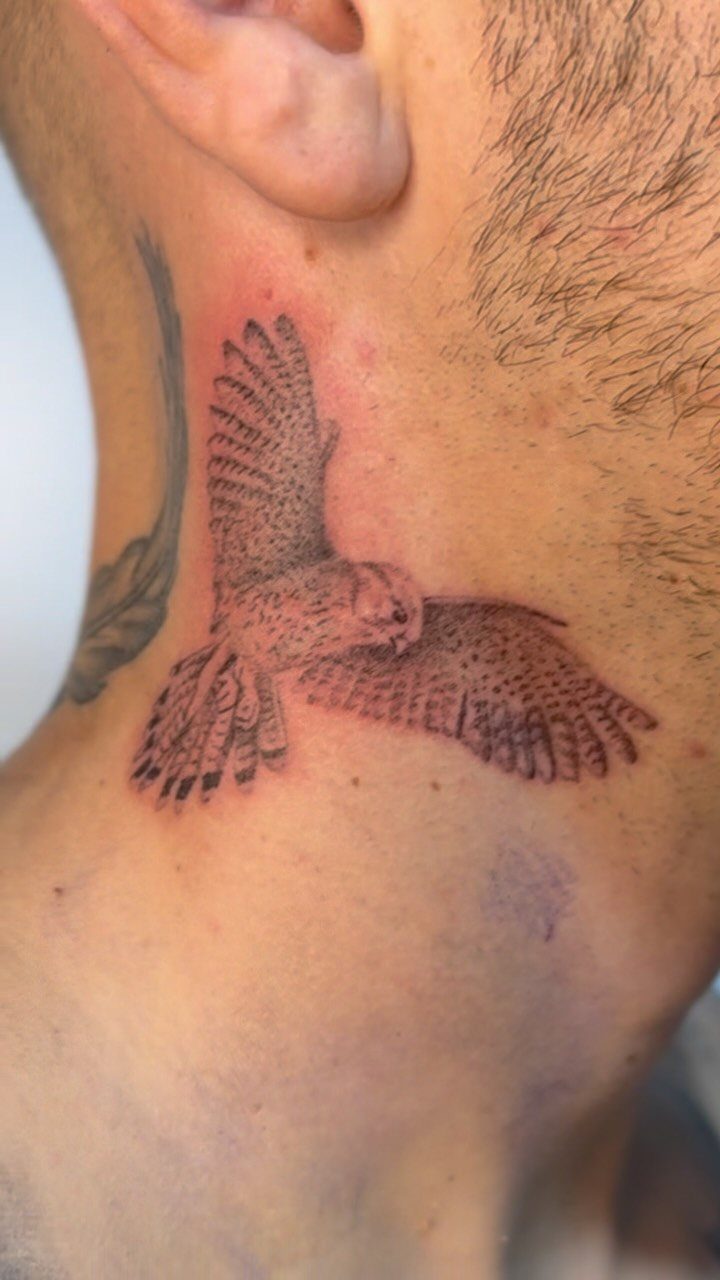
A bird of prey in flight brings movement and freedom to the neck, and the wings give the design width without needing extra elements.
The side of the neck works well for birds because the long shape follows the natural line from jaw to shoulder.
Black ink alone keeps the silhouette sharp and makes the design age better than color. Birds in flight read as optimism and escape, so the symbolism stays light even when the rendering is detailed and dark.
11. Lion
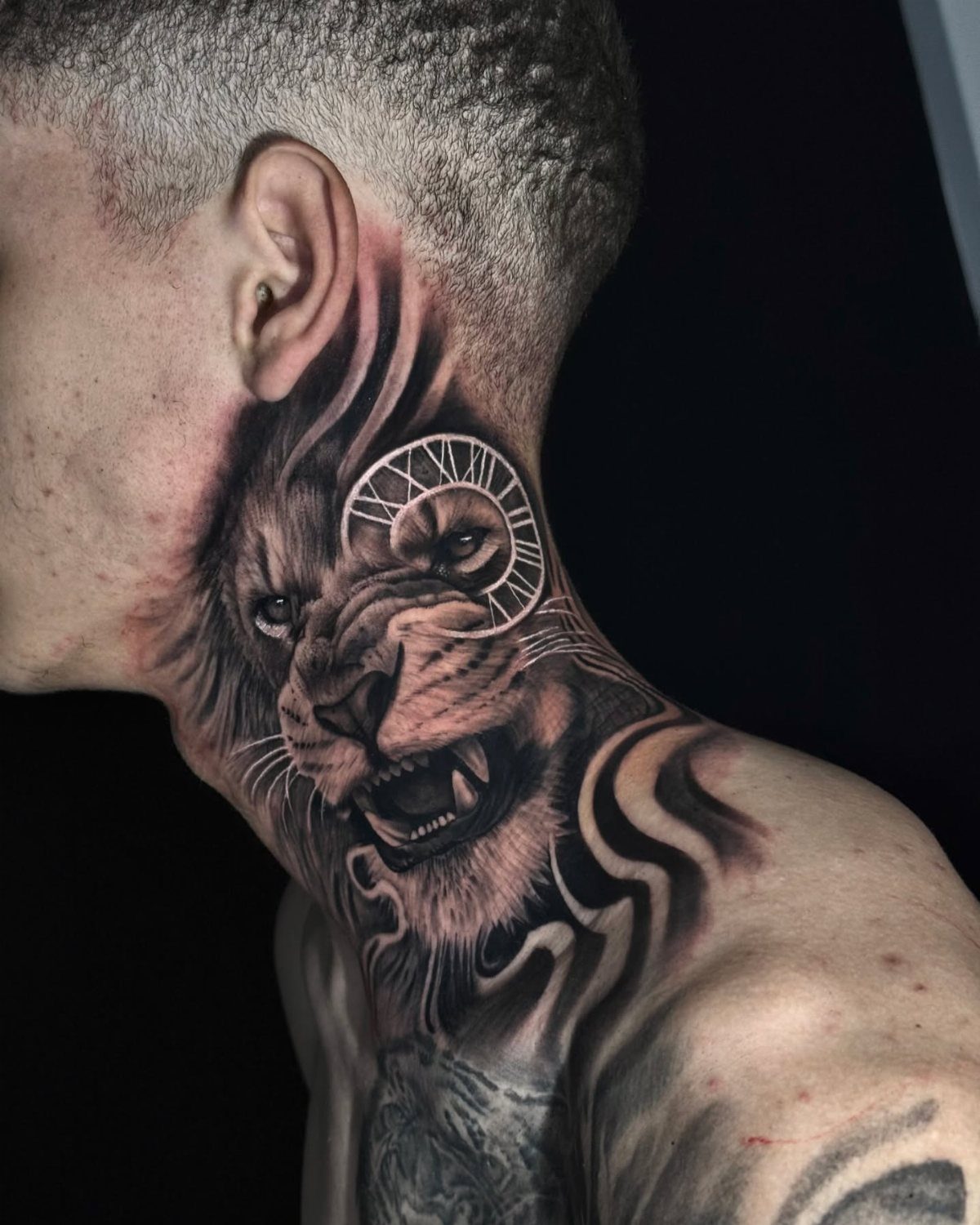
A roaring lion fused with a clock face layers courage and time into one image, and the Roman numerals give the design structure without adding clutter.
The side of the neck puts the lion’s face in a spot people notice immediately, so the rendering needs depth and clean shading to hold their attention.
Combining 2 detailed elements means the tattoo takes longer to finish and costs more than a simple lion head.
The clock can mark a specific time that matters to you, or it can sit as a reminder that time itself is the point.
12. Sword with Flowers
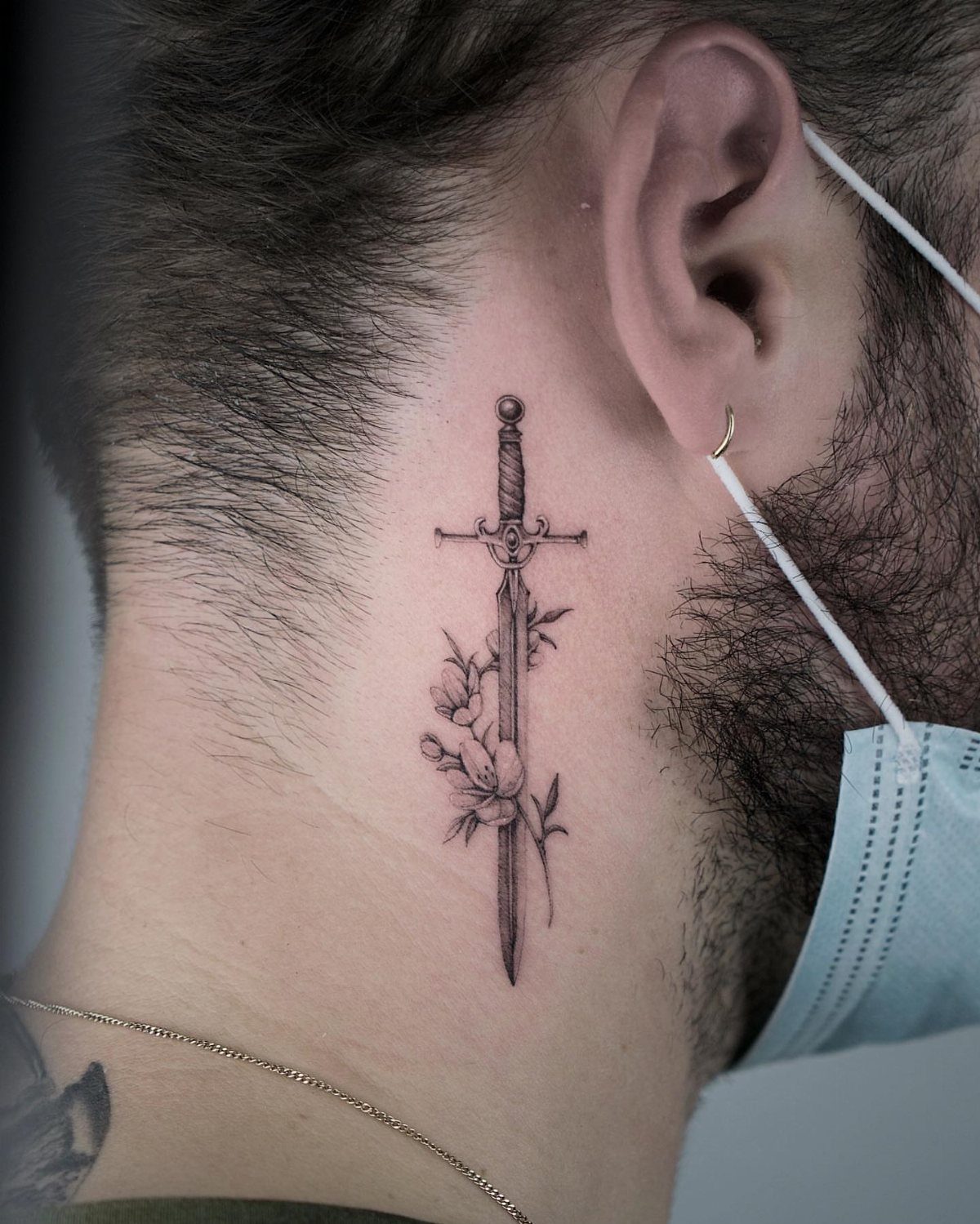
A sword wrapped in flowers balances strength with softness, and the contrast between the hard metal and the organic petals gives the design range.
The side of the neck is a bold spot for this kind of pairing because the vertical shape of the sword follows the line of the neck cleanly.
Grey shading on both the sword and the flowers keeps the design cohesive without relying on color.
If you want the flowers to stand out more, adding color to the petals later is an option, but black and grey alone holds up better over time.
13. Patternwork
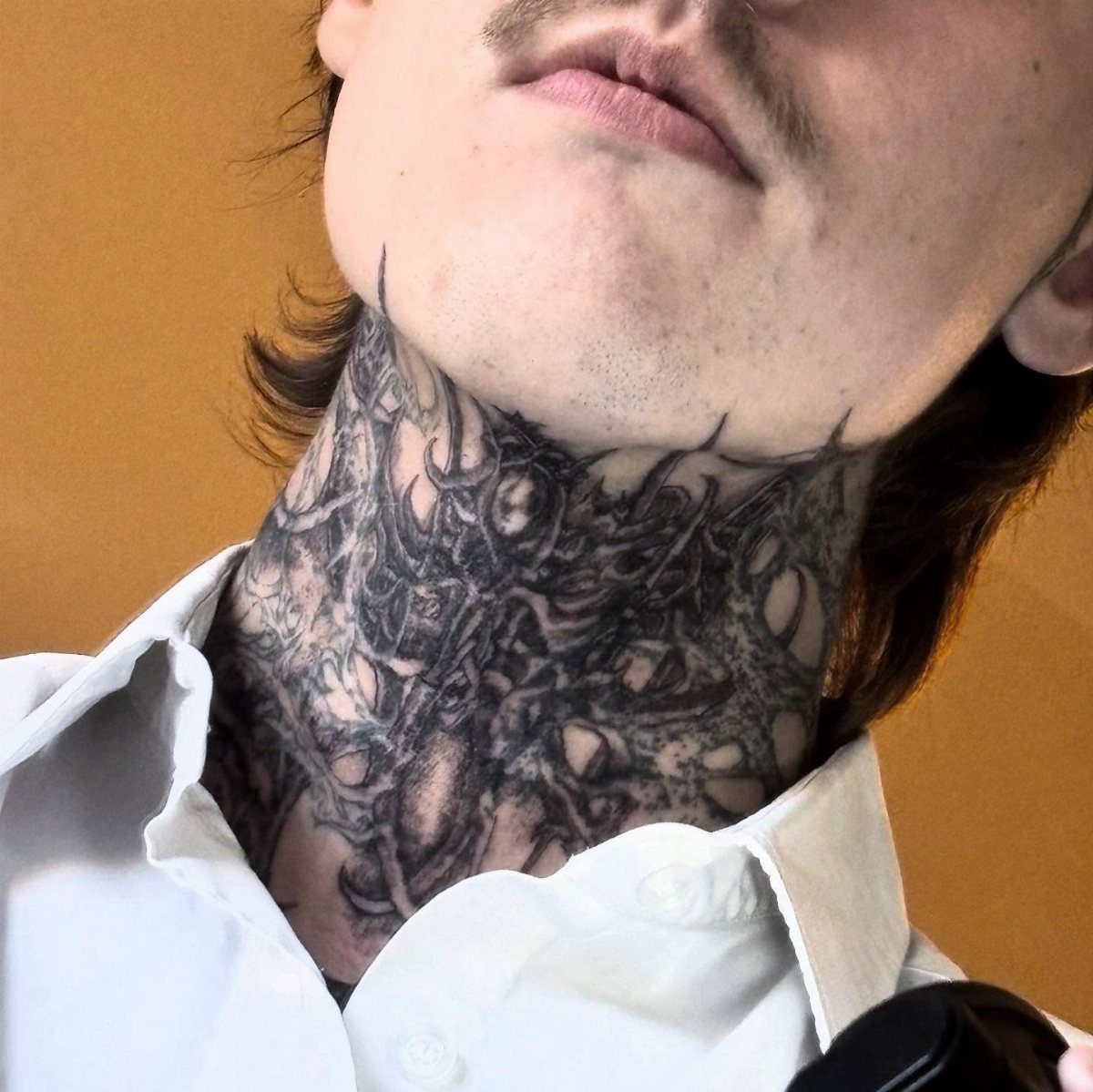
Dense organic patterns that spread across the neck fill space without relying on literal imagery, and the abstract shapes hold up as texture from a distance.
Black ink keeps the design bold and legible as it wraps around the curves of the throat.
This kind of coverage takes hours in one of the most painful spots you can choose, and the work needs to be done by an artist who specializes in pattern consistency.
The front of the neck has no cushion between skin and cartilage, so sessions run shorter than other placements.
14. Japanese Geisha Neck Tattoo
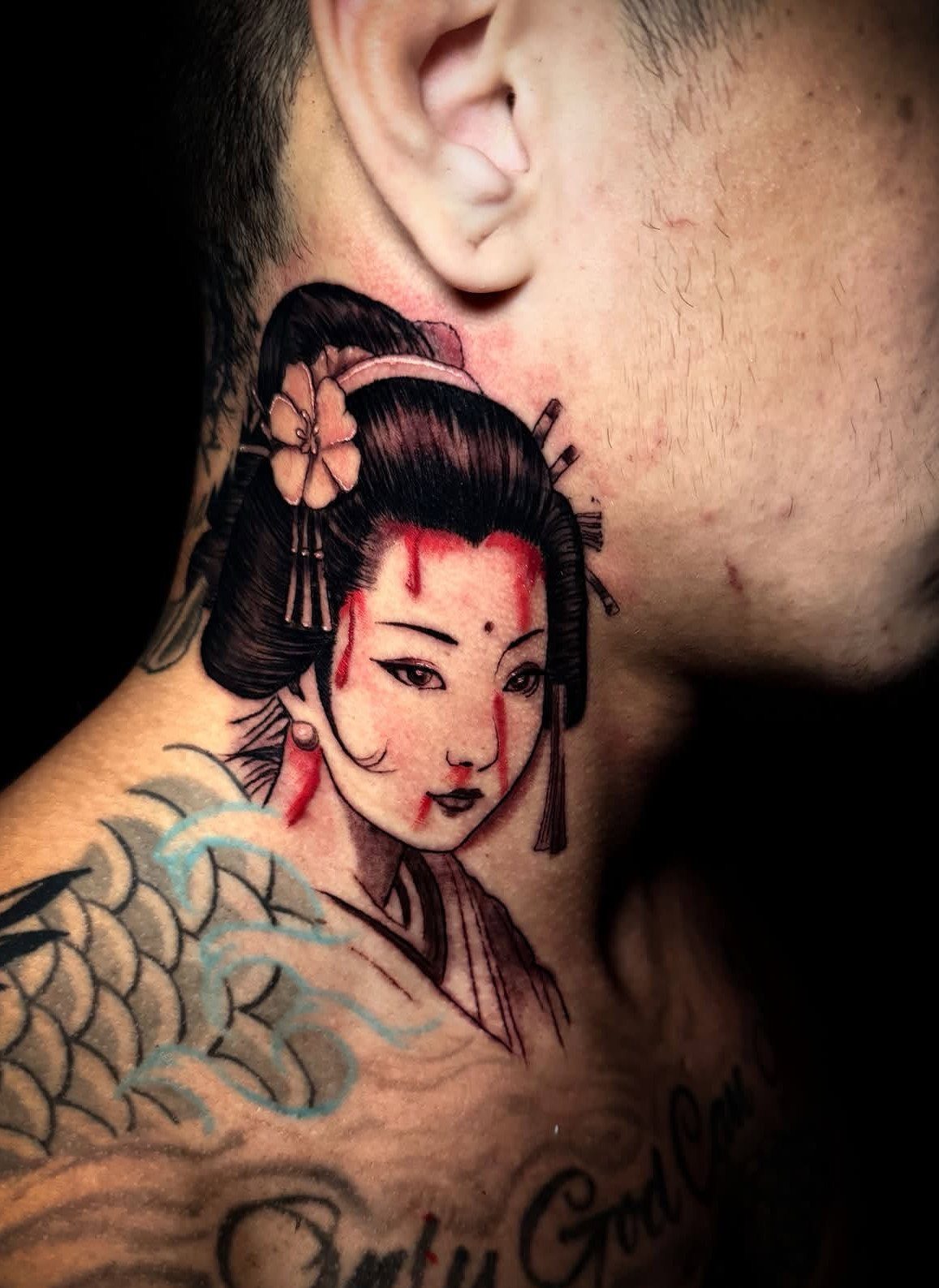
A geisha portrait brings traditional Japanese imagery to the neck, and the red accents in the hair ornaments and clothing give the design focal points without overwhelming the face.
The side of the neck gives you enough room for the figure and decorative elements to read clearly.
Japanese portraiture relies on fine line work and layered color, so choose an artist with experience in that style. The ornaments and fabric patterns add depth, but they also mean longer sessions and higher cost than a simple black outline.
15. Moth Neck Tattoo
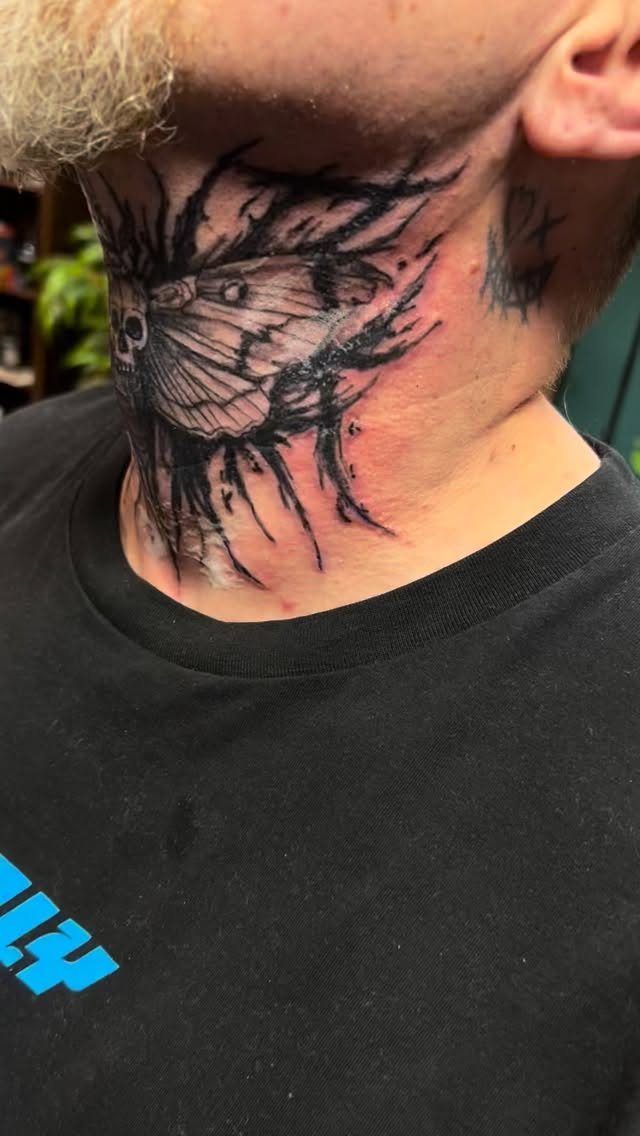
A moth with a skull head gives you death symbolism through insect anatomy, and the splattered ink around the wings adds raw energy without softening the design.
The splatter needs to be controlled enough that it frames the moth instead of competing with it.
16. Dagger Neck Tattoo
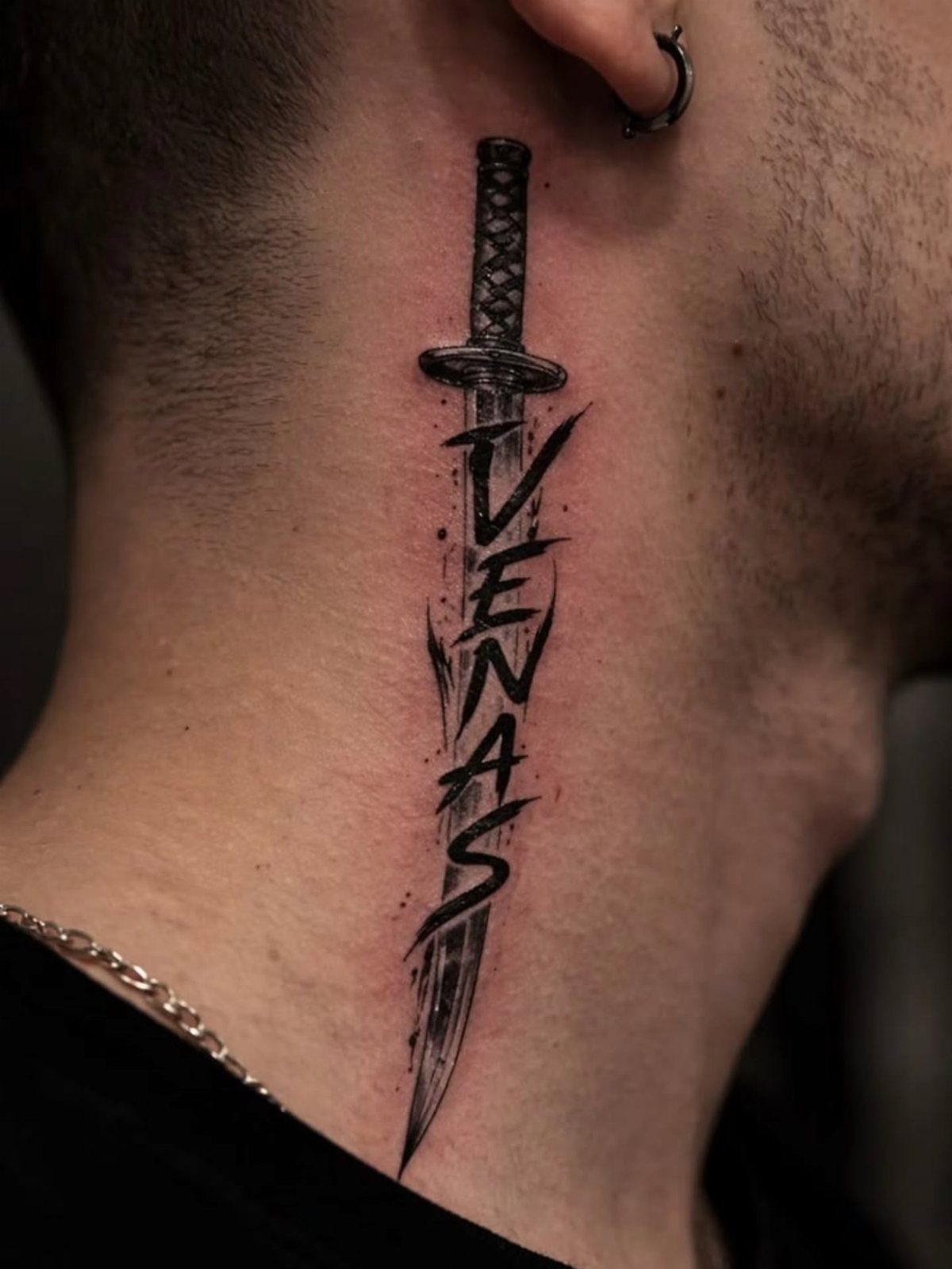
A vertical dagger with lettering built into the blade gives you a weapon symbol with space for a word that matters to you.
Lettering on a narrow blade means the font has to be simple and the word short, or the letters blur together as the ink spreads.
Black ink keeps the dagger readable and ages better than fine grey shading on a high-motion area like the neck.
17. Vertical Script Neck Tattoo
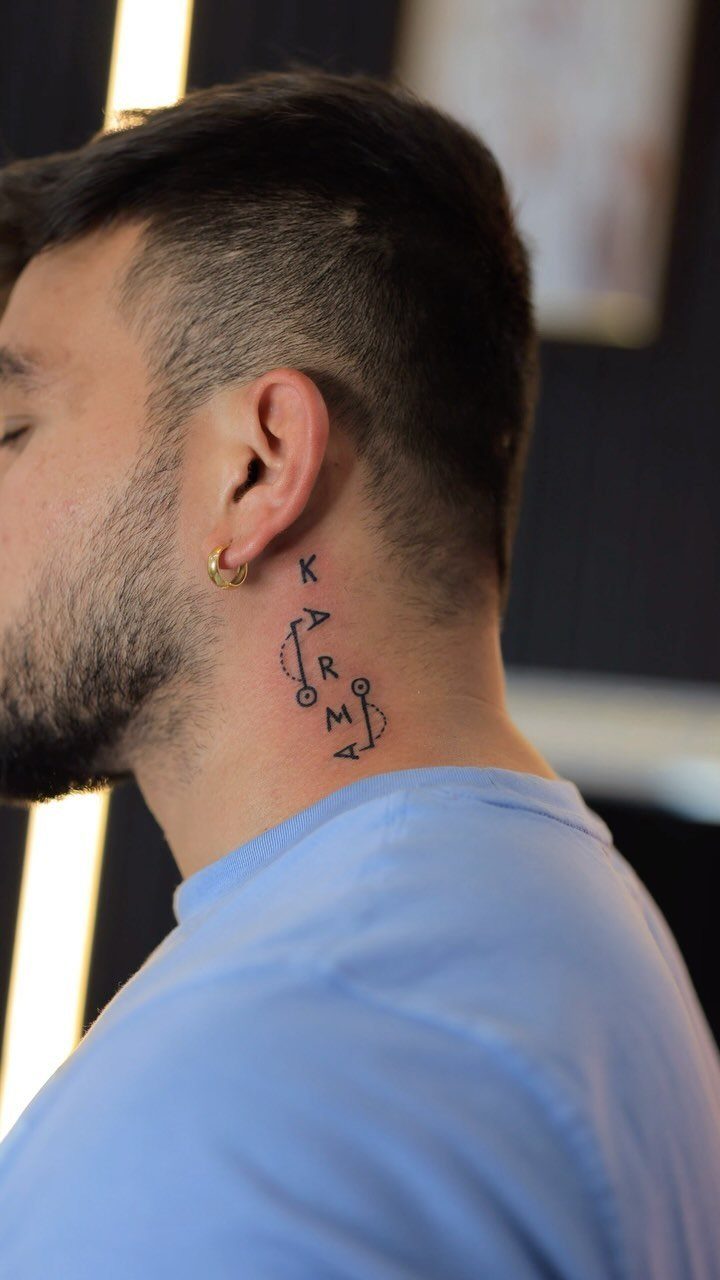
The word needs to be one you can defend in job interviews and family dinners, because this placement is permanent visibility.
Thin script fades faster and loses definition, especially on the neck where the skin flexes constantly.
18. Sword Through Eye Tattoo
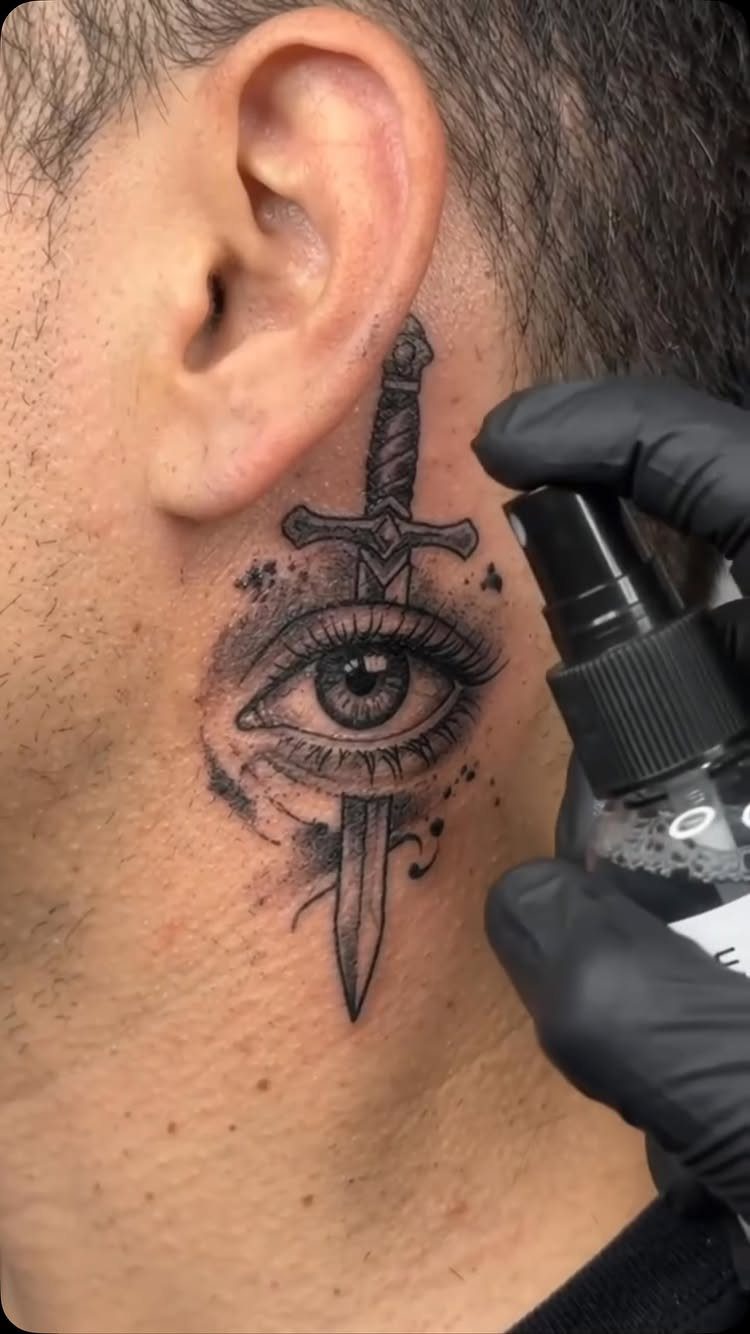
The blade runs straight through the iris, so the composition stays centered and the violence reads immediately. The eye needs fine detail to look convincing, and the sword gives the design structure so it doesn’t collapse into a vague shape.
19. Sword and Helmet Neck Tattoo
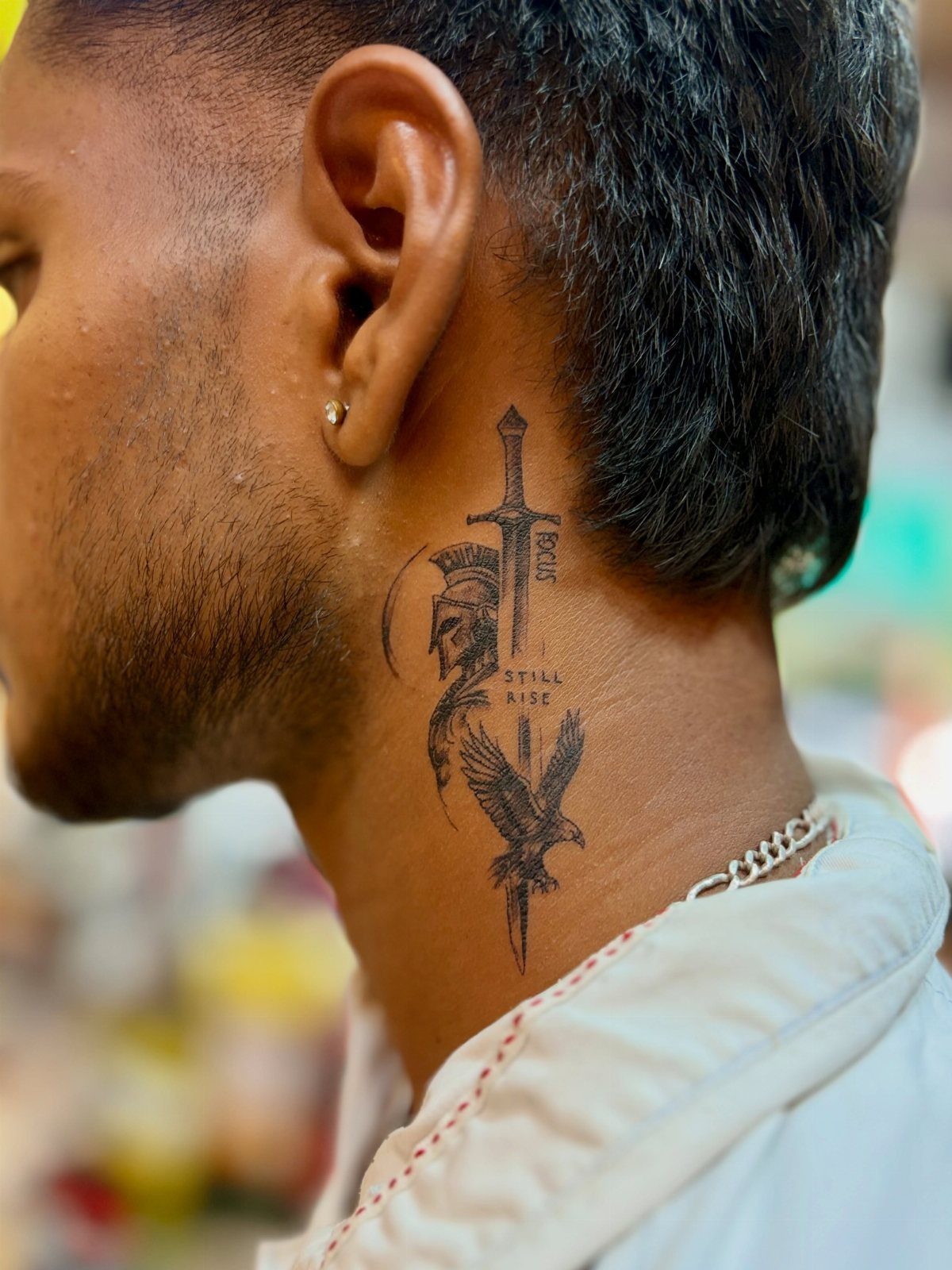
A sword paired with a helmet and bird stacks military strength with resilience, and the vertical arrangement follows the line of the neck naturally.
The bird at the top lifts the design out of pure combat imagery and adds a sense of freedom or survival.
Black ink alone keeps the shapes bold and readable from a distance. The side of the neck means the tattoo sits where people see it in conversation, so every element needs enough weight to hold up under direct scrutiny.
If you want to add text, the design can handle a short phrase without crowding the imagery.
Meaning of Neck Tattoos
A neck tattoo announces strength and resilience because the placement itself hurts and stays visible. The neck has been rebellion territory for decades, tied to counterculture movements and people who refused the rules around what belonged on skin.
Visibility reads as honesty: you can’t hide a neck tattoo under most clothing, so the design becomes part of how people see you from the first moment.
The style you pick carries its own weight.
Religious symbols, names, and cultural imagery each say something different, and the choice is permanent. Celebrities and influencers have pushed neck tattoos into mainstream acceptance, but that doesn’t erase the fact that some industries still read them as unprofessional.
For men, the placement can add to masculinity and individuality, especially when the neck tattoo ties into work on the arms or chest.
Yet heavily inked people know neck tattoos aren’t something to take lightly. Not only are they painful, but neck tattoos are often only done when you’ve run out of sufficient space on your arms, legs, and torso.
Pain and Commitment
The skin there lies right over bone and nerve with almost no cushion, which makes the needle feel sharper than it does on fleshier ground.
The pain is sharp and high-frequency, and most people can’t sit through long sessions without breaks.
Most artists ask to see existing work on your arms, chest, or legs before they’ll touch your neck. If you regret it or the work is poor, your options for covering it are limited to turtlenecks and scarves.
Commitment here is binary.
You’re choosing a design that people will see before they see your face, and that decision stays with you through job interviews, family dinners, and every conversation you have. If you’re not already heavily tattooed, wait.
Professional Considerations
A neck tattoo can close doors in industries where appearance standards still lean conservative: law, finance, corporate management, and some client-facing roles.
The stigma has softened as neck tattoos gained popularity among public figures, but that doesn’t mean every workplace has followed.
Some employers still read visible ink as unprofessional or incompatible with their brand, and a neck tattoo is difficult to hide.
A collared shirt covers the back of the neck if your hair is long enough, but the front and sides stay exposed.
If you work in a field with strict dress codes or you’re early in a career where advancement depends on fitting a specific image, think through the trade-off before you book the appointment.
Tattoo removal on the neck is expensive, painful, and leaves scarring, so reversal isn’t a clean option.
Frequently Asked Questions
What are some good tattoo ideas for men?
Good neck tattoo ideas for men include butterflies for transformation, skulls for mortality and defiance, roses that combine beauty and hardship, and geometric triangles for structure without symbolic weight.
Eagles with spread wings bring movement and strength, compasses offer guidance and direction, and lions fused with clock faces layer courage and time into one image.
Swords wrapped in flowers balance hard metal with organic softness, and wolves carry loyalty and independence.
Does a neck tattoo hurt?
The needle runs across bone and tendon with barely any padding between tip and nerve, so every pass registers more clearly than it would on your shoulder or thigh.
Sessions rarely run long because the sting stays high and constant, and most artists will break every 45 minutes.
The throat and the line of the jaw register pain faster than the nape because there’s less meat between the ink and the nerve.





