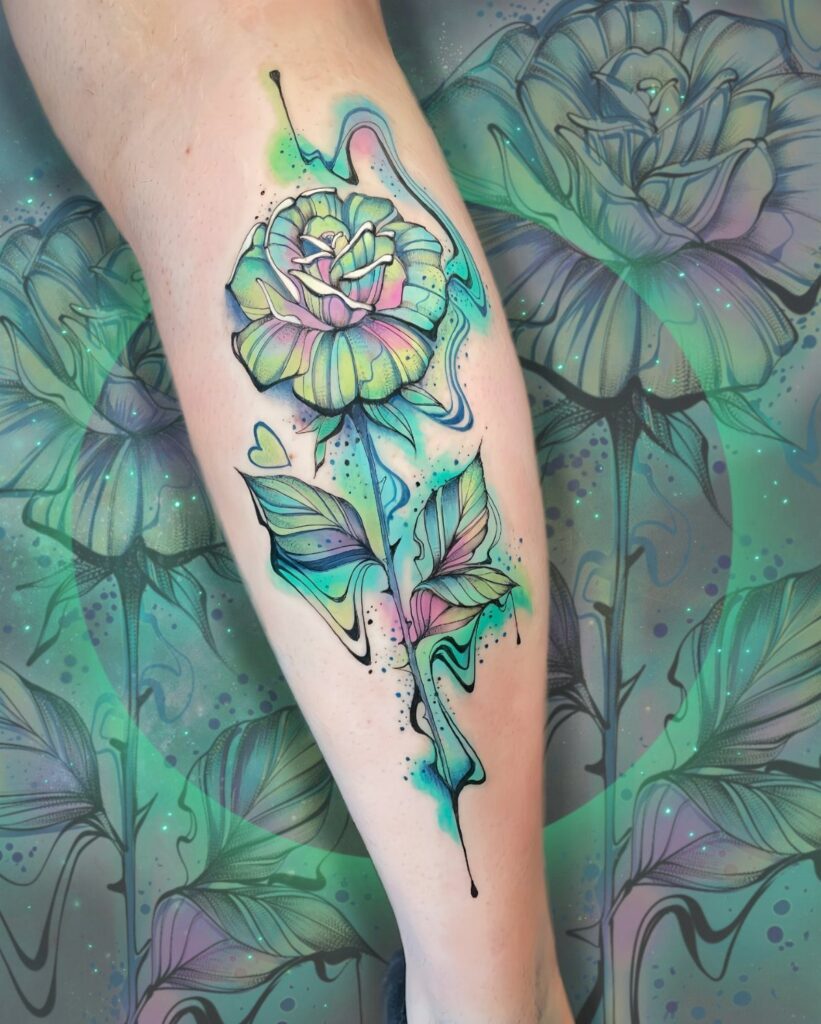
A calf tattoo can be a small single-flower piece done in one session, a bold mandala that takes a few hours, or a climbing vine that covers the full length from ankle to knee.
1. Floral Calf Tattoos
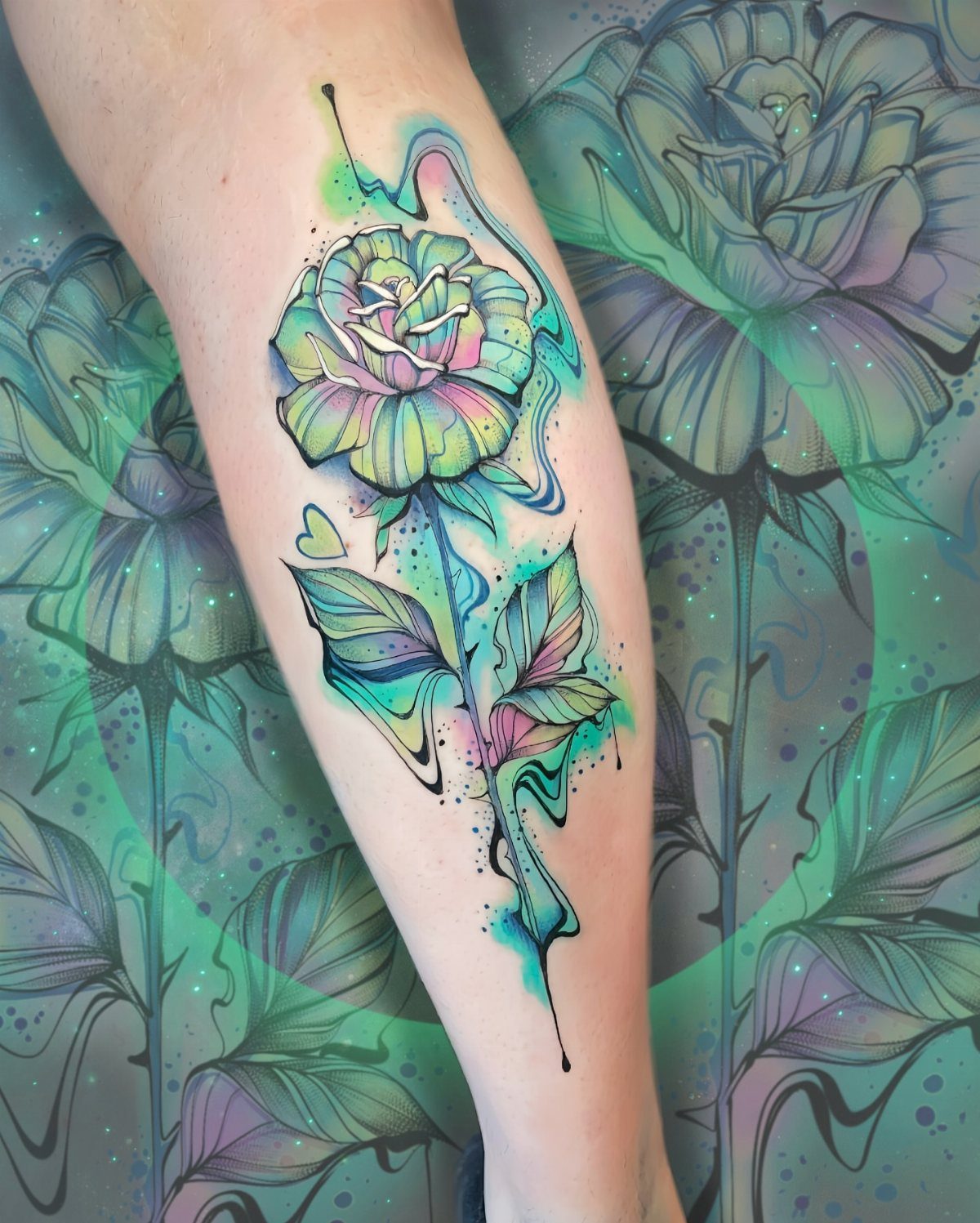
Flowers on the calf stay legible at any distance and hold meaning that lasts. The shape of the muscle lets a rose or peony sit naturally, and the curve adds dimension to petals and stems without forcing the composition.
I like how a floral piece can go bold with color or stay in blackwork, and the calf gives you enough room to build out leaves and secondary blooms if you want them.
Pain is moderate here, and healing is straightforward since the area flexes less than joints.
A floral calf tattoo works for shorts or stays covered at work.
2. Bold Statement Pieces
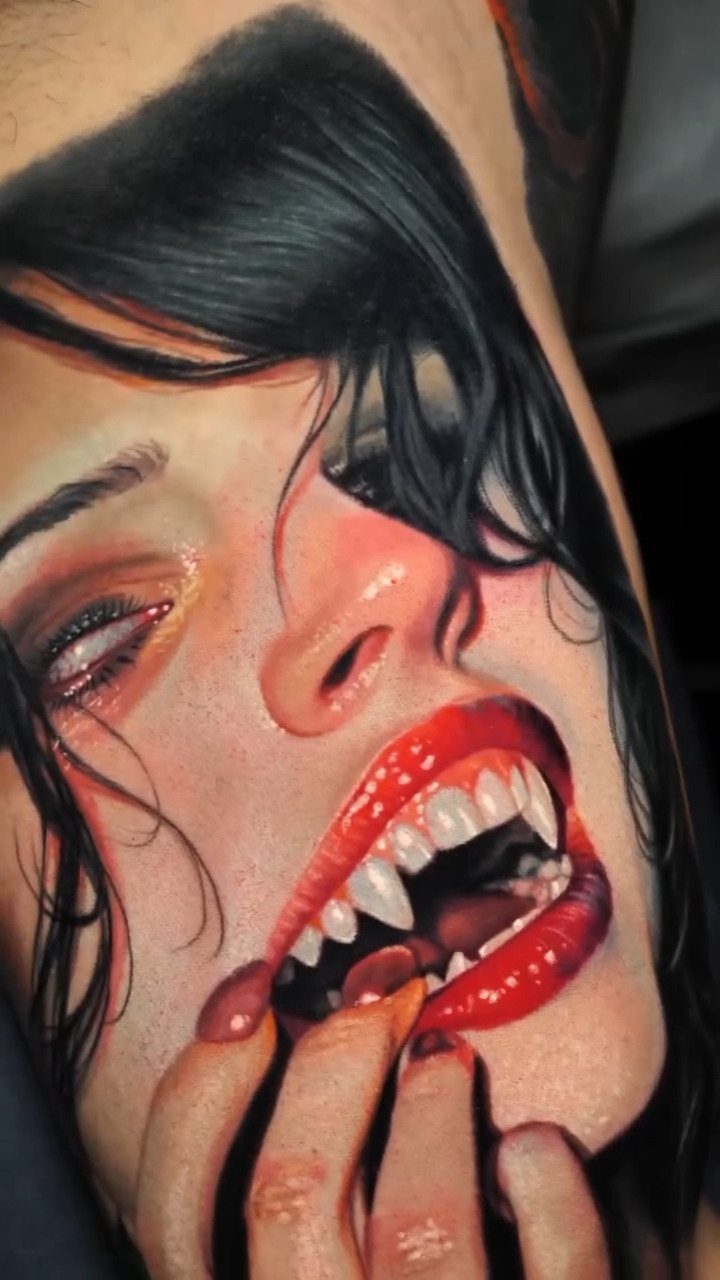
A calf can hold a full portrait, an elaborate scene, or any design that needs real estate to show detail.
The muscle provides a flat, stable canvas that does not distort much with movement, so fine lines and shading stay crisp.
Bold pieces here command attention when you want them seen and disappear completely under pants when you do not. I find the calf ideal for designs that would feel too large on the forearm but too small on the thigh.
Expect longer sessions for a statement piece, and budget accordingly. The result is a tattoo that holds its impact for decades.
3. Roses and Single-Flower Blackwork
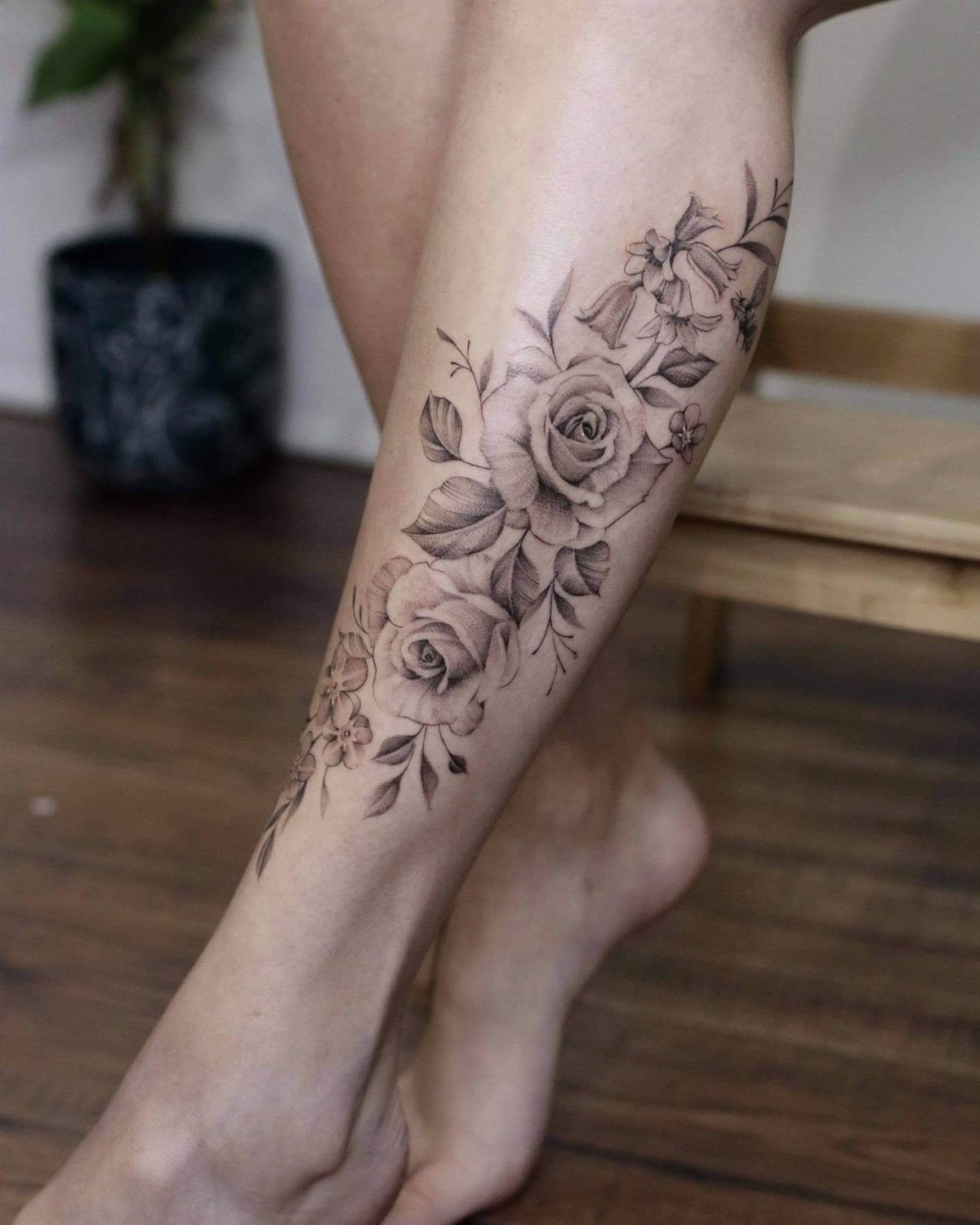
A single rose in black and grey gives you depth without color, and the calf’s curve lets the petals wrap naturally. Blackwork stays legible at any distance and ages cleanly, since there is no color to fade or shift.
I prefer a rose placed low on the calf, where it can extend toward the ankle or stay compact on the muscle. The design works alone or as a starting point if you decide to add more later.
Sessions are shorter than full-color work, and you rarely need a touch-up if the artist packs the black properly.
4. Mandala & Geometric Tattoos
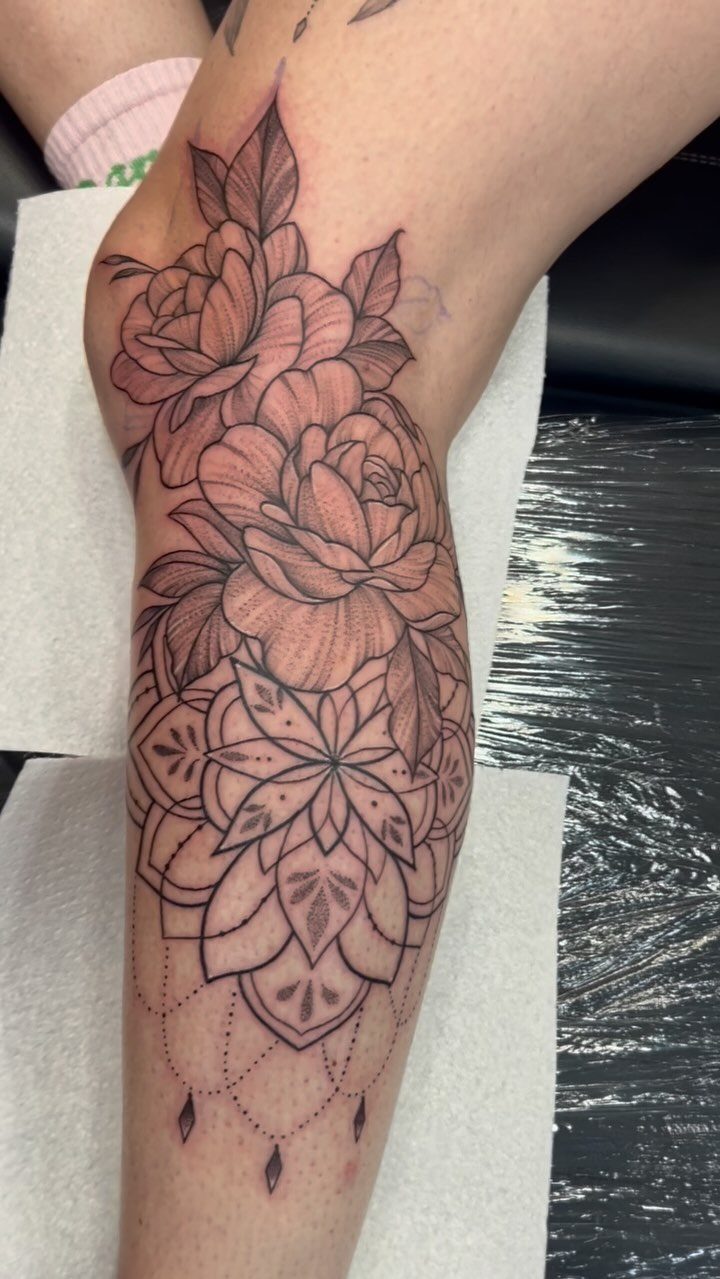
A mandala on the calf takes advantage of the round shape of the muscle, and the symmetry makes placement straightforward.
Geometric patterns hold their structure well here since the muscle stays relatively taut and does not stretch much with weight changes.
I like a mandala centered on the widest part of the calf, where it can radiate outward evenly. Adding florals above or below the mandala lets you lengthen the composition and keep the geometry intact.
Linework is precise, so find an artist who specializes in geometric pieces. Healing is typical for the area, and the design stays sharp if the lines are done right.
5. Minimalist & Small Tattoos
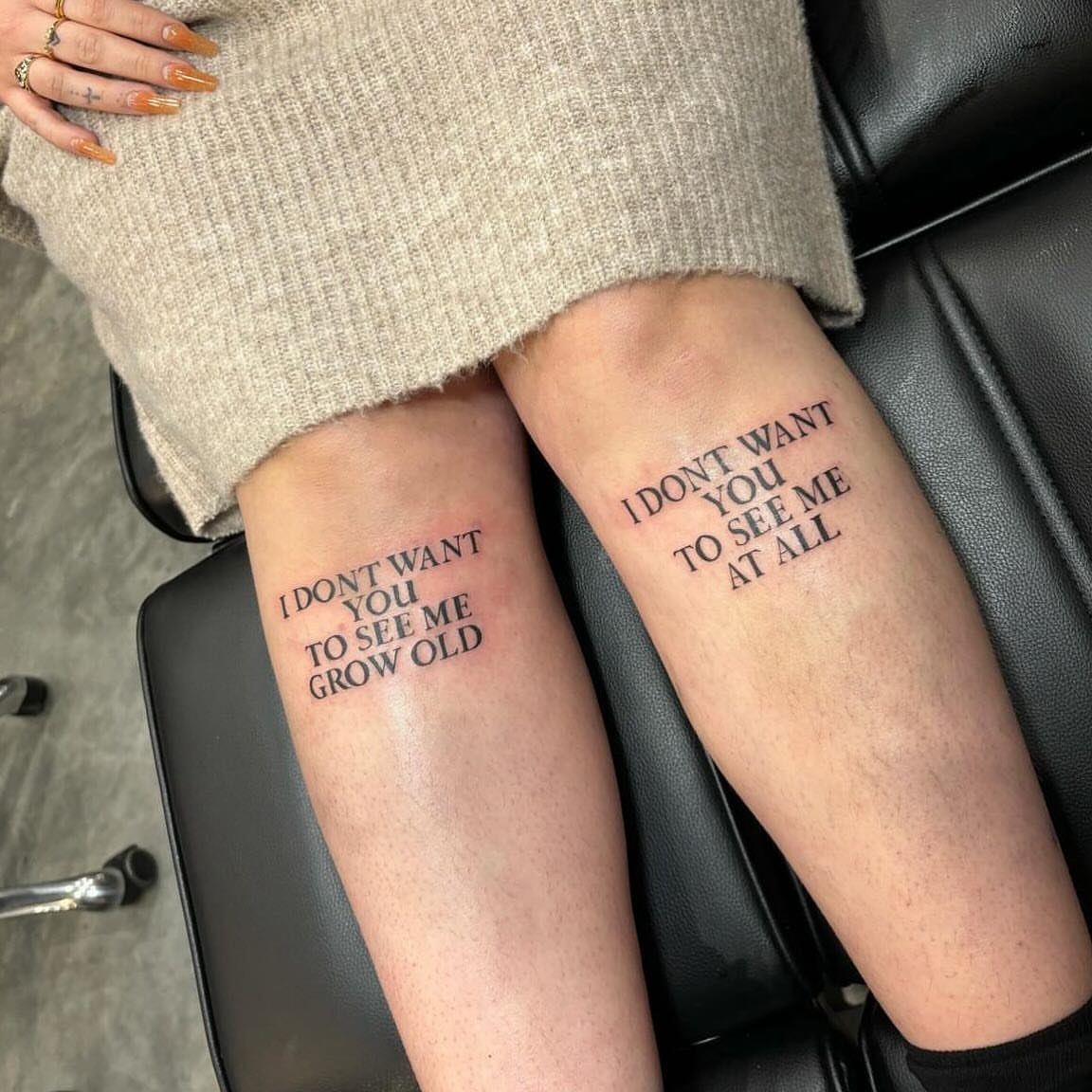
Small text, a single symbol, or a simple line drawing on the calf gives you something personal that does not announce itself. The placement is easy to conceal and just as easy to show when you choose.
I like how a minimalist piece here reads instantly without needing explanation. Fine line work holds up well on the calf because the skin is smooth and the area sees less sun damage than the hands or forearms.
Sessions are quick, often under an hour, and aftercare is simple since the tattoo is small and the area is easy to keep clean.
6. Animal & Nature-Inspired Tattoos
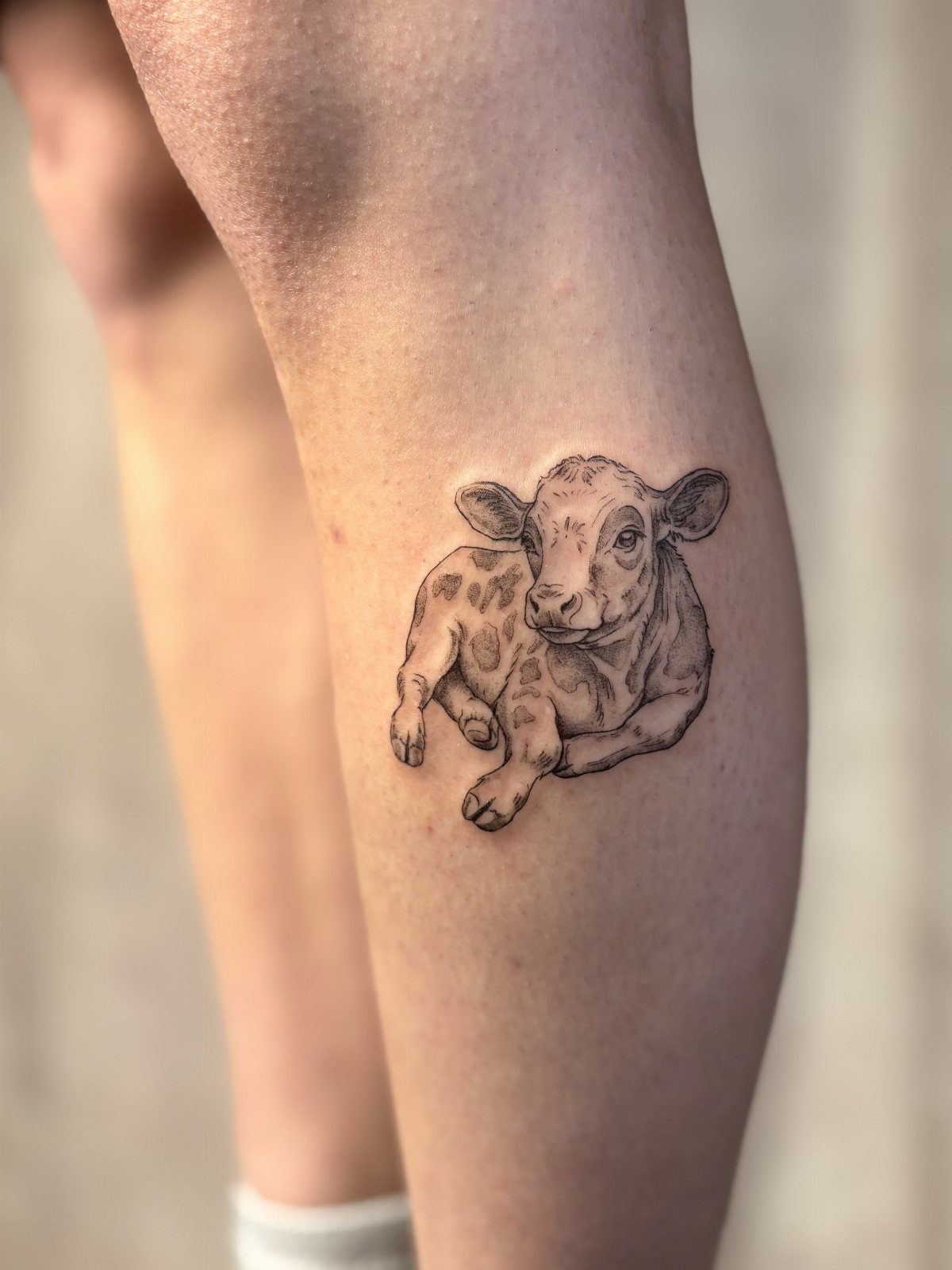
An animal tattoo on the calf lets you carry something that connects to your personality or a memory, and the placement gives you enough space for detail without committing to a full leg piece.
Birds, wolves, and snakes are common, but any creature that matters to you works.
I like how a calf tattoo can face forward or wrap slightly, which gives the design movement. The muscle contour adds shape to feathers, fur, or scales naturally.
Find an artist who specializes in the style you want, whether that is realism, illustrative, or traditional. The calf heals well and the design stays legible as long as the lines are clean.
7. Statement & Large Calf Tattoos
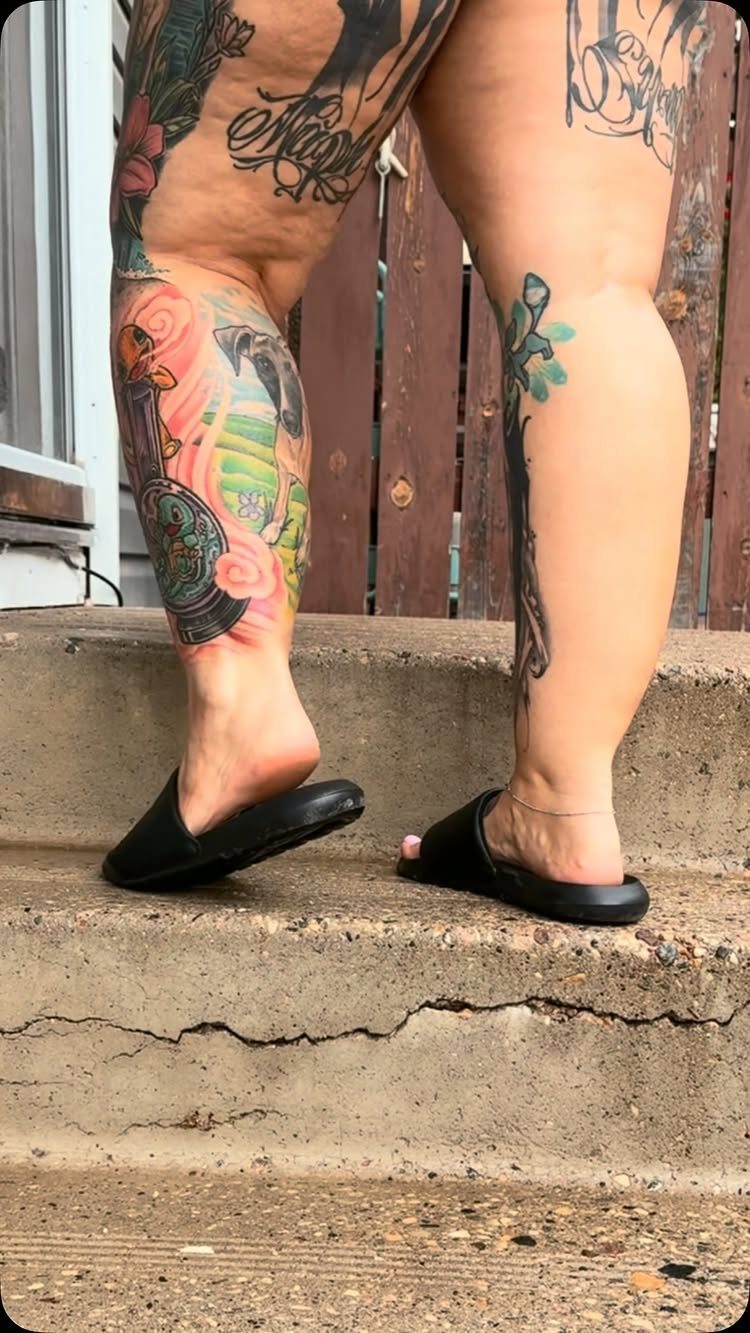
A large calf piece gives you room for color saturation and detail that smaller designs cannot support. The muscle’s flat surface holds shading and gradient work without distortion, and the placement lets you control when it shows.
Color holds well on the calf if you follow aftercare, and the design stays sharp since the area flexes less than joints. Sessions run longer for coverage this size, often 3 to 5 hours depending on complexity.
Wear shorts when you want the piece seen, pants when you do not.
8. Sun, Moon and Celestial Pieces
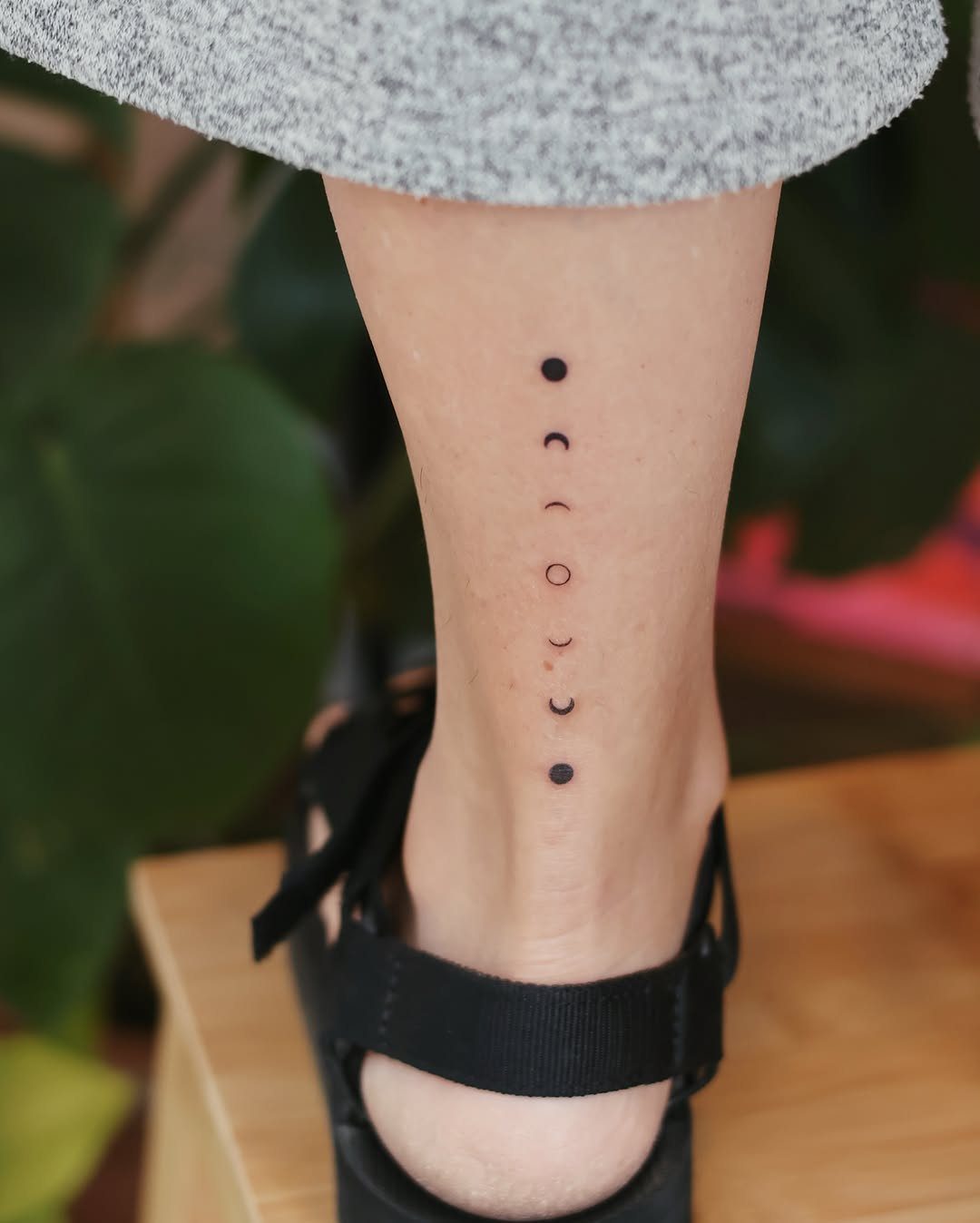
Moon phases, suns, and celestial symbols fit the calf’s round shape naturally, and the vertical space lets you stack phases in a line or center a single design on the muscle. The symmetry makes placement simple.
Black ink keeps these designs sharp, and the calf heals cleanly since the skin stays protected most of the time. A vertical line of moon phases works well along the outer or inner calf, where it follows the natural curve.
Simple celestial pieces usually finish in a single session.
9. Climbing Leafy Vine Tattoo
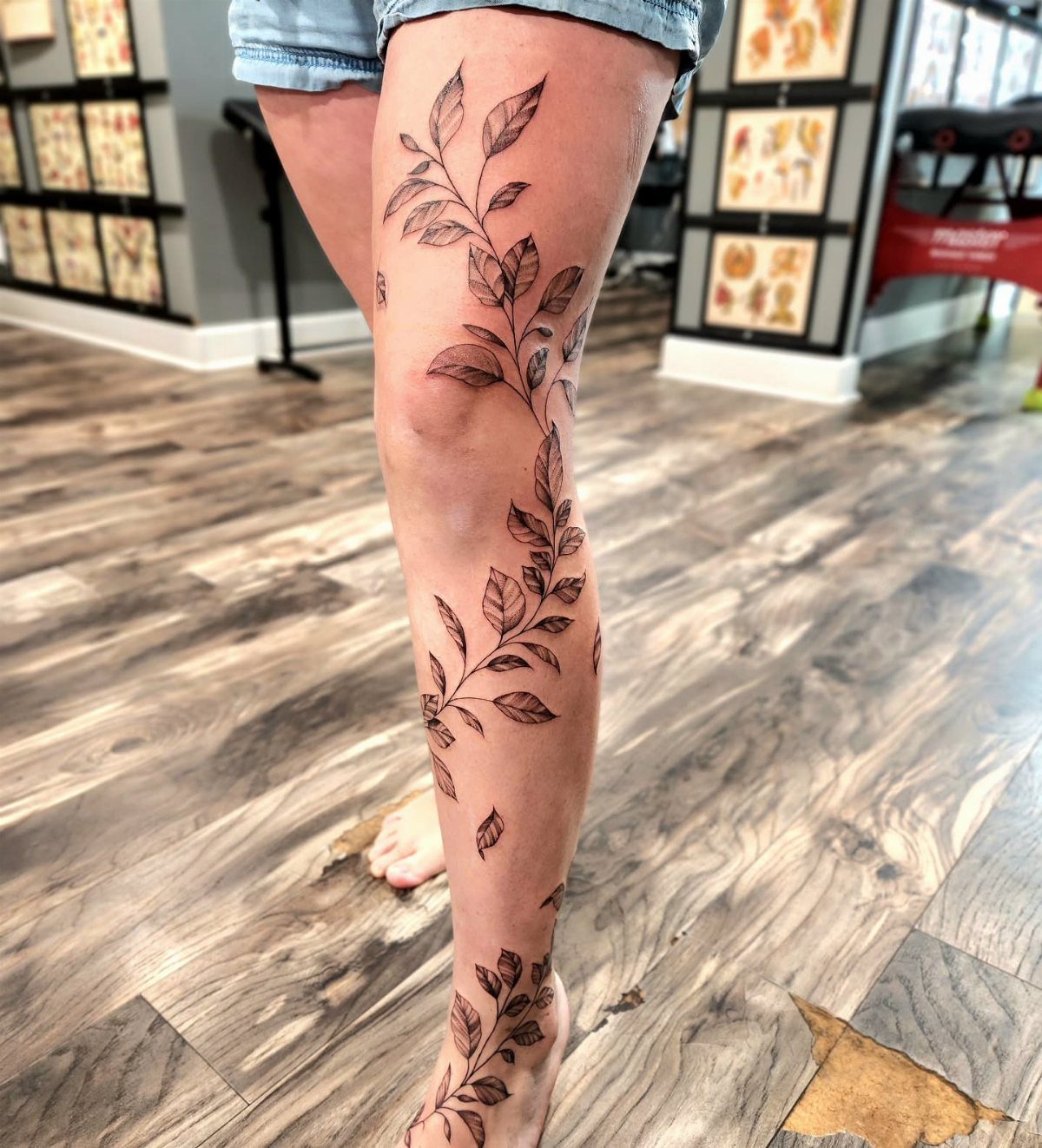
A vine that starts at the ankle and climbs past the calf gives you a design that moves with your leg and uses the full length of the space.
Leaves can wrap around the muscle or stay flat along one side, and black ink keeps the piece readable.
Pain is moderate on the calf and increases near the ankle, where the skin sits closer to bone.
Find an artist who draws natural, flowing linework. The vine should follow your leg’s shape, not fight it.
Best Placements & Sizing
The front of the calf works well for smaller pieces or clean outlines that read instantly, and it’s the spot most people see first when you’re wearing shorts or skirts.
The back calf gives you a broad vertical surface that holds large designs without fighting the shape of your leg. Portraits, mandalas, and animals sit naturally here, and the muscle provides a flat canvas that keeps detail sharp.
A piece that wraps the entire calf pulls together several designs and takes more than one appointment.
The result covers the leg from ankle to knee and makes a statement whether you planned it all at once or added to a smaller tattoo over time.
Pain Management & Healing Logistics
The back and side land around a 3 out of 10 because muscle softens each pass of the needle.
Bone near the shin and the thin fold behind your knee climb closer to a 6. Over the muscle it reads more like a hum than a scratch.
The top layer heals in 2 to 3 weeks, but the skin underneath continues for another month or two. Swelling and fabric rubbing the area can stretch recovery longer than it does on your arm.
Swelling is common since the calf sits far from your heart.
Tattoo Aftercare
Leave your heels in the closet for the first week to 10 days. Each step in a raised heel flexes the muscle and pulls at the fresh lines.
Friction from clothing, socks, and boots can pull scabs early and take ink with them. Loose fabric for 7 days stops the tattoo from rubbing.
Wash gently, apply a thin layer of unscented lotion, and stay out of direct sun.





