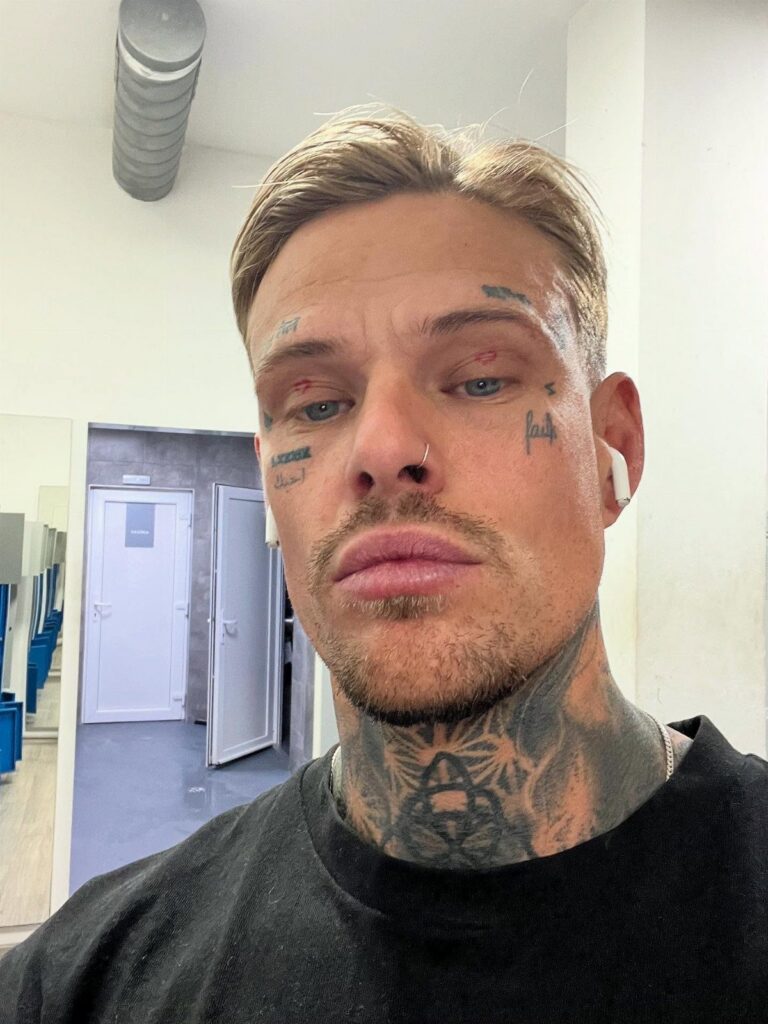
A face tattoo changes how people read you in every conversation, and designs like oni masks, daggers, tribal patterns, script, or traditional ta moko each carry their own weight and backstory.
Under-eye micro work or minimal line designs let you keep some control over when the tattoo shows, while full cheek or forehead coverage stays on display in nearly every setting.
1. Oni Mask Dagger Tattoo
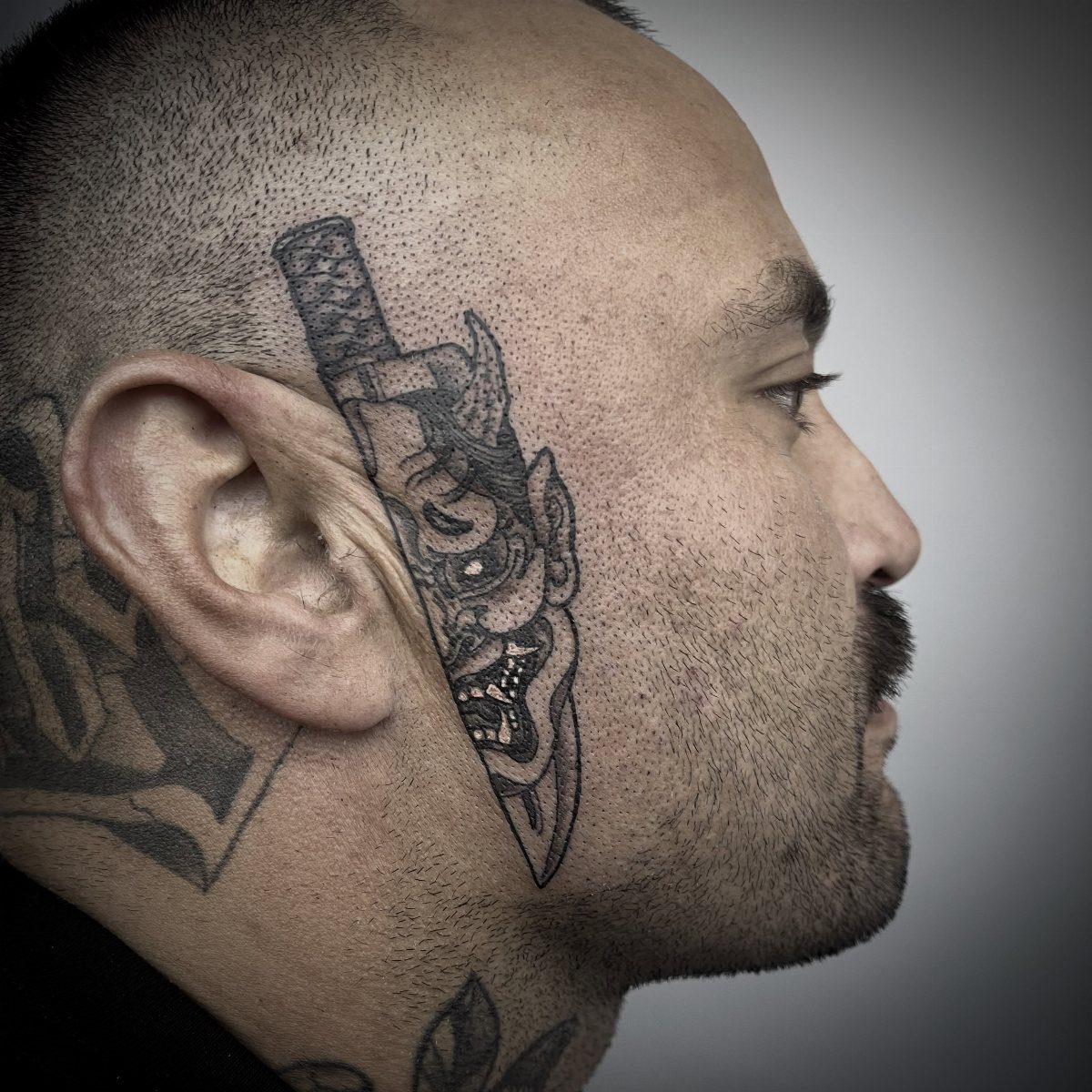
An Oni mask forms the blade or hilt of a dagger, bringing Japanese folklore straight onto the cheek. The demon’s expression adds menace to a classic weapon design, and the side angle shows the full composition.
This version keeps the mask compact and centered on the dagger, so it fits the cheek without running onto the neck. Black ink with subtle shading gives the face its structure, and the dagger anchors it in a recognizable shape.
Face tattoos hurt more than most placements with skin sitting close to bone. Cost climbs with complexity.
2. Neo Tribal Men’s Face Tattoo
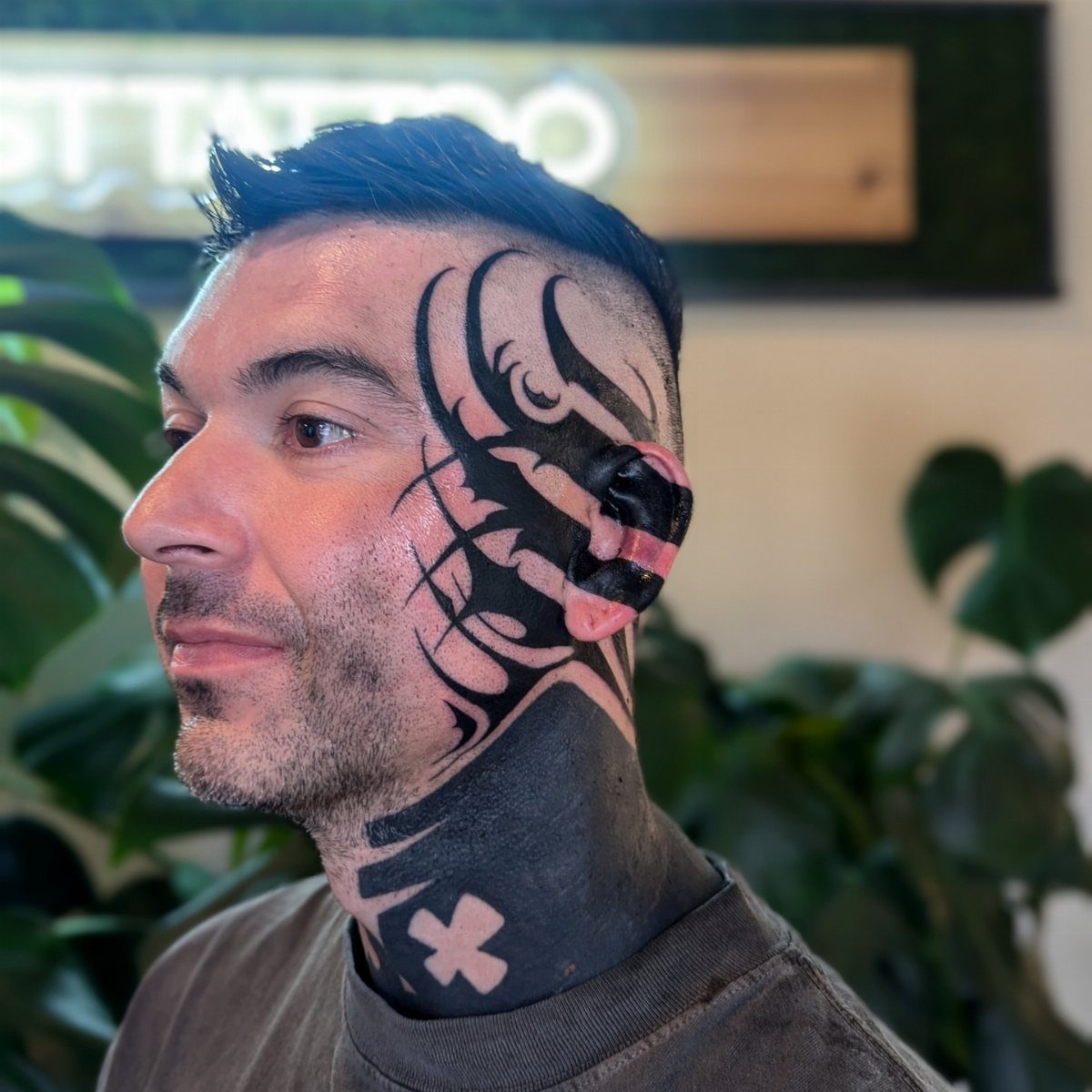
Thick black shapes alternate with negative space, creating a pattern that recalls tribal work but reads modern. The lines wrap from cheek to ear and down the neck, building a connected design rather than isolated symbols.
The contrast between bold fills and open skin makes the design visible from a distance, and the angular geometry suits the planes of the face. This approach works best when the artist custom-draws the pattern to follow your bone structure.
Expect multiple sessions for full coverage across face and neck.
Black heals cleanly and holds its edge longer than color or fine detail. Pain varies by area; the jawline and temple hurt more than the cheek.
3. Men’s White Ink Lightning Face Tattoo
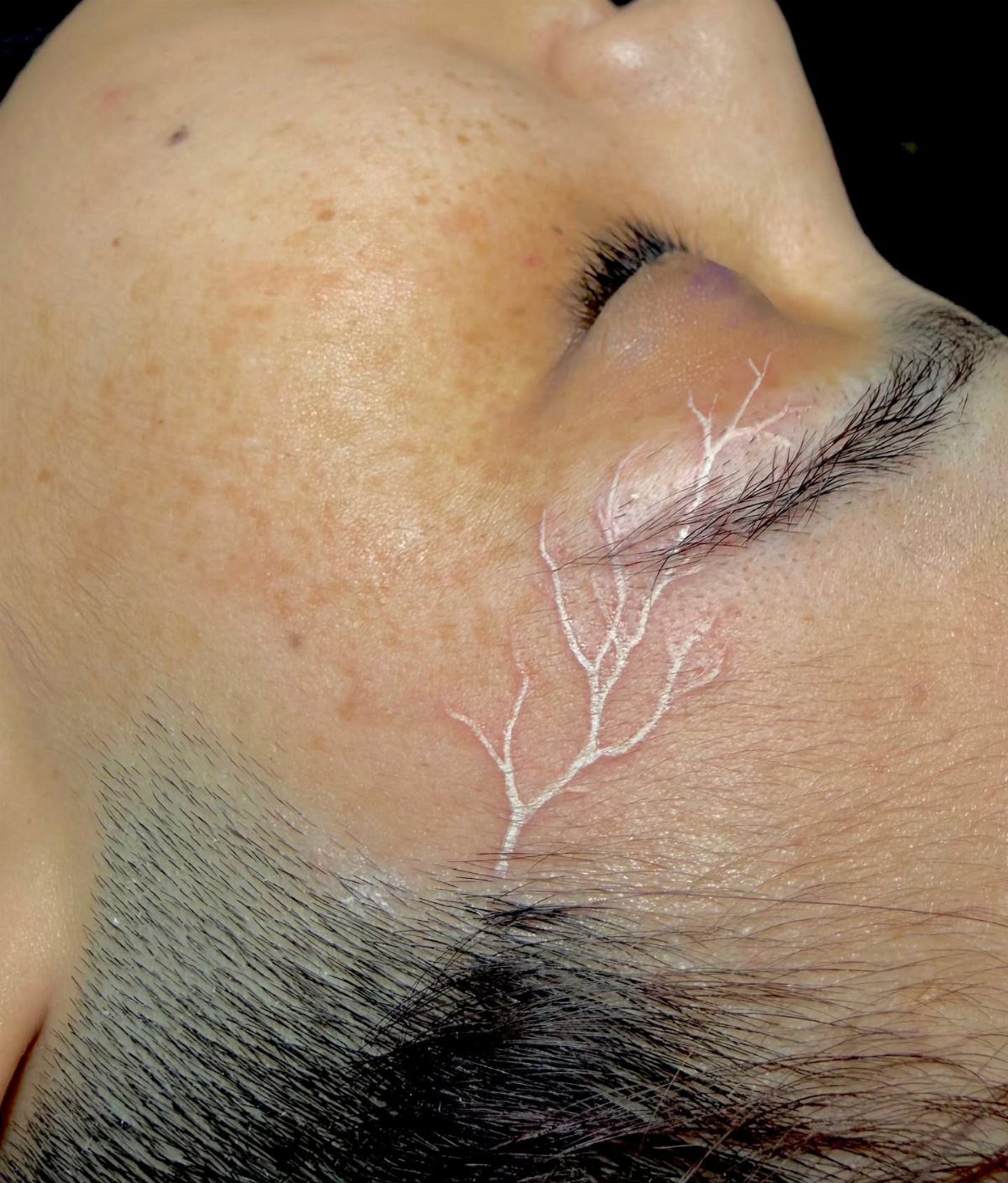
White ink creates a lightning bolt that shows as a pale scar rather than a dark mark. The design runs from temple to cheek, following the angle of the face, and the light contrast keeps it subtle until you’re close.
White ink fades quicker than black and shows best on medium to darker skin tones.
On lighter skin it may read as skin texture rather than a clear shape. The bolt needs bold lines to stay legible; thin details disappear as the pigment heals.
4. Skull Dagger Tattoo
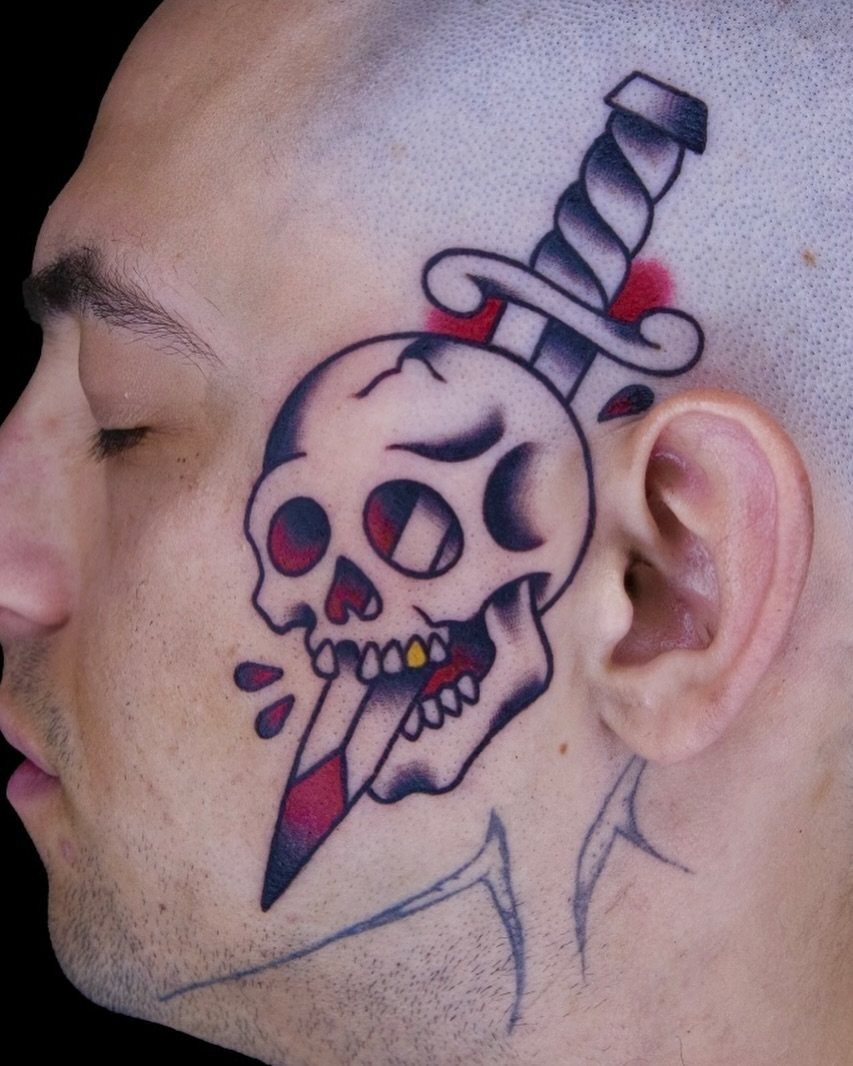
A skull takes the place of a dagger handle, turning the weapon into a memento mori. The blade pierces through the skull, connecting death and violence in one compact image that fits the cheek and temple.
The design works because both elements are instantly recognizable, and the overlap gives you more coverage without adding a second separate tattoo. Black ink with light shading keeps the skull readable and the blade sharp.
Cheek tattoos swell noticeably for the first few days, and the temple sits over thin skin, so expect sharper pain there. Healing completes when you avoid picking and keep it clean.
5. Blackwork Spider Face Tattoo
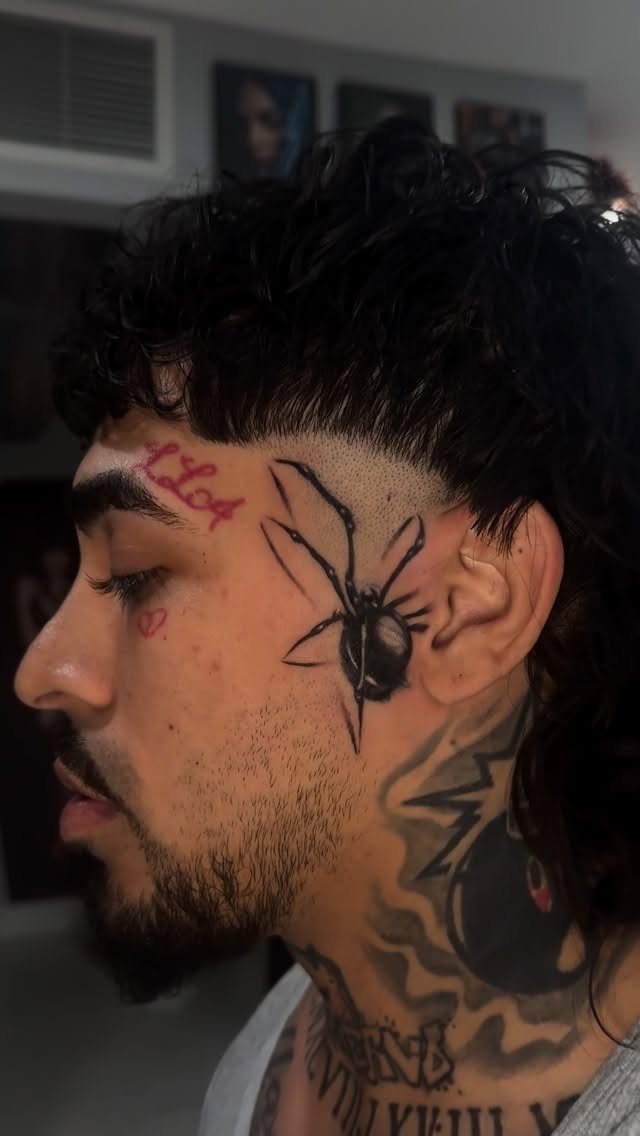
A black spider spreads across cheek and temple, legs radiating outward from a solid body. The silhouette stays simple, and the placement lets the legs follow the curves of the face.
Spiders read as both predator and patience, and the shape scales well to fit the available space. This version uses solid black fill rather than shading or web detail, so it heals faster and holds its shape longer.
Face tattoos limit job options in many fields, so consider your career path before committing. The spider’s symmetry makes it easier to balance if you later add more work on the other side.
6. Men’s Graffiti Script Face Tattoo
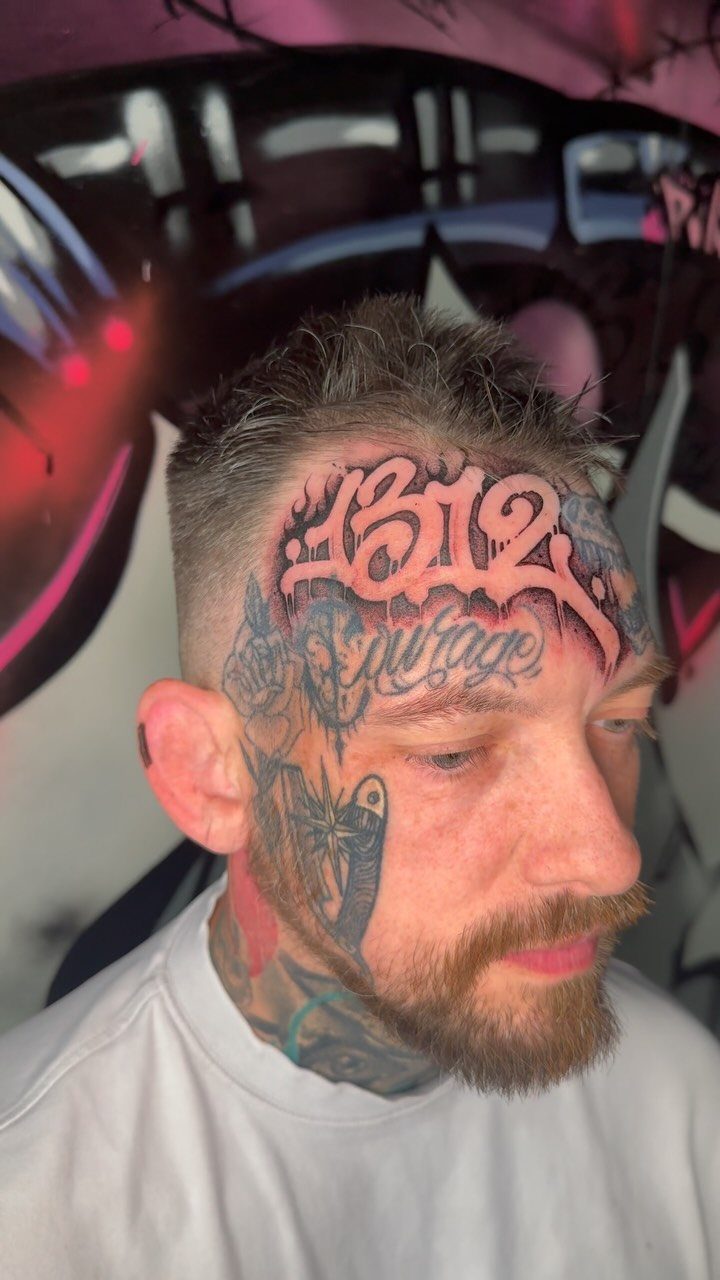
Letters alternate between filled black and open outlines, creating a graffiti style that mimics spray paint. The script runs horizontally across the forehead, and the mix of positive and negative space gives the text dimension without color.
The alternating technique makes each letter distinct and keeps the word legible from a distance. Bold lettering survives better over time than thin script, which can blur as ink spreads slightly under the skin.
Forehead tattoos are among the most visible placements, and removal is difficult because the skin is thin.
Choose text that will still mean something to you years from now. Cost typically depends on word length.
7. Skull and Spider Men’s Face Tattoo
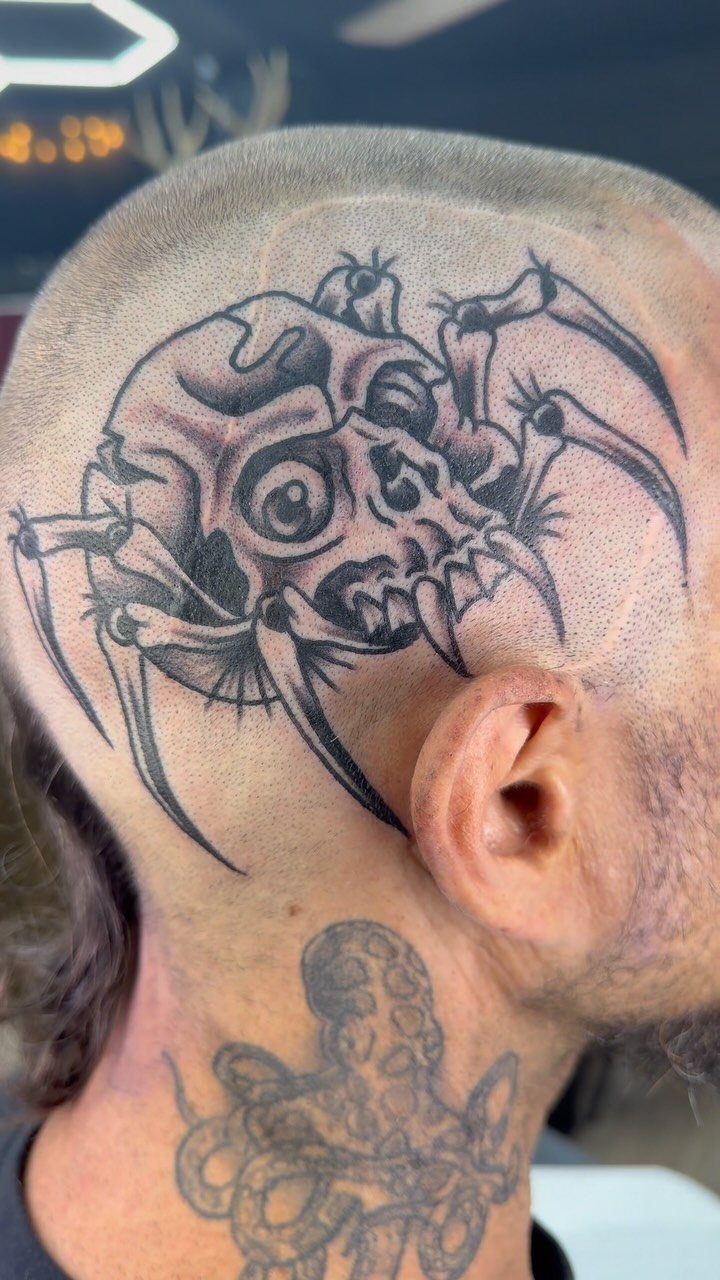
A skull replaces the spider’s body, and the legs radiate outward from where the head sits. The hybrid reads as both death symbol and predator, and the legs give the design reach without adding a second image.
The skull stays centered on the temple, and the legs curve down the cheek and up toward the hairline. Solid black keeps both elements clear, and the overlap creates one unified piece rather than two tattoos competing for space.
Expect swelling on the temple for several days after the session. Placement here limits your ability to cover it, so plan accordingly.
8. Māori Ta Moko Men’s Face Tattoo
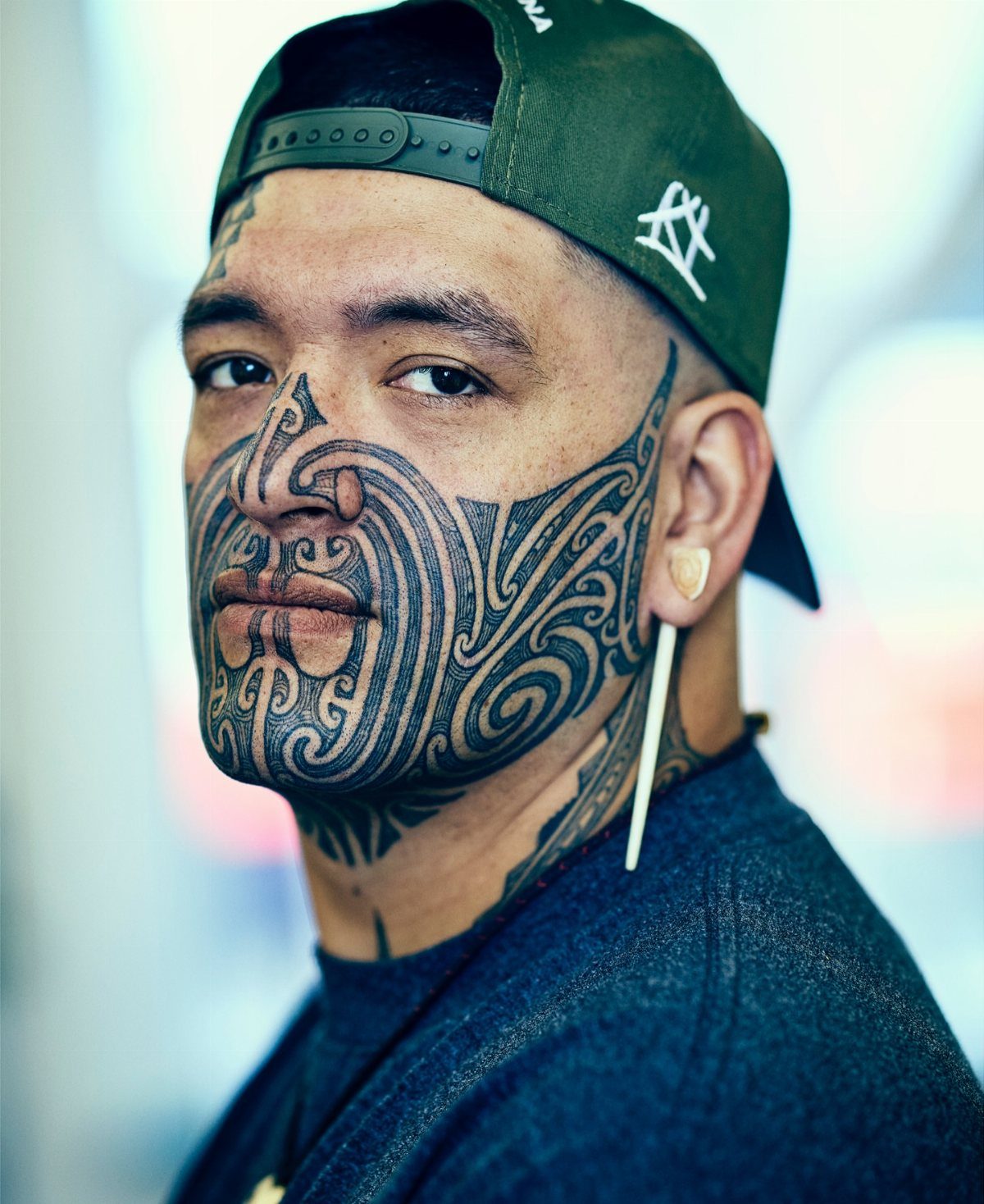
Ta Moko follows traditional Māori patterns carved into the face, each line carrying genealogy and status within the culture. The designs are specific to individuals and meant to be applied by practitioners trained in the tradition.
This is closed cultural practice, not open design inspiration.
If you have Māori ancestry and are considering Ta Moko, seek out artists who work within the tradition and understand its protocol. Otherwise, choose a different style.
Face tattoos in this tradition require multiple sessions and involve cultural responsibilities that extend beyond the physical marks.
9. Face Tattoos for Men
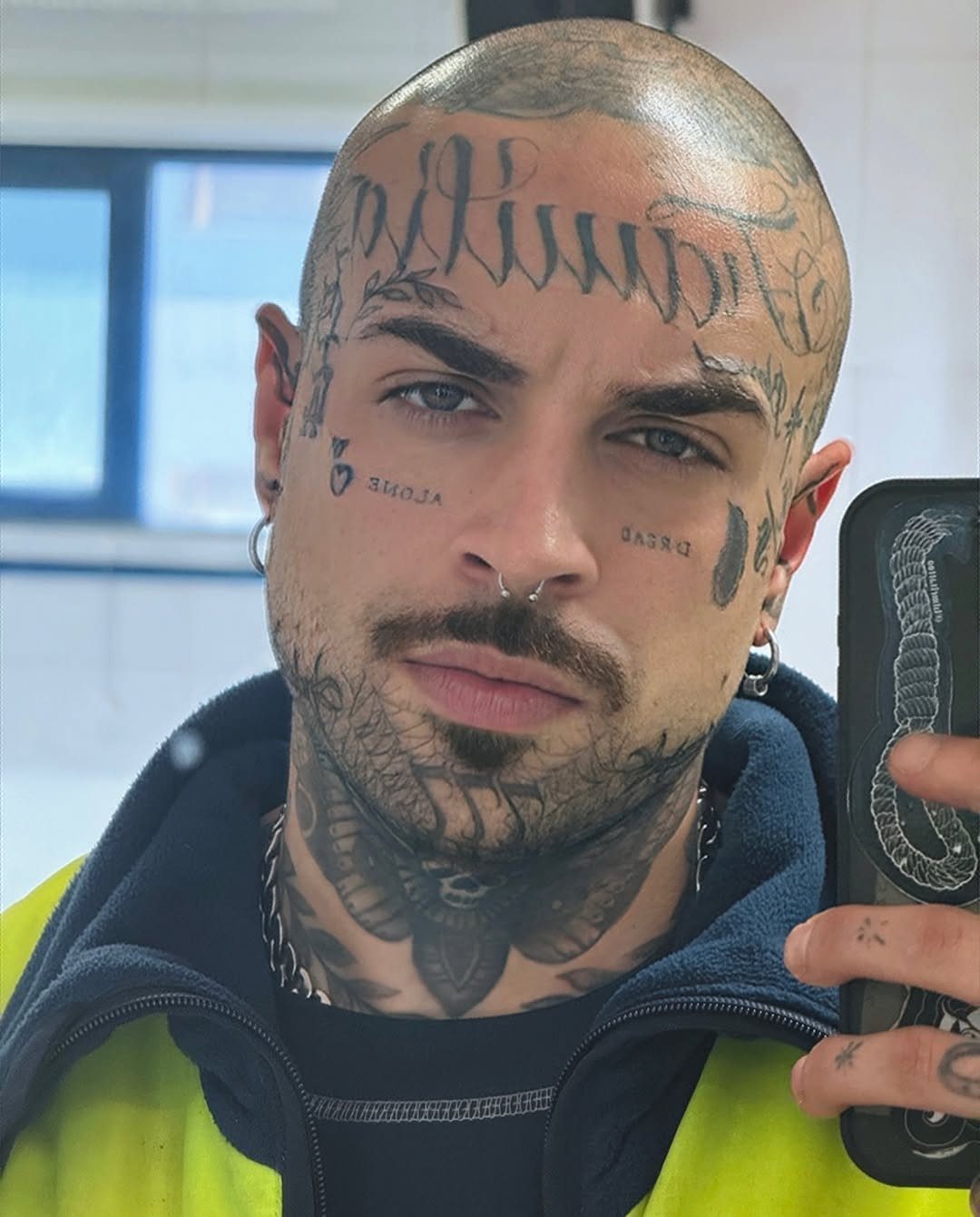
Full face coverage signals permanent commitment. The text, script and symbols layer across forehead, cheeks and temples, leaving little bare skin and no option to hide the work under clothing or makeup.
This level of visibility affects employment, housing and how strangers respond to you in public spaces. The commitment is as much social as it is physical, and removal is costly, painful and rarely complete.
If you’re starting out, consider building coverage gradually rather than covering the whole face in one session. You can always add more; taking it back is harder.
10. Straight Razor Cheek Tattoo
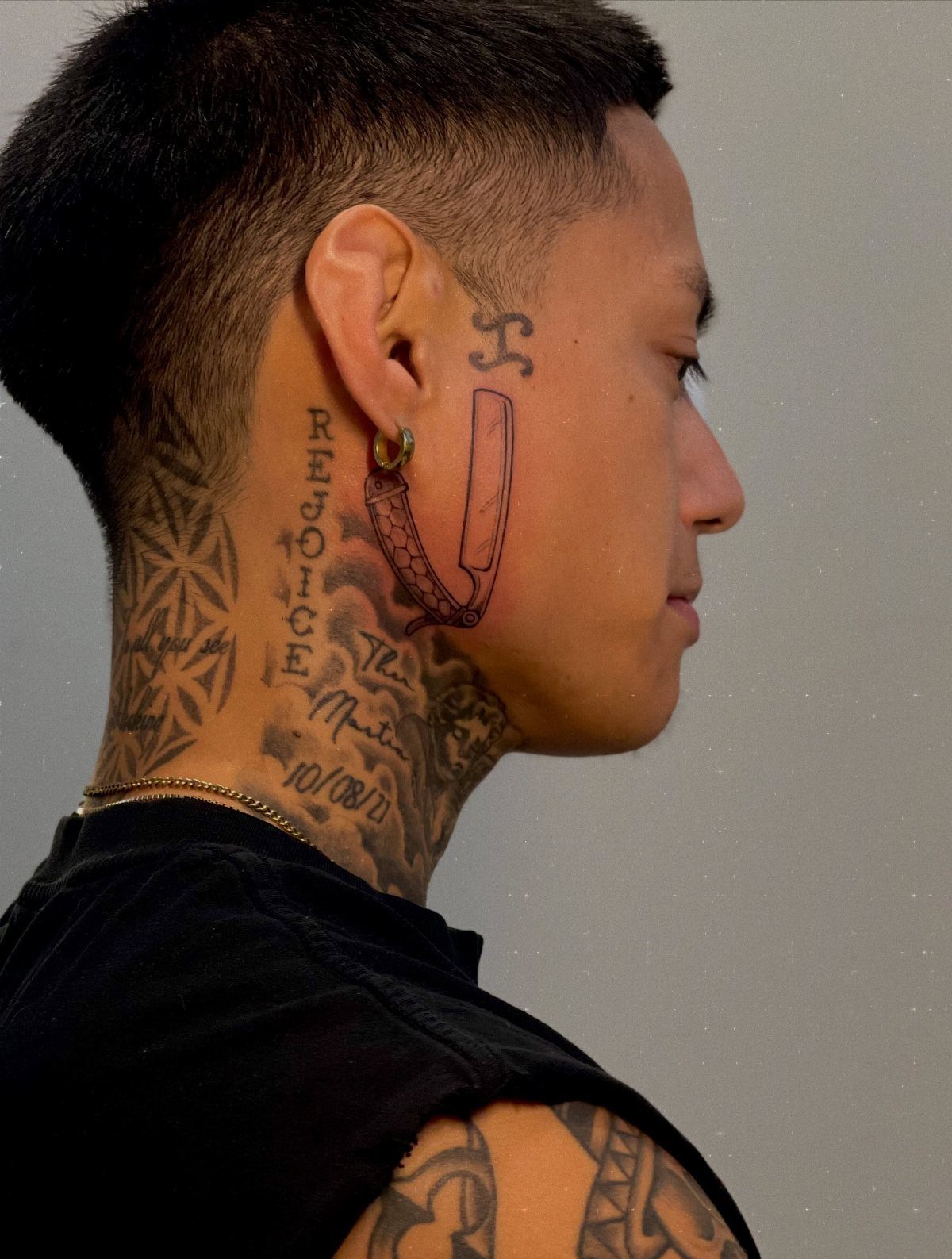
A straight razor sits along the cheekbone, blade open and angled to follow the bone’s natural line. The design references old-school barbering and reads as both craft tool and weapon.
The placement keeps the razor horizontal rather than vertical, so it spans the length of the cheek without running into other facial features. Stick to black and skip heavy gradients if you want the razor to stay readable.
Cheek skin swells after tattooing, which can distort the design temporarily.
11. Dagger Cheek Tattoo
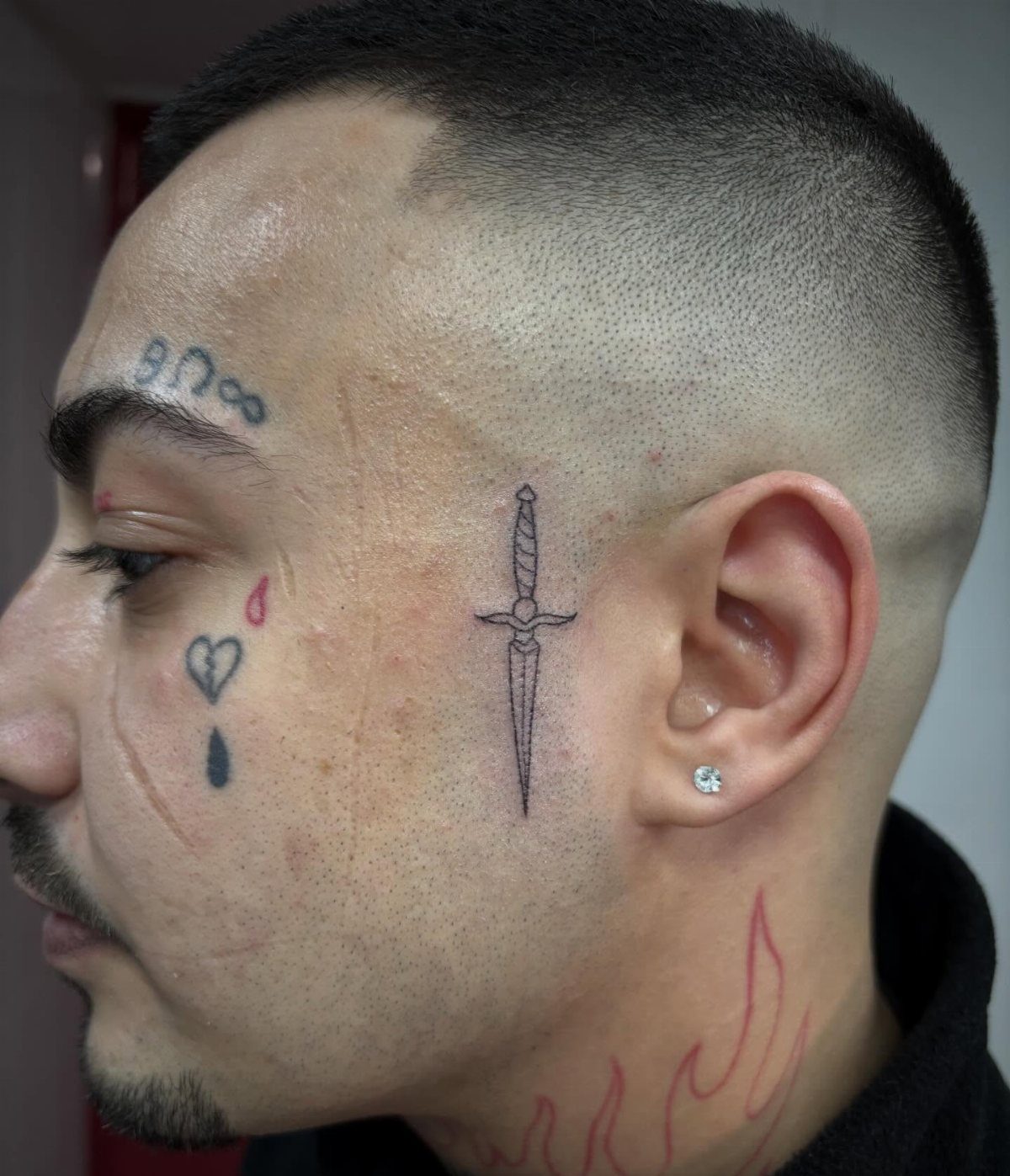
A dagger runs vertically down the cheek, blade pointing toward the jaw. The vertical orientation makes it feel like something falling or stabbing downward, and the simple shape fits the narrow space without needing extra elements.
This placement sits lower on the cheek than the temple versions in other entries, which puts it closer to the jawline and makes it harder to hide with hair or glasses.
The blade stays narrow to fit the space without overwhelming the face.
Vertical designs on the cheek can blur over time if the lines are too thin, so ask your artist to keep the blade bold enough to hold its shape.
12. White Ink Sigil Face Tattoo
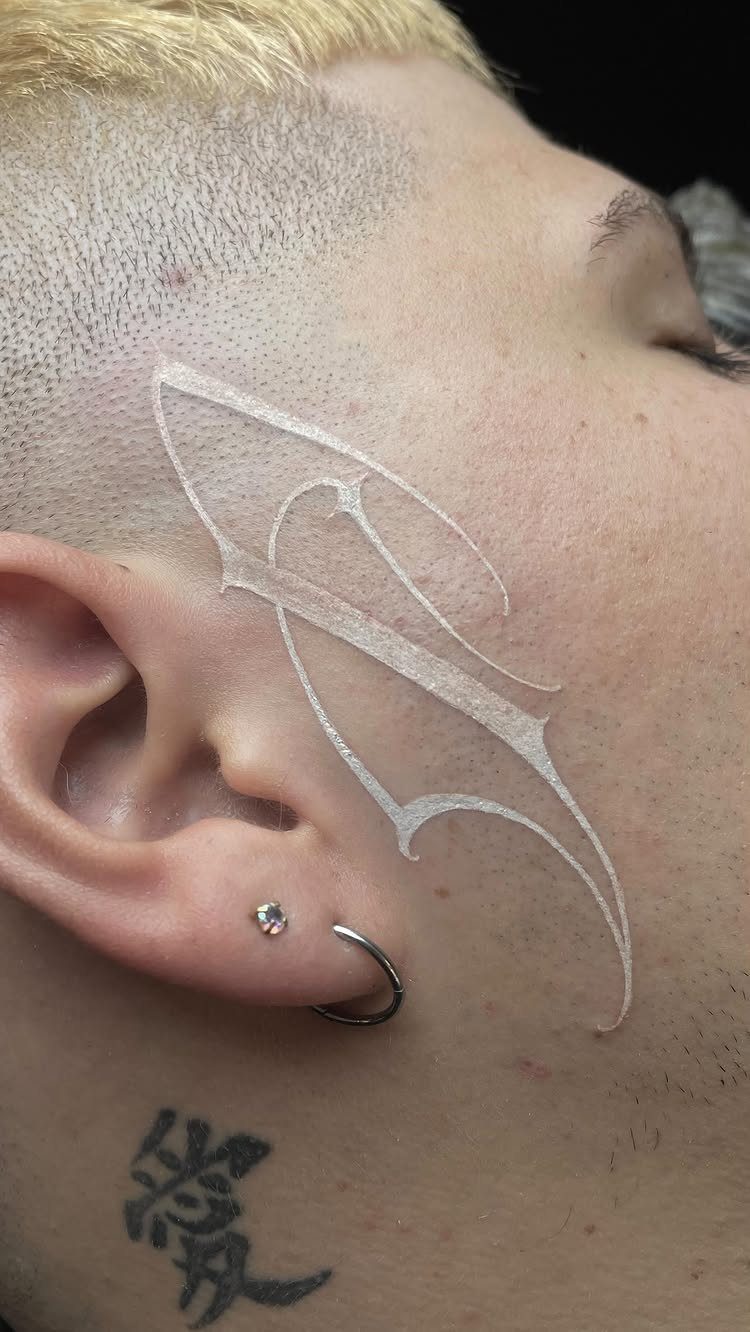
An abstract sigil drawn in white ink sits between temple and cheek, its angular shapes recalling runes or occult symbols without copying a specific tradition.
The design reads as personal rather than borrowed, and white ink keeps it subtle on darker skin tones.
White ink fades faster than black and requires more frequent touch-ups to stay visible. The sigil’s sharp edges need bold lines to remain legible as the pigment settles, so avoid fine detail that will disappear within a year.
Expect it to read more like textured skin than a defined mark if your complexion is fair. Test a small area first if you’re unsure how it will heal on your skin tone.
13. Geometric Pattern Face Tattoo
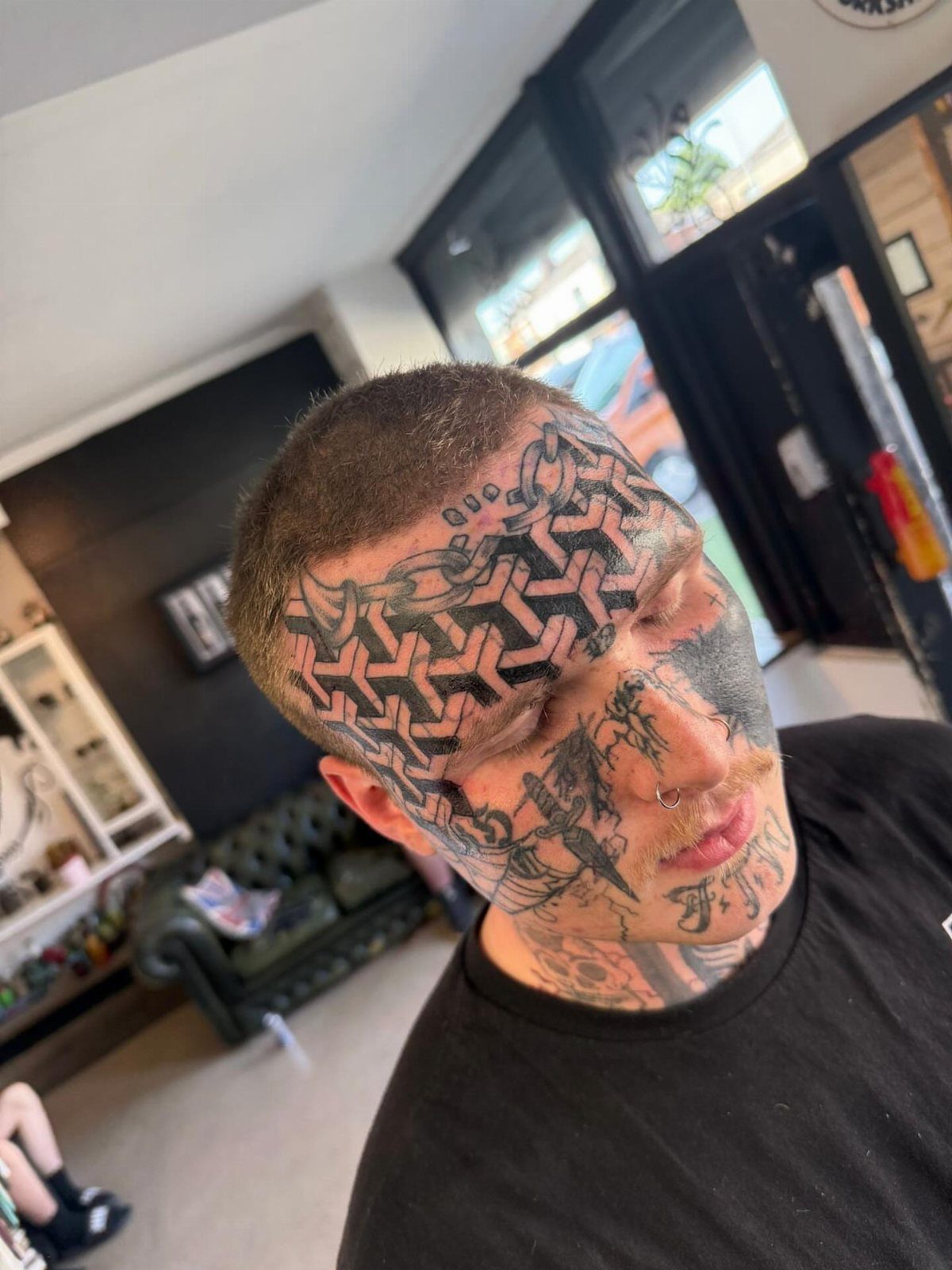
Interlocking lines form a geometric web across forehead and temple, the shapes branching out from a central point and following the skull’s contours.
The repeating angles create symmetry without relying on mirrored halves, so the pattern feels structured but not rigid.
This kind of coverage requires careful planning before the needle touches skin. The artist needs to map the lines to your bone structure so the geometry sits flat rather than warping as your face moves.
Pain on the forehead and temple runs higher than most placements because the skin is thin and bone sits close to the surface.
Sessions stretch longer when the design covers this much area, and touch-ups may be needed if lines heal unevenly.
14. Subtle Under-Eye Micro Tattoo

A single small symbol sits just under the eye, sized to fit between the lower lash line and the top of the cheek.
The mark stays minimal, often a dot, cross, or simple glyph that reads clearly without competing with the rest of the face.
Under-eye tattoos hurt more than most placements because the skin is delicate and movement from blinking makes the process harder. The area also swells noticeably after the session, and healing can be slower.
Placement this close to the eye limits your options if you later want removal, and laser work near the eye carries additional risk.
Choose something small enough that it stays legible as a single mark rather than trying to fit complex detail into limited space.
Cultural Significance of Face Tattoos
Face tattoos carry weight because they announce a decision you can’t walk back.
Historically, indigenous groups used them to mark tribal affiliation, rite of passage, or social standing within the community. The Maori ta moko, Inuit chin tattoos, and other traditional practices tied identity to the marks themselves.
Modern face tattoos operate differently. They signal rebellion, toughness, or a refusal to blend in, especially in subcultures like punk and hip-hop.
Others hold spiritual weight, worn as protection or a mark of faith made visible. Others turn scars or skin flaws into deliberate art.
A face tattoo limits access to certain jobs and shifts how strangers read you before a word is spoken. Design and placement add personal meaning, but the social cost remains the same.
Choosing Tattoo Design and Placement
Design choice starts with what the mark will say about you once the novelty wears off and the commitment becomes real.
Personal stories, symbols that mean something specific to your life, and images tied to your beliefs hold up better than trends or impulse picks.
Placement decides who sees it and when. A small mark under the eye or on the temple can be covered with hair or glasses part of the time.
Forehead, full cheek, and jawline coverage stays visible in nearly every situation. If your work, housing, or social circle depends on appearing a certain way, that visibility becomes the main factor.
Face tattoos affect employment, housing applications, and how people treat you in stores, banks, and public offices.
The art matters, but the social response matters more. Plan for both.
Historical Origins of Face Tattoos
Facial tattoos served as identification, status markers, and spiritual shields in cultures around the world. Ancient groups applied them to signify rank, clan membership, or completion of a rite of passage.
Among Arctic Inuit communities, women wore facial tattoos that signaled adulthood, each pattern tied to family and place.
The marks identified individuals within their group and connected them to ancestors and spiritual protections.
Modern celebrity adoption popularized face tattoos outside traditional contexts, linking them to counterculture and self-expression rather than cultural or spiritual duty. The shift moved facial tattooing from closed practice to open choice, though the permanent visibility remains unchanged.
Frequently Asked Questions
What are some good tattoo ideas for men?
Face tattoos for men range from compact symbols like spiders and daggers on the cheek to full geometric patterns across forehead and temple.
Designs work best when they follow bone structure and use bold black ink that holds its shape over time.
Start with smaller placements like under-eye marks or single cheek pieces before committing to full coverage, since removal is difficult and expensive.
What is a facial tattoo?
A facial tattoo is a permanent mark applied to skin on the face, visible in nearly every social situation.
In indigenous cultures they often signaled tribal membership, a completed rite, or a shield against harm. Modern face tattoos signal personal commitment and self-expression, though they limit employment and shift how strangers respond to you before you speak.





