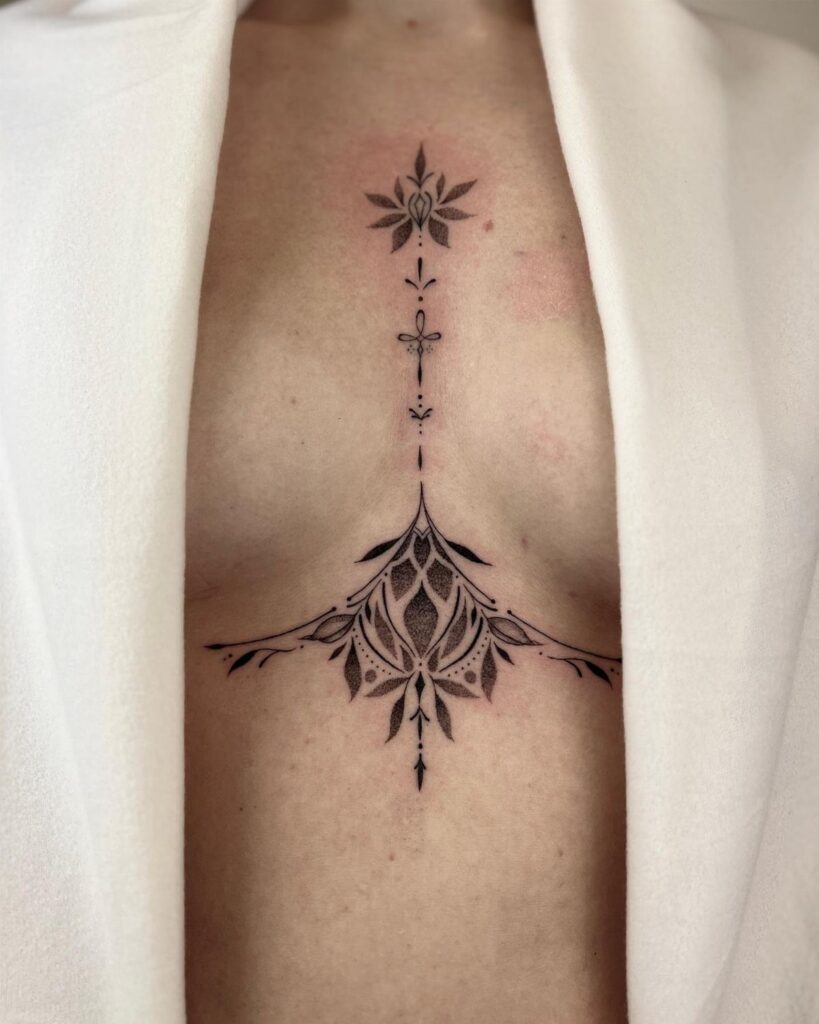
Underboob tattoos run from small single blooms that stay under 6 inches to full ornamental pieces that span the sternum and spread beneath both breasts, with pain highest where the design crosses bone.
Mandalas sit naturally on the sternum’s center line, and script follows the curve beneath each breast without warping the letters.
1. Mandalas
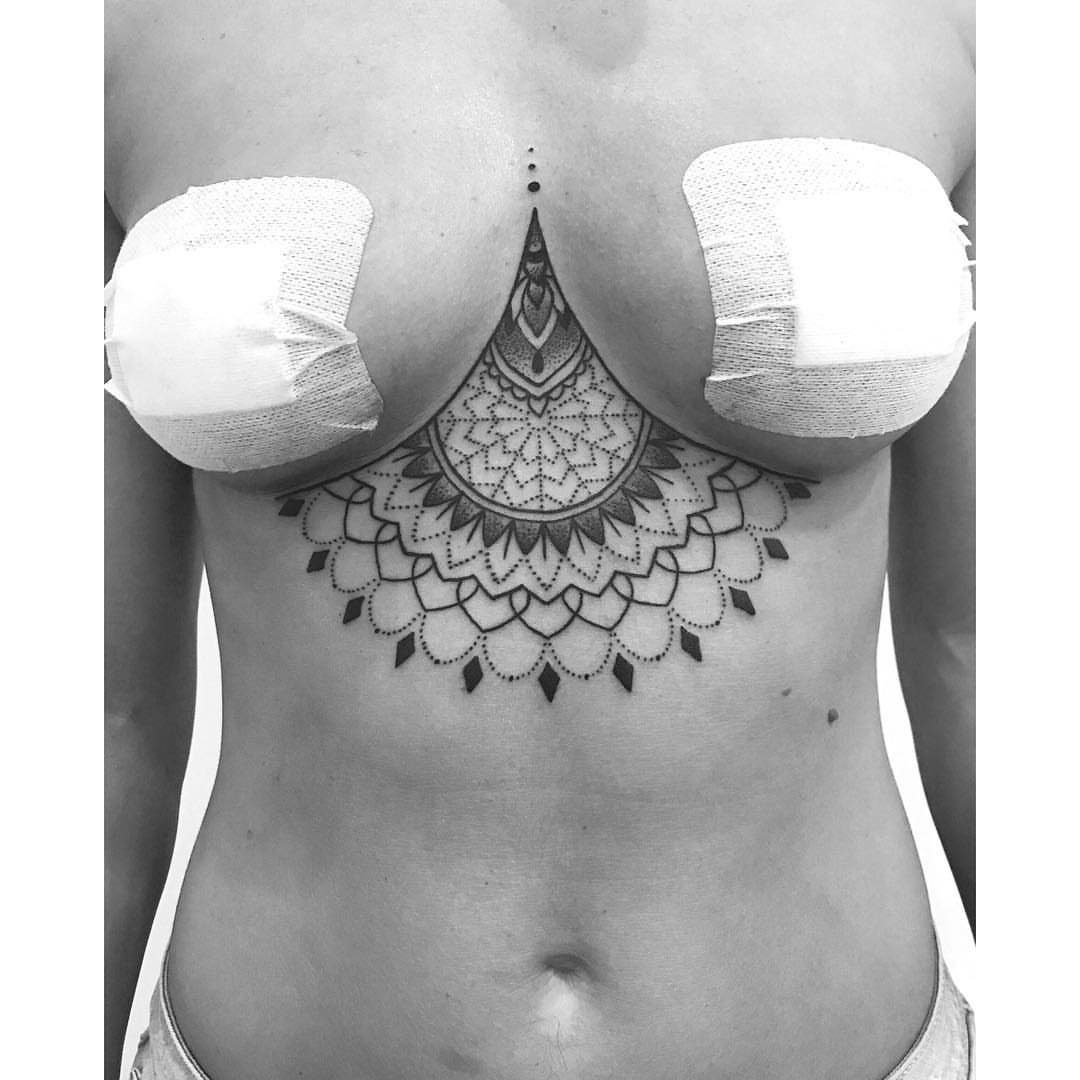
A mandala spreads its pattern in a wide circle across the underboob and centers on the sternum. The symmetry suits this spot because your body already gives it a vertical midline to anchor to.
Fine line or bold ink both work, though heavier lines hold detail longer if you plan to keep it decades.
Pain sits high because the sternum has almost no fat, but most people finish in one go. Expect daily aftercare until the skin seals and the design settles.
2. Geometric Patterns
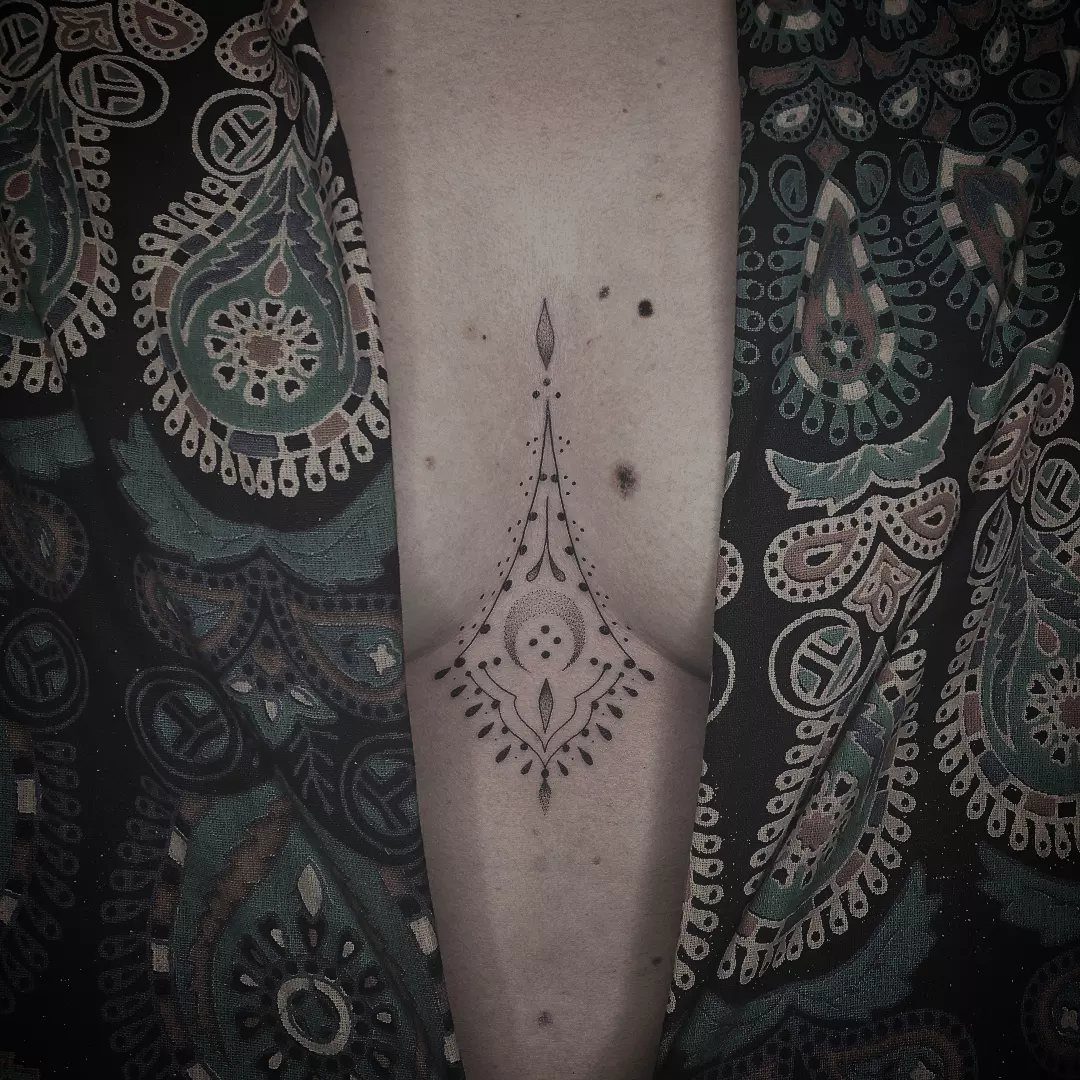
Lines, dots and angular shapes lock into repeating symmetry that follows the curve where the ribcage meets the breast. The pattern stays readable even when small because geometry holds its form without needing realistic shading.
This style ages well. Hard edges stay sharp through decades of skin movement if the lines start crisp and the artist spaces them wide enough that they won’t blur together.
Pain varies more by your own ribcage sensitivity than by the design, so if you’ve had rib work before, expect the same.
3. Stars, Moons, and Suns
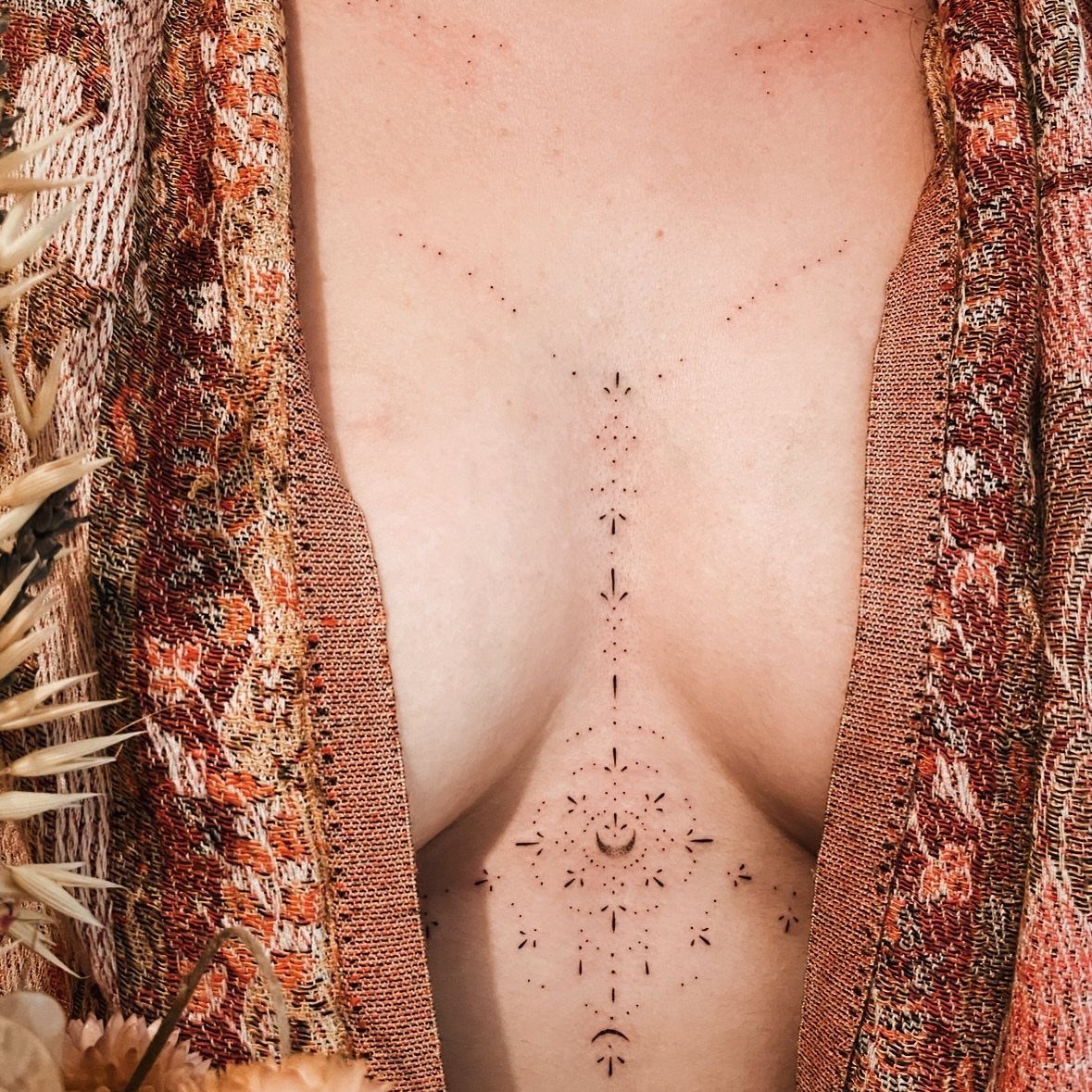
Stars, moons and suns follow the natural curve of the underboob or fan out from a central point on the sternum.
A crescent moon flanked by small stars reads clearly at a distance and scales down smaller than a full mandala.
A scattered arrangement looks looser and more organic than strict symmetry, which some people prefer when they want something delicate.
Aftercare is standard: keep it clean, moisturized and out of direct sun for the first month.
4. Floral Underboob Art
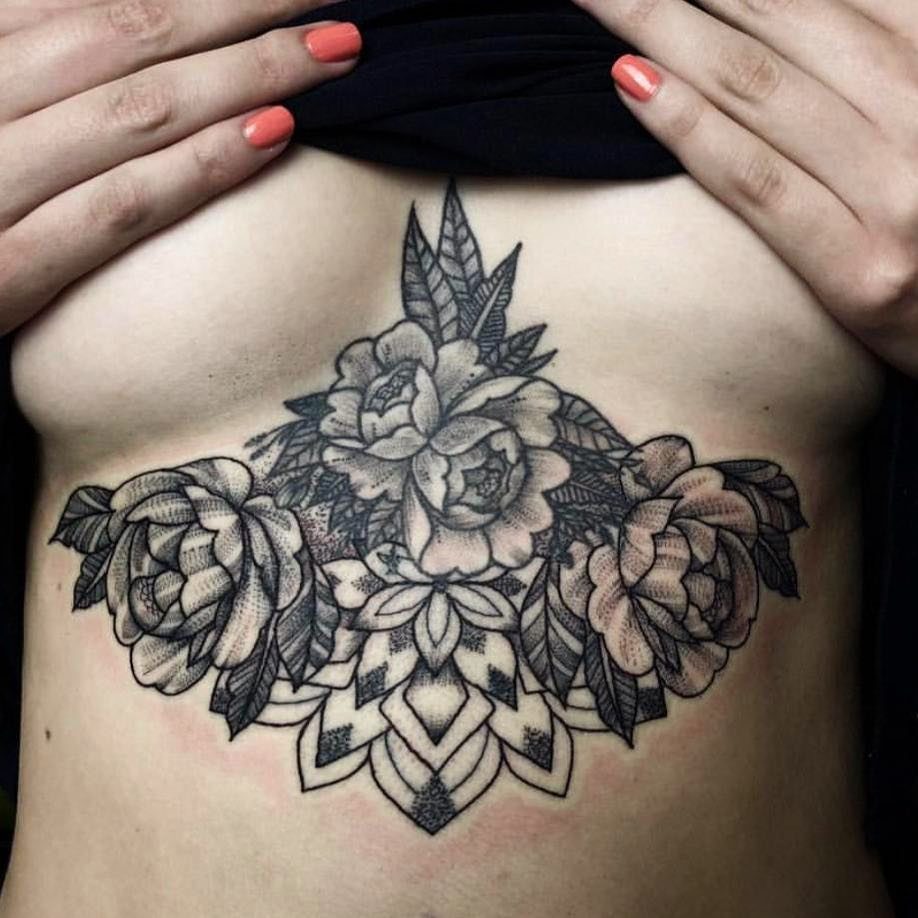
Flowers soften the underboob curve with petals that follow the natural contour instead of fighting it.
Roses, peonies and dahlias each take up the underboob differently: roses pack tight layers of petals, peonies bloom wider, dahlias add geometric repetition inside an organic shape.
Black and grey add depth without the maintenance color demands. Full color fades faster on the ribcage because clothing rubs it constantly, so if you want saturated petals, plan for a touch-up every few years.
Size matters here. A single small bloom loses impact in this much space; most floral underboob pieces span at least 6 inches.
5. Script and Quote Tattoos
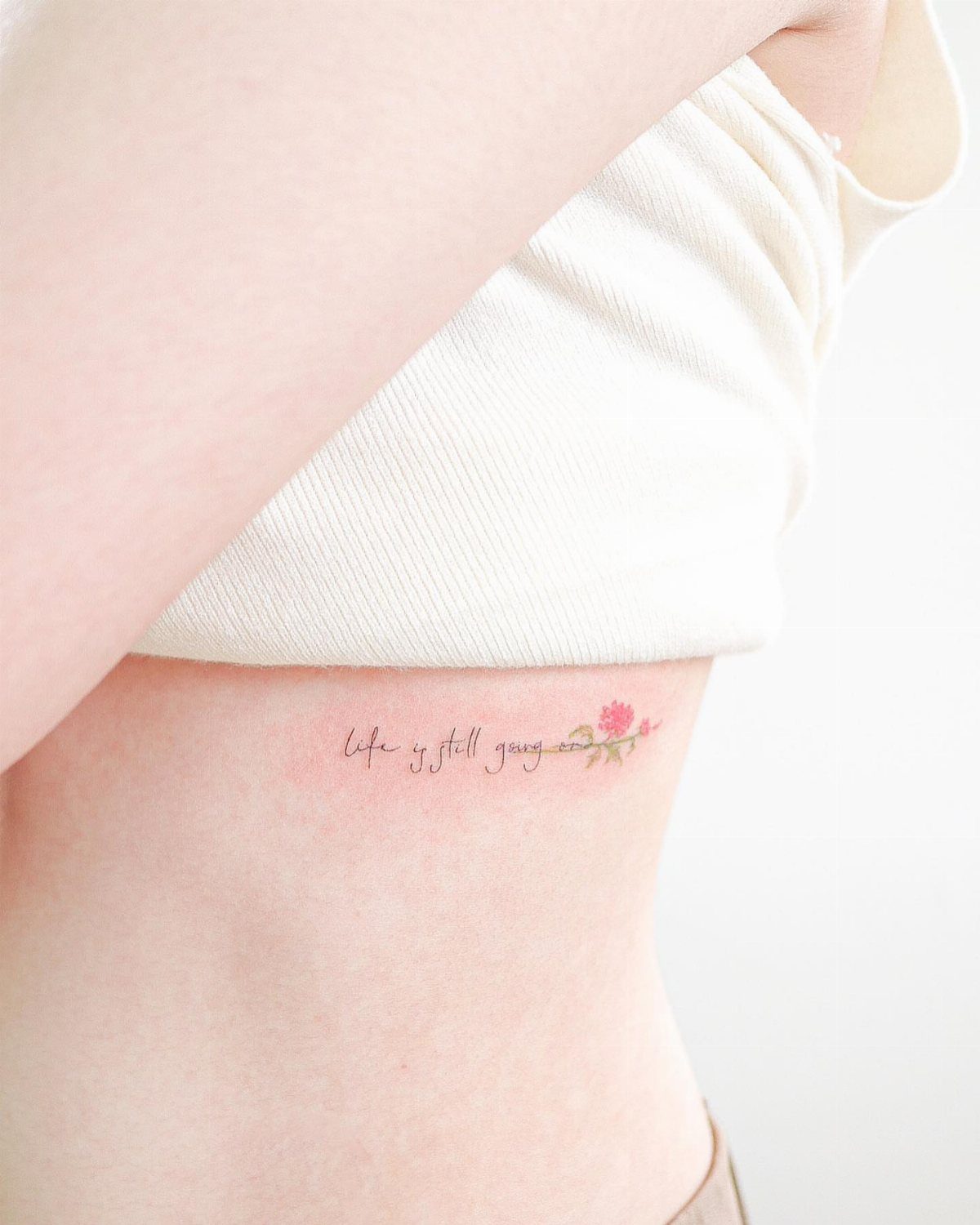
A short phrase or single word sits just under the breast, often running horizontal along the curve or angled to follow the ribcage.
Script works here because the underboob gives you a natural line to follow, and the curve beneath each breast can guide the flow of the text.
Font choice changes the whole feel.
Thin cursive reads delicate but fades if the letters connect too tightly. A bolder sans serif or serif font holds up better over time because each letter has space around it.
Keep it short. Long phrases push wider than the natural frame of the ribcage and start to look crowded.
6. Heart
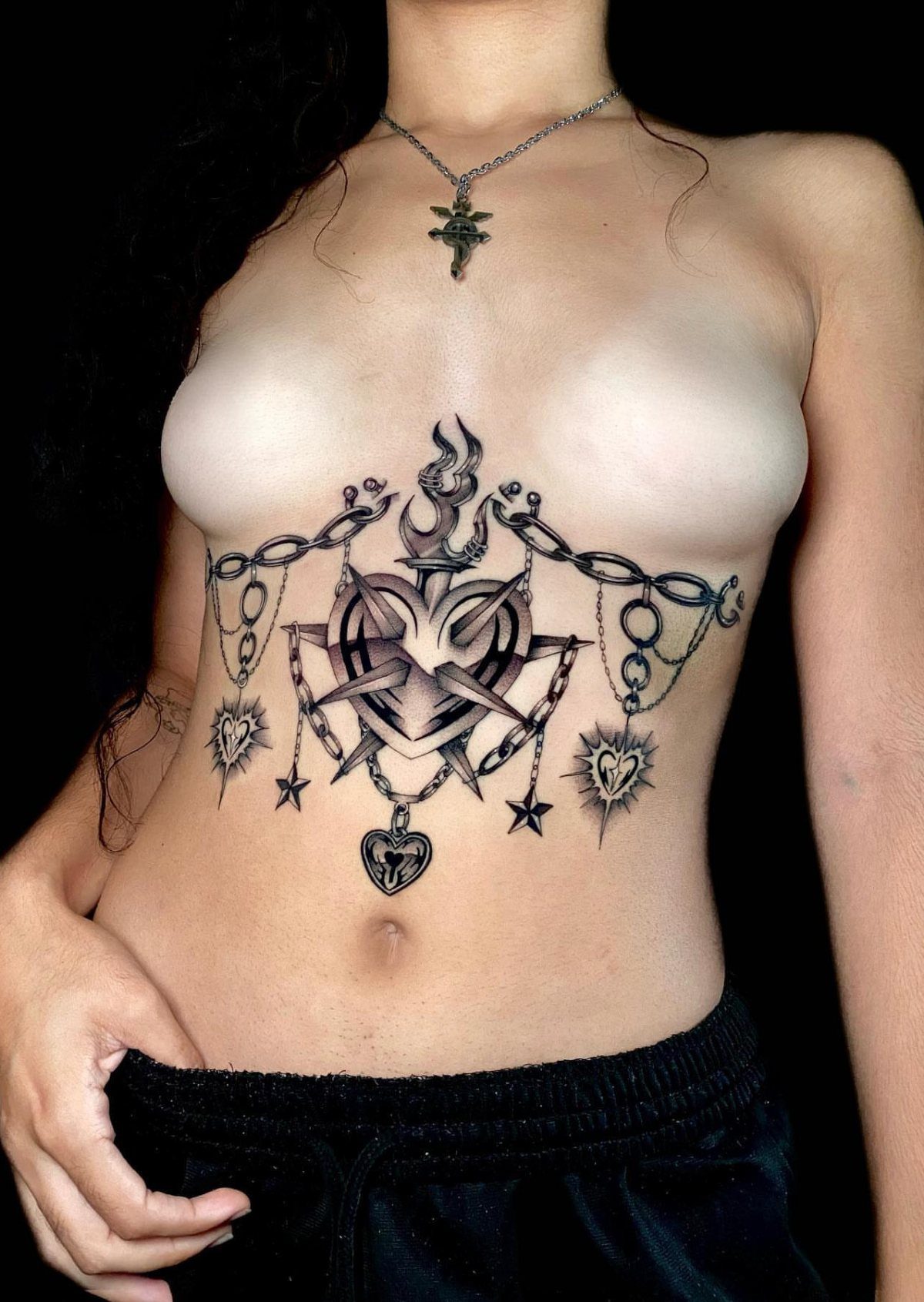
A heart, often flanked by additional elements like chains, swords or flowers, centers itself on the sternum and extends down into the ribcage. The shape mirrors your body’s own symmetry, which gives it a natural anchor point.
Shading and ornamentation make or break this design. A simple outline reads flat; adding shadow, texture or surrounding detail turns it into something with presence.
The amount of detail surrounding the central heart changes how long you sit. Pain peaks on the sternum itself, where bone sits right under skin.
7. Mermaid
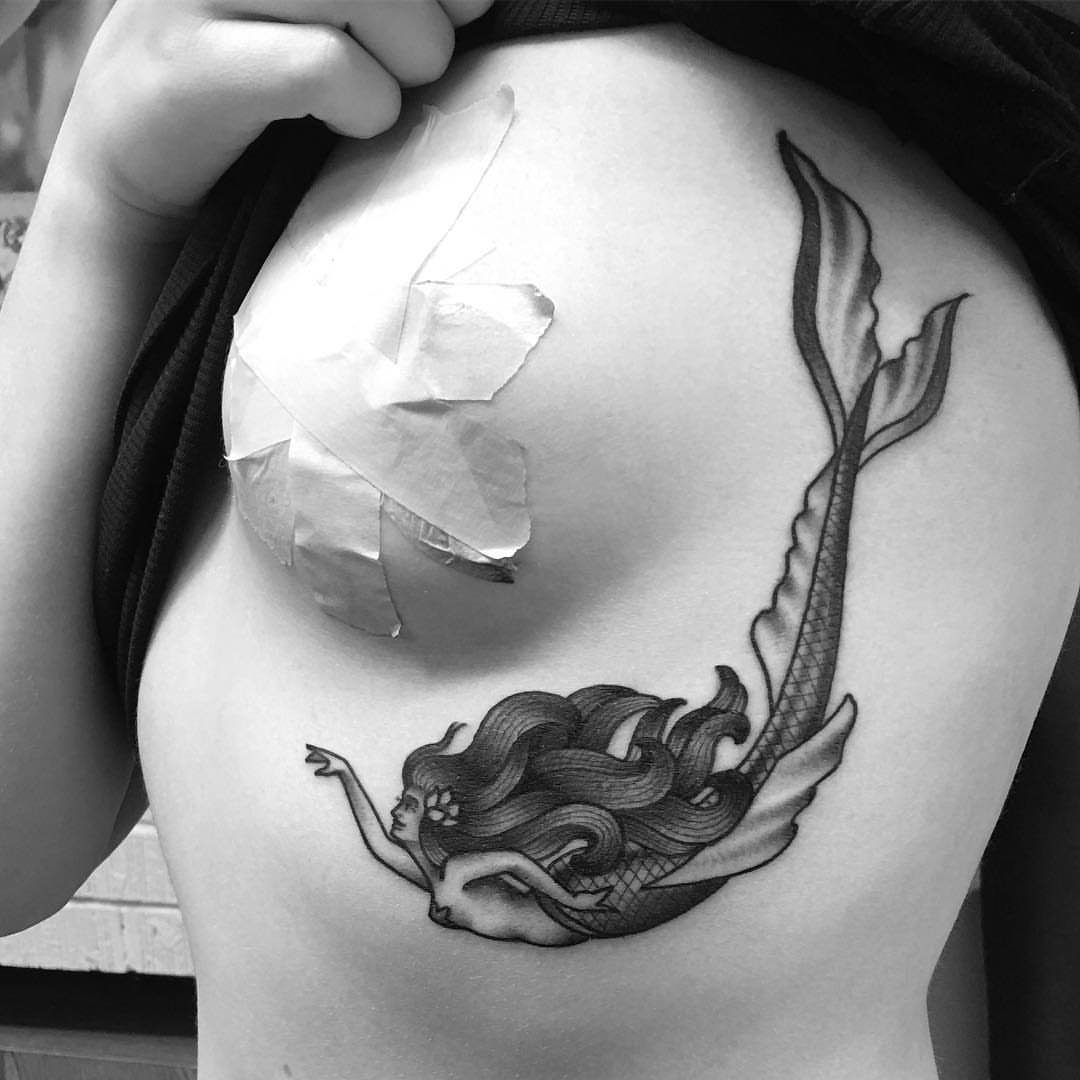
A mermaid curves along the underboob with her tail following the ribcage and hair flowing upward toward the sternum. The figure reads feminine without needing symmetry, which gives you more freedom in placement than geometric designs demand.
Black and grey suit this subject because shading defines the scales, hair and face without the upkeep color requires. Size needs to be large enough that facial features stay clear.
Ribcage pain is unavoidable, but most sessions finish without breaking into multiple appointments.
8. Lotus Chandelier Underboob Tattoo
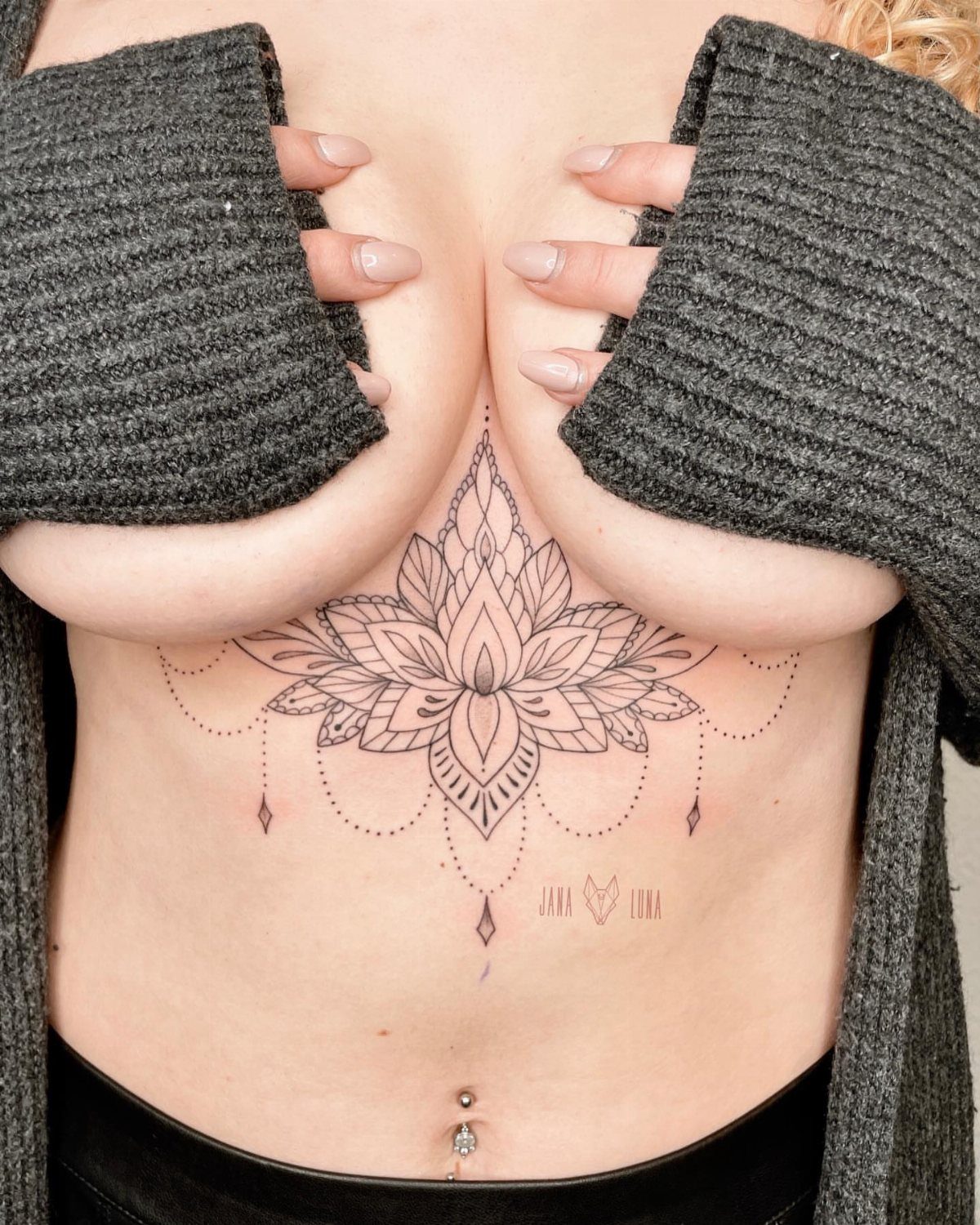
A lotus sits centered on the sternum with beaded strands draping down beneath each breast, creating a jewelry effect. The combination reads ornamental and feminine, and the beads follow your body’s natural curve without needing complex shading.
Fine linework keeps this design light, but the beads need consistent spacing or they look uneven once healed. I prefer black ink here because it holds detail longer than grey wash on the sternum.
Healing time runs standard at 2 weeks.
9. Symmetrical Sternum Ornament
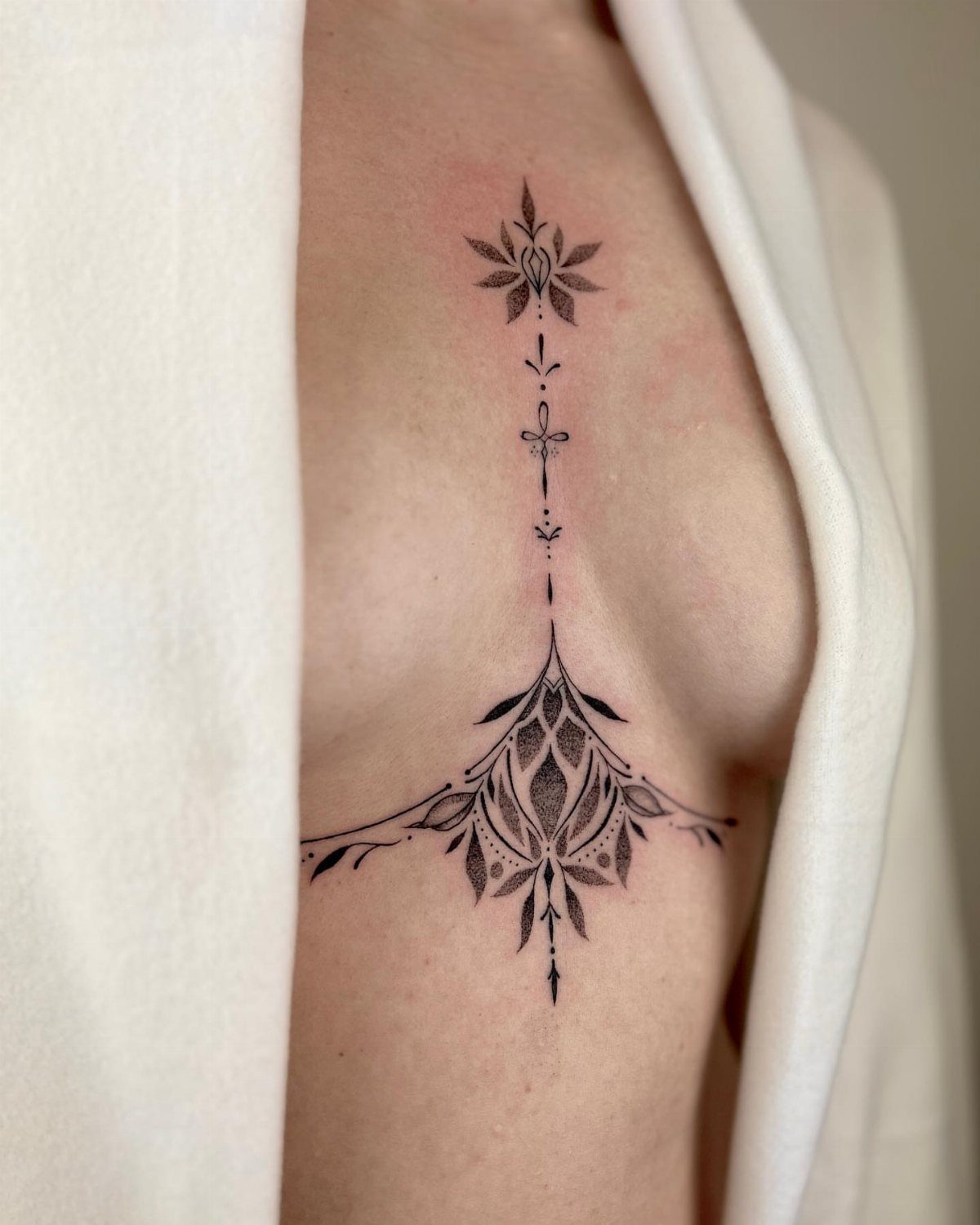
Ornamental linework runs straight down the sternum and spreads into decorative patterns just under each breast. Symmetry matters here because any imbalance shows immediately on this centered placement.
Dotwork and fine lines age differently: dots soften over time, lines stay sharper. For crisp geometry that holds up over time, ask for bolder linework than you think you need.
Sternum tattooing hurts more than soft tissue placements because bone sits directly under the needle. Most people finish in one sitting, but breaks help.
10. Curved Leafy Vine
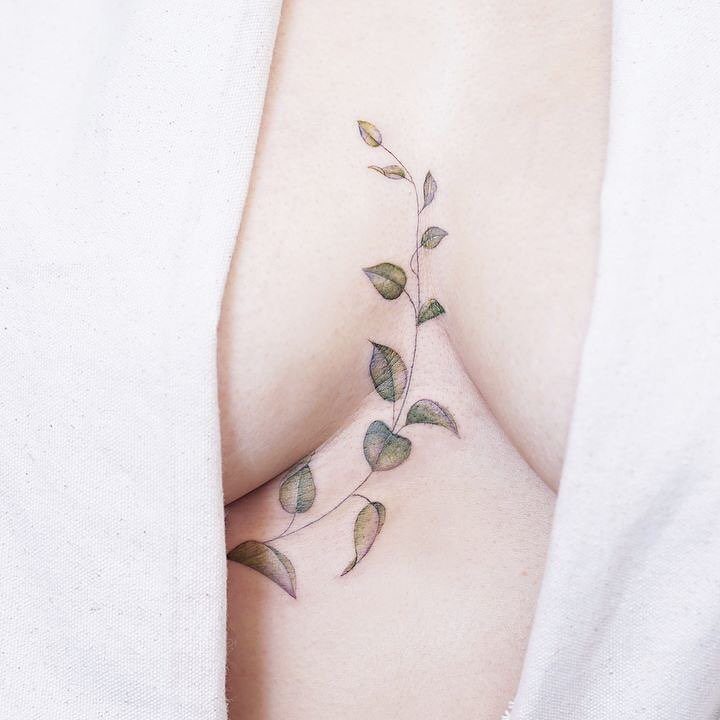
A leafy vine follows the underboob curve with small leaves trailing along one side. Color makes this design softer than black ink, though green fades faster than black and needs touch-ups every few years to stay saturated.
The vine sits close to the breast rather than extending down the ribcage, which keeps the design compact and lowers pain slightly compared to full underboob pieces.
Aftercare is easier with smaller pieces. Keep it moisturized and avoid tight bras until it heals completely.
11. Seashell and Draped Beads
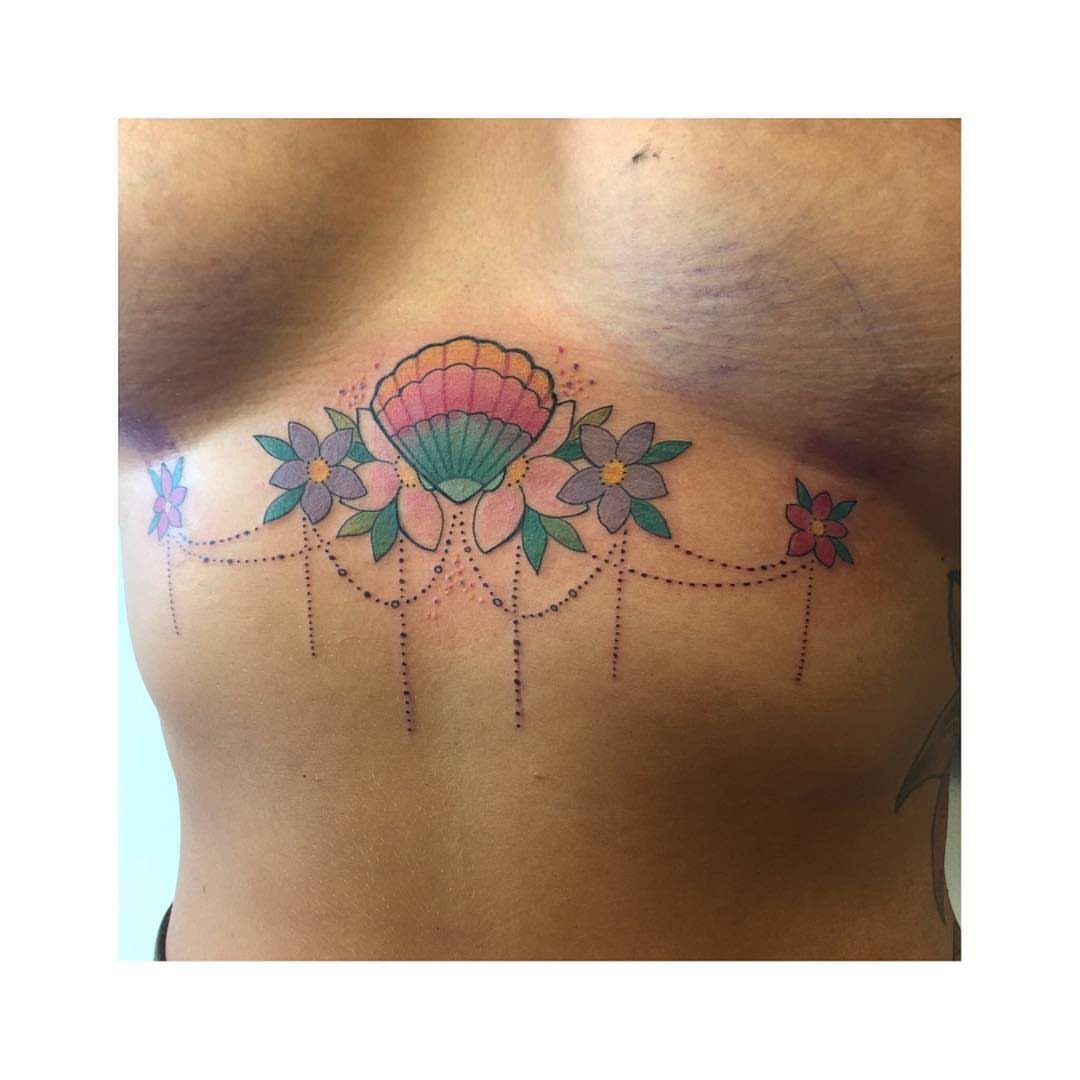
A pastel seashell sits at the center with flowers flanking it and beaded chains draping beneath each breast. The color palette softens the whole design, which suits beach or ocean themes better than the stark contrast of black ink.
Color requires more maintenance than black. Pastels lose saturation fastest, so plan for a refresh to keep the palette bright.
Placement stays centered, which means sternum pain, but the surrounding flowers spread onto softer tissue where the needle feels less sharp.
12. Winged Figure Design
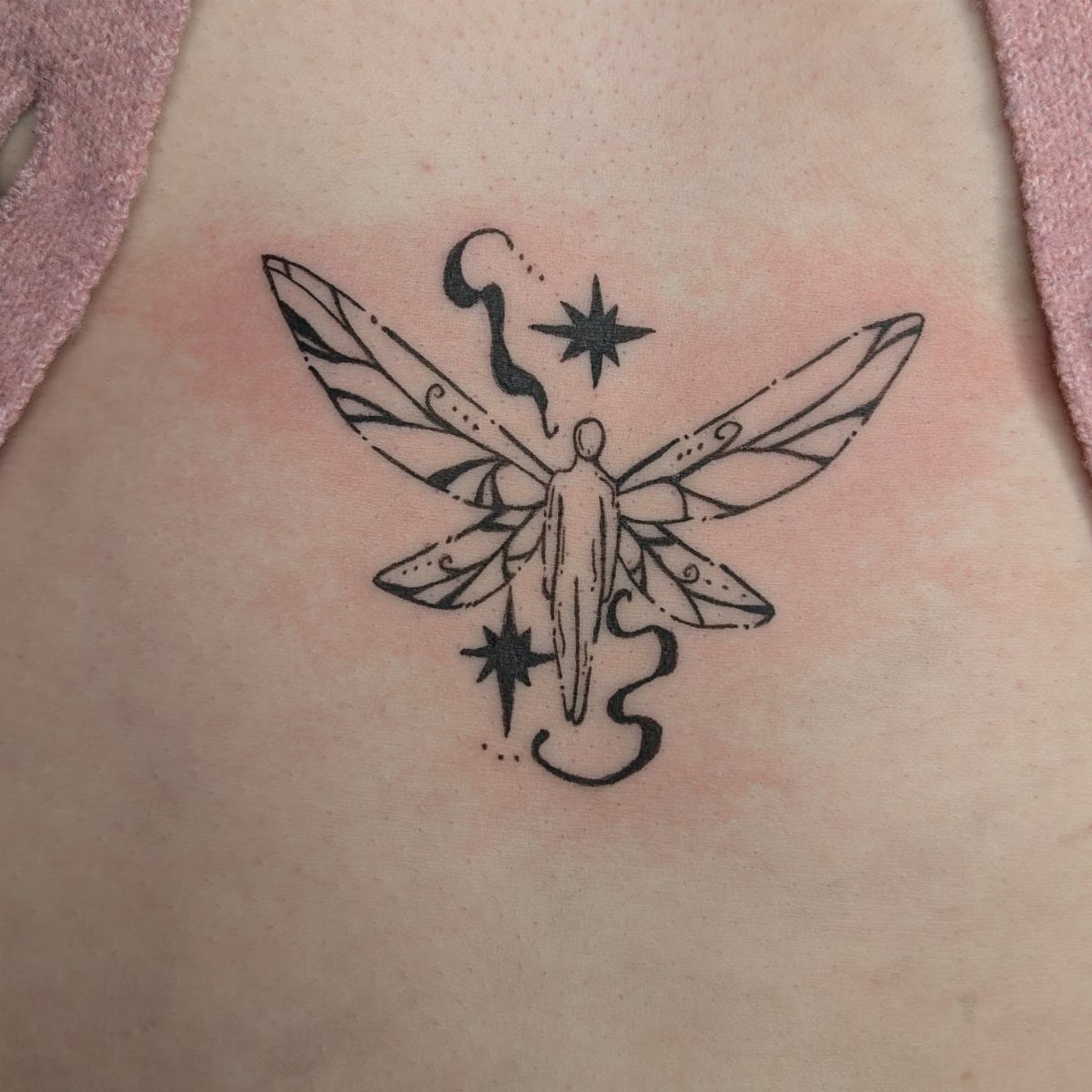
A winged figure with stars and swirling lines sits just below the chest, reading angelic or celestial depending on how the wings and face are styled.
The design stays contained rather than spreading wide across the ribcage, which shortens session time.
Black ink suits this style because the figure needs definition to stay readable. Swirling lines add movement, but too many can make the design look cluttered once it heals.
Pain stays moderate if the figure sits mostly on soft tissue beneath the breast rather than extending onto the sternum.
Considerations for Underboob Tattoos
Underboob placement sits directly over bone and close to nerve-dense tissue, which puts pain higher than most arm or thigh work.
The sternum in particular has almost no padding between skin and bone, so expect sharp, focused discomfort if your design crosses that centerline.
Healing takes longer here because bras rub the area constantly.
I recommend going braless or switching to a loose sports bra for the first 2 weeks while the skin seals. Moisture and friction both slow healing, so plan around your wardrobe and your schedule.
This placement stays private until you choose to show it, which appeals to people who want something meaningful without making it visible at work or in most social settings.
The intimacy of the spot often matches the personal weight of the design.
Evolution of Underboob Tattoos
Underboob tattoos moved from niche to mainstream over the past decade as social media made private placements more visible.
What used to be reserved for people deeply embedded in tattoo culture now shows up across age groups and experience levels, from first-timers to collectors filling remaining space.
The shift mirrors a broader change in how tattoos are worn. Placements that were once considered daring or unconventional are now standard requests in most shops, and artists have refined techniques for working the curve and contour of this area.
Acceptance has grown alongside visibility. What once raised eyebrows now registers as a common choice, particularly among women in their 20s and 30s who treat tattoos as another form of personal style rather than a statement against convention.
Personal Significance
Underboob tattoos often carry private meaning because the placement itself feels personal. The intimacy of the spot makes it a natural choice for designs tied to identity, loss, strength or milestones you want close but not constantly on display.
Some people choose this area specifically because it stays hidden in daily life. You control who sees it and when, which changes the relationship between the tattoo and the world around you.
The meaning can also come from reclaiming the space. Scars, body changes after surgery or pregnancy, and simple ownership of your own skin all show up as reasons people pick this placement over more public ones.
Frequently Asked Questions
What are those underboob tattoos called?
They’re called underboob tattoos, sternum tattoos when they center on the breastbone, or chest tattoos when the placement is broader.
The term you use depends on where the design sits: underboob covers the curve just below the breast, sternum refers to the vertical centerline, and chest includes everything across the ribcage and breast area.
Can I wear a bra on my tattoo?
A loose sports bra puts less friction on the area while the ink heals.
A tight bra rubs the fresh tattoo constantly, which slows healing and can pull ink out of the design. Once the skin closes and the tattoo stops weeping, you can return to normal bras.
What is the least painful body part for a tattoo?
The outer thigh, upper arm and forearm hurt less than most other placements because they have more fat and muscle between skin and bone.





