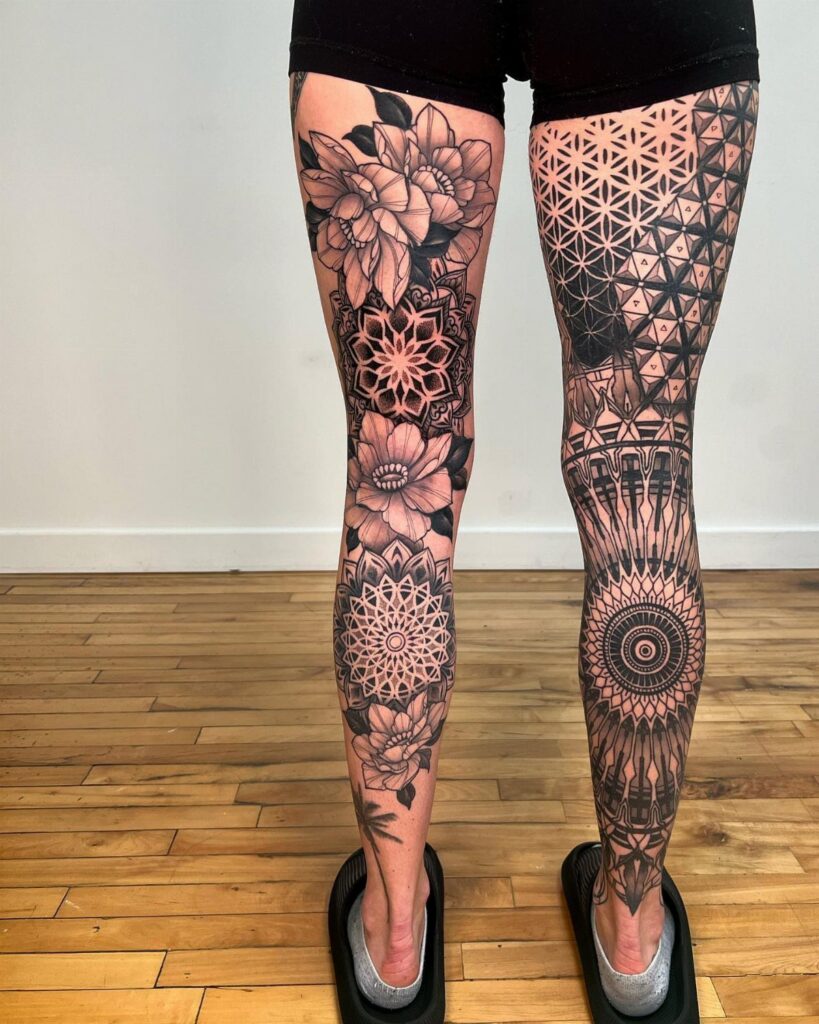
The outer thigh rates around 4 out of 10 for pain because muscle and thicker skin cushion the needle, while the inner thigh jumps to 7–8 where nerves sit closer and skin thins out.
The canvas is big enough for detail but changes shape when you sit or walk, so symmetry and line weight matter more here than on flatter spots.
A rose or mandala can spread wide here without crowding, a scorpion’s tail follows the thigh’s natural curve, and a sword running from hip to knee uses the full length to show the blade and hilt in one piece.
1. Rose Thigh Tattoo
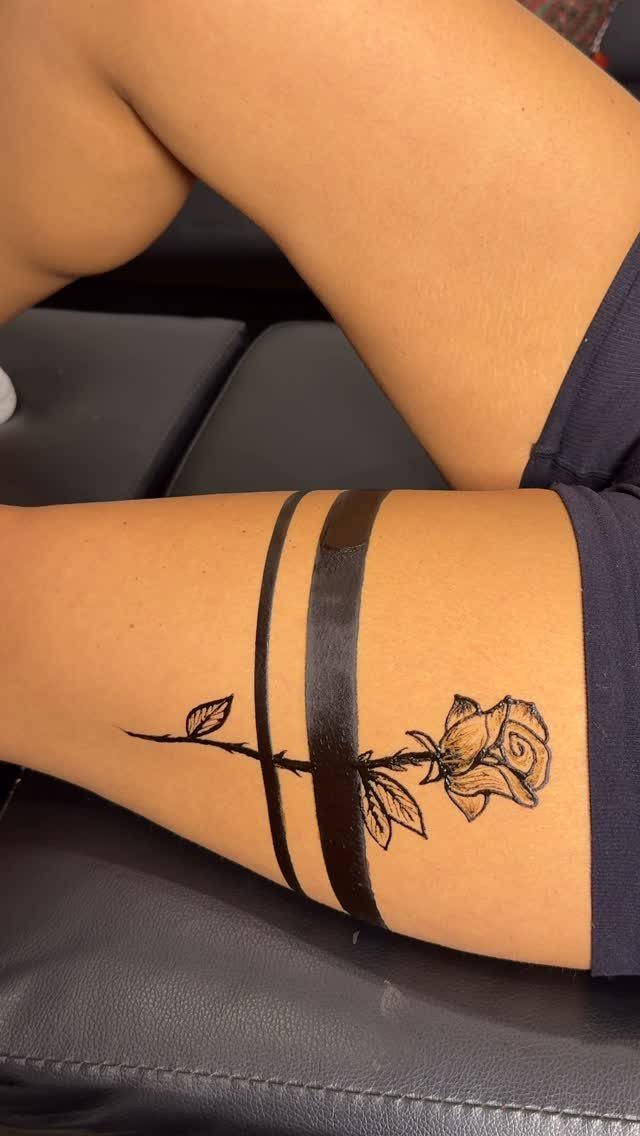
A rose on the thigh can run large or carry extra detail around the bloom without crowding.
Roses read well from any angle, which matters when the tattoo wraps or sits on the outer thigh. Pain is moderate; the outer and front thigh have more padding than the inner side, so placement changes how much you feel.
2. Quote Thigh Tattoo
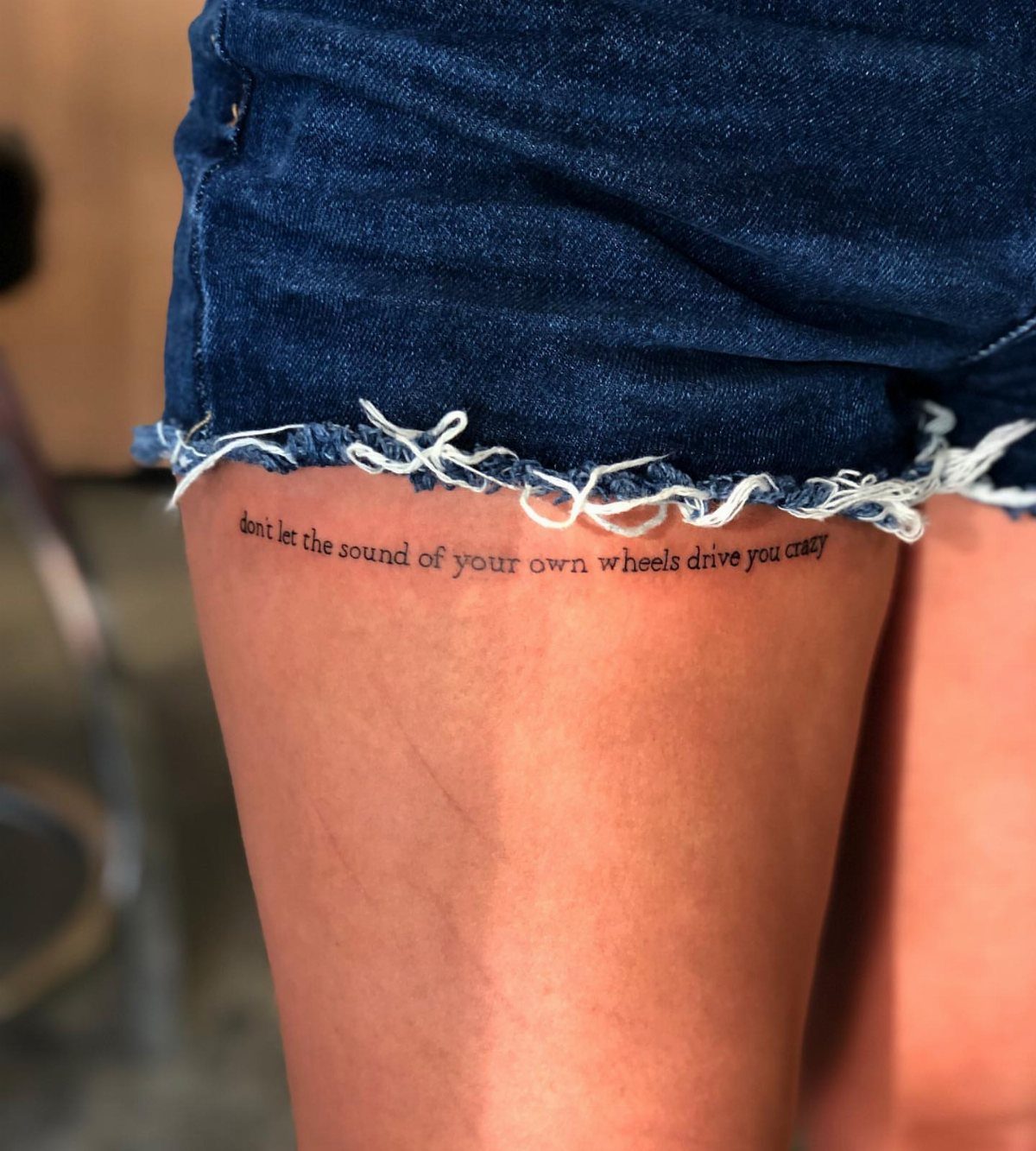
A quote on the thigh lets you run longer phrases without breaking lines awkwardly, and the canvas is wide enough that script stays readable even after years of wear.
I’d keep the text to one or two lines; more than that and the design loses impact when you’re standing.
Cursive flows better here than block letters, but pick a font with clear spacing so the words don’t blur together over time.
The outer thigh is easier to sit through than the inner, where skin is thinner and nerves sit closer.
3. Lotus Thigh Tattoo
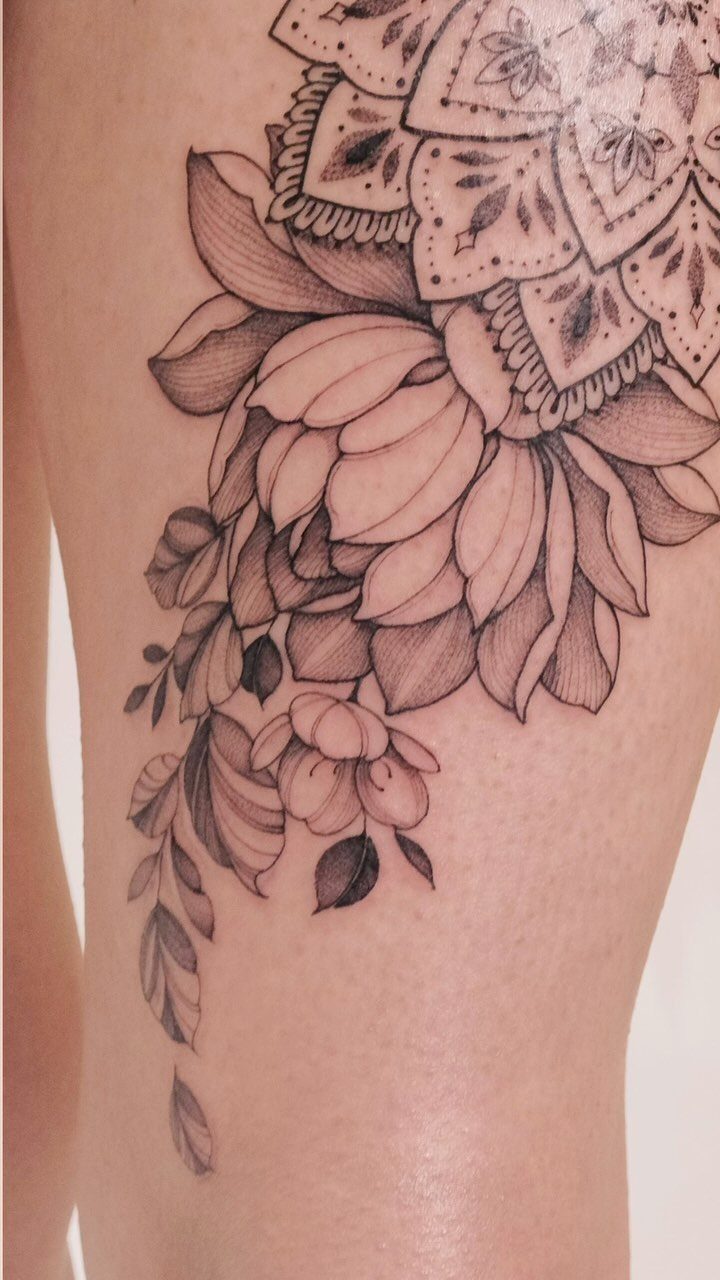
Monochrome shading works for depth, though color can bring the petals forward if that suits your style better.
Lotus designs benefit from a skilled artist who can balance symmetry with organic curves. The thigh tolerates detail work longer than bonier spots, so artists can finish intricate pieces in fewer appointments.
4. Mandala Thigh Tattoo
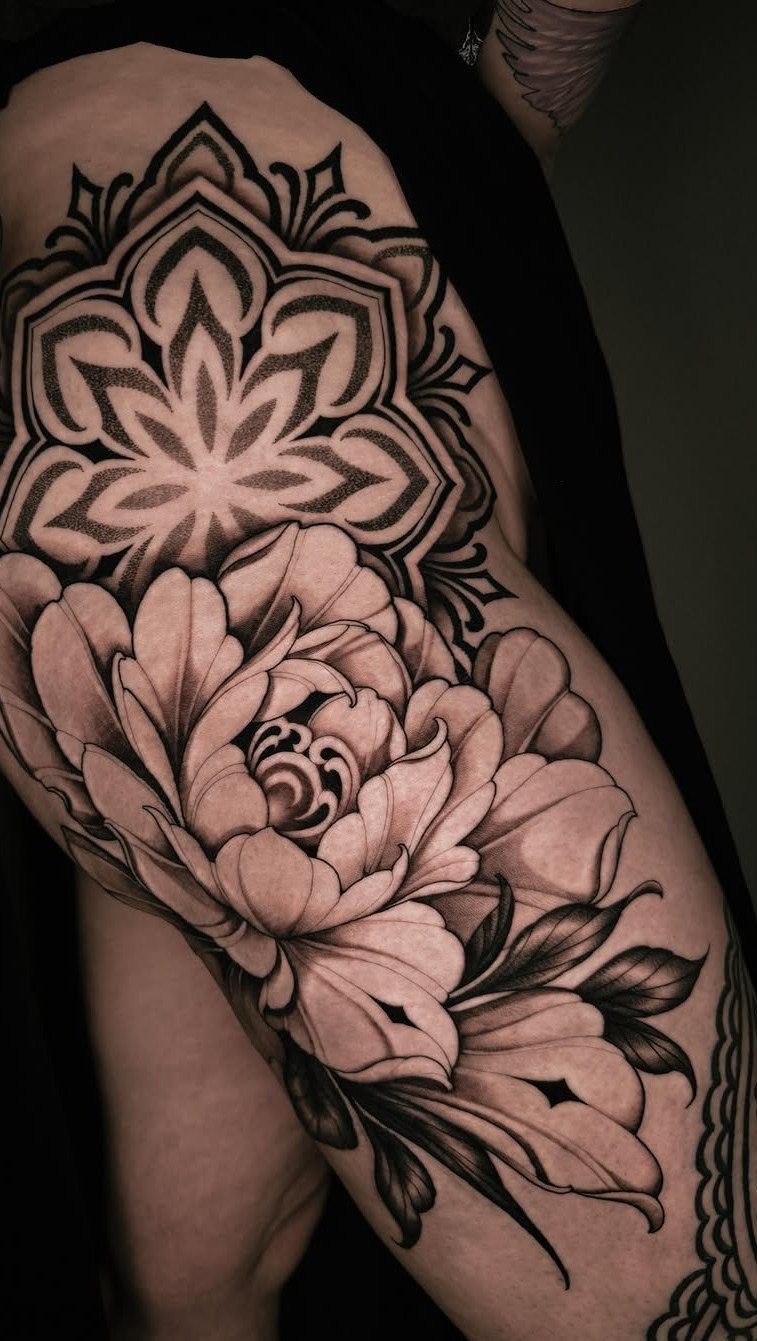
A mandala on the thigh can spread wide or stay compact, and adding a peony or other florals softens the geometry while the structure holds. Monochrome shading here builds contrast through tone alone, which ages more predictably than color.
Mandalas take time; the repetition and fine lines mean longer sessions, but the thigh’s padding makes sitting easier than ribs or spine.
I’d center it on the outer or front thigh where the surface stays flat, so the pattern holds its symmetry as your leg moves.
5. Hip and Thigh Tattoo
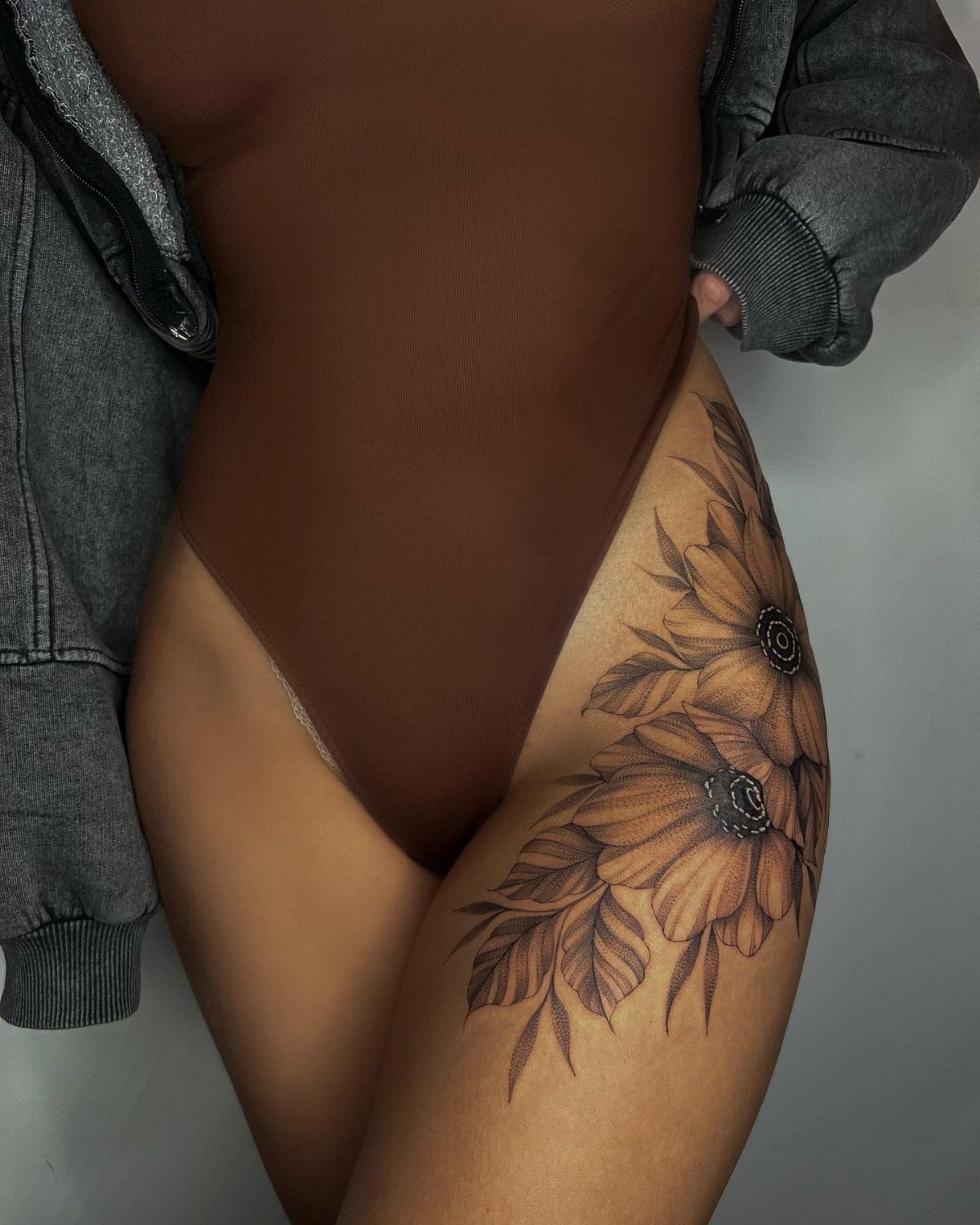
A design that starts at the hip and runs down the thigh follows the natural curve of the leg, and the extra length lets you build a piece that reads as one shape rather than separate elements.
Florals like the sunflower here need no hard borders, so the tattoo flows instead of stopping abruptly.
The hip bone itself is sharp, so expect more pain there than once the design moves onto the thigh. Shading spreads the session out, but the outer thigh recovers faster than the inner side where friction from clothing slows healing.
6. Dragon Thigh Tattoo
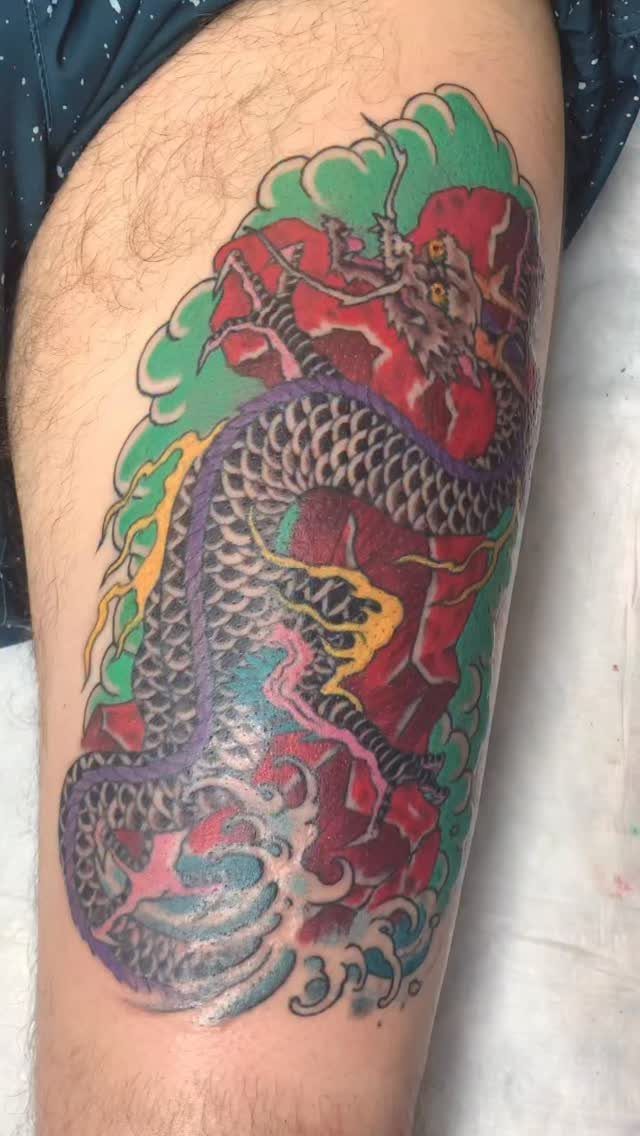
A dragon on the thigh lets you show the full body, wings, and motion without compressing the design. Color adds dimension, and the red, green, and blue here separate scales from sky or water if you’re layering elements.
Dragons suit the outer or front thigh, where the muscle stays firm and the design won’t distort when you sit. Bold outlines hold up over time, and the thigh heals faster than areas that bend constantly or rub against waistbands.
7. Snake Thigh Tattoo
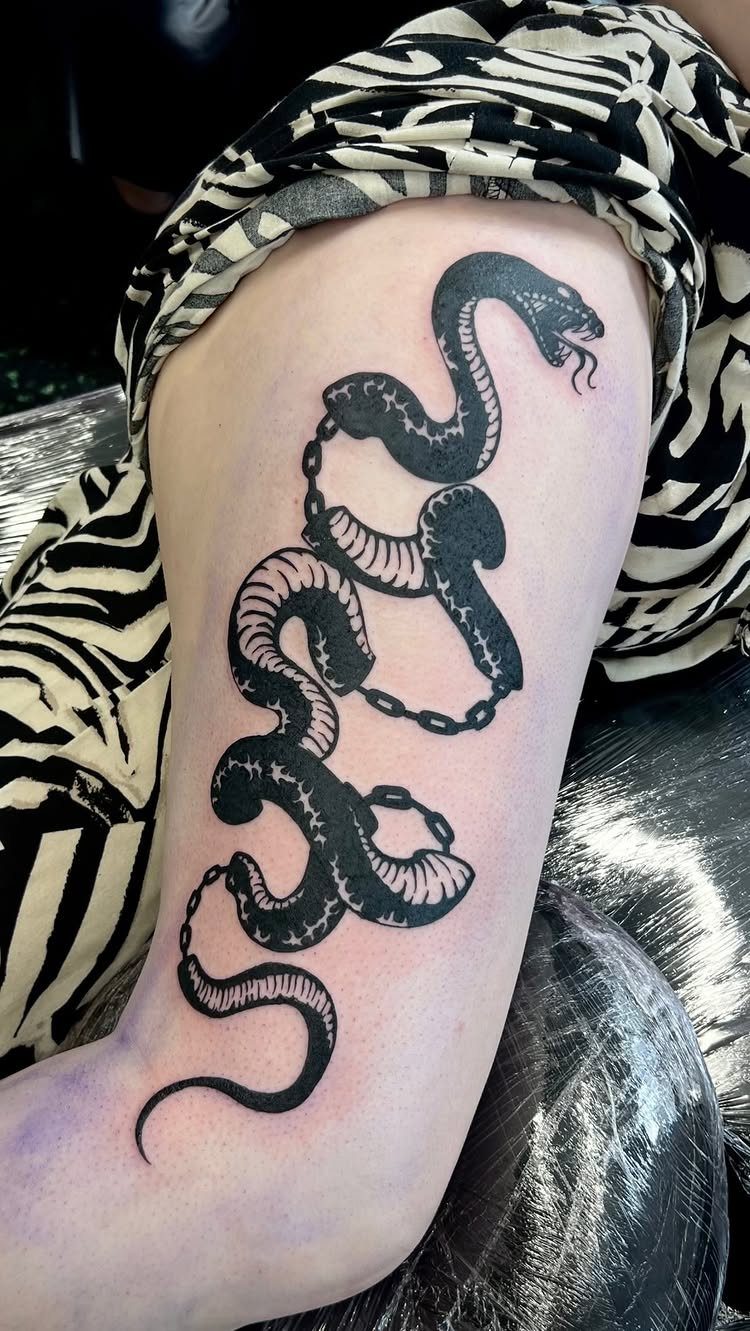
A snake wrapping around the thigh follows the leg’s natural curve, and the chain here adds weight to the design without needing color.
Black ink holds its contrast longer than shading that fades unevenly, and the thigh gives you room to let the body coil or stretch.
Snakes sit well on the outer thigh where the canvas stays smooth. The inner thigh is thinner and more sensitive, so placement changes how much the session tests you.
8. Lion Thigh Tattoo
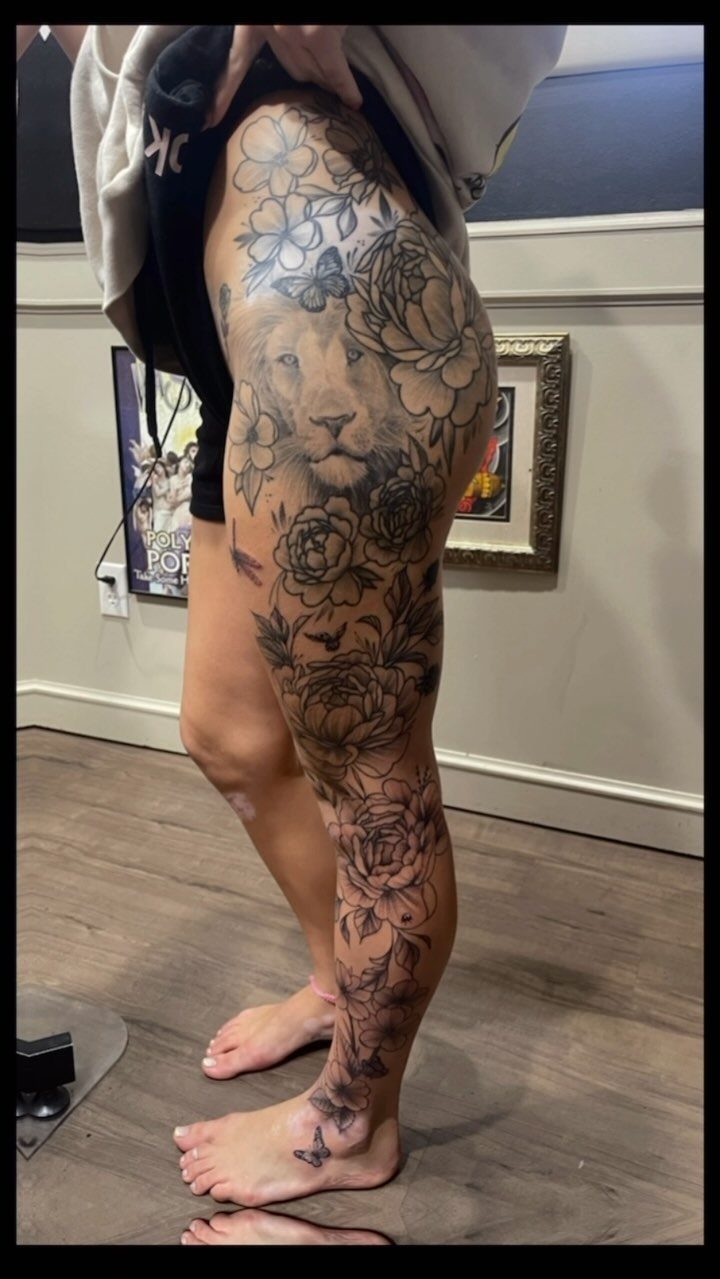
A lion paired with roses and butterflies balances strength with softer elements, and black and grey shading here builds depth without the maintenance color requires.
The thigh’s width lets the mane spread and the face hold detail that smaller placements would lose.
Line the lion’s face up with the center of your thigh so it reads clearly when you’re standing.
9. Floral Compass Tattoo
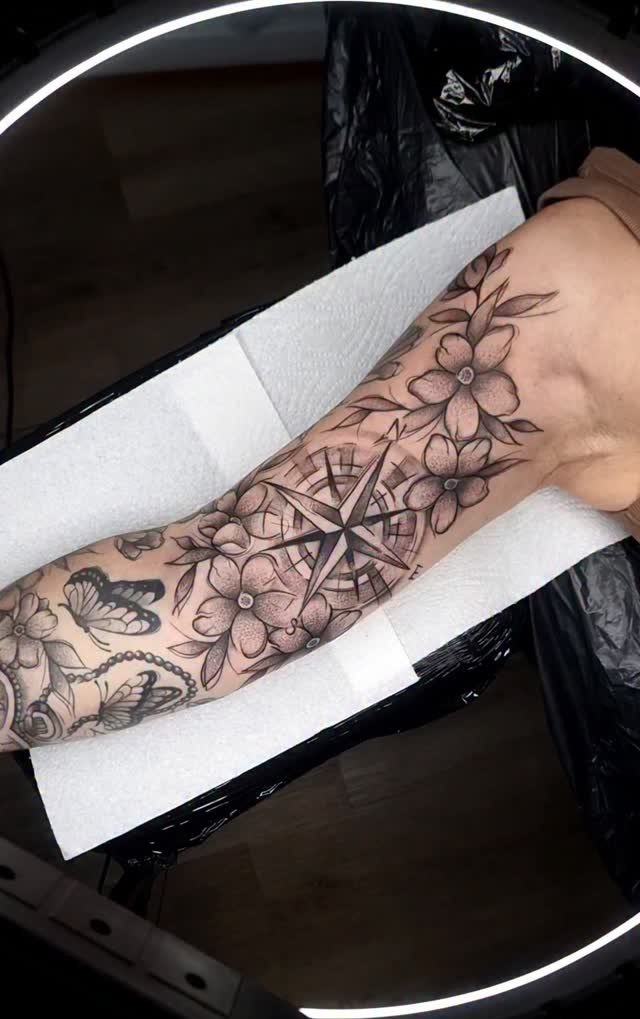
A compass with flowers and butterflies wraps navigation and growth into one piece, and the thigh’s curve lets the design sit naturally without forcing symmetry. Black and grey here keeps the directional points readable while the petals soften the edges.
Compass tattoos need clean linework, so the cardinal points stay sharp as the ink settles. The outer thigh tolerates detail better than the inner, where skin stretches and friction from movement can blur fine lines over time.
10. Bird Thigh Tattoo
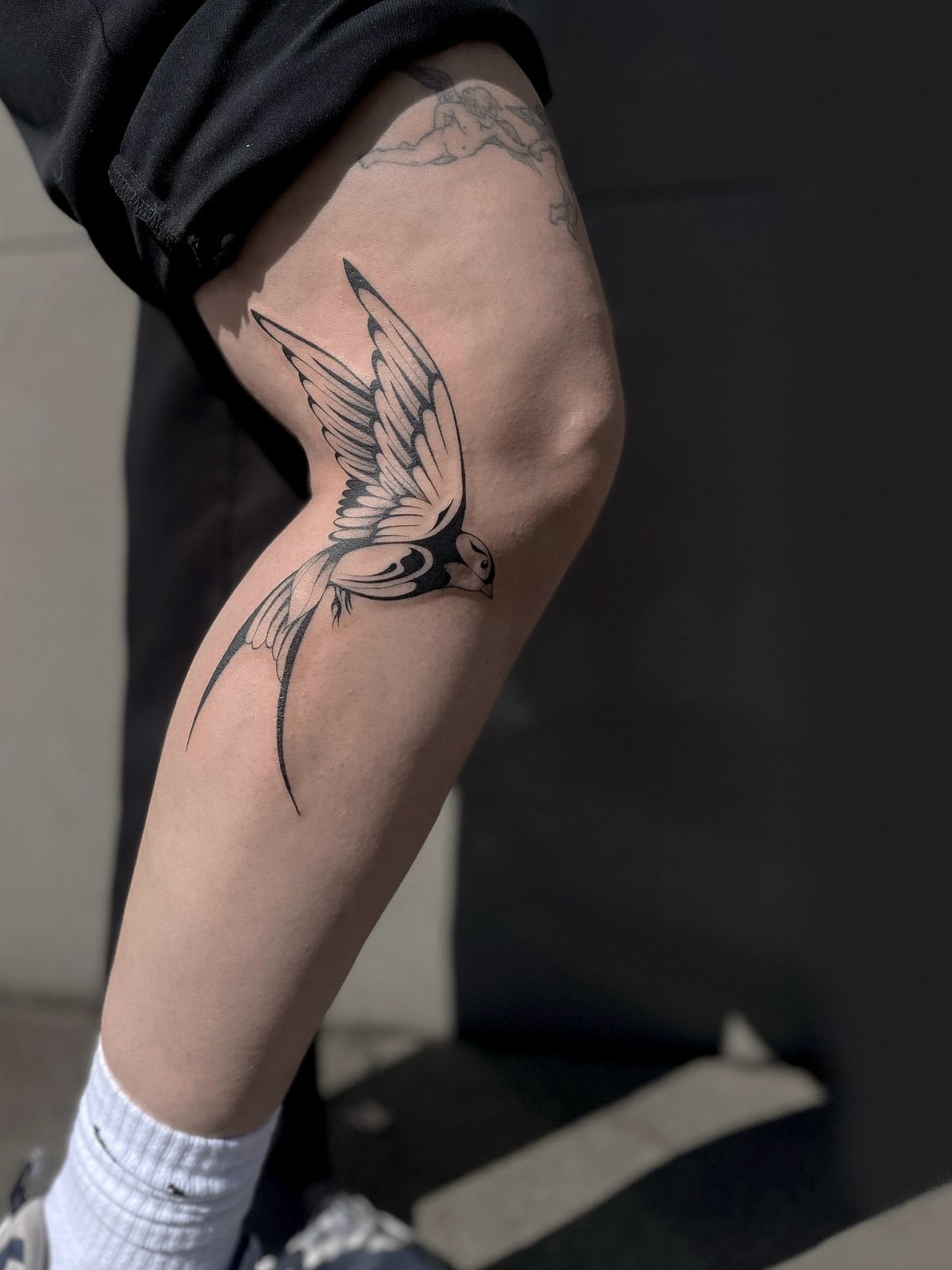
A bird at this scale fills the space between hip and knee, and black ink here gives the wings definition without needing color to separate feathers.
Most bird tattoos run smaller, but the thigh lets you show the full wingspan and motion.
The front or outer thigh keeps the design visible when you’re standing, and the flatter surface holds detail better than the inner leg.
11. Sun and Moon Thigh Tattoo
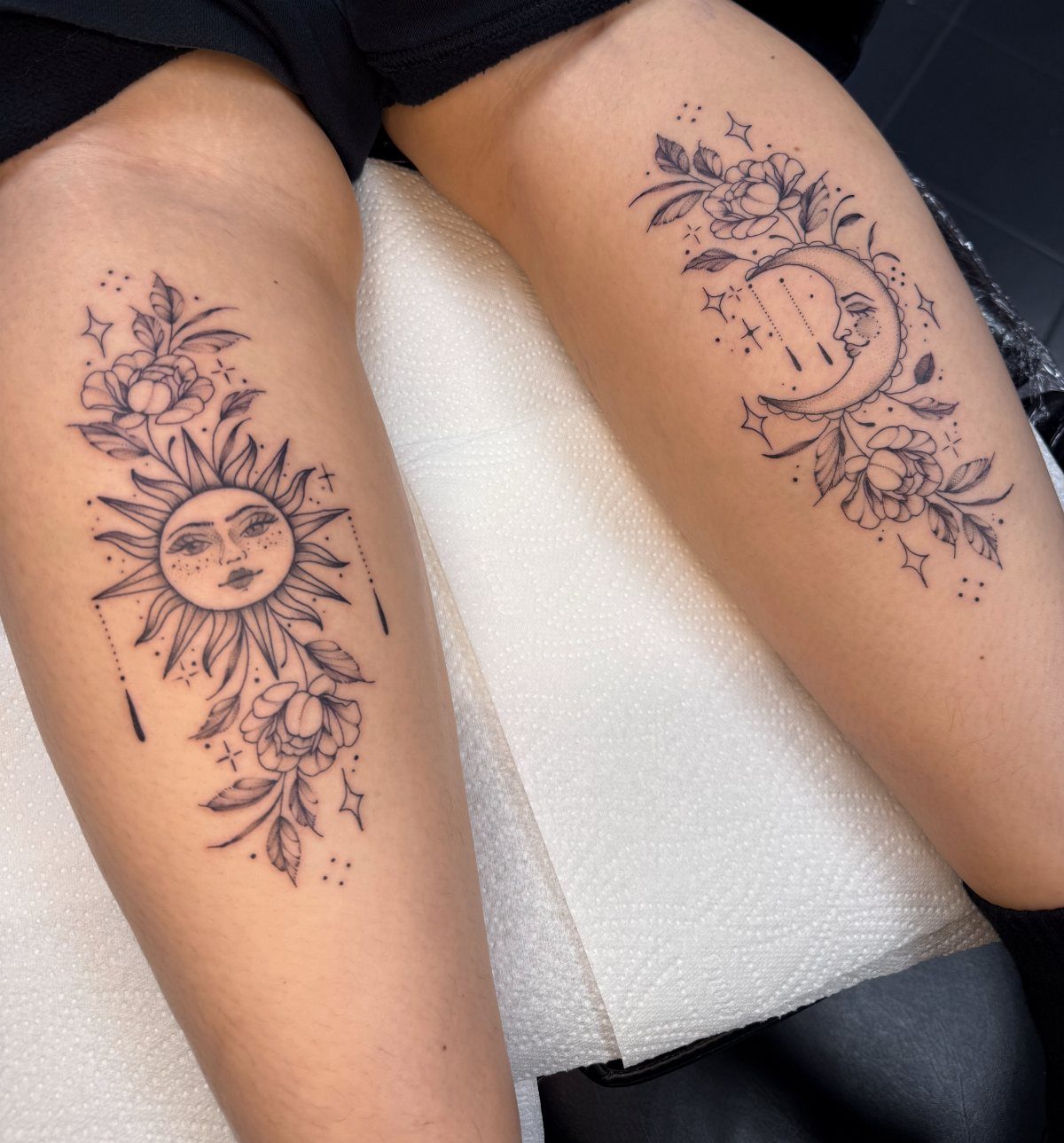
A sun and moon split across both thighs creates a matched pair, and adding flowers and stars fills the space without breaking the symmetry.
Black ink keeps the celestial shapes distinct, and the thigh’s width prevents the design from feeling cramped.
Matching tattoos take 2 sessions unless your artist can work on both legs at once.
12. Fantasy Sword Thigh Tattoo
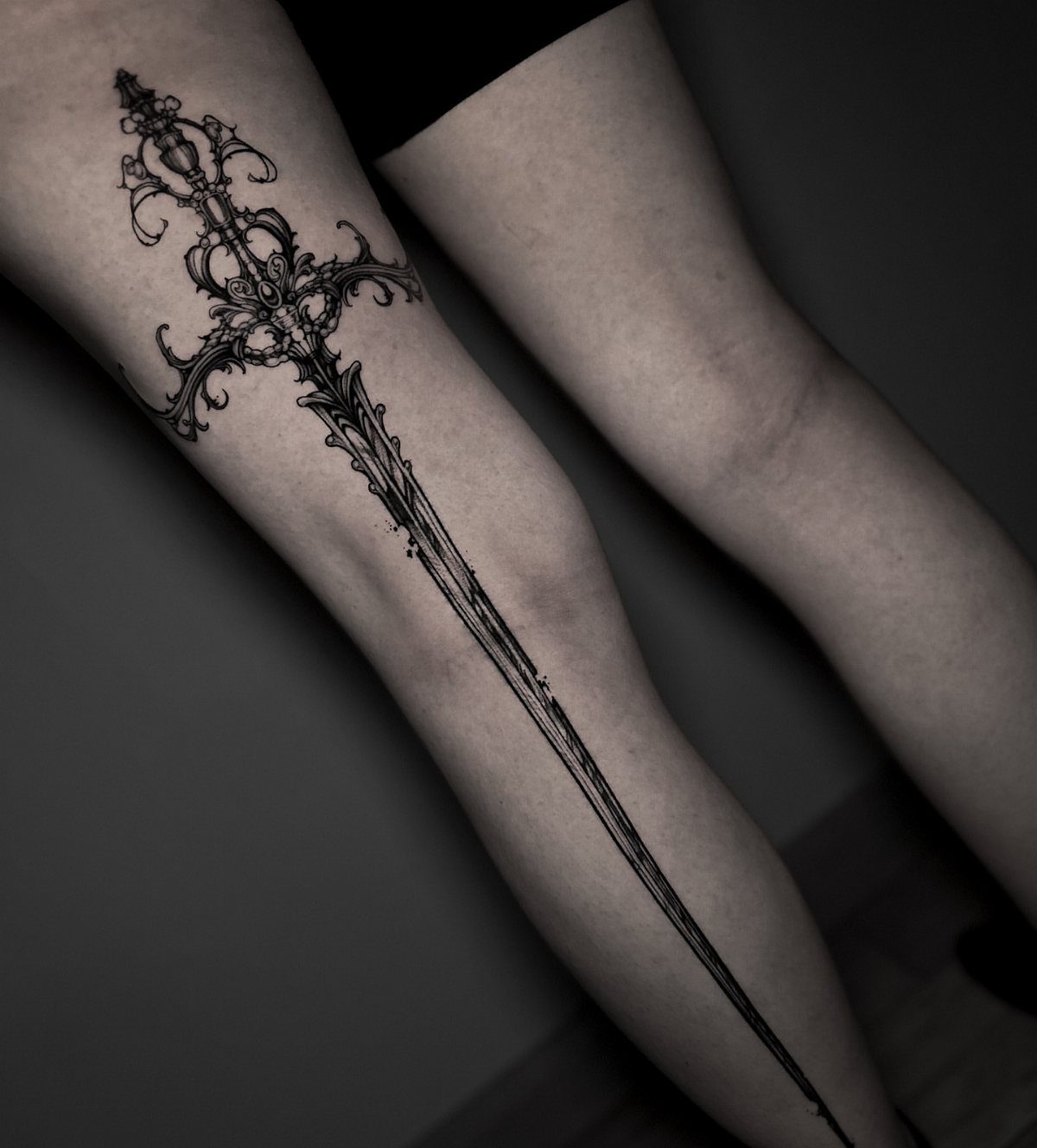
A sword running from thigh to knee uses the leg’s length to show the full blade and hilt, and ornate detailing here works because the thigh tolerates longer sessions.
Black ink keeps the edges sharp, which matters when the design needs to read as metal.
Vertical pieces like this follow the leg’s natural line, so they look proportional when you’re moving. The outer thigh is flatter and less sensitive than the inner, and the design stays visible without needing to wrap around the leg.
13. Garter Thigh Tattoo
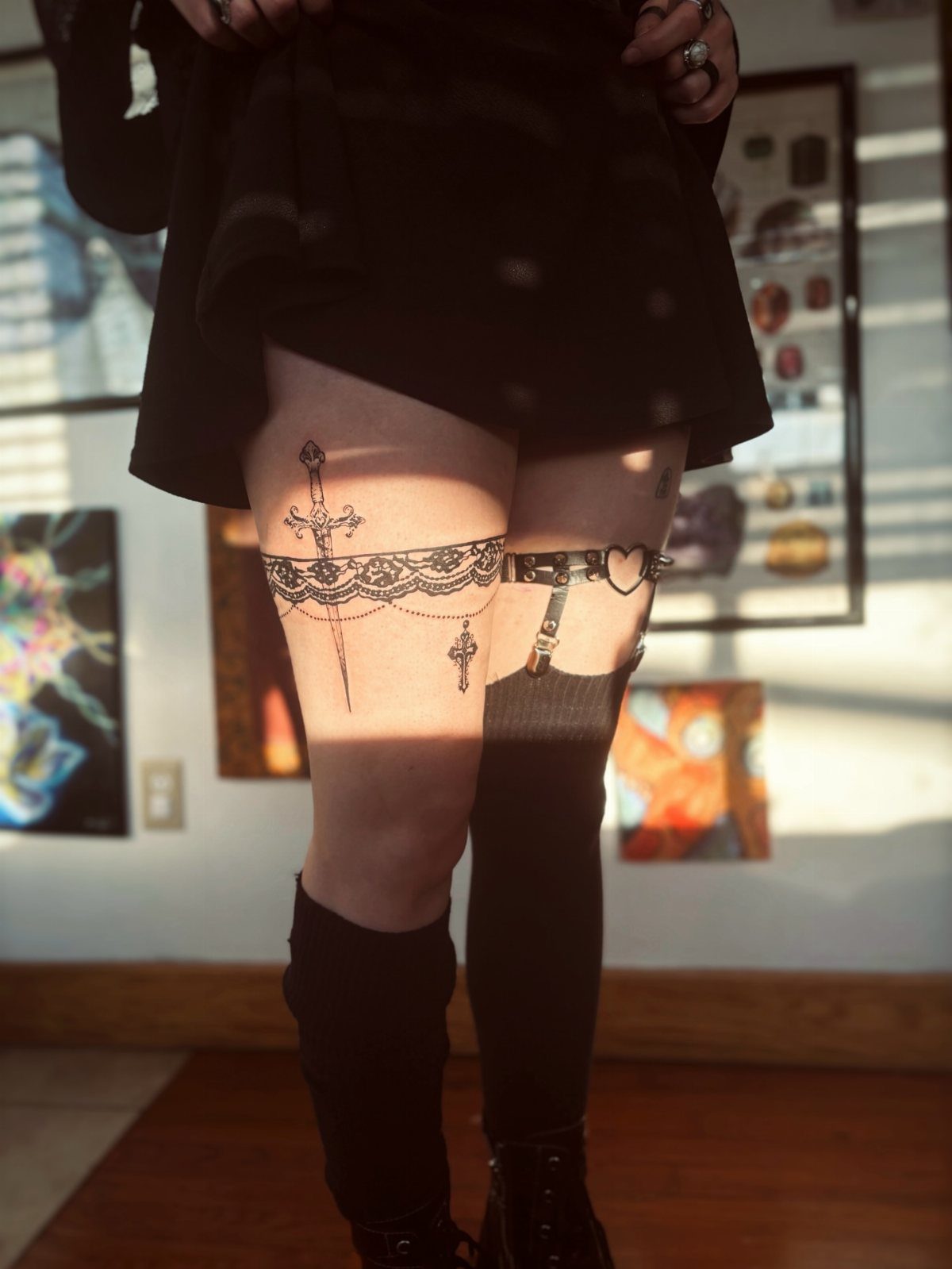
A garter tattoo wraps the upper thigh like lace worn under clothing, and adding a sword or cross gives the design weight beyond the decorative band.
Black ink mimics the texture of fabric, and fine linework holds the lace pattern readable as it settles.
Garter tattoos sit high on the thigh where the leg meets the hip, so expect sharper pain near bone. The design stays hidden under most clothing, which suits anyone who wants ink that’s theirs to show.
14. Butterfly Thigh Tattoo
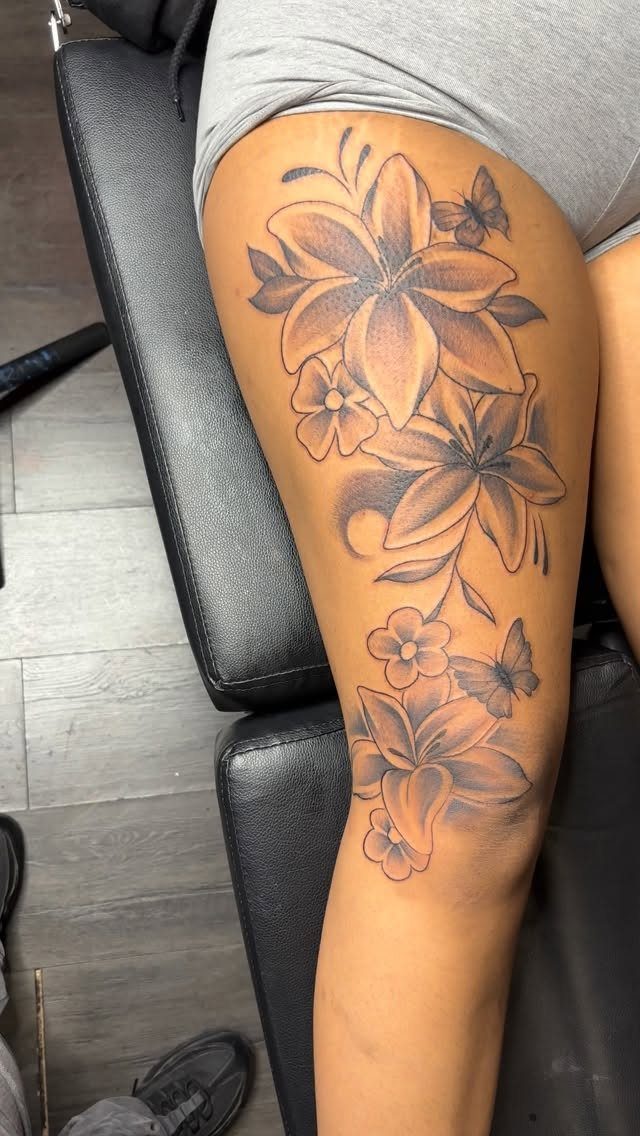
Butterflies paired with lilies turn transformation into something softer, and black and grey here keeps the wings distinct from petals without needing color to separate them.
The thigh’s width lets you group multiple butterflies without crowding, and lilies fill the background in a way that reads as intentional rather than filler.
Butterflies age well when the outlines stay bold and the shading doesn’t rely on fine gradients that blur over time.
15. Geometric Thigh Tattoo
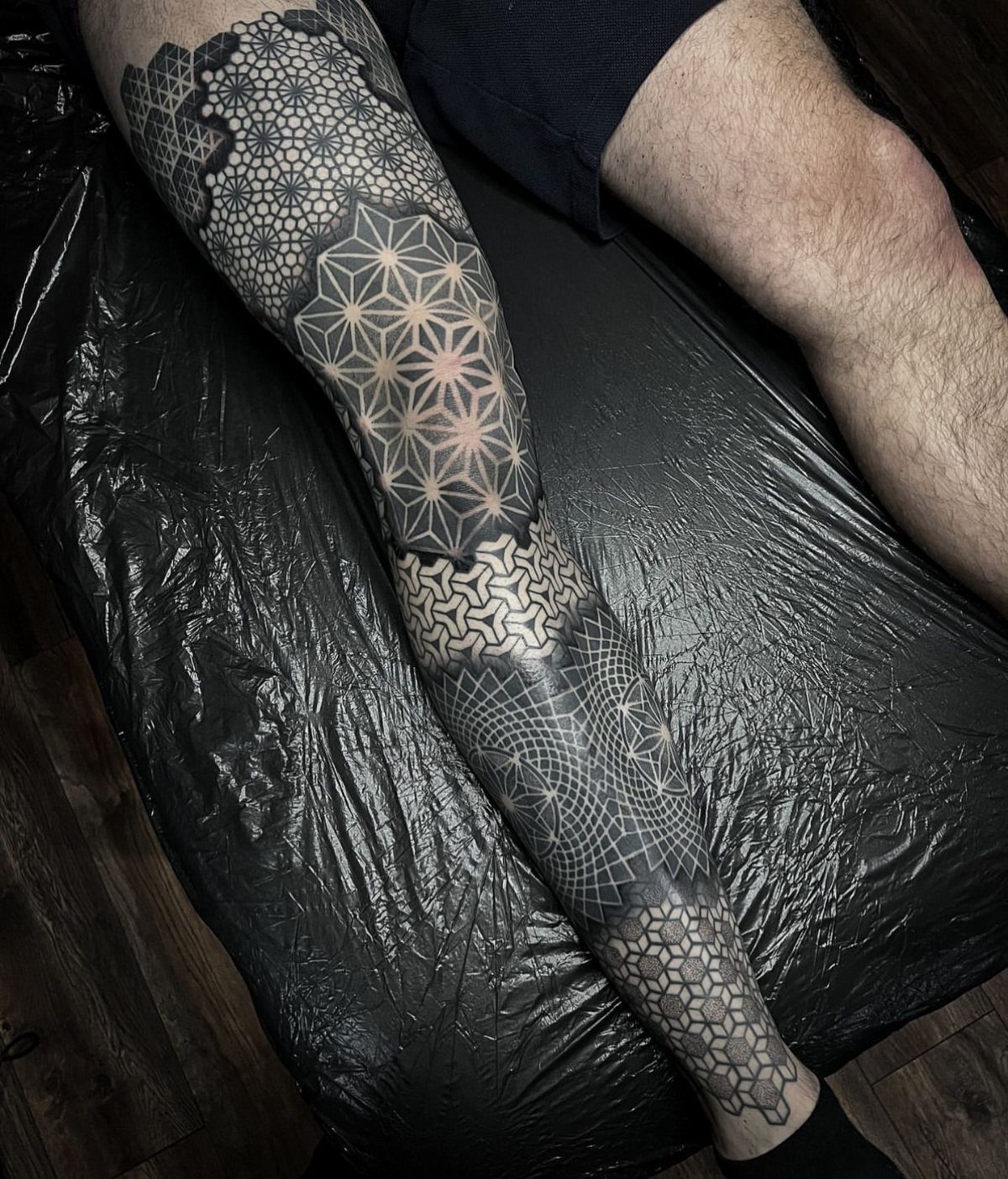
Geometry that runs from thigh to ankle creates a full leg sleeve, and repeating patterns here stay consistent across a surface that curves and bends.
A full leg piece takes multiple sessions, and the closer you get to the knee and ankle, the sharper the pain. I’d expect this to take longer than an arm sleeve because the leg’s contours change more dramatically.
16. Tribal Thigh Tattoo
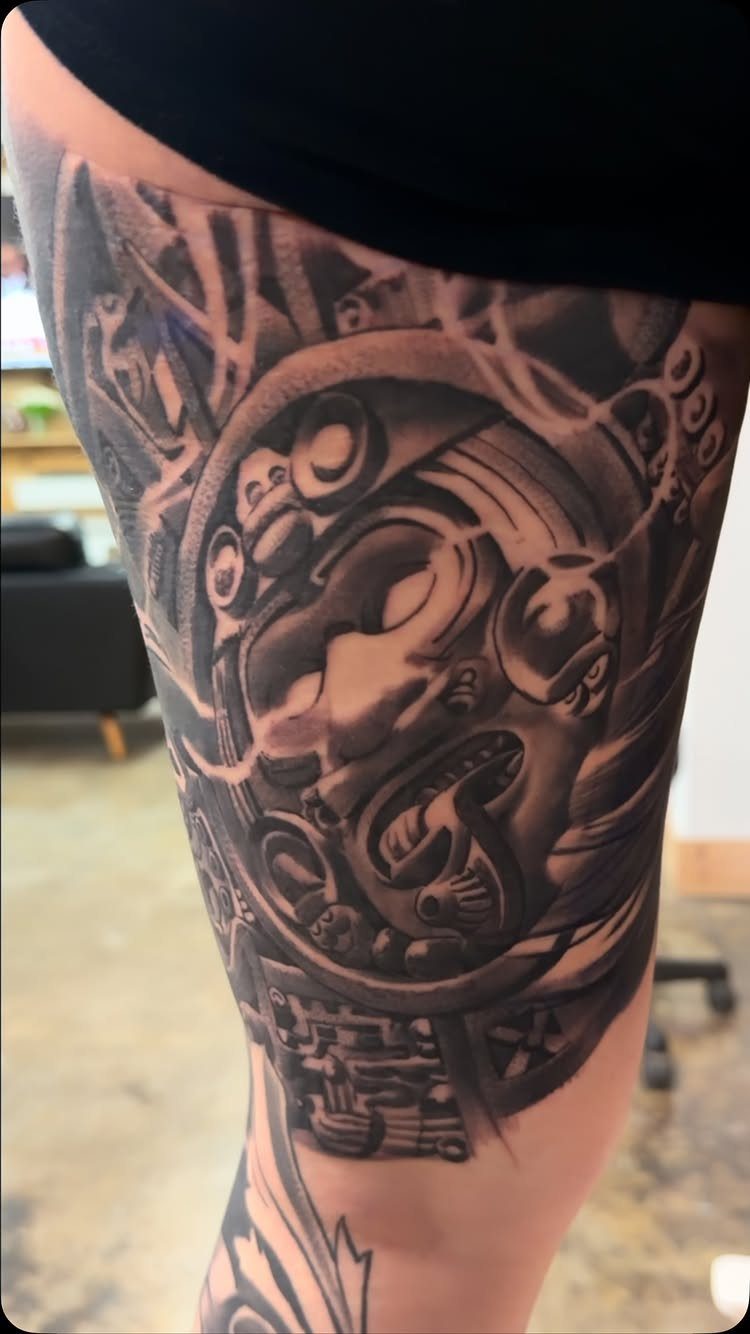
Tribal patterns on the thigh carry bold black shapes that hold up over decades, and the circular symmetry here anchors the design without needing a border.
Tribal work relies on solid fills and thick lines, so touch-ups stay rare if the original application goes deep enough.
Circles and curves suit the thigh’s natural roundness better than angular designs that fight the leg’s shape. Tribal takes fewer sessions than detailed shading, but the heavy black saturation means longer needle time per session.
17. Watercolor Thigh Tattoo
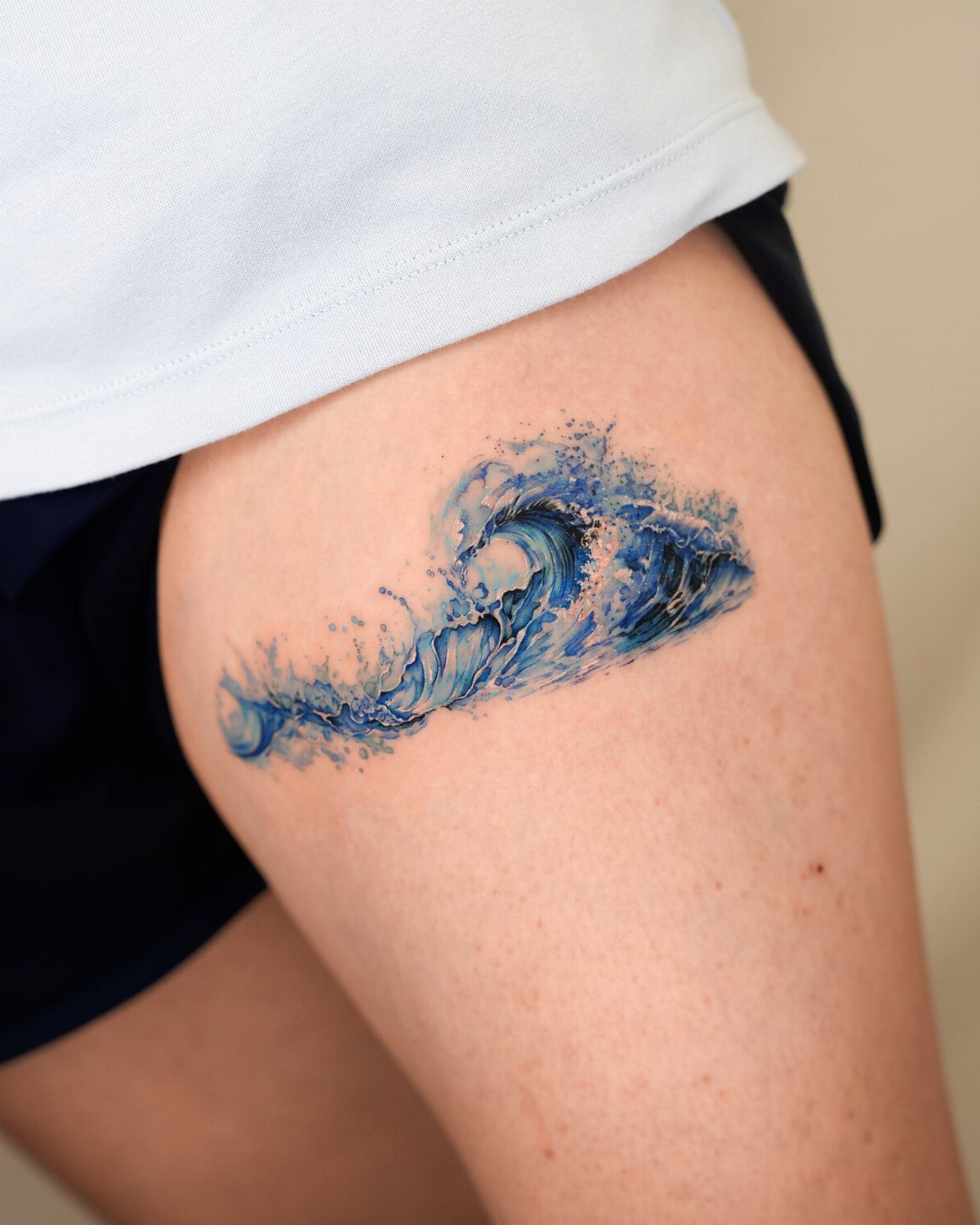
Watercolor tattoos fade faster than traditional work because the color sits lighter and lacks the dark outlines that frame other styles.
Expect touch-ups every few years to keep the vibrancy, and the thigh heals easier than spots that see constant sun. I’d pair watercolor with sunscreen if you want the color to last.
18. Octopus Thigh Tattoo
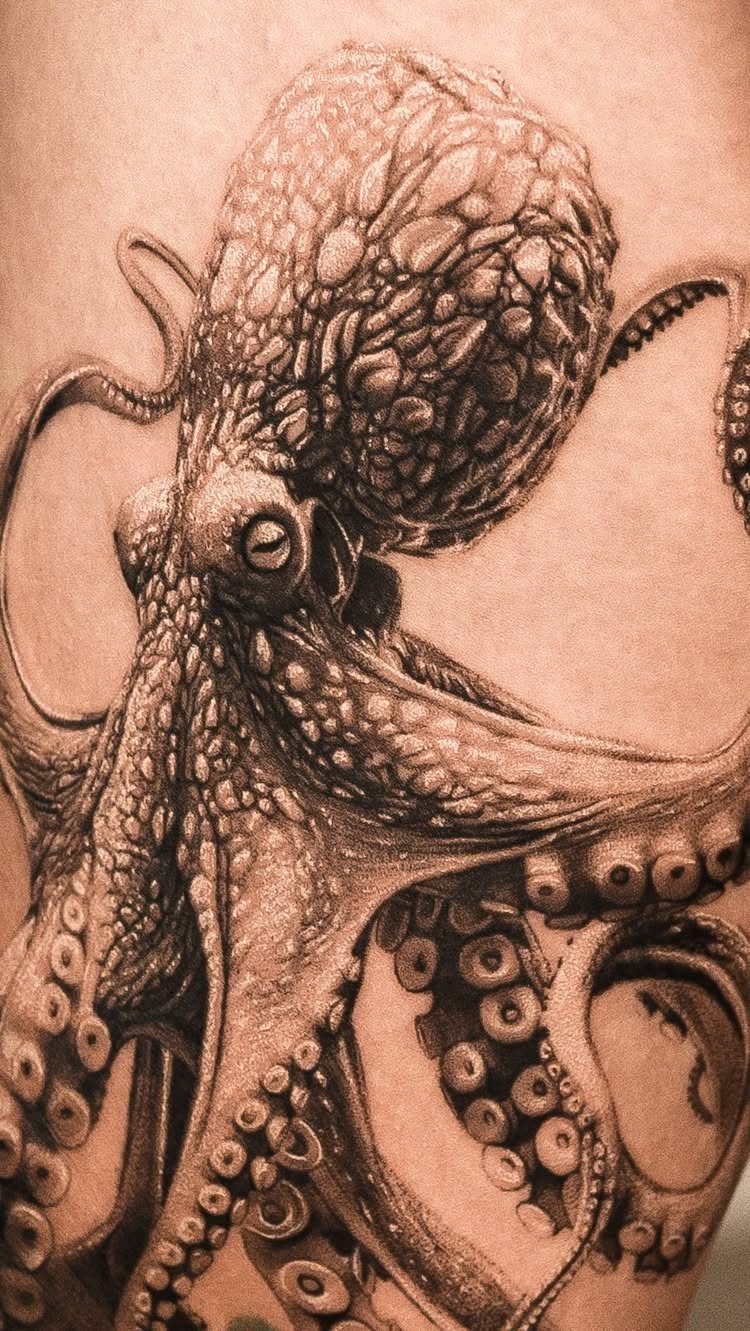
An octopus fills the thigh’s curve naturally, and black and grey shading here gives the suckers dimension without overworking the skin.
The tentacles can wrap or spread depending on how much of the leg you want covered, and the design reads clearly from any angle.
Octopus tattoos take time because each arm needs its own shading and texture. The outer thigh sits easier than the inner, and the piece can extend toward the hip or knee if you want more coverage later.
19. Scorpion Thigh Tattoo
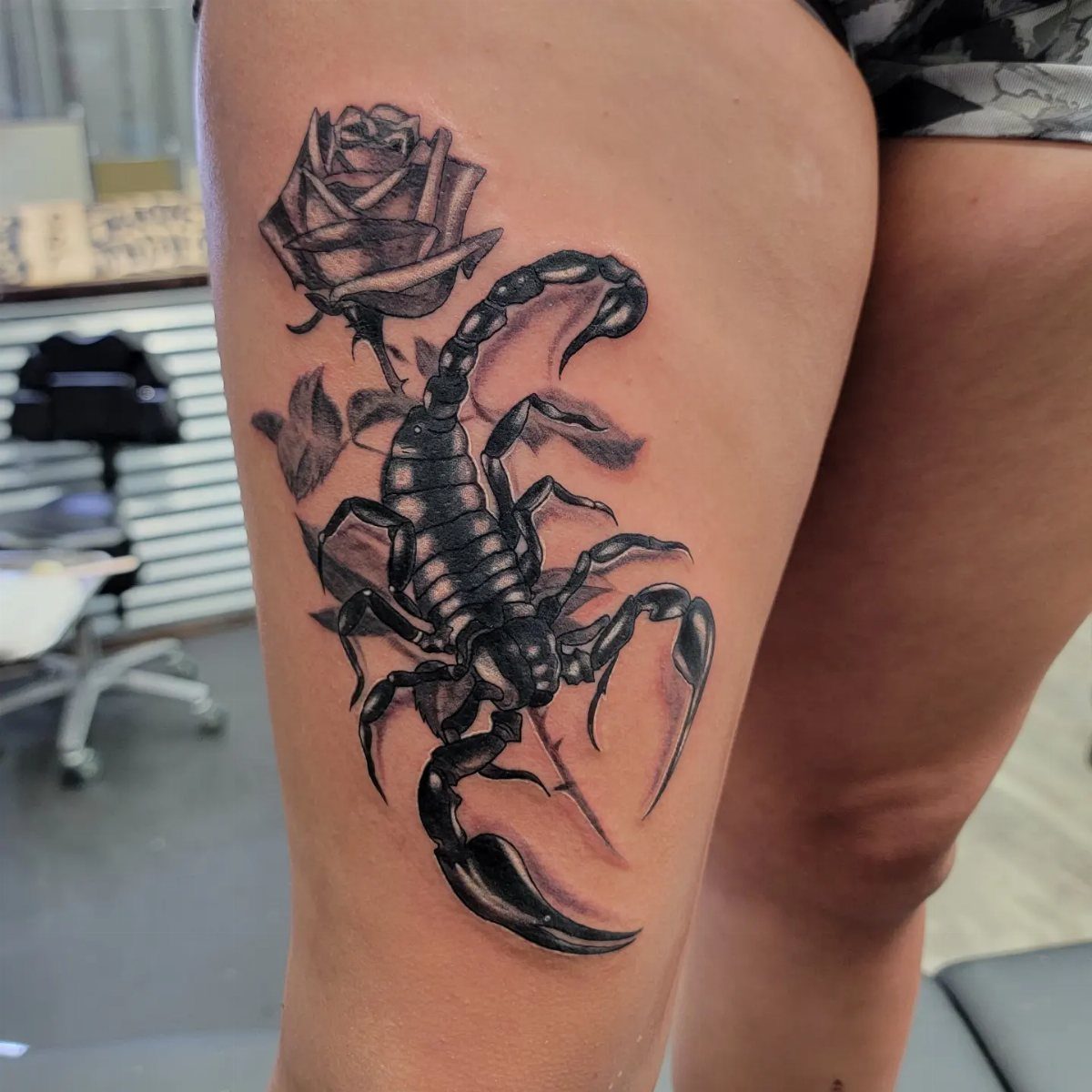
Outer thigh placement also means less nerve density and more muscle cushion, so most people find it easier to finish in one go.
The scorpion’s tail curves naturally with the thigh’s contour, and the rose fills space without crowding the main figure.
Scorpions carry sharp edges and repeating segments, so linework needs to stay clean or the detail blurs as the ink settles.
Less time under the needle also means less money out of pocket, and you’ll heal faster when there’s less surface area to protect.
20. Cute Small Thigh Tattoos
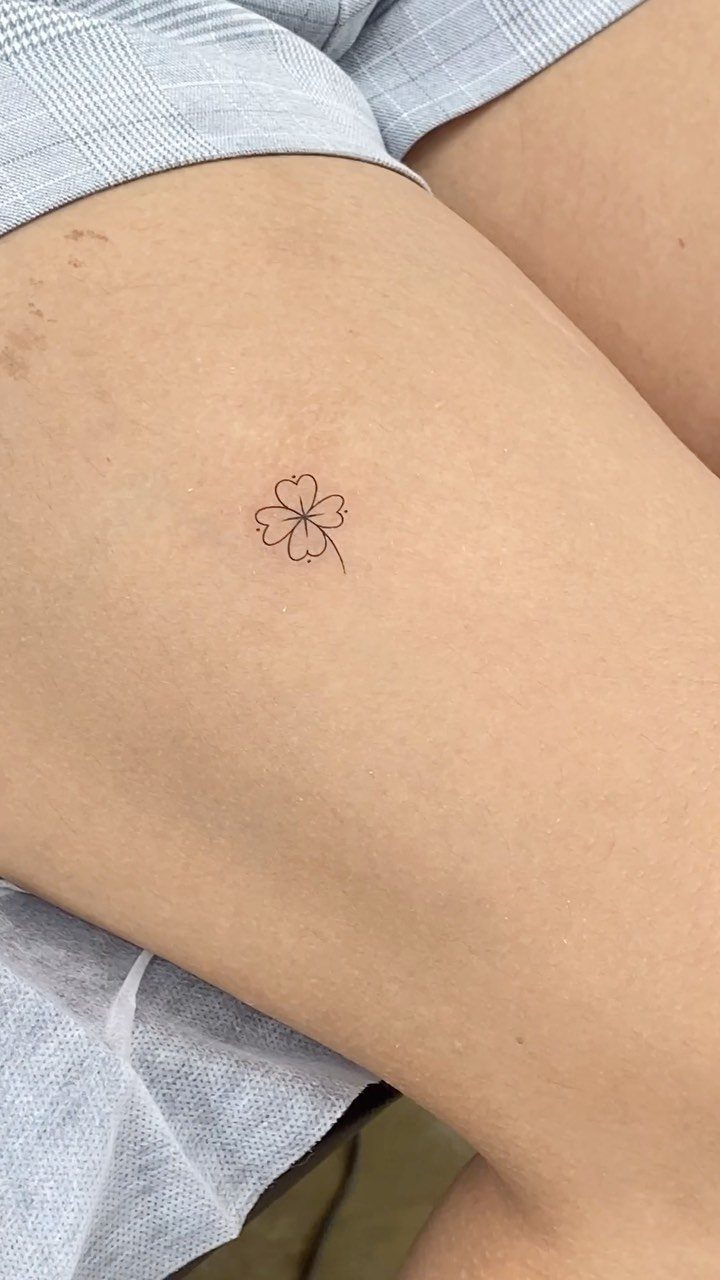
Small tattoos on the thigh stay hidden under most clothing, and a single clover like this takes one short session with minimal pain.
Fine line work here keeps the design delicate, though thinner lines fade faster than bold outlines and may need a touch-up after a few years.
The upper thigh heals quickly and sees less sun than exposed spots, so the ink holds its clarity longer.
21. Elegant Thigh Band Tattoos
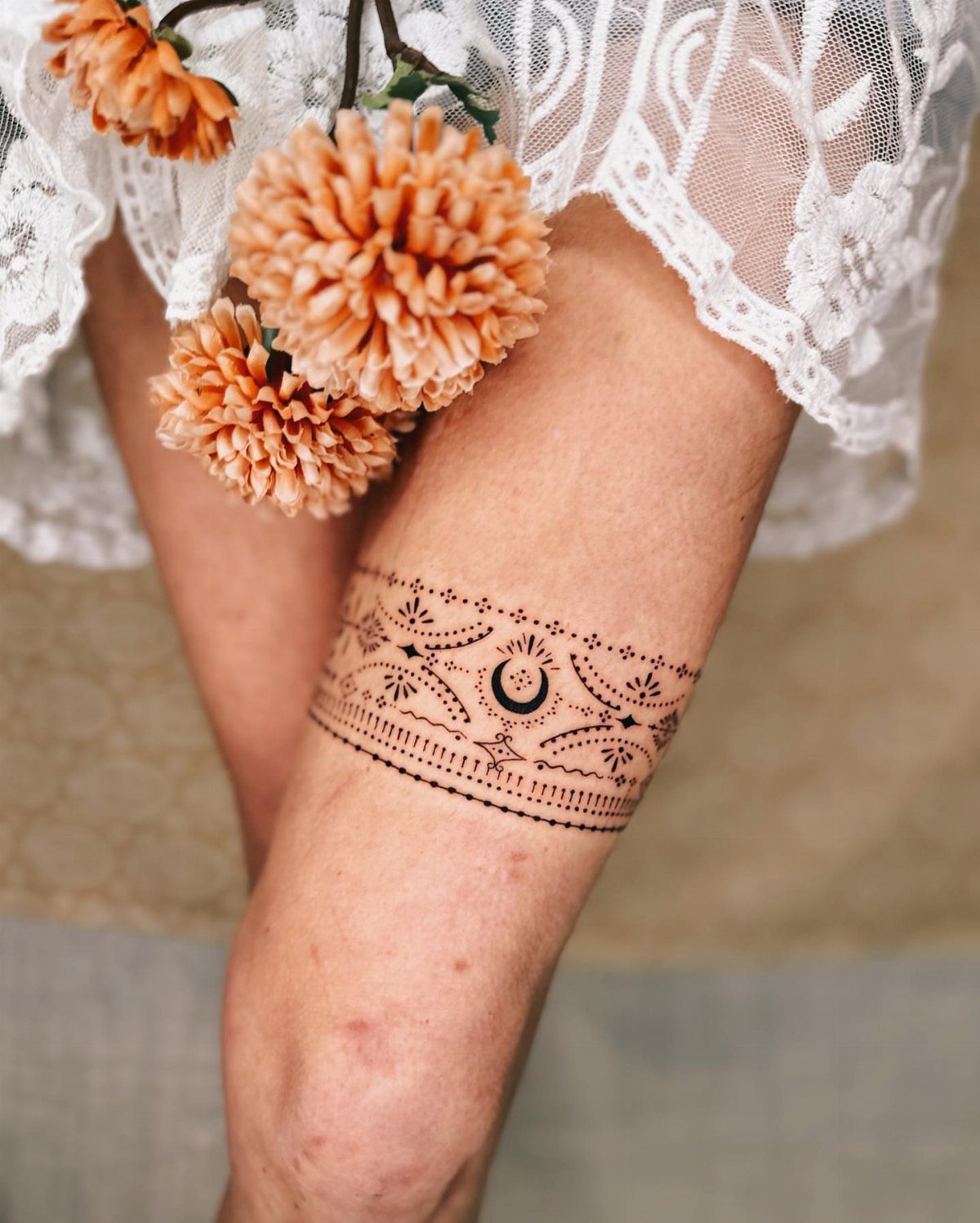
A band wrapping the upper thigh creates a clean line that follows the leg’s shape, and adding a crescent moon breaks the symmetry without losing the structure.
Black ink keeps the band readable from any angle, and the design stays proportional whether you’re standing or sitting.
Bands take less time than full pieces, but wrapping all the way around means working on both the outer and inner thigh in one session.
The inner side is sharper, so expect the pain to shift as the tattoo moves around the leg.
Pain Levels for Thigh Tattoos
Because the muscle and thicker skin cushion the needle, the outer thigh rates around a 4 out of 10. Sessions run longer here without testing you as much, which matters for pieces that need hours of shading or detail.
The front thigh sits at 5–6 out of 10, moderate and manageable for most people. Pain climbs as you get closer to the knee, where skin thins out and bone sits closer.
Inner thigh tattoos jump to 7–8 out of 10.
The skin is more sensitive, and the nerves sit closer to the surface. If you’re less tolerant of pain, stick to the front or outer side.
Large tattoos and detailed work add time under the needle, which adds discomfort.
If this is your first tattoo and you don’t know how much you can take, start small and simple. You can always add to it later.
The good news is that they’re generally less painful than tattoos in more sensitive regions, like hands, fingers, and ribs because there are fewer nerve endings in the thigh area (though pain tolerance is subjective).
— PopSugar
Tattoo Size Considerations
Small tattoos on the thigh work, but they can look out of place on such a large surface.
The appeal is subtlety: they’re easy to spot but hard to read from a distance, which draws people in for a closer look. The impact holds at a smaller scale when the design is meaningful or creative.
Portraits and animals like lions, wolves, and snakes fill the thigh well. Wrapping around to the back of the leg is an option, though most thigh tattoos stay on the front where they’re easier to see.
Tattoo Aftercare Advice
Keep the area clean and follow your artist’s instructions on washing and moisturizing.
Avoid tight pants or anything that rubs the tattoo while it’s healing. Friction pulls ink out and can cause uneven fading, especially on the inner thigh where skin is thinner and movement is constant.
Infection risk stays low if you keep the area clean and don’t pick at scabs.
Frequently Asked Questions
How painful is a tattoo on your upper thigh?
The outer thigh runs around a 4 because muscle and fat give the needle something to work through.
Front of the thigh lands closer to 5 or 6, tolerable for most. Inner thigh climbs to 7 or 8 since the skin thins out and nerves run nearer the bone.
What are some good tattoos to get on the upper thigh?
Roses, mandalas, and dragons fill the space well without crowding.
Lions, snakes, and octopuses work because the thigh’s width lets you show full detail and motion. Quotes and garter designs suit the upper thigh when you want something hidden under most clothing.
What is the best leg tattoo idea?
Large designs that follow the leg’s natural curve read better than small pieces on such a wide canvas.
Animals like lions and dragons, full compasses with florals, or geometric patterns that run thigh to ankle all use the space without looking out of place. Bold outlines and solid shading hold up longer than fine gradients.





