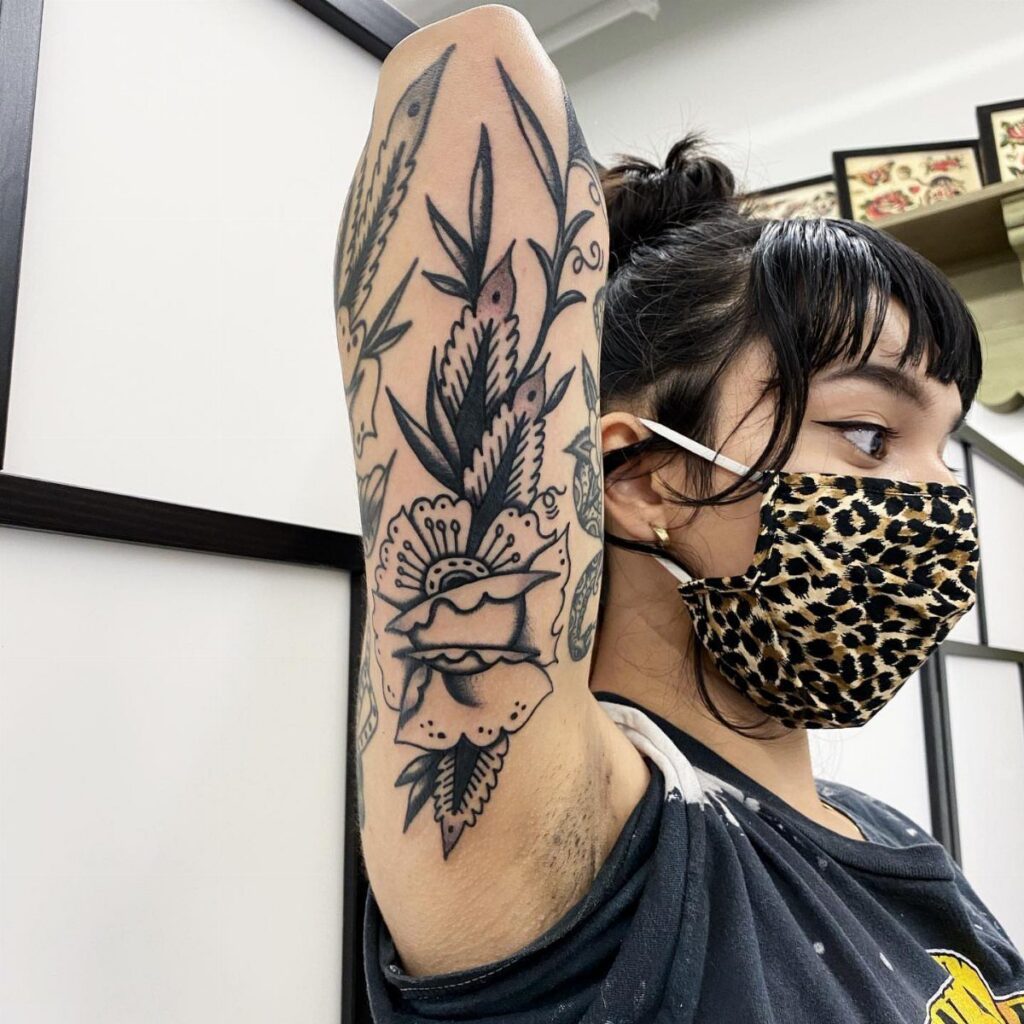
The back of the arm stretches from shoulder to elbow and takes ink that shows in short sleeves or disappears under a long one, which matters if you work somewhere with appearance standards.
The choice comes down to whether you want something you can reach forward and show or coverage that reads bold from behind, and whether the design sits on the narrow tricep or follows the curve of the upper arm changes how the composition fills the space and how much it warps when your arm bends.
1. Flower Back of Arm Tattoo
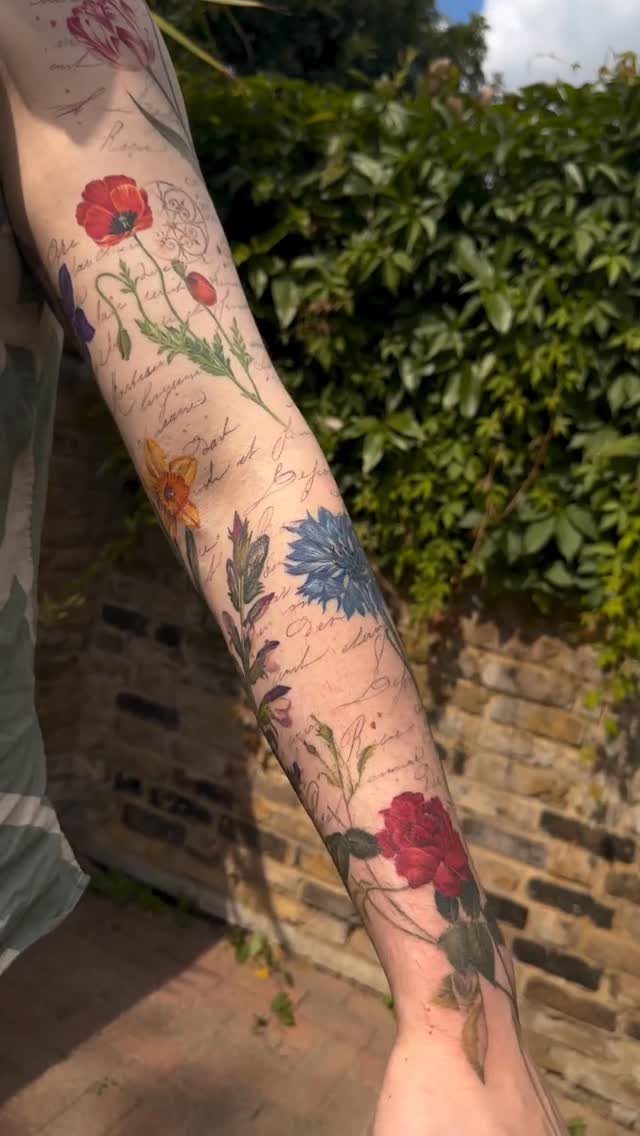
A cluster of blooms in saturated ink wraps color and dimension around the back of the arm where a flat design would disappear into shadow.
Flowers fill the narrow curve of the tricep better than hard-edged geometric work, and the script here anchors the composition without competing for space.
The piece shows well from behind and gives you something softer than blackwork for the arm. Shading under the leaves and detail in the petals both add time.
2. Small Daisy Back of Arm Tattoo
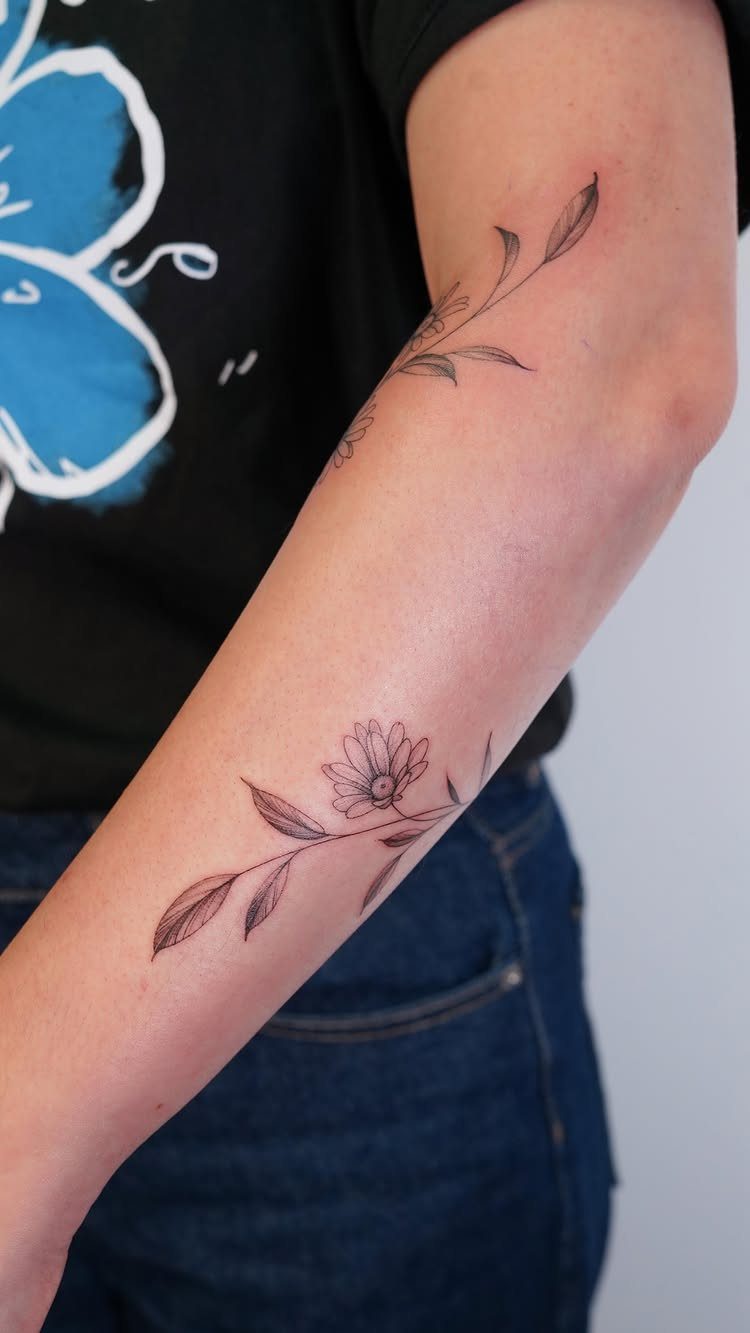
A daisy the size of a quarter sits low on the tricep, close to the elbow, where larger designs often feel unbalanced on a narrow build.
The fine-line floral design keeps the composition simple and the healing fast, usually under an hour in the chair.
This works for ink that shows in short sleeves but doesn’t demand attention. The back of the forearm heals with less friction than the inner arm, and fine-line petals stay crisp for years if the artist doesn’t overwork the skin.
3. Heart Back of Arm Tattoo
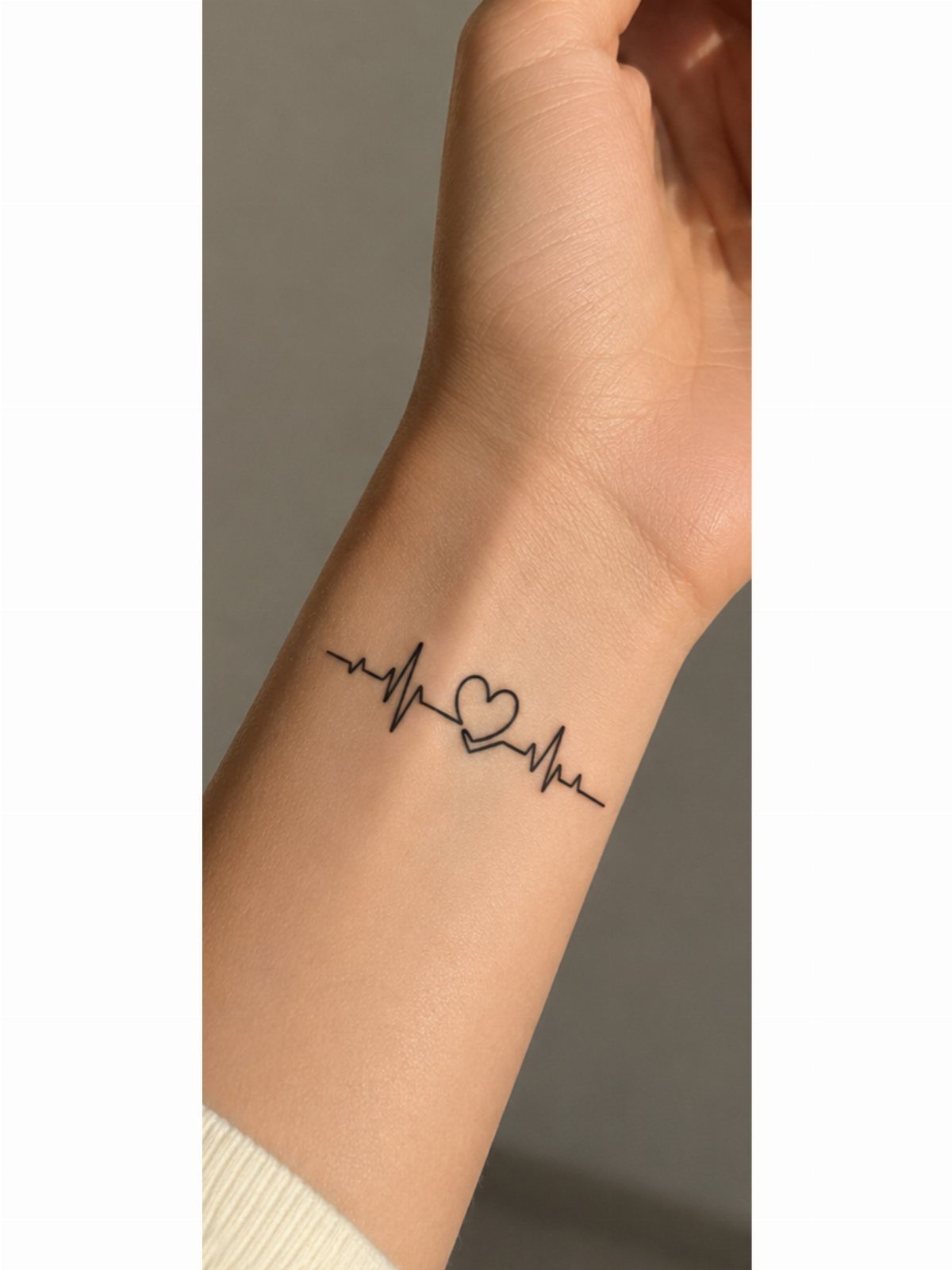
A heartbeat line traces the length of the inner forearm with a small heart where the rhythm peaks, turning medical shorthand into something personal.
The line stays thin and the heart stays small, so it sits close to the skin and reads fast.
This spot shows when your arms are at your sides, which matters for visibility without rolling a sleeve.
The line fits the taper of the forearm, and black ink on the inner arm holds detail better than color because there’s less sun exposure to fade it.
4. Simple Outlines Back Forearm Tattoo
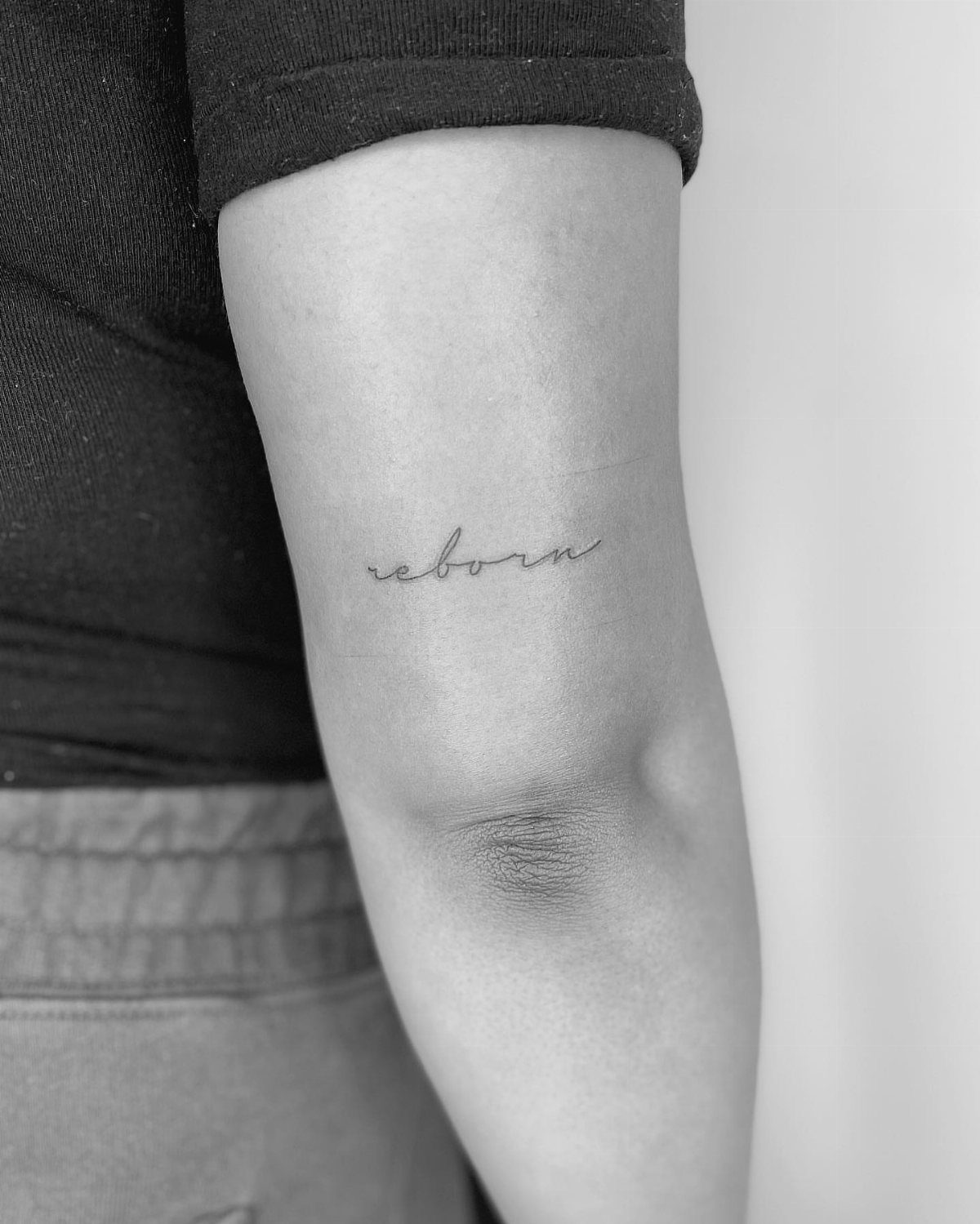
Script in a single weight and minimal flourish sits on the back of the forearm, where the word stays readable without stretching or warping when the arm bends.
The outline style here skips shading and keeps the letters open, which speeds the session and leaves room to add around it later.
Cursive reads better than block letters on a narrow surface, and placing it high on the tricep means it won’t blur into the elbow crease as the skin shifts over time.
5. Wave Back of Arm Tattoo
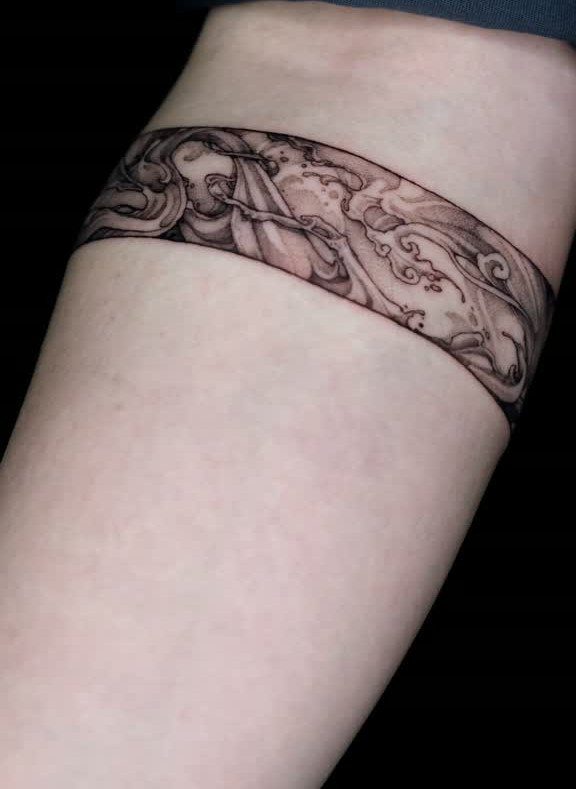
A wave in solid black curves around the upper arm where the tricep meets the shoulder, using the muscle’s natural contour to give the water dimension without shading.
The crest peaks at the center and tapers toward both edges, so the design feels finished even though it stops short of a full band.
This placement suits someone who wants coverage that reads bold from a distance but doesn’t commit to a full sleeve.
The back of the upper arm takes ink with moderate pain, less than the inner bicep but more than the outer shoulder, and the wave shape leaves room to extend the design down the forearm if you change your mind later.
6. Snake Back of Arm Tattoo
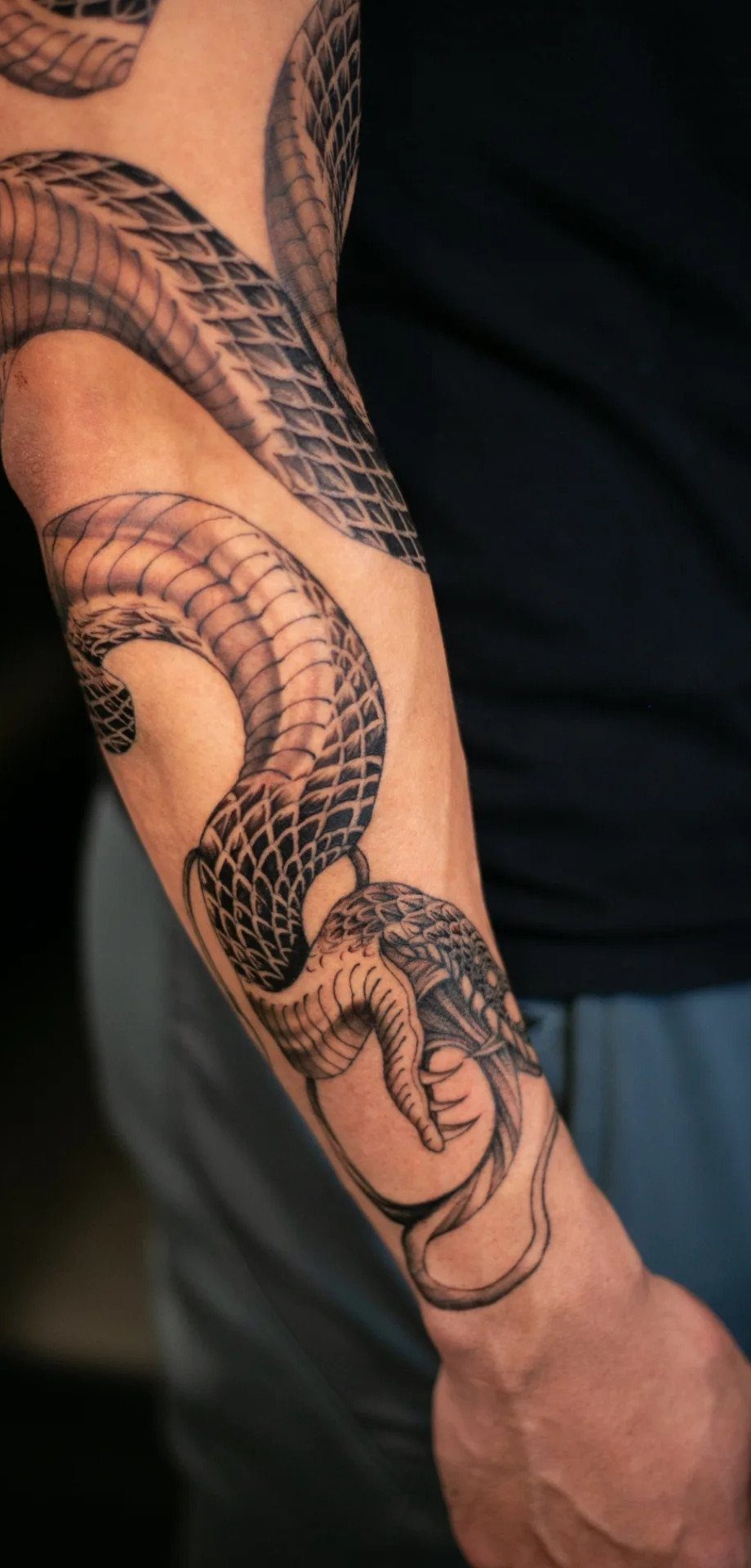
A snake winds from the shoulder down to the wrist in black and grey, its body following the long axis of the arm so the head and tail stay visible from the same angle.
The scales here carry enough detail to give the snake texture without turning the whole piece into a shading marathon, and the taper of the body mirrors the taper of the forearm.
Snakes suit the back of the arm because the curve of the tricep gives the body natural movement, and the design works in sections if you want to spread the cost and pain across multiple sessions.
The area near the elbow and wrist will feel sharper than the upper arm.
7. Butterfly Back of Arm Tattoo
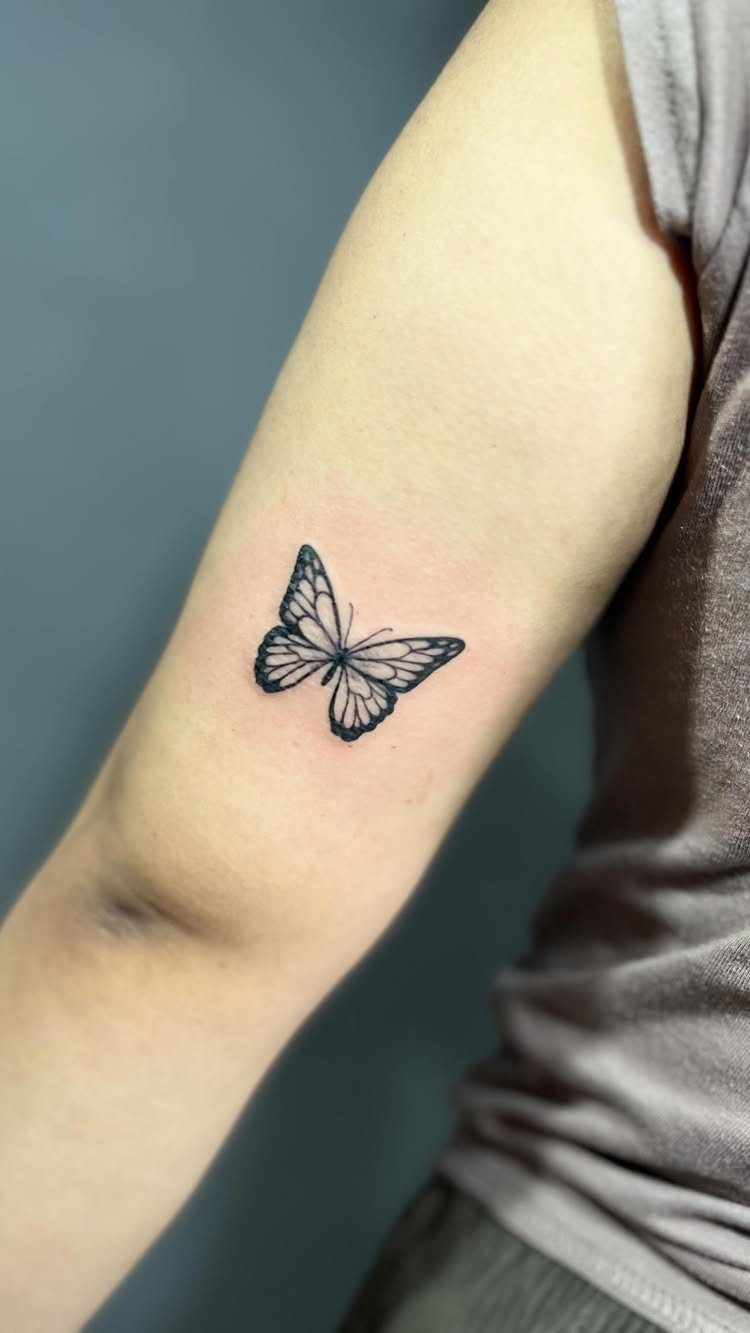
A butterfly the width of a thumbnail sits on the back of the upper arm just above the elbow, its wings spread flat in black ink with enough detail in the veining to keep the shape recognizable without requiring fill or color.
The spot heals quickly and shows when you reach forward, which gives you visibility without placing ink where a watch or bracelet would sit.
Black holds better than color on this part of the arm because the skin stretches less than the forearm and sees less direct sun than the outer bicep.
8. Classical Figure Full Sleeve Tattoo
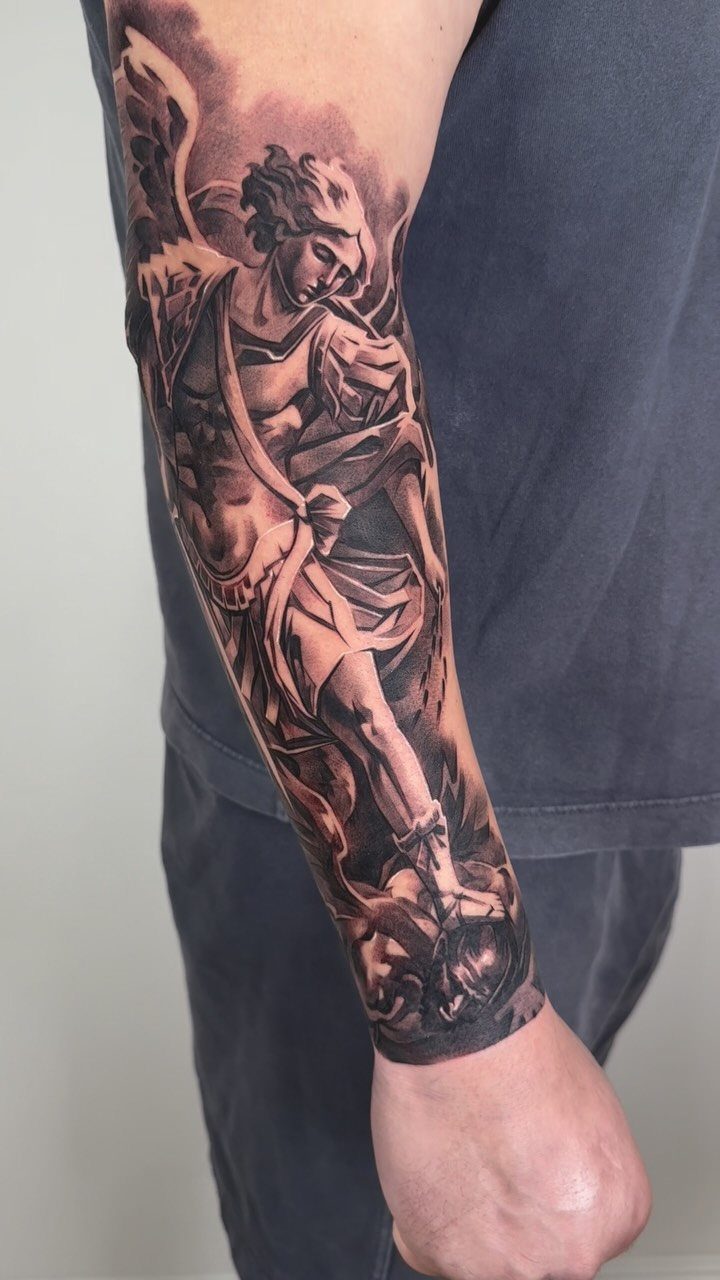
A robed figure in classical drapery runs the full length of the arm from shoulder to wrist, using the vertical space to show the folds of fabric and the fall of the garment in black and grey shading.
The piece requires multiple sessions to build the gradient work and detail in the face and hands, and the back of the arm gives you room to carry a large design without wrapping it around to the inner bicep.
Full sleeves commit time and money, but the back placement means you can cover it with a long sleeve when needed.
9. Chrysanthemum and Fan Tattoo
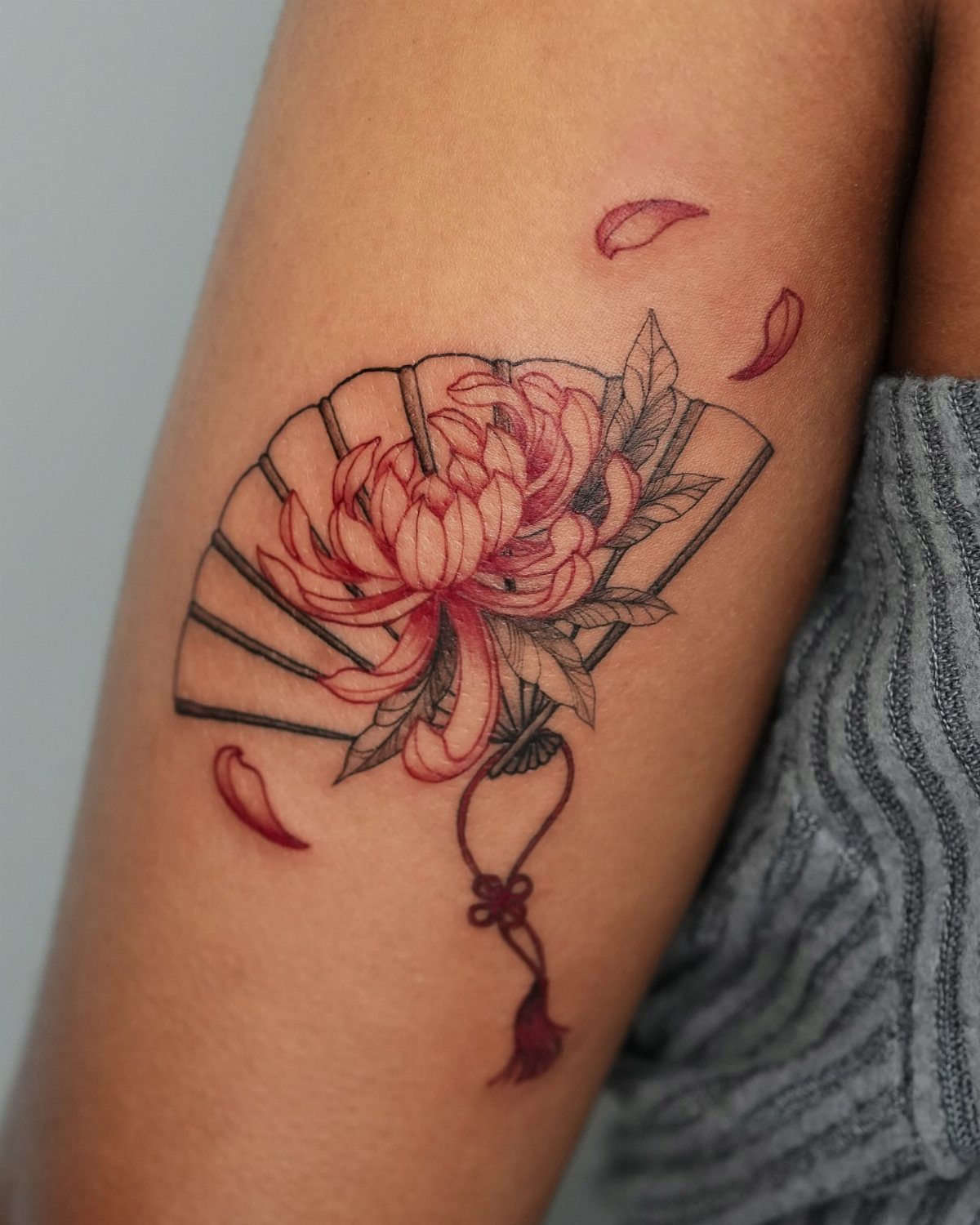
A red chrysanthemum sits over a folding fan drawn in black line, with a few loose petals floating around the edge of the composition on the back of the upper arm.
The red pulls attention without filling the entire design, and the fan gives structure underneath so the flower doesn’t float without context.
Color on the upper arm fades slower than on the forearm because clothing usually covers it, and the layered composition here fits the curve of the tricep better than a single flat shape would.
10. Flying Bird and Pine Branches
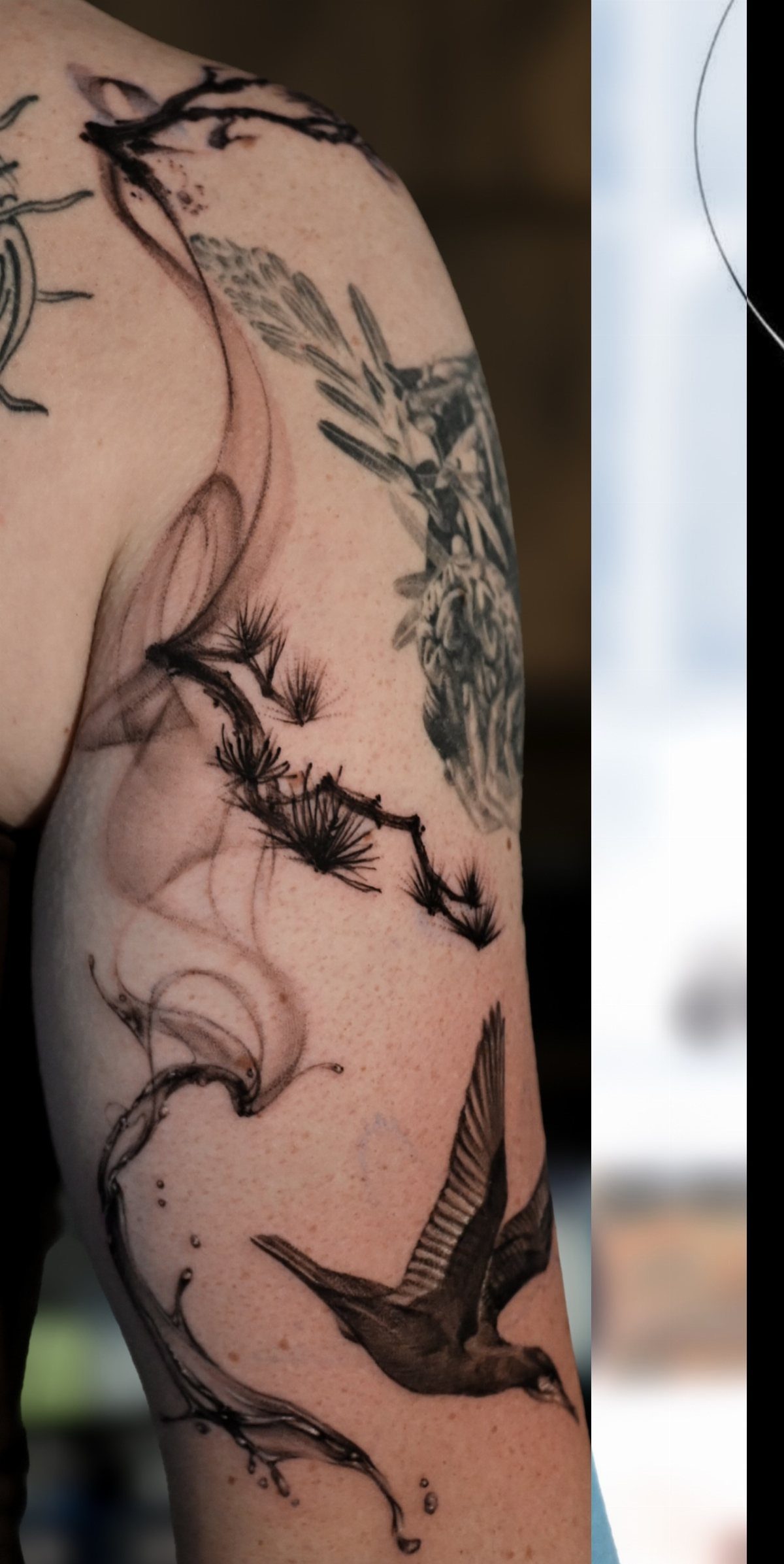
A bird angles upward through pine branches and soft smoke on the back of the upper arm, combining hard line in the branches with diffused shading in the smoke to give the piece depth.
The bird anchors the design at one point while the branches and smoke fill the negative space, so nothing sits isolated.
The composition suits someone who wants a nature theme that reads as movement rather than a static portrait, and black ink keeps the piece cohesive when you mix detailed line with loose shading.
Advantages of Back of Arm Tattoos
The tricep offers visibility you control. Back of arm tattoos offer easy concealment with long sleeves, which matters in professions with appearance standards or anywhere you want the option to keep work and personal expression separate.
Clothing sits looser there, and you’re less likely to lean on it while sitting or brush it against a desk. That makes the first week easier and keeps you from disturbing the ink while the top layer of skin closes.
Vertical designs fit the tricep better than the outer shoulder or the forearm because the muscle runs the length of the upper arm without tapering as sharply as the forearm does below the elbow.
The back of the arm is a solid choice if your tattoo isn’t the first thing you want people to notice when they meet you, but perhaps the last thing they’ll see as you’re walking away.
— PopSugar
Frequently Asked Questions
Is a tattoo on the back of your arm painful?
Pain stays moderate across the upper tricep, then spikes near the elbow and wrist where bone sits just under the skin.
Healing stays cleaner on the back of the forearm because shirts and sleeves rarely rub against it. Pain stays manageable enough that most people finish a session without breaks.
What is the hottest tattoo placement?
The back of the upper arm offers visibility you control, showing when you reach forward or wear a tank top but disappearing under long sleeves when you need it covered.
It fits people who want a design large enough to hold detail and read across a room, but not the full commitment of wrapping the whole arm.
The tricep’s natural curve gives dimension to designs like waves or snakes that follow the muscle’s contour.





